CATALOGUE 2002-2003
Jon JOST : Oui non
Fiction | dv | couleur | 01:43:00 | conception, image, montage: Jon Jost | acteurs: Helene Fillieres, James Thierree | Etats-Unis / France | 2002

(c) photo: Jon Jost


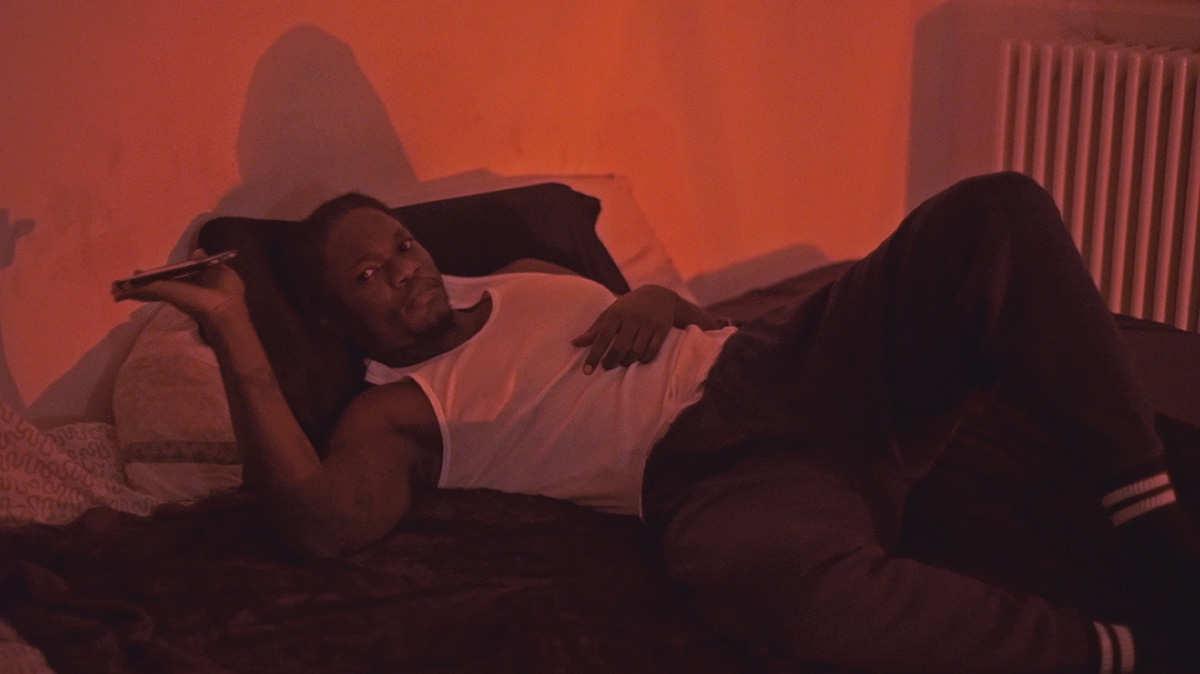
Un garçon qui rencontre une fille à Paris. Cela sonne familier à vos oreilles ? Mais ce n'est pas si simple. Voici un film qui n'entend pas en être un. Un film qui a germé sur la base de l'improvisation. Il illustre la création d'une histoire qui se joue entre de jeunes acteurs. Les acteurs génèrent et jouent une histoire qui progressivement devient réelle, mais devient aussi progressivement un véritable événement. Tandis que le film vient raconter une histoire d'amour classique partant de la rencontre entre un garçon et une fille, il fournit également une critique radicale des formes traditionnelles du récit. L'aversion de John Jost pour le récit classique est due au fait qu'il reflète une trop infime partie de la réalité. Il est convaincu que l'existence est un indescriptible chaos, avec pour seule certitude le fait qu'elle touche un jour à sa fin. Et c'est tout le contraire de ce qu'un scénario soi-disant bien écrit veut nous faire croire. Le film a été tourné à Paris, et pour cette raison, il rend hommage au mythe du romantisme parisien, aux impressionnistes et au cinéma français. Ce film est le résultat d'une confrontation entre la réalité et une représentation fallacieuse de la fiction. Ce film n'est ni un drame, ni un documentaire. Jost argue du fait que Oui Non, qui a été tourné avec une caméra vidéo numérique (outil qu'il utilise exclusivement depuis 1996), est un adieu tout à fait conscient au médium film.


Dieser Film ist weder Drama noch Dokumentarfilm. Er ist das Resultat einer Konfrontation zwischen Wirklichkeit und einer trügerischen Repräsentation von Fiktion. Während der Film eine klassische Liebesgeschichte zwischen einem Jungen und einem Mädchen erzählt, liefert er auch eine radikale Kritik an traditionellen erzählerischen Formen.


Boy meets girl in Paris. Sound familiar? But it ain't that simple. A film that doesn't want to be a film. A film that came about on the basis of improvisation. It documents the creation of an acted story between young actors. The actors make up and perform a story that increasingly becomes a real story, but also increasingly a real event. While the film tells a classic love story about the encounter between a boy and a girl, it also provides radical criticism of traditional narrative forms. Jost has a dislike of classic narrative because it reflects so little of reality. He is convinced that existence is an indescribable chaos, with as only certainty the fact that one day it comes to an end. That is the opposite of what a supposedly well-written screenplay wants to make us believe. The film was shot on location in Paris and therefore also pays homage to the myth of Parisian romance, the French Impressionists and French cinema. The film is the result of a confrontation between reality and the false representation of fiction. A film that is neither drama nor documentary. Jost argues that Oui Non, shot with digital video (the medium he has used exclusively since 1996), is a very conscious farewell to the medium film.


___ Note biographique


Jon Jost est né en 1943 dans une famille militaire de Chicago. Il a grandit en Georgie, au Kansas, au Japon, en Italie, en Allemagne et dans l'état de Virginie. Exclu du lycée en 1963, il a commencé à réaliser des films en 16 mm. C'est un autodidacte. Il a réalisé 20 courts-métrages et 13 longs-métrages, qu'il a pour chacun conçu, scénarisé, photographié, mis en scène et monté. En 1965, Jost a passé deux ans et trois mois en prison pour avoir refusé de coopérer avec le Selective Service System (organisme chargé de l'inscription au service militaire aux Etats-Unis). A sa sortie de prison, il s'est rapidement engagé dans des activités politiques, aidé à la mise en place de la branche de Chicago de ce qui deviendra plus tard Newsreel, le groupe de production et de distribution de films New Left, et travaillé pour le comité de résistance et la Chicago Mobilization. John Jost a réalisé son premier long-métrage en 1974, et s'est depuis lors consacré à la réalisation d'une vaste gamme de films principalement axés sur des thèmes typiquement américains, sous forme d'essais (Speaking Directly, Stagefright, and Uncommon Senses), de fictions expérimentales (Angel City), de récit d'avant-garde et de nouvelles formes de récits. En 1991, le Musée d'Art Moderne de New York a collecté et présenté les œuvres de Jon Jost : American Independent, une rétrospective complète de son travail comprenant onze long-métrages et cinq programmes de courts-métrages. Le spectacle a ensuite été présenté au AFI Theater du Kennedy Center for the Performing Arts de Washington DC, au Harvard Film Archive de Cambridge, au UCLA Film and Television Archive de Los Angeles, au AMC Kabuki Theater par la Film Arts Foundation en association avec la San Francisco Film Society, aux Chicago Filmmakers, à Nuremberg en Allemagne et à la Viennale en Autriche. Jon Jost a été le premier lauréat du Prix John Cassavetes remis par le Independent Features Project pour l'ensemble de son œuvre. OUI NON est un film numérique racontant un récit qui n'a pas lieu ; c'est une œuvre transitionnelle qui part d'un film pour aboutir à un média électronique ; une méditation sur l'aspect fallacieux de la fiction et les pouvoirs de la réalité ; c'est une histoire d'amour qui, comme c'est souvent le cas, avorte ; c'est un adieu au cinéma et une salutation de bienvenue adressée à autre chose qui doit encore être défini. C'est une œuvre qu'il vaut mieux regarder sans arrières-pensées plutôt que d'y rechercher des choses dont elle est dépourvue.


Jon Jost wurde 1943 in Chicago geboren. Autodidakt und politisch engagiert, hat er sich seit 1974 der Produktion einer umfangreichen Reihe von Filmen verschrieben, weitgehend auf spezifisch amerikanische Themen konzentriert. Seit 1975 wurden seine Werke weithin in Museen, Filmarchiven und bei Festivals gezeigt. 1991 wurde eine vollständige Retrospektive über Josts Schaffen im Museum of Modern Art in New York präsentiert, eine Werkschau, die in der Folge weltweit zu sehen war. Jon Jost ist der erste Empfänger des John Cassavetes Award für sein Lebenswerk, verliehen durch das Independent Features Project.


Jon Jost was born in Chicago in 1943, of a military family, Jon Jost grew up in Georgia, Kansas, Japan, Italy, Germany and Virginia. Expelled from college in 1963, he began making 16 mm films. He is self-taught. He has made some 20 shorts and 13 feature-length films, all of which he has conceived, written, photographed, directed and edited. In 1965 Jost was imprisoned by US Federal authorities for 2 years and 3 months for refusal to cooperate with the Selective Service System. On release, he quickly became engaged in political activities, helping start the Chicago branch of what became Newsreel, the New Left film production and distribution group, as well as working for the draft resistance and the Chicago Mobilization. Jost made his first feature-length film in 1974, and has since devoted himself to the making of a wide-ranging series of films, largely focused on specifically American topics, in form ranging from essays (Speaking Directly, Stagefright, and Uncommon Senses), to essay-fictions (Angel City) to avant-garde and new narrative forms. His work has shown widely in museums, film archives and festivals since 1975. In 1991, The Museum of Modern Art in New York assembled and presented Jon Jost: American Independent, a complete retrospective of Jost's work encompassing eleven features and five programs of shorts. The show subsequently traveled to the AFI Theater at the Kennedy Center for the Performing Arts in Washington DC, the Harvard Film Archive in Cambridge, the UCLA Film and Television Archive in Los Angeles, the AMC Kabuki Theater by the Film Arts Foundation in Association with the San Francisco Film Society, the Chicago Filmmakers, Nurnberg, Germany, and the Viennale in Austria. Jon Jost is the first recipient of the John Cassavetes Award for lifetime achievement granted by the Independent Features Project. OUI NON is a digital film about a narrative which does not happen; it is a transitional work shifting from film to electronic media; a meditation on the falsity of fiction and the powers of reality; it is a love story that as love stories often do, aborts; it is a farewell to cinema and a welcome to something else yet to be defined. It is a work better to be looked at with a blank mind than to be seen looking for things which are not there.


___ Autre texte


Jon Jost réalise des films depuis 40 ans, et des vidéos numériques depuis 6 ans. Pour les films et les vidéos : description factuelle de l'œuvre (500 caractères environ, minimum 6 lignes) relatant ses principaux éléments narratifs, visuels et sonores (cette description est essentielle). OUI NON emploie l'intégralité d'une large gamme de caractéristiques esthétiques dérivées du genre numérique spécifique, caractéristiques qui sont intrinsèquement liées à l'absence de récit normal. Un garçon rencontre une fille. L'histoire d'amour n'a pas lieu, il n'y a pas de happy-end dans la vie. Dans la mesure du possible, une réflexion du metteur en scène décrivant le processus, les enjeux ou les objectifs de l'œuvre proposée (500 caractères environ). OUI NON est une expérimentation, un jeu avec des formes numériques, et un adieu au cinéma.


Jon Jost has been making films for 40 years, DV for 6. For the films and videos : a factual description of the work (about 500 types, making a minimum of 6 lines) concerning its main narrative, visual and sound elements (this description is essential). OUI NON uses a wide range of specifically digitally derived aesthetic qualities thoughout, qualities which are intrinsically woven into its absense of a normal narrative. Boy meets girl. Love affair doesn't happen, there is no happy ending in life. Whenever possible, a Director's statement describing the process, stakes or objectives of the proposed work (about 500 types). OUI NON is intended as an experiment, a playing with digital forms, a farewell to cinema.