Berlin 2026 Programme
Special events
silent green Kulturquartier | Betonhalle
Gerichtstrasse 35, 13347 Berlin / Subway: Wedding station, U-Bahn line U6 / S-Bahn lines S41, S42, S46
Free admission
Cartes blanches, special screenings, performance, panel discussion
Over these three days, seven sessions trace the through-lines of this Berlin edition. The opening evening unfolds as a dialogue between image and performance, revealing a sensitive geometry of landscapes and of our gaze. Saturday charts a map of contemporary questionings — from a panel discussion on the future of cultural venues, to the toxic fields of abundance, to the obstinate melancholy of our shared aspirations to freedom. On Sunday, the carte blanche to Albert Serra opens the space of a free and hypnotic cinema, before the closing session offers, like a utopia, a final crossing. Seven encounters as so many articulations of this 2026 edition, to be discovered one by one or in continuity.


Opening
silent green Kulturquartier | Betonhalle | Cinema 1
Gerichtstrasse 35, 13347 Berlin / Subway: Wedding station, U-Bahn line U6 / S-Bahn lines S41, S42, S46
Free admission
Inaugural session — at 6.30pm and 8pm
A wonderful surprise screening, with five rare films presented as German premieres, at 6.30pm for the early session, and at 8pm for the later one. Welcome to the Berlin 2026 edition!
Performance + Screening
silent green Kulturquartier | Betonhalle | Cinema 1
Gerichtstrasse 35, 13347 Berlin / Subway: Wedding station, U-Bahn line U6 / S-Bahn lines S41, S42, S46
Free admission
"Landscape geometries"
An exceptional AV performance followed by a thematic session – experimental videos, hybrid and multimedia forms.
In reference to Donna Haraway, who in Staying with the Trouble reflects on the ways ideas, beings and worlds are interwoven, the duo TraumaZone explores possibilities of coexistence between humans and non-humans. The performance "Strings" combines live and pre-recorded images and sounds, drawn in particular from the electromagnetic radiation of solar panels and radio waves.
Traumazone : Strings - Multimedia concert | mov | color | 19:35 | Germany | 2025
Traumazone
Strings
Multimedia concert | mov | color | 19:35 | Germany | 2025
Project Strings is an audio-visual live performance and a video essay by TraumaZone art duo. The project is based on the book Staying with the Trouble by Donna Haraway, where the author reflects on how ideas, beings, and worlds are connected together like strings in the game of Cat’s cradle. Taking the string games as the main idea, the Strings talk about the concepts of human and non-human co-existing together in a social system. As the narrative moves forward, the audience sees the solid grid of connections gradually dissolving, and fluidity emerging as the core cooperation principle. The performance consists of reactive live and prerecorded visuals, and the live sound set, that includes a 20-second loop of electromagnetic radiation emitted by a solar panel, combined with fragments of AM broadcasts recorded during an art residency in rural Bavaria. The video essay also includes the shortened version of the material with more energetic pace of narration. Project Strings invites the audience into a meditative landscape where sound and visuals work together, destroying rigid structures and embracing a more fluid, interconnected modes of existence.
TraumaZone is a live-coding duo based in Berlin, consisting of Ksenia Sova, a video artist and Fyodor Stepanov, a sound designer. Their main focus is to politicize the art community by bringing to the spotlight important questions and creating a safe space for discussion. Ksenia Sova (they/them) is a media artist based in Germany. They studied media art at the Academy of Fine Arts Leipzig, Germany. They work are especially interested in exploring topics connected with alienation, isolation and anxiety of a queer body in digital environments. They use an expanded cinema approach to create time-based art-pieces for personal and group exhibitions. Fyodor Stepanov (he/they) is a sound artist and composer based in Berlin, Germany. He specialises on electro-acoustic works for interactive installations, audio-visual performances and video art. His creative output is driven by notions of transience, non-linearity, and ambiguity intrinsic to sound. The approach he has developed over the past decade combines generative algorithms with bits of radio broadcasts, field recordings, and electromagnetic listening to produce eerie acousmatic soundscapes that slowly develop over long periods of time.
The performance is followed by a short screening session, with the following works:
Driessens & Verstappen : E-volved Formulae - Multimedia installation | 4k | black and white | 10:1 | Netherlands | 2024
Driessens & Verstappen
E-volved Formulae
Multimedia installation | 4k | black and white | 10:1 | Netherlands | 2024
The image generating Formulae E-volver software is developed by the artists. The building blocks of the software are all kinds of basic mathematical operators. The computer can compose an infinite amount of valid formulas out of these elements. Each time, a small set of formulas is composed and visualised on the screen. The viewer compares these animated images with each other and reviews them. In turn, the software responds on those reviews when it composes new formulas. Formulas that were displayed on the screen for a long time have more chance to crossbreed, whereby visual properties are mixed and passed on to future generations. The process begins with a "primordial soup" which yields relatively simple images. On the basis of personal preferences of the user, this gradually evolves into complex intriguing animations. The final results, the E-volved Formulae, are stored and are displayed on a large screen or projected. They show a wide variety of outcomes of the successive evolutionary processes.
The Amsterdam based artist couple Erwin Driessens (1963 Wessem) and Maria Verstappen (1964 Someren) have worked together since 1990. After their study at the Maastricht Academy of Fine Arts and the Rijksakademie Amsterdam, they jointly developed a multifaceted oeuvre of software, machines and objects. Their research focuses on the possibilities that physical, biological and computer algorithms can offer for image generating processes. An important source of inspiration are the self-organizing processes in nature. In the Morphoteques series (form collections), they show the form variations, which can be expressed within a specific generative process. In other works, the shape transformations are evoked in real time by means of a machine. In their software and AI projects, they develop an artificial nature, which is expressed in all kinds of variations. Driessens & Verstappen participated in numerous exhibitions in the Netherlands and abroad, a.o. Stedelijk Museum Amsterdam, Museum Boijmans van Beuningen Rotterdam, Centre Pompidou Paris, IVAM Institute Valencia, Museum Kröller-Müller Arnhem, Garage Museum Moscow, CaixaForum Barcelona, Eyebeam New York. The couple gives lectures and presentations at universities, art academies, festivals and conferences, a.o. Siggraph Los Angeles, Sonic Acts Amsterdam, Second Iteration Melbourne. In 1999 and 2001 their Tickle robot projects have been awarded first prize at VIDA Telefónica Madrid. In 2013 the couple received the Witteveen+Bos Art+technology Award for their entire oeuvre. The artists are represented by gallery DAM in Berlin.
Andro Eradze : Flowering And Fading - Experimental video | 4k | color | 16:22 | Georgia, Italy | 2024
Andro Eradze
Flowering And Fading
Experimental video | 4k | color | 16:22 | Georgia, Italy | 2024
A dog and a human share sleep in the twilight of a calm house. Suddenly, the shapes of reality start to blur, and slowly, dream and fantasy take over. In his latest work, Andro Eradze shapes a new vision of surrealism, where impeccable image composition and a stunning sound work strike directly at the subconscious, submerging the senses in an ocean of absolute beauty.
Andro Eradze (b. 1993, Tbilisi, Georgia) is an artist and filmmaker whose multidisciplinary practice investigates the intersection of presence, memory, and spectrality. Through photography, installation, video, and experimental cinema, Eradze explores the agency of non-human entities within landscapes that blur the boundaries between human and non-human experiences. His projects often evoke liminal spaces, exploring the unexpected actions and relations among objects, plants, and animals. He took part in several solo and group exhibitions and screenings in international institutions including MoMA PS1, New York; The 59th Venice Biennale, Venice; The New Museum, New York; WIELS Contemporary Art Center, Brussels; GAMeC, Bergamo; 22nd Biennial Sesc_Videobrasil, Sao Paulo; 14th Kaunas Biennial, Lithuania; Fondation Vincent van Gogh Arles.
Sebastián Diaz Morales : One Glass Eye Melting - Experimental video | mov | color | 13:0 | Argentina, Netherlands | 0
Sebastián Diaz Morales
One Glass Eye Melting
Experimental video | mov | color | 13:0 | Argentina, Netherlands | 0
One Glass Eye Melting conjures the common imaginary of dystopia to rearticulate it in search of new possibilities. A close-up of a rotating eye gazes back at the viewer, its pupil reflecting a montage of disasters—war, natural catastrophe, and mundane accidents—juxtaposed with scenes of regeneration: microbial life, cosmic expansion, and technological evolution. Filmed in a raw, single-shot sequence with minimal post-production, the eye becomes both a mirror and a fractured “memory container,” destabilised by glitches, scratches, and analogue/digital noise. The work interrogates the act of looking itself, transforming reality into something surreal yet unnervingly familiar. As the eye spins 360 degrees, the pupi’s reflection remains fixed, anchoring chaos and renewal as cyclical, interdependent forces. One Glass Eye Melting reframes disaster as inseparable from rebirth, arguing that collapse harbours the potential to reimagine—and rebuild—our narratives. Rather than revisiting catastrophe, the work asks: What do we do with these images of disaster? The work summons the collective imagination of dystopia, rearticulating its imagery in pursuit of uncharted possibilities. Part of the series Bajo el cielo cayendo (Under the Falling Sky), which explores the tension between systemic disaster and fragile hope.
Sebastián Díaz Morales was born in Comodoro Rivadavia, Argentina, in 1975 and lives and works in Amsterdam. He attended the Universidad del Cine de Antín in Argentina from 1993-1999, the Rijksakademie van Beeldende Kunsten in Amsterdam from 2000-2001, and Le Fresnoy Studio des Arts Contemporains in Roubaix, France from 2003-2004. Díaz Morales’s examination of perception and reality is based on the assumption that reality itself is by nature highly fictional. Thus, his films do not simply transport the viewer into another, surreal, or phantasmal realm, but they strip reality of its familiarity and distort it, making it seem like something else. With Diaz Morales, the viewer’s imagination does not function as a basic counterpart to the real. Rather, it operates as a force capable of evoking space and producing it diegetically, one that, beyond generating a direct visual impression, fills in the gaps in seeing and, as the film unfolds, gradually reveals to the viewer the constructedness of what we call reality. Reality is presented here as a phantasm, as something that always eludes its defining in images. It is therefore always “a little bit ahead” of the image and the viewer’s gaze. His work has been exhibited widely at venues—such as the Tate Modern, London; Centre Pompidou; Stedelijk Museum and De Appel, Amsterdam; Le Fresnoy, Roubaix; CAC, Vilnius; Art in General, New York City; Ludwig Museum, Budapest; Biennale Sao Pablo; Biennale of Sydney; Miro Foundation, Barcelona; MUDAM, Luxemburg; Calouste Gulbenkian Foundation, Lisbon; the Biennale di Venezia and Documenta Fifteen.
Jan Locus : Intruders - Experimental film | 0 | black and white | 6:5 | Belgium | 2025

Jan Locus
Intruders
Experimental film | 0 | black and white | 6:5 | Belgium | 2025
Intruders explores the boundary between science fiction and reality, investigating themes of reverse colonization, ecology and human environmental impact. The film offers an introspective reflection on the Western fascination and fear of extraterrestrial entities. In an elongated pan, mountain landscapes and misty images of animals are presented in an ethereal, ghostly way. Locus does not use conventional film footage, but found footage online hunting videos and black and white photographs of UFO observations from the 1950s and 60s. Although these images reveal their origins through their grainy texture, Locus removed the UFOs from these photos to seamlessly merge the remaining landscapes. The phenomenon of unforeseen animal death, often reported in UFO sightings, serves as a metaphor for human influence on nature. Locus intertwines photography with video to create a complex narrative that emphasises the ambiguity of reality and fiction. The film reflects on ‘intruders’ in nature, inspired by dystopian visions of the future and challenges the viewer to consider the complex and often disturbing relationships between humans, technology and nature.
Spanning the mediums of film, photography, and sound, his work often addresses landscape as a tool for the creation of national and social identities, focusing on environments altered by extraction and industrialization. In his latest work, he explores the tension between found footage, still photography, and the moving image, emphasizing the ambiguity of our perception of reality and fiction. His films have been presented at numerous international festivals, including the International Film Festival Rotterdam (IFFR), the International Short Film Festival Oberhausen, Rencontres Internationales Paris/Berlin, Le FIFA – International Festival of Films on Art (Montreal), Kasseler Dokfest, Asolo Art Film Festival, Stuttgarter Filmwinter, CROSSROADS Film Festival (San Francisco), ANTIMATTER Media Art (Victoria), Festival ECRÃ (Rio de Janeiro), PROYECTOR Plataforma de Videoarte (Madrid), SPLIT Film Festival, ONION CITY Experimental Film Festival (Chicago), BISFF Beijing International Short Film Festival, and Flight / Mostra Internazionale del Cinema di Genova among others. Locus lives and works in Brussels.
Melanie Manchot : Line Of Sight (the Tower) - Video | 4k | color | 12:7 | Germany, Switzerland | 2025
Melanie Manchot
Line Of Sight (The Tower)
Video | 4k | color | 12:7 | Germany, Switzerland | 2025
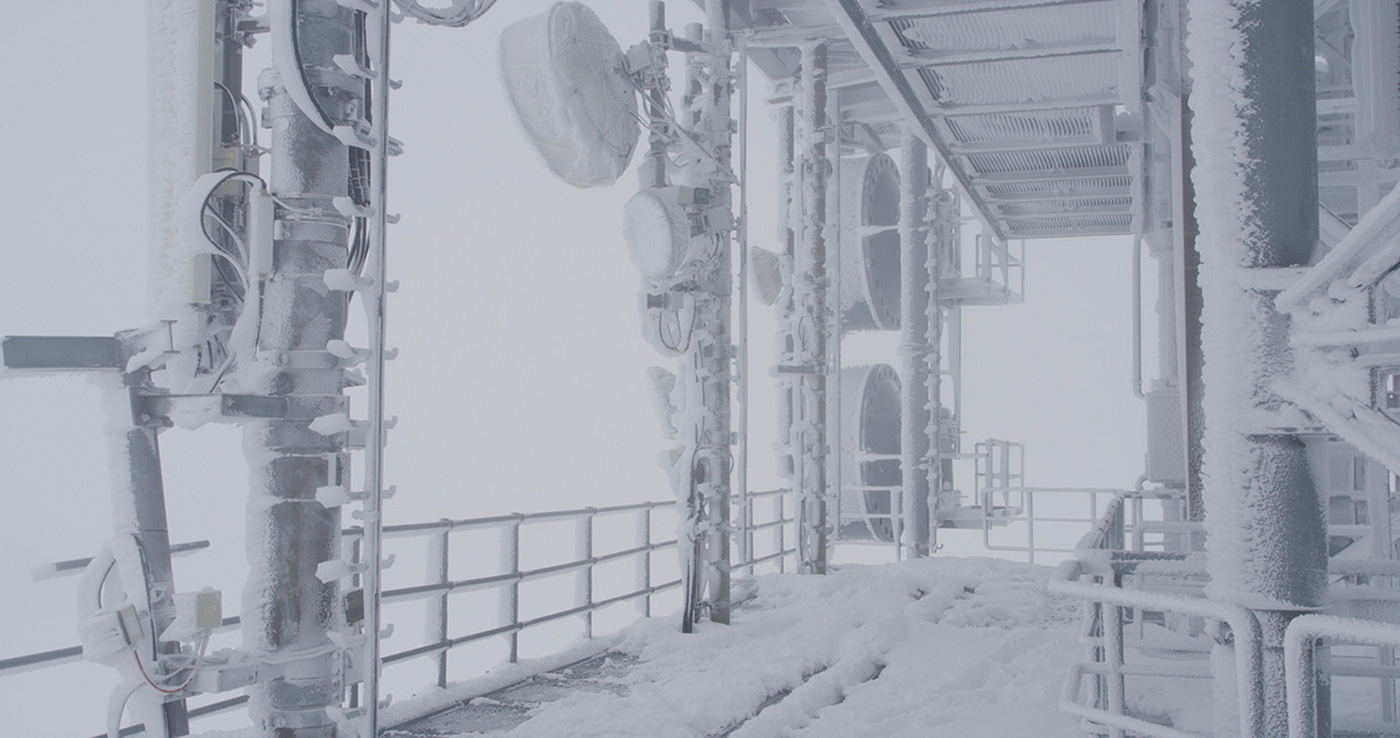
Filmed in a decommissioned telecommunications tower, which used to house secret military equipment, this work returns to my ongoing investigation of mountains and their architectures as spaces of human-nature entanglements. It also returns more specifically to the alpine village of Engelberg, where I have been making work since 2010. In Line of Sight the camera investigates a deserted structure, a space left behind. As if everyone had vacated in mid-action, the environments bear traces of past life, long gone. Both inside and out, the camera observes this perplexing architecture in long panning and tracking shots, culminating in a moment of flight that reveals the structure – as if floating in space. When it was in operation, the tower fulfilled a host of functions, amongst them serving as a space of refuge and shelter during storms. A room full of old mattresses bears witness to such moments of danger. The title ‘Line of Sight’ refers to these towers standing atop mountain peaks with sight of each other, facilitating older forms of communication. With the advances of technology, these towers are now dinosaurs, standing solitary and defunct and as such become symbols of endurance, resistance and older forms of exchange. In 2025, this tower is being reshaped into a space for “mountain entertainment” – acerbating the dichotomy of mountain industries continually expanding footfall onto summits and glacier, hence contributing to the speed of climate change.
London-based visual artist and filmmaker Melanie Manchot employs photography, film, video and sound to form sustained enquiries into our individual and collective identities. The work interrogates and employs acts of care, resistance and communality to engage in discourses on social and political urgencies of our societies. Her films investigate innovative forms of storytelling with an acute understanding of the power of filmmaking to speak to urgent issues and have profound impact. Location-based research informs all her films and mountainous landscapes are a recurrent theme to address fragile environments in our care. Manchot’s artwork has featured in museum and gallery exhibitions internationally and she is currently working towards a large solo show in the UK in early 2026. Her first feature film, STEPHEN, commissioned by Liverpool Biennial, addresses gambling, substance misuse, recovery and mental health through both narrative fiction and documentary. It had its cinematic release through Modern Film in 2024 and continues to be shown in exhibitions as a multi-channel installation. Manchot is currently working towards her second film, Self Storage, with another feature, a fiction/doc hybrid, called One Day As A Tiger, in development.
Forum
silent green Kulturquartier | Betonhalle | Cinema 2
Gerichtstrasse 35, 13347 Berlin / Subway: Wedding station, U-Bahn line U6 / S-Bahn lines S41, S42, S46
Free admission
Panel discussion
Panel discussion details to be announced soon
Special screening
silent green Kulturquartier | Betonhalle | Cinema 1
Gerichtstrasse 35, 13347 Berlin / Subway: Wedding station, U-Bahn line U6 / S-Bahn lines S41, S42, S46
Free admission
"The Toxic Fields of Abundance"
Lukas Marxt, Vanja Smiljanic : Among The Palms The Bomb Or: Looking For Reflections In The Toxic Field Of Plenty - Experimental doc. | mov | color | 85:0 | Austria, Germany | 2024
Lukas Marxt, Vanja Smiljanic
AMONG THE PALMS THE BOMB or: Looking for reflections in the toxic field of plenty
Experimental doc. | mov | color | 85:0 | Austria, Germany | 2024
The Salton Sea in southern California is a unique ecosystem. In just four years, the water level has fallen by a good half a meter, and with a maximum depth of ten meters you can calculate when it is expected to dry out. And that’s just the global aspect, which has to do with global warming and changes in the local climate. The Salton Sea is also special because the United States tested numerous atomic bombs here in the final phases of World War II and the Cold War – initially in preparation for the Hiroshima and Nagasaki bombings, later as training for missions that fortunately never took place. In AMONG THE PALMS THE BOMB, Lukas Marxt and Vanja Smiljani? are particularly interested in this aspect of regional history. The film begins in Utah, where the planes took off and then found their destination in the supposedly secluded area around the Salton Sea. There is a museum in Wendover where you can also see models of “Fat Man” and “Little Boy”, the only two atomic bombs ever used in war, along with a loading pit where the planes were loaded, to which Marxt dedicated a shorter film in 2019. For many years he has been dealing with the situation in southern California, which can be described as extreme in many respects. Intensive agriculture, which relies radically on monocultures, has cast a spell over everything there. Marxt and Smiljani? find out that an alliance has been formed against this backdrop: illegal harvest workers from Latin America seek refuge in Native American reservations. AMONG THE PALMS THE BOMB has local experts explain the landscape and history, and the director is looking for dissenting voices, especially among the tribe of the Torres Martinez Desert Cahuilla Indians, who were victims of genocide in the 19th century. Their survivors now recall how many plants that had healing powers and were part of a life with nature once grew around the salty water of the Salton Sea. Now the area belongs to the salt bushes, and beneath the surface ticks the uranium of a Cold War that is about to return. Scary times, someone says. (Bert Rebhandl)
Lukas Marxt (*1983, Austria) is an artist and a filmmaker living and working between Cologne and Graz. Marxt´s interest in the dialogue between human and geological existence, and the impact of man upon nature was first explored in his studies of Geography and Environmental Science at the University of Graz, and was further developed through his audio visual studies at the Art University in Linz. He received his MFA from the Academy of Media Arts Cologne, and attended the postgraduate programme at the Academy of Fine Arts Leipzig. Marxt has been sharing his research in the visual art environment as well as in the cinema context. His works have been featured in numerous solo and group exhibitions, most recently at the Torrance Art Museum (Los Angeles, 2018), at The Biennial of Painting, Museum Dhondt-Dhaenens (Belgium, 2018), and at the Museum of Modern and Contemporary Art Rijeka (Croatia, 2018). His films have been presented in numerous International Film Festivals including Berlinale (Germany, 2017 and 2018), Curtas Vila do Conde (Portugal, 2018), and the Gijón International Film Festival where he receiced the Principado de Asturias prize for the best short film (Spain, 2018). Since 2017, Marxt has spent a considerable amount of time in Southern California, where he has researched the ecological and socio-political structures surrounding the Salton Sea. Vanja Smiljani? (Belgrade, 1986) is a visual and performance artist living and working between Lisbon and Cologne. She concluded the post-master in Artistic research at A.pass, Brussels (2015), MFA at the Dutch Art Institute (DAI), Arnhem (2012), and Kunsthochschule für Medien Köln (2019) and got a degree in Fine Arts at the Faculdade de Belas Artes de Lisboa (2009). In her practice she often utilizes the model of performance-lecture as a way to bridge fictitious and experiential universes, comprising technical apparatus, diagrams and sci-fi povera sculptures. Connecting otherwise unparalleled reality systems, Vanja's work attests the foundation of ideologies as alienated regimes, recurring to her own body as a vessel for narration, often shifting between the position of oracle and storyteller.
Lukas Marxt and Vanja Smiljanić explore the Salton Sea – California's largest lake, in a state of ecological collapse – and film the surrounding community struggling to survive in this dystopian reality. The film intertwines the narratives of the power that shaped history with those of tribal communities whose history has been erased over time – between memories of the genocide of Native American tribes, the Manhattan Project's military atomic bomb tests in the 1940s, and intensive agriculture that is killing wildlife.
Special screening
silent green Kulturquartier | Betonhalle | Cinema 1
Gerichtstrasse 35, 13347 Berlin / Subway: Wedding station, U-Bahn line U6 / S-Bahn lines S41, S42, S46
Free admission
"The Melancholy of Birds"
Christoph Girardet : One Hundred Years Later - Experimental film | mov | black and white | 7:55 | Germany | 2025
Christoph Girardet
One Hundred Years Later
Experimental film | mov | black and white | 7:55 | Germany | 2025
In 1939, a second unit with a double and extras filmed scenes for the Hollywood classic “Mr. Smith Goes to Washington” in the Lincoln Memorial. The succession of the long, sorted-out plan sequences undermines the classic cinematic narration; the plot does not seem to progress. The neoclassical architecture remains the setting for a recurring and questionable ritual, in which the protagonist is lost.
Christoph Girardet, born in 1966, is a German video artist and filmmaker. Girardet makes both the accidentally found and the extensively researched found footage from the archives of film history the subject of his art. Montage, omissions, and repetitions reveal the actual structures and inner mechanism of the depicted cinematic reality. Beyond the analysis of the material and its clichés, his work deals in essence with a melancholic state of absence, thus creating an individual pictorial world. From 1988 to 1994, Girardet studied Visual Arts at the Braunschweig University of Art (HBK) in the film class of Birgit Hein. Since 1989 he has produced films, videos and video installations, some of them in collaboration with video artist Volker Schreiner (1994 – 2004), and, more frequently, in collaboration with filmmaker Matthias Müller (1999 – ongoing). Girardet has participated in group shows at the Stedelijk Van Abbemuseum, Eindhoven, MoMA PS1, New York, Palais de Tokyo, Paris, Hirshhorn Museum, Washington, and Eye Filmmuseum, Amsterdam, among others. He had solo exhibitions at institutions such as FACT, Liverpool, Kunstverein Hannover and West, The Hague. He has taken part in major film festivals worldwide, including the festivals at Cannes, Venice, Berlin, Toronto, Locarno, Oberhausen and Rotterdam. His work is included in public and private collections. He has received numerous awards, among them a stipend for the International Studio and Curatorial Program in New York (2000) and a scholarship at Villa Massimo in Rome (2004). He lives and works in Hanover, Germany.
Carlos Irijalba : Wanderers - Experimental doc. | 4k | color | 3:38 | Spain, Netherlands | 2025
Carlos Irijalba
Wanderers
Experimental doc. | 4k | color | 3:38 | Spain, Netherlands | 2025
Wanderers is a film centered in the way that matter (and our bodies as a result) are driven by magnetism, pulse or rhythm carried by the earths inertia. A primal movement of mineral origin, pre-life and pre-human. To do so, the film casts a universal perspective on the dynamics of birds, migration of bodies, and humans fascination with flying as a challenge for those laws. The film covers this abstract notion with two different contemporary phenomena, modern falconry flown on commercial airplanes and the passion of RC Replica airliner pilots, depicting the dichotomy between natural evolution, our physical materiality and the detachment from mundane reality and general force and gravity, those.
Carlos Irijalba Pamplona (SP) 1979 Resident at the Rijksacademie Van Beeldende Kunsten (Amsterdam) in 2013/2014, and Graduated at the UDK University with Professor Lothat Baumgarten, Irijalba has been awarded multiple art prizes like in 2023 the NYC Culture Pair Program with the Department of Design and Construction DDC, the Mondriaan Fonds 2022 in Amsterdam, the Sifting Foundation Art Grant 2015 in San Francisco y Marcelino Botin 2007/08 among others. He exhibited internationally in the Shanghai Biennale 2021, CAB Art Center Brussels, Guangzhou Triennale 2017 or MUMA Melbourne in Australia. To the question “Does the world need this new object?”, most of the times the answer would be “no”. Therefor the work of Irijalba moves by the principle of pertinence, trying to remain context responsive. In projects like Skins (2013), Hiatus (2022) and Pannotia (2016-ongoing) he works with geology and industrial time sensitive materials that give us perspective on the dominant narratives in Western history. His work is present in public collections as Museo Nacional Reina Sofia, The Netherlands National Collection, Sammlung Wemhoener Foundation in Germany, the Taviloglu Art Collection in Istambul and Acciona Foundation in Spain. His presence on private collections internationally is extensive in both North and South America, Europe and Asia like collection Pilar Citoler, Kells Collection, David Breskin Collection among many others.
Sina Khani : Watch With The Weary Ones - Experimental doc. | 4k | color | 7:29 | Iran | 2025
Sina Khani
Watch With the Weary Ones
Experimental doc. | 4k | color | 7:29 | Iran | 2025
Watch with the Weary Ones is a short documentary that looks at the American urban landscape while the filmmaker quietly drifts back to memories of Iran. It places the surfaces of U.S. cities next to the feelings of someone living far from home, caught between two places. The film reflects on the sorrow carried by those who left Iran searching for another life, and those who stayed and continue to fight for theirs. It’s about holding two worlds at once, the one in front of you and the one that never leaves you, and trying to make sense of that weight
Sina Khani (aka Sina Ahmadkhani) is a Tehran-born, Los Angeles–based filmmaker, writer, and editor. His feature debut won Best International Experimental Feature at the Portoviejo Film Festival and earned awards, nominations, and selections at Regina IFF, Toronto International Nollywood FF, New York City Indie FF, and many other international festivals. He recently completed his MFA at Virginia Commonwealth University and continues to create bold, character-driven stories.
Margit Lukacs, Persijn Broersen : Lion's Court - Video | 4k | color | 20:0 | Netherlands | 2025
Margit Lukacs, Persijn Broersen
Lion's Court
Video | 4k | color | 20:0 | Netherlands | 2025
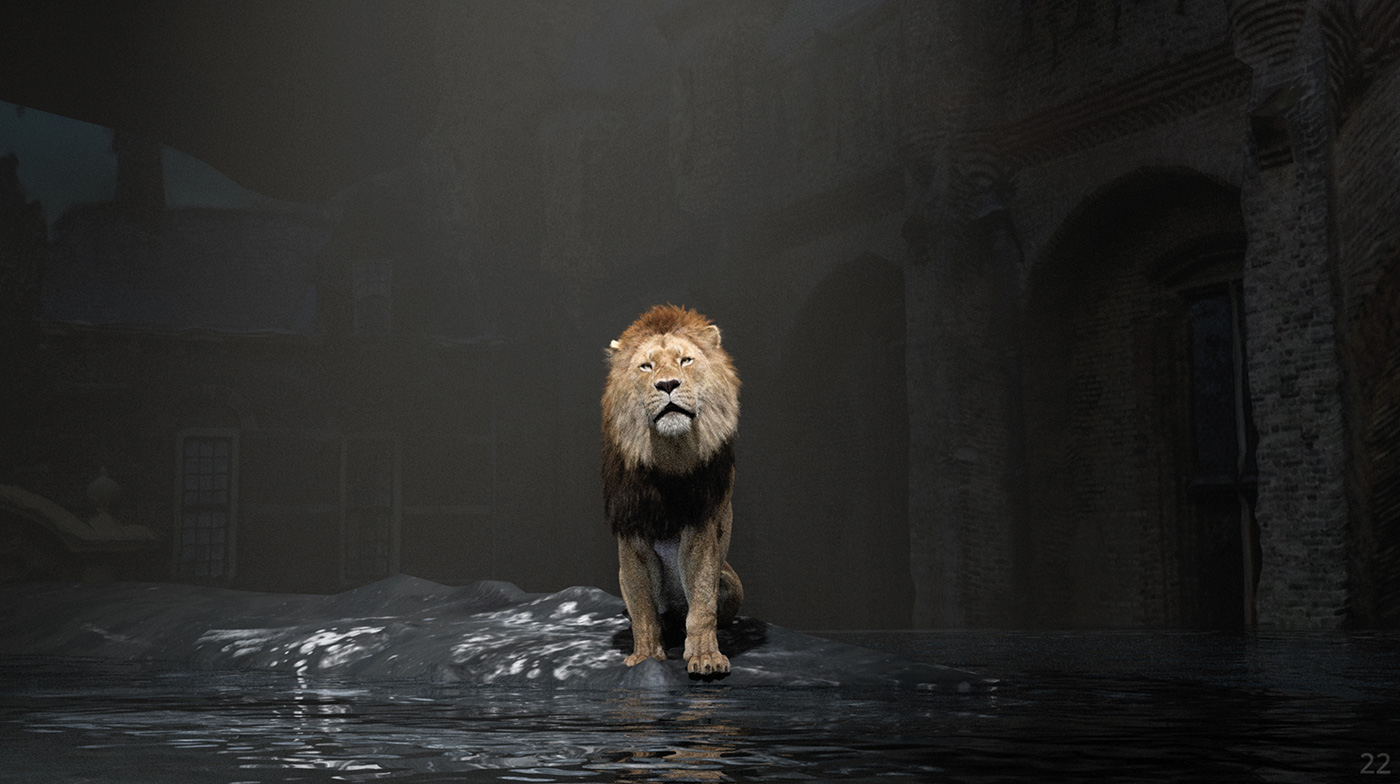
Lion’s Court is a cinematic short opera in which the Binnenhof—the seat of Dutch Parliament in The Hague—is reimagined as a virtual stage where history dissolves into myth. Inspired by the discovery of 14th-century lion bones at the site and by stranded whales as omens, Lukács & Broersen collaborated with composer and political scientist Bram Kortekaas to reinterpret Goethe’s Faust’s vision of redemption. At its center stands the lion Faust, sung by baritone Michael Wilmering—a despot in pursuit of a freedom that consumes itself, a mirror of imperial ambition on the verge of collapse. The artists also drew on the 1650 writings of Johan de Witt, the republican Grand Pensionary, whose words are voiced by the whale (alto-mezzo Carina Vinke), rising from beneath the flooded foundations of the Binnenhof. De Witt believed that a true republic is not ruled by the whims of a single individual, but rooted in the principles of freedom and equality—the very foundations of democracy. In Lion’s Court, a digital hortus conclusus unfolds: a fluid, enclosed world where power, morality, and prophecy converge, and where the myths of the past reverberate through the politics of the present.
Margit Lukács and Persijn Broersen are an Amsterdam-based artist duo exploring the entanglements between nature, culture, and technology. Their work includes films, digital animations, and spatial installations that investigate how media shapes our perception of the natural world. Graduates of Graphic Design at the Gerrit Rietveld Academie, they completed their MFA at the Sandberg Institute and were artists-in-residence at the Rijksakademie in Amsterdam. Broersen & Lukács’ practice is rooted in media theory, art history, and mythology. Drawing from cinematic, scientific, and historical sources, they reimagine landscapes and natural phenomena through digitally layered environments. Their work often reflects on the politics of representation and the appropriation of nature, reconfiguring dominant narratives through fragmented, multi-perspective storytelling. Their installations and films have been widely shown internationally, including at the Stedelijk Museum Amsterdam (NL), Centre Pompidou (FR), FOAM (NL), MUHKA (BE), Centraal Museum (NL), MacKenzie Art Gallery (CA), WRO Biennale (PL), Biennale of Sydney (AU), Rencontres Internationales (HKW Berlin, Louvre/Grand Palais/CWBP, Paris), and Wuzhen Biennale (CN). In 2024, they represented the Netherlands at the Gwangju Biennale. Their film I Wan’na Be Like You was nominated for the Tiger Award/IFFR 2024.
Antoine Chapon : Al Basateen - Documentary | dcp | color | 24:41 | France | 2025
Antoine Chapon
Al Basateen
Documentary | dcp | color | 24:41 | France | 2025
In 2015, the Basateen al-Razi district of Damascus was razed to the ground as punishment for the population’s uprising against Bashar al-Assad’s regime. This area is set to be replaced by Marota City, a modern and connected district featuring 80 skyscrapers. Ten years later, having lost everything, two former residents reflect on their neighborhood, where their homes and the oldest orchards in Damascus once stood. Through their testimonies and the repurposing of regime-produced 3D animations, memory is awakened and resists this deliberate erasure.
Antoine Chapon (b. 1990, France) is a filmmaker and multidisciplinary artist. His work creates hybrid forms using cinema, CGI animation and archives. His first short film "My Own Landscapes" premiered in Visions du Reel where it won the Best Short Film Award. It was then selected in more than 40 festivals, such as Sundance, Telluride, Palm Springs, Sarajevo and Premiers Plans. His work has been showcased at ZKM|Karlsruhe, Centre Pompidou, the 17th Venice Architecture Biennale and the Singapore Art Museum. He is a Berlinale Talents alumnus and he is currently writing his first feature documentary.
Dina Mimi : The Melancholy Of This Useless Afternoon Ii - Experimental film | mov | color | 13:0 | Palestine | 2022
Dina Mimi
The Melancholy of this useless afternoon II
Experimental film | mov | color | 13:0 | Palestine | 2022
The Melancholy of this Useless Afternoon, chapter 2 (2023, 11:25) explores the shared gestures between the fugitive and the smuggler, and their relationship to being seen. The melancholy of this useless afternoon researches the links between the fugitive and the smuggler, their shared gestures and relationships to being seen. By escape and flight, risking capture or death, the fugitive works to keep themself hidden. The smuggler, however, moves with stealth, using gestures to hide things, often close to their body.
Dina Mimi is a Palestinian visual artist and filmmaker who is based between Palestine and the Netherlands. Mimi works with experimental filmmaking and lecture performances that research the question of how and when bodies become sites of resistance. This question finds its material interest in moving images, especially found footage, that is discarded and therefore deemed invaluable. Understanding editing as a playground, Mimi plays with opacity in moving images by seeking to brush up against footage which desires to be ungraspable or is in the act of vanishing. This is a continuous attempt at non-linear narration as a way of disfiguring one’s.
Christoph Girardet subverts the conventional cinematic narrative of the classic Hollywood film Mr. Smith Goes to Washington. The plot does not progress; the neoclassical architecture of the Lincoln Memorial becomes the setting for a ritual in which the protagonist loses himself among the building’s pillars. Carlos Irijalba examines movements between animate and inanimate matter, and their shifts under the effect of gravity or through geological cycles. Broersen & Lukács depict the Dutch Parliament in The Hague as a digital ruin, and, at its centre, the lion Faust — a spectral figure in search of a freedom that devours itself, on the verge of collapse. Lin Htet Aung explores the suffering and resilience of the Burmese people through excerpts from broadcasts aired on national television. In 2015, in Damascus, the district of Basateen al-Razi and its orchards were razed to punish the population that had risen up against the regime. Antoine Chapon films two former residents recalling their lives in this neighbourhood. Dina Mimi, in her film shot in Palestine, Jordan and the Netherlands, explores gestures common to both the fugitive and the smuggler.
Special screening
silent green Kulturquartier | Betonhalle | Cinema 1
Gerichtstrasse 35, 13347 Berlin / Subway: Wedding station, U-Bahn line U6 / S-Bahn lines S41, S42, S46
Free admission
Carte blanche to Albert Serra
For this carte blanche, Albert Serra has selected various film excerpts and short films, which he will introduce and share with the audience, offering a unique perspective on his ongoing reflections and artistic practice.
Screening
silent green Kulturquartier | Betonhalle | Cinema 1
Gerichtstrasse 35, 13347 Berlin / Subway: Wedding station, U-Bahn line U6 / S-Bahn lines S41, S42, S46
Free admission
Closing screening
"Like a Utopia"
Eva Giolo : Memory Is An Animal, It Barks With Many Mouths - Experimental film | 16mm | color | 24:0 | Belgium | 2025
Eva Giolo
Memory Is an Animal, It Barks with Many Mouths
Experimental film | 16mm | color | 24:0 | Belgium | 2025
Eva Giolo’s latest work takes us to Val Gardena, where people still speak Ladin, a Rhaeto-Romance language. Giolo subverts the usual representation of mountain communities to deliver a portrait of a precious cultural heritage in constant evolution. Here, the inhabitants preserve and nurture their culture for future generations with awareness of the world and creativity. Shot on 16mm film sensitive to the grandeur and fragility of nature, Memory Is an Animal, It Barks with Many Mouths is an exquisite essay on the vital importance of linguistic diversity.
Eva GIOLO (1991, Belgium) is an artist working in film, video and installation. Her work places particular focus on the female experience, employing experimental and documentary strategies to explore themes of intimacy, permanence and memory, along with the analysis of language and semiotics. Her films, installations and other projects have been widely exhibited internationally at festivals, museums and galleries, including Sadie Coles HQ, Viennale, FIDMarseille, IFFR, New York Film Festival and many others. Her film Flowers blooming in our throats (2020) was nominated for The European Film Award and awarded the Top Prize at THIS IS SHORT 2021. She also received the National Award Special Mention at Lago Film Fest 2021, the Jury Special Mention at First Crossings Festival and the Critics’s Jury Award at 25FPS Festival. She is a laureate from HISK (2018-2020) and a former art resident at SeMA NANJI (2020), the year-long film–writing residency Conversation #4 (CVB, GSARA and Beursschouwburg), CASTRO studio program (2021), WIELS (2021), RU Unlimited New York and Fogo Island Arts (2022). Her films are distributed by elephy and Light Cone.
Jean-baptiste Perret : Le Quotidien - Video | hdv | color | 5:11 | France | 2025
Jean-baptiste Perret
Le quotidien
Video | hdv | color | 5:11 | France | 2025
Filmed in the gorges of the Haut-Allier, Le quotidien is the portrait of a man who has chosen to live alone and apart, in a cabin at the edge of a forest. The images record his everyday gestures, tied to the essential needs of human existence: drinking, eating, washing, mending, beginning again. “Like an anthropologist-filmmaker, Jean-Baptiste Perret chooses a site — often rural — and immerses himself in it for long periods. He builds relationships with the people he meets there, filming their living spaces and their knowledge. Shot in the gorges of the Haut-Allier, Le quotidien portrays a man who has chosen to live alone, removed from human society, in a cabin at the forest’s edge. The videomaker captures his daily gestures, linked to the essential needs of human life: drinking, eating, washing, repairing, starting again. The film forms part of a broader enquiry into marginal life paths within rural contexts, in which other relationships to the living world, to territory, and to ecology are invented.” (Work Method, Guillaume Désanges and Coline Davenne)
After studying ecology, Jean-Baptiste Perret worked for several years in environmental protection within local authorities. A 2018 graduate of the École des Beaux-Arts de Lyon, he has continued to pursue his interest in rural contexts through a filmmaking practice that takes the form of films and video installations. His work is driven by the question of care, which he understands as an attentiveness to vulnerability, inseparable from the regenerative capacities of individuals. His approach is grounded in documentary enquiry and draws on methods borrowed from anthropology that challenge conventional criteria of objectivity, placing affect at the very centre of the research process. He is also inspired by microhistory, which seeks to step away from official narratives of the many in order to focus on individuals and their own ways of understanding the world. Jean-Baptiste Perret films people he encounters in their everyday situations, engaging with their life paths, their surroundings, and their skills. Through varying degrees of staging — always leaving room for improvisation — subjective accounts and fictional strategies intermingle. His work has been shown at the Institut d’art contemporain (IAC) in Villeurbanne as part of the 15th Lyon Biennale, at the Musée d’art contemporain de Lyon, at Fondation d’entreprise Ricard (Paris), at the Musée de la Chasse et de la Nature (Paris), at the Chapelle Saint-Jacques (Saint-Gaudens), at the Institut national d’histoire de l’art (Paris), at FID Marseille, at the Festival Hors-Pistes at the Centre Pompidou, at the États généraux du documentaire in Lussas, and more recently at the 66th Salon de Montrouge. Jean-Baptiste Perret is represented by Galerie Salle Principale in Paris.
Uriel Orlow : Forest Futures - Experimental film | 4k | color | 28:0 | Switzerland, Italy | 2024
Uriel Orlow
Forest Futures
Experimental film | 4k | color | 28:0 | Switzerland, Italy | 2024
Forest Futures is a poetic and thought-provoking film that visits ancient forest ecosystems from the earth’s past, imagines future forests in the face of changing climate and shows the forest as a multi- species school, where children practice more-than-human co-existence. Forest Futures explores the forest as a site of deep time, ecological transformation, and interspecies learning. Set in the mountainous region of South Tyrol, the film traces a journey from ancient fossilized forests that thrived over 280 million years ago through to speculative visions of future forests in a rapidly warming world. Combining scientific research with imaginative storytelling, the film reimagine the forest as both a teacher and a protagonist.
Uriel Orlow is a Swiss-born artist who lives and works between Lisbon, London and Zurich. In 2023 he was the recipient of the prestigious Prix Meret Oppenheim/ Swiss Grand Prix of Art. Orlow’s work is presented widely in international survey shows including at Dunkerque Triennale, Kochi Biennale, 12th Berlin Biennale for Contemporary Art, Kathmandu Triennale, Manifesta 12, Palermo, 2nd Yinchuan Biennial, 13th Sharjah Biennial, 7th Moscow Biennial , EVA International, Limerick, 2nd Aichi Triennale, Nagoya , Bergen Assembly, Manifesta 9, 54th Venice Biennale and elsewhere. Recent solo exhibitions include Galeria Avenida da Índia, Lisbon (2025); MCBA, Lausanne (2024); Casa da Cerca, Alamada (2022); Kunsthalle Nairs, Scuol (2021); La Loge, Brussels (2020); Kunsthalle Mainz, Germany (2020); Privas Art Centre, France (2019); Les Laboratoires d’Aubervilliers, Paris (2018); Market Photo Workshop & Pool, Johannesburg (2018); Kunsthalle St Gallen (2018) and many others. Orlow’s films been screened at Tate Modern, London; the International Short Film Festival, Oberhausen; Tank.tv; Whitechapel Gallery, London; Locarno Film Festival; Videonale Kunstmuseum Bonn; BFI London; The BBC Big Screen, Manchester; Arnolfini Bristol; Espace Croisé CAC Roubaix; and at the Biennale of the Moving Image, Geneva, and others.
Susannah Sayler, Edward Morris : The Amazon Is Elsewhere - Experimental film | 4k | color and b&w | 12:0 | USA | 2025
Susannah Sayler, Edward Morris
The Amazon is Elsewhere
Experimental film | 4k | color and b&w | 12:0 | USA | 2025
Amazon is Elsewhere is a short film that mediates on the unknowability and power of the Amazon for those who do not live within it. For many, the Amazon symbolizes “the lungs of the earth” or “nature” itself. For the indigenous people of the region, many of whom have no separate word for jungle or forest, it is simply home. The film centers around a building on the edge of the jungle: a mélange of architectural styles where trees break through the concrete floors; plants grow in the faux Corinthian columns; and jaguars made from ceramic tiles guard the entrance. AI-generated images express forces at play in both the building and the jungle that are difficult to parse as being malevolent or redemptive. The film is part of a body of work that considers how to represent the Amazon in light of its multiplicity of refracted meanings.
Susannah Sayler and Edward Morris (Sayler/Morris) work with video, photography and installation to examine our changing notions of nature, culture, and ecology. Their work is often place-based and focused on historical research. They have been awarded numerous fellowships including the Guggenheim Fellowship (2023) New York Artist Fellowship (2016), the Smithsonian Artist Research Fellowship (2014), the Center for Art and Environment Research Fellowship (2013), and the Loeb Fellowship at Harvard Graduate School of Design (2008). Their work has been exhibited broadly in the U.S. and internationally, including at the Massachusetts Museum of Contemporary Art, the Kunsthal in Rotterdam, the North Carolina Museum of Art, the Belvedere Museum, and the Southeast Center for Contemporary Art. Sayler currently teaches in the Film and Media Arts Department at Syracuse University, while Morris is Executive Director of Marble House Project. Their archives are collected by the Nevada Museum of Art / Reno, Center for Art and Environment. In 2006, Sayler/Morris co-founded The Canary Project, a studio that produces visual media and artworks that deepen public understanding of climate change. In 2021, they founded Toolshed, a platform for connecting ecological thought and action.
Benjamin Balcom : The Phalanx - Experimental doc. | 16mm | color | 13:30 | USA | 2025
Benjamin Balcom
The Phalanx
Experimental doc. | 16mm | color | 13:30 | USA | 2025
Letters from the Ceresco community trace the fragility of harmony, the dream of life in association, the frictions that give way to fracture. Members of the phalanx drift apart, lingering in private corners, suspended in speculative time.
Ben is a filmmaker and educator based in Milwaukee, Wisconsin, where he is a professor of Film, Video, Animation, and New Genres at the University of Wisconsin–Milwaukee. His most recent films explore the histories and afterlives of radical social ideals and communal living. These projects combine archival research and various modes of filmmaking to reflect on alternative ways of living. Drawing from speculative fiction, critical theory, and utopian poetics, his work often revisits the sites of now-defunct experimental schools and intentional communities, using cinema as a space for both research and imagination. Featuring landscapes both real and imagined, these films engage collective memory while speculating on futures beyond the limits of capitalism. Earlier in his practice, Balcom worked with abstraction, introspection, and formal experimentation, exploring the tensions between perception and communication, and probing the materiality of film itself. These threads continue to inform his evolving approach to nonfiction and poetic cinema. Balcom’s films have screened internationally at venues and festivals including the Museum of the Moving Image, International Film Festival Rotterdam, European Media Arts Festival, IndieLisboa, Media City Film Festival, and Ann Arbor Film Festival. He has received awards from Onion City, Athens International Film + Video Festival, and Ann Arbor. In 2023, he was a research fellow at the Center for 21st Century Studies. He also co-founded Microlights Cinema, a microcinema that ran from 2013 to 2023, dedicated to bringing experimental film and video art to audiences in Milwaukee.