Catalogue > Faire une recherche
Résultats pour : tirtza

Tirtza Even
Parallel, Work in progress demo
Doc. expérimental | hdv | couleur | 10:0 | USA | 2024
Parallel (work in progress demo) tells the story of the fissure–the modes of blindness and longing, of not seeing and being unseen, of being together yet also apart–at the heart of an intimate exchange. The installation is constructed of an elongated strip of portraits which can be viewed from both front and back. On either side of the installation are displayed close-up faces of a range of individuals. Each of the individuals stares at a parallel figure sitting across from them, their back to the camera. The parallel figure’s face is visible from the reverse side of the installation, as is the back of the person we saw on the front side. Beyond the more immediate scene of the gaze exchange between the figures, we can see, through cracks in the wall behind them, a hint of an open landscape. At an almost undetectable speed, the two rows of portraits–those who are facing us and those who are not–drift along, and then off of the edge of the screen. New pairs continue to slip in endlessly. The pace of the rows’ drift (front and back), however, is slightly mismatched. This gap in the rate of their movement results in a subtle dissonance: the parallel figures slip away from each other as well as away from us. As they drift, they intermittently obscure the individuals they face. Short texts–segments of online messages written to an unknown other–are, at irregular intervals, read out loud by one of the visible characters. The same text might be performed by different people. Several distinct texts might be read by a few characters at once. The link between who we see and the story we associate with them is, thus, like their image, unsettled, interrupted and displaced. The video attached is a work in progress edit demonstrating two possible scales for the project's display.
An experimental documentary maker for over twenty years, Even has produced work which ranges from feature-length documentaries to multi-channel installation and interactive video work, and which, relying on almost imperceptible digital manipulation of slow and extended moments, aims to depict the less overt manifestations of complex, and at times extreme, social/political dynamics in specific locations (e.g. Palestine, Turkey, Spain, the U.S. and Germany, among others). Even’s work has been shown at the Museum of Modern Art, NY, at the Whitney Biennial, the Johannesburg Biennial, as well as in many galleries, museums and festivals in the U.S., Canada and Europe, including Doc Fortnight at MoMA, NY, Rotterdam Film Festival, RIDM Film Festival, Montreal, New York Video Festival, Lincoln Center. It has won numerous grants and awards, including 3ARTs Visual Arts and Next Level Awards, Fledgling Distribution Fund, Artadia Award, Media Arts Award, the Jerome Foundation, Individual Artists Program Awards, NYSCA, and many others; and has been purchased for the permanent collection of the Museum of Modern Art (NY) and the Jewish Museum (NY) among others. Even has been an invited guest at many conferences and university programs, including the Whitney Museum Seminar series, the Digital Flaherty Seminar, Open Doc Lab at MIT, SXSW Interactive Conference, Art Pace annual panel, ACM Multimedia and others. Her work is distributed by Heure Exquise, France and Video Data Bank (VDB). Even is Professor at the School of the Art Institute of Chicago’s Film, Video, New Media, and Animation department.

Tirtza Even, Nadav Assor
Chronicle of a Fall
Doc. expérimental | mov | couleur | 60:0 | USA | 2020
"Chronicle of a Fall" est un documentaire expérimental sous la forme d’une installation multicanale immersive. Le projet dépeint l'expérience Fragmentée de six migrants aux États-Unis, en utilisant des caméras corporelles et une capture volumétrique.
Tirtza Even est documentariste et vidéaste depuis plus de vingt ans, et a produit des vidéos linéaires et interactives, représentant les aspects les moins évidents de dynamiques sociales et politiques complexes et parfois extrêmes dans des lieux spécifiques (par exemple en Palestine, en Turquie, en Espagne, aux États-Unis et en Allemagne, entre autres). Son travail a été présenté notamment au MoMa - Museum of Modern Art, New York (USA); à la Whitney Biennale, New York (USA), et à la Biennale de Johannesburg (Afrique du Sud). Il a également été présenté dans de nombreuses autres galeries, musées et festivals aux États-Unis, en Israël et en Europe, notamment au Festival du film de Rotterdam (Pays-Bas); au San Francisco International Film Festival (USA); et au New York Video Festival, Lincoln Center, New-York (USA). Elle a obtenu de nombreuses bourses et récompenses, notamment le Fledgling Distribution Fund; le Artadia Awards, Chicago (USA) [premier prix]; le Golden Gate Awards Certificate of Merit, San Francisco International Film Festival (USA); le Best Experimental Film au Syracuse Film Festival (USA); le Media Arts Award de The Jerome Foundation, New York (USA); le premier prix de L'immagine Leggera Festival, Palerme (Italie); et un Individual Artists Program Award du NYSCA – New York State Council on the Arts (USA). Ses œuvres ont notamment été acquises par la collection permanente du Museum of Modern Art, New York (USA); du Jewish Museum, New York (USA), et du Israel Museum, Jérusalem (Israël). Elle a été invitée à participer à plusieurs conférences et programmes universitaires, dont la Whitney Museum Seminar Series, New York (USA); le Digital Flaherty Seminar, New York (USA); la SXSW Interactive Conference, Austin (USA); le panel annuel Art Pace, San Antonio (USA); ACM Multimedia, San Francisco (USA); la conférence PSI - Performance Studies International, Providence (USA); la conférence SLSA - Society for Literature, Science, and the Arts, Chicago (USA) et plusieurs autres. Son travail est distribué par Heure Exquise, (France); VDB - Video Data Bank (USA), et GIV - Groupe Intervention Video (Canada). Elle est Maître de conférence au département Film, Vidéo, Nouveaux Médias et Animation de la School of the Art Institute of Chicago (USA). Nadav Assor (né en 1979, États-Unis / Israël) vit et travaille à Providence (USA). Dans son travail, il s'intéresse aux systèmes de médiation technologique, souvent d'origine militaro-industrielle: des caméras de suivi oculaire aux drones, en passant par les dispositifs de téléprésence et les environnements de réalité mixte. Dans son travail, il réutilise de manière critique des versions low-fi de ces systèmes, afin de créer des communautés, des relations, des dialogues humains et intimes, ainsi que des expériences audio-visuelles-tactiles profondes. Ses vidéos, installations et performances ont été présentées dans des festivals de cinéma, des musées, des galeries et des salles de spectacle en Amérique du Nord, en Europe et en Asie. Parmi les lieux récents, citons entre autres Arsenal Berlin (Allemagne); le Oberhausen International Short Film Festival (Allemagnue; "Video Vortex XI" à la biennale Kochi-Muziris, Kochi (Inde); le Hong-Gah Museum Taipei (Taïwan); La Casa Encendida, Madrid (Espagne); la Edith-Russ Haus, Oldenburg (Allemagne); la Transmediale, Berlin (Allemagne); la Soundwave Biennial, San Francisco (USA); Residency Unlimited, New York (USA); la Julie M Gallery, Toronto (Canada) et Tel Aviv (Israël); et la Fridman Gallery, New York (USA). Son travail a fait l'objet de critiques dans des publications telles que Artforum, Vice Motherboard, Art Monthly UK et Haaretz, et a récemment été présenté dans "Rêvolution Digitale", une collection à propos de l'art numérique international coproduite par la chaîne Museum TV de CANAL. Ses œuvres vidéo à canal unique sont distribuées par Video Data Bank, Chicago (USA). Il est Maître de conférence en expanded media au département Studio Art du Connecticut College, New London (USA), et directeur du Ammerman Center for Arts and Technology, New London (USA). Il est actuellement membre de l'Open Documentary Lab du MIT – Massachusetts Institute of Technology, Cambridge (USA).
Tirtza Even
Icarus
Doc. expérimental | dv | couleur | 12:0 | Israel, Espagne | 2004
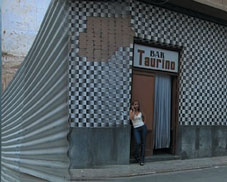
Icarus / Tirtza Even Icarus fut abattu à Cartagène, en Espagne. La ville de Cartagène située sur la côte Méditerranéenne, a été un site de grandeur et de décadence (où alternaient manifestations de pouvoir et troubles politiques), site idéal pour un déploiement de cultures et de régimes. Romains, Byzantins et Ottoman, tout comme l'Église Épiscopsale et la République Espagnole s'y sont mêlés. Durant cette période la ville servait (entre de longs moments de décrépitude, d'épidémies, de guerres, de destruction puis de récupération) de port fructueux, de base militaire à valeur stratégique et de centre industriel et commercial riche en minerais, mines de plomb et d'argent. De nos jours, c'est une petite ville périphérique, habitée en grande partie par une communauté émigrante du Maroc, des travailleur d'un jour, elle aboute pour élargir le tourisme et l'attrait culturel de ses exhumations avec des restes d'un théâtre romain, et d'un amphithéâtre situé sous des arènes, et d'un grand nombre militaires, marines et sites culturels historiquement pointus , tout comme son Université renommée (qui réside dans un hôpital militaire rénové) -- une série de maisons sont démolies, sous surveillance, dans des sites par intermittence dispersés dans le centre de la ville, afin d'être ré-occupés dans un futur proche par des appartement-hotel de luxe. Au moment de la réalisation d'Icarus, les signes variés de pouvoir et d'entropie, de centralité et de marginalité, qu'elle soit militaire, politique, éthnique, économique, culturelle ou sociale, étaient exposés de façon éclectique dans l'architecture superposée et fracturée et dans l'arène humaine. La vidéo éditée pour Icarus, consiste en 12 min. de plan inversé- un impossible re-tour ou "torchon temporel" -- à travers des sites circulaires filmés à Cartagène, chacun cousu ensemble comme rapiécés, dans l'espace et le temps, du paysage urbain d'une ville. L'acte de tisser: des moments et des en- et hors- scènes , trahit des fissures inédites dans lesquelles différents personnages glissent, dans lesquelles ils convergent, ou disparaissent. Ainsi le paysage pêle et se déplie, se retournant sans vraiment arriver à ce moment intact d'aspiration et d'origine. L'oeuvre est formellement engagée dans le louvoiement de paysages fragmentés, utilisant les mouvements de la caméra comme moyen pour commenter - ou occuper et ainsi interrompre -- ces déterminants politiques et sociaux du paysage.
Tirtza Even, Bio Vidéaste en pratique et documentariste durant ces dix dernières années, Even a réalisée des travaux vidéo à la fois linéaires et intéractifs représentant des manifestations complexes peu évidentes et quelquefois des dynamiques socio-politique extrêmes, dans des endroits spécifiques (comme par exemple la Palestine, la Turquie,l' Espagne, les États Unis, et l'Allemagne parmi tant d'autres). Son oeuvre est parue au Musée d'Art Moderne de New York, à la Biennale de Whitney, Johannesburg ainsi que d'autres festivals, galeries, et musées aux États-Unis, en Israël, et en Europe, et a été acheté pour des collections permanentes par le Musée d'Art Moderne (New York), le Musée Juif (New York), Le Musée d'Israël (Jérusalem), pour ne citer qu'eux. Elle a été invitée et oratrice lors de nombreuses conférences et de programmes universitaires, dont "the Whitney Museum Seminar series", "the Digital Flaherty Seminar", "Art Pace annual panel", "ACM Multimedia"," The Performance Studies International conference" (PSI), "The Society for Literature, Science", and "the Arts conference" (SLSA) et autres.
Tirtza Even
2nd Person
Doc. expérimental | mp4 | couleur | 55:0 | USA | 2022
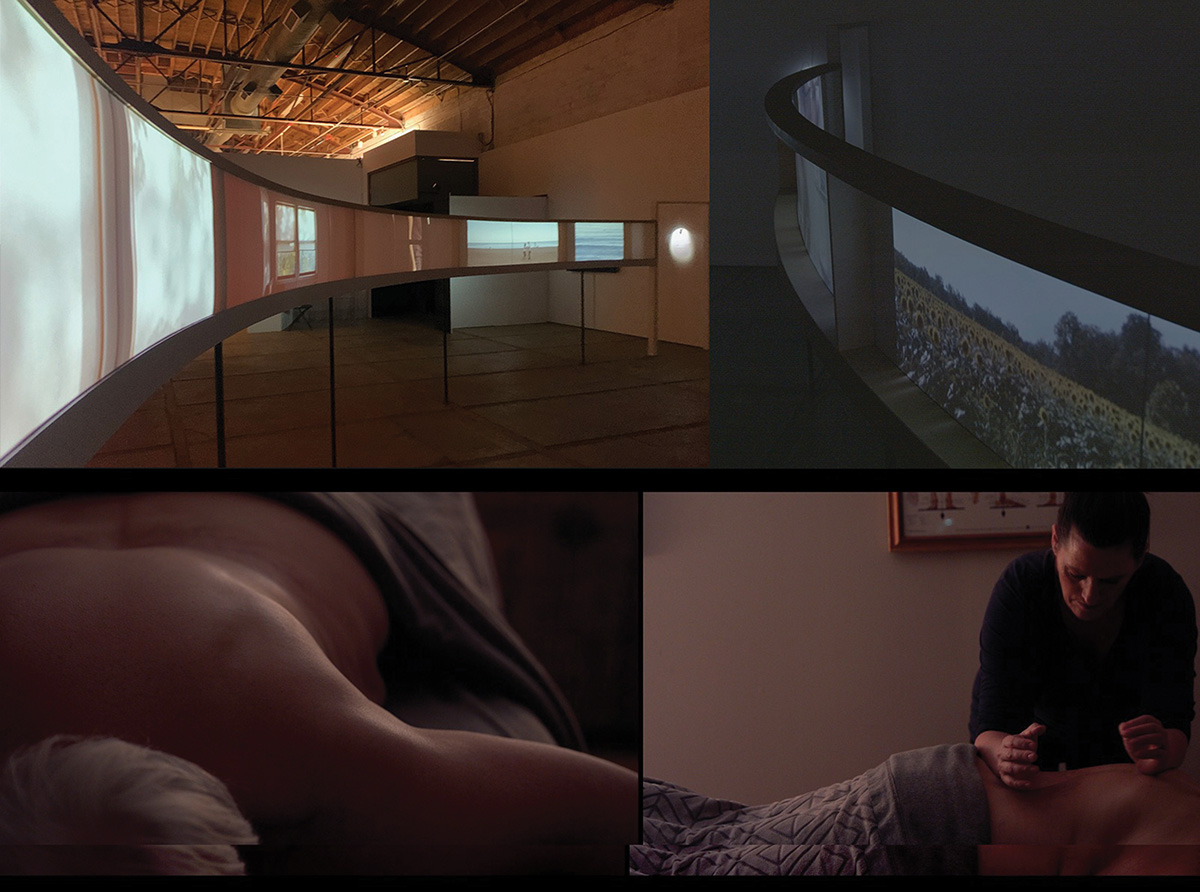
The sonic fabric of 2nd Person, a multi-channel video installation, is formed through an array of women’s voices reflecting on topics such as coming of age, sex, aging and death. Visual shifts within nine images spatially strung together, correspond to the voices loosely, reactive to the scenes invoked by the women’s stories, and to the emotive range of the voices’ individual and combined music. The piece includes conversations with women of different ages, backgrounds and circumstances, who reflect on their past and current hopes and anxieties, on their understanding of the concept of love, on a de-centering of self that comes with parenting, on touching and inhabiting an aging body, on their discomfort with an imposed gender label, and more. The protagonists are documented performing distinct activities (e.g. producing art, walking, cooking, playing an instrument, exercising etc.) in locations ranging from Illinois, Michigan, Arizona, California and New York, to Egypt and Romania. Additional footage reflecting one of the women’s dreamscape, was shot in an underwater village in Argentina. The video is 55 min. long, and is composed of a concurrent display of short clips that focus on a specific topic, and are each told by a single participant. The clips are threaded to form a web of themes and motifs, both verbal and visual, together generating an ongoing conversation (without beginning or end) on growing up and aging, friendship, love, motherhood and the death of parents.
An experimental documentary maker for over twenty years, Even has produced work which ranges from feature-length documentaries to multi-channel installation and interactive video work, and which, relying on almost imperceptible digital manipulation of slow and extended moments, aims to depict the less overt manifestations of complex, and at times extreme, social/political dynamics in specific locations (e.g. Palestine, Turkey, Spain, the U.S. and Germany, among others). Even’s work has been shown at the Museum of Modern Art, NY, at the Whitney Biennial, the Johannesburg Biennial, as well as in many galleries, museums and festivals in the U.S., Canada, Israel and Europe, including Doc Fortnight at MoMA, NY, Rotterdam Film Festival, RIDM Film Festival, Montreal, New York Video Festival, Lincoln Center. It has won numerous grants and awards, including 3ARTs Visual Arts and Next Level Awards, Fledgling Distribution Fund, Artadia Award, Media Arts Award, the Jerome Foundation, Individual Artists Program Awards, NYSCA, and many others; and has been purchased for the permanent collection of the Museum of Modern Art (NY), the Jewish Museum (NY), the Israel Museum (Jerusalem), among others. Even has been an invited guest at many conferences and university programs, including the Whitney Museum Seminar series, the Digital Flaherty Seminar, Open Doc Lab at MIT, SXSW Interactive Conference, Art Pace annual panel, ACM Multimedia and others. Her work is distributed by Heure Exquise, France and Video Data Bank (VDB). Even is Professor at the School of the Art Institute of Chicago’s Film, Video, New Media, and Animation department.