Catalogue > List by artist
Browse the entire list of Rencontre Internationales artists since 2004. Use the alphabetical filter to refine your search. update in progress
Michèle Rollin
Catalogue : 2025A la recherche du Berlin perdu | Documentary | 4k | color | 90:0 | France | 2023
Michèle Rollin
A la recherche du Berlin perdu
Documentary | 4k | color | 90:0 | France | 2023
For almost 30 years, Michèle Rollin has been filming Berlin as it undergoes metamorphosis. A city symbolizing the innovations, convulsions and European tragedies of the last century, it has undergone unprecedented urban transformation since the fall of the Berlin Wall. Today, the director aims to chronicle these urban upheavals and the memories they erase or transmit, through the protagonists filmed then and now.
Michèle Rollin, born February 28, 1957 in Paris, is a French film director. Trained by Michel Zimbacca, Michèle Rollin worked as an editor with Hubert Knapp, André Voisin, Michel Huillard, Bernard Soulié, Dominique Rabourdin, Michel Vuillermet, Alain Dister, Alain Weiss, Marcel Boudou and Petra Weisenburger. Later, she directed short films. Since 1994, she has devoted herself entirely to documentary filmmaking. Founding member of Ondes sans frontières (OSF) (May 1998), an associative public access channel.
Sébastien Rollot, Pierce Warnecke
Catalogue : 2011Distances | Experimental doc. | dv | color | 26:0 | France | 2009
Sébastien Rollot, Pierce Warnecke
Distances
Experimental doc. | dv | color | 26:0 | France | 2009
A partir d`images filmées sur les îles de Java et de Bali, ce film vient restituer la sensation et l`abstraction de situations rencontrées au hasard de la route. Il n`y a aucun dialogue ni commentaire. Cette errance cinématographique s`est déroulée sans repérage. Qu`il s`agisse d`un regard caméra qui questionne la présence du spectateur, de l`effort physique d`hommes au travail, d`une cérémonie religieuse agitée. On ne voit que des visages, des corps, des expressions, sans véritablement connaître la situation en jeu. Elle est ici accessoire, elle importe peu. On ne s`intéresse alors qu`à la sensation et au mouvement dans lequel on est entraîné. Sans repère, on erre dans le film et l`on s`accroche au langage des corps, à l`émotion d`une image ou à l`histoire qu`elle peut nous raconter. Nous sommes dans un rêve, une mémoire fragmentée. On se laisse porter par la juxtaposition d`images brutes, sans artifices. Des hommes autour d`un feu, un train la nuit, des femmes qui se maquillent. Les séquences documentaires sont traitées de façon abstraite, sans visée anthropologique explicite. Ce film silencieux s`est prolongé par une collaboration sonore avec Pierce Warnecke, compositeur de musique drone.
Sébastien Rollot Né en 1983, Il étudie l`anthropologie et la sociologie en France et au Québec avant d`intégrer la formation de réalisation documentaire Creadoc à Angoulême. Installé sur Lyon, il est auteur réalisateur de films indépendants, membre du collectif Trois Petits Points qui regroupe des artistes travaillant autour de la musique et de l`image notamment. Ses différents films poursuivent une description documentaire du réel. Toujours dans un rapport qui privilégie la sensation et l`abstraction, ses réalisations se construisent sous forme d`essai cinématographique. Sans renier radicalement une narration linéaire, ses travaux se dirigent plutôt sur la piste d`un cinéma fragmenté et expérimental, essayant de questionner la frontière des relations entre le cinéma documentaire, l`art vidéo, et leurs fictions. Il travaille désormais sur l`écriture d`un film qui creuse la notion d`exil dans la ville. Cette réalisation débutera dans le cadre de la résidence des Inattendus dès 2011.
Stefan Roloff
Catalogue : 2011LINDEN HOTEL | Video installation | dv | color | 27:0 | Germany | 2010
Stefan Roloff
LINDEN HOTEL
Video installation | dv | color | 27:0 | Germany | 2010
LINDEN HOTEL, Video Installation by Stefan Roloff The phenomenon of political imprisonment is timeless. Yet, its victims can only speak to us from the past. It is its nature to be silenced in the present. The group of former Stasi- prisoners I interviewed have never before spoken on tape or in public. To remove the boundaries of time I have interviewed them as silhouettes. At first glance, this gives them an air of illegality. The viewer gets the impression that they can?t reveal their identity. Faces can be misleading. Beauty, gender, age, race or other categories disappear when we view a silhouette. What remains is the tone of their voice and their body- language, keys to their subconscious. It is my goal to bring the experiences of former political prisoners into the present and communicate the immediacy they feel. Though they were released from jail decades earlier, their trauma continues to haunt them and - as many of the interviews show ? it extends into the lives of their children. Initially, I projected the talking silhouettes of nine former prisoners on to the walls of their former cells at the Stasi- prison in Potsdam.
Stefan Roloff is an independent artist and film maker, working in New York and Berlin. In 1984, he was invited to experiment on prototypes of digital video and imaging computers at the New York Institute of Technology. Here, he created ?Face?, his first Moving Painting which, produced by Peter Gabriel, was the predecessor of his video ?Sledgehammer?. Subsequently, he continued to combine his paintings and videos in collaborations with musicians. (?Zaar? with Gabriel, ?Dominic Christ? with Suicide, ?Big Fire? with Jazz musician Andrew Cyrille.) From 1989 to 1999, he worked on the documentary film ?Seeds?. Traveling through remote areas of West Virginia, he followed the story of a 22- year old woman who committed suicide in 1981 in an isolation cell at the State Prison for Women. The film was combined with an installation, ?Pence Springs Resort?, a life-size three-dimensional photographic rendering of the isolation cell which the viewers could physically enter. His second documentary film ?The Red Orchestra?, is a portrait of his late father, Helmut Roloff, a resistance fighter against the Nazis. It was nominated best foreign film 2005 by the Women Critics Circle. Currently, Stefan Roloff is preparing "Cafe Holland", his first feature film, with Carola Stabe, a former GDR dissident.
Aarnoud Rommens, Ingrid STOJNIC, Bert BALCAEN
Catalogue : 2006Camouflage Comics: Dirty War Images | net art | 0 | color | 0:0 | Belgium, Netherlands | 2005
Aarnoud Rommens, Ingrid STOJNIC, Bert BALCAEN
Camouflage Comics: Dirty War Images
net art | 0 | color | 0:0 | Belgium, Netherlands | 2005
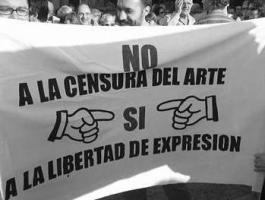
Camouflage Comics: Dirty War Images aims at producing reflections - both in the form of verbal and visual material - on the interplay between art, dictatorship and human rights in general and the legacy of the Argentine "dirty war" (1976-83) in particular, with a focus on comics. Now that the "Process of National Reorganization" is (seemingly) over, and democracy is reinstated, can we also say that there is no more censorship? Or are there only subtle shifts? The site Camouflage Comics: Dirty War Images explores both visually and verbally the ways in which the "Process" (or similar experiences) continues to leave imprints in the representational practices - i.e. in comics and illustrations - of the present and the past. There are roughly two sections in Camouflage Comics. First, there are the comics and illustrations made by graphic artists and scenarists. These visuals have been made especially for this project and have not been published elsewhere (with the exception of the works by Sergio Langer and Guillermo Escalante). These new works are pictorial articulations of what it means to be living in Argentina today, a country still haunted by the specter of the Proceso. At the same time however - while the country seems to be recovering from the economic collapse of 2001, Argentina is gradually bringing the issues of reconstitution and responsibility back to the public sphere, a domain once marked by institutional amnesia and amnesty. Secondly, Camouflage Comics contains essays concentrating on cartoons and comics published during the dictatorship, or during the time of transition from military rule to democracy. These analyses, although they are mainly concerned with the cultural production of a recent past, also shed light on the new comics. Indeed, the two parallel timelines cannot be clearly separated. On the contrary, they continuously intersect, urging us to interpret the `new` in light of the `old` - and vice versa. In addition, this site contains a discussion-blog where these subjects can be explored in full, with a view of generating new visuals/essays and insights - not specifically related to the `case` of Argentina, but covering a large array of topics, ranging from comics, censorship, (restrained) artistic practices, human rights, the institutionalization of memory (...) (Aarnoud Rommens, PAST, PRESENT, TEXT, IMAGE)
Heidi Romo
Titouan Ropert
Catalogue : 2025Le Chant des bêtes | Fiction | 4k | color | 24:12 | France | 2023
Titouan Ropert
Le Chant des bêtes
Fiction | 4k | color | 24:12 | France | 2023
Conceived as an investigation into the heart of slaughterhouse images, Le Chant des bêtes tackles the question of the missing image: what goes on in these secret places, hidden from view, where thousands of animals are killed every day? The obsession of my journalist-character with the amount of violent archive footage he discovers, gradually leading him from shock to action, also guides the direction, borrowing from Dogme95, a style that is both nervous and instinctive.
Born in Grenoble, Titouan joined La Femis in the editing department after a Masters in cinema. Passionate about both editing and directing, his experience has enabled him to experiment with both practices in his own projects and those of others, with a particular taste for genre cinema.
Peter Rose
Catalogue : 2025A Sign of the Times | Experimental video | hdv | color | 1:46 | USA | 2021
Peter Rose
A Sign of the Times
Experimental video | hdv | color | 1:46 | USA | 2021
A veiled metaphor for the instabilities of our times shot with a low-res Flip Camera
Peter Rose’s works in film, video, installation, and performance have received extensive national and international exhibition, including shows at the Whitney Museum, the Museum of Modern Art, the Centre Pompidou, the Yokohama Museum of Art, and more recently at the Fabric Workshop and Museum, the Rotterdam International Film Festival and the Film Society of Lincoln Center. Rose is concerned with new forms of vision, improvisations in fictitious languages, and the pleasures of obscure journeys. The work is included in several major international collections.
Catalogue : 2020Dimensional Excursions (Oculis) | Experimental VR | hdv | color | 17:15 | USA | 2018
Peter Rose
Dimensional Excursions (Oculis)
Experimental VR | hdv | color | 17:15 | USA | 2018
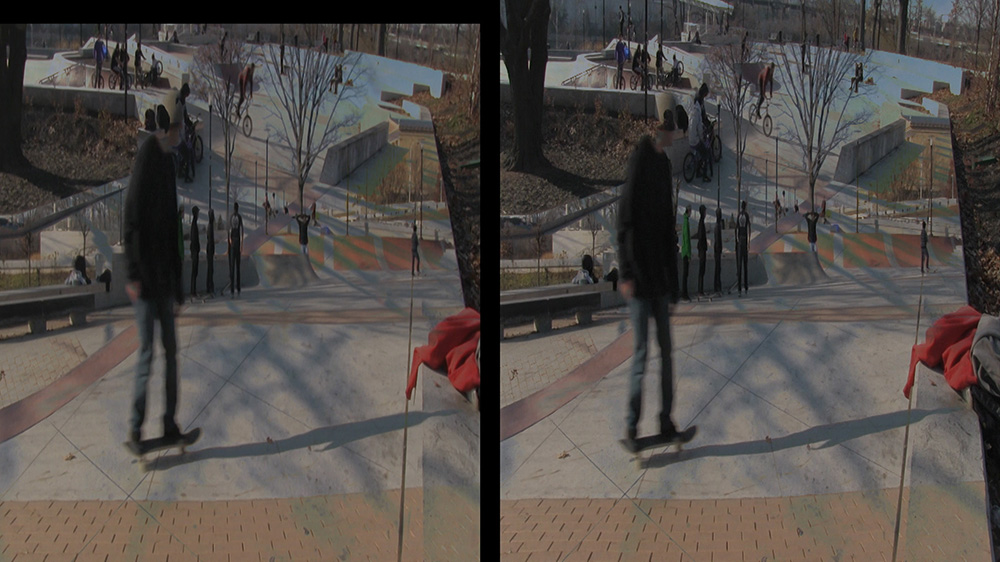
A suite of multi-dimensional riffs that use topological, performative, metapoetic, spatiotemporal, architectonic, kinaesthetic, choreographic, and observational strategies to conjure new forms of vision.
Since 1968 Peter Rose has made over thirty films, tapes, performances and installations. Many of the early works raise intriguing questions about the nature of time, space, light, and perception and draw upon Rose?s background in mathematics and on structuralist filmmaking. He subsequently became interested in language as a subject and in video as a medium and generated a substantial body of work that played with the feel and form of sense-a kind of intellectual comedy. Recent projects have involved a return to the landscape as subject and the mechanics of perception. His films, videos, installations, and performances have received extensive national and international exhibition, including shows at the Whitney Museum and the Museum of Modern Art, the Centre Pompidou, the Yokohama Museum of Art, and exhibition at the Fabric Workshop and Museum, the Rotterdam International Film Festival and the Film Society of Lincoln Center. His works have drawn support from an impressive roster of sources, including the National Endowment for the Arts, the Pennsylvania Council on the Arts, the Guggenheim, Independence and Pew Foundations, and have been the subject of a number of articles on contemporary media art. His work is included in several major international collections.
Catalogue : 2014Solaristics | Experimental video | | color | 10:5 | USA | 2013
Peter Rose
Solaristics
Experimental video | | color | 10:5 | USA | 2013
On the phenomenology of the black sun; an anthology of sightings; on ways of seeing; an ecoparable.
Peter Rose?s works in film, video, installation, and performance have received extensive national and international exhibition, including shows at the Whitney Museum, the Museum of Modern Art, the Centre Pompidou, the Yokohama Museum of Art, the Fabric Workshop and Museum, the Rotterdam International Film Festival and the Film Society of Lincoln Center. Rose is concerned with new forms of vision, with the structures of language, and with the pleasures of obscure journeys. His work is included in several major international collections.
Catalogue : 2010Journey to Q'xtlan | Video | dv | color | 7:30 | USA | 2009
Peter Rose
Journey to Q'xtlan
Video | dv | color | 7:30 | USA | 2009
For several years I have been experimenting with a tactic I call ?transfalumination,? I venture at night into the marginal geographies of the city and perform peculiar ceremonies with light, hoping to bring back images that appeal to some deep sense of the mysterious. ?Journey to Q?xtlan? is a journey, an opera, and a koan that presents some of the results of this research. It?s a kind of dream.
Peter Rose?s works in film, video, installation, and performance have received extensive national and international exhibition, including shows at the Whitney Museum, the Museum of Modern Art, the Centre Pompidou, the Yokohama Museum of Art, the Fabric Workshop and Museum, the Rotterdam International Film Festival and the Film Society of Lincoln Center. Rose is concerned with new forms of vision, the structures of language, and the pleasures of obscure journeys. His work is included in several major international collections.
Catalogue : 2009Studies in Transfalumination | Experimental video | dv | color | 5:30 | USA | 2008
Peter Rose
Studies in Transfalumination
Experimental video | dv | color | 5:30 | USA | 2008
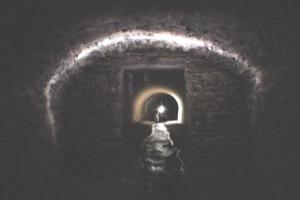
Studies in Transfalumination (5:30, 2008) exploits modified flashlights and stripped down video projectors to explore the visual complexities of the ordinary world: a tunnel, a clump of grass, a discarded table, the underside of a bridge, fog, a piece of rock, and a tree. All images were shot in real time- there is no animation. The video is the third in a series of works that explore light and darkness.
Since 1968 Peter Rose has made over thirty films, tapes, performances and installations. Many of the early works raise intriguing questions about the nature of time, space, light, and perception and draw upon Rose`s background in mathematics and on structuralist filmmaking. He subsequently became interested in language as a subject and in video as a medium and generated a substantial body of work that played with the feel and form of sense-a kind of intellectual comedy. Recent projects have involved a return to the landscape as subject and the mechanics of perception. His films, videos, installations, and performances have received extensive national and international exhibition, including shows at the Whitney Museum and the Museum of Modern Art, the Centre Pompidou, the Yokohama Museum of Art, and exhibition at the Fabric Workshop and Museum, the Rotterdam International Film Festival and the Film Society of Lincoln Center. His works have drawn support from an impressive roster of sources, including the National Endowment for the Arts, the Pennsylvania Council on the Arts, the Guggenheim, Independence and Pew Foundations, and have been the subject of a number of articles on contemporary media art. His work is included in several major international collections.
Catalogue : 2008Odysseus in Ithaca | Experimental video | dv | color | 5:15 | USA | 2006
Peter Rose
Odysseus in Ithaca
Experimental video | dv | color | 5:15 | USA | 2006
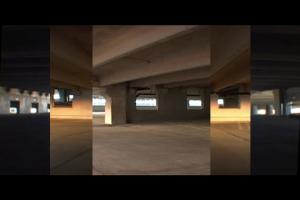
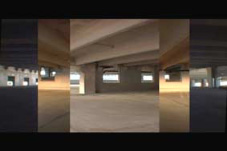
Odysseus moors his boat in the midst of an alien architectural machine, a labyrinth with echoes of De Chirico and Escher, a place of mystery and power where the rules of perspective are challenged and other spaces emerge. The video takes us on a dizzying, exhilarating swoop of a journey through the manifolds of a parking garage, down spiraling ramps into a deep interior space; it is a descent into the depths and it is a lament. Odysseus remembers the sea.
Peter Rose?s works in film, video, installation, and performance have received extensive national and international exhibition, including shows at the Whitney Museum, the Museum of Modern Art, the Centre Pompidou, the Yokohama Museum of Art, the Rotterdam International Film Festival, and the Film Society of Lincoln Center. Rose is concerned with new forms of vision, the structures of language, and the pleasures of obscure journeys. His films and videos are included in several major international collections and he has lectured widely on his work. More is available at www.peterrosepicture.com
Catalogue : 2006Odysseus in Ithaca | Experimental video | dv | color | 5:15 | USA, Ireland | 2004
Peter Rose
Odysseus in Ithaca
Experimental video | dv | color | 5:15 | USA, Ireland | 2004
Odysseus moors his boat in an alien architectural machine, a labyrinth with echoes of De Chirico and Escher- a place of mystery and power where the rules of visual perspective are transformed and other spaces emerge.
Peter Rose?s films, videos, and installations have been exhibited internationally and are in several major collections. He has been the recipient of significant grants and fellowships and has presented his work widely. Concerned with new forms of vision and the structures of language, his work nevertheless manages to offer a range of comic, sensual, and poetic pleasures.
Elske Rosenfeld
Catalogue : 2021Hugging Angela Davis | Experimental video | mov | color | 14:41 | Germany | 2020
Elske Rosenfeld
Hugging Angela Davis
Experimental video | mov | color | 14:41 | Germany | 2020
The video installation "Hugging Angela Davis" is a filmic, performative investigation of a spontaneous hug between Angela Davis and a young East German. The woman, Erika Berthold, was the daughter of communist functionaries and married to the son of the famous communist dissident Robert Havemann, and was active in oppositional circles herself. The work probes into the potentiality opened by this encounter between the two figures and their political struggles. It weaves the narrative questioning of this encounter with a filmic and performative examination of the motif of the embrace as a somatic, affective, political gesture. What can be made of the two women's mutual recognition, their shared departure from protocol? How does their momentary complicity cross or complicate cultural and political differences and ascriptions? What might a - dissident - politics of the hug look like? "Hugging Angela Davis" is part of the long term project "A Vocabulary of Revolutionary Gestures" – which looks at the body as the site and archive of historical experiences.
Elske Rosenfeld, born 1974 in Halle/S.(GDR), works in different media and formats. Her primary focus and material are the histories of state-socialism and its dissidences, and the revolution of 1989/90. Documents and archives are starting points for organising spaces in which these hi/stories can come to be present. Her ongoing project “A Vocabulary of Revolutionary Gestures” investigates how political events manifest and come to be archived in the bodies of their protagonists. Her works have been featured in international exhibitions, among others at Staatliche Kunstsammlungen Dresden, 2020; Goethe Institute Moscow (2020), “Palast der Republik, Haus der Berliner Festpiele (2019), f/stop Leipzig (2018), Gorki Herbstsalon III (2017), mumok kino, Vienna (2016), steirischer herbst festival, Graz (2015), Devi Art Foundation, Delhi (2013) and “Former West”, Utrecht (2010). In 2018 together with Suza Husse she organized the project “wild recuperations. material from below. Artistic Research in the Archive of the GDR Opposition”. In 2019 she co-curated the festival “Palast der Republik” at the Haus der Berliner Festspiele.
Catalogue : 2016Ein bisschen eine komplexe Situation | Experimental doc. | hdv | color | 14:44 | Germany, Austria | 2014
Elske Rosenfeld
Ein bisschen eine komplexe Situation
Experimental doc. | hdv | color | 14:44 | Germany, Austria | 2014
Content Summary/ Accompanying Info: This video is an intervention into footage from the first meeting of the Central Round Table of the GDR. The meeting took place on December 7th 1989 in East Berlin, two months after the beginning of mass demonstrations across the country. The Round Table was set up to bring together members of the established political parties and the newly formed oppositional groups on equal terms. A few hours into the meeting, proceedings are interrupted as a noisy demonstration approaches outside. In the ensuing 10-minute scene, participants try to decide on a collective response. Sounds from the demonstration can be heard ebbing and swelling outside the window, while the participants inside debate. The demonstrators are never seen, only heard. The 2-channel video shows the scene in its entirety. It unfolds as a series of interventions into the material that are themselves based on motions and gestures taken from the footage: pans, zooms, the shaking of the camera, the gestures and movements of the participants, the different qualities and sources of sound. These are amplified, repeated, looped, in order to confront and confound notions of inside and outside, language and body, representation and embodiment.
Biography: Elske Rosenfeld (b. 1974 in Halle/S., GDR) uses a variety of media to rework archival materials from the history of state socialism in Eastern Europe and to relate them to contemporary political forms. Recent works in the formats video, performance, and writing have focussed on the physical, gestural content of archival documents from situations of revolution or protest (Paris 1968, East Berlin 1989, Cairo 2011) – to address the body as a site and archive of political events. Various abstracted interventions into and around these materials reactivate political energies that were set loose in these instances and continue to reverberate into the present day. Rosenfeld lives and works in Berlin and Vienna. She holds a PhD-in-Practice from the Academy of Fine Arts in Vienna. Her work has been presented internationally at institutions including Forum Stadtpark/Steirischer Herbst 2015, Graz; Berlin Art Week 2014; Sarai Reader 09/Devi Art Foundation, Delhi; Vienna Art Week 2011; BAK, Utrecht; Shedhalle, Zürich; mumok kino, Vienna; Kunsthalle Exnergasse, Vienna; GfzK, Leipzig; tranzit, Cluj, Romania; the Education Programme of documenta13. She has taken part in international residencies, including the Visual Arts Residency at the Banff Centre for the Arts, Canada. Her texts have been published in/on eipcp.net, Reviews in Cultural Theory, Springerin – Hefte für Gegenwartskunst, and in a number of books and collections. She has been awarded a DOC-Fellowship of the Austrian Academy of Sciences, and project funding from the Programme for Arts-based Research/FWF, Austria. www.elskerosenfeld.net
Ewelina Rosinska
Catalogue : 2023Popió? imieniem jest cz?owieka | Experimental doc. | 16 mm | color and b&w | 20:0 | Poland, Ukraine | 2023

Ewelina Rosinska
Popió? imieniem jest cz?owieka
Experimental doc. | 16 mm | color and b&w | 20:0 | Poland, Ukraine | 2023
I read in the writings of one painter that, for him, the Polish landscape seems to constantly draw our gaze to the ground, making us look not over the horizon but under our feet, at the bones buried beneath each step. The film shifts between a portrait of my eighty year old grandparents and my view on the elements and imagery of the national-Catholic narrative in the Polish landscape. The title “Ashes by name is man” is borrowed from a church notice board in Nowa Grobla, in Roztocze. At the centre of my explorations is the rage of hills Roztocze, while Krakow and Lviv form the boundaries of the area in which I was shooting.
Ewelina Rosinska (1987, Poland) holds an MA in Art History and is based in Germany and Portugal. Between 2013 and 2022 she studied at the German Film and Television Academy in Berlin (dffb), where she was a member of Ute Aurand's Bolex Workshop. Her Films were screened at Her DOCS in Warsaw, Courtisane Festival in Gent, International Film Festival in Rotterdam IFFR, at the Musée de la Photographie Charleroi or at the Museum of the Moving Image in New York. Her last film “Ashes by name is man” won Best Exis Award at the Exis Film Festival in Seoul.
Ewelina Rosinska
Martha Rosler
François Rosolato
Catalogue : 2006Son pays est une prison | Documentary | dv | color | 77:0 | France | 2004
François Rosolato
Son pays est une prison
Documentary | dv | color | 77:0 | France | 2004
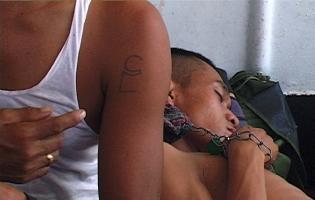
How do the Burmese continue to live under a dictatorship that for the past two generations has curbed any form of hope? Along the Irrawaddy River appear signs of resistance of a people deprived of its guide, Aung San Suu Kyi, Nobel Peace Prize winner, who was viciously attacked and locked away. The inner voices of exile express the sufferings of a wounded nation.
Born in Paris in 1963, François Rosolato is an author, director, actor, and director of photography. After finishing his film studies at the Ecole Nationale Louis Lumière, he began working behind the camera for fictions and later for documentary productions. Attracted by non-fiction, he at the same time touched upon directing with a very personal point of view. He attained financial backing in the margin of the French television channels? formatted universe.
Douglas Ross
Catalogue : 2007UN | Video installation | dv | color | 7:7 | USA | 2004
Douglas Ross
UN
Video installation | dv | color | 7:7 | USA | 2004
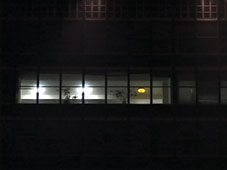
The United Nations building in New York at night. Douglas Ross films an architecture void of animation, except for the intermittent flickering lights.
Douglas Ross was born in Brockton, MA, USA, in 1969. He lives and works in New York City. His work has been exhibited at the Miami Contemporary Art Museum; at the Rotterdam Film Festival; in Turin; at the KW Contemporary Art Institute in Berlin; the PS1 Contemporary Art Centre; and MoMA, the Walker Art Centre. He has also completed artist residencies and exchange programs in Japan.
Catherine Ross
Catalogue : 2008Trilling | Art vidéo | dv | color | 3:52 | USA | 2006
Catherine Ross
Trilling
Art vidéo | dv | color | 3:52 | USA | 2006
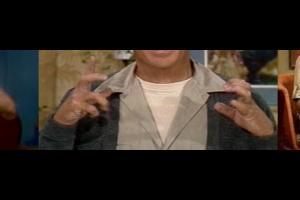
NOUVEAU SYNOPSIS 09/04/08: Trilling scrolls right to left across the screen, recombining footage from the early 80s television program "Three's Company" into a sequence of traveling gestural loops. Trilling is about physical humor. It emerged out of a curiosity about my childhood obsession with the well-known sitcom "Three's Company". The show was written for adults, but through the actor?s performances it conveyed a humor that enabled anyone (including children) to laugh out loud. The physical comedy became the vehicle for the narrative, expressing the humor of the show in a way that words could not. Unlike verbal comedy, which needs time to register and be translated before we recognize its wit, physical humor is immediate; awkward bodily movement can trigger an uncontrollable hysterical response. By excerpting and reformatting physical gestures from the actors in the show, I constructed a new narrative in collaboration with Trumpeter Taylor Haskins. Haskins composed the music spontaneously, creating a unique improvised response to each clip that fold together into a unified whole. ANCIEN SYNOPSIS: Trilling recombines footage from the early 80s sitcom "Three`s Company" into a sequence of travelling gestural loops. Trumpeter Taylor Haskins collaborated on the audio track, creating a unique improvisational response to each clip.
Catherine Ross works in video and photography, framing gestures of performances that often go unnoticed in their original context. Isolating the movements of humans and/or objects, her videos create new musical sequences that reveal an inseparable relationship between motion and sound. Here she finds that movement reveals an inherent awkwardness, a humor that echoes our own vulnerabilities. Her work has been presented in exhibitions and festivals internationally, including venues in Brazil, Finland, Ireland, England, Canada and the United States. Ross attended the Skowhegan School of Painting & Sculpture in 2002, the Atlantic Center for the Arts in 2003 and received a 2005-06 residency from The Marie Walsh Sharpe Art Foundation. Ross was recently awarded "Best International Short Award" at the 2006 Darklight Festival (Dublin, IRELAND). She received her BA in studio art from Dartmouth College in 1994. Catherine Ross lives and works in Brooklyn, New York.
David Ross
Catalogue : 2017Théodolitique | Experimental doc. | 35mm | color | 15:10 | Canada | 2015
David Ross
Théodolitique
Experimental doc. | 35mm | color | 15:10 | Canada | 2015
Théodolitique (2015) merges the geodetic and the filmic, linking the very long history of land surveying with the comparatively new technologies of film-making. Connecting these two methods of visual observation and recording, Théodolitique documents student surveyors from the école des Métiers du Sud-Ouest-de-Montréal as they take an outdoor exam over the course of a single day. The project utilizes a wide range of filmic and acoustic techniques ? including a parabolic microphone to capture distant audio, and a custom built ?theodocam? to provide a surveyor?s eye view ? to reflect and mimic how the students move, think and learn their trade. Recorded on a designated practice field adjacent to the école des Métiers, Théodolitique is a film that is both chorographic and choreographic.
The works of David K. Ross are concerned with the processes and activities which enable infrastructural monuments, cultural institutions, and architectural structures to exist. Using photography, film and installation to carry out these inquiries, he examines the performative capacities of un-scripted activities, along with the relationships that exist between the recorded event and its re-presentation in physical space. These inquires have been applied to various projects including a study of the enigmatic activities of student land surveyors, the uncanny and oneiric qualities of a series of rooms at the Art Institute of Chicago, the nuanced and poetic movements of dancers about to perform, the mythic and sublime qualities of an urban lighting fixture in Montréal, the quietude of artists’ storage spaces, and a close examination of colour coded art shipping crates.
Maxime Rossi
Catalogue : 2017Real Estate Astrology | Video | hdv | color | 21:0 | France | 2015
Maxime Rossi
Real Estate Astrology
Video | hdv | color | 21:0 | France | 2015
Appréhendées comme un voyage mental, visuel et sonore proche de l’esprit surréaliste, les images se succèdent au rythme de l’énonciation mystique du thàme astral de Ersnt dressé par un astrologue de Sedona, également saxophoniste, qu’il a lui-même dressé après avoir constaté une erreur dans l’heure de naissance de celui commandé par Breton en 1930. Sa voix off accompagne le spectateur. à la fois atmosphère sonore et piste narrative, elle parait guider cette chasse au fantôme - probablement celui de l’esprit de Max Ernst qui, partout, imprègne les lieux. Tandis que la mélodie rappelle les bandes sonores de méditation disponibles dans les boutiques de souvenirs de la ville, la désynchronisation répétée des rushes dans le temps évoque, tel ce chat dont le corps se dédouble, le “voyage astral” cher aux surréalistes, l’expèrience de hors corps, la sensation de flottement. Dans son film Real Estate Astrology (2015), Maxime Rossi développe une réflexion à facettes pour portraiturer un lieu. Il confronte deux états de narration entre lesquels le spectateur peut osciller, du diagnostic des traces objectives d’une quète, real estate, au pronostic à valeur prédictive d’une vie dressé d’après l’interprètation stellaire, astrology.
Le travail de Maxime Rossi contourne les limites de genre prédéfini comme de style pour puiser ses formes et son inspiration dans de multiples sources : l’histoire de l’art, l’ethnographie ou la littérature. L’impressionnant éventail des registres provoque une étrange narration, que l’artiste utilise pour dévoiler des vérités en portant un nouveau regard sur des sujets que nous pensions connaître avec certitude. À travers le prisme kaléidoscopique d’une pratique complexe et hétéroclite mêlant la sculpture, l’installation, la performance, la scénographie et la vidéo, Maxime Rossi ignore l’idée même de catégories et propose une discipline singulière qui convoque la « beauté convulsive » chère aux surréalistes. Maxime Rossi est né en 1980, il vit et travaille à Paris, France. Son travail a fait l’objet de projections au Centre Pompidou, Paris et au MUMOK, Vienne (Autriche). Il a notamment été montré dans le cadre d’expositions personnelles et collectives au Palais de Tokyo, Paris, à l’Emba / Galerie Édouard-Manet, Gennevilliers, à la Fondation François Schneider, Wattwiller, à La Halle des bouchers, Vienne, à la 19e Biennale de Sydney, au S.M.A.K. de Gent ou au Musée d’Ethnographie de Genève, Suisse.
Catalogue : 2017Sister Ship | Video | 16mm | color | 52:0 | France | 2015
Maxime Rossi
Sister Ship
Video | 16mm | color | 52:0 | France | 2015
Avec « Sister Ship » [le navire de la Soeur], Maxime Rossi propose une nouvelle étape de son projet d’envergure inspiré par Soeur Corita Kent (1918-1986), religieuse américaine ayant quitté les ordres en 1968 et connue pour avoir contribué à la culture pop. À partir des années 1960, cette soeur a effectivement développé une pratique artistique en produisant des affiches sérigraphiées qui entremêlent slogans publicitaires, paroles de chansons et versets religieux. S’inspirant de ce personnage hors-normes, Maxime Rossi propose une installation dynamique de cinéma élargi qui regroupe une vidéo spatialisée dans La Halle des bouchers et des éléments de décor scénique colorés. Cette comédie musicale décalée combine les séquences du film documentaire Pygmée Blues (2013) tourné le long du fleuve Congo, avec une bande son constituée de la transcription d’un livre sur Soeur Corita, chantée par Emma Daumas accompagnée de musiciens africains.
Le travail de Maxime Rossi contourne les limites de genre prédéfini comme de style pour puiser ses formes et son inspiration dans de multiples sources : l’histoire de l’art, l’ethnographie ou la littérature. L’impressionnant éventail des registres provoque une étrange narration, que l’artiste utilise pour dévoiler des vérités en portant un nouveau regard sur des sujets que nous pensions connaître avec certitude. À travers le prisme kaléidoscopique d’une pratique complexe et hétéroclite mêlant la sculpture, l’installation, la performance, la scénographie et la vidéo, Maxime Rossi ignore l’idée même de catégories et propose une discipline singulière qui convoque la « beauté convulsive » chère aux surréalistes. Maxime Rossi est né en 1980, il vit et travaille à Paris, France. Son travail a fait l’objet de projections au Centre Pompidou, Paris et au MUMOK, Vienne (Autriche). Il a notamment été montré dans le cadre d’expositions personnelles et collectives au Palais de Tokyo, Paris, à l’Emba / Galerie Édouard-Manet, Gennevilliers, à la Fondation François Schneider, Wattwiller, à La Halle des bouchers, Vienne, à la 19e Biennale de Sydney, au S.M.A.K. de Gent ou au Musée d’Ethnographie de Genève, Suisse.
Nicolas Rossi
Catalogue : 2017Made in Algeria | Video | hdv | color | 10:13 | France, Germany | 2016
Nicolas Rossi
Made in Algeria
Video | hdv | color | 10:13 | France, Germany | 2016
Nicolas Rossi, geboren 1978 in Thonon-les-Bains (F), studierte, nach einem Gaststudium bei Gerd Roscher in Experimenteller Filmkunst an der HFBK Hamburg, an der Bauhaus Universität Weimar, bevor er 2012 die Hochschule für Grafik und Buchkunst in Leipzig als Meisterschüler absolvierte. Aktuell forscht er im Rahmen eines wissenschaftlich-künstlerischen Projekts namens „Essayismus als Tool der Kritik im Zeitalter der hybriden Bewegtbildformate“ an der Filmuniversität Babelsberg Konrad Wolf.
Sergei Rostropovich
Catalogue : 2025Archipelago | Video | digital | black and white | 10:26 | Germany | 2023

Sergei Rostropovich
Archipelago
Video | digital | black and white | 10:26 | Germany | 2023
ARCHIPELAGO was filmed in the ruins of a former Soviet gulag, where prisoners were forced into hard labor to quarry limestone. After the collapse of the USSR, the infrastructure that prevented flooding fell into disrepair, submerging the prison beneath the waters of Lake Rummu in Estonia. In recent years, Estonian authorities have transformed the area into a recreational park, inviting tourists and families to explore this once-hidden place—a layered testament to collective memory and history. Through a blend of static and weightless filming styles, Archipelago contemplates the passage of time and nature’s quiet reclamation, offering a reflective perspective on impermanence and transformation
Sergei Rostropovich (b. 1986) is a New York-born filmmaker and photographer based in Paris. After graduating from the International Film School of Paris, he began his career as an assistant director on Faust by Alexander Sokurov, which won the Golden Lion at the 2011 Venice Film Festival. He went on to direct a range of short films, including Ophelia, which premiered at the New York Film Festival in 2014, marking his shift toward non-narrative video work. Rostropovich’s art explores the fleeting nature of human experience, balancing moments of celebration and ritual against darker themes of violence and inevitable decay. Through his video and photographic work, he contemplates life’s fragile beauty and the quiet, constant force of entropy, capturing a world where joy and impermanence are inextricably linked.
Martine Rousset
Catalogue : 2018Rue pouchkine | Experimental doc. | hdv | color | 33:0 | France | 2017
Martine Rousset
Rue pouchkine
Experimental doc. | hdv | color | 33:0 | France | 2017
;Yerevan, Armenia, in the illigible secret of the country imprisoned in its shadows in its nights of the underground nights of the basements trains for nowhere the quiet splendor of the mountains mystical paradox mutism and song the voices of the prisons ephemeral traveler light sleeper
Born on May 29, 1951 in Montpellier, Martine Rousset resided in Sète, France until 1975. She studied Philosophy of Cinema at the Université Paul Valery of Montpellier. As a director, she focuses on light and script. She has worked in cinema since 1977, and has been working as an expert beside Suzanne Pagé since 1978 in the audiovisual department of the Musée d’Art Moderne de la ville de Paris.
Clement Roussier
Catalogue : 2026MYRNINEREST | Experimental doc. | hdcam | color | 14:16 | France | 2025
Clement Roussier
MYRNINEREST
Experimental doc. | hdcam | color | 14:16 | France | 2025
A woman performs Butoh alone in her bedroom; a foreigner wanders the buzzing streets of Tokyo; a poet speaks of rivers, pity and ghosts.
Clément Roussier was born in 1984. He is the author of two poetry collections (Now It Is Always Three O’Clock and Fondane), published in 2025 by Derrière la salle de bain, as well as a novel, Sullivan and the Fiery Skies of the Savannah Evenings, published in 2020 by L’École des Loisirs. In Silence and clamour, his first film, won the Grand Prize of the French Competition at FID Marseille 2023.
Philippe Rouy
Catalogue : 2023KAISERLING III | Video | mov | color | 23:30 | France | 2022
Philippe Rouy
KAISERLING III
Video | mov | color | 23:30 | France | 2022
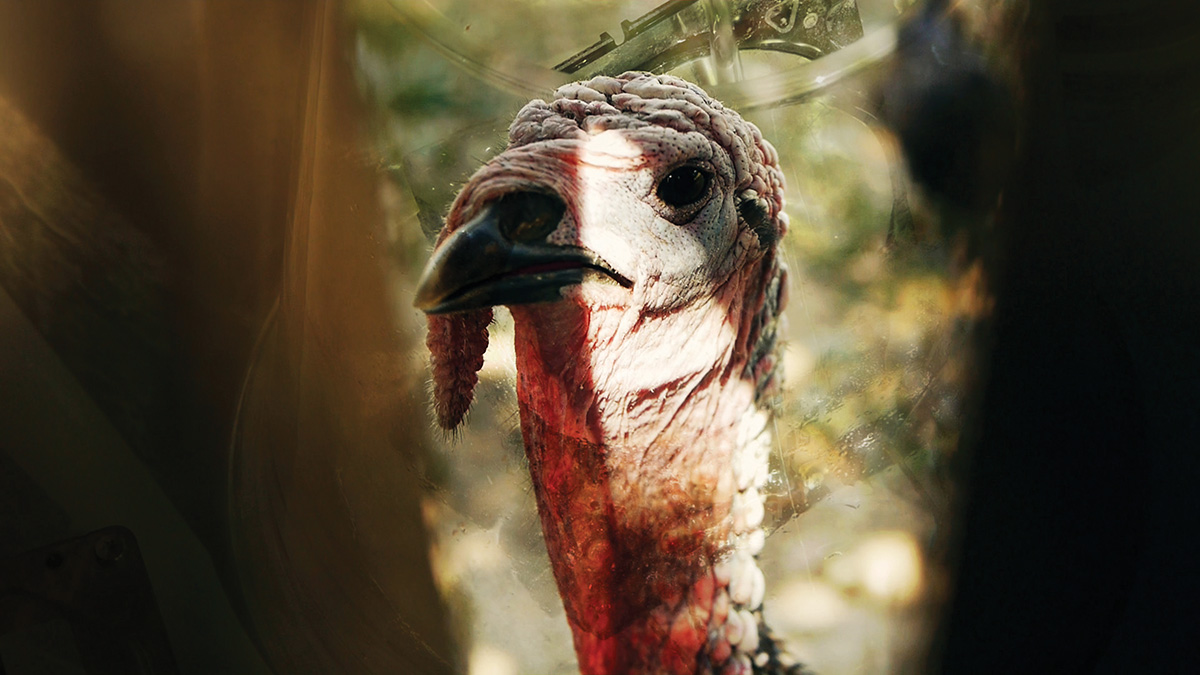
Un homme filme le vivant. Il l’archive dans des préparations humides paradoxales . Des images en fluide qui pourraient lui survivre. En 2100, sa fille aura 86 ans. Il en aura 129.
Philippe Rouy est réalisateur. Sa trilogie consacrée à la catastrophe nucléaire de Fukushima, 4 bâtiments, face à la mer, Machine to Machine et Fovea centralis, a été présentée, entre autres, au FIDMarseille, Cinéma du Réel, Mumbai Film Festival, Torino Film Festival.
Catalogue : 2015MACHINE TO MACHINE | Experimental doc. | web | color | 32:0 | France, Japan | 2013
Philippe Rouy
MACHINE TO MACHINE
Experimental doc. | web | color | 32:0 | France, Japan | 2013
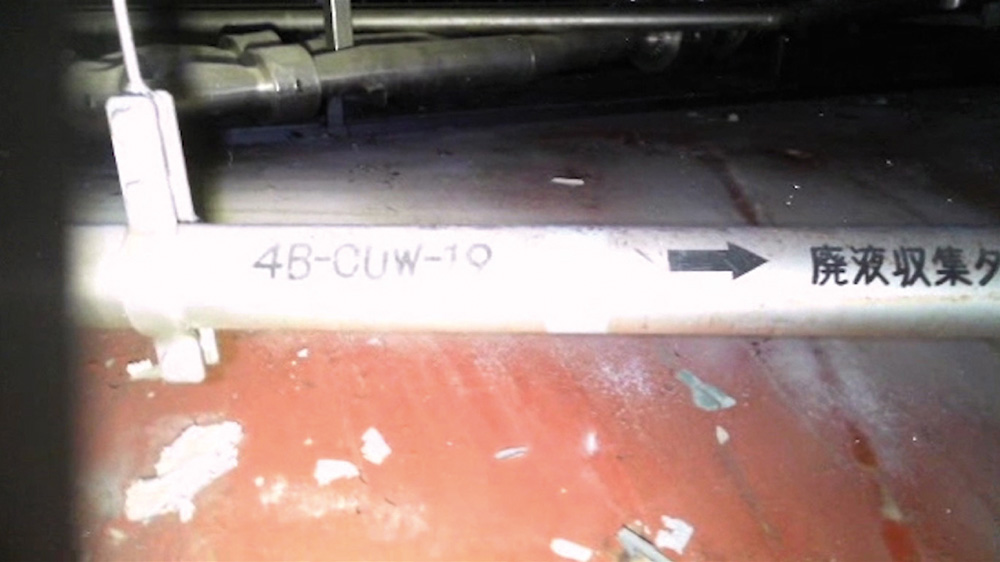
À Fukushima daiichi, le ventre de la centrale nucléaire effondrée maintient pour encore très longtemps les humains à distance. Seules d’autres machines peuvent s’en approcher. Elles filment pour les hommes ce qu’ils ne peuvent plus voir. Entre mouvements pendulaires lancinants et pénétrations gyroscopiques, ces images annoncées par l’exploitant comme des explorations scientifiques rigoureuses s’avèrent être des plongées chaotiques et hallucinées au cœur d’un magma radioactif irréductible.
Philippe Rouy vit et travaille à Paris. Ses films sont montrés dans des festivals et des lieux de diffusions tels que FIDMarseille, Torino Film Festival, Rotterdam IFF, Jihlava IFF, UnionDocs New York, Cinéma Spoutnik de Genève, Cinema Nova de Bruxelles, etc...
Catalogue : 20134 bâtiments, face à la mer | Documentary | dv | color | 47:0 | France | 2012
Philippe Rouy
4 bâtiments, face à la mer
Documentary | dv | color | 47:0 | France | 2012
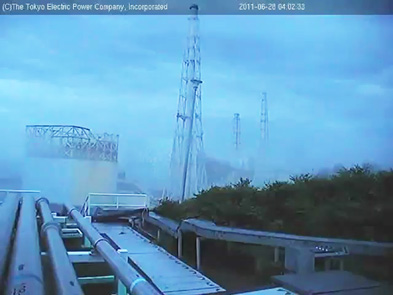
In June 2011, the operator of the Fukushima nuclear plant set a livecam on site. Displaying a fake transparency, this propaganda tool shows the unique images of an endless disaster. A single, continuous, static shot reveals a lethal landscape exuding an invisible toxicity and a strange, paradoxical beauty. Earthquakes, shrouding mists, smoke coming out of the reactors, ravens flying across the sky, radioactive rains... those images of a geographical landscape wiped off the map follow on from each other outside the human timeline. Yet, a defiant gesture made by an anonymous liquidator towards the ocular device takes us back from this forbidden outerworld.
Philippe Rouy lives and works in Paris (France).