Catalogue > List by artist
Browse the entire list of Rencontre Internationales artists since 2004. Use the alphabetical filter to refine your search. update in progress
Lo Shih-tung
Catalogue : 2012Ghosts next to the city | Video installation | 0 | color | 14:3 | Taiwan | 2011
Lo Shih-tung
Ghosts next to the city
Video installation | 0 | color | 14:3 | Taiwan | 2011
The script is written according to a conflagration which happened years ago in Treasure Hill. Through photo documents and interviews with residents, one can relate various images of fire to the past lifestyles of residents, whether it be fire accidents, bonfires, or fires for the purpose of producing light and warmth. These flickers of light can be seen as historical signifiers, linking together all the different people and memories belonging to this land. At present, Treasure Hill has been transformed and regenerated as an Artist Village. How to recollect the historic local memories and let them permeate into the present or even the future through the practice of contemporary art is a major issue that challenges us today. To this date, the flames of Treasure Hill have not yet ceased and are continuing to spread. Through various forms of fire (light) and images, it allows us to "see / illuminate" the different textures of Treasure Hill.
I regard the special textures present in our daily life, seeing them as in Walter Benjamin?s discourse, fragments and reflection of a complete structure, a whole world. My works are organic documents attempting to inquire and contemplate ever-changing warped messages. They do not only focus on one direction. Painting, photography, performance, audio/ video, installation, happenings can all be part of a creation thrown to public arenas awakening its refraction and feedback. Through the process of creating and interacting with spectators and communities, the fragmented, fissured, and forgotten history can be restored or even fictionalized. It is about seeking one?s identity, residence, hometown, and city; those long forgotten, unseen ghosts.
Hara Shin
Catalogue : 2026Monumental Ether. Bodies. | Experimental doc. | 0 | color | 24:58 | Korea, South | 2025
Hara Shin
Monumental Ether. Bodies.
Experimental doc. | 0 | color | 24:58 | Korea, South | 2025
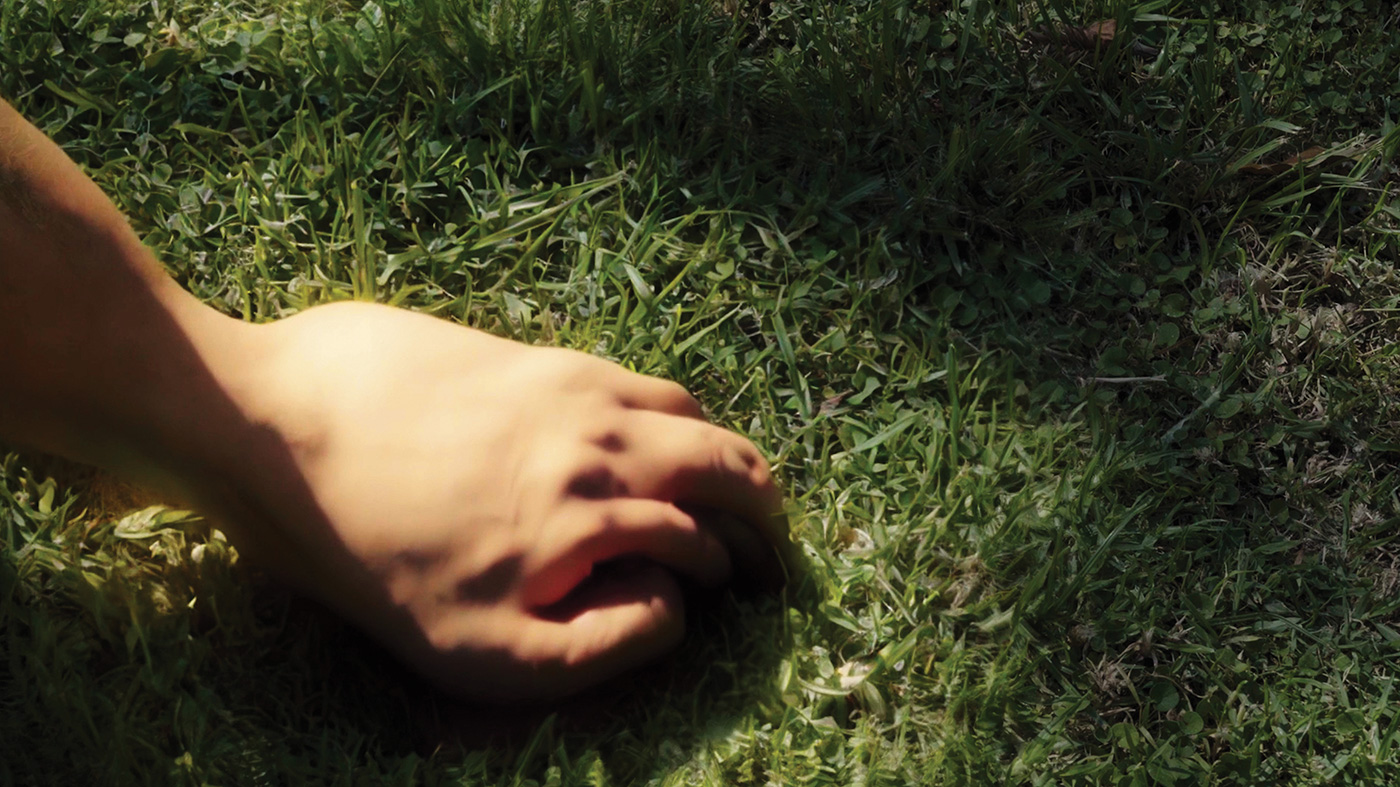
This work is an experimental documentary video that explores the entangled geopolitical temporalities of three sites shaped by anthropocentric violence: Kückenmühler Anstalten in Szczecin, a former Nazi forced-sterilization facility and hospital for the disabled; the Tropical Botanical Garden in Lisbon, once a Colonial Garden; and Tancheon Stream in Seoul, associated with the legend of Dongfang Shuo’s death. Through multispecies narratives of erasure, survival, and regeneration, the work investigates how dead bodies might come back to life and how tragedy can be reconfigured into new modes of being—ultimately weaving a textured fabric of memory. Its nonlinear structure reflects the layered realities of these places, where time does not flow in a straight line but folds inward, revealing how past, present, and future communities coexist within ecologically and politically marginalized spaces. At the work, a fictional being from the future, who continuously interrogates her entangled existence. The piece draws inspiration from Manifesto Antropófago (1928) by Oswald de Andrade, which frames cannibalism as a radical act of cultural resistance. Bodies, fleshes, and plants traverse histories—digesting, absorbing, and fusing them. Through these ritual acts of mutual consumption, the work enacts an ongoing unfolding of memory and being. The past is not buried in death; it arrives before us—still alive, in transformed and transforming forms.
Hara Shin is an artist based in Berlin and Seoul. Working with film, multimedia installations, and storytelling, she explores speculative ecosystems reflected by planetary concerns such as habitat loss, mass extinction, and involuntary migration alongside the residual memories and hegemonic structures left behind by humanity. Her works have been exhibited and screened at venues including Busan Museum of Contemporary Art (Busan MoCA) (2025), Spazio Supernova in Rome (2025), DA Z Digital Arts Zurich, Kunsthaus Zürich (2024), galerie weisser elefant in Berlin (2023), DMZ International Documentary Film Festival in Goyang (2023), ACUD Galerie in Berlin (2022), TRAFO Center for Contemporary Art in Szczecin (2022), Drugo More in Rijeka,(2022), and Art Center Nabi in Seoul (2021). In 2023, she participated in the Goldrausch Künstlerinnenprojekt, supported by the Federal State of Berlin & European Social Fund Plus, and was selected for the 2024 Emerging Visual Artist Support Program by the Arts Council Korea. She is a laureate of In situ 2024–2025 at the Cité Internationale des Arts in Paris, in partnership with the Foundation Daniel et Nina Carasso.
Yoshida Shingo
Catalogue : 2011journal intime | Art vidéo | | color | 5:45 | Japan, Swaziland | 2010
Yoshida Shingo
journal intime
Art vidéo | | color | 5:45 | Japan, Swaziland | 2010
journal intime «Mon travail se base sur des interventions parasitaires dans l`espace public, à travers l?observation, l?expérience et le souvenir des comportements humains. Les actions que je realise en transforment le sens, interrogeant l?usage et les relations des gens à leur environnement. Ce que je réalise est un constat teinté d?humour. Je travaille comme un voyageur, sans atelier fixe. Mon activité artistique dépend de l?endroit où je me trouve et permet d?identifier cet endroit. Je suis autonome, mon atelier est mobile. Il est primordial pour moi d?envisager les villes du monde entier, comme des lieux de création, de jeu et de me confronter aux différents modes de vie et différents codes sociaux.»
Shingo Yoshida est né le 18 avril 1974 à Tokyo. Il entre en 1999 à la Villa Arson à nice où il se consacre au son ainsi qu`a la vidéo.Il en sort en 2004 avec les félicitations du jury. Puis il emménage à lyon où il fait un post-diplome en Art , suite à quoi il intègre le programme La Seine des beaux arts de Paris (2005). Depuis Shingo Yoshida voyage à travers le monde dont il a fait son atelier, adaptant sa pratique à l endroit où il se trouve, il est pour lui primordial d` envisager les villes du monde entier comme des lieux de création, de jeux et de se confronter à différents modes de vie et différents code sociaux ce dont son travail se nourrit
Takeshi Shiomitsu
Catalogue : 2013One lone hand clenched in a fist in the air (Real natural) | Video | hdv | color | 2:29 | United Kingdom | 2012
Takeshi Shiomitsu
One lone hand clenched in a fist in the air (Real natural)
Video | hdv | color | 2:29 | United Kingdom | 2012
One lone hand clenched in a fist in the air (Real natural) is part of a series of video and sculptural work exploring how human relationships to nature are actualised through cultural means, in an age of digital, ecology and networks. It is an exploration of the discourse involved in questioning the distinctions between a symbolic relationship and a ?traditionally? meaningful (often read as ?material?) one, or what engagements are truly possible. Simultaneously, it is in dialogue with taste, and the distinctions between ?valid? and poor tastes. It consists of shards of information, processed and reprocessed, hashed and spun together; some heightened, some pushed towards abstraction. Intentionally amateurish, it is part karaoke atmosphere video, part QVC sales pitch, part manifesto, part pop-philosophy.
Takeshi Shiomitsu is an artist living in London, working in video and sculpture.
Ding Shiwei
Catalogue : 2015GOODBYE UTOPIA | Animation | hdv | black and white | 7:31 | China | 2014
Ding Shiwei
GOODBYE UTOPIA
Animation | hdv | black and white | 7:31 | China | 2014
In memory of ancient humans, God issued commandments to Moses on Mount Sinai and said, "can not kill." However Nietzsche tells us that God has been dead already. Human beings created God, but also exterminated God. We childbirth themselves, but also slay ourselves.
Ding Shiwei was born in Heilongjiang Province and graduated from China Academy Of Art with BFA in 2012. He currently lives and works in Hangzhou, China. Main in Experimental Animation, Experimental Video. His works were presented in Montreal Museum of Fine Arts, Quebec, Canada; Li Xianting Film Fund, Beijing, China; OCAT Contemporary Art Center, Shenzhen, China; A4 Contemporary Art Center, Chengdu, China. His works had been selected out in the international competition section and media art section of Tampere Film Festival; Up and coming Int. Montreal International Film Festival of Films on Art; Image Forum Film Festival in Japan. His works were collected by Li Xianting Film Fund, Beijing, China.
Pauline Shongov
Catalogue : 2026Mirage | Experimental doc. | 0 | color | 15:0 | Bulgaria | 2024
Pauline Shongov
Mirage
Experimental doc. | 0 | color | 15:0 | Bulgaria | 2024
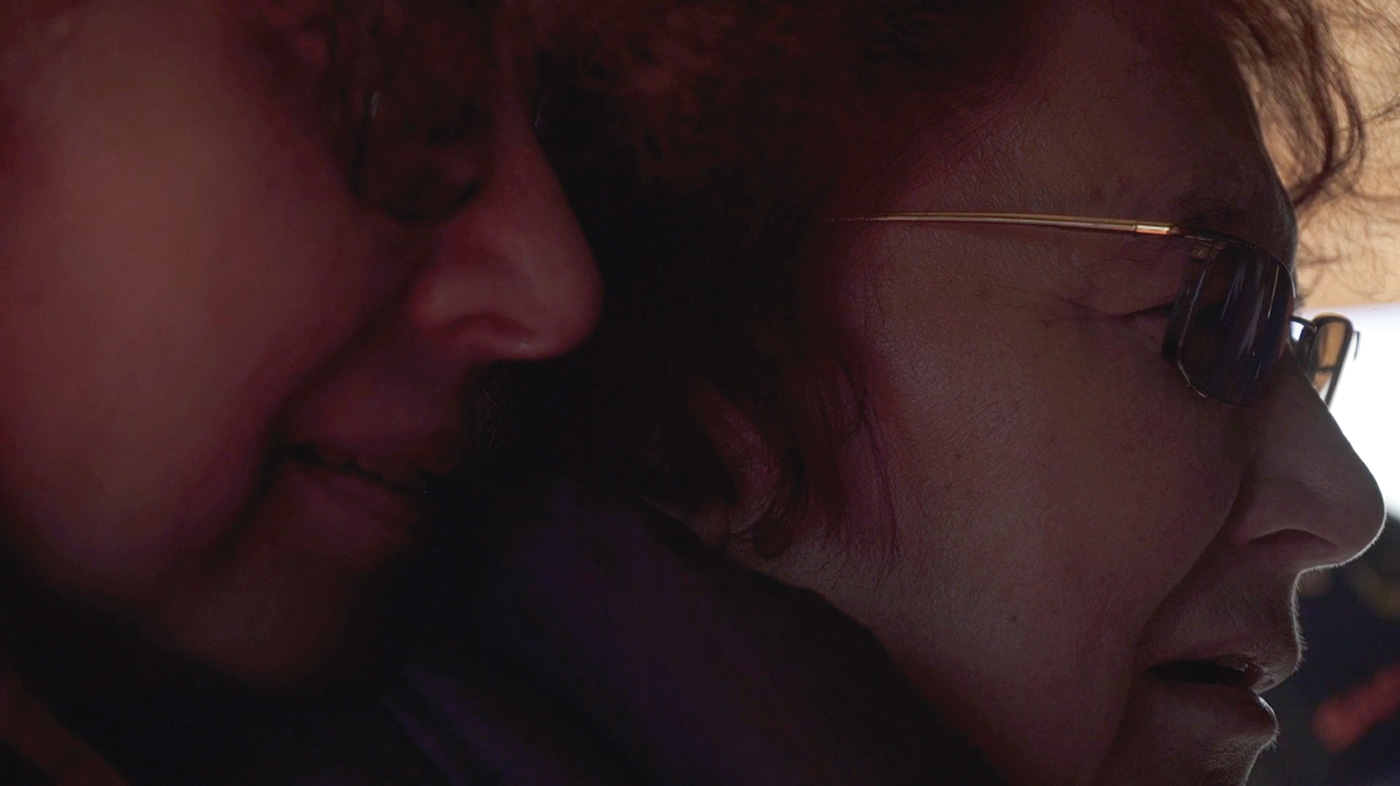
Two Bulgarian pensioners embark on their first road trip through the American Southwest. Once confined by the borders of the Eastern Bloc, they now venture into the familiar landscape of the Western film genre. Throughout their travels, memories of the past seep into their experience of the present—a landscape of the West that, for over thirty years, they have dreamed to see beyond the frame of the TV screen. Now limited by their own aging bodies, they are confined by yet another screen. Windows become portals for a slow cinema, where the landscape of the West unravels in real time as the dreamy promise it once held is colored by the newfound form of its mirage.
Pauline Shongov is a filmmaker whose work explores historical memory, cultural mythology, and the poetics of place. Her most recent film Couple More Shovels for a Few More Levs (2023) received the Manfred Krüger Award at the German International Ethnographic Film Festival and was shortlisted for the Emerging Artist Award at the Mimesis Film Festival. Her work has been supported by the Harvard Film Study Center, Sensory Ethnography Lab, ArtLab at Harvard, and the Harvard Critical Media Practice program.
Tim Shore
Catalogue : 2008Cabinet | Experimental film | dv | color | 18:20 | United Kingdom | 2006
Tim Shore
Cabinet
Experimental film | dv | color | 18:20 | United Kingdom | 2006
?In Cabinet, Tim Shore pursues a disturbing message through the spaces of the American landscape. An associative framework of found footage, digital reconstruction and text form a meditation on identity, technology and the land. Shore?s fragments of found imagery and sound evoke America?s myths of itself, from its war record to its prairies and birdsong. Yet, this is shadowed by the dark spaces of the Unabomber in his forest cabin, and the repetitive sound of the typewriter, a reference not only to the latter?s destructive manifesto but also to the fragmenting advance of technology.? Lucy Reynolds
Tim Shore graduated in animation from the Royal College of Art in 2002. His graduation film, Rosabelle Believe was screened at festivals around the world, including Rotterdam, European Media Art Festival Osnabruck, and Los Angeles. Keepsake (2004), about the drowning of the Elan Valley, was commissioned by Channel 4 Wales. His most recent film, Cabinet (2006), continues an interest in, and exploration, of the history of technological progress and its often ambivalent impact on society and the individual. It was awarded Second Prize Prize at transmediale.07, Berlin, and other screenings include Rotterdam, Impakt Festival, Centraal Museum, Utrecht; New York Video Festival, Lincoln Center; Courtisane, Ghent; Media City, Windsor, Ontario; Alternative Festival, Belgrade. Tim Shore?s films are developed from a period of careful research often of social/historical themes and subjects. Through this extended process Shore aims to extract subtle, detailed and engaging ?narratives? from historical record. He often uses archive material, including photographs, film and sound, in his work. Tim is Head of Animation at the London College of Communication, University of Arts, London.
Daria Shoshani
Catalogue : 2025Add Water to Water | Experimental fiction | 4k | color | 14:42 | Israel, Italy | 2024
Daria Shoshani
Add Water to Water
Experimental fiction | 4k | color | 14:42 | Israel, Italy | 2024
A dreamer who doesn't sleep at night and builds aquariums at day creates himself a microcosmos at home, so he would never have to go out again.
Daria Shoshani (b. 1998) is a multimedia artist born in Jerusalem and based in Rome. Her practice includes sculpture, video, painting, and printmaking. Her works are a confessional research of how immaterial aspects of existence such as ephemerality, heritage, politics and location interact with the material figure. As the semiotic interaction is retelling narratives by intertwining the mundane with the oneiric. Daria has graduated from the Hebrew University of Jerusalem in the department of general and comparative literature, and has an MFA in sculpture and installation done in Rome University of Fine Arts. She has participated in various exhibitions in recent years (e.g MAXXI museum, Fondazione Pastificio Cerere, Export Gallery), and was published in numerous magazines (e.g Granata, Portfolio magazine, Dito Publishing, Ha’aretz, Institute for Israeli Art).
Dmytro Shovkoplyas
Rafiqul Shuvo
Catalogue : 2016Faster satiation, but only for Nevertheless behavior | Experimental film | hdv | black and white | 6:38 | Bangladesh | 2014
Rafiqul Shuvo
Faster satiation, but only for Nevertheless behavior
Experimental film | hdv | black and white | 6:38 | Bangladesh | 2014
A land of disaster and death, a land of Mourn, the political domination, social, cultural confliction are extreme , when the tragic events happen one after another and sufferings of people knows no bound , all these issues are never questioned. What are the connection do the people hold with nation?
Rafiqul Shuvo was born in 1982 in Dhaka, Bangladesh. He was from a national cricket academy and initially started his career as a cricketer but later on he moved in the field of visual arts and studied sculpture (B.F.A and M.F.A) in Dhaka University Faculty of Fine Arts .Back in 2012 he curated a major show named “Only God Can Judge Me” an art event in a abandoned factory which ran parallel to the Dhaka Art Summit. In the following year 2013 he curated another collective multimedia and avant-garde show called Mourn. He is the founder of ‘OGCJMart’ a non-organizational collective. He has, over the last ten years, participated in numerous exhibitions at home and abroad. He is a conceptual artist works in various media his practice mainly focusing on paintings, sculptures, videos and photography. Recently he is making several videos and finished working on of his first film.
Catalogue : 2015Artifacts, relating to upcoming events | Video | hdv | black and white | 13:1 | Bangladesh | 2014
Rafiqul Shuvo
Artifacts, relating to upcoming events
Video | hdv | black and white | 13:1 | Bangladesh | 2014
‘Timelessness’ is the key of this video. The quality is not referring to ignore time rather; it’s capacity to ignore the influence of Time-a vital ruler of our life. Every era carries thousands of master pieces. With the passage of time, number of pieces of a particular era reduces for less occupancy to the people of the following era. It’s because the time changes reality. What can travel more must less influenced by time. From the first human to now, what is still constant? –Human body and Nature. The video is about relationship of body with nature. Figure used in the video represents only body; actions are natural. The actions of figures are in playing mode, the purpose is absent but the pleasure is inevitable. The purposeless is meaningless- The truth that we are here and will not be. The audio exactly carries the screaming of the truth of that we are passing. The video with creates insecurity as it demolishes meaning of security. A very melancholic feeling of death but hints how to face? And finally how it brings color to life? The ending commentary- ‘Body is for usage…..’-depicts how the video is “Optimistic about nothing”.
Rafiqul Shuvo was born in 1982 in Dhaka, Bangladesh. He was from a national cricket academy and initially started his career as a cricketer but later on he moved in the field of visual arts and studied sculpture (B.F.A and M.F.A) in Dhaka University Faculty of Fine Arts. Back in 2012 he curated a major show named “Only God Can Judge Me” an art event in a abandoned factory which ran parallel to the Dhaka Art Summit. In the following year 2013 he curated another collective multimedia and avant-garde show called Mourn. He is the founder of ‘OGCJMart’ a non-organizational collective along with his 12 artist friends. He works with his OGCJMart friends and he helps to develop and promote their works. He has, over the last ten years, participated in numerous exhibitions at home and abroad. He is a conceptual artist works in various media his practice mainly focusing on paintings, sculptures, videos and photography. Recently he is making several videos and finished working on his first film.
Ludivine Sibelle
Catalogue : 2016Hérésies | Experimental doc. | 16mm | color | 30:0 | France | 2015
Ludivine Sibelle
Hérésies
Experimental doc. | 16mm | color | 30:0 | France | 2015
Sur quels fondements les sociétés se construisent-elles? Pourquoi créons-nous des règles et pourquoi les suivons-nous? Quels risques lorsque les systèmes s’effondrent? Ce sont les questions que posent les deux protagonistes du film Hérésies; un juge ecclésiastique luttant contre le protestantisme en 1689 et un scientifique du 20ème siècle reconnu pour sa contribution aux recherches sur le chaos. Le prêtre et le scientifique progressent dans le récit comme nous circulons dans un rêve. Ils nous ouvrent leurs mondes, nous proposent leurs visions faites de mouvements célestes et de mécaniques naturelles, de paysages hostiles et fascinants, d’animaux mystérieux et inquiétants. Un récit à la fois historique, scientifique, et métaphorique se tisse dans un réseau d’images et de voix pour créer ce qui pourrait s’appeler une fable documentaire .
Née le 28 juin 1983 à Reims, Ludivine Sibelle a étudié la photographie et la vidéo entre 2004 et 2009 à l’Ecole Nationale Supérieure des Arts Visuels de La Cambre, à Bruxelles. En 2012, elle entre au Fresnoy, Studio national des arts contemporains, où elle réalise son premier film, un court-métrage entre documentaire et fiction qui s’intitule « Le sacrifice des géants ». Ce film peut se voir comme le premier chapitre d’une vaste réflexion entreprise par l’artiste sur la question des croyances et des fondements mythologiques de nos sociétés contemporaines. Cette recherche se prolonge à travers la réalisation d’un second court-métrage, Hérésies. Le film s`appuie sur deux récits, l`un scientifique, l`autre religieux et historique, créant une dialectique comme prétexte à s`interroger sur la complexité des systèmes, ceux de la nature, des planètes, mais aussi et surtout, ceux des hommes.
Catalogue : 2014Le sacrifice des géants | Experimental doc. | 16mm | color | 11:0 | France | 2013
Ludivine Sibelle
Le sacrifice des géants
Experimental doc. | 16mm | color | 11:0 | France | 2013
A slight crackling accompanied by a silent voice, take us through a series of cold and desolate landscapes, in which gather silhouettes carrying torches. They perform rituals that we fail to understand. When daylight comes, it only remains fragments. Until the sacrifice of giants is a documentary fable about the disappearance of myths in contemporary society, through the observation of popular rites.
After three years of study at the Ecole Nationale Supérieure des Arts Appliqués Duperré in Paris, Ludivine Sibelle studied photography and video at the National School of Visual Arts of La Cambre in Brussels from 2004 through 2009. Her artistic work ranges from drawing to video, through photography, and more recently installation. In 2012, she joined the Fresnoy where she made her first film, a short film between documentary and fiction entitled Until the sacrifice of giants.
Raphael Siboni
Catalogue : 2007La forme M | Experimental video | dv | color | 8:30 | France | 2005
Raphael Siboni
La forme M
Experimental video | dv | color | 8:30 | France | 2005
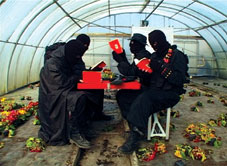
There is a red folding table with soldiers dressed in black all around. The red table is the main character of the movie, and soldiers are the accessories. There is no guns but black tubes. No corpses but black-zipped bags. The movie spreads out all around the table, and the m., somewhere, must be something.
Raphaël Siboni was born in 1981 and graduated from the Fine Arts School of Paris. He lives and works somewhere between Paris and Roubaix, entered residency at the Fresnoy, National Studio of Contempory Arts, and currently works on several projects, such as the Kant Tuning Club.
Berta Sichel
Catalogue : 2007Reina Sophia Museum | 0 | 0 | | 0:0 | Spain | 2007

Berta Sichel
Reina Sophia Museum
0 | 0 | | 0:0 | Spain | 2007
On September 10th, 1992, their Majesties King Juan Carlos and Queen Sofía opened the Permanent Collection of the Museo Nacional Centro de Arte Reina Sofía. What had before only been host to temporary exhibitions was now a true museum, with the task of looking after, increasing, and exhibiting its artistic collections. The building that is the home of the MNCARS, however, dates back many years. In 1566, during the reign of Felipe II, the idea arose of bringing all the many different centres and hospices scattered around the city of Madrid together under one roof and thirty years later, during the reign of Felipe III, the first shelter was opened on Calle Santa Isabel. Other installations were then added to this shelter, including Hospital de Santa Catalina and Hospital de la Pasión, and the complex formed as a result was named Hospital General. From that time, the Hospital has undergone various modifications and additions, managing to survive demands for its demolition by way of a Royal Decree in 1977 that declared it a national historical and artistic monument. In 1980, Antonio Fernández Alba began work to restore the building and at the end of 1988, José Luis Iñíguez de Onzoño and Antonio Vázquez de Castro put the final touches to the modifications, among which the three glass and steel lift towers, designed in collaboration with British architect Ian Ritchie, are of particular interest. Soon after, in 1988, a Royal Decree turned the Centre into a National Museum to replace the former Museo Español de Arte Contemporáneo (MEAC). The institution's first director, who held the position from June 1988 to December 1990, was Tomás Llorens. In late December 1990, María del Corral took over as director. In September 1994, a new director was appointed, José Guirao Cabrera, who directed the centre until May 2000 when he was replaced, until June 2004, by Juan Manuel Bonet. Since June 7th, 2004, Ana Martínez de Aguilar has held the position as director of the museum.
Erin Siddall, Siddall, Erin : Igharas, Ts?m?
Catalogue : 2023Great Bear Money Rock | Multimedia installation | 16mm | color | 10:6 | Canada | 2021
Erin Siddall, Siddall, Erin : Igharas, Ts?m?
Great Bear Money Rock
Multimedia installation | 16mm | color | 10:6 | Canada | 2021
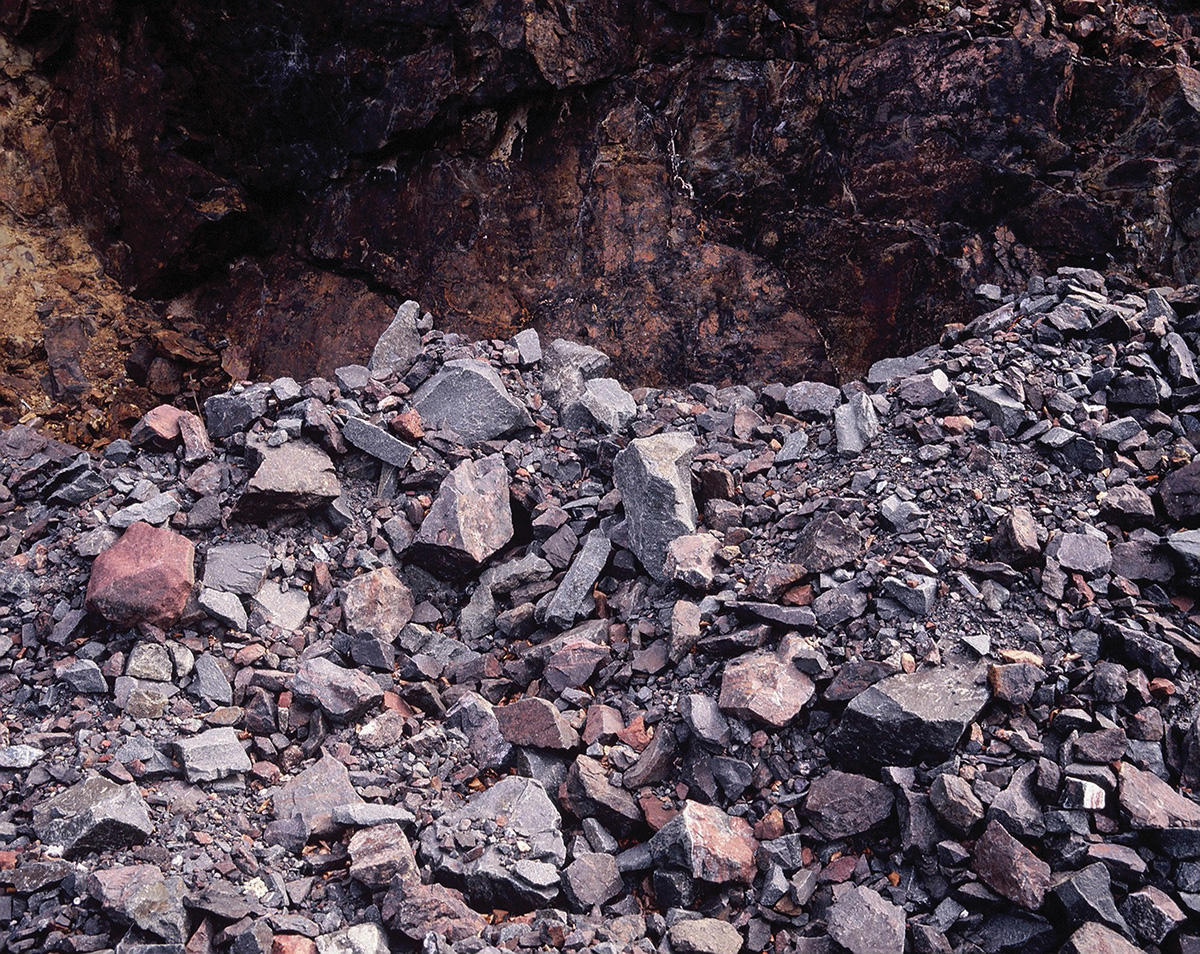
Installation Synopsis: Great Bear Money Rock traces how the land and the life of local Indigenous communities overlap. The Lake Is a Cup (16mm film, 2021) considers the material memories retained by the lake: What stories may be told by these waters if we become attuned to this more-than-human body? Made collaboratively, views of the ghost mine, Dél?n?, and the lake, are splintered by projection through a water bottle balanced on a long, narrow prism. Like water, but also like bodies, the film accumulates radioactivity. The installation is permeated by the mechanical sounds made by the projector in an almost-organic cadence that constantly brings us back to our own bodies. Retracing the narratives conserved in the waters of the lake and in the rocks strewn around the landscape, Great Bear Money Rock exposes the imperceptible—that which evades our senses but whose effects are nonetheless profoundly physical. Other installation elements of Great Bear Money Rock include a garden of crystals from the site of the mine, enclosed in glass bubbles to contain the weak radioactivity they emit. Even though the glass is fragile, it plays a doubly protective role: it keeps us from contact with the ore, and it preserves the territory in its translucent showcase—territory threatened by human activity. Large-format prints placed on structures show the heaps of stones that cover the abandoned mine. Assembled field recordings, in sync with the projection, inundate these rubbly landscapes.
Erin Siddall (lives in Vancouver, Canada) is a visual artist whose work encourages the viewer into thinking about the embodied experience of looking, beyond the subject at which they are looking. Erin’s practice also considers the photographic representation of the unrepresentable through invisible environmental hazards, hidden histories and traumatic events. She holds an MFA from the University of British Columbia and a BMA from Emily Carr University, both Vancouver, and has shown at venues including the Toronto Biennial of Art; Momenta Biennale, Montreal, the Vancouver Art Gallery; Gallery 44, Toronto; the Burrard Art Foundation Studio, Vancouver; and Nuit Blanche Saskatoon. Ts??m? Igharas (Tahltan First Nation, born in Smithers, Canada) is an interdisciplinary artist. She uses a potlatch methodology to create conceptual artworks and teachings influenced by her mentorship in Northwest Coast formline design at K’saan, her studies in visual culture and her time in the mountains. Ts??m? attended Emily Carr University of Art and Design (ECUAD), Vancouver, and received an MFA from OCAD U, Toronto. She won the 2018 Emily Award for outstanding ECUAD alumni and is one of the twenty-five 2020 Sobey Award winners. She has shown and performed in various places in Canada and internationally in Sweden, Mexico, USA and Chile.
Abigail Sidebotham
Catalogue : 2015Her Name is Herman | Experimental doc. | hdv | color | 15:7 | United Kingdom | 2013
Abigail Sidebotham
Her Name is Herman
Experimental doc. | hdv | color | 15:7 | United Kingdom | 2013
`Her Name is Herman` is a film about longing, masculinity and desire. It follows the true story of a farmer who, in 1976, through a definitive premonition discovered a huge unexploded WWII ‘Herman’ bomb buried deep beneath the ground on the Gower Peninsular in Wales. Weighing one ton and with a length of 2.5 meters this buried and alienated relic of history is seen as an archetype of trauma and the pursuit to reach and defuse it a masculine principle of conquest.
Abigail Sidebotham (b. 1985, Wales) is a multi media artist living in Brighton, UK. Her practice includes works with drawing, text, performance, photography and artist film. She earned her Bachelor of Arts in Photography at Brighton University in 2008 and Fine Art Masters from the Royal College of Art in 2013. Her work has been exhibited internationally in exhibitions such as; HotShoe Gallery, London, Altitude 1000+ Festival, Switzerland, DOX Centre for Contemporary Art, Prague and MART Galleria Civica, Trento, Italy. She has been awarded a number of prizes and residencies, including the Red Mansion residency programme in Beijing, China (2013) and received an honorary mention for her work exhibited at the DOX centre for Contemporary Art with the prize of a residency in Prague, Czech Republic (2014).
Lina Sieckmann, Miriam Gossing
Catalogue : 2020Souvenir | Experimental doc. | 16mm | color | 20:50 | Germany | 2019
Lina Sieckmann, Miriam Gossing
Souvenir
Experimental doc. | 16mm | color | 20:50 | Germany | 2019
Souvenir explores the deserted inside of contemporary 36-hour- minicruise ferry ships between the Netherlands, Germany, Norway and the UK. As a low-budget replica of luxurious Caribbean cruises, the ship is in a constant state of transit, never arriving at a final destination. On board settings and décor bear reference to a European history of seafaring and trade while the actual ocean remains distant – in surveillance monitors, the on-board cinema and panoramic window fronts. A female voiceover is composed out of different interviews with seamen’s widows somewhere in between dialogue and inner monologue, circling around topics of distant love, fake luxury, colonial artifacts and a departure from society’s expectations. Starting from a documentary observation of the inside space, the limits of outer and inner reality become blurred over the course of the film. Single souvenirs as fetishized objects turn into a unified ornament as the point of view shifts from the individual to the collective. The film as a souvenir itself opens up memories of a colonial past, drawing a connection between the ship as the largest arsenal of imagination and the nautic space of the cinema.
As a directors duo they have produced several short films on 16-mm film, in which urban and private architecture, hyper-staged environment, subcultural individuals and the notion of desire are examined – combining documentary imagery with fiction and found footage.Their works are characterised by the depth of research and contact with communities and individuals, as well as by the clear lines in their approach to architecture and the worlds which shape desire, fear, anxiety, and alienation. There films have been awarded with numerous grants and scholarships and are shown internationally on film festivals and in art institutions, among them International Film Festival Rotterdam, Edinburgh International Film Festival, International Short Film Festival Oberhausen, Anthology Film Archives New York City, Hamburger Bahnhof – Museum für Gegenwart Berlin, MoMa Antwerp, Julia Stoschek Collection)
Luke Sieczek
Catalogue : 2008Phantom | Experimental video | dv | color | 6:20 | Poland, USA | 2007
Luke Sieczek
Phantom
Experimental video | dv | color | 6:20 | Poland, USA | 2007
PHANTOM (Luke Sieczek, 6:20 min., Digital Video, Color/Sound, 2007) PHANTOM recomposes two scenes from Jacques Tourneur`s film Cat People, reanimating the words and images of its heroine, played by the actress Simone Simon. Her voice reverberates a feeling of intense restlessness, while luminous specters emanate from all sides, surrounding her in a pulsing, phosphorescent glow. PHANTOM re-imagines a half-remembered midnight movie: the dying rays of a television screen are re-absorbed into a spectral, volatile afterimage.
Originally from Poland, Luke Sieczek is an independent film and video artist, whose films have been exhibited at numerous international film festivals and venues. His films and videos have shown at Museum of Modern Art, the New York Film Festival`s "Views from the Avant-Garde," the European Media Art Festival, and the Rotterdam International Film Festival, among others. While varying in genre and technique, his films and videos continue to explore concerns that include the investigation of place, memory, the status of the - immigrant - outsider, and the shifting and unstable relations of audio-visual time and space. Luke Sieczek studied at Bard College and received an MFA from the University of Wisconsin. He currently lives in Seattle, WA.
Amie Siegel
Catalogue : 2007Berlin Remake | Video installation | dv | color and b&w | 14:0 | USA | 2005
Amie Siegel
Berlin Remake
Video installation | dv | color and b&w | 14:0 | USA | 2005
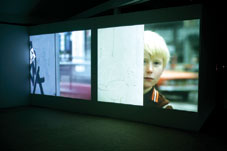
"Berlin Remake" is a video installation comprised of shot-for-shot remakes of scenes from the East German state film studio (DEFA). The movie scenes are re-created and framed exactly as in their original set-ups, only populated now by contemporary architecture and historical absence ? evocative cinematic gestures re-staged throughout East Berlin. The "remade" scenes are projected alongside the "original" film scenes, a synchronous, looped double projection in a darkened space. The video installation is an uncanny juxtaposition of past and present, making history (like the GDR) simultaneously present and absent, dramatic and banal, ruptured and reconnected, and explores how within cinema's fictionalization of history, documentation and archiving occurs.
Born in Chicago in 1974, Amie Siegel works with film, video, sound, and writing. A graduate of Bard College and The School of the Art Institute of Chicago, Siegel's work has exhibited at the Whitney Museum of American Art, Kino Arsenal Berlin, Toronto Cinematheque, Museum of Fine Arts Boston, Facets Cinematheque, and Austrian Film Museum. She is the author of The Waking Life (North Atlantic Books, 1999). "Empathy", her first feature film, premiered at the 2003 Berlin International Film Festival. Siegel has received fellowships from the MacDowell Colony, DAAD Berliner-Künstlerprogramm and the Edith Ruß Haus für Medienkunst. She lives in New York and Berlin.
Judith Siegmund, Piontek
Catalogue : 2012Zu wenig zu viel? | Documentary | dv | color | 18:0 | Germany | 2010
Judith Siegmund, Piontek
Zu wenig zu viel?
Documentary | dv | color | 18:0 | Germany | 2010
Judith Siegmund (1965) ist Konzept-und Video-Künstlerin und Philosophin. Sie lebt in Berlin und unterrichtet an der UdK Berlin. (www.judithsiegmund.de) André Piontek ist Videoproduzent. Er lebt in Weißenfels (Sachsen Anhalt) und Berlin und produziert im Rahmen seiner Firma vides media Kurzfilme.
Pola Sieverding
Catalogue : 2014Close to concrete | Video installation | hdv | color | 15:20 | Germany, Portugal | 2011
Pola Sieverding
Close to concrete
Video installation | hdv | color | 15:20 | Germany, Portugal | 2011
Pola Sieverding studierte an der Carnegie Mellon University Pittsburgh, am Surikov Institut in Moscow und machte 2007 ihren Meisterschüler bei Stan Douglas an der Universität der Künste Berlin. Seit dem hat sie vielfach international ausgestellt: Aram Art Gallery, Seoul; Palmengarten Museum für Moderne Kunst, Frankfurt am Main; Art in General, New York; Hamburger Bahnhof, Berlin; Lumiar Cité, Lissabon; Neue Gesellschaft für bildende Kunst, Berlin; Lena Brüning Galerie, Berlin; Anat Ebgi Gallery, Los Angeles et al. Seit 2011 arbeitet sie mit Orson Sieverding an audio-visuellen Performances, die u.a. im Kunstverein Heidelberg, bei ReMap 3 in Athen und in der Kunsthalle Düsseldorf aufgeführt wurden. 2012 kollaborierte sie mit Natascha Sadr Haghighian für http://pfad.d13.documenta.de/. Sie war als Artist in Residence nach Ramallah, Prag und Lissabon eingeladen und als Gastdozentin an die International Academy of Art Palestine. Pola Sieverding lebt und arbeitet in Berlin.
Birgitte Sigmundstad
Catalogue : 2026Det nye museet | Documentary | hdv | color | 112:0 | Norway | 2025
Birgitte Sigmundstad
Det nye museet
Documentary | hdv | color | 112:0 | Norway | 2025
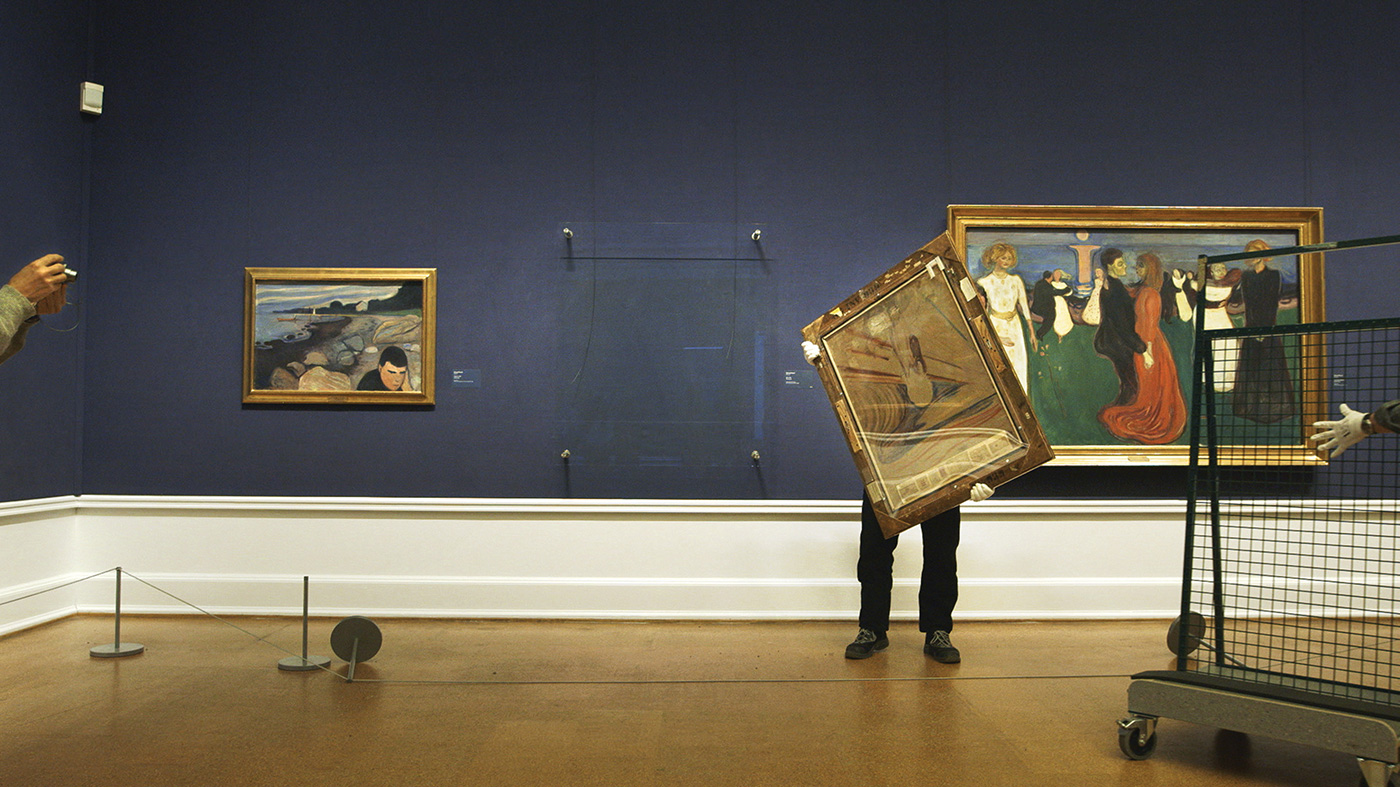
THE NEW MUSEUM explores the making of the new National Museum for Art, Architecture and Design. Through observational footage, filmed over a period of 8 years Birgitte Sigmundstad takes us into the meeting rooms and onto the construction site. We meet the people working with the art, see works and objects being prepared for relocation, and witness the old museum buildings that have now become history. Without rushing, the film brings us into discussions and planning processes, and we follow the architect’s ups and downs. The New Museum offers insight into the process and expectations behind the construction of the museum, resulting in an intimate and often entertaining film that raises questions about what a museum should contain – and who it is built for.
Birgitte Sigmundstad lives in Oslo and works primarily with moving images. She is educated at The Surrey Institute of Art & Design in England and has had number of exhibitions and screenings in Norway and abroad. Sigmundstads films are essayistic and are tied to art, art history or historical events. Another recurring subject matter in Sigmundstads films is how art is used ideologically as pictured in Art and Non-Art (2020) about the exhibition with the same name in a nazified National Gallery in Oslo in 1942 and Hammersborg Protecting the Bygone Future (2016) which looks at the social democratic project and modernist architecture. In recent years Sigmundstad has worked with several films about the mediation of second world war in Norway. These films including ‘What we talk about when we talk about war’ was shown in a solo exhibition at Atelier Nord in 2021. In 2012 Sigmundstad was granted the guaranteed income for artists by the Norwegian State. The film about the National Museum, an observational documentary was started on in 2016 and finished in 2025.