Catalogue > List by artist
Browse the entire list of Rencontre Internationales artists since 2004. Use the alphabetical filter to refine your search. update in progress
Lingjie Wang, Jingfang HAO
Catalogue : 2013ouvrières ? | Experimental doc. | hdv | color | 10:46 | China | 2012
Lingjie Wang, Catherine Egloffe, Andrea Palade Flondor, HAO Jingfang, Serge Desire Ouedraogo, Bouna Cherif Fofana
ouvrières ?
Experimental doc. | hdv | color | 10:46 | China | 2012
Comment les ouvrières se voient à leur travail ? Pourquoi font elles ce métier ? Qui sont elles ? Pas seulement ici, mais aussi ailleurs. Le regard se concentre sur les femmes de l`industrie textile mais porte au delà d`un pays. Il va là où des artistes partagent cette même envie de regarder les femmes se regardant au travail. Ce qui importe d`abord c`est la manière dont chacune se voit, se pense. Les femmes parlent de leur désir, désir d`indépendance, pour le reste elles décrivent leur vie au travail, les difficultés, la dureté, le besoin de travailler, les peurs, les envies, les regrets... Souvent, elles se ressemblent, par leurs gestes attachés aux machines, mais aussi par leur histoire, le besoin d`argent, d`indépendance, certaines ont peur, d`autres se rebiffent, refusent. Ce qui importe aussi c`est la manière dont chaque artiste voit ces femmes au travail. Les croisements de regards, se font au gré des images et des paroles, sans autre guide que le jeu du loin et du proche, dans l`espace recomposé des usines, du rapport des corps aux machines, au travail.
«Images en transit », C`est un processus artistique collectif, qui a commencé en 2010 avec un travail expérimental sur le regard des femmes au travail, dans le textile. Nous sommes 6 artistes, de 3 continents, Europe, Afrique, Asie, qui avons imaginé peu à peu un dispositif pour travailler en collectif. Chacun a filmé dans son pays des ouvrières au travail, puis nous avons mis en commun les images. L?idée a été de réaliser une vidéo, avec une écriture commune, mais chacun a pu et pourra continuer à sa manière le travail engagé. Les images appartiennent au collectif et à chacun. Le temps de l`écriture collective a été celui du projet, puis celui du montage, chacun ?uvrant à partir des ses propres images et de celles des autres. Une centaines d?heures au total. Toutes les interviews ont été intégralement traduites. Le processus est expérimental et très ouvert donc. Nous ?uvrons sur l`écart des regards, l`écart dans le travail, des artistes et des femmes, les idées comme les images circulent. Co auteurs : Catherine Egloffe (France), WANG Lingjie (Chine), Andrea Palade Flondor (Roumanie), HAO Jingfang (Chine), Serge Desire Ouedraogo (Burkina Faso), Bouna Cherif Fofana (Mali)
Catalogue : 2012Flotter dans le noir | Experimental video | | color | 6:23 | China, Mali | 2011
Lingjie Wang, Jingfang HAO
Flotter dans le noir
Experimental video | | color | 6:23 | China, Mali | 2011
Wandering in the night, floating in the dark. Video filmed in February 2011 in Bamako, Mali, in the district Djicoroni Para, with the broadcast of muezzin`s calls. By the lacking of public street lighting, the landscape of the street is nothing familiar to us. The whole environment has changed. Houses, stores, waste, plants, even clothes of the passengers, everything is fading in the dark. We see the lights and shadows, the images taken. The movement of light and shadow built the memory of the territory that floats in time.
After his graduation as an engineer in industrial design in 2007, WANG Lingjie decided to continue his journey of creation by a more challenging and fundamental way, which leads him to start a 5 years study in contemporary art. WANG Lingjie has a various interests and so in the early years, he explored some different domains include: information technology, ecology and architecture, which he integrate to his creation of art works. Some after, influenced by his political background and thoughts of idealism, the artist focus his practices to installation, photography and video/motion picture which involve both fiction and documentary. By these mediums, he develops projects which reflect his thoughts on our existence, our relations with the nature and the univers. WANG Lingjie lives and works in Lorraine, France and Shanghai, China.
Yu Wang
Catalogue : 2023Sous un même toit | Experimental fiction | mov | color | 20:0 | China | 2022
Yu Wang
Sous un même toit
Experimental fiction | mov | color | 20:0 | China | 2022
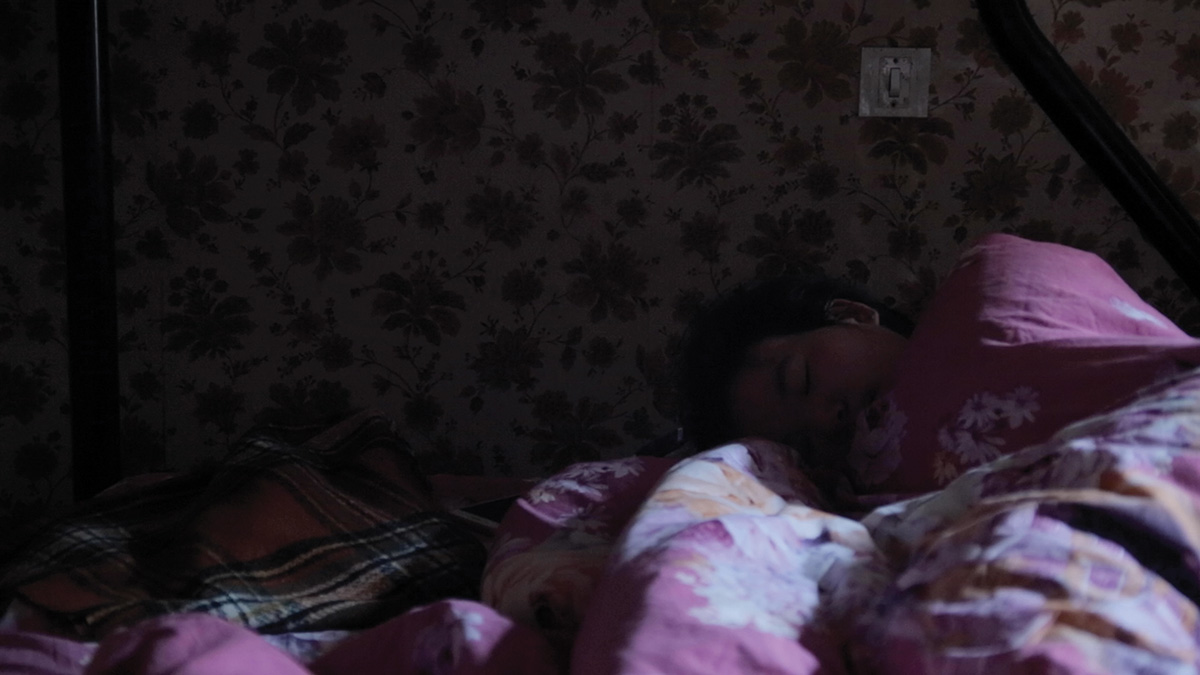
Bin and Yuan are brother and sister. When they’re not working, they share a small apartment in Marseille. This is their haven, a space where they can rest. Here they can be connected to the outside world at all hours of the day and night, and especially to their home country, China, to which Yuan is planning to return.
Born in China, Yu Wang is a filmmaker based in France since 2018. Following her previous film studies in Beijing and Taipei, she currently develops personal work between France and China.
Yuyan Wang
Catalogue : 2025Look On the Bright Side | Experimental doc. | mov | color | 17:2 | China, France | 2023
Yuyan Wang
Look On the Bright Side
Experimental doc. | mov | color | 17:2 | China, France | 2023
In an age of wire and string, futuristic visions anchor in lithic time. In the dark, people are driven to shine in the most spectacular ways. Light, emitted from our digital extensions, has roots traversing millions, even billions of years.
Yuyan Wang, born in 1989 in China and currently based in Paris, is a filmmaker and video artist. Her works involve recycled materials from the industrial sphere of image production, tracing their mutation and proliferation within the digital frameworks and representations. Through the editing process, Wang deconstructs and recontextualizes the intricate hierarchies and inherent meanings in materials —whether found, processed, and produced—striping symbols of their conventional paths of perception and turning them into immersive sensory experiences. Wang completed her studies at the École des Beaux-Arts de Paris in 2016 and later at Le Fresnoy - Studio national des arts contemporains in 2022. Her work has been showcased at Tate Modern, Palais de Tokyo, UCCA Beijing, the 12th Berlin Biennale and various festivals, such as the Berlinale International Film Festival, the International Film Festival Rotterdam, MoMa Doc Fortnight, CPH:DOX, the European Media Art Festival, receiving numerous awards.
Catalogue : 2025The Moon Also Rises | Experimental doc. | hdv | color | 23:40 | China, France | 2024
Yuyan Wang
The Moon Also Rises
Experimental doc. | hdv | color | 23:40 | China, France | 2024
Just before the launch of artificial moons, a retired couple finds their harbor in the fading darkness. Trying to catch up with the pace of modernity, their daily life traces this forthcoming brightness back to its earthly origins.
Yuyan Wang (b. 1989, China) is a filmmaker and multidisciplinary artist. Her work focuses on the impact of image creation in media, representation, and the attention economy. By deconstructing and recontextualizing inherent meanings of found materials, her practice probes the continual mutations within the industrial production chain of images, a perpetual development leading to an abstraction of reality. Her work has been showcased at Tate Modern, Palais de Tokyo, the 12th Berlin Biennale and various festivals, such as Berlinale, IFFR, European Media Art Festival, Indie Lisboa, receiving numerous awards.
Franz Wanner
Catalogue : 2026Berlin-Lichtenberg | Documentary | mp4 | color and b&w | 7:20 | Germany | 2024
Franz Wanner
Berlin-Lichtenberg
Documentary | mp4 | color and b&w | 7:20 | Germany | 2024
The video Berlin-Lichtenberg uses footage from a home movie filmed in 1943. The apparent intention of the filmmaker – to capture peaceful moments of family life such as a wife and child on a walk or leisure time at a lakeside restaurant in the Berlin district of Lichtenberg – is disrupted by unintended visual content. In the background, everyday life in the forced labour system becomes visible: a group of female forced labourers on the way to their work site, and the barracks of a forced labour camp behind the excursion venue. These visual elements are not consciously chosen, but rather a casual documentation of the omnipresence of forced labour in Nazi Germany. The amateur footage has been re-edited for the video with intertitles that contextualise the silent images and add a fictional level.
In his artistic work, Franz Wanner (*1975 in Bad Tölz, Germany, lives in Zurich) addresses topics such as the European Union’s migration policy, the German secret service and the arms industry, as well as their history and current structures, and the effects of Nazism on the German imperative of prosperity. “In a conceptual practice whose consistency of research and artistic output, in the tradition of Hans Haacke, continues – by means of investigations and transmedia – to ask questions where no one has yet done so” (Nora Sternfeld, HFBK Hamburg), “he creates images of a collective cognitive dissonance and analytical poetry about the pathology of overlooking within the Germany of today and its idioms” (Stephanie Weber, Lenbachhaus Munich). As Artist in Residence at the Harun Farocki Institute, he developed the exhibition Mind the Memory Gap for the KINDL – Centre for Contemporary Art in Berlin. Under the title Eingestellte Gegenwarten, he realised his first solo exhibition in Italy at Merano Arte, which will be shown in modified form at the Lenbachhaus in Munich in 2026.
Dan Ward
Catalogue : 2017Performance | Experimental doc. | hdv | color | 18:0 | United Kingdom | 2015
Dan Ward
Performance
Experimental doc. | hdv | color | 18:0 | United Kingdom | 2015
A single day spent in a motion-capture studio documenting actors, a director and technical crew provide the subject matter for this film. Using a cliché B-movie script, the studio Audiomotion test workflow patterns to standardise and improve the production process (e.g. adjusting cameras and monitors, rehearsing with equipment, transferring data etc.) The actor’s movements are recorded during the scene, followed by minute facial gestures (aided with face paint), and finally edited as 3D models. We see how technique and dialogue must change to avoid disrupting the motion-capture technology, how the actors choose their expressions (stylised, but with an emphasis on naturalism), what other jobs the actors may have, and how standards or ideal gestures are created via these technical methods.
Dan Ward is a filmmaker based in London.
Feargal Ward, Jonathan Sammon
Catalogue : 2026Ivanko the Bear's Child | Experimental doc. | dcp | color | 25:0 | Ireland | 2024
Feargal Ward, Jonathan Sammon
Ivanko the Bear's Child
Experimental doc. | dcp | color | 25:0 | Ireland | 2024
A peasant’s wife loses her way in the forest and stumbles into a bear’s den. The bear keeps her with him, and after a time, a half-bear, half-child is born. They long to escape. To this backdrop, we move through the corridors and streets of a deserted German military town, once the central headquarters of the Soviet army’s occupation of Eastern Europe. Sealed off to the public for decades, this obscure complex became known to outsiders as “the Forbidden City.” A primal Russian fairy tale is employed to navigate this labyrinthine site, which appears to speak to both the legacy of this contested past and the unsettling resonances of our present.
Feargal Ward and Jonathan Sammon are filmmaking artists from Ireland. Much of their work explores the boundaries and possibilities of the hybrid-documentary form, where tropes and devices of narrative cinema are often appropriated or subverted in an attempt to interrogate established truths. Previous films they have collaborated on include 'Tin City', which premiered at this year’s Berlinale (Forum Expanded) before screening at multiple festivals including Karlovy Vary, Cinéma du Réel, and Festival dei Popoli, where it was awarded the International Discoveries Prize. Other collaborations involving Adrian Duncan include the films 'Lowland' (Cork International Film Festival), 'Memory Room' (IDFA, EVA International, Dokufest Kosovo), and 'Tension Structures' (IDFA, Hot Docs, RIDM). Ward’s feature documentary 'The Lonely Battle of Thomas Reid' premiered in the main competition at IDFA and screened at multiple festivals before being broadcast on German, Irish, and Finnish television. His debut feature documentary 'Yximalloo' (co-directed with Tadhg O’Sullivan) premiered at FID Marseille, where it won the Prix Premier
Phillip Warnell
Catalogue : 2023The Whole Nine Yards | Experimental doc. | 0 | color | 16:0 | United Kingdom | 2023

Phillip Warnell
The Whole Nine Yards
Experimental doc. | 0 | color | 16:0 | United Kingdom | 2023
Working with a redacted audio recording and transcript of an interview, The Whole Nine Yards explores the cool economy, loneliness and deep exposure of an anonymised New York drug dealer during his incarceration. However, his testimony, far from being police statement or court confession, is gleaned verbatim from a casting audition from a feature film (Good Time, Ben & Josh Safdie 2016) migrated into the project. He is now deceased. The recollections peak during a haunting attempted murder, nine dudes going 'the whole nine yards'. One of two new companion pieces to Intimate Distances (2020), it forms a new body of work that relates to the uneasy rapport between film-making and crime-making. This functions in a space where casting interview and crime testimonial become indiscernible, and can be received as either discarded testimony or audition as witness.
Phillip Warnell is an artist-filmmaker and writer from London, a first generation university graduate from a working class background. He produces cinematic and art works exploring a range of philosophical, poetic and sensorial thematics: ideas on human-animal relations, the political and cinematic imagination, the presence of those with prescient or extraordinary attributes and the poetics of bodily and life-world circumstances. His work is often performative, establishing elements for a film shoot as (part) event, resulting in an interplay between scripted, documented and (sometimes) precarious filming circumstances. Phillip Warnell is an academic, and has undertaken visiting professorships, fellowships and held posts at Harvard University (Film Study Center, 2017-18), Warwick University (UK) Art & History of Medicine, George Mason University (USA), University of Lincoln (UK) and Beijing Normal University (China) amongst others.
Phillip Warnell
Catalogue : 2021Intimate Distances | Experimental doc. | 4k | color | 61:0 | United Kingdom, USA | 2020
Phillip Warnell
Intimate Distances
Experimental doc. | 4k | color | 61:0 | United Kingdom, USA | 2020
On a street corner in Queens, New York, an elderly, white-haired woman hovers, apparently waiting or looking for something – then starts approaching passersby. Miked up close, but viewed – surveillance-style – from distant rooftops, she asks them philosophical questions about turning points in their lives, sometimes eliciting candidly revealing answers from people who seemingly need to talk. She’s also seen up close at street level, viewed by a shaky nearby camera. And intermittently we hear the affectless voiceover of an English male reading an account of a prison spell. What exactly are we seeing? A documentary of sorts? A fiction stripped of its expected signposts? The woman is real-life casting director Martha Wollner, but the film never makes it clear what her mission is, what she hopes to learn, and what her relation is to the distant speaker (who may also be the distant observer). Echoing Coppola’s THE CONVERSATION, as well as works by Phillip Warnell’s fellow British experimental directors John Smith and Chris Petit, this is an enigmatic, elusive piece. Yet, as the title suggests, those moments when Wollner connects with the interiority of perfect strangers makes this an alluringly, unexpectedly compassionate guerrilla foray into urban experience. (Jonathan Romney)
Phillip Warnell is an artist-filmmaker, a writer, and the director of the Visible Institute, for research in film and photography, at Kingston University, London. He produces film works and texts exploring a range of philosophical and poetic thematics, also exploring ideas on human-animal relations. His most recent film, The Flying Proletarian (2017), premiered at CPH:DOX, Copenhagen International Documentary Film Festival, in March 2017. During his fellowship, Warnell is addressing a series of interconnected questions on “animality-cinemality-criminality,” involving engagement with film professionals and researchers relative to screen-based roles and exploring the relationship among appearance, measurement, and typecasting. He is also developing script-based ideas for a planned feature-length film, currently in development, that investigates ideas on misobservation and apparitions of other life-worlds, accessing archival material to inform and incorporate into the project. Warnell’s film work has been exhibited extensively, including recent screenings at the ICA in London, KW Institute for Contemporary Art, in Berlin, and Tate Modern, in London, as well as in such prestigious film festivals as the Locarno Festival, the New York Film Festival, and the Viennale. Previous exhibitions have included at the Moderna galerija, in Ljubljana, Slovenia; Sharjah Biennial, in United Arab Emirates; and Wellcome Collection, in London. His film Ming of Harlem: Twenty One Storeys in the Air (2014) won the 2014 Georges de Beauregard International Prize at FID International Film Festival Marseille and the 2015 Universities SIC Award at IndieLisboa.
Catalogue : 2015Ming of Harlem: Twenty One Storeys in the Air | Documentary | | color | 70:0 | United Kingdom | 2014
Phillip Warnell
Ming of Harlem: Twenty One Storeys in the Air
Documentary | | color | 70:0 | United Kingdom | 2014
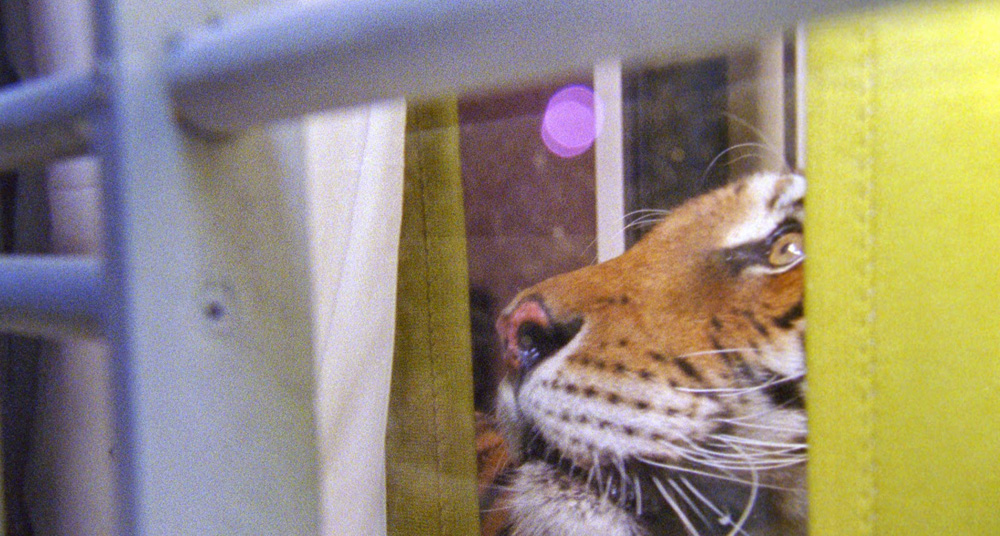
Ming of Harlem: Twenty One Storeys in the Air is an only-in-New-York account of Ming, Al, and Antoine Yates, who cohabited in a high-rise social housing apartment at Drew-Hamilton complex in Harlem for several years until 2003, when news of their dwelling caused a public outcry and collective outpouring of disbelief. On the discovery that Ming was a 500-pound pound Tiger and Al a seven-foot alligator, their story took on an astonishing dimension. The film frames Yates’s recollections with a poetic study of Ming and Al, the predators’ presence combined with a text by philosopher Jean-Luc Nancy, reimagining the circumstances of the wild inside, animal names, strange territories, and human-animal relations.
Phillip Warnell is a filmmaker and academic based in London. He produces cinematic works exploring a range of philosophical ideas on human-animal relations and the poetics of bodily and life-world circumstances, where an interplay between film, politic and sensorium is played out. Augmented by interdisciplinary activities and partnership engagement, Warnell's recent output has involved an ongoing collaboration with philosopher and author Jean-Luc Nancy. His film work has screened internationally in festivals including: New York (NYFF, 2014); Vienna (Viennale, 2014); Marseille (FID, 2008, 09, 14); Amsterdam (IDFA, 2008, 14); Locarno (2012); Copenhagen (CPH-Dox, 2009, 14); Montreal (FNC, 2012, 14) and at curated screening programmes and exhibitions including Paris (Rencontres, 2008, 09, 12, 14); Sharjah Biennial (2013); Antwerp (Extra-City, 2014); Vienna (Fotogalerie, 2014); Tallinn (CCA, 2014). He has presented numerous performance-event works over an extended period, including at MACRO (Rome, 2004); ICA (London, 2006); Copenhagen (2009).
Catalogue : 2013I first saw the light | Experimental film | 16mm | color | 12:0 | United Kingdom | 2012
Phillip Warnell
I first saw the light
Experimental film | 16mm | color | 12:0 | United Kingdom | 2012
I first saw the light channels the vestige of Joseph Carey Merrick?s surviving output. Better known as The Elephant Man, he produced a two-page autobiography, sold to those attending a freak show in which he was displayed in victorian London. The inter-titled text is coupled with stark sequences of a model church he constructed, now sealed within a glass and ebony container, together forming the basis for this poignant, silent film. A reminder of Merrick?s profound humanity in the face of such extreme adversity, the film also serves as a footnote to David Lynch?s feature film, in which the model is employed as a central motif and metaphor for Merrick?s psychological and emotional fluctuations.
Phillip Warnell produces films channelling the circumstances, thoughts and character of extraordinary subjects. The work is concerned with the exploration of, and curiosity with, ideas around bodies and environments. Thinking through film, his work explores an extra-sensory, pre-scientific world, infused with invisible, supra-organic phenomena. The premise for his work locates the body as an axis or point of orientation, around which can be hosted a series of investigations and transformations, into both the human and animal corpus, its biology, psychology and chemistry. A filmmaker, academic and artist, Phillip Warnell presents his work in a range of contexts and guises: including live performance pieces, time-based work, image and text. His recent cinematic work has included ?The Girl with X-ray Eyes? and ?Outlandish: Strange Foreign Bodies?, made in collaboration with Jean-Luc Nancy. Recent presentations of his work include a solo exhibition at The South London Gallery, London (Sept, 2012); Locarno Film Festival (2012); FNC Montreal (2012), Loop Barcelona (2011); CPH-Dox (2010); FID Marseille (2009/8), with exhibitions at Matts Gallery, London (2005) and 300m3, Gothenburg (2008).
Catalogue : 2010Outlandish: étranges corps étrangers | Experimental doc. | 35mm | color | 20:0 | United Kingdom | 2009
Phillip Warnell
Outlandish: étranges corps étrangers
Experimental doc. | 35mm | color | 20:0 | United Kingdom | 2009
Philosopher and heart transplant recipient Jean-Luc Nancy meditates on the history and integrity of bodies in Phillip Warnell?s new short 35mm film, Outlandish: Strange Foreign Bodies. A number of visual and literary passages explore the correlate between a textual narrative specially commissioned for the film, étranges corps étrangers, by Jean-Luc Nancy, his on screen presence, the surgical view of an organ in search of a body and an unaccounted for, displaced Cephalopod at sea. Presented in eight short episodes, together these form an odyssey on bodily migration. Outlandish is a journey threaded between shores and shared environments, the touching of and proximity between bodies, the vanishing and appearance of crew, the dimensions of the corpus and above all ? our relations with strange foreign bodies.
Phillip Warnell is an artist and filmmaker based in London. His work corresponds on a range of ideas concerning the desire for insight into the complex relations that constitute our bodies, the tension between the desire to get at and see the soul and the inherent elusiveness of this endeavour. The work traverses the boundaries of bodies, positioning them both as anatomical, physiological objects of research, and as intimate, distanced and transitional states. Whilst known especially for his keen attention towards notions of bodily transparency, embracing the combined use of historical artifacts with semiotics of the a-visual, his most recent output has assimilated more cinematic and textual imperatives, drawn from various collaborations and performative encounters. Recent exhibitions and screenings have included curated screenings at The BFI, London (08); festival screenings at FID Marseille (08 & 09), Copenhagen Documentary Festival (09); Bilbao Short Film Festival (08); DocBsAs, Buenos Aires (08). Exhibitions have included solo presentations at 300m3, Gothenburg; Leamington Spa Art Gallery, UK (both 2008); and a three-person exhibition at Matt?s Gallery, London (2005). Solo event/performances have included at MACRO, Rome (2006) and ICA, London (2006). He is currently Programme Director of Filmmaking at Kingston University, London.
Chloé Wasp
Catalogue : 2026Jaguars | Experimental doc. | 4k | color | 20:0 | France, Mexico | 2025

Chloé Wasp
Jaguars
Experimental doc. | 4k | color | 20:0 | France, Mexico | 2025
In the Mexican jungle, the jaguar prowls and haunts people's minds. While all eyes are fixed on the nocturnal predator, a child slowly loses his sight, drawing closer to the animal.
Born in Vitry-sur-Seine in 1990, she lives and works in Lille. She graduated from the École nationale supérieure de la photographie d'Arles in 2019, and joined Le Fresnoy - studio national des arts contemporains in 2023. As a photographer and filmmaker, her work focuses on altered states of consciousness, vision disorders and the relationship between humans, animals and plants.
Chloé Wasp
Catalogue : 2026How It Begins | Documentary | 4k | color | 12:37 | France | 2024
Chloé Wasp
How It Begins
Documentary | 4k | color | 12:37 | France | 2024
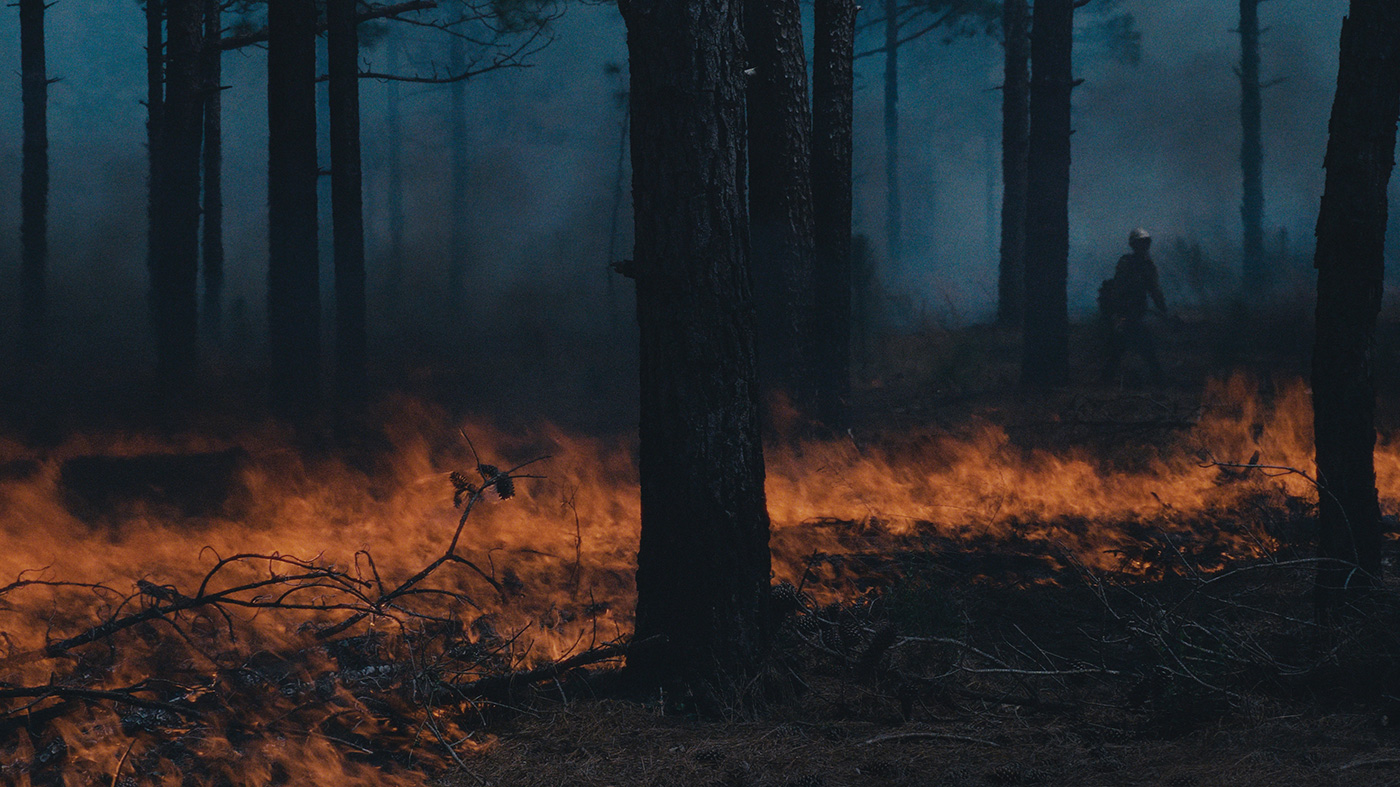
Une fire woman brûle préventivement les forêts de Caroline du Nord, pour régénérer ses terres et éviter les mégafeux dévastateurs. Dans cette plongée progressive dans les flammes, l'acte de mise à feu devient une expérience intime et directe avec les éléments.
Chloé Wasp est une artiste plasticienne et cinéaste originaire de Lille (France). Elle est diplômée de l’École nationale supérieure de la photographie d’Arles et du Fresnoy – Studio national des arts contemporains. Elle axe principalement son travail sur les mythes, les troubles de la perception et les expériences d'altérité, toutes espèces confondues. Dans ce champ d’explorations, le corps est central.
Atsuhiko Watanabe
Catalogue : 2006Resonance of tears | Experimental film | betaSP | color | 11:0 | Japan, France | 2004
Atsuhiko Watanabe
Resonance of tears
Experimental film | betaSP | color | 11:0 | Japan, France | 2004
A cruel emptiness lies after a teardrop. Silence, filled by the resonance of tears. A man is wandering in this empty space. He sinks deeper and deeper into the memory of his dead family. Just before he lost his family, they saw together a play by Tchekhov, A Cherry Orchard, produced by Giorgio Strehrer, legendary Italian director. His monologue-dialogue around the theater brings him back into the imaginary stage of his own sadness.
Atsuhiko Watanabe is a Japanese filmmaker/video artist living in Paris. He graduated from Le Fresnoy, Studio National des Arts contemporains, where he made short films such as Aliénation (Locarno Festival 2003) and Resonance of tears (Rotterdam Festival 2005).
Maya Watanabe
Catalogue : 2022Bullet | Video | 4k | color | 11:0 | Peru, Netherlands | 2021
Maya Watanabe
Bullet
Video | 4k | color | 11:0 | Peru, Netherlands | 2021
The surface of the skull is smooth as marble, except for the fractures surrounding a small, round bullet hole. The camera penetrates this opening, revealing the rock-like landscape within, of deep ravines, jagged-edged craters, and bony reefs. Here and there we see a web hanging, inhabited by a spider. Bullet records the skull of an unidentified body from the Peruvian violent period, which raged from 1980 to 2000 and took 70,000 lives. Since then, many remains have been found but cannot be identified and they still hover, as it were, under the status “NN” –“No Name.” The film tries to shed light on the forces that penetrate the lives of people: natural or social forces that overtake observation, the imagination and memory.Bullet constitutes an indictment of arbitrary executions and judicial vacuum in which they remain.
I am a visual artist and filmmaker who works with video installations. I have had recent exhibitions at, among other places: De Pont Museum (NL), MAXXI Museum (IT); MALI – Museo de Arte de Lima (PE); Rose Art Museum (US); La Casa Encendida (ES); Palais de Tokyo (FR); Kyoto Art Center (JP); Das Fridericianum (DE); and Matadero (ES). My work has been shown at various art biennials and internationally, including Videobrasil, the 13th Havana Biennial (CU), Asian Art Biennial (TW), the 2nd Wuzhen Contemporary Art Exhibition (CN) and the Beijing Biennial (CN). I have also collaborated as audiovisual art director for stage productions in Peru, Spain, Austria and Italy. In 2018, I was granted the Han Nefkens Foundation Award. I live in Amsterdam, where I teach at the Rietveld Academie. I am currently a PhD research student at the Department of Visual Cultures - Goldsmiths, University of London.
Catalogue : 2018Earthquakes | Experimental video | hdv | color | 12:0 | Peru, Japan | 2017
Maya Watanabe
Earthquakes
Experimental video | hdv | color | 12:0 | Peru, Japan | 2017
An unnatural landscape appears in an empty theater. Without any human action, a series of events begin to unleash. The motionless scene is abruptly interrupted by artificial disasters. When the scenography breaks down and the staged landscape collapses, the inhabitants confront their extintion. As the long-shot continues, the remnants left behind appear again, inexplicably recomposed. The fundamental motivation is to explore the limits, one’s own limits, ethical limits, political limits, of control over others deaths.
Maya Watanabe is a Peruvian visual artist who works with video installations. Her work has been exhibited at: Palais de Tokyo, Matadero Madrid, Kadist Art Foundation, Das Fridericianum, Museo de Arte Contemporáneo de Lima, and Kyoto Art Center among others. She has been featured in festivals like Videobrasil, LOOP, FILE, Transitio MX, Madrid Abierto, Havana Film Festival, and Beijing Biennale. She has also collaborated as a set designer and audiovisual art director for theatre plays performed in Peru, Spain, Austria and Italy. Watanabe is based between Amsterdam and Madrid.
Marius Watz, @c
Catalogue : 2006INT.15/35 | Experimental video | dv | color | 2:0 | Norway | 2005
Marius Watz, @c
INT.15/35
Experimental video | dv | color | 2:0 | Norway | 2005
The video for @c`s piece "int.15/35" is a direct visualization of the music. The sound is electriconic, filled with high pitches and sudden attacks of static that stop as abruptly as they start. The video answers to this experience by using bright colors and sharp, pointy forms. Using FFT analysis to get the spectral characteristics of the sound, all the shapes in the video respond immediately to changes in the sound, so that they are perceived as one and the same.
Marius Watz is an artist who works with generative strategies for creating visual form, often employing a signature style of organic shapes and saturated colors. An autodidact, he realizes his pieces as software, creating work for a wide range of applications, from public space projections to live visuals for music.
Nico Joana Weber
Catalogue : 2021Tropic Telecom | Experimental video | 4k | color | 24:58 | Germany, France | 2020
Nico Joana Weber
Tropic Telecom
Experimental video | 4k | color | 24:58 | Germany, France | 2020
Tropic Telecom reflects contemporary Paris in its hybrid post-colonial reality. The film develops from the Palais de la Porte Dorée, which opened in 1931 on the occasion of the Paris Colonial Exhibition. It is the only building of the exhibition that was preserved after the end of the event, located in the southeast of the city bordering on the Périphérique. Its architectural style presents itself as a synthesis of the formerly modern Art Déco, as well as freely interpreted elements of native art and architectural styles. A crocodile basin is to be found in the still accessible aquarium of the palace that was used to showcase fish from the tropical colonies. As the film proceeds, an albino alligator that the basin houses today, embarks on a surreal journey. It leads the viewer through places of French colonial and migration history, as well as large brutalist and post-modern housing estates on the outskirts of Paris that were built from 1970 onwards and which stand for the residential utopia of a postcolonial Paris. A structure of images emerges that situates the ongoing aesthetic, political and social negotiation processes in a polyphonic communicative field.
Nico Joana Weber (*1983 in Bonn) lives and works in Ludwigshafen am Rhein, Germany. She studied Fine Art and Art History at Goldsmiths College London and completed her postgraduate studies at the Academy of Media Arts Cologne in 2013. By means of different artistic media such as video, installation, photography and drawing, she explores the aesthetic and political characteristics of architecture and landscape in transcultural contexts. Weber's work is fuelled by an unsteady search for historical traces and cultural processes of transformation and appropriation that doesn't arrive at simplistic solutions but rather focuses on zones of ambivalence. Nico Joana Weber has received numerous grants and awards, most notably the Villa Romana Prize (2016) and the Bonn Art Award (2019). Selected exhibitions and festivals include: Kunstmuseum, Bonn (2020), Kunstverein Kärnten, Klagenfurt (2019), Goethe Institute Bulgaria, Sofia (2019), Artothek, Cologne (2018), Temporary Gallery, Cologne (2017), Museum unter Tage, Bochum (2017), Skulpturenmuseum Glaskasten Marl (2017), Villa Romana, Florence (2016), Goethe Institute, Paris (2016), Aesthetica Short Film Festival, York (2015), International Short Film Festival Oberhausen (2015).
Apichatpong Weerasethakul
Catalogue : 2016Vapour | Experimental fiction | hdv | black and white | 21:0 | Thailand | 2015
Apichatpong Weerasethakul
Vapour
Experimental fiction | hdv | black and white | 21:0 | Thailand | 2015
“Vapour” se déroule dans le village de Toongha dans la région de Mae Ram en Thaïlande, où le réalisateur vit depuis plusieurs années. Les nuages descendent sur le village et l’engloutissent pour une journée. Ils touchent les tuiles, les lits, les chaises, les tapis, l’herbe, et les habitants, contaminant tout d’une vapeur blanche. Le village est en proie à des problèmes de gestion des terres et depuis près de soixante ans s’oppose au gouvernement thaïlandais.
Apichatong Weerasethakul, né à Bangkok en 1970, débute une carrière d`architecte avant d’obtenir un diplôme de cinéma au Art Institute de Chicago, en 1997. Ses travaux commencent à circuler dans le monde entier, dont «Mystérieux objet à midi», un premier long métrage expérimental en 2000 et le court «Boys at noon», la même année. En quelques années, il s’impose ainsi comme un des chefs de file de la scène expérimentale thailandaise. Parallèlement en 1999, Apichtapong Weerasethakul fonde «Kick the machine», une entreprise de promotion du cinéma expérimental et indépendant à travers le monde. En 2002, il présente à Cannes son premier long métrage de fiction, «Blissfully yours», considéré par de nombreux observateurs comme l’une des grandes révélations de cette édition. Suivra «Tropical Malady», en 2004. En 2005, Apichatpong a été consultant pour le projet Tsunami Digital Short Films, 13 films commissionnés par le Bureau pour l’Art contemporain et la Culture du ministère de la Culture thaïlandais. Ces films devaient rendre hommage aux victimes du tsunami et permettre aux artistes de réinterpréter ce tragique événement. Le film d’Apichatpong s’intitulait «Ghost of Asia», réalisé en collaboration avec l’artiste cinéaste française Christelle Lheureux. En 2008, il fait partie du jury cannois présidé par Sean Penn. En 2009, «Primitive Project» présenté parallèlement au musée d’art moderne de la ville de Paris et à Liverpool se remémore les affrontements sanglants à Nabua qui ont opposé civils et forces de l’ordre lors de la Guerre Froide, quand on tentait d’éradiquer toute trace de communisme chez les villageois. Dans les années 2000, il milite également contre la censure du cinéma en Thaïlande. Après avoir reçu le prix Un certain regard en 2002 pour «Blissfully Yours» et le prix du jury pour «Tropical Malady» en 2004, le cinéaste obtient la Palme d’or du Festival de Cannes 2010 pour son film «Oncle Boonmee, celui qui se souvient de ses vies antérieures».
Catalogue : 2013Ashes | Experimental doc. | hdv | color | 20:0 | Thailand | 2012
Apichatpong Weerasethakul
Ashes
Experimental doc. | hdv | color | 20:0 | Thailand | 2012
The idea, as Weerasethakul himself explained in the introduction, was to shoot something with a new camera that Mubi lend him. The result: an experimental film in the nicest sense of the word; that is, to integrate the camera in the shoot (and with it all the mishaps, ups and downs that it might find/create) instead of shooting against it; that is, trying to hide it and keeping it safe, which is the standard procedure in non-experimental cinema. He therefore joined forces with his new toy avoiding the common threat that looms over every filmmaker that wants to do something other than a purely mechanical film (a film-machine): namely, that his film may become so aesthetically thick that it will be inscrutable. The challenge and virtue of Ashes, as with Mekong Hotel, is to create a welcoming film. This has also been achieved because the colour and the shape of the film is by now familiar turf for us: different brush, same hand. A boy and a dog, a dusty path, youths in the countryside, a bonfire?; all pieces from his well-known scrapbook. In a way it is like a twenty-minute walk in a different corridor of the same cave that he used for his earlier project, called Primitive. Weerasethakul is a better balladeer than poet, and since poetry is almost the unavoidable soul in a film like this (which is anything but prose), that shows. His struggle to master the new tool is often a beautiful and enjoyable one, but he doesn´t win out entirely, and has to rely on a certain narrative, without which the film would eventually sink. And so we are told by the narrator that the first half of this film it´s a dream, a drawn one; film as mental image.
Apichatpong ?Joe? Weerasethakul (born July 16, 1970) is a Thai independent film director, screenwriter, and film producer.He has a degree in Architecture from Khon Kaen University and a Master of Fine Arts in Filmmaking from The School of the Art Institute of Chicago. He has been making films and videos since the early 90s. His feature films include Uncle Boonmee Who Can Recall His Past Lives, winner of the prestigious 2010 Cannes Film Festival Palme d?Or prize; Tropical Malady, which won a jury prize at the 2004 Cannes Film Festival; Blissfully Yours, which won the top prize in the Un Certain Regard program at the 2002 Cannes Film Festival; and Syndromes and a Century, which premiered at the 63rd Venice Film Festival and was the first Thai film to be entered in competition there. Themes reflected in his films include dreams, nature, sexuality (including his own homosexuality), and Western perceptions of Thailand and Asia, and his films display a preference for unconventional narrative structures (like placing titles/credits at the middle of a film). He is one of the few filmmakers in Thailand who have worked outside the strict Thai studio system. In his films, he experiments with certain elements found in the dramatic plot structure of Thai television and radio programs, comics and old films. He finds his inspiration in small towns around the country. In his work, he often uses non-professional actors and improvised dialogue in exploring the shifting boundaries between documentary and fiction.
Catalogue : 2010A Letter to Uncle Boonmee | Video | dv | color | 17:40 | Thailand | 2009
Apichatpong Weerasethakul
A Letter to Uncle Boonmee
Video | dv | color | 17:40 | Thailand | 2009
This short film is a personal letter describing my Nabua to Uncle Boonmee. The film comprises of shots of house interiors in the evening. The houses are all deserted except for one, where there is a group of young soldiers, played by some teens of Nabua. Two of them impersonate me by narrating the film: `Uncle... I have been here for a while. I would like to see a movie about your life. So I proposed a project about reincarnation. In my script there is a longan (fruit tree) farm surrounded by mountains. But here there are endless plains and rice fields. Last week I met a man who I thought was your son. But perhaps he was your nephew because he said his father was a policeman who owned hundreds of cows. Judging from the book I have, I don?t think you owned a lot of cows, and you were a teacher, weren?t you? The man was old and couldn?t remember his father?s name very well. It might be Boonmee or Boonma. It was a long time ago, he said. Here in Nabua there are several houses that I think are suitable for this short film for which I got funding from England. I don?t know what your house looked like. I cannot use the one in my script because it is so different from the ones here. Maybe some parts of these houses resemble yours. What was your view like? Was it like this? Soldiers once occupied this place. They killed and tortured the villagers until everyone fled into the jungle.` There is a soldier having dinner alone on the second floor. In a room nearby, there is a mysterious figure sleeping in a pink mosquito nest. The silence is interrupted by the sound of digging heard from the window. From one of the houses, there is a glimpse of a spaceship parked in the backyard. Something small is darting across the frame. In an empty room, the soldier is lying on the floor looking out of the window, preoccupied by his thoughts. In a forest, there is a black, ape-like creature walking among the trees. In one corner of the forest we see a model of a shabby house, a spirit house that no one cares for any longer. In front of a tree a cow stands, doing nothing. After a while, it walks away.
Apichatpong Weerasethakul, Christelle Lheureux
Apichatpong Weerasethakul
Catalogue : 2007Worldly desires | Experimental fiction | dv | color | 42:0 | Thailand | 2005
Apichatpong Weerasethakul
Worldly desires
Experimental fiction | dv | color | 42:0 | Thailand | 2005
True false musical comedy, false true making off, "Worldly Desires" aims to film a day in the life of filming in the depths of the Asian jungle, blending sung sequences whose duration destabilizes and intoxicates the spectator, from lascivious scenes to the mysterious ambiance. Here we find the themes of the Thai director's predilection, his taste for the romantic encounter, and his visceral attraction for the worrying strangeness of the tropical forest.
Born in 1970 in Bangkok, Apichatong Weerasethakul started with a career in architecture before obtaining a diploma in cinema from the Art Institute of Chicagi in 1997. His works started to circulate throughout the world, most notably "Mystérieux objet à midi", his first feature length film in 2000, and in the same year the short film "Boys at noon". In a few years he thus becomes one of the leaders of the Taiwanese experimental scene. In 1999 he founded Kick the machine, a business promoting experimental and independant cinema throughout the world. In 2002 il presented his first feature length fiction film, "Blissfully Yours" at Cannes, considered one of the largest revelations of this edition by numerous observers. "Tropical Malady" followed in 2004.
Apichatpong Weerasethakul
William Wegman
Liu Wei
Catalogue : 2011Weile Mingtian de Jiyi | Documentary | dv | color | 18:6 | China | 2010
Liu Wei
Weile Mingtian de Jiyi
Documentary | dv | color | 18:6 | China | 2010
This is a documentary about the armed violence in China during the Great Cultural Revolution. Traces are spread out from the only left ¡°Cultural Revolution Graveyard¡± in Chongqing, recollect the impact of the bygones to their life in the course of their growth, listen to their opinions and reflects to the historical disaster. Also raised the question of why such a tragedy had happened in China? For what reasons had they suffered from the tragedy? From the narrator¡¯s words, we seem to find some solutions, but far from enough. If we are indifferent to the disasters caused by the Cultural Revolution, never reflect about it, there might be possibilities more sufferings would happen, that we are reluctant to see it again.
Liu Wei was born in 1965, P. R. China, He An independent artist and filmmaker living and working in Beijing, Liu Wei graduated from the China Central Academy of Drama in 1992 and completed his studies in Philosophy at Beijing University in 1995. Liu Wei was represented in the `8th Gwangju Biennale-10,000 Lives`, 2010, and has participated in the `9th Sharjah Biennial`, 2009; ¡®International Media Art Biennale WRO¡¯, 2009, WRO Art Center; `Taipei Biennial`, 2008. Taipei Fine Arts Museum; `Thermocline of Art-New Asian Waves`, 2007, ZKM Center for Art and Media, Karlsruhe; ¡°La vid¨¦o, un art, une histoire 1965 ¨C 2007¡±, 2008, Mus¨¦e Fabre; ` City skin-Images Of the Contemporary Metropolis`, 2006, Shengzhen Museum of Art etc.
Catalogue : 2010Weile Wangque de Jinian | Documentary | dv | color | 12:50 | China | 2009
Liu Wei
Weile Wangque de Jinian
Documentary | dv | color | 12:50 | China | 2009
That is a memory of my sophomore year of 1989, the year when I almost got killed. I don¡¯t feel lucky for my survival, but a strong feeling of sadness for myself, because of my inability to do something in the face of the dead. Twenty years have passed. Mother¡¯s hair has turned gray; beloved ones have dried up the tears. Glorious as forever on this first street of China, silence prevails. Silence, forgetting and deliberate covering, people¡¯s memory turns into a vacuum. The bygones twisted into a blurred picture, true memory gone, illusion remains. that memory makes us more helpless as the time passes by. Remaining silent in the face of reality witnesses our hypocrisy and weakness. Silence, forgetting and deliberate covering, people¡¯s memory turns into a vacuum. The bygones twisted into a blurred picture, true memory gone, illusion remains.
Liu Wei is an independent artist living and working in Beijing. He graduated from the Department of Fine Arts of China Central Academy of Drama and completed his studies at the Symposium on the Relationship between Religion and Culture, hosted by the Beijing University. His works are closely related to personal experience and memory, as well as the reality and rapidly changing history of contemporary China. ¡°Memory¡± is the main subject for his creation of art works, for it connects history at one end while reality at the other end in the clue of memory. Therefore in his works we can find such kind of realistic significance. He¡¯s works have been exhibited at many art institutions internationally including at ZKM Center for Art and Media in Karlsruhe; the Centre Pompidou in Paris, Nasher Museum of Art in U.S, WRO Art Center in Poland, Mus¨¦e Fabre in Montpellier, Contemporary Art Centre of South Australia, Taipei Fine Art Museum, The Centre of Contemporary Art Palau de la Virreina in Barcelona, the Haus der Kulturen der Welt in Berlin and The Guangdong Museum of Art China etc.
Catalogue : 2009Wu Wang de Tu Di | Documentary | dv | color | 7:16 | China | 2008
Liu Wei
Wu Wang de Tu Di
Documentary | dv | color | 7:16 | China | 2008
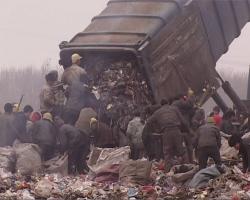
These junkmen in this photo are farmers living in suburban areas of Beijing who come to this refuse dump everyday to grub wastes and domestic garbage from urban households in exchange for meager income as supplement to their basic subsistence. Along with rapid economic development, the city of Beijing has been sprawling in all directions. On the one hand, the croplands are continuously shrinking but farming income remains unchanged. On the other hand, consumer demand is increasing despite of steadily growing consumer price. This situation has forced numerous farmers into a new dilemma and they have to find a new way out for subsistence While our mainstream media drums for urban development and prosperity, are we really aware that the urbanization process is destroying our environment and the way we live? Are those new skyscrapers and broader streets really the future we are pursuing?
Liu Wei,Born in 1965, P. R. China, He is an independent artist living and working in Beijing. In 1992 he graduated from the Department of Fine Arts, of China Central Academy of Drama and in 1995 completed his studies at the Symposium on the Relationship between Religion and Culture, hosted by the Philosophy Department of the Beijing University. Lui Wei has been engaged in the fields of video and photography for many years. His works are closely related to personal experience and memory, as well as the reality and rapidly changing history of contemporary China. He?s works have been exhibited at many art institutions internationally including at the Centre Pompidou, France; ZKM Center for Art and Media, Karlsruhe; The Guangdong Museum of Art, China; Nasher Museum of Art, U.S.; AdK - AKADEMIE DER KÜNSTE. Berlin;musée Fabre, France; The Centre of Contemporary Art Palau de la Virreina, Spain. Taipei Fine Art Museum and SESC Art Centre, Brazil etc.
Catalogue : 2008Nian | Documentary | dv | color | 48:18 | China | 2004
Liu Wei
Nian
Documentary | dv | color | 48:18 | China | 2004
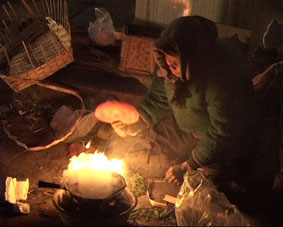
This video records those appealers? New Year Eve in 2004 in the petitioners? village, Dongzhuang, Beijing, who are homeless or hard to go back home. It tries to face their life and record their experience, listen to their voices, learn the grass roots level in the Chinese society and approach a real, myth-like China. In China, many petitioners appeal year after year without any result. The years of appealing devoured their life and hope so that it abraded their whole life completely. They are the most ordinary people in China. They are the groups that are not protected. Their voices are so weak. Nobody listen to their yells.
Born in 1965, P. R. China. Live and work in Beijing. Educational Background:In 1992, graduated with bachelor`s degree in literature, as a design major, from the Department of Fine Arts, of China Central Academy of Drama. In 1995, completed his studies at the Symposium on the Relationship between Religion and Culture, hosted by the Philosophy Department of the Beijing University.
Jinqiang Wei
Catalogue : 2014呻吟 | | | color | 233:45 | China | 2013
Jinqiang Wei
呻吟
| | color | 233:45 | China | 2013
2013, performance,single-channel video (HD, color, sounds), 233min 45sec Work Description: Rented a minibus, put four 50w-loudspeakers on the top of it, playing the sound of groaning (which cut from the movies), driving through the city streets.
WEI JINQIANG Born in Honghu City, Hubei Province in 1983, WEI JINQIANG currently lives and works in Wuhan. Education: Wei Jinqiang graduated from the Oil Painting Department of Hubei Fine Arts Institute in 2005 with a bachelor degree.