Catalogue 2025
Below, browse the 2025 Rencontres Internationales catalogue, or search the archives of the works presented since 2004. New video clips are routinely posted and the images and text are regularly updated.
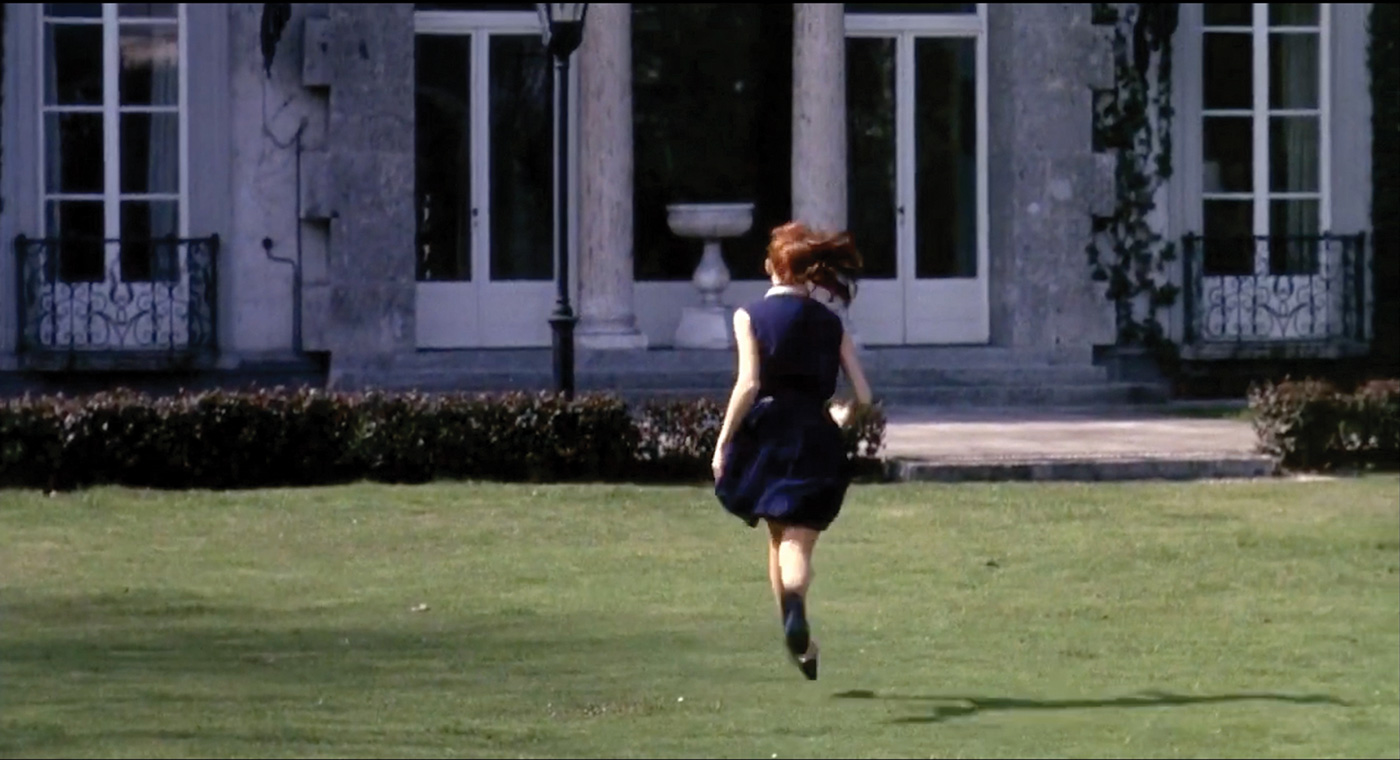

Cathy Lee Crane, John Di Stefano
Tra
Video | hdv | color | 5:35 | USA, Canada | 2024
‘Tra' is an ode to Italian filmmaker Pier Paolo Pasolini. ‘Tra' synthesizes the narrative of his film ‘Teorema' (1968) by highlighting its interstitial moments. The act of running that appears throughout the film is isolated and deployed to expose the film’s subtextual currents.
John Di Stefano is an artist/filmmaker, writer, and curator whose work reconciles the personal with the social, the everyday with history through hybrid forms of documentary practices and the essayistic form. His work often deals with his immigrant past seen through a queer lens, including the feature-length 'You Are Here' (2009) which premiered at the Festival International du Documentaire (Marseille). His award-winning work has also been featured at the Videonale (Bonn), Whitechapel Gallery, Tensta Konsthall, Barcelona Museum of Modern Art, Para/Site (Hong Kong), and Anthology Film Archives. His critical writings appear in various international publications. He teaches at Concordia University (Montreal). Cathy Lee Crane is an experimental filmmaker whose work mines the historical archive to produce lyrical films of speculative history. She was a Guggenheim Fellow, and in 2015 her work enjoyed its first survey at the National Gallery of Art (Washington DC). Crane’s award-winning films –including 'Pasolini’s Last Words' (2012)– have screened at Viennale, Cinematheque Francais, BFI, and Arsenal/Berlin. Her interest in borders saw the release of 'Crossing Columbus' (2020) about the border town of Columbus, New Mexico which was supported by the Rockefeller Foundation and the Harun Farocki Institut in Berlin. She teaches at Ithaca College (New York).
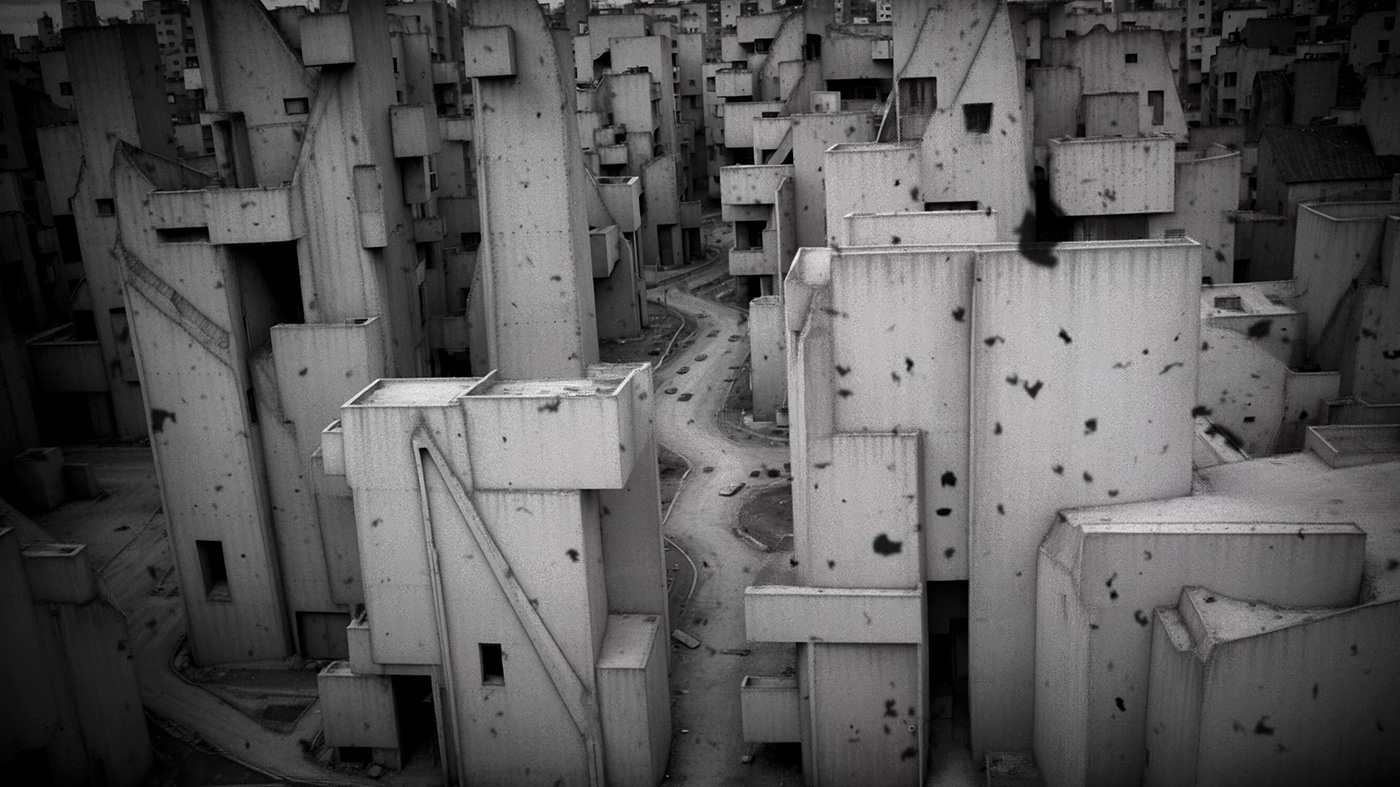
Thomas Leon
To Ashes
Video | 0 | color | 5:6 | France | 2025
To Ashes explores the thresholds between reality and machinic hallucination, questioning contemporary image-generation technologies — particularly artificial intelligence — and their influence on our perception of the real. Created through a hybrid process combining 3D modeling and AI-based generation tools, the video unfolds as a continuous tracking shot through a brutalist megastructure in constant transformation. Architectural forms disintegrate and transform, while ash-like particles rise into the air. This disintegration is accompanied by an experimental soundscape, where analog synthesizers and transformed voices evoke a latent collapse. Gradually, the architecture gives way to unstable crystalline structures. Reality wavers. In the end, something gives way, shifts, disappears. Everything must burn.
Thomas Léon develops his practice by merging cinema, graphic arts and images from new technologies. He creates films, immersive video and sound installations, as well as large-format drawings. His work explores the interconnections between memory, sensuality, intimate experiences, and the imaginary, drawing on fictions, whether they be social, urban, climatic, etc. He is notably influenced by science fiction and utopian literature and frequently develops his projects using contemporary image creation tools (3D modeling, AI, etc.). He regularly participates in screenings or exhibitions in France and abroad: 'Listening to Transparency' at the Minsheng Art Museum in Shanghai (China, 2017), 'Cruces Sonoros: Mundos Posibles' at the MAC in Santiago de Chile (Chile, 2016), 'Rendez-vous 11' at the Institute of Contemporary Art in Villeurbanne (France, 2011), and at the South African National Gallery in Cape Town (South Africa, 2012). He notably took part in residencies : Drawing Factory organized by CNAP (National Center for Visual Arts) and the Drawing Lab (Paris) in 2021 ; a residency in Taiwan, organized by Grame, the National Center for Musical Creation (Lyon), and the Digital Art Center (Taipei) in 2011. His works can be found in the collections of CNAP (National Center for Visual Arts) and the Louis Vuitton Foundation. Thomas Léon lives and works in Montreuil.
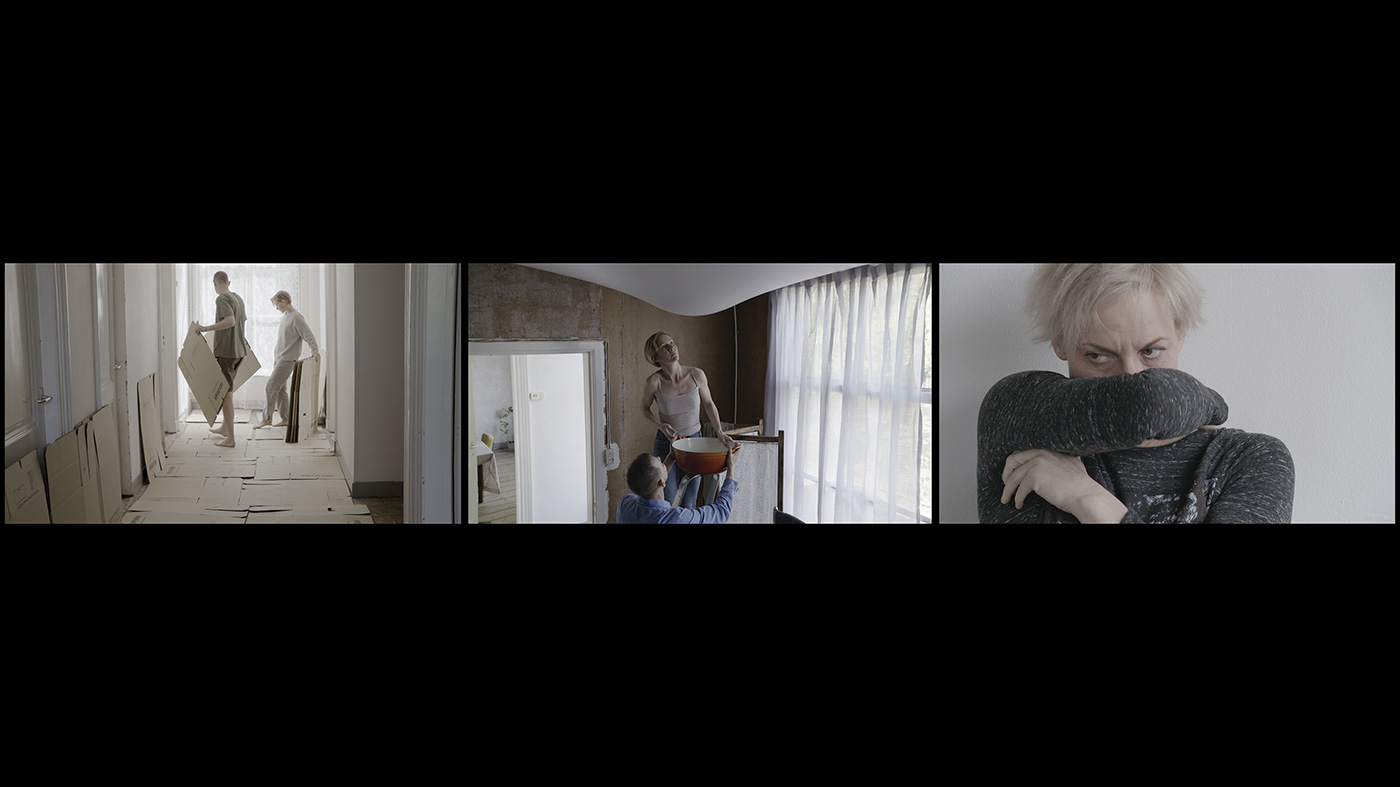

Leopold Emmen
Another Woman - film adaptation (work in progress)
Video installation | mp4 | | 13:6 | Netherlands | 2025
'Another Woman - film adaptation' is a three channel film presenting intimate scenes of three characters, two women and a man, in the course of a breakup. The film explores a world of fiction and performance in a cinematographic and spatially designed narrative where three images are presented simultaneously. The visual style focusses both on the performing bodies and their surroundings. Subcutaneous emotions surface through tactile interaction, as the characters touch and feel their place amidst the physical properties of the space. Walls, ceiling, floor, curtains and furniture form obstacles, boundaries and voids that confront the protagonists with the situation and state of mind in which they find themselves. The interiors become mirrors for their inner worlds, surreal and intuitively recognisable at the same time. 'Another Woman - film adaptation', 2025, is a re-staging of the spatial installation 'Another Woman', 2022. We show an exerpt of 13 min 6 sec. of the final film that will have an estimated duration of 70 minutes.
Leopold Emmen is a collaboration between filmmaker Nanouk Leopold and visual artist Daan Emmen. In our work, we experiment with film as a spatial, cinematographic experience in which the visitor plays an active role. Through the characteristics of a place and the behaviour of our protagonists, we want to make tangible how a presence influences life and relationships with the other. An open invitation to explore the physical and mental world of the characters themselves. Creating awareness of the way in which space, sound and moving image can come together in a deepening, embodied experience, we want to stir up our conditioned gaze. Reflecting on how we see the world, how we see ourselves in that world and how we see each other.

Sonia Levy
We Marry You, O Sea, as a Sign of True and Perpetual Dominion
Experimental doc. | 4k | color | 19:28 | France, United Kingdom | 2025
We Marry You, O Sea engages with Venice and its lagoon “from below,” with the aim of focusing attention on the city’s submerged, life-giving, and altered bio-geomorphological processes rather than on its often-recounted political and military histories. Underwater filmmaking opens new ways of knowing the materialities of the Venice Lagoon and exposes a fractured and troubled environment that complicates mainstream historical narratives that start above the water’s surface. By attuning to the ebb and flood of the lagoon, we start sensing the interplay between land and water, life and decay, and the intimate processes shaping this environment. Noticing the kinds of life made possible in this damaged watery space compels us to delve into the ways it has been profoundly transformed. We Marry You O Sea as a Sign of True and Perpetual Dominion takes its title from the words uttered during the Venetian ritual The Marriage of the Sea, which was held annually on Ascension Day between the eleventh and eighteenth century. During the event, the Doge, the patriarch of the Venetian Republic, would wed the lagoon by casting a golden ring into the water, declaring dominance over the sea. The artist reframes Venice’s enduring relationship with its permeating waters by reflecting on this ongoing legacy of quests for mastery over watery environments. How, this work asks, might we imagine different futures for Venice if we begin to experience the lagoon as a lively place populated by manifold ways of living and dying? In the lagoon, a space requiring continuous modifications for human settlement, wetlands and infrastructures have long been intertwined. Venice’s consolidation as a trading hub and epicenter of naval advancement during the Middle Ages prompted major hydrological engineering to maintain the lagoon’s shallow depths for defense purposes. However, in the twentieth century, harrowing modernization transformed parts of the wetland into petroleum refineries and one of Italy’s largest container terminals as part of an effort to turn the lagoon into an industrial frontier. Urban anthropologist Clara Zanardi has described how these transformations spatialized class divisions in a new way, while also causing irreversible ecological degradation that has profoundly altered the lagoon’s lifeways. The film presents these histories of modernization by interweaving rare historical photographs from Venice’s Giacomelli Photographic Archive with submerged perspectives of the present conditions of the lagoon. The historical significance of these photographs is emphasized by the negative black-and-white reversal of the submerged perspectives, connecting past and present and unfolding futures within the lagoon’s contaminated waters. An original score, created by a chorus of human voices and underwater sound recordings, further emphasizes the links between submerged spaces and human domains. The composition captures the lagoon’s pulses and the impact of industries—from aquatic sounds drowned out by boat noises to the rhythmic poundings of industrial activity amid surging tides—as it gestures toward the profound interplay between human activities and the lagoon’s shallows.
Sonia Levy is an artist filmmaker with a Berber-Polish background. Her work, marked by site-specific and interdisciplinary inquiries, delves into the implications of Western expansionist and extractive logics, exploring how these forces manifest in the transformation and governance of hydrosocial worlds. Her practice aims to probe the thresholds that have shaped and influenced the conditions necessary for life to flourish.


Jan Locus
Intruders
Experimental film | 0 | black and white | 6:5 | Belgium | 2025
Intruders explores the boundary between science fiction and reality, investigating themes of reverse colonization, ecology and human environmental impact. The film offers an introspective reflection on the Western fascination and fear of extraterrestrial entities. In an elongated pan, mountain landscapes and misty images of animals are presented in an ethereal, ghostly way. Locus does not use conventional film footage, but found footage online hunting videos and black and white photographs of UFO observations from the 1950s and 60s. Although these images reveal their origins through their grainy texture, Locus removed the UFOs from these photos to seamlessly merge the remaining landscapes. The phenomenon of unforeseen animal death, often reported in UFO sightings, serves as a metaphor for human influence on nature. Locus intertwines photography with video to create a complex narrative that emphasises the ambiguity of reality and fiction. The film reflects on ‘intruders’ in nature, inspired by dystopian visions of the future and challenges the viewer to consider the complex and often disturbing relationships between humans, technology and nature.
Spanning the mediums of film, photography, and sound, his work often addresses landscape as a tool for the creation of national and social identities, focusing on environments altered by extraction and industrialization. In his latest work, he explores the tension between found footage, still photography, and the moving image, emphasizing the ambiguity of our perception of reality and fiction. His films have been presented at numerous international festivals, including the International Film Festival Rotterdam (IFFR), the International Short Film Festival Oberhausen, Rencontres Internationales Paris/Berlin, Le FIFA – International Festival of Films on Art (Montreal), Kasseler Dokfest, Asolo Art Film Festival, Stuttgarter Filmwinter, CROSSROADS Film Festival (San Francisco), ANTIMATTER Media Art (Victoria), Festival ECRÃ (Rio de Janeiro), PROYECTOR Plataforma de Videoarte (Madrid), SPLIT Film Festival, ONION CITY Experimental Film Festival (Chicago), BISFF Beijing International Short Film Festival, and Flight / Mostra Internazionale del Cinema di Genova among others. Locus lives and works in Brussels.
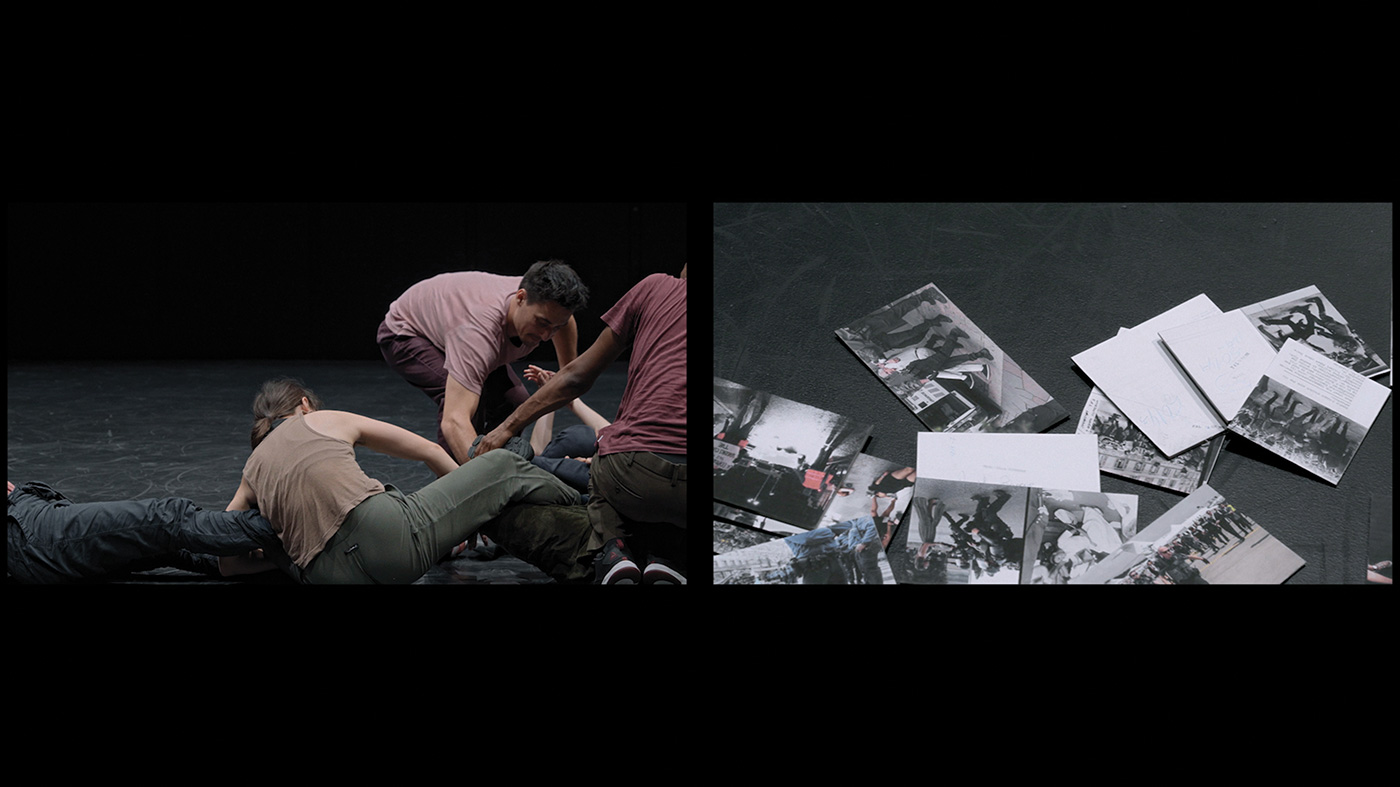
Gabriela Löffel
Nous n’avons pas besoin de nous connaître à l’avance
Video installation | hdv | color | 20:15 | Switzerland | 2024
« We do not have to know each other in advance » is a hybrid video work that alternates moments of dance performance with archive footage and textual quotations. Gabriela Löffel draws on the political aspect of public space to construct her thinking, developing a visual essay that stages the ‘performativity of bodies in this zone of political action’. Drawing on the written work of Judith Butler, an American philosopher and gender theorist who has worked on the question of the body and its normalised representativeness in contemporary society, Löffel gives corporeality to the issues raised by the author. Quotations from Butler's work are shown alongside the danced and archival elements of the video. The almost fixed camera allows us to examine in detail the slow, precise movements of the dancers. The camera's movements are almost imperceptible, so subtle are they. The artist and choreographer Cédric Gagneur worked closely together to define the various movements that make up the choreography: they propose an abstraction of gestures of resistance or revolt, drawn from archive images from the collection of the Archives contestataires de Genève. The piece is inhabited by slowness and silence, giving the body enough space to unfold individually or collectively. The work offers a dialectic of the potential for protest in the public space. Co-produced by the Fonds cantonal d'art contemporain and the Fonds d'art contemporain de la Ville de Genève for the Mire program.
Gabriela Löffel mainly works with time-based media and focuses on the zones of political and finance structures, and infrastructures. Shifting and translating from the documented immediate to the fields of interpretation and mise-en-scène are strategies she uses in her work process. A method that often results in long-term projects and enables her to create spaces for questions and to propose disruptions to linear narratives. She is interested in the obliquity of the subject and his context. It’s in this gap, brought about by her way of addressing subjects, that her work opens onto reflections on the sense of how we understand a world when we become conscious of the fragmentation of our knowledge. Her work has been presented at institutions and galleries including MAST Bologna, Aargauer Kunsthaus, EMAF Osnabrück, Galería Metropolitana Santiago, Dazibao Montreal, and the Kochi-Muziris Biennale among others. Gabriela Löffel is a recipient of the Swiss Art Award, the Lewis Baltz Research Fund, the Landis+Gyr Grant, as well as others.

Margit Lukacs, Persijn Broersen
Lion's Court
Video | 0 | color | 20:0 | Netherlands | 2025
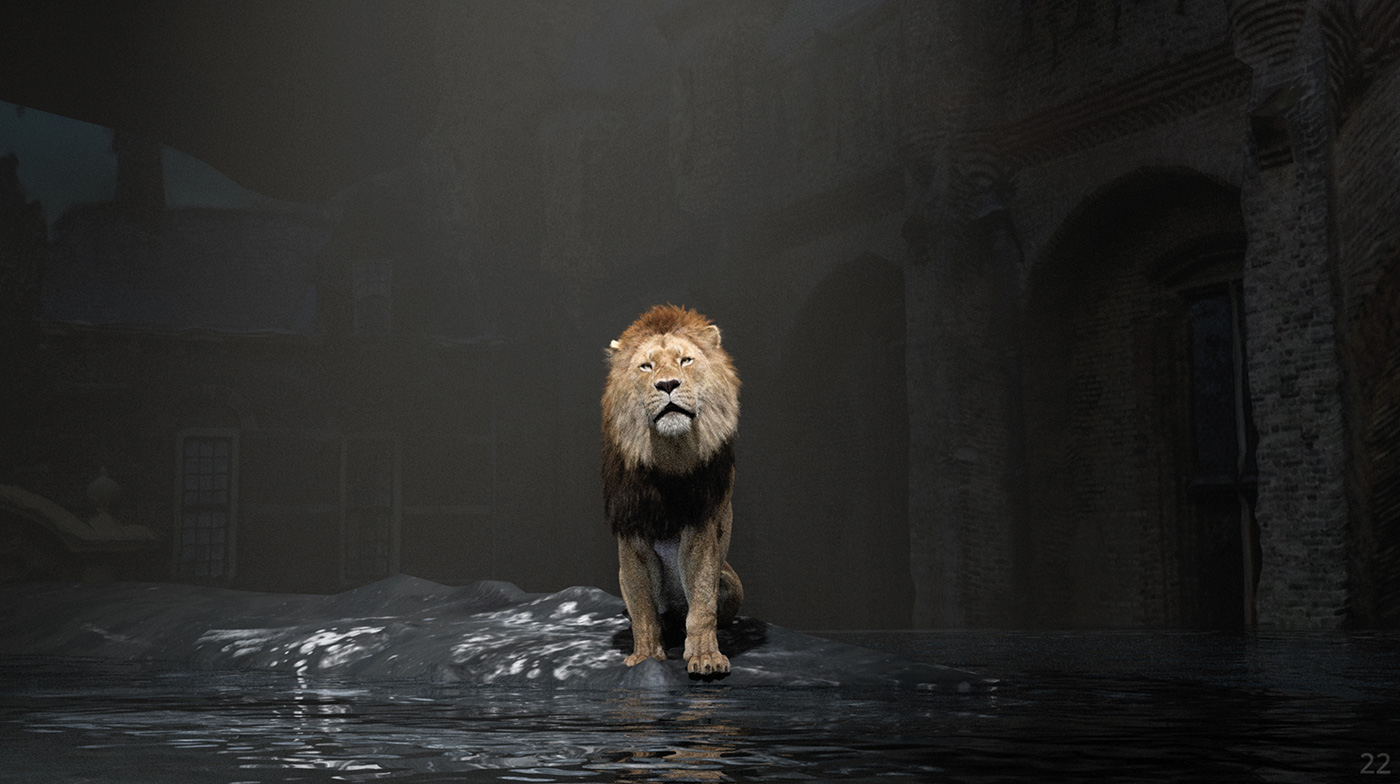
Lion’s Court is a cinematic short opera in which the Binnenhof—the seat of Dutch Parliament in The Hague—is reimagined as a virtual stage where history dissolves into myth. Inspired by the discovery of 14th-century lion bones at the site and by stranded whales as omens, Lukács & Broersen collaborated with composer and political scientist Bram Kortekaas to reinterpret Goethe’s Faust’s vision of redemption. At its center stands the lion Faust, sung by baritone Michael Wilmering—a despot in pursuit of a freedom that consumes itself, a mirror of imperial ambition on the verge of collapse. The artists also drew on the 1650 writings of Johan de Witt, the republican Grand Pensionary, whose words are voiced by the whale (alto-mezzo Carina Vinke), rising from beneath the flooded foundations of the Binnenhof. De Witt believed that a true republic is not ruled by the whims of a single individual, but rooted in the principles of freedom and equality—the very foundations of democracy. In Lion’s Court, a digital hortus conclusus unfolds: a fluid, enclosed world where power, morality, and prophecy converge, and where the myths of the past reverberate through the politics of the present.
Margit Lukács and Persijn Broersen are an Amsterdam-based artist duo exploring the entanglements between nature, culture, and technology. Their work includes films, digital animations, and spatial installations that investigate how media shapes our perception of the natural world. Graduates of Graphic Design at the Gerrit Rietveld Academie, they completed their MFA at the Sandberg Institute and were artists-in-residence at the Rijksakademie in Amsterdam. Broersen & Lukács’ practice is rooted in media theory, art history, and mythology. Drawing from cinematic, scientific, and historical sources, they reimagine landscapes and natural phenomena through digitally layered environments. Their work often reflects on the politics of representation and the appropriation of nature, reconfiguring dominant narratives through fragmented, multi-perspective storytelling. Their installations and films have been widely shown internationally, including at the Stedelijk Museum Amsterdam (NL), Centre Pompidou (FR), FOAM (NL), MUHKA (BE), Centraal Museum (NL), MacKenzie Art Gallery (CA), WRO Biennale (PL), Biennale of Sydney (AU), Rencontres Internationales (HKW Berlin, Louvre/Grand Palais/CWBP, Paris), and Wuzhen Biennale (CN). In 2024, they represented the Netherlands at the Gwangju Biennale. Their film I Wan’na Be Like You was nominated for the Tiger Award/IFFR 2024.

Martí Madaula
Tramuntana
Experimental film | dcp | black and white | 18:27 | Spain | 2025
In a remote area of northern Spain, the wind has a name: Tramuntana. Tramuntana takes what it wants—clothes, trees, boats, and the people of the landscape who live with the endless threat of being carried away by its force. This film is a lyrical portrait of this furious wind, woven from the stories passed down by local villagers.
Martí Madaula is an artist and filmmaker based in Madrid. He holds a degree in Fine Arts from the University of Barcelona, a Master of Visual Arts from the LUCA School of Arts of Ghent (Belgium) and a Master of Fine Arts in Film, Video, New Media, and Animation from the School of the Art Institute of Chicago. In 2019, he received the Extraordinary Prize of Fine Arts (University of Barcelona). In 2021, he was awarded a prestigious “la Caixa” Foundation fellowship to pursue his studies in the United States. Madaula’s latest film, “Tramuntana,” had its World Premiere at the Museum of Modern Art (MoMA) in New York, as part of Doc Fortnight 2025, MoMA’s prestigious Festival of International Nonfiction Film and Media. His first film, “The Living Wardrobe,” had its World Premiere at the Opening Scenes section at Visions du Réel 2024, one of the most important documentary and nonfiction film festivals in the world. Madaula has participated in art residencies at prestigious institutions like Centre Pompidou in Paris or Haus der Kulturen der Welt in Berlin. He has exhibited his work in international solo and group shows.

Melanie Manchot
Line Of Sight (The Tower)
Video | 0 | color | 12:7 | Germany, Switzerland | 2025
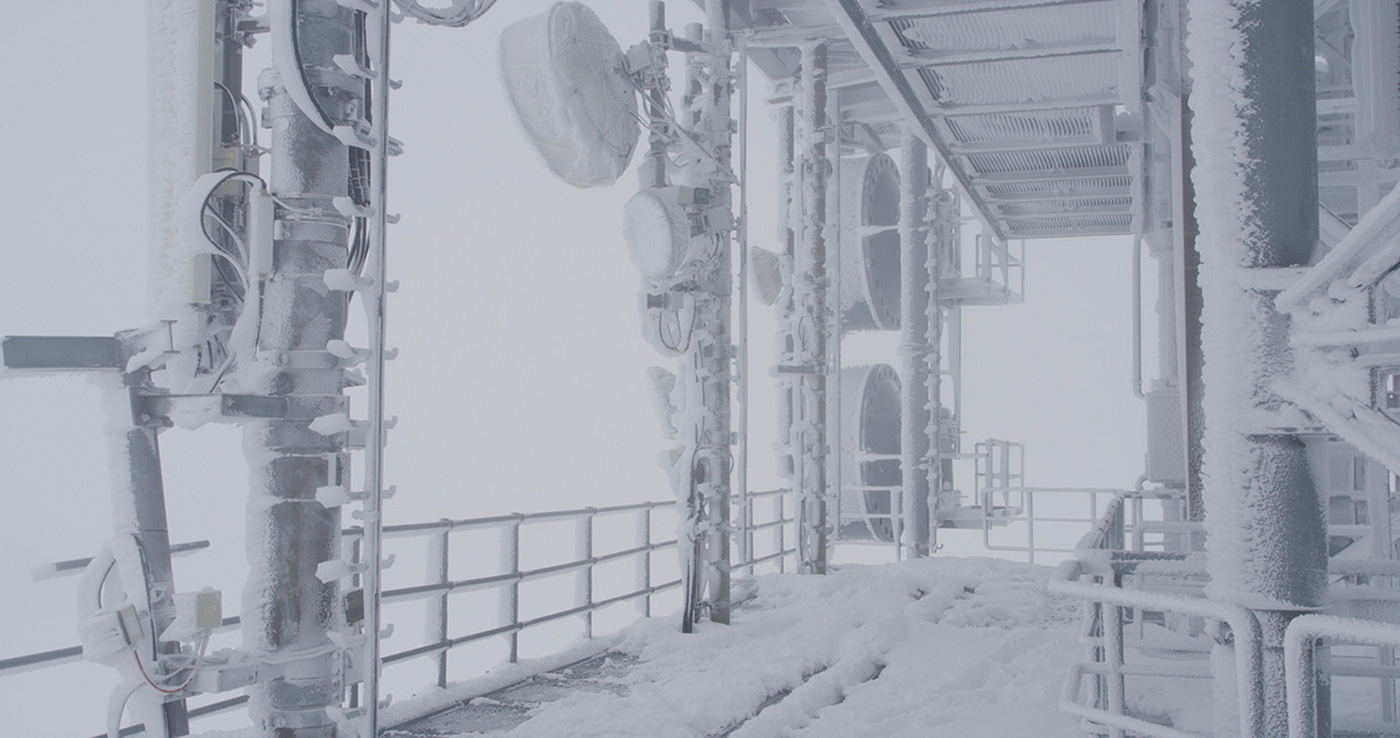
Filmed in a decommissioned telecommunications tower, which used to house secret military equipment, this work returns to my ongoing investigation of mountains and their architectures as spaces of human-nature entanglements. It also returns more specifically to the alpine village of Engelberg, where I have been making work since 2010. In Line of Sight the camera investigates a deserted structure, a space left behind. As if everyone had vacated in mid-action, the environments bear traces of past life, long gone. Both inside and out, the camera observes this perplexing architecture in long panning and tracking shots, culminating in a moment of flight that reveals the structure – as if floating in space. When it was in operation, the tower fulfilled a host of functions, amongst them serving as a space of refuge and shelter during storms. A room full of old mattresses bears witness to such moments of danger. The title ‘Line of Sight’ refers to these towers standing atop mountain peaks with sight of each other, facilitating older forms of communication. With the advances of technology, these towers are now dinosaurs, standing solitary and defunct and as such become symbols of endurance, resistance and older forms of exchange. In 2025, this tower is being reshaped into a space for “mountain entertainment” – acerbating the dichotomy of mountain industries continually expanding footfall onto summits and glacier, hence contributing to the speed of climate change.
London-based visual artist and filmmaker Melanie Manchot employs photography, film, video and sound to form sustained enquiries into our individual and collective identities. The work interrogates and employs acts of care, resistance and communality to engage in discourses on social and political urgencies of our societies. Her films investigate innovative forms of storytelling with an acute understanding of the power of filmmaking to speak to urgent issues and have profound impact. Location-based research informs all her films and mountainous landscapes are a recurrent theme to address fragile environments in our care. Manchot’s artwork has featured in museum and gallery exhibitions internationally and she is currently working towards a large solo show in the UK in early 2026. Her first feature film, STEPHEN, commissioned by Liverpool Biennial, addresses gambling, substance misuse, recovery and mental health through both narrative fiction and documentary. It had its cinematic release through Modern Film in 2024 and continues to be shown in exhibitions as a multi-channel installation. Manchot is currently working towards her second film, Self Storage, with another feature, a fiction/doc hybrid, called One Day As A Tiger, in development.
Randa Maroufi
L’mina
Documentary | dcp | color | 26:0 | Morocco, France | 2025
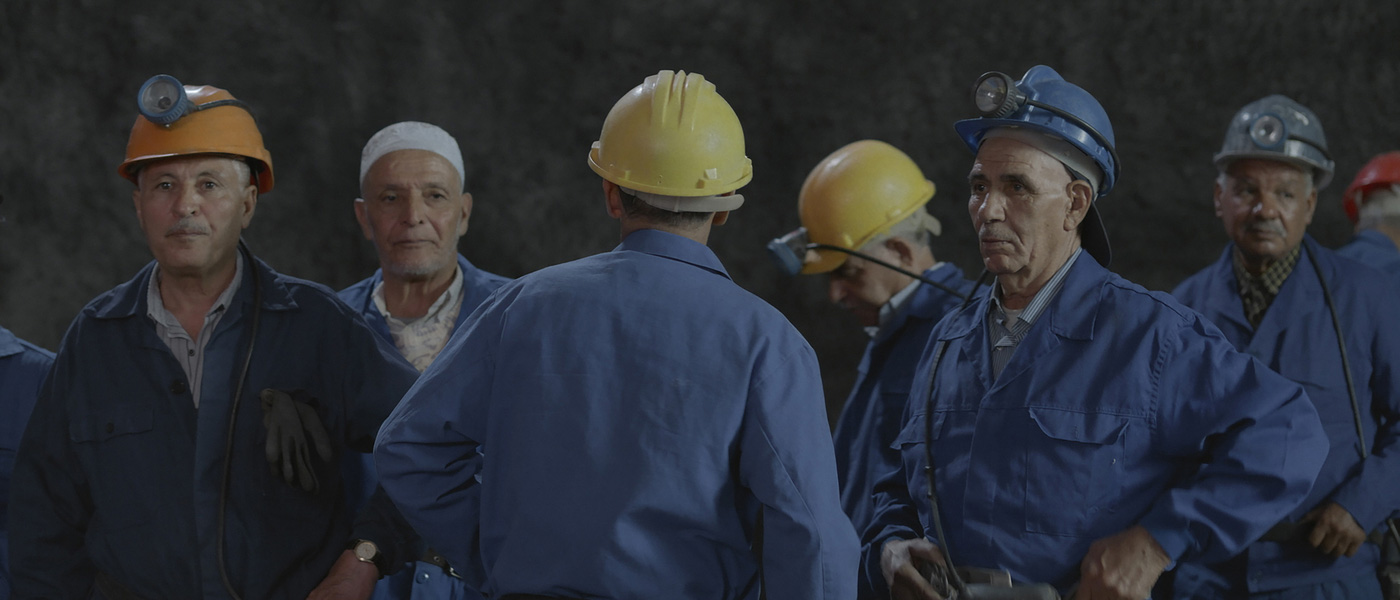
Jerada is a mining town in Morocco where coal extraction, although officially halted in 2001, continues informally to this day. "L’mina" recreates the current work in informal mining pits using a set design created in collaboration with the town’s residents, who perform in their own roles.
Born in 1987 in Casablanca (Morocco), Randa Maroufi is a visual artist and filmmaker. She graduated from the Institut National des Beaux-Arts in Tétouan, the École Supérieure des Beaux-Arts d’Angers, and Le Fresnoy – Studio National des Arts Contemporains. In 2018, she became a fellow at the Académie de France à Madrid, Casa de Velázquez and the Villa Médicis in Rome in 2025. Her films Le Park (2015) and Bab Sebta (2019), awarded at several festivals, mark the beginning of a trilogy dedicated to three Moroccan cities. L’mina (2025) is the final chapter of this trilogy.
Lukas Marxt, Vanja Smiljanic
AMONG THE PALMS THE BOMB or: Looking for reflections in the toxic field of plenty
Experimental doc. | mov | color | 85:0 | Austria, Germany | 2024
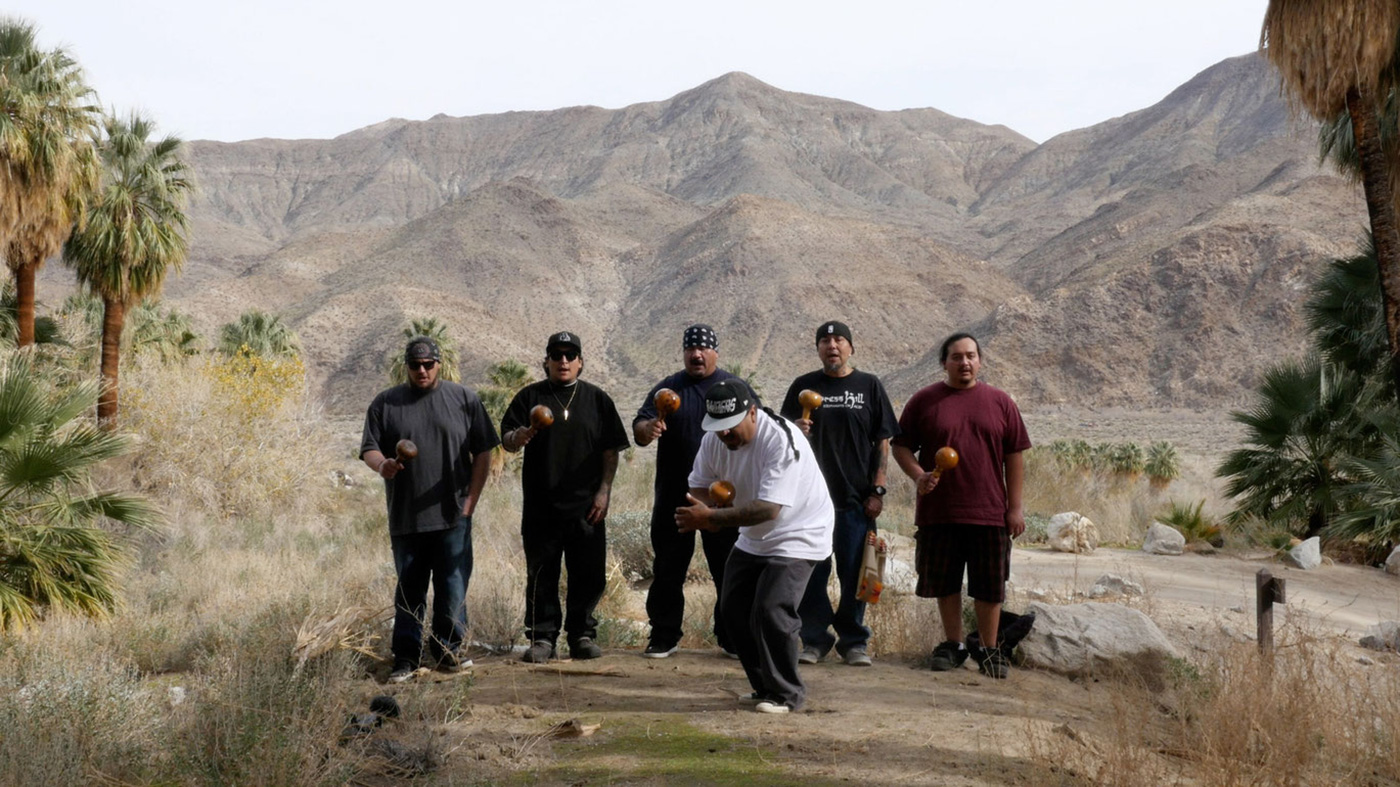
The Salton Sea in southern California is a unique ecosystem. In just four years, the water level has fallen by a good half a meter, and with a maximum depth of ten meters you can calculate when it is expected to dry out. And that’s just the global aspect, which has to do with global warming and changes in the local climate. The Salton Sea is also special because the United States tested numerous atomic bombs here in the final phases of World War II and the Cold War – initially in preparation for the Hiroshima and Nagasaki bombings, later as training for missions that fortunately never took place. In AMONG THE PALMS THE BOMB, Lukas Marxt and Vanja Smiljani? are particularly interested in this aspect of regional history. The film begins in Utah, where the planes took off and then found their destination in the supposedly secluded area around the Salton Sea. There is a museum in Wendover where you can also see models of “Fat Man” and “Little Boy”, the only two atomic bombs ever used in war, along with a loading pit where the planes were loaded, to which Marxt dedicated a shorter film in 2019. For many years he has been dealing with the situation in southern California, which can be described as extreme in many respects. Intensive agriculture, which relies radically on monocultures, has cast a spell over everything there. Marxt and Smiljani? find out that an alliance has been formed against this backdrop: illegal harvest workers from Latin America seek refuge in Native American reservations. AMONG THE PALMS THE BOMB has local experts explain the landscape and history, and the director is looking for dissenting voices, especially among the tribe of the Torres Martinez Desert Cahuilla Indians, who were victims of genocide in the 19th century. Their survivors now recall how many plants that had healing powers and were part of a life with nature once grew around the salty water of the Salton Sea. Now the area belongs to the salt bushes, and beneath the surface ticks the uranium of a Cold War that is about to return. Scary times, someone says. (Bert Rebhandl)
Lukas Marxt (*1983, Austria) is an artist and a filmmaker living and working between Cologne and Graz. Marxt´s interest in the dialogue between human and geological existence, and the impact of man upon nature was first explored in his studies of Geography and Environmental Science at the University of Graz, and was further developed through his audio visual studies at the Art University in Linz. He received his MFA from the Academy of Media Arts Cologne, and attended the postgraduate programme at the Academy of Fine Arts Leipzig. Marxt has been sharing his research in the visual art environment as well as in the cinema context. His works have been featured in numerous solo and group exhibitions, most recently at the Torrance Art Museum (Los Angeles, 2018), at The Biennial of Painting, Museum Dhondt-Dhaenens (Belgium, 2018), and at the Museum of Modern and Contemporary Art Rijeka (Croatia, 2018). His films have been presented in numerous International Film Festivals including Berlinale (Germany, 2017 and 2018), Curtas Vila do Conde (Portugal, 2018), and the Gijón International Film Festival where he receiced the Principado de Asturias prize for the best short film (Spain, 2018). Since 2017, Marxt has spent a considerable amount of time in Southern California, where he has researched the ecological and socio-political structures surrounding the Salton Sea. Vanja Smiljani? (Belgrade, 1986) is a visual and performance artist living and working between Lisbon and Cologne. She concluded the post-master in Artistic research at A.pass, Brussels (2015), MFA at the Dutch Art Institute (DAI), Arnhem (2012), and Kunsthochschule für Medien Köln (2019) and got a degree in Fine Arts at the Faculdade de Belas Artes de Lisboa (2009). In her practice she often utilizes the model of performance-lecture as a way to bridge fictitious and experiential universes, comprising technical apparatus, diagrams and sci-fi povera sculptures. Connecting otherwise unparalleled reality systems, Vanja's work attests the foundation of ideologies as alienated regimes, recurring to her own body as a vessel for narration, often shifting between the position of oracle and storyteller.
Peter Maybury
L’esprit de l’escalier
Experimental film | 4k | color | 5:50 | Ireland | 2025
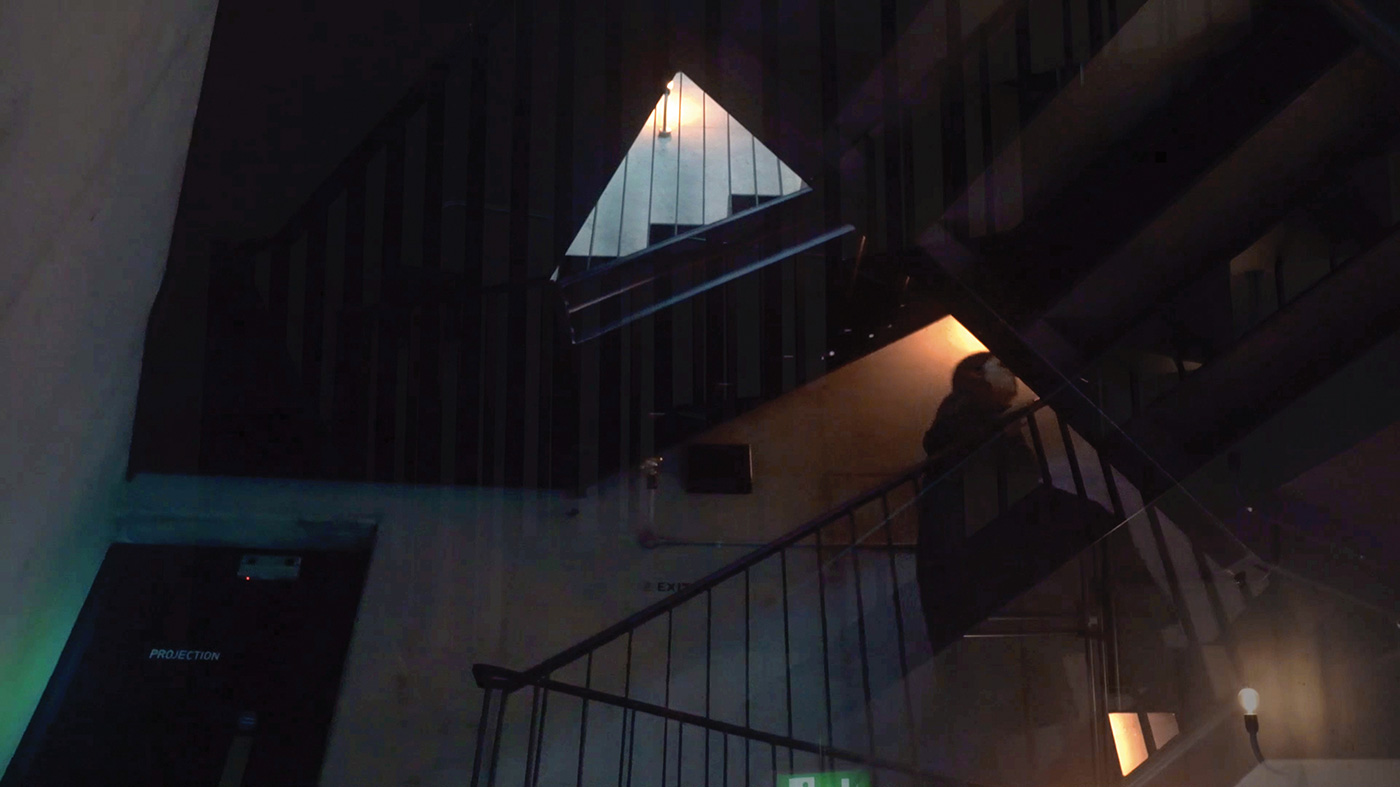
L’esprit de l’escalier, is the third in a trilogy of films surrounding Pálás, a cinema in Galway, Ireland, designed by Tom dePaor. Opening in 2018, the cinema closed to the public in February 2025, and I attended one of the last screenings at Pálás – Tsai Ming-Liang’s Goodbye Dragon Inn, itself a film about the closing of a cinema. I returned the following morning with thoughts of this in my head as I filmed the staircases throughout the building. These spaces are untempered, part indoor, part outdoor, while the cinemas with their plush red interiors are optimised for sound, temperature, and light. The title of my film refers to the expression (to think of the perfect reply too late) but moreover to the spirit of the staircase. Just like Goodbye Dragon Inn, so much life goes on in these spaces, where people, weather, light, and sound, intersect with, and even possess the movement or the stillness of the camera, the place itself becoming a film.
Peter Maybury is an Irish multidisciplinary artist. His practice-based research encompasses works as an artist, graphic designer, filmmaker, publisher, writer, editor, curator, musician, and educator. He is a graduate of Central Saint Martins, London, and a Doctoral Candidate at the Centre for Socially Engaged Practice-Based Research, TU Dublin. He has collaborated extensively with artists and institutions, editors and curators, on more than 200 art and architecture publications. Peter is a longstanding collaborator with Tom dePaor, making books, films, and works for exhibition. His film work includes On being there (2022/23, screened at Rencontre Internationale Paris/Berlin 2023/24), Landfall (2020), an hour-long dual-screen film installation, and with dePaor the Gall films Drape (2018), and A Study (2015) which was made for exhibition at ETH Zurich. Peter is author of Make Ready (2015), and co-author with dePaor of Reservoir (2010) and Of (2012).

Kim Richard Adler Mejdahl
Glory 1
Experimental video | 4k | color | 2:0 | Denmark | 2024
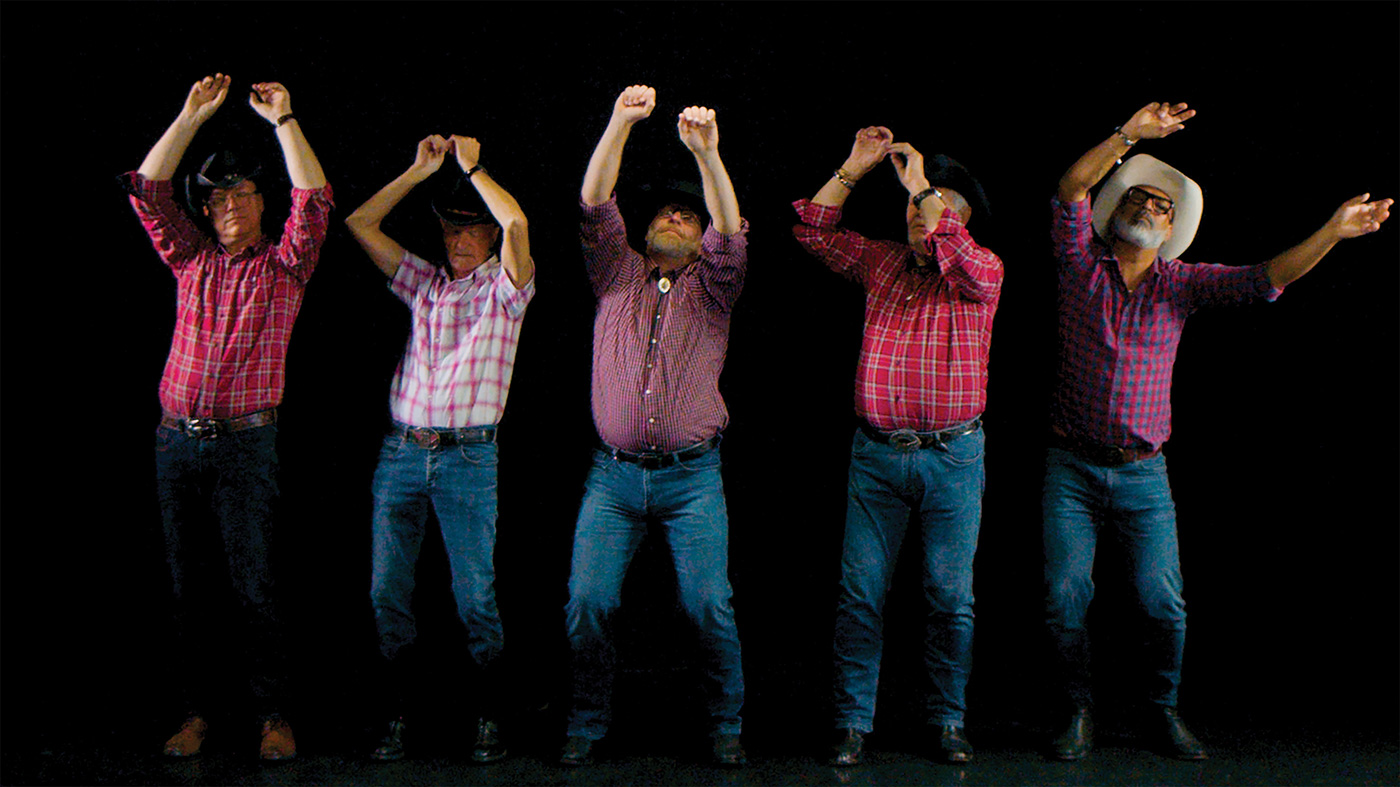
Members of the gay linedance club ‘Outliners’ dance in a black room. ‘Glory 1’ is a video artwork conceived by Danish multidisciplinary artist Kim Richard Adler Mejdahl. The dreamy scenario presents a symbolic antidote to patriarchy and its destructive understandings of masculinity. In the mind of the artist, ‘Glory 1’ is a symbol of protest. Cowboys dancing together instead of shooting each other down is a subversive act against conventional understandings of man. It is a symbolic gesture of reversing the macho ideal within patriarchy, that weighs down and dictates the life of men.
Kim Richard Adler Mejdahl graduated from the Royal Danish Academy of Fine Arts in 2019. Slaptstick humour and gothic horror meet up in Mejdahl's multifaceted work that often has its starting point in the artist's personal life story. Be it music album releases, film productions or large solo exhibition projects, Mejdahl's practice explore the topics of trauma healing, our relationship to nature, spirituality, and gender identity. His video works have reached international audiences with screenings across Europe and Asia. Under the alias Kim Kim, Mejdahl has made numerous live performances and released music albums. Within few years Mejdahl has collaborated with a wide range of different institutions, counting Kunsthal Charlottenborg, Roskilde Festival, Danish theme park BonBon-Land, Theater Sort/Hvid, and most recently KØN - Gender Museum Denmark. In 2025 Mejdahl was awarded the three-year working grant by The Danish Arts Foundation. His work is part of The National Gallery's collection in Denmark.
Dina Mimi
The Melancholy of this useless afternoon II
Experimental film | mov | black and white | 13:0 | Palestine | 2022
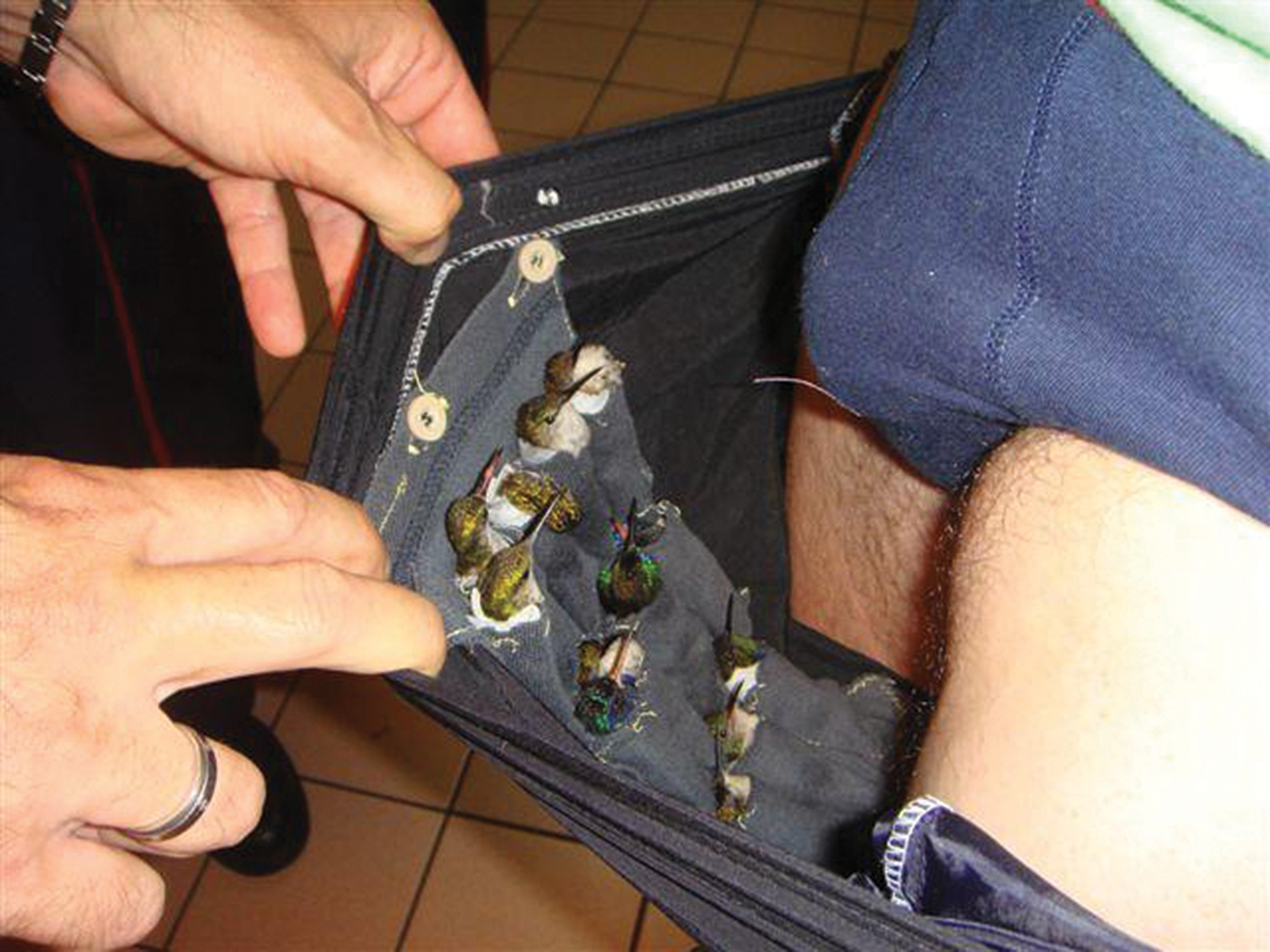
The Melancholy of this Useless Afternoon, chapter 2 (2023, 11:25) explores the shared gestures between the fugitive and the smuggler, and their relationship to being seen. The melancholy of this useless afternoon researches the links between the fugitive and the smuggler, their shared gestures and relationships to being seen. By escape and flight, risking capture or death, the fugitive works to keep themself hidden. The smuggler, however, moves with stealth, using gestures to hide things, often close to their body.
Dina Mimi is a Palestinian visual artist and filmmaker who is based between Palestine and the Netherlands. Mimi works with experimental filmmaking and lecture performances that research the question of how and when bodies become sites of resistance. This question finds its material interest in moving images, especially found footage, that is discarded and therefore deemed invaluable. Understanding editing as a playground, Mimi plays with opacity in moving images by seeking to brush up against footage which desires to be ungraspable or is in the act of vanishing. This is a continuous attempt at non-linear narration as a way of disfiguring one’s.
Marcel Mrejen
Larry
Video | 4k | color | 10:0 | Algeria | 2024
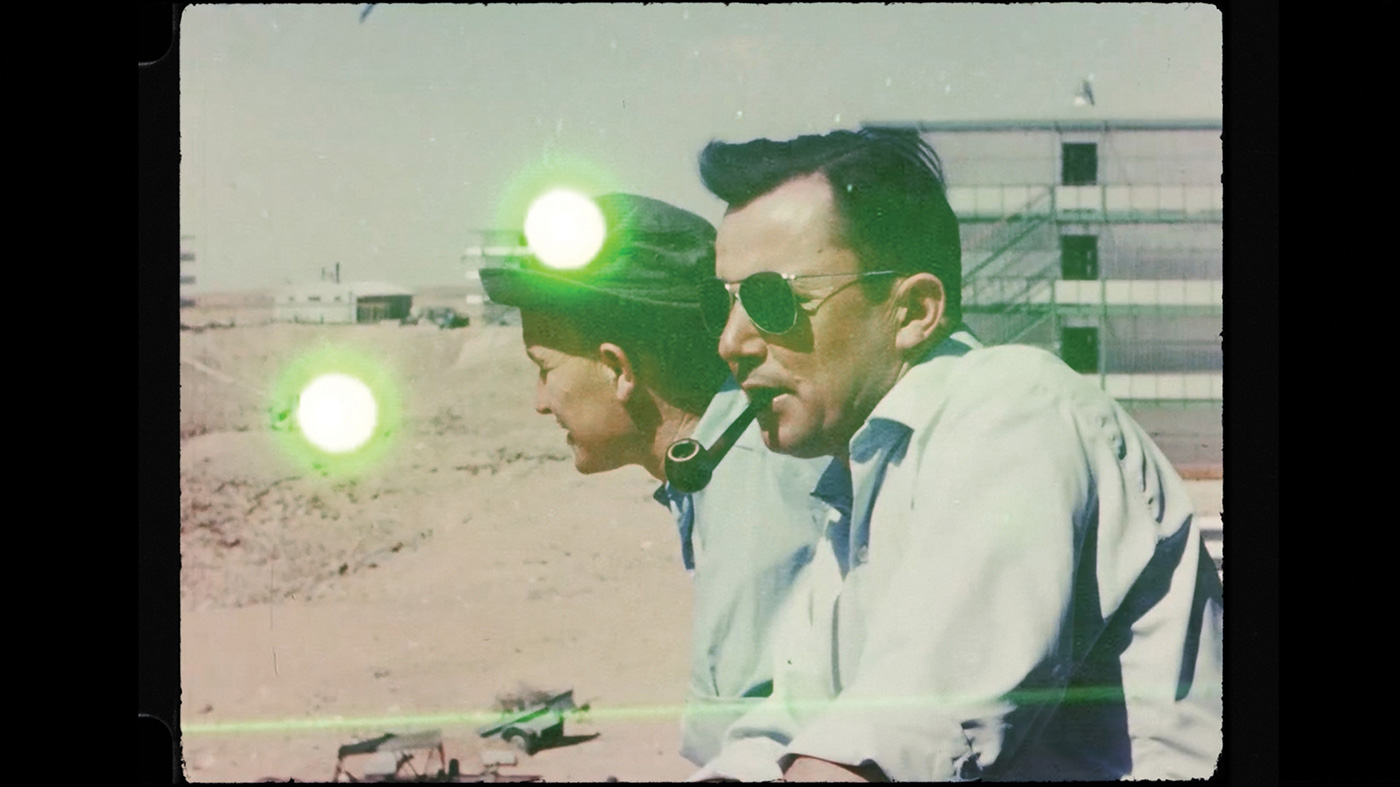
Set against silent 16mm footage filmed by a French soldier in occupied Algeria, the film stages an encounter between colonial memory and the soundscape of contemporary warfare. As present-day militarism infiltrates the archive, time fractures and the images begin to echo with conflicts past and future. What emerges is a haunting meditation on the ways colonial violence continues to reverberate through today’s military imaginaries.
Marcel Mrejen (FR/DZ) born in 1994 (Paris, FR) is a visual artist and filmmaker exploring the articulation of technology within living and economic metabolisms. The form of his work spans various time-based media — installations, filmmaking, sound, and machine-learning. He graduated from the Gerrit Rietveld Academie in 2018, before being a resident of Le Fresnoy - Studio national des arts contemporains from 2021 to 2023. His work has been exhibited/screened in various cultural institutions, including the Stedelijk Museum (Amsterdam), the Institute of Contemporary Arts (London), or the Eye Filmmuseum (Amsterdam). Parallel to his artistic practice, he co-curated the first edition of REFRESH: Future-Proof in 2021. His debut film Memories of an Unborn Sun was awarded Best Short Film at Visions du Réel in 2024 and was screened and won awards in numerous festivals around the world. In 2025, it was awarded the Scam Prize for Best Experimental Film. In collaboration with Eliott Déchamboux, his book: L’Europe c’est Deutshland quand tu rate laba tu est foutue mon frère, le reste c’est du fouma-fouma, was published by Jungle Books in 2019.
Arjuna Neuman
Promise
Experimental doc. | 16mm | color | 2:30 | Canada, Germany | 2025
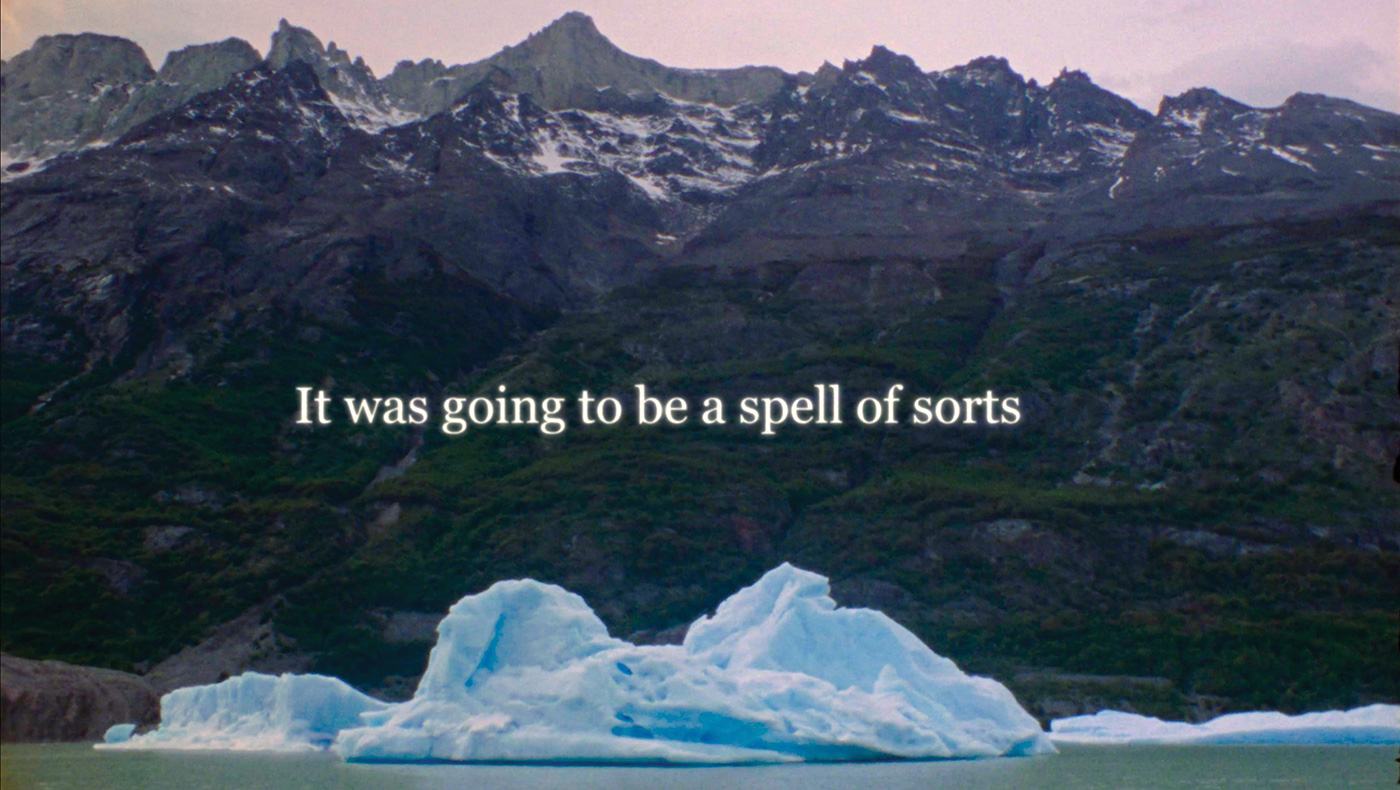
What is the possibility, barbarism or folly of making art, poetry, film while a genocide is happening in front of our eyes?
Arjuna Neuman is an artist and writer. He has presented solo mid-career surveys at MACBA in Barcelona, Munch Museum in Oslo, and Belkin Gallery in Vancouver and forthcoming at Kunsthalle Bern. He has presented solo exhibitions at Kunsthalle Vienna; CCA Glasgow; Showroom Gallery, London; TPW Gallery, Toronto; Whitechapel Gallery, London; Istanbul Modern, Turkey; MAAT, Portugal amongst many others. He has participated in the Berlin Biennial, Sharjah Biennial, Bergen Assembly, the 56th Venice Biennial, Qalandia Biennial, Ural Industrial Biennial, Hacer Noche in Mexico and many other large group exhibitions. He has been included in film festivals such as Berlinale, Images Festival, Docsliboa, Third Horizon. In 2024 he won the Artist Moving Image prize at Les Rencontre International Festival; in 2024 he was a fellow at Villa Aurora and in 2022 a fellow at the Flaherty Seminar. His work is kept in the Belkin Collection, Kunsthalle Bern Collectors Circle; IAC Lyon and Platform UK. He has a forthcoming monograph published with Archive Books. As a writer, he has published essays in Relief Press, Into the Pines Press, The Journal for New Writing, VIA Magazine, Concord, Art Voices, Flaunt, LEAP, Hearings and e-flux. He is the founder of Archive of Belonging, a platform and resource list supporting migrants and refugees.
Uriel Orlow
Forest Futures
Experimental film | 4k | color | 28:0 | Switzerland, Italy | 2024
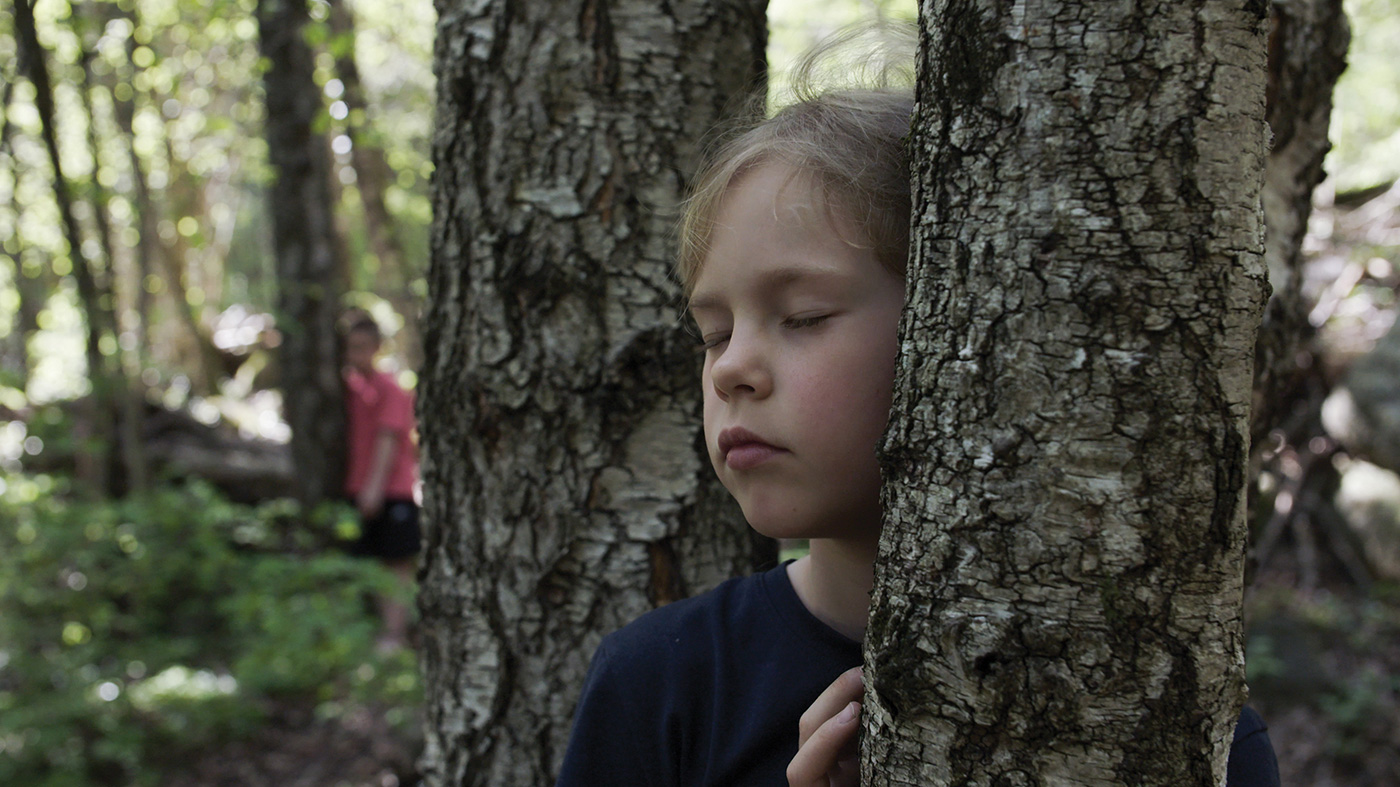
Forest Futures is a poetic and thought-provoking film that visits ancient forest ecosystems from the earth’s past, imagines future forests in the face of changing climate and shows the forest as a multi- species school, where children practice more-than-human co-existence. Forest Futures explores the forest as a site of deep time, ecological transformation, and interspecies learning. Set in the mountainous region of South Tyrol, the film traces a journey from ancient fossilized forests that thrived over 280 million years ago through to speculative visions of future forests in a rapidly warming world. Combining scientific research with imaginative storytelling, the film reimagine the forest as both a teacher and a protagonist.
Uriel Orlow is a Swiss-born artist who lives and works between Lisbon, London and Zurich. In 2023 he was the recipient of the prestigious Prix Meret Oppenheim/ Swiss Grand Prix of Art. Orlow’s work is presented widely in international survey shows including at Dunkerque Triennale, Kochi Biennale, 12th Berlin Biennale for Contemporary Art, Kathmandu Triennale, Manifesta 12, Palermo, 2nd Yinchuan Biennial, 13th Sharjah Biennial, 7th Moscow Biennial , EVA International, Limerick, 2nd Aichi Triennale, Nagoya , Bergen Assembly, Manifesta 9, 54th Venice Biennale and elsewhere. Recent solo exhibitions include Galeria Avenida da Índia, Lisbon (2025); MCBA, Lausanne (2024); Casa da Cerca, Alamada (2022); Kunsthalle Nairs, Scuol (2021); La Loge, Brussels (2020); Kunsthalle Mainz, Germany (2020); Privas Art Centre, France (2019); Les Laboratoires d’Aubervilliers, Paris (2018); Market Photo Workshop & Pool, Johannesburg (2018); Kunsthalle St Gallen (2018) and many others. Orlow’s films been screened at Tate Modern, London; the International Short Film Festival, Oberhausen; Tank.tv; Whitechapel Gallery, London; Locarno Film Festival; Videonale Kunstmuseum Bonn; BFI London; The BBC Big Screen, Manchester; Arnolfini Bristol; Espace Croisé CAC Roubaix; and at the Biennale of the Moving Image, Geneva, and others.
Yana Osman, Anton Khamchishkin
Pwéra úsog
Experimental doc. | mov | color and b&w | 19:50 | Afghanistan, Russia | 2025
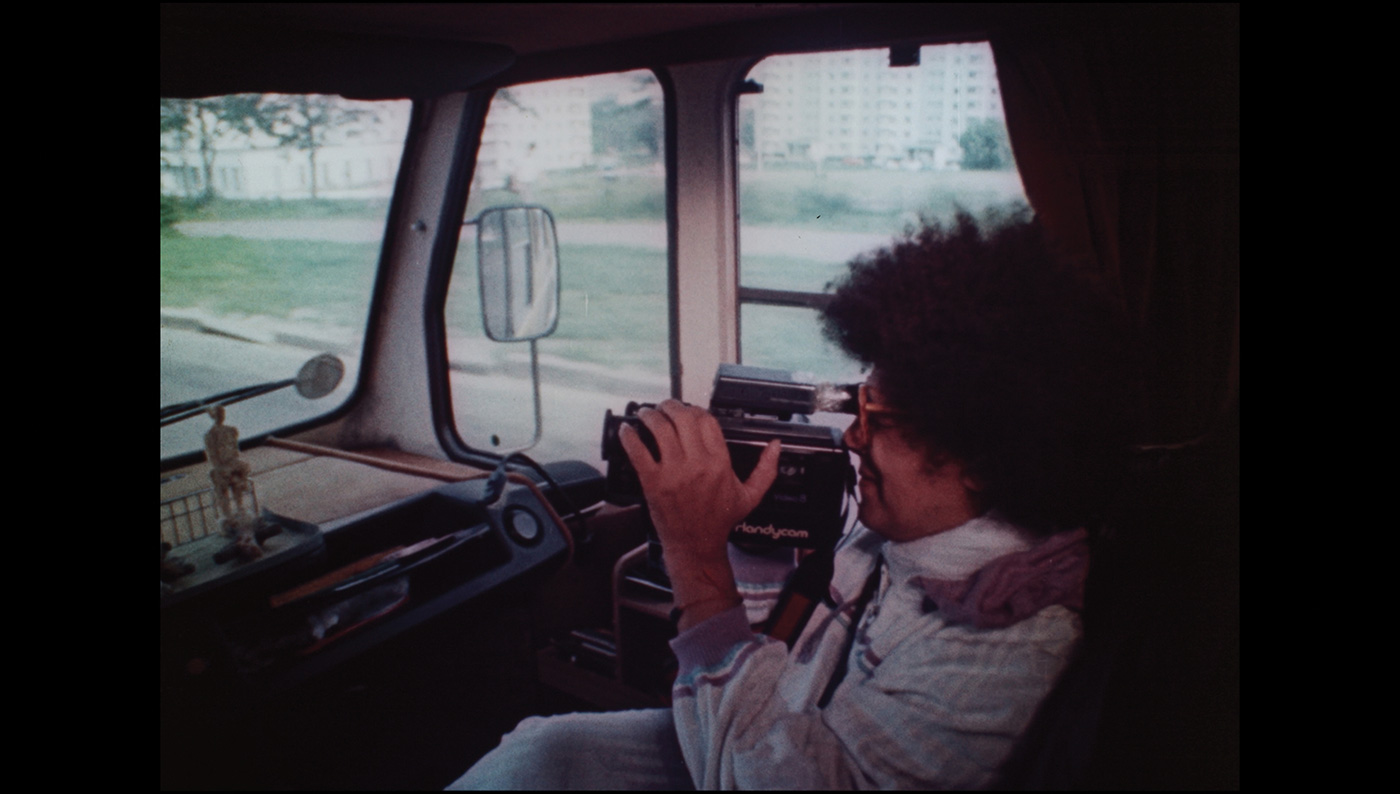
Pwe?ra u?sog (2025). 19 min dir. Yana Osman, Anton Khamchishkin In 1945, in Paris, the Women’s International Democratic Federation (WIDF) was founded. According to historian Francisca de Haan, it was “the largest and probably the most influential international women’s organization of the post–World War II era.” Today, assessments of the organization’s legacy remain contested. Some scholars, citing reports from the FBI and the House Un-American Activities Committee, describe WIDF as a communist attempt to manipulate women. Others view it as a movement advocating for women’s rights, and researchers like Elizabeth Armstrong note WIDF’s role in anti-colonial and anti-racist struggles led by women in Asia, Africa, and Latin America. In 1987, during the Perestroika era, WIDF organized the World Congress of Women in Moscow, under the slogan: “Toward 2000 — Without Nuclear Weapons! For Peace, Equality, Development!” The congress brought together 2,800 women from 150 countries. Among them, there was the protagonist’s grandmother, an interpreter who collected words from global conversations that had no equivalents in other languages. Revisiting her notes, archival footage, and sites of official delegations, the protagonist is guided by these fragments to a question: what words can capture the present, when language itself slips away, dissolves, and borrowed slogans drown out one’s voice?
Yana Osman, Anton Khamchishkin (Afghanistan, Russia) — artists and filmmakers. Work with gaps in storytelling, filling in the unsaid and uncovering narratives suspended between real and imaginary, facts and speculation. Their films were selected at Hong Kong Film Festival, DOK Leipzig, Slamdance, Rencontres Internationales Paris/Berlin, as well as supported by CNC, Cité Internationale des Arts, Usage du Monde au 21ème siècle, Institut Français, among others.
Gael Peltier
Percussion mécanique
Performance | mov | color | 2:2 | France | 2018
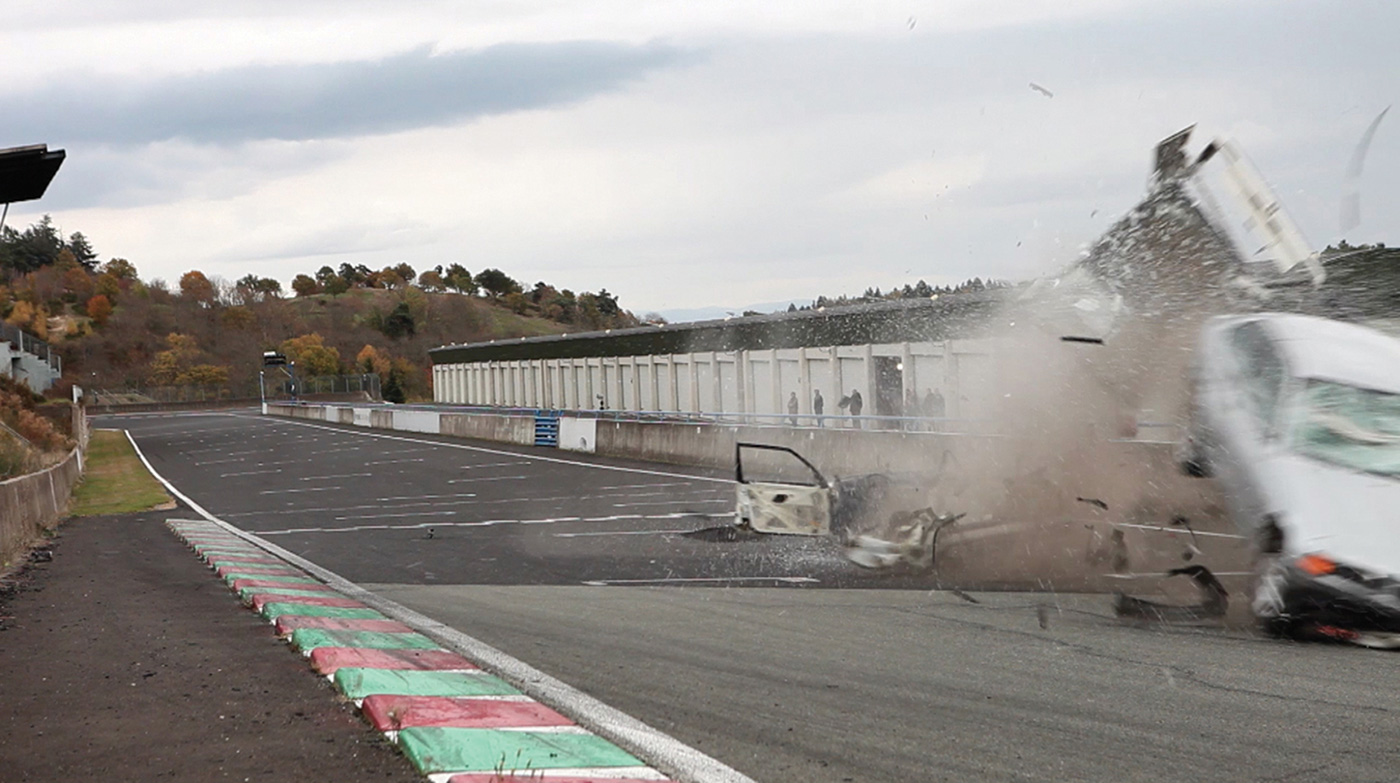
For Gaël Peltier, video is above all a means of recording a performance that cannot be repeated. It is an art of the instant which, as here, culminates in violent mechanical destruction. Its proximity to cinema lies in the procedures behind the actions he undertakes, willingly putting himself in danger and, like a stuntman, accepting the constraints and risks of an operation prepared with meticulous care. Beyond this technical kinship and the references that inevitably come to mind — Crash by David Cronenberg, after J. G. Ballard’s novel, for instance — everything in this work stands in opposition to cinema. There is no narrative: the focus rests on an accident, on the acceleration that leads to it, and on the brutal impact to which the performer submits himself. He places himself entirely within reality; only the driver’s protective gear and harness distinguish this deliberate crash from a fortuitous event of the kind that so often occurs on the road. This resemblance unsettles the viewer’s eye and reveals the presence of a latent desire — not only to watch, but to take part in something that is usually perceived solely as a dramatic event, frequently with fatal consequences.
Gaël Peltier develops a practice in which attitude takes precedence over the production of objects, ready-mades or films, placing his work in the lineage of artists without oeuvre. He describes himself as an “infra-conceptual artist by default,” adopting a lateral position in which a protocol applied to reality becomes the material itself. His projects involve precise forms of commitment: gaining 30 kg in New York for a role that did not exist (La Conjuration, 2010), a car crash staged as critical action (Percussion Mécanique, 2018), or interventions that subtly disturb an otherwise ordinary situation. Video records these processes not in order to produce an effect, but to render visible the conditions of their emergence within real-world circumstances. His work has been exhibited in France and abroad since 2002.

Carlos Pereira
Unruhe
Experimental film | 16mm | color | 11:50 | Portugal, Germany | 2024
"There’s been a strange epidemic lately Going amongst the folk, So that many in their madness Began dancing. Which they kept up day and night, Without interruption, Until they fell unconscious. Many have died of it."
Carlos Pereira, born in Lisbon, is studying Film Directing at the Deutsche Film- und Fernsehakademie Berlin (DFFB). His films have been screened at festivals such as Locarno, San Sebastián and Rencontres Internationales Paris/Berlin. His film Slimane (2023) won the German Film Critics Award for Best Short Film. His first feature film, Remote Islands, written during a residency at The Bergman Estate on Fårö, is currently in pre-production.
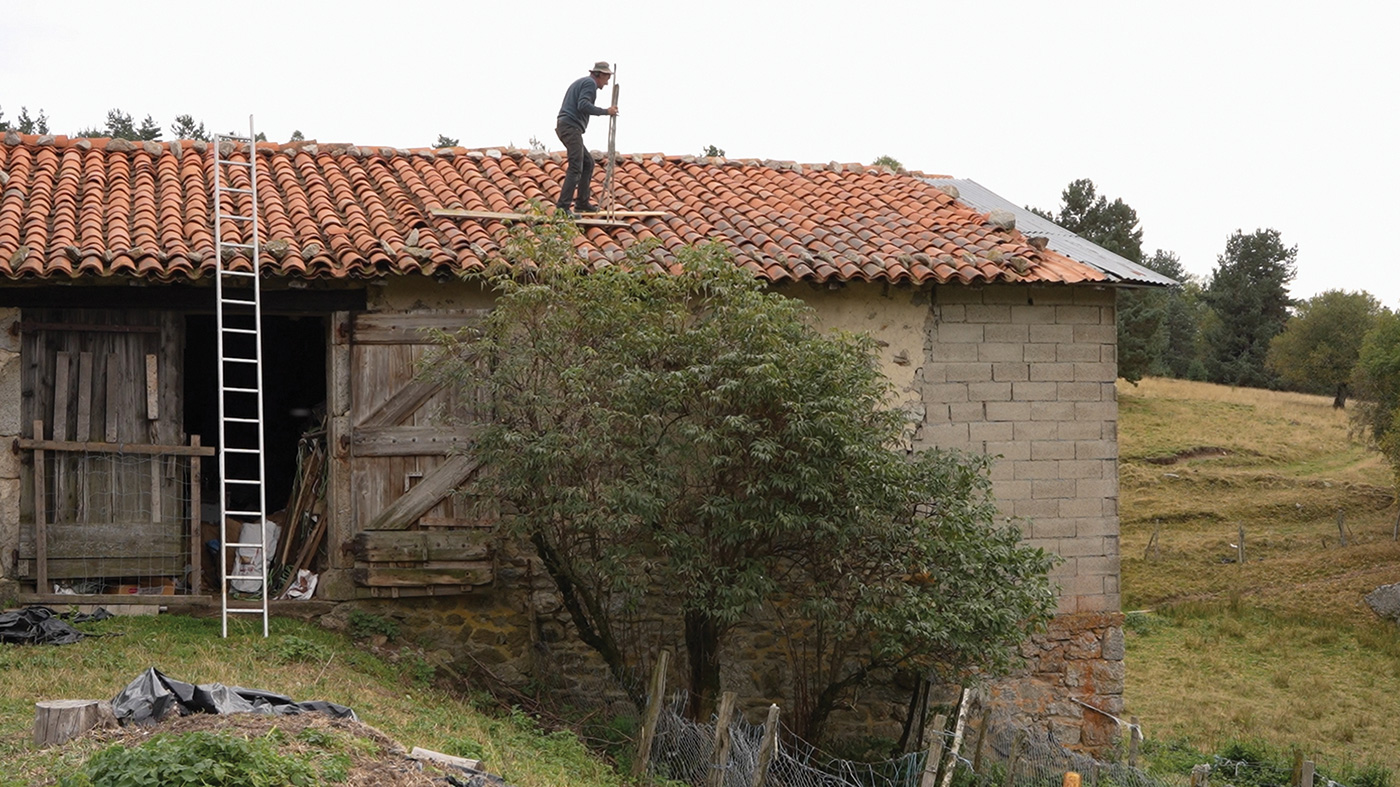
Jean-baptiste Perret
Le quotidien
Video | hdv | color | 5:11 | France | 2025
Filmed in the gorges of the Haut-Allier, Le quotidien is the portrait of a man who has chosen to live alone and apart, in a cabin at the edge of a forest. The images record his everyday gestures, tied to the essential needs of human existence: drinking, eating, washing, mending, beginning again. “Like an anthropologist-filmmaker, Jean-Baptiste Perret chooses a site — often rural — and immerses himself in it for long periods. He builds relationships with the people he meets there, filming their living spaces and their knowledge. Shot in the gorges of the Haut-Allier, Le quotidien portrays a man who has chosen to live alone, removed from human society, in a cabin at the forest’s edge. The videomaker captures his daily gestures, linked to the essential needs of human life: drinking, eating, washing, repairing, starting again. The film forms part of a broader enquiry into marginal life paths within rural contexts, in which other relationships to the living world, to territory, and to ecology are invented.” (Work Method, Guillaume Désanges and Coline Davenne)
After studying ecology, Jean-Baptiste Perret worked for several years in environmental protection within local authorities. A 2018 graduate of the École des Beaux-Arts de Lyon, he has continued to pursue his interest in rural contexts through a filmmaking practice that takes the form of films and video installations. His work is driven by the question of care, which he understands as an attentiveness to vulnerability, inseparable from the regenerative capacities of individuals. His approach is grounded in documentary enquiry and draws on methods borrowed from anthropology that challenge conventional criteria of objectivity, placing affect at the very centre of the research process. He is also inspired by microhistory, which seeks to step away from official narratives of the many in order to focus on individuals and their own ways of understanding the world. Jean-Baptiste Perret films people he encounters in their everyday situations, engaging with their life paths, their surroundings, and their skills. Through varying degrees of staging — always leaving room for improvisation — subjective accounts and fictional strategies intermingle. His work has been shown at the Institut d’art contemporain (IAC) in Villeurbanne as part of the 15th Lyon Biennale, at the Musée d’art contemporain de Lyon, at Fondation d’entreprise Ricard (Paris), at the Musée de la Chasse et de la Nature (Paris), at the Chapelle Saint-Jacques (Saint-Gaudens), at the Institut national d’histoire de l’art (Paris), at FID Marseille, at the Festival Hors-Pistes at the Centre Pompidou, at the États généraux du documentaire in Lussas, and more recently at the 66th Salon de Montrouge. Jean-Baptiste Perret is represented by Galerie Salle Principale in Paris.