Catalogue 2025-2026
Below, browse the 2025-2026 Rencontres Internationales catalogue, or search the archives of the works presented since 2004. New video clips are routinely posted and the images and text are regularly updated.


Anka Gujabidze
Temo Re ???? ??
Fiction | 0 | black and white | 45:0 | Georgia | 2024
For a broke actor, who works as a delivery man, a daily ride across Tbilisi morphs into a nightmarish vision of poverty, corruption and estranged, eerie characters from Georgia’s past and present.
Anka Gujabidze is a visual artist from Tbilisi who worked in photography for 17 years, a practice that shaped her deep sensibility for social issues, the environment, and contemporary stories. She has recently become a filmmaker. In 2024, she completed her first film Temo Re, composed entirely of black-and-white photographs, an elegy where stillness itself carries the rhythm of life. Temo Re received the Tiger Short Award and the KNF Award (Circle of Dutch Film Journalists), as well as the SFCC Critic’s Award at the Brive Film Festival, , and has since been traveling to festivals around the world. Her earlier works trace lives and places often overlooked, revealing resilience within decay, defiance within silence, and beauty within impermanence.

Margaret Haines
La Jumelle
Experimental fiction | hdv | color | 23:23 | Canada, France | 2025
Drawing on the life of Joan of Orléans (Jeanne d’Arc) and the ideas of occultist Cameron, Haines’ speculative sci-fi film centers on the notion of a female Messiah.
Margaret Haines (*1984) is an artist, writer and filmmaker born in Montréal, QC. She is a former scholarship holder of the Rijksakademie van beeldende kunsten, Amsterdam. Her works have been shown at the SCHIRN in Frankfuer, Organ Vida Festival at the Museum of Contemporary Art Zagreb (2022), the MAC Musée d'art contemporain in Montreal (2021) and Auto Italia (2018) in London, amongst others. She is currently writing a book on the life and work of artist, poet, actress and occultist Marjorie Cameron; served on the board of the Cameron Parsons Foundation; and periodically works as a lecturer in the history of the occult and contemporary film at Sciences Po in Paris.
Markus Hanakam, Roswitha Schuller
Cosmic Commissioner
Animation | 4k | color | 13:21 | Austria | 2025
Hanakam and Schuller’s new animated work Cosmic Commissioner takes a satirical dive into the world of typical AI-generated styles such as new-age, comicesque and hyperrealism, which are based on creative commons and influenced by big tech, as well as their handling of diversity and material bases. The narrative character is the fictional Cosmic Commissioner – inspired by Victor Gruen, the exiled Austrian architect and urban planner – who reacts to burning environmental and security issues on Earth as a more-than-human being from the cosmos. In 1975 Gruen, godfather of the American suburban shopping mall, wrote his satirical book: Is Progress a Crime? Environmental planning instead of the End of the World. Gruen turned increasingly to environmental planning in the 1970s – under the influence of contemporary phenomena such as environmental destruction, the space race and nuclear armament. Scenes with architects, military personnel, urban planners and environmental activists are realised through short dialogues from Gruen’s texts on the level of lyrics and synthetic disco space sounds. The project links historical and current social challenges such as global security and environmental destruction. Cosmic Commissioner invites you to take a reflective, humorous look at the interfaces between AI, pop culture and social challenges – a visual and acoustic journey through time, space and digital realities.
Many of the artifacts of Hanakam & Schuller, an artist duo that lives in Vienna, are shapeshifters, changing their outer form and then reappearing in a variety of contexts. As artists and explorers, Markus Hanakam and Roswitha Schuller redesign the rules of the fine arts for their own purposes and create unconventional arrangements and new world designs in videos and objects. They also work with applied artforms. Their works have been shown in Berlin’s Haus der Kulturen der Welt, the Eyebeam art and technology center in New York, Paris’ Palais de Tokyo, Moscow’s Garage Museum of Contemporary Culture, Vienna’s MAK, the MAK Center for Art and Architecture in Los Angeles, and Tokyo’s National Art Center. Their video— animation The Borgia Device (Second Day) is part of the show ANTHROPOCENE ON HOLD — 20 artists address the impact of a global pandemic on arts ecosystems and earth's resilience and sustainability — by PCAI Polyeco Contemporary Art Initiative in Piraeus, Greece, curated by Kika Kyriakakou, accompanied by a catalogue with Hans Ulrich Obrist, Nadim Samman, Selina Nwulu (2020–21).


Hantédemos
Theremespare
Experimental fiction | 0 | color | 23:16 | France | 2024
Haunted is a young queer artist caught up in a narcotic consumption of the contemporary world’s escape routes. Theremespare is an esoteric legend invented by an influencer with whom he becomes obsessed. Theremespare is a point of geolocation, which he pursues through layers of illusions and fantasies. Theremespare is a treasure hunt towards a reality always escaping down rabbit holes.
Hantédemos lives in Marseille and graduated from ENSAPC in 2015 and Le Fresnoy in 2025. They construct fictional worlds manifested in films and performances. Before 2022, sometimes in collaboration with the poet Gorge, they created multimedia and queer performances revisiting ancient or technological myths. Between 2022 and 2024, they contributed to the narrative foundation of a body of work called Velaraiqa, comprising a performance, a TikTok account, and two films opening up esoteric extensions into capitalist realism. One was shot in residence at the 40m cube arts centre in Rennes, the other during their first year at the Studio National du Fresnoy. During the rest of their studies, they created a multimedia performance on the non-human and embodiment. Their work has been shown at Point Ephémère in Paris, FRAC Aquitaine (MECA), Mains d’Oeuvres in Saint Ouen, A Around Video in Lille, A Ugly Duck in London, and elsewhere.


Zach Hart, Alexandra Wilson
Sick Landscapes
Experimental doc. | hdv | color and b&w | 24:20 | USA, Germany | 2025
Traced through the degradation of a bog body, Sick Landscapes draws historical links between Reinhold Lingner, the GDR’s chief landscape architect, Israel’s aggressive demolition and control of occupied Palestinian land and Eva Kemlein, a holocaust survivor trained as a forensic photographer. Kemlein was hired to photograph the sick body of The Berlin City Palace before its set demolition in 1950. Using her scientific documentation, the Palace was rebuilt and re-opened as the Humboldt Forum in 2021. Its spirit was strong enough to survive. Lingner was one of many public figures who advocated to preserve the palace before its initial destruction. Historical idea’s which developed around architectural and landscape preservation inspired landscape planners, ecologists and Nazi’s to try and prevent the spiritual and literal erosion of German architecture and soil. Starting in the 1930s, there was a linguistic trend which anthropomorphized the German cultural landscape. It was often described as a mono-cultural organism, suggesting the possibility of a homogenous cultural spirit embedded into the land itself. The organism of the cultural landscape needed to be saved from degradation. Despite efforts to prevent spiritual erosion through landscape preservation, unhealthy spirits still infest Germany. They inhabit the soil, architecture and the language.
ZACH HART Zach Hart (NYC 1994) is an artist based in Berlin. His practice spans different disciplines while his background in experimental film, sculpture and literature inform his artistic work. He has a longstanding interest in artificial landscape design and urbanism. His moving image, sound and installation works often fictionalize history or draw upon documentary images in order to provoke new connections between historical discourses/image making practices and contemporary politics. From 2018, he has collaborated with Alexandra Wilson on a series of moving image installation works. He received a BA from Hampshire College and a Masters in Sound Studies and Sonic Arts at UDK, Berlin. ALEXANDRA WILSON Alexandra Wilson (NYC 1993), is a Barcelona-based multi-media artist working primarily in sculpture, costume/fiber, and film. Driven by her experience as a textile maker, her work concentrates on the process of fabrication. Tools (both domestic & industrial), schematic diagrams, and urban plannings are sources of inspiration. She integrates digital manipulations with traditional image making in order to shift perspective and dimensional understandings of quotidian objects. Since 2018, she has collaborated with Zach Hart on a series of moving image installation works. She received a BA from Hampshire College in 2016.
Steve Hawley, Steve Dutton
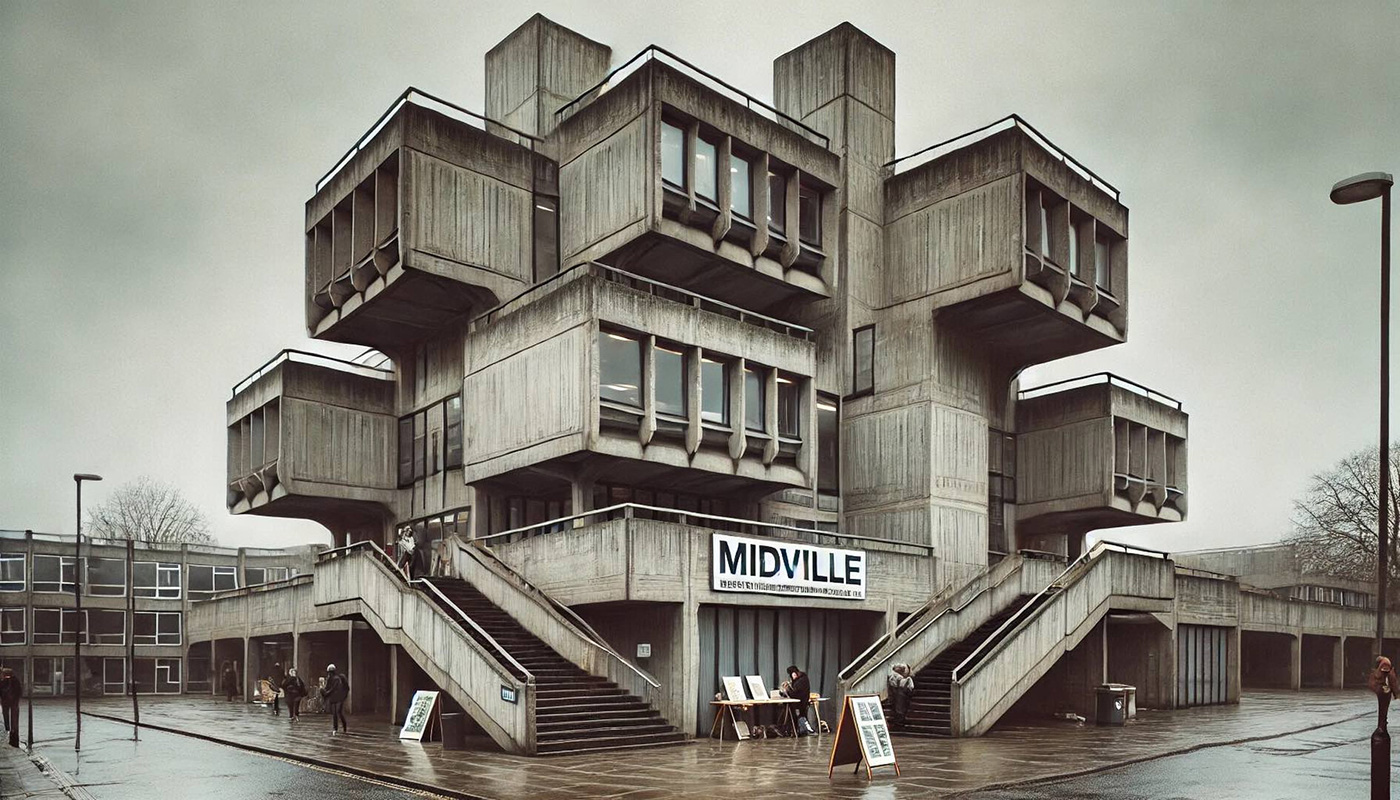
Midville
Experimental doc. | mp4 | color | 13:20 | United Kingdom, Slovenia | 2025
‘Midville’ was the pseudonymous name given to a Midlands Art School in the United Kingdom when it was studied over a period of three years from 1967 by two sociologists. The resulting book, ‘Art Students Observed’, published in 1973 has become a classic document within art teaching literature, the place where “romantic” and “conceptual” art first collided. 58 years later I traced the students in the book and interviewed them about their recollections and (sometimes traumatic) experiences. We have recreated ‘Midville’ as a 13-minute AI supported mini collage ‘opera’, where the students as they were then and now, pronounce their testimonies via AI voices, choirs, avatars, and real-world original footage.
Steve Hawley is a Ljubljana based artist who has been since 1981 part of the second wave of British video artists. His work deals with language, humour, and the nature of memory through archive film and video, and has been shown at video festivals and broadcast worldwide. Work on myth and the city includes Ghost made in Hong Kong, screened at the 2000 Cannes Director's Fortnight. War Memorial 2017 was nominated for best short documentary at the Sheffield DocFest and his book, Men, War and Film, about the Calling Blighty message films of WWII was published in 2022. Steve Dutton is an artist and occasional curator based in the South West of England. His practice spans drawing, sound, moving image and text, with a focus on exploring the intersections and overlaps of language, space, and time. He is currently developing a new solo body of work titled "The Phantom Industry." His work engages with the acts of reading, drawing, painting, speaking and writing and might be best described as a language-based practice.
Nelson Henricks
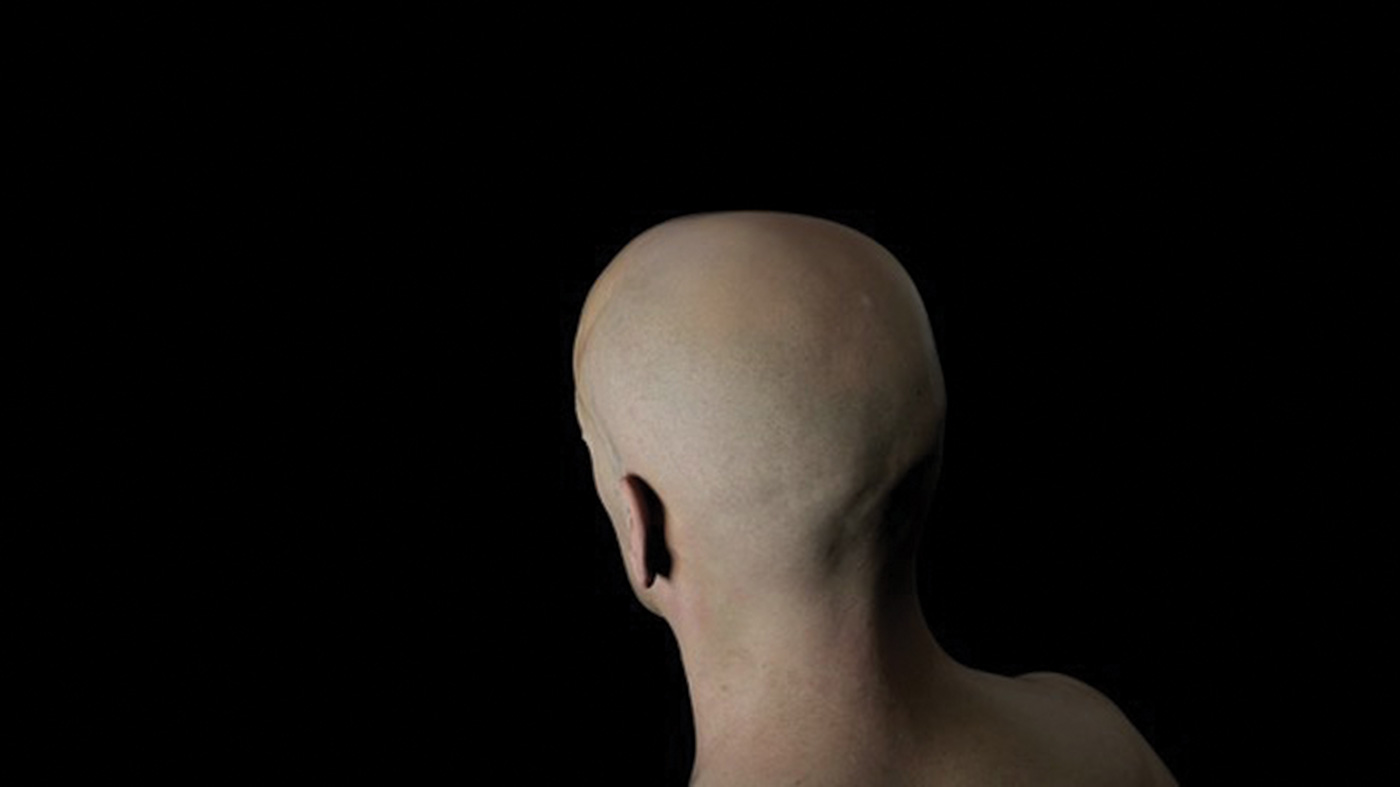
STOPPING
Experimental video | mov | color | 4:25 | Canada | 2025
Night. The moon is a rock. The ears are stopped. A chair balances on the roof of a house. A silver box composes itself: a mysterious instrument. A marble rolls around in somebody’s head. Two rocks spin. Is it possible to stop the mind?
Nelson Henricks graduated from the Alberta College of Art in 1986. He moved to Montréal in 1991 and received a BFA from Concordia University. He recently completed a PhD at Université du Québec à Montréal. Henricks has taught art history and studio art at Concordia University, McGill University, UQAM and Université de Montréal. A curator and artist, Henricks is best known for his videotapes and video installations, which have been exhibited worldwide. A focus on his video work was presented at the Museum of Modern Art in New York, as part of the Video Viewpoints series in 2000. Henricks was the recipient of the Bell Canada Award in Video Art in 2002, the Prix Giverny Capital in 2015, and the Prix Louis-Comtois in 2023. An exhibition of his work was presented at the Musée d’art contemporain de Montréal in 2023. His work is in the collections of the National Gallery of Canada, the Museum of Modern Art (New York), the Montréal Museum of Fine Arts, the Musée national des beaux-arts du Québec, the Musée d’art contemporain de Montreal and others. He is represented by Paul Petro Contemporary Art in Toronto.


Feguenson Hermogène
En mil pedazos
Documentary | mov | color | 12:51 | Haiti | 2023
A Bauta, un groupe de danseurs.ses professionnels.les revisitent l’histoire de la communauté afro-cubaine à travers la figure mythique de Legba, le gardien des routes, l’esprit médiateur entre le monde des humains et celui des dieux. Originaire du royaume Dahomey, Legba qui a traversé L’Atlantique au même moment que les captifs africains réduits en esclavage dans les champs de cannes à sucre en Amérique, va guider ces corps-machines, ces corps racisés, déshumanisés, dépaysés vers l’émancipation tout en renversant le narratif chrétien.
Né en Haïti en novembre 1988, Feguenson Hermogène a étudié la sociologie à l'Université d'État d'Haïti. Après avoir participé à plusieurs ateliers de réalisation et de production de documentaires à la Fondation Connaissance et Liberté (FOCAL Haïti), il a réalisé son premier documentaire « La déchirure » en 2016. Ce film, sélectionné dans plusieurs festivals internationaux, a reçu une mention honorable au « Festival Internacional De Cortometrajes Libélula Dorada de La República Dominicana ». En 2022, il a réalisé le court métrage « Cuando llegue la noche », qui a remporté le prix du meilleur court métrage au festival « Cine Plaza de Cuba, 2023 » et celui du meilleur court métrage étranger au festival « Mostra de Audiovisual Universitário e Independente da América Latina (22ª MAUAL) », au Brésil, en 2023. En 2023, il a également réalisé les courts métrages « La sombra de la ceiba » et « En mil pedazos » (Fragmented). Feguenson a travaillé sur plusieurs longs métrages en tant qu'assistant de production, notamment « Zombie Child » du réalisateur français Bertrand Bonelo et « Kidnapping Inc » du réalisateur haïtien Bruno Mourral. Avant de rejoindre la section documentaire de l'EICVT (Escuela Internacional de Cinema y Television de Cuba) en 2021, il a travaillé pour le journal haïtien Ayibopost. Cette expérience lui a permis de produire plusieurs reportages audiovisuels.

Diego Hernandez, n/a
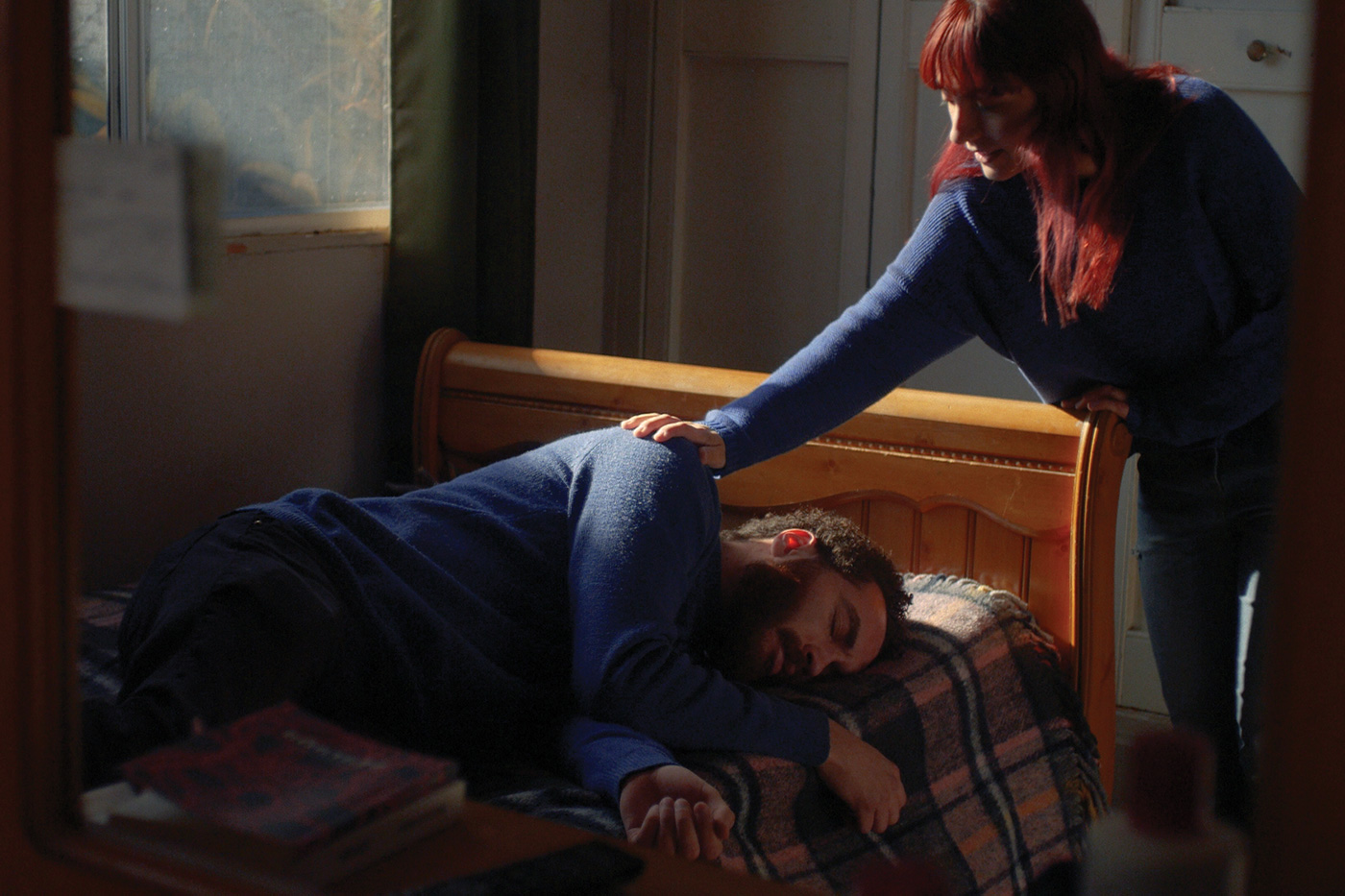
Un techo sin cielo
Experimental fiction | 4k | color | 90:0 | Mexico | 2025
After opening a shoebox, Diego begins to feel severe fatigue that prevents him from performing everyday activities and leaves him bedridden. At the same time, his friend Liz suffers from a mysterious insomnia while working on a stage production.
Tijuana, 1997. Gaduated from the Faculty of Humanities at UABC. His work blends documentary, experimental, and autofictional methodologies through the record of his daily life. In his films he humorously addresses themes such as modes of protest, working conditions, student identity, the construction of emotional ties and the collective memory; challenging the dominant narratives around violence in Tijuana. His films have been awarded at FICUNAM, FIDMarseille, Ji.hlava, MIDBO, ZINEBI and FICENS. They have also been featured at Mar del Plata, FICValdivia, Ji.hlava, Márgenes, Black Canvas, Cámara Lúcida, Bogoshorts, FICMonterrey, Corriente – Latin American Non Fiction Forum, and the International Forum of Mexican Cinematheque. His work has been the subject of retrospectives at the EUREKA University Film Festival (2022, Bogotá) and at Spectacle Theater (2025, New York). His film Un techo sin cielo (2025) won the Silver Puma Prize for Best Mexican Film and a Special Metion of the Fosforo Jury in FICUNAM 15. Prince Claus Fund - Seed Award 2025 recipient (Netherlands).


Alex Hetherington
The Disco, a portrait of Simon Eilbeck
Experimental doc. | 16mm | color and b&w | 46:1 | United Kingdom | 2025
The Disco is a nonfiction experimental portrait of Queer Deaf DJ Simon Eilbeck formed from a collection of 16mm film and location sound recordings encountering members of the queer, trans, alternative and non-binary communities who gather at his monthly disco Hot Mess at The Poetry Club, in Glasgow, Scotland. Encounters include artist and academic Conal McStravick, who responds to the film’s footage alongside their ongoing research on the filmmaker and AIDS activist Stuart Marshall, Trans femme artist Nat Walpole in her studio and interview with Leyre Mann Vadillo, who has attended the disco since its inception. The Disco considers the contingencies, intimacies and tensions of encounter, between filmmaker and subject, recorded at a time of precarity, austerity and crisis but contain illuminations on radical forms of assembly, queer dreaming, hapticality, on hospitality, care and consent. The film makes reference to Hours for Jerome by Nathaniel Dorsky, Wittgenstein by Derek Jarman and the biography and works of Belgian experimental composer Henri Pousseur. It is his first work for cinema.
Alex Hetherington is a visual artist who works with 16mm film. Recent films include The Disco (2025), which opened the Glasgow Short Film Festival, 2025 and has screened at Queer North Film Festival, Elevation Film and MIX NYC Queer Experimental Film Festival; An Actress Prepares (2025) with artist William Joys based on historic 16mm documentation of Joys' live performances, with screenings including the ICA, London; Hybrids, a film for television (2023), Sister Films (2023) commissioned by CCA Annex, accompanied by an essay by Jessica Higgins published by MAP magazine and Ilam Actual (version) (2023) with Luke Fowler commissioned by Arts&Heritage. During summer 2022 he presented SEEN AND NOT SEEN, an installation of new 16mms at the CCA, Glasgow alongside recent works by Berlin-based artist Scott Caruth. His recent cinematography credits include film work for Hannan Jones at The Common Guild, Glasgow and Collective Gallery, Edinburgh and on her short film Dear F… (2022), Alia Syed’s exhibition at CCA, Glasgow in 2025, and Conor Baird at Glasgow Project Room in 2024. He recently presented a 16mm camera workshop Taking Time/A cinema of small gestures with LUX Scotland, July 2025. His writing on film includes commissions on works by Rosalind Nashashibi, Margaret Salmon, Karen Cunningham, Savinder Bual, Helen McCrorie and Laida Lertxundi.


Manon Heugel
TYPÖ
Experimental fiction | 4k | color | 20:13 | France | 2025
Tiphaine, 30, moves to Berlin to be an artist, but soon discovers that she landed in the city of failure and that she doesn't even seem to be writing her own fate. Who is the mysterious man who seems to be narrating her life?
Manon Heugel was born in Paris in 1981 and started working as an actor before completing her film education at the Femis (Paris) with a screenwriting Master's degree in 2013. She lives between Paris, France and Berlin, Germany. Her first short, The Prison Guard's Daughter, produced by Lumina Films, was selected in fifteen international festivals in 2015. In 2019, her video art installation EROS, a collaboration with contemporary dance choreographer Meritxell Checa, presented at the Palais de la Découverte (Paris), addressed gender and race issues in sexuality. Manon also wrote NO FUTURE! The Punk Years and Positively Living (about AIDS survivors) two documentary features for ARTE, the French-German European TV network. She uses many media to work on storytelling, often mixing fiction with documentary and video art. Her graphic novel, Forté, was published in 2019 by Dargaud. She wrote and directed many narrative and creative podcasts for Louie Media.


Gavin Hipkins
The Deep II
Video | 0 | color and b&w | 9:36 | New Zealand | 2025
Between sleeping and waking, a dreamscape charts fragile ecologies through the destructive forces of late capitalism. Found footage and wilderness travels overlap to evoke a hybrid condition of collective paralysis. This trance-like state navigates paradoxes of therapy and disturbances, isolation and connectivity.
Gavin Hipkins (b. 1968) is a New Zealand-based artist. He holds a Bachelor of Fine Arts from the University of Auckland and a Master of Fine Arts from the University of British Columbia. He is currently an Associate Professor at Elam School of Fine Arts at the University of Auckland. His photographs and moving images interrogate how images create meaning through fragmentation and circulation. His work explores the nation-state, particularly in colonised countries in an era of re-imagined communities and ideas of social and political utopia. His recent moving image works engage film as a cinematic art that blurs conventional genres of essay film, documentary and experimental narrative structures. His work has been exhibited widely over the last two decades including: Baltic Centre for Contemporary Arts, Newcastle, UK (2024); Recontres Internationales Paris/Berlin (2023, 2020); CROSSROADS 2022, San Francisco Cinematheque (2022); Internationale Kurzfilmtage Winterthur (2021); 25FPS Festival, Zagreb (2020); Stuttgarter Filmwinter (2020); Videoex, Switzerland (2019); 9th Asia Pacific Triennial of Contemporary Art, Gallery of Modern Art, Brisbane (2018); International Film Festival Rotterdam (2018, 2015); International Short Film Festival Oberhausen (2017, 2016); The Jewish Museum, New York (2015); Museum of Arts and Design, New York (2014); Edinburgh Art Festival (2014); Armory Film, New York (2012); Centre Pompidou, Paris (2011); Austrian Museum of Applied Art and Contemporary Art (MAK), Vienna, (2011); Gallery of Modern Art, Brisbane (2010); San Diego Museum of Photographic Arts, San Diego (2007); International Museum of Photography and Film at George Eastman House, Rochester, New York (2006); Australian Centre for Contemporary Art, Melbourne (2004); CCA Watts Institute for Contemporary Arts, California (2002); Museum of Contemporary Art, Los Angeles (2000).

Lisa Hoffmann
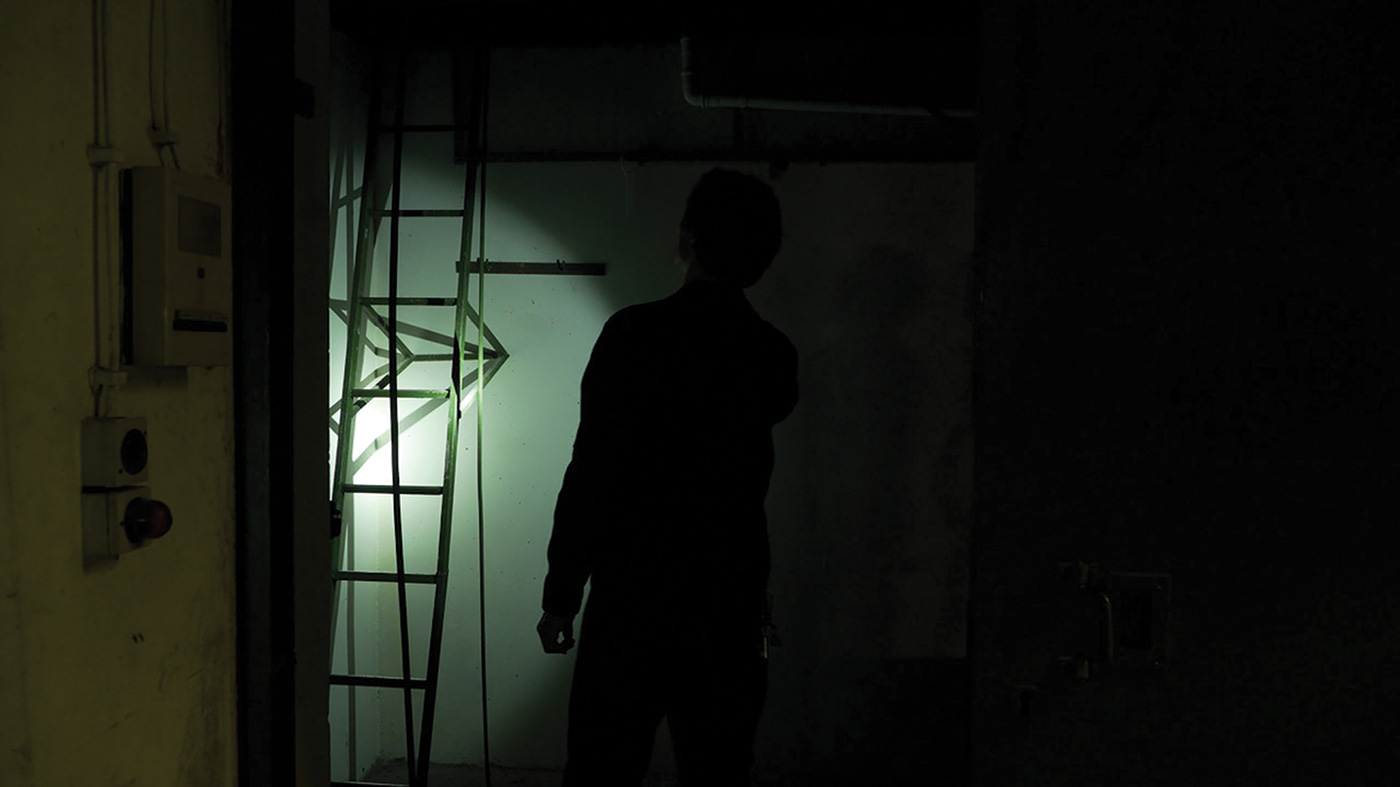
all through a life
Video installation | 4k | color | 10:45 | Germany | 2025
all through a life is a video installation that examines routines of care and control, and questions the possibility of imitating, demarcating, and regulating natural systems. The work invites viewers into an ambiguous environment. the space is filled with reverberating industrial sounds and two monitors arranged like surveillance or control-room screens. A slowly transforming colour field unfolds across one of these displays, alongside a looped film. Within this film a figure moves methodically through a space whose function remains undefined. This caretaker or scientist-like presence performs gestures of monitoring and documentation, enacting a rhythm of daily labour. A shell-based bioplastic receiver, reminiscent of a telephone, softly transmits a voice. If picked up and held to the ear, the voice gently informs the listener about tasks, routines, and the contours of their working environment. The film both documents a real location and opens up a fictional dimension within it. It references architectural spaces designed for containment or control, such as Biosphere 2 or the sarcophagus over the Chernobyl reactor—sites where the boundary between care and crisis, science and survival, is constantly negotiated. These are infrastructures that demand continuous regulation, where control is never absolute and systems must be maintained despite their inherent instability. The title all through a life refers to a song by the band Rites of Spring and also gestures toward the often-invisible material and political forces that permeate our lives and bodies. What seeps into our existence—wage labour, radiation, ambient toxins? What do we manage to control, and what always escapes us? The voice over was composed from an interview with the actual care-taker of the depicted space as well as from theory and fiction. The looped video itself depicts a loop of work: an everyday routine organized around maintaining a status quo. And yet, change creeps in—subtly, continuously. This is made tangible in the gradual de-synchronization of the colour field, which alter the ambient light and begin to “contaminate” the film from which they were originally extracted. Control proves to be porous; feedback and bleed-through occur despite all efforts to contain. There are no truly closed systems. In an era of Mars colonization fantasies, luxury survival bunkers, and geoengineering dreams rooted in mechanistic thinking, the line between science fiction and nfrastructural reality grows thinner. all through a life asks not only what we are trying to hold together, but at what cost—and with what illusions of stability.
Lisa Hoffmann works in-between art, research, film, and performance. Her installations, moving images, and collective actions are equally material- and concept-driven, engaging critically with the complex currents of ongoing ecological and economic crises and the decomposition of dominant cultural narratives. Often departing from a clichéd phenomenon—such as shells, palm trees, or fire—Hoffmann approaches these motifs with rigor and obsession, unpacking their layered cultural, ecological, and political meanings through experimentation and context-specific techniques. Her practice draws on Situationist tactics and more-than-human thinking, attending to absent presences and present absences. The result is a body of work that is referential, layered, and at times darkly humorous. Hoffmann studied Sustainable Product Design (MFA, Bauhaus University Weimar) and Art and Media (MFA, Berlin University of the Arts), where she was appointed Meisterschülerin. She is an active member of the climate-education collective Klasse Klima and a co-initiator of Studium Planetare, a pilot project for applied climate education at art and design academies. Her work has been presented internationally, including at Kunsthaus Dresden (2025, DE), Kommunale Gallerie (DE, 2024), BAK – basis voor actuele kunst (NL, 2023), KOMMET Art Space (FR, 2023), Hamburger Bahnhof (DE, 2022), Tampere Film Festival (FI, 2022), Roman Susan Art Foundation (US, 2020), Biennial of Photography Porto (PT, 2019), DL gallery (GR, 2019), Closer Art Space (UA, 2019), Triennial of Photography Hamburg (DE, 2018) and Kunstfest Weimar (DE, 2016), among others. She is the recipient of the UdK Art Award and Rundgang 50Hertz, and has held residencies at l’escaut (BE, 2025), an• other here and the Cité Internationale des Arts, Paris. Hoffmann lives and works in Berlin.


Heidrun Holzfeind
EIN OKTOPUS HAT DEN MOND ZERSTÖRT
Documentary | mov | color | 90:0 | Austria, Germany | 2024
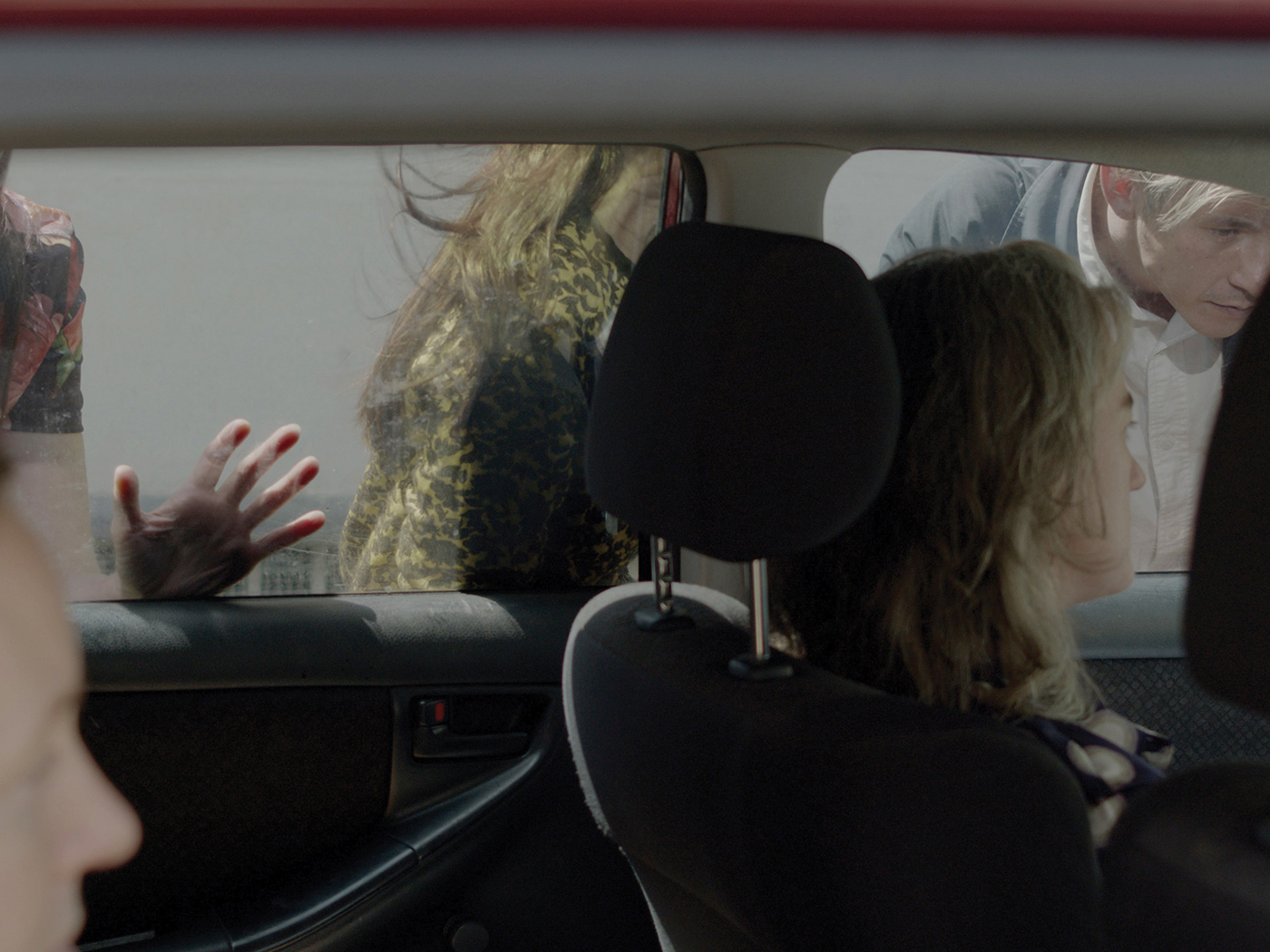
Horticulture, agriculture and animal care are taught in the agricultural department of the integrative August-Sander-School in Berlin Friedrichshain. Over the course of a school year, the film accompanies students with different learning capacities, behavioral issues and impairments in their everyday school life. A portray of adolescents at the crossroads between school and work, childhood and adulthood, struggling to find their place in the school system and society.
Heidrun Holzfeind is an artist and filmmaker based in Berlin. She studied at the Academy of Fine Arts in Vienna and at Cooper Union in New York. She is interested in how architecture interacts with people’s everyday life. Her works question immanent architectural and social utopias and explore the relationships between history and identity, individual histories and political narratives of the present.
Ruth Höflich
The Flood
Experimental film | 4k | color and b&w | 19:15 | Germany, Australia | 2024
The Flood reframes a historic 1960s flooding event—one that submerged and partially destroyed a greenhouse nursery and adjacent property—within contemporary urban infrastructure and its ongoing debt to land intervention. As internal and external imagery collide, flooding takes on a double meaning: both physical inundation and psychic surfacing.
Ruth Höflich is a visual artist working in moving image and photography born in Munich and currently based in Naarm/Melbourne. Her work as been screened and exhibited internationally including at National Gallery of Victoria, Gertrude Contemporary, Rotterdam International Film Festival, Images Festival, Pravo Ljudski Film Festival and Art Gallery of NSW. She is currently a research fellow at Powerhouse Museum Sydney where she is developing a new film. She holds an MFA from Bard College, New York.


Pepa Hristova
Strandzha
Documentary | 4k | color and b&w | 94:0 | Bulgaria | 2025
Close to the Black Sea lie the Strandzha Mountains – a rough spot in Bulgaria and one of the oldest border areas in Europe. During the Cold War, people tried to escape from GDR-communism from west to east. Today, hundreds of people risk their lives every day to get from east to west on one of the alternative Balkan routes. Centuries ago, the Thracians settled in this grey zone between Asia and Europe. In memory of their ancestors, the locals celebrate mysterious, intoxicating feasts. The earth seems to hold transgenerational traumas as well as spiritual powers. The film approaches this last primeval forest in Europe, made up of soldiers, deeply religious fire dancers, sense seeker, traumatized children and mentally ill women. In this terra incognita the protagonists immerse themselves in ancient rituals and their own business practices. At the crossroads of traditions, generations, countries and languages, a multifaceted image of the border unfolds as a deeply human gesture, raising the question of what these mental or even manifest dividing lines do to people.
The photographer Pepa Hristova, born in 1977 in the middle of the Bulgarian Balkan Mountains, has been living in Germany for 27 years. She studied communication design with a focus on photography at the University of Applied Sciences, Hamburg. Since 2006 she has been working as a freelance photographer for various major maga- zines, as well as on her own projects, exhibitions and publications. Her book Sworn Virgins was published by Kehrer Verlag in 2013. 2006 to 2016 she was a member of the renowned photographer agency OSTKREUZ in Berlin. Her work is driven by her fascination with the fractured beauty of the east and her interest in social phenomena and archaic traditions, leading to an examination of the unknown, changing side of Europe. Hristova received multiple fellowships and awards including the C/O Berlin Talents Award, the Otto Steinert Award for subjective photography, a fellowship from the Berlin Academy of Arts, the Border Crossers grant of the Robert Bosch Stiftung, The N-ost Reportage Award. Her work has been on display at House of Photography/Deichtorhal- len, Hamburg, C/O Berlin, the Berlin Academy of Arts, Bozar, NRW Forum Dusseldorf, Stadtmu- seum Munich, The National Galerie Sofia, BOZAR Centre for Fine Arts Brussels and elsewhere.
Lin Htet Aung
A Metamorphosis
Experimental fiction | 0 | color | 16:36 | Myanmar | 2024
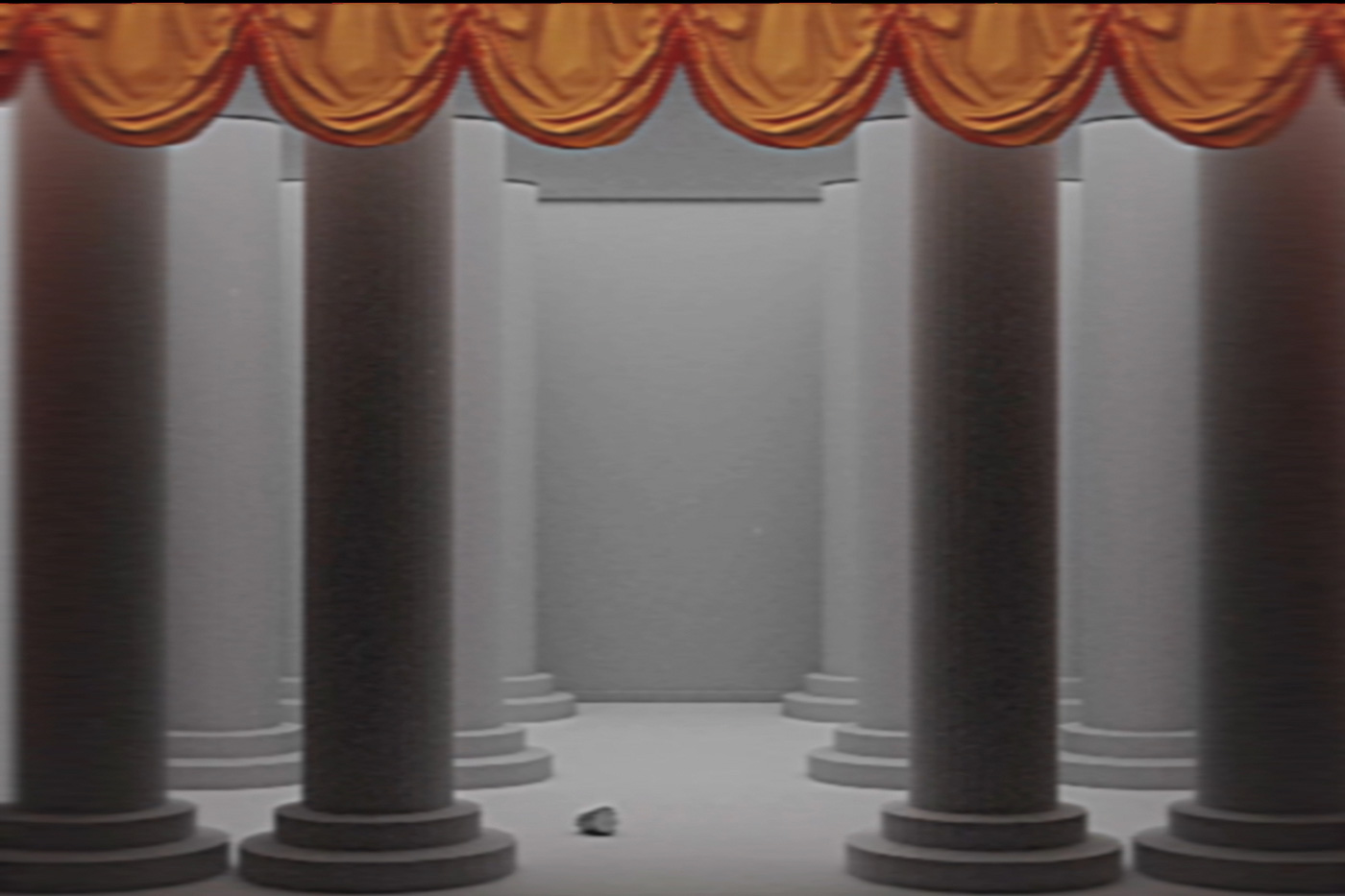
In the houses, after parting, Mothers were made up of tears. Sons were transformed into empty glass cups. And the lullabies became a curse. The film examines the suffering and resilience of the Burmese people by using the distinct political elements that have floated for several years on the ocean of political opera under repetitive military dictatorships in Myanmar. The visual composition draws on the colors of Myanmar’s national flag, adopted in 2010 during the country’s so-called transition period. This flag, rooted in the 2008 Constitution forced upon the country by a former military dictator, contrasts sharply with the earlier 1974 State Flag Law, as it includes a formal definition of the flag. The film deconstructs and questions the existing definition of the flag by playing with the colors, objects, and sequences, by using a form of Government Propaganda Television Footage showing different generations under repetitive military dictatorships, by mixing the chilling voice of the current dictator, Min Aung Hlaing, narrating haunting lullabies through AI technology. The film also revisits the song which was sung from the last footage of actual footage of a birthday party celebration for Myanmar’s former dictator, General Ne Win, held at Sedona Hotel in Yangon on March 21, 2001, one year before his death.
Lin Htet Aung (b. 1998) is a filmmaker from Myanmar. He began with avant-garde poetry before transitioning to filmmaking in 2017. His short films have been selected at several international film festivals, including New York Film Festival, Vancouver, Tirana, Karlovy Vary International Film Festival, International Film Festival Rotterdam and won several awards, including the TIGER SHORT AWARD at International Film Festival Rotterdam IFFR. An alumnus of TIFF Directors’ Lab, Berlinale Talents, Locarno Filmmakers Academy, Asian Film Academy, and a Prince Claus Seed Awardee 2023, he is now developing his debut feature, Making A Sea, which received the Asian Cinema Fund and Red Sea Award at Asian Project Market (APM). After the coup in 2021, he joined the CDM (Civil Disobedience Movement) for his Engineering study in Myanmar, and currently studying at Städelschule art School, Germany.


Emre Hüner
[ELEKTROiZOLASYON]
Experimental fiction | 4k | color and b&w | 88:0 | Turkey | 2024
[ELEKTRO?ZOLASYON] (2021–2024) is a gesamtkunstwerk that brings together Emre Hüner’s practice in fiction, film and sculptural production. The film’s science-fictional vision portrays fragmented industrial and apocalyptic scenes across various sites in Istanbul. Actors playing multiple characters perform scripted or improvised actions in locations ranging from factories, shipyards, medical and electronic repair shops to auto garages, Byzantine ruins and offices. The speculative editing of the film and short animated sequences, including mechanical and organic repetitions in material and scale, suggest a techno-infrastructural entity. The narrative is punctuated by readings of lists of electrical terms and electronic equipment from dictionaries, news headlines and recordings based on photographic archives.
The artist’s recent solo exhibitions include, Substrata Styrene, (2024), Icononoclastic Nuclear Plastic, (Sylvia Kouvali, Piraeus, 2023), [ELEKTRO?ZOLASYON]: Unknown Parameter Extro- Record (Arter, Istanbul, 2021), Neochronophobiq (Protocinema, New York and STUK, Leuven, 2017), Hypabyssal (Marso Gallery, Mexico City, 2016), Floating Cabin Rider Capsule Reactor Cycle (CCA Kitakyushu, 2015), MAM Project 019: Emre Hüner, (Mori Museum, Tokyo, 2014) and Aeolian (RODEO, Istanbul, 2013). Hüner’s works also took part in various group exhibitions, including, to carry: 16th Sharjah Biennial (Sharjah, UAE, 2025), HOW TO HOLD YOUR BREATH, 9th Asian Art Biennial (NTMoFA, Taichung, 2024) CMD P for 2079 (Allard Pierson Museum, Amsterdam, 2020), Further Thoughts on Earthy Materials (Kunsthaus Hamburg, 2018), Planet 9 (Kunsthalle Darmstadt, 2017), 14th Istanbul Biennial (Istanbul, 2015), Manifesta9 (Genk,2012), Younger Than Jesus (New Museum, New York, 2009), 10th Istanbul Biennial (Istanbul, 2007). His work is included in the collections of Tate, UK, Arter, TR, Centre Pompidou, FR, Princeton University Art Museum, US, Spencer Museum, US, Van Abbe Museum, NL. Hüner attended Brera Academy of Fine Arts in Milan (2003) and participated in artist residencies at Art Explora (Paris, 2023), Artpace San Antonio (Texas, 2019), AGA LAB (Amsterdam, 2019), Frans Masereel Centrum (Kasterlee, 2017), ISCP (New York, 2014), Princeton University (2010), the Rijksakademie van Beeldende Kunsten (Amsterdam, 2010), Apexart (New York, 2009), and at the Platform Garanti Contemporary Art Center (Istanbul, 2009). He lives and works in Istanbul and Amsterdam.


Jacopo Iebba
Asceso
Experimental film | 0 | color | 7:42 | Italy | 2025
A damned soul climbs toward the summit of a mountain. The ascent carves him out, bends him, empties him. He is not seeking salvation, but meaning, or at least a shape that resembles him. He is driven by his fragility disguised as strength, by blind ambition, by the desperate need to be seen by something that perhaps does not exist. Yet, at the top, something awaits. It does not speak. It does not console. It watches, and does not forgive. Ascended is the journey of the anti-hero, a synesthesia of dissatisfaction.
Jacopo Iebba (Tivoli, Rome, March 23, 2005) is a 20-year-old independent filmmaker who grew up within the walls of Tivoli. Since childhood, he has nurtured a visceral passion for video games, books, and cinema: virtual worlds and illustrated films that offered him an early escape, a secret place to feed his imagination. During the 2020 lockdown, while the world stood still, Jacopo decided to take his dream into his own hands. He began studying animation entirely on his own, diving into tutorials, manuals, and open-source software. This is how his first dreamlike images were born: fragments of childhood memories transformed into motion. Each visual “experiment” became a piece of his mind brought to life, a personal attempt to animate his deepest dreams. In 2025, working completely alone and autonomously, he created his first animated short film, Asceso: an intensely personal work rooted in his own emotions. In it, Jacopo explores the morbidity of human ambition, that obsessive tension that makes us believe “wanting is enough to fly”—and transforms it into a claustrophobic visual journey. Asceso speaks a dreamlike, psychedelic, and synesthetic language: muffled sounds, blinding colors, and tight camera movements alternate to create a full sensory experience, translating mental fragility and inner turmoil into pure image. Firmly convinced that independent cinema is the most genuine ground for expression, Jacopo Iebba stands as a voice for original ideas and a sincere desire: to keep dreaming, to keep telling stories that shake the viewer and restore the power (and danger) of ambition without compromise.


Genrikh Ignatov
The last day before Christams break
Experimental film | mov | color and b&w | 17:47 | Russia | 2025
Many years ago, in my parents’ house, my window opened onto an icy hill where children played and laughter echoed through the cold air. Frozen at the glass, I watched their fleeting joy and felt the tremor of how fragile our memories are — those tender impressions born in childhood. This film, years later, is a journey back into that fragile place where dreams fade and hopes quietly die.
Genrih Ignatov was born in Moscow in 1992. He studied at the Moscow School of New Cinema, where he trained under filmmaker Artur Aristakisyan. Ignatov’s work is distinguished by its poetic and experimental approach to cinematic form, often delving into themes of memory, identity, and the quiet passage of time within human relationships. His films have been shown at numerous international festivals and are celebrated for their contemplative rhythm, innovative interplay of sound and image, and a profound sensitivity to the inner lives of his subjects.
Carlos Irijalba
Wanderers
Experimental doc. | 4k | color | 3:38 | Spain, Netherlands | 2025
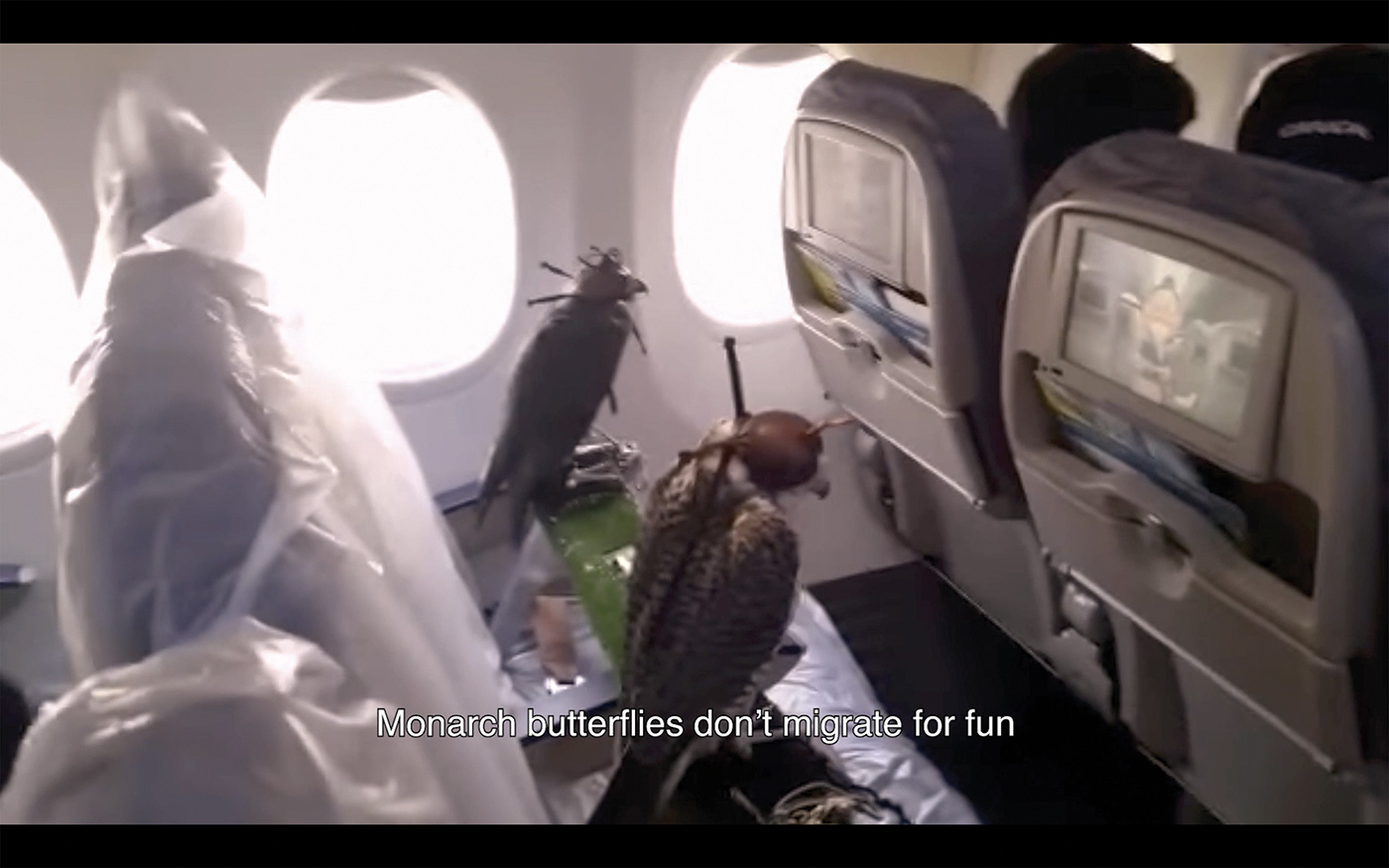
Wanderers is a film centered in the way that matter (and our bodies as a result) are driven by magnetism, pulse or rhythm carried by the earths inertia. A primal movement of mineral origin, pre-life and pre-human. To do so, the film casts a universal perspective on the dynamics of birds, migration of bodies, and humans fascination with flying as a challenge for those laws. The film covers this abstract notion with two different contemporary phenomena, modern falconry flown on commercial airplanes and the passion of RC Replica airliner pilots, depicting the dichotomy between natural evolution, our physical materiality and the detachment from mundane reality and general force and gravity, those.
Carlos Irijalba Pamplona (SP) 1979 Resident at the Rijksacademie Van Beeldende Kunsten (Amsterdam) in 2013/2014, and Graduated at the UDK University with Professor Lothat Baumgarten, Irijalba has been awarded multiple art prizes like in 2023 the NYC Culture Pair Program with the Department of Design and Construction DDC, the Mondriaan Fonds 2022 in Amsterdam, the Sifting Foundation Art Grant 2015 in San Francisco y Marcelino Botin 2007/08 among others. He exhibited internationally in the Shanghai Biennale 2021, CAB Art Center Brussels, Guangzhou Triennale 2017 or MUMA Melbourne in Australia. To the question “Does the world need this new object?”, most of the times the answer would be “no”. Therefor the work of Irijalba moves by the principle of pertinence, trying to remain context responsive. In projects like Skins (2013), Hiatus (2022) and Pannotia (2016-ongoing) he works with geology and industrial time sensitive materials that give us perspective on the dominant narratives in Western history. His work is present in public collections as Museo Nacional Reina Sofia, The Netherlands National Collection, Sammlung Wemhoener Foundation in Germany, the Taviloglu Art Collection in Istambul and Acciona Foundation in Spain. His presence on private collections internationally is extensive in both North and South America, Europe and Asia like collection Pilar Citoler, Kells Collection, David Breskin Collection among many others.