Catalogue 2025-2026
Below, browse the 2025-2026 Rencontres Internationales catalogue, or search the archives of the works presented since 2004. New video clips are routinely posted and the images and text are regularly updated.
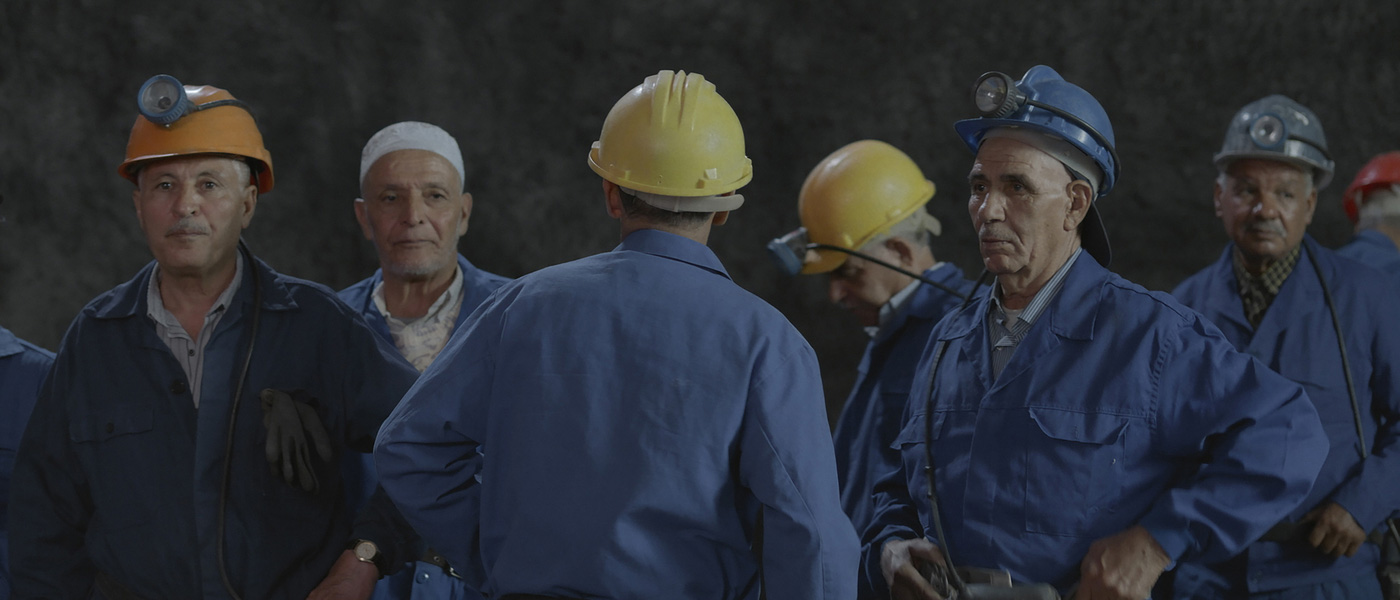
Randa Maroufi
L’mina
Documentary | dcp | color | 26:0 | Morocco, France | 2025
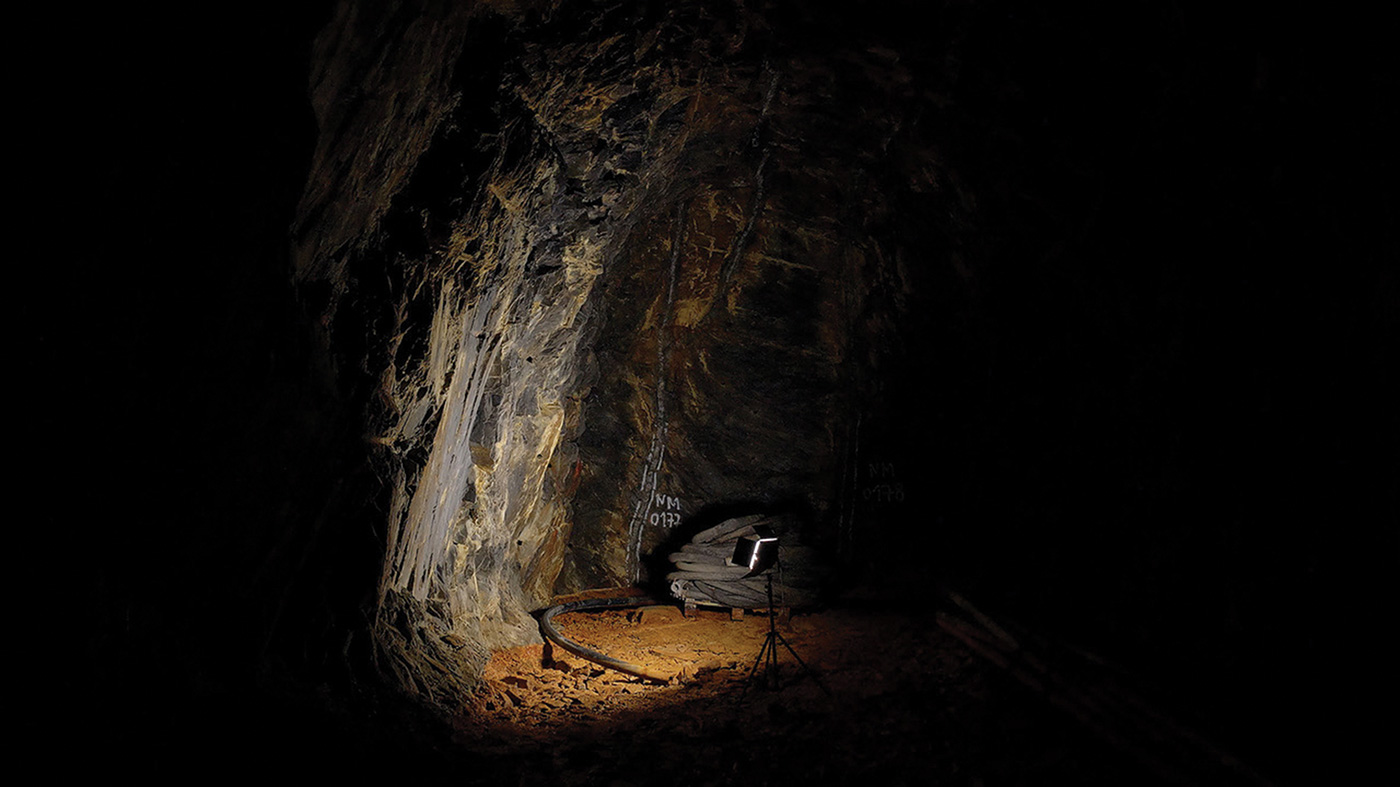
Jerada is a mining town in Morocco where coal extraction, although officially halted in 2001, continues informally to this day. "L’mina" recreates the current work in informal mining pits using a set design created in collaboration with the town’s residents, who perform in their own roles.
Born in 1987 in Casablanca (Morocco), Randa Maroufi is a visual artist and filmmaker. She graduated from the Institut National des Beaux-Arts in Tétouan, the École Supérieure des Beaux-Arts d’Angers, and Le Fresnoy – Studio National des Arts Contemporains. In 2018, she became a fellow at the Académie de France à Madrid, Casa de Velázquez and the Villa Médicis in Rome in 2025. Her films Le Park (2015) and Bab Sebta (2019), awarded at several festivals, mark the beginning of a trilogy dedicated to three Moroccan cities. L’mina (2025) is the final chapter of this trilogy.

Lukas Marxt, Vanja Smiljanic
AMONG THE PALMS THE BOMB or: Looking for reflections in the toxic field of plenty
Experimental doc. | mov | color | 85:0 | Austria, Germany | 2024
The Salton Sea in southern California is a unique ecosystem. In just four years, the water level has fallen by a good half a meter, and with a maximum depth of ten meters you can calculate when it is expected to dry out. And that’s just the global aspect, which has to do with global warming and changes in the local climate. The Salton Sea is also special because the United States tested numerous atomic bombs here in the final phases of World War II and the Cold War – initially in preparation for the Hiroshima and Nagasaki bombings, later as training for missions that fortunately never took place. In AMONG THE PALMS THE BOMB, Lukas Marxt and Vanja Smiljani? are particularly interested in this aspect of regional history. The film begins in Utah, where the planes took off and then found their destination in the supposedly secluded area around the Salton Sea. There is a museum in Wendover where you can also see models of “Fat Man” and “Little Boy”, the only two atomic bombs ever used in war, along with a loading pit where the planes were loaded, to which Marxt dedicated a shorter film in 2019. For many years he has been dealing with the situation in southern California, which can be described as extreme in many respects. Intensive agriculture, which relies radically on monocultures, has cast a spell over everything there. Marxt and Smiljani? find out that an alliance has been formed against this backdrop: illegal harvest workers from Latin America seek refuge in Native American reservations. AMONG THE PALMS THE BOMB has local experts explain the landscape and history, and the director is looking for dissenting voices, especially among the tribe of the Torres Martinez Desert Cahuilla Indians, who were victims of genocide in the 19th century. Their survivors now recall how many plants that had healing powers and were part of a life with nature once grew around the salty water of the Salton Sea. Now the area belongs to the salt bushes, and beneath the surface ticks the uranium of a Cold War that is about to return. Scary times, someone says. (Bert Rebhandl)
Lukas Marxt (*1983, Austria) is an artist and a filmmaker living and working between Cologne and Graz. Marxt´s interest in the dialogue between human and geological existence, and the impact of man upon nature was first explored in his studies of Geography and Environmental Science at the University of Graz, and was further developed through his audio visual studies at the Art University in Linz. He received his MFA from the Academy of Media Arts Cologne, and attended the postgraduate programme at the Academy of Fine Arts Leipzig. Marxt has been sharing his research in the visual art environment as well as in the cinema context. His works have been featured in numerous solo and group exhibitions, most recently at the Torrance Art Museum (Los Angeles, 2018), at The Biennial of Painting, Museum Dhondt-Dhaenens (Belgium, 2018), and at the Museum of Modern and Contemporary Art Rijeka (Croatia, 2018). His films have been presented in numerous International Film Festivals including Berlinale (Germany, 2017 and 2018), Curtas Vila do Conde (Portugal, 2018), and the Gijón International Film Festival where he receiced the Principado de Asturias prize for the best short film (Spain, 2018). Since 2017, Marxt has spent a considerable amount of time in Southern California, where he has researched the ecological and socio-political structures surrounding the Salton Sea. Vanja Smiljani? (Belgrade, 1986) is a visual and performance artist living and working between Lisbon and Cologne. She concluded the post-master in Artistic research at A.pass, Brussels (2015), MFA at the Dutch Art Institute (DAI), Arnhem (2012), and Kunsthochschule für Medien Köln (2019) and got a degree in Fine Arts at the Faculdade de Belas Artes de Lisboa (2009). In her practice she often utilizes the model of performance-lecture as a way to bridge fictitious and experiential universes, comprising technical apparatus, diagrams and sci-fi povera sculptures. Connecting otherwise unparalleled reality systems, Vanja's work attests the foundation of ideologies as alienated regimes, recurring to her own body as a vessel for narration, often shifting between the position of oracle and storyteller.
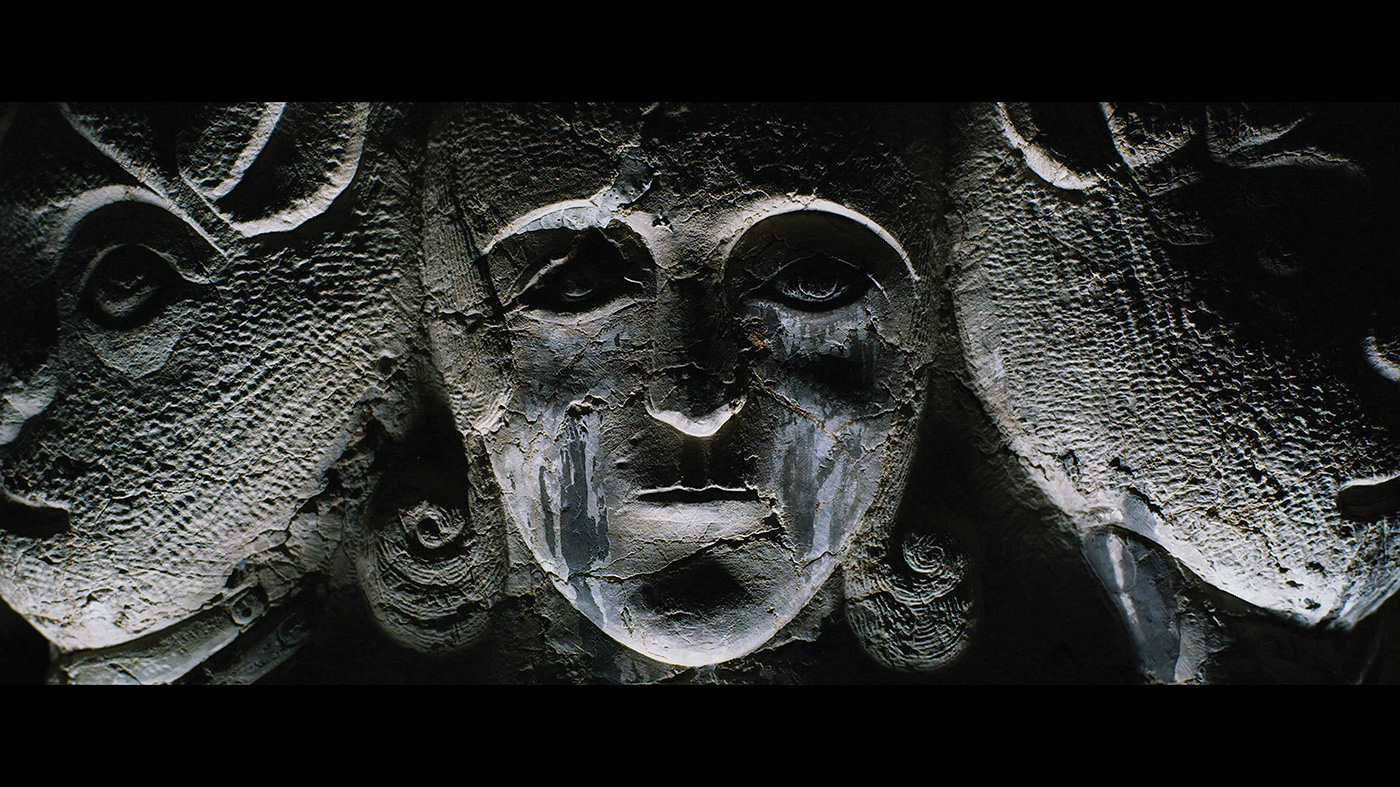

Shapoorian Maryam
Ca reste entre nous
Documentary | 4k | color | 61:0 | Iran | 2025
Before the Iranian Revolution, an old house gradually transforms into a house-museum, filled with ancient artifacts collected over decades. An Iranian archaeologist awaits the return of his French wife from a long journey. As the rooms fill with objects, the revolution reaches the walls of the house, bringing the turmoil of the outside world inside. Amid the uncertainty, the couple struggles to preserve both their relationship and the memories embedded in the house. This documentary is a silent triptych made without dialogue, draws on thirty years of archived letters exchanged between the couple, offering a poetic and contemplative reflection on how personal and historical memories intertwine, and how spaces become repositories of both private and collective histories.This film is a quiet form of resistance.
Born in 1979, Maryam Shapourian began making films at 15, experimenting with 8mm formats and crafting voiceovers for short films. Her passion for cinema deepened at the Tehran University of Art, where hands-on experience with 16mm filmmaking at the Faculty of Cinema and Theatre laid the foundation for a lifelong commitment to storytelling. Over the years, she has engaged in a quiet dialogue with audiences through layered, fragmented, and sometimes unfinished ideas, shaped in the edit room. She is, in her own words, “an eternal editor.” Her debut feature, Just Between Us, marks a significant shift - a film that balances observation and narration, and represents her first steps toward a new cinematic language for engaging with the world.
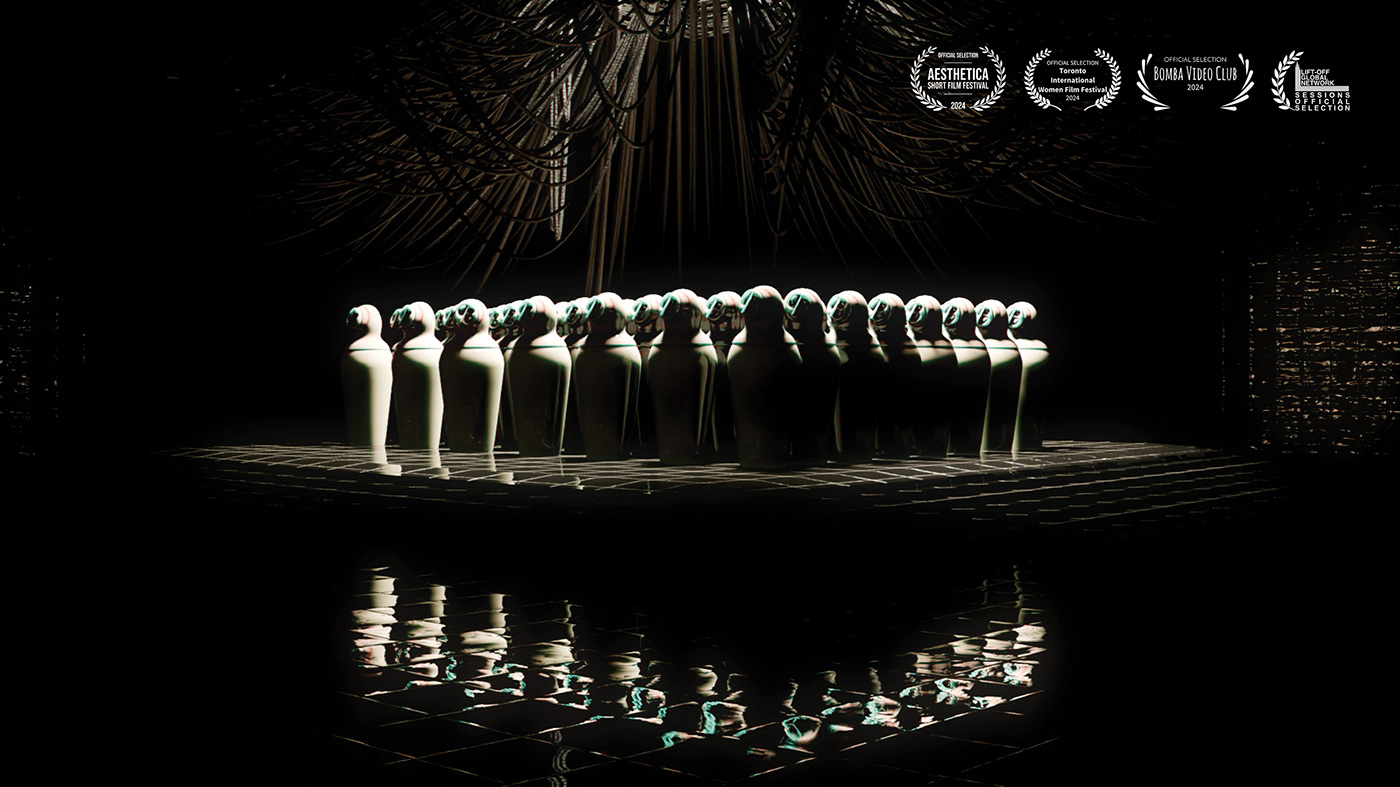

Nonoka Matsuo, Tomi Katz
Empty Shell
Experimental video | mp4 | color | 4:3 | Japan | 2024
On the day we vanish from the world, what will remain? Fragments, like memories, spread in nature, creating ripples. As we rethink the future with AI's rise and authoritarian values, how will we repent? How will we move forward, unable to live forever? -We focused on creating a sense of déjà vu with a touch of dissonance, like a parallel world, by using unconventional over colors and effects. The focal points and layers were intentionally designed to avoid naturalism.
Nonoka Matsuo and Tomi Katz from Japan. We both graduated from Musashino Art University. We came from different backgrounds —from the fashion field and from art academia. During the COVID period, we decided to collaborate and created an experimental video piece called Temperature Gap. In 2023, we made our first short film Empty Shell, which was selected for several film festivals including Aesthetica, Interfilm Berlin and Teheran international short film festival.
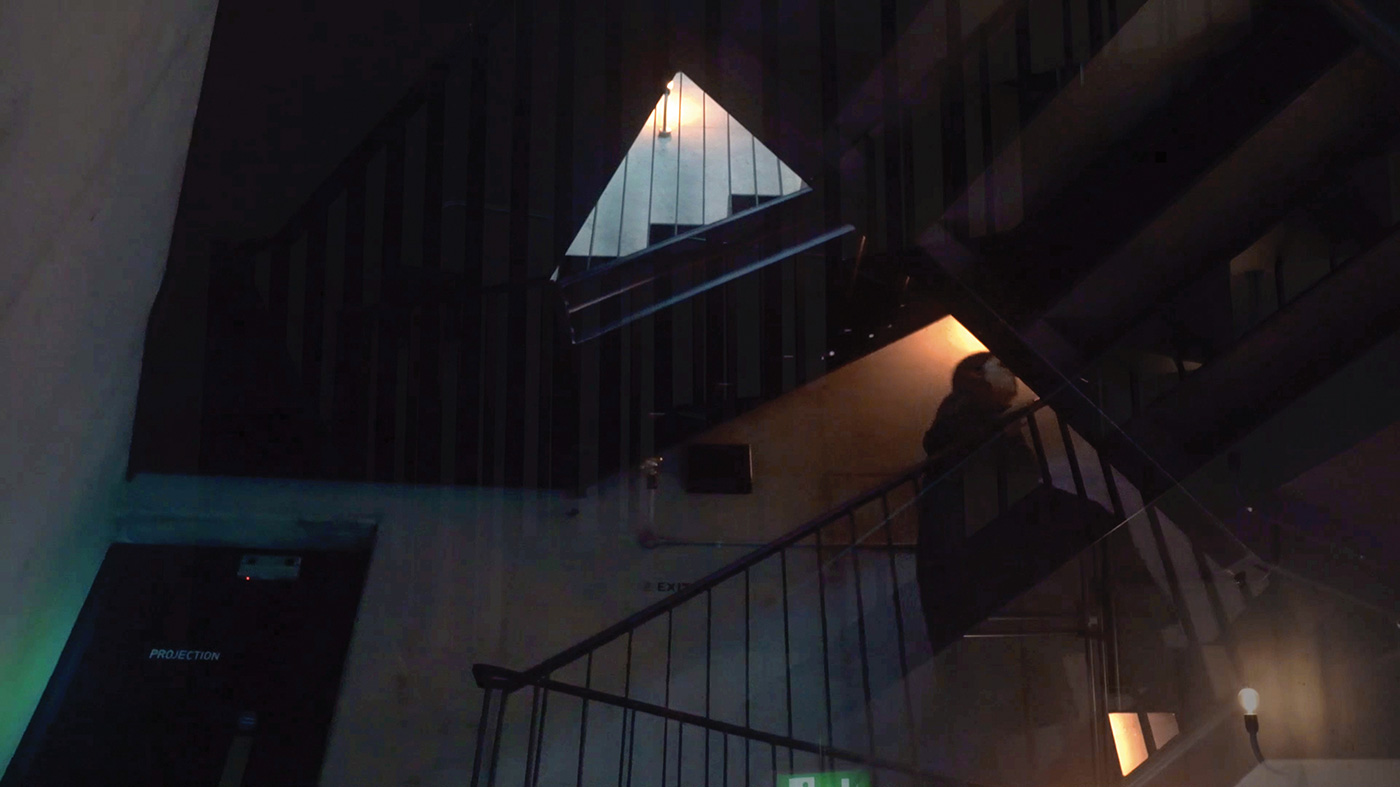
Peter Maybury
L’esprit de l’escalier
Experimental film | 4k | color | 5:50 | Ireland | 2025
L’esprit de l’escalier, is the third in a trilogy of films surrounding Pálás, a cinema in Galway, Ireland, designed by Tom dePaor. Opening in 2018, the cinema closed to the public in February 2025, and I attended one of the last screenings at Pálás – Tsai Ming-Liang’s Goodbye Dragon Inn, itself a film about the closing of a cinema. I returned the following morning with thoughts of this in my head as I filmed the staircases throughout the building. These spaces are untempered, part indoor, part outdoor, while the cinemas with their plush red interiors are optimised for sound, temperature, and light. The title of my film refers to the expression (to think of the perfect reply too late) but moreover to the spirit of the staircase. Just like Goodbye Dragon Inn, so much life goes on in these spaces, where people, weather, light, and sound, intersect with, and even possess the movement or the stillness of the camera, the place itself becoming a film.
Peter Maybury is an Irish multidisciplinary artist. His practice-based research encompasses works as an artist, graphic designer, filmmaker, publisher, writer, editor, curator, musician, and educator. He is a graduate of Central Saint Martins, London, and a Doctoral Candidate at the Centre for Socially Engaged Practice-Based Research, TU Dublin. He has collaborated extensively with artists and institutions, editors and curators, on more than 200 art and architecture publications. Peter is a longstanding collaborator with Tom dePaor, making books, films, and works for exhibition. His film work includes On being there (2022/23, screened at Rencontre Internationale Paris/Berlin 2023/24), Landfall (2020), an hour-long dual-screen film installation, and with dePaor the Gall films Drape (2018), and A Study (2015) which was made for exhibition at ETH Zurich. Peter is author of Make Ready (2015), and co-author with dePaor of Reservoir (2010) and Of (2012).

Kim Richard Adler Mejdahl
Glory 1
Experimental video | 4k | color | 2:0 | Denmark | 2024
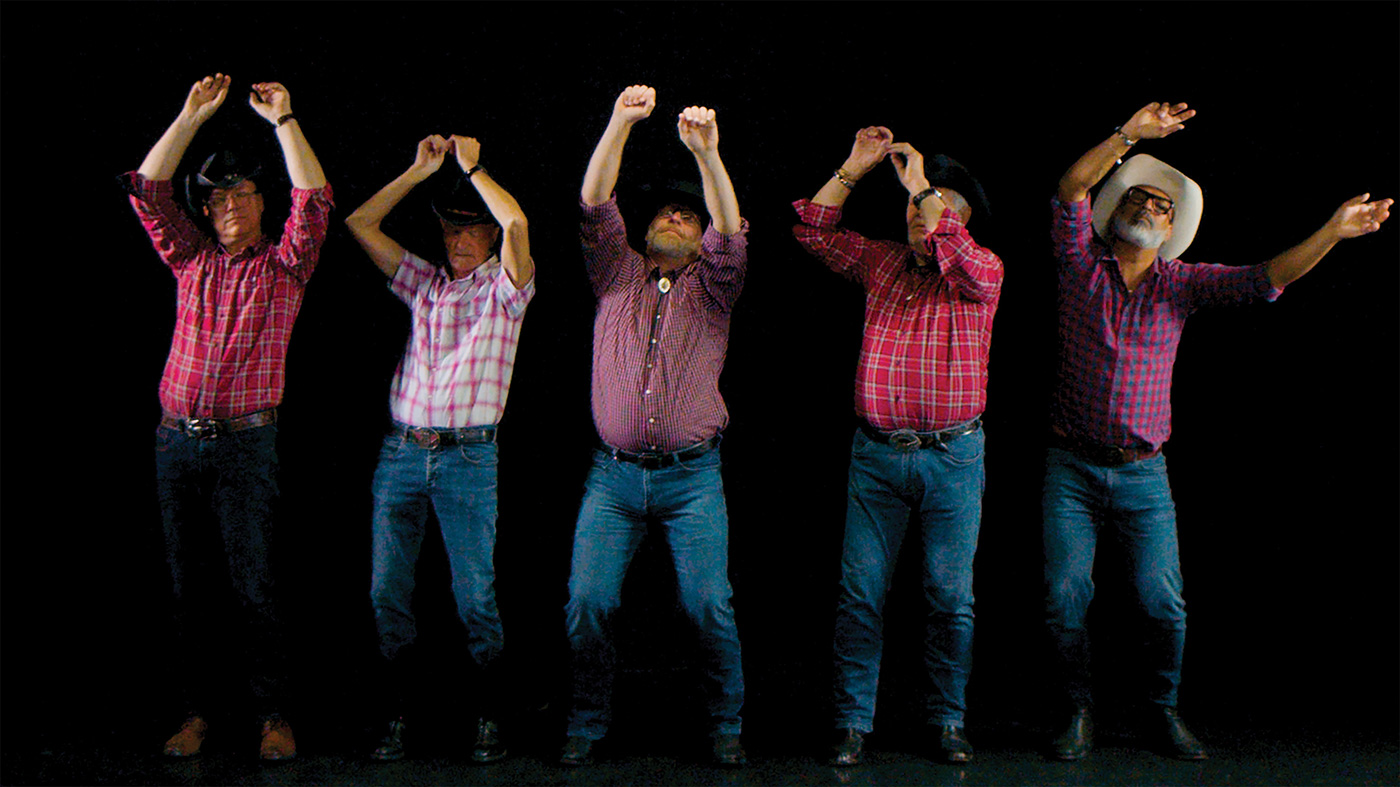
Members of the gay linedance club ‘Outliners’ dance in a black room. ‘Glory 1’ is a video artwork conceived by Danish multidisciplinary artist Kim Richard Adler Mejdahl. The dreamy scenario presents a symbolic antidote to patriarchy and its destructive understandings of masculinity. In the mind of the artist, ‘Glory 1’ is a symbol of protest. Cowboys dancing together instead of shooting each other down is a subversive act against conventional understandings of man. It is a symbolic gesture of reversing the macho ideal within patriarchy, that weighs down and dictates the life of men.
Kim Richard Adler Mejdahl graduated from the Royal Danish Academy of Fine Arts in 2019. Slaptstick humour and gothic horror meet up in Mejdahl's multifaceted work that often has its starting point in the artist's personal life story. Be it music album releases, film productions or large solo exhibition projects, Mejdahl's practice explore the topics of trauma healing, our relationship to nature, spirituality, and gender identity. His video works have reached international audiences with screenings across Europe and Asia. Under the alias Kim Kim, Mejdahl has made numerous live performances and released music albums. Within few years Mejdahl has collaborated with a wide range of different institutions, counting Kunsthal Charlottenborg, Roskilde Festival, Danish theme park BonBon-Land, Theater Sort/Hvid, and most recently KØN - Gender Museum Denmark. In 2025 Mejdahl was awarded the three-year working grant by The Danish Arts Foundation. His work is part of The National Gallery's collection in Denmark.

Florent Meng
the analogue tracks
Experimental doc. | 4k | color | 57:0 | France | 2024
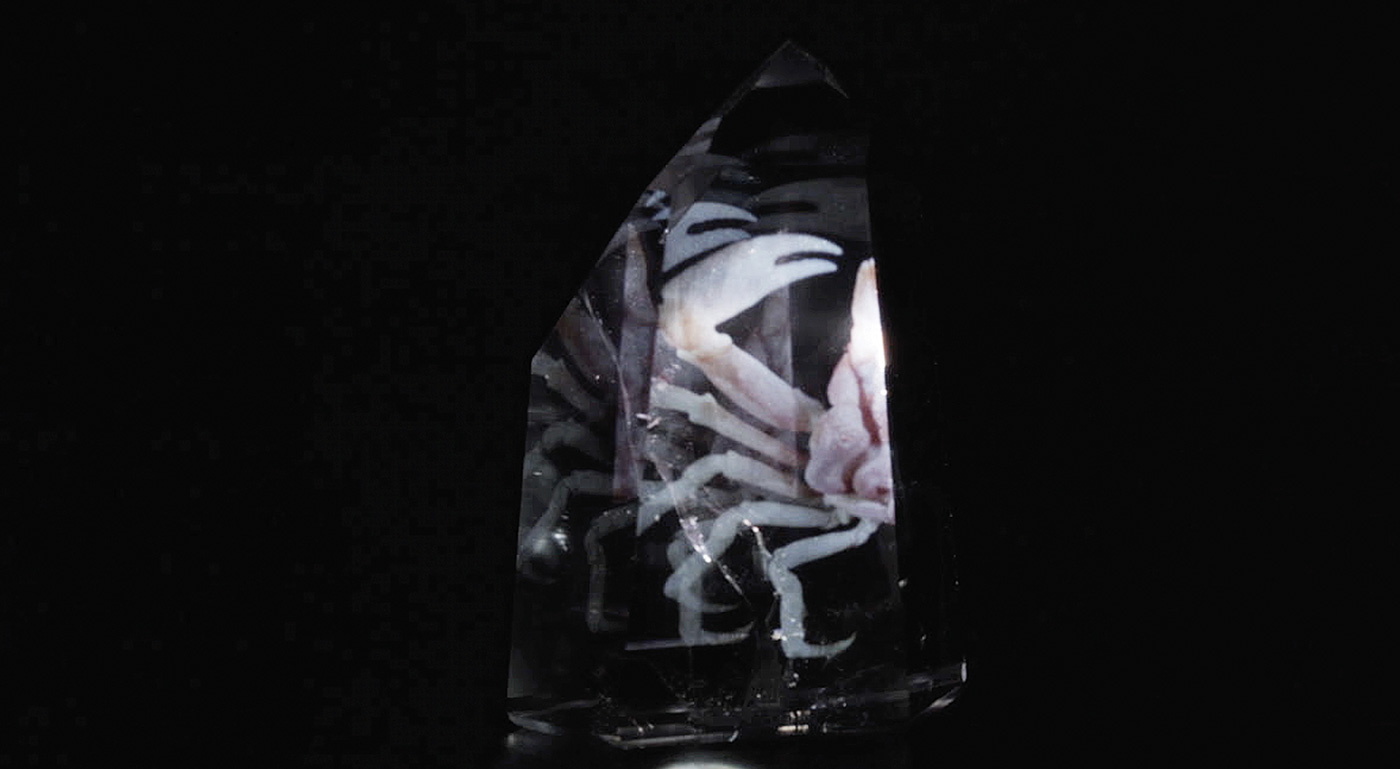
A crystal hunter finds a quartz crystal on the Mont Blanc massif. The mineral passes through the hands of geophysicists, acoustic engineers and gemmologists, exploring our potential for communication with the inanimate world. This diary of a quartz crystal takes us on a journey to the edge of our systems of perception, skilfully calling into question the seemingly irrefutable.

Maricarmen Merino
MATRYOSHKA
Documentary | 4k | color | 79:0 | Costa Rica | 2025
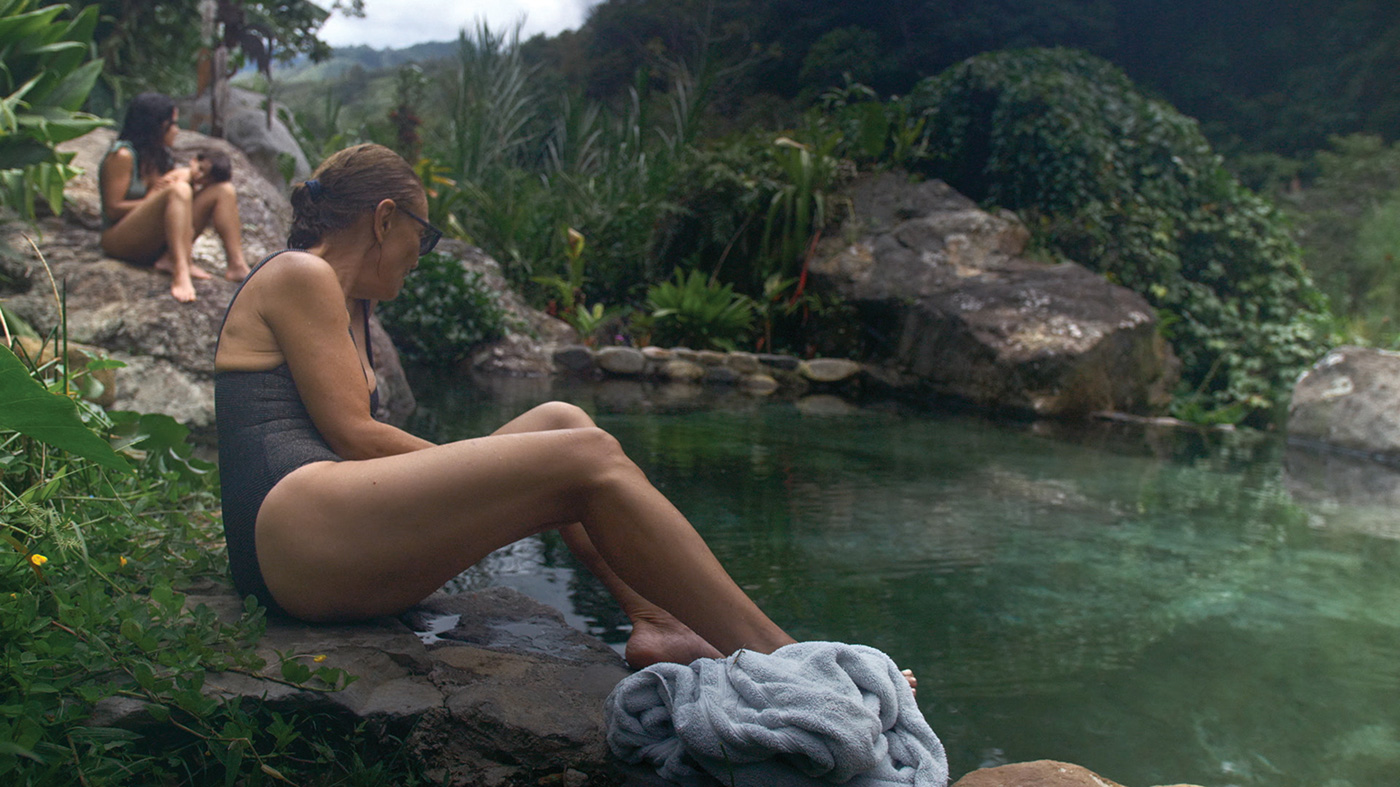
MATRYOSHKA is a dialogue between Patricia, a 74-year-old feminist politician from Costa Rica, and Maricarmen, her filmmaker daughter. Together, they expose their journeys of rupture and transformation as they separate from their partners. Set against a conservative and regressive backdrop, their unfiltered exchanges reveal the contradictions that exist within political and intimate discourses about women’s lives.
Maricarmen Merino has a BA in Collective Communication by the University of Costa Rica and a BA in Film Direction by the Centro de Capacitación Cinematográfica, top film school in Mexico. Her hybrid short film “Bella” was part of the Official Selection of the Guadalajara Film Festival, Poland Camerimage and for this work, she was awarded as Best Director in the Mexican edition of ShortShorts. Her debut feature film “¿Dónde estás?” premiered in the Guadalajara Film Festival in 2018. She is one of the producers of the Mexican documentary “El compromiso de las sombras”, funded by the Tribeca Film Institute and the Sundance Institute. She has participated in the Flaherty Documentary Seminar in New York and the Walden Residence for the Creation of Documentaries, headed by Marta Andreu.
Dina Mimi
The Melancholy of this useless afternoon II
Experimental film | mov | color | 13:0 | Palestine | 2022
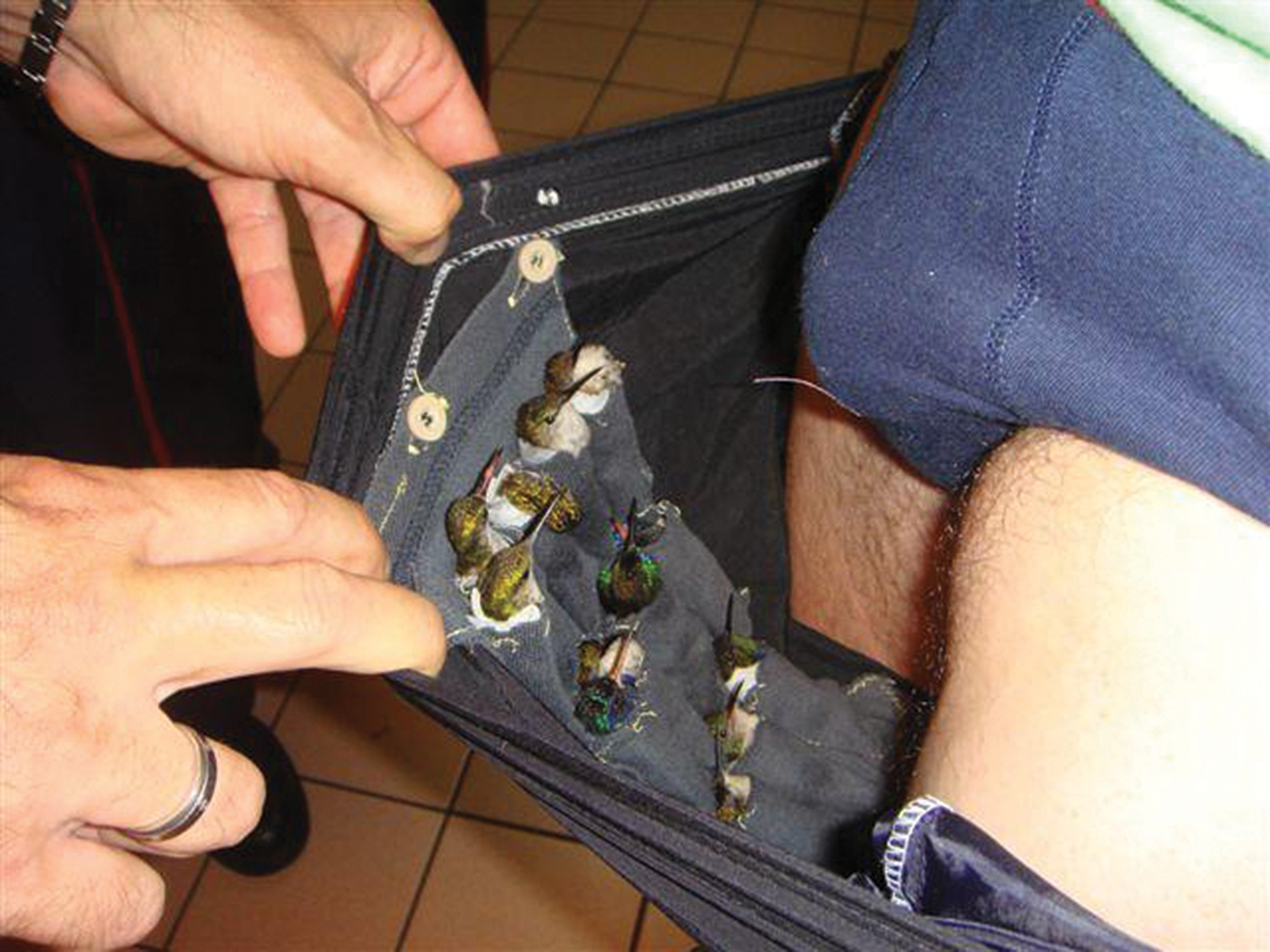
The Melancholy of this Useless Afternoon, chapter 2 (2023, 11:25) explores the shared gestures between the fugitive and the smuggler, and their relationship to being seen. The melancholy of this useless afternoon researches the links between the fugitive and the smuggler, their shared gestures and relationships to being seen. By escape and flight, risking capture or death, the fugitive works to keep themself hidden. The smuggler, however, moves with stealth, using gestures to hide things, often close to their body.
Dina Mimi is a Palestinian visual artist and filmmaker who is based between Palestine and the Netherlands. Mimi works with experimental filmmaking and lecture performances that research the question of how and when bodies become sites of resistance. This question finds its material interest in moving images, especially found footage, that is discarded and therefore deemed invaluable. Understanding editing as a playground, Mimi plays with opacity in moving images by seeking to brush up against footage which desires to be ungraspable or is in the act of vanishing. This is a continuous attempt at non-linear narration as a way of disfiguring one’s.

Elise Marjorie Morin
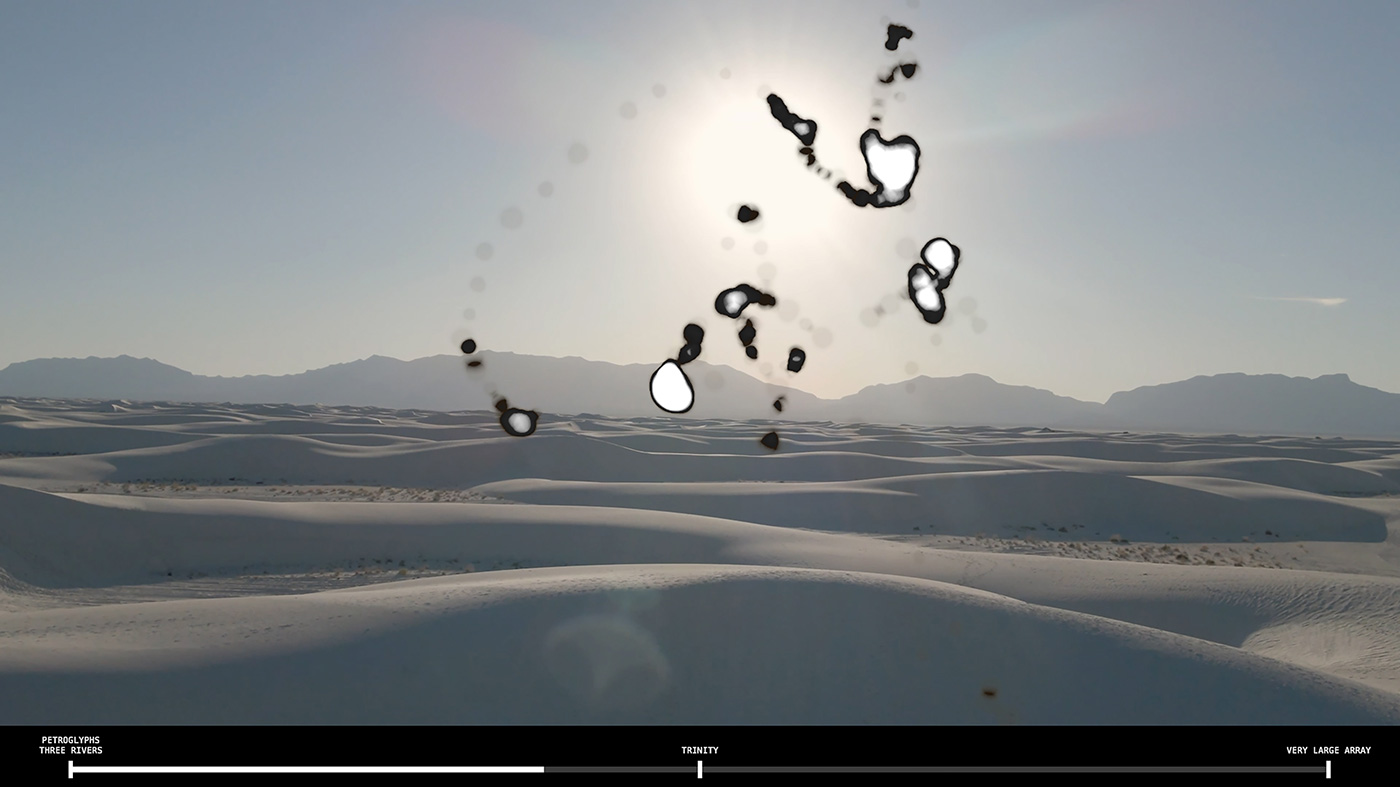
When The Sun Never Sets
Multimedia installation | 0 | color | 8:0 | France | 2025
Where the Sun Never Sets est une installation vidéo interactive qui relie trois sites du désert du Nouveau-Mexique, traversés par une histoire du rayonnement à la fois solaire, atomique et cosmique. Grâce à un dispositif d’eye-tracking, le parcours du regard du spectateur s’inscrit en temps réel sur l’image et déclenche des fragments sonores spatialisés : témoignages, voix, traces environnementales ou résonances du paysage. L’image fonctionne comme une cartographie sonore cachée où chaque zone correspond à un point du territoire et à un récit associé. Le regard devient ainsi un outil de dévoilement, révélant des couches invisibles du paysage et mettant en relation Three Rivers, Trinity et les Very Large Array. À la fin de chaque séquence, une capture d’écran du trajet de regard est générée et archivée en ligne avec les entretiens complets, accessibles sur suns.elise-morin.com. Le projet cherche à expérimenter des moyens de lier la puissance du regard à une pluralité de narrations sonores en écho avec un territoire où brillent deux soleils : celui du désert et celui de la première bombe A. Il propose une représentation en résistance, révélant un écosystème vibrant et reliant les réalités irradiées inscrites dans ces lieux.
Élise Morin est une artiste plasticienne vivant et travaillant à Paris. Sa pratique interdisciplinaire explore la relation humaine au visible et la manière dont nos perceptions façonnent notre compréhension des mondes terrestres transformés. Elle développe des projets qui associent recherches artistiques, collaborations scientifiques et enquêtes de terrain, en travaillant régulièrement avec des ingénieurs, des musiciens, des philosophes et des communautés locales. Son travail s'inscrit dans un rapport étroit aux environnements et aux territoires, qu’elle aborde comme des espaces sensibles où s’entrelacent récits, matériaux, technologies et phénomènes naturels. Après des études à l’École nationale supérieure des Arts Décoratifs, elle a passé plusieurs années en Chine et au Japon, où la coexistence entre artisanat, animisme et technologies émergentes a nourri sa réflexion et marqué son approche artistique. Ses œuvres interrogent la place de l’esthétique dans notre rapport au réel et dans la manière dont nous percevons les espaces modifiés par l’histoire, l’industrie ou les transformations environnementales. Élise Morin a exposé en France et à l’international, notamment au Centquatre-Paris, au Jeu de Paume, au Grand Palais, ainsi qu’à Bucarest, Moscou, Pékin et Tokyo. Elle est résidente de la Villa Albertine, où elle a développé le projet Spring Odyssey.
Marcel Mrejen
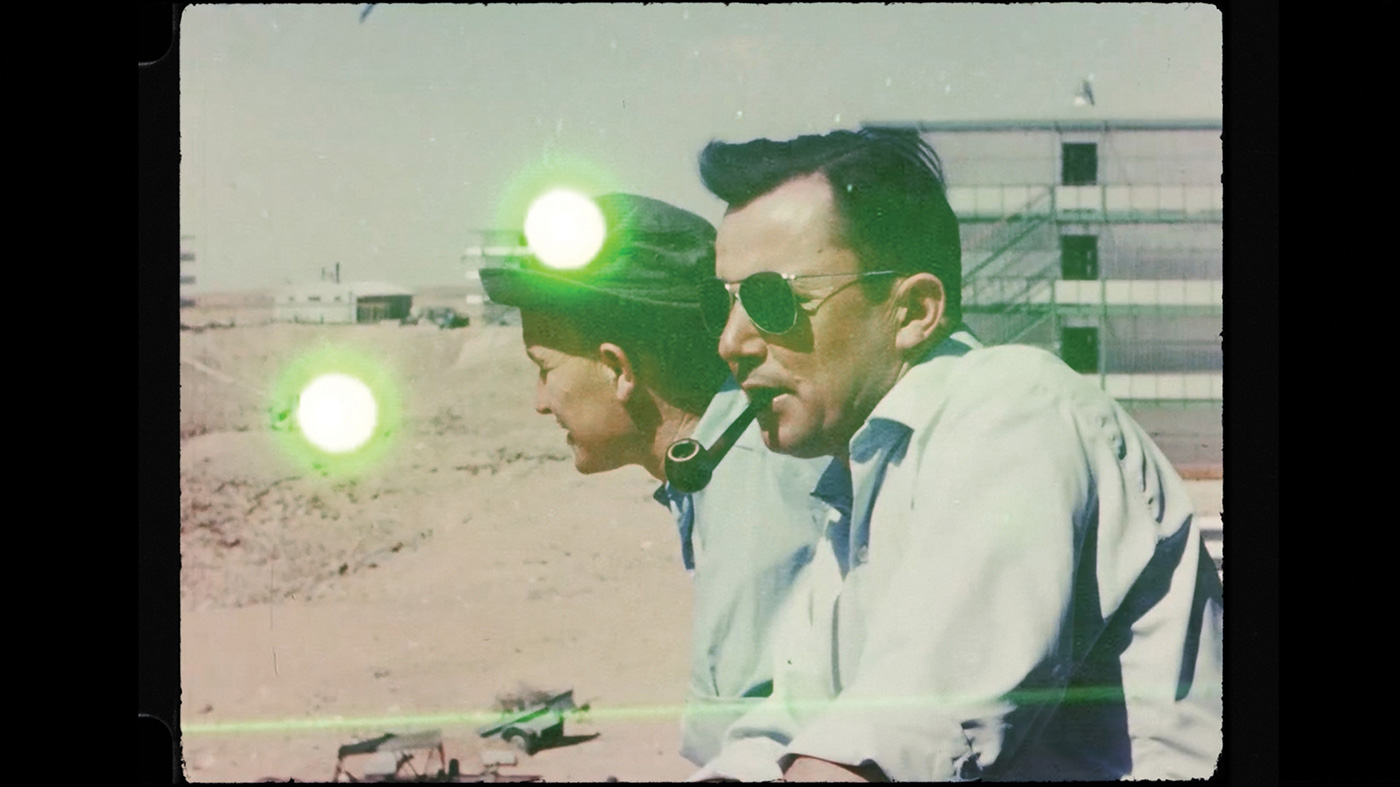
Larry
Video | 4k | color | 10:0 | Algeria | 2024
Set against silent 16mm footage filmed by a French soldier in occupied Algeria, the film stages an encounter between colonial memory and the soundscape of contemporary warfare. As present-day militarism infiltrates the archive, time fractures and the images begin to echo with conflicts past and future. What emerges is a haunting meditation on the ways colonial violence continues to reverberate through today’s military imaginaries.
Marcel Mrejen (FR/DZ) born in 1994 (Paris, FR) is a visual artist and filmmaker exploring the articulation of technology within living and economic metabolisms. The form of his work spans various time-based media — installations, filmmaking, sound, and machine-learning. He graduated from the Gerrit Rietveld Academie in 2018, before being a resident of Le Fresnoy - Studio national des arts contemporains from 2021 to 2023. His work has been exhibited/screened in various cultural institutions, including the Stedelijk Museum (Amsterdam), the Institute of Contemporary Arts (London), or the Eye Filmmuseum (Amsterdam). Parallel to his artistic practice, he co-curated the first edition of REFRESH: Future-Proof in 2021. His debut film Memories of an Unborn Sun was awarded Best Short Film at Visions du Réel in 2024 and was screened and won awards in numerous festivals around the world. In 2025, it was awarded the Scam Prize for Best Experimental Film. In collaboration with Eliott Déchamboux, his book: L’Europe c’est Deutshland quand tu rate laba tu est foutue mon frère, le reste c’est du fouma-fouma, was published by Jungle Books in 2019.

Inge Nabuurs, Erwin Vandoorn
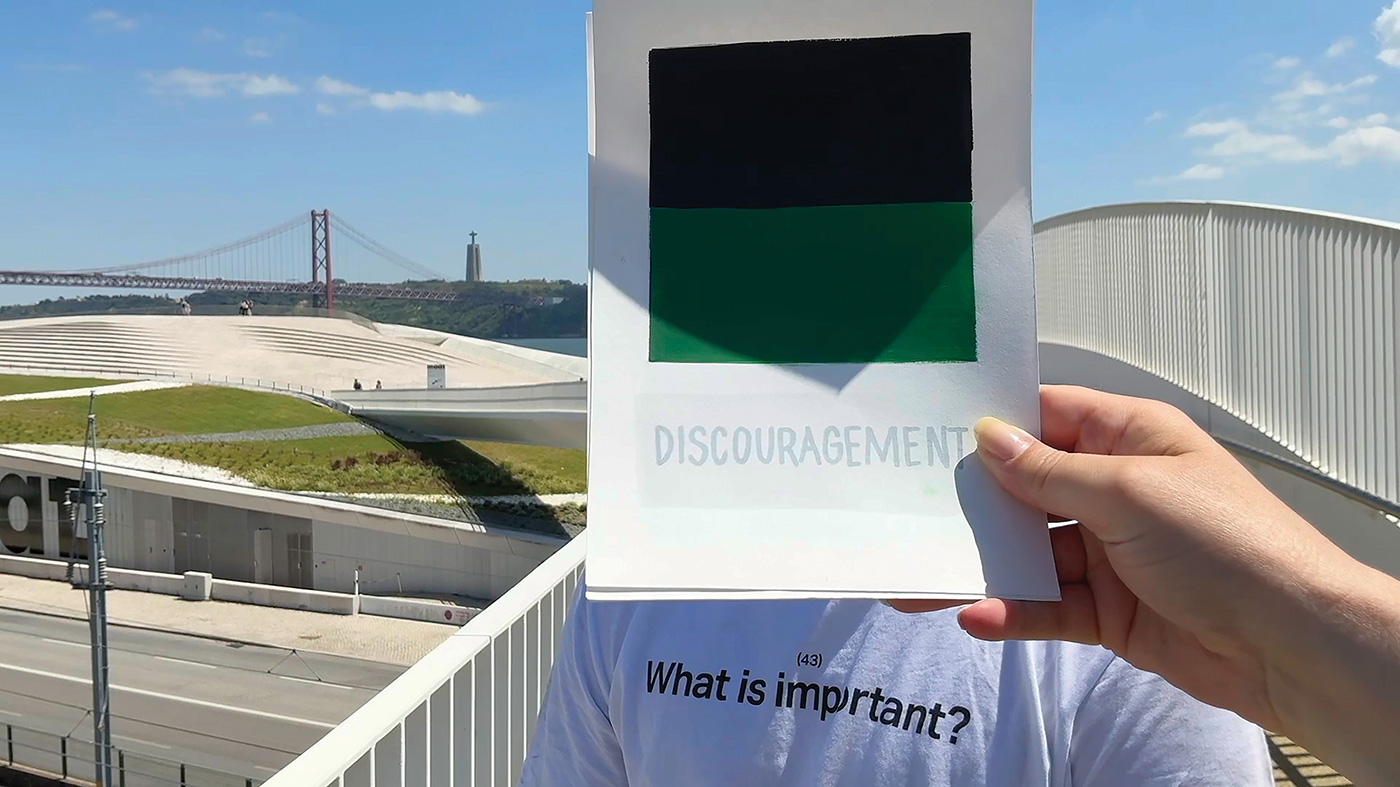
Minor Modes of Multiple Muted Memories in Motion
Performance | mp4 | color | 10:32 | Netherlands, Portugal | 2025
In this performative video work, Nabuurs&VanDoorn collaborate with Timo Paris to activate the first eleven points of The Living Atlas — a psychogeographic walk through the hidden layers of Lisbon. Using movement as a method of mapping, the breaker interprets site-specific protocols derived from the Nabuurs&VanDoorn’s prior cartographic research. The choreography emerges from the tension between embodied memory and spatial constraint, tracing the invisible architectures beneath the modernist grid. As the body navigates thresholds, detours, and pauses, the city becomes both stage and score. This work marks the beginning of a kinetic archive—an atlas in motion—where performance, mapping, and urban poetics converge.
Nabuurs&VanDoorn is a Dutch artist duo working across performance, cartography and post-medium installations. Their practice constructs open situations in which participation functions as source material, meaning emerges collectively, not illustratively. Their work has a.o. been shown at Powerlong Art Center, Xiamen (2026), Sainsbury Centre, Norwich (2025), the Van Abbemuseum, Eindhoven (multiple years), Villa Empain, Brussels (2018), documenta 14, Kassel (2017), and the New Museum, New York (2008). Residencies include 18th Street Arts Center, Santa Monica (2026), Hangar, Lisbon (2025), VIR Viafarini, Milan (2019) and the Boghossian Foundation, Brussels (2018). Their work is held in the collections of M HKA Antwerp, the Mike Kelley Foundation for the Arts, the Van Abbemuseum and the Victoria & Albert Museum, London. Nabuurs&VanDoorn were twice nominated for the Follow Fluxus Award (2008, 2020).

Marylène Negro, NICOLAS LOSSON
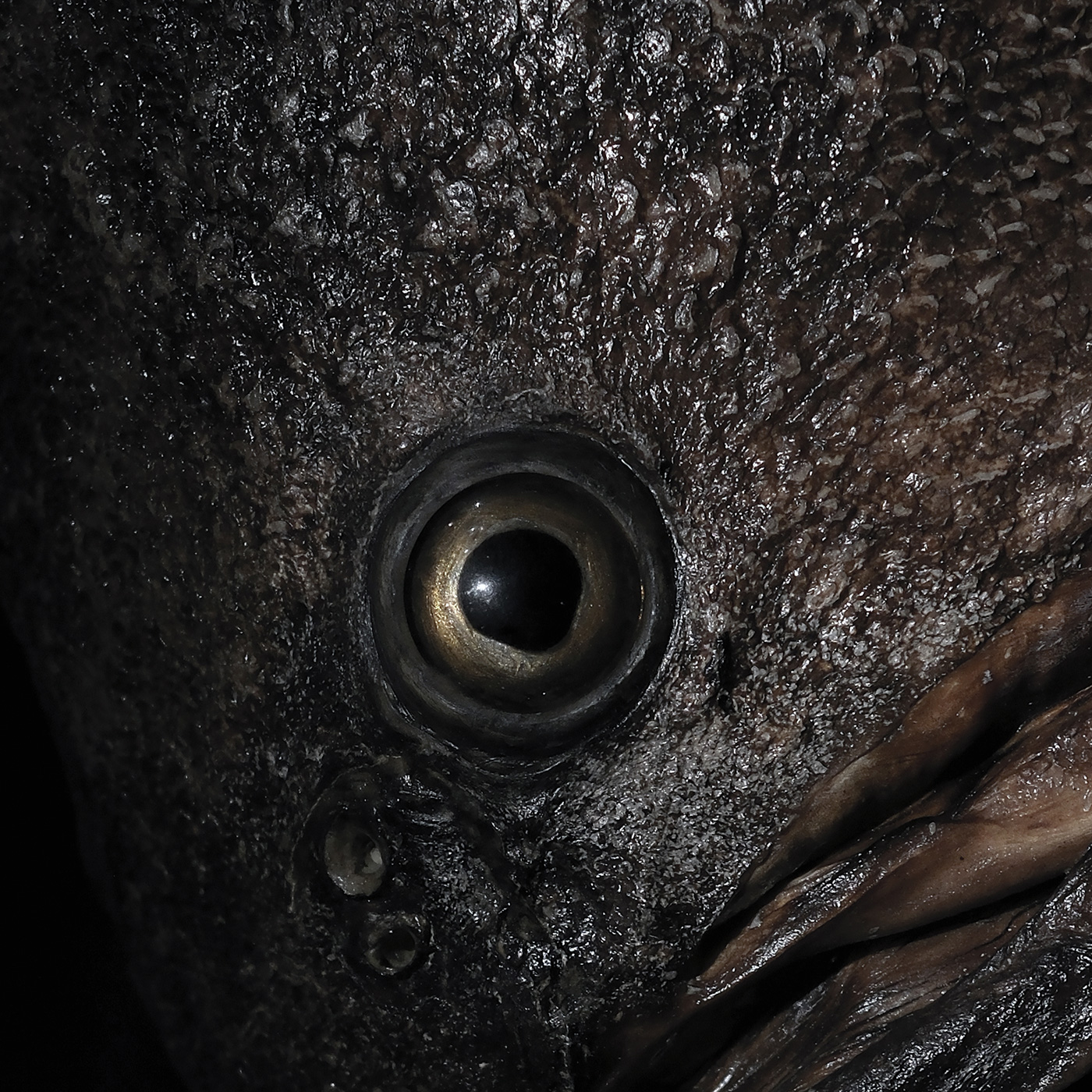
HISTOIRE NATURELLE
Experimental film | mov | color | 25:40 | France | 2024
Marylène Negro & Nicolas Losson NATURAL HISTORY 25’40 color, sound 2024 synopsis : "I look at the animals in the great gallery of evolution of the national museum of natural history. Their fixity, the intensity of their empty gazes, everything from there authorizes me to be silent, and that everything tells me, I tell myself, ends as it began, in an uninterpretable silence." L’Alligator albinos, Xavier Person The whole film comes from there.
The work of Marylène Negro is part of a plastic research started in the 1990s. More than 50 films, from 35s to 101mn, have been presented in France and abroad in galleries, art centers, museums, festivals cinema, including: Center Pompidou (Paris), Jennifer Flay and Martine Aboucaya Galleries (Paris), various FRAC including the Frac Franche-Comté, Musée des Beaux-Arts (Rennes), New Museum (New York), Tate Modern (London), Cinémathèque Français ( Paris), Cinéma des Cinéastes (Paris), Côté Court Festival (Pantin), IndieLisboa (Lisbon), Anthology Film Archives (New York), Ciné Nouveau (Osaka)…
Arjuna Neuman
Promise
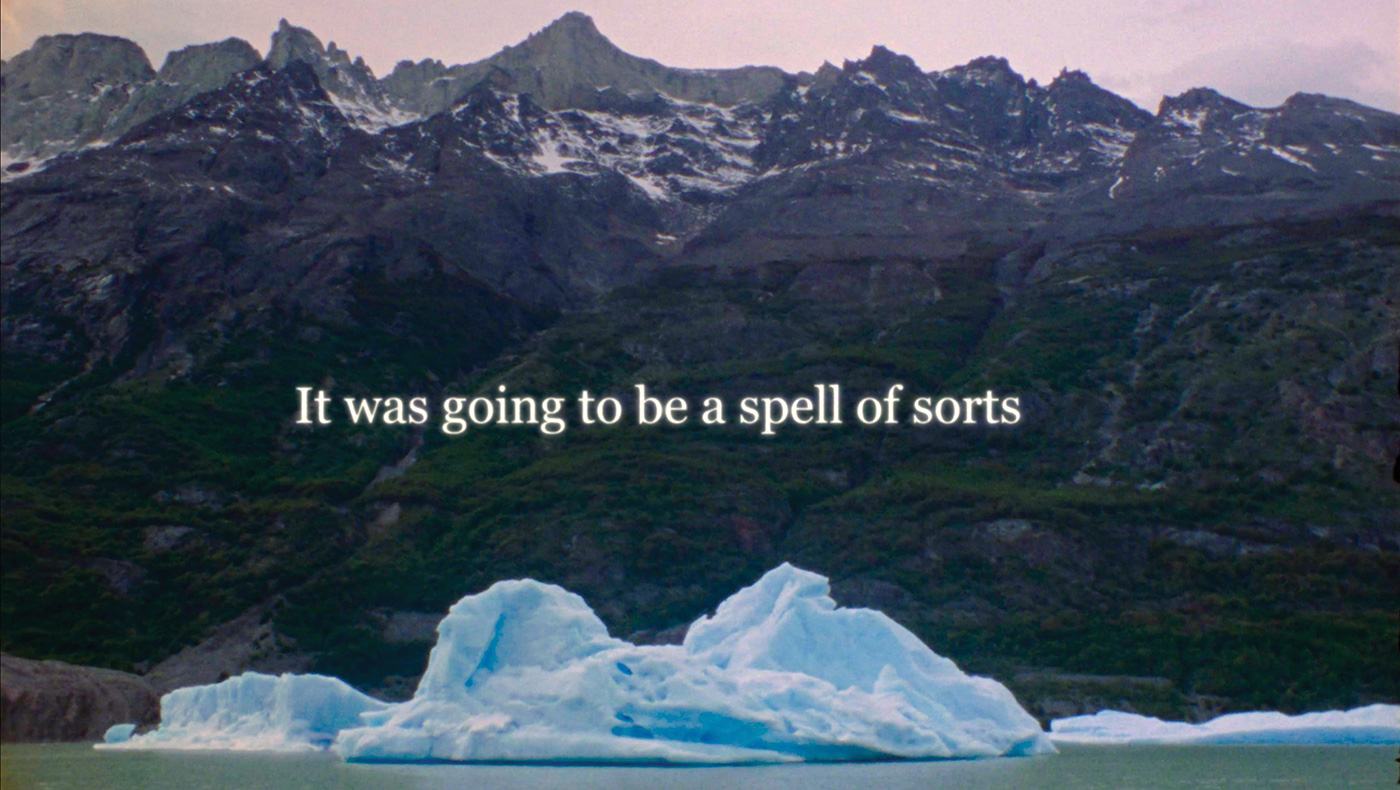
Experimental doc. | 16mm | color | 2:30 | Canada, Germany | 2025
What is the possibility, barbarism or folly of making art, poetry, film while a genocide is happening in front of our eyes?
Arjuna Neuman is an artist and writer. He has presented solo mid-career surveys at MACBA in Barcelona, Munch Museum in Oslo, and Belkin Gallery in Vancouver and forthcoming at Kunsthalle Bern. He has presented solo exhibitions at Kunsthalle Vienna; CCA Glasgow; Showroom Gallery, London; TPW Gallery, Toronto; Whitechapel Gallery, London; Istanbul Modern, Turkey; MAAT, Portugal amongst many others. He has participated in the Berlin Biennial, Sharjah Biennial, Bergen Assembly, the 56th Venice Biennial, Qalandia Biennial, Ural Industrial Biennial, Hacer Noche in Mexico and many other large group exhibitions. He has been included in film festivals such as Berlinale, Images Festival, Docsliboa, Third Horizon. In 2024 he won the Artist Moving Image prize at Les Rencontre International Festival; in 2024 he was a fellow at Villa Aurora and in 2022 a fellow at the Flaherty Seminar. His work is kept in the Belkin Collection, Kunsthalle Bern Collectors Circle; IAC Lyon and Platform UK. He has a forthcoming monograph published with Archive Books. As a writer, he has published essays in Relief Press, Into the Pines Press, The Journal for New Writing, VIA Magazine, Concord, Art Voices, Flaunt, LEAP, Hearings and e-flux. He is the founder of Archive of Belonging, a platform and resource list supporting migrants and refugees.

James Newitt
Material em Bruto
Experimental doc. | mov | color | 36:10 | Australia, Portugal | 2025
Material em Bruto (Raw Material) was filmed over a year in the Interior Douro region. Through testimonies from local communities, Material em Bruto reflects on different, at times conflicting, notions of value in relation to the landscape and how practices of cultivation, preservation and extraction benefit and impact the people who live there. Material em Bruto (Raw Material) pays particular attention to past, present and possible future, mining activity in the region, using the mine as a metaphor to explore ideas of what is contained but not immediately visible within the landscape. Lithium represents a new ‘promise’ of wealth, the white gold that threatens to divide communities and impact the local environment. Material em Bruto (Raw Material) ties to read that which is codified or concealed by carefully listening to testimonies from the local community and by paying close attention to the marks, maps and traces that are etched into the land. The film follows an investigative process of translation, one that is informed by the knowledge (both inherited and specialised) of local community and specifically people who work with geography, topography, archeology, agriculture and geology. This situated knowledge is transformed as local memories and stories coalesce into poetic, filmic form.
Born 1981, Hobart. Lives and works Hobart and Lisbon, Portugal. James is an Australian visual artist and filmmaker born in Tasmania and based in Lisbon, Portugal. His practice is research-orientated – bound to a process of public engagement, contextual and historic investigation. James has presented his work in solo and group exhibitions throughout Europe, Australia and in Asia over the last 20 years and has been awarded numerous grants, international residencies and awards in recognition of his work. He has exhibited in galleries, museums and film festivals including: Podroom Gallery (solo), Belgrade, Serbia, 2024; Galeria Boavista (solo), Lisbon, Portugal, 2023; The Edith Russ Haus for Media Art (solo), Oldenburg, Germany, 2023; the Samstag Museum of Art (solo), Adelaide, Australia, 2023; Porto Photography Bienal 2021 and 2025; Carpintarias de São Lázaro (solo), Lisbon, 2020; Appleton Cultural Association (solo), Lisbon, 2019; the Art Gallery of New South Wales, 2013 and 2019; Perth Revelation International Film Festival, 2019 and 2020; Contemporary Art Tasmania, 2007 and 2018 (solo); Tasmanian Museum and Art Gallery, 2011 (solo) and 2021; Centre for Contemporary Art, Glasgow, 2018; Ar Sólido, Lisbon, 2016; Carriageworks, Sydney, 2015; Lumiar Cite (solo), Lisbon, 2013; Queensland Art Gallery, 2012; the Museum of Contemporary Art, Sydney, 2010; the Gallery of Fine Arts (solo), Split, Croatia, 2010; and Rosalux (solo), Berlin, 2009 and 2010. James has lectured in Time Based Media, at the University of Tasmania, School of Creative Arts and has been a visiting professor at the City University of New York; Sound Image Culture, Brussels; and the Tromsø Art Academy, University of Tromsø, Norway. He has won several prizes including the Grant for Media Art of the Stiftung Niedersachsen at the Edith-Russ-Haus (2022); the Samstag International Visual Art Scholarship (2012); the Hobart City Art Prize (2011) and the Qantas Contemporary Art Award (2009).

Clara Nicolas, Léo GATINOT
Transalpin
Documentary | 16mm | color | 21:18 | France | 2024
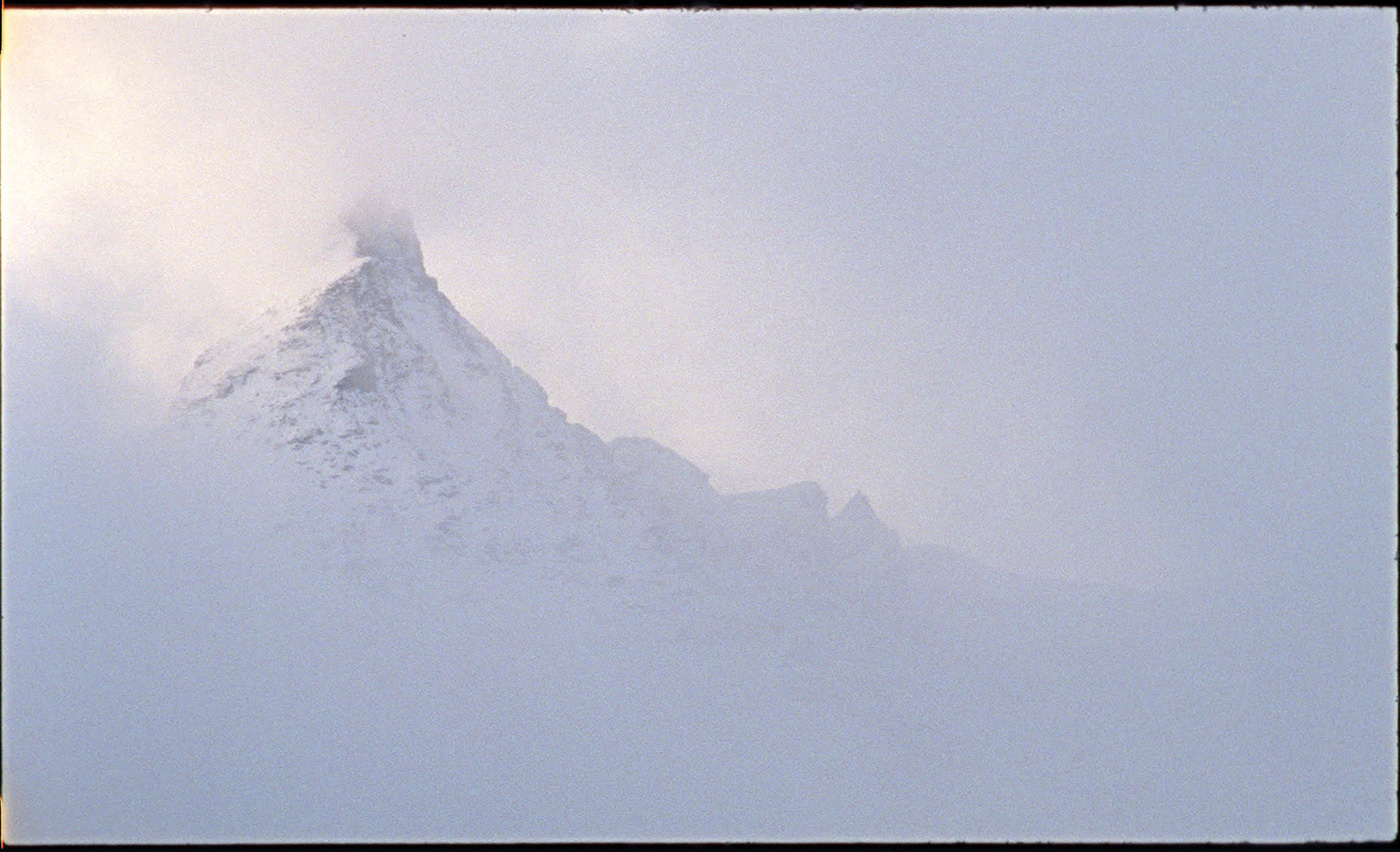
À la frontière franco-italienne, un tunnelier perce la montagne et assèche ruisseaux et fontaines sur son passage. Transalpin est une descente des sommets enneigés aux vallées où résonne la colère des villages.
Clara Nicolas et Léo Gatinot intègrent les départements Son et Image de la Fémis en 2020. Après avoir collaboré sur plusieurs fictions et documentaires, ils réalisent un film ensemble pour la première fois à l'occasion de leur projet de fin d'études, Transalpin.

Nemanja Nikolic
The Plot
Animation | 4k | color | 9:43 | Serbia | 2021
The Plot (2021, 9’43’’) is a sound film composed of approximately 5,000 drawings, created over a period of three years and animated frame by frame. The drawings reproduce fragments from Cold War–era films produced by major Western studios (USA, UK), rendered on pages from books, maps, and encyclopedias published in socialist Yugoslavia during the same period. While the cinematic images originate from Western popular culture, their drawn backgrounds consist of theoretical texts on socialism and cartographic documents depicting cities, borders, and territories of that time. During the Cold War, Yugoslavia occupied a unique position: despite being a socialist country, Hollywood films, television series, jazz, rock’n’roll, and Coca-Cola were widely present in everyday life. American cinema, as a dominant form of entertainment and ideological projection, shaped collective imagination, allowing Yugoslav audiences to dream the American dream within a non-American system. Growing up in the aftermath of this contradictory reality profoundly influenced my worldview. Through scenes of nightmares, pursuits, fear, and surveillance, the film unfolds as a surreal collage that exposes the entanglement of political, social, and cultural histories. Rather than offering a fixed conclusion, The Plot invites viewers to navigate multiple layers of meaning and experience.
Nemanja Nikoli? (b. 1987) graduated from the Faculty of Fine Arts in Belgrade, Department of Painting (2010), where he also completed his PhD (2019). He is currently Associate Professor at the same faculty and the initiator of U10 Art Space, an independent artist-run platform dedicated to supporting emerging contemporary artists. Since 2010, Nikoli? has held numerous solo exhibitions, including at the Cultural Center of Belgrade; Galerie Dix9 Hélène Lacharmoise, Paris; the Museum of Contemporary Art of Montenegro, Podgorica; ERD Gallery, Seoul; Rima Gallery, Belgrade and Kragujevac; B2 Gallery, Belgrade; and U10 Art Space. He has participated in many group exhibitions, notably at CaixaForum (Madrid and Barcelona), Kunsthal KadE (Amersfoort), Künstlerhaus (Vienna), the 56th, 57th, and 60th October Salon (Belgrade), the 20th Pan?evo Art Biennial, and the Cinémathèque Française (Paris). His awards include the Special Award of the 60th October Salon (2024), the Drawing Award of the Association of Fine Artists of Serbia (2021), and the Vladimir Veli?kovi? Foundation Drawing Award (2011). His works are included in several international public and private collections. He lives and works in Belgrade.

Lisette Olsthoorn
Ghost Workers
Experimental doc. | 4k | color | 26:23 | Netherlands | 2024
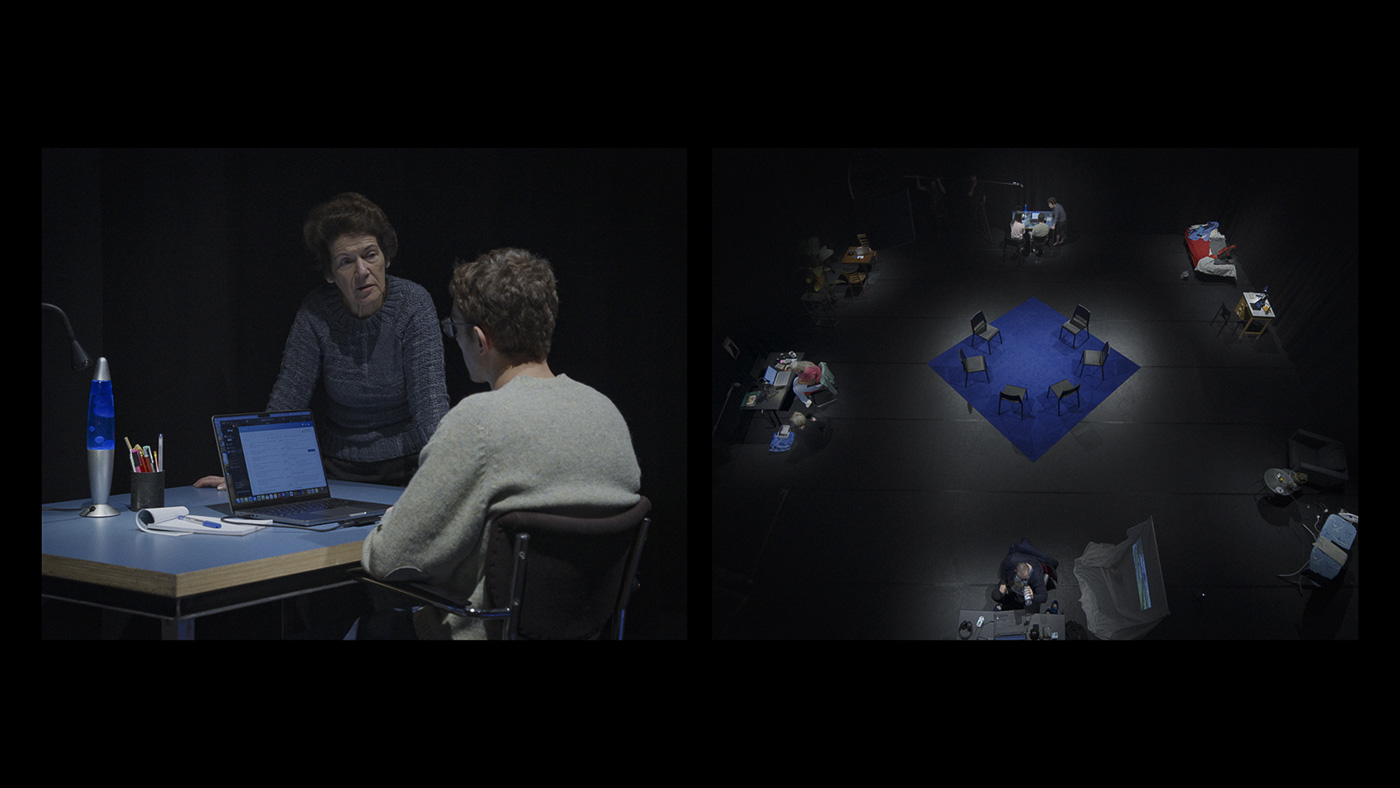
Ghost Workers is a cinematic research project into the people conducting the often hidden labor necessary to make artificial intelligence work. Working from home, not being recognized as a worker by the platforms that they work for and being misunderstood by family and friends all together creates strong feelings of isolation. Therefore, the filmmaker invited six workers from across Europe to share their work experiences with her and with each other. Focusing on the theme of isolation and recognition as a 'real worker,' the film engages in a collective conversation about this type of work.
Lisette Olsthoorn got her BA in writing and visual arts at Gerrit Rietveld Academy, followed by an MA at Dutch Film Academy (both Amsterdam). She gained script development skills from Binger Institute (Amsterdam) and Franz Rodenkirchen (Berlin) and worked as a script supervisor for renowned Dutch film directors Nanouk Leopold and Paula van der Oest. Her work concerns hybrid film and inventive research. Being intrigued by everyday speech and gesture, her work often evolves around staging seemingly random interactions between people, revealing layers of common experiences and political tensions. For her re-enactments she works both with the persons the speech and experiences originated from as well as occasionally with actors, yet always staying close to the reality she has drawn from. For her cinematic research into precarious labour titled Fantasies on how to Strike she was a 2022 participant at SIC SoundImageCulture (Brussels). The first film made as part of this ongoing project was exhibited and acquired by the Zeeuws Museum (Middelburg, NL). In 2023 she was invited by Erasmus University (Rotterdam) to conduct cinematic research on the topic of ghostwork. From 2024 she is collaborating with editor Kersti Grunditz Brennan (LUCA School of Arts, Brussels, BE) for In This Together, her film on Uber cab drivers. In 2025 / 2026 she is a participant of ReCENTR Europa Lab (Leiden University, KU Leuven, Bologna University) on multimodal research practices. From 2026 she conducts PhD research on collaborative film practices titled Cinematic explorations at work (LUCA School of Arts / KU Leuven, BE).
Uriel Orlow
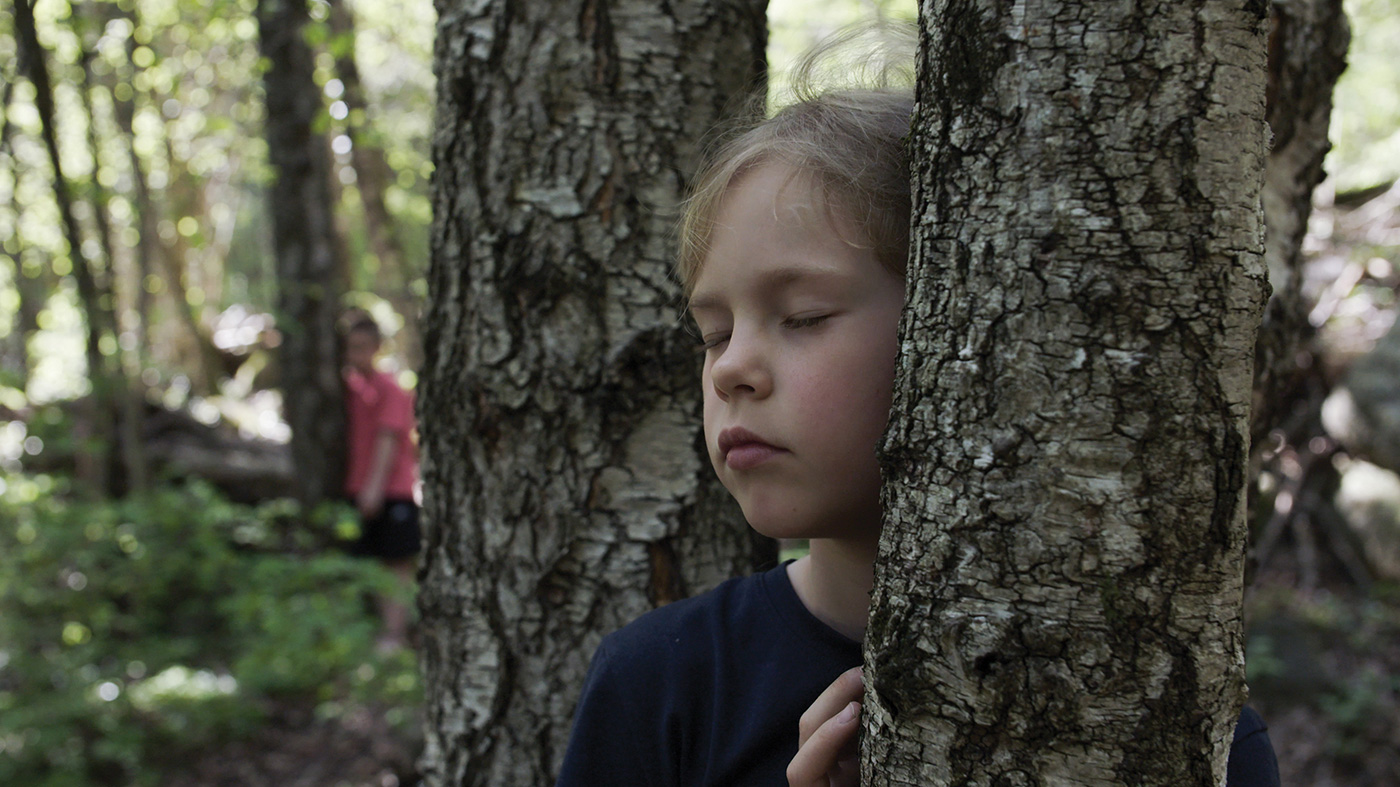
Forest Futures
Experimental film | 4k | color | 28:0 | Switzerland, Italy | 2024
Forest Futures is a poetic and thought-provoking film that visits ancient forest ecosystems from the earth’s past, imagines future forests in the face of changing climate and shows the forest as a multi- species school, where children practice more-than-human co-existence. Forest Futures explores the forest as a site of deep time, ecological transformation, and interspecies learning. Set in the mountainous region of South Tyrol, the film traces a journey from ancient fossilized forests that thrived over 280 million years ago through to speculative visions of future forests in a rapidly warming world. Combining scientific research with imaginative storytelling, the film reimagine the forest as both a teacher and a protagonist.
Uriel Orlow is a Swiss-born artist who lives and works between Lisbon, London and Zurich. In 2023 he was the recipient of the prestigious Prix Meret Oppenheim/ Swiss Grand Prix of Art. Orlow’s work is presented widely in international survey shows including at Dunkerque Triennale, Kochi Biennale, 12th Berlin Biennale for Contemporary Art, Kathmandu Triennale, Manifesta 12, Palermo, 2nd Yinchuan Biennial, 13th Sharjah Biennial, 7th Moscow Biennial , EVA International, Limerick, 2nd Aichi Triennale, Nagoya , Bergen Assembly, Manifesta 9, 54th Venice Biennale and elsewhere. Recent solo exhibitions include Galeria Avenida da Índia, Lisbon (2025); MCBA, Lausanne (2024); Casa da Cerca, Alamada (2022); Kunsthalle Nairs, Scuol (2021); La Loge, Brussels (2020); Kunsthalle Mainz, Germany (2020); Privas Art Centre, France (2019); Les Laboratoires d’Aubervilliers, Paris (2018); Market Photo Workshop & Pool, Johannesburg (2018); Kunsthalle St Gallen (2018) and many others. Orlow’s films been screened at Tate Modern, London; the International Short Film Festival, Oberhausen; Tank.tv; Whitechapel Gallery, London; Locarno Film Festival; Videonale Kunstmuseum Bonn; BFI London; The BBC Big Screen, Manchester; Arnolfini Bristol; Espace Croisé CAC Roubaix; and at the Biennale of the Moving Image, Geneva, and others.
Yana Osman, Anton Khamchishkin
Pwéra úsog
Experimental doc. | mov | color and b&w | 19:50 | Afghanistan, Russia | 2025
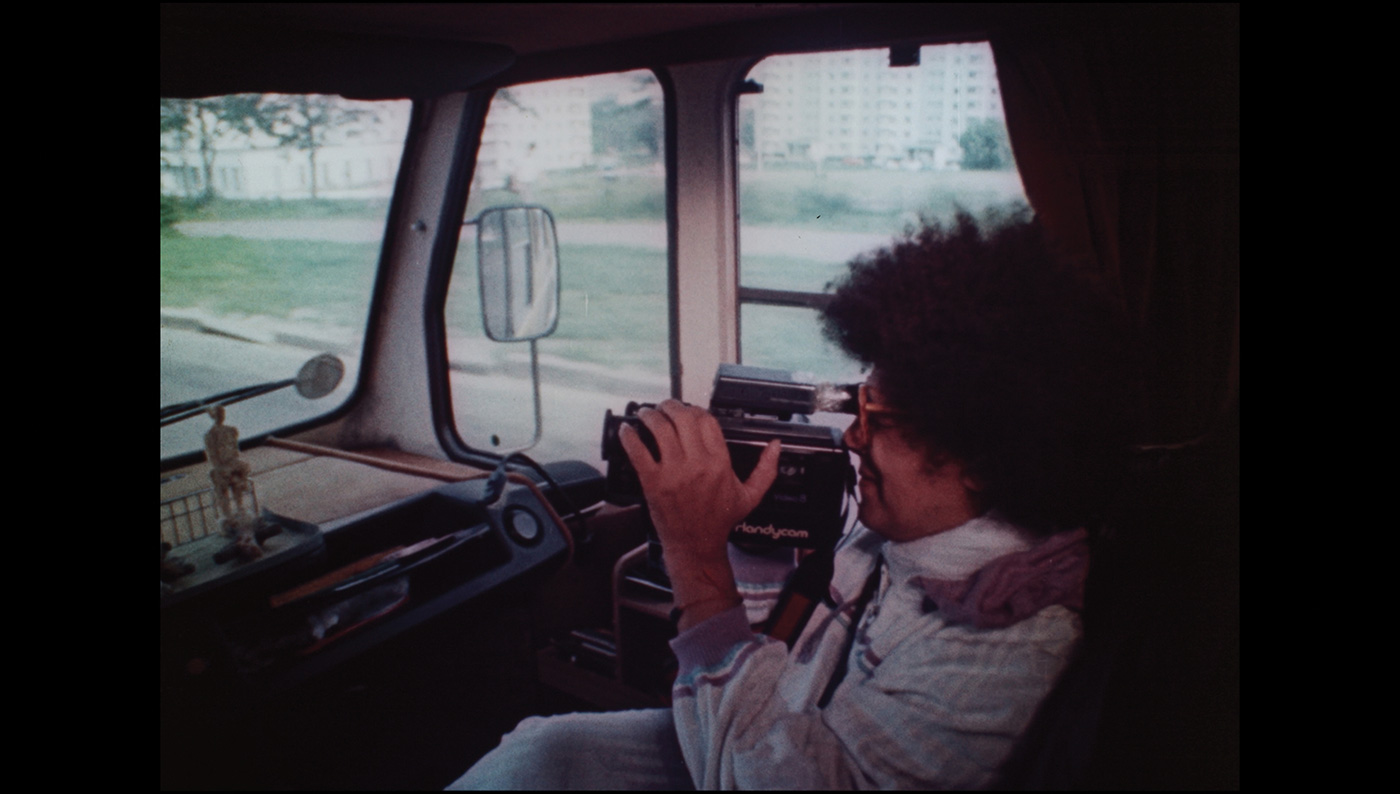
Pwe?ra u?sog (2025). 19 min dir. Yana Osman, Anton Khamchishkin In 1945, in Paris, the Women’s International Democratic Federation (WIDF) was founded. According to historian Francisca de Haan, it was “the largest and probably the most influential international women’s organization of the post–World War II era.” Today, assessments of the organization’s legacy remain contested. Some scholars, citing reports from the FBI and the House Un-American Activities Committee, describe WIDF as a communist attempt to manipulate women. Others view it as a movement advocating for women’s rights, and researchers like Elizabeth Armstrong note WIDF’s role in anti-colonial and anti-racist struggles led by women in Asia, Africa, and Latin America. In 1987, during the Perestroika era, WIDF organized the World Congress of Women in Moscow, under the slogan: “Toward 2000 — Without Nuclear Weapons! For Peace, Equality, Development!” The congress brought together 2,800 women from 150 countries. Among them, there was the protagonist’s grandmother, an interpreter who collected words from global conversations that had no equivalents in other languages. Revisiting her notes, archival footage, and sites of official delegations, the protagonist is guided by these fragments to a question: what words can capture the present, when language itself slips away, dissolves, and borrowed slogans drown out one’s voice?
Yana Osman, Anton Khamchishkin (Afghanistan, Russia) — artists and filmmakers. Work with gaps in storytelling, filling in the unsaid and uncovering narratives suspended between real and imaginary, facts and speculation. Their films were selected at Hong Kong Film Festival, DOK Leipzig, Slamdance, Rencontres Internationales Paris/Berlin, as well as supported by CNC, Cité Internationale des Arts, Usage du Monde au 21ème siècle, Institut Français, among others.

Jurgen Ostarhild
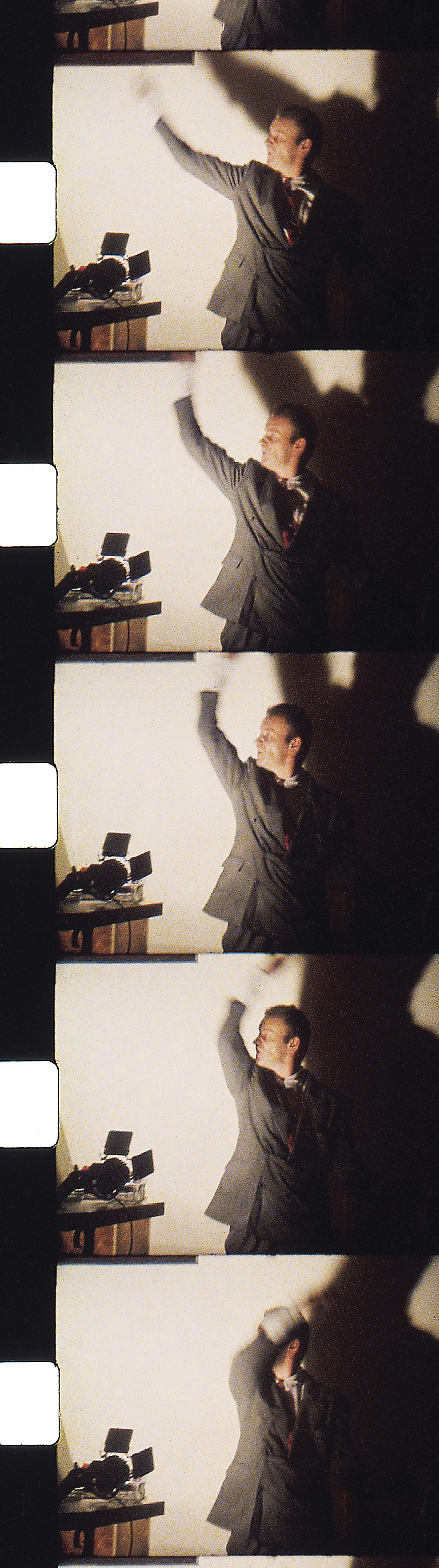
KIRCHE, KIPPI, KOMA
Documentary | super8 | color | 7:0 | Germany | 1990
KIRCHE, KIPPI, KOMA (drunken camera vs. drunken lantern) A super-8 film of a mock crucifixion with MARTIN KIPPENBERGER as CHRIST. The social liaison of alcohol and christianity; the proximity is not just territorial. Shot in Umhauen, Austria, 1990. Transferred to video and edited in 2010. soundtrack provided by ACHIM KUBINSKI: LA PASION SEGUN SAN MATEO by J.S. BACH. JURGEN OSTARHILD, 7 min. The soundtrack is LA PASION SEGUN SAN MATEO -J.S. BACH, is reference to the crucifying scene in a beer tent. At the time KIPPENBERGER was working in Austria on the "FERD THE FROG" sculptures (crucifyed frog with beermug). Drunken lamp vs. drunken camera is a reference to the DRUNKEN LAMP sculpture appearing between crossing lines of the beer tent.
Jurgen Ostarhild, born in Überlingen, Germany was self-taught as a photographer and recognised as an artist by the Verband bildender Künstler, Baden-Württemberg in 1981. Since 1984, he worked internationally as a photographer before settling in Paris for 20 years until 2013. Jurgen Ostarhild gained commercial acclaim photographing editorials, celebrities and advertising for international brands, such as Levis, Adidas, L’Oréal and magazines like ID, Jalouse, Wad, Paper Sunday Times, In 1995, Ostarhild became one of the pioneers of Photoshop and was successful with his colour and object manipulation. This experimentation found expression in visual art work, which questions the essence of photography and the photographer-subject-technology relationship in the digital age. Although the logic of Ostarhild’s work, which lies in creating a technical image of reality by pushing a trigger, has always remained the same, in the last decade, the computer has become his image producing machine of choice. Today’s reality largely consists of algorithms and code. Ostarhild produces minimal, graphic text, color and screen work which explores the boundaries of direct visual language in the post-photographic landscape. He deconstructs color by showing it as code itself, which brings on a new level of reality, resulting from the process of digitalisation.