Catalogue 2025-2026
Below, browse the 2025-2026 Rencontres Internationales catalogue, or search the archives of the works presented since 2004. New video clips are routinely posted and the images and text are regularly updated.

Charlotte Dalia
Speechloss
Experimental film | 4K | color | 15:0 | France | 2023
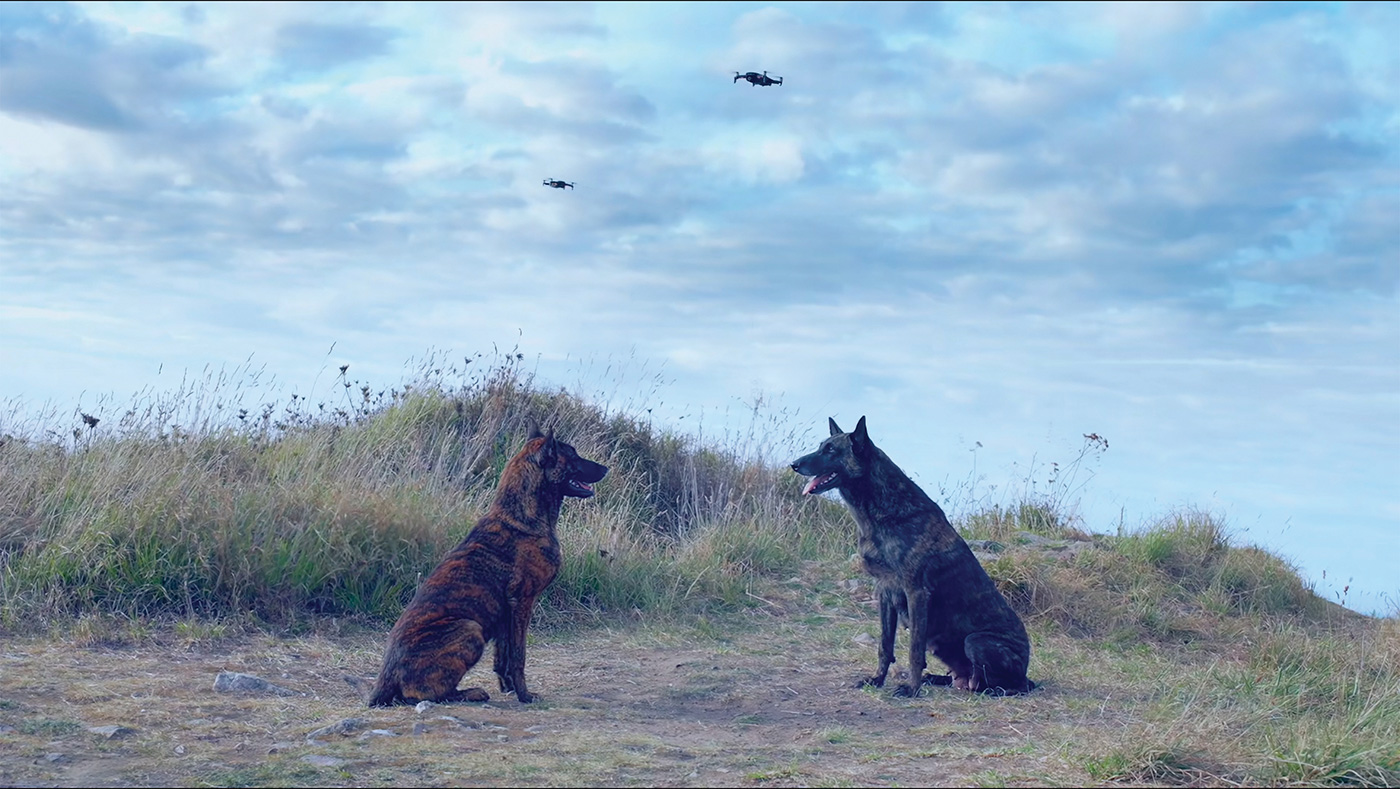
SPEECHLOSS is a film inhabited by isolated characters, out of sync and searching for direction. In an eerie seaside atmosphere, we come across a jogger, a bodybuilder, dogs and a strange giant organ. Speechloss is a progression of four scenes in which both the wind and a powerful desire to feel alive blow. For each of them is an abandoned AI, waiting to be activated.
Charlotte Dalia was born in 1993. She graduated from the Institut Supérieur des Arts de Toulouse. A visual artist, video maker and film director, her research focuses on both the formal and narrative effects of cinema. Steeped in the principle of the “cinémonde” theorised by Jean-Luc Nancy, she uses cinema as a repertoire of signs that “opens the inside onto itself.” She has taken part in numerous group exhibitions and has been invited to produce two solo shows. Continuing her investigations into the writings of reality through the forms of fiction, she trained in documentary writing with Ty Films and Films en Bretagne. She is currently developing ALMERICA, a project combining climate crisis and film sets, as well as writing a medium-length film following on from SPEECHLOSS, in order to pursue and expand its universe.
Eline De Clercq, Anne Reijniers
Gesamthof / A Lesbian Garden
Experimental film | mov | color | 15:0 | Belgium | 2021
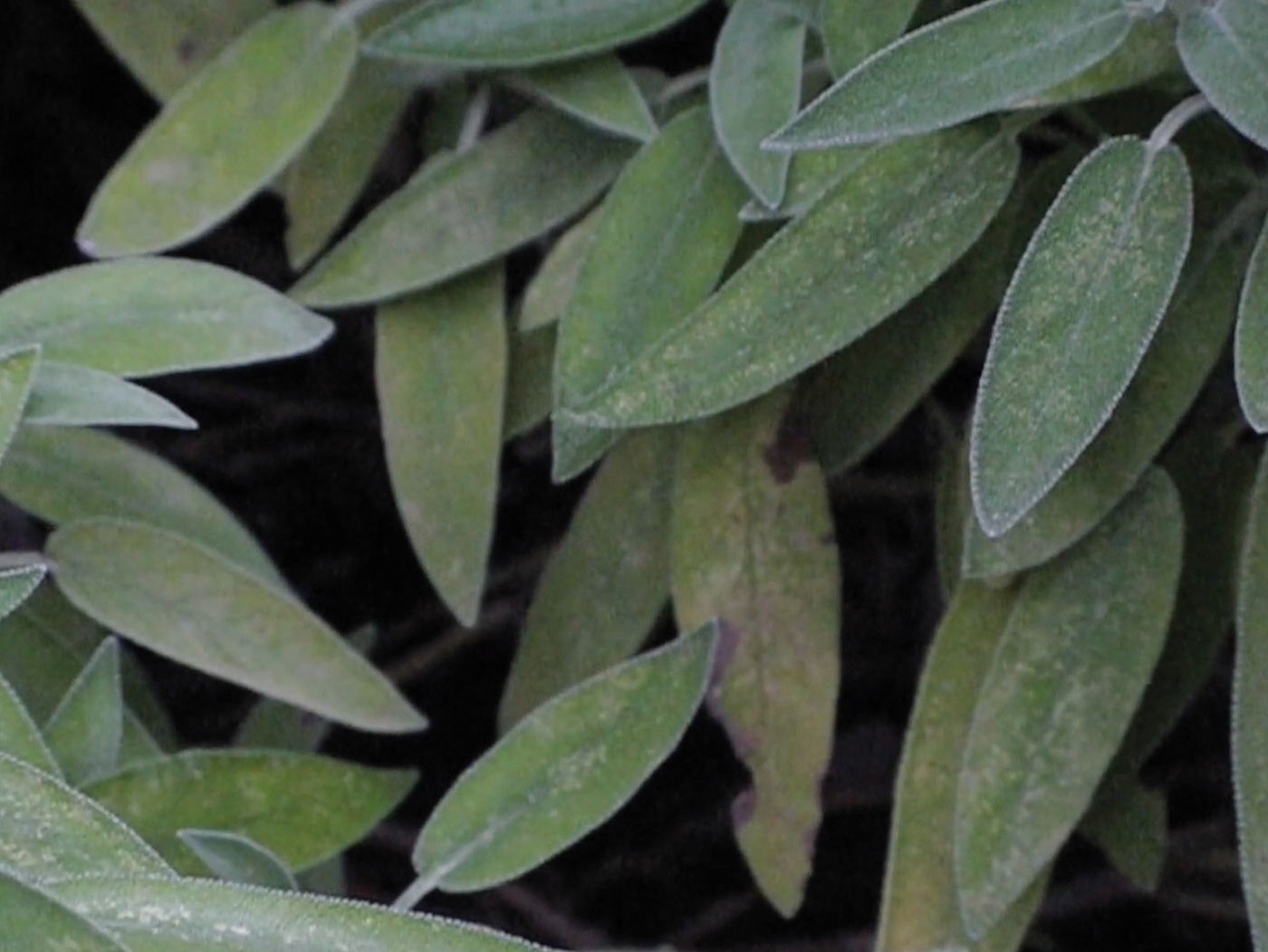
This short film talks about the Gesamthof / A lesbian garden, an art-nature project in Antwerp between the walls of an old monastery. In this audiovisual time document, we follow a guided tour by Eline De Clercq, the driving force of the garden project. The garden provides an entry point to talk about diverse topics such as colonialism in botany, the ambiguity of naming, the social expectations of women and the search for a lesbian identity. This garden is inspired by the books of ecofeminists and other writers, like Donna Haraway, Robin Wall Kimmerer, Jamaica Kincaid, Virginia Woolf and many others. The collaboration between the two artists Anne and Eline started in the Gesamthof, where the two first met, and continues today in various gardens.
Anne Reijniers (1992, Belgium) is a filmmaker based in Antwerp. Her collaborative practice questions colonial history, the occupation of public space and the ethics of collaboration. Anne holds a Master's degree in Audiovisual Arts from LUCA School of Arts in Brussels and KASK in Ghent. Her collaborative films, made with Collectif Faire-Part, have been screened in several national and international film festivals and exhibitions. With the film Faire-part, she won several awards, including at the Montreal International Documentary Festival, the Congo International Film Festival, and the Brussels Art Film Festival. Eline De Clercq (1979, Belgium) in Antwerp I have a studio next to a monastery garden where I cared for the Gesamthof from 2019 to 2025. Trained as a painter I expand my practice in other mediums like gardening, film, writing, ceramics. I like to work in collaboration with other artists and often create community related events like the Homesick Tea Gathering. Several of my projects focus on antiracial and anti-misogynist topics, with extra care for intersectional realities. Since 2022 I work as an artistic researcher at the Royal Academy of Fine Arts Antwerp.
Abri De Swardt
Kammakamma
Video installation | 4k | color | 16:54 | South Africa | 2024
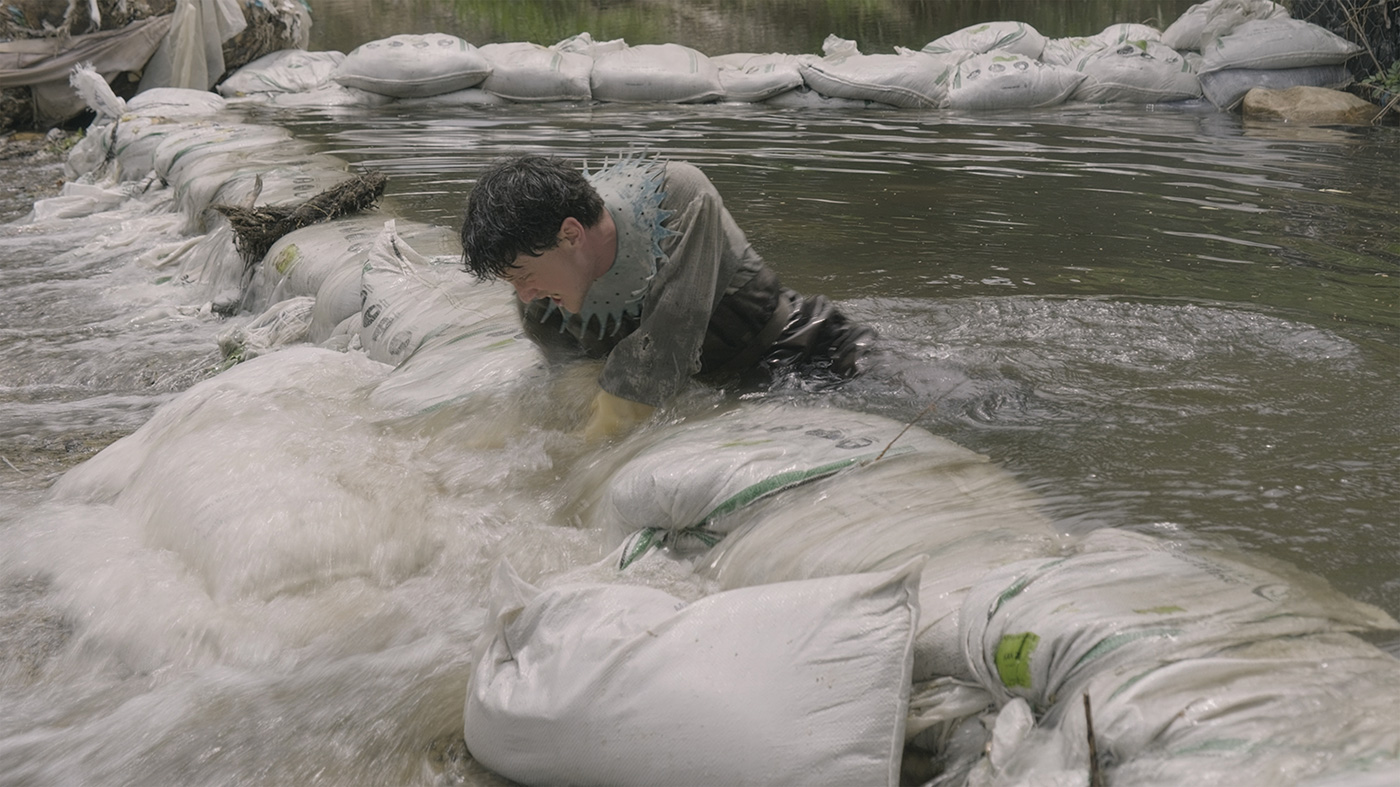
If the river’s mouth could speak, what would it say? Enacting the possibility of river mouths as storytellers and historiographers, Kammakamma is the opening episode of the second work in a moving-image trilogy exploring the Eerste River in South Africa as witness and carrier of submerged narratives. Its title evokes slippages between the Khoekhoe terms for water (//amma) and similitude (khama), with 'kamma' absorbed into Afrikaans as 'make believe.' Through three interconnected chronicles by Abri de Swardt, poet Ronelda S. Kamfer, and historian Saarah Jappie, the river becomes a saturation point for understanding climate and catastrophe. In this episode, De Swardt probes a founding myth of Afrikanerdom through Hendrik Biebouw, a teenage idler who in 1707 attacked a Dutch East India Company watermill at the river, drunkenly declaring himself an “Africaander” – then a term reserved for enslaved, manumitted, or indigenous peoples. Biebouw’s declaration is inextricable from the river where it was spoken, from wine as settler-colonial agent, and from the instability of language itself. Recast in purgatory, he sifts sand from sandbags mined around the river mouth back into the blocked confluence of the Eerste and Plankenbrug Rivers, his delirious oratory jumbling Afrikaans, Dutch, German, and Malagasy. Interludes filmed after flooding show the river as both wild and engineered, while tableaux drawn from swimming and life-saving manuals foreground burden and suffocation. Through double synchronisation De Swardt frames perception itself as intoxicating disorientation.
Abri de Swardt (b. 1988, Johannesburg) is an artist based in Johannesburg, South Africa. Working across video, photography, sculpture, and performance, De Swardt’s practice challenges the ongoing effects of settler-colonial whiteness and masculinity in Southern Africa, and perceptions of queerness as ‘unnatural’ and ‘unAfrican’, through joining historiography with fiction, auto-ethnography, ecology, desire, and the fantastical. De Swardt’s work has been exhibited, performed, and screened at the Norval Foundation, Cape Town; Kunstverein Braunschweig; Goldsmiths Centre for Contemporary Art, London; Rupert Museum, Stellenbosch; National Gallery of Art, Vilnius; Institute of Contemporary Arts, London; and The Centre for the Less Good Idea, Johannesburg, amongst others. Solo exhibitions include POOL x Field Station, Cape Town (2024); POOL, Johannesburg (2018); MOT International Projects, London (2013); and blank projects, Cape Town (2011). De Swardt has undertaken residencies at Rupert, Vilnius; Hordaland Kunstsenter, Bergen; and the Nirox Foundation, Cradle of Humankind. In 2022, he was awarded a Social Impact Arts Prize and nominated for the Foam Paul Huf Award. He holds an MFA in Fine Art from Goldsmiths, University of London, and is currently a 2025–2026 artistic fellow at Braunschweig Projects, Hochschule für Bildende Künste Braunschweig.

Bea De Visser
The Sonic Gaze
Multimedia installation | 4k | color | 6:10 | Netherlands | 2025
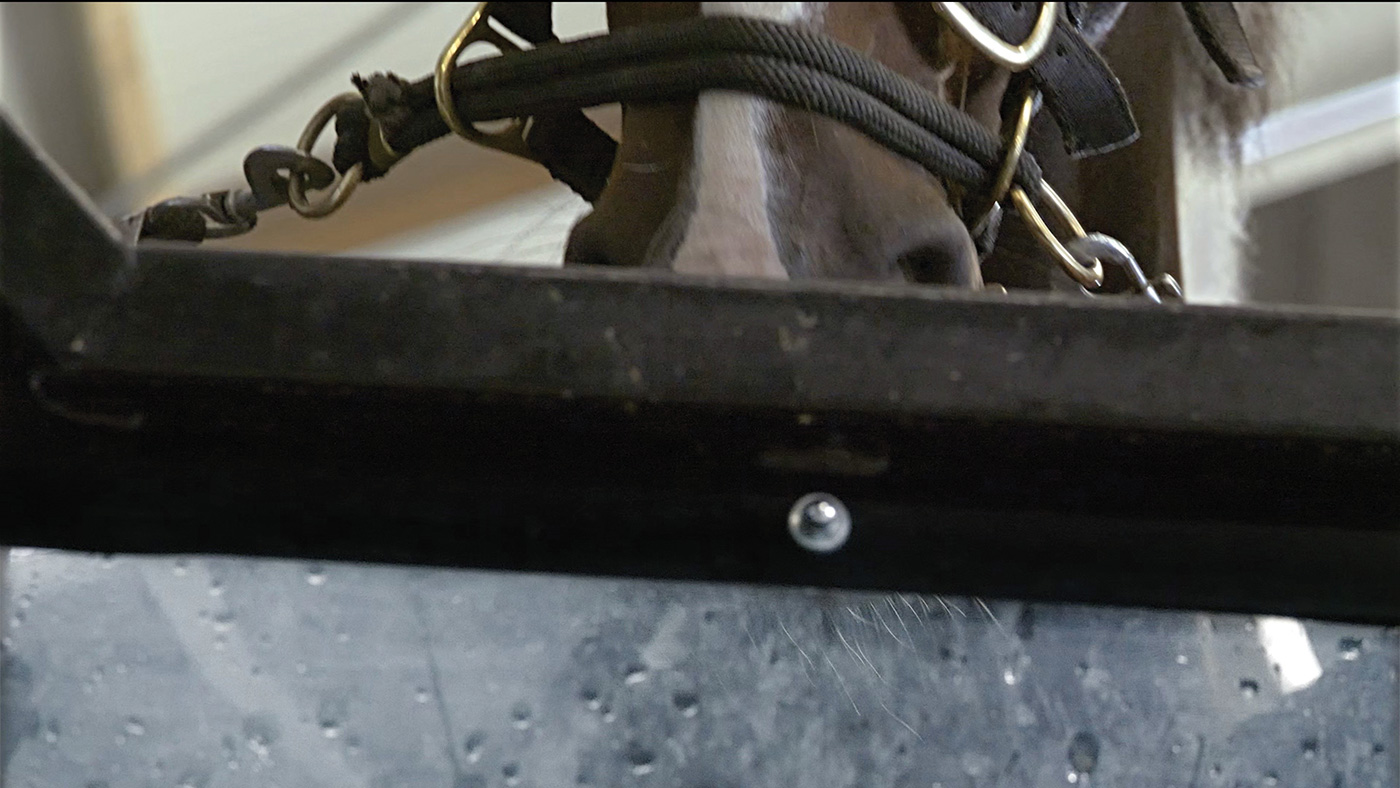
A horse is placed in an enclosed space on an aqua trainer treadmill, doubly enclosed by only the sound of splashing water. We hear much more than we see due to the recorded frequencies and the ambient range of the horse's hearing. Through pitch compression, specialized recording equipment and sound recordings far from the set, the horse's auditory experience has been made audible to humans. Its result is an acoustic representation of the animal's subjective perspective. Through the horse's sonic filter, we hear a different world, yet equally real, than the one we see on screen. While we watch with our human gaze, we hear the horse's complex sonic reality.
Bea de Visser is known for her film art, installation work and sound performances. Her work can best be described as a digital media-based practice -from the perspective of a painter and storyteller who sees the world through different lenses. AnimaIs are a recurring motif in her work. Her latest works focus on non-anthropocentric storytelling. She mixes fiction with the everyday and emphasizes structures of power, dominance and control. Her work seduces the viewer through a rich audiovisual language, exploratory in its narrative. Bea de Visser comes from a background of painting and a study electro acoustic sound. She initially began her career as a sound and performance artist in the trendy club scene and artist’s spaces, early 1980-ies. Bea de Visser attended the Rijksakademie van Beeldende Kunsten in Amsterdam (1993-1995).
Arthur Debert
La Conférence des Instruments Savants
Experimental video | 4k | color | 9:1 | France | 2024
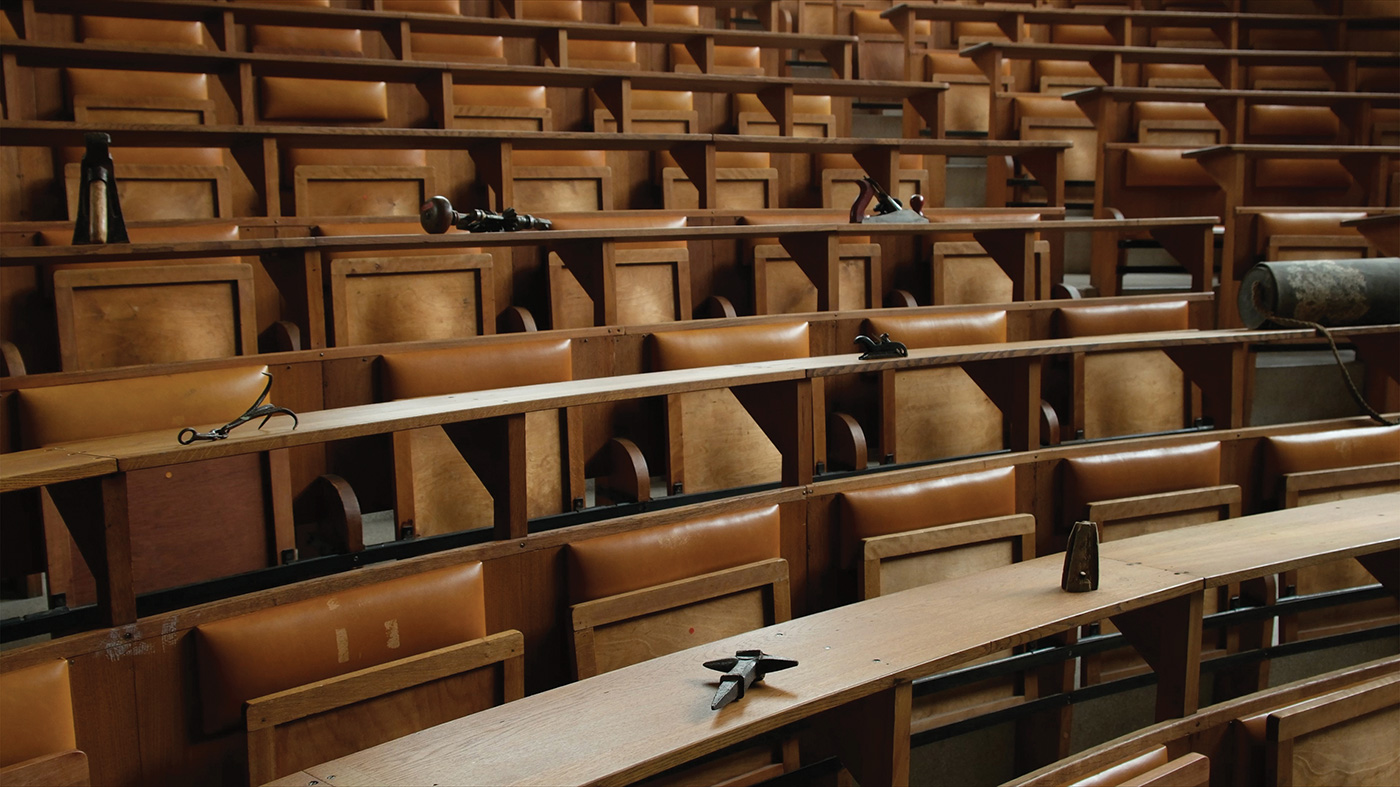
In a wooden amphitheatre built in 1933 for the study of animals and plants, a group of ancient tools attend a lecture. The talk seems to be about animals and their movements, but the tools gradually come to understand that it’s about the living beings that have given them their names and sometimes even their shapes.
Born in Paris in 1990, Arthur Debert lives and works between Nancy and Berlin. Arthur Debert’s protean practice is rooted in collective work and exchange. Anchored in a contextual approach, his work takes shape through travel, encounters and multiple collaborations. Central to these exchanges is the question of the transmission and survival of knowledge. Objects encountered in the field are seen as both witnesses and bearers of epistemological narratives to be deciphered. To reveal the different cultural layers sedimented within them, the artist disrupts their temporal linearity through shifting spatial settings and collective activations. Installations, videos and editions then fix the ephemeral, indeterminate state of the resulting lived experiences. Arthur Debert is a graduate of the École de l’Image in Épinal (2011), the École Supérieure d’Art de Lorraine in Metz (2013) and participated in the École Offshore in Shanghai (2014-2015), a research program of the École Nationale Supérieure d’Art et de Design in Nancy. His work has been shown at Centre Dürrenmatt Neuchâtel (2025), Triennale de la Jeune Création (Luxembourg, 2013 and 2021), Koraï (Cyprus, 2023), Ann Arbor Film Festival (Michigan, 2022), Berlin Art Prize (2018) and Berlin Independent Film Festival (2023).

Luciana Decker Orozco
Puro Andar
Experimental doc. | 0 | color | 13:0 | Bolivia | 2024
A journey into the underworld begins in our own entrails, which are formed by the flesh we consume, and the crumb balls softened and shaped by the saliva of mothers. This film explores the unfolding of time, from the intimate rhythm of digestion to the vast expanse of deep time—stalagmites forming over millennia, fossilized dinosaur tracks, and the echoes of primal expressions, akin to growling. Inspired by the Puro Andar chapter of Gamaliel Churata’s El Pez de Oro, where he says that "we all carry the dead alive; that the dead live”.
Bolivia, 1993. She studied anthropology at UCB (Bolivia) and completed an MFA in Film at the University of Wisconsin-Milwaukee on a scholarship. Currently, she delves into the spectral essence of places, objects and matter through intimate interactions and meticulous observation. She engages in this process by both revealing and concealing her presence, investigating the interstitial spaces where mediation and relationships unfold.
Stéphane Degoutin, Gwenola Wagon
Apple
Experimental film | mov | color | 4:0 | France | 2025
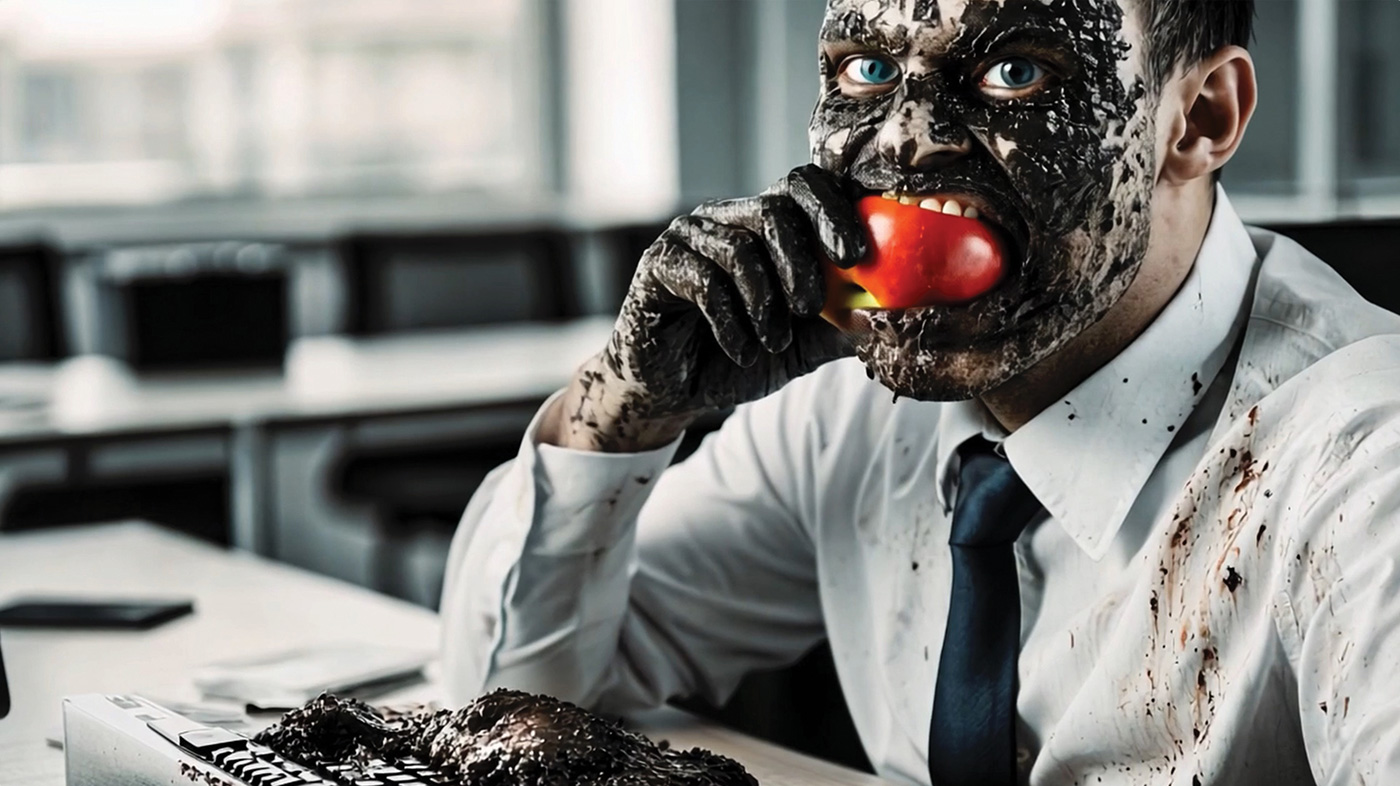
Everything is Real shows the reddest apples, the greenest call centers, the server rooms with the most cables, the smiliest employees, the delivery drivers with their most beautiful parcels, the most efficient volunteers, the biggest mountains of waste - but pushes them to the extreme of stereotyping: insensitively, stereotypes go to extremes.
Stéphane Degoutin is an artist and researcher. His work explores “dark systems,” the structures that often go unnoticed yet organize our lives: from air conditioning to international airports, from music for houseplants to urban infrastructures. He undertakes a form of reverse engineering of these hidden logics, in order to imagine other ways of thinking and acting. Gwenola Wagon is an artist and researcher. She is a University Professor and teaches at the Sorbonne School of Arts at Paris 1 University. Through installations, films, performances and books, she imagines alternative and paradoxical narratives for thinking about the contemporary digital world.


Anne Deguelle
ghost dance
Video | mp4 | color | 1:15 | France | 2025
anne deguelle ghost dance Dans les coulisses du Centre Pompidou à Paris, se jouent des improvisations de rap et break dance à l'insu du musée. Les adolescents réunis à l'extérieur profitent de l'effet miroir des immenses vitrages pour performer leurs imaginaires sur la scansion bpm du rap diffusé sur leurs portables. A l’intérieur du musée, au dos des cimaises, se glissent ces images fantômes, traces éphémères des ombres portées clandestines révélées avec la complicité du soleil. Les figures mouvantes de ces jeunes danseurs ignorent le ballet de leurs ombres habitées par le rythme qui les transcendent. Captée à son tour par un portable, la Ghost dance renoue avec le mythe de la caverne des débuts de notre humanité.
Note biographique anne deguelle ghost dance Anne Deguelle est une artiste inclassable qui recourt à des médiums différents : la photographie, la vidéo, l'installation, les projections lumineuses ou encore les créations sonores avec une prédilection pour la lumière; elle mobilise tous les moyens possibles pour explorer les signes du réel qu'elle tente de décrypter en réinvestissant l'histoire, en jetant le trouble dans la perception de l'information et de notre mémoire. Son oeuvre est présente dans les collections du Centre Pompidou, MNAM et Bibliothèque Kandinsky, dans celles du Musée d'art moderne Weserburg Fonds Anne Deguelle à Bremen (D), dans celles du musée et du Frac Les Abattoirs à Toulouse, du FNAC Fonds national d'art contemporain, de la collection de la Ville de Paris, des FRAC Basse- Normandie, FRAC Auvergne, et FRAC Occitanie, du MACVAL, des Fonds de livres d'artistes des Musées Serralves Porto et Reina Sofia Madrid, du Fonds Beinecke à la YaleUniversity Des expositions personnelles ont présenté son œuvre au Printemps de Septembre-Toulouse, au Freud Museum à Londres, au Musée d’art moderne Weserburg à Brême, au FRAC Auvergne, au Centre d’art abbaye Maubuisson, aux centres d’art de Gennevilliers, de Vitry, l’artothèque de Caen, galeries Dix9 Paris et Anne Barrault.
Sebastián Diaz Morales
One Glass Eye Melting
Experimental video | mov | color | 13:0 | Argentina, Netherlands | 0
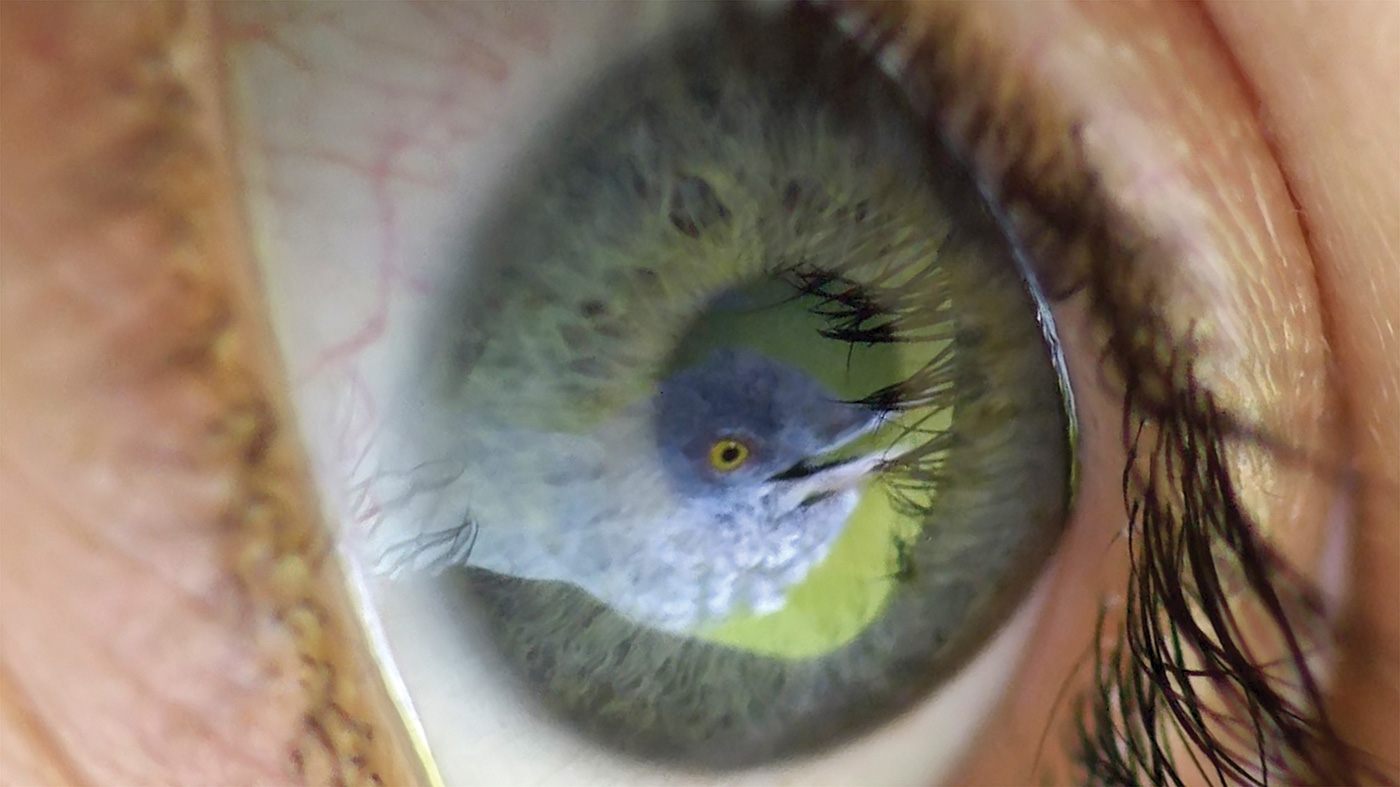
One Glass Eye Melting conjures the common imaginary of dystopia to rearticulate it in search of new possibilities. A close-up of a rotating eye gazes back at the viewer, its pupil reflecting a montage of disasters—war, natural catastrophe, and mundane accidents—juxtaposed with scenes of regeneration: microbial life, cosmic expansion, and technological evolution. Filmed in a raw, single-shot sequence with minimal post-production, the eye becomes both a mirror and a fractured “memory container,” destabilised by glitches, scratches, and analogue/digital noise. The work interrogates the act of looking itself, transforming reality into something surreal yet unnervingly familiar. As the eye spins 360 degrees, the pupi’s reflection remains fixed, anchoring chaos and renewal as cyclical, interdependent forces. One Glass Eye Melting reframes disaster as inseparable from rebirth, arguing that collapse harbours the potential to reimagine—and rebuild—our narratives. Rather than revisiting catastrophe, the work asks: What do we do with these images of disaster? The work summons the collective imagination of dystopia, rearticulating its imagery in pursuit of uncharted possibilities. Part of the series Bajo el cielo cayendo (Under the Falling Sky), which explores the tension between systemic disaster and fragile hope.
Sebastián Díaz Morales was born in Comodoro Rivadavia, Argentina, in 1975 and lives and works in Amsterdam. He attended the Universidad del Cine de Antín in Argentina from 1993-1999, the Rijksakademie van Beeldende Kunsten in Amsterdam from 2000-2001, and Le Fresnoy Studio des Arts Contemporains in Roubaix, France from 2003-2004. Díaz Morales’s examination of perception and reality is based on the assumption that reality itself is by nature highly fictional. Thus, his films do not simply transport the viewer into another, surreal, or phantasmal realm, but they strip reality of its familiarity and distort it, making it seem like something else. With Diaz Morales, the viewer’s imagination does not function as a basic counterpart to the real. Rather, it operates as a force capable of evoking space and producing it diegetically, one that, beyond generating a direct visual impression, fills in the gaps in seeing and, as the film unfolds, gradually reveals to the viewer the constructedness of what we call reality. Reality is presented here as a phantasm, as something that always eludes its defining in images. It is therefore always “a little bit ahead” of the image and the viewer’s gaze. His work has been exhibited widely at venues—such as the Tate Modern, London; Centre Pompidou; Stedelijk Museum and De Appel, Amsterdam; Le Fresnoy, Roubaix; CAC, Vilnius; Art in General, New York City; Ludwig Museum, Budapest; Biennale Sao Pablo; Biennale of Sydney; Miro Foundation, Barcelona; MUDAM, Luxemburg; Calouste Gulbenkian Foundation, Lisbon; the Biennale di Venezia and Documenta Fifteen.

Michael Dietrich
zone of silence (scream machine)
Experimental film | hdv | color | 9:30 | Austria | 2025
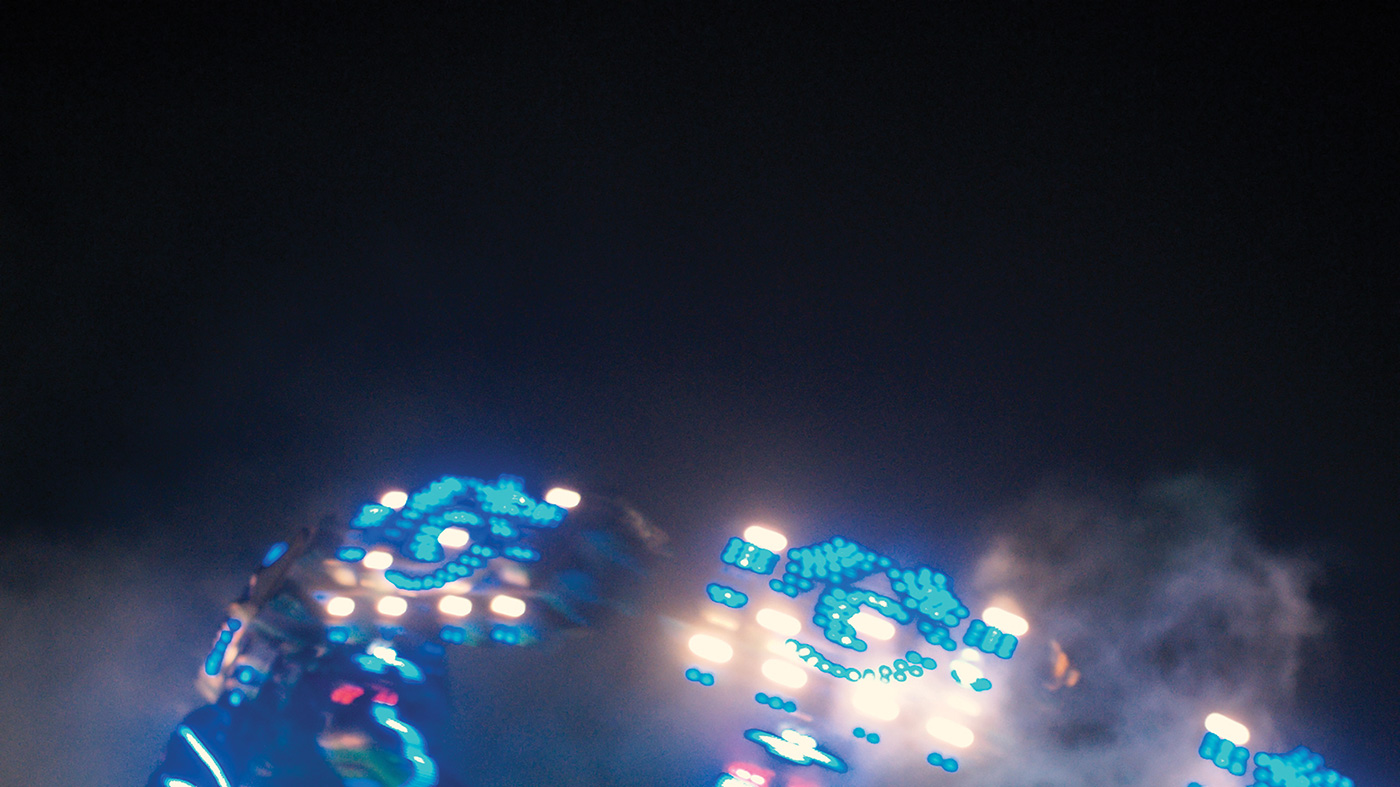
The experimental film Zone of Silence (Scream Machine) explores the interplay between light, fog, and resonance to depict inner isolation and psychological disorientation. The city is enveloped in a dense atmosphere, while reflections of light and muffled sounds create a “zone of silence” in which orientation and communication begin to dissolve. Inspired by historical maritime navigation problems—where foghorns became inaudible under certain weather conditions—the film translates this phenomenon into the realm of the human unconscious. Theodor Reik’s psychoanalytic concept of the “zone of silence” serves as a central motif for repressed emotions and the difficulty of breaking through them. The closing sequence shows the fading inscription “EUROPA,” a bleak reflection on the continent’s political future. Through its dense atmosphere, a composition blending field recordings and synthesized sound, and the use of visual metaphors, the film offers a profound exploration of inner emptiness and the search for orientation.
Michael Dietrich (*1985, Vienna, Austria)studied social design at the HfbK Hamburg and Photography at the Academy of Fine Arts Vienna. His work explores the impact of human intervention on nature, often unfolding unsettling scenarios through video and acousmatic.

Adam Diller
PROJECT 02
Experimental doc. | 4k | color and b&w | 67:40 | USA | 2025
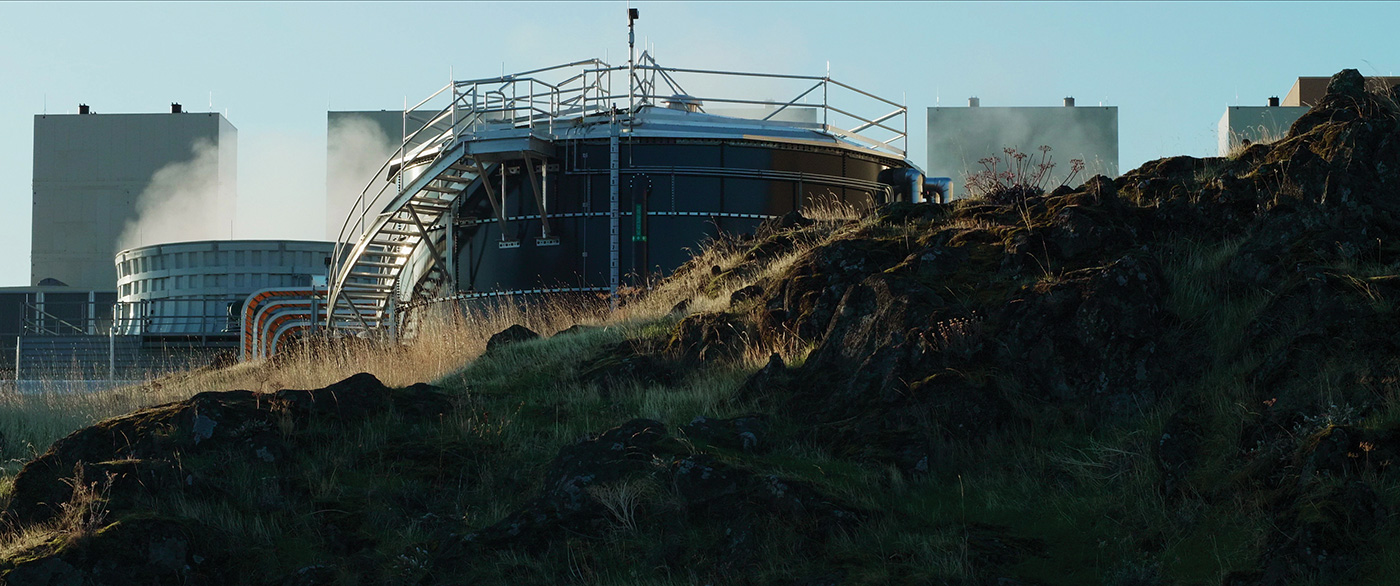
Interweaving archival audio, photographs, and films; eight years of visits to Google’s first hyperscale data center in The Dalles, Oregon; Google’s promotional videos; and encounters with local residents, PROJECT 02 untangles layers of power that underlie this Internet.
Adam Diller’s film and media works challenge our understandings of the ecologies, cultures, and media within which we live. He has exhibited internationally at venues including Anthology Film Archives, Big Sky Documentary Film Festival, Center on Contemporary Art, Susquehanna Museum of Art, Kassel Documentary Film and Video Festival, Athens International Film and Video Festival, Northwest Film Forum, Knitting Factory, Roulette, Issue Project Room, Sugar Refinery, and D-22. He has released music on labels including Line (12K), Locust Music, Gruenrekorder, DRAFT, Gift Tapes, and Present Sounds.


Art Collective Disnovation.org
A BESTIARY OF THE ANTHROPOCENE
Video installation | 4k | color | 15:0 | France | 2025
What happens when the consequences of human actions are so pervasive and profound that everything on Earth becomes artificial to some degree? This new 15-minutes video essay explores the most iconic specimens from A Bestiary of the Anthropocene book & research, combining video footage from around the world, this 2-channel video exposes the hybrid beings humans are now coexisting with in the Anthropocene era, merging in various forms and degrees the natural with the artificial. This new video work was commissioned by the Max Ernst Museum, and will be presented together with a large-scale installation featuring our full collection of physical specimens. BASED ON "A BESTIARY OF THE ANTHROPOCENE" BOOK 2021. An illustrated compilation of hybrid creatures of our time, equally inspired by medieval bestiaries and observations of our damaged planet. Designed as a field handbook, it aims to help us observe, navigate, and orient ourselves in the increasingly artificial fabric of the world. Plastiglomerates, surveillance robot dogs, fordite, artificial grass, antenna trees, Sars-Covid-2, decapitated mountains, drone-fighting eagles, standardized bananas… each of these specimens is symptomatic of the rapidly transforming “post-natural” era we live in. Often, without us even noticing them, these creatures exponentially spread and co-exist with us. A BESTIARY OF THE ANTHROPOCENE seeks to capture this precise moment when the biosphere and technosphere merge and mesh into one new hybrid body. What happens when technologies and their unintended consequences become so ubiquitous that it is difficult to define what is “natural” or not? What does it mean to live in a hybrid environment made of organic and synthetic matter? What new specimens are currently populating our planet at the beginning of the 21st century?
DISNOVATION.ORG merges contemporary art, research, and hacking to critically translate complex eco-social debates into operative and provocative exhibitions. They create radical artworks staged as large-scale laboratory experiments focused on energy, ecology, and economics, which act as catalysts for imagining futures that diverge from prevailing narratives. Their exhibitions, books, and videos have permeated cultural landscapes worldwide, fostering critical dialogue at the intersection of artistic, political, and scientific inquiry. They co-edited A Bestiary of the Anthropocene with Nicolas Nova, an atlas of anthropic hybrid creatures, and The Pirate Book, an anthology on media piracy. DISNOVATION.ORG’s works have been exhibited, performed, published, and reviewed internationally, including at the Palais de Tokyo, Centre Pompidou, Jeu de Paume (Paris), Museum of Arts and Design (New York), Fonderie Darling (Montréal), HMKV (Dortmund), Haus der Kulturen der Welt (Berlin), ZKM (Karlsruhe), Ars Electronica (Linz), MU (Eindhoven), Strelka Institute (Moscow), China Museum of Digital Arts (Beijing), Chronus Art Center (Shanghai), Polytechnic Museum (Moscow), ISEA (Paris, Hong Kong), Elektra (Montréal), and HEK (Basel). Their work has been featured in Forbes, Wired, Vice, Motherboard, Libération, Die Zeit, Arte, Next Nature, Hyperallergic, Le Temps, Neural, Digicult, Gizmodo, and Filmmaker Magazine, among others.


Yana Dombrowsky-m
Saint Louis Saint Louis
Experimental doc. | 0 | color | 26:44 | France | 2024
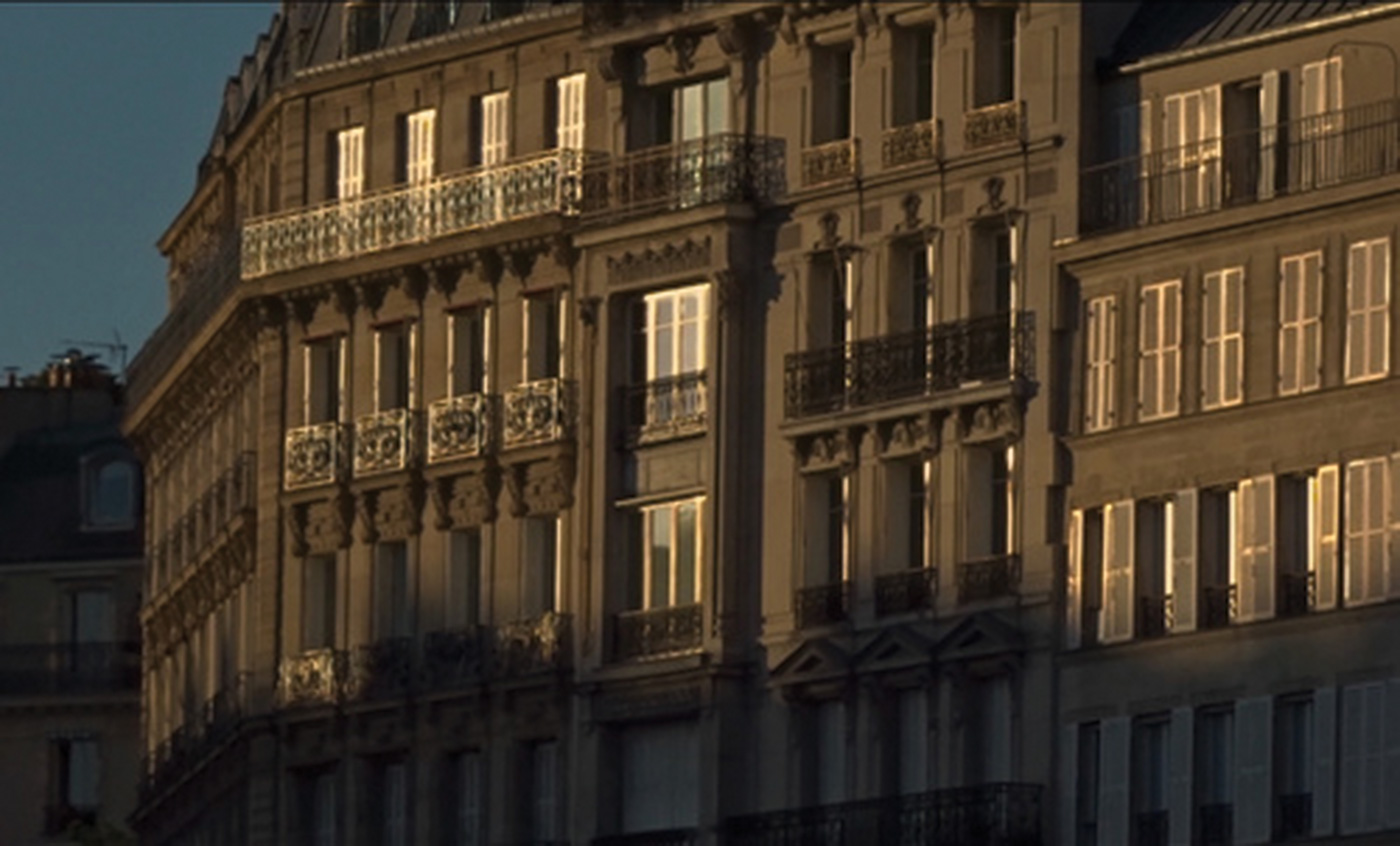
In the 21st century, you returned to the archipelagos Saint Louis of Sénégal, and Saint Louis of Paris to unearth vestiges of signares—women once at the centre of Occidental French West African commerce and society. Through the night, through the whispers of your aunts and nieces, through the institutions that house present-day French “patrimoine (cultural heritage),” you fell into a spiral between colonial presents and the past.
Yana Nafysa Dombrowsky-M’Baye is a pluridisciplinary researcher and educator from T?maki Makaurau, Aotearoa. Her matrilineal ancestry traces to Senegal and France, while her patrilineal lineage is of Polish and Czech descent. Through iterative and ritualistic processes, Yana’s practice is a poetic inquiry into the material and immaterial conditions of belonging, approaching artistic practice as archaeological gesture, unearthing the spectral, often erased presence of intercultural identities embedded in sites marked by colonial history and personal heritage.At present, Yana is at the Cité Internationale des Arts Paris, participating as one of ten internationally selected artists in the In Situ program, which will conclude March 2026.
Yana Dombrowsky-m’baye
saint louis saint louis
Experimental film | mp4 | color | 26:45 | New Zealand, France | 2024
In the 21st century, you returned to the archipelagos Saint Louis of Sénégal, and Saint Louis of Paris to unearth vestiges of signares—women once at the centre of Occidental French West African commerce and society. Through the night, through the whispers of your aunts and nieces, through the institutions that house present-day French “patrimoine (cultural heritage),” you fell into a spiral between colonial presents and the past.
Yana Nafysa Dombrowsky-M’Baye is a pluridisciplinary researcher and educator from T?maki Makaurau, Aotearoa. Her matrilineal ancestry traces to Senegal and France, while her patrilineal lineage is of Polish and Czech descent. Through iterative and ritualistic processes, Yana’s practice is a poetic inquiry into the material and immaterial conditions of belonging, approaching artistic practice as archaeological gesture, unearthing the spectral, often erased presence of intercultural identities embedded in sites marked by colonial history and personal heritage. At present, Yana is at the Cité Internationale des Arts Paris, participating as one of ten internationally selected artists in the In Situ program, which will conclude March 2026.
Anja Dornieden, Juan David González Monroy
The End Of The Human Eyes
Multimedia installation | 0 | color | 0:0 | Colombia | 2025
This system is an interactive installation where a group of ferns are equipped with a network of sensors capable of detecting environmental stimuli such as light intensity, humidity, temperature, or even subtle movements of the plants. These sensors are connected to a central processing chip, which continuously collects and analyzes the data from the ferns. The sensory data reflects the environmental conditions experienced by the plants in real time.
OJOBOCA is a Berlin-based artist duo formed by Anja Dornieden and Juan David González Monroy. Their work is rooted in an exploration of cinema as a social ritual and as a tool for generating collective experience. They call their practice Orrorism, which they define as a simulated method of inner and outer transformation. Since 2010, OJOBOCA has created a series of experimental films, installations, and performances that have been screened at film festivals and art venues worldwide, among them the Museum of the Moving Image, ICA London, Wexner Center for the Arts, Österreichische Filmmuseum, Anthology Film Archives, Haus der Kulturen der Welt, Kunstverein Mu?nchen, Ullens Center for Contemporary Art, Berlinale, International Film Festival Rotterdam and New York Film Festival.

Philipp Döring
Palliativstation
Documentary | hdcam | color | 245:33 | Germany | 2025
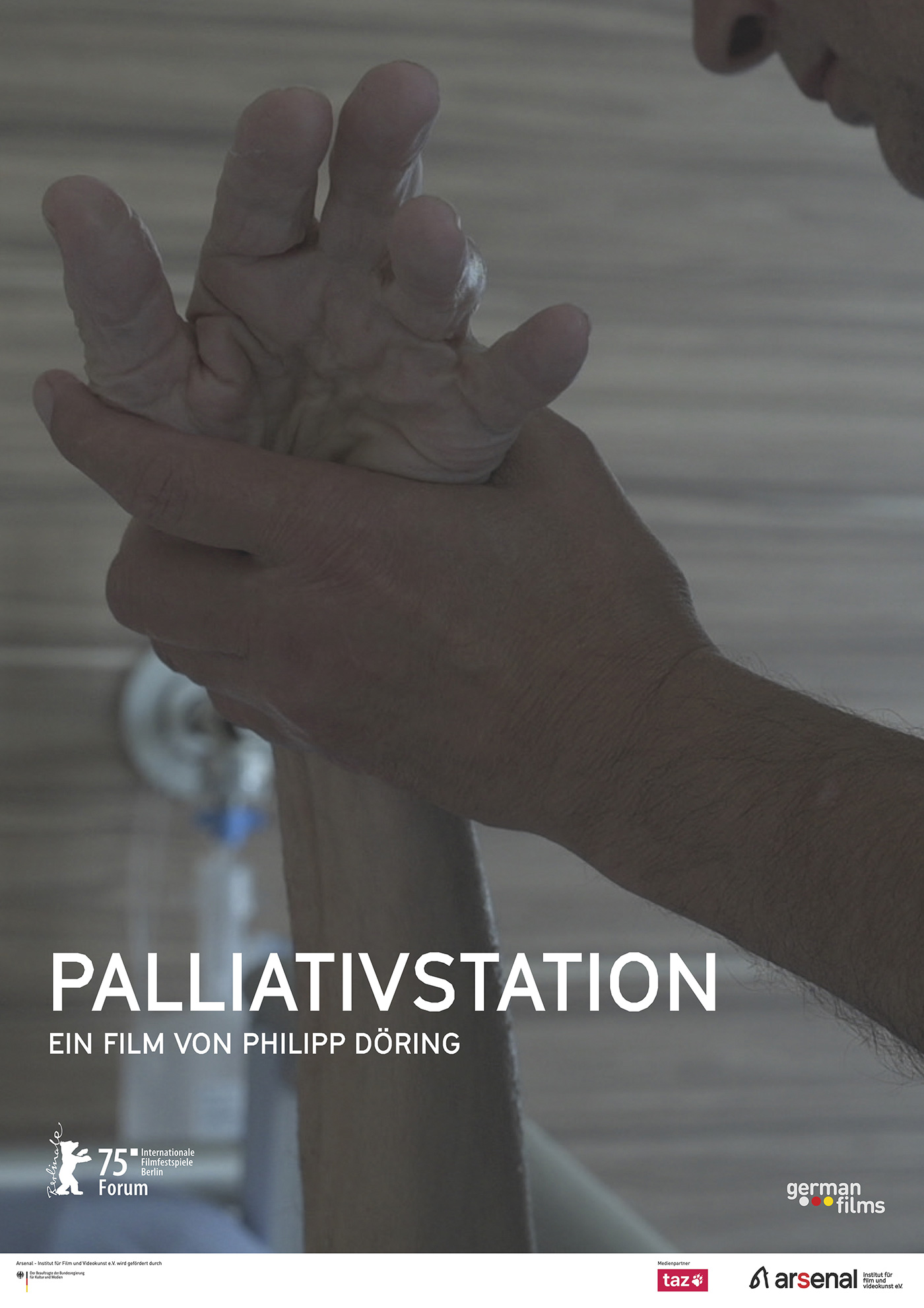
A film about people facing death. The film follows the everyday routines at the Palliative Care Unit at the Franziskus Hospital in Berlin. How do fatally ill patients face death? And how can you help them fill their remaining time with as much quality of life as possible?
Born 1977 in Freiburg. After high school, he first studied linguistics, then film at the Filmakademie in Ludwigsburg. His graduation film AM ANDEREN ENDE (At the Other End) received the First Steps Award for best film school film of the year, as well as the Deutscher Kamerapreis (German Cinematography Award). He realized several other short films, produced clips for NGOS, and worked for Luk Perceval at various theaters. Despite his love of long films, he makes a living from short clips for social media. PALLIATIVSTATION is his first feature-length documentary.

Sam Drake
Suspicions About the Hidden Realities of Air
Experimental doc. | 16mm | color and b&w | 9:9 | USA | 2025
Fragmented records of events almost too sinister to believe: Cold War era covert radiation testing performed by the United States government on its citizens. The film grapples with the challenges of documenting the invisible, and capturing what is merely waves and frequencies. Shot on expired film, it is through the contaminated image and a complex soundscape that the unseen becomes manifest. During the Cold War, the U.S. government developed a program of covert human radiation experiments, using its own citizens as test subjects. Suspicions About the Hidden Realities of Air is an elliptical exploration of this dark historical episode, operating across vast landscapes and individual human bodies. Fragments of archival and 16mm imagery – shot on expired film stock – evoke the locations of numerous test sites across the United States. Urban landscapes at night, bleached scenes of the American desert, and close-up details of rural America are interwoven with voice-over and on-screen text that reference testimony of the continuing impact of this period of covert testing.
Sam Drake (b. Dayton, OH) is a filmmaker based in Milwaukee, WI. Her work has been exhibited at film festivals and venues including The Museum of Modern Art, International Film Festival Rotterdam, Media City Film Festival, CROSSROADS, The Museum of the Moving Image, Alternative Film/Video, Collectif Jeune Cinéma, Non-Syntax Experimental Image, Winnipeg Underground Film Festival, Transient Visions Festival of the Moving Image, and Antimatter. She has programmed for the Union Cinema and Mini Microcinema and is currently a lecturer at the University of Wisconsin-Milwaukee.


Veronika Dräxler
Traces of Life / How to Kill
Experimental video | 4k | color | 15:45 | Ecuador, Finland | 2025
Traces of Life / How to Kill unfolds as a poetic trilogy in which three female figures—each performed by the artist—move through landscapes scarred by war, memory, and survival. From the frozen forests of Finland to a spiralling stone garden in Germany and the deserted urban expanse of La Défense in Paris, the body becomes a vessel of remembrance, confronting violence through gesture and silence. Weaving performance, film, and fragments from the UN Genocide Convention, Veronika Dräxler creates a visual language of resistance—an intimate meditation on the traces that conflict leaves behind in human and geological time.
Veronika Dräxler is a German–Ecuadorian media and performance artist whose work explores how bodies and landscapes become living archives of trauma, memory, and survival. Working between Paris and Munich, her practice spans performance, essay, and experimental film, investigating visible and invisible traces of historical violence, displacement, and resilience. Through a research-based and interdisciplinary approach, she examines how histories of conflict and care shape identities, architectures, and collective narratives. Dräxler studied under Klaus vom Bruch and Andrea Fraser at the Academy of Fine Arts Munich and graduated as a Meisterschülerin of Anna Anders from the Berlin University of the Arts. She is currently a PhD candidate in the SACRe program at ENS–PSL Paris, where her research explores invisible female diplomacy, memory politics, and the resistant body between art, history, and film. Her works have been shown internationally, including at Manifesta 11 (CH), a.topos (IT), Kunstverein Grafschaft Bentheim (DE), ZKM Karlsruhe (DE), Activists Without Borders (UK), and the Turicine Festival (EC). She has received support from the European Union, the Bavarian Ministry of Science and Art, Stiftung Niedersachsen, and the German Federal Government (Culture and Creative Pilot Germany).
Driessens & Verstappen
E-volved Formulae
Multimedia installation | 4k | black and white | 10:1 | Netherlands | 2024
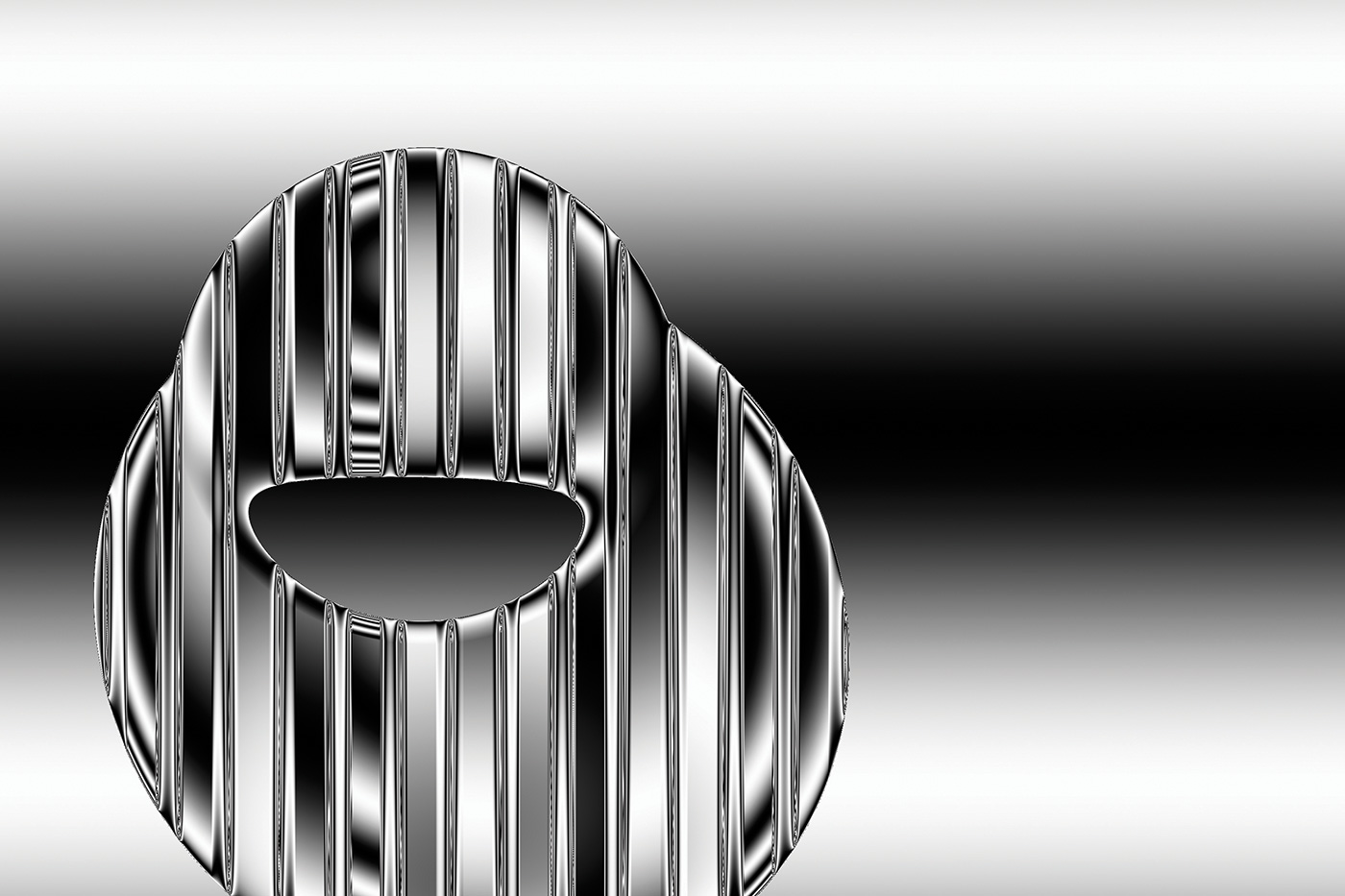
The image generating Formulae E-volver software is developed by the artists. The building blocks of the software are all kinds of basic mathematical operators. The computer can compose an infinite amount of valid formulas out of these elements. Each time, a small set of formulas is composed and visualised on the screen. The viewer compares these animated images with each other and reviews them. In turn, the software responds on those reviews when it composes new formulas. Formulas that were displayed on the screen for a long time have more chance to crossbreed, whereby visual properties are mixed and passed on to future generations. The process begins with a "primordial soup" which yields relatively simple images. On the basis of personal preferences of the user, this gradually evolves into complex intriguing animations. The final results, the E-volved Formulae, are stored and are displayed on a large screen or projected. They show a wide variety of outcomes of the successive evolutionary processes.
The Amsterdam based artist couple Erwin Driessens (1963 Wessem) and Maria Verstappen (1964 Someren) have worked together since 1990. After their study at the Maastricht Academy of Fine Arts and the Rijksakademie Amsterdam, they jointly developed a multifaceted oeuvre of software, machines and objects. Their research focuses on the possibilities that physical, biological and computer algorithms can offer for image generating processes. An important source of inspiration are the self-organizing processes in nature. In the Morphoteques series (form collections), they show the form variations, which can be expressed within a specific generative process. In other works, the shape transformations are evoked in real time by means of a machine. In their software and AI projects, they develop an artificial nature, which is expressed in all kinds of variations. Driessens & Verstappen participated in numerous exhibitions in the Netherlands and abroad, a.o. Stedelijk Museum Amsterdam, Museum Boijmans van Beuningen Rotterdam, Centre Pompidou Paris, IVAM Institute Valencia, Museum Kröller-Müller Arnhem, Garage Museum Moscow, CaixaForum Barcelona, Eyebeam New York. The couple gives lectures and presentations at universities, art academies, festivals and conferences, a.o. Siggraph Los Angeles, Sonic Acts Amsterdam, Second Iteration Melbourne. In 1999 and 2001 their Tickle robot projects have been awarded first prize at VIDA Telefónica Madrid. In 2013 the couple received the Witteveen+Bos Art+technology Award for their entire oeuvre. The artists are represented by gallery DAM in Berlin.
Victorine Durmort
Traversées nocturnes
Documentary | dcp | color | 20:11 | France, Belgium | 2024


Aminatou Echard
Le Grand Tout
Documentary | 16mm | color | 119:0 | France | 2025
How’s life? How’s the big Everything? Garba asks Nicole. For both of them, the “Big Everything” encompasses family, politics, History, daily life, the stars, small things, and time passing like the wind. My mother, Nicole Echard, an ethnologist in Niger from 1964 to 1994, left me her fieldwork archives, her 16mm films, and her correspondence with her main assistant in Niger, Garba Maïgoye. Today, together with Art students in Niamey, as we reinterpret these texts, we are grappling with the complexity of the present.
Aminatou Echard studied of Ethnomusicology and cinema. As an artist who works with experimental film and documentary, Aminatou's focus is how space transforms people and how people inhabit spaces. She conveys this idea by exploring the relationship between sound and image. Fieldwork is a crucial element in her artistic practice. After four years of working in Bolivia in ethnomusicology, she has started a new stage in Central Asia (Kyrgyzstan, Uzbekistan and Kazakhstan) in 2006 by collecting images and sounds to gain an understanding of the specific relationship between spaces and people. In 2007 she does Kyrghyz sketches, a short experimental film from the first collected material and in 2010 Broadway, a documentary produced by the G.R.E.C et Jamilia in 2018, a Super 8 feature film produced by 529 Dragons, presented at the Forum Berlinale 2018 and at Cinéma du Réel. (Awards of “Jury Documentaire” and “Prix Documentaire sur Grand Ecran” in Festival International de films d’Amiens, Award of “jury young students” in festival Isreal of Nuoro)