Catalogue 2025-2026
Below, browse the 2025-2026 Rencontres Internationales catalogue, or search the archives of the works presented since 2004. New video clips are routinely posted and the images and text are regularly updated.
Mohamed Abdelkarim
Gazing...Unseeing
Experimental fiction | mov | color | 7:50 | Egypt | 2021
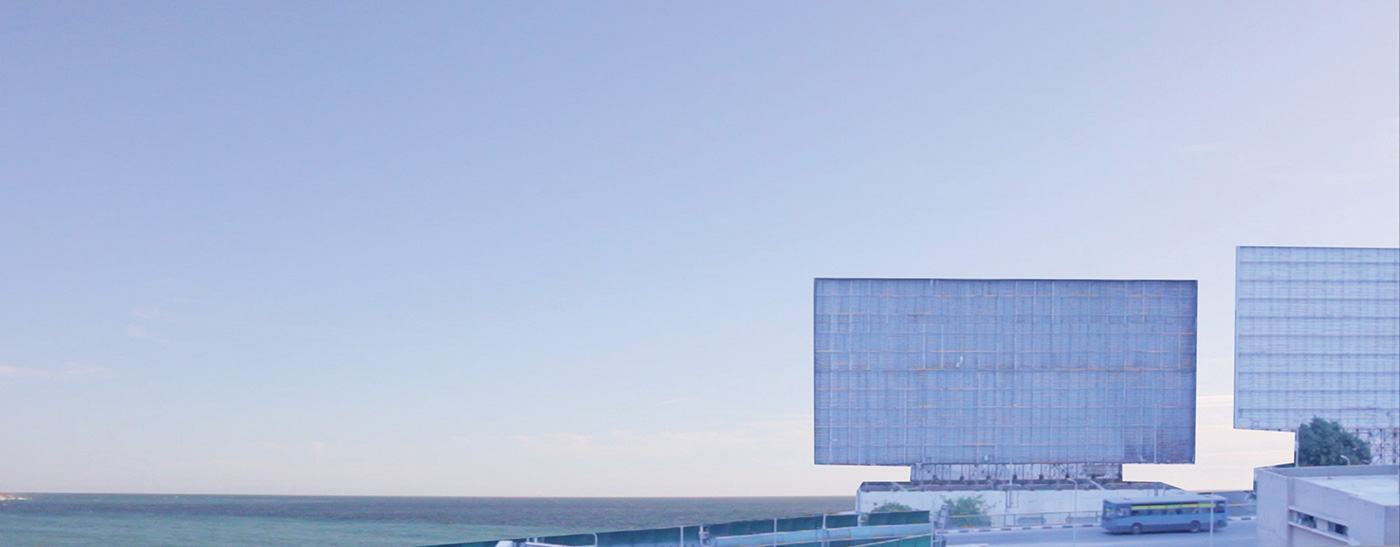
The video speculates a future scenario demonstrated in a climate fiction narrative. The narrative is based on a pseudo interview with an imagined fugitive in a post-disaster era. Through different positions, ideological turns, and economic sovereignty, the interview imagines the future of the greens, governments, and private sectors in a post-flood city. The landscape and fiction narrative complicates the relationship between infrastructure, privatization, ecology, surveillance, and migration.
Abdelkarim is a visual artist, performer and cultural producer. After completing his M.A. at ECAV/Edhea, Switzerland, 2016 he turned towards producing text-based performances and became committed to performative practices based on multidisciplinary research, employing and reflecting on narrating, singing, detecting, doing, fictioning, and speculating. In Abdelkarim's performative works, the script bears witness to the research experience. The emphasis is on the process, as a reflection on production and cultural genealogy. This process is open-ended, and non-linear. His current umbrella project focuses on the agency of the landscape as a witness to "a history we missed and a future we have not yet attended" His performances have been included in Guild Master of Cabaret Voltaire, Manifesta 11, Zurich, 2016; Sofia Underground Performance Art Festival, Bulgaria, 2016; Photo Cairo 6th, Contemporary Image Collective (CIC), Egypt, 2017; Live Works Performance Act Award Vol. 5, 37° Edizione Drodesera, Trento, Italy, 2017; At the Crossroads of Different Pasts, Presents and Futures, Fondazione Sandretto Re Rebaudengo, Turin, Italy, 2018; Interazioni Festival, Rome, Italy, 2022; and Festival Internazionale della Performance, Performative 04, at MAXXI L'Aquila, 2024. As part of his performative practice, he established "Live Praxes", a performance encounter that includes workshops, seminars, and performance nights.

Anna Adahl
Porous Bodies (Draft Cut)
Experimental film | 4k | color | 19:23 | Sweden | 2025
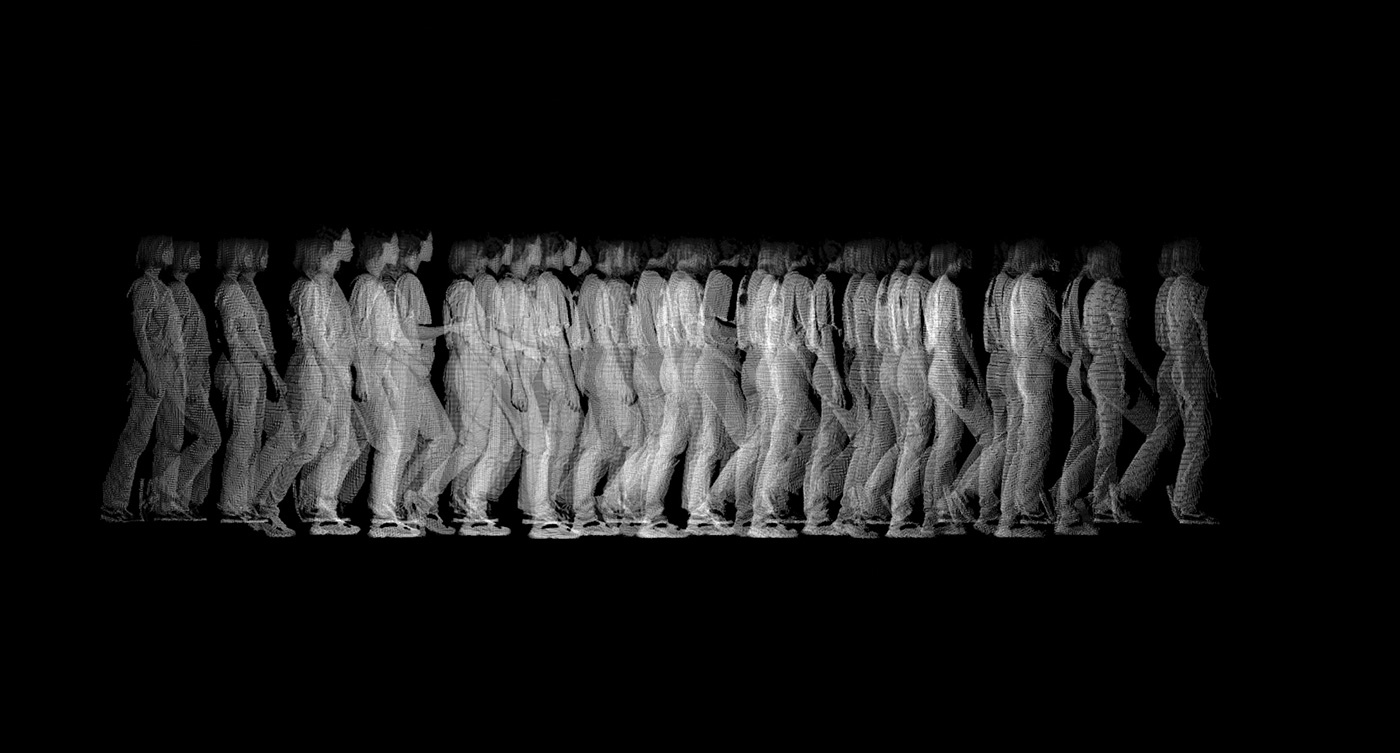
Porous Bodies is an essay film in diptych format where found footage meets newly shot images in assemblage editing. The film explores how our bodies are becoming data and unfolds the concept of porous bodies. Optical and infrared scanning systems penetrate beyond the skin, measuring the materiality and patterns of our iris or palm veins, while other tools capture our identities from afar, without consent, by analysing videos of our physical and choreographic uniqueness. These scanning techniques oscillate between micro and macro images of our bodies, used for the control of people, protesting crowds, security systems, crypto-based economies, digital IDs, and refugee camps. Vulnerable populations often become testing grounds for such technologies. Iris scans read the materiality of the eye through infrared light—a confrontation between two lenses, one organic and one technological. Authority and agency reside in the latter; the eye becomes mere material, algorithmically turned into code. Similarly, palm vein scanning reduces the hand—once a symbol of political emancipation—to a biometric signature. Through gait recognition, we are identified by the way we walk, our choreographic uniqueness rendered into data. Facial recognition becomes obsolete; no one in a crowd is anonymous. It is the body as a whole that is now scanned and quantified. A walking body, optically and mathematically analysed without consent—a representation of agency yet transformed into a porous, fragile, and permeable entity. Scanned from the inside out, it becomes a cloud of harvestable data. Emerging technologies penetrate our bodies, while self-tracking devices extend the intrusion. We are porous—open to these systems, sometimes unknowingly, sometimes willingly. Still, the body remains a representation of agency: the walking body, the body in the street, the political body that assembles with others. Datafied clouds in motion, grasping for agency in an increasingly authoritarian landscape.
Anna Ådahl is a Swedish artist and researcher working in various mediums such as film, installations and performance. She uses the editing tools of assemblage and montage where found footage meets newly produced images. Her installations use artworks in various mediums as props in spatial narratives where the body is used as reference and an investigative tool. Over more than a decade the notion and politics of crowds has been central in her artistic practice. Her fine art practice-based research, Inside the Postdigital Crowds, (2022), at the Royal College of Art in London addressed the aesthetics and politics of the digital conditions in which contemporary crowds are represented and governed. She is currently pursuing a post doctorate and is running a funded (Swedish Research Council) practice-led fine art research project in collaboration with Stefan Jonsson at REMESO (Institute for Research on Migration, Ethnicity and Society) at LiU and affiliated with the Royal Institute of Art, titled Collective Agency in an Era of Authoritarian Automation. Her work has been shown at Pylon Lab, Dresden; Impakt, Utrecht; Marabouparken, Sundbyberg; Whitechapel Gallery, London; Moderna Muséet (part of the collection), Stockholm; LIAF, Norway; CCA Derry, UK; Bonniers Konsthall, amongst others.

Milo Addica
Wirtshaus Zur Pfaueninsel
Fiction | 35mm | color | 9:19 | USA, Germany | 2025
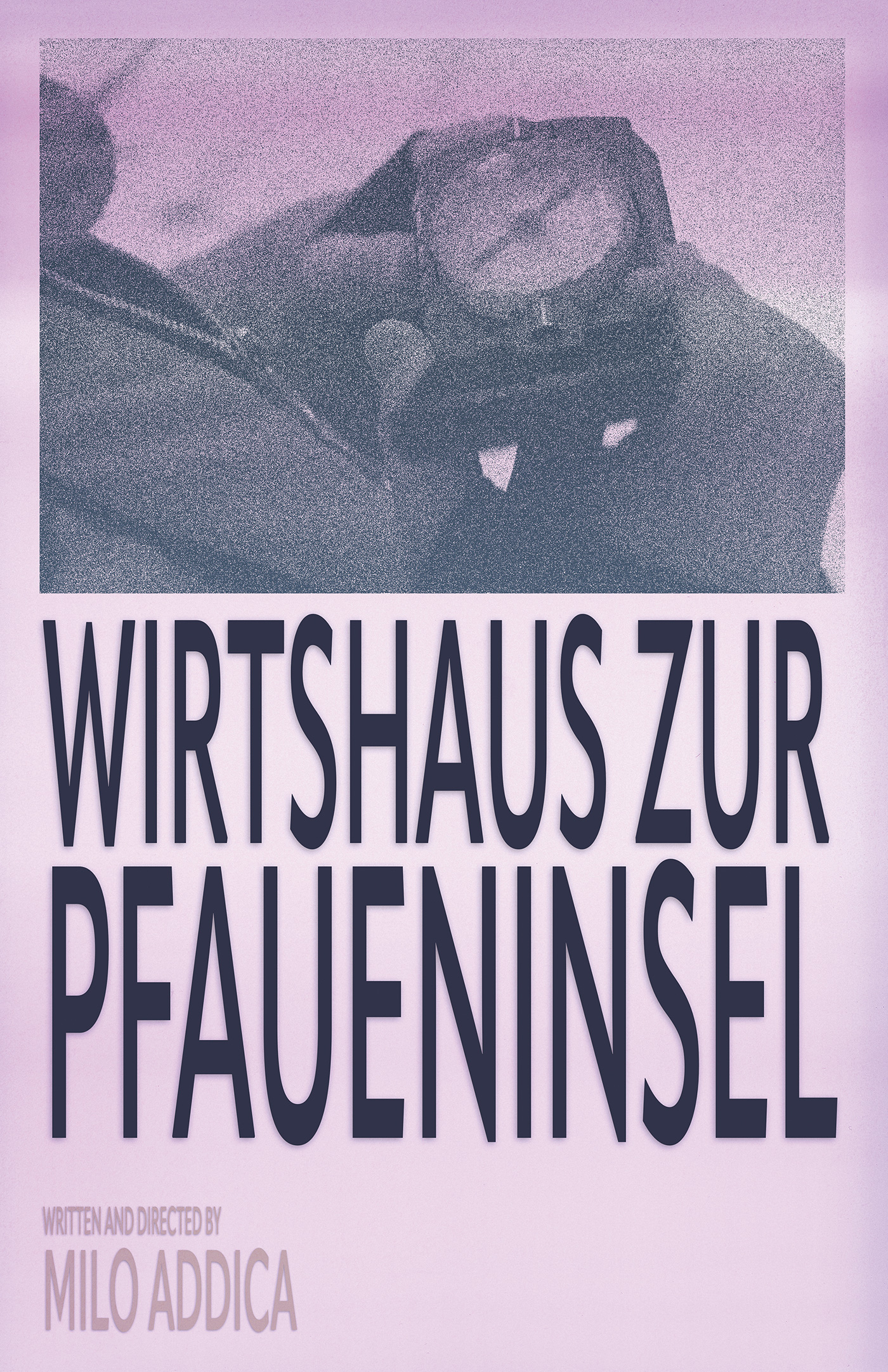
A young boy adventures through a forest outside of Berlin Germany in search of a rare bird and has a stark encounter with a man who offers him a harsh dose of life.
MILO ADDICA BIOGRAPHY Director / writer / producer Milo Addica was nominated for an Academy Award, WGA Award, and an Independent Spirit Award for Monster’s Ball, starring Halle Berry, Billy Bob Thornton, and Heath Ledger. Some of Addica’s writing credits include Jonathan Glazer’s Birth, co-written with Jean-Claude Carrier, starring Nicole Kidman and Danny Huston, and Lauren Bacall (the film was selected for competition at the Venice Film Festival) as well as James Marsh’s The King, starring Gael Garcia Bernal, William Hurt, and Paul Dano, (the film was selected for Un Certain Regard at Cannes.) Addica has written for numerous directors including: Andrew Dominik, Joel Schumacher, John Hillcoat, David Mackenzie, as well as actors including Russell Crowe, Julia Roberts, Sandra Bullock, Nicole Kidman, Danny Huston, Paul Dano, Gael Garcia-Bernal, William Hurt, and Lauren Bacall. Addica is currently shooting a documentary about his father artist Kent Floeter who was in a 1960s/70s tight knit group including Chuck Close, Brice Marden, and Richard Serra as well as being in pre production on his next feature to direct, Motorcycle Ranger, starring Edgar Ramirez. Addica has directed two short films, Ms. Longlegs and Wirtshaus zur Pfaueninsel. Addica grew up in New York City in the late 1970s/80s where he attended public school before enrolling at the University of Massachusetts at Amherst. He later attended the Neighborhood Playhouse and Hunter College. Milo Addica won a Satellite Award and a Final Draft Award for Monster’s Ball.

Danielle Adobi Dean
Hemel
Experimental doc. | 16mm | color and b&w | 29:44 | USA | 2025
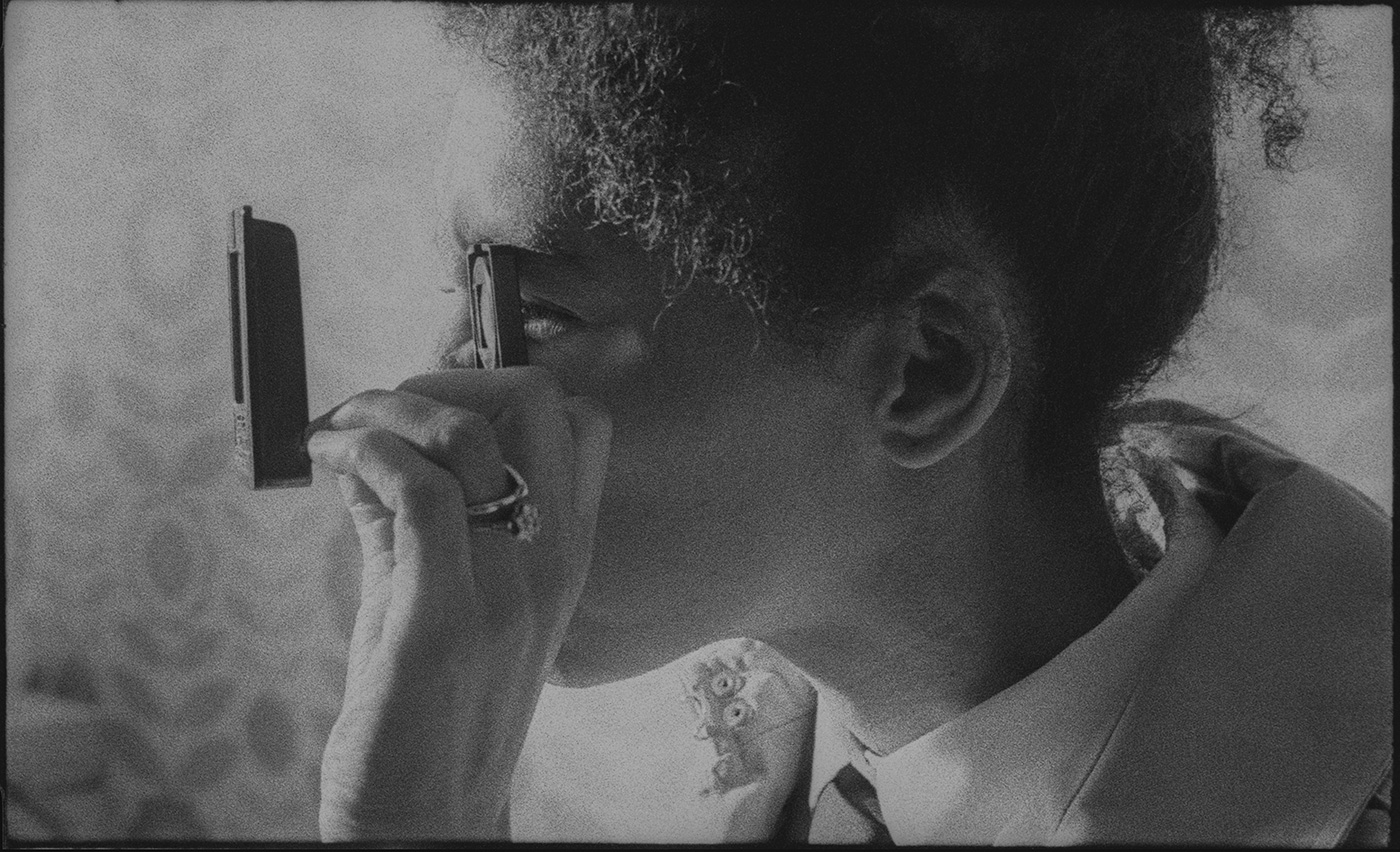
Danielle Dean’s new film is a portrait of Hemel Hempstead, where she was raised and unfolds as a personal essay on the town’s history as a planned community under the New Towns Act of 1946. Titled Hemel, the work’s central reference is a 1957 sci-fi horror B-movie shot in town about the arrival of a non-human entity that infiltrates the minds of residents and endangers life with a toxic black slime. Playing a composite character based on herself and the movie’s detective protagonist, Dean’s extraordinary vantage brings together real and imagined worlds, both past and present.
Working with archives, video, performance, social practice, sculpture, and drawing, Danielle A. Dean investigates the recursive loops between the circulation of ideas and the material reproduction of global capitalism. Operating across media and with a variety of collaborators and participants, her work examines the fault lines within this seemingly closed circuit. Dean received an MFA from California Institute of the Arts and is an alumna of the Whitney Independent Study Program. Recently completed projects include new commissions for Mercer Union, Toronto (2024), a solo show at Tate Britain, London (2022), and Performa, New York (2021). Other recent solo shows include: Long Low Line, Times Square Arts, NY (2023); Bazar, ICA San Diego (2023); and True Red Ruin, Museum of Contemporary Art Detroit (2018). She participated in the Whitney Biennial in New York (2022). Group exhibitions include: This Land, at The Contemporary Austin (2023); Freedom of Movement, at the Stedelijk Museum in Amsterdam, Netherlands (2019); The Centre Cannot Hold, Lafayette Anticipation, Paris (2018); and Made in LA, at The Hammer Museum, Los Angeles (2014).


Idrisse Ahamada Madi
Mvoulana
Experimental fiction | mp4 | black and white | 5:0 | France | 2023
Mbadjini in Grande Comores. A man leads us to a mysterious hut, far from his village, where he made a pact 30 years ago.
Born in Saint-Denis, Réunion, Idrisse AHAMADA MADI is a filmmaker and artist. A graduate of the École Supérieure d’Art de La Réunion, his practice lies at the intersection of reality and fiction, exploring the gray areas where perceptions waver. His work, which has been exhibited at venues including the Cité des Arts in Réunion, the Centre Wallonie-Bruxelles in Paris, and the Mulhouse Biennale, questions forms of belief, memory, and transmission through an aesthetic that blends mysticism and metamodernity. Between cinema and visual art, Idrisse AHAMADA MADI composes sensitive narratives and haunting images, where the visible is constantly doubled by an invisible presence. He currently lives and works in Paris.

Shaheen Ahmed
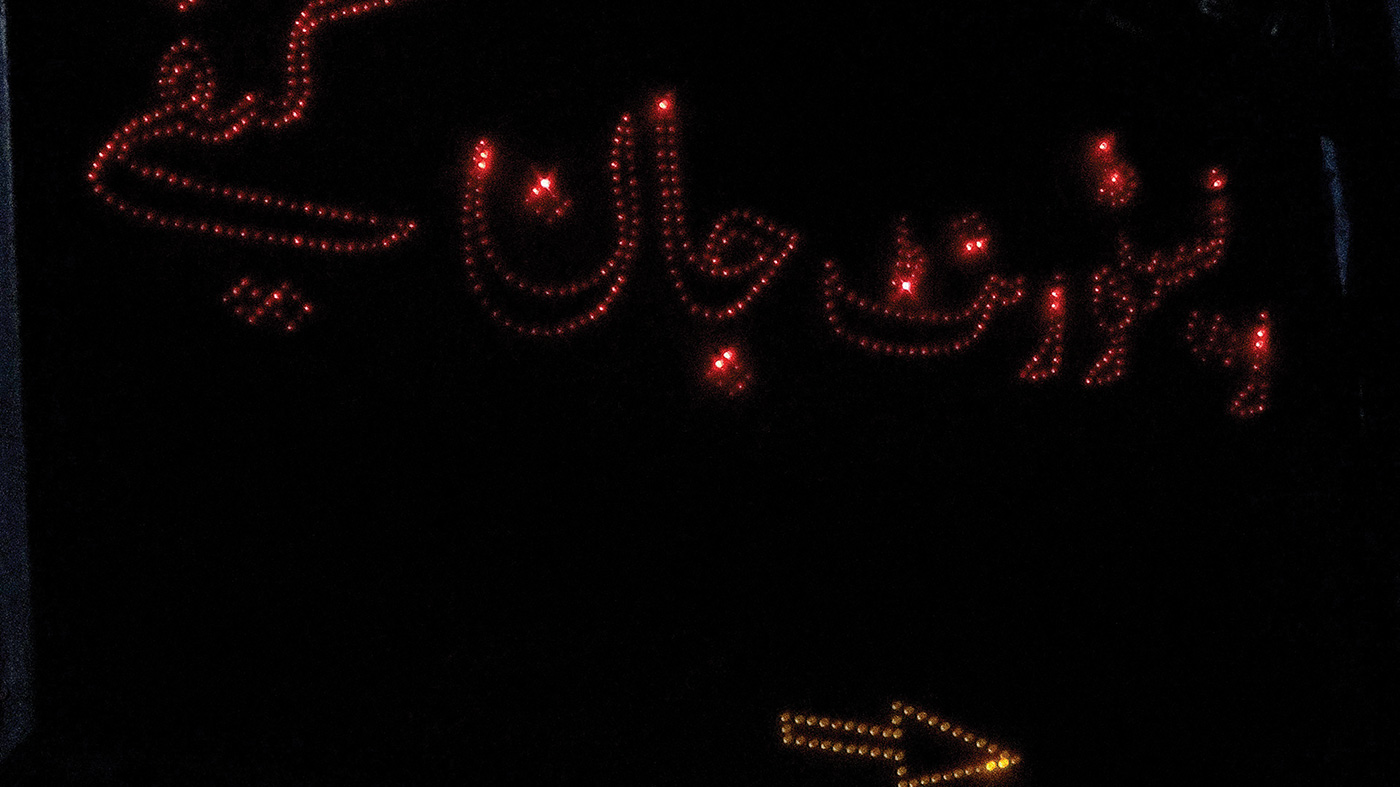
Nazar, a diary
Experimental doc. | mp4 | color | 25:58 | India, Greece | 2025
An audio-visual diary on the afterlives of encounters with South Asian Muslim migrants in Athens. Traces of exchanges in neighborhood cafés, makeshift mosques, Ramadan evenings, and half-sung songs ? held in fragments of sound, image, and text. Through stories, rituals, and everyday gestures, it listens to echoes of displacement and longing, tracing the ways in which memory, faith, and intimacy are held.
Shaheen Ahmed is a filmmaker from the Malabar Coast of Kerala, South India. His work explores memory and identity, often at the intersection of faith, intimacy, and collective spiritual imagination.

Ayo Akingbade
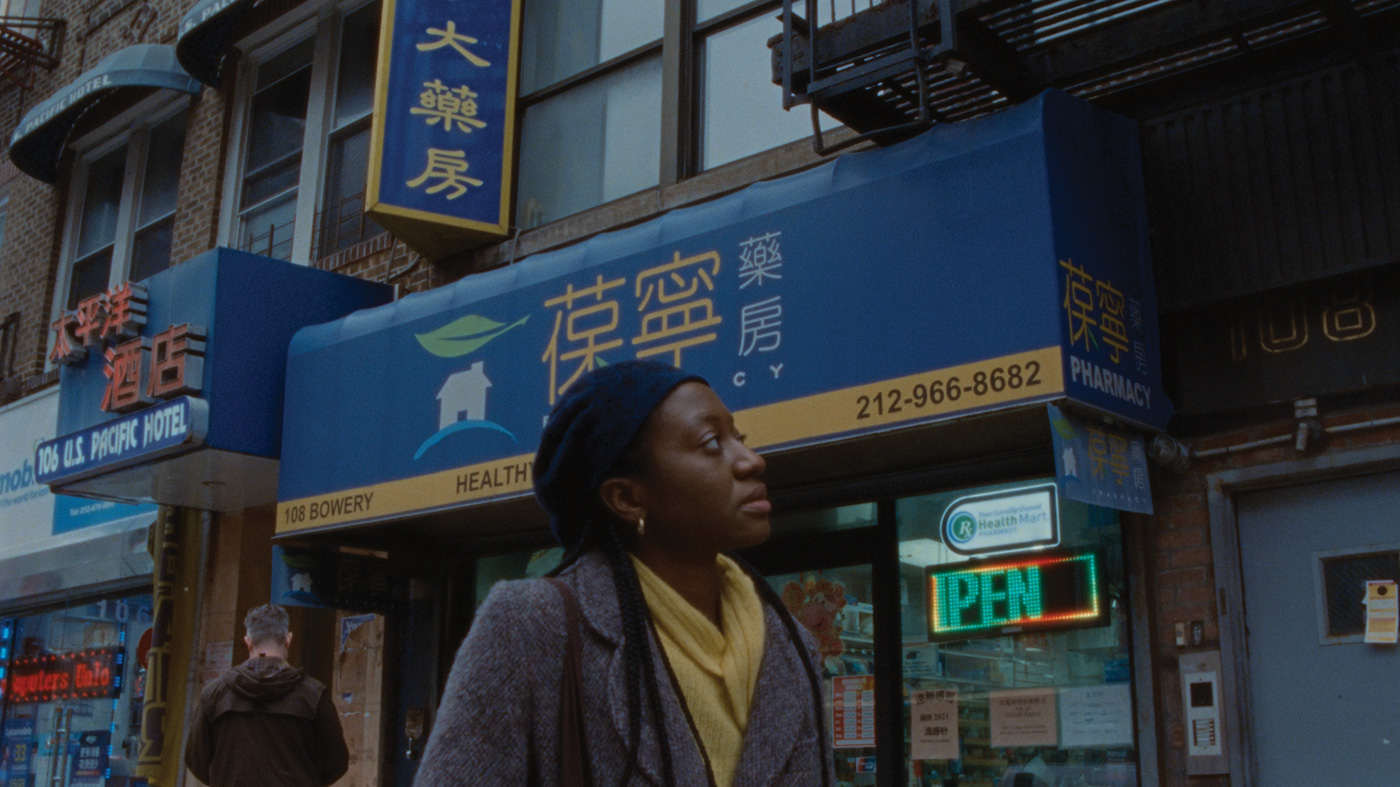
KEEP LOOKING
Experimental fiction | 16mm | color | 14:35 | United Kingdom, USA | 2024
A young British filmmaker arrives in New York to find finance for an impossible feature.
Ayo Akingbade is an artist, writer and filmmaker. She works predominantly with film and installation addressing themes of power, urbanism and stance. Akingbade engages with the fluid boundaries between the self and the other by gathering local and cultural experiences in intimate and playful interpretations. Her work has often documented experiences of rapid social change in London, where she was born and raised.

Sara Alavanic
Fleka
Fiction | mov | color | 21:36 | Croatia | 2024
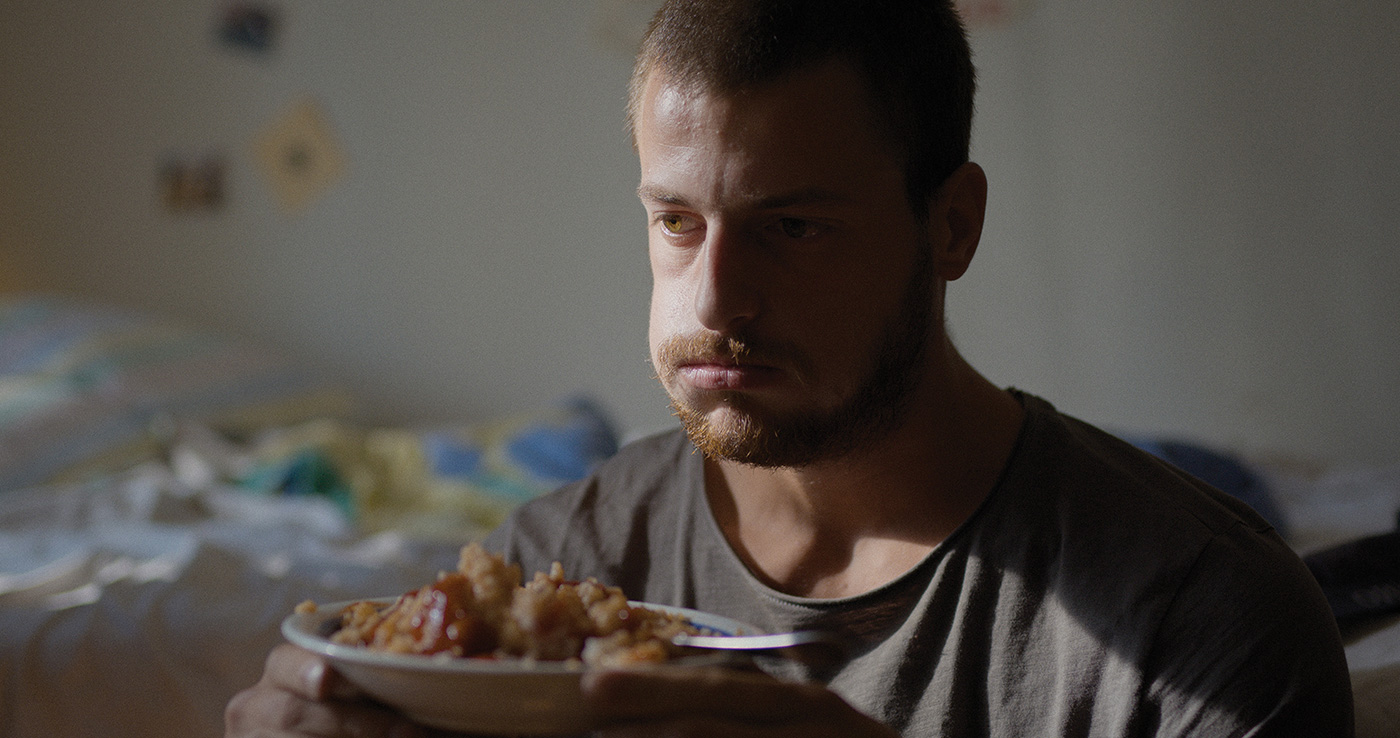
Spot doesn’t leave the vicinity of his building. He spends time with his neighbors and occasionally skateboards. Since his mom ended up in a psychiatric clinic, his best friend is his only family. Sometimes, he passes the time with a neighbor who has mental health issues and has adopted a pig. Soon, he realizes that this neighbor is his only friend.
Sara Alavani? (Croatia, 1998) completing her Master’s degree in Film and TV Directing at Zagreb’s Academy of Dramatic Arts. She also holds a degree in Graphic Design from the Faculty of Graphic Arts in Zagreb. She is a member of Blank_Film Incubator, where she directed her first films People Stink, But They’re Warm (Pula Film Festival 2020) and Do You Feel Nervous When I Approach You? (ZagrebDox 2020). Her most recent film Spot, premiered at Zagreb Film Festival (2024) and won the Golden Pram.

Paula Albuquerque
Siluman - Stealth, Invisible, Ghostly, Phantom-Like
Experimental doc. | 0 | color | 24:0 | Portugal | 2024
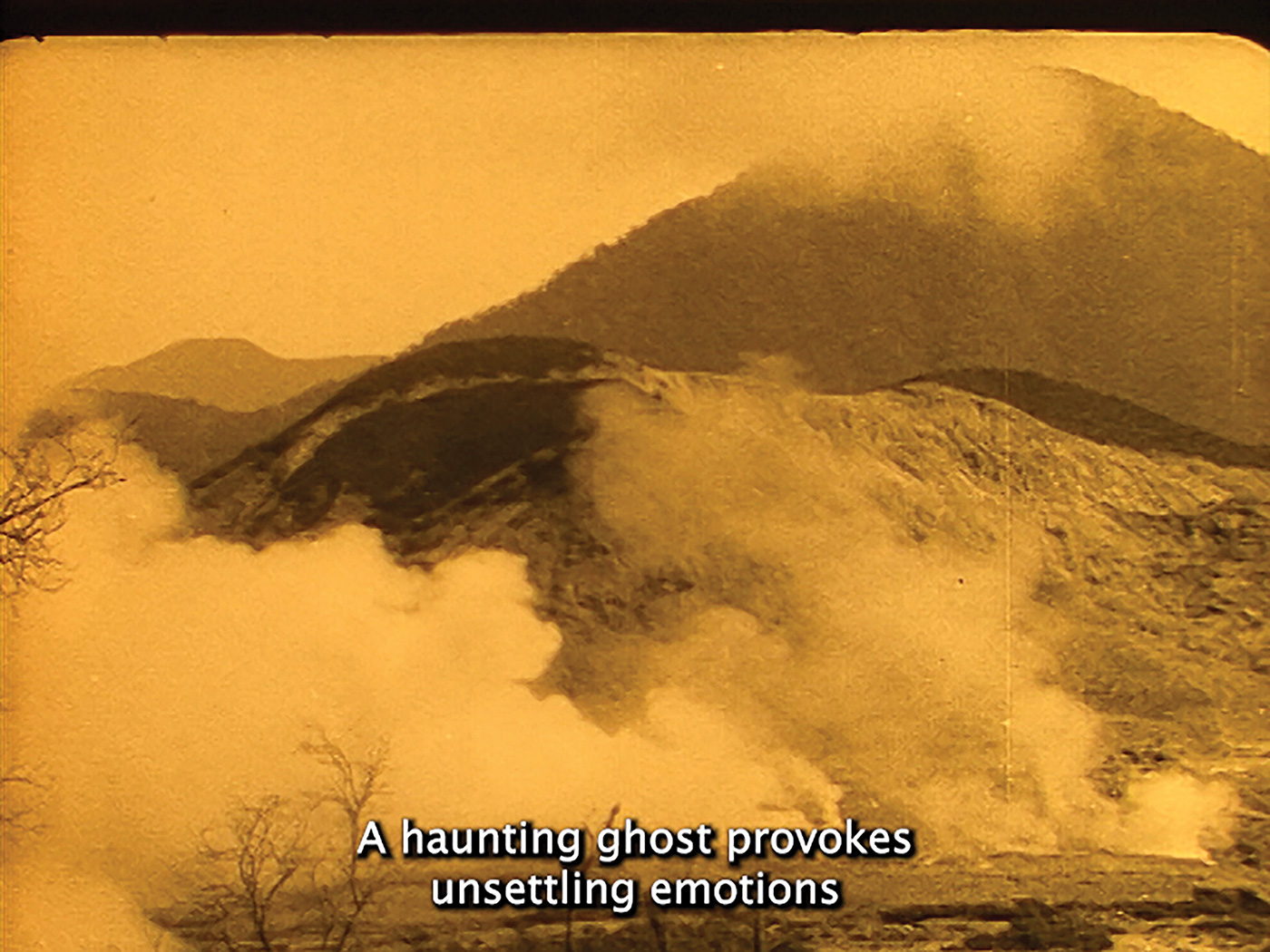
During her research at EYE Filmmuseum archive, Paula Albuquerque has encountered travelogues, home movies, and institutional films made by Dutch settlers in Indonesia, which bypass the colonial conflict to present a benevolent relation to the local people. Siluman challenges the Western and masculine aesthetic notion of the sublime to expose film’s construction of the colonial landscape as exotic, including indigenous people as part of nature and awaiting structure and exploitation. It unveils early colonial documentary’s haunting of the contemporary reality of Buruh Siluman, which is the Indonesian term for palm oil plantations’ women “ghost-workers.”
Albuquerque is an Amsterdam-based Portuguese artist and scholar showing work in solo exhibitions at galleries Zone2Source (2024); Bradwolff Projects (2023, 2018, 2015), Looiersgracht 60 (2023) and Nieuw Dakota (2020); with films at International Film Festivals UnArchive (2025); IDFA (2024); Ji’hlava IDFF (2024); DocAlliance (2024); DocLisboa (2023); Sheffield DOC|Fest (2020) and Rotterdam IFFR (2016); and conferences EYE International; Media in Transition at MIT; NECS; and Visible Evidence. She published the books Enter the Ghost—Haunted Media Ecologies (2020) and The Webcam as an Emerging Cinematic Medium (2018). She is currently a Senior Researcher at Gerrit Rietveld Academie, an Assistant Researcher at the Universidade Nova de Lisboa, and a Supervisory Board member of the Framed Framed Contemporary Art Platform.


Lev Aleshkin, Kalashnikova, homoabsurdus, Gorshunova,
«Das Unaussprechliche»
Performance | mp4 | color | 47:31 | Russia | 2024
«Whereof one cannot speak, thereof one must be silent» Ludwig Wittgenstein, Tractatus Logico-Philosophicus Nowadays we are witnesses to the world in the state of unceasing and disgusting war. As Russian citizens, we empathize with everybody who has suffered or whose family has suffered from this conflict. In our country, we can’t speak about that openly. We have to stop any attempts to talk about it. And every day we see the consolidation of political power, the tightening of laws and measures in relation to people who are against the war. When facts of the world become unspeakable, language loses its logical completeness and perfection, which are brought forth by Ludwig Wittgenstein in the «Tractatus Logico-Philosophicus». We're only left with the things outside of language - the unspeakable, the senseless. Things you can only show, not tell. From this point of view, «Das Unaussprechliche» is a reflection of the world, rather than broken up language. At the start, we're still bound by systems of symbols. Over the course of the performance we get to observe the participants gain new ways of communication, while the experience is recorded using photographs and graphs.
«Not quite open meetings» is an art collective, created by 2024` alumni of Institute of Contemporary Art Moscow. It emerged early in 2024 due to our reading-group where we can meet regularly and discuss philosophy and art. While all members of «Not quite open meetings» are also individual artists, we’re united by our shared object of interest and exploration - the Unspeakable. The term was coiled by Ludwig Wittgenstein and in our performance «Das Unaussprechliche» we gave it a somewhat unexpected spin. The problems that we address in our art and discussions are speechlessness, community, pressure, body. As a collective we hope to share our emotional experience, that is nowadays probably familiar to many, and weave our low-voice narrative together with you.

Amy Alexander
Deep World
Multimedia installation | 0 | color | 0:0 | USA | 2025
Deep World is a performance and installation project examining the evolving relationship between humans and chatbots — from their early role as informal therapists to their current position as omnipresent advisers in unsettled times. At Deep World’s center is a chatbot intentionally re-authored with ideas drawn from writers and theorists who confronted difficult eras, combined with contemporary material reflecting concerns of today. Visitors bring real worries and complicated questions; the chatbot’s output veers between philosophical and poetic, revealing both insight and self-doubt. The gap between what people need and what the machine can offer becomes part of the work’s texture — by turns earnest, wry, and unsettling. Performance version: Performed by VJ Übergeek (Amy Alexander), the piece blends live text improvisation, VJ practice, and game-controller interaction. The dialogue becomes a semi-theatrical search for clarity, humor, and company in difficult times. Installation version: The current installation iteration focuses on borders — political and social, physical and metaphorical — as a lens for contemplating contemporary dilemmas. The installation invites visitors to speak directly with Deep World, generating evolving text and psychedelic visuals in a secular-sanctuary setting. Additional installation iterations are under development.
Amy Alexander is an artist and professor whose work spans computational installation, performance, net art, and film. She has been making software-based art since the 1990s and writing about the cultural roles of algorithms since the early 2000s. With a background in film, music, programming, and IT, she focuses on the porous borders between media and the world, and on how technologies shape – and are shaped by – cultural conditions. Much of her work examines algorithmic subjectivity in digital culture. Recent projects extend this focus to AI and machine learning systems, including custom large language models used as collaborators in live performance and as tools for examining generative AI–based cinema. Her projects have explored themes ranging from surveillance and social media to public-space performance and the mechanics of computational authorship. Alexander’s work has been exhibited or performed at venues including the Whitney Museum, Prix Ars Electronica, Transmediale, SIGGRAPH, NIME, the New Museum, CURRENTS, and ICLC, as well as clubs such as Sonar and First Avenue, and in street performances in Los Angeles, San Diego, San Jose, Zürich, and Aberdeen. She has also written and lectured widely on software art, audiovisual performance, and media preservation. Alexander is a Professor of Computing in the Arts at UC San Diego.


Ella Altman
Je n'AI jamais rencontré quelqu'un comme toi
Experimental fiction | dcp | color | 20:26 | France | 2024
Hava (Eve) and Jeanne, two actresses on a film set, are training an AI as they explore the initial stages of intimacy with each other. Within a loop of genuine and staged desire, Hava tempts Jeanne to see together the AI's reflection.
Ella Altman (b. 1993, Tel Aviv) is a filmmaker, video artist, and musician based in Paris. A graduate of Le Fresnoy – Studio national des arts contemporains, she explores the intersections of intimacy, language, and technology. Her work often blends autobiographical elements with fiction, examining how relationships and perception are shaped through emotional, cinematic, and algorithmic mediation. Her recent film Je n’AI jamais rencontré quelqu’un comme toi (2024) received the Video Prize from Les Amis du Fresnoy and was nominated for the 2025 Hans Purrmann Prize. Previous works include LOVER (2023) and The Holocaust Is Over, Bitch (2019). She is a member of the Conseil d’administration of the Société des Réalisatrices et Réalisateurs de Films (SRF), where she serves as the referent for the Ethics & Inclusion working group. Altman currently lives and works in Paris, where she is developing her first feature film.

Davit Apakidze, Mariko Chanturia
Armor
Experimental doc. | hdcam | color | 10:27 | Georgia | 2024
In a historical city on the brink of an ecological disaster, seafront houses wear a coat of armor. A young artist returns to his hometown after many years and finds that it no longer feels like home. He begins wandering the city with a friend to reconnect with his childhood memories. During their journey he witnesses firsthand how environmental issues are eroding the city's once vibrant appearance and character. The artist's sense of alienation from the city acts like armor, helping him confront his fears and traumas. Through this film he also strives to rediscover himself.
David Apakidze (b. in 1998, Poti) is a visual artist, curator, art historian, co-founder of the Fungus Project and Fungus Gallery, queer art initiatives based in the Caucasus. He studied Art History at the Tbilisi State Academy of Arts, focusing on medieval Orthodox art—an influence that continues to shape his practice. His practice spans sculpture, embroidery, printmaking, and stained glass, reinterpreting Georgian Orthodox iconography through a queer lens. His research-based practice explores identity, traditions, and queerness. Apakidze has participated in residencies and exhibitions both locally and internationally, including Lerblabor (Berlin, 2021), Open Out Festival (Tromsø, 2023), Gallery Artbeat (Tbilisi, 2024), Gallery Zacheta (Warsaw, 2024), and MeetFactory (Prague, 2025).

Niklas Apfel, Collecitf Blitzbereit
Look at Me
Multimedia performance | 4k | color | 16:15 | Germany | 2025
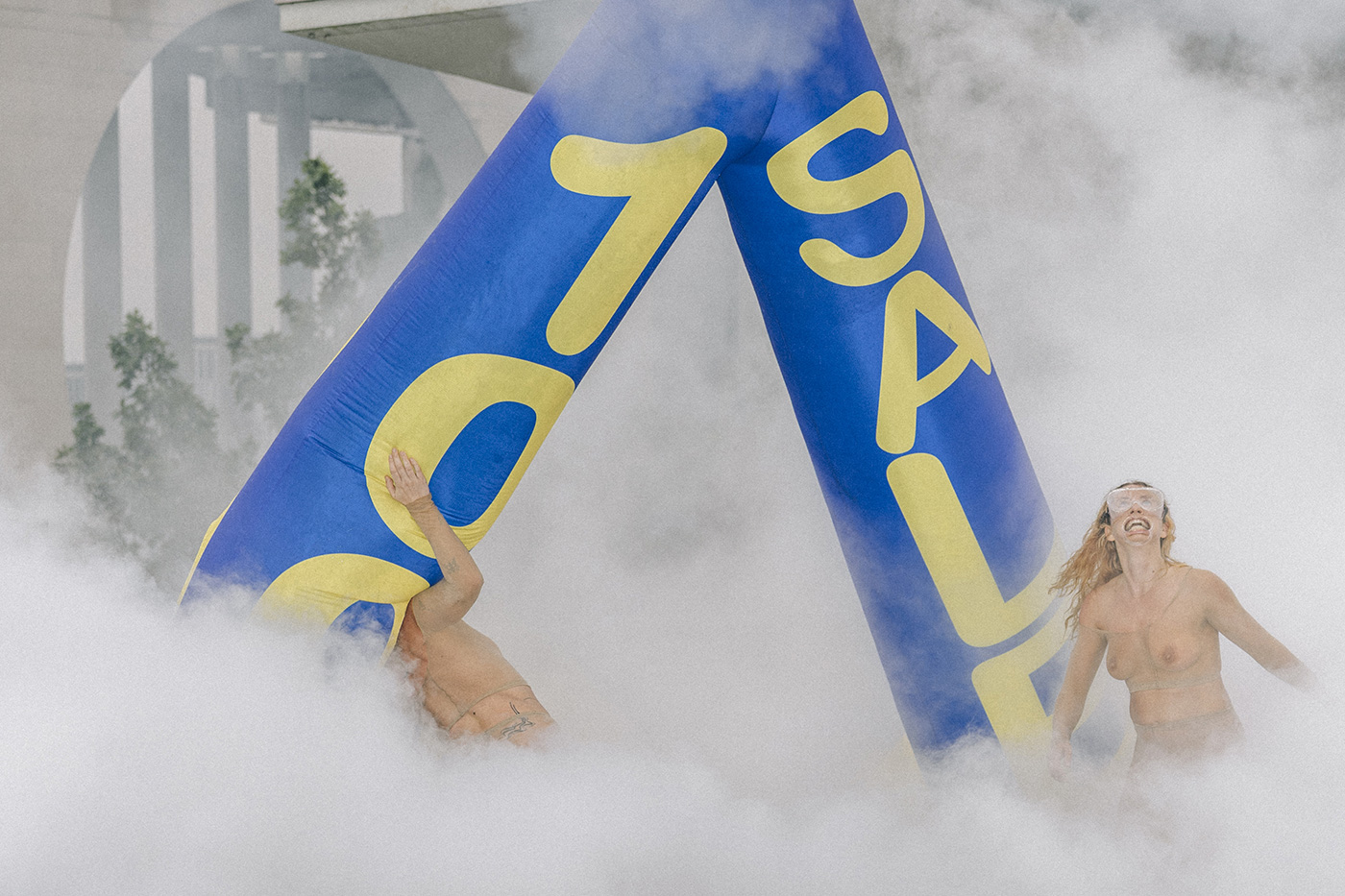
Look at Me addresses the artistic struggle for visibility and recognition in a world of digital information overload. The boundary between what is perceived and reality continuously blurs: those who receive attention are perceived and can participate in realities; those who fall into oblivion risk never having existed. The performance showcases an economy of attention in which the audience's gaze becomes the decisive currency in the face of the fear of insignificance: 100% Sale. During a seemingly grotesque dance, 8-meter-high air sculptures controlled in real-time compete directly with three performers, vying for the audience's attention. Between human effort and mechanical presence, the struggle for attention reveals itself as a moment of artistic self-reflection: driven by the fear of insignificance, the unbridled greed for visual dominance culminates in powerlessness.Wiederholen
Niklas Apfel is a Berlin artist focused on graphic design and installations. His work blurs the lines between applied and fine art, featuring abstract figures, scenes, and typography. The performance "Look at Me" was created during his postgraduate studies at UdK Berlin. Collectif Blitzbereit uses performances to challenge taboos around body, sexuality, and emotions. Through nonverbal, humorous expression, they reach broad audiences in public spaces. In "Look at Me," they compete for attention, critiquing art world dynamics while pushing themselves to exhaustion in endless competition. Their anarchic work style reflects their belief against rigid structures.

Salvatore Arancio
Transmission
Experimental video | 4k | color | 24:52 | Italy, France | 2023
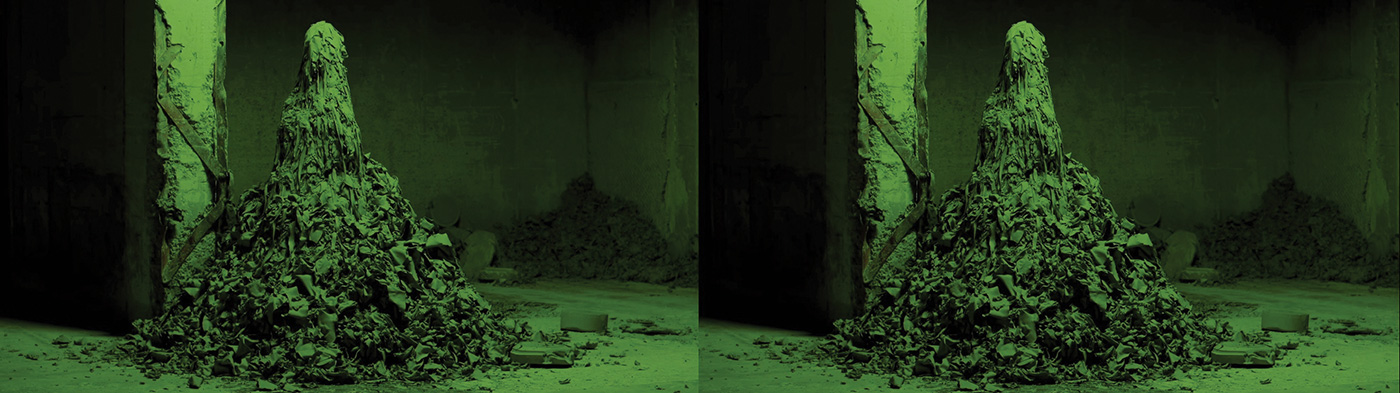
Set within the historic Ceralep factory in Saint Vallier, France, a site long devoted to the production of high voltage electrical insulators, Transmission unfolds as an environmental documentary that slips deliberately into the territory of the speculative. In this film, Salvatore Arancio transforms a seemingly prosaic manufacturing plant into a theatre of poetic estrangement, where industrial routines become choreographed gestures and machines attain the enigmatic presence of autonomous beings. Arancio’s point of departure is his fascination with the cold precision of mechanised porcelain production. What might initially appear as a linear, utilitarian process is reimagined through his lens as an almost ritualistic encounter with matter. The camera lingers on conveyor belts, extrusion devices and rotating moulds with a sense of reverence, elevating the workshop’s standardized operations into a study of form, rhythm, and transformation. At times, the film’s stark geometries and modulated lighting propel the viewer into a quasi science fiction atmosphere, where the boundary between documentary observation and visual abstraction becomes intentionally porous. The narrative arc of Transmission traces the journey of raw material, through the factory’s labyrinthine production line, ultimately emerging as the ceramic components that populate electrical infrastructures around the world. Yet Arancio refuses any didactic explanation; instead, he invites viewers to inhabit the sensorial and symbolic dimensions of the manufacturing process. The result is a meditation on energy, labour, and the complex ecologies of industry, an inquiry into how the material world is continually shaped by the interplay of human and machine. Integral to the film’s hypnotic effect is its electronic score by British musician Robin Rimbaud (AKA Scanner). Commissioned specifically for the project, Rimbaud’s composition folds together ambient tonalities with field recordings captured onsite. The hum and resonance of the factory floor become both musical texture and narrative agent, heightening the sense that the machinery is speaking in its own coded language. This sonic layering underscores Arancio’s commitment to cross disciplinary experimentation, revealing a productive friction between mechanical sound, electronic composition, and the film’s sculptural images. In Transmission, Arancio offers more than a document of industrial manufacture or a site of labour, but as an arena for imagining alternate relations between technology, environment and artistic vision.
The main interest at the centre of Salvatore Arancio’s artistic practice lies in the potential of images. Particularly in how images and their meaning can be re-framed or re-viewed. Each facet of his practice contains an intertwining juxtaposition of the roots and representation of images: natural and artificial, mineral and vegetable, scientific and mythological. Departing from their literal meaning, through the use of a range of media such as ceramics, etching, collage, animation and video, Arancio creates new juxtapositions that are both beautifully evocative and deeply disquieting, aiming to create a sort of atlas of confusion. He participated to the following biennals: Esposizione d’Arte Internazionale, La Biennale di Venezia, Venezia, Italy (2017); BI-CITY Biennale of Urbanism/Architecture, Shenzen, China (2020); Biennale Ceramica – 60° Premio Faenza, MIC, Faenza, Italy (2018); Gyeonggi International Ceramic Biennale, Icheon, Korea (2017); Manif D’Art 5, The Quebec City Biennal, Quebec, Canada (2010); Prague Biennale 4, Karlin Hall, Prague, Czech Republic (2009).
Astrid Ardagh
Ishavsringen
Documentary | dcp | color | 20:36 | Netherlands, Norway | 2024
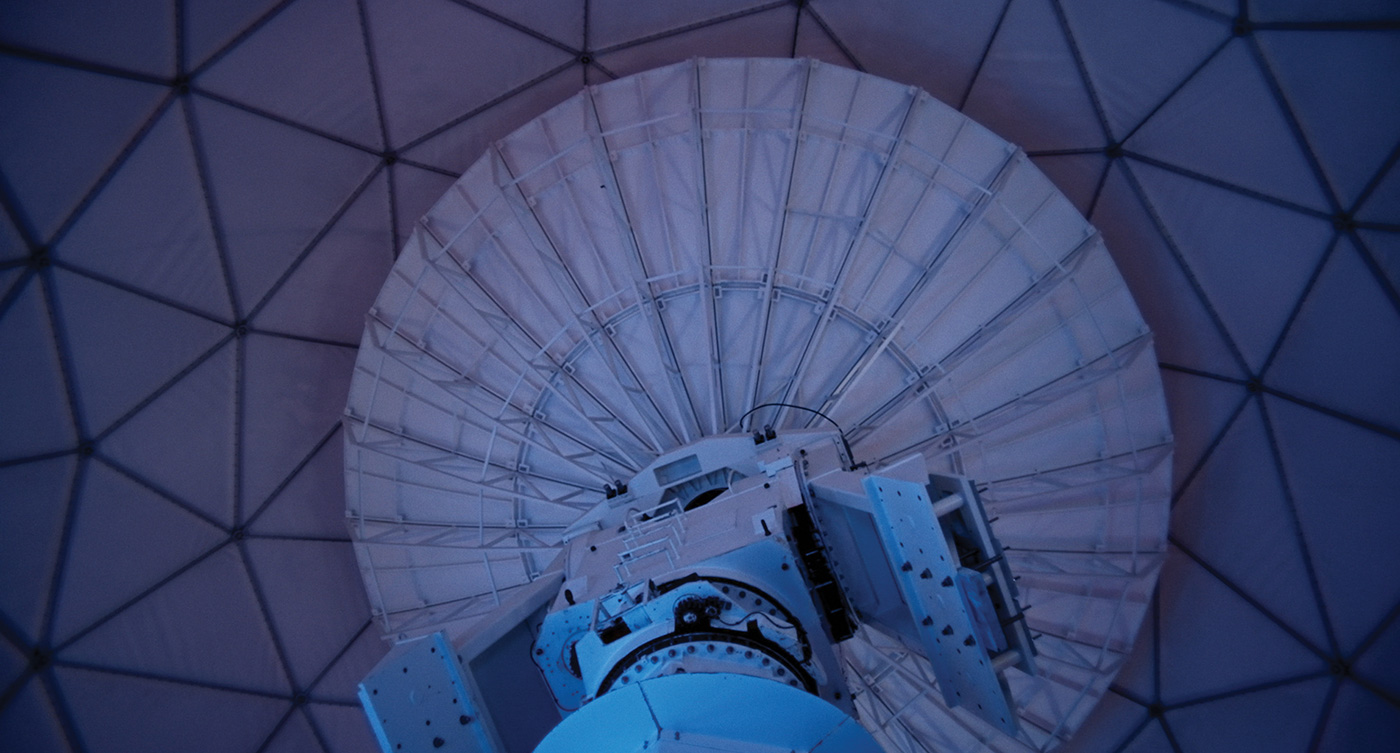
In 2022, a major Russian cyberattack left the Norwegian islands of Bjørnøya and Hopen cut off from the world. On Air traces how a small group of Norwegian radio amateurs stepped in to re-establish contact, revealing the vital role of analog technology in an increasingly fragile digital society. Seen through the curious eyes of extraterrestrial anthropologists, the film explores how Morse code and radio signals may one day safeguard our hyperconnected world.
Astrid Ardagh is an artist and filmmaker from Engeløya in Northern Norway, with a bachelor’s degree in moving images from Gerrit Rietveld Academy in Amsterdam. Her site-specific works delve into the interconnections between people and their environment in a rapidly changing world. By merging her interest in anthropology with aesthetic storytelling, her films become immersive and sensory experiences that transcend traditional human-centred perspectives. Ardagh's short films have been screened at acclaimed festivals such as Clermont-Ferrand and Kortfilmfestivalen in Grimstad, as well as galleries and art museums such as Kristiansand Kunsthall, the Eye Film Museum and the Stedelijk Museum in Amsterdam.
Benjamin Balcom
The Phalanx
Experimental doc. | 16mm | color | 13:30 | USA | 2025
Letters from the Ceresco community trace the fragility of harmony, the dream of life in association, the frictions that give way to fracture. Members of the phalanx drift apart, lingering in private corners, suspended in speculative time.
Ben is a filmmaker and educator based in Milwaukee, Wisconsin, where he is a professor of Film, Video, Animation, and New Genres at the University of Wisconsin–Milwaukee. His most recent films explore the histories and afterlives of radical social ideals and communal living. These projects combine archival research and various modes of filmmaking to reflect on alternative ways of living. Drawing from speculative fiction, critical theory, and utopian poetics, his work often revisits the sites of now-defunct experimental schools and intentional communities, using cinema as a space for both research and imagination. Featuring landscapes both real and imagined, these films engage collective memory while speculating on futures beyond the limits of capitalism. Earlier in his practice, Balcom worked with abstraction, introspection, and formal experimentation, exploring the tensions between perception and communication, and probing the materiality of film itself. These threads continue to inform his evolving approach to nonfiction and poetic cinema. Balcom’s films have screened internationally at venues and festivals including the Museum of the Moving Image, International Film Festival Rotterdam, European Media Arts Festival, IndieLisboa, Media City Film Festival, and Ann Arbor Film Festival. He has received awards from Onion City, Athens International Film + Video Festival, and Ann Arbor. In 2023, he was a research fellow at the Center for 21st Century Studies. He also co-founded Microlights Cinema, a microcinema that ran from 2013 to 2023, dedicated to bringing experimental film and video art to audiences in Milwaukee.
Spencer Bambrough
Parade de Somnambules
Experimental film | 0 | | 0:0 | France | 2025
While their bodies sleep, their shadows quicken, merging with the source that lights them. Sleepwalk Ruminations is an experimental short stemming from an ongoing feature-film project entitled Parade Somnambule. Figures such as the passenger, the sleepwalker, the hysteric and the vigil interfere with the pace of the machine, overflowing the time they’re given in a naïve embodied rhythm.
Spencer Bambrough's experimental film practice first emerged after his social anthropology studies (SOAS - University of London). From a fascination of the embodied presence of the subject in urban space, he sought to blur the boundaries of the self in its relationship to the collective. Today, his films, performances and installations in collaboration with Luis Carricaburu stage upswells in the flow of everyday life, exposing the forces underlying the grid in a sensory documentary approach. A resident at Mains d'Œuvres since 2024, he has been involved in numerous collaborations resulting in hybrid forms, namely Le Cabinet des États Intermédiaires in December 2024, and Le Sucré de l'Univers, a visual and sound installation in collaboration with Vincent Chéry for Nuit Blanche 2025. He is a regular contributor and writer for Parad Publishing, the Parisian publishing house specialising in documentary photography monographs. He is currently writing his first feature film, Parade Somnambule, in collaboration with Luis Carricaburu.
Suhel Banerjee
CycleMahesh
Experimental doc. | mov | color | 60:35 | India | 2024
Four years ago, young construction worker Mahesh had cycled two thousand kilometres alone, to return home during the first Covid lockdown. Now he finds himself the subject of a film being made about his epic journey. But what is he getting out of the film shoot? Blending fact and fiction, this film-within-a-film retells migrant workers’ tales while examining its own gaze. As the shoot comes to a close and Mahesh returns to the maze-like site of his construction job, the portrait of an endearing young man trapped in his condition emerges. How will Mahesh escape this vicious cycle of disappointments?
Suhel Banerjee is an Indian writer-director, known for blending fiction and nonfiction, myth and reality in his storytelling. His films have been shown in film festivals around the world. He lives in Goa and is currently working on his debut novel.

Francisco Baquerizo Racines
La Quema (del Planeta “B”)
Video | 4k | color | 20:50 | Ecuador | 2025
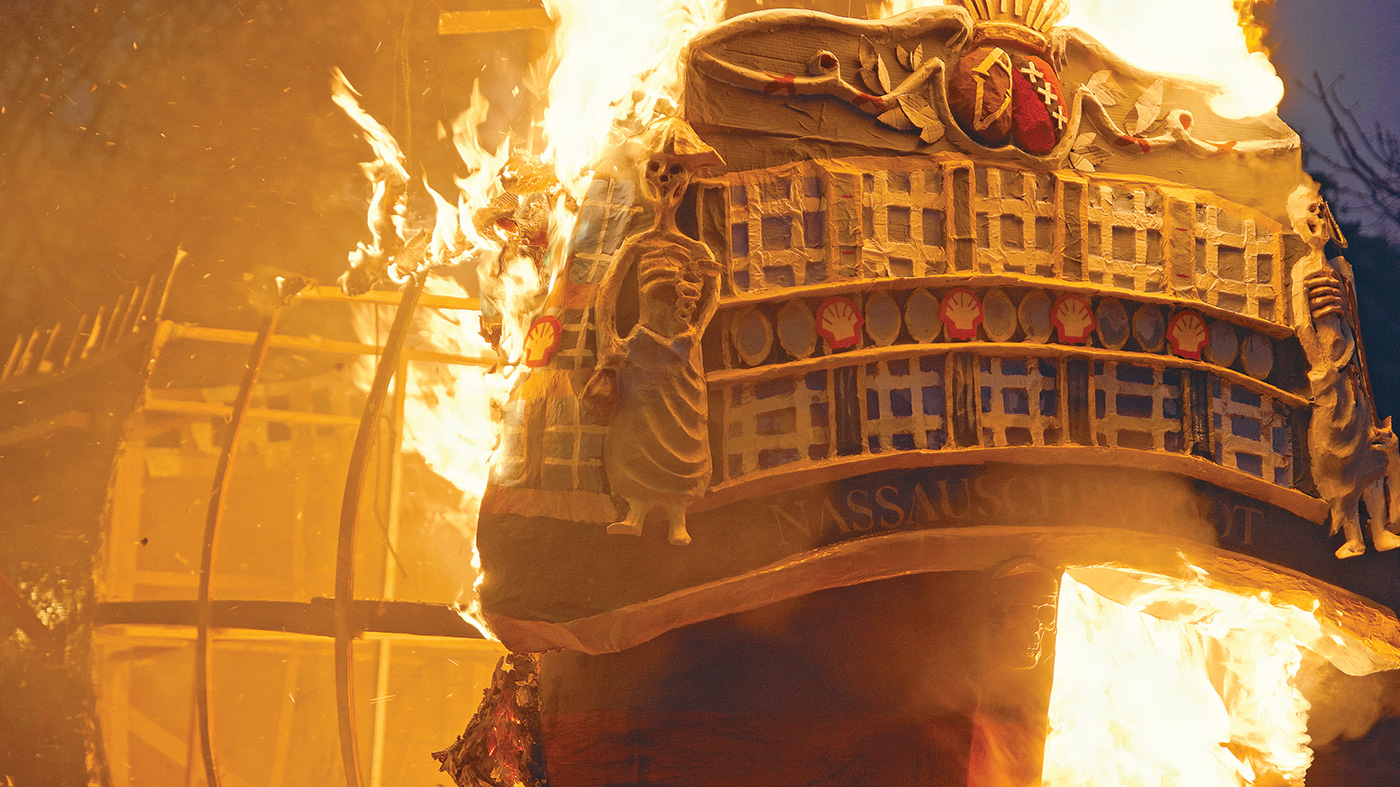
La Quema (del Planeta “B”) is a video installation that reflects on the 1624 burning and sacking of Guayaquil by the Nassau Fleet through the lens of Ecuador’s current vernacular practices—most notably año viejo, a popular custom in which effigies are collectively burned during New Year’s celebrations. This mestizo ritual resists linear narratives, offering instead an Andean zig-zag perspective on renewal through repetition. The crafting of these effigies embodies Guayaquil’s vibrant popular culture and capitalist-driven desires, while paradoxically creating space for (political) protest. In a context where sustaining artistic practices remains precarious, this tradition has also given rise to informal economies. Artists Joshua Jurado and Diego Cuesta—both based in southern Guayaquil—were invited to construct a año viejo in the shape of a galleon, inspired by the Dutch East India Company (VOC) vessel Amsterdam. Paraded through the city before being set alight, the sculpture marked 400 years since the original event, confronting historical cycles through collective action and vernacular symbolism. Filmed during one of Guayaquil’s recent peaks in violence—tied to extractivist legacies—the project brings together two temporal perspectives shaped by the same hegemonic system. La Quema (del Planeta “B”) stands as a pointed question to that very system—one that has shaped our bodies, ethics, and desires in service of capital.
Francisco Baquerizo-Racines (b. 1993, Quito, Ecuador) Currently living and working in the Netherlands. Baquerizo-Racines holds an MA in Fine Arts from HKU University of the Arts Utrecht (2022) and a BA in Visual Arts from PUCE (2017). His work has been shown across Ecuador, South America, and the Netherlands, with projects held in the MACBA archive and supported by the Mondriaan Fonds. In 2025, his film installation La Quema (del Planeta “B”) premiered at the 54th International Film Festival Rotterdam (IFFR).
Amie Barouh
Shuruuk
Experimental doc. | 0 | color | 34:57 | France | 2024
Shards of the world and fragments of life, between Japan and the Rom’s community, come together and respond to each other in a frenetic montage that is both gentle and rebellious. The title comes from a Tunisian newspaper called El Shuruuk, and I started making this edit at that time, recreating my story in the daily newspaper. I took some images that I documented for 5 years, across the world. I started to make an edit, regardless of the logic of narration, mixing places and time. Shuruuk means dawn, but it can be translated literally as rising in the east, like this movement of population, from east to west.