Catalogue 2025-2026
Below, browse the 2025-2026 Rencontres Internationales catalogue, or search the archives of the works presented since 2004. New video clips are routinely posted and the images and text are regularly updated.


Anna-claria Ostasenko Bogdanoff
Ariane
Experimental fiction | 4k | color | 8:37 | France | 2025
Synopsis La mythologie raconte qu’Ariane fut abandonnée par Thésée sur l’île de Naxos, à l’aube. Le film explore l’écho contemporain de ce mythe. Texte de présentation "Ariane" (8 min) est un court-métrage expérimental tourné sur l’île de Naxos, en Grèce. Inspiré du mythe d’Ariane abandonnée par Thésée, le film propose une exploration sensorielle de l’abandon et de l'attente qui s’ensuit. Sans dialogues, il invite à une immersion dans les paysages de Naxos, en regard des corps d'une femme et d'un homme. Le film interroge le lien entre les corps et ces espaces, entre la chair vivante et la chair disparue. Il s’attache à capter ce qui subsiste après le départ. Il reprend ce vers des Héroïdes d’Ovide : « Je touche, autant que je le puis, tes traces au lieu de toi ». Ces traces oscillent entre matière minérale d'une statue, et pixels dans la lumière d'un écran. L'attente devient obsessionnelle, révélant également notre propre besoin de retrouver l'autre à travers le virtuel aujourd'hui. Quitte à se perdre soi-même. "Ariane" a été réalisé entièrement en autoproduction, avec une équipe professionnelle.
Née en 1991, Anna Ostasenko Bogdanoff sort diplômée de la Fémis section Décor en 2019. Elle signe en tant que réalisatrice et scénariste plusieurs courts métrages. Sa fiction expérimentale "Mon Corps livré pour Vous" (2020) est en demi-finale aux Oscars étudiants et remporte une mention spéciale au Sao Paulo International Short Film Festival. Son court métrage documentaire "Her Scents of Pu Er" (2021) dresse le portrait de Maître Tseng, première femme maître du thé dans l’histoire de la Chine. Le film est en sélection à Hot Docs, DOC NYC et Odense Film Festival entre autres. Anna clôture en 2022 une année de résidence au Musée des Arts Décoratifs. Elle a réalisé dans les locaux des films sur les collections et les expositions. Depuis, elle collabore avec divers artistes pour créer des films inspirés de leur travail. En 2023, elle co-réalise "Puisque tout brûle", un court-métrage explorant le skate sous le prisme du corps qui chute. En 2025, elle réalise le court métrage expérimental "Ariane", tourné à Naxos, Grèce, inspiré du mythe d’Ariane. Son prochain court métrage, soutenu par le CNC et la région Pays de la Loire, sera tourné en 2026. Elle écrit également son premier long métrage avec les Films du Poisson. Ces deux projets explorent des thèmes personnels tels que le deuil, le corps et l’héritage familial. Enfin, elle écrit son premier roman, une autofiction, qui sera publié aux éditions JC Lattès en septembre 2026.


Allyson Packer
White Knuckle
Experimental video | hdv | color | 16:1 | USA | 2024
Over a haze of shifting images, a narrator recounts a series of surreal encounters. Drifting from an uneasy New Year’s party to eerie treadmill sessions that verge on astral projection, she moves through the streets and subways of a fever-dream city. Alternately gripped by dread and transcendence, she sinks into a world increasingly untethered from reality. Part meditation and part paranoid fable, White Knuckle explores the dark paradox of late-capitalist consciousness: the intoxicating freedom we discover in detachment.
Allyson Packer is an artist working across video and installation to explore the affective experience of living in a post-real culture. Her work has been presented at Vapaan Taiteen Tila in Helsinki, Nahmad Projects in London, The Torrance Museum of Art in Los Angeles, The Henry Moore Institute in Leeds, UK, Hošek Contemporary in Berlin, La Box in Bourges, France, and the OSTRALE Biennale in Dresden, Germany, and has been featured in publications including The Guardian and Artmirror. Based in Brooklyn, Packer is Teaching Assistant Professor of Visual Art & Technology at Stevens Institute of Technology and is represented by birds + Richard in Berlin.


Jin-yong Park
A South-facing House in Gyeonggi Province
Experimental doc. | 4k | color | 70:21 | Korea, South | 2024
There is a south-facing house in Gyeonggi Province. In this house, there are four people: my mom, dad, grandfather, and me. They spend their days in their own space. Sounds traverse the house, both from inside and out.
Born in Gunpo, South Korea. He studied Film and Media at Dongguk University. Not good at writing original scripts, he seeks fiction through found moments, fragments, and given materials. His film, A South-facing House in Gyeonggi Province, has been screened at the DMZ Docs, Punto de Vista, and ARKIPEL, etc.


Pocas Pascoal
Time To Change
Experimental doc. | 0 | black and white | 6:6 | Angola, Portugal | 2024
Under the merciless yoke of the all-powerful white man, nature and mankind are quickly tamed. Colonization, like a forced and destructive transplant, leads to ruin, desolation, and the enslavement of fauna, flora and humans. The colonialism, capitalism, their impact on humanity.
Director, videographer and scriptwriter, Pocas Pascoal was born in Luanda where she trained in visual arts and became the first female Angolan camera operator. In France, she graduated in editing and worked for 15 years as an editor. In 1998, she made her first short film Pour Nous. She participated in various exhibitions including the Havana Biennial, Bordeaux Architecture Biennial and Luanda Triennial. Two other documentaries followed: Childhood Memories in 2000 and There's Always Someone Who Loves You in 2004. In 2008, she turned to fiction with the short film Demain Sera Différant. Based on her personal experience, she shot the feature film Alda and Maria in 2012. This film was part of the official selection of the Locarno Film Festivals, and she won seven international awards, such as Best Feature Film at the Los Angeles Independent Film Festival, the EU Award at FESPACO and the Best Feature Film at the IndieLisboa FF in 2012. In 2021, she directed the Tv film A Palavra Magica and the documentary Blow, which won the Arvore da Vida Award for Best Film at the IndieLisboa FF 2021. In 2022 she was invited by the Natural History Museum of Lisbon to create a video installation. In 2024 she participated at the Dakar Biennale and in the collective project GREENHOUSE, which represented Portugal at the 60th International Art Exhibition — La Biennale di Venezia. With the film Time to Change, which is currently touring international festivals, having been presented, among others, in Clermont-Ferrand IFF, Curtas Vila do Conde IFF; RIDM, Uppsala, FilmFest Dersden and premiered in theaters in Portugal in July 2025. Currently in development, the feature film Sarah Maldoror.


Paolo Patelli
Saaret
Experimental doc. | super8 | color | 19:0 | Italy, Denmark | 2025
Saaret navigates the city of Helsinki as an environmental archipelago composed of heat and energy islands, insulated atmospheres, and artificial climates, leaking both from the past and future. Through stories that connect different areas of the city, a hybrid narrator voice emerges as an ecological subjectivity produced by and through sensing, at once abstract and embodied into different physical forms and temporal perspectives. Each narrative moment provides a glimpse into the complex layers of time and space, offering perspectives that transcend traditional boundaries between nature, technology, and the urban environment. The essay film alludes to the now-extinct genre of the city symphony, while the Super8 film format creates a dreamlike temporal ambivalence reminiscent of travel films and nature documentaries. The image frames appear as fragile envelopes themselves. The work ultimately creates a sensory, cinematic reflection on the interactions between human life, urban infrastructure, and the natural world.
Paolo Patelli (1984) manipulates architecture, research and artistic practice. His work is scaffolded in observations, excavations and mediations in lived space, media and archives. Through artistic methods and collaborative enquiries, he engages with the materialities, scenes and atmospheres at the intersections of space and society, technologies and environments. Paolo is currently a Postdoctoral Researcher at Aarhus University, where he investigates the architectural contexts of environmental data construction through multi-modal methods, as part of the Design and Aesthetics for Environmental Data project headed by Jussi Parikka. He was a Research Associate at the Research Center for Material Culture (2020-22), a 2020/2021 Fellow at the Akademie Schloss Solitude; a 2019/2020 Research Fellow at Het Nieuwe Instituut; artist-in-residence at the Jan van Eyck Academie in Maastricht in 2017/18; IdeasCity Fellow at the New Museum (2016). He holds a PhD in Architecture and Urban Design from Politecnico di Milano (2015). He collaborated with the Programme d’Expérimentation en Arts Politiques (SPEAP) directed by Bruno Latour at Sciences Po (2016–2018), and taught at The New School’s Parsons Paris. He was a tutor and associate lector at the Design Academy Eindhoven (2017–2021) and a core tutor in the Studio for Immediate Spaces (Sandberg Instituut, 2019–2022).

Didem Pekun
Bazen Hep Birlikte
Experimental doc. | 4k | color and b&w | 75:0 | Turkey | 2024
A creative dance documentary, Otherwise in Istanbul, follows the Istanbulian dancer Mihran Tomasyan, in a narrative told through his Armenian family history and identity, woven with archives, a collectively improvised choreography and the bamboleo of contemporary Istanbul. Otherwise in Istanbul looks at life in Istanbul through Mihran’s story - a look at life through affirmation and communitarianism embodied in dancing together and living otherwise.
Biography Didem Pekün (b. 1978, Istanbul) is an award-winning artist-filmmaker and academic based in London and Istanbul. She works across moving image, text, photography, sound and theory. ? Both in her education and in her approach as an artist and educator, Didem’s work is characterized by a synthesis of theory and practice. She has made several works that address political violence, displacement, and their many intersections. Her films and installations are shown internationally at festivals, museums, and exhibitions. ? For her, both artistic practice and pedagogy have always been about becoming—ephemeral communities working together toward a shared goal. Whether on a film set, in a classroom, or in a garden with more-than-human collaborators, she is driven by work that is liberatory while also being ecodependent; thinking through the combination of the two is her core motivation. ? Didem received her BA (Hons) in Music from SOAS and holds an MA and a PhD in Visual Cultures from Goldsmiths. She has held fellowships at UdK Berlin, the Artistic Research Fellowship, and the Institute for Advanced Studies at Central European University. After faculty positions at CEU, Koç, Sabanc?, and Bo?aziçi universities, she currently teaches at Goldsmiths. ?


Christelle Pellerin
En plein désert, il y avait un puits
Documentary | dcp | color | 45:2 | France | 2025
Jean is 84 years old. He looks at photos of his past in Algeria wishing to ‘relive it to forget’. At 20, he was called up for military service. Amateur archives resonate with his visions, revealing the paradox between a colonialist and paternalistic political discourse and the reality of a war that lasted 7 years. He tells his story to exorcise. "We were killing civilians. We tortured the guy." It was in the desert, where there was a well — a source of life — which couldn't withstand the contamination of a war that wasn't even acknowledged as such.
Chris Pellerin, born in Brest in 1970, studied theatre in England and modern foreign literature in Italy, where she joined an experimental Shakespearean theatre lab. A self-taught artist in drawing and painting, she later returned to France and earned a Master of Fine Arts from the Beaux-Arts in Caen. There, she developed a dual practice of drawing and video, using the latter as a visual diary where intimacy and transience intertwine. She went on to create experimental visual and plastic art workshops in confined institutions—psychiatric hospitals, prisons, hospices—seeking to restore identity and visibility to people often forgotten or labeled. Her work focuses on self-portraiture and self-representation as tools for personal emancipation. Participants actively take part in the creative process, expressing themselves beyond words through what unconsciously emerges. Her films approach intimacy through visual devices, particularly drawing, avoiding any voyeuristic gaze. This protean cinematic practice has led to a filmography marked by formal and narrative experimentation, including Vue d’intérieurs (psychiatric center) and Fort intérieur (prisons). Since 2010, she has lived and worked between France and Belgium, where she directed En attendant le déluge and In the middle of the desert, there was a well, both awarded in numerous national and international festivals.
Gael Peltier
Percussion mécanique
Performance | mov | color | 2:2 | France | 2018
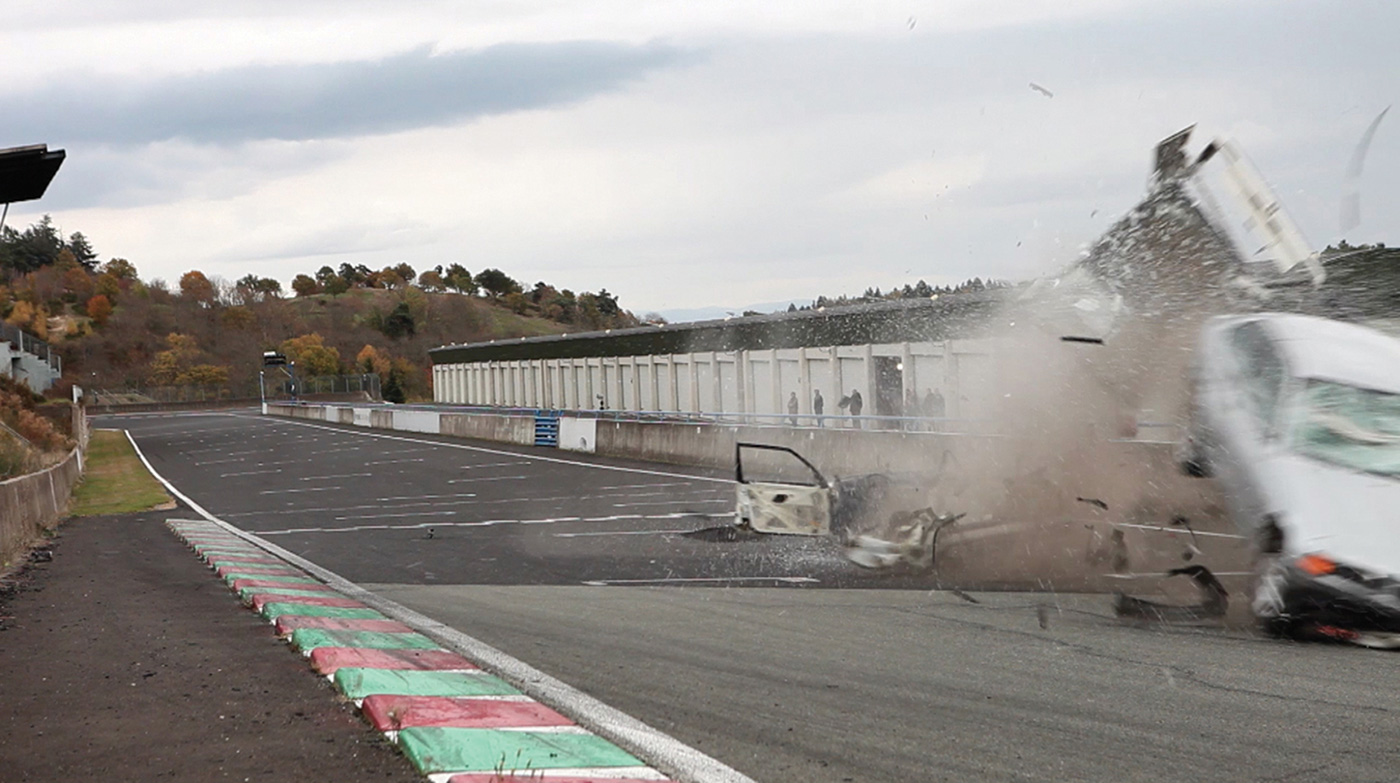
For Gaël Peltier, video is above all a means of recording a performance that cannot be repeated. It is an art of the instant which, as here, culminates in violent mechanical destruction. Its proximity to cinema lies in the procedures behind the actions he undertakes, willingly putting himself in danger and, like a stuntman, accepting the constraints and risks of an operation prepared with meticulous care. Beyond this technical kinship and the references that inevitably come to mind — Crash by David Cronenberg, after J. G. Ballard’s novel, for instance — everything in this work stands in opposition to cinema. There is no narrative: the focus rests on an accident, on the acceleration that leads to it, and on the brutal impact to which the performer submits himself. He places himself entirely within reality; only the driver’s protective gear and harness distinguish this deliberate crash from a fortuitous event of the kind that so often occurs on the road. This resemblance unsettles the viewer’s eye and reveals the presence of a latent desire — not only to watch, but to take part in something that is usually perceived solely as a dramatic event, frequently with fatal consequences.
Gaël Peltier develops a practice in which attitude takes precedence over the production of objects, ready-mades or films, placing his work in the lineage of artists without oeuvre. He describes himself as an “infra-conceptual artist by default,” adopting a lateral position in which a protocol applied to reality becomes the material itself. His projects involve precise forms of commitment: gaining 30 kg in New York for a role that did not exist (La Conjuration, 2010), a car crash staged as critical action (Percussion Mécanique, 2018), or interventions that subtly disturb an otherwise ordinary situation. Video records these processes not in order to produce an effect, but to render visible the conditions of their emergence within real-world circumstances. His work has been exhibited in France and abroad since 2002.

Carlos Pereira
Unruhe
Experimental film | 16mm | color | 11:50 | Portugal, Germany | 2024
"There’s been a strange epidemic lately Going amongst the folk, So that many in their madness Began dancing. Which they kept up day and night, Without interruption, Until they fell unconscious. Many have died of it."
Carlos Pereira, born in Lisbon, is studying Film Directing at the Deutsche Film- und Fernsehakademie Berlin (DFFB). His films have been screened at festivals such as Locarno, San Sebastián and Rencontres Internationales Paris/Berlin. His film Slimane (2023) won the German Film Critics Award for Best Short Film. His first feature film, Remote Islands, written during a residency at The Bergman Estate on Fårö, is currently in pre-production.


Jenny Perlin
A Landing
Experimental doc. | 4k | color and b&w | 9:5 | USA | 2025
This short film is about the first manned balloon flight in the United States, in 1793, when the country was only 17 years old. The aeronaut (balloonist) for this adventure was the celebrated Frenchman Jean-Pierre Blanchard. The idea that the 18th century United States was empty territory to be overtaken by settlers was, in part, supported by the new technology of balloon flight. The film carries us along with the story of Blanchard’s famous journey but by the end we find ourselves in contemplation of a five-hundred year old oak tree called the Clement Oak that sits, damaged from climate-catastrophic storms, behind a Walmart Supercenter in New Jersey. Blanchard’s flight is described in Journal of my 45th Ascension, Being the First Performed in America, on the 9th of January 1793.
Jenny Perlin’s work in film, visual art, and writing engages documentary traditions, incorporating innovative stylistic techniques to engage issues around truth, misunderstanding, and personal history. Her projects look closely at ways in which social machinations are reflected in the fragments of everyday life. Perlin’s work has been shown in numerous exhibitions and film festivals, including at the Whitney Museum of American Art, the Guggenheim Museum, the Museum of Modern Art, the New York Film Festival, the Berlin Film Festival, the Rotterdam Film Festival, and others. In addition to her work as an artist and educator, Perlin is director of?The Hoosac Institute, a platform for text and image focusing on works that exceed or challenge conventional disciplinary narratives.?
Jean-baptiste Perret
Le quotidien
Video | hdv | color | 5:11 | France | 2025
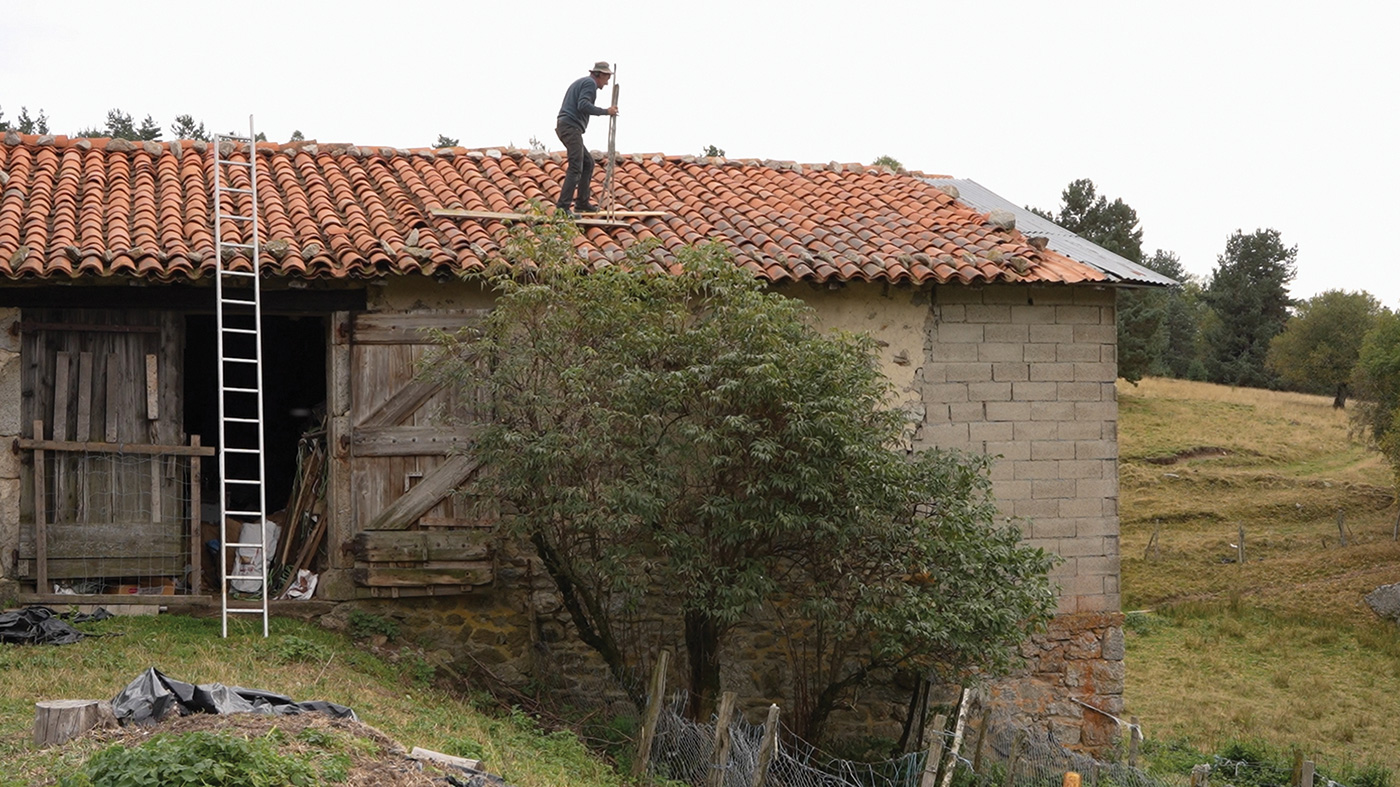
Filmed in the gorges of the Haut-Allier, Le quotidien is the portrait of a man who has chosen to live alone and apart, in a cabin at the edge of a forest. The images record his everyday gestures, tied to the essential needs of human existence: drinking, eating, washing, mending, beginning again. “Like an anthropologist-filmmaker, Jean-Baptiste Perret chooses a site — often rural — and immerses himself in it for long periods. He builds relationships with the people he meets there, filming their living spaces and their knowledge. Shot in the gorges of the Haut-Allier, Le quotidien portrays a man who has chosen to live alone, removed from human society, in a cabin at the forest’s edge. The videomaker captures his daily gestures, linked to the essential needs of human life: drinking, eating, washing, repairing, starting again. The film forms part of a broader enquiry into marginal life paths within rural contexts, in which other relationships to the living world, to territory, and to ecology are invented.” (Work Method, Guillaume Désanges and Coline Davenne)
After studying ecology, Jean-Baptiste Perret worked for several years in environmental protection within local authorities. A 2018 graduate of the École des Beaux-Arts de Lyon, he has continued to pursue his interest in rural contexts through a filmmaking practice that takes the form of films and video installations. His work is driven by the question of care, which he understands as an attentiveness to vulnerability, inseparable from the regenerative capacities of individuals. His approach is grounded in documentary enquiry and draws on methods borrowed from anthropology that challenge conventional criteria of objectivity, placing affect at the very centre of the research process. He is also inspired by microhistory, which seeks to step away from official narratives of the many in order to focus on individuals and their own ways of understanding the world. Jean-Baptiste Perret films people he encounters in their everyday situations, engaging with their life paths, their surroundings, and their skills. Through varying degrees of staging — always leaving room for improvisation — subjective accounts and fictional strategies intermingle. His work has been shown at the Institut d’art contemporain (IAC) in Villeurbanne as part of the 15th Lyon Biennale, at the Musée d’art contemporain de Lyon, at Fondation d’entreprise Ricard (Paris), at the Musée de la Chasse et de la Nature (Paris), at the Chapelle Saint-Jacques (Saint-Gaudens), at the Institut national d’histoire de l’art (Paris), at FID Marseille, at the Festival Hors-Pistes at the Centre Pompidou, at the États généraux du documentaire in Lussas, and more recently at the 66th Salon de Montrouge. Jean-Baptiste Perret is represented by Galerie Salle Principale in Paris.


Camille Peyre, Camille PEYRE
Sel sal
Experimental film | 4k | color | 12:39 | France, Belgium | 2023
In a desert landscape well known to travel agencies, European tourists on “all-inclusive” vacations discover the main attraction of this African country: a salt lake. Wandering between the grotesque and a thirst for adventure, these groups are guided through a spectacular environment they do not always truly see. As if switched off, they follow their guides from one vehicle to another. They stay together according to the languages they speak, choosing neither the activities they will do nor the places they will visit : the prepaid hotel decides for them.
After a hotel school and three years of expatriate jobs in Ireland, England and Spain, I decided to reorient myself towards the artistic world in 2018 by doing a preparatory year at the Beaux-Arts in Marseille. I then obtained the Diplôme National d'Arts at the Haute École des Arts du Rhin (HEAR) in Strasbourg and graduated with a master's degree in photography from the Ecole Nationale Supérieure des Arts Visuels de la Cambre in Brussels. As well as being a photographer I like to build up a protean body of work through multidisciplinary cross-fertilisation. By intertwining various media such as photography, printed imagery, and installation, Camille Peyré’s work explores social hierarchies and their historical construction. It plays with political structures and class relations that shape our trajectories, dissecting their visual representations embedded in everyday life. He builds a repertoire of allegorical images, nourished by the artistic expressions of protest, seizing upon the paradoxes that traverse our societies. The apprehension of these tensions takes form in his work through the use of détournement, hybridization, and parody—methods borrowed from activist and popular practices. By using everyday and salvaged materials, he reclaims their utilitarian qualities to create a mise en abyme of the very objects he constructs. Whether reenacting portraits of statesmen with secondhand uniforms, crafting work garments sewn from reclaimed materials tied to their trades, or building a chapel to neoliberalism inspired by the theories of David Graeber, each project becomes a space of critical friction, where diverse references converse and collide. Through humor, the use of text, and the accumulation of materials, forms of gentle dissidence emerge—spaces where the norms and aesthetics of power are tenderly, yet incisively, questioned.

Pink Twins
Firewalk
Animation | dcp | color | 9:35 | Finland | 2025
A pre-apocalyptic midnight walk takes you through a burning forest to witness a looming destruction. A fire in the forest either marks an impending doom or serves as a metaphysical gateway between realities.
Helsinki based duo Pink Twins, Juha and Vesa Vehviläinen, have worked in the fields of media art, moving image and electronic music since 1997. The boundaries of human perception, immersion and physicality are central to their works. Pink Twins implement their complex animations through parametric design and programming. Their works are performed not only in exhibitions and festival screenings but also as live performances combining music and video projections. Pink Twins have been seen on all continents, and in all kinds of venues from concert halls, festivals, theaters to churches. In recent years, Pink Twins have also made audio and video works directly online, e.g. the sound piece Infinity for Kiasma’s online art collection.


Leonardo Pirondi
Potenciais À Deriva
Experimental doc. | 16mm | color and b&w | 11:30 | Brazil, USA | 2024
This pseudo diary film is made of found materials from an unfinished 16mm film. Potenciais à Deriva is a film started by a Brazilian artist under a pseudonym while living in exile in Los Angeles, California. Isolated shots and previously assembled scenes reveal an intention to create a mysterious film comprised of disembodied interviews, empty rooms, radio recordings, soccer games, and sudden apparitions of the filmmaker that slowly ruminates on Brazil's colonial past, imperialism, and the military dictatorship of the time in a paranoid and anxious manner. Be aware that the film's final version never came to exist. This version presented is my mere attempt to produce a film with these otherwise lost images.
LEONARDO PIRONDI (b. São Paulo, Brazil, 1999) is a filmmaker and artist who lives and works between Los Angeles, Porto, and São Paulo. His films create and inhabit alternate worlds that blur the lines between reality and fiction, challenging conventional storytelling structures. Pirondi's films have screened internationally at festivals such as the Toronto International Film Festival, the Tiger Short Competition in Rotterdam, the New York Film Festival, the Viennale, Mar del Plata, FICUNAM, the BFI London, the Festival du Nouveau Cinéma, Edinburgh, Melbourne, Guanajuato, Ambulante, and Media City, UNDERDOX, among others. His work has been presented in art centers such as CCCB (Spain), the Wexner Center for the Arts (USA), and REDCAT (USA). He has had solo shows at Galeria Mola in Portugal and Spectacle Theater in New York. Some of his films live in the UCLA Film & Television Archive collection, the James Baldwin Library at MacDowell, the Cinematheque of the Museum of Modern Art in Rio de Janeiro, and The Film-Makers' Coop. in New York City. He holds bachelor's and master's degrees in film from the California Institute of the Arts (CalArts), was named one of Filmmaker Magazine’s 25 New Faces of Independent Film in 2025, is a Sundance Institute Fellow, and was awarded a MacDowell Fellowship in 2025. His work has been featured in publications such as ARTFORUM, Filmmaker Magazine, MUBI Notebook, Senses of Cinema, Talking Shorts, and InReview Online. His short and feature films have been supported by the Instituto do Cinema e do Audiovisual of Portugal (ICA), the Locarno Residency, Projeto Paradiso, the Allan Sekula Social Documentary Fund, San Diego Underground Arts, and the Tim Disney Prize for Excellence in the Storytelling Arts. He is a programmer for the Climate Film Festival NYC and is part of the board of directors and selection committee for Badam Film and its film development fund.
Léonard Pongo
Tales From The Source
Experimental video | mov | color | 38:19 | Belgium, Congo (RDC) | 2024
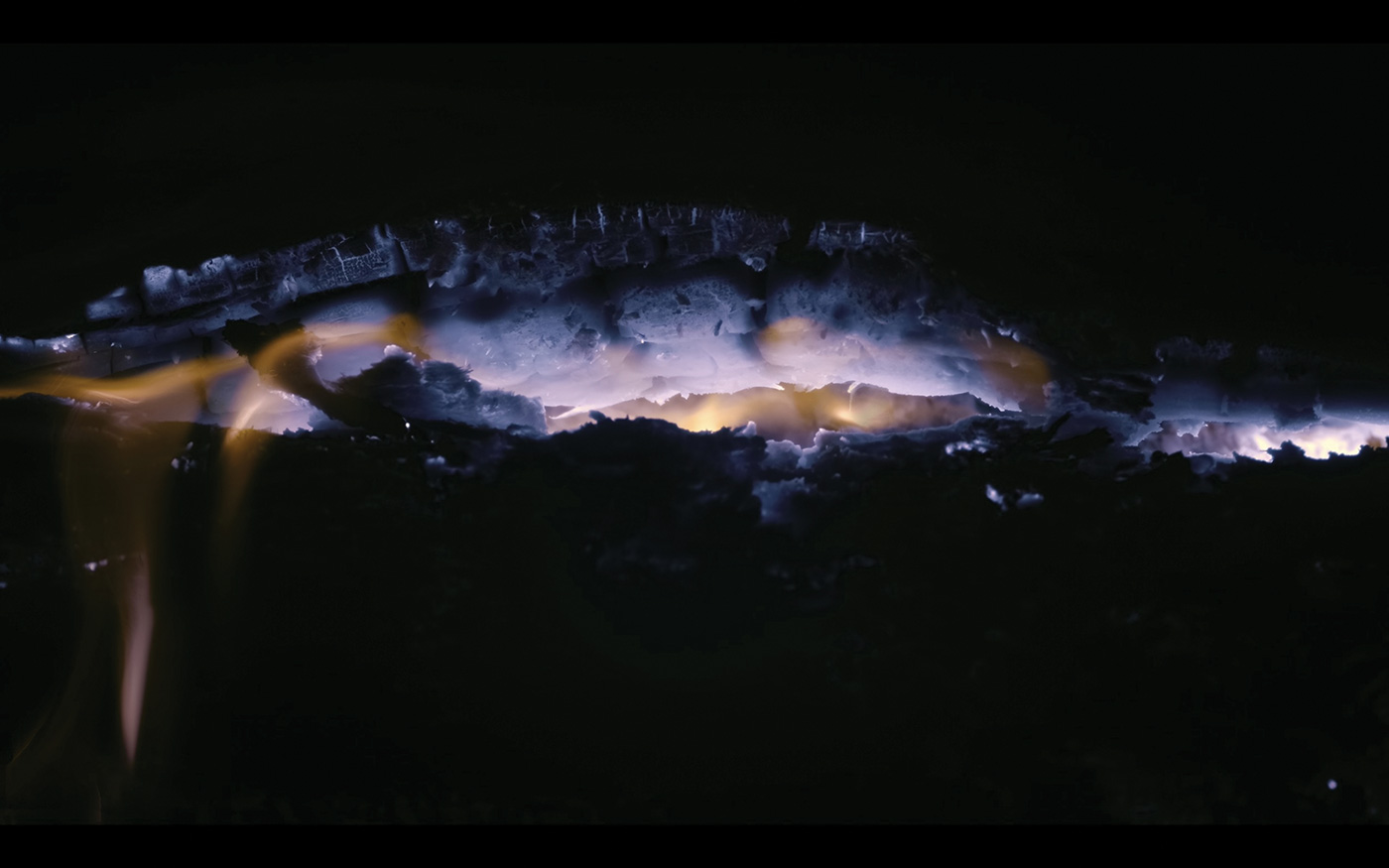
Tales from the Source offers a gaze on the landscapes of the Democratic Republic of Congo to translate a sense of its unfathomable power, diversity and knowledge. The scenery is presented as a character acting as a living entity and inhabited by the symbolism of Congolese traditions. The visual approach borrows techniques from multispectral imaging, resulting in an otherworldly experience with surreal lights and colour. Combined with an original musical composition by Bear Bones, Lay Low, we enter into a sensory dialogue with the landscape, an intelligent, ageless being in constant transformation that challenges our perception.
Léonard Pongo (b. 1988, Liège, Belgium) is a visual artist and filmmaker who lives and works between Belgium and the Democratic Republic of Congo. Pongo's work explores the complexities of perception, and representation while challenging conventional portrayals of the DRC with a focus on traditional narratives and symbols, and their connection to the land. Initially trained as a photojournalist, Pongo's artistic journey began in 2011 when he traveled to the DRC to cover the presidential elections. This experience profoundly transformed his approach to photography, shifting from objective documentation to a more subjective and experiential mode of expression. His family and local communities challenged his initial perspective, encouraging him to develop a more nuanced and intimate portrayal of Congolese life. Pongo is renowned for his mixed-media installations that integrate textiles, photography, diverse printing techniques, and moving images. His work draws deeply from Congolese cosmologies and oral traditions, particularly embracing the concept that "not everything is visible." Using specialized techniques including full-spectrum photography that captures wavelengths beyond human vision, he reveals aspects of landscapes and experiences typically hidden from view. His long-term project "The Uncanny" (2011-2017) explores daily life in the DRC through evocative black-and-white imagery that creates a dreamlike atmosphere, while "Primordial Earth" (2017-ongoing) focuses on the land using color photography, textiles, and video installations to evoke a sense of spirituality and interconnectedness. His latest film, "Tales from the Source" (2021-2024), extends his focus on traditional narratives, focusing on the luba cultures and highlighting the intertwined nature of culture and environment. Pongo's collaborative approach involves working closely with communities across the DRC, drawing inspiration from their knowledge, stories, and traditions and creating visuals that align with the lineage of Luba traditions by creating contemporary forms connected to ancestral concepts and visions. His work has been exhibited internationally at prestigious venues including the Bozar Centre for Fine Arts in Brussels, the Tate Modern in London, the Dakar biennale in Senegal, and the Nasher Museum of Art at Duke University. In 2023, his first monograph "The Uncanny" was published by Gostbooks, and in 2025 he was selected as one of ArtReview's "Future Greats" by photographer Roger Ballen.
Mohammad Poori
No One Came From Afar
Experimental fiction | 4k | color | 15:0 | Germany | 2025
Levi, a young craftsman, drifts through the city streets with a restless sensitivity. He wanders day and night through dimly lit bars, pulsing clubs, and silent playgrounds, crossing paths with friends, strangers, animals, and even inanimate objects along the way. Each encounter is fleeting, each moment fragmented. Levi listens, touches, remembers—yet nothing fully coalesces in his grasp. Through Levi’s quiet journey, the film explores the trauma of displacement and the uncanny ways it warps memory and perception. Time loses its shape as past and present blur into a multitude of overlapping narratives. Voices, smells, and sensations from different moments merge together—at times overwhelming, at other times hyper-specific. As Levi seeks to feel and understand amid this blur, the film quietly meditates on the act of observation itself and on the emotional resonance of longing and transience. No one came from Afar was created during the director’s own exile in Germany. It draws upon the different yet emotionally similar experiences of displacement shared by the filmmaker and the lead actor, Levi Hartmann. This personal context subtly shapes the film’s perspective, grounding its poetic exploration of longing and transience in lived reality.
Mohammad Poori (b. 1987, Sari, Iran) is a filmmaker and curator based in Hamburg and currently a Master student in Film and Time-Based Media at HFBK. His work focuses on collective trauma, exile, and the politics of memory, with particular attention to how narratives are fragmented and reactivated under conditions of displacement. He is a recipient of the Neue Kunst in Hamburg travel grant (2024–25) and will be a fellow of the MAK Schindler Scholarship Program at the Mackey Apartments in Los Angeles (2026–27).
Lucia Prancha
CHARLES
Experimental doc. | hdv | black and white | 2:38 | Portugal, USA | 2025
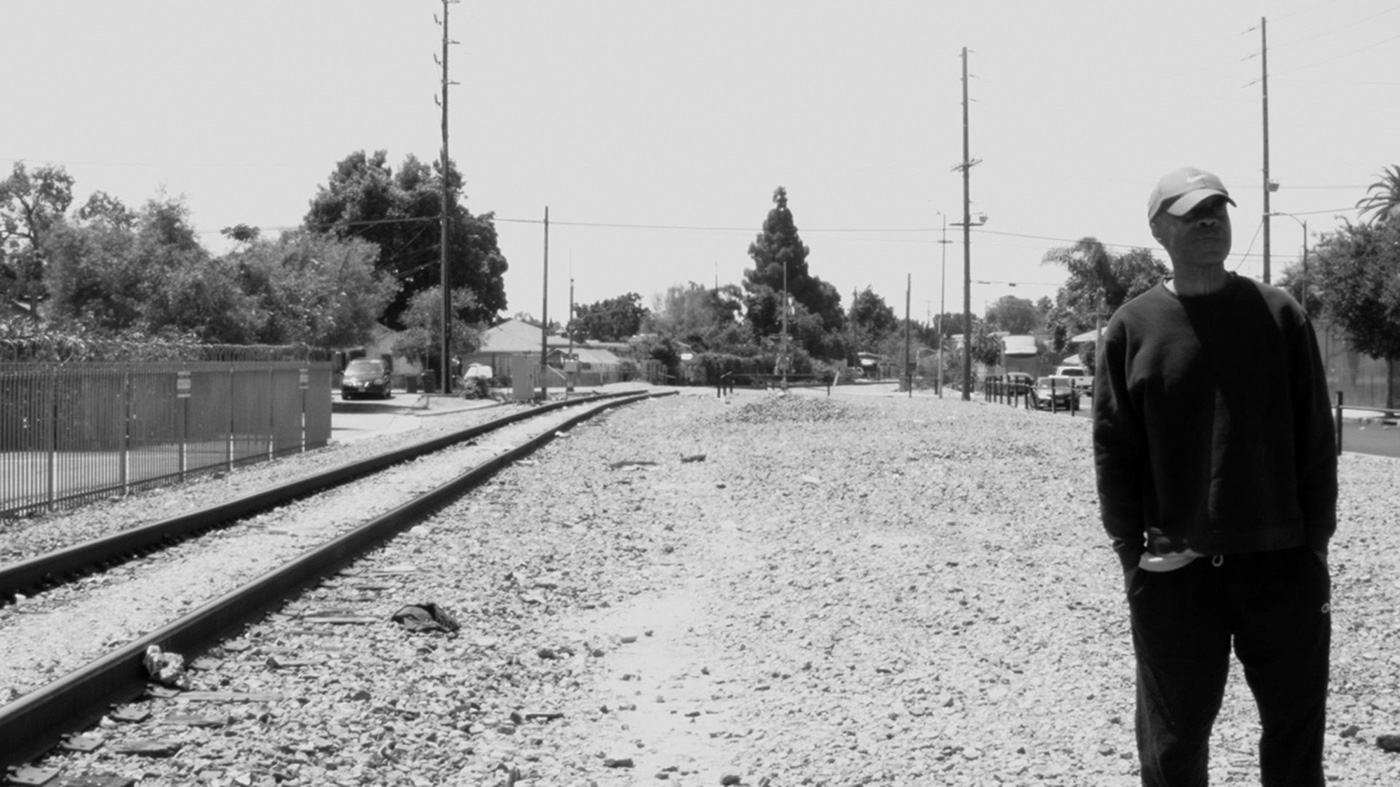
Do you remember the scene in Killer of Sheep (1978) where the kids are playing on abandoned railroad tracks? The scene is set in the Watts neighborhood in California. Director Charles Burnett took the artist Lúcia Prancha to several filming locations from his works around Los Angeles.
Lúcia Prancha (1985, Lisboa) is an artist who lives and works in Barcelona. Lúcia graduated in Painting from FBAUL (2009, PT) and obtained her Masters in Arts from CalArts–California Institute of the Arts (2015, USA). Her work was exhibited at Pavilhão Branco, Museu da Cidade, Lisbon; 19 Crac de Montbéliard; Centro de Arte Oliva; Sesc-Pompeia, Sao Paulo; LACA – Los Angeles Contemporary Archives; Hordaland Kunstsenter, Bergen; Serralves Foundation, Porto; Galeria Dynamo, Porto; Galeria Leme, São Paulo; Berardo Museum and São Paulo Biennial. Her videos were screened at the Cinemateca Portuguesa; INTERSECCIÓN, Coruña; Curtas Vila do Conde; Rencontres Internationales Nouveau Cinéma et Art Contemporain de Paris and, Haus der Kulturen der Welt, Berlin. Currently, she is part of "El vértigo de las imágenes", XVIII Bienal Internacional de Fotografía–Fotonoviembre at TEA–Tenerife Espacio de las Artes and Centro de Fotografía Isla de Tenerife, ES. From September to November, she will be in artistic residency at the Cité Internationale des Arts in Paris.
Jordan Elliott Prosser
The Sire of Sires
Experimental doc. | mp4 | | 12:14 | Canada | 2025
On the ruins of a renowned racehorse breeding farm, now giving way to suburbs, the legendary Nijinsky (dancer become horse) returns to his birthplace for a final performance. After Mallarmé's L'Après-midi d'un faune, and the final film in Prosser's "Self-Portrait" trilogy. A satyr play.
Jordan Elliott Prosser is an artist living in Toronto. He has impressive credentials. If you enjoyed his film, reach out and let him know.
Oleksiy Radynski
Special Operation
Documentary | mp4 | color and b&w | 65:0 | Ukraine | 2025
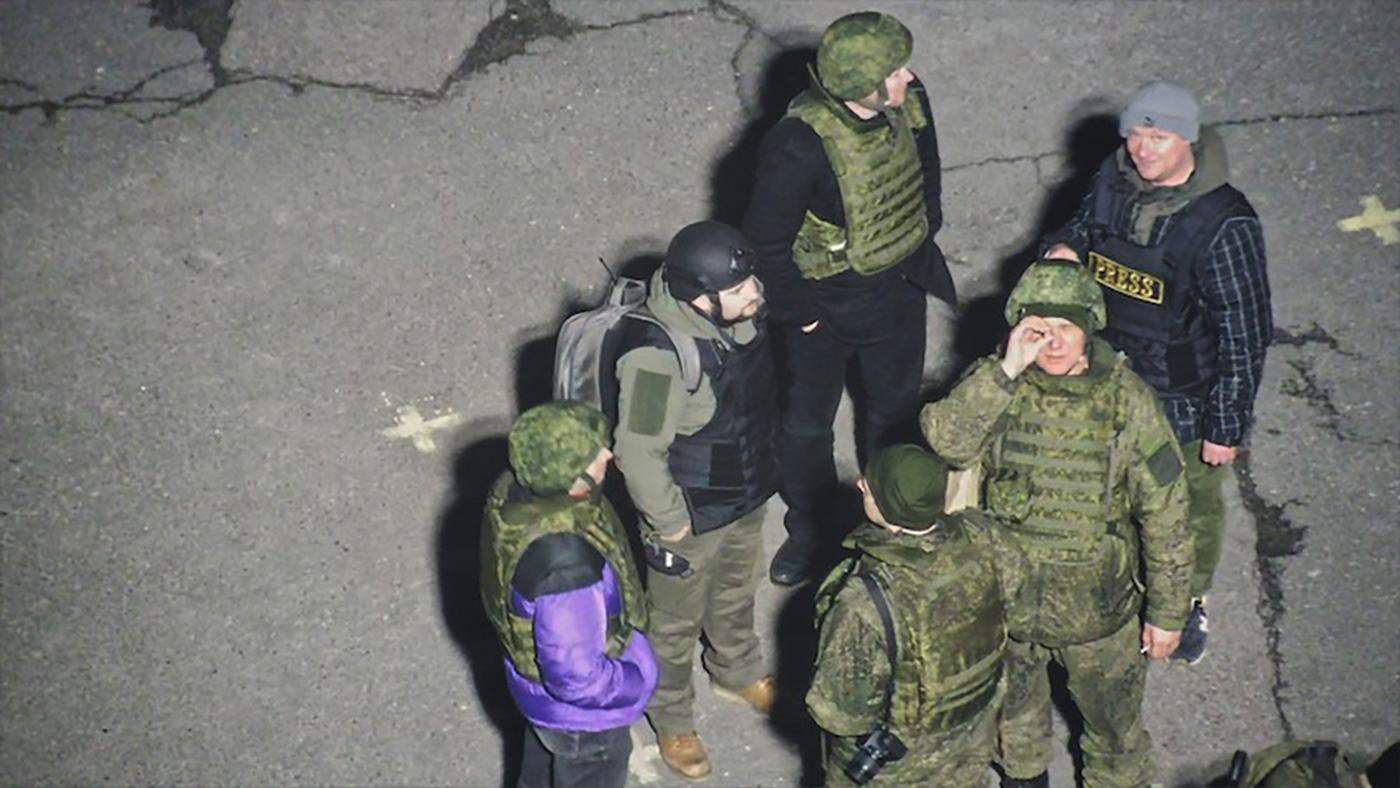
The Chornobyl Zone - the site of the worst nuclear disaster in history - had been occupied by the Russian troops on February 24, 2022, in the very first hours of their all-out invasion of Ukraine. The Russians had turned the territory of the Chornobyl Nuclear Power Plant into a military base for their troops in an attempt to occupy the Ukrainian capital of Kyiv, located just a hundred miles away. They had captured the personnel of the nuclear plant who were forced to perform their duties without proper rest or sleep. The Russian plan was to stay in Chornobyl for just three days: this was their imagined time span for Ukraine’s downfall. Instead, the Russians were stuck at the radioactive site for five weeks, only to see their army collapse in the battle for Kyiv. Most of their illegal activities during these five weeks had been captured by the nuclear plant’s CCTV system, which the Russians had failed to prevent from filming. Special Operation is entirely based on these recordings. This film offers a unique perspective into the inner workings of the Russian military machine in Ukraine - and into one of its most grandiose failures. The CCTV cameras have recorded every aspect of Russian criminal presence at the contaminated Chornobyl Nuclear Power Plant - from the gross violations of nuclear safety to the staged visits by the Russian TV propagandists. We have obtained these unique materials - which had never been disclosed to the public before - from the Ukrainian law enforcement as part of our team’s long-term effort to document Russian war crimes in Chornobyl, and to help bring their perpetrators to justice. Each shot of this film is a piece of evidence representing a war crime of nuclear terror. With this film, we wish to make this evidence visible - and by doing so, to expose the profound, and frightening, incompetence of the Russian army.
Oleksiy Radynski is a filmmaker and writer based in Kyiv. His films experiment with documentary forms and practices of political cinema. They have been screened at film festivals and exhibitions worldwide including Berlinale, International Film Festival Rotterdam, Doclisboa, Thessaloniki IFF, Dokufest, the Institute of Contemporary Arts (London), e-flux (New York), Taipei Biennial, Docudays (Kyiv), Sheffield Doc Fest, Krakow IFF, DOK Leipzig etc. His films received multiple awards, including the Grand Prix at the Oberhausen International Short Film Festival for Chornobyl 22. Since the beginning of the full-scale Russian invasion of Ukraine, he has collaborated with The Reckoning Project.
Sara Rajaei
City Of Poets (Dir. By Sara Rajaei)
Documentary | 4k | color | 21:22 | Netherlands | 2024
Through a collage of personal archive footage and photographs, the history emerges of a small, metaphorical city where all the streets are named after poets. The town’s psychogeography defines the mental and emotional state of its inhabitants, who live in a utopian illusion founded on poetry. When the system changes, and war begins, new neighborhoods emerge to accommodate the refugees, and the existing street names are replaced by new ones. Abrupt and sweeping upheavals lead to confusion among the city’s residents, who soon find themselves lost amid the memories of the forgotten poets.
Sara Rajaei is an Iranian-Dutch video artist and filmmaker based in The Netherlands. In her work, she studies the notion of time by reflecting on the absence of image, memory psychology, oral history, narrative techniques, and physical/psychological space. Her artistic oeuvre consists of short films and video installations, which remain in-between storytelling and imagery. After her graduation from the Royal Academy of Art The Hague in 2002, Rajaei attended a 2-year residency at the Rijksakademie van Beeldende Kunsten Amsterdam. In 2009, she was shortlisted for the Prix de Rome. She is currently developing her first feature film with support of the funding scheme The Imagination (De Verbeelding) of Netherlands Film Fund.
Zhu Renjie
Fare Thee Well
Fiction | mp4 | color | 25:0 | China | 2024
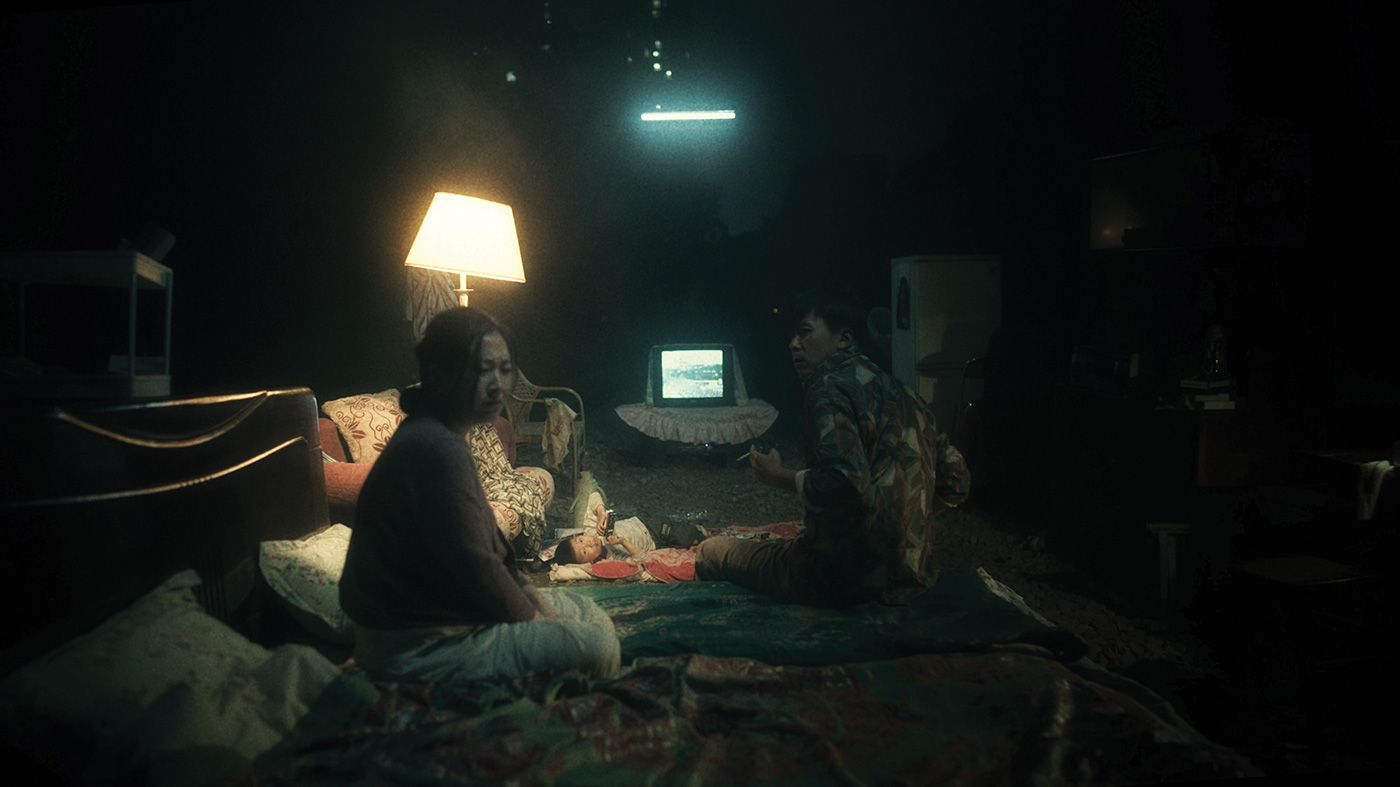
Under the butterfly effect triggered by the second wave of reform and opening up of China, a small family found itself caught in a continuous hurricane in life. Many years later, Yang Xiaolong received four letters from his long-unseen father. As a result, the textual clue of "country grows and family broke " unlocked the suppressed childhood memories within him...
Renjie ZHU, director and cinematographer, born in 1992, has lived in the ancient city of Anyang and the metropolis of Shenzhen due to family reasons since childhood. He currently resides in Hangzhou. He graduated from the China Academy of Art with both his bachelor's and master's degrees, and is currently pursuing a doctorate in film creation at the same institution. His work has won the New Wings Promotion Award in Golden Rooster Youth Short Film Season, and won the Qilin Outstanding short film in In Moment Film Festival, and has been selected for the Beijing International Short Film Festival and Light My Fire Youth Film Festival and so on.