Catalogue > Search
Results for : Catalogue 2020
Mohamed A. Gawad
betalpha (Balbalah)
Film expérimental | hdv | couleur et n&b | 5:31 | Egypte | 2018
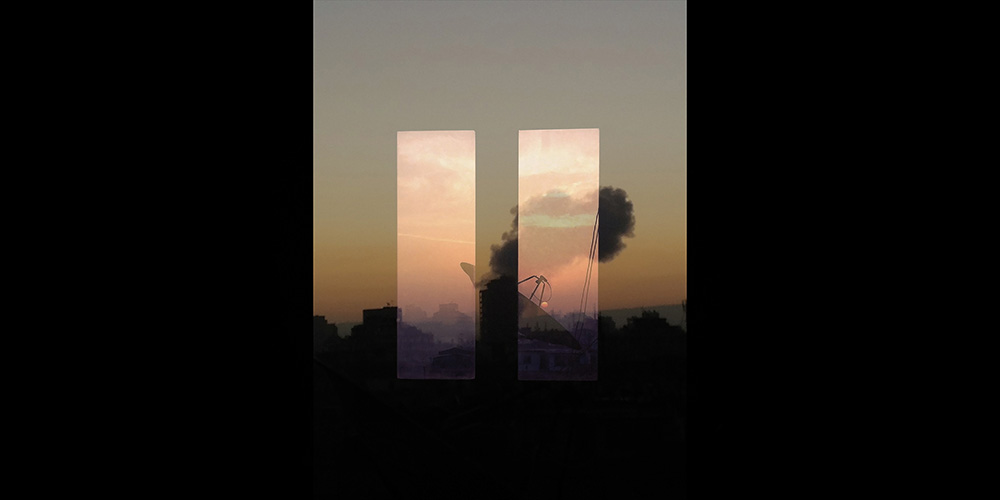
At a time before time, a Big Bang in Babel sat the uni-logos into a perpetual process of language breeding. Depleted and stripped of its initial inertia, language can no longer keep up, and slowly crumbles to phonetic fragments of ghostly meaning. Dialect-ic-s coalesce, and separates overlap. Accidentally excavated, scraps of mental images that outlived history are crunched into an associative mash. No-longer-indigenous tongues exercise “language games” of syntactic deconstruction, morphing seemingly heterogeneous linguistic signs until foreign words resettle in newly-found ears. Persistent utterances in Bal-balah (befuddlement/ clutter/ Babelising) show no mercy for hesitation or stuttering; in this framework there is no place for affective becoming, yet at the same time, the loss of the power fossilized in words opens up a space of flexibility to ascribe new and elusive meanings.
Mohamed A. Gawad is an editor and a filmmaker based in Cairo. He holds an MFA in scriptwriting and editing from RSICA. His works were screened in several festivals and spaces including Berlinale, Internationale Kurzfilmtage Oberhausen, Shnit Film Festival, Contemporary Image Collective - Cairo, and Les Instants Vidéo Numériques et poétiques. He is also a co-founder of Cimatheque – Alternative Film Center.
Endre Aalrust
Dear Deer
Doc. expérimental | hdv | couleur et n&b | 19:21 | Norvège, Allemagne | 2019
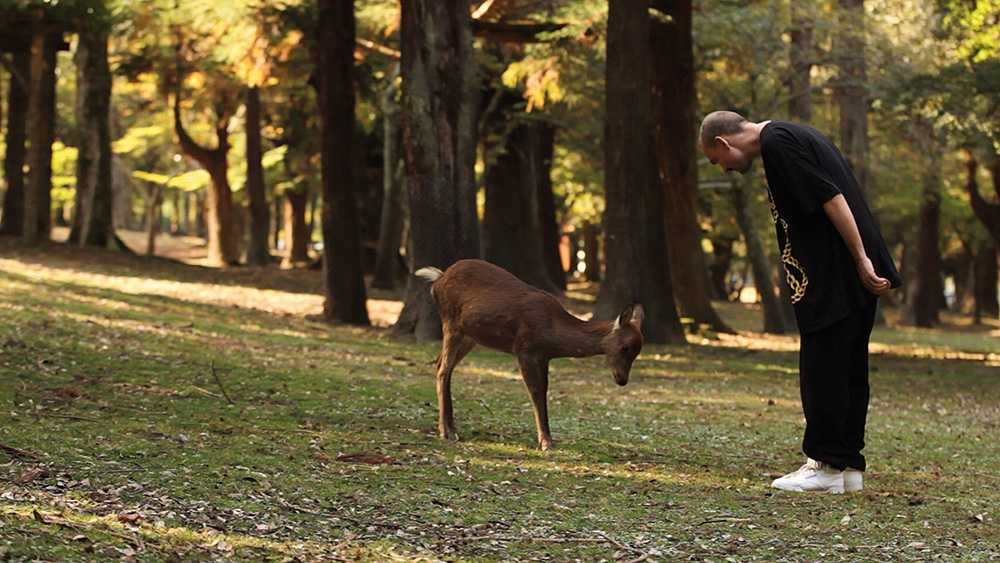
Jacques Derrida’s staring cat Logos, a bowing deer, domestic servants, a headstrong mare and the director’s 19 years younger boyfriend are some of the characters we meet in the essayfilm Dear Deer. The distanced and slightly voyeuristic documentary footage, mainly shot in Argentina and Japan, is accompanied by a voiceover in which asymmetrical relations, trans-species empathy, embarrassment and shame are discussed in a both investigative, descriptive and confessive manner.
Endre Aalrust (b. 1973) is a Norwegian artist and film maker who is based in Berlin. He studied at the University in Oslo and National Academy of fine Arts in Bergen. Aalrust has shown films in film and video festivals such as Internationale Kurzfilmtage Oberhausen (2019), Norwegians Short Film Festival, Grimstad (2019), HOMOGRAFÍA Film Festival, Mexico City (2018), Nordic Filmfest, Rome, (2018),International Film Festival Rotterdam (IFFR), (2016), Janela Internacional de Cinema do Recife, Brazil (2016), Athens International Short Film Festival Psarokokalo (2016), Xposed International Film Festival, Berlin, (2016), Rencontres, Paris/Berlin/Madrid (2003/2011), Viper film and Videofestival, Kunsthalle Basel (2004) and European Media Festival, Osnabrück (2002). Solo exhibitions include: Hund om Det, Bruksrommet, Stavanger, (2018) Freedom of Impression, Bærum Kunsthall, Oslo, (2018), Urc de Triomphe, Kunstbanken, Hamar, (2015), The Rise and Fall of Rise and Shine, Gallery Erik Steen, Oslo (2011), Free Lunch, Daniel Reich Gallery, New York (2010), Sofa So Good, Galerie Sandy Brown, Berlin (2009).
Sherko Abbas
Paper Puppet Testimony
Doc. expérimental | hdv | couleur | 8:12 | Iraq | 2019
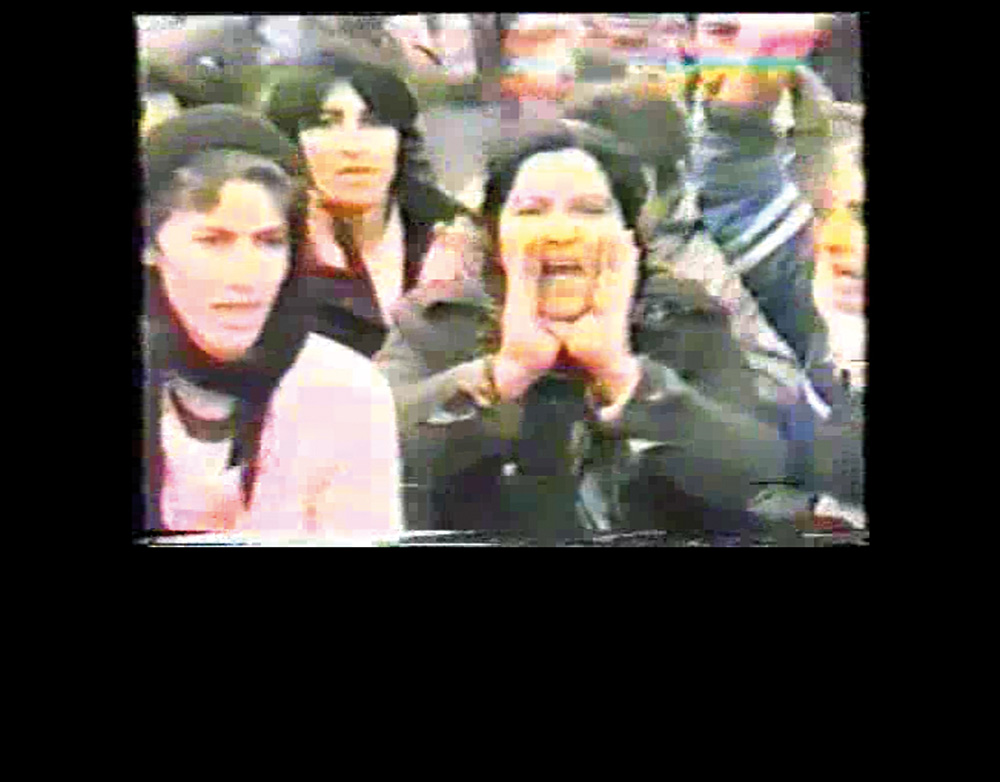
Paper Puppet Testimony By Houzan Mahmoud The Kurdish uprising of 1991 against venomous dictator Saddam Hussein continues to be an important historical event for all Kurdish people. It was the day that marked the defeat of the Ba’ath regime in Kurdistan’s cities. Each year, video footage from that particular moment when people broke into the notorious prison in Sulaymaniyah is shown in commemoration programmes on Kurdish TV channels. The Red Prison (or Security Prison) was a dreadful building in the middle of the city. It stood out as a symbol of terror and oppression, for many years; hundreds of Kurdish men and women were tortured and killed there by the dictator. The video footage is part of an old archive taken by a former Peshmerga fighter and filmmaker Abbas Abdulrazaq. He was in the ranks of the Peshmerga forces from the 1980s onwards. He was one of the five photographers who took photos of the Halabja chemical bombardment by Saddam’ regime. While his video footage is used from the archive to show the brutalities committed by the former regime, Abdulrazaq’s son Sherko, an artist and scholar, noticed something was missing. He has a vague memory from the day of the uprising in front of the Red Prison. He remembers seeing a caravan full of colourful women’s clothes, anti-pregnancy tablets, and other materials. Sherko’s memory stayed with him through the years. At the time, he was almost 11 years old when he saw the caravan. This left its mark on him, and years later he decided to probe further into this story. Since 2008, Sherko has been searching for clues to help him get to the bottom of this mystery. The caravan could be seen for only a few days during the uprising in the courtyard of the prison. It has disappeared without a trace, however; hardly a memory of it remains. The Red Prison has now been turned into a museum, and its torture chambers and tools, along with prisoners’ writings on the walls, have been preserved so that subsequent generations could see the brutality of Saddam’s fascist regime. However, the parties behind this transformation were biased and only focused on the memories of those political prisoners who belonged to their own parties. They erased the entire history of female prisoners. The plight of those women and the mystery of the caravan were ignored and were neither included in the memory of the building nor on TV programmes because these women might have been raped, and the political establishment does not seem to be willing to confront that history. This issue has become a concern for Sherko, and he raises many important questions as to why rape of political prisoners should be treated with shame. Why are their sacrifices belittled and erased? The name of his documentary is “Paper Puppet Testimony,” which recounts the stories of Kurdish women in the Red Prison through experimental documentary. In his documentary, Sherko tries to bring their stories back into the realm of politics, art, and culture. He is interested in stories that are easily forgotten, and he wants to give them a platform to be narrated and incorporated into official memory.
SHERKO ABBAS Sherko Abbas (b. 1978) is a Kurdish-Iraqi artist. Born in Iran, where his family lived as refugees, Abbas returned to Iraq when he was two years old. He studied Fine Art in Sulaymaniyah-Iraq and graduated with a Masters in Fine Arts from Goldsmiths College, University of London in 2015. Employing video, performance, sculpture, text and sound, Abbas’ practice is dedicated to the sonic and visual memory and geopolitical situation of contemporary Iraq. He has participated in many exhibitions internationally, including “Theater of Operations“ at MoMa PS1, Speaking a cross mountain Middle East Institute Washington, US, ‘Archaic’, the Iraq Pavilion at the 57th Venice Biennale; Biennale ‘Rencontres Internationales Paris/Berlin 2019’ at the Louvre Auditorium, Paris, France and Haus der Kulturen der Welt/ Berlin ; ‘Bagdad mon amour’ at the Institut des Cultures d’Islam, Paris, France; ‘Vernacularity’ at the Alternativa International Visual Arts Festival in Gdansk, Poland; and ‘Estrangement’ at the Showroom, London, UK
Noor Abed
Out of Joint
Doc. expérimental | 16mm | couleur et n&b | 10:45 | Palestine | 2018
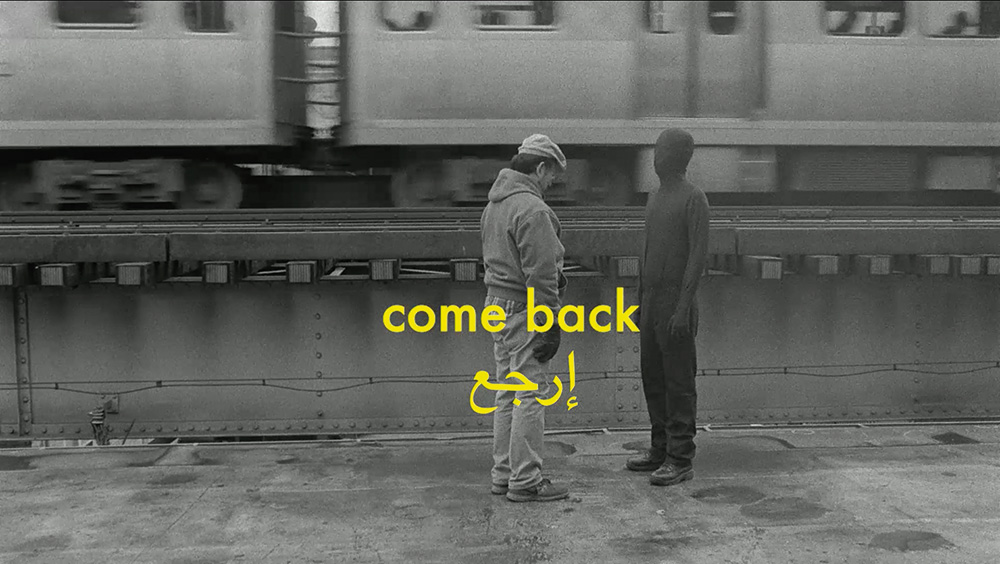
Combining 16mm footage of a staged dance of two men, and documentary SD footage (pre –wedding celebration in Palestine), the work highlights the affinities and tensions between performativity and performance. – One of a staged choreography, the other of one culturally embodied, while the third develops through editing. The film focuses on ‘dance’ as a social construct, in a wider examination of notions of Choreography and the imaginary relationship of individuals; a model of relations that are loosely bound together by a process of modernisation, technological rationalisation and cultural contradictions. It further examines how the political unconscious can be revealed through symbolic acts, particularly practices of movement and choreography. – Mainly through the relational: intervals between movements; these acts don’t seek to prove their strength or existence. They seem to reveal their weakness and negotiate with their surroundings- touching fragility in one’s self and therefore, a sense of fragility in the social structure that is usually denied.
Noor Abed (b.1988 Jerusalem) attended the Whitney Museum Independent Study Program in New York 2015-16, and HWP Home Works Program – Ashkal Alwan in Beirut 2016- 17. She received her BA from the International Academy of Arts -Palestine, and a MFA from the California Institute of the Arts, Los Angeles. She was a resident at the Skowhegan School of Painting and Sculpture in Maine 2014. A finalist and joint third prizewinner in 2014 Young Artist Award, she has been awarded the March Project residency and commission from Sharjah Art Foundation, UAE 2016, and a residency grant at the Cité Internationale des Arts in Paris, 2018.
Newton Aduaka
The Map Makers
Vidéo | hdv | couleur et n&b | 16:56 | Nigeria | 2020
As the leader makes a speech, the skies rain...
With his feature film Ezra, Newton I Aduaka won the Etalon d’or de Yennenga at the 20th edition of FESPACO. Premiering in competition at the Sundance film festival, it was nominated for the Humanitas Prize, screened at the Critics’ Week in Cannes and was awarded the United Nation’s prize for Peace and Tolerance, the FIPRESI award and various other awards, including 6 grand jury prizes. Prior to that his multi-award winning indie film debut feature, Rage, was released nation-wide in the UK to critical acclaim and was a recipient of the Carlton television multicultural award, FESPACO’s Oumorou Ganda award, PAFF best first feature award and the OCIC prize. A Ford Foundation grantee, Newton was Filmmaker in Residence at the Cannes Film Festival’s Cinéfondation’s La Résidence du Festival and writer in residence at The Moulin d’Ande. Commissioned by the Society of French Directors (SRF) and Cannes’ Quinzaine des Réalisateurs he made a short film on the theme, “Cinema and Globalization”. The result was Funeral. His short films, have screened, in various official competitions and won awards at numerous film festivals such as the Mostra de Venise, Oberhausen film festival, Claremont Ferrand Intl. film festival, Uppsala Intl. short film festival Edinburgh International Film Festival... The NGO, Global Dialogue, commissioned Aduaka to direct four short films on AIDS awareness. These films have been translated into numerous African and European languages and are effectively used as educational tools across the world. Aduaka was a member of the London based Activist film collective Migrant Media. Aduaka was invited to speak at TED, “Africa: The Next Chapter”, held in Arusha, Tanzania. His speech is available online at www.ted.com. He was invited by the Berlin film festival as an expert, to speak on drama and aesthetics of Cinema at the Berlinale Talent Campus. At the 60th edition of the Cannes Film Festival, Aduaka was invited to hold a Master class. One Man’s Show, his third feature premiered at Fespaco, winning the Critics’ Prize. The film had its US premier at the Mill Valley Film Festival. In the past few years Aduaka has made forays into experimental cinema and visual art installation pieces, a return to his days as a member of the radical avant-garde cinema in the early 90s at the London Film-Coop. Aduaka studied Film at the London Film School. He is a published short story writer. The British newspaper, The Independent, named Aduaka as one of the 50 greatest cultural figures shaping the African continent. Aduaka lives in Paris.
Greta Alfaro
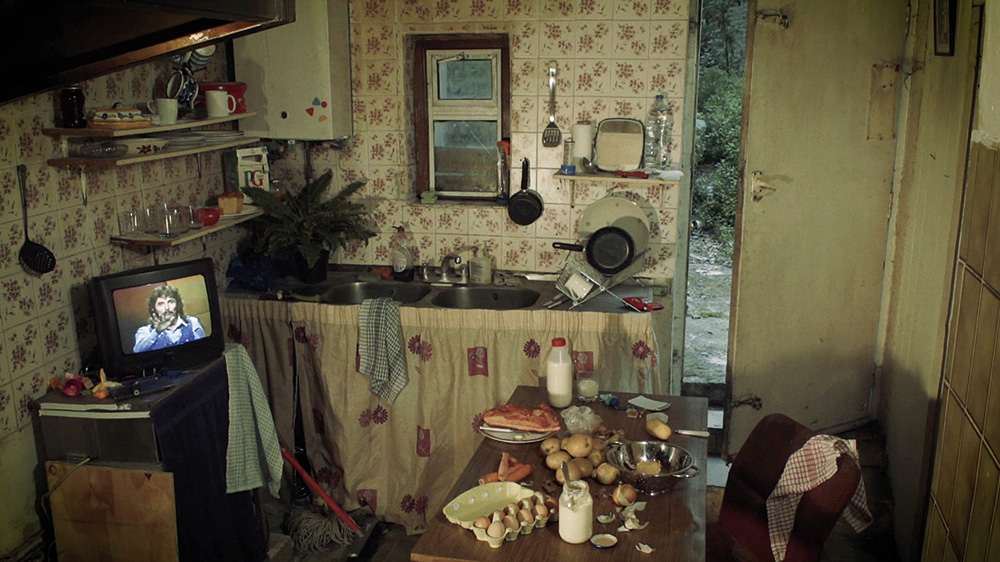
He Had Got Certain Vibes
Vidéo | hdv | couleur | 2:31 | Espagne, Royaume-Uni | 2019
One still life of the 20th Century. Poverty, mental health, media and magic. The fragility and drama of the everyday and domesticity.
Greta Alfaro (Spain, 1977) is a visual artist. Her solo exhibitions include Decimocuarta estación (2019) at the Fundación BBVA, Madrid; In Ictu Oculi (2019) at the Flint Institute of Arts, Michigan; El cataclismo nos alcanzará impávidos (2015) and European DarkRoom (2014) at Galería Rosa Santos, Valencia; Still Life with Books (2014) at Artium, Vitoria; In Praise of the Beast (2013) at Hiroshima City Museum of Contemporary Art, Japan; and Invención (2012) at Ex Teresa, Mexico City. Among her other solo site-specific projects are I Will Not Hesitate to React Spiritually (2019), with Roaming Room, and A Very Crafty and Tricky Contrivance (2012), with Genesis Foundation, both in London, and Comedias a honor y gloria (2016) in La Gallera, Valencia. She has taken part in numerous group shows and festivals in venues like the Whitechapel Gallery, Institute of Contemporary Arts and Saatchi Gallery in London; Centro Cultural Banco do Brasil in Brasilia; The Bass Museum of Art in Miami; the Conciergerie in Paris; Künstlerhaus Bethanien in Berlin; La Casa Encendida in Madrid or the International Film Festival Rotterdam.

Bon Alog
I will not
Installation vidéo | mp4 | couleur | 2:29 | Lituanie | 2019
The Hippocratic oath is known as a golden ideal standard of ethics for professionals working in the field of medical science. The Hippocratic oath and its modern version is relevant as a division between the power of killing and medical treatment. An extract of oath is chosen emphasize a moral pledge, which starts with negative form promise – I will not. Repetitive militaristic movements and hunting simulation is used as an imperative of security forces, defense, discipline and power relations in biotechnology context.
Bon Alog (LT) is a media artist. She graduated BA in Photography and Media arts at the Vilnius Academy of Arts and BA in creative industries at Vilnius Gediminas technical university. Bon works with video, film, installations and photography.
Alejandro Alonso
Metatron
Documentaire | hdv | noir et blanc | 13:0 | Cuba | 2018
.
.
Saif Alsaegh
Bitter with a Shy Taste of Sweetness
Film expérimental | hdv | couleur et n&b | 8:47 | Iraq, USA | 2019
Bitter with a Shy Taste of Sweetness contrasts the fragmented past of the filmmaker growing up in Baghdad with his surreal California present. Through poetic writing and jarring visuals, the film creates a calm and cruel sense of memory and landscape.
Saif Alsaegh is a United States-based filmmaker from Baghdad. Much of Saif’s work deals with the contrast between the landscape of his youth in Baghdad growing up as part of the Chaldean minority in the nineties and early 2000s, and the U.S. landscape where he currently lives. His films have screened in many festivals including Cinema du Reel, Kruzfilm Festival Hamburg, Kasseler Dokfest, Onion City Film Festival and in galleries and museums including the Wisconsin Triennial at MMoCA. He received his MFA in filmmaking from the University of Wisconsin-Milwaukee.
Graeme Arnfield
The Phantom Menace
Vidéo | 4k | couleur et n&b | 36:32 | Royaume-Uni | 2019
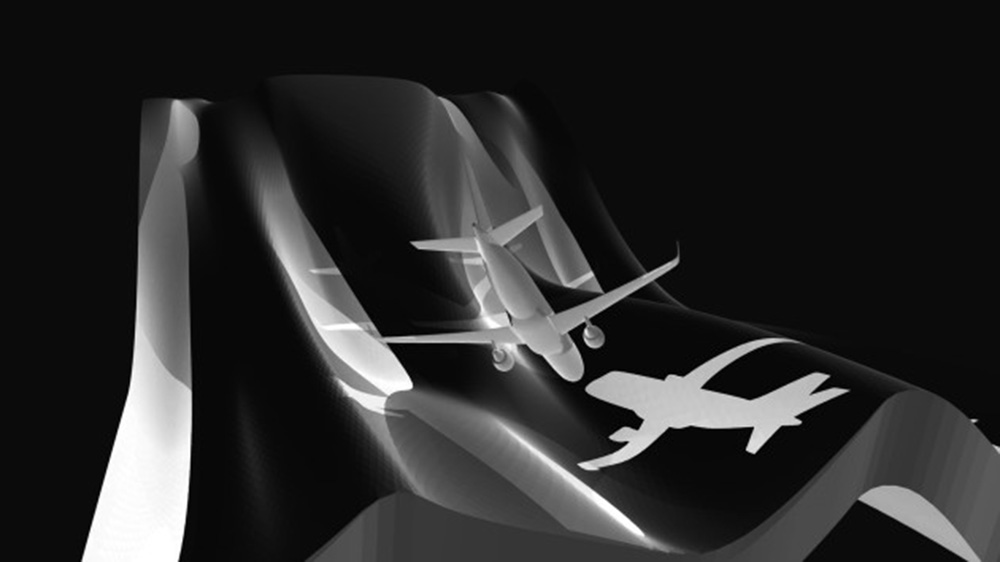
Welcome to the age of cosmic radiation! In 2021 the Sun fell to its lowest point of activity since the birth of science. Its magnetic waves that once shield the Earth dramatically weakened. During this solar lull powerful intergalactic cosmic rays penetrated our atmosphere. Originating eons ago from the explosive remnants of dead stars these silent, invisible and highly charged particles were only noticed in their affect - in what they did to our bodies and to the technologies we thought we could rely upon. Compiling stories from the recent past of interaction with cosmic radiation at ever descending altitudes, “The Phantom Menace” is a techno driven stroboscopic climate fiction film written in conversation with various Amazon warehouse workers. Initially inspired by the proposed plans for the U.S government to install their fragile predictive supercomputers deep underground in order to protect them from these upcoming ancient alien invaders, the film uses once costly low-resolution scientific visualizations produced on these supercomputers to speculate on the role of image labour in the subterranean near future. Planes crashing, computers malfunctioning and elections going haywire - these were just the prequel to the future.
Graeme Arnfield (b. 1991, UK) is an artist filmmaker & curator living in London, raised in Cheshire, UK. Producing sensory essay films from found often viscerally embodied networked imagery his films use methods of investigative storytelling to explore issues of circulation, spectatorship and history. Research topics have included: the politics of digital networks, the material distribution of ecological matter such as peat and asbestos and the adaptive circulation of global and local histories. His work has been presented worldwide including Berlinale Forum Expanded, International Film Festival Rotterdam, Courtisane Festival, Berwick Film & Media Arts Festival, Sonic Acts Festival, European Media Arts Festival, Transmediale, IMPAKT Festival, Kasseler Dokfest, Plastik Festival, Internationale Kurzfilmtage Winterthur, LUX, Institute of Contemporary Arts (ICA), Berlinische Gallerie, Signal Gallery, Whitechapel Gallery and on Vdrome. He graduated with a Masters in Experimental Cinema at Kingston University and recently completed a film with FLAMIN.

Guillaume Aubry
Courser le soleil (Sunbound)
Vidéo | hdv | couleur | 0:1 | France | 2019
“Courser le soleil (sunbound)” est une animation vidéo de 24 images de coucher de soleil (liste ci-dessous) dans l'histoire de l'art faisant partie de mon corpus de recherche dans le cadre de mon doctorat.
Artiste et architecte, Guillaume Aubry a étudié aux Beaux-Arts de Paris (La Seine) et à l’Ecole d’Architecture de Paris-LaVillette (DPLG). Son travail a notamment été montré en France à la Villa du Parc, à Mains d’œuvre, aux Beaux-Arts de Paris, au Centre d’Art Chanot à Clamart, à la Cité des Arts, à la Fondation d’entreprise Ricard, à la Friche de la Belle de Mai et à l’étranger au Casino du Luxembourg, à Singapour, à Yérevan en Arménie, à Vaasa en Finlande, à Skagaströnd en Islande… Il a également été invité à participer à des manifestations évènementielles comme Nuit Blanche à Paris, la Biennale de Lyon, la Biennale de Lulea en Suède, le Salon de Montrouge, Jeune Création, la Biennale de Bourges… Aujourd’hui artiste-chercheur du doctorat de création RADIAN, il prépare une thèse sur l’expérience esthétique des couchers de soleil. Il est futur résident de la Villa Médicis à Rome (programme Médicis) et travaille actuellement à une adaptation scénique libre de La psychanalyse du feu de Gaston Bachelard qui sera créée à Nanterre-Amandiers en mai 2020.
Ieva Balode
Commission
Fiction expérimentale | 16mm | couleur | 6:0 | Lettonie | 2019
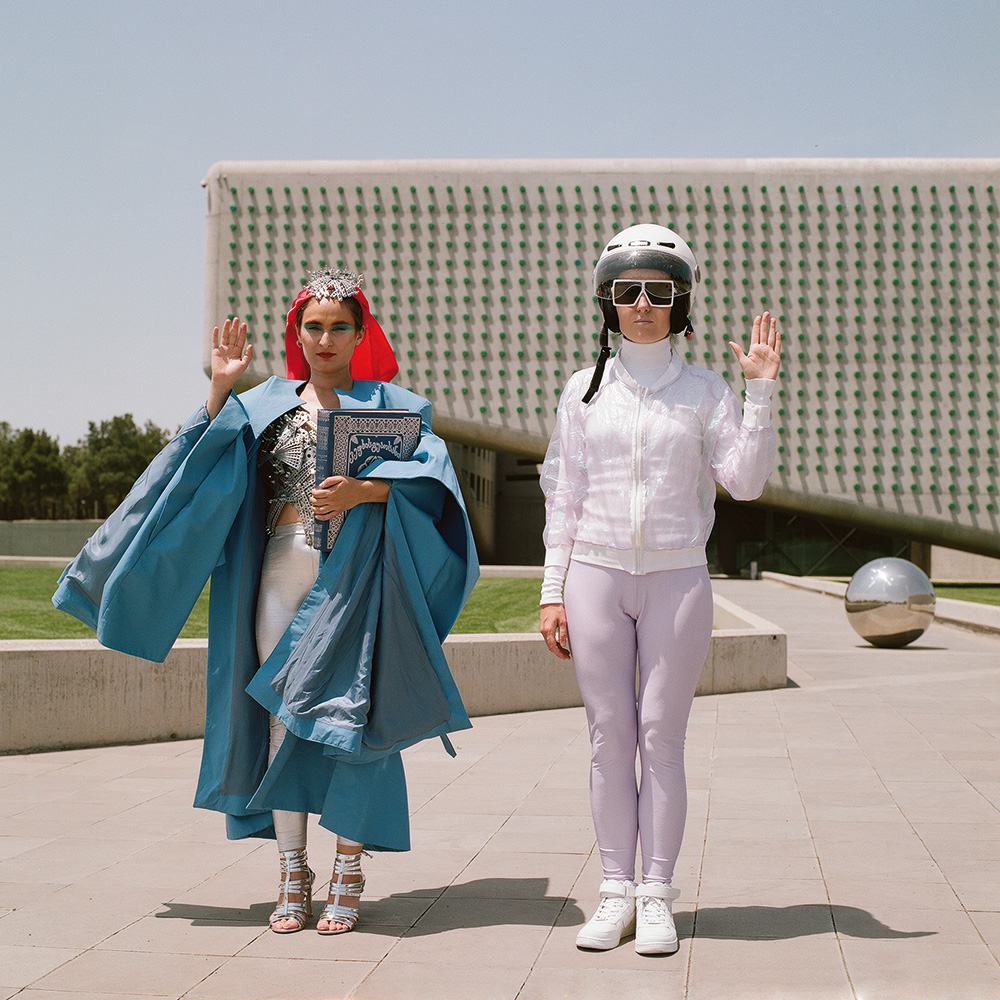
The story of a film “Commission” starts in Georgia at some unknown point of time where a heroic, mythical female character has written a book which is being delivered by a courier (the artist herself) to three powerful women. The content of a book is hidden within an existing book – “The Knight in the Panther’s Skin” written by Medieval Georgian poet Shota Rustaveli who dedicated the book to 12th century Queen Tamar who at the time brought prosperity and many social changes in the country. Being used as a secret shell or a reference to female power from the past, the freshly embedded content of a book serves as manifesto to the women who haven’t been equally appreciated due to history books still being written from male perspective. The book offers alternative gaze to a world history which can exist only in utopian science-fiction film commissioned and executed by females only. Shot in significant Soviet era architecture monuments (by that referring to Soviet time failed gender equality propaganda), using exaggerated costumes and scenes once associated with B class sci-fi movies, the film serves as humorous, yet rebellious propaganda material of female role and emerging power.
Ieva Balode born in 1987, Riga, Latvia is an artist and film curator working with analog image. She has graduated Latvian Academy of Art and studied film and photography in Yrkeshögskolan Novia, Finland. In her artistic practice she is interested in human identity matters, which she explores through the language and philosophy of an image – both still and moving. Drawing inspiration from texts, archival materials and nature, the artist seeks to find the border between human consciousness and transcendence within it. Her interest in analog medium lies within the medium’s relation to nature and human perception. With her works she takes part in international exhibitions and film festivals presenting her work both in installation, as well as cinema and performance situation. As a curator she is a founding member of Baltic Analog Lab - artists collective providing a space and platform for analog film production, research and education. She is also a director of experimental film festival "Process" happening in Riga from year 2017.
Myrthe Baptist
Caresse
Vidéo | hdv | couleur | 6:40 | Belgique | 2019
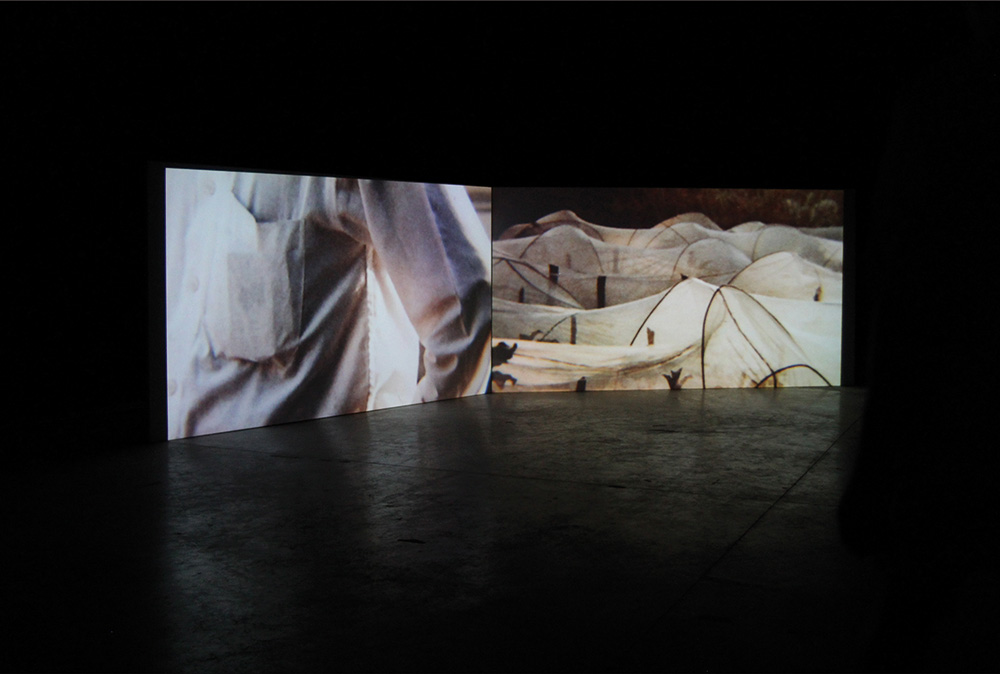
The camera leads our gaze closely across the surface of photographs. Small details of different moments become part of a movement: the searching, caressing gesture of filming. Projected on two adjoined screens, the images move together, towards each other and away again. The gaze becomes tactile, connecting what is seemingly separated by time, by distance and by the borders of the photographic image.
Myrthe Baptist (BE, 1994) is an artist and filmmaker based in Brussels. She works mainly with moving image, often starting from photographs, notes, letters and archival material. She has obtained a Master of Fine Arts at KASK School of Arts in Ghent.
Christian Barani
Lac Assal
Doc. expérimental | hdv | couleur | 15:12 | France, Djibouti | 2019
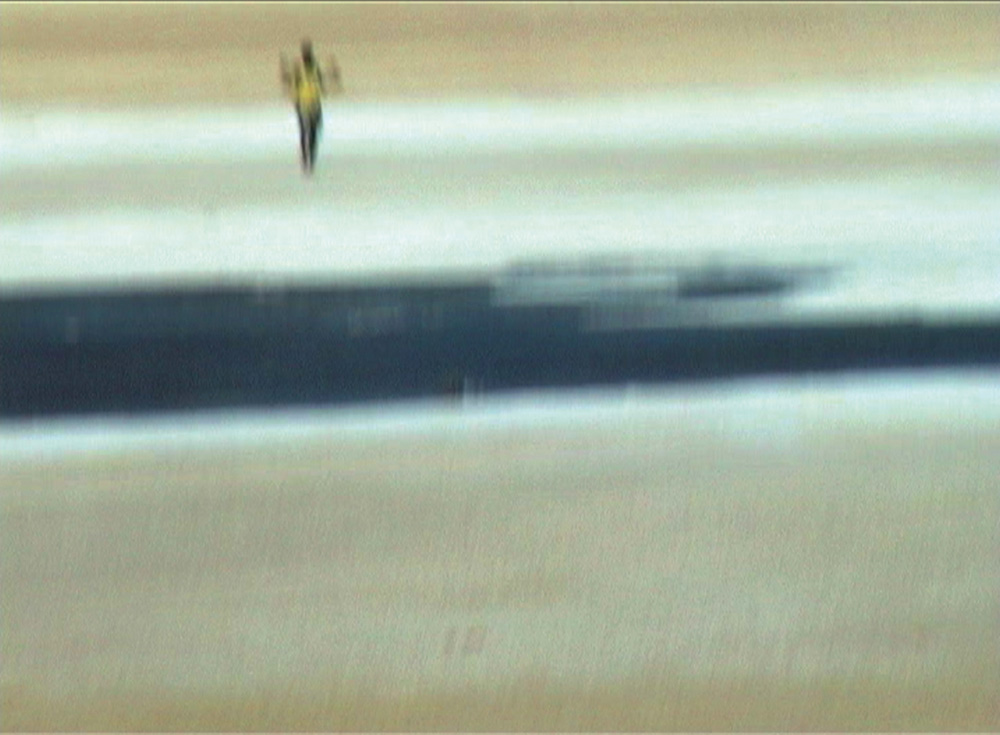
Dans la vallée du rift de Djibouti, dans le noir des roches volcaniques, des hommes attendent. Dans ce désert, quelques années auparavant, la production du sel organisait la vie. Depuis la concurrence a vaincu. Au bord du lac Assal, des résistants partent à la recherche de concrétions de sel en espérant les vendre aux quelques touristes qui viendraient contempler le bleu du lac.
Christian Barani est né en 1959, vit à Paris. Il construit une pratique qui associe le champ du documentaire à celui des Arts Visuels. Sa recherche se fonde sur un dispositif performatif qui engage un corps/caméra marchant dans l’espace. Il définit une règle du jeu qui compose avec le hasard et l’improvisation et génère des images sans à priori. Il filme là où les violences politiques et sociales oppressent, dressant un portrait au fil des temps des vaincus.
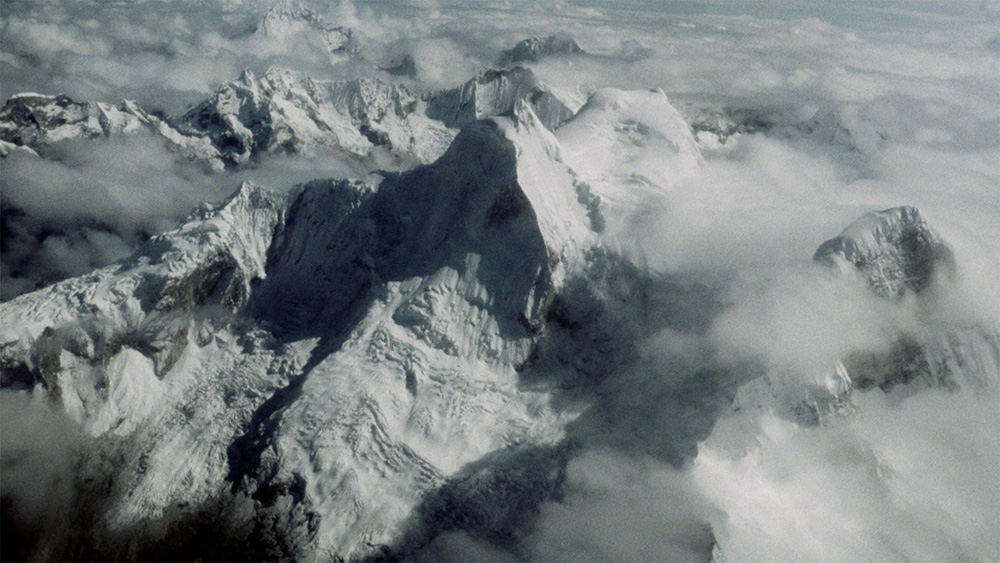
Rosa Barba
Aggregate States of Matters
Doc. expérimental | 4k | couleur | 21:22 | Italie, 0 | 2019
L’état des lieux met en évidence la relation ambiguë entre l’homme et la nature. Pour son nouveau film en 35 mm tourné au Pérou, Rosa Barba a travaillé avec des communautés qui sont touchées par la fonte d’un glacier et les temps géologiques qui sont mis à nu. Barba montre la lente disparition du glacier et la perception de ce fait au sein de la population Quechua des Andes. Tout en explorant les différents mythes locaux, elle souligne la possibilité de traduire les connaissances anciennes dans le temps présent.
Rosa Barba est née en 1972 en Italie, vit et travaille à Berlin. Elle a fait ses études à l'Académie des arts et médias de Cologne et à la Rijksakademie van Beeldende Kunsten à Amsterdam. Le travail de Barba est représenté dans de nombreuses collections internationales telles que la Collezione MAXXI Arte à Rome en Italie, la Collezione FRAC Piemonte à Vercelli en Italie, le Hamburger Bahnhof à Berlin, la Collection Lemaître à Londres, le musée d'art moderne Louisiana à Humlebæk au Danemark, le Museo di arte moderna e contemporanea di Trento e Rovereto à Rovereto, le Museo Centro de Arte Reina Sofía à Madrid, la Kunsthaus à Zurich, le MACBA à Barcelone, le Mambo à Bologne, le Sammlung zeitgenössischer Kunst der Bundesrepublik Deutschland en Allemagne, et Jumex à Mexico. Elle a participé à des expositions collectives, notamment au MASS MoCA aux États-Unis, à l'Akademie der Künste à Berlin, au Kunstmuseum du Liechtenstein à Vaduz, à la Cinémathèque Française à Paris, au WIELS à Bruxelles, au Museo Nacional Centro de Arte Reina Sofia à Madrid, au Swiss Institute à New York, à la 8e Biennale d'art contemporain de Berlin, à la Triennale internationale en arts des nouveaux médias 2014 à Pékin en Chine, à la 19e Biennale de Sidney, à la Biennale internationale d'art contemporain de Carthagène en Colombie, à la Biennale 2010 de Liverpool, aux 52e et 53e Biennales de Venise, à la 2e Biennale d'art contemporain de Thessalonique et à la Biennale de l'image en mouvement à Genève.
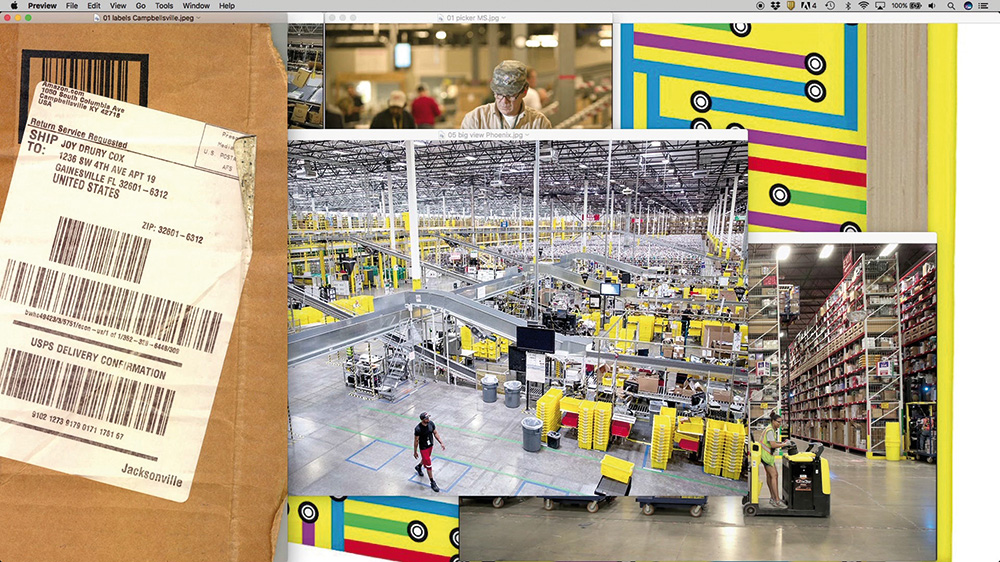
Roger Beebe
Amazonia
Doc. expérimental | super8 | couleur | 24:37 | USA | 2019
“Amazonia” is a "desktop cinema" essay on one of the key sites where the virtual world of e-commerce transforms physical space—and physical labor: the Amazon.com fulfillment centers where the millions of items available for purchase with the click of a mouse await our orders. The film visits the four cities where Amazon’s four original fulfillment centers were located to meditate on the impacts of our online purchases on the people and places “at the other end of the internet.”
Roger Beebe is a filmmaker whose work since 2006 consists primarily of multiple projector performances and essayistic videos that explore the world of found images and the "found" landscapes of late capitalism. He has screened his films around the globe at such unlikely venues as the CBS Jumbotron in Times Square and McMurdo Station in Antarctica as well as more likely ones including Sundance and the Museum of Modern Art. Beebe is also a film programmer: he ran Flicker, a festival of small-gauge film in Chapel Hill, NC, from 1997-2000 and was the founder and Artistic Director of FLEX, the Florida Experimental Film Festival from 2004-2014. He is currently a Professor in the Department of Art at the Ohio State University.
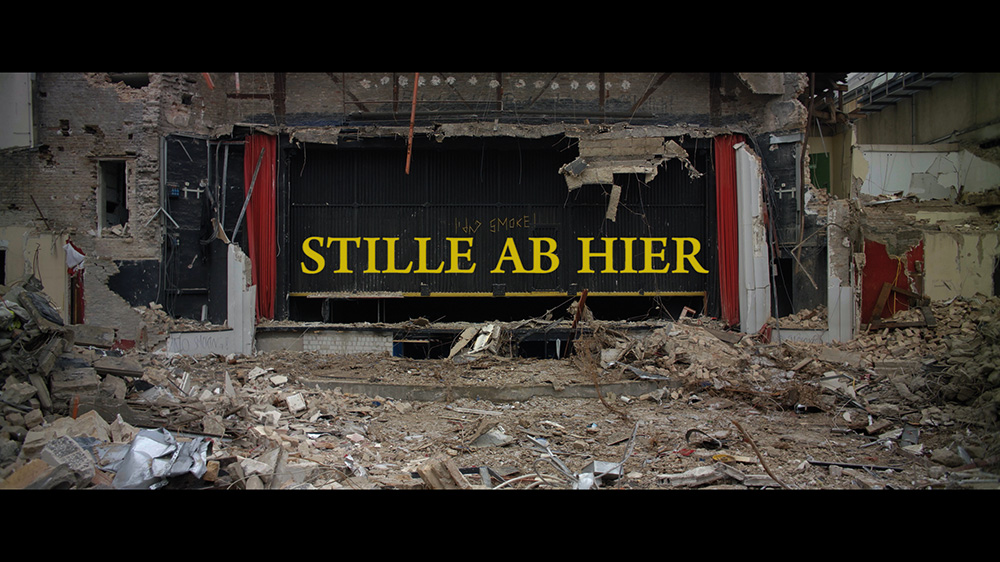
Christin Berg
Stille Ab Hier
Doc. expérimental | 4k | couleur | 11:31 | Allemagne | 2019
From now on silence is a short film in which we observe characters who wander through empty building complexes of a city. They are the survivors of a time that is not separated from their places. Auras and real people blur into a questionable constellation of figures. The venues are office buildings and a disused theatre before its imminent demolition. Obscure moments of encounters and the return of walking and coming alternate. Silence from here observes these sceneries and is thus a contemporary document of a place that no longer exists.
Born in Berlin, Germany. 1982. Christin Berg graduated as Meisterschülerin of film in 2015 of Städelschule. She studied at UCL, Slade fine art media department 2013-2014. 2008 Diplom in Scenography and Set Design from the University of Applied Sciences and Arts Hanover.
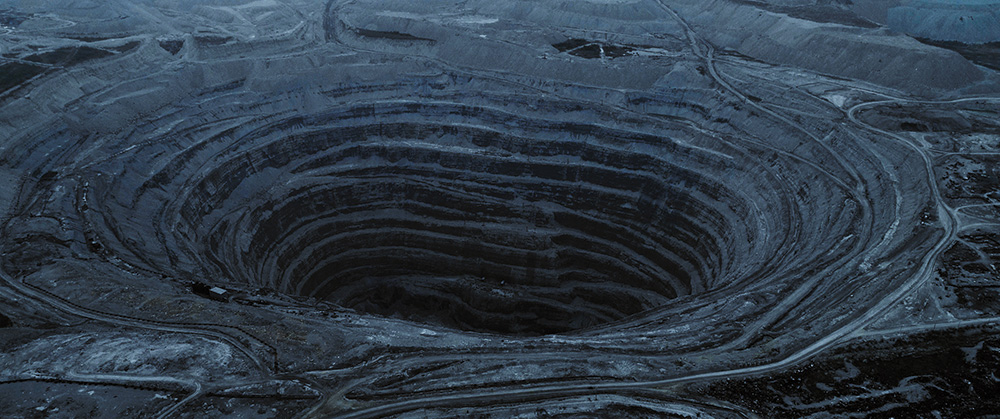
Viktor Brim
Dark Matter
Doc. expérimental | 4k | couleur | 19:52 | Allemagne, Russie | 2019
A trace of regularly ordered mounds of earth. In the twilight a dump truck is being loaded. A thick veil of mist hangs over the tops of the trees. Dark earth is excavated, loaded and transported off the scenery. In Dark Matter (2020), via the situative arrangement of different picture elements a visual friction surface is created, which is shaped by the figurations of a post-apocalyptic landscape. The images are determined by the processes of extracting raw materials. Without the mineral resources from the numerous diamond and gold mines in the so-called Russian Federation subject Yakutia, the Soviet Union would never have been able to exist until the 1990s. Technology and ideology go hand in hand and leave their mark. Military and economic efforts to secure power are inscribed in this landscape. The extraction of raw materials and the exploitation of nature show their planned economic and geopolitical consequences, which make up the character of the “subjects of the Federation”. Their designation as “subjects” was introduced in the USSR in order to equip and administer different categories of territorial units with different degrees of autonomy. Technological progress and ideological utopias constitute a processual and changeful network of relationships between subject definition and state apparatus.
Viktor Brim was born in 1987 in Tashkent, Uzbekistan. From 2009 to 2011 he studied media art at the HGB in Leipzig, began directing studies at the Filmuniversity Babelsberg KONRAD WOLF and completed a postgraduate course at the Academy of Media Arts in Cologne, where he worked not only with fictional forms but also increasingly with documentary approaches.
Broersen & Lukács, in collaboration with Nina Vadsholt
All, or Nothing at All
Vidéo | hdv | couleur | 7:45 | Pays-Bas, Danemark | 2019
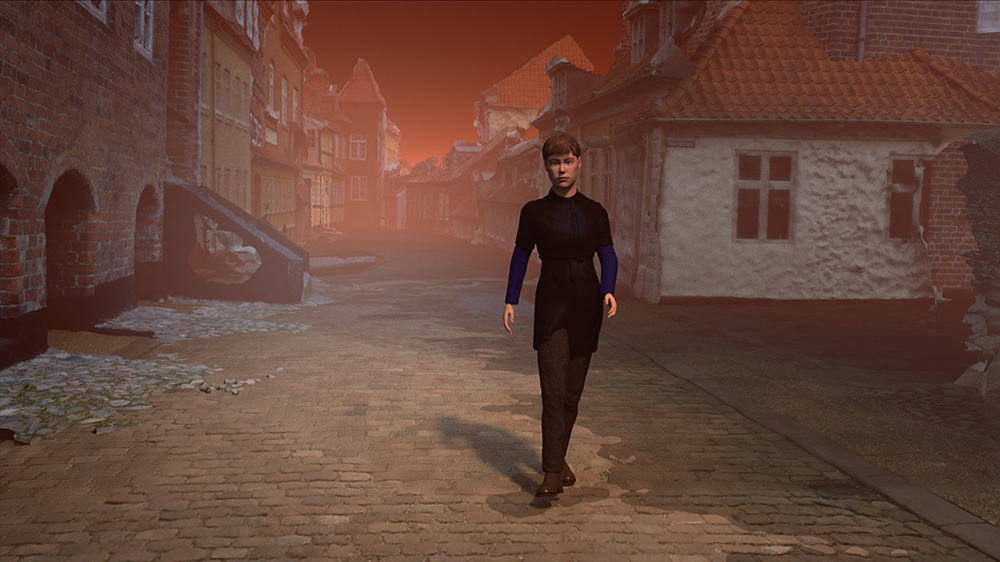
In ‘All, or Nothing at All’ Margit Lukács and Persijn Broersen explore the hybridity, in image and sound, of the ultra-thin surface of digital photography in order to contemplate its role in shaping our experience and memory. ‘All, or Nothing at All’ takes its cue from Frank Sinatra’s 1939 first hitsong. Originally performed from an utterly male perspective, Danish singer Nina Vadshølt transformed the song into an angelic, rebellious chant in which many voices converge and dispute eachother. Broersen & Lukács constructed an army of avatars, impersonations of Nina Vadshølt, that ramble through a digital replica of the ancient city of Viborg(Denmark): a labyrinth of abandoned malls, garages, crusader paths and centuries old alleys as portals to another dimension. The choreography is based on West Side Story, the 1961 adaptation of Romeo and Juliet, in which Puerto-Rican and Polish streetgangs fight eachother. In ‘All, or Nothing at All’ the duality is depicted in the display of the real and the virtual, in which the ancient town of Viborg appears as a hollow veil resembling the way in which everything seems feasible that appears on our screens, a world in which there is no middle ground, only Everything or Nothing.
Margit Lukács and Persijn Broersen are artists based in Amsterdam, working together since 2002. In today’s visual culture, fiction is usurping the place of reality. Broersen & Lukács respond to this by creating video animations presenting a parallel world of spectacular images that wholly absorb the viewer in which 'nature' functions as a mirror for our media-dictated culture. Their works, consisting of layered projections, digital animations and spatial installations, have been exhibited by renowned institutions and organisations both domestically and internationally. Lukács & Broersen’s work have been shown at a.o. Rencontres Arles (France), Art Wuzhen (China), Biennale of Sydney (Australia), Karachi Biennial (Pakistan), Stedelijk Museum Amsterdam (Netherlands), FOAM (Netherlands), MUHKA (Belgium), Centre Pompidou (Paris), Kröller Müller (Netherlands) and Casa Enscendida (Madrid). Their films have been shown at several festivals including LAForum (Los Angeles), Oberhausen FilmFest (Germany), Kassel Dokumentar und Filmfestival (Germany), Rencontres Paris Berlin at Louvre, Paris (France), Haus der Kulturen der Welt, Berlin (Germany), the New York Film Festival (United States), IDFA (Netherlands) and IFFR (The Netherlands). Upcoming shows are Forest on Location, A Space Gallery, (Toronto, Canada) Shaping the Invisible World- at Hek (Basel , Switzerland) and Rubble: A Matter of Time at Auckland Art Gallery (New Zealand.
émilie Brout, Maxime Marion
b0mb
Vidéo | hdv | couleur | 9:58 | France | 2018
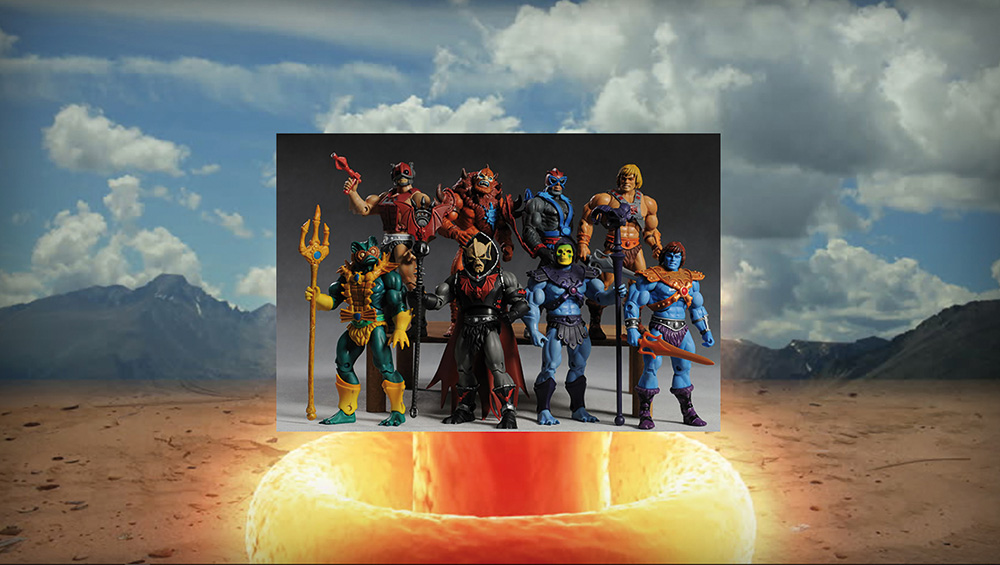
b0mb est une vidéo générative en ligne, différente à chaque visionnage et accessible via un site web dédié. Avec un rythme intense, elle présente un montage de plusieurs centaines d’images de toute nature présentes sur internet, défilant sur une bande son musicale où l’on entend la voix de Gregory Corso lisant son poème Bomb (1958). Déclaration d’amour à la plus terrible des technologies et métaphore de la nature autodestructrice de l’homme, le poème comporte une grande diversité de champs lexicaux lui conférant une dimension presque universelle. Figure de la Beat Generation, Corso cherche à produire ici une poésie où les phrases seraient absentes de perspective, construisant son texte via une juxtaposition de mots-clés les uns "contre" les autres. A partir du poème, les artistes ont alors effectué un travail de réduction d’écriture, de filtrage et d’interprétation, pour traduire son contenu en requêtes pour moteur de recherche tel que Google Image. Chaque image visible dans b0mb provient donc automatiquement du résultat d’une de ces requêtes, sélectionnée selon des algorithmes de popularité, et s’affiche de manière synchronisée avec le texte énoncé, par un montage au chemin de fer prédéfini. Si la durée et le son restent fixes, les images sont renouvelées à chaque visionnage, évoluant peu à peu dans le temps, au fil de l’actualité. La pièce se comporte telle un protocole automatique en ligne, puisant dans son environnement des visuels pour les donner à voir sous un autre jour le temps d’un instant. De par la grande diversité de sujets abordés dans le poème et la nature hétérogène des images (photographies amateur, publicités, cliparts, presse, différences de définition...), l’œuvre donne donc à voir une sorte d’instantané de la culture visuelle d’Internet. Par un enchaînement effréné d’images indifféremment anodines, belles ou terribles, elles rendent aussi compte de la violence qui peut s’en dégager.
Nés en 1984 et 1982 en France, Émilie Brout & Maxime Marion vivent et travaillent à Paris. Après des études à l’ENSA Nancy et l’ESA Aix-en-Provence, ils ont intégré deux ans le laboratoire de recherche EnsadLab de l’Ecole Nationale Supérieure des Arts Décoratifs de Paris, où a débuté leur collaboration. Leur travail a été lauréat du prix de la fondation François Schneider, Wattwiller et du prix du public Sciences Po pour l’art contemporain, Paris. Il a été soutenu par la Fondation des Artistes, la SCAM et le CNC, et fait notamment partie des collections des FRAC Ile-de-France, Aquitaine et Poitou-Charentes, de la CDAC Seine-Saint-Denis et de collections privées internationales (Alain Servais et de Goldschmidt, Bruxelles ; Plancius Collection, Amsterdam, Jonathon Carroll, Londres...). Il a été présenté en France et à l’étranger : MAC VAL, Vitry-sur-Seine ; Cité de la céramique, Sèvres ; IAC Villeurbanne ; Palais de Tokyo, Paris ; FRAC Haute-Normandie, Rouen ; Base sous-marine de Bordeaux ; 5th Moscow Biennale for Young Art ; Museum of Modern and Contemporary Art, Rijeka ; Carroll/Fletcher, Londres ; OCAT Shenzhen ; Daegu Art Museum ; Kunstraum LLC, New York ; Redline Contemporary Art Center, Denver... Ils ont récemment bénéficié d’expositions personnelles à la Chaufferie, Strasbourg (2019), à la galerie 22,48 m², Paris (2019), à la Villa du Parc, Annemasse (2018), au Pori Art Museum, Pori, Finlande (2018) et à la galerie Steve Turner, Los Angeles, Etats-Unis (2017). Ils seront également résidents en 2020 à la Kunsthal Gent en Belgique en 2020.
Delgado Ramo Bruno
Una película en color
Film expérimental | super8 | couleur | 31:0 | Espagne | 2019
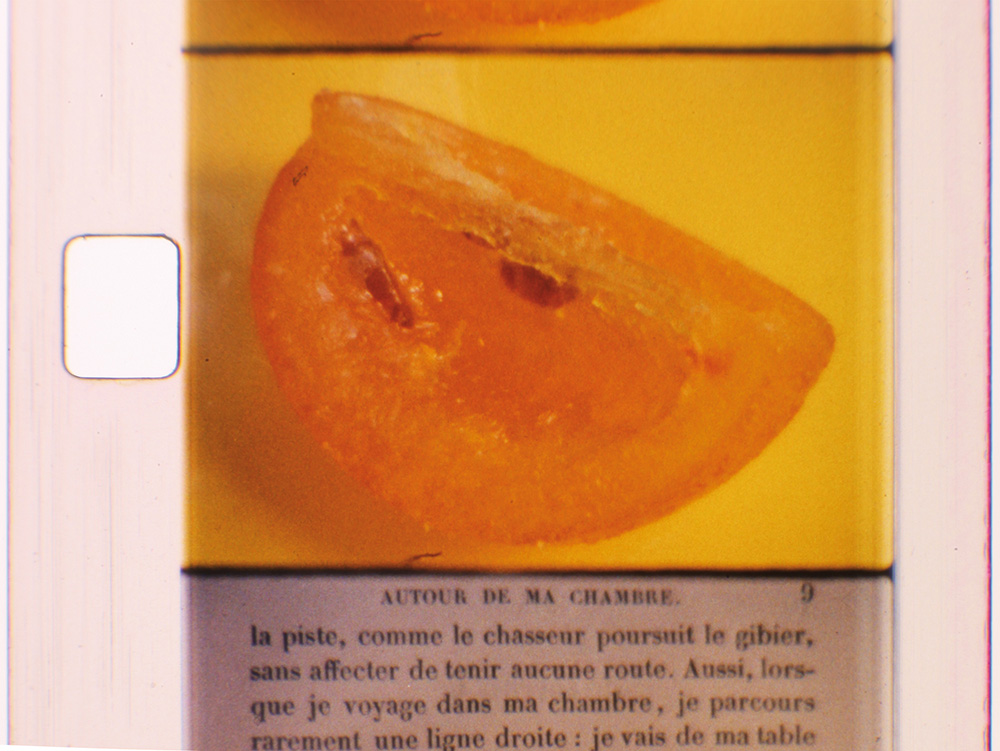
Based on Xavier de Maistre’s “Voyage autour de ma chambre”, it has been entirely shot withing a single room working at its relation to the camera, seen as another enclosed space. Between the camera and the walls, between the lenses and the window, between the furniture and the room, between a rock and a hard place. Some of the texts printed on the film: "I hope that I have made a film, a method [procédé]. Blue is also a method. [...] Cinema? Yes, it's a method. Red is also a method." (Marcel Broodthaers, Cinéma, p. 66) « …a thousand agreeable visions float before my eyes. Yes, there is that mansion, that door, that staircase! I thrill with expectation. / In like manner the act of slicing a lemon gives you a foretaste that makes your mouth water. / Poor animal! Take care! » (Xavier de Maistre, A Journey Round my Room, chapter XLII, p. 152 )
Bruno Delgado Ramo (Sevilla, 1991) is an experimental filmmaker, researcher and architect. Both his artistic and academic work focuses mainly on the moving image. He describes his often interdisciplinary work as research that is grounded in artistic practice. Dealing with materialistic site-specific cinema and the spatial questions involved in it, he works from a wide understanding of cinematic language.