Catalogue > Search
Results for : Catalogue 2022
Heidi Kilpeläinen
Land of Dreams
Documentaire | mp4 | couleur | 59:44 | Finlande | 2021
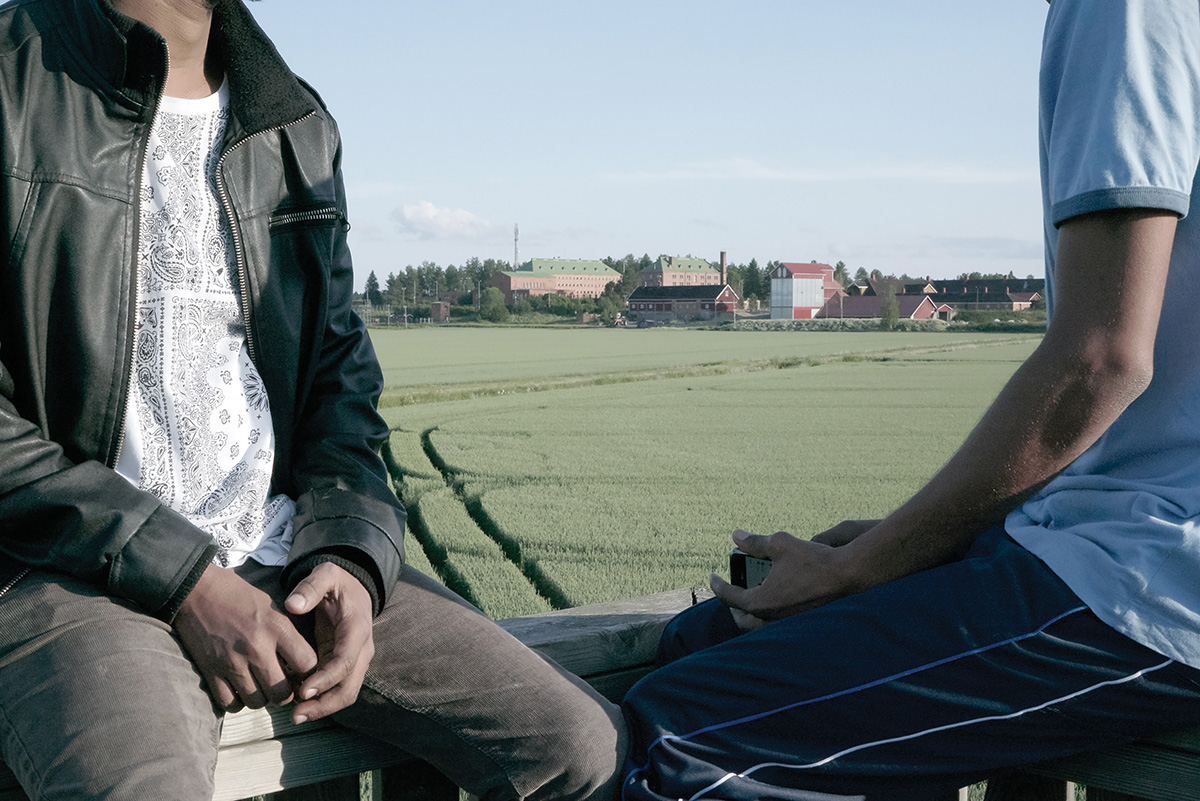
Land of Dreams title is a translation of a much loved Finnish tango ‘Satumaa’, which Heidi Kilpeläinen sang during her two Tango Therapy performance tours at Refugee Centres and war invalids and their widows homes in Finland (2017/2018). On this tour Kilpeläinen also invited the participants to sing back to her, in their own languages. The performances were filmed and edited into a 3-channel video installation and a shorter, single channel video. Songs and encounters with people from Iraq, Yemen, Syria, Afganistan, Somalia and Eritrea – to mention a few – combine with accounts of Finnish war invalids and widows talking about their experiences of the war between Russia and Finland during the second World War. Tango Therapy is a performance in which artist Heidi Kilpeläinen sings to one person at a time, sitting on opposite chairs, while rest of the audience listens and follows the performance. Anyone from the audience is welcome to sit on the chair as it becomes free. It is an intimate and personal performance of songs, mainly of Finnish tangos, with no technology or amplification. The focus in the performance is on the human presence and eye contact. Understanding Finnish language is not necessary, it is the melody and the sentiment which communicate beyond the boundaries of language.
Heidi Kilpeläinen (HK119) explores crossovers between visual art and music merging their boundaries in 'total works of art' and creating combinations of video, installation art and performance. Her work is equally inspired by the contemporary world and its technological fascinations, as well as the ancient, mythological forms that run through collective memory. She produces works of aesthetic interest with a critical eye on our social environment, reflecting on our human Heidi Kilpeläinen (HK119) explores crossovers between visual art and music merging their boundaries in 'total works of art' and creating combinations of video, installation art and performance. Her work is equally inspired by the contemporary world and its technological fascinations, as well as the ancient, mythological forms that run through collective memory. She produces works of aesthetic interest with a critical eye on our social environment, reflecting on our human condition within it. In recent years she has focused her attention to understanding the effects of transgenerational trauma and transformation as alchemical process. Kilpeläinen has widely exhibited and performed in galleries and prestigious institutions, with a rich record of participations in shows and festivals, such as Rajatila gallery, Tampere (2021) Od Arts Festival, Somerset (2021) Kiasma, Museum of Contemporary Art, Helsinki (2019 / 2005) Kajaani Art Museum, Kajaani (2019) Tate Modern / Tate Exchange, London (2018) Camden Arts Centre, London (2016) Beaconsfield Gallery, London (2016/2015) Performa 07, New York (2007) and New Contemporaries, London / Liverpool (2004). She has also released 3 albums under the title HK119 (One Little Indian Records, 2005 - 2013) and has performed internationally in music venues, galleries and museums such as Tate Gallery, Victoria & Albert Museum, ICA, Casa da Musica and Kiasma.
Sooun Kim
Born Beneath, 2021
Vidéo | hdv | couleur | 7:0 | Coree du Sud, Royaume-Uni | 2021
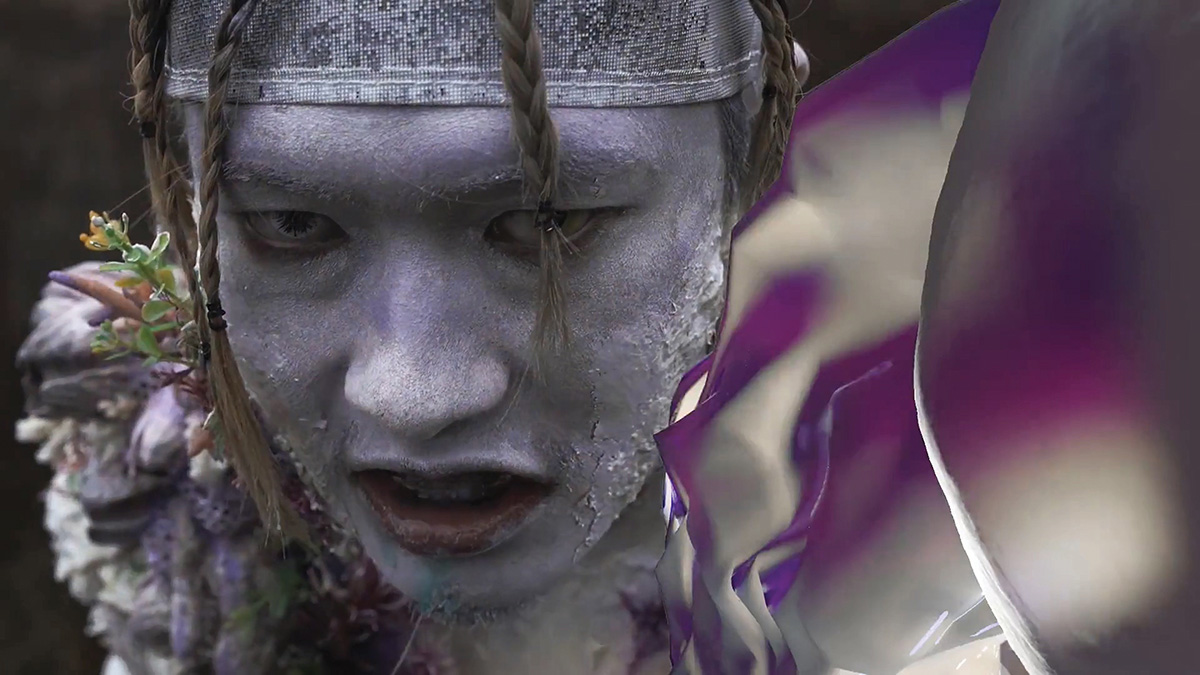
Born Beneath is an experimental music video and short film that utilizes mythological storytelling to explore hybridized Korean cultural identity. Sooun Kim uses multivalent footage and audio influenced by traditional Korean music, contemporary electronic music and rap to demonstrate the ways in which cultural imperialism, the long-term influence of the Korean War and Japanese colonial era has influenced his generation. His use of footage gathered from multiple sources shows the birth of a new cultural identity. An identity that is acquired through the process of exploring cultural hybridity, formed amidst instability.
Sooun Kim is a multidisciplinary visual artist working through music, painting and sculpture, more recently expanding his visual language to include video and installation. He is interested in hybrid cultures that iterate from the effects of post-colonialism and cultural imperialism. His work, Yellow Fever (2019), marked the beginning of his auto-ethnographic journey, where he collected his grandfather’s biography alongside records of historical figures to recover his personal cultural identity. Further interested in popular culture, he includes audio-visual reflections of his contemporary being as a South-Korean migrant where the past and present collide. Consciously unpredictable, Kim uses image and sound to play with viewer expectations by seducing and repulsing - genre bending to create an undefinable hybrid.

Jonna Kina
After Life followed by Red Impasto Jar
Film expérimental | 16mm | couleur | 9:0 | Finlande | 2021
The work is composed of two separate films followed by each other. Both films explore transcendental issues through archaeological and illegal excavations of tombs. "After Life" consists of a sequence of meditative short scenes picturing the ruins of a small Faliscan necropolis Cavone di Monte Li Santi in Italy and its surrounding natural elements. The rock-cut chamber tombs of the necropolis had been illegally excavated before they were archaeologically discovered in 2015 – a phenomenon still faced by many rural archaeological sites. At the center of "Red Impasto Jar" is a looted archaeological tomb object. In antiquity, the funeral was a significant ceremony where entombing of the body was just one component in the complex sequence of events. This ancient Faliscan tomb item dating back to the 6th century BCE was passed on to the archaeological museum (Mazzano Romano, Italy). The jar is radically altered and damaged by being cemented into the structures of a house as a decorative element. The film portrays the state of the pottery focusing on the detailed choreography and documentation of the object with a slow 360º rotation on a robust industrial motor against a monochromatic background.
Sound, perception and imagination are essential ingredients in the research and practice of Jonna Kina (b. 1984). Her work reveals the value of fictional viewpoints in non-fictional investigations. Kina’s works have been shown in the Tokyo Photographic Art Museum; Fondazione Pastificio Cerere, Rome; Dunkers Kulturhus, Helsingborg; Musée de l’Elysée, Lausanne; International Film Festival Rotterdam; Hasselblad Foundation, Gothenburg; Espoo Modern Art Museum EMMA; Kumu Art Museum, Tallinn and in Sara Hildén Art Museum, Tampere, among others. Kina has recently been awarded the Finnish Art Prize “Below Zero” (2018) and her film Arr. for a Scene was awarded as the “Best Nordic Short Film” at Nordisk Panorama Film Festival in Malmö (2017). She was also shortlisted for the VISIO Young Talent Acquisition Prize in Florence (2017).
Iztok Klancar
Remembering the Nights In Safe Haven
Documentaire | hdv | couleur | 22:0 | Slovénie, Pays-Bas | 2020
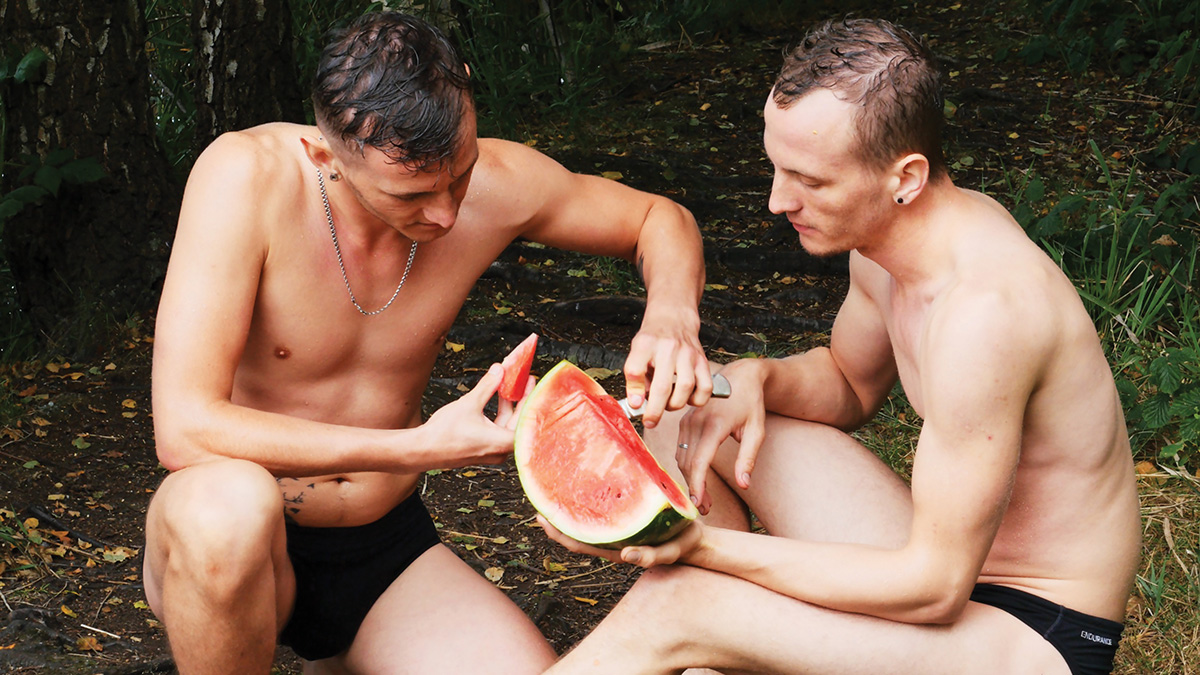
A drag performer rendez-vous with their many personalities during the after hours. A man is taken over by his surrogate lover, made of textile. Two brothers dance in an empty nightclub. Remembering the Nights in Safe Haven (2020) is a short film in three parts. The starting point of this project is the sudden loss of nightlife due to the Covid-19 pandemic and its detrimental effect on the social fabric of queer people. The film addresses this loss by means of fantasy scenes, combined with performances and activities that would have taken place if nightlife was still alive. These fictitious events suggest a mental state of suddenly having to adapt to our new reality.
Iztok Klan?ar is a photographer, filmmaker and a teacher. Combined with atmospheric electronic music, the genre of his film work is psycho-drama, the subjective and fragmented narrative that reveals inner life and conflict. The instinctive character of his work breaks the commercial commodification of our lifestyles by revealing unique sexual personae.
Niki Kohandel
The Sparrow Is Free
Doc. expérimental | hdv | couleur | 14:6 | France, Royaume-Uni | 2021
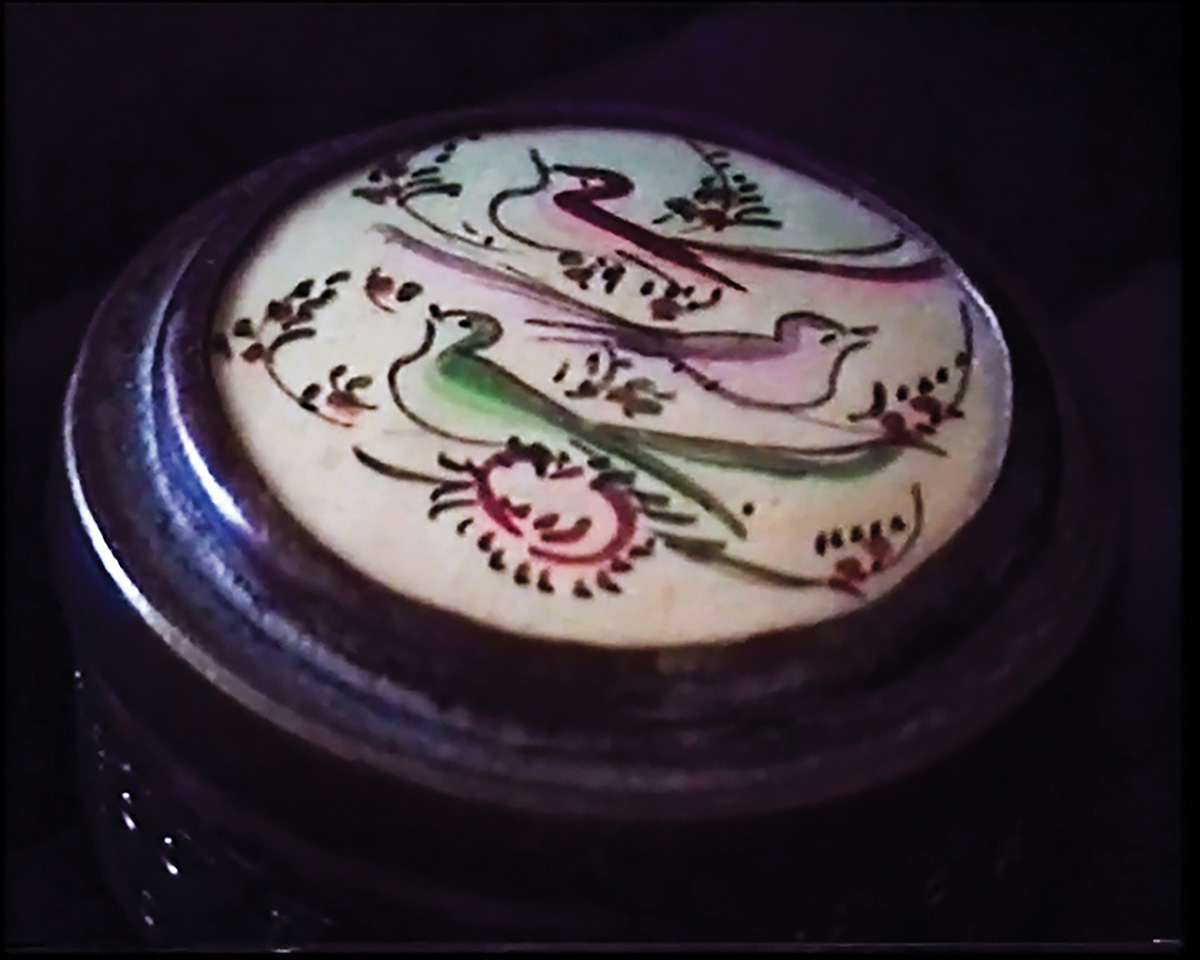
In an empty house, a young woman hears a voice. The tales it evokes lead her to recreate scenes from her grandmother’s past life. Through objects found at home, Kohandel's short interview-film explores gender roles in early 20th-century Iran. As a young girl, marriage to her older cousin leads to years of control and frustration. Rebelling against her husband, she eventually relocates to France with her sons, building a new life. As she voices her own story, the film weaves her experiences together into a broader narrative of self-determination. She carves out her independence in Paris and finds comfort in the everyday. A simple kind of happiness follows, the sparrow is free.
Niki Kohandel (b. 2000, Paris) is an artist and filmmaker, in her third year of undergraduate studies at the Slade School of Fine Art, UCL. Niki films mothers and daughters, houses and flowers, and all sorts of things which, like relationships, can be nurtured, but also grow out of control. She uses obsolete recording devices and her imperfect knowledge of languages to document and tell stories, creating at the interplay between the analogue and the digital.
Daniel Kötter
Rift Finfinnee
Documentaire | 4k | couleur | 79:0 | Allemagne | 2020
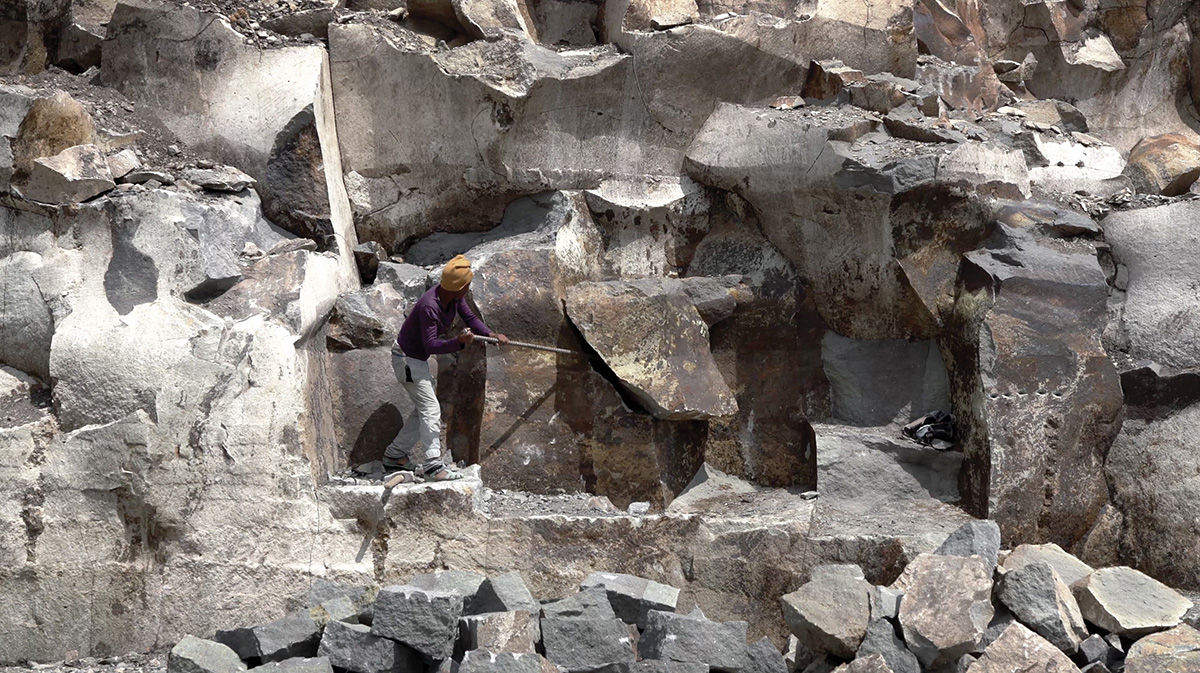
The film Rift Finfinnee takes the viewer on a journey through the periphery of Ethiopian capital Addis Ababa. In strictly composed landscapes and architecture shots, and with a soundtrack that interweaves the original conversations in a complex way, the film travels along the Akaki river gorge, dissecting the more than symbolic rift between city and rural. It takes the concrete geography, architecture and the every day life of individual agricultural and construction workers in the east of Addis Ababa (in Oromo: Finfinnee) as the starting point for an allegorical narrative about the becoming urban of an African society on the edge of civil war.
Daniel Kötter is an international filmmaker and theater director. Visual research leads him again and again to the African continent and the Middle East. 2014-18 he worked with the curator Jochen Becker (metroZones) on the research, exhibition and film project CHINAFRIKA. Under Construction. In 2017-20 he worked on the documentary film trilogy Hashti Tehran (2017, 60 ’), Desert View (2018, 84’) and Rift Finfinnee (2020, 80 ’) about urban peripheries in Tehran, Cairo and Addis Ababa. Hashti Tehran won the special award of the German Short Film Award, Rift Finfinnee the DEFA Award at DOK Leipzig. Daniel Kötter is currently working on a series of spatial performances and 360° films on the landscape and social consequences of extractivism in Germany, West Papua, DR Congo and Estonia under the title landscapes and bodies.
Daniel Kötter
Water & Coltan
VR vidéo 360 | 4k | couleur | 52:22 | Allemagne | 2021
“Water & Coltan” transports its viewer directly to the places of the struggle of women in artisanal coltan mining camps in South Kivu in Democratic Republic of Congo. Superimposed with a posthuman near-future scenario of the former coal mining Ruhr area in Germany the 360° documentary immersive experience combines two local sides of one and the same violent global phenomenon: the extractivist relation to natural and human resources with its long-term consequences for the environment and society.
Daniel Kötter (Germany, 1975) is a documentary filmmaker and theater director. His research based works alternate between media and institutional contexts. They have been shown worldwide at film festivals, in galleries and theaters. Since 2007 visual research on urbanization and political landscapes leads him to the African continent and the Middle East. His major works include the film and performance series “state-theatre” about urban conditions of performativity in the cities of Lagos, Tehran, Berlin, Detroit, Beirut, Mönchengladbach (2009-2014), the research, exhibition and film project “CHINAFRIKA” (2013-2019) and the film trilogy “Hashti Tehran” (2017, Special Award of the German Short Film Award), “Desert View” (2018) and “Rift Finfinnee” (2020, DEFA Award DOK Leipzig) about urban peripheries in Tehran, Cairo and Addis Ababa. Since 2019 Daniel Kötter was working on the series of spatial performances and 360° films “landscapes and bodies” on the consequences of extractivism in Germany, West Papua and Democratic Republic of Congo. His 360° film “Water & Coltan” (2021) is premiered at IDFA DocLab Competition.
Youssef Ksentini
Plague Under The Olive Tree
Vidéo | hdv | couleur | 9:59 | Tunisie | 2021
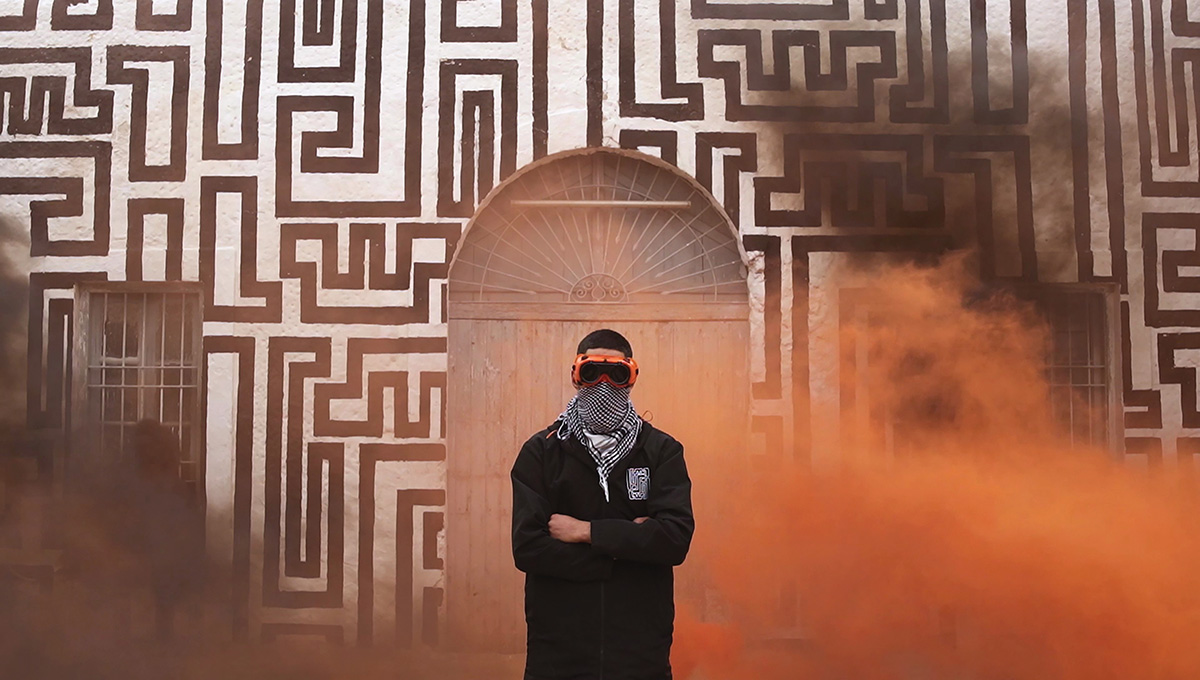
The film follows the journey of Alex, an Ultras member, in his hometown Sfax,Tunisia, while visually representing his inner thoughts, feelings, frustrations and ideas to showcase the impact and influence of the Ultras movement on the city's urban scene and culture.
Youssef Ksentini is a film director and a visual artist from Sfax, Tunisia. In 2009, he started experimenting with street art, design and music production with his underground local Ultras group before starting studying film directing and screenwriting. He got his master degree in Tunis in 2015, won 48HFP Tunis twice in 2014 and 2016 and was involved in other projects as a film director before leaving in 2018 to NYC, USA on an art visa where he spent two years there and wrote and directed two short films. In 2021 he moved to Paris, France to get a professional master degree in contemporary art market at IESA.
Tina Kult, Agnes Varnai
undressing giants
VR expérimental | 0 | couleur | 0:0 | Allemagne, Autriche | 2021
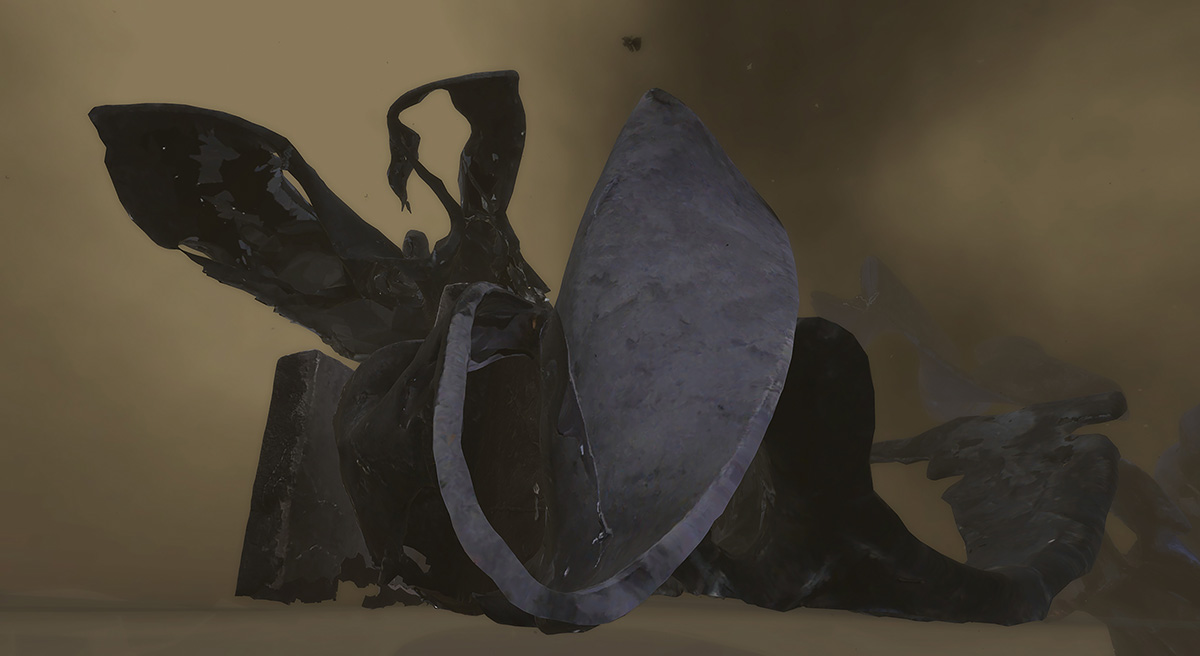
The virtual installation undressing giants is a conglomerate of a shedding cycle’s remains. An abandoned shell of a past consciousness – an abstract organism of creation that is already left behind by its host. Visitors are the protagonists of the installation’s eerie space. They become players as they take a first-person point of view while cruising around the floating parts of this entropic, fragile yet solid, ultimately unknown body. Travelers, who – called by the sirens of this virtual landscape – are unable to resist the urge to seek action and look for treasures in the seductive, bottomless void of the installation’s reality.
T(n)C was founded in 2017 by Agnes Varnai and Tina Kult. They live and work in Vienna and experiment with a wide range of media, including virtual reality, 3D, installation and fashion. By combining the different disciplines, they are researching immersive experiences to connect the digital and physical levels of realities. T(n)C believes in the power of joint efforts. Their aim is to expand the practices of collective storytelling with a collaborative approach.
Nino Laisne
L'air des infortunés
Fiction expérimentale | 4k | couleur | 12:0 | France | 2019
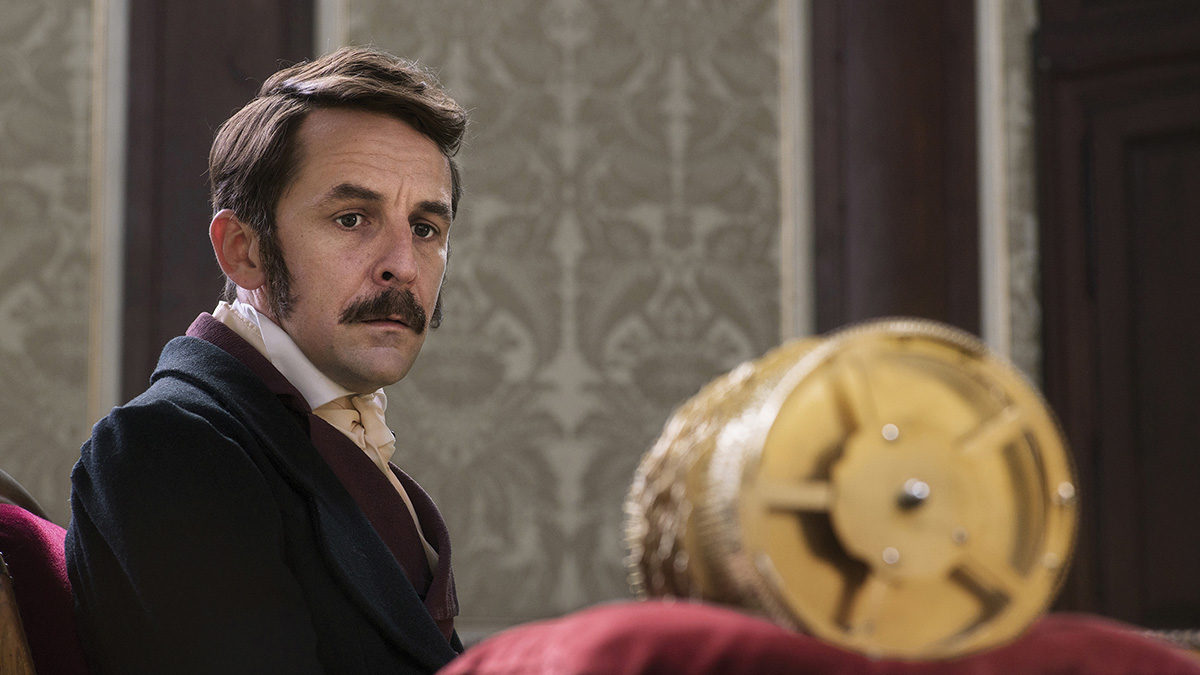
L'air des infortunés reconstitue le procès de Karl Wilhelm Naundorff, horloger controversé pour avoir usurpé l’identité de Louis XVII, Dauphin de France, et propose une narration fantasmée se nourrissant des zones de flou de l’Histoire.
Diplômé en 2009 de l’École Supérieure des Beaux-Arts de Bordeaux où il s’est spécialisé en photographie et vidéo, Nino Laisné s’est également formé aux musiques traditionnelles sud-américaines auprès du guitariste Miguel Garau. C’est durant cette période qu’émerge l’envie d’allier cinéma, musique et art contemporain. Il s’intéresse aux identités marginales qui évoluent dans l’ombre de l’Histoire officielle mais aussi aux traditions orales lorsqu’elles sont exposées au déracinement et au métissage. Dès 2010, avec Os convidados, ses images deviennent sonores et évoquent des chants traditionnels. En 2013, son film En présence (piedad silenciosa) cristallise l’équilibre entre une écriture visuelle et une écriture musicale, autour de réminiscences religieuses dans le folklore vénézuélien. Cette réalisation signe aussi le début d’une collaboration fructueuse avec les musiciens Daniel et Pablo Zapico qu’il retrouvera régulièrement autour de partitions anciennes. Avec Folk Songs (2014) et Esas lágrimas son pocas (2015) il aborde des formes proches du documentaire autour des traditions musicales dans les phénomènes de migrations. Ses projets l’ont amené à exposer dans de nombreux pays tel le Portugal, l’Allemagne, la Suisse, l’Egypte, la Chine ou encore l’Argentine. Il est régulièrement invité à produire de nouvelles pièces lors de résidences de création (Casa de Velázquez – Académie de France à Madrid, FRAC Franche-Comté, Park in Progress à Chypre et en Espagne, Pollen à Monflanquin). Ses réalisations vidéo sont également présentées dans des salles de cinéma et festivals, dont le FID Marseille, la FIAC Paris, le Papay Gyro Nights Festival de Hong Kong, le Festival Internacional de Cinema de Toluca et le Festival Periferias de Huesca. Nino Laisné collabore également avec de nombreux artistes issus du spectacle vivant dont le chorégraphe et danseur de flamenco Israel Galván (El Amor Brujo), ou le marionnettiste Renaud Herbin (Open the Owl). En 2017, il crée le spectacle Romances inciertos, un autre Orlando, fruit de sa rencontre avec François Chaignaud, qu’ils présentent notamment au 72ème Festival d’Avignon. Après une centaine de représentations depuis sa création, la pièce poursuit sa tournée en 20/21 en France et à l’international (Australie, Japon, Chili). En 2018, le tandem tourne Mourn, O Nature!, un film court pour une exposition au Grand Palais, inspiré par l’opéra Werther de Massenet. En octobre 2019, pour sa nouvelle exposition monographique au Frac Franche-Comté, Nino Laisné présente L’air des infortunés, un film qui revisite une imposture historique avec Cédric Eeckhout et Marc Mauillon. En 2020, Nino Laisné crée avec Daniel Zapico un nouveau label discographique Alborada. Leur première publication Au monde, trouve sa source dans le précieux manuscrit de Vaudry de Saizenay (1699) dont les deux artistes proposent d’en poursuivre l’écriture. Cet album a reçu de nombreuses distinctions dont le prestigieux Diapason d’or, 4 Clé Télérama et 5 Etoiles Pizzicato. En décembre 2021 à Bonlieu Scène nationale Annecy, le duo Laisné-Zapico crée Arca ostinata, un opéra miniature qui réinvente l’approche du théorbe à travers l’histoire foisonnante des cordes pincées au sein d’une scénographie qui se métamorphose. Au printemps 2022 paraîtra la seconde publication du label Alborada : le disque du spectacle Romances inciertos, un autre Orlando, enregistré à l’Arsenal de Metz dans des conditions de studio. Nino Laisné est artiste associé aux 2 Scènes, Scène nationale de Besançon.
Salomé Lamas
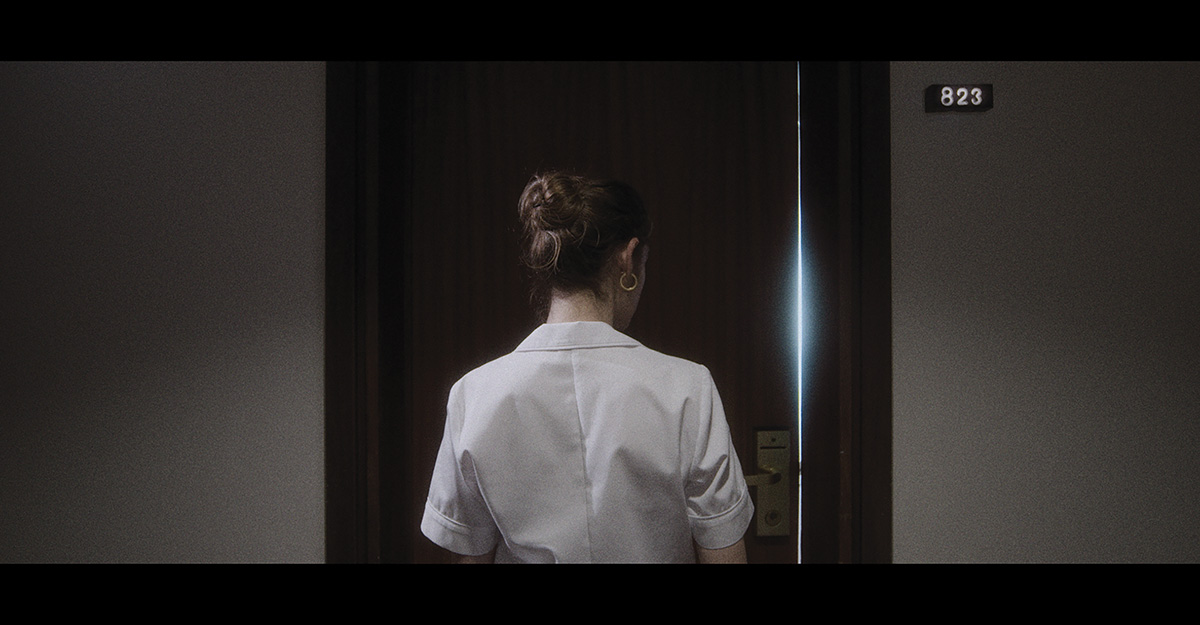
Hotel Royal
Fiction expérimentale | 0 | couleur | 29:0 | Portugal | 2021
Hotel Royal is fragmented and incomplete mosaic of contemporary societies. It could be dubbed a film about the horrors of the soul, about voyeurs or simply about misfits.
Salomé Lamas (Lisbon) studied cinema in Lisbon and Prague, visual arts in Amsterdam and is a Ph. D candidate in contemporary art studies in Coimbra. Her work has been screened both in art venues and film festivals such as Berlinale, BAFICI, Museo Arte Reina Sofia, FIAC, MNAC – Museu do Chiado, DocLisboa, Cinema du Réel, Visions du Réel, MoMA – Museum of Modern Art, Museo Guggenheim Bilbao, Harvard Film Archive, Museum of Moving Images NY, Jewish Museum NY, Fid Marseille, Arsenal Institut fur film und videokunst, Viennale, Culturgest, CCB - Centro Cultural de Belém, Hong Kong FF, Museu Serralves, Tate Modern, CPH: DOX, Centre d’Art Contemporain de Genève, Bozar , Tabakalera, ICA London, TBA 21 Foundation, Mostra de São Paulo, CAC Vilnius, MALBA, FAEMA, SESC São Paulo, MAAT, La Biennale di Venezia Architettura, among others. Lamas was granted several fellowships such as the Gardner Film Study Center Fellowship – Harvard University, Film Study Center-Harvard Fellowship, The Rockefeller Foundation – Bellagio Center, Brown Foundation – Dora Maar House, Fundación Botín, Fundação Calouste Gulbenkian, Sundance, Bogliasco Foundation, The MacDowell Colony, Yaddo, Camargo Foundation, Berliner Künstlerprogramm des DAAD. She collaborates with Universidade Católica Portuguesa and Elias Querejeta Zine Eskola. She collaborates with the production company O Som e a Fúria and is represented by Galeria Miguel Nabinho and Kubikgallery.
Sonia Leber, David Chesworth
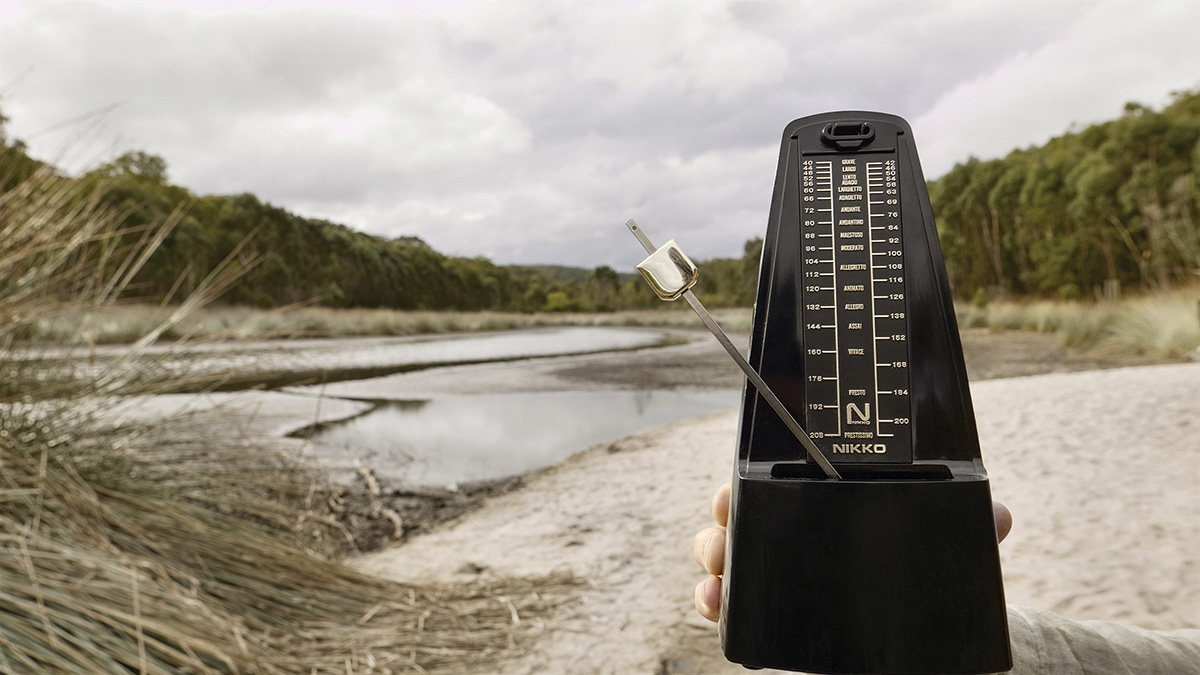
Where Lakes Once Had Water
Vidéo | 4k | couleur | 28:14 | Australie | 2020
‘Where Lakes Once Had Water contemplates how the Earth is experienced and understood through different ontologies – ways of being, seeing, sensing, listening and thinking – that reverberate across art, Indigenous thought, science, ancient and modern cultures, and the non-human.’ Sonia Leber and David Chesworth travelled with a team of Earth and environmental scientists who are investigating changes in the climate, landscape and ecology over 130,000 years. Their journey took them to Australia’s Northern Territory, to spectacular yet challenging environments, from locations of long-term aridity to lush, green waterways. Where Lakes Once Had Water channels the experience, where Indigenous rangers, Elders and community members collaborate with scientists. Working across the ancient shorelines, everyone is receptive to the signs, signals and rhythms of the land. Meanwhile, non-human cohabitants continue their struggles for survival. Leber and Chesworth deploy video as a tool, scanning tree lines, erosions, termite mounds, and the effects of water, sun and fire. Their disquieting sound design encompasses natural and human-made sounds, and the hidden signals and energies that exist beyond human hearing. The project is a journey across audio-visual realms, scientific endeavour and Indigenous knowledge – a coalescence of efforts to understand the ancient land. "Where Lakes Once Had Water" was commissioned by the Australian Research Council Centre of Excellence for Australian Biodiversity and Heritage (CABAH) in association with Bundanon. It was filmed on the lands and waters of the Mudburra, Marlinja, Jingili, Elliot, Jawoyn and Larrakia communities in Northern Territory, with additional filming and editing on Barkandji, Dharawal, Djabugay, Yidinji and Wurundjeri Country. University of Wollongong Art Collection, Australia.
Australian artists Sonia Leber and David Chesworth are known for their distinctive video, sound and architecture-based installations that are audible as much as visible. Leber and Chesworth’s works are speculative and archaeological, often involving communities and elaborated from research in places undergoing social, technological or local geological transformation. Their works emerge from the real but exist significantly in the realm of the imaginary, hinting at unseen forces and non-human perspectives. Leber and Chesworth’s artworks have been shown in the central exhibitions of the 56th Venice Biennale: All The World’s Futures (2015) and the 19th Biennale of Sydney: You Imagine What You Desire (2014). Solo exhibitions include What Listening Knows, Messums Wiltshire, UK (2021) and the survey exhibition Architecture Makes Us: Cinematic Visions of Sonia Leber & David Chesworth, Centre for Contemporary Photography, Melbourne, Australia (2018) touring to Griffith University Art Museum, Brisbane (2019) and UNSW Galleries, Sydney (2019).
Zhouanqi Liu
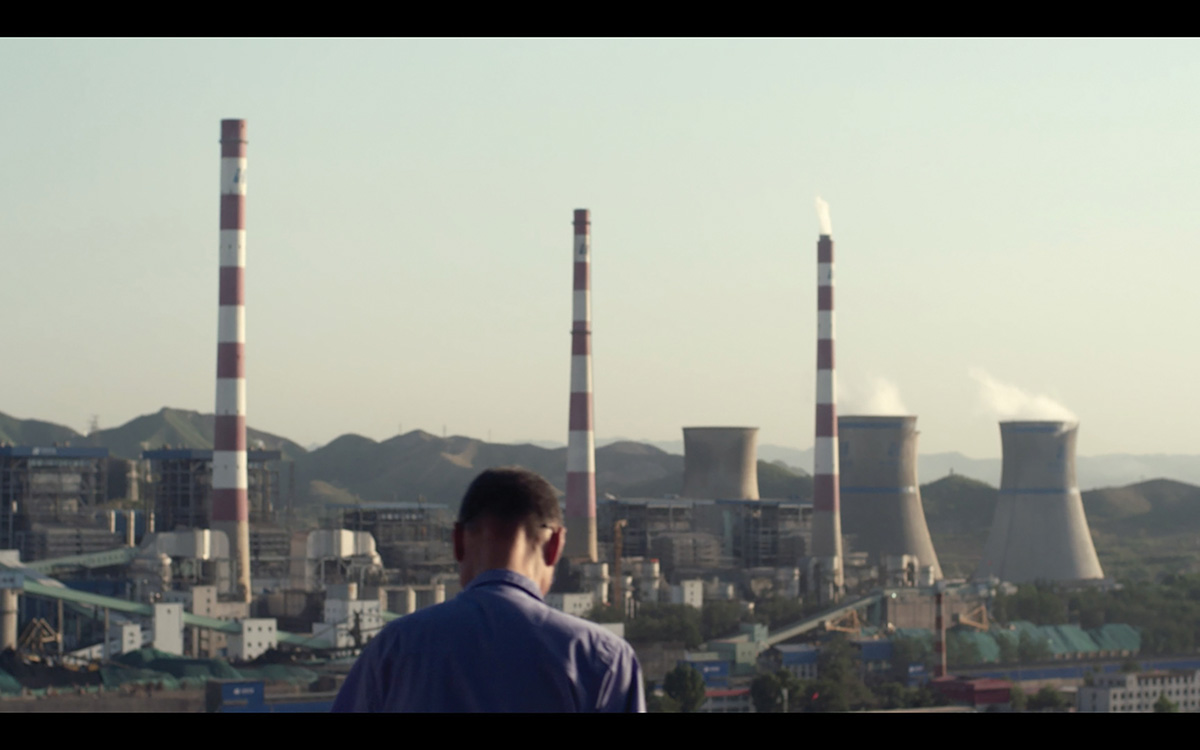
A Walk in Spring
Fiction | 4k | couleur | 10:39 | Chine | 2019
A laid-off worker pretends to go to work as usual but goes on an excursion to the mountain by his own.
Zhouanqi Liu 8/30/1994 Director/Screenwriter/Production Designer/Photographer 346 West 84th St #2F, New York, 10024 NY zl2734@columbia.edu (929) 319-6622 Education ? Beijing Film Academy Screenwriting 2012-2016 ? Columbia University Directing 2018-2021 (thesis film shooting year stage) Experience ? 2013.8-11 Chinese post-rock band ’48V’ 8-city China Road Show as photographer ? 2014.10/2015.10 13&14st ‘ISFVF’ International Student Film and Video Festival of Beijing Film Academy as subtitle translator ? 2015.6-2015.11 Chinese rock band ’Omnipotent Youth Society’ 13-city China Road Show as photographer ? 2016.2 Peking University ‘Preparation for Entrance’ Campus Activity Feature Film (No.5 the Summer Palace Road) as screenwriter ? 2016.4-2016.8 Musician prof. Guo 9-city China Road Show as photographer ? 2017.2-5 Info&Updates Studio China First Exhibition ‘Grand Coupes’ as curation&music production in Beijing&Shanghai ? 2017.6 Beijing 1st ‘Vintage Fair’ advertising video as art director ? 2017.8-10 The Door music company experimental advertising video as screenwriter ? 2017.11-2018.4 School of Visual Arts graduate student thesis documentary ‘The Wanderer’ as the self ? 2018.4-2018.8 Jing Wang photo exhibition on Beijing Three Shadows Art Center ’Goodbye, Paris’ as technician( darkroom film processing&hand coloring)
Dora Longo Bahia
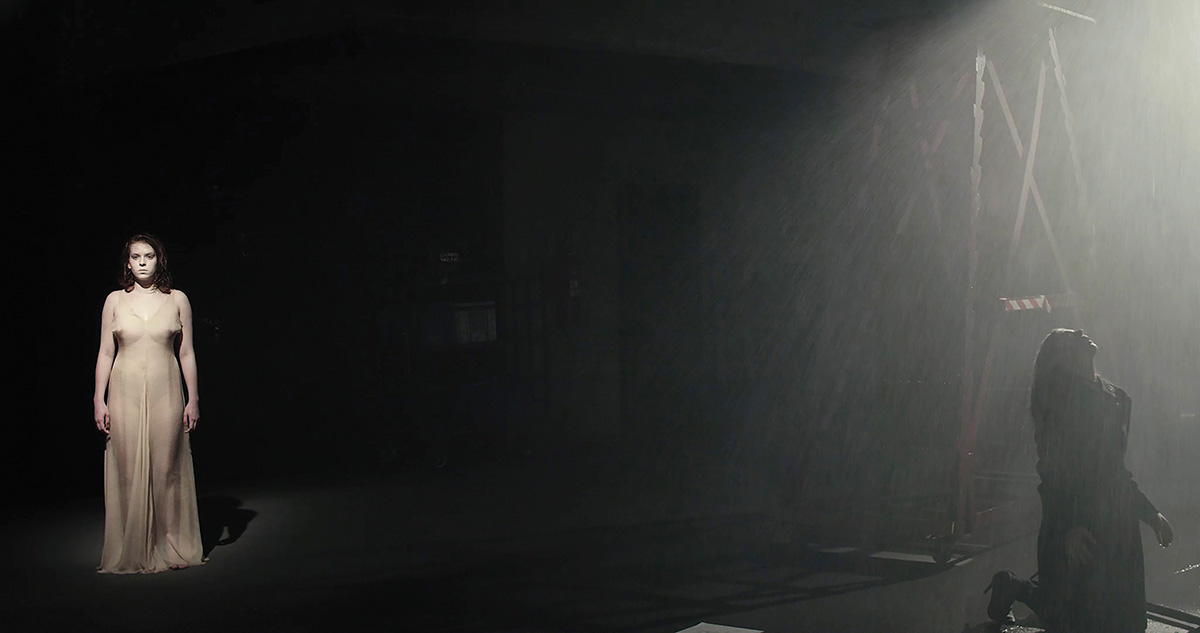
Antígônadá
Fiction expérimentale | hdv | couleur | 120:0 | Brésil | 2021
Taking Sophocles' Antigone as its starting point, “Antígônadá” deals with the contemporary political situation, exploring the revolutionary aspect of the main character, a woman who defies the established social order. After the death of their two brothers, Antigone and Ismene reflect on the laws of “God” and the laws of the State, the rights of the citizens and of the social excluded. “Antígônadá” is an experimental film, composed of 6 travelling shots of 20 minutes, with the camera in a circular continuing motion. Each shot represents one of the 4 elements: light, water, earth and air. The camera accompanies Antigone and Ismene - played by the same actress – whose journey follows the same path four times, reflecting on the status of women in patriarchal society.
Dora Longo Bahia is a visual artist, born in São Paulo, Brazil, in 1961. As of 1984, she has worked with various media: painting, photography, video, sound, set design, illustration and performance art. She has also played bass with several bands: Disk Putas, Verafischer, Maradonna, Sujos de Dora, Osmacaco, Blá Blá Blá and Cão. In 2010 she completed her PhD on visual poetics at ESchool of Communication and Arts of the University of São Paulo - ECA/USP where she currently teaches. In 2016 she completed her postdoctoral studies at the Faculty of Philosophy, Letters and Human Sciences of the University of São Paulo – FFLCH/USP that resulted in her first long feature film, The Dora Case. Since the 1980’s, she participated in several exhibitions and festivals, amongst them: We Never Sleep, at Schirn Kunsthalle Frankfurt (2020); Bienal Sur, in Argentina (2019); 9th Busan Biennale: Divided We Stand, Busan, South Korea (2018); 35o Panorama da Arte Brasileira – Brasil por multiplicidade, São Paulo, Brazil (2017); Eloge du Vertige, Maison Européenne de la Photographie, Paris, France (2012); The Spiral and the Square, Bonniers Konsthall, Stockholm, Sweden (2011); IX Biennial of Monterrey, Monterrey, Mexico (2009); 28th International Biennial of São Paulo, São Paulo, Brazil (2008). Among the artist’s audiovisual achievements are: petit a (2011), part of the Brazilian version of the Destricted project that brought together directors such as Gaspar Noe, Larry Clark and Matthew Barney and the feature film The Dora Case (2017).
Luciana Lopez Schütz
The Argentinian Neighbor
Doc. expérimental | mov | couleur | 5:0 | Argentine, Hongrie | 2021
A voice describes the relationship between two young neighbours and their encounter with a mysterious woman that reveals an augury about future times.
Luciana is an Argentinian born film director and photographer . Her main area of interest has been always the visual language. She started from an early age taking several courses on analogue photography and Super 8 film. She obtained her BA in Image and Sound Design at the University of Buenos Aires and a MA in documentary film directing at ULHT, SZFE and LUCA School of Arts as a scholarship student. She has directed several short films that have been featured in international film festivals such as BAFICI and FIDBA in its competitive section and selected by Berlinale Talents BA as director. In 2019, she attended Biographical Documentary Theatre Course with Gudrun Herrbold at UDK awarded with a fellowship and in 2021, she was chosen to participate as a jury at ELIA Academy (European League of Institutes of the Arts). Nowadays, she is based in Brussels working on both personal and commissioned projects.

Mohamed Ismail Louati
li(f:v)e
Film expérimental | mp4 | noir et blanc | 22:0 | Tunisie | 2021
2007. East Baghdad. A US Army Apache helicopter shoots down a group of men outside a house. It’s a Reuters photographer, his driver and the contacts of the photojournalist actually doing a report. The military who shot them from a distance, using state-ofthe- art hyper-vision technology, assisted by satellites, mistook them for “insurgents” as the reporter’s camera was “seen” as an RPG. This degraded perception is illustrated here in its barbaric acme. That said, this killing is not isolated. Doesn’t virtuality gaining more and more of the reality territory? In those times of planetary virus and practically generalized lockdown, coercive power uses and abuses of its new tools for controlling the population in peacetime (drones, facial recognition, apps, etc.). The experimental film li(f/v)e interrogates through several typologies of images our relationship to reality when it has been invested by its virtual counterpart.
Ismaël a réalisé Babylon (Grand Prix du Festival International du Cinéma FIDMarseille et Prix des Université DOCLisboa 2012) et Leïla’s blues (Quinzaine des réalisateurs, Cannes et Mention Spéciale au Festival des Cinémas d’Afrique de Montréal). Il a produit The last of us (Lion du Futur à la Mostra de Venise 2016, candidature tunisienne aux Oscar 2018). Son film expérimental Fragments of self-phone-destruction (2018) a été primé au Festival des Cinémas Différents et Expérimentaux de Paris. Son premier long-métrage de fiction Black Medusa (2021) a été sélectionné aux compétitions de nombreux festivals : Rotterdam, New Horizons, Lima Alterna, Split, Fantaspoa, Tarifa, etc. Ismaël est par ailleurs artiste visuel et auteur. Il a été diffusé et/ou exposé au MoMa à New-York, au Museo Reina Sofia à Madrid, au Bal à Paris, ainsi que dans les galleries Momenta (New-York), Talmart (Paris), Le Cube (Rabat), A. Gorgi (Tunis), etc. Il a publié un essai : Cinéma en Tunisie (Tunis, 2008) et un recueil de poésie en revue : lettres à la mort (Toulouse, 2009). Il vit et travaille entre Tunis et Beyrouth.
Ariane Loze
Mainstream
Vidéo | hdv | couleur | 19:26 | Belgique, France | 2021
Les premières phrases pourraient nous faire penser à des bribes de conversations glânées lors d’un cocktail, on y reconnaît le tout-entreprenariat contemporain mélangé à une idéologie du management idéal. Derrière ces dialogues se révèle une réflexion sur le travail, ses contraintes et l’espace de liberté que chacun recherche à l’intérieur du cadre qu’il crée ou subit. Et les gens qui travaillent ? Parlent-ils de labeur ou d’activité, de passion ou d’horaires flexibles ? Sommes nous capables de vivre « à 300 à l’heure » et de ressentir les sensations de la même manière ? Comment la conscience que nous avons de nous-même est-elle en train d’évoluer face à cette ambition de contrôle complet de nos vies, alors que le hasard et les aléas de la vie en font souvent la saveur ?
Ariane Loze, Belgique 1988. Vit et travaille à Bruxelles, Belgique Ariane Loze étudie le développement d’une narration à partir d’images apparemment sans rapport. Dans cette série de vidéos, elle joue tous les rôles : elle est tour à tour actrice, réalisatrice et camera woman. Par le montage, ces images mettent en relation deux (ou plusieurs) personnages et l’architecture. Les videos d’Ariane Loze proposent au spectateur de prendre part à la création de la narration grâce aux principes du montage cinématographique: le champ / contre-champ, la continuité de mouvement, et la suggestion d’une narration psychologique. Le tournage de ces vidéos a été rendu public devenant donc une performance. Ariane Loze a étudié la mise-en-scène au RITCS de Bruxelles et a participé à a.pass (Advanced Performance And Scenography Studies) à Bruxelles. Elle était résidente au HISK (Institut Supérieur des Beaux-Arts) à Gand en 2016-17. Les vidéos d'Ariane Loze seront présentées au Salon de Montrouge Paris (mai 2018) et au musée d'art contemporain KANAL Centre Pompidou à Bruxelles (mai 2018). Les expositions récentes incluent Videoformes Clermont-Ferrand (2015), Traverse Vidéo Toulouse FRAC Midi-Pyrénées (2015), Medienwerkstatt Berlin (2016), S.M.A.K. Etcetera Gand (2016), Fondation Boghossian Bruxelles (2016), De Appel "You are such a curator !" Amsterdam (2016), "Kunst om de lijf" Emergent Veurne, New York Anthologie Film Archive AXW projection (2017), Watch this space Biennale # 9 Lille-Bruxelles (2017), "Gemischte Gefühle" Tempelhof Berlin (2017). Les vidéos d'Ariane Loze ont été sélectionnées pour le Prix Movimenta Video Art à Nice (2017) et le Prix Médiatine Brussels (2016) et récompensées au Art Contest Brussels (2015), par la Art For All Society de Macau (2016) et Côté Court Festival Pantin (2017).
Ariane Loze
Kolumba
Vidéo | mov | couleur | 13:36 | Belgique, Allemagne | 2020
Si nous cherchons au-delà de notre propre vision, en deçà des contraintes et de nos besoins primaires, si nous cherchons plus grand que nous-même, c'est pour mieux rencontrer un tout composé de cette multitude d'individualité séparées cherchant en secret leur ultime point commun: l'humanité.
Ariane Loze, Belgique 1988. Vit et travaille à Bruxelles, Belgique Ariane Loze étudie le développement d’une narration à partir d’images apparemment sans rapport. Dans cette série de vidéos, elle joue tous les rôles : elle est tour à tour actrice, réalisatrice et camera woman. Par le montage, ces images mettent en relation deux (ou plusieurs) personnages et l’architecture. Les videos d’Ariane Loze proposent au spectateur de prendre part à la création de la narration grâce aux principes du montage cinématographique: le champ / contre-champ, la continuité de mouvement, et la suggestion d’une narration psychologique. Le tournage de ces vidéos a été rendu public devenant donc une performance. Ariane Loze a étudié la mise-en-scène au RITCS de Bruxelles et a participé à a.pass (Advanced Performance And Scenography Studies) à Bruxelles. Elle était résidente au HISK (Institut Supérieur des Beaux-Arts) à Gand en 2016-17. Les vidéos d'Ariane Loze seront présentées au Salon de Montrouge Paris (mai 2018) et au musée d'art contemporain KANAL Centre Pompidou à Bruxelles (mai 2018). Les expositions récentes incluent Videoformes Clermont-Ferrand (2015), Traverse Vidéo Toulouse FRAC Midi-Pyrénées (2015), Medienwerkstatt Berlin (2016), S.M.A.K. Etcetera Gand (2016), Fondation Boghossian Bruxelles (2016), De Appel "You are such a curator !" Amsterdam (2016), "Kunst om de lijf" Emergent Veurne, New York Anthologie Film Archive AXW projection (2017), Watch this space Biennale # 9 Lille-Bruxelles (2017), "Gemischte Gefühle" Tempelhof Berlin (2017). Les vidéos d'Ariane Loze ont été sélectionnées pour le Prix Movimenta Video Art à Nice (2017) et le Prix Médiatine Brussels (2016) et récompensées au Art Contest Brussels (2015), par la Art For All Society de Macau (2016) et Côté Court Festival Pantin (2017).
Felix Luque Sanchez, Nicolas Torres
Junkyard I
Fiction expérimentale | 4k | couleur | 6:43 | Espagne, Belgique | 2019
“… Junkyard explores the accumulated car wrecks as archeological remains for the future - a future that is undergirded by the consumptive cultures of petroleum, rare earth minerals and metals of which the car is emblematic. Paul Virilio’s argument about the relationship of technology and accidents is illuminating in this sense: "every time that a new technology has been invented,” he writes “a new energy harnessed, a new product made, one also invents a new negativity, a new accident.”[1] In this sense, the easy conclusion would say that the people who invented the car also invented the car accident. But what happens, when we think about not individual accidents but the industry as a whole as an extended scale of a systematic accident that leaves traces of wrecks as the memory of past archaeological periods, whether that pertains to chemicals, metals or residual traces of media of past automobile cultures? In other words, what if we think that the whole industry, with production, distribution, excavation and use, and what it has been doing to the earth’s “resources,” the organisation of labour and gender roles, an historical accident that undermines the viability of organised human existence? – the car industry as the accident of the fossil fuel culture” …
Felix Luque Sánchez (Oviedo, Spain, 1976) is an artist whose work explores how humans conceive their relationship with technology and provides spaces for reflection on current issues such as the development of artificial intelligence and automatism. Using electronic and digital systems of representation, as well as mechatronic sculptures, generative sound scores, live data feeds and algorithmic processes, he creates narratives in which fiction blends with reality, suggesting possible scenarios of a near future and confronting the viewer with her fears and expectations about what machines can do. Luque’s installations are configured as autonomous and uncontrollable systems in which each element plays a role in both their functional and visual design. The machines are thus conceived not only in terms of the processes they carry out, but also as objects of aesthetic contemplation. Each artwork is divided into different parts or sections, that can be read as chapters of the same narrative, constitutive elements of a system, or attempts at exploring a single subject. This fragmentation counters the apparent oneness of the piece and the seemingly perfect operation of the machine. Failure and vulnerability are present in the way that these devices are forced to maintain delicate balances, pursue nonsensical dialogues, generate incomplete renderings of reality, and finally express themselves by means of a sound score that results from their own activity and the physical processes involved in it. The artist consciously plays with the contradictory perception of technology as purely functional while at the same time imbued with a mysterious purpose, and the fear that machines may replace humans. Inspired by science fiction, he draws from its aesthetic and conceptual foundations the tools to elaborate speculative narrations and address the spectator using preconceptions about technology in popular culture. The outcome is a series of artworks that fascinate by their technical elegance and intriguing opacity, at the same time attracting and distancing themselves from the viewer.
Elie Maissin, Mieriën Coppens
Caught In The Rain
Doc. expérimental | hdv | couleur | 20:0 | Belgique | 2021
Trois hommes travaillent sur un chantier. Le travail a été interrompu par cinq mois d'emprisonnement. La pluie tombe soudainement comme le silence qui précède une expulsion.
Mieriën Coppens est un cinéaste belge né en 1992, diplômé de l'école des arts LUCA à Bruxelles. Depuis 2015, il documente la lutte des membres du collectif bruxellois 'La Voix des Sans Papiers'. En 2017, il commence à travailler avec le cinéaste belge Elie Maissin, né en 1990, diplômé du RITCS à Bruxelles. Depuis six ans, Elie Maissin et Mieriën Coppens ont réalisé plusieurs courts métrages : Carry On, On se sauve, Almost At Rest, This House, We Are Stubborn, La Vingtième Commune et Caught In The Rain. Ils recherchent un équilibre entre l'attestation d'une existence réelle et l'évocation d'autres possibilités d'existence.
Arun Mali
Sans-titre
Vidéo | 4k | couleur | 2:50 | France | 2021
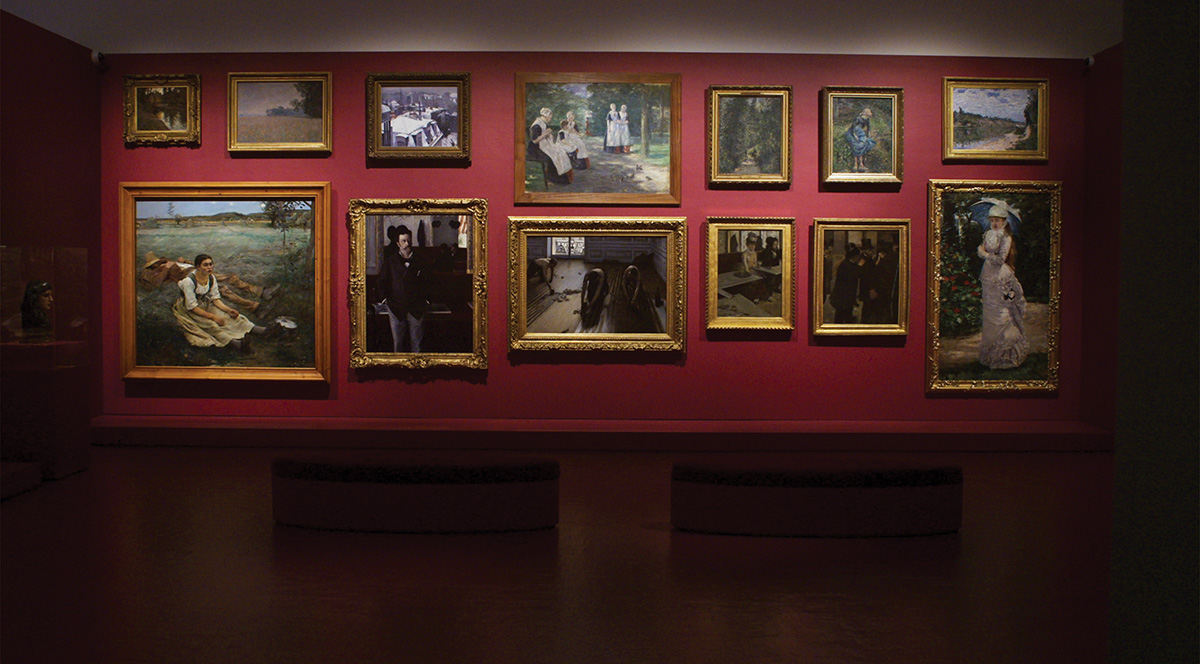
Janvier 2021. Le musée était vide. L’exposition en cours se retrouvait portes closes, abandonnée du regard de ses spectateurs. Seule le vide et le silence, cruels, morbides, habitaient encore cet espace devenu angoissant.
Artiste et réalisatrice, mon travail de l’image se situe entre la fiction, le cinéma documentaire et la vidéo d’art. Il questionne et explore les espaces en marges, en mouvements ou en conflits. Il interroge la façon dont l’être humain déraciné et déplacé arpente des zones de passages et de frontières, une façon mouvante d’habiter le monde, parfois fragile. J’explore les croyances, les rituels et les mythes dont les hommes se nourrissent pour vivre, survivre et construire leur identité. Je présente mes films dans de nombreux festivals de cinéma, dont Clermont-Ferrand – Cabourg – St. Petersbourg – Pantin – Cinémathèque française – Festival Tous Courts d’Aix-en Provence où je reçois le Prix du Jury – Le coup de coeur du jury au Festival Point Doc ou encore la Mention Spéciale au Festival de Contis. Je vends mon court-métrage de fiction “Feux” à Arte et au programme Le Radi. En 2019 je présente mon long-métrage documentaire “La maison” à Visions du Réel à Nyon, film lauréat du Sesterce d’Or Canton de Vaud, meilleur film de la compétition internationale Burning Lights. En 2019 je présente une sélection de mes travaux lors d’une exposition personnelle au sein de l’exposition Futur, ancien, fugitif au Palais de Tokyo avec la collaboration de Claire Moulène. En 2020, je présente une exposition personnelle au FOAM Museum 3H, Amsterdam, avec la collaboration de Hinde Haest. Entre 2020 et 2022 : Centre Phi, Montréal – CEAAC, Strasbourg – Art Genève, Suisse – FRAC Champagne-Ardenne – MAMCS, Strasbourg – Abbaye de Maubuisson, CNAP – Institut Français, Kyoto et Tübingen – Biennale de Montrouge JCE – Shadok, Strasbourg – Around vidéo, Lille – Refresh, Bretagne – Fondation EDF / Le Credac. Je suis également invitée à montrer mon travail lors de la prochaine Biennale de Lyon 2022 par les commissaires Till Fellrath et Sam Bardaouil.