Catalogue > Search
Results for : Tout le catalogue
Claudia Joskowicz
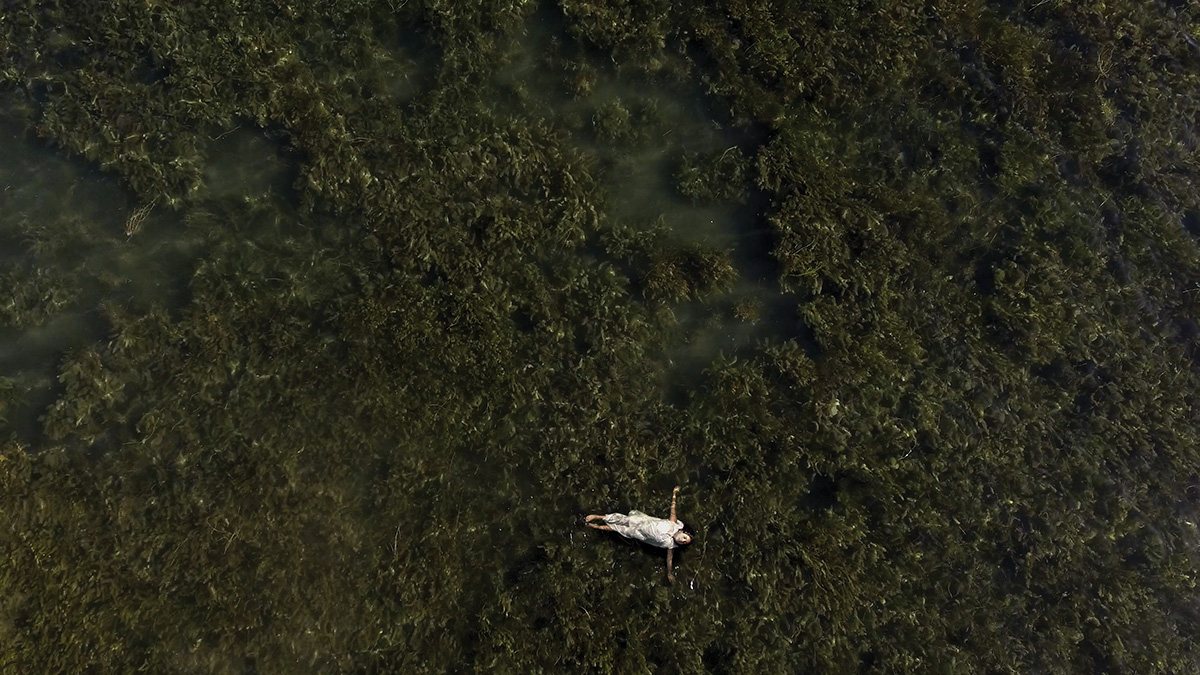
La niña de sus ojos
Video | 4k | color | 18:32 | Bolivia, USA | 2022
La niña de sus ojos (2022) appropriates fragments of the Bolivian folk novel of the same name (Antonio Díaz Villamil, La Paz 1948), that formed an important part of the discourse popular amongst the Bolivian intellectual elites of the period directly preceding the 1952 revolution. The novel, still in use in national pedagogy today, reflects the misogynistic and racist lens that was, and still is, used to impart seemingly democratic projects in Bolivia. Using the house - and home - as a narrative device, along with descriptions of the novel's main characters and the contemporary city of El Alto, this work seeks to locate the viewer between the unrealistic stereotypes described in the book and the true context of El Alto, highlighting the void that still exists today, over half a century later, between political discourse and enacted change.
Claudia Joskowicz is an artist who works primarily with film, video, installation and digital media. Her practice centers on history and its narrative, considering how popular media circulates and shapes collective memory, contemporary history and social realities. Using long and slow video footage and oscillating between film and photography, she reproduces moments captured from global collective memories and personal stories (her own and others’) that have a historical dimension and are anchored in her native Latin American landscape. For most of her career, she has focused on the Latin American landscape, producing work in her home country of Bolivia and South America at large. Her early video work was staged as minimalist reenactments - with attention to the figure and the landscape and focusing on gesture and subtle movement - and has moved towards re-imagined cinematic stagings of landscapes, urban and otherwise, where nuanced political drama unfolds in real time. The landscape and built environment are main characters throughout her work, as are her medium’s structural elements, drawing attention to the media’s role in constructing historical events, and our memories of them. Joskowicz has exhibited widely in the United States and internationally and her work is in the permanent collections of the Guggenheim Museum, NY; the Kadist Foundation, San Francisco, the Cisneros Fontanals Foundation, Miami, and the Banco Central de la República, Bogotá. Joskowicz has received numerous awards and grants including a NYFA Fellowship in film/video, an Anonymous Was a Woman Award, a Cisneros Fontanals Foundation Mid-Career Artist’s Commission, a Guggenheim fellowship in film/video, and a Fulbright Scholar award. She has been a fellow at Yaddo, the Latin American Roaming Art Project, Oaxaca, Mexico, the Sacatar Institute, Bahia, Brazil, the AIM program at the Bronx Museum of the Arts, NY and the LMCC’s Workspace and Paris residencies.
Jon Jost
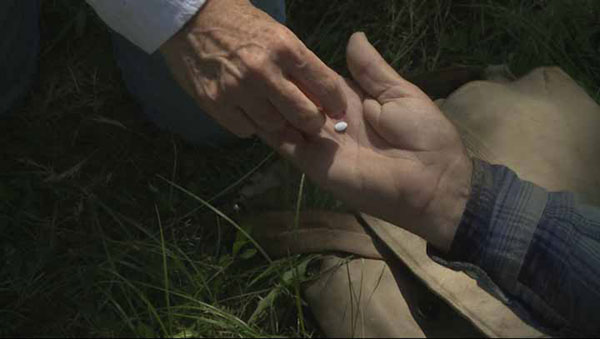
Coming to Terms
Fiction | hdv | color | 89:0 | USA | 2013
Couched as a fictional story, Coming to Terms is a meditation on a death, and its psychological impact on a fractured and divided family. Its formal structure is far from normal narrative story-telling in the cinema.
Jon Jost is a 50 year veteran of filmmaking with some 36 features to his name. He also paints, writes, does photography and writes and sings country-western music.
Jon Jost
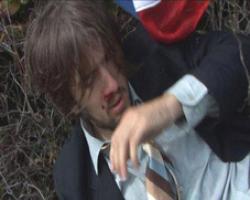
Homecoming
Fiction | dv | color | 104:0 | USA | 2004
Set in Newport, Oregon, a small coastal town whose fishing fleet has vanished, and survives on second-homes and tourism, HOMECOMING is rooted directly in the present realities of America. We are introduced to a normal family: Jeff (Keith Scales) and his wife Mattie (Kate Sannella), and son Chris (Ryan Harper Gray). Jeff runs a small real estate office and his wife shares the work. Chris is an unemployed 26 year old slacker, living with a younger girlfriend, (Kat Eastman). Obliquely we learn of another son, in the service, ?over there.? Mattie discreetly does a bit of drinking, Jeff hustles his business. Mattie fails to get some papers to the bank and Jeff?s company loses out on a $50,000 deal. Chris is dumped by his girlfriend and is in counseling with a social-service therapist (Steve Taylor). We find out that Chris is Jeff?s step-son, and his own son Steve is the one in Iraq. Steve?s homecoming is in a transfer tube. After the funeral the family gathers by the ocean and the fissures within rip apart. Jeff and Chris have a confrontation that leaves Chris with a bloody nose on the ground. Mattie drinks and ends on the floor herself as Jeff loses it. Chris visits his therapist at home and ends up getting a blow-job. He stops by and sees his old girlfriend in an attempt to make up. She turns him down. Chris jumps of a bluff known locally as ?Jump Off Joe?s? HOMECOMING is not a ?plot? film, but more a tone-poem; its meanings arise from its broader ambience, its moods, its sense of time and place. It is meant as a metaphor for the larger family of America, which, at this time, is harshly divided, and unable to speak to itself meaningfully across that division. This film broaches this subject poetically, gently, through a depiction of characters who are unable to articulate to each other or to themselves the disquiet which curdles within them.
Jon Jost
La lunga ombra
Fiction | dv | color | 77:0 | USA | 2006
Three professional women go to the seaside, two of them (Miglio and Gianfelici) to comfort the other (Nano), who has been left by her husband. In the process of attempting to console Anna, the other two are dragged into the maelstrom of her sadness. This work is more of a tone poem narrative, in which the real subject, the impact of 9/11 on the European and Italian Intelligentsia, is never mentioned but lays in the background, invisibly distorting the characters. "La Lunga Ombra" was made in five days in an improvised manner with no script whatsoever, only a vague thought to address the disquiet which pervades Europe in the wake of 9/11; a disturbance which works unacknowledged and of which little is ever said.
Jon Jost is an experienced film and video-maker, with some 15 feature length works on celluloid, 16 and 35mm, and 12 long works in digital video, as well as many short works; and most recently multi-screen installation works. He is presently living in Lincoln Nebraska, USA, on an artist's residency program.

Joyce Joumaa
To Remain in the No Longer
Experimental doc. | 16mm | color | 37:0 | Canada | 2023
In 1962, Oscar Niemeyer was invited to conceive an international fairground in the city of Tripoli, Lebanon, which was never completed. To Remain in the No Longer looks at how architecture operates in this failed state. By examining the precarity of the project site that remains to this day, the film reflects on the country’s current socio-economic crisis. Employing archival materials, interviews, and 16mm and digital film, the experimental documentary explores the political and cultural forces that have come to bear on the site—from its halted construction to its imposed abandonment and attempted reappropriations. How has architecture been instrumentalized in the ongoing construction of a national narrative? What is the role of architects in shaping society within corrupt ecologies of power and failed financial engineering? Film becomes a plastic medium to reframe the positivism of urban masterplans and architectural monuments and formulate a social critique. Modern structures under threat of collapse stand in as protagonists to tell the story of a promised metropolis that never came to be, while the fairground acts as a lens to look at implicit collapse beyond the perimeter of the site.
Based between Beirut and Amsterdam, artist and filmmaker Joyce Joumaa earned a BFA in Film Studies from Concordia University in Canada. In 2021-2022, Joumaa had her first institutional solo show at the CCA The Canadian Centre for Architecture. Her work has shown at the Montreal Museum of Fine Arts, Fofa Gallery, the Sharjah Architecture Triennial and in the 2024 60th Venice Biennale.
Valérie Jouve
Grand Littoral
Experimental video | 35mm | color | 20:0 | France | 2003
It was not in the idea of fiction or documentary that the artist wondered about cinema. She could talk about composition or the musical structure of images; this is how this film, bit by bit, took shape in her mind. Indeed, the music allows for an approach to reality with notions of wholes, voids, rhythms, and times, etc. The artist has always had a link with the image that is built in this sort of abstraction, always building the real.
Valérie Jouve was born in 1964 in Saint Etienne, France, and she currently lives in Paris. She has produced documentaries that have been shown in diverse festivals, and has produced numerous individual and collective exhibitions in Europe, China, and the United States.

Maren Dagny Juell
Human Resource the Musical
Animation | hdv | color | 6:22 | Norway | 2023
The scripts are based on resources like instructional videos and management training tools, sales pitches and tutorials on stress management. Collaging and adapting elements from these and other sources, the work gives birth to a ‘subject’ who speaks with a double tongue, veering between the human and the digitally generated, and delivering a message that is simultaneously authoritative and incoherent, reassuring and vacuous.
Maren Dagny Juell is an artist working with moving image, installation and VR/AR. Maren was born in Oslo, Norway where she currently has a studio. She received her MA from Chelsea College of Art (London) in 2004. The last solo shows have been at Trondheim Center for Electronic Arts (2023), Tenthaus (2021), Atelier Nord Oslo (2019), Trafo Kunsthall (2018), Podium Oslo (2017) and Trøndelag Senter for Samtidskunst (2018). Work has been included in group shows at Bergen Center for Electronic Arts (2021), Astrup Fearnley Museum of Modern Art (2008) and Stavanger Kunstmuseum (2015) amongst others. Moving image works have been screened internationally like The Australian video Biennial in Melbourne( 2017 and 2019). She has participated in and made new works for various biennials including; Riga Photography Biennial (2020), Meta.Morf Trondheim international biennale for art and Technology (2022) and Art Encounters Biennial, Timisoara Romania (2023). In 2024 she won the Nordic Award category at Lumen Prize for “Human Resource the Musical”.
Pauline Julier, Nicolas Chapoulier
Tout Ira Bien
Experimental video | 4k | color | 8:55 | Switzerland, Italy | 2020
A la tombée de la nuit, un oracle volant s’avance et déroule un message.
Pauline Julier est artiste et cinéaste. Ses films ont été présentés dans des festivals, des centres d’art et des institutions du monde entier, parmi lesquels le Centre Pompidou à Paris, le Festival Loop à Barcelone, Visions du Réel à Nyon, DOCLisboa, le Tokyo Wonder Site à Tokyo, le Museum of Modern Art en Tanzanie, le Centre d’Art de Genève, à New York, Madrid, Berlin, Zagreb, Bucharest, à la Cinémathèque à Toronto ou encore au Pera Museum Musée à Istanbul. Elle a reçu le Swiss Federal Art Price à Art Basel en 2010 et elle a présenté une exposition solo au Centre Culturel Suisse de Paris en 2017. Cette année, elle participe à l’exposition de Bruno Latour, « Critical Zone » au ZKM et finit une résidence d’une année à l’Institut Suisse de Rome pour un nouveau cycle de recherches et films. Nicolas Chapoulier, co-réalisateur sur ce film, est directeur artistique de la compagnie « Les 3 points de suspension » avec laquelle il tourne mondialement. Auteur, comédien, acrobate, plasticien et metteur en scène, il assure la mise en scène et la direction artistique des spectacles Nié qui tamola, La grande Saga de la Françafrique (nominé aux Molières 2017) Looking for Paradise, et Squash . En 2011, il rédige Nié qui tamola au Editions Requins Marteaux, un roman graphique documentaire. En 2014, il est lauréat de la Fondation Beaumarchais/SACD Ministère de la Culture- Bourse à l’écriture, Ecrire pour la Rue pour le projet Looking for Paradise. En 2015, il fonde le collectif 3615 Dakota, qui réalise des performances urbaines avec lequel ils sont invités au pavillon français de la biennale de Venise d’architecture en 2019.

Pauline Julier
Noé
Experimental doc. | betaSP | color | 22:0 | Switzerland | 2010
The viewer sees through the eyes of Noah, taken to the end of the world to a place where all seeds are kept safe. He can stand no longer the ordered space in which he is enclosed to live and decides to leave. Outside the world has disappeared under the ice. Poetic metaphor for a state lucid madness, the film suggest the possibility of a world uninhabited and sterile, a white nightmare?
Pauline Julier
Cercate Ortensia
Experimental doc. | hdv | color | 16:0 | Switzerland | 2021
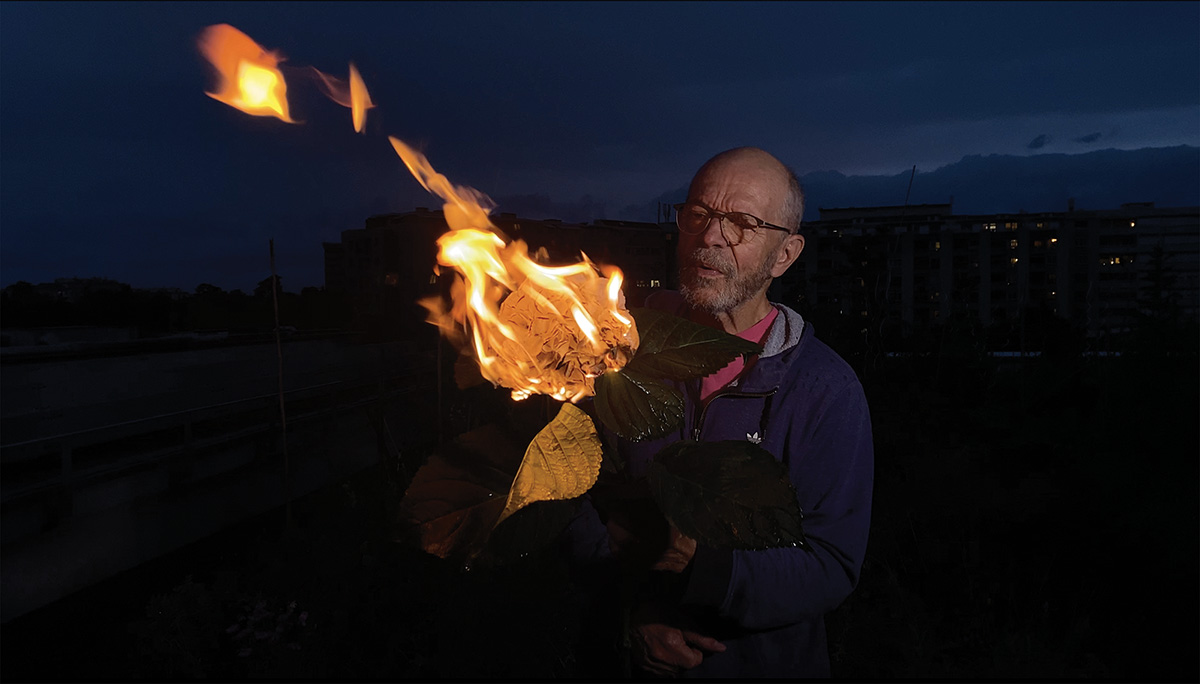
Inspirée par le poème féministe italien d’Amelia Rosselli, La Libellula (Panegirico della libertà) (1958), Cercate Ortensia est un film d’archives scientifiques, personnelles et de réseaux sociaux. Entre hommage et vengeance face à son héritage littéraire, le poème de Rosselli se nourrit de l’ambivalence de la figure d’Hortense du poème « H » d’Arthur Rimbaud, entre élan d'ouverture et retrait intime. Cercate Ortensia recrée un mouvement circulaire marquant une bouffée d’air libératrice face au passé et la vieillesse. Le film explore la chute, la disparition, l’oubli, l’évanescence, traçant un lien entre les recherches de pionniers scientifiques, la désorientation liée à la perte de mémoire d'un père vieillissant et malade, jusqu’à l’actualité brûlante de la catastrophe écologique.
Pauline Julier est artiste et réalisatrice. Elle explore les liens que l'homme crée avec son environnement à travers des histoires, des rituels, des connaissances et des images. Ses films et installations sont composés d'éléments d'origines diverses (documentaire, théorique, fictionnel) pour restituer la complexité de notre rapport au monde. Ses installations et films ont été projetés dans des centres d'art contemporain, des institutions et des festivals du monde entier, notamment au Centre Pompidou (Paris), au Loop (Barcelone), à Visions du Réel (Nyon), au Tokyo Wonder Site (Tokyo), au Musée d'art moderne de Tanzanie, au Geneva Art Center, au Palazzo Grassi (Venise), à New York, Madrid, Berlin, Zagreb, à la Cinémathèque de Toronto et au Pera Museum d'Istanbul. Julier a présenté une exposition personnelle au Centre Culturel Suisse à Paris (CCS) en 2017 et vient de recevoir le Prix fédéral d'art suisse en 2021. Son film « Naturales Historiae » vient d'être diffusé en ligne sur Vdrome.org et son prochain film, « Way Beyond », sélectionné en compétition à Visions du Réel 2021 sera dans les salles suisse à l’automne. Elle présente ce printemps une grande installation à l’institut d’Art Contemporain de Villeurbanne.
Sophie Jung
The Objective I
Video | hdv | color | 5:13 | Luxembourg, Switzerland | 2012
Form, function, awe and all.
Sophie Jung was born in 1982 in Luxemburg and grew up in Germany and Switzerland. She studied Photography and Media Arts at the Folkwang school in Essen, the Zürcher Hochschule der Künste and graduated in 2011 from the Rietveld Academy in Amsterdam and is currently doing her MA in Fine Arts at Goldsmiths, University of London. She lives and works in Basel and London.
Mathieu K. Abonnenc
Secteur IX B
Fiction | 4k | color | 42:35 | France | 2015
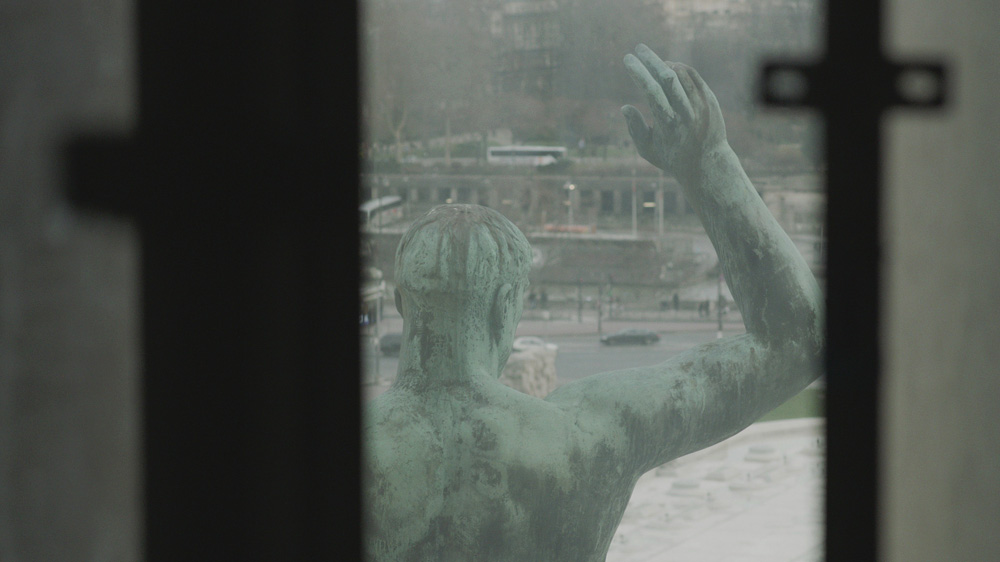
Secteur IX B met en scène la conservation d’une collection anthropologique ramenée la Mission Dakar-Djibouti, une des plus grande opération de collecte coloniale, à travers une relecture de l’ouvrage L’Afrique fantôme de Michel Leiris. Par son dispositif, tourné entre la France et le Sénégal, le film dévoile le destin et la mémoire d`archives par un récit fantasmé, qui désigne un état des relations entre les peuples.
Mathieu Kleyebe Abonnenc s’attache à interroger les formes d’hégémonie culturelle sur lesquelles s’est appuyée l’évolution de nos sociétés contemporaines. Qu’il s’agisse de vidéos, de photographies, d’installations, de dessins ou de projets d’exposition, Mathieu Kleyebe Abonnenc explore les principes de représentation dominants en s’appropriant des éléments et des événements préexistants, principalement liés aux histoires impériales et coloniales des pays dits développés. Autant d’objets appartenant à une mémoire collective dont l’universalisme de principe est mis à l’épreuve depuis plus d’un siècle. Chacun de ces éléments nécessite d’être constamment renégocié afin d’en dégager des problématiques contemporaines, en termes de construction d’une identité, d’une communauté, d’une nation, et ainsi permettre par moment de réinventer l’action artistique et politique. Mathieu Kleyebe Abonnenc est diplômé des Beaux-arts de Marseille en 2002. Il a fait parti du programme de recherche La Seine de l’Ecole Nationale supérieure des Beaux-arts de Paris de 2006 à 2008 . Son travail à fait l’objet en 2013 de deux expositions personnelles, Songs for a Mad King à la Kunsthalle de Bâle, Suisse et Kannibalen au Bielefelder-Kunstverein, Allemagne. En 2012, deux institutions, la Fondation Serralves à Porto au Portugal et Pavilion à Leeds en Angleterre, ont organisé des expositions personnelles de l’artiste. Toujours en 2012 , Mathieu Kleyebe Abonnenc a participé à la Triennale de Paris, Intense Proximité, au Palais de Tokyo, ainsi qu’à des expositions collectives à la Fondation d’entreprise Ricard à Paris et l’ICA – Institue d’Art Contemporain de Philadelphie aux États-Unis.
Yasmine Kabir
The Last Rites
Documentary | dv | color | 17:0 | Bangladesh | 2008
` The Last Rites?, a silent film by Yasmine Kabir, depicts the ship breaking yards of Chittagong- a final destination for ships that are too old to ply the oceans any longer. Every year, hundreds of ships are sent to yards in Bangladesh. And every year, thousands of people come to these yards in search of jobs. Risking their lives to save themselves from hunger, they breathe in asbestos dust and toxic waste. The elemental struggle between man and metal figures throughout the film, as men carry the weight of steel ropes over their shoulders, pull huge parts of the vessels inland, and bear great metal plates. ` The Last Rites? is an allegorical portrayal of the agony of hard labor.
Yasmine Kabir is an independent filmmaker based in Bangladesh. Her filmography includes: Death Chant 1992 A day at the Embassy 1996 For Solaiman 1997 A Mother`s Lament (Duhshomoy) 1999 My Migrant Soul (Porobashi Mon Amar) 2000 Direct-Direct (Music Video) 2003 A Certain Liberation (Shadhinota) 2003 The Last Rites (Shesh Kritto) 2008
Jane Jin Kaisen
Halmang
Video | 4k | color | 13:13 | Denmark, Korea, South | 2023
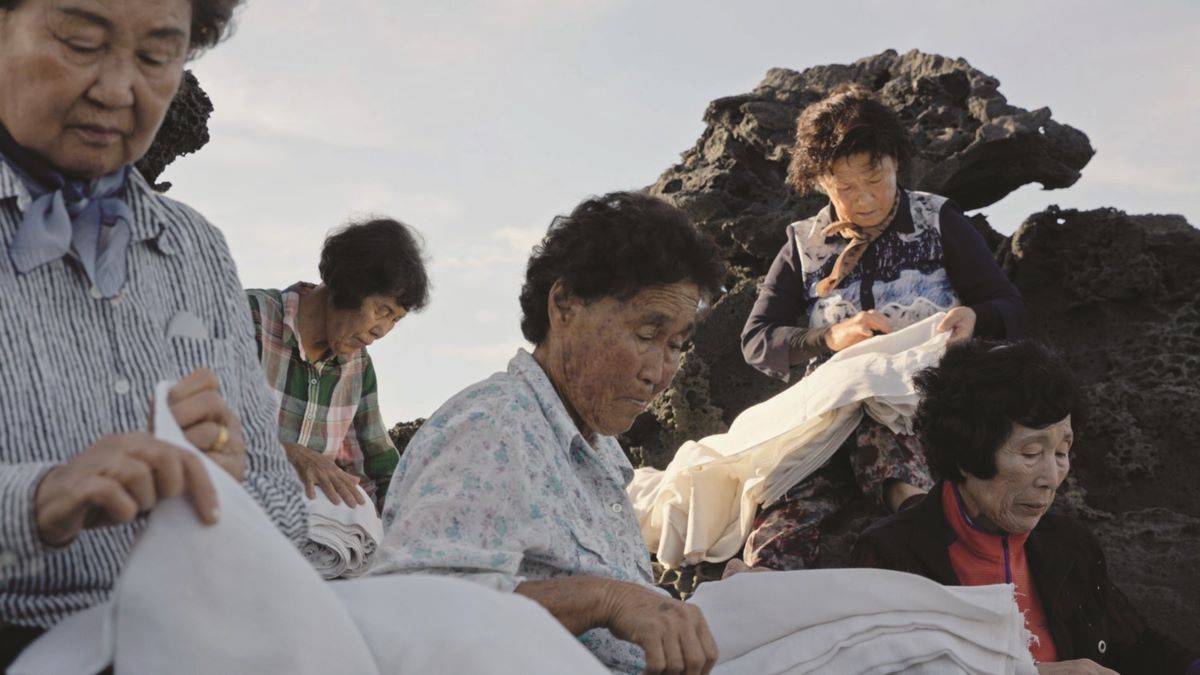
Halmang revolves around a group of eight women in their 70s and 80s. It is filmed by the coast of Jeju Island near a lava rock islet that used to serve as a shamanic shrine for the wind goddess Yongdeung Halmang. The women, who have worked and made a living together for most their lives as haenyeo sea divers, used to depart together for the sea from this very location. The title Halmang refers to this spiritual aspect as shamanic goddesses in Jeju are referred to as ‘halmang’ while also being the Jeju term for ‘grandmother’ and a respectful form of address for a woman. It was also from this area that Kaisen’s grandmother during her lifetime used to depart for the sea as a haenyeo sea diver. The film portrays the aging women’s lived experience, their community and spirituality connected to the sea, the wind and the island. Central to the work is its focus on the collective use and care for sochang; a white, long cotton cloth associated with female labor and a symbol of cycle of life and death and humans’ connection to the spirit world. The camera carefully registers their hands, gestures, and facial expressions as they meticulously tend to the fabric. As the piece unfolds, they start connecting the long rolls of sochang until it comes to form a large spiral enveloping the black lava rocks. The music is produced by Lior Suliman (also known as Dub Mentor) and is comprised of layers of on-site recordings, looped, interleaved and treated to create an immersive sound experience. It also features The Song of the Haenyeos by Gang Gyung Ja and Song of Haenyeo Preservation Association.
Jane Jin Kaisen is an artist, filmmaker, and Professor of the School of Media Arts, The Royal Danish Academy of Fine Arts. Spanning the mediums of video installation, experimental film, photography, performance, and text, her work is informed by extensive interdisciplinary research and long-term engagement with minoritarian communities. She is known for her visually striking, multilayered, performative, poetic, and multi-voiced feminist works through which past and present are brought into relation. Engaging topics such as memory, migration, borders, and translation, she activates the field where lived experience and embodied knowledge intersect with larger political histories. Kaisen is a recipient of is a recipient of the New Carlsberg Foundation Artist Grant (2023) and a 3-year work grant from the Danish Arts Foundation (2022) and awarded Exhibition of the Year 2020 by International Association of Art Critics, Denmark for the exhibition Community of Parting at Kunsthal Charlottenborg. She represented Korea at the 58th Venice Biennale and has exhibited and screened her artworks and films in a wide range of contexts internationally.
Jane Jin Kaisen
Burial of this Order
Experimental film | 4k | color | 25:12 | Denmark, Korea, South | 2022
A procession of non-conforming people – from musicians, artists and poets to anti-miliary activists, environmentalists and diasporic, queer and trans people – carry a coffin together through the ruins of what turns out to be an abandoned resort on the South Korean island of Jeju. It soon becomes clear that this is no traditional Confucian funeral. Age and gender roles are subverted, the coffin is draped in dark camouflage colours and the traditional portrait of the deceased is replaced by a black mirror. In the field between funeral ritual, political protest and carnival performance, the people in the procession who have come together to undo a world order built upon hierarchy and division, march through the ruins of capitalist modernity. Time and place begin to lose their stability as mythical Dokkaebi deities pass through the building and heavy rain and wind blow through its cavities. As if possessed the group, in a moment of revolutionary fervour, overthrows and dismantles the scaffolding of the prevailing order and other stories begin to take form. Jane Jin Kaisen’s interdisciplinary work not only activates Jeju’s violent history as a site of oppression and rebellion, but is a work with universal power.
Jane Jin Kaisen (born 1980 in Jeju Island, lives in Copenhagen) is a visual artist, filmmaker, and Professor of the School of Media Arts, The Royal Danish Academy of Fine Arts. Spanning the mediums of video installation, narrative experimental film, photographic installation, performance, and text, Kaisen’s artistic practice is informed by extensive interdisciplinary research and engagement with diverse communities. She is known for her visually striking, multilayered, performative, poetic, and multi-voiced feminist works through which past and present are brought into relation. Engaging topics such as memory, migration, borders, and translation, she activates the field where lived experience and embodied knowledge intersect with larger political histories. Through multi-year projects and collaborations, she has engaged topics such as transnational adoption, the Korean War and division, the Jeju April Third Massacre, and Cold War legacies. Another recurring focus revolves around nature and island spaces, cosmologies, feminist re-framings of myths, and engagement with ritual and spiritual practices. Working from the thresholds of mediums and forms, disciplines and sensibilities, her works negotiate and mediate the means of representation, resistance, and recognition, thus contouring alternative genealogies and sites of collective emergence. Kaisen is a recipient of the New Carlsberg Foundation Artist Grant (2023) and a 3-year work grant from the Danish Arts Foundation (2022). She represented Korea at the 58th Venice Biennale with the film installation Community of Parting (2019) alongside artists Hwayeon Nam and siren eun young jeong in the exhibition History Has Failed Us, but No Matter curated by Hyunjin Kim. She was awarded “Exhibition of the Year 2020” by AICA - International Association of Art Critics, Denmark for the exhibition Community of Parting at Kunsthal Charlottenborg. Kaisen has participated in the biennials of Liverpool, Gwangju, Anren, Jeju, among others. Recent solo exhibitions include Jane Jin Kaisen: Braiding and Mending at The Image Centre (2023), Of Specters or Returns at Le Bicolore (2023), Currents at Fotografisk Center (2023) Parallax Conjunctures at Museum of Contemporary Art Detroit (2021), Community of Parting at Art Sonje Center (2021) and Kunsthal Charlottenborg (2020). Other recent exhibitions and screenings: Dislocation Blues: Jane Jin Kaisen, Tate Modern (2023), Ceremony (Burial of an Undead World), Haus der Kulturen der Welt (2022), Checkpoint: Border view from Korea, Kunstmuseum Wolfsburg (2022), Unmoored Adrift Ashore, Or Gallery Vancouver (2022). She holds a PhD in artistic research from the University of Copenhagen, Department of Art and Cultural Studies, an MFA in Interdisciplinary Studio Art from the University of California Los Angeles, an MA in Art Theory and Media Art from The Royal Danish Academy of Fine Arts, and she participated in the Whitney Museum of American Art Independent Study Program. Other exhibition and screening venues include: Kunsthal Aarhus, Nikolaj Contemporary Art Center, The National Museum of Photography (DK), Haus der Kulturen der Welt, Berlinale, Kunstmuseum Wolfsburg, Times Art Center, Museum Ludwig, Videonale (DE), Asian Art Museum, Museum of Contemporary Art Los Angeles, Gana Art New York, DePaul Art Museum (USA), ARKO Art Center, Seoul Museum of Art, Incheon Art Platform, Seoul New Media Art Festival, Leeum Samsung Museum of Art, Asia Culture Center, Coreana Museum of Art, DMZ International Documentary Film Festival (KR), Silencio Club, Palais de Tokyo, Foundation Fiminco (FR), Malmö Konstmuseum, Malmö Konsthall, Inter Arts Center, Kalmar Art Museum (SE), Sørlandet Art Museum and Oslo Kunstforening (NO), Finnish Museum of Photography (FN), ParaSite (HK), Kyoto Arts Center, Kyoto Museum of Art, Fukouka Museum of Art, Yamagata International Documentary Film Festival, (JP), Times Museum Guangzhou, Beijing 798 Art Zone (CN), Kaohsiung Museum of Fine Art, Taiwan International Documentary Film Festival (TW), Museum of Contemporary Art and Design (PH), The National Gallery (Indonesia), and Townhouse Gallery (EG).
Leilani Kake
Tino Rangatira Tanga
Documentary | dv | color | 16:6 | New Zealand | 2008
Maranga mai Wake up Maranga mai e te iwi Rise up the people O nga hapu Ngapuhi of the families of Ngapuhi Ki a mau, ki a u,ki a pupuri ai be strong,be fixed,hold on ki nga akoranga nui to the larger lessons "My very first memory of my Dad actually has no visual label but is made up of Sound, the warm soundscape of him singing as he strums the guitar, his voice booms over the acoustic harmonies of the strings. His mouth smiles as he sings a verse, his hands strums with vigor. I am safe in his song. On the night of the seventeenth of April 2008 my father Richard Kake passed away in Whangarei Hospital after suffering a massive stroke, he was fifty seven years old." Tino Rangatira Tanga invites the viewer into a sacred space of Love, loss and revelation. "It is a celebration of my relationship with my Father told through deeply intimate experiences strengthened through the musical soundscape that surrounded my Father?s life and death. The process of filming,editing and viewing the footage of my father?s life and untimely death helped me to grieve and in turn heal. Being able to experience and share this work has created moments of personal growth and insight. "
Kia Ora and Warm Pacific Greetings, My name is Leilani Kake, I live in Otara, Manukau City, South Auckland,Aotearoa(New Zealand) and I am a practicing Video Installation Artist of Nga Puhi, Tainui (NZ Maori) and Manihiki (Cook Island) descent. I graduated with the University of Auckland at the Manukau School of Visual Arts with a Bachelor of Visual Arts in 2002 and a Post Graduate Diploma of Fine Arts in 2005. My work transfers documentary footage and the recording of real events into an art context. My projects tend to be highly personal stories dealing with issues of identity and culture, tradition and change. Insight: ?Raising awareness of important issues pertaining to myself, Tangata Whenua(New Zealand Maori) and Pacific people in a way that creates constructive discussion has always been the main focus of my art.?
Kai Kaljo
AEG
Experimental video | super8 | color | 1:0 | Estonia | 2005

Kai Kaljo
Isegi nimi on mõnikord sama (Even the Name Is Sometimes the Same)
Video | hdv | color | 1:55 | Estonia | 2017
Among others, Kai Kaljo(1877-1906) lives on in my video "Even the Name is Sometimes the Same"(1877-2017). I don´t know if we are related or not, but does it really matter? The video was made in cooperation with the photo collection of the Tallinn town museum. In the corner of a very old photograph (made in 1877) of the Tallinn Old Town Harbor, there is a person sitting, very tired. For some unknown reason, I was overwhelmed by that person. She (or he) had no idea that photography existed so she never suspected being accidentally captured by someone´s camera, neither did she suspect that, for some reason, she would become so important for somebody after 140 years.
Kai Kaljo is an artist living and working in Tallinn, Estonia. She studied painting at the Estonian Academy of Arts. Since 1997, when she completed her first video "Loser", she mainly works in video. In 2006 and 2017, she used to work at Tallinn University as a professor for contemporary art. Her video work was often described as poetic, social, humorous/tragic. In recent years, she had been working with archival images and texts.
Jade Kallio, Remi Vesala
Laava
Video | 4k | color | 15:0 | Finland | 2024
Lava is a love letter to things that cannot be written about: love, exciting piles of twigs, longing, a disappearing landscape, memories you can’t trust. Either writing hurts, or it is impossible to find the words. Lava is a continuation of the working group’s previous work Magma (2020). Both works deal with human relationships and ecology. The wishes for transformation, non-monogamy and boundless love, which were still partially smouldering under the surface, erupt in Lava, a video dealing with the end of a relationship.??
Jade Kallio is working with a variety of media including experimental cinema, performance and installation art. Their personal and collaborative works mix speculative fiction with everyday life. Kallio's works have been presented at festivals and institutions such as Europian Media Art Festival (2019, 2017), Beursschouwburg Art Center Brussels (2019), Kunsthalle Osnabrueck (2019), International Film Festival Rotterdam (2019, 2017), CCA derry (2016), HAM gallery (2017), Turku Art Museum (2017), Gallery Sinne (2017).
Mumtoz Kamolzoda
Nikoh
Experimental doc. | dv | color | 3:37 | Tajikistan | 2007
On the world`s roof (Pamir) has remained the most ancient ceremony to this day. A woman wants very much to marry, but her husband dies before. The next enamored man is careful to take such woman. She must first marry a tree. The bride, in a specially appointed term, goes to the tree where her relatives prepare the wedding ceremony. While guests have fun, the bride remains with the new spouse-tree for a while. According to customs after such a wedding the person is safe. The woman can marry once again only when the tree drys up. If a tree continues to turn green, the woman marries another tree until her relatives achieve the necessary result. By means of ancient ceremonies the woman is released from a bad aura.
Mumtoz Kamolzoda born in 1987 in Tajikistan. Educational background:2008-2009 University of Delhi, major: Indian culture.2006-2007 Beijing University of Language and Culture,major: Chinese language.2003-2008 Russian-Tajik Slavonic University,major: Linguistic and intercultural communication.1996-1999 Art School by M. Olimov Major:painting. Working Experience:2007-2008 ? Teacher of Chinese language, Russian-Tajik Slavonic University.2005-2006 ? Correspondent and photographer, Tajik Society of Friendship and Cultural Relations.2003-2008 ? editor, Department of Cultural Programs, Tajik Television. Languages: Tajik- fluent Russian- fluent English ? fluent Chinese ? fluent German ? read and translate with dictionary French ? read and translate with dictionary Hindi ? read and translate with dictionary Seminars: Seminar ?Museum exposition: modern practice and possibilities? Tajikistan 2007 Seminar ?Role of curator in contemporary art process? Tajikistan 2008 Seminar ?Modern art history? Tajikistan 2008 Web-site: www.mumtoz.blogspot.com
Behnam Kamrani
endurance
| dv | color | 3:44 | Iran | 2006
A room in a Qajarid house of a woman (Zinat-ul-Molk). A mirror-work room shining at night like a starry sky. Despite its ambiguity, the relationship between the man and woman in the room indicates tensions after separation. The woman in white can also be considered as a spirit or as the tension that remains after the turnings and burnings.
Born in 1968 Shiraz/ Iran Education 1995 B.A/ Painting/ Fine Arts/ Tehran university 1999 M.A / Painting/ Art University PhD/ Art research/ Art University