Catalogue > Search
Results for : Tout le catalogue
Isabelle Hayeur
La saison sombre
Video | hdv | color | 8:45 | Canada | 2014
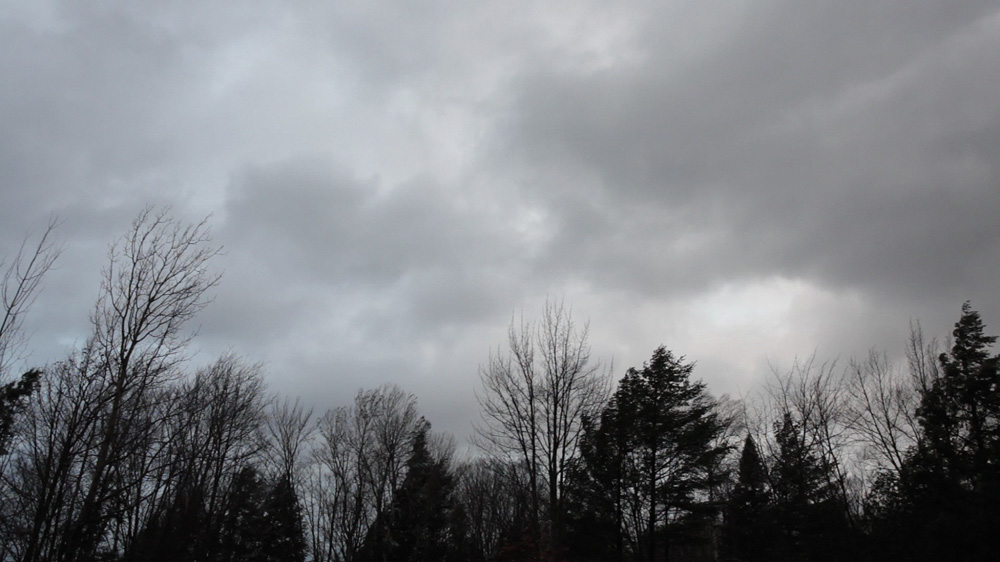
La saison sombre (The Dark Season) is intended as a kind of omen. The video shows us devastated places and landscapes with extreme climates. It alludes to some of the upheavals current societies are undergoing, at a time when our dependence on fossil fuels is only growing.
Born in 1969, Isabelle Hayeur lives and works in Rawdon (Quebec). As an image-making artist, she is known for her large digital montages, her videos and her site-specific installations. Her work is situated within a critical approach to the environment, urban development and to social conditions. She is particularly interested in the feelings of alienation, uprooting and dislocation. Her artworks have been shown in the context of numerous exhibitions and festivals.
Isabelle Hayeur
Losing Ground
Video | dv | color | 12:40 | Canada | 2009
"Losing Ground" is a critique of urban sprawl and the resulting erosion and homogenization of the countryside across the world. With its negation of city history, of geographic particularities, and thus of cultural memory, this standardized urbanization imposes its amnesia, individualistic lifestyle, and jarring presence in nature. Filmed in Quartier DIX30 in Brossard, the biggest lifestyle center in Canada, the video sounds out recently man-made territories so as to decipher humanity?s relationships with the environment. It confronts us with the dizzying spectacle of our diminishing local references, as they give way to cultural stereotypes, now become universal through globalization.
Isabelle Hayeur was born in Montreal in 1969. She completed a BFA in 1996 and an MFA in 2002 at Université du Québec à Montréal. As an image-making artist, she is known primarily for my large digital montages and her videos. She has also produced several site-specific installations, public art commissions and a few web art works. Her work is situated within a critical approach to the environment and urban development. She has been widely exhibited across Canada, Europe and the United States, at Musée d`art contemporain de Montréal, the Massachusetts Museum of Contemporary Art (MassMoca), the Museum of Contemporary Photography (Chicago), Casino Luxembourg forum d`art contemporain (Luxembourg), the Neuer Berliner Kuntsverein (Berlin) and at Les Rencontres de la photographie à Arles (France). Her video presentations include LOOP Videoart, Barcelona (2009), Festival des nouveaux médias et de la vidéo de Montréal (2007, 2003, 1999), Vidéoformes, (2001, 2000, 1999, 1998), Videoart Locarno (2001), Les rencontres internationales Paris/Berlin (2000, 1999) and L.A. Freewaves (1998) amongst others.

Isabelle Hayeur
Private Views
Experimental video | 0 | color | 8:15 | Canada | 2010
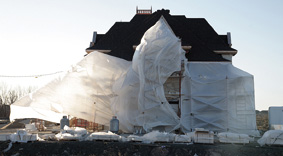
"Private Views" creates a parallel between two starkly different worlds: the wretchedness of the destitute and the conspicuous consumer lifestyle of the nouveaux riches. The video explores the themes of social inequalities, real estate speculation, and dispossession. It documents the decline of some North American cities and casts a critical eye on the emergence of wealthy new suburbs. These private residential enclaves are often gated and under surveillance. Their luxury homes, with their dubious architectural style, are the reflection of a world dominated by appearances, consumption, and social conformity.
Isabel Hayeur is a visual artist, born in Montreal in 1969. She gets a fine arts master degree from the University of Quebec in Montreal in 2002. Her work consists in large photographic montages, videos and in situ installations. She?s the cofounder of the collective ?Perte de Signal?, which exhibited young media artists in international festivals. Her researches focus on the changes in the city planning, showing natural-looking landscapes which are actually totally artificial. Her work is internationally shown in festivals, museums and exhibitions, as the Museum of Fine Arts of Québec (2006), ?Les Rencontres Internationales de la Photographie? in Arles (2006), the Museum of Fine Arts of Canada, the ?Fonds National d?Art Contemporain? of Paris, the Contemporary Art Museum of Montréal, and the Museum of Contemporary Photography of Chicago (MoCP).

Isabelle Hayeur
Holiday Out
Video | 4k | color | 10:45 | Canada | 2024
In California, around 172,000 people are homeless, 30% of the country's total, even though the state represents only 12% of the US population. Lack of affordable housing, mental health problems and drug use are the main causes of this social crisis. This human distress is everywhere these days, but it's far from trivial. Homeless people are affected by heatwaves and floods, which can be deadly due to lack of access to shelter, clean water, and healthcare. I met homeless individuals when I was in the town of El Centro; I captured a few moments of their daily lives on the edge of Interstate 8 and the Sonoran Desert.
Isabelle Hayeur is known for her photographs and her experimental videos. Her work is situated within a critical approach to the environment, urban development and to social conditions. Since the late 1990s, she has been probing the territories she goes through to understand how our contemporary civilizations take over and fashion their environments. She is concerned about the evolution of places and communities in the neoliberal sociopolitical context we currently live in. Her works have been shown at the Massachusetts Museum of Contemporary Arts, Neuer Berliner Kunstverein and at Les Rencontres internationales de la photographie à Arles, amongst others. She has also actively participated in international artists’ residencies and festivals.
Ali Hazara
Dusty Night
Documentary | dv | color | 20:0 | Afghanistan, France | 2011
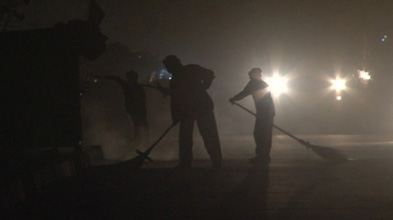
At dusk, a team of sweepers come in from the outskirts and work at night, shadows among shadows, displacing the heavy dust, along an avenue in the flashing lights of cars and glimmering shops,or gas station.
I was born in a very remote village in 1977. Ghvas it is called, in Behsood, inWardak Province in Afghanistan. Soon my family immigrated in 1979, due to the dangers that would threaten my father. My family emigrated to Iran and passed all my childhood in that country. I returned to Afghanistan in 2004. I started the cinema, with Atelier Varan in 2007, in Afghanistan. I want to change the situation in Afghanistan, writing the song, movie making, andmaking fun of television programs. But after so many years remained a dark figurein my mind of my land, and it is dusty night.

Zike He
Random Access
Experimental fiction | 4k | color | 14:20 | China | 2023
Random Access (2023) takes the form of a science fiction set in the city of Guiyang and its vicinity, home to the world's largest radio telescope FAST and a “data center cluster” credited with driving the rapid expansion of China’s digital industry. It is also the center of the Chinese Karst landscape, where geological information and meteorological clouds are stored in the mountains. Riffing on her parents’ experience of living in this misty highland technological hub, the artist imagines a narrative unfolding after the unexpected crash of its main data center. In this disordered digital reality, two characters travel through the city filled with flashes of ancient memories and imaginaries of the future. Whether they are encountering information stored in the cloud or expanded versions of themselves, the protagonists must find their way through a rapidly changing world.
HE Zike (b.1990, Guiyang, China) is an artist who works with mediums including video, writing, performance, prints, and computer program. By incorporating personal memories into her research and fieldwork, HE Zike’s practice illuminates the interplay between time, mundane lives and the technological environment. She weaves the disorder beneath the surface of contemporary life through a narrative approach. She was a finalist for the 5th VH Award of Hyundai Motor Group, and was selected in the residency program of Pro Helvetia, the Swiss Arts Council in 2023. From 2021, She has co-initiated the interdisciplinary project “Under the Cloud” which visits and studies the technological infrastructure in Southwest China. Her works have been exhibited in Cosmos Cinema, the 14th Shanghai Biennale (2023), Dream Screen at Leeum Museum of Art (Seoul, 2024) and Beijing Biennale (2022) among others.

Isabell Heimerdinger
Soon It Will Be Dark
Experimental film | 4k | | 22:49 | Germany | 2020
Life on the island follows the changing pace of day and night. Where the only road seeps into the forest, the air gets warmer, more humid. Here, in the shade of tall trees, a man is at work with his tool. The sounds he produces blend in with the sounds of the all-embracing nature. His daily routine is directed by light and shadow until the sun sets. At night, at the other end of the road, his loneliness is softened by the voices of the others, next to the warming fire, until the first light.
Isabell Heimerdinger was born in Stuttgart, Germany. She studied sculpture at the Kunstakademie Düsseldorf and received an MFA in photography at the California Institute of Arts in Los Angeles. During her years in Hollywood, she made a living working in special effects animation. Unsurprisingly her art work revolves around the conditions of filmmaking. In 2008, she shot her first narrative short film in France (Detour), followed by a series of experimenal films set in Beijing (Good Friends, Blind Date, Mr. Xu) and in Italy (Giorgio). While the settings of her films are always real, the stories and the characters that inhabit them are not. Isabell Heimerdinger lives and works in Berlin. Her films have been shown among other venues at Berlinische Galerie, Kino Arsenal, Centre George Pompidou, Art Film at Art Basel, Kunstmuseum St. Gallen and various international film festivals.

Paul Heintz
Nafura
Experimental fiction | hdv | color | 27:33 | France | 2023
Bored one evening, three friends have fun reflecting on the symbolism of the Jeddah fountain in Saudi Arabia. Built by the king in the 1980s, it is considered the highest fountain in the world. Their thoughts on this monument turn into reflections on power, prohibition and the recent gentrification
Paul Heintz is born in 1989 in Saint-Avold (France), a Fine Arts graduate at Beaux-Arts de Nancy, Arts Décoratifs de Paris and Le Fresnoy, studio national des arts contemporains. He is currently living and working between Paris and the Lorraine region. His work goes through object, sound, film and installation has been presented at contemporary art event and film festival such as FID Marseille, IFFR Rotterdam, Paris Nuit Blanche and in art-center and museum as Centre Pompidou, Frac Lorraine, Les Rotondes.
Paul Heintz
Foyers
Experimental doc. | hdv | color | 18:0 | France | 2018
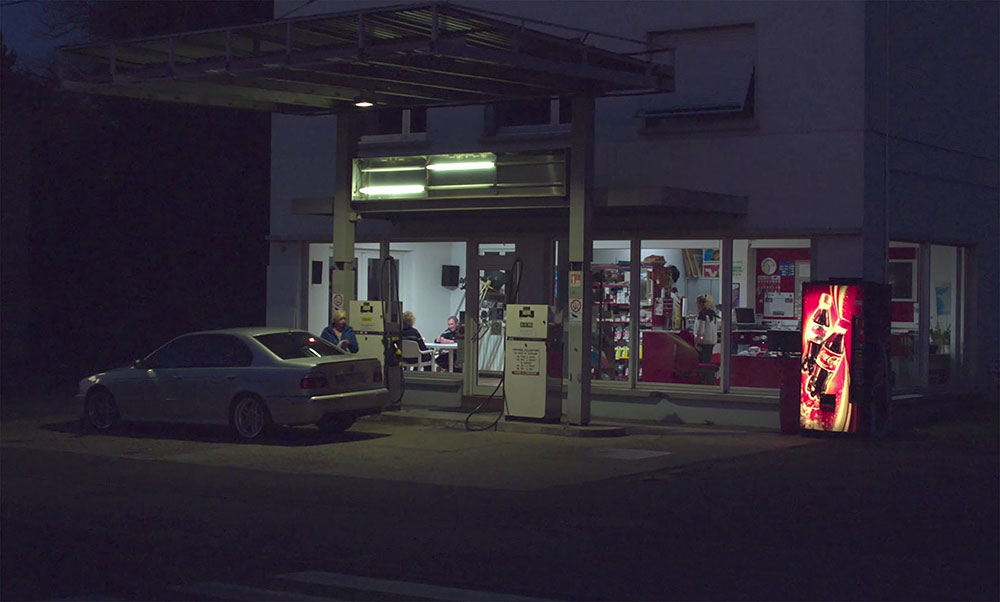
At the rate of a solitary drift, an arsonist confides to us. His life, dreams and imagination reveal his unconscious relationship to fire.
Paul was born in 1989 in Saint-Avold (France). He is a Fine Arts graduate from Beaux-Arts de Nancy, Arts Décoratifs de Paris and Le Fresnoy, studio national des arts contemporains. 
His work goes through object, sound, video and installation. His first film "Non Contractual" was screened among others festival at RIDM, Indie Lisboa and FID. His last film "Hearths" premiered in 2018 at FIDMarseille and Dok Leipzig and was selected at Rotterdam 2019.
Thomas Heise
Sonnensystem
Documentary | | color | 100:0 | Germany, Argentina | 2010
?Solar System? is a film about disappearance. It is a portrait of daily life in the indigenous community of the Kollas in Tinkunaku in the mountains of northern Argentina. It tells the story of Ramona and Viviano in the valley of Blanquito and at high altitude in Santa Cruz, of the deaf Fortunato and of Louis? family, of Soto the shepherd, and of Cecilia and Bernardo whose tractor turned over, of Guido the child who carves men out of clay, of God, of the carnival which everybody celebrates, and of the flowing of the waters. The film shows a meeting without knowing the language of the other, a story of getting to know and seeing each other without words. Non-verbally, exclusively through images the film approaches the people of a small indigenous Kolla community. We accompany the seasonal tramp of Viviano and Ramona from the valley up to the village of Santa Cruz, 3000 meters above sea level, where they spend the summertime until the autumn rain makes them go back to Rio Blanquito. Living with the Kollas, inbetween the old rites and the irruptive modernity, in the grandiose landscape of Yunga and Quechua, the film narrates the day-to-day disappearence of an indigenous people. Dies irae.
Thomas Heise was born in Berlin, capital of the German Democratic Republic, in 1955. After school he trained as a printer ? ?in the GDR printer was the profession of choice of social failures?. (Heise in a talk with Erika Richter). After his military service in the East German armed forces he began to work as an assistant director at the DEFA ? Studio for Feature Films in Potsdam Babelsberg in 1975. Parallel to his work at the studio he resumed his studies and completed his secondary education. Between 1978 and 1983 Heise studied at the Academy of Film & Television in Potsdam-Babelsberg (HFF/B). His first film, the documentary ?Wozu denn über diese Leute einen Film? (?Why a Film About These People?) ? produced entirely with materials bought on the black market ? was banned from public screening. Heise broke off his studies. Since 1983 he has worked as a free-lance writer and director in the areas of theatre, audio drama and documentary. Until the end of the GDR all his documentary efforts were however either blocked by what was ? in official jargon ? called ?operative means? or destroyed or confiscated. He started conducting preliminary research for his later films, such as Eisenzeit (?Iron Age?) or Vaterland (?Fatherland?) around the same time. Heise found an artistic home at the theatre, where he cooperated closely with author and director Heiner Müller. Between 1987 and 1990 Heise acquired his MA at the Berlin Academy of Fine Art. He was a member of the Berlin Ensemble until 1997, where acted as contributing director for a number of productions. Since the beginning of the 1990s Heise?s documentaries have attracted national and international attention. Since 2007 he is teaching as a Professor for Film and Media Art at Hochschule für Gestaltung Karlsruhe. Thomas Heise?s earlier films dealt with social phenomena in the GDR and the country?s bureaucratic apparatus. From the late 80s his focus has moved to the changes individuals, families and regional communities have had to undergo in the aftermath of the German reunification. The works of the filmmaker encompass a wide range of contemporary socially relevant topics such as privatisation, the re-organisation of the formerly industrial sphere, unemployment and rightwing radicalism to name but a few. Heise?s documentary works are characterised by his precise and insistent way of looking at things. Rather than exploiting or misrepresenting his characters, he takes the time necessary to build up a relationship with them, but stops short of over-identification. ?Wozu denn über diese Leute einen Film? (?Why a Film About These People?) the title of his first completed short documentary has also become a guiding principle of his work. Heise?s films show people that have been marginalized by society, yet their lives are the site where historical developments converge ? the East German neo-Nazis out of the Stau (Jammed) films, the spy out of Barluschke, the rebellious East German teenagers out of Eisenzeit or the little village, marked by traces of German history in Vaterland. Heise brings the multiple social, political and historical undercurrents of life in today?s Germany to light.
Aline Helmcke
Destrukt
Animation | dv | color and b&w | 2:15 | Germany | 2005
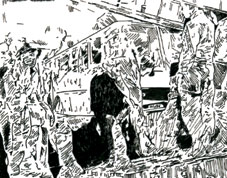
"Destruct" knowingly abstains from all concrete position-taking towards the images presented. The film doesn't develop a single narrative action: starting with an object-image, drawings in metamorphosis come apart into lineaments to form the next object-image. The basis of these drawings, of unusual complexity for an animation film, are photographs from news reports. Through their transformation in the medium of drawing, they turn into inventories that erase identities and turn blood and the pieces of corpses even more presentable, and in this way losing all sensational concupiscence. The subtitle "This Is Not The Moon" refers to the ambivalent structure of these conflicts that we (Western Europeans) in general imagine exclusively under the form of a an elaborate and abstract medial distance.
Aline Helmcke was born in Berlin. She studied Plastic Arts at the University of Arts Berlin with majors in 'installation drawing' and the 'creation of experimental film' with professor Dieter Appelt. Since the end of her studies she has been living and working in Berlin as a plastic artist and film-maker. She was an instructor of experimental animation (cinematic adaptation of the manuscript, "Dynamik der Großstadt", by Laszlo Mololy-Nagy) at the University of Arts Berlin. She also completed a five month residency In charge of at the Akademia Sztuk Pienknych (Academy of Beautiful Pieces) in Krakow with professor Jerzy Kucia. Helmcke is currently studying animation at the Royal College of Arts in London.
Louis Henderson
A Walk With Nigel
Experimental doc. | dv | color and b&w | 22:0 | United Kingdom | 2009
A WALK WITH NIGEL is a video essay that constructs a dialogue between two artists from two different times, between movement and stillness, between speech and silence. An archaeological study of a community, reawakening the archive in the present. A materialist study of streets and social relations. This is a two screen video about the photographic work of the late artist Nigel Henderson (1917-1985). Re-visiting the same locations within which Nigel Henderson originally shot a series of photographs in the 1950s in East London, Louis Henderson creates a response to these photographs and locations on video in the present. The video is presented alongside the original photographs, forming a dialectical collage of a temporal/imagistic nature, combined with a voice-over created from fragments of text found in the Nigel Henderson collection in the Tate Gallery Archive. A WALK WITH NIGEL is the continuation of certain aesthetic and political ideas developing ? through historical understanding ? the afterlife of a body of work.
Biography Born in Norwich in 1983. Moved to London in 2004 to study Film and Video at London College of Communication (University of the Arts London) graduating with a First Class Honours degree. Between 2007 and 2009 worked independently on various solo and collaborative films and worked as an assistant to William Raban. In 2009 began a practice-based PhD at London College of Communication supervised by William Raban and Dr Jonathan Dronsfield, working in film, photography and text. The research is led by the question ?Can Film be a Future Archaeology?? and looks into the politics of institutional archives and the way art takes part in the production and distribution of the common.
Tomas Hendriks
Decision Pending
Experimental doc. | hdv | color | 29:55 | Netherlands, Belgium | 2014
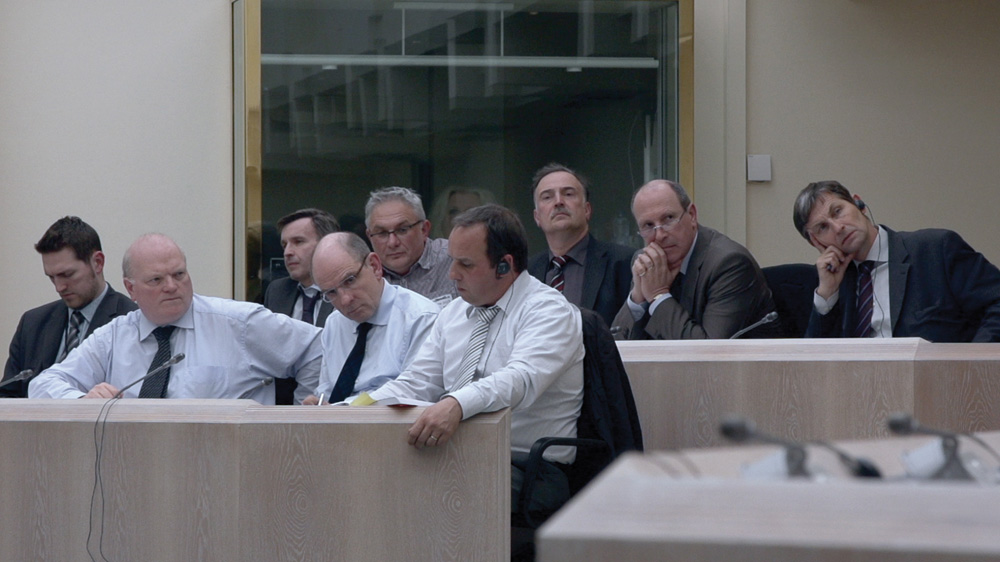
Decision Pending is an alienating observation of politicians stuck in the daily routines of decision making. During committee meetings and plenary sessions everyone seems under the spell of difficult decisions that have to be made. Decision Pending is a non-political film about politics, which unfolds itself as an audiovisual symphony.
Tomas Hendriks (°1985) studied Composition at the Royal Conservatory in The Hague (NL) and Film / Audiovisual Art at KASK School of Arts in Ghent (BE). His compositions have been performed and awarded throughout the Netherlands and Belgium. His films are characterized by a strong sense for composition and focus on the experience of image and sound. They can be best described as moods, shaped or stretched out over a course of time. Consequentially, the unspoken and unexplained are prominent. In 2009, his graduation film Strangers (15min) was screened and awarded at several film festivals. For Decision Pending, his first independent film, he also wrote the music, which is performed by Spectra Ensemble.
Tomas Hendriks
Strangers
Experimental fiction | | color | 14:58 | Netherlands, Belgium | 2009
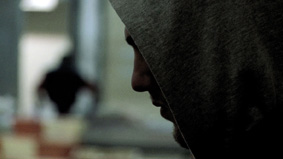
`Strangers` shows someone after a disturbing discovery. The shock of this moment disrupts his perception. The film takes you into his experience of a world losing its coherence
Since his early childhood, Tomas has been occupied with composing music. He studied composition with Roderik de Man from ?99 till ?03, at the Royal Conservatory The Hague. During this period, he was awarded in several national youth composition competitions (such as the ?Prinses Christina Concours, 2000?). His works have had professional performances, varying from solo pieces to orchestral scores, by ensembles such as the Nieuw Ensemble (Metempsychose 1999), the Netherlands Wind Ensemble (Acres Diver 1999, Petit Histoire 2001), the Radio Chamber Orchestra directed by Peter Eötvös (Qwerty 2003), and recently the young Belgian Ensemble Nadar (Monologue 2009). Tomas? interest in film rose over the years and after graduating high school, he decided to study film. He studied Film and Television at the University of Amsterdam for one year (2003-2004), worked on several film sets in Amsterdam for another year (2004-2005), and then moved to Belgium to study Film at the Royal Academy of Fine Arts in Ghent (2005-2009). Through the years, Tomas? musical background has always been a great influence on his work as a filmmaker. Strangers is Tomas? master graduation film for the Academy.
Juliane Henrich
schleifen
Vidéo | hdv | color | 5:50 | Germany | 2014
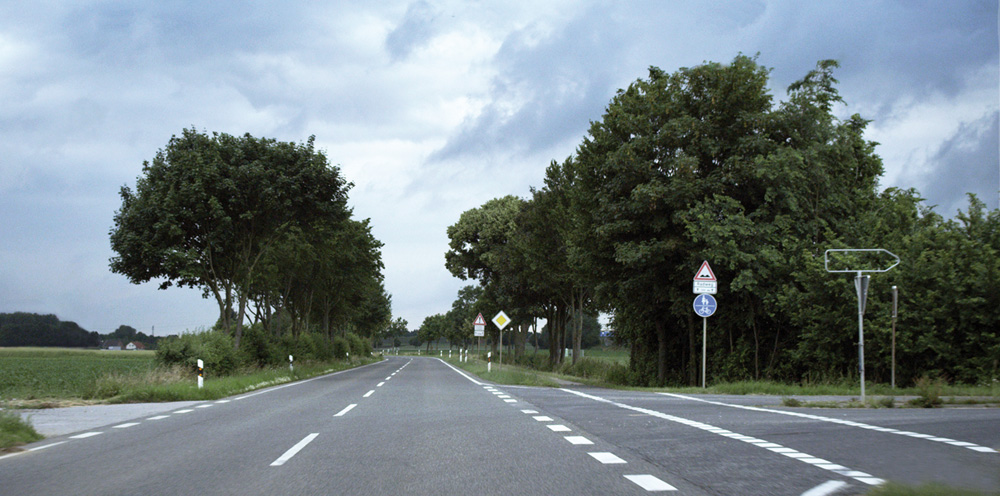
A detailed study of the architecture in a small German village slowly reveals an uncanny sense of displacement, erasure and doubling. New houses line freshly paved streets that all have the suffix '-neu' at the end. This journey ends on the outskirts of the village, opening onto the pit mine that will displace the old village.
Juliane Henrich, born 1983, studied at the University of the Arts Berlin with Heinz Emigholz and Thomas Arslan and at the Bezalel Academy of Arts and Design Jerusalem with Avi Mograbi and Efrat Shalem. All films are represented by Arsenal Disbribution (Arsenal – Institute for film and videoart e.V.) Her work has been shown at Berlinale/Forum Expanded, Berlinische Galerie, International Short Film Festival Oberhausen, The Images Festival and ZKM Karlsruhe among others.

Nelson Henricks
Satellite
Experimental video | dv | color | 3:0 | Canada | 2004
In the video SATELLITE, Nelson Henricks combines found footage and techno beats to question western society?s ongoing obsession with science, technology and the future. Juxtaposing images derived from old educational films with absurd, aphoristic slogans, Henricks offers up a witty, entertaining and provocative commentary of our need to make sense of everything, at any cost.
Nelson Henricks was born in Bow Island, Alberta and is a graduate of the Alberta College of Art (1986). He moved to Montréal in 1991, where he received a BFA from Concordia University (1994). Henricks continues to live and work in Montréal, where he teaches at Concordia University (1995 - 2002) and McGill University (2001- 2002). A musician, writer, curator and artist, Henricks is best known for his videotapes, which have been exhibited worldwide. A focus on his video work was recently at the Museum of Modern Art in New York, as part of the Video Viewpoints series (2000). His writings have been published in Fuse, Public, Coil magazines, and in the anthologies "So, To Speak" (Editions Artexte, 1999) and "Lux" (YYZ Press, 2000). Henricks co edited an anthology of artist?s video scripts entitled "By the Skin of Their Tongues" (YYZ Press, 1997) with Steve Reinke. In 2002, Henricks was the recipient of the Bell Canada Award in Video Art (2002). He has recently completed a new tape entitled "Satellite" (2004).
Nelson Henricks
STOPPING
Experimental video | mov | color | 4:25 | Canada | 2025
Night. The moon is a rock. The ears are stopped. A chair balances on the roof of a house. A silver box composes itself: a mysterious instrument. A marble rolls around in somebody’s head. Two rocks spin. Is it possible to stop the mind?
Nelson Henricks graduated from the Alberta College of Art in 1986. He moved to Montréal in 1991 and received a BFA from Concordia University. He recently completed a PhD at Université du Québec à Montréal. Henricks has taught art history and studio art at Concordia University, McGill University, UQAM and Université de Montréal. A curator and artist, Henricks is best known for his videotapes and video installations, which have been exhibited worldwide. A focus on his video work was presented at the Museum of Modern Art in New York, as part of the Video Viewpoints series in 2000. Henricks was the recipient of the Bell Canada Award in Video Art in 2002, the Prix Giverny Capital in 2015, and the Prix Louis-Comtois in 2023. An exhibition of his work was presented at the Musée d’art contemporain de Montréal in 2023. His work is in the collections of the National Gallery of Canada, the Museum of Modern Art (New York), the Montréal Museum of Fine Arts, the Musée national des beaux-arts du Québec, the Musée d’art contemporain de Montreal and others. He is represented by Paul Petro Contemporary Art in Toronto.
Camille Henrot
King Kong addition
Experimental video | dv | color | 93:0 | France | 2006
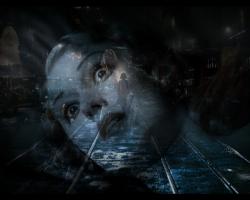
Neither remake nor reappropriation, this version of ?King Kong? simply puts three Hollywood versions of the film (1933, 1976 and 2005) into superimposition. The mythical work that is ?King Kong? is above all a film about cinema and for cinema. And the outcome of this mathematical addition yields a troubling film, with dark and sometimes unreadable images, one whose opacity is a veritable ?screen,? a screen on which any fantasy may be projected. From this jungle of shadowy images only the two principal figures of the film stand out: the gorilla and the female character. King Kong emerges from this darkness and resists the visual static. Thus, the film proves Theodor Adorno's point: the repetition of a work changes its constitution, and winds up altering it. And yet, King Kong emerges from obscurity and resists annihilation, remaining a figure in whom the spectator refuses to stop believing. Is it, perhaps, on account of the destiny of this monumental character that the relationship between humankind and their environment has been thrown out of balance every 15 years since 1933? King Kong returns unceasingly, like a subterranean fear: that of a savage, terrifying state, and especially the fear of that what our new, ?civilized? world is becoming as it replaces this savage state, a new world of music halls and fighter jets. Courtesy of the Galerie Kamel Mennour, produced with the support of the Première heure group.
Camille Henrot
sCOpe
Experimental video | dv | color | 3:0 | France | 2005
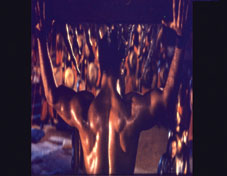
"sCOpe" is a snake film. The soundtrack is a long whistle. It is a film a bit sadistic that wishes to 'completely remove sight" (in reference to the slogan "Gimme more!" praising the interest of the CinémaScope format). The original film is a peplum essentially composed of large shots of numerous extras. The image on the filmstrip is slowly comprised on lateral boards, it grows longer and longer, and it contracts on the sides until it is nothing but a ribbon. The particularity of the Scope format is to allow for the spectator to have bigger images to see because the image is unusually enlarged. This advanced technique goes along with Dolby sound: the spectator is thus genuinely at the heart of the film, enveloped by its image and sound. In this film, this envelopment takes the form of a confinement. In addition, the large images solicit A.O. (action oriented) vision, the most primitive, "of the surveillance of territory", while the semantic vision, vision P.O. (perception oriented), is centred. The CinémaScope procedure, with a slightly outdated emphasis on the capital letters, interests the artist because it asserts the supremacy of the "show" fact over the contents of the show itself.
Born in 1978, Camille Henrot lives and works in Paris. Educated at the Decorative Arts School of Paris, she was revealed by the exhibition "J?en rêve" at the Cartier Foundation, and then by her first personal exhibition, "Room Movies", at the Dominique Fiat Gallery and by the "Jeu de Paume Workshop" where she was inaugurated in November 2005. Her work proceeds by substraction and erasure, so that a sort of "nostalgia of possibilities" is created: not a nostalgia of what was, but a nostalgia of what could have been. It is as a machine made to recall a fictitious hypothetical past that cinema is one of the privileged fields of her work. While traditional cinema tends to make features disappear to absorb the spectator, Camille Henrot makes the material of the film itself reappear: the film. She thus proposes a permanent return trip between fiction and reality, or rather the desire for fiction and the conscience of cinematic processes that make it possible. Considering films as objects of memory, the series "Room Movies" thus films a disappearance of the image by compression, masking, or scratching. In negative then come up the contours of an absence in the form of a vacillating flame, like a ghost that would come to haunt the amnesic psyche of the images. The original fiction becomes a screen on which the artist inscribes her own emotional universe.

Margaux Henry-thieullent, en collaboration avec Molpé
Sublime
Experimental video | mp4 | color | 2:10 | France | 2020
"Sublime" est un texte écrit en 2018 par la plasticienne Margaux Henry-Thieullent. Elle a ensuite donné carte blanche à la musicienne Molpé en 2019 pour la création musicale. En 2020, "Sublime", devient un projet a vocation immersive et expérimentale. À partir d'un travail de sculpture digitale sur iPhone, Margaux Henry-Thieullent réalise une série intitulée "Encore des Morceaux" de quatre vidéos, toutes produites au début de la période de confinement en France. "Sublime", est la première vidéo de cette série. Elle questionne la construction de notre mémoire contemporaine laissant place à l’émergence de récits organiques. Dans le projet "Sublime", on assiste directement à l'éclatement de la caverne digitale. Notre société du spectacle navigue violemment au cœur de lieux oniriques, des théâtres virtuels où se désacralise le réel. D’autres perceptions du dehors se dessinent alors, certainement par nécessité, à la frontière d’un nouveau langage : celui qui nous rassemble encore.
Margaux Henry-Thieullent, est une artiste plasticienne française. Architecte, diplômée de Paris Malaquais en 2019, elle montre pour la première fois son travail de dessin la même année au salon DDessin à Paris (France) ainsi qu'au Festival Vrrraiment à Toulon (France). En octobre 2020, la Galerie 5un7 à Bordeaux (France) présente son travail. Dès la réouverture des lieux de culture, Margaux Henry-Thieullent participera à l'exposition collective, "Vaste Monde #2" organisée par la Villa Beatrix Enea, Centre d'Art Contemporain d'Anglet (France). Elle travaille actuellement sur son premier solo show pour 2021, qui sera présenté à la Cité des Arts de Bayonne (France).
Mauro Herce
Dead Slow Ahead
Documentary | 4k | color | 74:0 | Spain, France | 2015
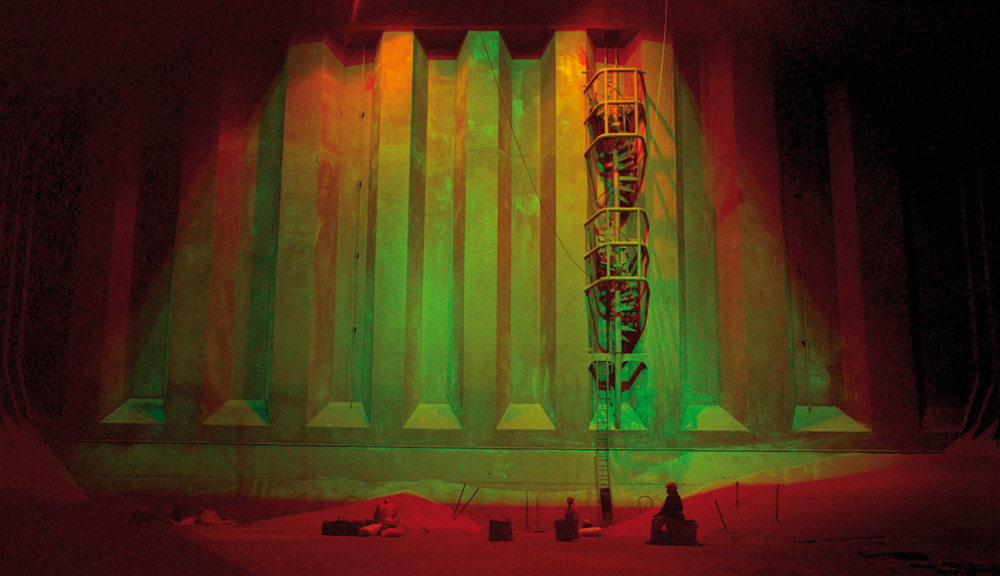
A freighter crosses the ocean. The hypnotic rhythm of its pace reveals the continuous movement of the machinery devouring its workers: the old sailors’ gestures disappearing under the mechanical and impersonal pulse of the 21st century. Perhaps it is a boat adrift, or maybe just the last example of an endangered species with engines still running, unstoppable.
Born in Barcelona in 1976, Mauro Herce graduated in engineering and fine arts before enrolling in film school at the Escuela Internacional de Cine y TV in San Antonio de los Baños (Cuba) and the École nationale supérieure Louis-Lumière in Paris. He started his career as a director of photography and screenwriter on such films as Ocaso (2010), Arraianos (2012), A puerta fria (2012), El quinto evangelio de Gaspar Hauser (2013) and Slimane (2013). Dead Slow Ahead (2015) is his first feature film as a director.