Catalogue 2025-2026
Below, browse the 2025-2026 Rencontres Internationales catalogue, or search the archives of the works presented since 2004. New video clips are routinely posted and the images and text are regularly updated.
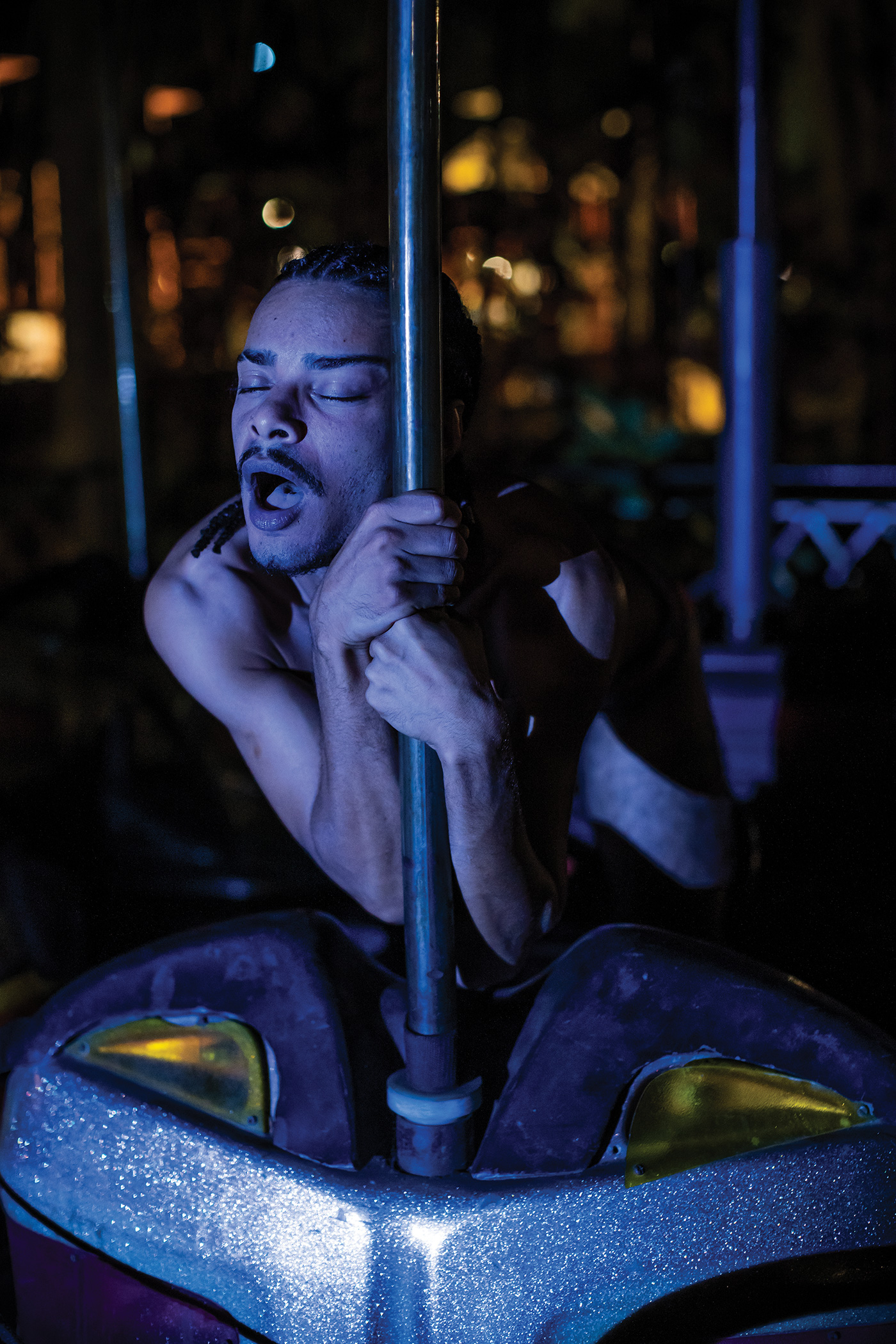

Alves Jr Ricardo
Parque De Diversões
Experimental fiction | hdv | color and b&w | 72:0 | Brazil | 2023
A film prohibited for those over 18 years of age. Anonymous figures walk around the city streets at night, looking for some personal encounters. Someone breaks the gates of the public park and starts to explore its paths. The imperative of desire will now dominate the forbidden territory. AMUSEMENT PARK is an essay film, a visual experiment built around the experience of cruising in an urban environment after the lockdown and the limits of a global pandemic. In the public park of a large metropolitan city, the tropical green life of plants and trees, mixed with playground toys, will be the scenery for a quest on human nature, its fantasies, desires, encounters and the transgression of touch. In between the shadows of the dark night, bodies and lust become light and pleasure.
Ricardo Alves Jr. is a film and theater director. He is the founder of the production company Entre Filmes. His work is characterized by the mix of languages in pursuit of constructing particular atmospheres and universes. His films have been shown at several international festival, including Berlinale Shorts, Berlinale Forum Expanded, Critics' Week at Festival de Cannes, Locarno, Rotterdam, among others.
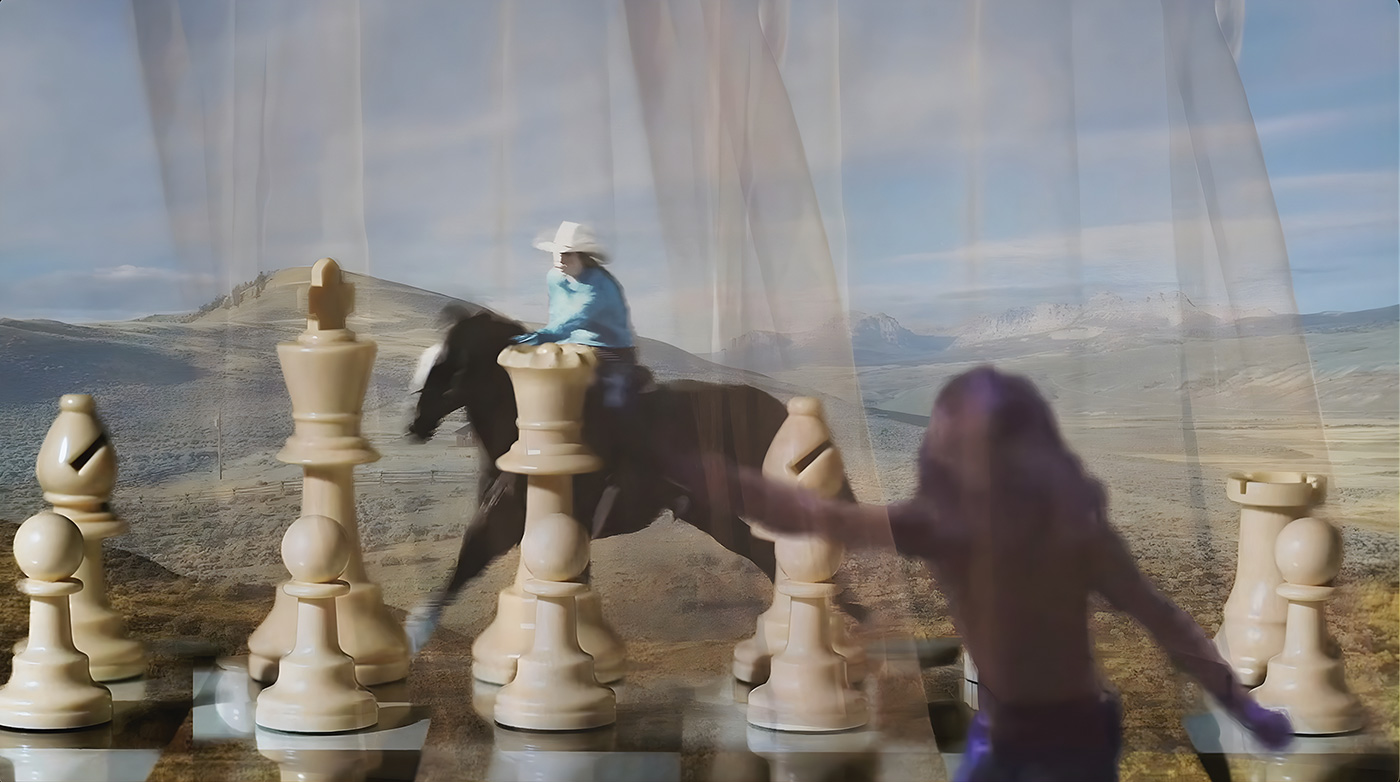

Maria Rieger
Frontier
Experimental fiction | mov | color | 3:22 | France | 2024
A little girl drifts across a chessboard, in a world of space and unfolding matter. Her feet follow invisible lines, her hands strive to beat a silent rhythm, touching objects at an otherwise imperceptible tempo. Compulsive gestures and vibrations echo each other in a dreamlike movement where reality wavers. Inspired as much by the world of David Lynch's films as by the clip video format, where sound is both the source of the images' movement and their trajectory, this video collage explores OCD and fragments of childhood that have been partly forgotten, ressurected by music and a family conversation. With Zuzanna FAFIOTTE-RIEGER, Fernando COLIN ROQUES.
After initial training as a musician, Maria Rieger obtained a Master's degree in History on cultural relations between Poland and Ukraine at Paris 1 - Sorbonne Paris, as well as a Master's degree in International Relations. Parallel to a multi-faceted career in business consulting, cinema and working with a writer, she developed a self-taught practice in writing, video and drawing. After a preparatory year at the École d'art in Montreuil, she entered the Beaux-Arts in Paris, where she is currently studying in the workshops of Clément Cogitore and Emmanuel Van der Meulen. Today, her practice revolves around video, installation and painting.
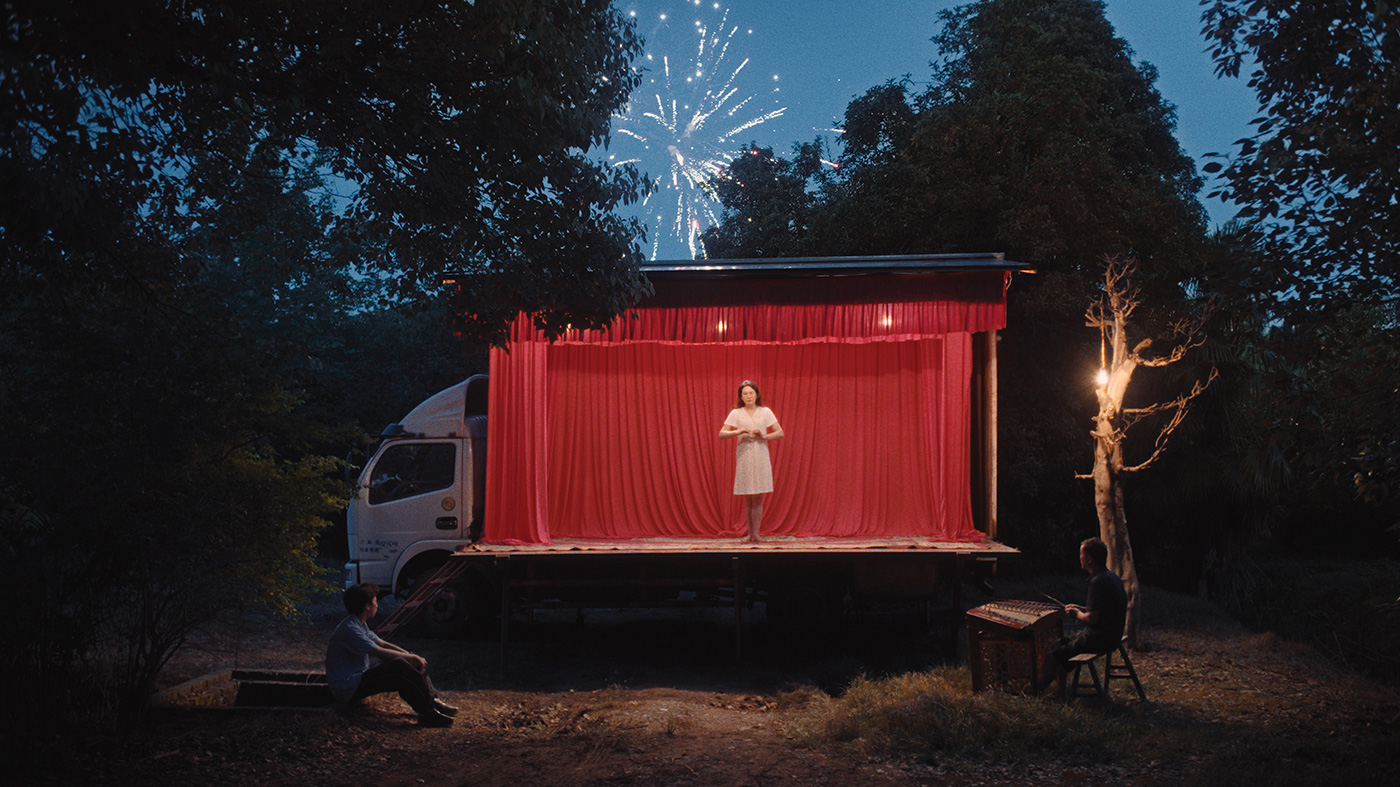

Cao River Yuhao
The Glass Essays
Experimental film | dcp | color | 16:33 | China, United Kingdom | 2025
Unable to sleep, a young man is lured into the woods by a mysterious sound. He follows it across a river, through forest and shadows, until he finally comes upon the red curtains of a travelling funeral performance stage. The mesmerising mourning recital that unfolds is a dreamlike invitation into a sensorial exploration of memories, rituals, and ghosts.
River Yuhao Cao ??? (b. 1997, China) is an artist filmmaker and performance artist based in London. Inspired by the performative aspects of mourning in regional Chinese folk traditions, River explores it as a regenerative practice. Through this lens, he reconstruct landscapes from his early memories of Southern China in his work, while uncovering the perspective of the revenant. River is interested in how lamentation as a translation strategy interprets the fluidity of the subject. Cao’s first artist film ‘The Glass Essays’ has been featured in Visions du Réel, Switzerland; Vancouver International Film Festival, Canada; Kassel Dokfest, Germany; South London Gallery, UK; Middlesbrough Institute of Modern Art (MIMA), UK; His previous work has been featured in B3 Biennial of the Moving Image, Germany; Tofu Collective, Denmark; Sadie Coles HQ, UK; Saatchi Gallery, UK; Nottingham Contemporary, UK; and the London Institute of Contemporary Arts (ICA), among others.
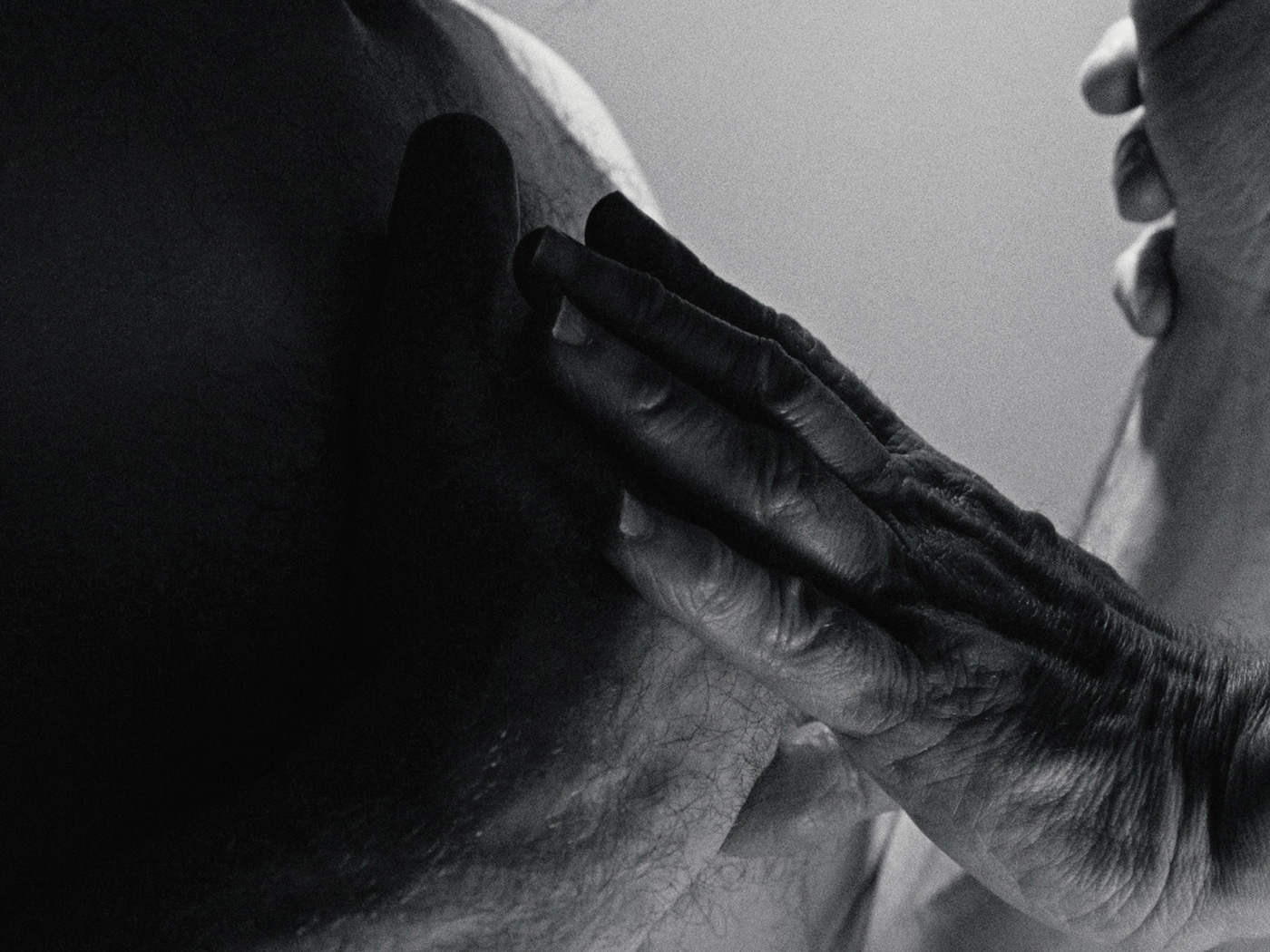
Louis Rizzo Naudi
In Here
Experimental fiction | mov | color and b&w | 8:50 | United Kingdom | 2024
“We dream of travelling through the universe… is the universe, however, not within us? We do not know the depths of our spirit. The mysterious path leads inwards. Eternity, with its worlds of past and future, is in us or nowhere. The outward world is the world of shadow; it throws its shadow into the realm of light. At present, it indeed appears so dark, lonely, formless inside; but how completely different it will seem to us when this eclipse has passed, and the body and shadow have moved away. We will enjoy more than ever, because our spirit has been deprived.” — Novalis, ‘Pollen’ (1798). Translated and adapted from the original German publication, with assistance from W. Hastie’s English translation in ‘Hymns and Thoughts on Religion’ (1888).
Louis Rizzo Naudi is a British-Maltese filmmaker. His practice explores the experience of the sublime and the constructed nature of visual perception, with his camera often focussed on natural phenomena, landscapes, and technology. He holds a B.A. in Film Studies from King’s College London, where he was awarded the Film Studies dissertation prize for his essay on the sublime in footage of the International Space Station, and an M.Sc. in Cognitive and Evolutionary Anthropology from the University of Oxford, where he researched how sublime experiences may lead to increased prosocial behaviours, such as generosity. His films have screened across Europe, including International Film Festival Rotterdam, Karlovy Vary International Film Festival, the British Film Institute, and the Tate St. Ives, and have also been used as relaxation aids in hospitals for patients undergoing medical procedures.

Camila Rodríguez Triana
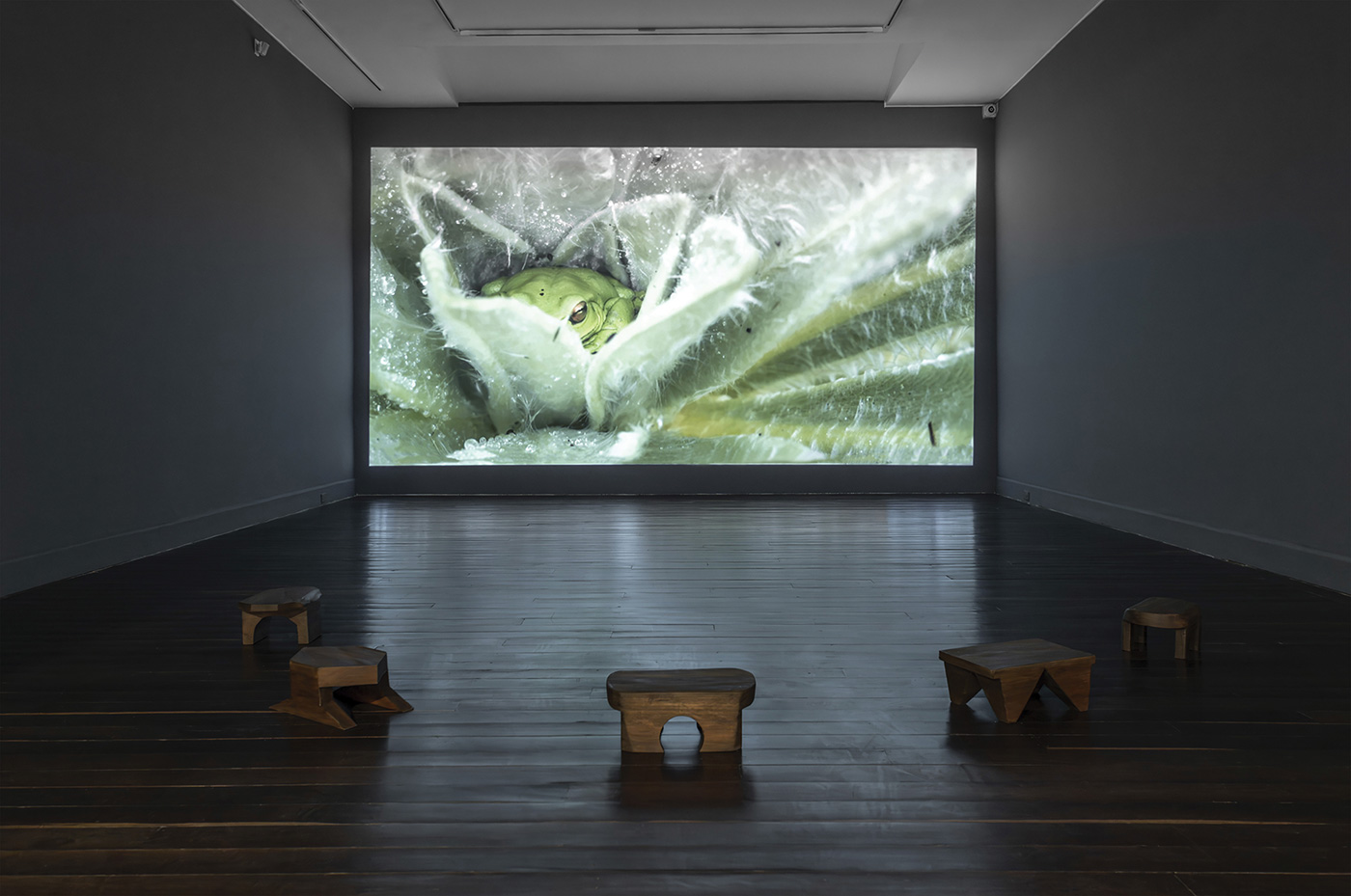
La Primera Vuelta De La Espiral
Experimental doc. | 4k | color | 20:42 | Colombia | 2025
The short film The First Turn of the Spiral is the result of months of theoretical and ethnographic research, a year-long pilgrimage to the sacred lagoons that form the Mhuysqa territory, and all that unfolds on both the physical and spiritual planes when one engages wholeheartedly in the search for identity and the lineage that came before. For the artist, the act of remembering is an exercise in connecting body, mind (consciousness), and heart—an integration that makes it possible to forge identity. This is why, through her work, she proposes to “make memory with the feet and with the hands— with the feet by traveling the territory, and with the hands by returning to the ancestral crafts.”
Camila Rodríguez Triana (Cali, 1985). Visual artist and filmmaker. She graduated from the Faculty of Integrated Arts at Universidad del Valle (2008) in Colombia and completed a Master’s degree in Film and Contemporary Art at Le Fresnoy – Studio National des Arts Contemporains (2019) in France, where she received the Des Amis du Fresnoy – Best Installation Award at Panorama 21. Throughout her artistic career, she has received several distinctions, including the Visual Arts Protégé grant from the Rolex Mentor and Protégé Arts Initiative, where she worked with American artist Carrie Mae Weems (2020); the Emerging Artist Award from Rencontres Artistiques Carré sur Seine in France (2021); the Emerging Artist Award at Artecámara, ARTBO in Colombia (2020); the National Colombian–Swiss Photography Award in Colombia (2008); and a nomination for the Cisneros Fontanals Art Foundation Emerging Artist Grant in the US (2020). As a filmmaker, she has also been recognized with awards such as Best Ibero-American Film at the Lima Independiente Film Festival in Peru (2018); Best Documentary at the Lisbon International Film Festival – Spring Edition in Portugal (2017); and the Renaud Victor Award in the International Competition at FIDMarseille in France (2016), among others. Her work has been exhibited in venues such as the National Museum of Contemporary Art in Athens, Greece (2023); Brown University, USA (2023); Galerie BAQ, Paris, France (2023); POUSH, Paris, France (2023); PS122 Gallery / The National Academy of Design, New York, USA (2022); BAM Fisher, Brooklyn, NYC, USA (2022); the 65th Salon de Montrouge, France (2021); and the PROYECTOR Festival, Spain (2020), among others. Her films have been selected by renowned festivals such as the Karlovy Vary International Film Festival (KVIFF), EnergaCAMERIMAGE – Directors’ Debuts Competition, FIDMarseille, DocLisboa, and Visions du Réel, among others.

Clement Roussier
MYRNINEREST
Experimental doc. | hdcam | color | 14:16 | France | 2025
A woman performs Butoh alone in her bedroom; a foreigner wanders the buzzing streets of Tokyo; a poet speaks of rivers, pity and ghosts.
Clément Roussier was born in 1984. He is the author of two poetry collections (Now It Is Always Three O’Clock and Fondane), published in 2025 by Derrière la salle de bain, as well as a novel, Sullivan and the Fiery Skies of the Savannah Evenings, published in 2020 by L’École des Loisirs. In Silence and clamour, his first film, won the Grand Prize of the French Competition at FID Marseille 2023.

Steve Rowell
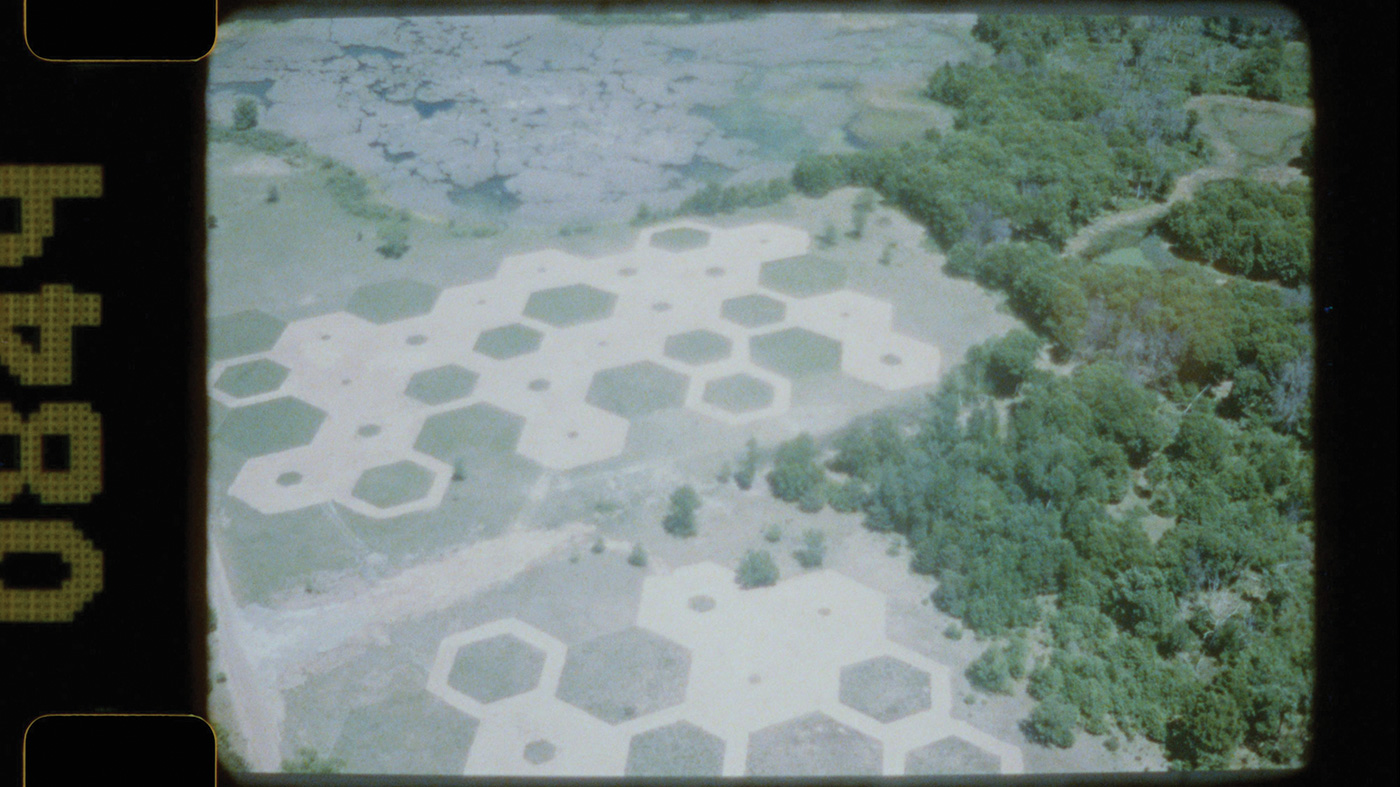
Lost Prairie Valley
Experimental doc. | 4k | color | 14:24 | USA | 2024
Lost?Prairie?Valley (2025) explores the intersection of machine vision, ecology, and extinction on Minnesota’s prairie lands. Using 4K digital video, 16?mm film, LiDAR, and AI image recognition, the film observes threatened plant species and landscape change across research sites—asking how our technological gaze shapes what we see and what we lose.
Steve Rowell is an artist and educator working across photography, moving image, sound, and spatial media. His research-driven practice investigates landscape as a site of political imagination, focusing on perception, nonhuman intelligence, extinction, and ecological crisis. Drawing on methods from geography and archaeology, he explores the entanglements of built systems and natural terrains. Steve holds an MFA with Distinction from the University of Oxford and a BA in Studio Art from the University of Texas. He is a Guggenheim Fellow (2019), a MacDowell Fellow (2021–22), and a 2024 McKnight Media Artist Fellow. Additional support includes Creative Capital, the Graham Foundation, the Minnesota State Arts Board (2022, 2025), and international residencies in Berlin, Vienna, and Fogo Island. Formerly a longtime collaborator with the Center for Land Use Interpretation, SIMPARCH, and the Office of Experiments, Steve has lived and worked in Los Angeles, Oxford, Berlin, D.C., and Chicago. He is currently based in Minneapolis, where he teaches and conducts field-based research at the Minneapolis College of Art and Design.

Remy Ryumugabe
Murmurs from The Wind
Experimental film | 4k | black and white | 11:14 | Rwanda | 2025
À l'approche de son 35e anniversaire, un cinéaste se rend à Louxor, où les échos de son passé tourmenté se mêlent aux dures réalités du monde présent. Au cœur de la beauté intemporelle de la ville antique, il affronte les murmures implacables de ses démons, cherchant un éclat d'espoir.
Remy Ryumugabe est un cinéaste, producteur et artiste visuel rwandais primé, dont le travail audiovisuel et photographique a été présenté dans des festivals et galeries internationaux prestigieux, notamment Internationale Kurzfilmtage Winterthur, Uppsala International Short Film Festival, Fribourg International Film Festival, Oberhausen International Short Film Festival, Galerie Imane Farès, Museum Hilversum, Goethe-Institut Kigali, Indiba Arts Gallery, Kigali Center for Photography, et Het Nieuwe Instituut, entre autres. Ses œuvres ont reçu de nombreuses distinctions, dont la mention spéciale à la 41e édition de l’Uppsala International Short Film Festival, le Prix du Meilleur Film Expérimental à la 15e édition du Festival Internacional de Cine Africano de Argentina, le Prix du Meilleur Réalisateur d’un Court Métrage Documentaire à la 8e édition de l’Urusaro International Women Film Festival, ainsi que le Young African Filmmakers’ Award lors de la 29e édition de l’Afrika Filmfestival de Louvain. En tant que producteur, il a travaillé sur des films salués par la critique, tels que Imuhira (sélectionné à Locarno et au BFI London Film Festival), ainsi que le long métrage Minimals in the Titanic World, qu’il a produit et présenté en première mondiale au Forum de la 75e Berlinale. Il développe également plusieurs projets photographiques, installations artistiques et longs métrages, soutenus par des plateformes de développement de renom telles que Ouaga Producers Lab, Takmil, Yaoundé Film Lab et le Moulin d’Andé. Il est cofondateur de KIRURI MFN, une société de production indépendante basée à Kigali. Il est également le co-initiateur et curateur du 250 Film Experiment Cine-Club, un ciné-club basé à Kigali, au Rwanda.
Mauricio Saenz
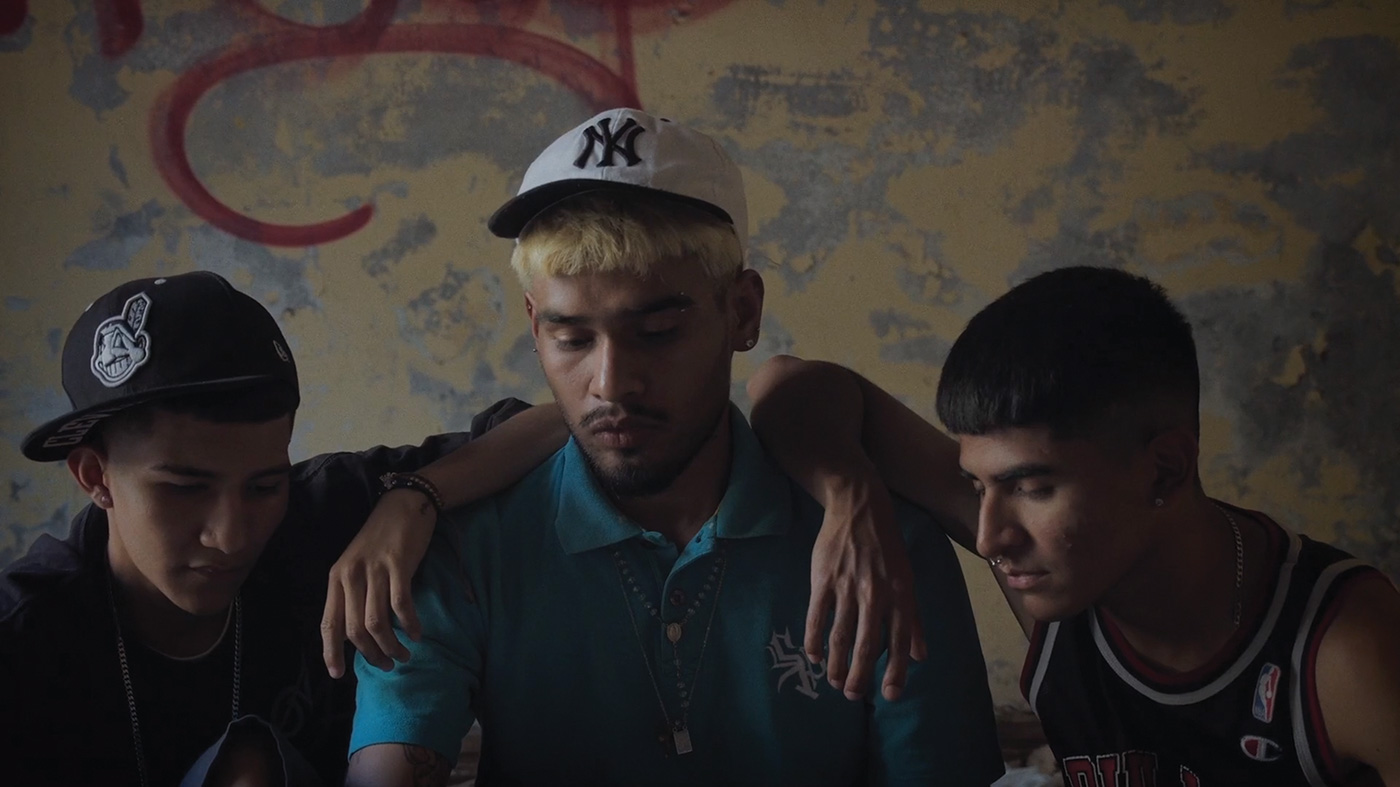
Niño halcon duerme entre visiones de un incendio
Experimental fiction | 4k | color | 18:0 | Mexico | 2024
Kamikaze bird that has embarked on a journey to a savage place of no return. A representation of the state of overflowing violence brought from drug trafficking through the oneiric vision of a marginal teenager recruited by a cartel.
Mauricio Sáenz (b. 1977, Matamoros, Mexico) is a visual artist with a practice spanning installation, sculpture, and video. His work explores the limits of impossibility as an active drive for transformation represented through notions as isolation, confinement, uncertainty and historical memory. He received a master’s degree from the Polytechnic University of Valencia in Spain and has displayed his work at the Museo de Arte Carrillo Gil and Foto Museo Cuatro Caminos in Mexico City, Galerie Art Virus in Frankfurt, and Jonathan Ferrara Gallery in New Orleans, as well as in video art festivals such as Proyector and MADATAC in Spain, Traverse and Instants Vidéo in France, and FIVA in Argentina, among others.

Niyaz Saghari
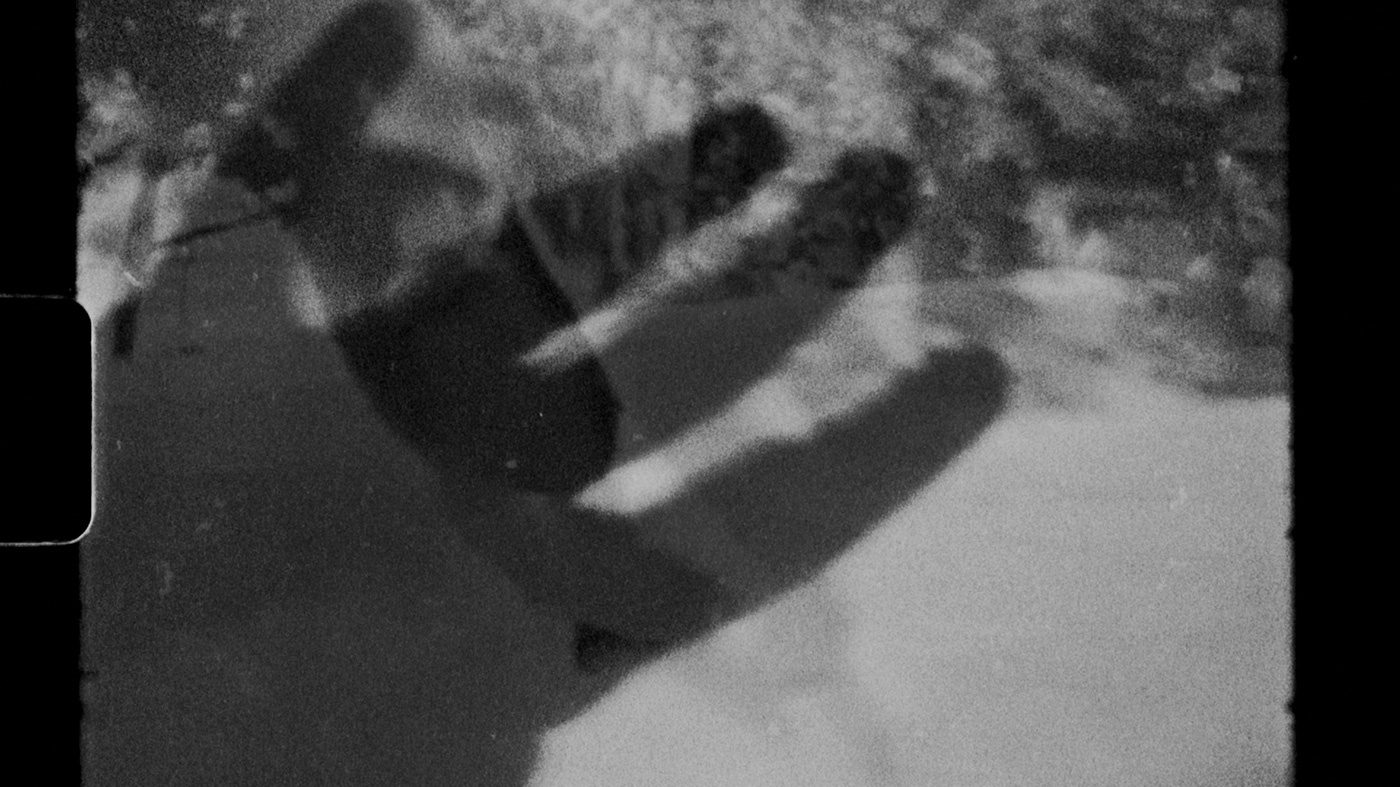
Ripple Effect
Experimental doc. | 0 | black and white | 9:0 | Germany, United Kingdom | 2023
The diver plunges into the sea (death), but also into life (eternity), where he will rediscover the primordial waters of life. This quote from Pierre Lévêque about the illustrations in Tomb of the Diver resonated when I watched the viral video of a young man who was executed in Iran in 2020.Few days after his death, the grainy mobile video of him was released .He ran in slow motion and dived in a pool. I watched the wave of his hands, the kick of his foot and crossing the border between air and water just as he leaped beyond fear when he spoke the truth, transitioned from life and became eternal in people’s memory. Like an act of preservation, I filmed the video with a super 8 camera. The camera became a tool of magnifying and grieving. 3 years later, men and women still chant his name in protests. Like the waves after a dive, injustice has a ripple effect.
Niyaz Saghari is a Bristol based filmmaker. Graduating from Film Directing from Art University of Tehran ( Iran), she continued her studies on the MA Animation at Newport. Besides following professional work in animation, she has been directing short documentaries and making experimental films.
Taiki Sakpisit
The Spirit Level
Experimental video | 4k | color and b&w | 20:30 | Thailand | 2024
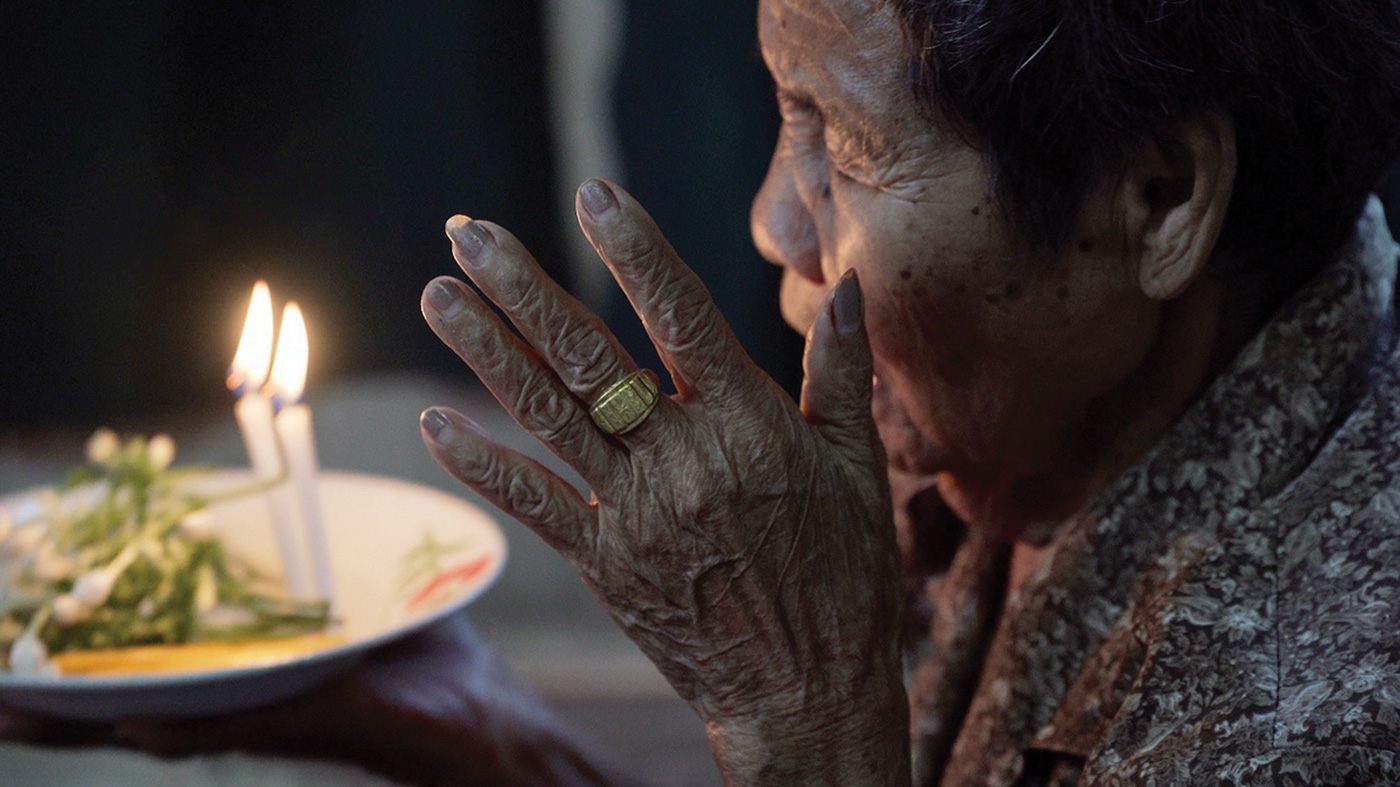
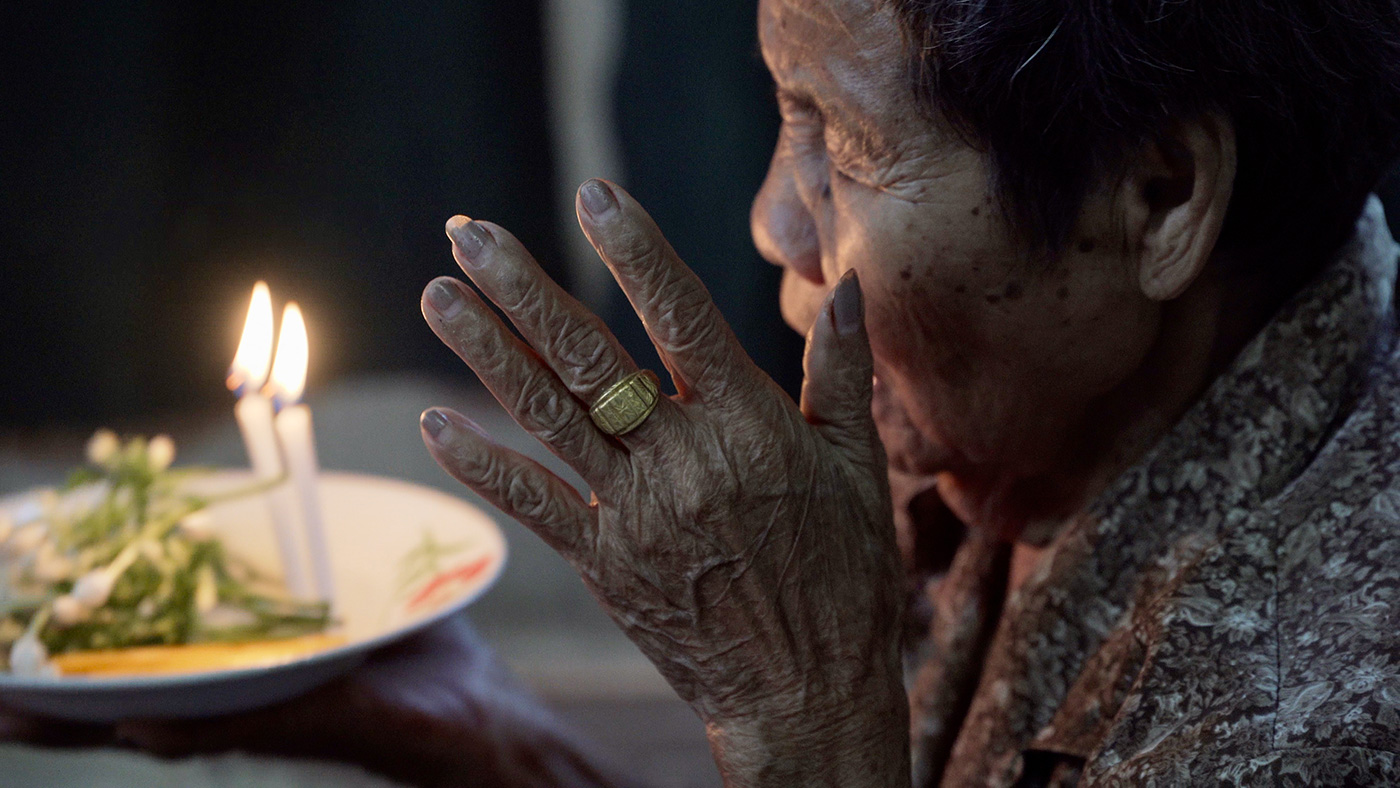
The Spirit Level meditates on the trauma and violence in the troubled Thailand reflected through the artist’s road trips across the northeastern region of Thailand along the Mekong River. The film begins with a downstream river that descends from Than Thong waterfall and flows into the Mekong River and explores the mythic underground cave that according to legend was a subterranean kingdom below the Mekong River where the divine Naga resides in the netherworld. At the heart of The Spirit Level is a frantic sequence of a spirit medium in the midst of possession. This epileptic episode emulates the optic feedback eliciting the trancelike revenant images as the spirited entity registers the medium’s body. Gradually the hallucinatory double images are disrupted by a freeze frame. This suspension of time occurs to commemorate the dislocated spirits of the three anti-government activists whose mutilated bodies were found in Mekong River in December 2019. The three men had been in exile since the 2014 coup d'état, until they were kidnapped by an officially sanctioned death squad. Their bodies were found handcuffed, disemboweled and stuffed with concrete blocks, wrapped in brown rice sacks and dumped into the Mekong River. It is one of countless forced disappearances and assassinations of political dissidents by the state since the 1970s and still ongoing and unresolved. The Spirit Level alludes to the undercurrents of darkness that ripple beneath the surface of problematic Thailand.
Taiki Sakpisit (???? ?????????????) is a filmmaker and visual artist based in Bangkok, renowned for his innovative approach to storytelling and his profound exploration of Thailand’s complex history. Through the lens of cinema, Sakpisit unpacks the nation's turbulent past, infusing his experimental films with a subtle yet resounding political commitment. His works delve into the underlying tensions, conflicts, and anticipations of contemporary Thailand, meticulously crafted through precise and sensorially overwhelming audio-visual assemblage. Utilizing a diverse array of sounds and images, Sakpisit creates immersive experiences that challenge conventional narratives and provoke thought. His feature-length film The Edge of Daybreak won the FIPRESCI award at the International Film Festival Rotterdam for its for its “Mysterious atmosphere and rich imagery in depicting trauma and violence, for its capacity of dealing with 40 years of political turmoil through a powerful and hypnotic cinematic journey, and for its compromise with the past in order to confront the present and the next future.” His recent works have been showcased at the 14th Gwangju Biennale, the Museum of Contemporary Art Busan, the 2024 Bangkok Art Biennale, the 14th Mercosul Biennial and Thailand Biennale.

Taiki Sakpisit
The Spirit Level
Experimental film | 0 | color and b&w | 20:30 | Thailand | 2024
The Spirit Level hauntingly captures a psychic summoning a spirit to learn the truth about the deaths of Thai protestors who had been in exile since the 2014 coup d’état. In a frantic frame, the psychic appears to be paralyzed in the moment. Capturing the collective ethos, the section served as a reminder of everyday forms of resistance and touched deeply on the power and effects of human connections and encounters.
Taiki Sakpisit is a Thai filmmaker and artist based in Bangkok, known for his innovative approach to storytelling and his profound exploration of Thailand’s complex history. Sakpisit unpacks the nation's turbulent past, infusing his films with a subtle yet resounding political commitment. His works delve into the underlying tensions, conflicts, and anticipations of contemporary Thailand, meticulously crafted through precise and sensorially overwhelming audio-visual assemblage. Utilizing a diverse array of sounds and images, Sakpisit creates immersive experiences that challenge conventional narratives. His feature-length film The Edge of Daybreak won the FIPRESCI prize at the International Film Festival Rotterdam for its “Mysterious atmosphere and rich imagery in depicting trauma and violence, for its capacity of dealing with 40 years of political turmoil through a powerful and hypnotic cinematic journey, and for its compromise with the past in order to confront the present and the next future.” He was Artist-in-Residence at the Rijksakademie van beeldende kunsten in Amsterdam (2022-23) and the NTU Centre for Contemporary Art in Singapore (2018). His recent works have been exhibited at the Gwangju Biennale, MOCA Busan, M+ Hong Kong, Bangkok Art Biennale, the Mercosul Biennial, and Thailand Biennale, Phuket.
Mark Salvatus
Should the Source of Fulfillment Be Seen with Our Eyes
Experimental video | hdv | color | 16:25 | Philippines | 2024
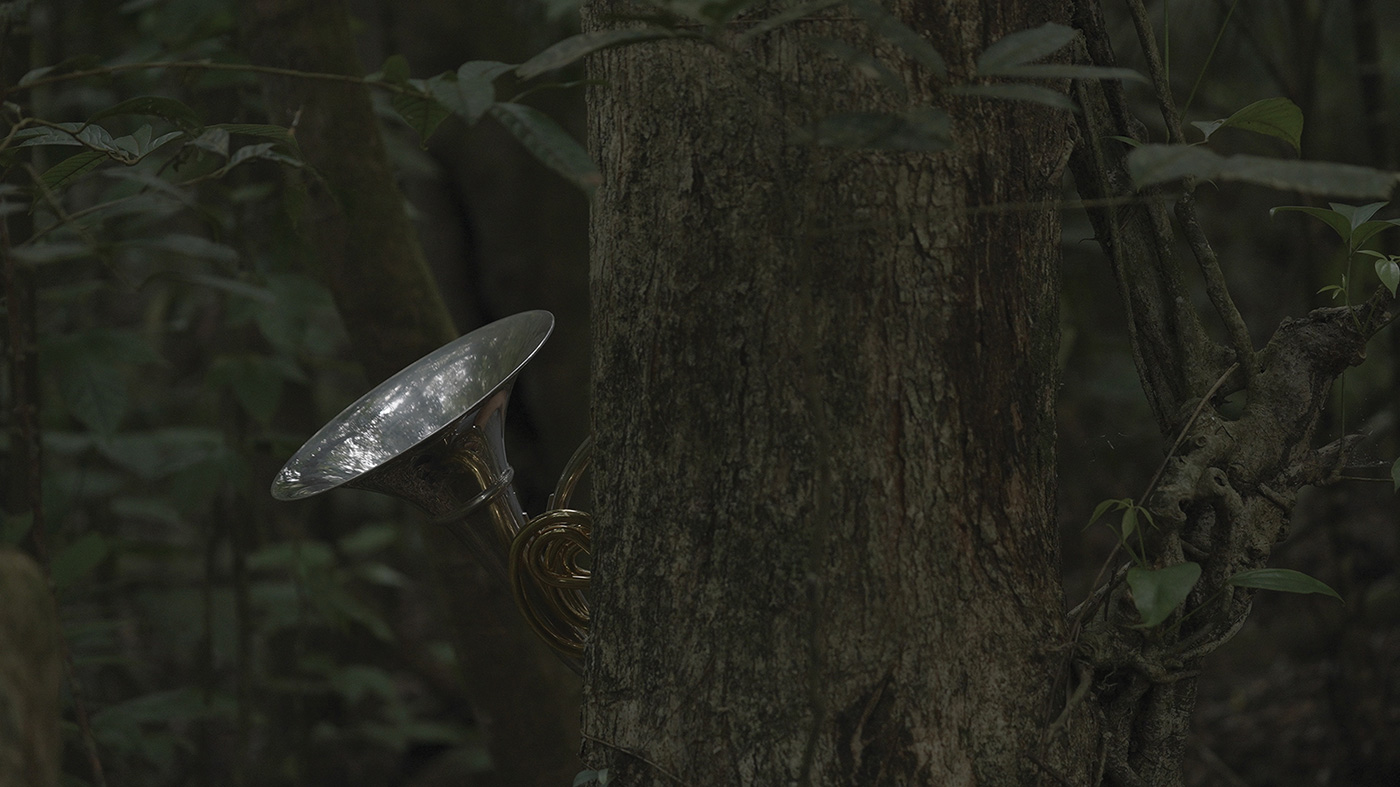
Kung ang Makagiginhawa ay Matingnan ng Ating mga Mata (Should the Source of Fulfillment Be Seen with Our Eyes) 2024 Exploring the ethno-ecologies of Mt. Banahaw—how the surrounding more-than-human world shapes and are shaped by cultural imaginations. It weaves together Salvatus’s ongoing research on the vernacular histories of Mt. Banahaw and Lucban, convened from family archives, popular history, and mythical motifs. It looks at several trajectories of millenarian renewal that converge in Mt. Banahaw as mystical and ethno-ecological topos: from a revolution that aimed to encourage the native folk to find their own idiom of religious discernment, a history of marching bands and musicians and their place in a postcolonial regional modernity, to Salvatus’s very own practice of assembly and salvaging that situates us in this shared mystical world, animates in us a planetary political spirit.
Mark Salvatus, a Filipino artist hailing from Lucban and residing in Manila, defines his extensive artistic approach as ‘Salvage Projects.’ This concept, echoing his surname, serves as a framework for his diverse investigations into the remnants of urban politics, the layered narratives of national history, and the ceaseless motion of contemporary life. Working across various disciplines—from objects and photography to video, installations, and participatory art—Salvatus crafts direct and indirect engagements that illuminate the multifaceted outcomes of energies, meanings, and experiences.

Nina Sarnelle
Breath Work
Experimental doc. | mov | color | 63:0 | USA | 2025
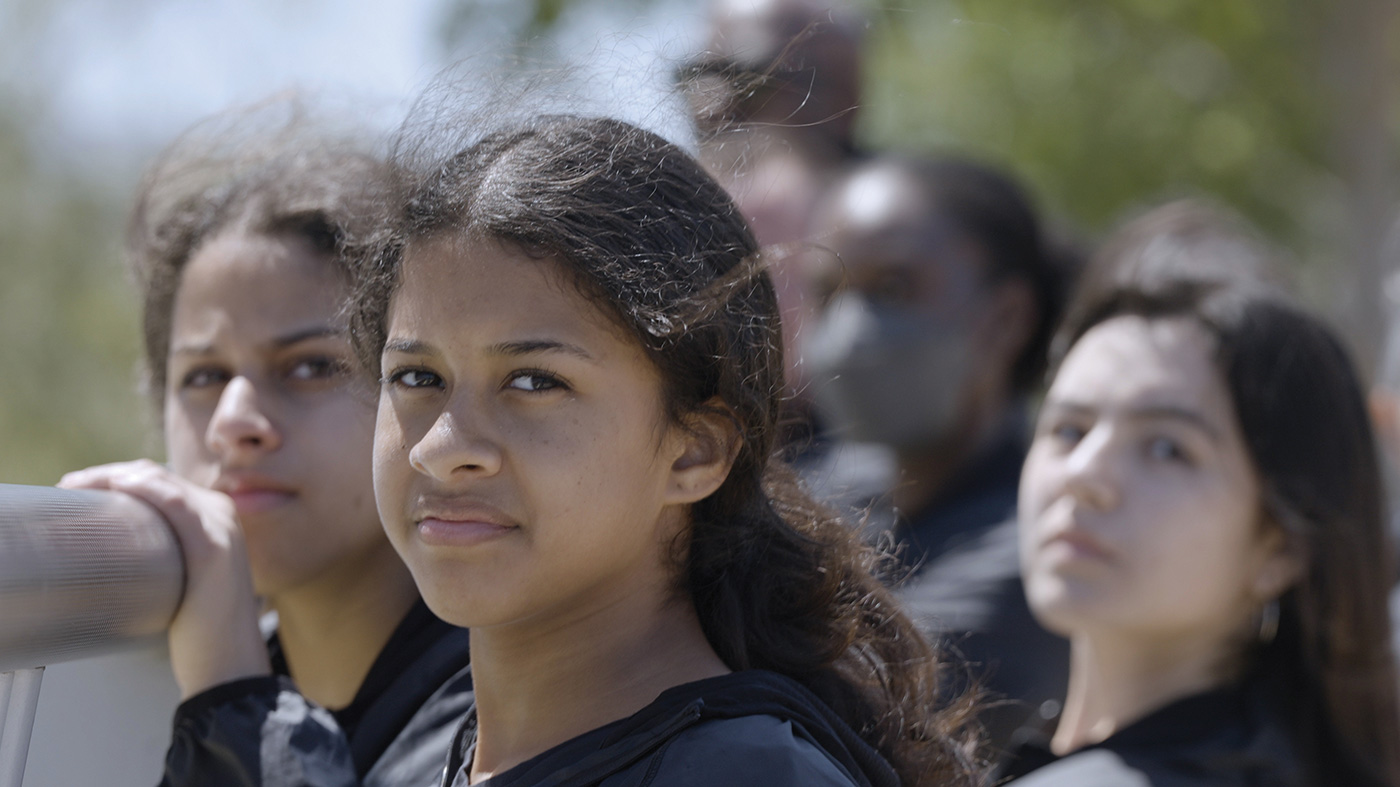
When we vocalize, we share and transform air, placing our bodies into critical relation to one another and the non-human world. Breath Work is an experimental community opera that explores air as a medium for resistance. Part documentary, part performative ritual, it takes place in Long Beach, California—an area filled with oil production and one of the largest ports in the world, where 25% of all imported goods enter the USA.Shipping infrastructure, railyards, freeways and oil refineries provide a striking backdrop for scenes of solidarity and grief staged by a cast and crew of 13 untrained local community members aged 11-65. Breath Work weaves together their creativity and their voices with personal stories of respiratory disease and environmental racism.
Nina Sarnelle (they/she) makes research projects, participatory performances, music composition, video and sculpture; their work interfaces with sites of neocolonialism(s), ecological destruction and labor exploitation in strange and intimate ways. They earned a BA from Oberlin College and an MFA from Carnegie Mellon University, and recently had a solo video exhibition at the New Museum: https://www.newmuseum.org/exhibitions/view/screens-series-nina-sarnelle Their work has also shown at Hammer Museum (LA), Getty Center (LA), Forum des Images (Paris), Haus der Kulturen der Welt (Berlin), Whitechapel Gallery (London), La Gaîté Lyrique (Paris), Ballroom Marfa (TX), MoMA (NY), Istanbul Modern (Turkey), Neuer Berliner Kunstverein (Berlin), Museum of Art, Architecture & Technology (Lisbon), Fundacion PROA (Buenos Aires), Black Cube (Denver), Southern Exposure (San Francisco), Recess (NY), UNSW Galleries (Sydney), Project 88 (Mumbai), Kevin Space (Vienna), Garage MCA, Moscow, Villa Croce Contemporary Art Museum (Genova), Mwoods (Beijing), Human Resources (LA) and others; and been featured in Art Forum, Frieze, Art in America, Vogue Italy, Huffington Post, SFMoMA, Creators Project, FlashArt, and Hyperallergic. www.ninasarnelle.com
Susannah Sayler, Edward Morris
The Amazon is Elsewhere
Experimental film | 4k | color and b&w | 12:0 | USA | 2025
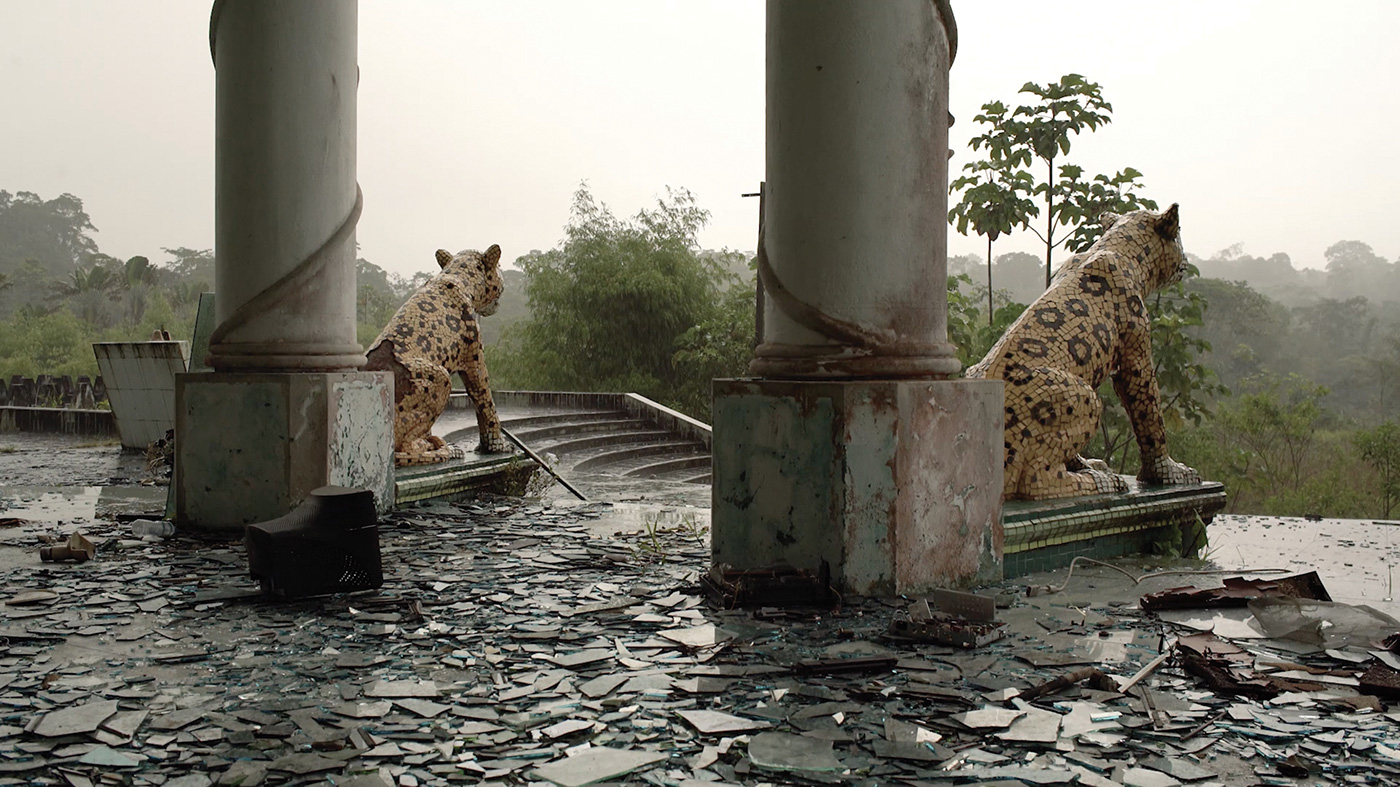
Amazon is Elsewhere is a short film that mediates on the unknowability and power of the Amazon for those who do not live within it. For many, the Amazon symbolizes “the lungs of the earth” or “nature” itself. For the indigenous people of the region, many of whom have no separate word for jungle or forest, it is simply home. The film centers around a building on the edge of the jungle: a mélange of architectural styles where trees break through the concrete floors; plants grow in the faux Corinthian columns; and jaguars made from ceramic tiles guard the entrance. AI-generated images express forces at play in both the building and the jungle that are difficult to parse as being malevolent or redemptive. The film is part of a body of work that considers how to represent the Amazon in light of its multiplicity of refracted meanings.
Susannah Sayler and Edward Morris (Sayler/Morris) work with video, photography and installation to examine our changing notions of nature, culture, and ecology. Their work is often place-based and focused on historical research. They have been awarded numerous fellowships including the Guggenheim Fellowship (2023) New York Artist Fellowship (2016), the Smithsonian Artist Research Fellowship (2014), the Center for Art and Environment Research Fellowship (2013), and the Loeb Fellowship at Harvard Graduate School of Design (2008). Their work has been exhibited broadly in the U.S. and internationally, including at the Massachusetts Museum of Contemporary Art, the Kunsthal in Rotterdam, the North Carolina Museum of Art, the Belvedere Museum, and the Southeast Center for Contemporary Art. Sayler currently teaches in the Film and Media Arts Department at Syracuse University, while Morris is Executive Director of Marble House Project. Their archives are collected by the Nevada Museum of Art / Reno, Center for Art and Environment. In 2006, Sayler/Morris co-founded The Canary Project, a studio that produces visual media and artworks that deepen public understanding of climate change. In 2021, they founded Toolshed, a platform for connecting ecological thought and action.

Kim Schoen
Pollinator
Experimental video | mp4 | color | 10:0 | USA | 2025
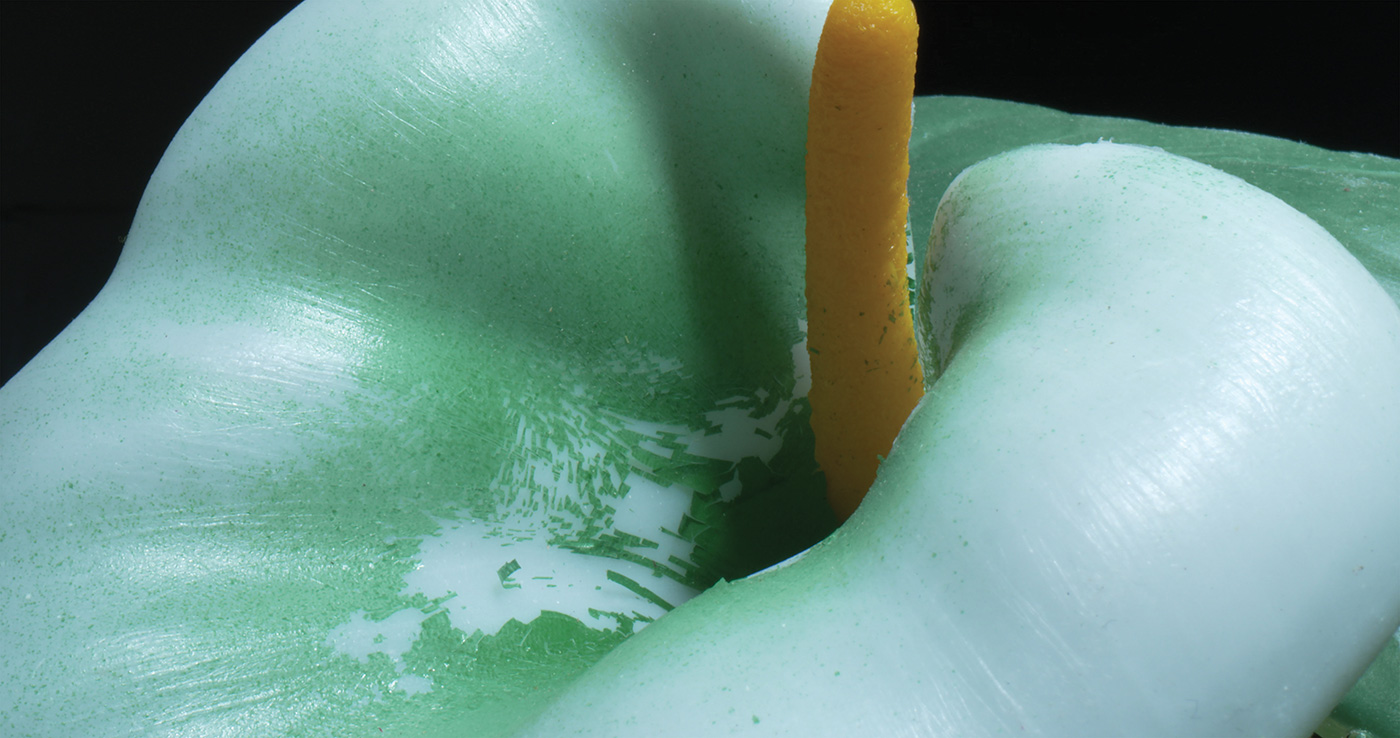
"A jarring auditory blip, and we are entered into a world of artifice. We slowly approach a bouquet before a black backdrop, partially wrapped in cellophane. A synthesized descending minor triad repeats below chaotic clicking tones; menacing, slowing, as we zoom and pan ever nearer. The flowers’ imitation becomes increasingly apparent: petals, stamens, and styles rendered through varying techniques of plastic production. A nylon weave assumes the shape of a petal, globs stand in for seeds, and stems are betrayed by marks of their fabrication in molds. As the camera moves even closer, the facsimiles break down. Degrading, flaking acrylic paint and halftone prints organize themselves into geometric abstractions. Extruded colored threads no longer signify trichomes but become expressive marks. Beneath the abstract, we find the abject. Wrinkled skin forms in the crevice of a panel of foam. Sheets, flecked with orange, pink, and red, quiver like ripped flesh. Former blossoms become organs, entrails, and orifices. At base, we arrive in a realm of dust and grime accumulating among simulated textures, appearing fungal, bacterial, parasitic. In Kim Schoen’s Pollinator, plastic, processed from crude oil, extracted from the anaerobic decay of plankton and algae, returns to biomorphic form, now undead." —Zachary Korol Gold
Kim Schoen’s work engages the rhetorics of display. Her absurdist, experimental approach across video installation, photography, and text explores the ways in which the commercial and personal inform and create one another. She takes on the unexamined ways that the commercial project operates on us—remaking the “sense” of what is given. Schoen works with “rhetorical” objects and language that try to persuade or convince us of something, and uses them as raw materials to say something new. Kim Schoen (b. 1969 Princeton) received her MFA in Photography from CalArts in 2005, and her MPhil from The Royal College of Art in 2008. Her work has been exhibited in venues such as MMoCA; BAM, Brooklyn (New York); Edith-Russ-Haus für Medienkunst, Kunstverein Springhornhof; Kleine Humboldt Galerie (Germany); Museo di Arte Contemporanea di Roma (Italy); Whitechapel Gallery, South London Gallery, and MOT International (London); LACMA, The California Museum of Photography, Moskowitz Bayse Gallery, Young Projects and Richard Telles Fine Art (Los Angeles). She is the recipient of international grants and residencies including AiR351 in Portugal, The Edith-Russ-Haus Stipendium in Germany and Cité Internationale des Arts in Paris. Her work is included in private and public collections, and has been written about in Artforum, Mousse, Art in America, The Los Angeles Times, and Hotshoe International.

Silke Schönfeld
The Impossibility Of Showing What Should Never Have Happened
Experimental doc. | 0 | color | 24:56 | Germany | 2025
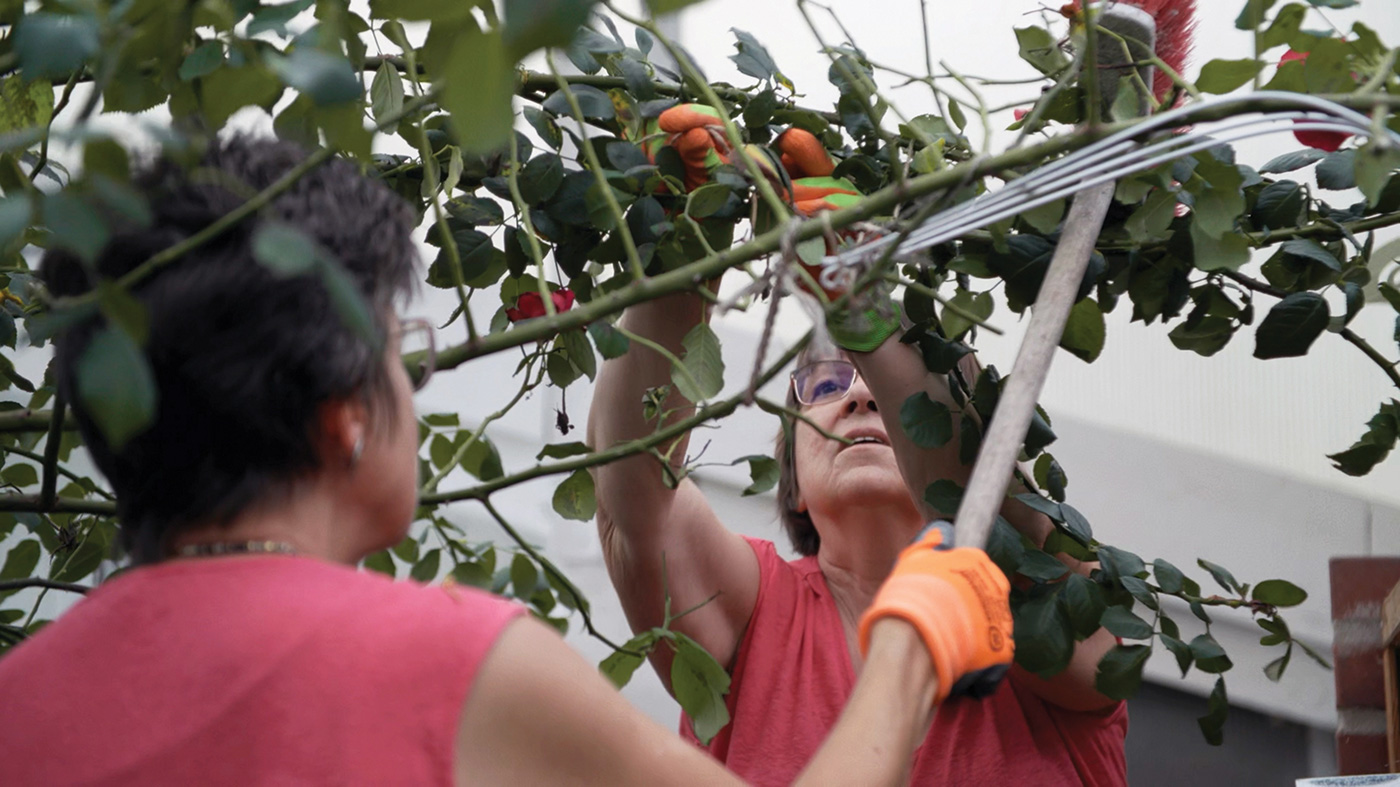
While gardening together, two sisters trace the continuities of National Socialist child rearing ideals in their own childhood. The parenting book The German Mother and Her First Child by lung specialist Dr. Johanna Haarer, steeped in Nazi ideology, remained in publication with a different title until 1987. Silke Schönfeld enters into a dialog with her mother and her aunt, whose upbringing in the 50s and 60s was still very much characterized by a constant call for discipline, obedience and the suppression of one's own needs. The family garden becomes a symbol of the willpower with which the two women tried to break the vicious circle for the next generation.
Silke Schönfeld is a visual artist and filmmaker. In her films the personal stories of the protagonists are interwoven with historical and social structures. Her works have been exhibited internationally in numerous exhibitions and film festivals such as CAN Foundation (Seoul), Garage (Rotterdam), Festival de Cannes, Building Bridges Art Exchange (Santa Monica, US), Goethe Institut (Paris) or Raindance Festival (London, UK). From 2020 till 2022 she was an artist in residence at Rijksakademie van beeldende kunsten, Amsterdam. Among her solo exhibitions are “You Can’t Make This Up”(2024) at HMKV, Dortmund, and “Beyond all reasonable measure” (2021) at KIT, Düsseldorf. She received various awards and scholarships for her work, as the German Short Film Award (2023) and Förderpreis des Landes NRW, Visuelle Kunst (2021). Silke Schönfeld lives and works in Dortmund, Germany.

Alex Schuurbiers
Placeholder
Experimental film | super8 | color and b&w | 7:46 | Netherlands, Belgium | 2025
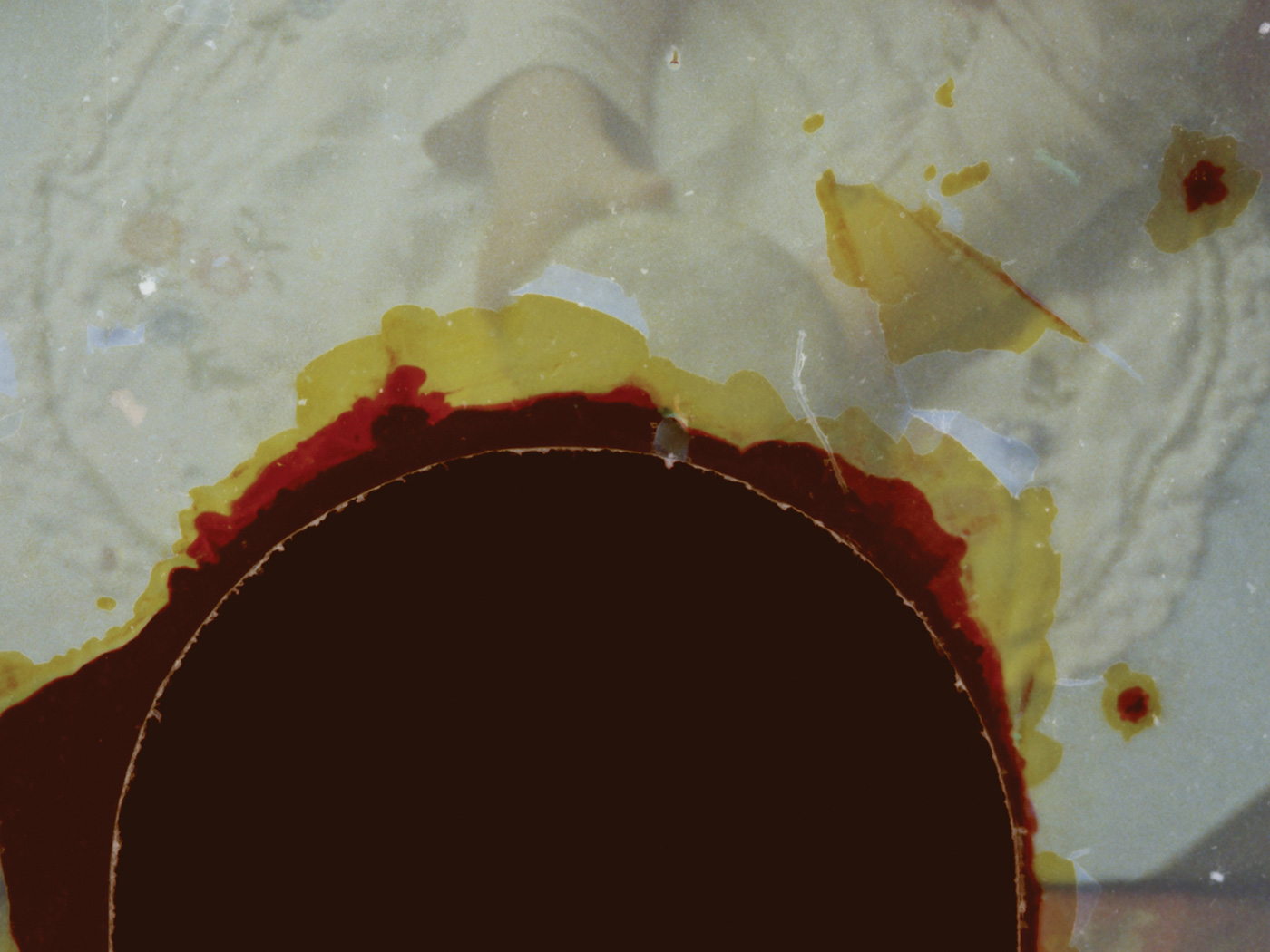
Placeholder is an attempt at holding it together in the face of absence; of a mother, of a memory, of something tangible. Hands holding rocks, hands gripping other hands. Images oscillate between dreams and recollection, distorted and transformed over time.
Alex Schuurbiers (she/her) is an artist from the Netherlands living and working in Belgium. Her practice focuses on the texture of analogue film as an active contributor to her storytelling: embedded in the past like a memory and tangible in the present like emotion. She is also the founding member of Ursula, a collective of women working with the moving image.

Leniko Sennoma
Augen Ohne Blick
Experimental film | mov | color | 81:3 | Germany | 2025
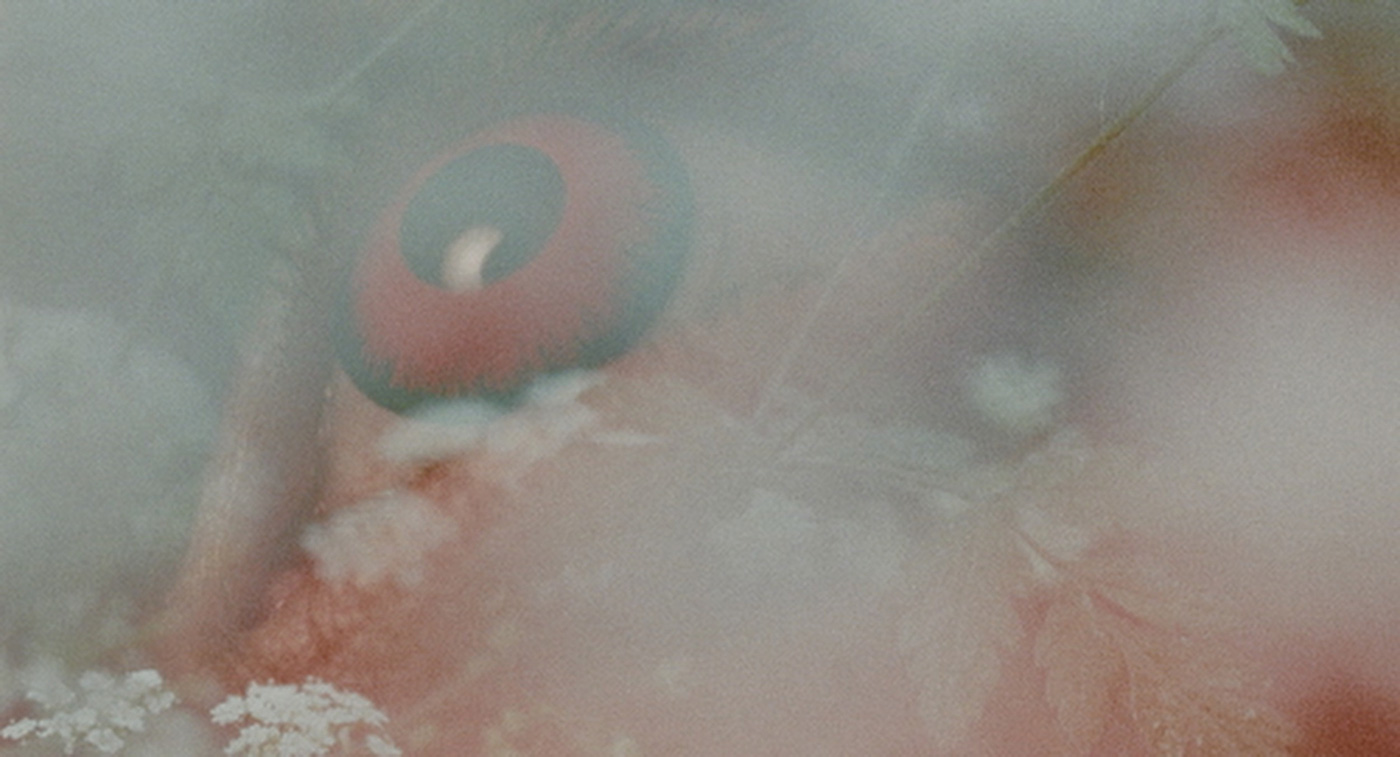
Eyes Without Gaze is an experimental film that challenges conventional storytelling, inspired by Chantal Akerman’s focus on atmosphere and space over direct action. Blending animation, 16mm, poetry, video art, video clips, and digital formats, it constructs a fragmented, dreamlike narrative. The film explores life under patriarchal capitalism, folklore, and symbolism, while depicting sexual violence without retraumatization, presenting survivors as autonomous individuals seeking justice. At its center is Maria, a Greek immigrant navigating financial hardship, desire, and a search for justice. Inspired by “Vasilisa the Beautiful,” her journey toward a mysterious needle leads her to confront a man from her past and a fateful choice.
Leniko Sennoma is a Berlin-based film and installation artist whose work challenges the boundaries between reality and dream. Their art focuses on themes such as social justice, intersectional feminism, and the dismantling of systemic oppression. They combine techniques of lucid dreaming and archetypical symbolism to question the status quo of neoliberal information society. Their art is an ongoing search for possibilities of collective liberation, the dismantling of systemic oppression, and the creation of political collaboration. By developing an audiovisual-metaphorical language that works with the synchresis of image, sound, and material aesthetics, they create hypnotic environments that appear simultaneously gentle and eerie. Influenced by their studies in epistemology, theoretical, feministic, analytical philosophy and film theory, their works play with the consciousness of the viewer, generating a broad spectrum of associations, emotions and contrasts. Sennoma’s video-/installations and short films have been shown in numerous galleries, museums and festivals across continents, including Zilberman Gallery Berlin Germany, Gallery 062 Chicago USA, Gallery SA-KURA Nagoya Japan, Inflamável Film Festival Santa Caterina Brazil and Internationale Kurzfilmtage Oberhausen, Germany.
Kevin Sepp
GOODBYE REGINA
Experimental doc. | 16mm | color | 8:48 | Germany | 2025
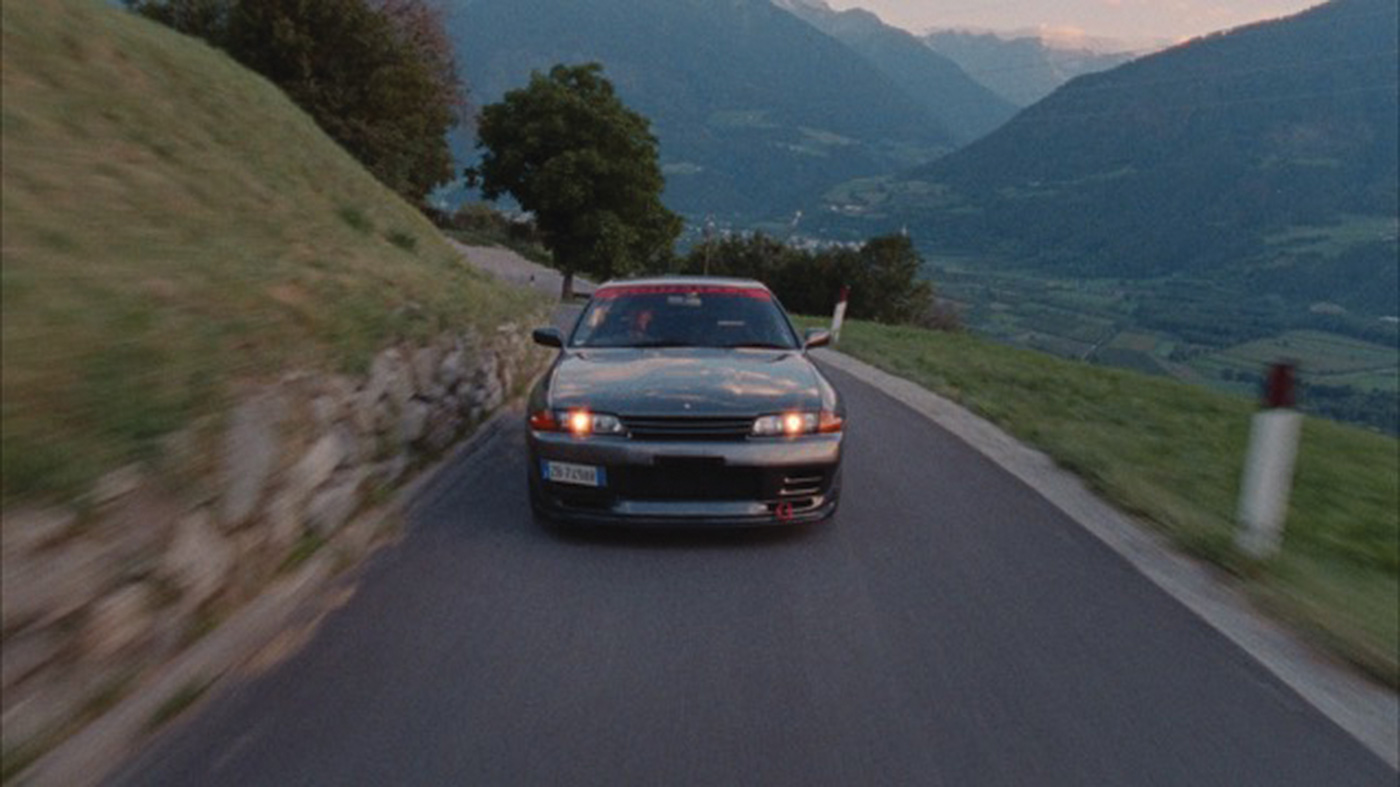
The Italian Alpine region of South Tyrol is not known for its tuning scene, but it does exist. A small group of young men have found each other to express their love of their home in their own way. Their Japanese sports cars glide oddly through historic villages, along the Alpine slopes and through breathtaking nature. GOODBYE REGINA is a farewell letter from the director to his grandmother, who grew up in these mountains. It explores the connection between the old and the new, without juxtaposing the two. In a landscape where seemingly nothing changes, the machines seem to be part of the creatures that emerge from this nature. The result is some kind of nature documentary, a collection of impressions away from the tourist postcard images.
Kevin Sepp is a director and editor based in Berlin. Coming from a humanities background, he is a self-taught filmmaker whose interest in short, visually rich storytelling led him to work in commercial film. Alongside commissioned projects, he continues to explore new possibilities through independent work. Collaborations with musicians and other artists strongly influence his sense of sound on screen and shape the atmosphere of his work. His films have been featured at festivals such as the Berlin Commercial and Berlin Music Video Awards, as well as on platforms like Directors’ Library, Sleek Magazine and Crack Magazine.

Sophie Sherman, Némo Camus
L Eau Était Là
Experimental doc. | 16mm | color | 15:0 | Belgium | 2025
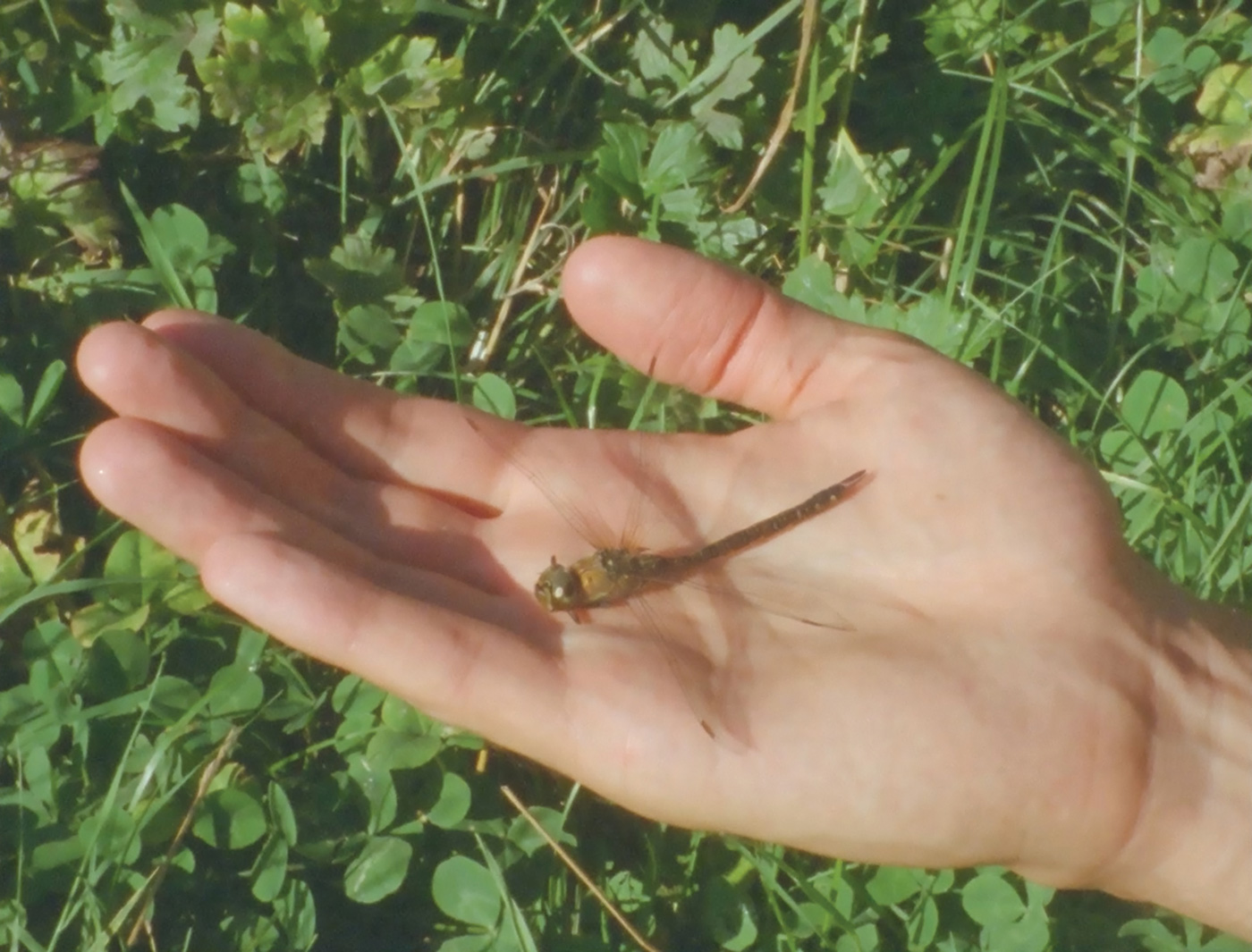
Filmed in 16 mm at the Wiels Marsh in Brussels. This marsh emerged after the water table was pierced during excavation work for a real estate project. Insects, birds, and humans coexist in this refuge, where life and magic resist.
Sophie Sherman is a French artist and filmmaker born in 1980 based in Brussels, Belgium. She studied film at Aix-Marseille University where she obtained a Master’s degree in Documentary Filmmaking, as well as at Le Fresnoy, National Studio for Contemporary Arts. In recent years, she has mainly explored the medium of 16 mm, with films such as La marche (2015, 19’), L’eau était là (2025, 15’, co-directed with Némo Camus), and Hold my hand (2025, 17’). Her films have been screened at the Torino Film Festival (It), L’Alternativa (Es), the Thessaloniki International Film Festival (Gr), Écrans Documentaires (Fr) Wiels Art Center in Brussels (Be), Ontsteking Art space in Ghent (Be), among others. Némo Camus is a French artist born in 1994, who lives and works in Brussels. After a degree in film theory and a Master's in sociology, he turned to sound creation and trained at INSAS. His work, strongly rooted in the practice of sound recording, investigates the back-and-forth between fieldwork and speculative approach, focusing on notions of trace, clue and tremor. He is specifically interested in the entanglement and gaps between intimate narrative and historical document in the context of contemporary memorial issues. His work takes the form of radio creations, sound installations, performances, texts and films. For performance and visual arts, he collaborates with Pélagie Gbaguidi, On-Trade-Off, Joëlle Sambi, Esther Mugambi, Robson Ledesma, Aïssatou Ciss, Sophie Sherman and Davide Tidoni. His work has recently been presented at GMEM in Marseille, iMAL in Brussels, Framer Framed in Amsterdam, the Biennale de Dakar and the Bienal Internacional de Dança do Ceará in Fortaleza, Brazil. He teaches sound creation workshops at the Université Paris 8.