Three works by Antoni Muntadas, a leading figure of contemporary art, are presented in exhibition for the first time in Berlin.
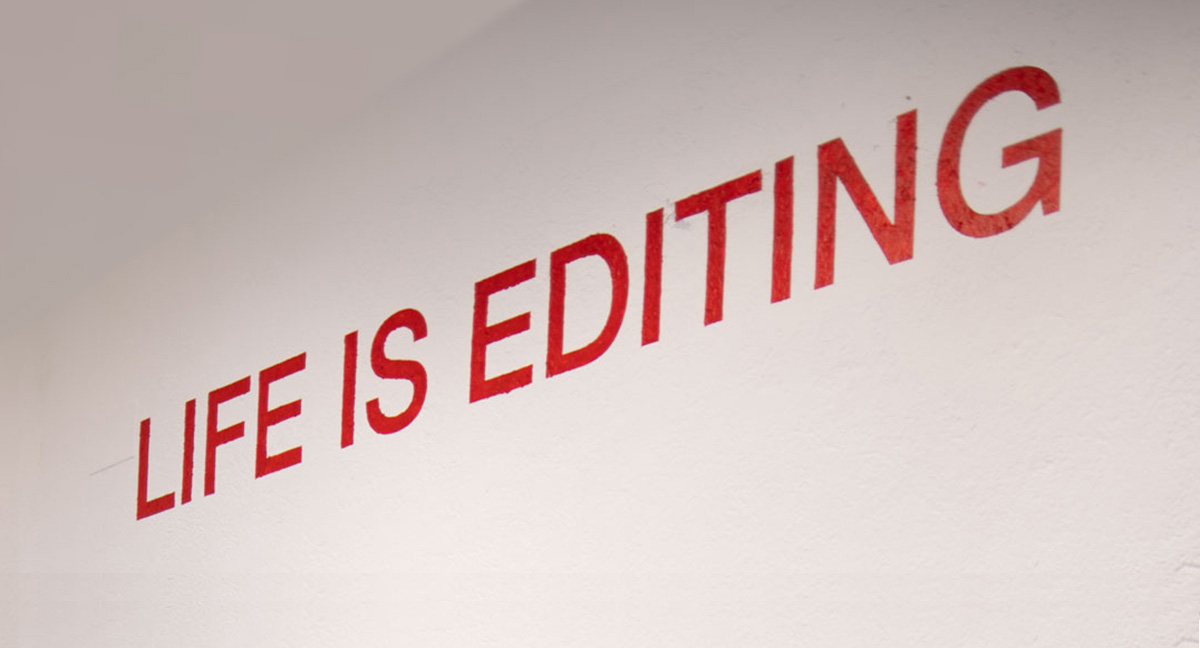
Antoni Muntadas, Marshall Reese: Political Advertisement XI (1952-2024) | Exp. documentary | hdv | colour and b&w | 1:38:00 | Spain, USA | 2024 Antoni Muntadas: On Translation: Warning | Multimedia installation – stickers, video | Spain, USA | 1999–present Antoni Muntadas: Life is Editing | Installation – stickers | Spain, USA | 2025
In their wake, whether in echo or counterpoint, the works of six other artists question, through the form of euphemism, our shared representations.
Philippe-aubert Gauthier, Tanya St-Pierre : Dans Une Sorte De Rêve éveillé - L'invitation - Experimental film | 4k | color | 75:0 | Canada | 2023
Philippe-aubert Gauthier, Tanya St-Pierre
Dans une sorte de rêve éveillé - L'invitation
Experimental film | 4k | color | 75:0 | Canada | 2023
"Dans une sorte de rêve éveillé - L'invitation" is a computer-generated animation about the domestication of nature in our homes, based on Tanya St-Pierre's handmade collages.
The starting point for the project was the desire to transpose St-Pierre's handmade collage practice into computer-generated images, but not only by integrating collages into 3D scenes, but rather by approaching collage work as a method for creating 3D environments.
The first influence for this work was the collage series "Espaces intérieurs" (2019 -2020): a reflection on the theatricality of nature in the interior spaces of our daily lives.
The origin of this series of over 150 collages lies in the discovery of a stack of interior design magazines published in the 70s and 80s. To these magazine pages are added a few fragments of gardening magazines from the '80s, The Space Issue (National Geographic Society, 2017), the book En El Espacio (Time Life Editions, 1984) and the illustrated dictionary Natural Wonders of the World (Reader's Digest Selection, 1977).
A strong feature in these interior design magazines was this constant narrative tension between the elements of nature and domestic, controlled, organized interior spaces.
This series of collages takes an archaeological and architectural look at a theatrical era of interior decoration. An era that seems to desire the domestication of these natural elements through their representation in our homes. Like an attempt to convince ourselves that we dominate and possess these natural elements. An attempt that exposes an almost unresolved fictional tension between, on the one hand, the modern comforts constructed and edified by the thundering economy and, on the other, the muted threat of nature, the changing climate and their implied cataclysmic forces.
?
?
Tanya St-Pierre is a Graduate in visual arts from UQTR (Université du Québec à Trois-Rivières, Qc, Canada). Philippe-Aubert Gauthier is a digital and sound artist, musician, engineer, Ph.D. in acoustics, and a professor at the School of Visual and Media Arts at UQÀM.
Both artists presently work and live in Montréal Québec, Canada. Each artists have a solo practice but they also combine their specializations for large-scale visual and sound installations. Gauthier and St-Pierre have been working as a duo since 2003. Their respective interests are addressed in exchanges that lead to hybrid artistic proposals, results of self-critical contests and inventions in tandem. Works have been supported by the CALQ and CAC and shown in divers contexts in Canada, the United States, Maroc, Mexico, United Kingdom, Germany, France and Japan.
Driessens & Verstappen : E-volved Formulae - Multimedia installation | 4k | black and white | 10:1 | Netherlands | 2024
Driessens & Verstappen
E-volved Formulae
Multimedia installation | 4k | black and white | 10:1 | Netherlands | 2024
The image generating Formulae E-volver software is developed by the artists. The building blocks of the software are all kinds of basic mathematical operators. The computer can compose an infinite amount of valid formulas out of these elements. Each time, a small set of formulas is composed and visualised on the screen. The viewer compares these animated images with each other and reviews them. In turn, the software responds on those reviews when it composes new formulas. Formulas that were displayed on the screen for a long time have more chance to crossbreed, whereby visual properties are mixed and passed on to future generations. The process begins with a "primordial soup" which yields relatively simple images. On the basis of personal preferences of the user, this gradually evolves into complex intriguing animations. The final results, the E-volved Formulae, are stored and are displayed on a large screen or projected. They show a wide variety of outcomes of the successive evolutionary processes.
The Amsterdam based artist couple Erwin Driessens (1963 Wessem) and Maria Verstappen (1964 Someren) have worked together since 1990. After their study at the Maastricht Academy of Fine Arts and the Rijksakademie Amsterdam, they jointly developed a multifaceted oeuvre of software, machines and objects. Their research focuses on the possibilities that physical, biological and computer algorithms can offer for image generating processes. An important source of inspiration are the self-organizing processes in nature. In the Morphoteques series (form collections), they show the form variations, which can be expressed within a specific generative process. In other works, the shape transformations are evoked in real time by means of a machine. In their software and AI projects, they develop an artificial nature, which is expressed in all kinds of variations.
Driessens & Verstappen participated in numerous exhibitions in the Netherlands and abroad, a.o. Stedelijk Museum Amsterdam, Museum Boijmans van Beuningen Rotterdam, Centre Pompidou Paris, IVAM Institute Valencia, Museum Kröller-Müller Arnhem, Garage Museum Moscow, CaixaForum Barcelona, Eyebeam New York. The couple gives lectures and presentations at universities, art academies, festivals and conferences, a.o. Siggraph Los Angeles, Sonic Acts Amsterdam, Second Iteration Melbourne. In 1999 and 2001 their Tickle robot projects have been awarded first prize at VIDA Telefónica Madrid. In 2013 the couple received the Witteveen+Bos Art+technology Award for their entire oeuvre. The artists are represented by gallery DAM in Berlin.
Can Kurucu, Mariam Aslanishvili, Jack Hogan, Matthias Planitzer : The Measures Taken - Experimental video | hdv | color | 30:0 | Germany | 2023
Can Kurucu, Mariam Aslanishvili, Jack Hogan, Matthias Planitzer
The Measures Taken
Experimental video | hdv | color | 30:0 | Germany | 2023
Four communist agitators return from a successful mission in China to Moscow and are congratulated for their efforts by the Central Committee (The Control Chorus.) The
four agitators, however, inform the committee that during their mission they were forced to kill a young comrade for their mission to succeed. The committee withholds its verdict until after the four agitators re-enact the events that led to the young comrade’s death.
The agitators tell of how they were sent on a mission to educate and help organize the workers in China. The director of the party house (the last before the frontier) helps the four agitators and the young comrade in the obliteration of their true identities. They are told to keep concealed that they are communist, for their discovery would endanger the mission and their lives.
However, once in China, the sights of injustice and oppression enrages the young comrade on several occasions, when he is time and time again not able to contain his passion, immediately acting to correct the wrongs he sees around him. As a result, he eventually exposes himself and proclaiming the teachings of the party. There, the agitators debate on what to do with him.
Can Kurucu is a filmmaker and artist focused on the sphere of the political image and its consequences. Can's work provides an insight into how digital images are made and what they represent, exploring the political and scientific elements that shape them, and reflecting on the image-making process and the deeper meanings behind the images within these broader contexts.
Mariam Aslanishvili is an artist, photographer, and musician based in Berlin. Her artistic practice revolves around the exploration of human perception and the construction of realities, with a particular focus on translating personal experiences into the language of experimental cinema.
Jack Hogan is a filmmaker from Waterford, Ireland. Their work focuses on the rich sociality of everyday life, foregrounding friendship and what constitutes good shared lives and places.
Matthias Planitzer is a visual artist and doctor who explores scientific and political visual spheres and how they are rooted in their contexts.
Sebastián Diaz Morales : One Glass Eye Melting - Experimental video | mov | color | 13:0 | Argentina, Netherlands | 0
Sebastián Diaz Morales
One Glass Eye Melting
Experimental video | mov | color | 13:0 | Argentina, Netherlands | 0
One Glass Eye Melting conjures the common imaginary of dystopia to rearticulate it in search of new possibilities. A close-up of a rotating eye gazes back at the viewer, its pupil reflecting a montage of disasters—war, natural catastrophe, and mundane accidents—juxtaposed with scenes of regeneration: microbial life, cosmic expansion, and technological evolution. Filmed in a raw, single-shot sequence with minimal post-production, the eye becomes both a mirror and a fractured “memory container,” destabilised by glitches, scratches, and analogue/digital noise.
The work interrogates the act of looking itself, transforming reality into something surreal yet unnervingly familiar. As the eye spins 360 degrees, the pupi’s reflection remains fixed, anchoring chaos and renewal as cyclical, interdependent forces. One Glass Eye Melting reframes disaster as inseparable from rebirth, arguing that collapse harbours the potential to reimagine—and rebuild—our narratives. Rather than revisiting catastrophe, the work asks: What do we do with these images of disaster?
The work summons the collective imagination of dystopia, rearticulating its imagery in pursuit of uncharted possibilities.
Part of the series Bajo el cielo cayendo (Under the Falling Sky), which explores the tension between systemic disaster and fragile hope.
Sebastián Díaz Morales was born in Comodoro Rivadavia, Argentina, in 1975 and lives and works in Amsterdam. He attended the Universidad del Cine de Antín in Argentina from 1993-1999, the Rijksakademie van Beeldende Kunsten in Amsterdam from 2000-2001, and Le Fresnoy Studio des Arts Contemporains in Roubaix, France from 2003-2004.
Díaz Morales’s examination of perception and reality is based on the assumption that reality itself is by nature highly fictional. Thus, his films do not simply transport the viewer into another, surreal, or phantasmal realm, but they strip reality of its familiarity and distort it, making it seem like something else. With Diaz Morales, the viewer’s imagination does not function as a basic counterpart to the real. Rather, it operates as a force capable of evoking space and producing it diegetically, one that, beyond generating a direct visual impression, fills in the gaps in seeing and, as the film unfolds, gradually reveals to the viewer the constructedness of what we call reality. Reality is presented here as a phantasm, as something that always eludes its defining in images. It is therefore always “a little bit ahead” of the image and the viewer’s gaze.
His work has been exhibited widely at venues—such as the Tate Modern, London; Centre Pompidou; Stedelijk Museum and De Appel, Amsterdam; Le Fresnoy, Roubaix; CAC, Vilnius; Art in General, New York City; Ludwig Museum, Budapest; Biennale Sao Pablo; Biennale of Sydney; Miro Foundation, Barcelona; MUDAM, Luxemburg; Calouste Gulbenkian Foundation, Lisbon; the Biennale di Venezia and Documenta Fifteen.
Lin Htet Aung : A Metamorphosis - Experimental fiction | 0 | color | 16:36 | Myanmar | 2024
In the houses, after parting, Mothers were made up of tears. Sons were transformed into empty glass cups. And the lullabies became a curse. The film examines the suffering and resilience of the Burmese people by using the distinct political elements that have floated for several years on the ocean of political opera under repetitive military dictatorships in Myanmar.
The visual composition draws on the colors of Myanmar’s national flag, adopted in 2010 during the country’s so-called transition period. This flag, rooted in the 2008 Constitution forced upon the country by a former military dictator, contrasts sharply with the earlier 1974 State Flag Law, as it includes a formal definition of the flag.
The film deconstructs and questions the existing definition of the flag by playing with the colors, objects, and sequences, by using a form of Government Propaganda Television Footage showing different generations under repetitive military dictatorships, by mixing the chilling voice of the current dictator,
Min Aung Hlaing, narrating haunting lullabies through AI technology.
The film also revisits the song which was sung from the last footage of actual footage of a birthday party celebration for Myanmar’s former dictator, General Ne Win, held at Sedona Hotel in Yangon on March 21, 2001, one year before his death.
Lin Htet Aung (b. 1998) is a filmmaker from Myanmar. He began with avant-garde poetry before transitioning to filmmaking in 2017. His short films have been selected at several international film festivals, including New York Film Festival, Vancouver, Tirana, Karlovy Vary International Film Festival, International Film Festival Rotterdam and won several awards, including the TIGER SHORT AWARD at International Film Festival Rotterdam IFFR. An alumnus of TIFF Directors’ Lab, Berlinale Talents, Locarno Filmmakers Academy, Asian Film Academy, and a Prince Claus Seed Awardee 2023, he is now developing his debut feature, Making A Sea, which received the Asian Cinema Fund and Red Sea Award at Asian Project Market (APM). After the coup in 2021, he joined the CDM (Civil Disobedience Movement) for his Engineering study in Myanmar, and currently studying at Städelschule art School, Germany.
Utkarsh : Remote Occlusions - Experimental video | hdv | color and b&w | 15:38 | India | 2024
Utkarsh
Remote Occlusions
Experimental video | hdv | color and b&w | 15:38 | India | 2024
‘Remote Occlusions’ draws on excerpts from a camera manual, which details what the manufacturer expects from the camera, while the film presents cases where the camera rejects these intentions and expectations.
The images that make up Remote Occlusions come from cameras that are not password-protected, available on internet directories that publish live feeds from these cameras. It is in this ethical grey area that directories act as mediators, making private feeds public.
__
No flickering. No noise. No artefacts. No hard lights that cast shadows. No fog, clouds, trees or buildings. No conditions of slow-moving or stopped people for long periods. No moving objects whose appearance is similar to the target in the areas of interest. No waving objects that cause the continuous modification of the image in the area of interest, for example a meadow with tall grass.
The target must have a minimum height of 30 pixels, which is at least 1/10 of the image height. The body of the target must be visible for at least 3/4 of its height. The target must have a minimum area of 100 pixels and stay in the interested area for a time of at least 1 second. The target must also maintain a sufficient dissimilarity from the background, which means at least a colour difference of 5% or a brightness difference of 10%.
The image must have a resolution of 640x360, 640x480, 320x180 or 320x240 pixels and must be in landscape orientation with 16:9 aspect ratio.
The camera must be mounted at a height between 3 and 5 metres and the camera lens must not be dirty, wet or steamy.
The accuracy to be expected is under ideal environmental and installation conditions. Recall: 95%
Utkarsh is a filmmaker and writer from Delhi, India. His work has recently been programmed at EXiS, Seoul (Korea), 2024; Festival ECRÃ, Rio De Janeiro (Brazil), 2024; FICUNAM 14 - Umbrales/Threshold, Mexico City (Mexico), 2024; Berlinale - Forum Expanded, Distant Connections, Berlin (Germany), 2024.
In "Political Advertisement XI (1952-2024)", co-directed with Marshall Reese, Antoni Muntadas explores forty years of American presidential campaign spots, from Eisenhower to the 2024 Harris and Trump campaigns, in which is written, in negative, the making of a televised propaganda now inseparable from political discourse itself. With "On Translation: Warning", he declines in more than fifteen languages a single leitmotiv — "Warning: Perception requires involvement" —, disseminated on stickers, posters, postcards and press inserts, as a permanent alert on the invisible filters through which we perceive information. "Life Is Editing" extends this questioning into the intimate: if our lives are constructed in the manner of a cinematic montage, each decision, each move, each relationship becomes a cut, a selection, a fragment of the narrative we inhabit. Sebastián Diaz Morales films an eye slowly rotating 360 degrees, its pupil becoming the receptacle for a montage of disasters – war, natural catastrophes, everyday accidents – set against scenes of regeneration, where destruction and renewal appear as two cyclical and interdependent forces. Driessens & Verstappen design algorithms that mimic genetic evolution to "grow" moving images rather than hand-code them. Each work begins with a unique mathematical formula which, through successive operations of variation and selection, opens onto a multidimensional visual field. Philippe-Aubert Gauthier and Tanya St-Pierre start from a collage of decorating magazines from the 70s and 80s, in which a constant tension between natural elements and domesticated interiors is observed. Lin Htet Aung explores the suffering and resilience of the Burmese people through excerpts from broadcasts aired on national television. Can Kurucu deploys Bertholt Brecht's play "Die Maßnahme" (The Decision) in the Minecraft video game. Communist agitators attempt to spark a revolution in China, but are forced to kill one of their number to succeed in their mission. Utkarsh applies restrictions from a CCTV camera manual to images from surveillance cameras. He observes what remains of the image in cases where the camera refuses the instructions, and proposes a reflection on what is looked at, and what we're not supposed to look at.