Catalogue > Search
Results for : Tout le catalogue
Barbara Noiret
Verrière
Experimental video | dv | color | 2:32 | France | 2006
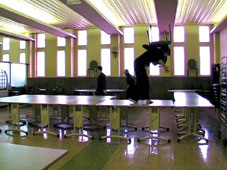
This video is the result of a performance carried out by patients and caregivers during lunch at the restaurant of the Institut Marcel Rivière in Verrière psychiatric hospital. It was made in collaboration with Régis Bouchet-Merelli and Dominique Larcher from the contemporary dance company K-Denza. The performance lasted 25 minutes but only 2'32'' have been kept to create this video, based on the body movements in connection with the architecture. The rhythm in this video is created by the surrounding noise of the meal (plates, cutlery, discussions...). This performance was conceived in relation with the restaurant's historical and architectural context: the hall in which the performance is set was reserved to the caregivers in the 1960's. This room is separated by large bay windows from another larger room where the patients have dinner. At the time, these bay windows allowed for the observation and diagnosis of the patients during lunch. This practice is no longer in use today, but the caregivers continue to dine in one room while the patients dine in the other. The aim of the performance was for everyone to dine together in the same space, and for the space, both open and closed because of the windows, to become a performance space, where objects lose their functionality: The tables are assembled and disassambled to form a dance stage, and the chairs no longer serve as seats. An attempt to disrupt the meal space and everyone's habits by creating a mental architecture.
Barbara Noiret was born in 1976. She currently lives and works in Paris. The Frédéric Giroux Gallery, where in 2005 she produced a personal exhibition, has been promoting her work since 2004. Thanks to the gallery, she took part in several collective exhibitions and contemporary art fairs - Artissima, Turin, and FIAC 2004, 2005 and 2006, in Paris. She has carried out exhibition and residency projects in two contemporary art centres, and the departmental estate of Chamarande invited her to produce a work of photography and video based on her final project on the domain's castle. Le Fonds National d?art contemporain acquired two photographic works produced on this estate in 2006. Some of her work was shown during the days of patrimony in September 2005, and was further displayed in the exhibition "L'esprit des lieux" from November 2006 to February 2007. At the end of her three month residence in 2000, the estate of Kerguéhennec, Bignan allowed her to present a personal project, "l'espace de l'image", on the abandonned floors of the castle. Barbara has exhibited her work at the Music and Art School in Brême, Germany. The school invited her to participate in the presentation of the student's works. She produced an installation video especially for the occasion. As for other projects, the Marcel Rivière Institute, a psychiatric hospital in Verrière, put a disused pavilion at her disposal two years ago and she continues to make use of it. She works in different spaces of the hospital in relation to the patients and the caregivers. In 2005, in the framework of this project, Barbara received individual creation aid and an installation allowance (material aid) from DRAC Ile-de-France. In 2001 she completed a short residency at La Casa de Vélasquez in Madrid, working on the directorial project "Sin Escenario1 Identité et Image" by David Ferré as a photographer screenwriter.
Simon Norfolk, Tate Films
Burke + Norfolk: Photographs From The War In Afghanistan
Documentary | hdv | color | 17:12 | United Kingdom | 2011
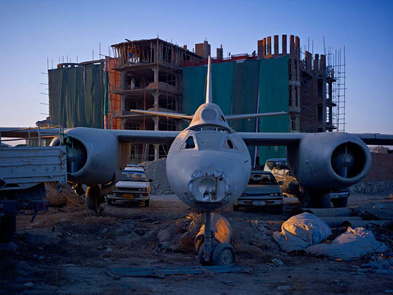
In October 2010, Simon Norfolk began a series of new photographs in Afghanistan, which takes its cue from the work of nineteenth-century British photographer John Burke. Norfolk?s photographs reimagine or respond to Burke?s Afghan war scenes in the context of the contemporary conflict. Conceived as a collaborative project with Burke across time, this new body of work is presented alongside Burke?s original portfolios. The exhibition takes place in conjunction with an earlier complementary exhibition in March 2011 at the Queen?s Palace in the Baghe Babur garden in Kabul, supported by The World Collections Programme and the Aga Khan Trust for Culture, which resulted from a series of workshops with Afghan photographers, featuring work by Fardin Waezi and Burke alongside Norfolk?s own work.
Simon Norfolk was born in Lagos, Nigeria, in 1963 and educated in England, finishing at Oxford and Bristol Universities with a degree in philosophy and sociology. After leaving a documentary photography course in Newport, South Wales, Norfolk worked for far-left publications specializing in work on anti-racist activities and fascist groups, in particular the British National Party. In 1994 he gave up photojournalism in favor of landscape photography. His book For Most of It I Have No Words: Genocide, Landscape, Memory, about the places that have witnessed genocide, was published in 1998. The work was exhibited at many venues, including the Imperial War Museum in London, the Nederlands Foto Instituut, and the Holocaust Museum in Houston, Texas. Photographs of the war in Afghanistan in 2001, published as Afghanistan: Chronotopia, won the European Publishers` Award for Photography and an award from the Foreign Press Club of America and was nominated for the Citibank Prize. In 2004, Norfolk won the Infinity Award from the International Center of Photography in New York and in 2005 Le Prix Dialogue in Arles. His most recent book, Bleed, about the aftermath of war in Bosnia, was published in 2005. His work appears regularly in the New York Times Magazine and the Guardian Weekend.
Kristina Norman
THIRST
Experimental fiction | 4k | color | 16:7 | Estonia | 2022
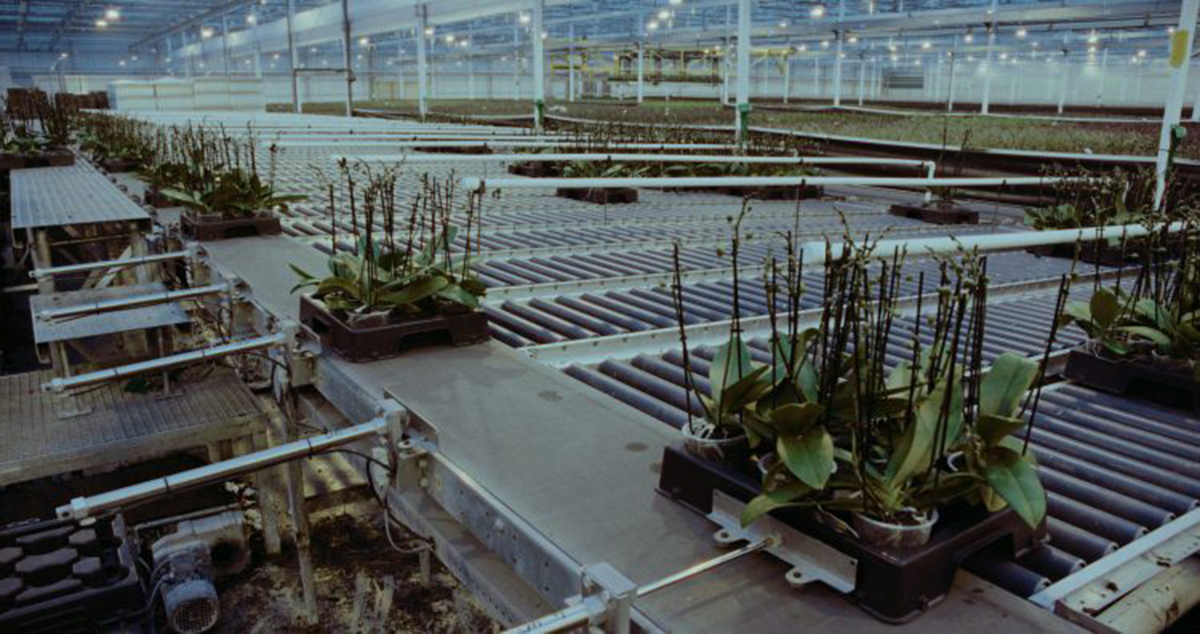
The film Thirst is a post-human choreography of machines and displaced plants. Millions of tons of Estonian peat end up in greenhouses in the Netherlands, where it is used as a soil substrate for tropical Phalaenopsis orchids. Meanwhile, local communities in Estonia are left with dry wells and a lack of drinking water as their fragile wetlands are drained for peat extraction. The orchids from the Netherlands then find their way back to supermarkets and homes in Estonia. It is a thirst for luxury and abundance that keeps the capitalist machinery running. Thirst is one episode from Kristina Norman’s Orchidelirium film trilogy. Commissioned for the Estonian Pavilion at the 59th International Art Exhibition – La Biennale di Venezia. Author and director: Kristina Norman Cinematographer: Erik Norkroos Composer: Märt-Matis Lill Choreographer and cast: Mari Mägi Produced by Rühm Pluss Null in collaboration with CCA Estonia
Kristina Norman (b.1979, lives and works in Tallinn) is an artist whose interdisciplinary work includes video installations, sculpture, and projects in the city space, as well as documentaries and performance. She is interested in the issues of collective memory, the memorial uses of the public space, but also the subtle sphere of the body politic that transgresses the boundaries between the public and the private. In 2009 she represented Estonia at the 53rd International Art Exhibition – La Biennale di Venezia, with a solo project; a multilayered mixed media installation entitled After-War. The project was a study of a conflict around the relocation of a Soviet monument in Tallinn. In 2022 at the 59th edition, the artist again represented Estonia with an ecocritical exhibition “Orchidelirium. An Appetite For Abundance”, a duo show with Bita Razavi, curated by Corina Apostol. Norman’s experimental film trilogy commissioned for the Estonian Pavilion, offers multiple ways to reflect on the legacies of colonialism from a specifically Eastern European perspective.
Jussie Nsana Banimba
Bimbambukila
Video | hdv | color | 6:1 | Congo (Brazzaville) | 2012
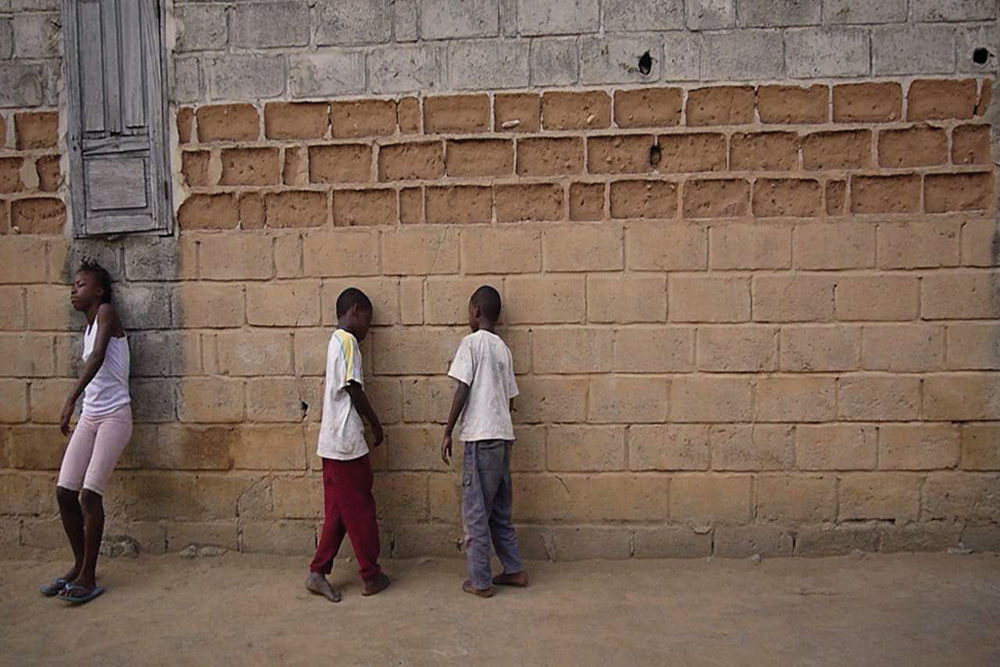
Réalisée lors des Ateliers Sahm (Rencontre Internationale d’Art Contemporain, qui se sont tenus du 15 novembre au 15 octobre 2012 à Brazzaville, « Bimbanbukila », première vidéo de Jussie Nsana pose le problème de mémoire. Cette première réalisation de l’artiste nous emmène au cœur de Brazzaville où l’artiste magnifie le mur sous toutes ses coutures. Des murs qui deviennent des espaces témoins, de ponts entre le passé et le présent.
Jussie Nsana Banimba est née à Brazzaville en 1984 et elle vit et travaille actuellement à Pointe-Noire. Elle est diplômée de l`École Nationale des Beaux Arts de Brazzaville, en arts plastiques. Elle se considère comme une artiste à part entière et crée des peintures, des bandes dessinées, et des vidéos. Jussie à participé octobre 2015 au Festival International de la Bande Dessiné d’Alger en Algérie. Elle a exposée ses œuvres en novembre 2015 à l`exposition «Soul Power» au Musée-Galerie du Bassin du Congo à Brazzaville, en 2014 à l`exposition "Butselé" au Centre Culturel Basango à Pointe-Noire; en 2013 à l`Institut Français du Congo (IFC) à Pointe-Noire; en 2012 et 2013et 2015 elle a participé à la 1ère, 2e et 4e édition de la "Rencontre d`Art contemporain de Brazzaville" aux Ateliers SAHM. Comme elle-même le dit, Jussie transporte dans son « sac à arts », ses passions les plus artistiques, la BD, la peinture et la vidéo. Engagée avec la jeunesse, Jussie, avec une générosité hors du commun, transmet son savoir-faire et son amour pour l’art aux enfants et aux jeunes dans son espace Nsana – Arts’ Butsilé.
Monika Nuber
Duette Chöre Formationen
Animation | 0 | color | 11:20 | Germany | 2005
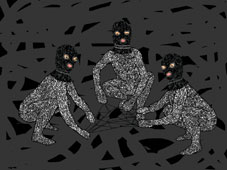
Masked forms sing a hymn, Quivering figures celebrate friendship, Young girls sing about love and sex, A three-headed dog and its master make rhymes, A group of kids in the forest sing a mysterious melody and two hanged people mutually help each other to present a song.
Monika Nuber is a Stuttgart based plastic artist and musician. She studied at Stuttgart's Arts Academy with Joseph Kosuth and Joan Jonas, and at the Academy of Fine Arts in Prague with Milan Knizak. Successive scholarships led her to Mongolia, China, and Pakistan.

Christof Nuessli
Under The Skin
Video | hdv | color | 16:40 | Switzerland, United Kingdom | 2019
Zooming into two books containing mug shots from around 1880–1935, Under the Skin, draws lines from historical events to contemporary developments of control and surveillance. While describing what she sees in the books, the narrator intertwines subject areas like; how time changes perspectives on historical events, the role of archives as foundations for power and control, the possible brutality of bureaucracy, the current state of facial recognition and personal experience with the law enforcement. Under the Skin questions given structures of power and asks how we can take back the sovereignty of information.
Christof Nüssli (*1986, Zurich) is a visual artist, whose interdisciplinary approach involves moving images, photography, sculpture, installation, text and artist books. His work has been exhibited in various institutions and off-spaces. In 2019 his work was shown at Photoforum Pasquart (CH), Swiss Institute New York (US), Glue Factory (UK) and VideoEx (CH). Nüssli authored three artist books (Miklos Klaus Rozsa, Withheld due to:, googly eyes) which won international prizes. Since 2014 Christoph Oeschger and Christof Nüssli run the publishing project cpress, focusing on artist books. In 2018, Nüssli was an artist in residence at the Swiss Institute New York, the Andreas Zuest Library and in 2016 at the Istituto Svizzero di Roma. In 2013, Nüssli received a Master of Design from Werkplaats Typografie. Since 2018 he attends the Master of Fine Arts program at the Glasgow School of Arts.
Eko Nugroho
Ma Ling
Experimental video | dv | color | 4:0 | Indonesia | 2006
"Ma Ling" (in Bahasa Indonesian can be mean: Thief) is an instant canned food from China. This work talks about stealing back terrors that have already been produced by television. Inspired by what happened in China for a pirated business product; taking something from a thing that already exists and reproducing it as something "new".
Eko Nugrono
Bercerobong
Animation | dv | black and white | 4:0 | Indonesia | 2006
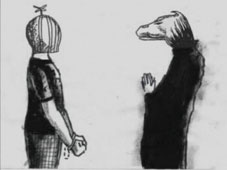
As a great and productive comic maker, Eko Nugroho smartly uses simple drawing and animation for his video "Bercerobong" (Smoke-piping). He attempts to portray a condition happening in a community, in particular when a change of political agenda takes place in Indonesia after the downfall of the Soeharto regime. Everyone seems to be in turn: politicians, armies, governmental officers, religious teachers, and others. Like chameleons they have quickly changed their life's attitude, way of speaking, and action, adjusting to the environment and chatting partners. Sometimes in a tricky way, they use the situation for the sake of their own interest.
Bettina Nürnberg, Dirk Peuker
Franzosensand
Documentary | hdv | color | 8:30 | Austria, Germany | 2016
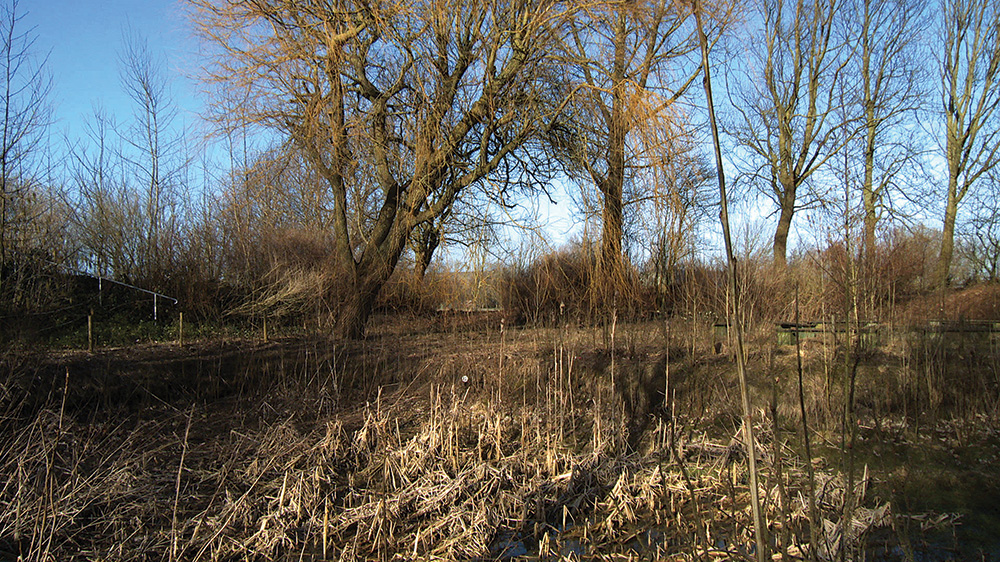
The film “Franzosensand” centers on agricultural settlements founded by theGerman National Socialitst on newly built dikes on the mudflat of the Wadden Sea (North Sea). Of the settlements, the so-called “Adolf-Hitler-Koog”, was meant to be a prototype for a national socialist community.Today, the bleak and tidy landscape does not offer much testimony to its history. Excerpts of archived materials that are interwoven with present-day images make the present appear as a surface built on complex, deeper layers of the past.
Bettina NUERNBERG (1976, Germany) was educated in art and film in Hamburg, Berlin and Toulouse. The work of the Berlin-based artist has been screened and exhibited worldwide. She founded the internet platform vestibuel-film. Dirk PEUKER (1970, Germany) studied film and art in Berlin and Vienna. The work of the experimental filmmaker and artist has been screened and exhibited worldwide.
Bettina Nürnberg, Dirk PEUKER
Zement
Documentary | hdv | color | 12:38 | Germany, Austria | 2014
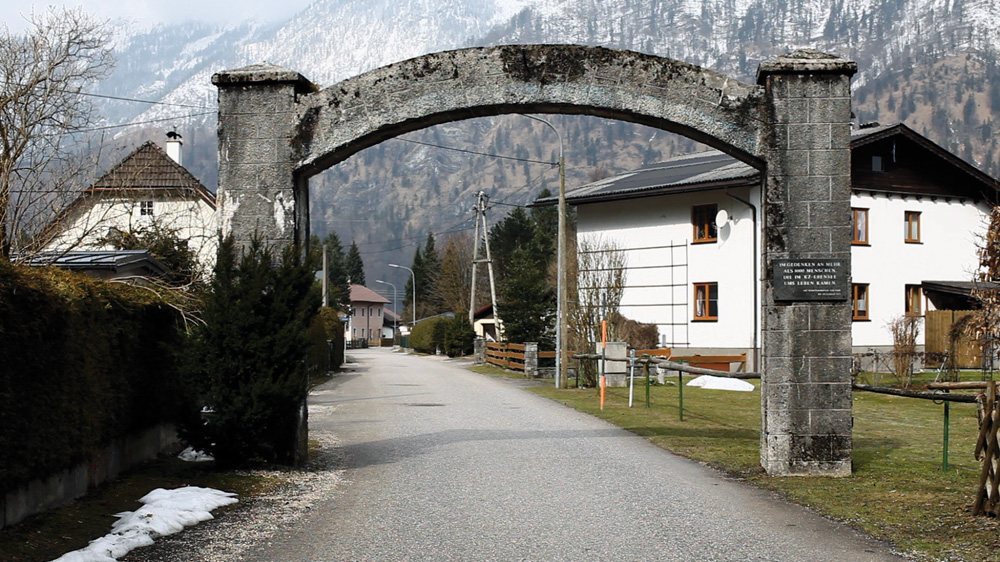
The Nazis set up a concentration camp in Ebensee. Nürnberg and Peuker wonder what conclusions they can draw from the topography about dealing with the past. The takes remain static; a woman’s voice dryly contributing information from off screen is all that clarifies the context within contemporary history. A site that looks like a dirt road turns out to be the “Löwengang (Lion’s Walk),” which the camp’s prisoners were driven down like animals to reach a tunnel that had to be dug. As soon as the film moves to the residential area that was founded on the site of the concentration camp shortly after the end of the war, surprise at the lack of sensitivity in dealing with the past mixes into the off-screen commentary. What Zement aims to get at is the ambiguity of this proximity of commemorative site and settlement.
Dirk Peuker * 1970 in Friedrichroda 1998 – 2005 Studium experimentelle Filmgestaltung an der Universität der Künste Berlin und bildende Kunst an der Akademie der bildenden Künste Wien. 2006 Stipendium der Stiftung Kulturregion Hannover und der Nordmedia Filmförderung, Villa Minimo. 2007 DAAD Jahresstipendium 2008 Postgraduiertenstipendium des Freistaates Thüringen 2008 Meisterschüler der Universität der Künste Berlin 2009 NaFÖG Stipendium des Berliner Senats seit 2009 künstlerischer Mitarbeiter an der Kunsthochschule Berlin Weißensee
Mark O'connell
All Broke Up
Art vidéo | dv | color | 3:58 | USA | 2004
"What? Torture!?! I didn`t see any torture. Did you see some torture? Nobody saw any torture....."
Mark O`Connell probes and pushes the emerging representational, juxtapositional possibilities afforded by today`s expanding range of digital media. After a score of years in music--as a performer, composer, and producer--he now works with a variety of media: still images, video, film, music and text; all manipulated as digital information. The finished pieces are generally delivered via videotape or Quick Time computer files. His work has been exhibited in a wide range of venues.
Alison O'daniel
Deep Woods
Experimental video | dv | color | 5:30 | United Kingdom | 2005
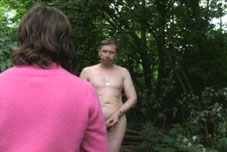
A woman's back, somewhat to the left of centre, fills the image. She is standing straight in front of the camera, which now and then registers a glimpse of the man who is standing face to face with her at a few metres' distance, somewhere in a forest. Camera, man, and woman are barely moving, while the voice-over clarifies the context of what is happening. The voice probably belongs to the man, of whom we have just seen enough to be able to decide that he must be an elderly gentleman. He explains that he is always looking for new challenges, experiences and boundaries. He is wondering how it will affect him, whatever it is he is going to do later, and about which the viewer can still only take a guess. The voice-over appears to be based on a conversation or correspondence that took place between him and the woman before the recording. He admits that he feels embarrassed and uncomfortable with the situation and with the idea that he is going to do something like that in her presence, and in that of the camera crew and eventually, of an audience. Then, as the camera moves along, we see how he calmly starts to undress. He hands his clothes to the woman. How will his body respond in these circumstances, will it cooperate gracefully, or will it embarrass him? He is not a model or an actor, he says. He looks alternately at the woman or just past her into the camera, or sideways and upwards. Very calmly he carries out the agreed action, and within a few moments it is done, upon which she hands him a cloth and his clothes.
Doireann O'malley
Prototype I: Quantum Leaps in Trans* Semiotics through Psycho-Analytical Snail Serum
Video | 4k | color | 36:35 | Ireland, Germany | 2018
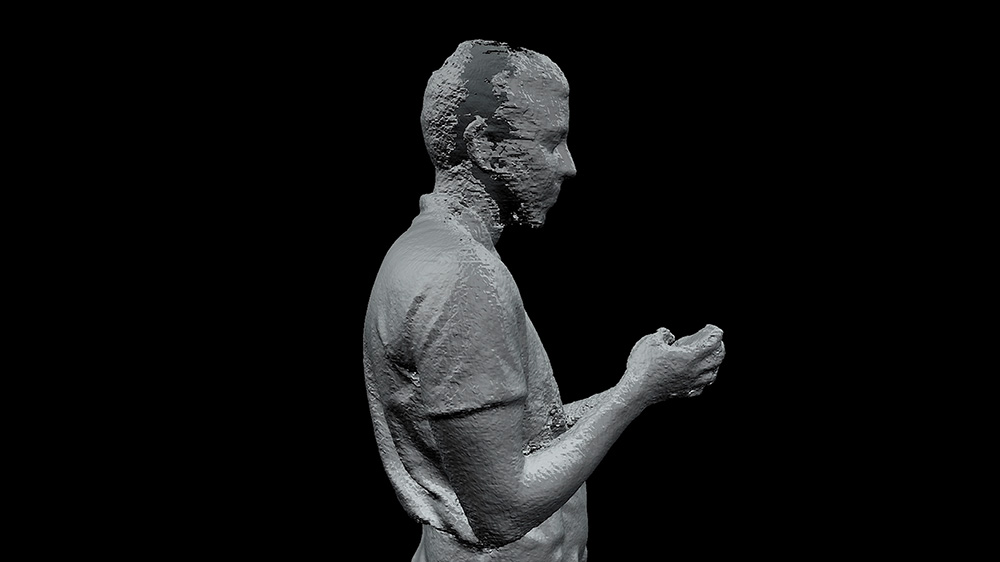
In Prototypes the viewer is guided sonically and visually through various dream- and land-scapes, observing psychoanalytic references to both shamanistic pasts and speculative futures that evoke alternate modes of existence. We meet the protagonists who interact with undefined technologies and it appears ambiguous as to whether they are rendering themselves in a virtual world, a potential future, or creating their present. In fact, throughout Prototypes there is little to distinguish between “the symbolic, the imaginary, and the real”. Psychoanalytic sessions emphasise a transgression of boundaries. The viewer becomes increasingly disoriented between the physical and dream worlds, where the psyche presents symbols as metaphors for psychological obstacles to overcome. Working with a cast of almost entirely non-professional actors in a collaborative process was integral to the work. Several of whom attended a dream workshop and shared their own dreams, which were then, too, woven into the script. In an exquisite corpse of unconscious connection, one protagonist’s dream depicts a tongue, abstracted and contrasted against the director’s own dream of tentacles growing from a stomach. One of the protagonists, Pol, professes that the experience of taking testosterone feels like being in a science fiction movie. Through an experiential understanding of the pliant body made available through bio-hacking, the protagonists begin to sense a form of liberation, a way to indirectly denounce systems of control. They experience an expanded potentiality to create for themselves new meanings and languages, new architectures. Pol’s analogy concretes what is alluded to throughout the film, that this depicted version of reality is one formerly unimaginable, consequently allowing us to further speculate on an abundance of potential futurities. A gay cruising scene suggests that the result of Pol’s bio-hacking allows him access into this formerly unimaginable reality.
Doireann O’Malley, born Limerick, Ireland 1981. Lives and works in Berlin, Germany. Prototypes was the winner of The Berlin Art Prize 2018 and has been exhibited in The Hugh Lane Gallery, Dublin, Edith Russ Haus für Medienkunst, Oldenburg and has been screened in Bobs Pogo Bar, KW, Berlin. Doireann is currently participating on The Berlin Program for Artists and has upcoming shows in Mexico City and the Göteborg Biennial.

Doireann O'malley
New Maps of Hyperspace
VR 360 video | 4k | color | 6:44 | Ireland | 2020
The work is a parable on Alan Turing’s technological disembodiment, drawing on concepts from Terrence McKenna’s Hyperspace, an undoing of the matter of consciousness and technologies empty promises of liberation and progress. Imagining a future self calls for a dreaming of the kind Terence McKenna evokes in his essay New Maps of Hyperspace (1989) and from which this work formed the research. For McKenna the dream is “zero time” and “outside of history.” It is analogous to the speculative experience of hyperspace, a scifi term given to the space-time continuum in which it is possible to travel faster than light. In both states, time appears to stand still (Einstein’s theory of relativity tells us that the closer an object travels to the speed of light the slower time becomes). Dreaming can quickly turn to nightmare however, and the episodic repetition of history-as-nightmare can, at times, feel like farcical simulation. Finally this work touches on the yawning gaps between our wish for escape, human connection and approval — and our seemingly Sisyphean task of achieving any of it. Hyperspace is a notion from science fiction of a superluminal method of travel. It is typically described as an alternative “sub-region” of space co-existing with our own universe which may be entered using an energy field or otherdevice. In most fiction, hyperspace is described as a physical place that can be entered and exited. Whereas in the VR work the viewer is essentially trapped in blue screen of death, unable to escape. (Text by Thomas Butler)
Doireann O’Malley (born 1981 in Limerick, IE) is a multidisciplinary artist based in Berlin. Their research-led practice unites collaborative methodologies, healing and reparative movement, writing, and theory, with a strong technological emphasis on new media, virtual Reality, 3Dand film installation. O’Malley holds an MFA from University of Ulster in Belfast, UK. From 2021- 2022 held the position of Professor of Gender & Space at Akademie der bildenden Künste Wien. They were a research fellow at the Berliner Förderprogramm Künstlerische Forschung (2020-2021) and a participant of the BPA// Berlin programme for artists (2019-2020). They acted as a guest mentor on the The Live Arts MA / AdBK Nuremberg (2001) Their exhibitions, talks and screenings have been presented at IMMA, Dublin, IE; Art Institute, Basel, CH; Biennale Zielona Góra, PL; Goethe-Institut Montreal, CA; Goethe-Institut, NY, USA; Neuer Berliner Kunstverein (n.b.k.), Berlin, DE; National Sculpture Factory/Cork Film Festival, Cork, IE; GöteborgInternational Biennial for Contemporary Art, SE; Rencontres Internationales, Forum des Archives, Paris, FR & HKW, Berlin, DE; Mumok Kino, Vienna, AT; Dublin City Gallery, Dublin, IE; KW Institute for Contemporary Art, Berlin, DE; Berlin Art Prize, 2018, Berlin, DE; Edith-Russ-Haus für Medienkunst, Oldenburg, DE.
Chris Oakley
Sight/Seeing
Experimental video | dv | color | 6:0 | United Kingdom, Germany | 2005
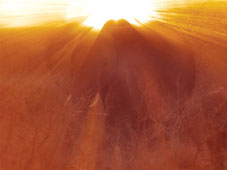
"SIGHT/SEEING" explores our relationship with notions of wilderness in a globalized era. Part dystopic travelogue and part wildlife documentary, the piece explores our relationship with the natural environment, based on received notions handed down by the mass media. Tourism has created a process of commoditization of the natural world, typified by the modern safari, based upon experience as spectacle, consumed through the lens of the domestic camcorder. The video explores a phenomenon where spectacle undermines experience, and seeing becomes secondary to recording. Increasingly absurd photographic defects and the behind-the-lens presence of the tourist move us towards a position where the romantic tourist gaze is made concrete in the recorded image; a world seen through an experiential filter that cannot be removed.
An artist working with video and digital imaging, Chris Oakley's concerns are focused on mediated experience in its many forms, including mainstream media, amateur photography, mass communications, and augmented reality. In a critical analogy to the methods employed by mass media, he utilises processes of fictionalizing material captured from life in an attempt to define a space between actuality and representation; the point at which the white noise of lived experience is made to conform to strict linear narrative. In the past 3 years, Oakley's works have received widespread media attention within Europe and beyond. His works have been shown alongside those of Tony Oursler, Jozef Robakowski, and Pipilotti Rist. His recent achievements have included exhibition at a number of major international media arts festivals and exhibitions; these include Transmediale .05 in Berlin; exhibition of work at the Museum of Contemporary Art, Los Angeles, and via video billboards on Sunset Strip; and a prize win at the Media Forum of the Moscow International Film Festival in 2005. He is also the first video artist to sell his work via Internet downloads.
Chris Oakley
The Catalogue
Art vidéo | dv | color | 5:42 | United Kingdom | 2004
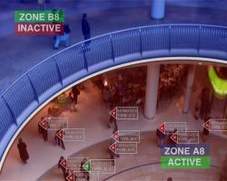
"The Catalogue" explores the codification of humanity on behalf of corporate entities within the consumer environment. As consumers, our lifestyles have become the object of corporate scrutiny. The loyalty card, RFID (Radio Frequency Identification) chip, and facial recognition software as means of corporate data harvesting have achieved real-time tracking capabilities. Data brokers can show where we are, what we are buying, and what our wants will be. The potential already exists to extend this data beyond our purchasing habits and lifestyle choices to our very fabric, with predictions of our future health prospects made en masse via analysis of the data from our weekly shop. The Catalogue offers an analogue to this process, forcing the viewer into the position of a remote and dispassionate agency, observing humanity as a series of units, whose value is defined by their spending capacity and future needs.
Chris Oakley?s concerns span the mass media, amateur photography, mass communications, data harvesting, and the influence of these disparate phenomena upon our behaviours, interactions, and our relationship with our bodies themselves. For Oakley, the domestic camcorder, the CCTV camera and the television documentary are seen as parallel phenomena; both provide a point of view representing a mediated world, a limited reality without veracity. In a critical analogy to the processes employed by elements of the mass media, he is fascinated by a process of fictionalising material captured from life, attempting to define the space between actuality and representation, the point at which the white noise of lived experience is made to conform to strict linear narrative. Influenced at an early stage by process art and the Structuralist and Materialist filmmakers in particular, he has developed a vocabulary combining a process-oriented approach with broader cultural references. Appropriating techniques from the television newsroom and film production and combining these with a vérité viewpoint, the process is as much about framing the viewer as the subject. In the past 2 years, Oakley?s works have received widespread media attention within Europe and beyond. His works have been shown alongside those of Tony Oursler, Jozef Robakowski, Kutlug Ataman and Pipilotti Rist. His recent achievements have included exhibition at a number of major international media arts festivals and exhibitions; these include the EXIT festival in Paris, Transmediale .05 in Berlin, exhibition of work at the Museum of Contemporary Art, Los Angeles and via video billboards on Sunset Strip, and a prize win at the Media Forum of the Moscow International Film Festival in 2005. Biography 1971 Born in Chester 1988 - 1990 North East Wales Institute 1990-93 School of Art & Design, University of Wolverhampton 1993-95 Kent Institute of Art & Design

Damir Ocko
The Dawn Chorus
Video | 4k | color | 17:43 | Croatia | 2023
"The Dawn Chorus" is an outbreak of birdsong at the start of a new day, depicted in the film as the inspiration for a dream-like gathering of the artists local queer community in Zagreb. This joyous celebration of queer bodies pays homage to the kingdom of birds through voguing, dancing, drag and costumes. It is a transposition that imagines the potential in the intersection between our own identities and the inclusive spaces that are open for other species. Filmed without the predictable popular electronic beats typically associated with ballroom, the film solely features the sounds of bodies in motion, the rhythmic impact of dancing, resounding percussive noises created by bodies, and chanting. These elements are accompanied by polyphonic sounds of birdsong onomatopoeias, sourced from ornithological manuals and sung by ”Le Zbor” a lesbian-antifascist choir from Zagreb accompanied by subtle gravity-like pedal tones played on Organ.
Damir Ocko (b. 1977, Zagreb) Graduate from the Academy of Fine Arts in Zagreb, O?ko has exhibited on solo exhibitions at Kunsthalle Krems, Museum of Contemporary Art Zagreb, Jeu de Paume, Paris, National Gallery in Prague, Museum of contemporary Art Bordeaux, Museo Amparo, Mexico, DAZIBAO, Montreal, Palais de Tokyo in Paris, Yvon Lambert Gallery in Paris, Künstlerhaus Halle für Kunst und Medien in Graz, Kunsthalle Dusseldorf, Temple Bar Gallery and Studios in Dublin, Kunstverein Leipzig among other places. He participated in numerous group exhibitions internationally with institutions such as, OFF Biennale Budapest, MUDAM in Luxembourg, FRAC le Plateau, Württembergischer Kunstverein Stuttgart, Kunsthalle Vienna, Louis Vuitton foundation among others. Damir O?ko represented Croatia in the 56th Venice Biennale with a solo exhibition "Studies on Shivering / The Third Degree. His works are included in many public and private collections such as FRAC le Plateau, Foundation Louis Vuitton, CNAP – Centre national des arts plastiques in Paris, MUDAM in Luxembourg and Museum of contemporary Art in Zagreb, among others.
Damir Ocko
The Boy with a magic Horn
Art vidéo | dv | color | 16:0 | Croatia | 2007
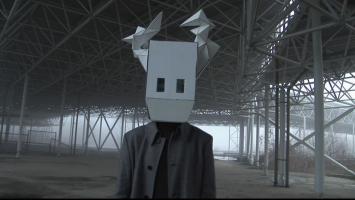
?Great dream was about to be built, But something happened while we were awakening.? Through the transition period Croatia has left behind one of the biggest projects ever to be built in this hemisphere, University hospital that would occupy almost 250000m2. Hospital was planed out in the late 70`s and was being built through the 80`s, but was never finished. Now days these empty halls, concrete walls, labyrinths of unmarked rooms and nature invading the whole environment might seem like random construction but the knowledge of what this place should be is twisting this reality into an almost melodramatic experience. Being stuck in the place and time, somewhere between what it was, what it should be and what it is. Romantic vision of transition brings us inside the ghost architecture and we participate in the journey thru adopted Wagnerian plot, where fiction fits into reality, changed and lost in a place where hero comes to late. Extracted from Wagner synopsis plot becomes a dreamy and hallucinogenic game that characters play in order to describe their new social and emotional displacement, a place that exist somewhere between hope and oblivion. But than again it is told that the magic horn has such an effect that one who hears it will believe almost anything.
Damir Očko was born in 1977 in Zagreb, Croatia and studied at the Academy of Fine Arts, Zagreb. He was a resident artist at Tirana Institute of contemporary art, Tirana, Albania and Kulturkontakt Vienna, Austria. He also received a Academie schloss solitude fellowship. He is working in diverse medias, like video, installation, site specific projects and music. His recent solo exhibitions include: Why does Gravity make things fall?, Tirana Institute of Contemporary Art, Tirana, Albania, The Missing Mountain, Barutana, Osijek, Croatia, Compositions, Museum of Contemporary Art, Zagreb, Croatia. Recent group exhibitions include: The post Cinema experience, Australian centre for photography, Sydney, Australia, New revelations, Spectrum project space, Perth, Australia, Heroes in Transition, Angel Row Gallery, Nottingham, UK, and 2WP at Art Point Gallery Vienna, among others. His films where recently screened at Chavoul cinema, Sydney, Australia, 52nd Venice Biennale as part of a video program selected by Edi Muka on the PS1&PAN boat and International center for culture Arbnori, Tirana, Albania among others. Currently he is living and working in Zagreb.
Damir Ocko
The Third Degree
Video | hdv | color | 10:30 | Croatia | 2015
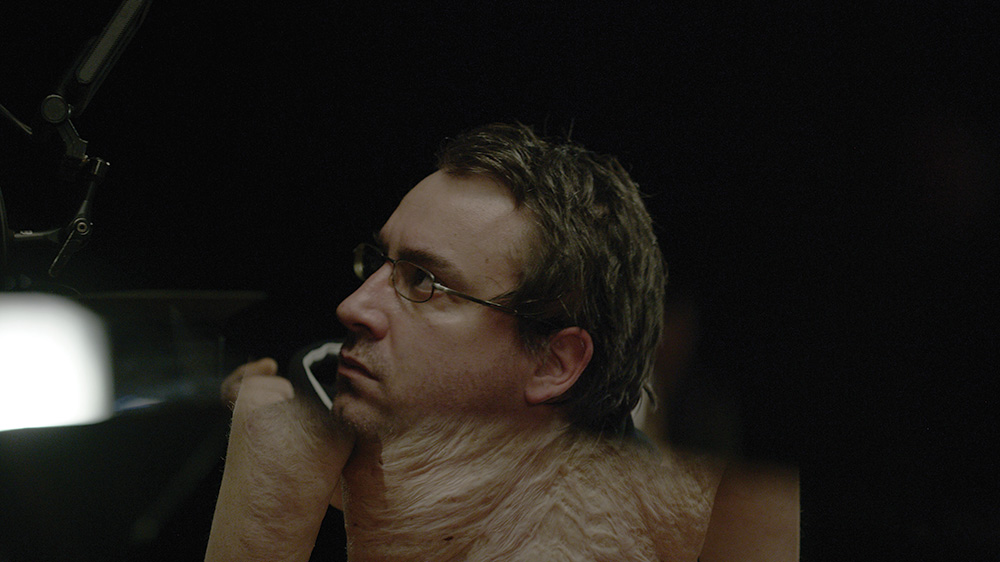
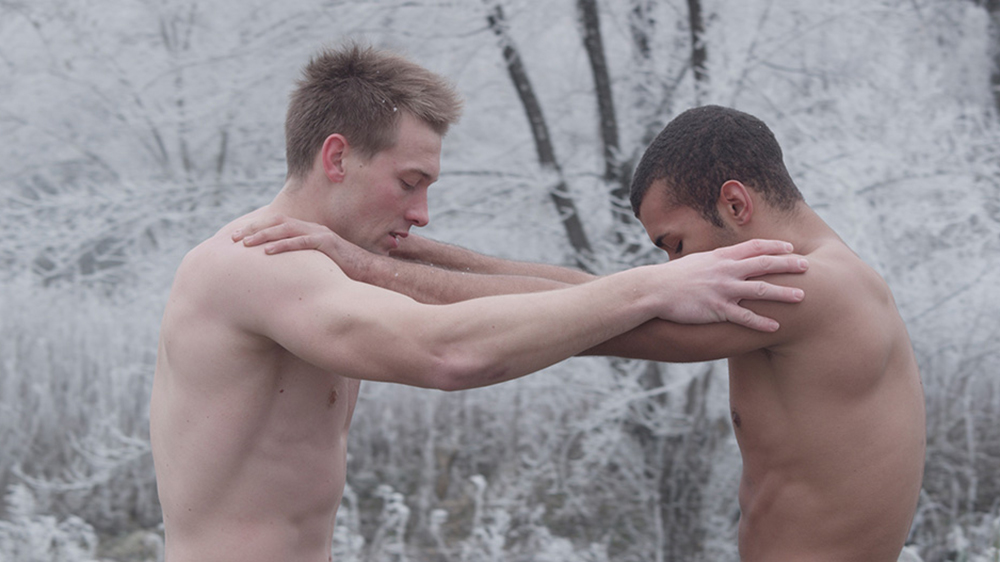
The Third Degree is a single scene film exploring a close-ups of skin scars resulting from third degree burns filmed through an installation of broken mirrors reflecting the crew and the whole background process while filming the scars, thus integrating the subject of the camera with the process of filming itself. The Third Degree was made as a response to questions that emerged due the particularly violent way the previous film TK was filmed. The term "Third Degree" has an ambiguous meaning in the English language: it is a way to classify a burn of a very strong degree, but it can also signify a process of extorting a confession under violence. Set in motion by such violent interpretations and perspectives, film tries to critically, yet poetically, cut through the collective haze that blurs relations between means of production, control and the subject itself, giving rise to alternative methods of understanding as a reflection determined at the same time by social, political and aesthetic parameters.
Damir Očko was born in 1977 in Zagreb, where he lives and works. A graduate from the Academy of Fine Arts in Zagreb. Očko has exhibited on solo exhibitions at DAZIBAO, Montreal, Palais de Tokyo in Paris, Künstlerhaus Halle für Kunst und Medien in Graz and Kunsthalle Dusseldorf, Temple Bar Gallery and Studios in Dublin among other places. He participated in numerous group exhibitions internationally with institutions such as, MUDAM in Luxembourg, FRAC le Plateau, Württembergischer Kunstverein Stuttgart, Germany, Kunsthalle Vienna, among others. His works can be found in the collections of Louis Vuitton Foundation for Creation and CNAP – Centre national des arts plastiques in Paris or at the MUDAM in Luxembourg. Damir Očko was representing Croatia in the 56th Venice Biennale with a solo exhibition "Studies on Shivering / The Third Degree.
Damir Ocko
TK
Experimental film | 4k | color | 19:46 | Croatia | 2015
Departing form an eight part poem the artist constructs a complex polyphonic work in which poetry meets movements, sounds, silences, bodies, and ¬endurability in order to project the ideas behind the work. Several topics constantly reoccurring through out the work are brought forward by a meticulously scored narration, in which pause and silence are equally important as the spoken or written word. Poem itself depicts on various images, starting as a morning song in which a question of a routine and a rotation turns the engine on for work to move towards more difficult imagery. People gather in dangerous constellations to act in violence, to observe silently, or to setup the false feeling of tranquillity which is constantly turned upside down by the various mechanisms of the film itself. Heavy things get stuck in the throat, stones used as tools and voices come to unrest.
Damir Očko (b. 1977, lives and works in Zagreb) is one of the most prominent Croatian artist of his generation. His videos, films, poetry and works on paper have been exhibited recently in Temple Bar Gallery in Dublin (2014), KM - Künstlerhaus Halle für Kunst & Medien in Graz (2014), Yvon Lambert gallery in Paris (2013), Palais de Tokyo in Paris (2012), Galleria Tiziana Di Caro in Salerno (2012), and Kunsthalle Dusseldorf (2011). He participated in numerous collective exhibitions with institutions such as MUDAM, Luxembourg, FRAC Le Plateau in Paris, Kunsthalle Wien, and Museum of Contemporary Art in Zagreb among others. His works are part of many public and private collections around the world.
Christoph Oertli
Cairo
Experimental video | dv | color | 11:0 | Switzerland | 2006
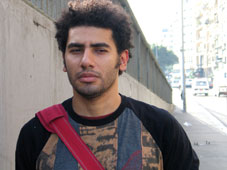
The video focuses on the paths walked in this city. The paths that everyone has to walk, for themselves, alone among the others. In real everyday life, this constitutes a dense and permanent displacement of the masses, so they can find housing and a job. People from Cairo have to find their way around in this huge city. The video shows a young man who is walking very slowly. He takes on nine different faces and his way covers a whole area of Cairo districts. All around him is noise and many other people. Then he suddenly finds himself alone, but continues to walk slowly, not giving attention to this fact. He comes across several solitary people with along his path.
Christoph Oertli was born in 1962*. He lives in Basel and Paris. His studies include graphic design Swiss television at HGK Zurich, and stage and audiovisual design at HGK Basel.