Catalogue > Search
Results for : Tout le catalogue

Arjuna Neuman
First Fugue
Video | hdv | color | 3:36 | Canada, USA | 2013
First Fugue is an experiment to find a way of putting documentary images together as if in a fugue like state. A fugue is a dissociative disorder like amnesia, although it also compels the subject to drift both in space and in identity. A fugue is caused by extremely traumatic events.
Arjuna Neuman was born on an airplane, that’s why he has two passports. He shows his work internationally with recent exhibitions in Germany at State of the Art and Haus Der Kunst der Welt; in Lebanon at Ashkal Alwan and Beirut Art Centre; in Canada at the Canadian Centre for Architecture and the Richmond Art Gallery; in France at Le Gaite Lyric; in Australia at Verge Gallery Sydney University; in Russia at the Moscow Museum; in USA at the Torrance Art Museum, Machine Projects and Human Resources amongst others. As a writer he has published articles in Relief Press, Into the Pines Press, The Journal for New Writing, VIA Press, Concord Press, Art Voices, and he is currently working on a text for E-Flux.com on the profit of smiling. Arjuna Neuman is based in Beirut and Los Angeles, where he founded the artist-run gallery and collective Concord.

Arjuna Neuman, Denise Ferreira da Silva
Soot Breath // Corpus Infinitum
Experimental doc. | 4k | color | 40:0 | Canada, USA | 2021
Soot Breath / Corpus Infinitum is a film dedicated to tenderness. It reproduces a radical sensibility learned from listening to the blues, from listening to skin, to heat, and from listening to echoes, listening itself. Soot Breath // Corpus Infinitum is a newly commissioned film and installation by Arjuna Neuman and Denise Ferreira da Silva. Against and instead of apprehension, it fosters an image of existence in which attention twins the gentleness of touch as recalled by haptic and sonic expressions.
Arjuna Neuman is an artist, filmmaker, and writer. As a writer he has published essays in Relief Press, Into the Pines Press, The Journal for New Writing, VIA Magazine, Concord, Art Voices, Flaunt, LEAP, Hearings Journal, and e- flux. He studied at California Institute of the Arts. He works with the essay form with a multi-perspectival and mobile approach where ‘essay’ is an inherently future-oriented and experimental mode, becoming the guiding principle for research and production, which shifts between the bodily, haptic, and affective through to the geopolitical, planetary and cosmological. Denise Ferreira da Silva is a practicing artist and an academic - Director and Professor at the Social Justice Institute-GRSJ at the University of British Columbia. She is the author of Toward a Global Idea of Race (2007), A Dívida Impagavel (2019), and co-editor of Race, Empire, and the Crisis of the Subprime (2013). Her several articles have been published in leading interdisciplinary journals, such as Social Text, Theory, Culture & Society, Social Identities, PhiloSOPHIA, Griffith Law Review, Theory & Event, The Black Scholar, to name a few. Her work addresses the ethico- political challenges of the global present. She is a member of several boards including Haus de Kulturen de Welt (Berlin), International Consortium for Critical Theory Programs and the journals Postmodern Culture, Social Identities, and Dark Matter.

Arjuna Neuman, Denise Ferreira da Silva
Ancestral Clouds Ancestral Claims
Experimental film | 4k | color | 49:0 | United Kingdom | 2023
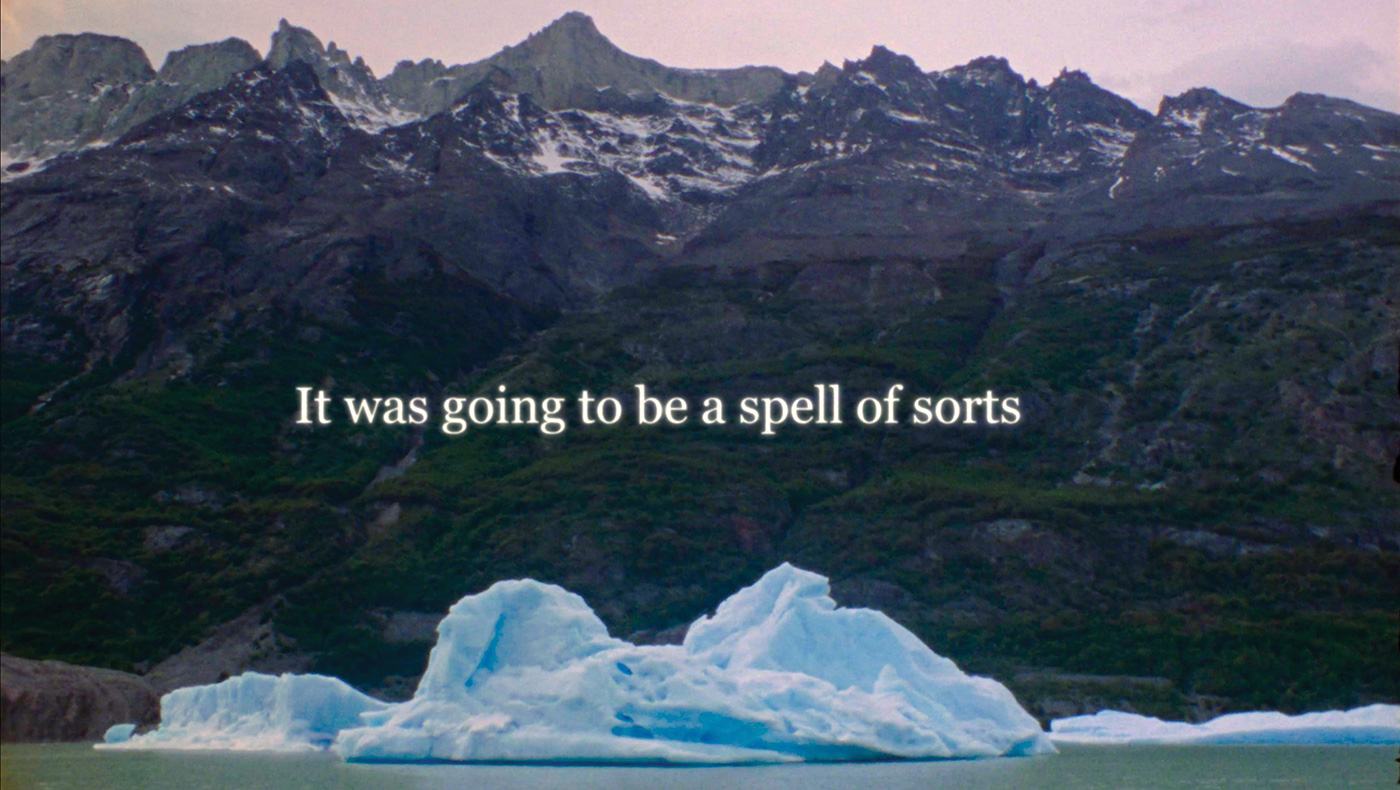
A speculative and poetic exploration of the entanglements and overlaps of historical events in the Atacama Desert (Chile), the film, told from the perspective of the wind, takes us on a visual journey, floating freely through the many sites and histories of the Atacama. Exploring some of the largest lithium mines in the world; hovering above the remnants of colonial labour camps reactivated under the Pinochet regime, and slipping inside the international observatory of the ALMA large array facility; Ferreira da Silva and Neuman’s camera uncovers material trajectories whose planetary scope and historical depths remain invisible to the many. By pointing at how these trajectories mutated and expanded into aspects of modern geopolitical issues, Ancestral Clouds Ancestral Claims, exposes pillars of western thought that sustain colonial legacies of inequality, racial exclusion and human extractivism while simultaneously proposing another worldview, one that is carried and echoed by the wind.
Arjuna Neuman is an artist, filmmaker, and writer and he is the co-founder of archiveofbelonging.org – a resource database for migrants and refugees. Neuman works with the essay as a guiding, multi-perspectival and inherently future-oriented form that underpins his experimental research and creative approach. As a writer he has published essays in Relief Press, The Journal for New Writing, VIA Magazine, Concord, Art Voices, Flaunt, LEAP, Hearings Journal, and e- flux. He studied at California Institute of the Arts. Denise Ferreira da Silva is an artist and philosopher. She currently is the Samuel Rudin Professor in the Humanities at the Department of Spanish and Portuguese Languages and Literatures, at NYU. Her artistic and academic work reflect and speculate on questions crucial to contemporary philosophy, political theory, black thought, feminist thought, and historical materialism. She is the author of Toward a Global Idea of Race (2007), Unpayable Debt (2022) amongst many other titles. Arjuna Neuman and Denise Ferreira da Silva’s collaboration includes the film Serpent Rain (2016), 4 Waters-Deep Implicancy (2018), Soot Breath//Corpus Infinitum (2020), Ancestral Clouds Ancestral Claims (2023). Their films have been exhibited at major art venues such as MACBA (Barcelona); Kunsthalle Wien (Vienna), the Pompidou Center (Paris), Whitechapel Gallery (London), The 56th Venice Biennale, The Haus Der Kulturen Der Welt (Berlin), Centre for Contemporary Art (Glasgow), and more. In Februrary 2024, they opened a retrospective of their work at the Munch Museum in Oslo; in May 2024 the Kunsthal Extra City in Antwerp opened a solo exhibition of their work. They have a forthcoming monograph published by Archive Books.
Arjuna Neuman
Promise
Experimental doc. | 16mm | color | 2:30 | Canada, Germany | 2025
What is the possibility, barbarism or folly of making art, poetry, film while a genocide is happening in front of our eyes?
Arjuna Neuman is an artist and writer. He has presented solo mid-career surveys at MACBA in Barcelona, Munch Museum in Oslo, and Belkin Gallery in Vancouver and forthcoming at Kunsthalle Bern. He has presented solo exhibitions at Kunsthalle Vienna; CCA Glasgow; Showroom Gallery, London; TPW Gallery, Toronto; Whitechapel Gallery, London; Istanbul Modern, Turkey; MAAT, Portugal amongst many others. He has participated in the Berlin Biennial, Sharjah Biennial, Bergen Assembly, the 56th Venice Biennial, Qalandia Biennial, Ural Industrial Biennial, Hacer Noche in Mexico and many other large group exhibitions. He has been included in film festivals such as Berlinale, Images Festival, Docsliboa, Third Horizon. In 2024 he won the Artist Moving Image prize at Les Rencontre International Festival; in 2024 he was a fellow at Villa Aurora and in 2022 a fellow at the Flaherty Seminar. His work is kept in the Belkin Collection, Kunsthalle Bern Collectors Circle; IAC Lyon and Platform UK. He has a forthcoming monograph published with Archive Books. As a writer, he has published essays in Relief Press, Into the Pines Press, The Journal for New Writing, VIA Magazine, Concord, Art Voices, Flaunt, LEAP, Hearings and e-flux. He is the founder of Archive of Belonging, a platform and resource list supporting migrants and refugees.

Ngee Ann Polytechnic
Yesterday's Play
Experimental film | 16mm | color | 5:0 | Singapore | 2006
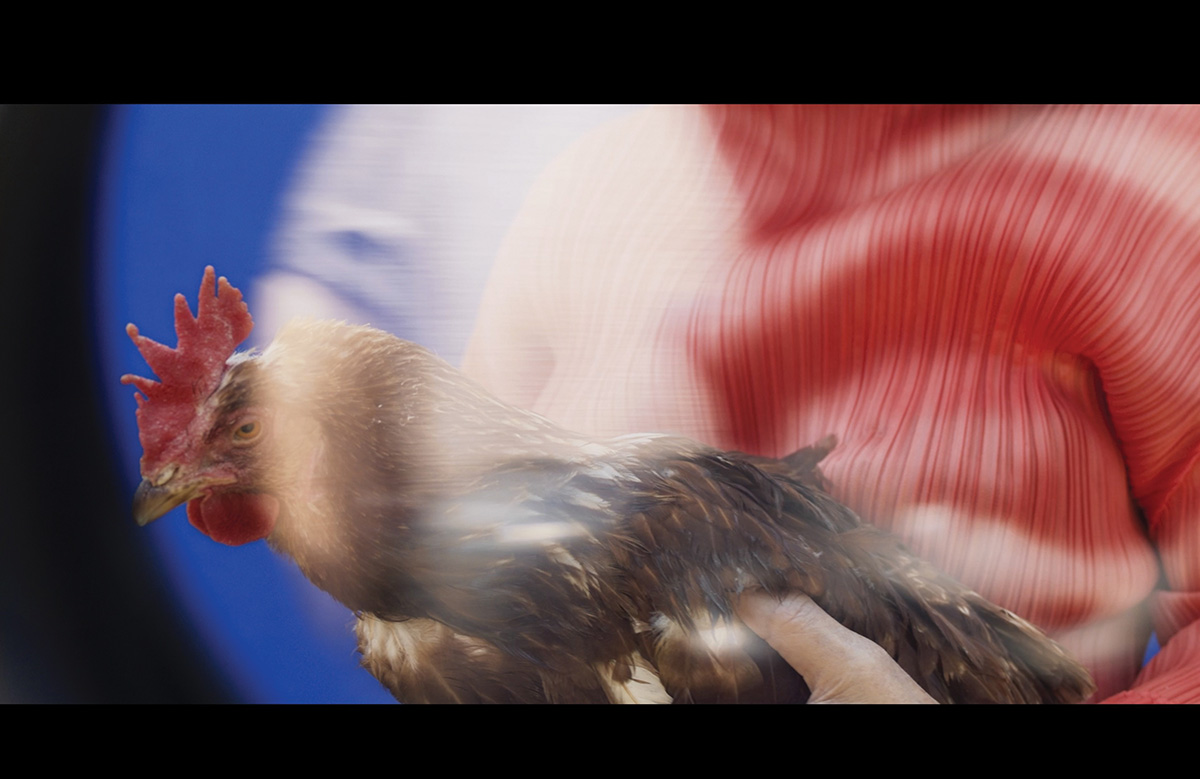
What if everyday was just a rehearsal for the next? Would you be satisfied with the way things are. You question the system, but does it work for you? Routines and worth. We battle that everyday
Thuy-han Nguyen-chi
Into The Violet Belly
Experimental fiction | 0 | color | 19:30 | Germany, Belgium | 2022
Thuy-Han Nguyen-Chi's film Into the Violet Belly is a striking work blending family lore, mythology, science fiction, and digital abstraction. The film captures the experimental collaboration between the artist and her mother, Thuyen Hoa, who survived a perilous sea journey while fleeing Vietnam after the end of the American War. The film oscillates seamlessly between multiple voices, visual registers, and timescales,—was it seven months or seven thousand years?—creating an image of multitudes: migrating bodies swimming in an infinite blue, depicted as both a massive digital swarm and tiny avatars.
Thuy-Han Nguyen-Chi is a Milky Way-based artist whose practice mutates in and out of film, sculpture, installation, performance, and interdisciplinary research. Her work explores the epistemological, aesthetic, and political possibilities of the moving image at the intersections of art and science, documentary and fiction, personal/prosthetic memory and individual/collective histories. Having studied Fine Arts at the Städelschule and Film at the School of the Art Institute of Chicago, she is currently pursuing PhD research in Film at the University of Westminster. Thuy-Han’s work has been presented in both the art and cinema context, including Akademie der Künste, Berlin; Atletika, Vilnius; Belvedere 21, Vienna; Centro di Musica Contemporanea di Milano, Milan; De Appel, Amsterdam; Gene Siskel Film Center, Chicago; Kunsthal Charlottenborg, Copenhagen; Kunsthall Trondheim, Trondheim; Museum für Moderne Kunst, Frankfurt; Museum of Contemporary Art and Design, Manila; Nottingham Contemporary, Nottingham; Sàn Art, Saigon; Villa Medici, Rome; Whitechapel Gallery, London; the 12th Berlin Biennale, Berlin; the 12th BlackStar Film Festival, Philadelphia; the 20th Copenhagen International Documentary Film Festival, Copenhagen; the 19th 25FPS International Experimental Film and Video Festival, Zagreb; the 60th New York Film Festival, New York; Rencontres Internationales, Paris; the 20th Reykjavík International Film Festival, Reykjavík; the 33rd Singapore International Film Festival, Singapore; among other spaces. She is working on her first feature-length film.

Nha San Collective
Dem ba muoi
Experimental fiction | hdv | color | 23:0 | Vietnam | 2023
Nhà Sàn Collective presents a new moving image work filmed at the residence of Mr. Manh Duc, a home in close proximity to the collective and their community of artist friends for many years. In this playground, a mystical world emerges; a cinema is reenacted. As the film unfolds, a river, a garden, spirits, wooden structures, people and objects appear, dissolve and reappear, as if they were characters morphing into one another. The film draws attention to cinematic transformation of physical and immaterial beings as a process of experiencing diverse forms of archives.
Nhà Sàn Collective (NSC) began operating as an independent artist collective in Hanoi in 2013, when a group of friends set up their publicly accessible space. With or without a physical base, NSC has worked with fellow companions and collaborators to organise exhibitions, workshops, film screenings, talks and other activities as a supporting platform for artists in the community. An initiative for exchanges, expansions and connections. A place that’s also open toward works-in- progress and the unexpected, a just-do-it attitude which doesn’t always yield answers. Some of the Collective's main projects, which have been held on numerous occasions, are Skylines With Flying People, IN:ACT Performance Art Festival, Queer Forever!, Emerging Artists programme, amongst others. The collective board consists of Tr??ng Qu? Chi, Nguy?n Ph??ng Linh, Nguy?n Qu?c Thành, V? ??c Toàn, and Tu?n Mami. In 2022, they participated in Documenta 15 curated by Ruangrupa with their invited artist friends. The name ‘Nhà Sàn’ signifies the Collective’s foundation which is rooted in the spirit of Nhà Sàn Studio, an artist-run space founded in 1998 in Hanoi. The original Nhà Sàn, a house on stilts, was taken apart in 2020. In the Ng?c Th?y area by the bank of the Red River, the artists imagine this house to become the new Nhà Sàn Collective space, rebuilt, and transformed.
Phill Niblock
Topolo PN
Art vidéo | dv | color | 11:50 | USA | 2005
Phill Niblock travaille entre autres avec la musique et le son, le cinéma, la photographie, la vidéo et les technologies informatiques. Il crée un bourdonnement dense, intense, dans lequel vibrent des microtons de timbres instrumentaux, qui induisent à leur tour un série d'autres sons sur le lieu de la performance. Il présente simultanément des films et des vidéos qui fixent le déroulement des gestes de personnes au travail, ou bien des images flottantes, dirigées par ordinateur et abstraites en noir et blanc. Phill Niblock est né en 1933dans l'Indiana, depuis le milieu des années 60 il fait de la musique et des performances intermédiaires qui ont été internationalement présentées et réalisées dans différents lieux et institutions, entre autres: The Museum of Modern Art; The Wadsworth Atheneum; the Kitchen; the Paris Autumn Festival; Palais des Beaux Arts, Bruxelles; Institute of Contemporary Art, London; Akademie der Künste, Berlin; ZKM; Carpenter Center for the Visual Arts at Harvard; World Music Institute at Merkin Hall NYC. Depuis 1985 il est directeur de la Experimental Intermedia Foundation à New York (www.experimentalintermedia.org), dont il est membre depuis 1968 comme artiste . Depuis 1973 il est producteur/organisateur de musique et de présentations intermédiales à l'EI (env. 1000 performances)et administrateur du label de l'EI XI. En 1993 il a été co-fondateur de l'Experimental Intermedia Organization à Gent, Belgique- EI v.z.w. Gent - qui offre à des artistes dans le cadre de résidences la possibilité de séjours de travail, mais apporte aussi son soutien à des installations intermédiaires. Des enregistrements de Phill Niblock sont sortis aux labels XI, Moikai und Touch. Un DVD de ses films et de sa musique est disponible chez Extreme. www.kunstradio.at

Charly Nijensohn
El exodo de los olvidados
Video | hdv | color | 9:50 | Argentina | 2011
Regions that remain inaccessible and deserts of ice that extend beyond sight. Geographies that have attracted the thought of explorers and navigators fascinated by the end of the world. Situated in the southern region of the Andes mountain range, the Patagonian Ice Fields represent the largest mass of ice in South America. The exodus of the forgotten explores the impulse that drives humans to leave everything behind to immerse themselves in an unknown territory. In their fascination for the abyss and the search for the unreachable, they are united in a strange act of intensity.

Charly Nijensohn
Patagonian Ice Fields
Video | hdv | color | 6:24 | Argentina, Germany | 2020
As everything stopped and the lockdown extended all over the planet, I dedicated myself to create new original music and review some historical works, with material that had been left out of the initial postproduction of the videos. In this way I approached again to the expedition in the Patagonian Ice Fields, a project that I made in collaboration with members of a rescue mountain team. Patagonia is dramatically affected by climate change and global warming. The glaciers are disappearing in front of our eyes. In this context, a group of persons find themselves lost in a labyrinth of ice. United and in solitude, they contemplate the collapse of their universe.
Charly Nijensohn (Buenos Aires, 1966) ist ein multidisziplinärer Künstler der in Berlin lebt und arbeitet. Seine künstlerische Arbeit ist vielschichtig. Nijensohn arbeitet an der Idee einer Konfrontation zwischen dem Menschsein und den natürlichen Kräften des Universums, die uns umgeben. Die Beziehung zwischen der menschlichen Figur und dem sie umgebenden Raum stellt einen Konflikt dar, der real und existenziell zugleich ist. Er vertrat Argentinien mit einer Einzelausstellung auf der 50. Biennale in Venedig. Nijensohns Arbeit wurde auf der BienalSur in Buenos Aires (2017) und der Mediations Biennale in Polen (2012) präsentiert. Er stellte auf der Valencia Biennale (2001) kuratiert von Peter Greenaway, der Singapur Biennale (2008) kuratiert von Fumio Nanjo und der Dojima River Biennale in Osaka (2009) aus. Er stellte auch auf vielen Festivals aus, darunter die Transmediale, Videobrasil in Sao Paulo, Rencontres Internationales im Haus der Kulturen der Welt (Berlin), Museo Nacional Centro de Arte Reina Sofia (Madrid) und Centre George Pompidou (Paris), Monitoring in Kassel, Visions of Nature, Kunst Haus Wien (2017/2018), Video Art in Latin America, States of Crisis, LAXART in Kalifornien (2017). Des Weiteren stellte er im Kröller-Müller Museum (Windflower, Perceptions of Nature, 2011) in Otterlo, Museum Morsbroich (Radical Shift) in Leverkusen, der Akademie der Künste (Realidad y Utopía, Argentiniens künstlerischer Weg in die Gegenwart, 2011) in Berlin, Whitechapel Gallery (2010) in London, Políticas de la diferencia im Museo de Arte Latinoamericano (MALBA) und Latin America: Video Views - Latin American Artist of the Twentieth Century, Museum of Modern Art (MOMA) in New York aus.

Charly Nijensohn
El ciclo de la intensidad
Video | 4k | color | 12:53 | Argentina, Bolivia | 2018

Nemanja Nikolic
Panic Book
Animation | hdv | black and white | 5:45 | Serbia | 2015
Panic Book is both a set of drawings and an animated video. The drawings are made on book pages. The books often come from the family library, and deal with the political and philosophical thought of Yugoslav socialism. The pages then become part of a reconstruction of cult sequences of Hitchcock movies: scenes of fear, panic or flight. This rereading of the legacy of Tito`s socialism that ended in a “cul de sac” is close to power-up mechanisms and disaster announcements used by the master of suspense
Born in 1987, Nikolic lives and works in Belgrade, Serbia. Graduated from the Faculty of Fine Arts (painting department) , currently in PhD, he received several prizes for drawing and a special prize for his mural installations. Initiator of U10 Art Space, a self-managed artist space, he was exhibited since 2007 in numerous solo and group shows in Serbia and abroad. In 2015 he was invited to Basel (List), Vienna (Parallel) and Paris (Cultural Center of Serbia). He is currently on show at Caixa Forum in Barcelona, Spain and Kunslerhaus in Vienna, Austria
Natacha Nisic
e
Experimental doc. | 0 | color | 20:0 | France | 2010
− e est le récit d`un voyage dans le nord du Japon à la recherche d`un territoire inaccessible : un territoire transformé, meurtri par un tremblement de terre d`intensité 6,7 sur l`échelle de Richter en juin 2008. La montagne déplacée, ouverte en quelques minutes par le choc violent des éléments, est une cicatrice ouverte d`une étrange beauté dont le sort reste indéterminé Cette cicatrice qui ne peut se refermer, reste un paysage d`une grande beauté, un grand canyon qui pourrait devenir un parc d`attraction, un « ecopark » qui attirerait les touristes, faisant de la catastrophe un argument de vente, .. − Nous survolons ce territoire, tentons d`y accéder malgré les barrages qui le clôturent. Ne peuvent y accéder que les camions des travailleurs à la reconstructions et les résidents reclus. Ceux qui ont vécu le tremblement de terre racontent et rejouent ces instants violents. Apprivoiser la catastrophe est une attitude culturelle japonaise. Si on ne peut apprivoiser le futur, on peut le prévenir.
Née en 1967 à Grenoble, Natacha Nisic poursuit des études d`art à l`ENSAD de Paris, et de cinéma à DFFB de Berlin et à la Femis. Son travail se situe à la frontière des différents supports de l`image en mouvement, Super 8, film et vidéo, mais aussi par la photographie et l`installation. Elle réalise de nombreuses expositions en France, Printemps de Cahors, Centre National de la Photographie, Le plateau-Frac Ile-de-France. Ses films ont été récemment présentés au Centre Georges Pompidou à Paris, K21, Düsseldorf, Metropolitan Museum of Photography, Tokyo, British Film Institute, Londres.
Natacha Nisic, en collaboration avec Ken Daimaru
Osoresan
Video | hdv | color | 17:15 | France, Japan | 2018
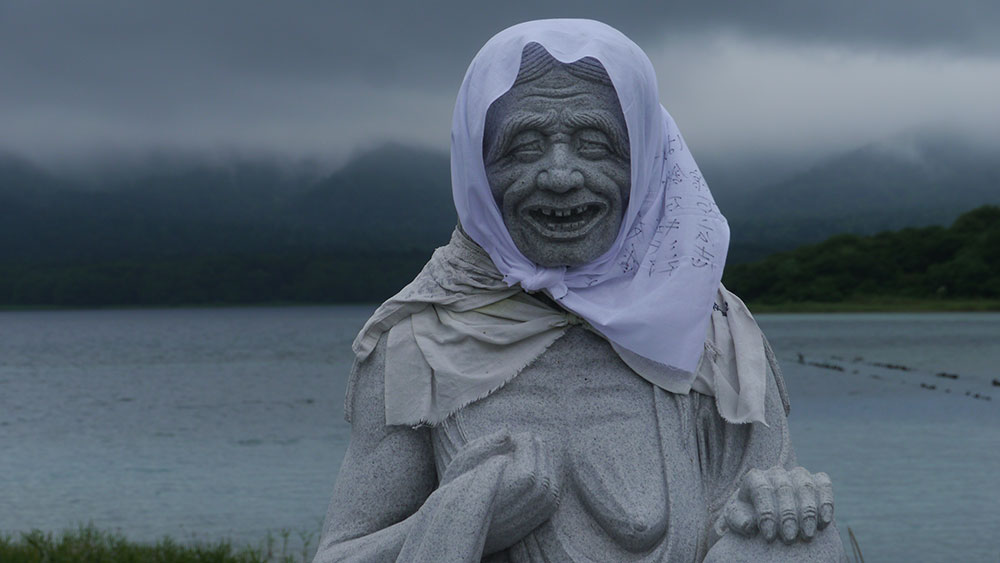
OSORESAN Natacha Nisic & Daimaru Ken 3 channels installation, stereo sound, 17’, 2018 The Itako are women who train to become spiritual mediums in Northeast region of Japan and to evoke departed spirits for the living seeking to communicate with the dead. Most of them have visual disabilities and learn language and rites to describe a rich spiritual world entirely through oral communication. Our first meeting wit Nakamura Take took place in Hachinohe city in Jully 2015. Fiming a blind person is a challenge, in one hand, we would see what she would never share with us, and on the other hand, it seems that she « sees » things that we aslo don’t see. We met her two times in 2015 and in 2017. Each sequence was very short between clients who were regularely knocking at her door. Those fragments of her life, moments of remembering songs, rites and legends were too short to build up a large portrait. They became elements of a constellation we wanted to draw : balancing her humility and modesty versus the huge scale of the desaster which happened not so far fom a living region. Her way to travel in unknown countries of dead and spirits, using a treasure of words, notes, incantation, has been guiding own journey into the landscapes revealing the traces of the post catastrophy. (imprégnant par ses paroles chacune de nos visions des paysages que nous traversions). She told us the legend of «Oshirasama», the founding tail for Itakos, a cruel story of a father, a beloved daughter and a horse. As we crossed the city of Soma, we remembered the Horse Festival organized by the city just one year after the disaster. The horses are still there, waiting. The desire to make peace with the dead motivates each one visiting an Itako. What could help us to make our own peace with the heritage of the post catastrophy ? What kind of political individual gestures could face the large scale of political environmental decisons ? We still have to deal wih nuclear threat. As a symbol of fear, the mount Osoresan, a lansdcape of ashes, smoke and dark water, responds to the hyptnotic beauty of the fragmentation of alpha an beta rays displayed at the Rokkasho PR Center. Fear, to be acclimated must show a fascinating face, as Itakos used to be represented ; stranges, unreachable and dangerous figures of women. Witches. We discovered a touching, smily, opened woman. We realized that Take Nakamura is a monument of Japan history. Very precious, rare and fragile. With participation of Take Nakamura and Itakos of Osorezan Cast: Satoko Abe, Fumie Kubota, Yohei Kobayashi, Kyoko Takenaka, Mika Shigemori
Bio Natacha: The work of Natacha Nisic explores the invisible, even magical relationship between images, words, ritual and memory. She interweaves links between stories, past and the present, to reveal the complexities of the relationship of what is shown and what is hidden, the spoken and the unspoken. Her work questions the nature of the image through various media: Super 8, 16MM, video, photography and drawing. In 2014, her highly acclaimed solo exhibition, Echo at the Jeu de Paume in Paris presented several installations created since 1995 and new works produced specifically for this show. She exhibits extensively around the world : recent shows include the Media City Biennale in Seoul (2016), Bienal de la Imagen en movement in Buenos Aires, Munfret in Buenos Aires (2016), Hermès Foundation in Seoul (2012), K21 in Düsseldorf (2011), Metropolitan Museum of Photography in Tokyo (2010), British Film Institute, London (2010), and the Centre Georges Pompidou, Paris (2009). Nisic has been awarded numerous grants and residencies including the Villa Kujoyama, Tokyo in 2001 and 2016 Gyeonngi Creation Center, South Korea (2010) and the Villa Medici, Rome in 2007. Education: Ecole Nationale Supérieure des Arts Décoratifs, Paris; Deutsche Film und Fernseh Akademie, Berlin; La Femis, Paris. Born Grenoble, France, 1967. Bio Ken: Ken Daimaru is a history researcher at the Ecole des hautes études en sciences sociales (Paris, France), and is the author of Between War Wounds and a War of Wounds (Mouvement social). Over the years, his researches have ranged from the social and cultural history of Japan in the late nineteenth and early twentieth centuries, to medical histories of military conflict between the Russo-Japanese war and the Second World war, focusing on the understanding of subjects “violence, the body, the suffering, the emotions” central to human experience. During 2011-2012, he wrote prolifically on question of health, emotional responses in the aftermath of 2011 Tohoku earthquake and tsunami. Daimaru was born in the city of Fukuoka. As a young child, he lived in Hiroshima, before moving to Brussels for high school. Since 2003, he lives in Paris.

Natacha Nisic
Le textile est mort mais les gens vivent encore
Experimental doc. | 16mm | color | 11:6 | France | 2008
Natacha Nisic
Saint-Désir l'Exil
Video | mov | color | 9:15 | France | 2020
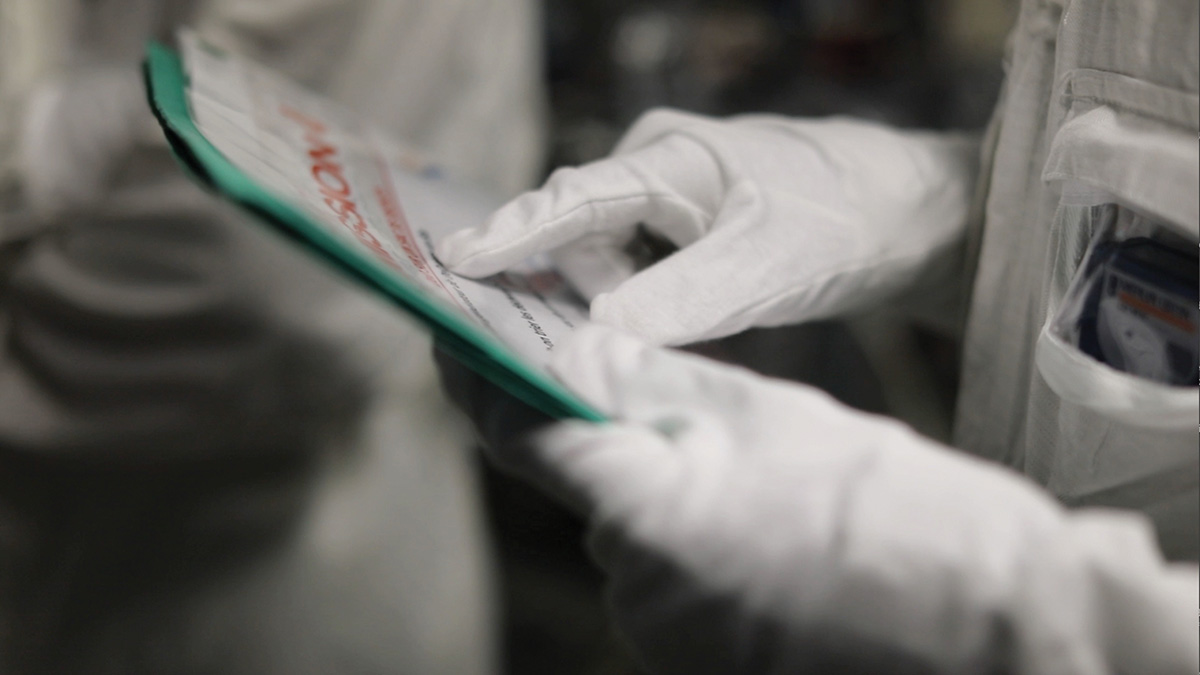
Au coeur de Saint-Désir l'Exil se trouve une piscine. Au coeur de la piscine se trouvent les corps nocifs. A côté de la piscine, ma maman vit ses derniers instants sous le soleil.
Natacha Nisic
Le textile est mort mais les gens vivent encore 1
Experimental doc. | super16 | color | 5:47 | France | 2009
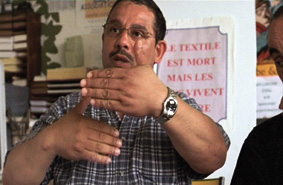
L`usine Desurmond à Tourcoing a fermé en 2004. C`était la dernière usine de filature de cette région. Les ouvriers se sont regroupés en association afin de faire valoir leurs droits et créer une communauté, au delà de la perte du travail. Les hommes puis les femmes ont reproduits la chaine et les gestes du travail à la chaine dans cette filature. Certains y ont travaillés en équipe de nuit pendant 35 ans.
Née en 1967. Ecole Nationale Supérieure des Arts Décoratifs de Paris, poursuit des études à la Deutsche Film und Fernseh Akademie de Berlin et à la Femis à Paris pour l`écriture de scénario. Elle réalise de nombreuses expositions et films où la question de l`image est mise en jeu. Elle utilise pour cela différents médiums : super 8, 16 mm, vidéo, photographie. Images fixes ou en mouvement fonctionnent comme substrat de la mémoire, mémoire tendue entre sa valeur de preuve et sa perte. Les différentes expositions personnelles comme au Plateau, Frac île de France, puis au musée Zadkine à Paris, sont des autant de prises de positions sur le statut des images et les possibles de la représentation.Ces oeuvres ont été montrées dans de nombreux pays, Allemagne, Espagne, Japon, Corée, canada, Argentine... Ses films sont diffusés sur Arte et au Centre Georges Pompidou à Paris. Pensionnaire de la Villa Kujoyama (2001) et Villa médicis (2007).
Natacha Nisic
Le textile est mort mais les gens vivent encore 2
Experimental doc. | super16 | color | 5:20 | France | 2009
voir ouvrier 1
Voir ouvrier 1
Natacha Nisic
Et n'être que brume
Experimental film | 0 | color | 15:0 | France | 2023
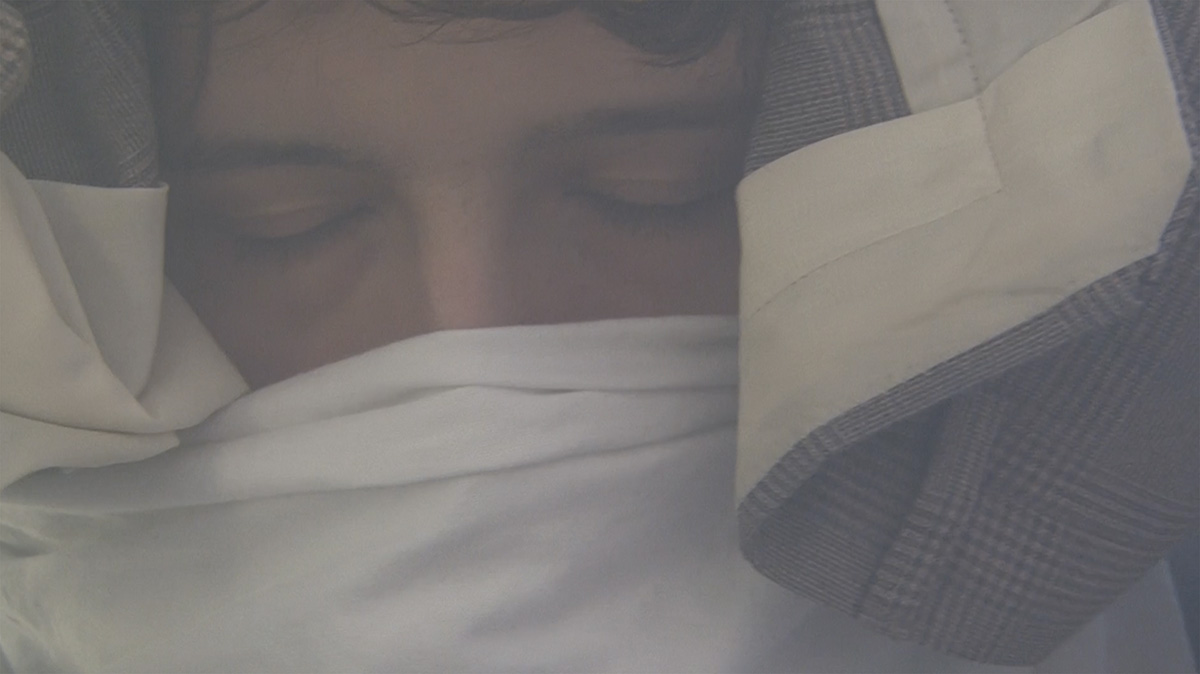
Dans la tour de la ville de Malakoff "Et n’être que brume » met en place le cadre expérimental d’une improvisation.Plongés dans les brumes, les êtres se révèlent. L’écran de la fumée permet une libération des affects car au sein du brouillard se logent les souvenirs, les torpeurs et les désirs. Le film est en hommage à la Crimée annexée depuis 2014 par la Russie.

Rossella Nisio
The Silent Ray
Video | hdv | color | 18:1 | Italy, Netherlands | 2019
The man’s presence lingers in the room that for years served as his study. Present and past intertwine as he follows threads of his memory and recalls events from the time of his participation in the colonial war against Ethiopia in 1935-36.
Rossella Nisio [IT] is a visual artist based in Rotterdam whose work has a strong focus on notions of memory, imagination and space. She has a background in the theory of cinema and performing arts; she pursued her practical training first within the field of documentary photography, eventually moving towards a more autonomous approach to still and moving image-making. She completed the advanced photography studies in Ar.Co in Lisbon in 2017 and earned an MA in Fine Art and Design at the Piet Zwart Institute in Rotterdam in 2019.
Barbara Noiret
C'est-à-dire
Art vidéo | dv | color | 4:30 | France | 2005
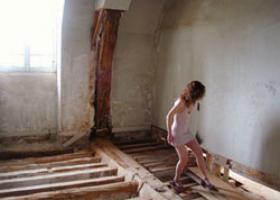
?Time of each session, something happens to the almost still things that are represented by these images. Someone comes, moves, upsets, or modifies a very precise point of the frame in order to do a precise use of the place ? fastidious exploration or just by standing. In that precise point of these minimalist narrations, the video is a photography that last long.? Eléonore Espargillière
I?m born in 1976 and I live and work in Paris. The Gallery Frédéric Giroux exhibits my work since the group exhibition ?Le Corps en Perspective? where I was invited in 2004. The gallery permitted me to do a solo exhibition in May and June 2005 and made take part in many contemporary art venues: Artissma, Turin, Italia, FIAC 2004 and 2005, Paris. I realized exhibitions and residence projects in two contemporary art centre: the Domaine Kerguéhennec, Bigan, France, where I presented at the end of the 3 month residence a personal project, the space of the image in he disused places of the caste (2000). The Domaine Départemental de Chamarande invited me this year to realize and photographic and video work around the memory of the castle in the estate. Some works, especially videos, where shown in the framework of the ?Journées du Patrimoine? in September 2005. The Fond National d?Art Contemporain just bought two pictures done in the Domaine de Chamarande. I exposed in Germany, in Bremen, at the Music School, Hochschule für Künste Bremen. The school invited me to take part in the presentation of students? works. I realized there a video in situ especially for the occasion. Regarding other venues, the Institut Marcel Rivière, a psychiatric hospital located in the Verrière, France, let for my use currently a disused pavilion for two years. My project is to work in the different spaces of the hospital in relation with patients and doctors. In this project framework I just received the individual creation scholarship form the DRAC Ile-de-France. I did a short residence in La Casa de Velasquez, Madrid, Spain, in the framework of a project of in Escenario staging ?Identité et Image de David Ferré?. I tool part as photographer director of the project in 2001. I obtained my Diplôme National Supérieur d?Expression Plastique with jury honours at the Beaux-Art of Anger in 2000 and my Diplôme National d?Art Plastique with honours at the Ecole Superieure des Beaux-Arts of Le Man in 1998.