Catalogue > Search
Results for : Tout le catalogue
Xenia Lesniewski
GERADE AUS
Experimental video | dv | color | 2:0 | Germany | 2007
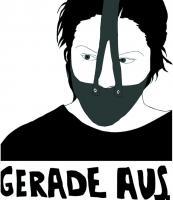
xenia yvon lesniewski GERADE AUS Die künstlerin stellt eine schwarzweiss animation mit dem titel ?gerade aus? vor. zeichnungen sind der ausgangspunkt von xenia yvon lesniewskis arbeit, welche sie dann in stilistische animationen überträgt. kurze szenen werden durch ein flimmern ineinander übergeleitet. szenen, in denen zum beispiel eine mit einem maulkorb versehene, der künstlerin stark ähnelnde person, nach luft schnappt oder in einer unterwürfigen pose auf dem boden liegt. fetisch und sadomasochismus werden in ihrer arbeit thematisiert, gefühle plakativ und direkt wiedergegeben. ?der betrachter ist ein teil meiner arbeit.? dem zuschauer werden innere verlassene landschaften vor augen geführt. man erhält unweigerlich einen offenen blick in eine innere folterkammer. für die künstlerin handelt es sich hierbei um eine sehr intime arbeit ?die grenzen zwischen realität und fiktion verschmelzen. ein zwischenraum entsteht und zwar ? GERADE AUS.? der eingeschobene text gibt hinweise und lenkt den betrachter. der abstrakte sound der arbeit nimmt unmittelbar einfluss auf seine befindlichkeit. aus dieser fragmentierung von bild, text und ton resultiert eine provokative und kompromisslose aussage über die erfahrung von kunst und wirklichkeit. text anna kalinski
biografie xenia yvon lesniewski xenia yvon lesniewski geboren 1985 in frankfurt, deutschland: bildende künstlerin; studiert seit 2005 an der hochschule für gestaltung offenbach freie kunst mit dem schwerpunkt malerei und neue medien. malerei prof. adam jankowski freies zeichnen/film prof. mariola brillowska experimentelle raumgestaltung prof. heiner blum warum sie etwas tut? alles immer nur mittel zum zweck. aber sie hätte sich auch auf die zunge beissen können, sie hat eine schöne, gesunde zunge - rot von blut.

Xenia Lesniewski
Remisequenz
Animation | dv | color | 2:23 | Germany | 2010
Das Fehlen eines konkreten Bildes. Autobiografische Bruchstücke zwischen Fiktion und Realität vereint zu konstruierten Erinnerungssequenzen und endlosen Variationen davon. Das Gegenteil des Vergessens. Aber was ist wirklich passiert? Es gibt nur die eine Wahrheit. Die eigene. Entscheidungen trifft man, weil man sie treffen muss.
1985 in Frankfurt am Main geboren, seit 2005 Studium der freien Kunst an der Hochschule für Gestaltung Offenbach mit dem Schwerpunkt Malerei und neue Medien und seit 2010 Studium der Malerei, Animation und Tapisserie in der Klasse von Judith Eisler an der Universität für Angewandte Kunst Wien. Ihre Videoarbeiten wurden bereits bei vielen nationalen und internationalen Filmfestivals wie z.B. den Kurzfilmtagen Oberhausen, der Kunstfilmbiennale Köln/Bonn oder den Rencontre Internationales Paris/Berlin/Madrid gezeigt.2008 erhielt Xenia Lesniewski den ?3 Sat Förderpreis? bei den Internationalen Kurzfilmtagen Oberhausen sowie das Stipendium der Deutschen Studienstiftung. 2009 gewann ihre Arbeit EGODYSTON den "Movies and Stills" Award der Videor Art Foundation sowie den zweiten Muvi-Preis bei den Internationalen Kurzfilmtagen Oberhausen. 2010 erhielt sie beim Internationalen Filmfest Dresden den Drematrix Förderpreis. Ebenso nahm Lesniewski an zahlreichen Ausstellungsprojekten sowie weiteren internationalen Film- und Medienkunstfestivals teil.
Xenia Lesniewski
SUPERSENSIBEL
Art vidéo | dv | color | 2:30 | Germany | 2008
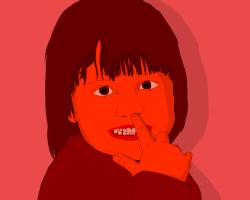
Children´s excrement anal-yzed between sodomy and fear of death. The video ?Supersensibel? of Xenia Yvon Lesniewski is a provocative animation which deals with sex, eroticism, obscenity and individual fear. A daring representation of the polymorphic sexuality accompanied by phrases and noises in the form of riddles which give the film an infectious energy.
Xenia Yvon Lesniewski was born in 1985 in Frankfurt; she has been studying since 2005 at the School of Realization of Offenbach specializing in Painting and New Media (communications).
Isabelle Levenez
animaux domestiques
Art vidéo | dv | color | 4:0 | France | 2006
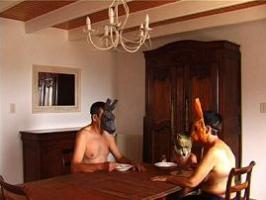
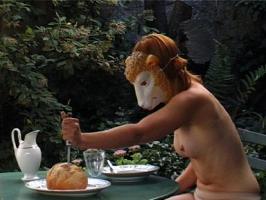
Depuis 1991 et à travers ses vidéos, dessins ou photographies, Isabelle Lévénez révèle le mal être de l`individu ou son inquiétude identitaire dans sa dimension cachée sans que le dysfonctionnement mental ne soit jamais mis en avant.Les vidéos de la serie animaux domestiques forment pour elle, une seule et même ?uvre considérée à des stades différents de sa conscience du monde. Elle s`interroge ici sur la dualité humaine, déchirée entre pulsion animale et respect de la loi. Ces vidéo montrent le corps de personnages dénudés portant un masque (lapin, loup, âne, mouton?) Les protagonistes sont souvent silencieux, par exemple en partageant un repas qui se termine par un cri proche de celui d?un animal. La caméra abandonnée à elle-même en plan fixe construit une image anonyme et saisit sans émotion le cours indistinct du temps qui s?écoule. Dans le fragment de ce cadre, un univers hybride, humain/animal, semble évoluer, monologuer et construire de toutes pièces une mise en scène imaginaire. Les visages recouverts d?un masque d?animaux nous renvoient à la construction d?un système où désir, violence et pulsions rencontrent la morale d?un monde codifié. Cette violence ne fait jamais l`objet d`une quelconque fascination, elle n`est pour l`artiste que le reflet du monde dans lequel elle vit.
Isabelle Levenez est née à Nantes en 1970. Artiste enseignante à l`école des Beaux arts d`Angers, elle se considère comme une artiste multimédia, c`est à dire qu`elle passe d`une production de dessin à une réalisation d`installation vidéo ou de photographie numérique. Entre réalité et fiction son travail ne cesse d`interroger l`individu. Son travail a été montré dans de nombreuses expositions individuelles et collectives, notamment à la galerie Anton Weller, à LOOP Barcelone , au CCC de Tours, à l?Abbaye du Ronceray, Angers, au Musée de Grenoble, à l?ARCO, au Musée National des Beaux Arts de Lettonie à Riga, à la National Art Gallery à Sofia, dans plusieurs Instituts Français à l?étranger : à Barcelone, Budapest, Cologne, Berlin. Elle a également exposé au Palais de Tokyo, Paris, au Musée Péra d?Istambul, au Musée Benaki, Athènes, au Musée Zadkine à Paris, à l?Orangerie du Sénat et Jardin du Luxembourg, Paris, au Musée des Beaux arts de Tourcoing, au Lieu unique à Nantes, au Musée d`art contemporain de Milan. Son travail fait partie des collections du FNAC et de plusieurs FRAC. Elle a obtenu la bourse de la villa Médicis hors les murs à Los Angeles.
Isabelle Levenez
A mort la mer
Art vidéo | dv | black and white | 5:0 | France | 2008
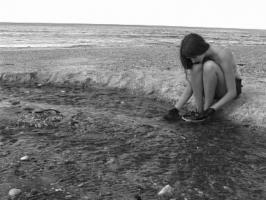
Je m`interroge ici sur la dualité humaine, déchirée entre pulsion de mort et respect de l'environnement. Ainsi la vidéo, qui a pour titre " à mort la mer" montre des images en Noir et Blanc d`un paysage marin. La jeune fille filmée au bord de la mer, la présence du vent,un bateau échoué au milieu d`un champ créent une atmosphère étrange, ou temps, espace et mouvement sont modifiés. La caméra abandonnée à elle-même en plan fixe construit une image anonyme et saisit sans émotion le cours indistinct du temps qui s?écoule. Dans le fragment de ce cadre, un univers suréaliste semble évoluer, monologuer et construire de toutes pièces une mise en scène imaginaire. La jeune fille les mains tachées de goudron manipule un poisson dans l`eau, joue t `elle ? , est ce qu`elle le lave de son jus noir ? avant de finir triomphante sur son bateau échoué brandissant son trophée à la main: un poisson vierge de toute pollution!
Isabelle Lévénez (1970) vit et travaille entre Trélazé (49) et Paris. Elle est représentée par la Galerie Aeroplastic à Bruxelles. Depuis 1995 Isabelle Lévénez a effectué plusieurs séjours à l`étranger au cours desquels son travail a été exposé: New York, Milan,Barcelone, Madrid, Berlin, Moscou, Tokyo, Budapest, Prague, Amsterdam, Rotterdam, Ottawa, Reykjavik.... En 2001, elle a obtenu la bourse de la Villa Médicis hors les murs (Los Angeles). Différents lieux en France (musées, centres d`art, Fracs...) lui ont consacré des expositions personnelles et collectives notamment: Le centre d`art de Meymac (2007),Musée de Grenoble (2007), Le Palais de Tokyo (2006),Le lieu Unique, Nantes (2004),Le Centre d`art de St Fons (2002), Le Frac Haute Normandie ( 2002), Le rac Alsace (2000), La Fondation Guerlain, Paris (1999), La Box, Bourges (1997)...
Isabelle Levenez
Animaux domestiques, le pain
Art vidéo | dv | color | 3:0 | France | 2006
Depuis 1991 et à travers ses vidéos, dessins ou photographies, Isabelle Lévénez révèle le mal être de l`individu ou son inquiétude identitaire dans sa dimension cachée sans que le dysfonctionnement mental ne soit jamais mis en avant.Les vidéos de la serie animaux domestiques forment pour elle, une seule et même ?uvre considérée à des stades différents de sa conscience du monde. Elle s`interroge ici sur la dualité humaine, déchirée entre pulsion animale et respect de la loi. Ainsi les vidéos ayant pour titre de série "Animaux domestiques", montrent le corps de personnages dénudés portant un masque (lapin, loup, âne, mouton?) Les protagonistes sont souvent silencieux, par exemple en partageant un repas qui se termine par un cri proche de celui d?un animal. La caméra abandonnée à elle-même en plan fixe construit une image anonyme et saisit sans émotion le cours indistinct du temps qui s?écoule. Dans le fragment de ce cadre, un univers hybride, humain/animal, semble évoluer, monologuer et construire de toutes pièces une mise en scène imaginaire. Les visages recouverts d?un masque d?animaux nous renvoient à la construction d?un système où désir, violence et pulsions rencontrent la morale d?un monde codifié. Cette violence ne fait jamais l`objet d`une quelconque fascination, elle n`est pour l`artiste que le reflet du monde dans lequel elle vit.
Isabelle Levenez est née à Nantes en 1970. Artiste enseignante à l`école des Beaux arts d`Angers, elle se considère comme une artiste multimédia, c`est à dire qu`elle passe d`une production de dessin à une réalisation d`installation vidéo ou de photographie numérique. Entre réalité et fiction son travail ne cesse d`interroger l`individu. Son travail a été montré dans de nombreuses expositions individuelles et collectives, notamment à la galerie Anton Weller, à LOOP Barcelone , au CCC de Tours, à l?Abbaye du Ronceray, Angers, au Musée de Grenoble, à l?ARCO, au Musée National des Beaux Arts de Lettonie à Riga, à la National Art Gallery à Sofia, dans plusieurs Instituts Français à l?étranger : à Barcelone, Budapest, Cologne, Berlin. Elle a également exposé au Palais de Tokyo, Paris, au Musée Péra d?Istambul, au Musée Benaki, Athènes, au Musée Zadkine à Paris, à l?Orangerie du Sénat et Jardin du Luxembourg, Paris, au Musée des Beaux arts de Tourcoing, au Lieu unique à Nantes, au Musée d`art contemporain de Milan. Son travail fait partie des collections du FNAC et de plusieurs FRAC. Elle a obtenu la bourse de la villa Médicis hors les murs à Los Angeles.
Isabelle Levenez
Espace de confidentialité
Video | dv | color | 2:47 | France, Morocco | 2010
La vidéo met en scène le corps de personnages dénudés filmé en caméra infra rouge semblant errer dans un espace vert, enveloppés de silence. Les corps se heurtent, se touchent, se bousculent. La caméra abandonnée à elle-même en plan fixe construit une image anonyme et saisit sans émotion le cours indistinct du temps qui s?écoule. Dans le fragment de ce cadre, entre violence et douceur les hommes semblent monologuer et construire de toutes pièces une mise en scène imaginaire.
Isabelle Lévénez aime à manier les contraires et l?ambiguïté. Les images, les titres de ses ?uvres, les phrases qu?elle écrit sont autant de jeux d?ombres et de lumières qui définissent la posture générale de l?artiste, développé par les multiples pièces de son travail tournant autour du thème du secret », nous proposant une réalité fragmentée, un jeu entre innocence rêves et fantasmes, entre douceur et violence. Biographie : Isabelle Lévénez Après des Etudes à l?école des Beaux Arts de Nantes elle décide de s?installer à Paris ou elle obtient en 1997 un DU en psychopédagodie à l?université paris V. En 1994 elle est sélectionnée pour le master de l?institut des Hautes études en arts plastiques crée par Pontus Hulten. En 1995 elle effectue un master multi média aux Arts et métiers à Paris. Depuis 1995 Isabelle Lévénez a effectué plusieurs séjours à l?étranger au cours desquels son travail a été exposé : New York, Milan, Madrid, Berlin, Moscou, Bratislava, Budapest, Prague, Amsterdam, Rotterdam, Ottawa, Nagoya, Reykjavik, Athènes, Riga, Barcelone, Istambul, Sofia. En 2001, elle a obtenu la bourse de la Villa Médicis hors les murs à Los Angeles. Différents lieux en France et à l?étranger (Musées, Centres d?art, Fracs, Galeries?) lui ont consacré des expositions personnelles et collectives , notamment
Les Leveque
Communists Like Us
Experimental video | dv | black and white | 3:28 | USA | 2010
Communists Like Us is an ambient music video made from a few seconds of archival footage of Mao Zedong applauding and members of the Red Guard chanting. The title Communists Like Us was taken from the 1985 text of the same name written by Felix Guattari and Toni Negri.
Les LeVeque received an MFA in Video Research from the Department of Art Media Studies at Syracuse University. He is a Visiting Associate Professor in Film and Electronic Media at Bard College and co-Chair of the Film/Video program in the Milton Avery Graduate School of the Arts. His work has been exhibited internationally including 2000 Whitney Biennial, Georges Pompidou Center, Museum fur Neue Kunst ZKM, Australian Centre for the Moving Image, Museo de Arte Moderno Buenos Aires, Laboratorio Arte Alameda, Centre Culturel et de Cooperation Linguistique Bilbao, Pacific Film Archive, Palm Beach Institute of Contemporary Art, The Hammer Museum and The New Museum of Contemporary Art. Festival screenings of his work include Transmediale Berlin, San Francisco International Film Festival, and Sundance Film Festival. The Video Data Bank distributes his single channel video work. He is represented by KS Art in New York City.
Les Leveque
Dramatically Repeating Lawrence of Arabia
Experimental video | dv | color | 14:43 | USA | 2004
Dramatically Repeating Lawrence of Arabia is a re-edit of David Lean?s orientalist ?classic? Lawrence of Arabia into a dissonant hallucination of repeating masculinized poses, costumes and dramatic gestures.
Over the last decade Les LeVeque has produced works in video where algorithmic editing structures are applied to a variety of mass cultural media forms, from Hollywood films, advertising, presidential broadcasts and publicly televised hearings. These works employ a misuse of persistence of vision and the phi phenomenon to generate sensuous hallucinations, which activate an aleatory space between images.
Les Leveque
Nine Hamlet RGB
Video | hdv | color | 5:55 | USA | 2015
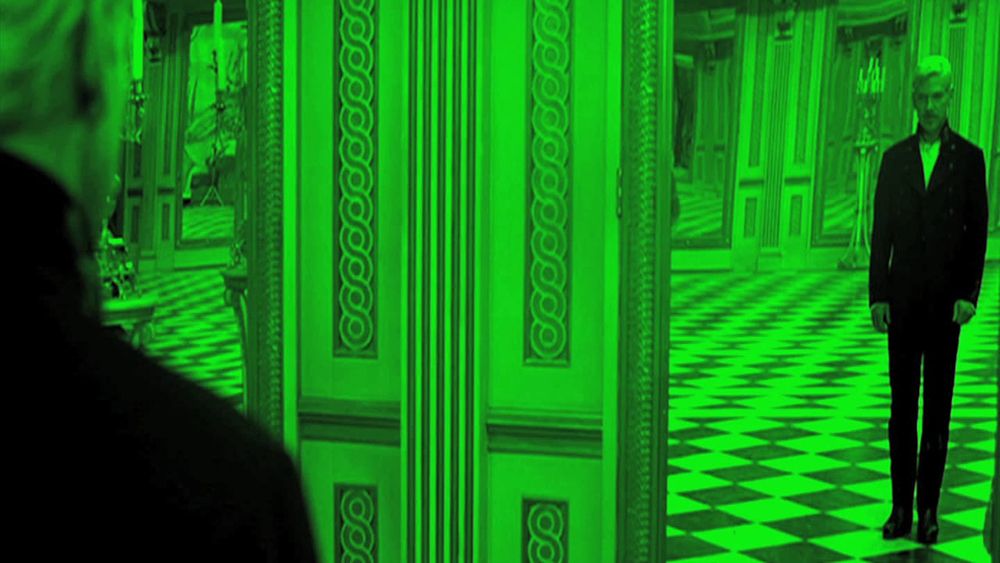
Nine Hamlet RGB engages a simple algorithm to destabilize the timing of the red, green and blue frame sequential display system while incorporating fragmented, appropriated “to be or not to be” excerpts from nine Hamlet films. The audio is the synced sound from the appropriated excerpts laced with low frequency binaural tonal pulsations. The physicality of the constructed optical and aural experience is seeking a mechanism of unconscious disarticulation. The ghosting of colors, evanesent Hamlets, and somatic tones are looking for a “dream-work” that can be ciphered, displaced, or not.
Les LeVeque works with digital and analog electronic technology. His projects include single and multi-channel videos and video/computer based installations. His projects have been exhibited and screened internationally. Video Data Bank distributes his single-channel video work. He is represented by Kerry Schuss Gallery in New York City.
Les Leveque
stammering forward backward GIANT
Experimental video | dv | color | 17:0 | USA | 2008
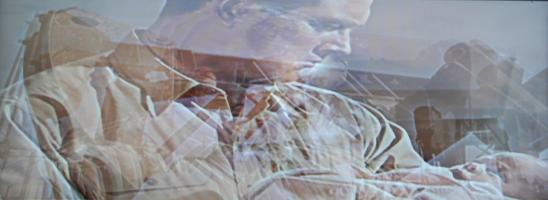
stammering forward backward GIANT is a re-edit of George Stevens? 1956 film Giant - an epic story of Texas, oil and racism. Condensed to 17 minutes and beginning in the middle stammering forward backward GIANT implements improvisational percussive frame by frame editing structures to simultaneously unwind the film to the conclusion of beginning and end.
Les LeVeque is an electronic media artist who lives in New York City. His work has been exhibited in internationally including 2000 Whitney Biennial, Georges Pompidou Center, Museum fur Neue Kunst ZKM, Australian Centre for the Moving Image, Museo de Arte Moderno Buenos Aires, Laboratorio Arte Alameda, Centre Culturel et de Cooperation Linguistique Bilbao, Pacific Film Archive, Palm Beach Institute of Contemporary Art, The Hammer Museum and The New Museum of Contemporary Art. Festival screenings of his work include Transmediale Berlin, San Francisco International Film Festival, and Sundance Film Festival. The Video Data Bank distributes his single channel video work. He is also represented by KS Art in New York City.
Boaz Levin, Adam Kaplan
Last Person Shooter
Video | hdv | color | 11:42 | France | 2014
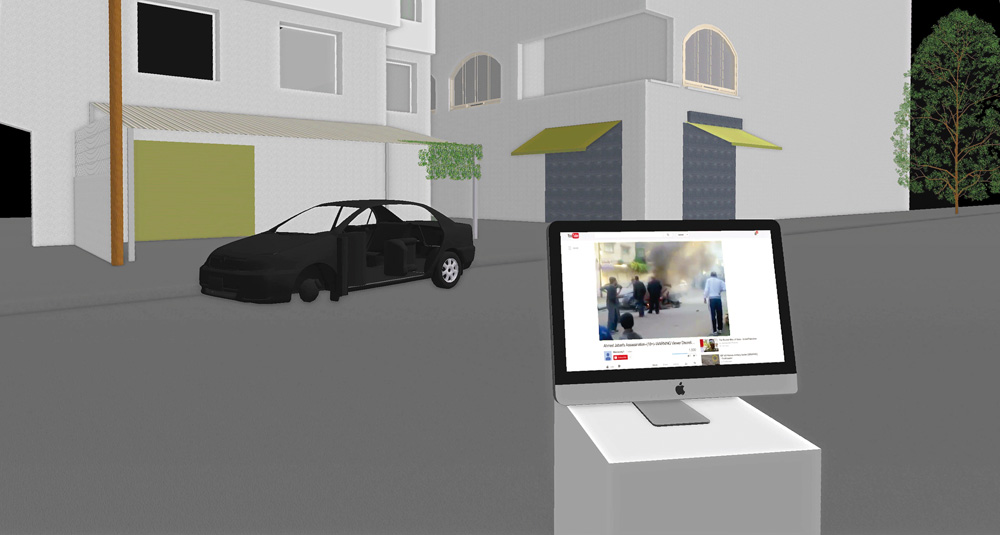
Last Person Shooter examine a range of both human and mechanical modes of vision. By way of a series of historical scenes reconstructed as 3D architectural models, the historical context of machine vision and its underlying concepts are conjured. These models are explored by an invisible protagonist, embodying the familiar, yet antiquated aesthetic of a first-person shooter. The work opens with a reconstruction of the assassination of Ahmed Jabri, a Palestinian militant who was targeted by an Israeli drone in November 2012. The assassination was documented simultaneously both by Palestinian passersby and by the IDF’s drone, creating two parallel, conflicting narratives: these were then uploaded to Youtube and tweeted, in what was in effect a war of images. The video leads into a dreamlike digital desert, evoking the Cuban Missile Crisis and its significance for the development of satellite reconnaissance during the 1960s. The protagonist embodies a birds-eye view, exploring the blind spots and prejudices of such varying perspectives. Finally, the film concludes with a reenactment of a video shot by an American soldier in Afghanistan in a first-person perspective. The footage offers an immersive, bleak representation of 21st century warfare and its mediation.
Adam Kaplan is an artist, a graduate of the Fine Arts department in Bezalel Academy in Jerusalem and the Academy of Fine Arts Vienna. Born in Jerusalem, he currently lives between Montreal and Berlin where he is studied under Hito Steyerl as a guest student in the Universität der Künste. Boaz Levin is an artist and writer based in Berlin. He studied at the Bezalel Academy of Arts and Design in Jerusalem and under Hito Steyerl at the Universität der Künste in Berlin.
Erik Levine
The Guilty Sleep
Experimental video | 4k | color | 24:31 | USA | 2022
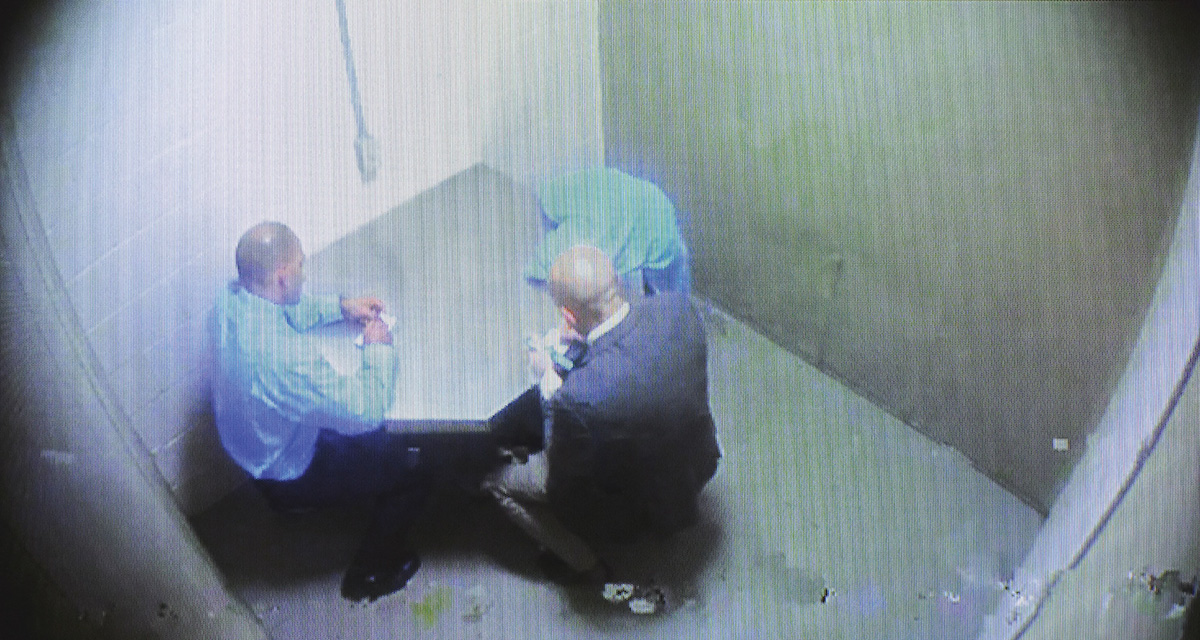
The Guilty Sleep, filmed during more than 75 overnight ride-along shifts with the police, illuminates urgent issues related to the current state of policing. It's a composed collage of raw, slow paced, and evocative imagery and sounds that frame polarities such as justice/injustice, observer/observed, confined/free, power/disempowered, and innocence/guilt. The video highlights the landscape behind these dualities and focuses on their complex relationship to one another.
Erik Levine was born in Los Angeles, California in 1960. He has exhibited widely in the United States and Europe, most recently at Ludwig Forum Aachen with a solo survey exhibition of his videos from the past 15 years. His work includes video, sculpture, and drawings, and is in the public collections of the Whitney Museum of American Art, Museum of Contemporary Art, Los Angeles, Walker Art Center, Hirshhorn Museum and Sculpture Garden, and Des Moines Art Center, among several others. He has received numerous awards including a Guggenheim Fellowship and three Pollock–Krasner Foundation awards. In addition, he’s received two grants each from the National Endowment for the Arts, the New York Foundation for the Arts, the New York State Council on the Arts, and the Massachusetts Cultural Council, as well as grants from Awards in the Visual Arts, Nancy Graves Foundation, and the Jerome Foundation.

Erik Levine
Midsentence
Experimental video | 4k | color | 32:15 | USA | 2024
MIDSENTENCE, filmed over five years inside a county jail, lays bare larger truths about incarceration, institutional authority, confinement, shame, guilt, and power dynamics between those in and out of uniform.
Erik Levine was born in Los Angeles, California in 1960. He has exhibited widely in the United States and Europe, most recently at Ludwig Forum Aachen with a solo survey exhibition of his videos from the past 15 years. His work includes video, sculpture, and drawings, and is in the public collections of the Whitney Museum of American Art, Museum of Contemporary Art, Los Angeles, Walker Art Center, Hirshhorn Museum and Sculpture Garden, and Des Moines Art Center, among several others. He has received numerous awards including a Guggenheim Fellowship and three Pollock–Krasner Foundation awards. In addition, he’s received two grants each from the National Endowment for the Arts, the New York Foundation for the Arts, the New York State Council on the Arts, and the Massachusetts Cultural Council, as well as grants from Awards in the Visual Arts, Nancy Graves Foundation, and the Jerome Foundation.

Dana Levy
Desert Station
Video | hdv | color | 3:33 | USA | 2011
In the midst of the recent revolution in Egypt, Beduins in Israel get updated on the latest news from their car`s radio, in what seems to be the middle of nowhere. Suddenly a bus load of Polish "holyland" pilgrims fill the landscape, posing with Beduin`s camel and taking pictures.
Born in Tel Aviv, Israel, lives in New York 1998 PostGrad- Electronic Imaging Duncan of Jordanstone College of Art, Dundee 1997- BA Camberwell College of Art, London . Won the Dumbo Arts Festival NYC best open studio award in 2010; Won the 2008 Young Israeli Artist Award, The Hamburg Film festival low budget jury award 2006, Took part in the Berlinale Talent Campus in 2006. Took part in various international artist residencies in the USA: New York 2009-2010, 2011, Florida 2001,Connecticut 2011; In France: Le Havre 2011; in Austria: Vienna 2005, Linz 2003, and in Italy Milan 2007. Solo exhibitions include at: Nicelle Beauchene NYC 2010, Habres+Partner Gallery Vienna 2009; Tavi Dresdner Gallery Tel Aviv 2008; Rosenfeld Gallery, Tel Aviv 2004; Haifa Museum of Art 2004.

Dana Levy
Dead World Order
Video | hdv | color | 6:30 | USA, France | 2012
Filmed in Maison de l`Armateur, One of the few houses in Le Havre, France that remained in tact after the city was almost completely destroyed in the allied bombings of 1944. The tower like mansion is a kind of museum. A woman, the curator, is rigorously organizing objects. All kinds of dishes, globes, shells, sculptures, paintings, taxidermy animals, maps, ship models etc... There is something obsessive about her preciseness and the time she invests in placing each item. It is clear that despite the objects useful proposes, they are not being used, lifeless. The more she organizes them, the more she kills them. The work is about a nostalgia to a world that no longer exists, and perhaps never did. The house is built like a spiral, where each floor has more and more rooms, full of treasures that all tell the story of western colonialism, particularly French 19th century bourgeoisie objects, with curiosity cabinets full of exotic oddities from faraway conquered lands. The woman seems to have a special relationship to the objects. Her love and care for the objects, also express her love of the culture she belongs to. The film makes references to suspense movies, such as Hitchcock Vertigo. And the soundtrack is based parts of Bernard Hermann?s Psycho soundtrack.
Born in Tel Aviv, lives in New York Levy?s solo exhibitions include World Order, Center For Contemporary Arts, Tel Aviv (2012); The Wake/ Silent Among Us, Loop Fair, Barcelona (2012); Wild Thing, Nicelle Beauchene Gallery, NYC (2010); and Dreams & Disasters, Habres+Partner Gallery, Vienna, Austria (2009). Her group exhibitions include Unnatural, Bass Museum of Art, Miami (2012); Art and Social Activism, Nicholas Cohn Art Projects, Long Island City, NY (2012); Magic Lantern: Recent Acquisitions in Contemporary Art, Israel Museum, Jerusalem (2012); Lush Life, Invisible-Exports Gallery, NYC (2010); and Trembling Time: Recent Videos from Israel, Tate Modern, London (2010). Levy was awarded residencies by the LMCC in 2012, Omi International Arts Center (2011), the I-Park Residency Program (2011), and the Institut Francais/Triangle Arts Association (2010), and received the Young Artist Award by the Ministry of Culture and Sport, Israel (2008). She received her B.A. from Camberwell College of Art and her Post Graduate Diploma from Duncan of Jordanstone ? College of Art, Dundee University.
Sonia Levy
Creatures of the Lines
Experimental film | mov | color | 19:54 | France, United Kingdom | 2021
Creatures of the Lines is an artist film and collaboration with anthropologist Heather Anne Swanson. It explores how desires for economic growth and linear progress have produced straightened forms in England’s watery terrains and asks what risks are associated with the conversion of once-curvy and braided worlds into a linearised landscape. Drawing on their longstanding research interests and conversations exploring the risks to and in aquatic ecologies with freshwater scientists, the film explores how English waterscapes have been transformed via the construction of canals. As arteries of British Empire, canals linked Indian cotton fields to domestic textile mills, facilitating vast ecological transformations from monoculture agriculture in the colonies to industrial discharges in England’s waters, soils, and air– and thus serve as a key site for exploring often-overlooked histories of colonial capitalism and their material presences in contemporary worlds. Attempting to work from within muddy, submerged sites, rather than from grand narratives or “god’s-eye” viewpoints, the work begins inside canals, telling stories from within the lines. Making use of the open-ended sensibilities of ethnography and natural history, it raises questions about ecological transformations and their ties to infra/structures of global political economy.
Sonia Levy's inquiry-led practice considers shifting modes of engagement with more-than-human worlds in light of prevailing Earthly precarity. Her work operates at the confluence of knowledge practices to interrogate Western expansionist and extractivist logics. She is the 2023-2024 recipient of the European Marine Board artist-in-residence programme. She was the 2022 selected artist of the S+T+ARTS4Water residency hosted by TBA21 in Venice and the 2021 commissioned artist at Radar Loughborough and Aarhus University's "Ecological Globalization Research Group". She has presented her work internationally, including shows and screenings at Ocean Space, Venice; Museo Thyssen, Madrid; Museo CA2M, Madrid; Sainsbury Centre, Norwich; ICA, London; The Showroom, London; Goldsmiths College, London; BALTIC, Gateshead; ZKM, Karlsruhe, Art Laboratory Berlin; HDKV, Heidelberg; Centre Pompidou, Paris; Musée de la Chasse et de la Nature, Paris; Muséum d'Histoire Naturelle, Paris, Verksmiðjan á Hjalteyri, Iceland Whale Museum, Iceland; Harvard Graduate School of Design, Cambridge USA; NYU Gallatin, New-York, Paris. Her work has been published by MIT Press and Thames & Hudson.

Sonia Levy
We Marry You, O Sea, as a Sign of True and Perpetual Dominion
Experimental doc. | 4k | color | 19:28 | France, United Kingdom | 2025
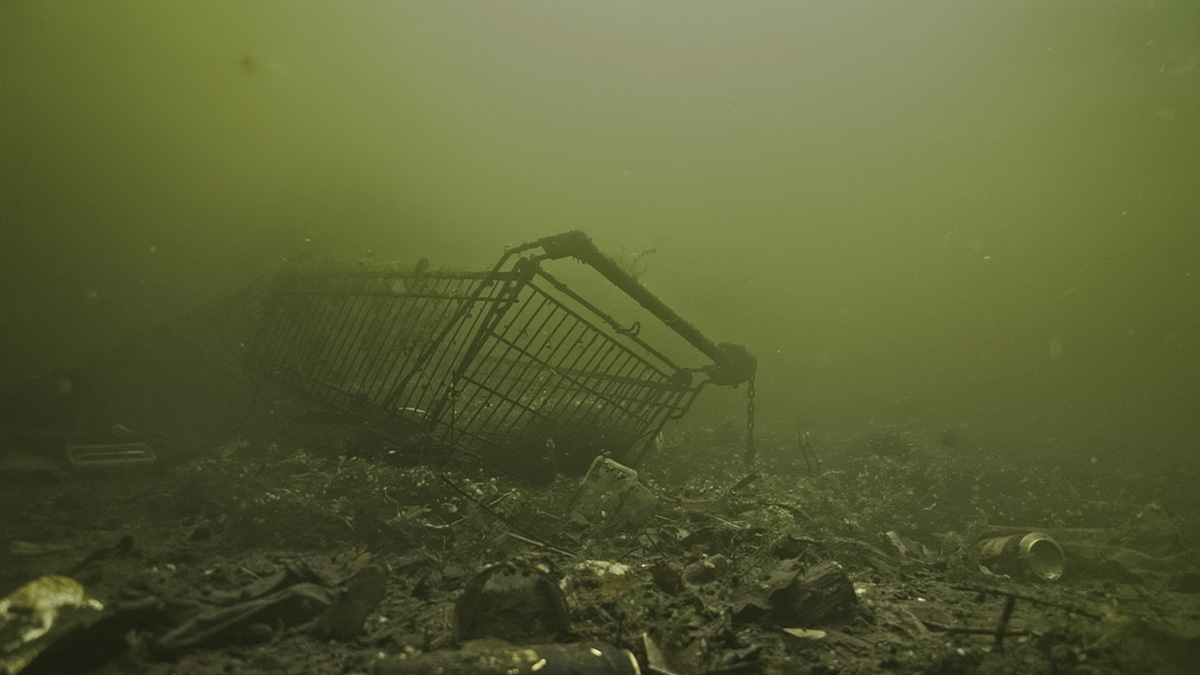
We Marry You, O Sea engages with Venice and its lagoon “from below,” with the aim of focusing attention on the city’s submerged, life-giving, and altered bio-geomorphological processes rather than on its often-recounted political and military histories. Underwater filmmaking opens new ways of knowing the materialities of the Venice Lagoon and exposes a fractured and troubled environment that complicates mainstream historical narratives that start above the water’s surface. By attuning to the ebb and flood of the lagoon, we start sensing the interplay between land and water, life and decay, and the intimate processes shaping this environment. Noticing the kinds of life made possible in this damaged watery space compels us to delve into the ways it has been profoundly transformed. We Marry You O Sea as a Sign of True and Perpetual Dominion takes its title from the words uttered during the Venetian ritual The Marriage of the Sea, which was held annually on Ascension Day between the eleventh and eighteenth century. During the event, the Doge, the patriarch of the Venetian Republic, would wed the lagoon by casting a golden ring into the water, declaring dominance over the sea. The artist reframes Venice’s enduring relationship with its permeating waters by reflecting on this ongoing legacy of quests for mastery over watery environments. How, this work asks, might we imagine different futures for Venice if we begin to experience the lagoon as a lively place populated by manifold ways of living and dying? In the lagoon, a space requiring continuous modifications for human settlement, wetlands and infrastructures have long been intertwined. Venice’s consolidation as a trading hub and epicenter of naval advancement during the Middle Ages prompted major hydrological engineering to maintain the lagoon’s shallow depths for defense purposes. However, in the twentieth century, harrowing modernization transformed parts of the wetland into petroleum refineries and one of Italy’s largest container terminals as part of an effort to turn the lagoon into an industrial frontier. Urban anthropologist Clara Zanardi has described how these transformations spatialized class divisions in a new way, while also causing irreversible ecological degradation that has profoundly altered the lagoon’s lifeways. The film presents these histories of modernization by interweaving rare historical photographs from Venice’s Giacomelli Photographic Archive with submerged perspectives of the present conditions of the lagoon. The historical significance of these photographs is emphasized by the negative black-and-white reversal of the submerged perspectives, connecting past and present and unfolding futures within the lagoon’s contaminated waters. An original score, created by a chorus of human voices and underwater sound recordings, further emphasizes the links between submerged spaces and human domains. The composition captures the lagoon’s pulses and the impact of industries—from aquatic sounds drowned out by boat noises to the rhythmic poundings of industrial activity amid surging tides—as it gestures toward the profound interplay between human activities and the lagoon’s shallows.
Sonia Levy is an artist filmmaker with a Berber-Polish background. Her work, marked by site-specific and interdisciplinary inquiries, delves into the implications of Western expansionist and extractive logics, exploring how these forces manifest in the transformation and governance of hydrosocial worlds. Her practice aims to probe the thresholds that have shaped and influenced the conditions necessary for life to flourish.
Dana Levy
The House by the wall
Experimental video | dv | color | 4:43 | USA, Israel | 2005
The film is built from a sequence of photographs which I took at an abandoned house near the separation wall in Palestinian territory. The graffiti on the walls of the house indicates that the Israeli army had once occupied the site. Its just another ordinary day, the locals can not leave without permits and they are imprisoned like the sheep. But the children haven`t lost faith and are flying a black kite made from a plastic bag.
Born in Tel Aviv 1973 1997-1998 MA in Electronic Imaging at the Duncan of Jordanstone College of Art - Dundee, Scotland 1994-1997 BA in Graphic Design at the Camberwell College of Art, London. Currently lives in Israel, Creates in the field of digital photography, single channel video and video/multi media installations. Her work deals with notions of identity and borders. Home, belonging, and temporal architecture . Participated in artist residencies in Austria ,Finland and the US. She has had solo shows at the Haifa Museum of Art, Rosenfeld Gallery Tel Aviv, Digital art lab Israel. She has participated in various group shows including Tel Aviv Museum of Art, Smack Mellon NY, OK center for Contemporary art Austria, Jewish Museum NY and her videos were screened at various film festivals
Mark Lewis, -
Backstory
Experimental film | 35mm | color | 39:0 | Canada | 2009
`Backstory` introduces the remaining stars of rear projection, a technique prevelant in cinema until the development of green screen. In Backstory, Lewis invited the Hansard family, which has been instrumental in the provision and development of rear projection for hundreds of Hollywood productions over several decades, to tell (with humour and straight-laced directness) their own story of the heyday of the techniques and their decline and disappearance as they are replaced by new technologies and new tastes in visibility.
Born in Ontario in 1957, Mark Lewis is an artist who lives and works in London. Solo Exhibitions include: the Vancouver Art Gallery (Canada), Hamburger Kunstverein (Germany), Musée d?art moderne (Luxembourg), BFI Southbank (London) and Museo Marino Marini (Italy) Forte Di Bard (Italy) and Monte Clark (Vancouver, Canada). In 2009 Mark represented Canada at the 53rd Venice Biennale with his exhibition Cold Morning. His films have been shown at a number of international film festivals including; Rotterdam International Film Festival 2010 (The Netherlands), Toronto International Film Festival 2009 (Canada) and Berlin International Film Festival 2010 (Germany).
Mark Lewis
Carte blanche to Mark Lewis
0 | 0 | | 75:0 | Canada | 0
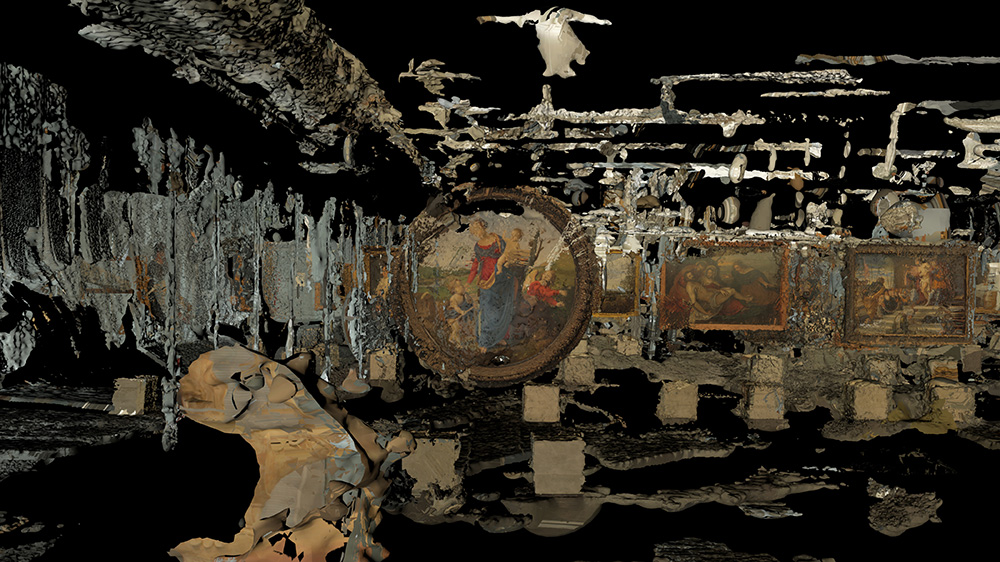
Mark Lewis was born in 1958 in Hamilton, Ontario. From 1989 to 1997 he lived in Vancouver becoming part of the burgeoning photoconceptualism scene of the Vancouver School. Much of his work focuses on the technology of film and the different genres which have been developed in over 100 years of film history. His films are often short, precise exercises on particular techniques. His films tend to look at contemporary cities, film history, and the way film has impacted ideas about everyday life—subjects, for instance, have included ice skaters at Toronto’s Nathan Phillips Square and a custodial worker at Vancouver’s 1500 West Georgia Street. In 2009, Lewis represented Canada at the Venice Biennale. Other exhibitions include shows at the Power Plant, the Vancouver Art Gallery, the Hamburger Kunstverein, BFI Southbank and the Art Gallery of Ontario. His work is in many collections including the National Gallery of Canada, the Museum of Modern Art and the Centre Pompidou. Lewis is also co-editorial director of Afterall, which produces a journal and books on contemporary art.