Catalogue > Search
Results for : Tout le catalogue
Pierre Lefrançois Verove
La chambre de Paul
Fiction | 16mm | color | 15:20 | France | 2022
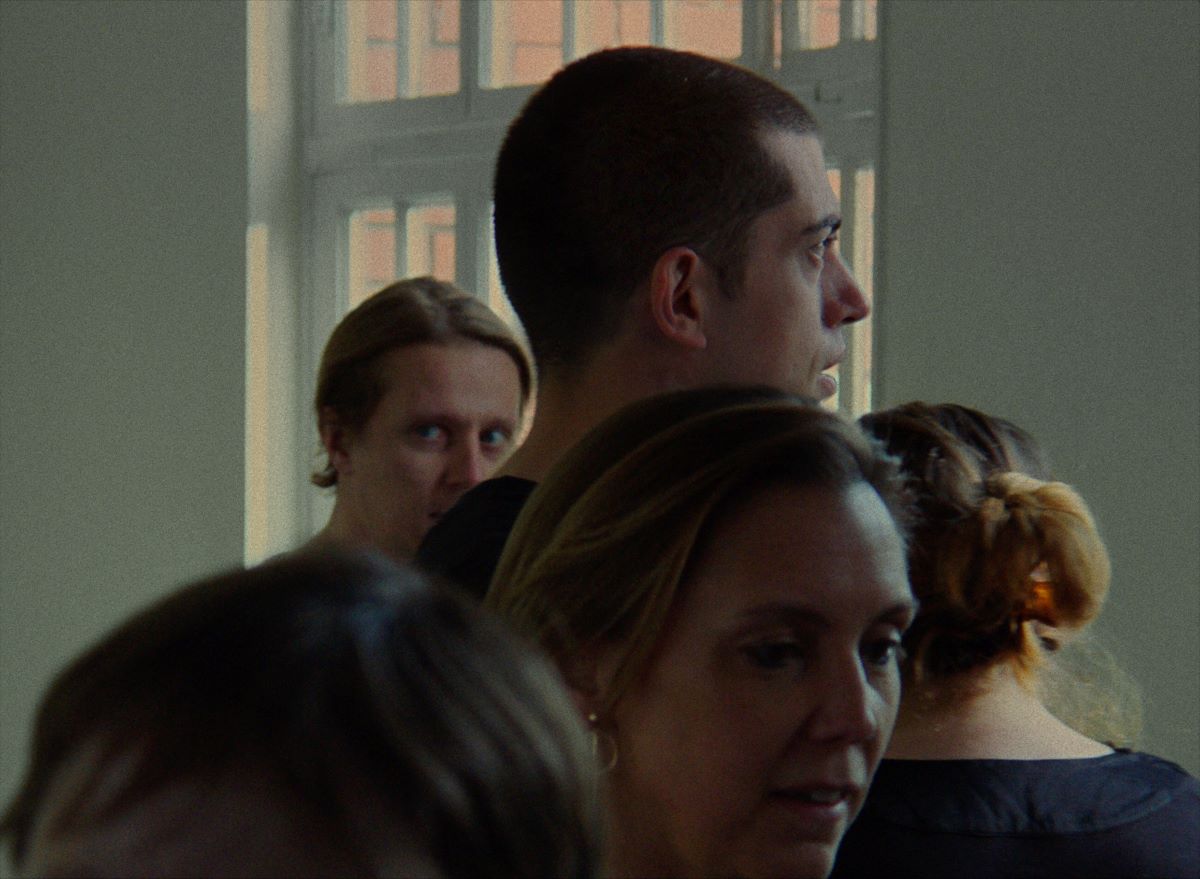
Men and women shout, crowd, shake then embrace. Paul says goodbye to them. He leaves the institution with the hope, perhaps, of a new beginning, but outside, the past persists from one room to another.
Pierre Lefrançois Vérove was born in 1989 and lives in Montreuil, France. He studied at the national school of art of Paris-Cergy before joining Le Fresnoy, national studio of contemporary arts in 2021. His works, films and texts focus on the visible or invisible margins and those who inhabit them. A consideration that led him to explore the field of institutional psychotherapy (La chambre de Paul, 2022) or to follow European borders from Paris to the island of Lesbos in Greece (Algèbre, 2019).

Pierre Lefrançois Vérove
Vigile
Experimental fiction | 4k | color | 12:28 | France | 2023
When night falls, the city exists only in halos. Vigil or guardian, you must keep watch among the shadows, confusing tiredness with sleep, night after night, scrutinising the darkness even if it means opening a breach in it and stirring the invisible.
Pierre Lefrançois Vérove was born in 1989 and lives in Montreuil (France). He studied at the national school of art of Paris-Cergy before joining Le Fresnoy, National Studio of Contemporary Arts in 2021. His works, films and texts focus on the visible or invisible margins and those who inhabit them. A consideration that led him to explore the field of institutional psychotherapy (La chambre de Paul, 2022) or to follow European borders from Paris to the island of Lesbos in Greece (Algèbre, 2019).
Vincent Legallois
16.05.05
Documentary | dv | color | 5:39 | France | 2005
In a city, in the North, there is an explosion...
I'm a young artist graduated from a regional school in the North of France. In my creation I hesitate between doing nothing, poetry and fiction.
Sylvain Legrand
D-vide
Experimental film | super8 | color | 9:30 | France | 2005
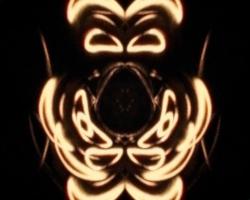
A super-8 filmstrip, shot in 2002 is weaved and transferred by craftsmen in mini-DV in order to be digitally composed. It was an attempt to create a new cinematic vision, to have access to another visible world from the visual and light. The viewer sees geometric and floral designs, according to the various levels of recomposition of the initial ribbon. Disjointed around an inaccessible center, "D-VIDE" blends directly into the minds of the spectators that animate it.
Born in 1977, Sylvain Legrand obtained an M.A. in Cinematographic and Audio-Visual studies at the Université de Paris 8. He currently works ?the world over? and continues to make personal cinema projects.
Sylvain Legrand
I-D
Experimental video | 0 | color | 1:10 | France | 2006
Visual reconstitution essay; a play on speeds of one, two, three, or four colored sticks hitting a disintegrated cube.
Sylvain was born in 1977. He has a master's degree in film from Université de Paris VIII. He tours the world without moving and makes small films.
Wolfgang Lehmann, Thomas GERWIN
Route to Cape Town
Experimental doc. | 16mm | black and white | 5:42 | Germany, South Africa | 2005
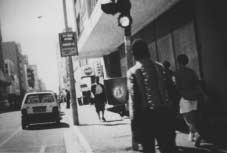
ROUTE TO CAPE TOWN A picture and sound concept (Klangwerk), a sketch, a moving drawing. Streets leading to a town. Brief moments in the old center of Cape Town. Thoroughfares, People, pedestrians, brief flashes. Everything in motion; The people, the cars, the camera. Those who know the town and surrounding area will recognise the topography. All shots were taken out on the streets leading into the town but still, it is not a documentary; time is altered, camera takes are not linear. These are fragments of time. The film montage and the music allows the beginning to fall at the end and vice versa. Time frozen, parallel time. Motionlessness and movement combined. The rhythmn begins slowly, gathers speed, interrupted by panoramic shots. Concrete sounds become music,a sound becomes a Soundscape. A Sound Poem about a place surrounded in melancholie. Fleeting moments of people who we don´t meet and won´t get to know. It is the brief moment of encounter.What do we know of our fellow man? what does it mean exactly to know someone?, a place, a landscape, a feeling,an experience?. Memories. In the end everything is just a fleeting moment. Our most inner thoughts are written in ink on the tips of the waves of the sea. ROUTE TO CAPE TOWN is a short poem in black and white, in tones and shades, something secretive, something dark and sad lies within. It is filmed from inside a moving vehicle but in the very movement itself lies the stationary, the brief moment, the life of a fragment. The scenes are out of focus, dirty, sometimes mirrored in the windscreen. Our memories are not linear. A mosaic of sounds, pictures, impressions. What is hiding behind the faces of the people who glance in our direction as we pass by?. The film uses concrete pictures and sounds to form a rhythmical abstract poem. A couple of short moments from Cape Town South Africa-a foreign City in moments, that by the end-seem strangely familiar to us.
Born in 1967 in Breisgau, Germany. Involved primarily in Art Films, Contemporary music and writing texts for publications. Also active as; Author, Director, Cameraman and Editor. His films are shown in festivals, Art Cinema´s and Galleries both inside and outside of Europe. Over the last ten years he has organised; Festivals, Film Showings, Lectures and Film Introductions, focusing on the Classical AvantGarde. Thomas Gerwin (*1955) A classically educated Composer and Musicologist (Musikwissenschaftler), He came into contact early on with Electric Acustic Music.Since 1990 he has been intensely involved in Soundscape Composition and Radiophone Art. He is presently composing for concerts and the radio in his own studio using sound and video installations. His artistic space works draw from the New Media forms in Theatre, Dance, Film and Sculpture. He has won various international awards and grants and his performances and exhibitions are presented world wide. In 2001 Thomas Gerwin founded the?Gesellschaft für multisensoriale Kunst? (?Community for Multisensual Art?) and in 2002 ?The Berliner Lautsprecher-Orchester? (The Loudspeaker Orchestra?). Since 2003,he has been leading a series of Concerts (?Klangwelten?) in Der Unsicht-Bar (Invisible-Bar) in Berlin where he intepreted Ars Acustica in complete darkness with a small Loudspeaker Orchestra.

Fabian Lehmann, Yannick Harter
66mio views
Experimental VR | 0 | color | 0:0 | Germany | 2019
Moving trough the world wide web means being exposed to a variety of content in a high tempo which does not always attract you, but can also seem revolting to you. The resulting emotional state of the user - a feeling of being overwhelmed and a certain unsteadiness - is the starting point of the work “66mio views“. The viewer is sitting inside a room filling installation. Head mounted displays enable him to be part of an immersive VR environment in which he faces irregular shapes and so called “non-player characters“ (NPCs). The shapes are textured with videos from common Image- boards (4chan, 9gag, ...) as well as viral YouTube videos. Their content is diverse and evokes not only positive emotions (e.g. videos of puppies), but also very negative emotions (e.g. so-called gore videos, videos of violence). In a self- developing rhythm of motion, the forms relate to the position of the viewer, move towards him, go through him and move away from him. Various NPCs from 3D-model databases approach the viewer and recite text-sequences from the videos in varying tonalities. This immersive installation understands the technical infrastructure (computercases, cables, ...) as an instrument which designs and shapes the space. It is being expanded with ropes as well as pictures and text fragments from the videos. Stacks of prints show extracts from the videos and thereby display their content transformed and adapted to an analogue medium. The visitors are invited to take these prints with them and transform the content once again by removing it from its original place. Keywords like connectivity/disconnectivity and comprehension/incomprehension as well as thinking about the digital space as an emotional shaping tool led to this installation which connects digital and analogue content in an abstract, fragmented way. (The installation was originally developed for a specific exhibition space in the basement of „Halle 14 - center for contemporary art“ in Leipzig. However, we can set up the installation with regards to any available space, as its dimensions are variable. At least one VR system, ropes and prints in different sizes are fixed.) Yannick Harter, Fabian Lehmann, 2019
Fabian Lehmann (*1988, Castrop-Rauxel, Germany) graduated at University of Applied Sciences, Bielefeld (2015) with degree Bachelor of Arts „Photography and Media“. Since 2016 he is studying „Media Art“ at the „Academy of fine Arts, Leipzig“ in the class „Expanded Cinema“ / Prof. Clemens von Wedemeyer and has studied „Fine Arts“ at „Bezalel Academy of Arts and Design“ in Jerusalem during an exchange semester. His artistic work focus on different communication systems and how digital techniques shapes the humanity and society. He had various exhibitions in Germany and Europe e.g. Hamburger Triennale der Fotografie (Hamburg), Gallery „Kunstpunkt“ (Berlin), Emscherkunst 2016 (Dortmund) Siva Galerija, (Zagreb) UG Halle 14 (Leipzig) Yannick Harter (*1990, Worms, Germany) is a trained productdesigner, who worked in branches like automotive industry and medical cybernetics. Since 2016 he is studying „Media Art“ at the „Academy of fine Arts, Leipzig“ in the class „Installation and Space“ / Prof. Joachim Blank and has studied „Visual Communication“ at „Latvias Art Academy“ in Riga during an exchange semester. His artistic practice oscillates around the intersection between art, science and society. He had various exhibitions in Germany and Europe e.g. Kaiserwerke (Gera), Gallery? „Kunstpunkt“ (Berlin), Obro?ców Stalingradu 17 (Szczecin), D27 (Riga), UG Halle 14 (Leipzig) Yannick Harter participated in several curatorial and educational projects and volunteered as artist assistant e.g. at Kunstverein (Leipzig), Neustadprojekte (Mainz), Latvian Center for Contemporary Art and Survival Kit 10.0 (Riga)

Lei Lei
A Bright Summer Diary
Experimental doc. | dcp | color | 27:14 | China, USA | 2020
“The photo was taken using a painted board in Kuling Park on Lushan…” A woman is reminiscing about the story behind a photograph: it was a bright summer day in the 1980s. Her family traveled to Lushan to escape the heat. As her memory unfolds, we gradually come to see the forgotten history and that very photograph being damaged by water stain.
1985 Born in Nanchang, Jiangxi Province, An experimental animation artist with his hands on video arts, painting, installation, music and VJ performance also. In 2009 He got a master's degree in animation from Tsinghua University. In 2010, his film This is LOVE was shown at Ottawa International Animation Festival and awarded The 2010 Best Narrative Short. In 2013 his film Recycled was the Winner Grand Prix shorts - non-narrative at Holland International Animation Film Festival. In 2014 he is the Jury of Zagreb / Holland International Animation Film Festival. and he was the winner of 2014 asian cultural council grant. In 2017 he works in CalArts Experimental Animation program as Faculty. In 2018 he invited for New Academy Member for the Short Films and Feature Animation branch. In 2019 his first feature film Breathless Animals has been selected by Berlinale Forum.

Kaja Leijon
Screening
| | color | 9:0 | Norway | 2011
SCREENING (HD, 9 min, 2011, single screen) SCREENING is based on the association of screen-tests and auditioning, that is often attached as extra material on dvds. Five female characters of age 16-30, are filmed in a white studio. They are wearing ordinary clothes and at first sight it might look like they are filmed just as ?themselves? in front of the camera. After a while it becomes more obvious that they go in and out of, and are trying out different roles. The characters do not know that the camera is recording the whole time during the shooting, even when they are stopped in the middle of an act; this to create an interaction of acting, trying to act, or just being themselves. Feminine expressions are contrasted with masculine to generate friction and to enhance the collision of the characters? attempts to go into a role, failing and managing the role.
Kaja Leijon is born in Tromsø, 1980, and now lives and works in Oslo, Norway. She is educated at the National Academy of Fine Arts. During her education she participated in several exchange programs, among those at CalArts, US. Leijon works with film and photography. Leijon recently had a solo exhibition at Trøndelag senter for samtidskunst. Her films have been screened at international exhibitions and film festivals such as; National Taiwan Museum of Fine Arts, Kunsthalle in Mainz, Luis Adelantado Gallery, Videonale and Kasseler Dokumentar und videofest,

Kaja Leijon
Wasteland
Fiction | hdv | color | 10:0 | Norway | 2012
Wasteland ? synopsis: Wasteland is a film that consists of short episodes. The structure of the film gives impression of a loose narration, but the episodes have a common thread which becomes clearer throughout the film. The film investigates how our fantasy and imagination is affected by film, and how people in everyday life integrate images from fiction into their own lives. The film attempts to understand how preconceived conceptions influences the way we see and interpret our surroundings.
Kaja Leijon is born in Tromsø, 1980, and now lives and works in Oslo, Norway. She is educated at the National Academy of Fine Arts. During her education she participated in several exchange programs, among those at CalArts, US. Leijon works with film and photography. Leijon recently had a solo exhibition at Trøndelag senter for samtidskunst. Her films have been screened at international exhibitions and film festivals such as; National Taiwan Museum of Fine Arts, Kunsthalle in Mainz, Luis Adelantado Gallery, Videonale and Kasseler Dokumentar und videofest.

Nicolas Lelievre, Renaud HERBIN Anamaria FERNANDES
Aubusson
Art vidéo | dv | color | 8:11 | France | 2008
Répondant à l`invitation du Théâtre Jean Lurçat, Scène Nationale d`Aubusson, nous avons réalisé cette série d`images alternant vues de la ville d`Aubusson et portraits de ses habitants. Quelque part entre la carte postale, le diorama et la stéréophotographie, ces images dressent un portrait sensible de la ville d`Aubusson. L`ensemble se présente comme un diptyque établissant un aller-retour permanent entre la ville et ses habitants.
Architecte diplômé en 2001, Nicolas Lelièvre s`est rapidement tourné vers les pratiques de l`image. La vidéo et la photographie sont pour lui des moyens privilégiés pour interroger les rapports qu`entretiennent le temps et l`espace. Le projet Centres Horizons mené entre 2003 et 2008 avec le marionnettiste Renaud Herbin a notamment été l`occasion d`explorer différents territoires urbains parmi lesquels Berlin (Villa Médicis Hors Les Murs 2004), Buenos Aires, Montréal ou encore Saint-Jacques-de-la-Lande et Lisbonne. Son questionnement sur les perceptions et les représentations des espaces urbains prend des formes variées, entre photographie, vidéo et spectacle vivant. Parallèlement, Nicolas Lelièvre participe régulièrement en tant que vidéaste à des créations de spectacles de théâtre (Cie LàOù, Théâtre de l`Arpenteur,...) et de danse (Cie EnCore, Cie Jean-Pierre,...).

Yoann Lelong
Génèse
Experimental doc. | hdv | color | 31:50 | France | 2016
Derrière tout œuvre artistique, se cache un travail de recherche foisonnant, un parcours irrégulier fait d’avancées et de doutes. Mettant en perspective le travail de 2 artistes aux disciplines différentes, le film retrace ces moments d’improvisations, de répétition ou d’hésitations qui font partie intégrante d’une œuvre en devenir. Aux mouvements des danseurs hip-hop de la chorégraphe Anne Nguyen (artiste associé à Chaillot), se superpose une oeuvre musicale du musicien Les Gordon (du label Kitsuné), 2 univers qui, bien que différents, viennent se compléter pour créer une forme nouvelle et singulière. Qu’il s’agisse d’une pièce dansée ou d’une œuvre de musique, l’impression d’aisance et de maîtrise que suscite la découverte de l’oeuvre aboutie est toujours flagrante. Quel processus de création derrière cette sensation de fluidité, de perfection ? Comment, d’une matière brute et spontanée, naît l’oeuvre future ? C’est par cet angle que le film tente de capter et de retranscrire la genèse d’une création artistique, nourri par les séances de travail et de répétition des danseurs, autant que par la l’oeuvre musicale composée sur le mode de l’improvisation. Questionnement, tentatives, ajustements, répétitions... Autant d’étapes nécessaires que requiert la création d’un projet artistique, mouvement permanent oscillant entre la projection initiale de l’artiste et le projet en devenir, matière polymorphe et versatile. Miroir de cette genèse continue, le film finit par lui-même devenir objet de son propos.
Yoann Lelong, né en 1985. Après avoir étudié la physique quantique au cours de son cursus universitaire, Yoann Lelong s’est progressivement tourné vers la création artistique en se formant au California Institute of Arts et en collaborant avec le pionnier du mouvement No wave New Yorkais, Amos Poe. Le travail de Yoann Lelong émerge d’une vision du monde où tous les éléments sont reliés et interagissent entre eux. Chaque élément est, pour lui, une abstraction issue d’une totalité de mouvement fluide (telle la notion d’holomouvement). Il adopte ainsi une approche centrée sur l’individu pour ensuite en dégager une structure systémique en s’intéressant aux interactions qu’un individu peut avoir avec un lieu, une ambiance ou d’autres personnes. En 2013, encouragé par Alain Cavalier, Yoann Lelong réalise le film PERSON(A). Il s’agit de 23 portraits entrelacés (dont ceux de Benoit Forgeard, Amos Poe et Lola Bessis). En 2014, il rejoint l’expédition Tara Méditerranée, dans le cadre d’une résidence artistique qui donnera lieu à l’installation vidéo PerceptConcept. En 2015, Yoann Lelong a réalisé des projets sur le thème de la transidentité et de l’insertion des personnes réfugiées en collaboration avec l’association Singa. En 2017, il prépare une nouvelle œuvre en relation avec le centre de pédopsychiatrie de l’hôpital La Pitié Salpêtrière.

Yoann Lelong, B.Forgeard
Bangoura
Experimental doc. | hdv | color | 9:0 | France | 2019
Angela et Marius, deux jeunes étudiants, ont accompagné un jeune migrant lors de son arrivée en France. A travers leur récit, nous découvrons le périple de Bangoura, jeune guinéen ayant fui son pays lorsqu'il avait 17 ans. Sur une production musicale composée de samples (notamment extraits de musiques traditionnelles issues de différentes immigrations françaises), l'œuvre questionne la manière dont chacun de nous se réapproprie un fait, un événement ou un récit en en abolissant son contexte, son passé, sa connaissance et sa mémoire collective. Ainsi, la vidéo propose au spectateur de s’approprier l’histoire de Bangoura en reprenant son récit à la manière d’un karaoké. De cette manière, le récit relaté offre de multiples interprétations et peut aussi bien symboliser une génération de migrants cherchant à survivre, critiquer une société capitaliste ou les instituions, décrire le portrait d'une jeunesse française ou encore interroger la connaissance que nous avons de l’immigration française.
Artiste plasticien diplômé de l'ENSAM, Yoann Lelong trouve son inspiration dans la danse, la recherche scientifique et la problématique de l'exclusion. Il explore la vidéo comme moyen de retranscrire une réalité transcendée, mêlant la poésie réaliste de ses sujets à une réalité sociale fragmentée. Son passage par l'Ecole Normale Supérieure de Cachan le forme à la physique quantique, point de départ d'une démarche artistique qui irrigue l’ensemble de ses travaux, et donne à ses œuvres une lecture sous-jacente plus métaphysique. De sa collaboration avec Amos Poe, pionnier dumouvement new-yorkais No Wave, naît PERSON(A), installation vidéo où s'entrelacent vingt-trois portraits filmés au 16mm. Une œuvre poétique où les éléments se distinguent, se répondent, puis se fondent dans un flou indistinct. Cette 1ère œuvre illustre dès lors le rapport distancié qu’entretient Yoann Lelong au réel et qui le pousse, à chaque nouvelle création, à saisir l'instant sans filtre et sans interprétation pour retranscrire et sublimer les sujets à l'état brut. Les sujets deviennent matière, le tout rejoignant le tout. A l'issue d'une résidence artistique à bord du voilier Tara Méditerranée en 2014, il crée PerceptConcept, à l'image du mouvement ondulaire et répétitif de l'expédition maritime : les gestes de l'équipage épousent le va-et-vient de la mer, au rythme de sons mécaniques ou organiques. Par la suite, il s'interrogera sur l'essence d'une création et plus particulièrement sur ce qui en fait son unicité en collaborant avec la chorégraphe Anne Nguyen et le musicien Les Gordon (2015). Le mouvement gestuel et sonore apparaît ainsi dans le travail de l’artiste comme une composante clé de toutes ses créations. La recherche de l’unicité à partir de fragments épars constitue, pour l’artiste, un cheminement permanent, un questionnement métaphysique qui explore, chaque fois, un nouveau terrain de création, tantôt attaché à une réalité sociale, tantôt abstrait.
Jacques Lennep
Délirium vidéo sélection
Experimental video | dv | color | 30:18 | Belgium | 2005
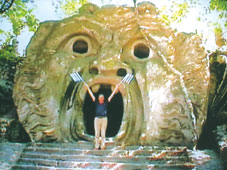
Five of these sketches are inspired by modern art: "Le calvaire de R.Mutt" ("R.Mutt´s calvary", a reference to M.Duchamp). The artist follows an abrupt Way of the Cross. He is carrying Duchamp´s "Fountain" (a reference to Warhol). In a landscape, the artist paints the word "brillo" in white on a white board. "Tombeau pour M.B" ("A tomb for M.B", a reference to Broodthaers). The artist finds the "Belgian man´s thighbone", painted in the Belgian colors. He discolors it and buries it in the ground of the Battle of Waterloo. "Le semeur de pensées" ("the pansies sower", a reference to Monet). The artist sows pansies in Monet´s garden in Giverny. "Parcours d´artiste" ("an artist´s route", a reference to Ensor). The artist, wearing a 3-piece-suit and carrying a suitcase, walks up a brook. He ends up finding a smoked herring (pun with the name of the fish in French, "hareng-saur", and "Ensor"). Three sketches give to the television another role than that of a screen : "La tour penchée" (The leaning tower). Toutists try to push Pisa´Tower. The tower is set upright again by inclining the television. "Repasser l´image" ("ironing/replaying the movie"). One scene displaying a woman ironer is being replayed on the TV screen. "Chaussettes-show" ("the socks´ show). The ballet of a pair of socks for a pair of shoes. A sketch where a message is transmitted by the viewer: "Le message de l´ogre"("the message of the ogre", Bomarzo´s enigma). In the park of Bomarzo´s monsters, the artist transmits an enigmatic word in semaphore language.
Jacques Lennep was born in Uccle, Belgium, on the 11th of July 1941. He is a multidisciplinary artist. In 1972 he created the CAP group within which he formulated the principles of a relational art. He developed one sociological trend of this art by creating his Man´s museum in 1974. From then, he dedicated himself to video, and was a video pioneer in Belgium. He taught in the Academy of Fine arts in Brussels. He belongs to the Royal Academy of Belgium. His most recent videos are gathered under the titles "Delirium-vidéo" and "Musée de l´homme Postproduction". He wrote 2 books about his approach : Alchimie du sens (La part de l´oeil Editions, Bruxelles, 1999) and Conversation avec P.-Y Desaive (Tandem Editions, Gerpinnes 2003). The Museum of Modern and Contemporary Art (MAMAC) of Liège will devote a retrospective to him in 2007.

Thomas Leon
Escape from abstraction island
Art vidéo | | color and b&w | 11:30 | France | 2009
The installation directly refers to spectacular films, in its organization and dramaturgy (the scenes? succession, the function of music) as well as in the implemented technical means (HD projection, 5.1 surround sound). Designed as an adventure movie in which the main character would be hold by the camera, the video makes its way through an island that happens to be a shapes directory. It is a long tracking out : inside a crystal structure, through different desert and deserted places, flying over the sea off a prismatic object. The nature of the depicted objects and places, as well as their relations, is never obvious, as the camera changes directions to get closer of surfaces, and plays with scales? effects, sometimes even getting lost in details. Co-production Ville de Beauvais, Le LABO, DRAC Picardie.
Thomas Leon
High Latency
Installation vid�o | | black and white | 12:0 | France | 2008
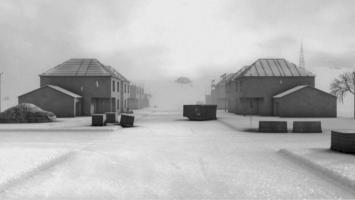
This is a film about time and experiencing a work of art. The form and structure of video and the use of digital media and sound instill emotional tension in an environment that otherwise lacks it. The camera tracks forward and progresses into a snowy landscape. The video is divided into two equal parts which are linked together when the camera?s angle moves towards the floor. From this moment forward, the image slides from the representation of a physical space to a rhythmic abstraction. When the camera lifts up again, we are back at the beginning. Two successive soundtracks accompany each part of this video.
Born in 1981 in Dijon (France), Thomas Leon currently lives and works in Paris. His work is articulated mainly around the video medium, in the form of complex and condensed installations, on the border of narration. His achievements were especially chosen for the following exhibitions: ?The children of Sabbath 07? with the Hollow of the hell, Centers Contemporary art of Thiers (France) in 2006, ?Multipolar? with the Market 14 of Leipzig (Germany) in 2006, ?Filterbox? with Glassbox (Paris) in 2006, ?the syndrome of Broadway? in the Center of Art of the Saint-Leger Park to Pougues-the-Water (France) in 2007, ?Science and fiction? with General in Manufacture in 2008.
Thomas Leon
To Ashes
Video | 0 | color | 5:6 | France | 2025
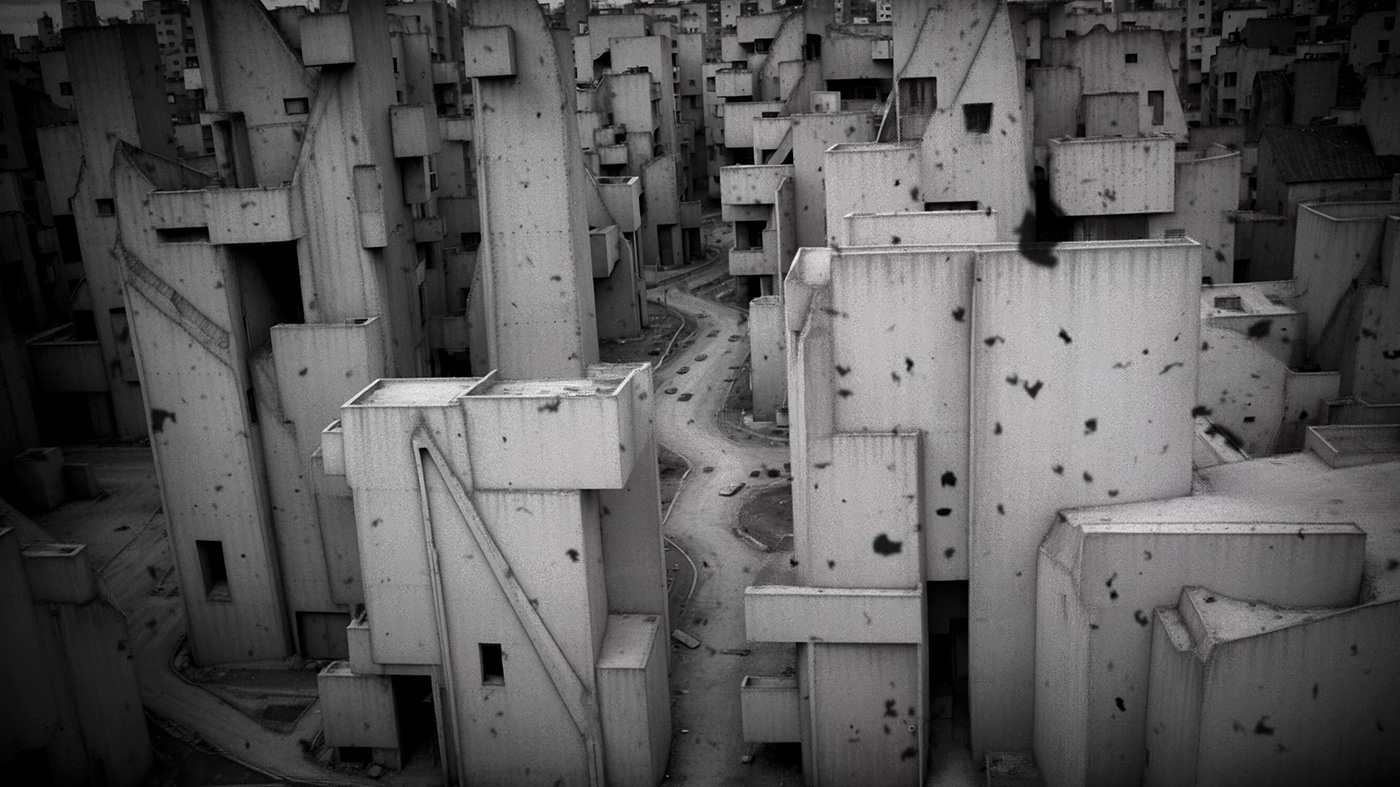
To Ashes explores the thresholds between reality and machinic hallucination, questioning contemporary image-generation technologies — particularly artificial intelligence — and their influence on our perception of the real. Created through a hybrid process combining 3D modeling and AI-based generation tools, the video unfolds as a continuous tracking shot through a brutalist megastructure in constant transformation. Architectural forms disintegrate and transform, while ash-like particles rise into the air. This disintegration is accompanied by an experimental soundscape, where analog synthesizers and transformed voices evoke a latent collapse. Gradually, the architecture gives way to unstable crystalline structures. Reality wavers. In the end, something gives way, shifts, disappears. Everything must burn.
Thomas Léon develops his practice by merging cinema, graphic arts and images from new technologies. He creates films, immersive video and sound installations, as well as large-format drawings. His work explores the interconnections between memory, sensuality, intimate experiences, and the imaginary, drawing on fictions, whether they be social, urban, climatic, etc. He is notably influenced by science fiction and utopian literature and frequently develops his projects using contemporary image creation tools (3D modeling, AI, etc.). He regularly participates in screenings or exhibitions in France and abroad: 'Listening to Transparency' at the Minsheng Art Museum in Shanghai (China, 2017), 'Cruces Sonoros: Mundos Posibles' at the MAC in Santiago de Chile (Chile, 2016), 'Rendez-vous 11' at the Institute of Contemporary Art in Villeurbanne (France, 2011), and at the South African National Gallery in Cape Town (South Africa, 2012). He notably took part in residencies : Drawing Factory organized by CNAP (National Center for Visual Arts) and the Drawing Lab (Paris) in 2021 ; a residency in Taiwan, organized by Grame, the National Center for Musical Creation (Lyon), and the Digital Art Center (Taipei) in 2011. His works can be found in the collections of CNAP (National Center for Visual Arts) and the Louis Vuitton Foundation. Thomas Léon lives and works in Montreuil.
Slava Leontjev
1:1
Experimental film | 16mm | black and white | 5:30 | Lithuania | 2007
maybe dramatic frame change is unnesessarry...
Born in Vilnius in 1967. Graduated from the Art School of Justinas Vieno?inskis in Vilnius. In the 1983?1995 period, he worked as an art director at a Vilnius restoration studio, as a costume designer, art director and director at the Lithuanian national television, was a lecturer at the Vilnius Conservatoire and worked as art director assistant in the film Corridor (Koridorius) by ?arūnas Bartas. In 1996? 2000, Leontjev worked as art director and creative director at the advertising agency Brand Sellers DDB Vilnius. From 2000 until present, he has been the director of film production company Vilks Studija. Leontjev has directed a number of commercials and music videos that have won various awards including the MTV Russia prize for the music video of the year in 2004. He has authored scores of film scripts that are yet to be fulfilled. He is currently preparing for the shooting of a new 20 minute short film. Absence (Nebuvimas) is the first film from the cycle You Are Not Alone.
Leopold Emmen
Another Woman - film adaptation (work in progress)
Video installation | mp4 | | 13:6 | Netherlands | 2025
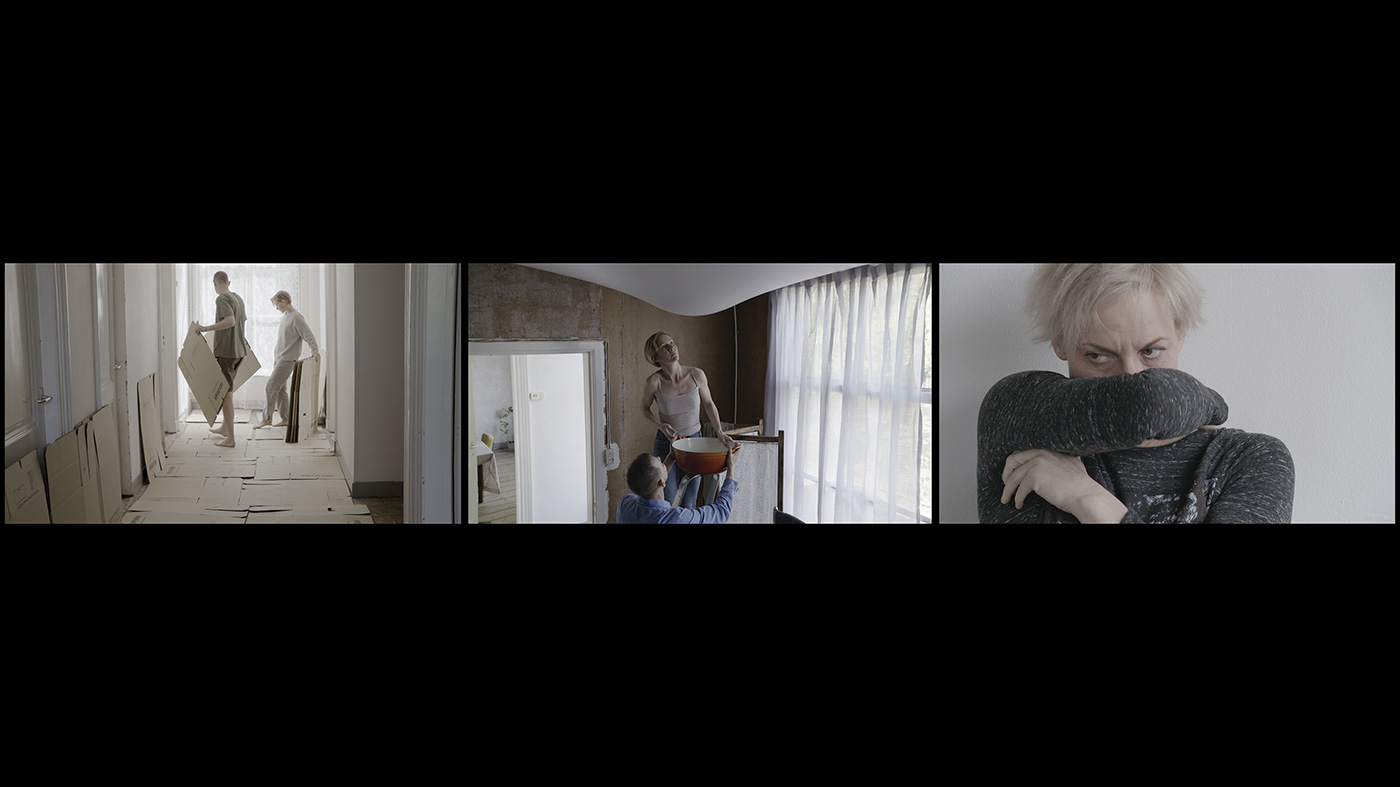
'Another Woman - film adaptation' is a three channel film presenting intimate scenes of three characters, two women and a man, in the course of a breakup. The film explores a world of fiction and performance in a cinematographic and spatially designed narrative where three images are presented simultaneously. The visual style focusses both on the performing bodies and their surroundings. Subcutaneous emotions surface through tactile interaction, as the characters touch and feel their place amidst the physical properties of the space. Walls, ceiling, floor, curtains and furniture form obstacles, boundaries and voids that confront the protagonists with the situation and state of mind in which they find themselves. The interiors become mirrors for their inner worlds, surreal and intuitively recognisable at the same time. 'Another Woman - film adaptation', 2025, is a re-staging of the spatial installation 'Another Woman', 2022. We show an exerpt of 13 min 6 sec. of the final film that will have an estimated duration of 70 minutes.
Leopold Emmen is a collaboration between filmmaker Nanouk Leopold and visual artist Daan Emmen. In our work, we experiment with film as a spatial, cinematographic experience in which the visitor plays an active role. Through the characteristics of a place and the behaviour of our protagonists, we want to make tangible how a presence influences life and relationships with the other. An open invitation to explore the physical and mental world of the characters themselves. Creating awareness of the way in which space, sound and moving image can come together in a deepening, embodied experience, we want to stir up our conditioned gaze. Reflecting on how we see the world, how we see ourselves in that world and how we see each other.
Edgar León
Contrapeso / Rojo / Verde
Experimental doc. | dv | color | 3:12 | Costa Rica, Mexico | 2005
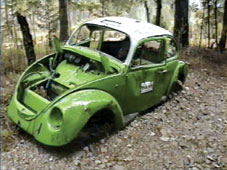
"Contrapeso/verde/rojo" is a video-documentary presenting two distinct glances. The first scene happens in the park of Chapultepec (Mexico city), where we observe a snack-stand whose tarpaulin is supported by a rope at the end of which is a bottle of Coca-Cola. It plays the role of a counter-weight, like a scale or an anchor (hence the name of the play). The second scene presents a zoom into another Coca-Cola bottle which, thanks to the opening shot, finds itself inside a demolished cab in the woods of Ajusco. The two glances start with and confine themselves to the tension generated by these bottles between the natural and the cultural, which allows us to associate the objects when they activate or deactivate something concrete. The structural logic of León's work in these two videos resides in the presentation of a narrative that leads to the reading of an idea of production after the one of consumption.
Edgar León finished his Master in Visual Arts at the Academy of San Carlos, Independent National University of Mexico (UNAM), in 2005. He produced a dozen of solo exhibitions between Mexico and Costa Rica, and has participated in more than forty group shows world-wide. As an independent commissioner, his latest work "La reconstrucción del lugar común. Imàgenes de autor" was inaugurated in 2005 at the Museum of Art and Drawing in San José, Costa Rica. He organised "Residuos y Particulas" Privado Público" in Mexico in 2004. León lives and works in the Paris area.
Xenia Lesniewski
Egodyston
Animation | dv | color | 3:27 | Germany | 2009
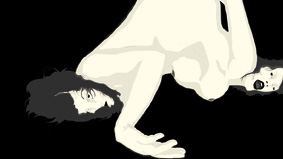
Egodystonic - My fear of death will blow my head away. I think I need other eyes for my brain.
Born in 1985 / Frankfurt am Main, has been studying Fine Arts with focus on Painting and New Media at the Offenbach Academy of Art and Design since 2005.