Catalogue > Faire une recherche
Résultats pour : Tout le catalogue

J Tobias Anderson
Allt blir självklart, genomlyst
Animation | hdv | couleur | 2:30 | Suède | 2015
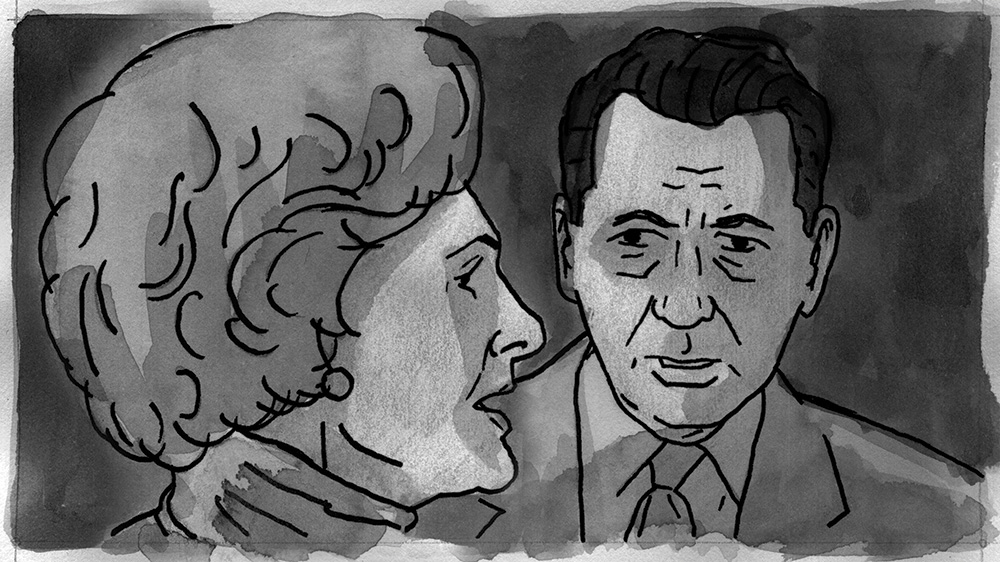
In a colorful setting, where thoughts and ideas aren’t necessarily black or white, a situation of non-communication is enacted. Two men and a woman are throwing their most inner thoughts at each other, but finding little solace in the others’ words. Communication can sometimes be unidirectional, even though a dialogue is taking place, and where certainty can be a comfort, perhaps skepticism and doubt should be the default.
Born in 1971. Grew up on Gotland in the Baltic Sea. Education includes the University Collage of Arts Crafts & Design as well as the Royal Collage of Art, both in Stockholm. Lives in Nacka just outside of Stockholm. Working mainly with video and animation and moving between narrative and non-narrative works. Has created around 40 films. Also experimenting with different forms of music and sound installations. Notable exhibitions include P.S.1 Contemporary Art Center in New York, Kunst-Werke Berlin, CaixaForum in Barcelona and Museo de Colecciones ICO in Madrid, as well as solo exhibitions at MMC Luka in Pula Croatia, ak28 in Stockholm and Uppsala Art Museum in Sweden.
J Tobias Anderson
A Work of Art
Animation | hdv | noir et blanc | 1:36 | Suède | 2016
A reflection on the artist’s own work, mirrored in a dialogue involving three secondhand characters. Together they make an honest evaluation of the artwork to reveal the harsh truth.
Born in 1971. Grew up on Gotland in the Baltic Sea. Education includes the University Collage of Arts Crafts & Design as well as the Royal Collage of Art, both in Stockholm. Lives in Nacka just outside of Stockholm. Working mainly with video and animation and moving between narrative and non-narrative works. Has created around 40 films. Also experimenting with different forms of music and sound installations. Notable exhibitions include P.S.1 Contemporary Art Center in New York, Kunst-Werke Berlin, CaixaForum in Barcelona and Museo de Colecciones ICO in Madrid, as well as solo exhibitions at MMC Luka in Pula Croatia, ak28 in Stockholm and Uppsala Art Museum in Sweden.

J Tobias Anderson
A Veracity A Mendacity
Art vidéo | | couleur | 4:58 | Suède | 2010
A man in confrontation with two women, one vulnerable and easily influenced, the other hesitant and questioning. On one hand the man is preching a veracity to the already converted and on the other a mendacity to the doubtful. Or is it the other way around? "A Veracity A Mendacity" questions if there, in the name of reason, can exist only one truth to any situation, and who should have the mandate to tell others what is right and what is wrong.
J Tobias Anderson was born in 1971 and grew up on Gotland in the Baltic Sea. His education includes the University Collage of Arts Crafts & Design as well as the Royal Collage of Art, both in Stockholm. He lives in Nacka just outside of Stockholm. Working mainly with video and animation Anderson has moved between narrative and non-narrative works and through the years he has created almost 40 films. He has also been experimenting with different forms of music and sound installations. Notable exhibitions include P.S.1 Contemporary Art Center in New York, Kunst-Werke Berlin, CaixaForum in Barcelona and Museo de Colecciones ICO in Madrid, as well as solo exhibitions at MMC Luka in Pula Croatia, ak28 in Stockholm and Uppsala Art Museum in Uppsala, Sweden. He is collaborating with Filmform Foundation in Stockholm and Espaivisor in Valencia, Spain.

J Tobias Anderson
A Sensation!
Animation | dv | couleur | 1:38 | Suède | 2012
Material is what counts!
Born in 1971. Grew up on Gotland in the Baltic Sea. Education includes the University Collage of Arts Crafts & Design as well as the Royal Collage of Art, both in Stockholm. Lives in Nacka just outside of Stockholm. Working mainly with video and animation and moving between narrative and non-narrative works. Has created around 40 films. Also experimenting with different forms of music and sound installations. Notable exhibitions include P.S.1 Contemporary Art Center in New York, Kunst-Werke Berlin, CaixaForum in Barcelona and Museo de Colecciones ICO in Madrid, as well as solo exhibitions at MMC Luka in Pula Croatia, ak28 in Stockholm and Uppsala Art Museum in Sweden.
J Tobias Anderson
Delusion Disillusion
Art vidéo | dv | noir et blanc | 3:33 | Suède | 2008
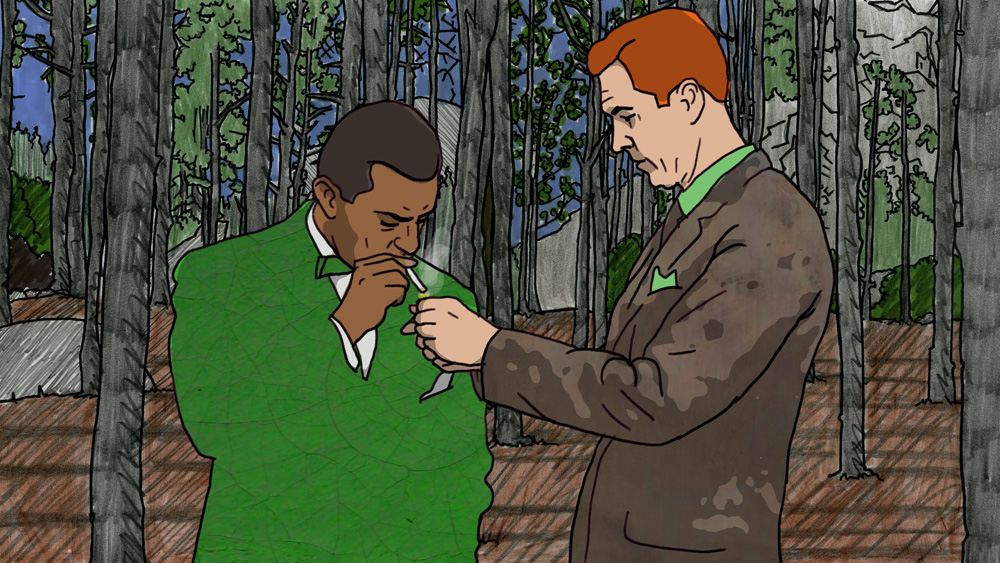
Une forêt sombre, une route sans fin, deux hommes avec des idées différentes sur la façon d'aborder un problème. Les grandes lignes de « Delusion Disillusion » sont assez simples, mais les possibilités d'interprétation sont plus complexes. Les hommes sont-ils en train de faire référence à une question de caractère personnel, ou parlent-ils de quelque chose de beaucoup plus général ? Le contraste entre la densité des arbres au début de la vidéo et le final, avec sa forêt presque coupée à blanc, nous dirige vers les indices d?une solution possible.
Né 1971 à Göteborg (Suède), J. Tobias Anderson vit et travaille à Stockholm (Suède). De 1993 à 1998, il fréquente le Département des Arts de l?Université des Arts, de l?Artisanat et du Design de Stockholm et, en 1998-99, l?Université Royale des Arts de Stockholm, au Département Vidéo. Vidéaste, il s?intéresse principalement à l'animation et à l'appropriation artistique. Il expérimente actuellement de nombreuses techniques, telles que la vidéo, la peinture, l'illustration, le son et la musique, mais se concentre toujours principalement sur la vidéo. Environ une trentaine de ses ?uvres vidéo ont été créés entre 1997 et 2006. Le point de départ de ses recherches, la base de sa création artistique, réside généralement dans des matériaux que l?on peut considérer, d?une manière ou d?une autre, comme familiers. Ses ?uvres ont été projetées à de nombreuses occasions, dans des festivals et des expositions du monde entier. Ses vidéos sont présentées dans plusieurs institutions artistiques, notamment dans les collections du Moderna Museet de Stockholm et de l?Institut Valencià d?Art Moderne.
J Tobias Anderson
Where Did It All Start?
Animation | hdv | couleur | 1:10 | Suède | 2017
The simplest of questions. An overwhelming silence. The conundrum of existence.
Born in 1971. Grew up on Gotland in the Baltic Sea. Education includes the University Collage of Arts Crafts & Design as well as the Royal Collage of Art, both in Stockholm. Lives in Nacka just outside of Stockholm. Working mainly with video and animation and moving between narrative and non-narrative works. Has created around 40 films. Also experimenting with different forms of music and sound installations. Notable exhibitions include P.S.1 Contemporary Art Center in New York, Kunst-Werke Berlin, CaixaForum in Barcelona and Museo de Colecciones ICO in Madrid, as well as solo exhibitions at MMC Luka in Pula Croatia, ak28 in Stockholm and Uppsala Art Museum in Sweden.
Alice Anderson
Souffler n'est pas jouer
Fiction expérimentale | betaSP | couleur | 14:30 | France | 2005
Dans un gymnase, une jeune fille de dix-sept ans s`entraîne au trampoline. Son père, qui la coach aboie ses instructions. L`entraînement forcé la fait souffrir mais elle est obnubilée par l`idée de gagner le grand concours de saut périlleux. Avec l`argent du prix, son père pourra enfin régler leurs dettes. Natasha ne peut pas le décevoir. Elle sent bien qu`il ne l`aime plus comme avant depuis qu`elle a grandi. La médaille d`or changera tout. L`accident est inévitable, elle rate sa réception et se blesse à la tête. Faute d`argent, son père décide de la soigner lui même : la mère préconise un isolement total dans une chambre particulière de la maison. Depuis plusieurs semaines, le père vient observer Natasha par le trou de la serrure de la chambre aux miroirs. Elle parle seule pense-t-il. De plus, elle n`a pas l`air de vouloir guérir. Le grand concours de saut périlleux semble compromis. Puis, un jour, la porte s`ouvre Natasha reçoit un cadeau de la part de son père : un jeu de rôles. La mère se rapproche d`elle dangereusement. Maintenant, elle est prête. Elle convainc son père de convoquer les juges de la fédération pour qu`ils acceptent son inscription tardive au concours. Elle va leur montrer de quoi elle est capable à sept ans, son père va l`aimer à nouveau, à moins que la mère n`intervienne...
Alice Anderson est née à Londres en 1976 et a été élevée dans le sud de la France. Elle a étudié aux Beaux-Arts de Paris (1998-2001), a recu le prix Gilles Dusein pour ses vidéos (2002) puis est partie faire un M.A au Goldsmiths College de Londres (2002-2004) depuis elle vit a Londres. Elle a montré son travail dans des lieux prestigieux comme: la Maison Européenne de la Photographie, le Centre Pompidou, Emap museum en Corée, le Anna Norlender museum en Suède, le Man museum en Italie, Bloomberg space à Londres, Art Unlimited a Bâle. Elle présentera un nouveau conte à la galerie Yvon Lambert pour son exposition personnelle en janvier 2007.
J Tobias Anderson
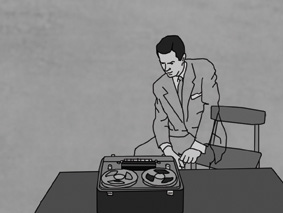
The Wind
Animation | dv | noir et blanc | 3:44 | Suède | 2009
These words are all true. These words are all used. This is the way the wind is blowing. This is the wind of the reality in which we live. All words are already spoken. All things are already said. Nothing is original. Nothing is new.
J. Tobias Anderson est né en 1971 et a grandi à Gotland sur la Baltique. Il a effectué ses études notamment à l?University Collage of Arts Crafts & Design et également au Royal Collage of Art, tous les deux à Stockholm. Il habite à Nacka juste à côté de Stockholm. Travaillant principalement avec la vidéo et l?animation, Anderson a fait des films tant fictionnels que sans narration : au fil des années, il a réalisé presque 40 films. Il a également expérimenté différentes formes de musique et d?installations sonores. Il a participé à des expositions dans des lieux importants, tels que P.S.1 Contemporary Art Center à New York, Kunst-Werke Berlin, CaixaForum à Barcelona et Museo de Colecciones ICO à Madrid. Il a eu plusieurs solo shows au MMAC Luka à Pula en Croatie, à ak28 à Stockholm et Uppsala Art Museum à Uppsala en Suède. Il travaille avec la Filmform Foundation à Stockholm et avec Espaivisor à Valence, en Espagne.
J Tobias Anderson
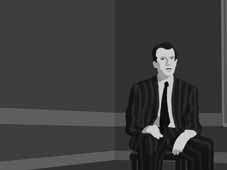
Whereto I Go
Art vidéo | dv | noir et blanc | 4:46 | Suède | 2005
La vidéo montre la confrontation d'un homme avec lui-même. Une rencontre qui n'en vaut pas toujours autant la peine que chacun pourrait l'espérer. De classiques séquences de film ont été découpées et animées pour illustrer ce dilemme, et l'image finale est créée dans un style très contrasté, avec des personnages qui font chose par dizaines de loin.
J. Tobias Anderson est né en 1971 à Gothenburg en Suède. Il vit et travaille en Suède, à Stockholm. Peintre au départ, il travaille depuis 1993 en art vidéo et animation. Il expérimente maintenant nombre de techniques comme la vidéo, la peinture, l'illustration, le son et la musique. Son travail principal reste cependant la vidéo. Il a été projeté à de nombreuses occasions : festivals et expositions dans de multiples pays. Ses vidéos sont exposées au Musée d'art moderne de Stockholm.
Carla Andrade
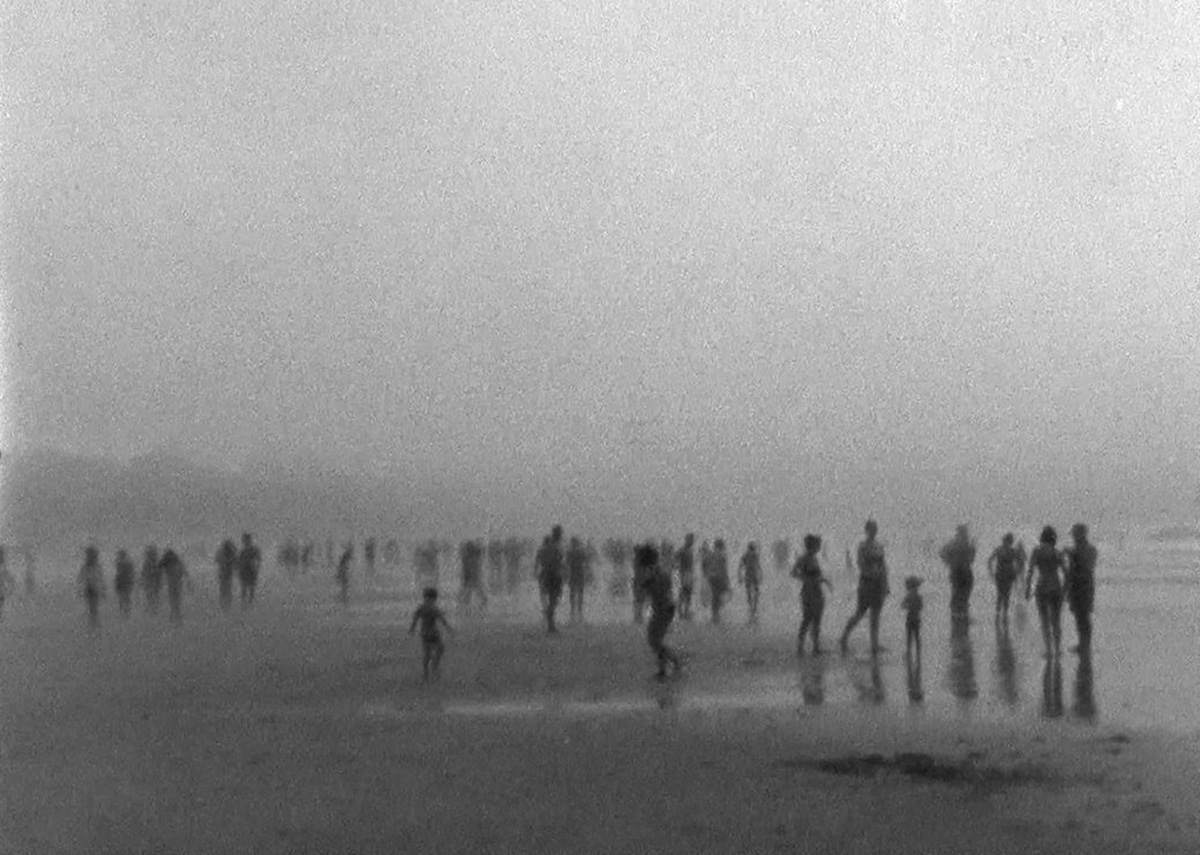
Ningún río me protexe de min
Doc. expérimental | 16mm | couleur et n&b | 27:27 | Espagne, 0 | 0
"No river protects me from myself" takes as its starting point the mysterious theft of filmed material shot in the Congo Basin rainforest. This accident offered a response to conflicts arising from the fragile and transubjective encounter with the “non-I”, which could only be practised or experienced; if one tries to virtualise it, it ceases to exist. The impossibility of representing a reality that is not one's own without creating distance or detachment, or conversely, taking control of it, leads to a backwards retreat in which, through conversations with my mother, I discover a fragmented and contradictory identity based on fragile foundations. This incessant external search for forms of knowledge that differ from the consensus—or compulsory—reality becomes internal.
An interest in the aesthetic experience and how it works as a transformer of conscience led Carla Andrade (Vigo, Spain, 1983) to study both a Degree in Audio-Visual Communication Studies and Philosophy, as well as an M.A in Artists’ Film and Moving Image at Goldsmiths University of London. This intersection between the means of visual expression and a field close to reflection is, precisely, the central aspect that defines her work. Travelling is also an important part of her process so she has carried out Artist Residencies in Iceland, Sweden, Nepal, Chile or Paris, among others. She has shown her work (both individually and collectively) in renowned contemporary art venues such as Guggenheim Museum of Bilbao, MARCO Vigo, Le 104 Paris, CaixaForum Barcelona, Tabacalera Madrid, La Casa Encendida Madrid, Bilbaoarte, Lux London or Tabakalera Donosti, etc; and in prestigious international Photography and Film Festivals such as PhotoEspaña, Mois de la Photo (Paris) or Encontros da imagem (Portugal); International Film Festival Rotterdam, Zinebi, PortoPostDoc, Courtisane, Ji.hlava, L’Alternativa Barcelona, Curtocircuito or Alchemy Film Festival. Furthermore, her work has been part of important international publications from South Korea, USA, Brazil or Spain and acquired by public and private art collections such as CA2M or CGAC. Likewise, her work has obtained awards including the First Prize of Visual Arts 2013 from Complutense University of Madrid, Emerging Artists Award Absolut 2013, Frac Vila Acquisition Award 2013 from Luis Adelantado Gallery, Women Award-Forum-Dialogue Alliance Francaise / Pilar Citoler 2012, Photography Award Madrid SUMMA 201, etc; and grants from Injuve, Institut Français, BilbaoArte Foundation, VEGAP, Agadic and the Scholarships for Abroad Artistic Creation Gas Natural Fenosa.
Samuel Andre
Danae
Création sonore | 0 | | 20:12 | France | 2004
Cette musique musicale est composée à partir uniquement de deux courts samples proposés par le compositeur Pyo. L`un des deux samples est utilisé pour construire toute la composition, transformé par différents procédés numériques tandis que l`autre apparaît ponctuellement très peu modifié par rapport à l` original. Cette pièce musicale est inspiré par le mythe de danae.
Né en 1978, de formation scientifique en mathématiques et sciences cognitives ; après son DESS en ergonomie informatique, en parallèle de ses compositions de musique acoustique narrative (http://ieva70.free.fr/sound/iev.htm), il se tourne définitivement vers la pratique et l?utilisation de l?outil informatique comme prolongement de soi - réflexion autour du geste, d?une grammaire voir presque langue et de sa représentation par le biais du réseau de communication qu?est Internet ; prolongement du travail commencé, en 2000 au SCRIME - Studio de Création et de Recherche en Informatique et Musique Electroacoustique - , sur l?ergonomie de conception d?interfaces de manipulation sonore et d?improvisation destinée aux enfants. Sa pratique majeure reste la musique qu elle soit écrite (composition ou musique de vidéo) ou improvisée. Il réalise également des formes multimédias poétiques et quelques films expérimentaux.
Schneemeier Andrea
Still Life
Art vidéo | dv | couleur | 0:56 | Hongrie, Belgique | 2004
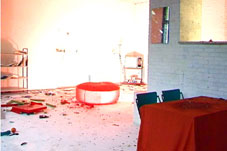
Un jeu avec la simulation et la réalité dans un environnement étrange mais réel. Sa "réalité" rappelle non seulement le milieu froid des programmes de simulation, mais également le "bonheur" artificiel d'un magasin IKEA. Sans aucune trace d'être humain, l'environnement se transforme - les objets explosent. Le film s'amuse à ébranler les instincts destructeurs du spectateur, s'interrogeant également sur le côté artificiel des média (industrie) qui nous entourent au quotidien.
Andrea Schneemeier est née en 1969 à Budapest (Hongrie). Andrea Schneemeier a étudié la peinture et les arts multimédias à l'Academie d'Art de Budapest en 1996. Par la suite, elle a étudié au Higher Institute des Beaux-Arts (HISK) à Antwerp. Elle crée de l'art conceptuel, réalise des vidéos et des installations interactives dans lesquelles elle soulève des questions à la fois sociales et politiques. Elle enquête sur les statuts sociaux, les conventions sociales et la place de l'individu dans la société. On retrouve dans son travail d'autres thèmes récurrents : la violence et l'agressivité, et les schémas établissant les rôles attribués à chaque sexe. Elle montre souvent toutes sortes de combats (armés), à la fois d'hommes et de femmes. Ses oeuvres ont été présentées dans le monde entier, et elle a reçu plusieurs récompenses pour ses oeuvres multimédias. Elle vit à Berlin.
Stephen Andrews
Dramatis Personae
| | | 6:10 | Canada | 0
Stephen Andrews
The Quick and The Dead
Animation | dv | couleur | 1:0 | Canada | 2004
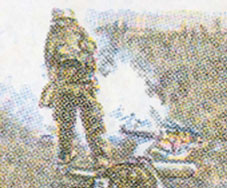
Une animation basée sur un clip vidéo de la guerre en Irak.
Stephen Andrews a exposé ses oeuvres au Canada, aux Etas-Unis, au Brésil, en Ecosse, en France et au Japon. Ses travaux s'attachent à la mémoire, à l'identité, à la surveillance et à leur représentation à travers des médias variés.

Stephen Andrews, John Greyson
On message
Vidéo expérimentale | dv | couleur | 9:30 | Canada | 2006
An analog animation using the same set of drawings to tell four different versions of the same story. The emotional fallout of two witnesses to a police shooting, a musical about groovy gay boys making the scene, a cop show about the chase and arrest of a suspect and a news report about soldiers on leave in Iraq.
Stephen Andrews was born in 1956 in Sarnia, Ontario Canada. He has exhibited his work in Canada, the U.S., Brazil, Scotland, France and Japan. He is represented in the collections of the National Gallery of Canada, as well as many private collections. His work deals with memory, identity, surveillance and their representations in various media. John Greyson is a Toronto film/video artist whose shorts, features and installations include: Fig Trees (2003, Oakville Art Galleries); Proteus (Best Actor, Sithenghi 2003); The Law of Enclosures (2000, Best Actor Genie); Lilies (1996 - Best Film Genie, Best Film at festivals in Montreal, Johannesburg, Los Angeles, San Francisco); Un©ut (1997, Honourable Mention, Berlin Film Festival); Zero Patience (1993 - Best Canadian Film, Sudbury Film Festival); The Making of Monsters (1991 - Best Canadian Short, Toronto Film Festival, Best Short Film Teddy - Berlin Film Festival); and Urinal (1988 - Best Feature Teddy, Berlin Film Festival). He co-edited Queer Looks, a critical anthology on gay/lesbian film & video (Routledge, 1993), is the author of Urinal and Other Stories (Power Plant/Art Metropole, 1993), and has published essays and artists pieces in Alphabet City, Public, FUSE, and twelve critical anthologies. An assistant professor in film production at York University, he was awarded the Toronto Arts Award for Film/Video, 2000, and the Bell Canada Video Art Award in 2007.
Claire Angelini
Es geht eine dunkle Wolk'herein
Doc. expérimental | dv | couleur et n&b | 20:0 | France, Allemagne | 2005
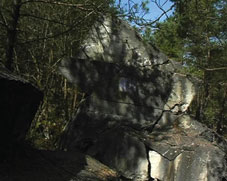
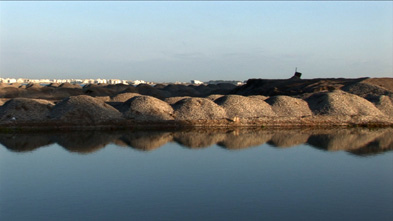
Au cours d?une promenade dans trois lieux en Bavière (tout d?abord un parc idyllique sur les hauteurs de Munich, la colline du parc olympique, puis un ensemble résidentiel au bord du lac de Starnberg à Feldafing, et enfin la forêt de Mühldorf, (un village à la frontière autrichienne) chargés du passé de la Seconde guerre mondiale, des fragments tangibles d?histoire reviennent hanter les images d'aujourd'hui sous forme de documents d?archives. L?interprétation des plans très lents qui laissent advenir la concrétude, la respiration et la lumière changeante des espaces naturels est laissée à l?imagination du public. Le film part du constat selon lequel nos espaces de vie et paysages quotidiens portent les traces ineffaçables de l?histoire.Mais l`histoire doit être entendue ici comme un sous-ensemble de la géologie comme témoin de la place et du destin de l`homme dans le monde.
Née à Nice (France) Vit et travaille à Munich, Paris, Genève. Diplômée en arts plastiques (Ecole nationale supérieure des Beaux-Arts de Paris), et en histoire de l`art (Sorbonne, Paris). A obtenu différentes bourses et résidences d`artistes depuis 1998. Entre autres Aide à la production, OFAG 2006, Aide au développement, CNC 2005, Aide à l`Ecriture, CNC, 2004, Bourse du FIACRE, 2001, Aide à la réalisation, Affaires culturelles de la ville de Munich, 2001, Bourse Akademie Schloss Solitude 1999-2000, Résidence d`artiste Villa Concordia 1998, Bourse Jeune Création/OFAG 1998. Expositions récentes (Sélection) : novembre 2006, artiste invitée, Encuentros internationales de Videoarte y Fotografia, Gigòn, Espagne, octobre 2006, artiste invitée Instants Video Marseille, Programme Oasis, mars 2006, artiste invitée, Institut national d`Histoire de l`Art, Paris, février 2006, artiste invitée, Videotheka, Kunsthalle Vienne, mai 2005, Färthensuche, Spiegel/Lothringer 13, Munich, septembre 2004, Hier liegt die Grenze des pädagogischen Bemühens, Orstermine 2004, Munich, août 2004, Remix, Spiegel/Lothringer 13, avril 2004, Intervalles, galerie Martine et Thibault de la Châtre, Paris, avril 2003, Réciprocités, Goethe-Institut, Rome.
Claire Angelini
Jeune, révolution! 2007-2012
Doc. expérimental | hdv | couleur | 13:12 | France, Allemagne | 2012
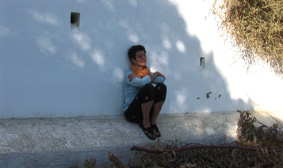
(Brise la mer ! / Jeune, révolution !) : deux courts films prennent le spectateur en étau, et à travers eux, deux paroles sur l?histoire : celle de Narriman B., qui s?interroge sur les raisons de la guerre d?Algérie à l?occasion de la commémoration de l?Indépendance (1962). Et celle d?Ikbel Z., confronté au délitement de la Révolution de jasmin et au désenchantement de la jeunesse tunisienne. Quand aux cuves de pétrole du port de Béjaia, (Algérie), répondent les toupies d?abord fougueuses, puis de plus en plus lentes, d?une table de café tunisienne, de quel tour sur soi-même la révolution, dans l?un et l?autre de ces deux pays, a-t-elle été porteuse ?
Claire Angelini, artiste et cinéaste (ensba Paris / Sorbonne / HFF Munich), interroge le rapport de l?art à l?histoire comme inscription du politique, sous les espèces de la trace, la ruine, la réminiscence et de la survivance des images. Le cinéma comme outil critique sensible et comme dispositif visuel et sonore, lui permet de questionner l?histoire qui hante notre espace commun aujourd?hui et ce faisant, d?en interroger la représentation. Diffusions récentes : MAC-Santiago du Chili 2012 / galerie Fucares Madrid 2012 / Instants video Marseille 2012 / Underdox 07 Munich 2012 / Cinemateca brasileira Sao Paolo 2012 / Etats généraux du film documentaire Lussas 2011 / Cinéma du Réel Paris 2011 / Institut franco-japonais Tokyo 2010 / Viennale 2009
Claire Angelini
La mémoire n'est pas un jeu d'enfant
Documentaire | dv | couleur | 52:50 | France, Allemagne | 2009
1 femme / 3 pays / 3 guerres Ce film ? qui s?attache à la figure d?une femme revenant sur les lieux de son enfance entre France, Tunisie et Algérie ? convoque, par le dispositif qu?il met en place, les catégories croisées de la mémoire individuelle et de l?histoire dans un espace lui-même sédimenté par les couches du passé et du présent. Film sur les paysages perdus de notre enfance construit comme un voyage, "La mémoire n?est pas un jeu d?enfant" est une réflexion sur la façon dont nous sommes traversés par l`histoire dans les lieux où nous grandissons. Un "arpentage" qui met en perspective la question de la mémoire avec le territoire et la conscience de l?adulte, qui est réminiscence et parole confrontées à l?image et au son des paysages. Une réflexion politique au sens profond du terme.
L?hypothèse que déploie Claire Angelini dans sa pratique, est que l?histoire est une trace physique et une projection mentale. Ces traces perdurent dans le présent des lieux (défigurés, transformés ou identiques), dans les corps (qui se souviennent ou qui oublient), et sous la forme d?archives. Ces traces cependant sont activement constitutives de notre espace collectif aujourd?hui. Travaillant différents médias ( installation, film, photographie), Claire Angelini, qui manipule des surfaces tactiles ou projetées, s?attache à ce que la surface du réel cache ou conserve de ce qui affleure, émerge, s`enfouit, a été enfoui mais subsiste, et s?intéresse par là à la notion de recouvrement et à la dimension géologique de l?histoire. Diplômée de l?Ecole Nationale Supérieure des Beaux-Arts de Paris, Claire Angelini, qui est titulaire d?une maîtrise d?Histoire de l?art, a aussi fréquenté la section documentaire de l?H.F.F. (Hochschule für Film und Fersehen) de Munich. Claire Angelini vit et travaille actuellement à Munich et à Paris. Dernières projections: International Film Festival Underdox 04, Munich 2009 et Viennale 2009
Claire Angelini
MARCHE / ARAGON
Doc. expérimental | dv | couleur | 23:7 | France, Allemagne | 2010
Marche / Aragon montre comment la guerre a traversé et influencé deux villages du sud de l?Europe, l?un en Italie méridionale, dans les Marches, l?autre en Espagne, dans la province de Huesca. Ortezzano a vécu la montée du fascisme dans les années 30. Belver au contraire, a tenté une expérience unique et singulière d?anarchisme au moment de la République espagnole. Formellement tout oppose les Marches à l?Aragon : d?un côté se développe un film sans paroles au fil d?un album communal, seul dépositaire d?une mémoire inavouable. De l?autre, un récit se déploie, au fil d?un témoignage incarné par la voix d?un survivant de la guerre d?Espagne. La musique aussi, devient, au cours du film un protagoniste essentiel de Marche /Aragon, chargée qu?elle est de sa propre mémoire politique.
Diplômée de l?Ecole Nationale Supérieure des Beaux-Arts de Paris, où elle a étudié la photographie et le montage sonore, Claire Angelini, titulaire d?une maîtrise d?Histoire de l?art, a fréquenté la section documentaire de l?HFF (Hochschule für Film und Fersehen) de Munich. Sa production inclut l?installation, le film, la vidéo, la photographie, le son et le dessin. Claire Angelini vit et travaille à Munich et à Paris. Ses films les plus récents, ont été présentés à l?Institut franco-japonais de Tokyo, à la Bobine de Grenoble, à la Viennale 2009, à la Maison des Arts d?Amiens, à la 12e BIM de Genève, aux Instants vidéo à Marseille, au festival Underdox de Munich, à la Kunsthalle de Vienne, au Festival internacional de videoarte de Gijon, à la Nuit Blanche 2008, ainsi que dans différents cinémas en France et en Allemagne, et, dans le cadre des Rencontres Internationales Paris-Berlin-Madrid, au Centre Georges Pompidou, au Musée du Jeu de Paume, à la Haus der Kulturen der Welt, ainsi qu?au Museo Reina Sofia de Madrid.
Claire Angelini
SHE/SEE
Documentaire | dv | couleur | 20:0 | France, Allemagne | 2007
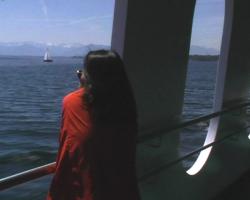
Ce film, fait travailler les éléments d?une improbable rencontre, celle d?une « boat-people » qui a fui son pays, le Vietnam, pour aboutir en Allemagne et du lac de Starnberg nimbé du souvenir mythifié de Sissi et de Louis II de Bavière. Autour du corps présent-absent de la réfugiée ?celui aussi d?un souvenir qui se délite ? se déploie une narration fragmentaire et stratifiée. Quelle image peut saisir en effet la caméra aujourd?hui de cet itinéraire de peur inscrit à même le corps, déplacé dans le tracé paisible d?une excursion touristique « sans histoire » ? Qui parle, et de quoi dans ce jeu complexe des questions-réponses à trois voire quatre voix, et en trois langues (français, allemand, vietnamien) ? De l?impossible palimpseste, émergent des fragments d?histoire : celle de cette femme, celle de son pays déchiré, celle de son voyage en mer, et au-delà celle de la condition de réfugié dans le monde actuel. La disposition des voix, et les incertitudes de la traduction ouvrent sur un vide, délinéant le manque de l?exilée, l?indécision quant à l?identité de celle qui parle, indécision identitaire, devenue sa blessure invisible.
Bio-Filmographie Diplômée de l?Ecole Nationale Supérieure des Beaux-Arts de Paris, où elle a étudié la photographie et le montage sonore, Claire Angelini, qui est titulaire d?une maîtrise d?Histoire de l?art, a aussi fréquenté la section documentaire de l?H.F.F. (Hochschule für Film und Fersehen) de Munich. Circulant entre les langues et les villes européennes, elle s?intéresse plus particulièrement dans son travail aux rapports entre l?art et l?histoire, dans le cadre d?une production multimédia incluant aussi bien l?installation que le film ou la video, la photographie, le son, ou encore le dessin. Claire Angelini vit et travaille actuellement à Munich et à Paris. Films 1996 La minorité, Hi8 transféré sur VHS, 2 minutes 30. (Editions video Artos/ Athènes) 2002 Réciprocités, mini dv, 3 x 60 minutes. (Zweite Architekturwoche, München, Instants video, Martigue, 2004) 2004 Un trou dans le gant, mini dv, 32 minutes. (Kunsthalle Vienne 2006, Université du Québec à Montréal 2006, festival internacional de video arte y fotografia, Gigon, Espagne, 2006, Instants video, Friche de la Belle de Mai, Marseille, 2006.) Ici s?atteint la limite de l?effort pédagogique, mini dv, 22 minutes. (Instants video, Friche de la Belle de Mai, Marseille, 2006.) Lullaby, mini dv, 6 minutes. (Spiegel/ Lothringer 13, München, 2004) 2005 Es geht eine dunkle Wolk herein, mini dv, 20 minutes. (Kunsthalle Vienne 2006, Rencontres internationales Paris-Berlin, Musée du Jeu de Paume, Paris, 2006, Rencontres internationales Paris-Berlin-Madrid, Circulo de Bellas Artes, Madrid, 2007, Rencontres internationales Paris-Berlin, Kino Babylon, Berlin 2007) 2007 Loci soli/Soliloques, mini dv, 21 minutes. (Programmation annuelle des Instants video, marseille 2007- 2008) SHE/SEE, mini dv, 22 minutes. ( Biennale de l?Image, Saint-Gervais, Genève, 2007) En cours : La mémoire n?est pas un jeu d?enfant ( production Atopic/Christophe Gougeon/Aide à l?écriture et au développement, CNC) et Et tu es dehors, installations multimédia (production Finavril/Emmanuel Deswartes).
Dominic Angerame
Anaconda target
Vidéo expérimentale | dv | noir et blanc | 8:0 | USA | 2005
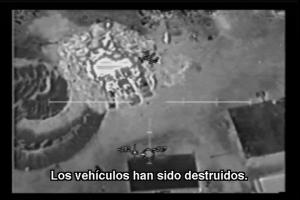
Nous n?avons pas le temps d?être effrayé, tout arrive en quelques secondes. ??Le regard s?allume devant in pare-brise, tout est prêt pour que l?ordinateur fasse son travail : ??C?est l?ordinateur qui ajoute la dernière touche?? Paul Virilo Le 4 mars 2002, à peu près2000 troupes de la coalition dirigées par les Etats-Unis étaient engagées en combat rapproché avec des petites poches de supposés combattants Al Qaeda et Talibans dans le Nord de l?Afghanistan, dans une opération nommée Anaconda? La pellicule de cette ?uvre vient d?éléments de cette mission. ?? Autre qu?un carton et qu?une citation du théoricien des médias Paul Virilo annexés au début, la dernière vidéo de Angerame est un objet complètement trouvé : une pellicule militaire d?une opération offensive sur une mosquée en Afghanistan. Pour moi, il s?agit d?un cliché qui permet de mettre à l?affiche les quelques instants qui se passent, je ne peux pas dire que je pensais honnêtement regarder une vidéo surveillance militaire ou un jeu vidéo, mais la pertinence inéluctable du cliché semble être l'un des points principaux d?Angerame. Après CNN, Baudrillard et, en fait, Virilo, nous avons toujours le même problème ? des soldats de la X box de dix-huit et dix-neuf ans allant exécuter nos ordres. Certains spectateurs avec qui j?ai discuté avaient gardé en travers de la gorge la présentation crue d?Angerame de la pellicule, la ressentant comme s?il n?y avait pas assez d?art. Mais ce point de vue oublie le contexte, l?acte rebelle de tirer et horrible pellicule dans le domaine raffiné de l?esthétique de la projection des films expérimentaux. (En tant qu?Américains, les dollars de nos taxes sont utilisés par millions dans la production de tel films.hard). À la fin, rien d?autre dans le programme de visionnage ne m?a balancé si loin de mon état d?esprit contemplatif, assis et regardant le prochain film, en opposition, conduire tous les spectateurs dehors pour quelque manque de civisme, me semblait vaguement obscène. Et encore? Et encore? nous savons que ce n?est jamais aussi simple, n?est-ce pas ? Michale Sicinski Expositions Toronto International Film Festival, 2004 Onion City Film Festival, Chicago, 2004 New York Film Festival, Lincoln Center, 2004 Viennale, Vienne 2004 Pacific Film Archives, Berkeley, Californie 2004 Hong Kong International Film Festival, 2005 Director?s Choice, Black Maria Film Festival, 2005 Australian Center for Moving Image, Canberra, Australie, 2005 Rotterdam Film Festival, 2005 Nashville Film Festival, 2005 Tiburon Film Festival, 2005 San Francisco Cinematheque, 2005 Big Muddy Film Festival, 2005, First Place European Media Arts Festival, Osnabruck, Allemagne, 2005 Black and White Festival, Porto, Portugal Athens International Film Festival, Athens Ohio Fear No Film Festival, Salt Lake City, 2005 Empire Film Festival, 2005 Cracow Film Festival, 2005 DMZ_2005 Exhibition, Korea, 2005 Splitz Film Festival, Croatia, 2005 Torino International Film Festival, 2005 Sarajevo Film Festival, 2005 Montreal International Film Festival, 2005 Seoul Net&Film Festival, 2005 VII Festival Iberoamericano De Cine De Santa Cruz, Bolivie
??Voir la ville par les yeux de Dominic Agerame est comme regarder une bête organique de béton qui sasse et respire en riches tonalités de blancs et de noir.?? Sike Tudor, SF Weekly. Depuis 1969, Dominic Angerame a fait plus de 35 films qui ont été montrés et qui ont remporté des récompenses dans des festivals de films partout dans le monde. Il fut aussi honoré de deux Cine Probe Series au Museum of Modern Art de New York (MOMA) en 1993 et juin 1998. Sa dernière ?uvre, Targer (2004) est exposée au Toronto International Film Festival, au Onion City Film Festival, à Chicago, au New York film festival et à la Viennale de Vienne et sera projeté au Hong Kong International Film Festival, au Rotterdam Film Festival, au Nashville Film Festival et bien d?autres encore. Sa série de films Battle Stations - A Navel Adventure (2002), Pixiescope (2003), The Waifen Maiden (2003), et Consume (2003) son sur le chemin de la projection dans des festivals internationaux dont Toronto Film Festival, Madrid, Les Rencontres Internationales Paris/Berlin et bien d?autres informations à les propos sont disponible sur demande. Ils ont aussi été projetés à la Cinémathèque de San Francisco, au Yerba Buena Center en le 11 décembre 2004. Angerame enseigne la réalisation de film et cinématographique ainsi que la critique au San Francisco Art Institue en tant qu?artiste invité. Il enseigne aussi la production de film et le cinéma à l?Université de Californie Berkeley, Extension, au New College of California et fut maître de conférence invité et artiste invité à l?Université de Stanford, la School of the Art Institute of Chicago, la Graduate School of Theology de Berkeley parmi d?autres. Dominic Angerame fut aussi directeur exécutif au Canyon Cinema pour les vingt dernières années. Sous sa direction, le Canyon Cinema est devenu le distributeur le plus renommé dans le monde de l?avant-garde et du film expérimental. La contribution du Canyon Cinema dans le domaine de la réalisation d?avant garde et expérimentale est historique et héroïque. Quant aux projets de réalisation, Angerame fut récompensé par des prix de production de la part du Illinois Art Council, Sammuel B Mayer Foundtion, trois autres du National Endowment for the Art Western Regional Fellowship, The film Art Foundation. Au printemps 1999, M. Agerame a dirigé une série nommée Shake The Nation et a tracé le développement de la réalisation de film d?avant garde à San Francisco de 1939 à nos jours. M. Angerame fut nominé pour une bourse de la fondation John D. Rockfeller en 2000. Le film de Dominic ??In The Course of Human Events? ? (1997) s?inscrivit dans un groupe d?expositions tenues à la Fondation Cartier de Paris in novembre 2002 jusqu?en mars 2003 nommée ??Ce Qui Arrive? ? et dirigée par le susmentionné urbaniste Paul Virilo.