Catalogue 2025-2026
Below, browse the 2025-2026 Rencontres Internationales catalogue, or search the archives of the works presented since 2004. New video clips are routinely posted and the images and text are regularly updated.

Mustafa Uzuner
Soul of the Foot
Experimental doc. | 16mm | color and b&w | 66:0 | Canada, Turkey | 2025
Soul of the Foot is a triptych on metamorphosis, tracing memory across cosmic, domestic, and urban terrains. The film opens with archival footage of the 1999 solar eclipse, a celestial event casting a shadow over my hometown of Amasya just days before a devastating earthquake. This moment of light and shadow becomes an axis of transformation, where history itself seems to recalibrate. The second movement shifts to 2005, unfolding through a home movie that captures everyday intimacy: a grandmother praying, an aunt preparing a sacrificed lamb, and the soft conversations of my mother and sister. Personal gestures here reverberate against the larger hum of a nation dreaming of Europe, where the domestic and the political intertwine. The final movement steps into present-day Istanbul, filmed on 16mm. The city pulses with the noise of elections, Kurdish men on a vapur, children at play, street musicians, a Ukrainian protest, and nationalist radio broadcasts. Between the foggy mountains of Amasya and the fractured light of Istanbul, the film searches for a mythic return, a pulse of belonging suspended between memory and dislocation.
Mustafa Uzuner is a filmmaker/researcher based in Montreal, Quebec, and a PhD candidate at York University. His work intersects archive, memory, and experimental cinema. His latest film, Soul of the Foot, won the New Visions Award at RIDM 2025.
Mona Vatamanu, Mona Vatamanu and Florin Tudor
Cu totii devenira pasari
Documentary | mov | color and b&w | 40:29 | Romania | 2024
The mythologies of the Tierra del Fuego peoples, Selk’nam, Yamana, Kawesqar, and Haush, tell a story of a time when supernatural immortal beings inhabited the earth and transformed into celestial bodies: stars, the moon, and the sun, as well as mountains, lakes, birds, and animals. After 1880, the ancestral lands of the Indigenous people of Tierra del Fuego were politically divided between Argentina and Chile and colonized by mostly European settlers – adventurers, gold seekers, and farmers. The film examines the role of Romanian explorer Iuliu Popper (also known as Julius Popper, Julio Popper) in the aggression against Indigenous peoples, particularly his involvement in the genocide of the Selk’nam. Popper’s actions in Tierra del Fuego can be understood as part of a broader phenomenon of self-colonization and assimilation of Western European colonial imaginaries in Romania, reflecting local colonial aspirations disguised as geographical explorations.
Mona Vatamanu and Florin Tudor (1968/ 1974). Working together for over two decades Mona Vatamanu and Florin Tudor address the theme of history in films, installations, paintings and performative actions that revisit ideologies, utopias and modernist projects. Exhibitions (selection): Makeshift Memorials, Small Revolutions, Kadist San Francisco, 2024; Tara de foc, Kunthalle Bega, Timisoara, 2024; The Cynics Republic, Palais de Tokyo, Paris, 2024; After Rain, Diriyah Biennial, 2024; 5th Kyiv Biennial: Against the Logic of War, Augarten Contemporary, Vienna, 2023; Kathmandu Triennale 2077, Patan Museum, Kathmandu, 2022; Omnia Communia Deserta, La Loge, Brussels, 2020 (solo); The Street. Where the World Is Made, Maxxi, Roma, 2019; Gaudiopolis – Attempts at a Joyful Society, GfZK, Leipzig, 2018; Pr?p?denia p?mântului, Salonul de proiecte, Bucuresti, 2016 (solo); All Men Become Sisters, Muzeum Sztuki ms2, Lodz, 2015; Social Factory, 10th Shanghai Biennale, Power Station of Art, Shanghai, 2014; A History, Centre Pompidou, Paris, 2014.


Ond?ej Vavre?ka
Lišejníky
Experimental doc. | 16mm | color | 43:0 | Czech Republic | 2024
They do not represent a culture of more, but a culture of enough: lichens. And the two men who have dedicated their lives to them in the wilderness. Lichens are amazing organisms that are unparalleled on Earth. They cannot be seen as individuals, like a hyacinth, a heron or a human, but they represent a relationship. The two entities that make up a lichen, a fungus and an algae, have for unknown reasons decided that living together would be better than living alone. Lichens represent a metaphor that would inspire humanity to survive in the future. Lichens represent a new story discovered by the enfant terrible of biology, Trevor Goward. He and his partner Curtis Randal Björk guide us through the film. A purely cinematic experience filmed in canadian Wells Gray valley, home of the wilderness learning centre.
Ond?ej Vavre?ka is a filmmaker, visual artist, musician, and teacher. He first studied programming before turning to philosophy and linguistics. He then pursued film studies in Prague (FAMU) and Moscow (VGIK). His films have received several awards. He exhibits his paintings, sculptures, and costumes in solo and group shows. He plays music and often composes for his own films. He has published several “film-osophical” texts. He is currently working on a series of paintings inspired by the world of lichens, for which he made a film last year that is now circulating at international festivals. This year, he completed a musical documentary on the idea of progress, titled 1+1+1. He is also preparing a fiction film about generational trauma, Beton, and a documentary about listening, Mythos. He teaches at FAMU, at the Center for Audiovisual Studies. More information at: www.ondrejvavrecka.cz

Katja Verheul
Red Dust
Experimental doc. | dcp | color | 17:9 | Netherlands, France | 2024
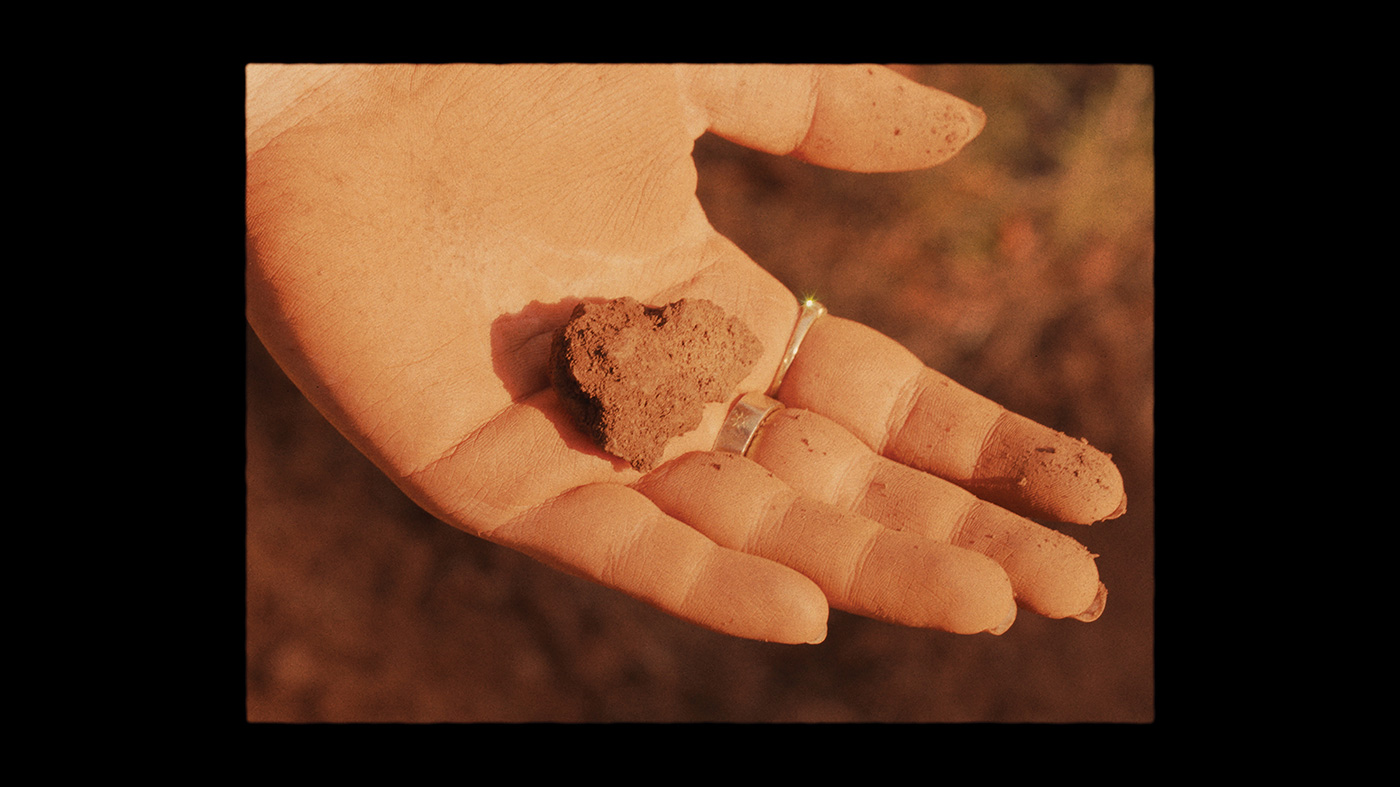
A couple of times a year, the sky turns red in France. Sand dust from the Sahara is passed through a difference in air pressure from North Africa to Southern Europe. This dust, a time capsule containing cesium-137 from the French nuclear tests in Algeria, covers everything. The film exposes the impact of a war that was never fought. A French veteran and an archeology student share and speculate on what will be remembered and what will be hidden under the sand forever.
I am a filmmaker and artistic archeologist based in Rotterdam (NL). I graduated with a BFA in Audio-Visual Arts from Gerrit Rietveld Academie (NL) in 2012 and a MFA in Fine Arts from Goldsmiths University (UK) in 2016. I believe in the revealing value of long-term research. The deep dive into complex matter is an important part of my work process. With my films I want to make complex (invisible) social, political and economical issues visible. My work often arises from the question; what remains after a war and what is the impact of these remains on people and nature? I am working as an artistic archeologist digging through our most recent history. Before it is nostalgic, before it is a story that lies generations before us. Not only to demystify, but to make the mediated and almost historicized and perhaps forgotten reality personal again. I was a resident at the Jan van Eyck Academie (2018-2019), Visio - European Program on Artists Moving Images (2018), Film Forward (2020-2021) and Rotterdam Writers' Rooms (2024). I have shown my films at IFFR, Visions du Réel, Eye Filmmuseum, Kasseler Dokfest, Dokufest, Ji.hlava IDFF, LeGuessWho?, Sharjah Art Foundation, Nederlands Film Festival, Art Rotterdam, MAXXI Museum and on Dutch television, among others.
Resem Verkron, Marc Serena
AS AVENTURAS DO ANGOSAT
Fiction | mov | color | 35:0 | Angola | 2025
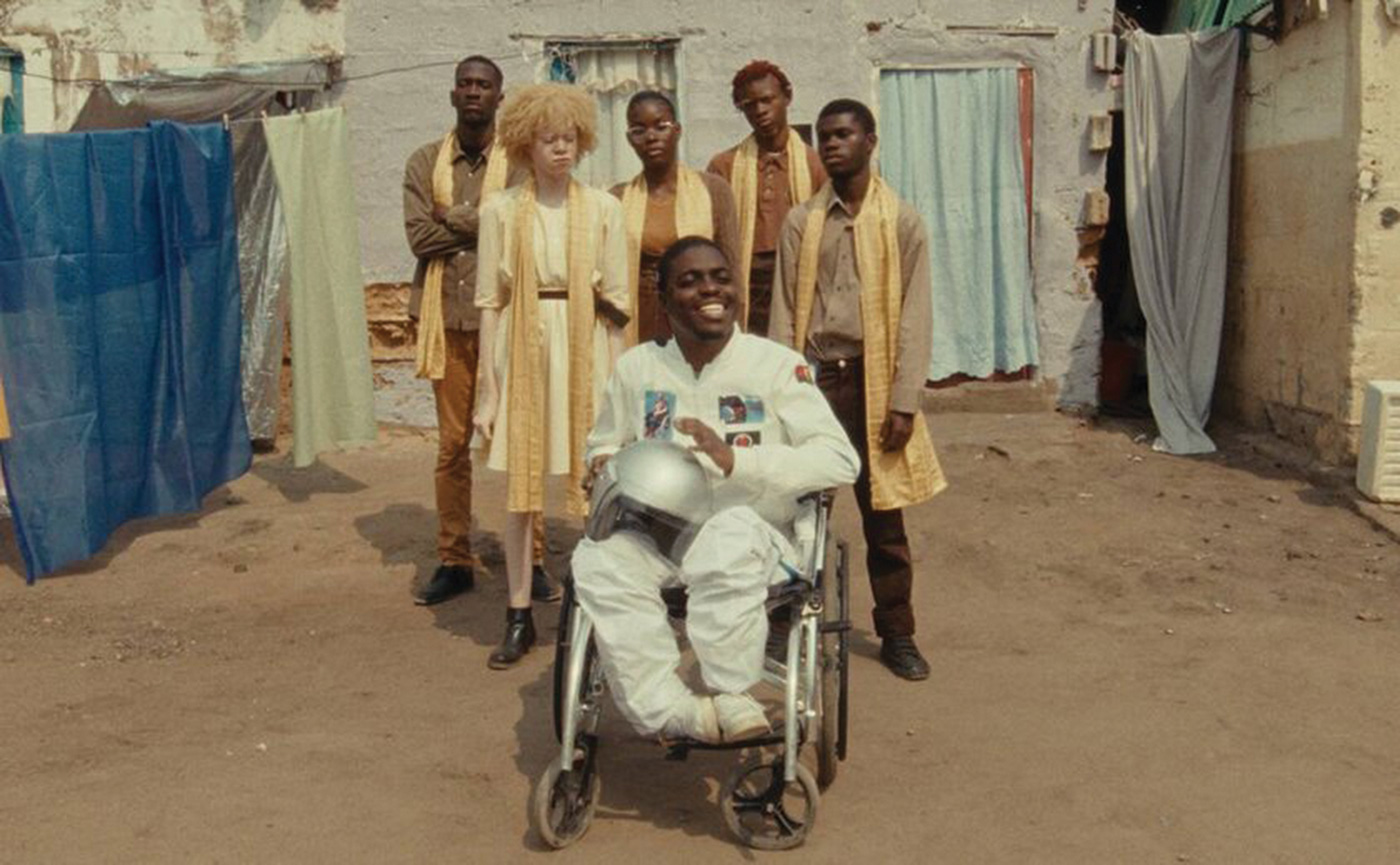
In 2017 Angola launched its first satellite into space… and it was shortly declared lost. As Aventuras do Angosat is thed dream born from that frustrated endeavour, in the form of a musical film written and performed by Isis Hembe, one of the leading names in Angolan urban music, here transformed into Man Ré. Filmed in a single take in the Cazenga district of Luanda with new emerging talents.
Resem Verkron (1999) is part of two leading prominent cultural movements in Luanda: the urban art collective Verkron Collective and Geração 80. His debut short, Lola & Mami (2021), explored toxic masculinity. Marc Serena (1983) codirected the award-winning documentary Tchindas (2015), broadcast on PBS in the United States. His feature El escritor de un país sin librerías premiered at l’Alternativa and won a DIG Award for outstanding European investigative journalism.

Philip Vermeulen
Chasing The Dot
Multimedia installation | 0 | color | 18:35 | Netherlands | 0
Chasing The Dot (2021-ongoing) is an immersive rollercoaster of light and colour, a sensorial plunge into the limits of perception. Within a vast, horizonless Ganzfeld space, the audience floats through storm-like fields of colour, blazing with indirect light, 1 million lumen waves carrying vivid after-images. At the centre of their gaze, a single floating point, he foveal dot, flares to life and remains fixed, no matter where the eye turns. Premiered at Rijksmuseum Twenthe, this installation explores stroboscopic thresholds and synaesthesia. Inspired by Brion Gysin’s cut-up technique, the meticulously crafted light score fragments and reassembles vision, prompting open-eye hallucinations. Viewers experience a sensory fusion, seeing with their ears and listening with their eyes. Every modulation of hue, frequency, and decay reveals the hidden architecture of consciousness, exposing its hinges and seams. The audio emerges directly from the humming, pulsing, and crackling of the powerful lights, intertwining seamlessly with the visual hallucinations. It sounds like a rhythmic, electric storm rich, textured, and hypnotically synchronized with waves of colour. Here, light becomes tangible matter. Perception transforms into choreographed dance, casting each viewer as co-author. The artwork completes itself when spectators close their eyes, creating private cinemas behind their eyelids. Chasing The Dot demonstrates how flexible our perception of reality truly is, highlighting how astonishingly fine tuned our brains are in creating consciousness.
Philip Vermeulen is a Dutch artist who explores the fundamentals of human perception. His installations are to be experienced with the whole body, while challenging the physicality of light and sound, movement and vibrations. Vermeulen experiments with a variety of elements including motion, light, sound compositions, physics, nature, and digital technology, creating hypersculptures that appeal to and trick the senses of the spectator. These kinetic works act as a catalyst, dissolving the boundaries between mind and material, creating new realms of imagination and challenging perspectives. His installations have been exhibited in museums such as Stedelijk Museum Amsterdam (NL), Stedelijk Museum Schiedam (NL), Rijksmuseum Twenthe (NL), Museum Voorlinden (Wassenaar, NL), Museum for International Light Art (Unna, DE), iMAL (Brussels, BE), Light Art Museum (Budapest, HU), Industrial Art Biennial (Labin, HR) and ART Rotterdam (NL). Works have also been featured at media festivals, including Sonic Acts (Amsterdam, NL), Ars Electronica (Linz, AT), Festival Interstice (Caen, FR), Mapping Festival (Geneva, CH), Novas Freque?ncias (Rio de Janeiro, BR) and CTM at Halle am Berghain (Berlin, DE). In 2024, Vermeulen will present his first large-scale solo exhibition Chasing The Dot at the Rijksmuseum Twenthe.
Susanna Wallin
Lizzy
Experimental doc. | 4k | color | 15:0 | Sweden, USA | 2024
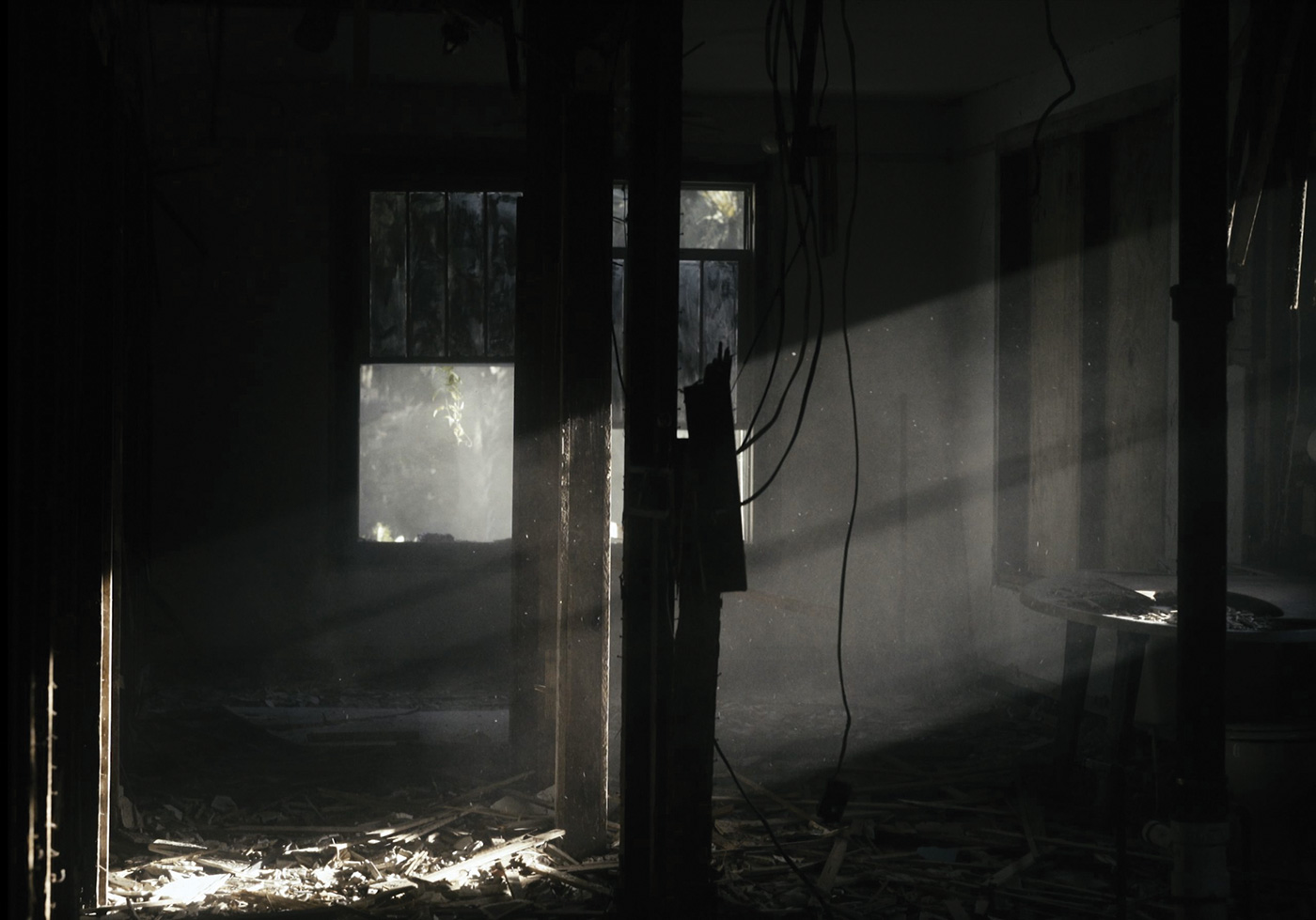
Lizzy is the result of the days spent in the aftermath of the death of a neighbour, who passed in the house where she had lived out her whole life on the Hillsborough River in Tampa, Florida and who left behind an electric organ addressed to the filmmaker, without a note. To receive it was like a wild riddle.How might one story continue in the hands of another? What powers organize the telling? Through weaving indoors with outdoors, dust with swamp, celebration with critique, the film traverses binary notions such as self-world, truth-fiction, witnessing-imagining and nature-experience among others.
Susanna Wallin is an artist and filmmaker engaged in questions regarding what to do with our time, our bodies and the tools we are given to live a life. She probes subject matter across diverse contexts, modalities and timescales, often immersing herself in a particular place over extended periods. She is attentive to what emerges in hesitation, together, through experimentation and open ended, lending an ear to the unspoken with fiction as practice. Born and raised in Sweden, she studied filmmaking and art practice/theory at Goldsmiths College and University of the Arts London in the UK. She has been the recipient of numerous awards including The Flamin London Artist Film and Video Award, New Approaches, Film London UK, Pure Fiction, Sweden and commissions from the UK Film Council, Channel 4, BBC, Arts Council England, Arte France/Germany, SVT, Sweden and the BFI in the UK. Her award-winning films are shown in cinema and gallery contexts and have appeared in venues such as MOCA LA, The American Cinematheque, The Barbican, Whitechapel Gallery, The London Underground, ICA and the British Film Institute. In recent years, Wallin has been developing several feature length film projects, one of which is set in Florida and now in post production. She is part of the Research School at University of the Arts London in the UK completing a PhD through practice and is Assistant Professor of Film and Video at University of South Florida in the US. She lives and works between Tampa and London.

Alexander Walmsley
Tropical Depression
Experimental doc. | 0 | color | 31:9 | United Kingdom | 2025
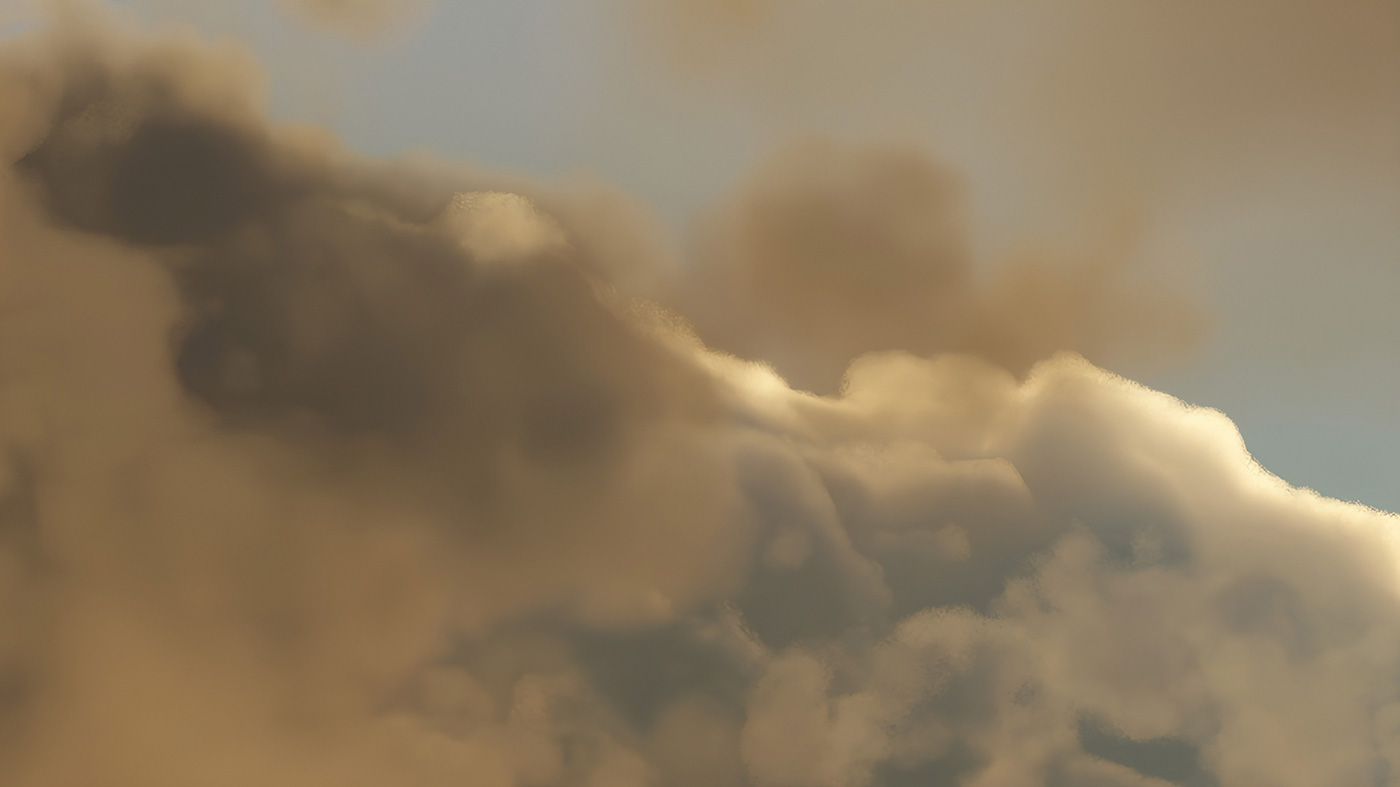
Tropical Depression follows the life and death of 21 cyclones that took place in the southern Hemisphere during the 2023 to 2024 cyclone season. Combining found footage and text fragments with recorded footage of the storms within Microsoft Flight Simulator - a videogame where weather is visualised in realtime using meteorological data - the film explores the aesthetic implications of documentary filmmaking that relies on data-generated rather than lens-based imagery, and the depiction of violent weather events as data-driven climate models.
Alexander Walmsley (UK, b. 1992) is an artist working between film, photography and digital media. In his research-based practice, he investigates how our understanding of the earth is shifting, mediated by the new technological, environmental and social realities of the 21st century. His recent work has been shown at the Daejeon Biennale of Arts and Sciences, Tirana Art Lab, Sharjah Art Foundation, The Photographers' Gallery, and Athens Digital Art Festival. He was a commissioned artist for the Albanian pavilion of the 59th Venice Biennale and was shortlisted for the Deloitte Photo Grant in 2023 and Istanbul 212 Photography Prize in 2021.

Chun Wang
Budapest Is Grey And Blue, But Hell Is Purple
Experimental film | 4k | color and b&w | 16:10 | Taiwan, Hungary | 2023
These images appear in this world all because of an 18-year-old gypsy boy, Pisti. A chance encounter an existing gap in our chain of cause and effect. Like opening the door but realising there is no end, and now it cannot be closed no matter what. “I” is a place where events take place, an existential exploration.
WANG Chun (b. 1988, Taiwan) is a video production worker and film producer. His practice is based on transformations between different creative languages (those of image, text, sound, and body), searching for the limits of language and seeking to measure the distance in the act of viewing.

Franz Wanner
Berlin-Lichtenberg
Documentary | mp4 | color and b&w | 7:20 | Germany | 2024
The video Berlin-Lichtenberg uses footage from a home movie filmed in 1943. The apparent intention of the filmmaker – to capture peaceful moments of family life such as a wife and child on a walk or leisure time at a lakeside restaurant in the Berlin district of Lichtenberg – is disrupted by unintended visual content. In the background, everyday life in the forced labour system becomes visible: a group of female forced labourers on the way to their work site, and the barracks of a forced labour camp behind the excursion venue. These visual elements are not consciously chosen, but rather a casual documentation of the omnipresence of forced labour in Nazi Germany. The amateur footage has been re-edited for the video with intertitles that contextualise the silent images and add a fictional level.
In his artistic work, Franz Wanner (*1975 in Bad Tölz, Germany, lives in Zurich) addresses topics such as the European Union’s migration policy, the German secret service and the arms industry, as well as their history and current structures, and the effects of Nazism on the German imperative of prosperity. “In a conceptual practice whose consistency of research and artistic output, in the tradition of Hans Haacke, continues – by means of investigations and transmedia – to ask questions where no one has yet done so” (Nora Sternfeld, HFBK Hamburg), “he creates images of a collective cognitive dissonance and analytical poetry about the pathology of overlooking within the Germany of today and its idioms” (Stephanie Weber, Lenbachhaus Munich). As Artist in Residence at the Harun Farocki Institute, he developed the exhibition Mind the Memory Gap for the KINDL – Centre for Contemporary Art in Berlin. Under the title Eingestellte Gegenwarten, he realised his first solo exhibition in Italy at Merano Arte, which will be shown in modified form at the Lenbachhaus in Munich in 2026.
Feargal Ward, Jonathan Sammon
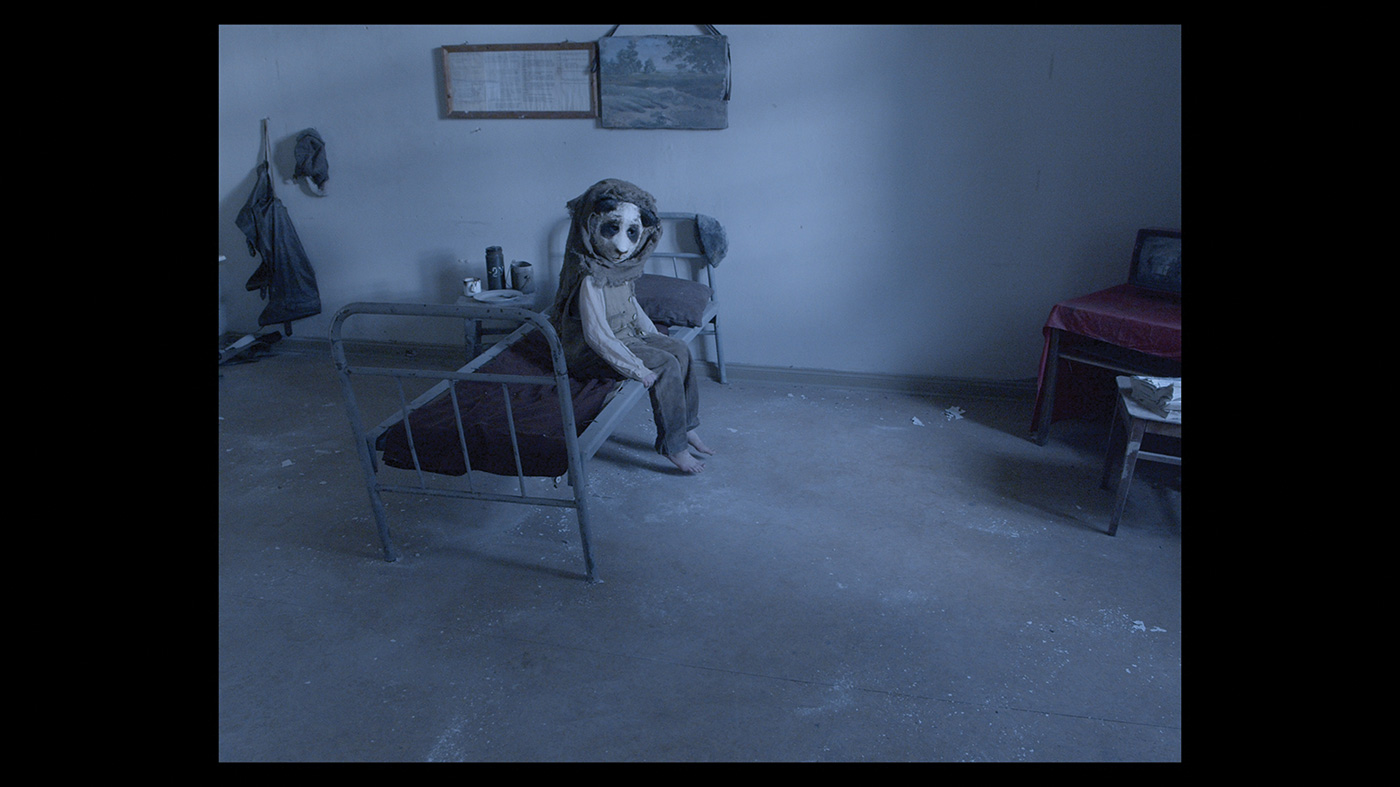
Ivanko the Bear's Child
Experimental doc. | dcp | color | 25:0 | Ireland | 2024
A peasant’s wife loses her way in the forest and stumbles into a bear’s den. The bear keeps her with him, and after a time, a half-bear, half-child is born. They long to escape. To this backdrop, we move through the corridors and streets of a deserted German military town, once the central headquarters of the Soviet army’s occupation of Eastern Europe. Sealed off to the public for decades, this obscure complex became known to outsiders as “the Forbidden City.” A primal Russian fairy tale is employed to navigate this labyrinthine site, which appears to speak to both the legacy of this contested past and the unsettling resonances of our present.
Feargal Ward and Jonathan Sammon are filmmaking artists from Ireland. Much of their work explores the boundaries and possibilities of the hybrid-documentary form, where tropes and devices of narrative cinema are often appropriated or subverted in an attempt to interrogate established truths. Previous films they have collaborated on include 'Tin City', which premiered at this year’s Berlinale (Forum Expanded) before screening at multiple festivals including Karlovy Vary, Cinéma du Réel, and Festival dei Popoli, where it was awarded the International Discoveries Prize. Other collaborations involving Adrian Duncan include the films 'Lowland' (Cork International Film Festival), 'Memory Room' (IDFA, EVA International, Dokufest Kosovo), and 'Tension Structures' (IDFA, Hot Docs, RIDM). Ward’s feature documentary 'The Lonely Battle of Thomas Reid' premiered in the main competition at IDFA and screened at multiple festivals before being broadcast on German, Irish, and Finnish television. His debut feature documentary 'Yximalloo' (co-directed with Tadhg O’Sullivan) premiered at FID Marseille, where it won the Prix Premier
Chloé Wasp
Jaguars
Experimental doc. | 4k | color | 20:0 | France, Mexico | 2025
In the Mexican jungle, the jaguar prowls and haunts people's minds. While all eyes are fixed on the nocturnal predator, a child slowly loses his sight, drawing closer to the animal.
Born in Vitry-sur-Seine in 1990, she lives and works in Lille. She graduated from the École nationale supérieure de la photographie d'Arles in 2019, and joined Le Fresnoy - studio national des arts contemporains in 2023. As a photographer and filmmaker, her work focuses on altered states of consciousness, vision disorders and the relationship between humans, animals and plants.

Chloé Wasp
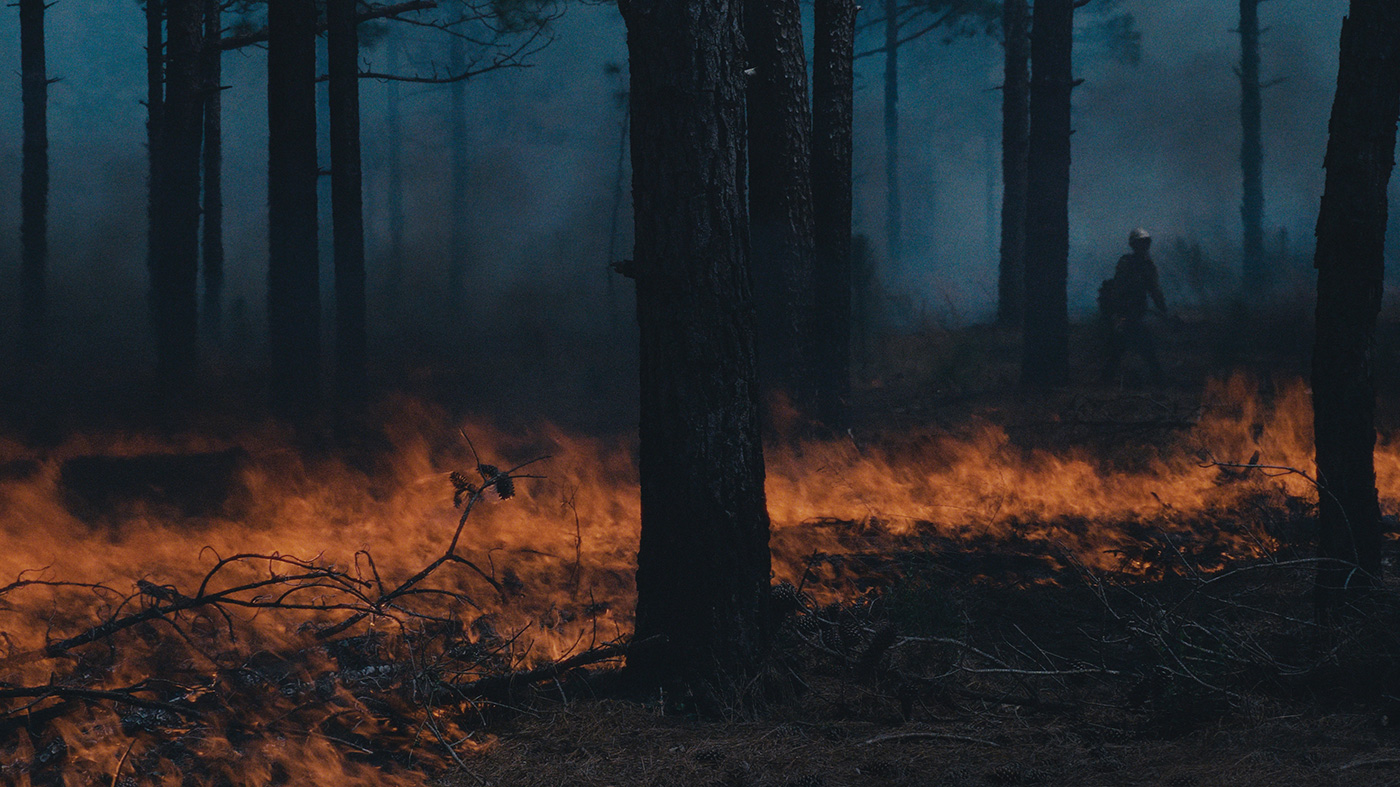
How It Begins
Documentary | 4k | color | 12:37 | France | 2024
Une fire woman brûle préventivement les forêts de Caroline du Nord, pour régénérer ses terres et éviter les mégafeux dévastateurs. Dans cette plongée progressive dans les flammes, l'acte de mise à feu devient une expérience intime et directe avec les éléments.
Chloé Wasp est une artiste plasticienne et cinéaste originaire de Lille (France). Elle est diplômée de l’École nationale supérieure de la photographie d’Arles et du Fresnoy – Studio national des arts contemporains. Elle axe principalement son travail sur les mythes, les troubles de la perception et les expériences d'altérité, toutes espèces confondues. Dans ce champ d’explorations, le corps est central.

Paulo Wirz, Lucas Wirz
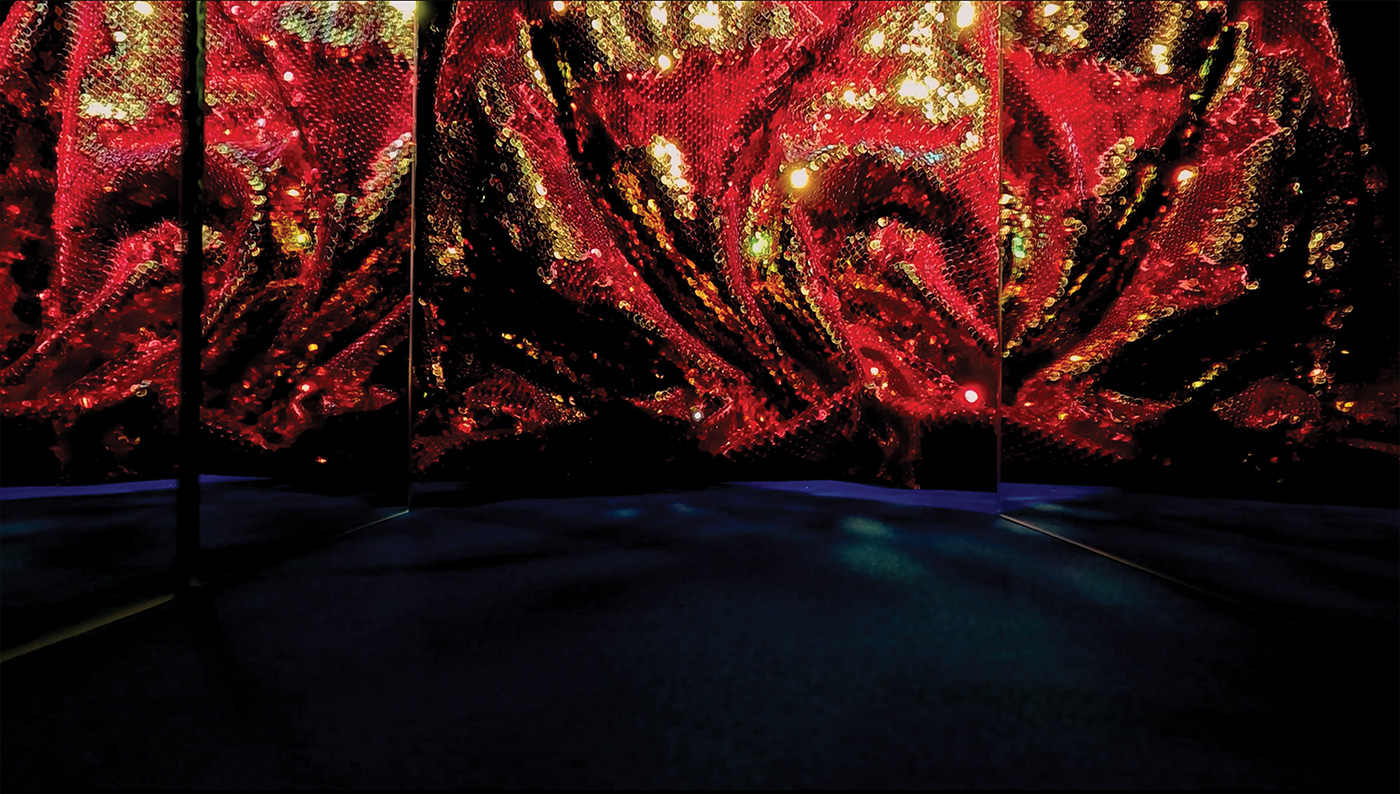
Parabolas
Experimental film | 4k | color | 14:38 | Brazil, Switzerland | 0
In creating O Encontro das Partes Partidas, my intention was to explore the profound tension between materiality and virtuality, permanence and ephemerality. At the heart of this work lies an urgent question: how do we preserve what is essential—memories, identity, culture—in a world where the boundaries between the tangible and intangible, the visible and invisible, continue to dissolve? The installation and film emerged from a confluence of research, personal reflection, and inspiration from Simon Kofe’s poignant address on Tuvalu’s potential transformation into the world’s first digital nation. His words highlighted an existential struggle: the need to preserve a nation's essence when its physical reality is under threat. This notion resonates deeply in a world where climate change and digitalization redefine our relationship to place, time, and belonging. The site-specific sculptural installation mirrors this tension. The mirrored containers, positioned in binary arrangements, embody the duality of presence and absence, reality and illusion, the physical and the virtual. These objects—mundane yet precious—shift in meaning and perception as viewers navigate the space. The mirrored surfaces reflect not only their surroundings but also invite introspection, evoking fragmented memories that connect personal and collective histories. The accompanying film, Parabolas, extends this exploration into the moving image. The labyrinth becomes a metaphor for life’s complexity, a place where beginnings and endings blur, where light and reflection reveal and obscure. Drawing from my sculptural vocabulary, I sought to create a visual language that questions our attachment to objects, our understanding of time, and our ability to reconcile the real with the non-real. Through this dual presentation, I aim to create a contemplative space that invites viewers to reflect on their own experiences of fragmentation and connection. Ultimately, O Encontro das Partes Partidas seeks to challenge and expand how we perceive and preserve the elements of our existence—both the visible and the invisible, the real and the imagined.
Paulo Wirz (born 1990 in Pindamonhangaba, Brazil) is a visual artist based in Zurich, working with large-format sculptures, site-specific installations, photography and video. In his research, Paulo investigates different forms of social and anthropological conceptions of mortality and attempts at immortality. He is intrigued by the role and the relation between preservation, possession, transmission, visibility, and invisibility in our culture and society. Paulo obtained a BA in photography from Zurich University of the Arts and an MA in fine arts from HEAD – Genève. In 2019, he received the New Heads Prize and in 2021, the Swiss Art Award. Between 2019 and 2022, he took part in various residency programs such as Fondazionne Ratti (Como, Italy), ZQM (Berlin, Germany), Cité des Arts (Paris, France), ProHelvetia (Cairo, Egypt). In 2023 he was an early career fellow at the Collegium Helveticum - ETH Zürich, and in 2024 he was an early career fellow at the New Europe college in Bucharest. His work has been exhibited in institutions such as Kunsthalle Basel (Switzerland), Kunsthalle Fribourg (Switzerland), Centre d’Art Contemporain de Genève (Switzerland), Helmhaus (Switzerland), Archivio Conz (Germany), Wehrmühle (Germany), HausKonstruktiv (Switzerland), Fondazionne Ratti (Italy), and Cité des Arts (France).

William Andreas Wivel
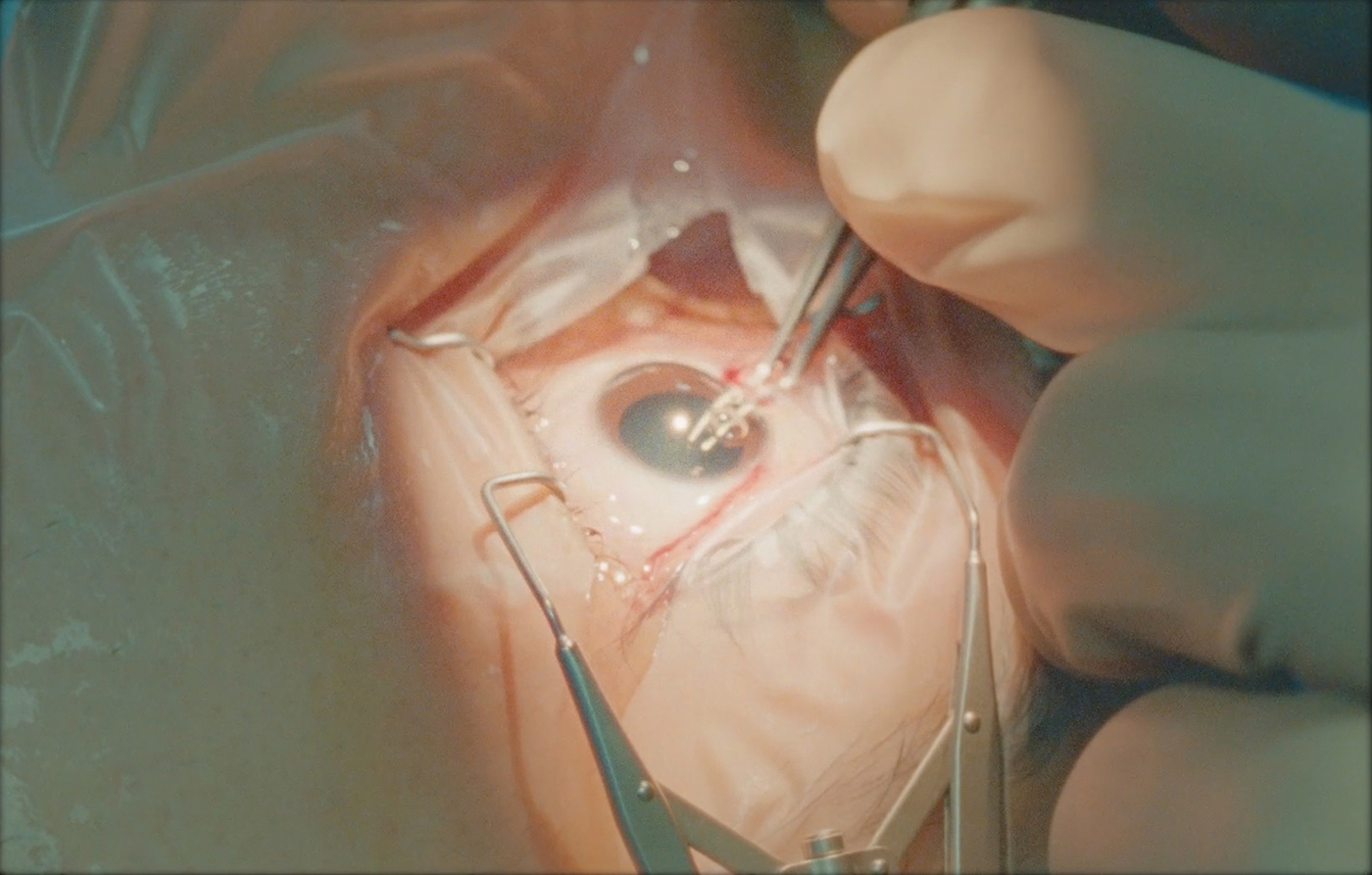
Eye Trouble
Documentary | 16mm | color | 40:42 | Denmark | 2025
A young man with refuge experience undergoes eye surgery. His eye is severely damaged. With the eye surgery as starting point, a narrative unfolds, poetically intertwining perspectives on loosing connection to a world, you once knew. Through imagery the film explores the vacuum in the aftermath of life altering circumstances, of singular versus plural pain and reconciliation, and how we may seek new paths going forward.
William Andreas Wivel is a Danish born filmmaker, based in Copenhagen. He received his MA in Film Science from the University of Copenhagen with a thesis on feministic film aesthetics and later graduated from The National Film School of Denmark as Documentary Director. Wivel’s work has an essayistic approach to storytelling and combines strong visuals with in-depth character studies. His graduation film SAY?NARA was an Ammodo Tiger Short Nominee at IFFR (2020) and selected for EMAF, Rencontres Internationales Paris/Berlin and RIDM amongst others. His film VANITAS, a collaboration with visual artist Jules Fischer, was selected for CPH DOX (2023) and installed at the National Museum of Arts in Denmark. The Garden Caretaker, co-directed with Natalia Ciepiel, was screened at this years CPH:DOX (2025). Finally his latest film, EYE TROUBLE, was just completed, and hence is in this regard, his personal debut film.
Ali Yahya
BENEATH WHICH RIVERS FLOW
Experimental doc. | mov | color and b&w | 16:0 | Iraq | 2025
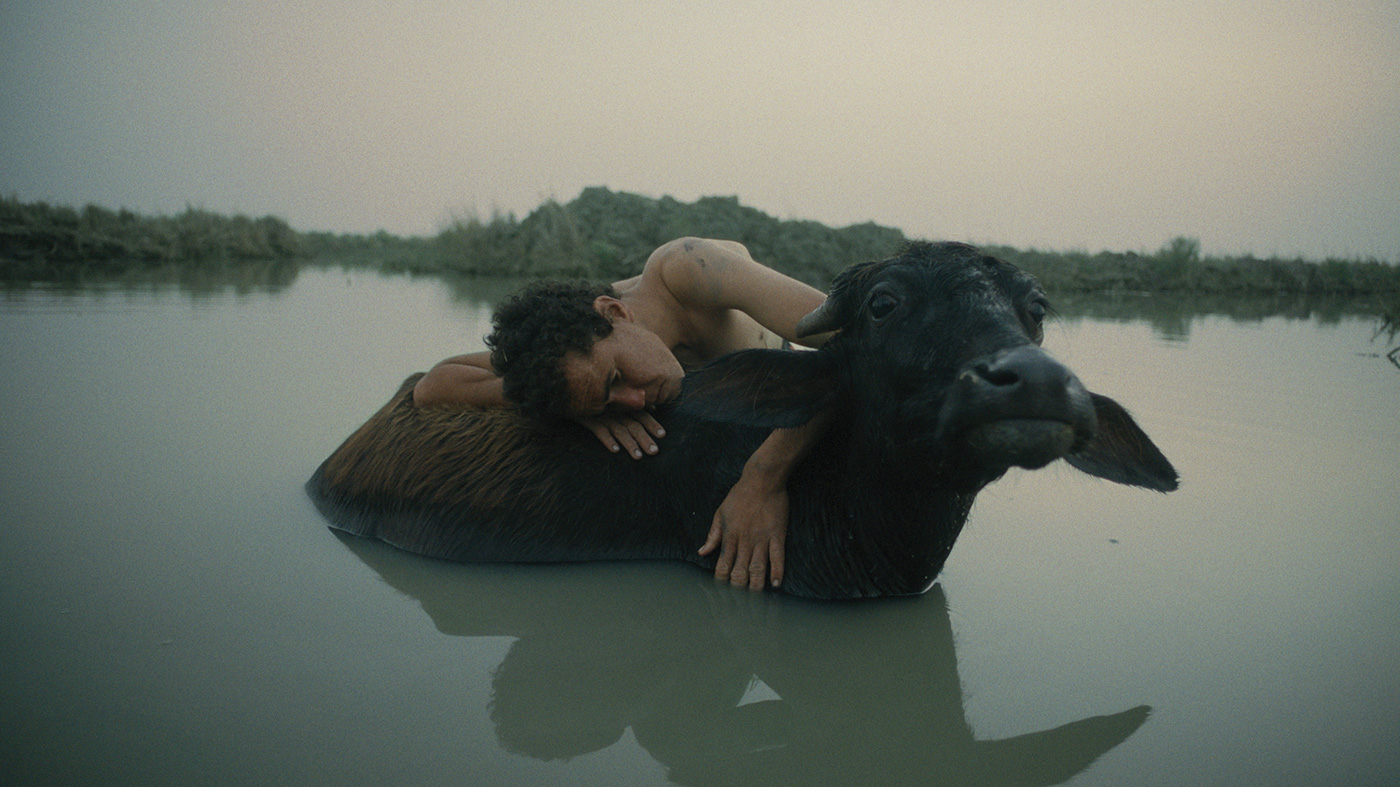
In the marshlands of southern Iraq, Ibrahim and his family live isolated from the rest of the world, deeply intertwined with the river, the reeds and the animals they tend. The quiet and withdrawn Ibrahim finds solace only in his buffalo, his one true companion. As Ibrahim’s world collapses, he must confront forces beyond his control that threaten not only his way of life but also the one living creature he truly understands.
Ali Yahya is an Iraqi filmmaker, born in 1994 in Baghdad, where he has lived and worked his entire life. His journey began after studying Psychology at the bachelor’s level. He later moved into visual arts, first as a graphic designer and then as a Creative Director at Becorp, one of Iraq’s leading creative agencies, where he continues to lead visual storytelling and cultural-visual projects. He is currently pursuing a master’s degree in Film. He uses film to explore the human experience, capturing the beauty and complexities of everyday life. Through his work, he brings the stories of his homeland to the world. His debut short film Beneath Which Rivers Flow (2025), shot in the marshlands of southern Iraq, blends poetic observation with lived reality, exploring the fragile relationship between a community and its disappearing landscape. The film premiered at the 75th Berlin International Film Festival, where it received a Special Mention from the jury.

Jinjoo Yang
Coming Home
Video installation | 4k | color | 12:57 | Canada | 2024
The film moves through the hidden storage spaces of the Montreal Museum of Fine Arts, revealing artworks whose ownership records remain incomplete. Some bear traces of wartime displacement and intentional omissions; others have shifted in attribution, altering the narratives attached to them. It traces how institutional structures shape what becomes visible and what remains unresolved. As the camera moves through the storage rooms, “Coming Home” observes the museum as an active system of organization, where artworks are continually recontextualized. Viewers encounter the collection as an unseen archive and are asked to navigate a place where certainty is partial and orientation never fixed.
Jinjoo Yang is a Montreal-based artist and architect whose films emerge from direct engagement with specific sites. She works with institutional interiors, using controlled camera movement to trace how places hold and mediate their histories. Her practice moves between observation and construction, turning regulated environments into temporal landscapes where visibility, authorship, and memory subtly shift. Yang’s recent works include “Coming Home,” filmed in the collection storage of the Montreal Museum of Fine Arts, and “Occupied,” a forthcoming film shaped by Cold War infrastructures. Her projects have been presented internationally at institutions such as the Montreal Museum of Fine Arts, the Center for Architecture in New York, and the Royal Danish Academy of Fine Arts in Copenhagen.

Lilan Yang
Everything Comes Full Circle
Experimental film | 16mm | color and b&w | 13:44 | China, USA | 2023
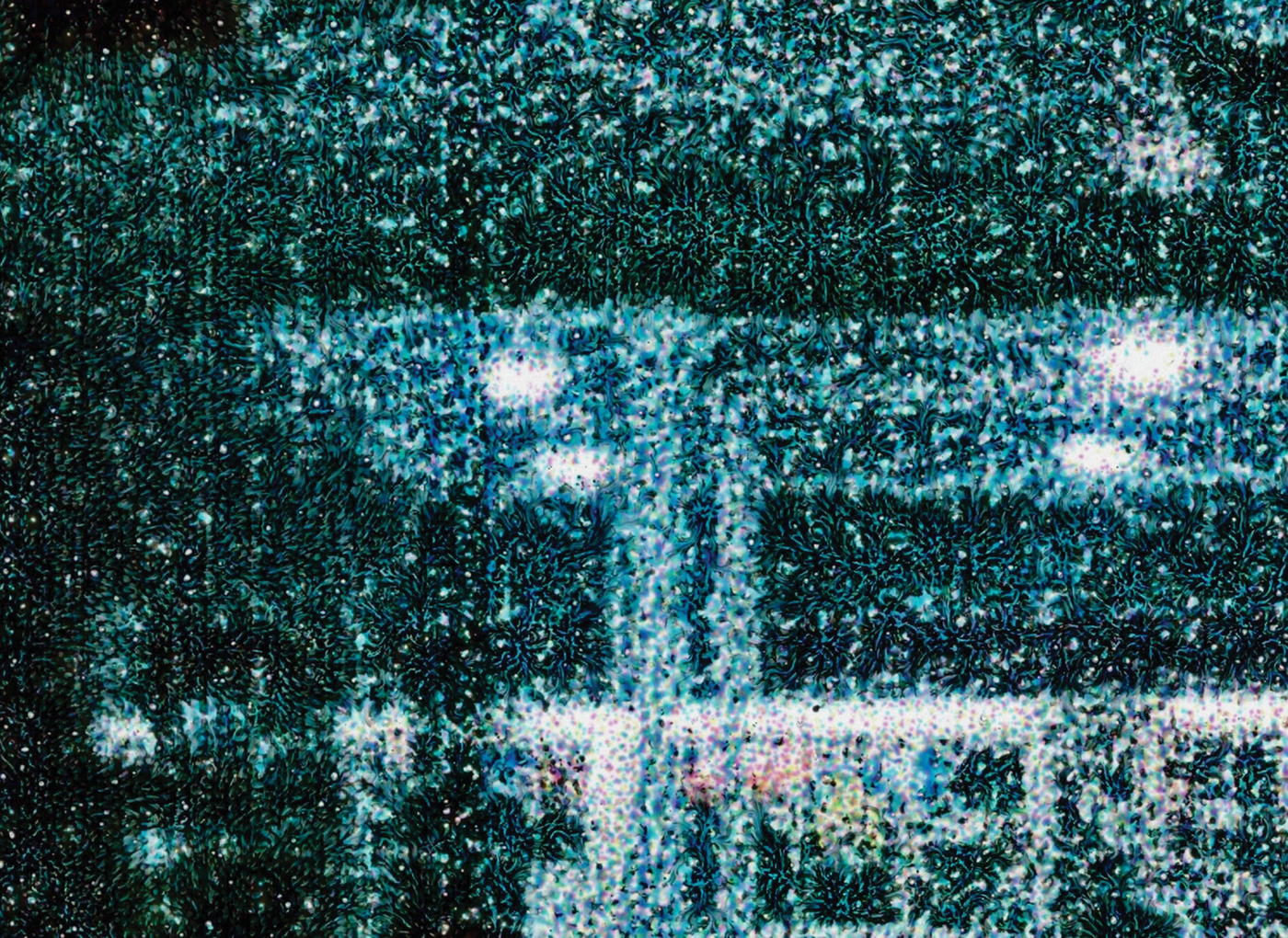
Retracing Wim Wenders' Paris, Texas filming locations, this 16mm film captures the American West's vastness while reflecting on memory's fragility. Shot on Kodak film with a score by Julian Tran, the work examines how we perceive through analog optics and how recollections distort over time. The digital scan is fabricated into pseudo-film via inkjet printing on clear film with laser-cut perforations. Each projection makes the ink melt and the film fall into decay, mirroring memory's erosion.
Lilan Yang (b. Chongqing, China) is a moving image artist merging analog filmmaking with computational processes. Rooted in the materiality of 16mm, their practice explores the flux of migration, the decay of memory and the intricacies of perception.

Zhiyuan Yang
Make A Little Sun
Video installation | mp4 | color | 7:36 | China, Germany | 2024
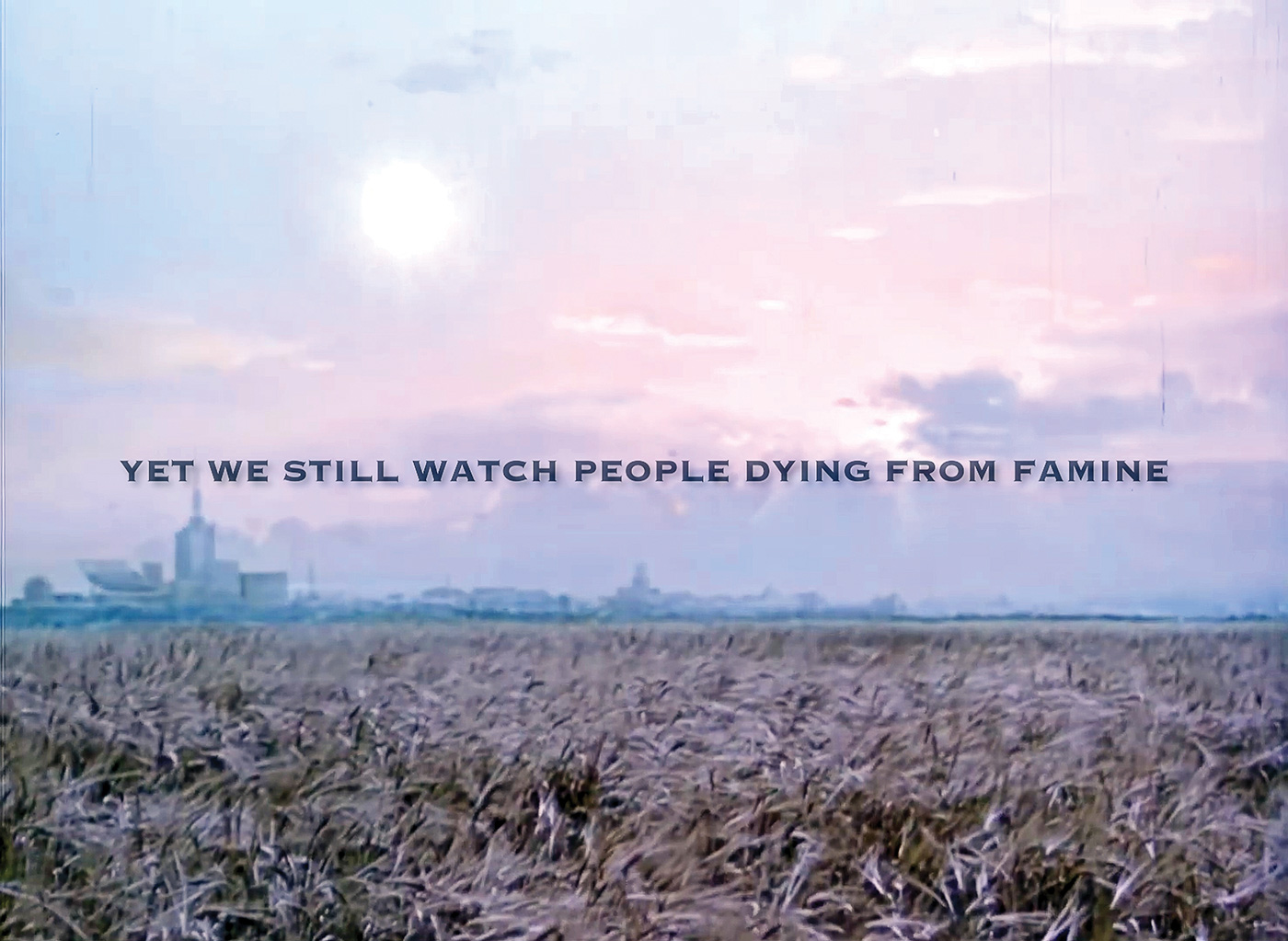
Make a Little Sun (2024) reimagines Little Sun (1963), the first and only science-fiction film made in China before the country’s economic reforms. Originally an educational film for children, Little Sun tells the utopian story of young researchers creating an artificial sun to boost food production. Banned during the Cultural Revolution, the film is now seen as an informal response to the Great Chinese Famine (1959–1961). This re-edited version fragments the original footage across a three-channel installation, combining it with new texts to reflect on global political crises since World War II. The sun becomes a metaphor for power, used to critique nuclear militarization, the colonial legacy of space exploration, and the failures of technological progress. Through disrupted narratives and visual manipulation, the work challenges modernization’s destructive trajectory and calls for collective alternatives to capitalist development.
Zhiyuan Yang’s practice examines the entanglement of personal histories and collective memory within broader political and economic systems. Through conceptual strategies that span moving image, installation, photography, and text, she investigates how experiences of loss—whether intimate or societal—reflect the failures and contradictions of modernization, institutional authority, and global power structures. Working with fragmentation, re-staging, and narrative disruption, Yang blurs the boundaries between fact and fiction to question how identity, memory, and belonging are constructed. Her practice often intervenes in existing frameworks—familial, political, or artistic—to expose the mechanisms of control and exclusion that shape lived experience. By revealing the limits of dominant narratives and institutional systems, she opens up spaces to reimagine collective forms of resistance, care, and alternative ways of being. Yang is an alumnus of the BPA// Berlin program and the Jan van Eyck Academie. Her recent and future exhibitions and screenings include Comrade Sun at Hartware MedienKunstVerein, DE; Half-Light at KW Institute for Contemporary Art, Berlin, DE; You Say I Have Unlimited Potential. I Disagree at Zilberman, Berlin, DE; and Conference Call: Moving Image at the Center for Performance Research, New York, USA.

Mao Yo-wen
The Liminoid
Video | 0 | color and b&w | 0:0 | Taiwan | 2025
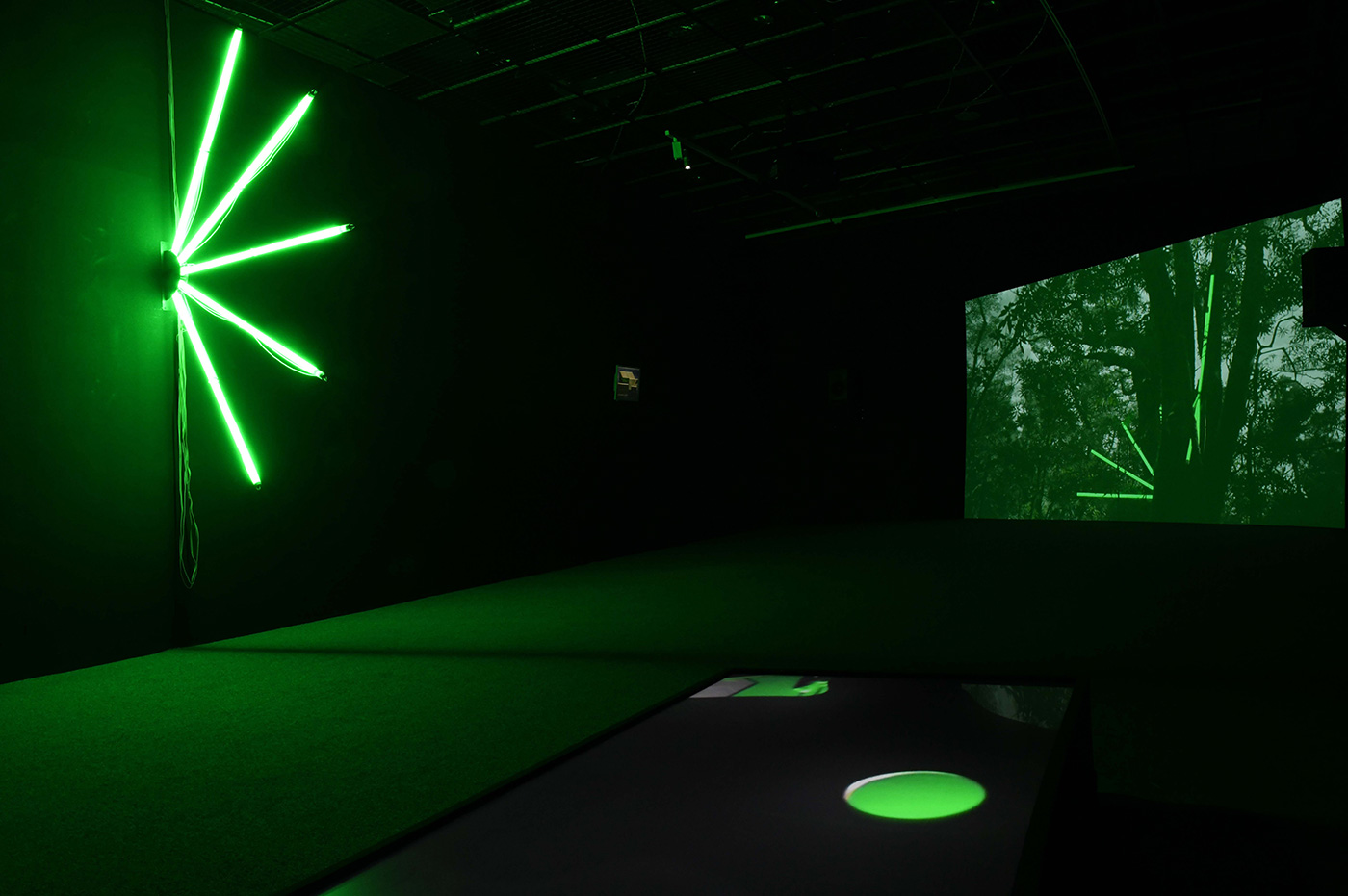
This work is composed of video, real-time data, and light. The voice-over recounts a legend about how the Indigenous peoples of Taiwan came to this island. In the work, I respond to this narrative through data and light installations, using “wind” as the core element of connection. For me, wind resembles those overlooked memories and histories embedded in a place—barely perceptible like air, yet continuously present. By linking real-time wind data from the site of the legend through programming, I allow the changing wind to directly influence the video. Through an invisible real-time connection that continuously crosses distance, messages carried by the wind from afar can be perceived in the present moment, forming a dialogue that spans both geography and perception. In addition, the light installation is a composite figure: its form derives from the imagery of the betel nut—an instantly recognizable visual sign in everyday life in Taiwan—and is combined with my imagination of the monster from the legend. Its green light may induce visual illusions, allowing viewers to briefly see a non-existent magenta, further reinforcing the sense of a state “between the visible and the invisible.
Mao Yo-Wen is a visual artist and filmmaker from Taiwan whose practice spans video, installation, sculpture, and writing, navigating between memory, history, belief, and text—focusing on phenomena that drift beyond established categories and those in a state of dislocation.

Amir Youssef
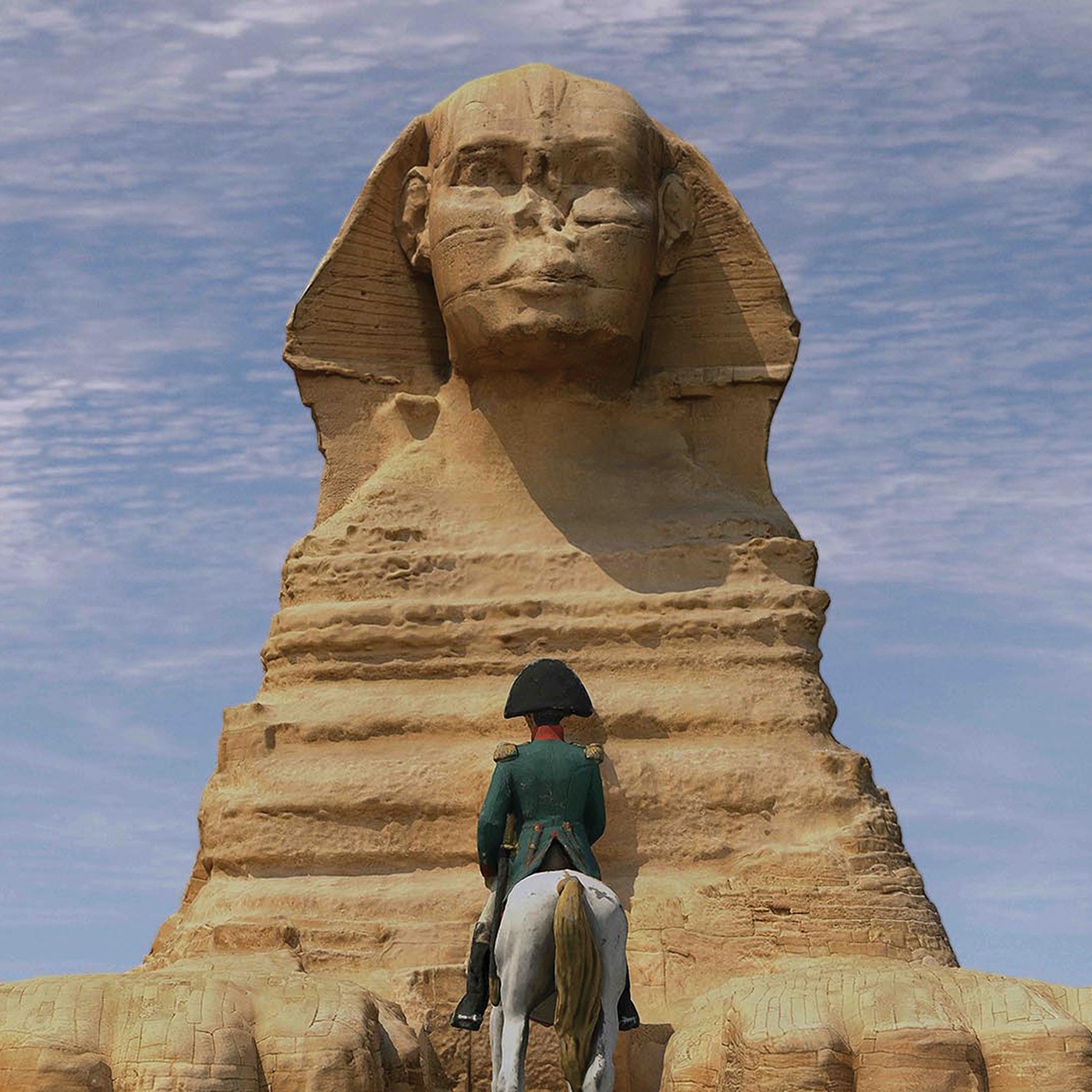
Apoléon
Documentary | dcp | color | 14:22 | France | 2024
A group of figurines from the Musée de l'Armée in Paris join Napoleon during his expedition in Egypt. The film explores political issues related to militarism and colonization, challenging traditional historical narratives.
Amir is an artist and filmmaker from Egypt, currently living and working between Paris and Alexandria. He earned a bachelor’s degree in painting from the Faculty of Fine Arts at the University of Alexandria in 2015, where he also served as a Teaching Assistant. He later completed a master’s degree (DNSEP) at the École d’art d’Aix-en-Provence in France, followed by a diploma at Le Fresnoy – Studio national des arts contemporains. Amir challenges the stillness of colonial history as it is traditionally displayed in museum vitrines. His work unfolds along two main trajectories: one examines the absurdity of war and the historical narratives shaped by post-colonialism; the other engages with religious themes, reimagining sacred texts as poetic and transcendent experiences. His research is rooted in the study of early visual culture and media history, focusing on how movement and narrative evolve across different formats such as sculpture, installation, film, and video. A sustained interest in transforming the function and significance of objects continues to guide his creative process. This ongoing inquiry has developed into a body of work he refers to as Kinemania—a personal term used to explore society’s deep fascination with visual motion. Through this lens, he creates kinetic and mobile objects that embody his investigations into movement, media, and interpretation. His film Apoleon premiered at Visions du Réel in Switzerland. His work has also been presented in exhibitions and screenings at international venues including Ars Electronica (Linz), Fondation Vasarely (Aix-en-Provence), Le Fresnoy – Studio National (Tourcoing), the BJCM Biennale (Milan), the Textile Industry Museum (Augsburg), the Youth Salon at the Cairo Opera House, and the Bibliotheca Alexandrina (Alexandria). His works are included in the collections of the CNAP (Centre national des arts plastiques) and the FMAC (Fonds municipal d’art contemporain).