Catalogue > Faire une recherche
Résultats pour : Catalogue 2022
The Migrant Ecologies Project
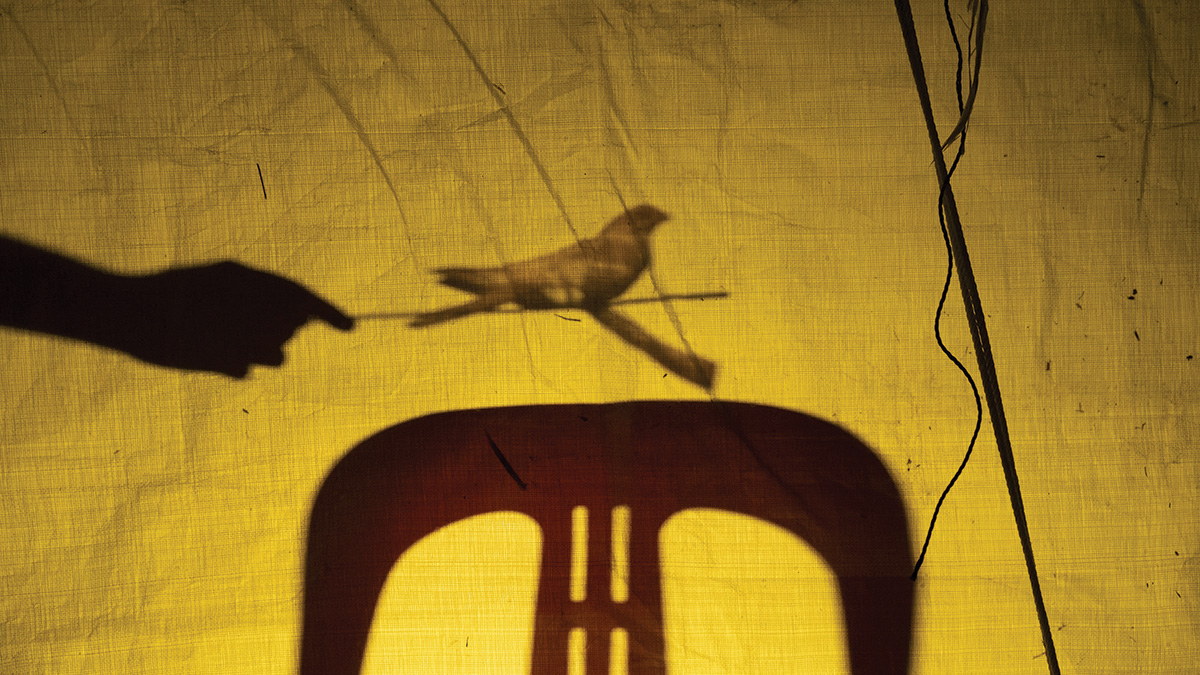
{if your bait can sing the wild one will come} Like Shadows Through Leaves
Doc. expérimental | hdv | couleur | 27:50 | Royaume-Uni, Singapour | 2021
This film is one part of a long-term engagement with Tanglin Halt, one of Singapore’s oldest social housing estates, which runs alongside a former railway track. The railway was owned by the Malaysian state until 2011, meaning that a ten-meter-wide zone of indeterminate-governance ran through the heart of Singapore for fifty years, playing host to a fecundity of more-than-human activities. Ornithologists have observed 105 species of birds in this patch. However, the land along the tracks is being repurposed as green corridor park through a new biotech and media hub. Once-famous modern housing blocks are being demolished and low-income residents relocated elsewhere. Unofficial tree shrines, community farms and gathering places have been cleared. Our repeated returns to this contested site aim to trace remaining fragments of calls, echoes, shadows memories and transformative encounters that still animate this zone, like shadows through leaves.
Lucy Davis (she/her) is a visual artist, art writer and founder, in 2009 of the collaborative, transdisciplinary Migrant Ecologies Projects.www.migrantecologies.org Davis/Migrant Ecologies work has been featured in numerous world festivals, biennales, museums and residency programmes, including: Oberhausen ISFF (2021); Reykjavik RIFF (2021); Singapore SGIFF (2021);The National Gallery of Singapore (2021); Singapore Art Museum (2020);Animistic Apparatus,Berwick BFMAF (2019);SeedCulturesSvalbard (2019); The Taipei Biennale (2018), Rockbund Shanghai/Fondazione Sandretto re Rebaudengo (2018), NTU Centre for Contemporary Art Singapore (2017); Taiwan International Video Art exhibition TIVA 5 (Oct 2016 – Jan 2017); M1 Singapore Fringe (Jan 2016); NUS Museum (June 2014 - Feb 2015); Singapore Art Museum (2014); National Museum of Singapore (2012-14); Royal Botanic Gardens Edinburgh Art/Science Festival (2013); International Symposium on Electronic Arts ISEA (USA, 2013); The Barbican (UK, 2013) and Prix COAL Awards (Paris, 2011).
Siska
Independance Day, A Work in Progress a.k.a Epilogue 1
Vidéo | 0 | couleur | 0:0 | Allemagne, Liban | 2021
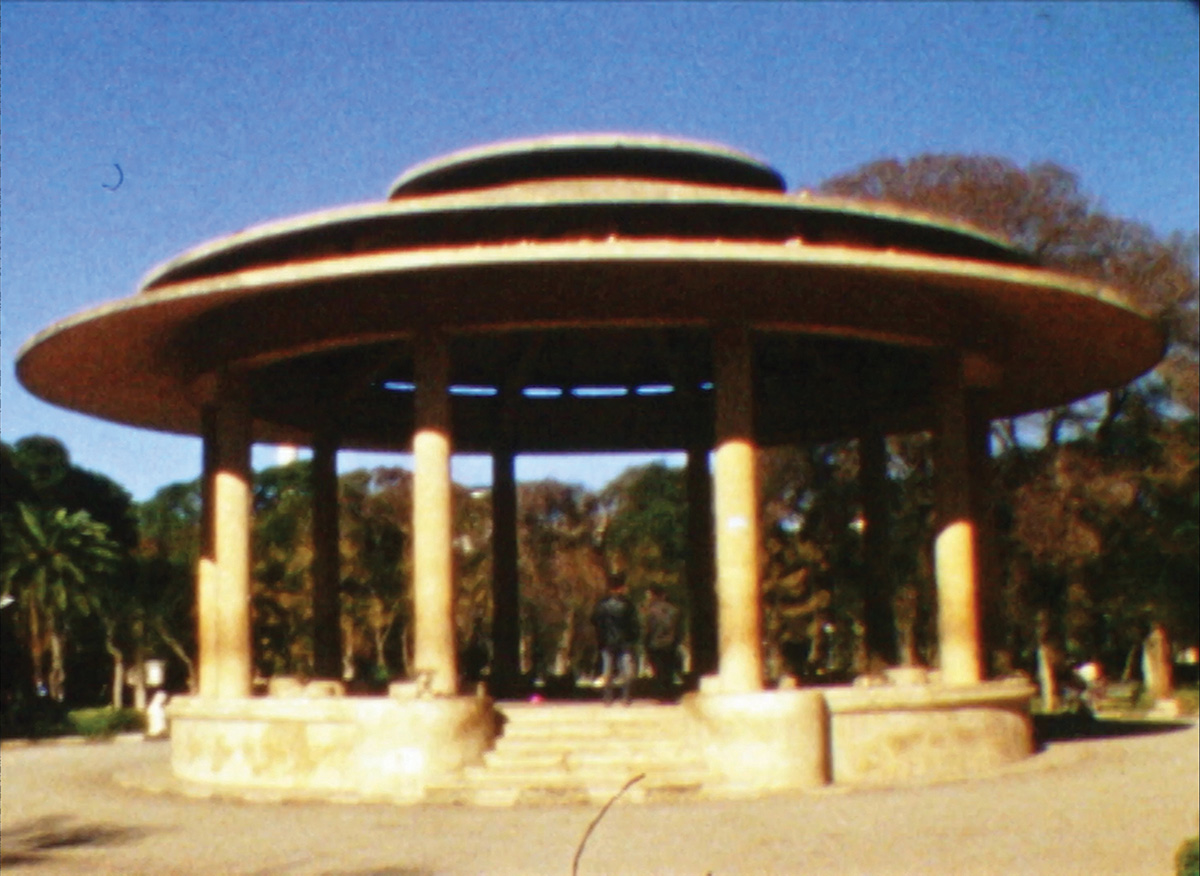
An expansive landscape with mountains, a sea full of questions, a sky with helicopters hovering, and cars wrecked next to drifting ones. An apartment with white walls, covered bullet holes, and windows. A collection of family footage and recent film footage retraces a trail of a hunted memory by exploring the brutal history of the Karantina district near the port of Beirut in Lebanon, which lived through a massacre at the beginning of the Civil War. In this film, the past, present, and annual celebration of Lebanon's Independence Day are interwoven. It will remain a work in progress until further notice.
Siska born in Beirut, Lebanon in 1984, graduated from the Lebanese Academy of Fine Arts in Beirut with a master degree in cinema studies and film directing. Based in Berlin, Siska’s practice is often centered on archiveology examining sociopolitical narratives in relation to personal and collective pasts. His use of film language and codes of cinematography, as strategic mediations to activate an archive, allows him to experiment with new forms of storytelling and his own biography. Siska's work has been internationally exhibited, including Martin Gropius Bau, Berlinale, Paris 104, Beirut exhibition center, Mosaic rooms, gallery Imago Mundy among others.
Adel Abidin
Musical Manifest
Vidéo | 4k | couleur | 10:0 | Finlande | 2022
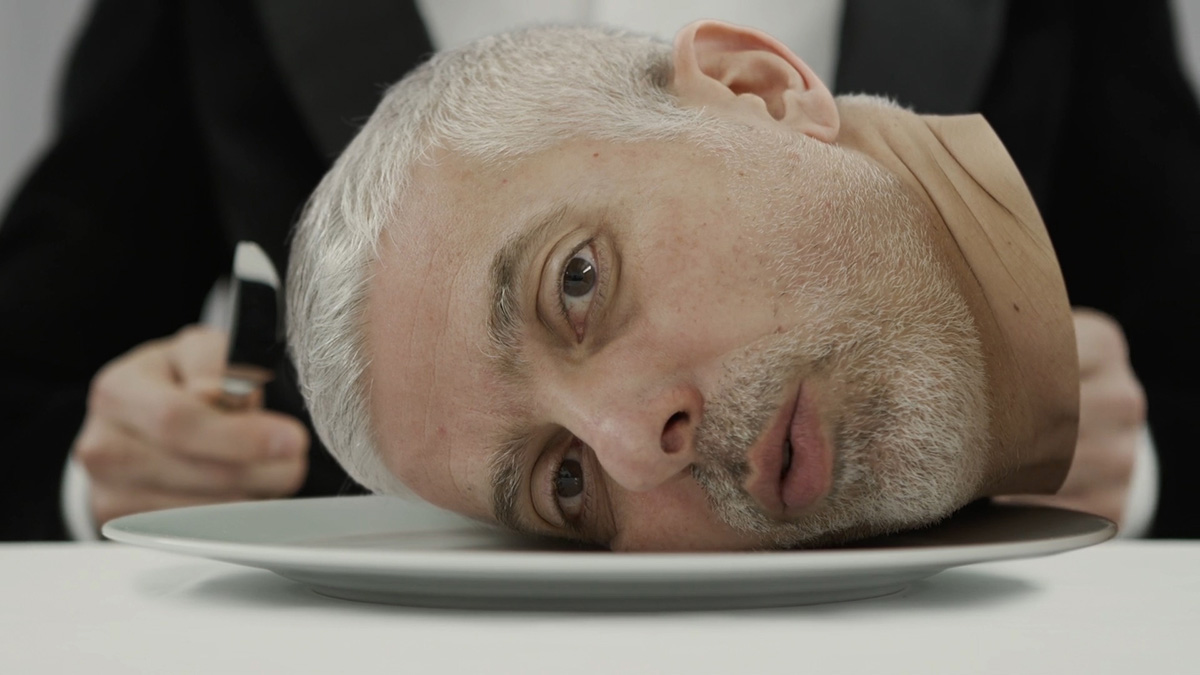
When I immigrated to Finland, I started facing a deep shock regarding the differences between the two cultures. Finding myself on the border between the two helped my practice but distracting for my selfdom, affecting my decisions and creating a fertile ground for confusion and turmoil. When the world slowed down during the pandemic, I decided to turn my lens and start investigating my identity and perspective. I exposed myself to all the possible ways to understand what had indeed gone wrong in the process of figuring out a third self that came to be me. Music was the best path to pursue this exploration, and I made six music videos where I sang and acted as the protagonist. Intermixed from many different songs, where many viewers will recall, the lyrics resonate with the contemplation of my meanings in my life. I work with the themes of identity, power, fear, clichés, slippages, and uncertainties in language by manipulating well-known pop song lyrics once used to express love, hope, and dreams. The rearrangement of these lyrics illustrates a harsh yet honest tool that represents what we hide or are afraid of making known.
Adel Abidin was born in Baghdad (1973) and currently resides between Helsinki and Amman. He received a B.A. in painting from the Academy of Fine Arts in Baghdad (2000) and an M.F.A from the Academy of Fine Arts in Time and Space Art in Helsinki (2005). Since his representation of Finland at the Nordic Pavilion in the 52nd Venice Biennale (2007), his work has been the subject of major exhibitions worldwide including: Van- haerents Art Collection, Brussels (2015), 56th Venice Biennale in the Iranian Pavilion (2015), The Glasstress-Goti- ka, 56th Venice Biennale, International Exhibition, Palazzo Franchetti (2015), 5th Guangzhou Triennial, The Guang- dong Museum of Art, Guangzhou (2015), The Pera Museum, Istanbul (2015), Aga Khan Museum, Toronto, Canada (2015), Gwangju Museum of Art, South Korea (2014), The Jerusa- lem Show VII, Jerusalem (2014), Louisiana Museum of Modern Art, Denmark (2014), MACRO-Museum of Contempo- rary Art, Rome (2014), Mori Art Museum, Tokyo, Japan (2013-2012), 54th Venice Biennale, Iraq Pavilion (2011), 10th Sharjah Biennale, UAE (2011), MOCCA, Toronto (2011), Mathaf: Arab Museum of Modern Art, Doha, Qatar (2010), 17th Biennale of Sydney, Sydney (2010), MAP, Mobile Art Production, Stockholm, Sweden (2009), 11th Cairo Bienni- al, Cairo (2008), Screening at MoMA, Museum of Modern Art, New York (2008), Art Paris, Grand Palais, Paris (2008), Espace Galley of Contemporary Art, Louis Vuitton, Paris (2008), The Mildred Lane Kemper Art Museum, St. Louis, USA (2008) and The 4th Gothenburg Biennale, Sweden (2007). He has been represented in galleries including: Hauser & Wirth Gallery, London (2013), with his well-recognized three channel video installation "Three Love Songs", Lawrie Shabibi Gallery, Dubai (2013), with his suspended light based installation "Al-Warqaa" (Chosen as the image of the rising Arab art scene in Dubai by the New York Times), Anne De Villepoix Gallery, Paris (2011), with his six channel video installation "Their Dreams" and Zilberman Gallery, Istanbul (2011), with his well received video installation "Ping-Pong". Abidin's work continues to be well represented in both Private and public collections including those of the KIASMA- Musuem of Contemporary Art, The National Gal- lery, Helsinki: The National Gallery of Victoria, Mel- bourne, Australia: The Sharjah Art Foundation, UAE: Mathaf- Arab Museum of Modern Art, Doha, Qatar: EMMA- Espoo Museum of Modern Art, Espoo, Finland: Nadour Private Collection: Kamel Lazaar Collection: The Barjeel Art Foundation, UAE: The Heino Art Foundation, Helsinki: Darat al Funun - The Khalid Shoman Foundation, Amman: HH Sheikh Zayed bin Sultan bin Khalifa Al Nahyan, UAE: KOC foundation. Abidin has been selected for the Finland Prize for Arts in 2015, Received a Five Years Grant from The Art Council of Finland (2012-2017) and in 2011 He was a nominee for the Ars Fennica Prize in Finland. In (2015) the Artist has taught, gave talks and panel discus- sions, at various venues including the UNESCO- Improving Artistic Freedom In a Digital Age, Helsinki (2016), the Acade- my of Fine Arts in Helsinki: Lasalle- College of the Arts: TAIK- Alto University, Helsinki (2014), The Museum of Anthropology, Vancouver (2013), The Mosaic Rooms, Global Futures Forum, London (2013), Darat al Funun - The Khalid Shoman Foundation, Amman (2011), OSU- Oregon State University, USA (2010). Location One Gallery, New York (2010), The Academy of Arts, Baghdad (2001). Abidin has been a Subject in Art documentary about his art Practice in many Tv channels including BBC- culture channel, England (2011) and ARTE- cultural channel, France (2008). also his work was mentioned in major newspapers and magazines around the world including (The NewYork Times- 2011 & 2013), Le Monde, Le Figaro, the National in Dubai, Helsingin Sanomat, the Wallpaper magazine, The Wall Street Journal, Canvas Art Magazine, Art Forum, Art in America, Avek Media Art Magazine, Taide Lehti, ArtAsiaPacific…Etc
Soufiane Adel
Kung Fu
Film expérimental | hdcam | couleur | 14:35 | Algérie, France | 2021
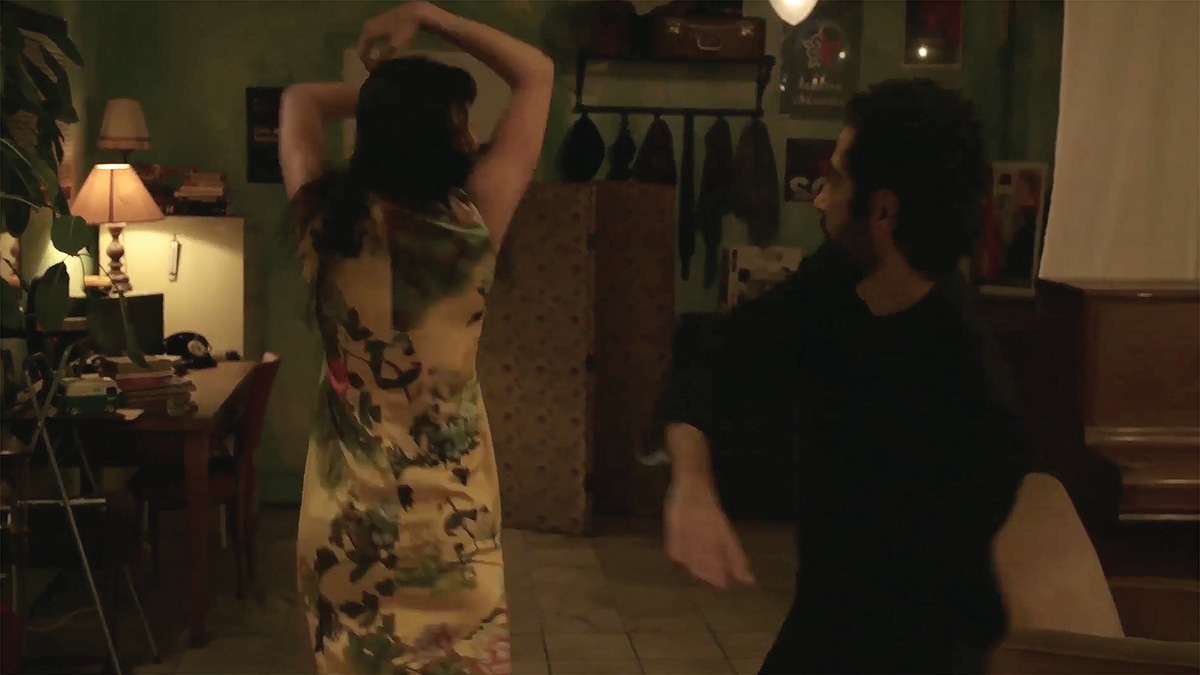
Un homme d’origine prolétaire, revient chez ses parents et son frère après une rupture amoureuse avec une femme d’un rang social plus élevé que le sien.
Soufiane Adel est né en 1981 en Algérie et arrive en France à 8 ans. C'est en faisant une école de design, l'ENSCI - Les Ateliers, qu'il découvre le cinéma. En 2004, il décide de filmer son père : ce sera son premier court métrage, "Nuits closes", qui débutera au festival de Clermont-Ferrand. En 2007, il réalise "Kamel s'est suicidé six fois, son père est mort" qui a été sélectionné à la Quinzaine des Réalisateurs et à l'ACID à Cannes en 2008, ainsi que dans de nombreux festivals de par le monde. En 2009, il coréalise avec Angela Terrail, « Sur la tête de Bertha Boxcar », prix du jury au festival Silhouette (montré également à Clermont, Pantin, Ciné-banlieue, Indielisboa ...) et diffusé sur Arte. En 2013, il réalise son second documentaire "Go Forth" qui aborde l'histoire de sa grand-mère algérienne, projetés dans des dizaines de festivals internationaux (Cinéma du réel, Rencontres Paris-Berlin, Lussas, Montréal...). Son exploration de formes fictionnelles d'auto-filmage se poursuit avec « Vincent V » et « Les bonnes ». En 2017, il met de nouveau en scène son père dans une fiction, "La Faim", puis dans l’essai "La lumière tombe".
Akosua Adoma Owusu
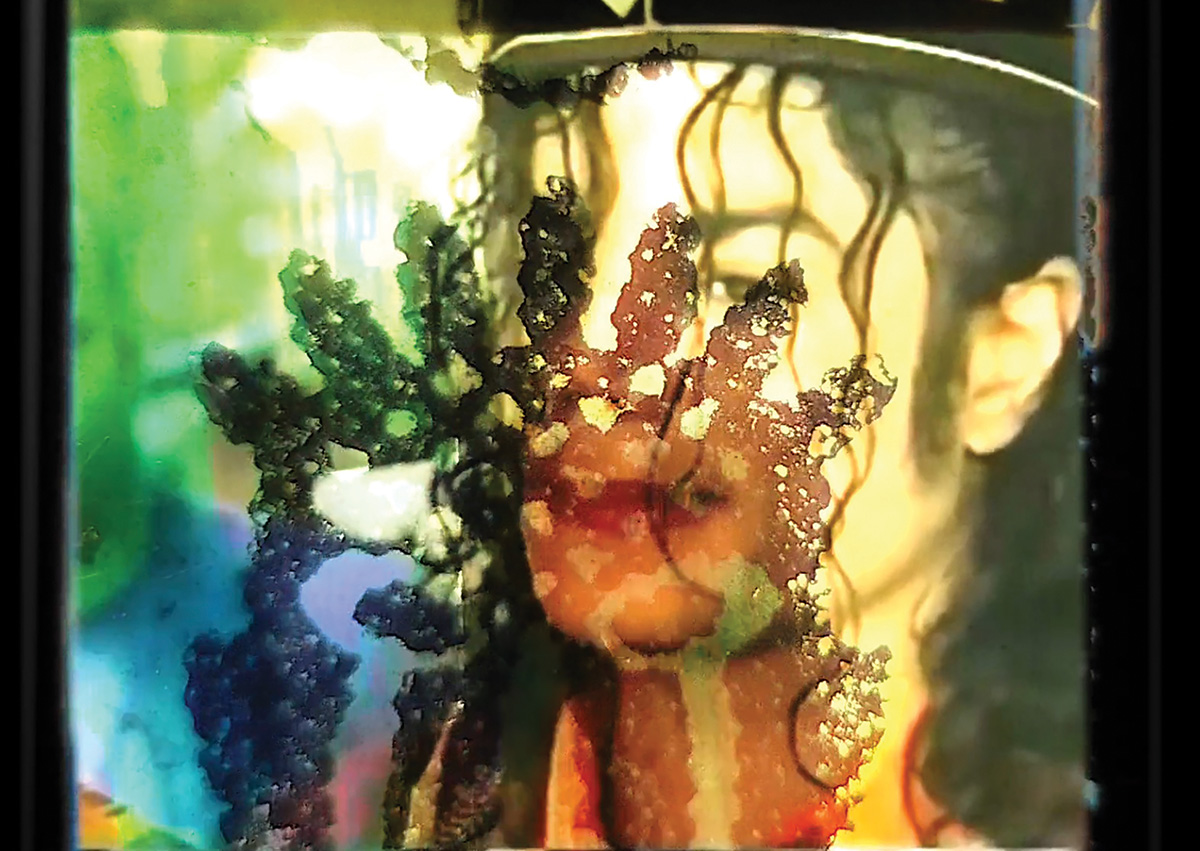
King of Sanwi
Vidéo | 0 | couleur | 7:18 | USA, Ghana | 2020
Re-worked footage from an unfinished film by Senegalese director Mamadou Johnny Sekka forms a re-examination of The Jackson 5’s 1974 trip to Dakar.
Akosua Adoma Owusu is a Ghanaian-American filmmaker, producer, and educator. Aiming to create a third cinematic space or consciousness, Owusu’s work explores the colliding identities of black immigrants in America through multiple forms, ranging from cinematic essays to experimental narratives to reconstructed Black popular media. In her works, feminism, queerness, and African identities interact in African, white American, and black American cultural spaces. Named by IndieWire as one of six preeminent “avant-garde female filmmakers who redefined cinema,”, her work has been screened extensively at festivals and museums nationally and internationally and are available on streaming platforms including PBS, The Criterion Channel and MUBI. In 2013 her short film KWAKU ANANSE was well-received at the Berlinale Shorts and won the 2013 Africa Movie Academy Award. Her short film RELUCTANTLY QUEER was nominated for the Golden Bear and Teddy Award at the 2016 Berlinale Shorts. Owusu has received numerous fellowships and grants including the Lincoln Center Award for Emerging Artists (2020). She has been invited to the 59th International Art Exhibition of La Biennale di Venezia curated by Cecilia Alemani. She currently lectures at Harvard University.
Sandro Aguilar
The Detection Of Faint Companions
Vidéo expérimentale | 0 | couleur | 14:0 | Portugal | 2021
Full Moon. Inside. Perhaps not alone.
Born in 1974 in Portugal, Sandro Aguilar studied film at the Escola Superior de Teatro e Cinema. In 1998, he founded the production company O Som e a Fúria. His films have won awards at festivals such as La Biennale di Venezia, Locarno FF, Gijón, Oberhausen,Vila do Conde, Indielisboa FF and have been shown in the most relevant film festivals worldwide. Two times nominated for the EFA – Best European Short Film Award. Retrospectives of his work have been programmed at Rotterdam IFF, BAFICI, New York Film Festival, Arsenal-Berlin and Oberhausen FF. In 2013, he was invited into the renowned DAAD Artist Residency, Berlin.
Liane Al Ghusain, Tarnowski Alghusain
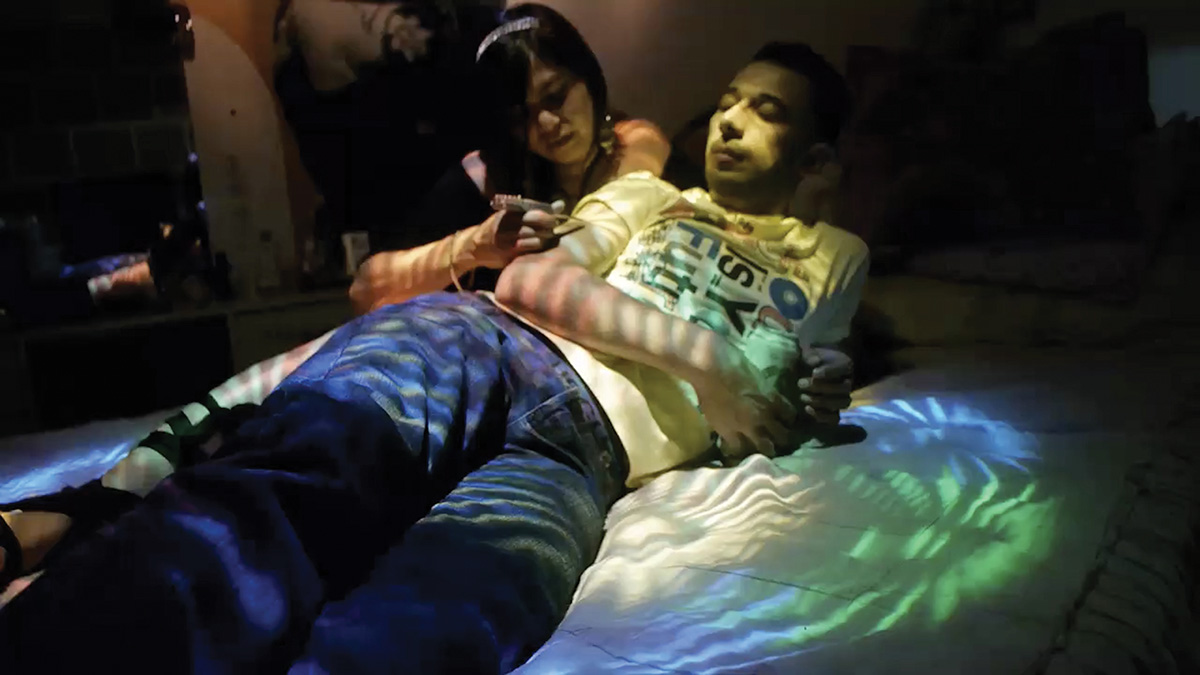
Takht Coco
Doc. expérimental | mp4 | couleur | 6:26 | Koweït, Liban | 2013
'Coco's Bed' is a short film created for viewing on the iPad mini, commissioned for the X-apartment installation series by producer Matthias Lilienthal. X-apartment audience members follow Hassan, the protagonist of the film, to his own apartment where they find him in the flesh as well. 'Coco's Bed' was available on view for three days in July 2013 in the Bourj Hammoud district of Beirut. The neighborhood began as an informal refugee camp for Armenians fleeing the genocide in Turkey. It now additionally houses a large and diverse population of immigrants and asylum seekers from countries including Syria, Ethiopia, and the Philippines.
Stefan Tarnowski is a PhD Candidate at Columbia University’s Anthropology Department, Institute of Comparative Literature and Society and Institute for Comparative Media. His research focuses on Syria since the 2011 revolution, and in particular on the relations between technology, political economy and social imaginaries. He has a degree in Middle East Studies from Oxford University. His ethnographic fieldwork with Syrian media activists and civil society organisations was also funded by a grant from the Wenner-Gren Foundation 2018-19, and his most recent publication is a translation of and introduction to Dork Zabunyan's The Insistence of Struggle (IF Publications, 2019). Liane Al Ghusain (b. 1987, Kuwait) is an artist based in Abu Dhabi. Currently enrolled in the MFA program in Art & Media at NYUAD; she works primarily as a performance artist exploring various literary and craft forms. Born in Kuwait to a Palestinian family, Liane has focused on theater and writing throughout her life, having received a BA and MA in English with a focus on creative writing from Stanford University, with interdisciplinary honors in feminist studies. She has worked as an arts administrator, copywriter, language instructor, and yoga teacher.

Lee Alex
the Fold
VR expérimental | mp4 | couleur | 0:0 | USA | 2019
"The Fold" is a non-linear film and virtual reality-based art game involving rooms with doors containing a concept folding into other rooms with doors. Inspired by Jorge Luis Borges' short story The Garden of Forking Paths, each room consists of an idea inspired by structuralist & surrealist literature, mathematics, the readymade virtual object, and more. This project is a virtual 'escape the room' concept where some rooms are puzzle experiences and others are more experiential. All rooms follow a similar visual monochromatic motif. To date, the project involves five rooms: the Doors, the Fold, the Grid, the Meridies, and the Cave. Subsequent rooms will be released as this project is a long-term episodic series. Chapter one is debuted at Berlin Recontres International.
Alex M. Lee is an artist who utilizes 3D animation, video game engines, virtual/augmented/immersive reality platforms, and the potential of simulation technologies in order to visualize and complicate our perception of time, space, image and light - culling from concepts within science, science fiction, physics, philosophy, and modernity. He received his BFA (2005) and MFA (2009) from the School of the Art Institute of Chicago. Born in Seoul, South Korea, Lee was raised in the USA and is associate professor in the Digital Arts & Sciences Program at Clarkson University located in Potsdam, NY - a private science and engineering university located north of the Adirondack Mountains where he divides his time between Potsdam and New York City. Lee has exhibited internationally in North America and Asia. Selected exhibitions include: Mio Photo, Osaka, Japan; Daegu Art Factory, Daegu, Korea; The Gene Siskel Film Center, Chicago, Illinois; Eyebeam: Center for Art & Technology, New York, NY; Gallery DOS, Seoul, Korea; Museum of Contemporary Art, Montreal, QC. His work has been published in articles covering art, science, and culture including: Metaverse Creativity, Canadian Art, and Routledge Press.
Amy Alexander
What the Robot Saw
Installation multimédia | 0 | couleur | 0:0 | USA | 2020
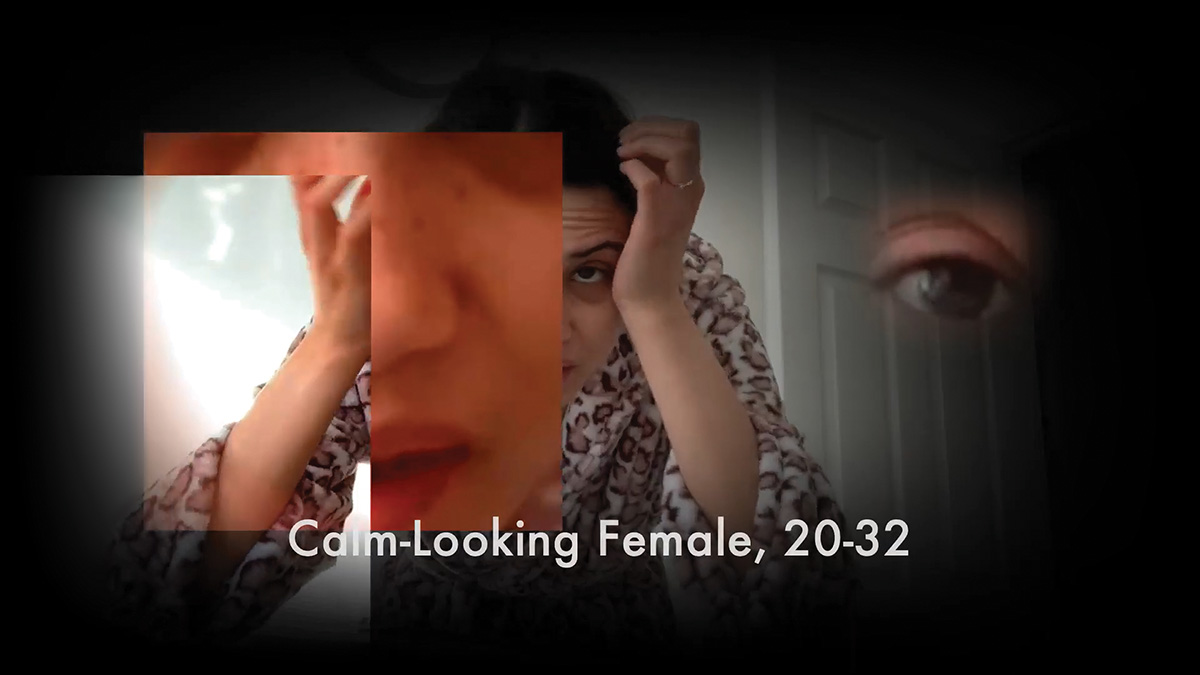
An invisible audience of software robots continually analyze content on the Internet. Political trolls and YouTube celebrities gain visibility because social media ranking algorithms promote addictive videos to the top of search and recommendation rankings. What the Robot Saw is a continuously-generated livestream film that uses contrarian algorithms to constantly curate some of the least attention-grabbing videos recently uploaded to YouTube. These videos, and their creators, are rendered largely invisible by social media algorithms. Their primary audience may be the robots that rank them. What the Robot Saw uses computer vision algorithms to curate videos and study their subjects. It focuses on first-person, camera facing narrators. The robot continually assembles its film and labels its “talking head” performers in a robo-fantastical cinematic style. The Robot titles its human subjects according to the demographically-focused feature set of Amazon Rekognition, a popular facial analysis system. In a robot-centric world, attributes like presumed age, gender, and emotion might better identify us than our names. The title is a reference to early 1900s What the Butler Saw “peep show” films. Both the butlers and the Robot got a superficial glimpse of a seductive “show;” they could not really understand the objects of their obsession.
Amy Alexander is a professor and hackernaut who has been making computationally-based art projects since the 1990s. Amy is a Professor of Computing in the Arts in the Visual Arts Department at UC San Diego. She is an algorithmic filmmaker and performer who has focused throughout her career on the fuzzy borders between media and the world. Amy’s work has frequently addressed algorithmic subjectivity in digital culture by creating transparently biased, sometimes funny alternatives. Her latest project returns to this theme — this time taking on the attention economy and social influence of algorithms used for social media rankings and facial classification. Using computer vision and machine learning-based methods of curation and production, What the Robot Saw, is a perpetual live stream that depicts the cinematic fantasy of the surveillant AI robots who “see” the social media content few humans get to experience. Amy’s art practice has spanned net art, software art, computationally-based installation, audiovisual performance, and film. Her research and practice over the years has focused on how contemporary media – from performative cinema to social media – changes along with cultural and technological shifts. Amy’s projects have been presented on the Internet, in clubs and on the street as well as in festivals and museums. She has written and lectured on software art, software as culture, and historical and contemporary audiovisual performance. She has served as a reviewer for festivals and commissions for new media art and computer music.Her recent lectures span topics including algorithmic bias and subjectivity, cultural anthropologies of gender roles in 20th and 21st century computing, and systems and disruption in 20th and 21st century media.
Dominic Angerame
Revelations
Film expérimental | 16mm | noir et blanc | 23:0 | USA | 2020
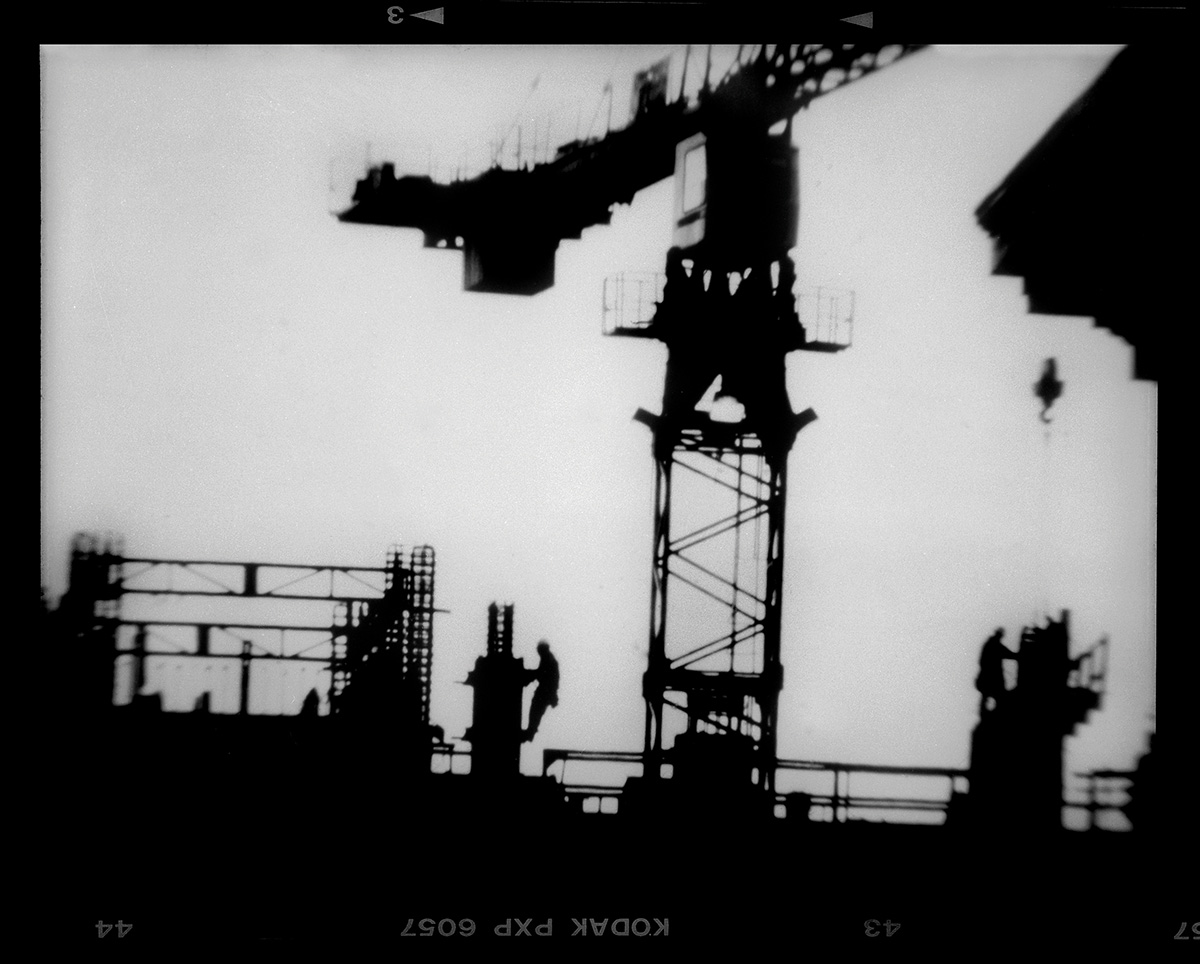
"He began to recognize that motion pix could be used as a medium to reveal the supernatural and underworld. He found the calling for which he had been born. He found that film could summon up the un-born imagination...he had a glimpse of how to emerge as the artist he always felt was within him" - Stan Brakhage Revelations is a continuation of what I call my "City Symphony" series. This works includes footage that was shot from the late 90s to the present. My filmmaking is inspired by filmmakers such as Dziga Vertov, Joris Ivens, Walter Ruttman and Robert Fulton.
Dominic Angerame's works search for unfamiliar views of seemingly familiar things: cities, landscapes, faces, and bodies. The filmmaker's desire to make everyday images "strange" at the editing table, to learn to see them fresh and to estrange them from our senses, makes his films seem-in all the different social realities they contain-always distanced as well, as if they led to another world beyond the concrete, beyond time and defined space. In Angerame's films, which pay homage to films from early cinema and the classic avant garde to American underground films of the 1960s and 70s and non-narrative films of the present day, an amazingly comprehensive history of the "visionary" moving image is always present. It may be that precisely his refusal to adopt a signature style has diminished the immediate influence of Angerame's films; however, Angerame's decision to work "universally," not to be swayed by considerations of the art market, and to experiment with very different styles increases the pedagogical worth of his films. It's not surprising to learn that Angerame, born in 1949, teaches at several American schools in addition to having served as the executive director of the American avant garde distribution center Canyon Cinema from 1980 to 2012. His films testify to an encyclopedic knowledge of film-and also his desire to satisfy, with his own audio-visual offerings, the very different desires of his audience.
Yu Araki
HONEYMOON
Doc. expérimental | hdv | couleur | 29:40 | Japon | 2021
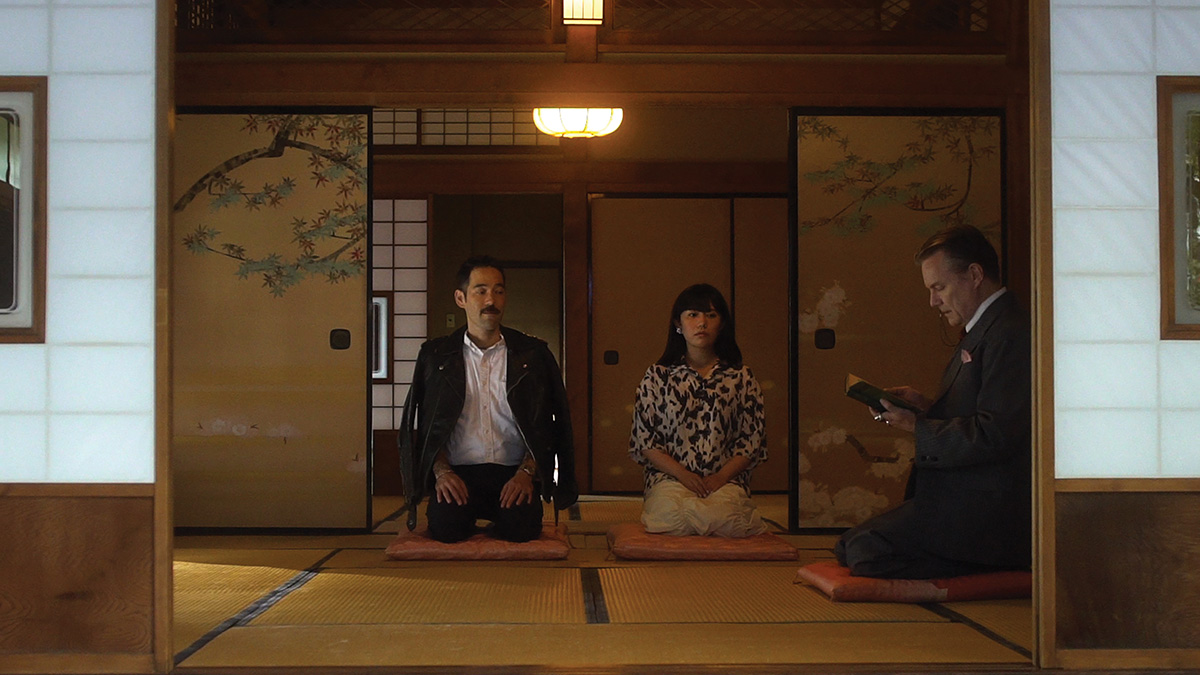
Set in a fictitious lunar base Nagasaki, HONEYMOON is the Japanese director Yu Araki’s take on Japonisme. He re-examines and re-interprets the wedding scene from Madame Butterfly (dir. Carmine Gallone, 1954), where B.F. Pinkerton sits in seiza (??), which is the Japanese term used for the proper, formal traditional way of sitting by kneeling on the floor and have legs folded underneath the thighs. Although seiza-style is widely known as “correct”, it didn’t permeate until after Japan opened up to the Occident, that is, after the culture of the “chair” had taken hold, hence the formality of what the Japanese thought had long history was only a modern, arbitrary construct. Inspired by this historical fact, Araki connects seiza with another element to contemplate the arbitrariness of humanity: constellation, which, incidentally, is a homonym with seiza (??) in the Japanese language. In addition, the aforementioned film Madame Butterfly has been known as one of the most iconic collaborations between Italy and Japan, with a strong intention from the Japanese production side to “correct” the twisted imagery of Japanese depiction in which they succeeded. However, Araki critically poses the question of what does it mean to understand another culture “correctly”. In Araki’s version, B.F. Pinkerton is replaced by a real-life photographer Adolf de Meyer (1868 - 1946), and the matchmaker with an anthropologist Frederick Starr (1858 - 1933), and having Suzuki and Dr. Tatsukichi Irisawa (1865 - 1938), who was known for his essay “On the Japanese Way of Sitting” (1921), joining in as broadcast commentator to describe the situation from a distance. The loose, gossipy dialogue between the off-site personnel ranges from fashion to spies, interweaving various elements while the performers patiently wait in perseverance until their legs fall asleep.
Yu Araki (b.1985, Yamagata City) received his Bachelor of Fine Arts in Sculpture from Washington University in St. Louis, U.S.A. in 2007, and completed his Master of Film and New Media Studies from Tokyo University of the Arts in 2010. In 2013, he was selected to participate in Tacita Dean Workshop hosted by Fundación Botín in Santander, Spain. During 2017-8, he was a guest resident at Asia Culture Center in Gwangju, South Korea, and Rijksakademie van beeldende kunsten in Amsterdam, the Netherlands. Recent exhibitions include Pola Museum of Art, Shiseido Gallery, the National Museum of Art, Osaka, MUJIN-TO Production; Fundació Joan Miró, Barcelona; Dallas Contemporary, Dallas; and Okayama Art Summit, Okayama. His films have been programmed in international festivals such as BFI London Film Festival, International Short Film Festival Oberhausen, Kassel Documentary Film and Video Festival, Rencontres Internationales Paris/Berlin, and International Film Festival Rotterdam, where he won the Ammodo Tiger Short Film Award in 2018. He was shortlisted as one of the 21 artists for the Future Generation Art Prize hosted by the Victor Pinchuk Foundation in Kyiv, Ukraine in 2019. He currently lives and works in Tokyo, Japan.
Josefin Arnell
Wild Filly Story
Fiction expérimentale | mp4 | couleur | 22:0 | Suède, Pays-Bas | 2020
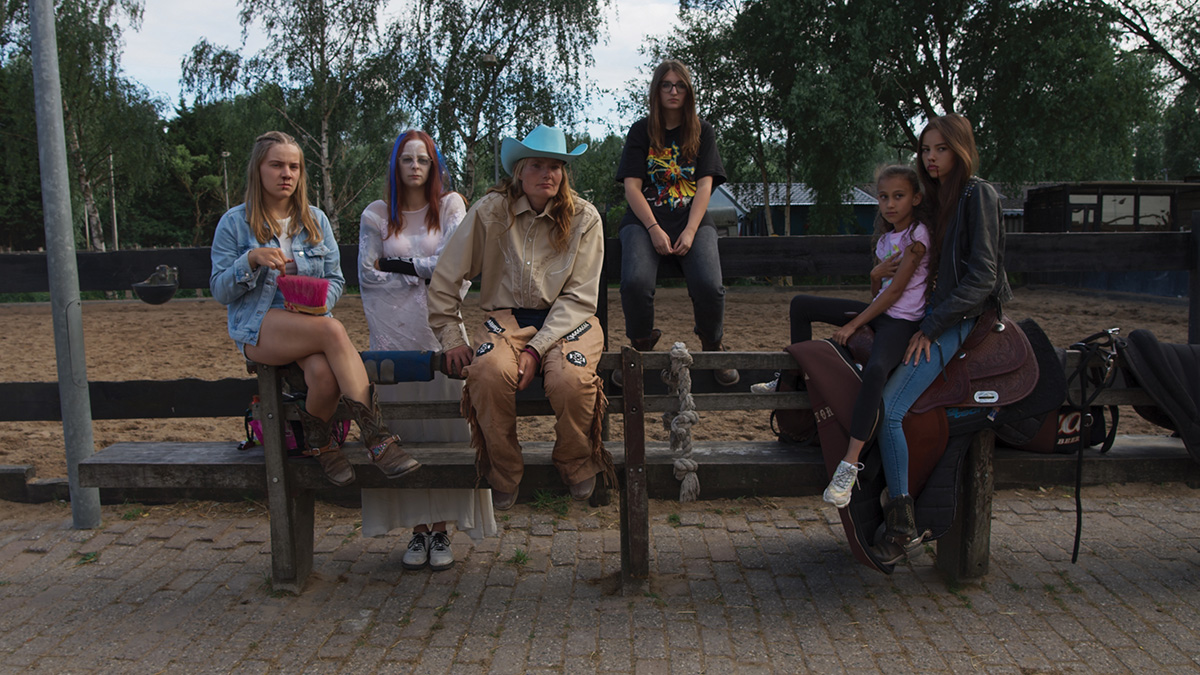
Wild Filly Story is starring a pack of adolescent girls on a therapy horse stable in the outskirts of Amsterdam. The casts are regular visitors, who are simply there to ride, who are there for occupational therapy, or there as a temporary replacement from school. Playing out a fictional, yet custom-fit script that prompts questions of friendship, misfit, normativity, fetishization, and female empowerment. The young girls method-act through stages of agitation, thriving on the artist’s own rural childhood trauma in Sweden, a horsegirl´s obsessions, and her recent short-lived career as a porn film director: teens pulling hair, grand stallions being objectified, food fights, horse healing, and in the backyard of the barn a kissing scene is being made. A red thread through the film: a young girl’s horse is taken away to be slaughtered that the horse community later feast on. A ghost—an EMO teen, white-painted, unfitted, potentially dead—grimes her way through a hardcore song from the London underground “Drop Dead” with the gang of horse girls as her backing choir. Meanwhile, a cowgirl talking about a stallion having its balls cut off, giggling through her characterization of its masculine rage being tamed.
Josefin Arnell (1984) has recently presented exhibitions, screenings, and performances at Athens Biennale; Wiels, Brussels; UKS, Oslo; Van Abbemuseum, Eindhoven; Moscow International Biennale for Young Art; Auto Italia, London; Kunsthalle Münster; Beursschouwburg, Brussel. In 2018 she won the Theodora Niemeijer Prijs; a national art prize for emerging female artists living or working in the Netherlands. Arnell lives and works in Amsterdam Through combining modes of autobiographical and fictional storytelling, she explores representations of femininity, the aesthetics and politics of violence, and the way expressions of power and control manifest in group dynamics. The Teenage Girl, The Horse, and The Mother are recurring characters placed beside clumsy allegories of conflicted human conditions or environmental catastrophe. These characters have endless monologues rather than conversations while navigating contemporary infrastructures with impossible demands. She uses humor and absurdity as political devices, but also as important tools to access moments of emotional catharsis. Trashy performativity, camp aesthetics, the grotesque, and soap opera affects are set in combination of documentary, scripted, and improvisation methods. Additionally to her solo work she is involved in multiple collaborations and self initiatives. Most noticeably the artist duo: HellFun aka Josefin Arnell & Max Göran. HellFun prefers to be brave and pathetic rather than drowning in shame.
Graeme Arnfield
Pervading Animal
Doc. expérimental | 0 | couleur | 30:0 | Royaume-Uni | 2021
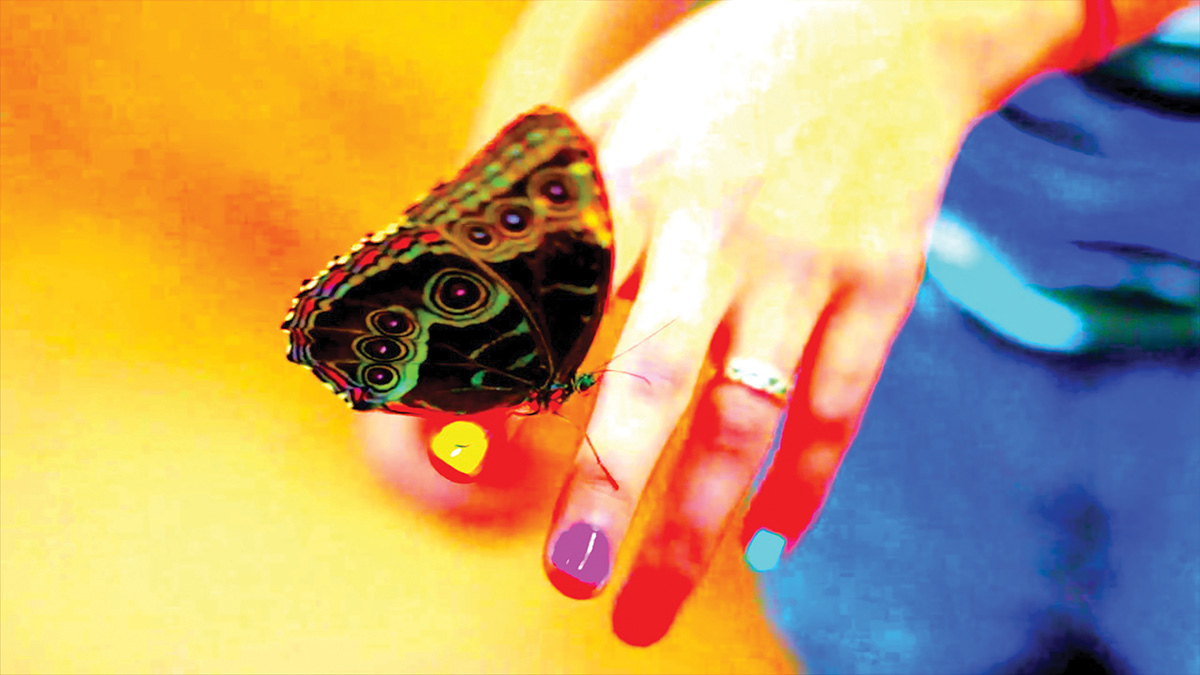
Equal parts systems literacy and kaleidoscopic ecological fantasia, “Pervading Animal” is a film about butterflies, computer viruses and all the things they touch. Tracing the creation, spread and destructive legacy of the first ransomware computer virus the film finds in its wake surprising connections between the US invasion of Panama, the aesthetics of pioneering computational art and the construction of a butterfly conservatory in New York.
Graeme Arnfield (b. 1991, UK) is an artist filmmaker and composer living in London, raised in Cheshire, UK. Producing sensory essay films from networked imagery his films use methods of investigative storytelling to explore issues of circulation, spectatorship and history. Research topics have included: the politics of digital networks, the distribution of ecological matter such as peat and asbestos and the adaptive circulation of global and local histories. His work has been presented worldwide including Berlinale Forum Expanded, International Film Festival Rotterdam, Courtisane Festival, Berwick Film & Media Arts Festival, Sonic Acts Festival, European Media Arts Festival, Transmediale, IMPAKT Festival, Kasseler Dokfest, Plastik Festival, Internationale Kurzfilmtage Winterthur, LUX, Institute of Contemporary Arts (ICA), Berlinische Gallerie, Signal Gallery, Whitechapel Gallery and on e-flux & Vdrome. He graduated with a Masters in Experimental Cinema at Kingston University.
Jessica Arseneau
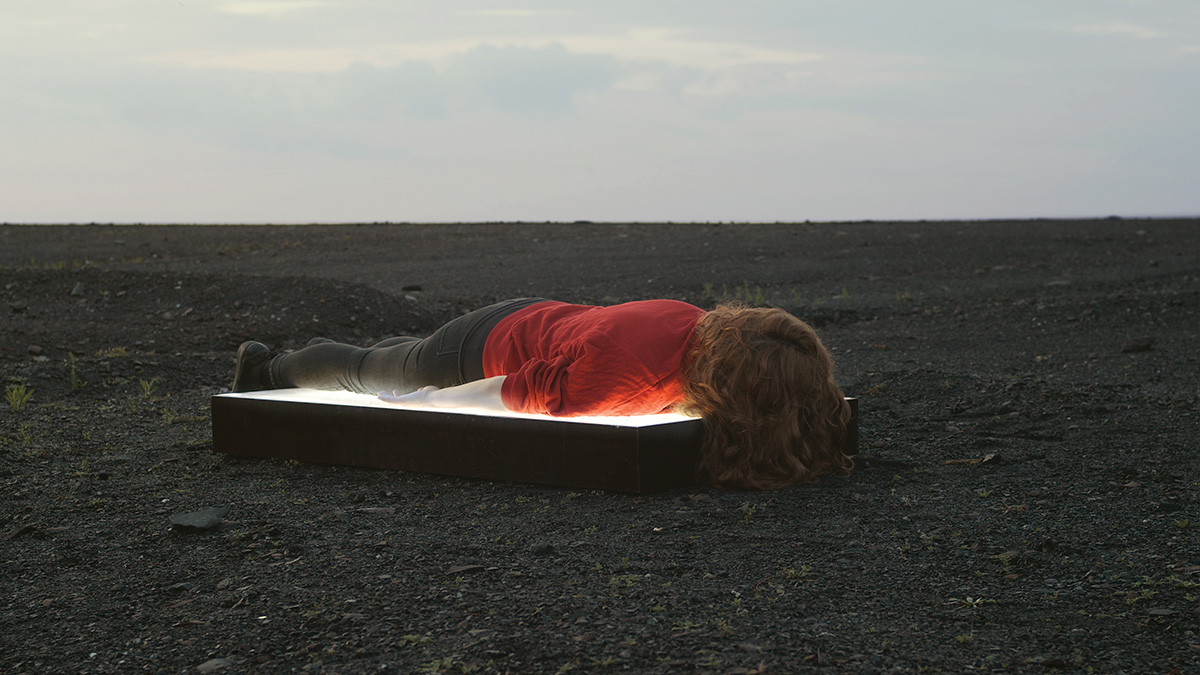
Aubes
Vidéo | mov | couleur | 40:0 | Canada, Allemagne | 2021
Dawns takes us to a time when sleep is disrupted and insomnia becomes a collective condition. Captured before sunrise, with non-actors in a variety of outdoor environments, the multi-channel work consists of a series of continuous shots and long takes. The slow cinematographic images are reminiscent of tableau vivants where people, in groups or alone, find themselves in an urban environment or the transformed wasteland of a former industrial area. Exhaustion is conveyed by the bodies’ postures and their near immobility, composing at the same time an atmospheric landscape of fragility and endurance at the limit of the perceptible. While the videos look still images, they allow us to see the slow, luminous transition of night into day.
Jessica Arseneau (originally from Tilley Road, Canada) obtained a Bachelor of Fine Arts at Université de Moncton in 2011 and a Master’s Degree in New Media at the Academy of Fine Arts Leipzig in 2020, both completed with distinction. She received a grant from the Salzburg International Summer Academy of Fine Arts in 2017 and a scholarship from Saas-Fee Summer Institute of the Arts in 2021.?? Her solo exhibitions include Surrounding Uncaring Skies as part of the Festival International du Cinéma Francophone en Acadie, Moncton, Dawns, a storefront exhibition organized by Ringlokschuppen Ruhr, Mülheim an der Ruhr, The Screen Under My Eyelids at Helmut, Leipzig, Nothing but a Constant Glow at Spinnerei Archiv Massiv, Leipzig, and Lost Idyll, at Galerie d’art Louise-and-Reuben-Cohen, Moncton. ??Other public presentations of her work occurred at Galerie Sans Nom, Moncton, Struts Gallery, Sackville, Darling Foundry, Montreal, Maison de la Culture du Plateau-Mont-Royal, Montreal, BronxArtSpace, New York, Agora Collective, Berlin, Traverse Vidéo, Toulouse, Friche la Belle de Mai, Marseille, D21 Kunstraum, Leipzig, and a&o Kunsthalle, Leipzig.
Mali Arun
MUTATIS
VR vidéo 360 | mp4 | couleur | 12:0 | France | 2019
La nuit, des hommes étranges, en combinaisons jaunes, pénètrent dans un jardin botanique. La nature est foisonnante et fascinante. Le gardien des lieux rejoint l’équipe des « chercheurs » pour les emmener plus loin, vers l’étang aux nénuphars. Le corps in- animé d’une jeune femme est retrouvé là. Le jardin en cache d’autres, enfouis dans ses trésors végétaux puis une lumière étrange apparaît du corps de ses femmes.
À la suite de ses études aux Beaux-Arts de Paris, de Tianjin (Chine) et de Bruxelles (La Cambre), Mali Arun développe un travail situé entre la fiction, le cinéma documentaire et la vidéo d’art qui questionne à la fois les espaces en marges, en mouvements ou en conflits. Elle observe aussi le corps, ses géographies, ses désirs et ses contradictions. Elle interroge la façon dont l’Homme en exil arpente des zones de passages et de frontières, transforme l’espace, le paysage en territoire en se l’appropriant. Elle explore les croyances, les rituels et les mythes dont les hommes se nourrissent pour vivre et survivre. Elle présente ses films dans de nombreux festivals de cinéma, dont Clermont-Ferrand -Cabourg – St. Petersbourg – Pantin – Cinémathèque française – Festival Tous Courts d’Aix-en Provence où elle obtient le Prix du Jury – Le coup de coeur du jury au Festival Point Doc ou encore la Mention Spéciale au Festival de Contis. Elle vend ses films à Arte et au programme Le Radi. En 2019 elle présente son film La maison à Visions du Réel, Nyon, lauréat du Sesterce d’Or Canton de Vaud, meilleurs film de la compétition internationale long-métrages Burning Lights. Elle réalise Paradisus pour la collection La première Image commandité par le CNAP et le G.R.E.C. Elle expose son travail lors d’un solo show à la Galerie T66 à Freibourg en Allemagne ainsi qu’à la Villa Emerige en 2017 et au Salon de Montrouge en 2018 où elle obtient le Grand Prix du Jury, Palais de Tokyo. En 2019 elle présente une sélection de ses travaux lors d’un solo show au sein de l’exposition Futur, ancien, fugitif au Palais de Tokyo avec la collaboration de Claire Moulène. Elle réalise une création vidéo pour Rituels, création musicale de l’Orchestre National de Jazz présentée à la Maison de la Radio et lauréat des Victoires du Jazz et d’une Victoire d’honneur 2020. En 2020 elle montre son travail vidéo au Centre Phi, Montréal – CEAAC, Strasbourg – Art Genève, Suisse – FRAC Champagne-Ardenne – Manifesta, Marseille – Institut Français du Japon, Kyoto – Elle présente une exposition personnelle au FOAM Museum à Amsterdam, Hollande. Elle est également lectrice pour le CNC (aide avant réalisation au court-métrage), pour l’aide à l’écriture de la Région Grand – Est et pour le G.R.E.C.
Christine Ayo
Ikoce Volume I
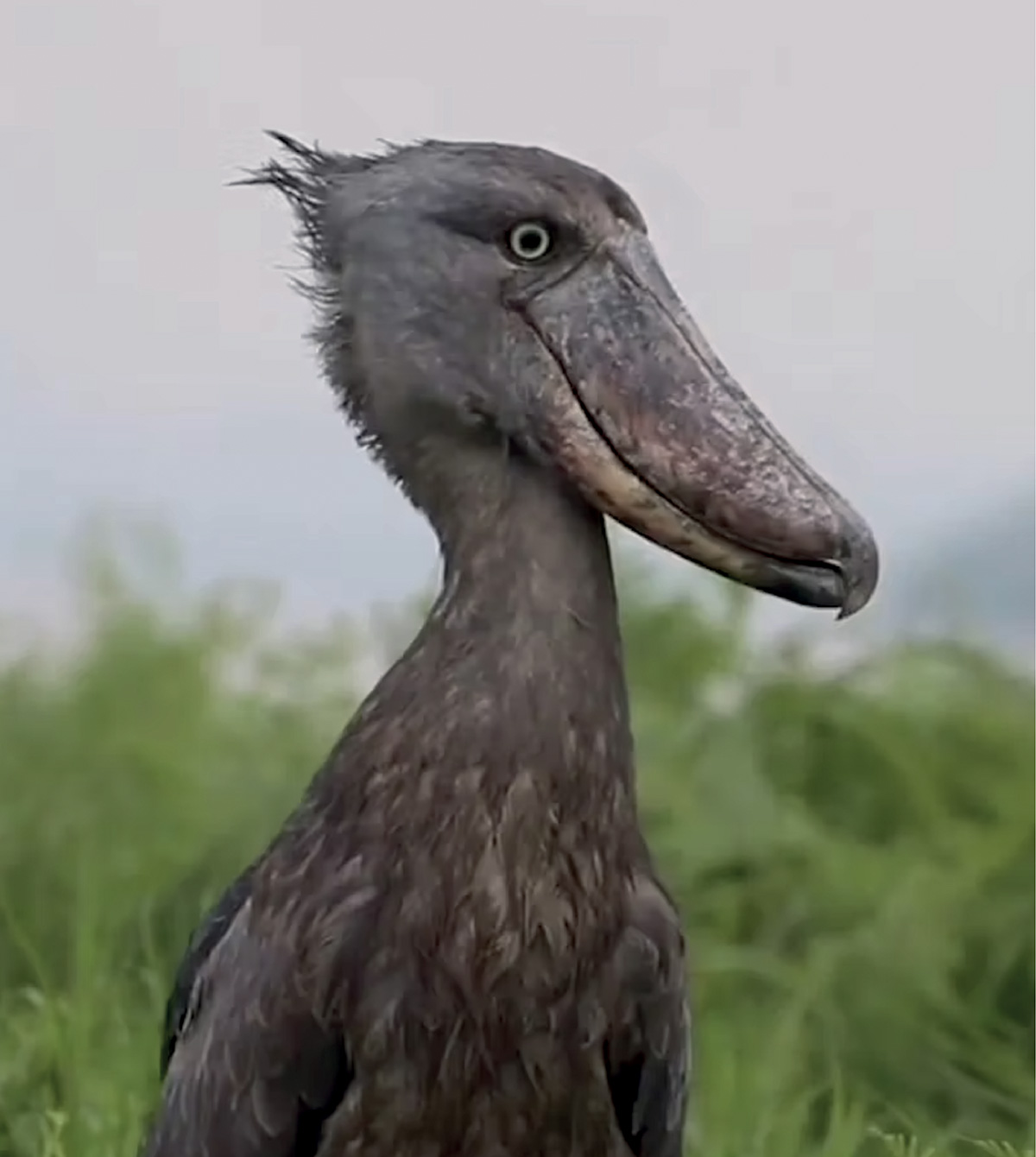
Doc. expérimental | mp4 | couleur | 10:48 | Ouganda | 2020
An uncanny narrator searches for the meaning and form of a mysterious cultural performance speculated to have started after the second world war, in Northern Uganda. As the search unfolds, the film sonically and anecdotally questions notions of cultural legacy, kinship, individual and collective memory.
Ayo is a Ugandan born visual artist and filmmaker currently based in The Netherlands. Her practice is based on a desire to seek out counter narratives, and to explore both pleasurable as well as uncomfortable ways of re-telling histories. Recent projects investigate intangible forms of cultural heritage and informal knowledge production held by unofficial bodies. Ayo holds an MA in Fine Art (cum laude) from the Piet Zwart Institute in Rotterdam.
Christian Barani
je me suis enfui
Doc. expérimental | mov | couleur | 83:0 | France, Ethiopie | 2021
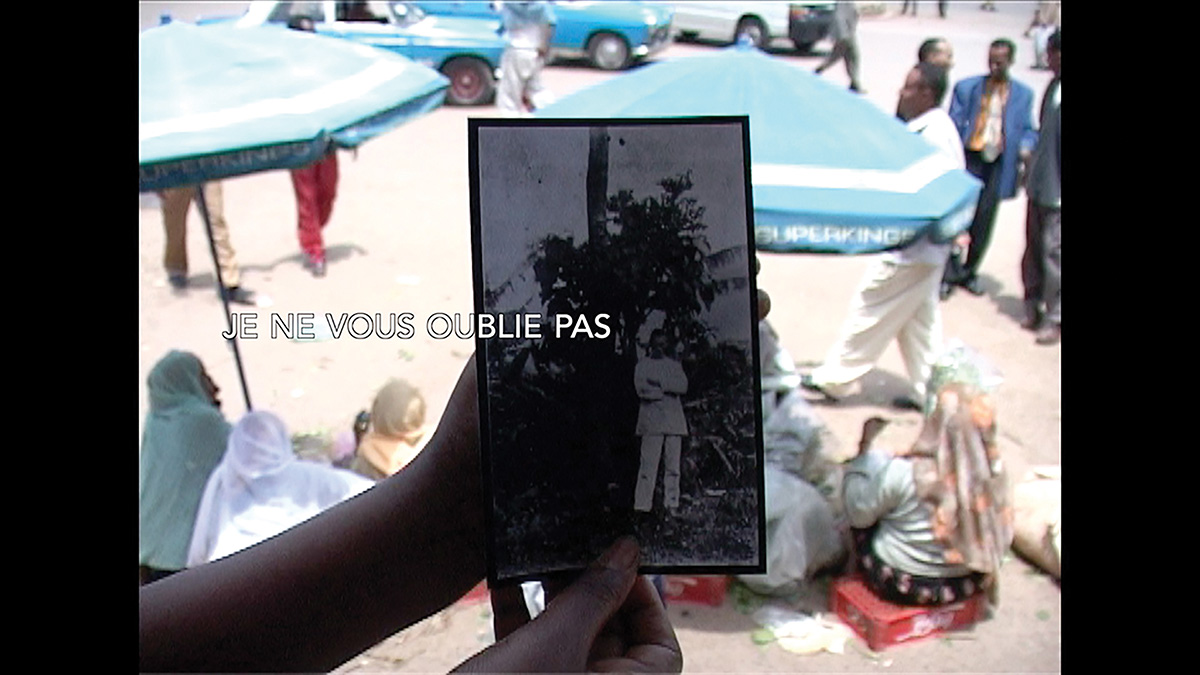
Un jour Arthur Rimbaud quitte le monde de la culture lassé, déçu, en colère. Il ne comprend pas, il n’admet pas les conventions, le manque de courage, le manque d’investissement du monde de l’art. « La vraie vie est absente » dit Arthur Rimbaud. Alors il part, il part dans un ailleurs qui désigne moins un lieu qu’une tension anarchique. Il recherche le hasard, l’inconnu, la rencontre, l’inattendu. Il veut maintenant pratiquer la poésie puisque personne ne peut comprendre sa poésie. Arthur Rimbaud va vivre les dix dernières années de sa vie à Harar, ville sainte d’Éthiopie (1880-1891). En 2005, je pars à Harar. Tous les jours je marche, me perds. Je ne cherche pas car rien n’est à chercher. Je filme un Harar contemporain. En 2020, je décide de faire de ces séquences un film.
Le travail de Christian Barani prend la forme d’une poésie réaliste engagée. Engagée dans une altérité improvisée, jamais recherchée. Son corps souvent perdu dans l’espace, permet de montrer un certain état du monde. Il marche, traverse, observe, ressent, analyse, il rencontre, il filme. Il se perd, il dérive pour trouver, pour provoquer et créer un lien nécessaire et essentiel à la production d’une image. Il marche durant de longues heures jusqu’à l’épuisement, jusqu’au bout de soi. La dérive le met en danger. Un danger physique et mental qui permet, qui autorise à filmer l’autre dans sa difficulté de vie, dans sa quête de survie, dans sa lutte. Ce n’est qu’à ce prix que l’accueil est possible. L’image vient comme une conséquence. Les formes issues de ces expériences n’ont pas d’a priori. Elles sont souvent diverses et prennent la forme de film, de film installation, de lecture projection, de notes photographiques et de textes. Elles se réalisent à partir du matériau capté et sont souvent pensées en fonction des espaces où elles sont exposées.
Rosa Barba
Inside the Outset: Evoking a Space of Passage
Film expérimental | 35mm | couleur | 0:0 | Italie, Chypre | 2021
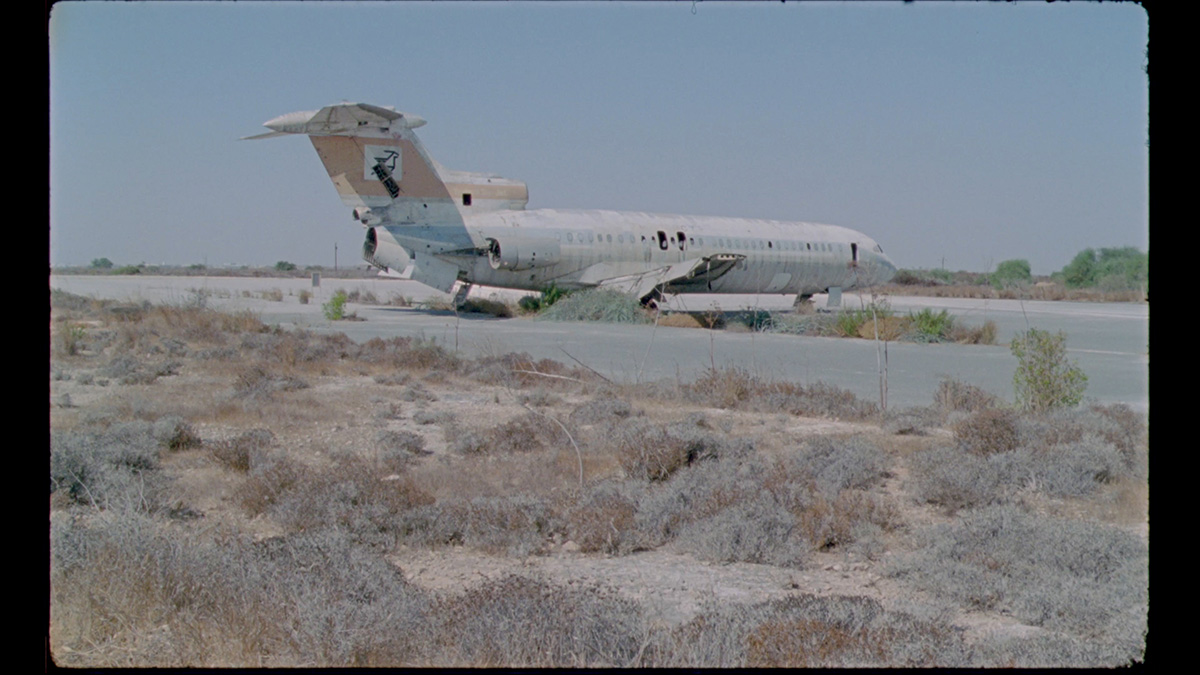
Inside the Outset: Evoking a Space of Passage is a project by artist and filmmaker Rosa Barba following an invitation by Point Centre for Contemporary Art in Nicosia and curator Mirjam Varadinis to propose and realize a project in Cyprus. The work proposed by the artist in 2013, started in 2014 and consists of two parts: a film and a long-term open-air cinema installation. The project was then presented to the Italian Council and received the first prize at the international competition (Third Edition) in 2018, and was awarded a grant from DGAAP (Directorate General for Contemporary Art and Architecture and Urban Peripheries), Italy. Barba’s film is exclusively shot in Cyprus, including underwater shots of the Mazotos shipwreck, as well as aerial shots from archaeological sites. It is an investigation into the loaded, transforming topography that is already palpable in the landscape, before we actually understand what language it creates for our society. In that, the film follows Barba’s artistic approach to examine liminal states which manifest in between contested spaces, both mentally and geographically, in order to allow for a new perspective. The inaugural screening took place in Autumn 2021 at the open-air cinema installation in the Buffer Zone.
Rosa Barba (b. 1972 in Italy) lives and works in Berlin. Rosa Barba studied at the Academy of Media Arts in Cologne and at the Rijksakademie van Beeldende Kunsten in Amsterdam. Barba’s work is represented in numerous international collections such as Collezione MAXXI Arte, Rome, Italy; Collezione FRAC Piemonte, Vercelli, Italy; Hamburger Bahnhof, Berlin; Lemaître Collection, London; Louisiana Museum of Modern Art, Humlebæk, Denmark; Museo di arte moderna e contemporanea di Trento e Rovereto, Rovereto; Museo Centro de Arte Reina Sofía, Madrid, Kunsthaus Zürich, MACBA Barcelona, Mambo Bologna, Sammlung zeitgenössischer Kunst der Bundesrepublik Deutschland Germany and Jumex, Mexico City. She has participated in group shows amongst others at MASS MoCA, USA; Akademie der Künste, Berlin; Kunstmuseum Liechtenstein, Vaduz; La Cinémathèque Française, Paris; WIELS, Brussels; Museo Nacional Centro de Arte Reina Sofia, Madrid; Swiss Institute, New York; 8th Berlin Biennale for Contemporary Art International Triennial of New Media Art 2014, Beijing, China; 19th Biennale of Sydney; International Biennial of Contemporary Art of Cartagena de Indias, Colombia; 2010 Liverpool Biennial; 52nd and 53rd Venice Biennale; 2nd Thessaloniki Biennale of Contemporary Art; Biennial of Moving Images, Geneva.
Mikhail Basov
La Bagatelle
Vidéo | mov | couleur | 8:11 | Russie | 2021
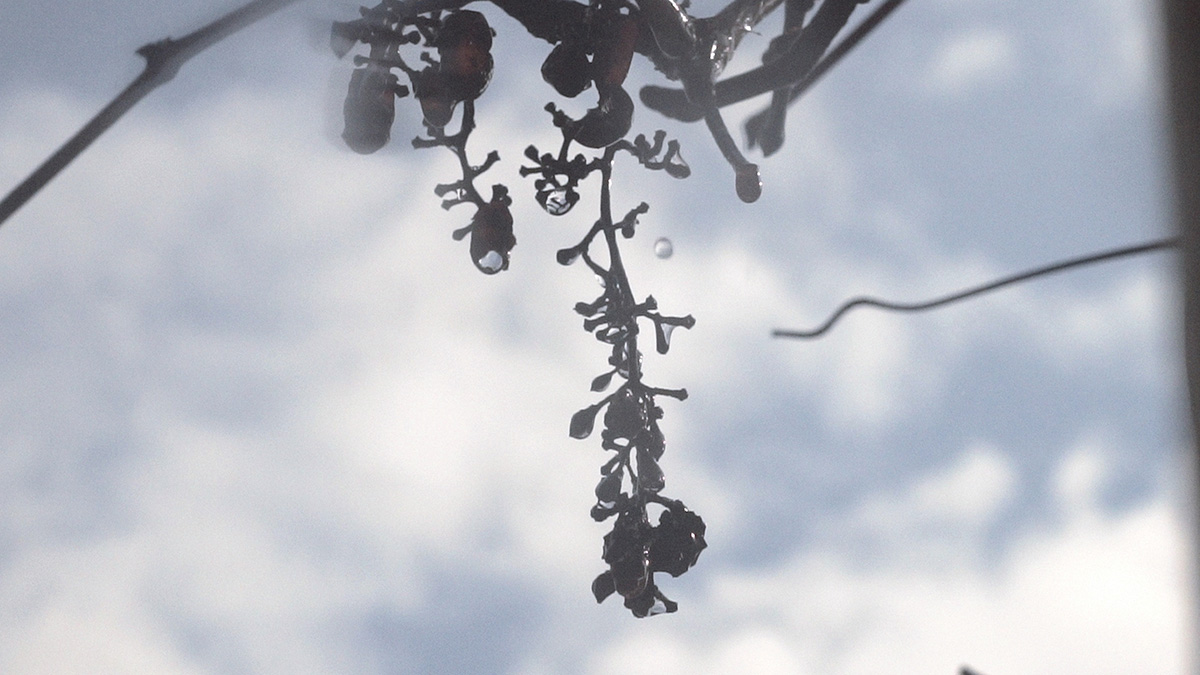
? ticking clock. A view out of a window: the beat of spring thaw - melting ice dripping through the holes of a drain pipe, droplets falling on a child’s hand and a withered grapevine. All these random, unrelated, insignificant things, sounds, and movements begin to live one common life, communicating with each other and Time.
Mikhail Basov (b. 1977, Taganrog, Russia) - filmmaker, video artist. His works has been exhibited internationally in festivals & gallery exhibitions such as Experimental Film Festival Portland, Video Art Biennial in Barcelona VIDEOAKT, Oslo Screen Festival, WRO media art biennale, Kasseler Dokfest, Japan Media Arts Festival, Jihlava International Documentary Film Festival, Festival Miden, DOKer Shorts, Kinodot, International Film Festival "Message to Man", Ryuichi Sakamoto Async International short film competition (Apichatpong Weerasethakul award), Rencontres Internationales Paris / Berlin, 32nd São Paulo international short film festival, Moscow International Experimental Film Festival & other.
Yudhajit Basu
KALSUBAI
Documentaire | hdcam | couleur et n&b | 20:0 | Inde | 2020
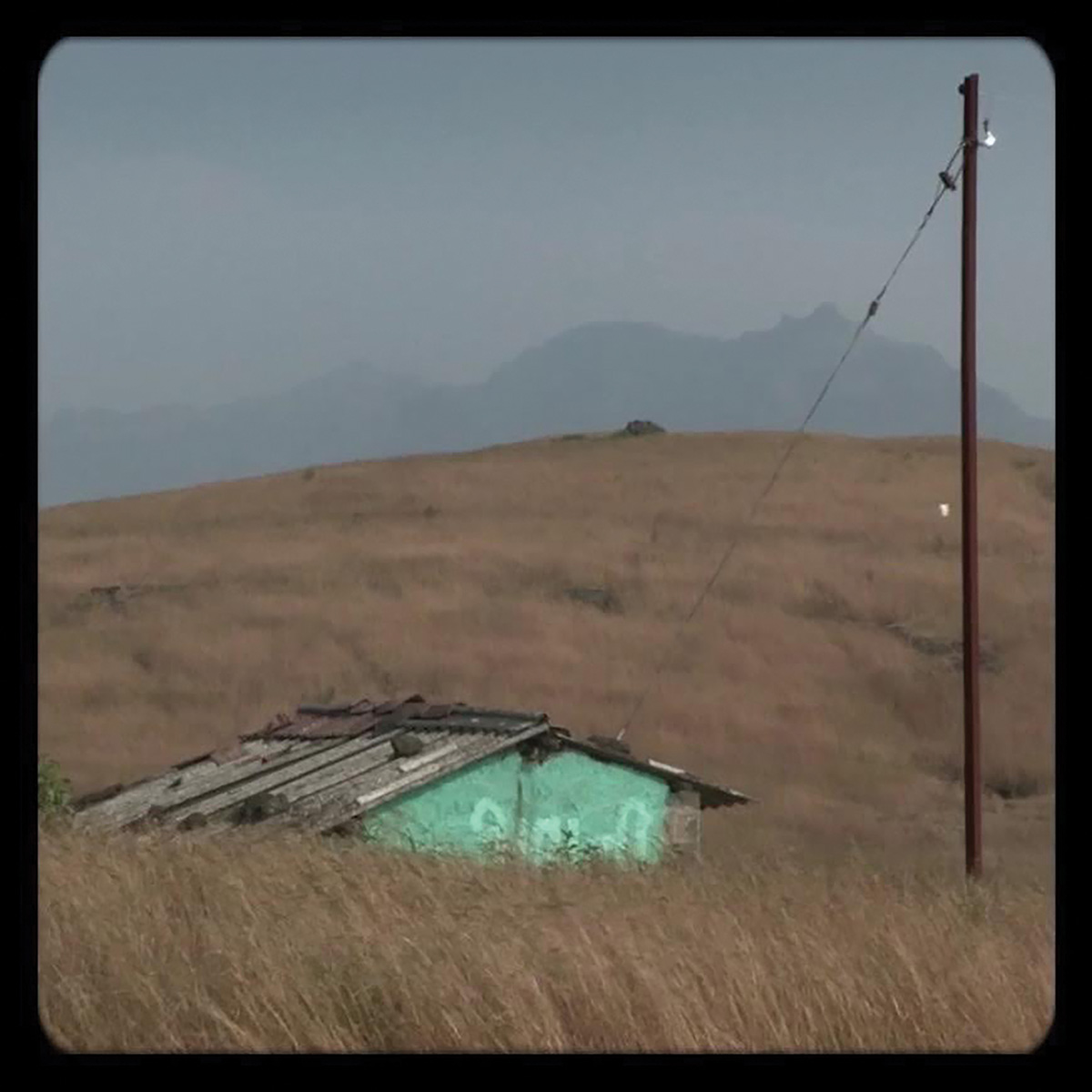
Its an ethnographic film exploring the legend of a Mahadeo Koli Goddess Kalsu whose story and identity remains impregnated in the consciousness of the women of the tribe even today. The film tells the story of the Goddess while drawing visual contrasts between primordial and contemporary images.
Yudhajit Basu joined Film & Television Institute of India, Pune in the Direction Department in 2017 after graduating in Mass Communication and Videography from St. Xaviers College, Kolkata, India. He has made short films & documentaries centering around the themes of climate change and the dichotomy between the modern and the primordial. He is also the editor of a little magazine on poetry in Bengali called “Shabdo (Sound)” and has also published books on poetry. He has been invited to participate in Opening Scenes Lab at 52nd edition of Visions du Réel, Switzerland, which is a special programme for the 16 filmmakers selected globally where his latest short film ‘Kalsubai’ had its World Premiere. Over the years Yudhajit has produced and directed short films, Khoji, Quiro, and Gulnara. These films have been screened at various National & International Film Festivals including Ismailia International Film Festival, Egypt; Toronto South Asian Film Festival, Canada; Bucharest Film Festival Romania; IDSFFK, Kerala, India; ISFF, Melbourne, International Changing Perspective SFF, Istanbul, Turkey amongst many others. His latest Short Film KALSUBAI which is a short 20 minute ethnographic film about the legend of a Koli goddess, had its World Premiere in Visions du Réel International Short Film Festival of Nyon in Switzerland. The film explores the Koli legend of the tribal deity ‘Kalsu’ whose story remains impregnated in the consciousness of the women of the tribe even today. The film won the best film award (Grand Online Prize of the City of Oberhausen) and also bagged a Special Mention from the Ecumenical Jury of Oberhausen. Kalsubai had its UK Premiere in the Sheffield Docs Film festival, Austrian Premiere at Vienna Shorts and its Dutch Premiere at International Documentary Film Festival of Amsterdam (IDFA) 2021 and many more. Yudhajit's recent docu-fiction project “What We Lost in the Fire” has been selected in the Co-Production Market at National Film Development Corporation, 2020
Marcel Beltrán, Marcel Beltrán
La opción cero
Doc. expérimental | 4k | couleur | 80:0 | Cuba | 2020
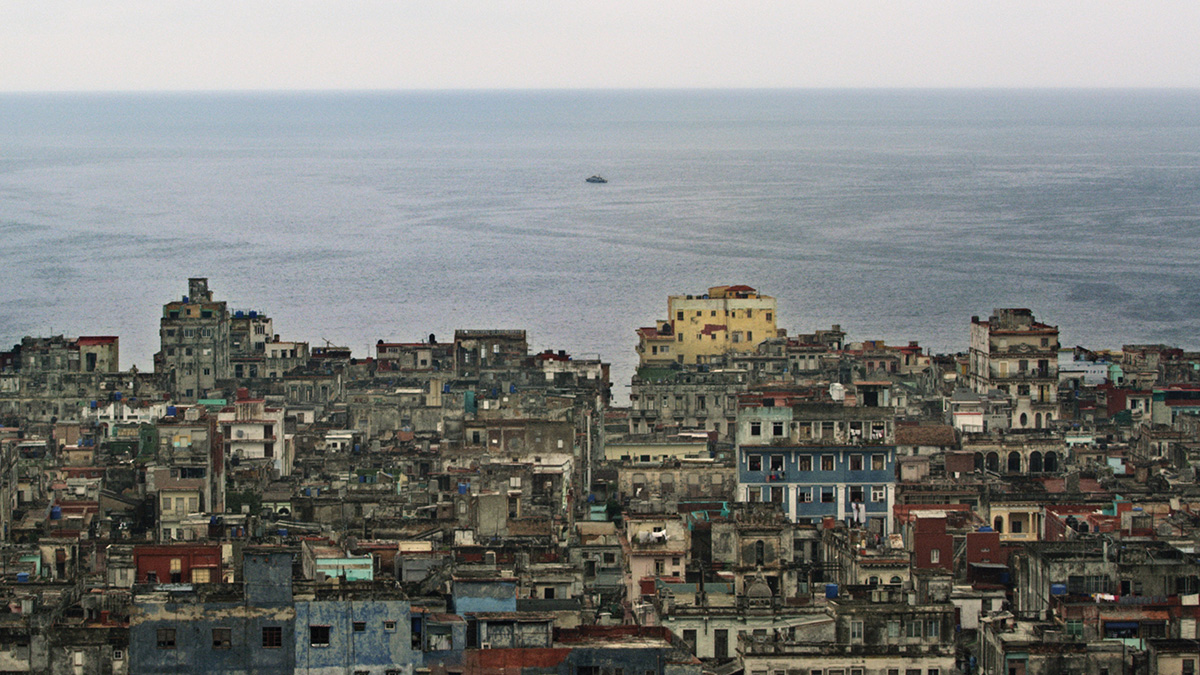
A group of Cuban migrants use their mobile phones to record and transmit through social networks intimate moments of their passage through the jungle, gathering more than 100 hours of experiences. Immobilized in a makeshift camp by Cáritas in Panama City, the difficult passage through the Darien Jungle comes to life on their devices. In this migratory limbo, Cuban director Marcel Beltrán films the passing of the hours in the camp and gains access to this shocking archive.
Marcel Beltrán (b. 1985, Moa, Cuba) is a film director and producer currently living and working in São Paulo, Brazil. He is the founder of Mediocielo Films, a consultant for international development projects and a facilitator of sustainability practices within the arts, exploring environmentally and ecologically-focused issues. Beltrán’s work combines image degradation, memory and life experience creating a dialogue between the poetic and political / the intimate and public. Marcel has wrote, directed and produced “La música de las esferas” (2018) premiere at 35 MIFF and "La opción cero" (2020), a feature documentary with world premiere at IDFA, Hot Docs and DOC NYC, receiving, among other awards, Best International Feature Film at Miradasdoc (Spain), FIDBA (Argentina). His previous films were selected in film festivals around the world, such as MoMA Documentary Fortnight (New York), Busan International Short Film Festival, Documenta Madrid, DOK Leipzig, AmDocs (Palm Springs), Malaga, Biarritz, SANFIC (Santiago de Chile), Festival Latino (São Paulo), BIFF (Bogota), Havana Festival, among others.