Catalogue > Faire une recherche
Résultats pour : Catalogue 2022
Sam Crane
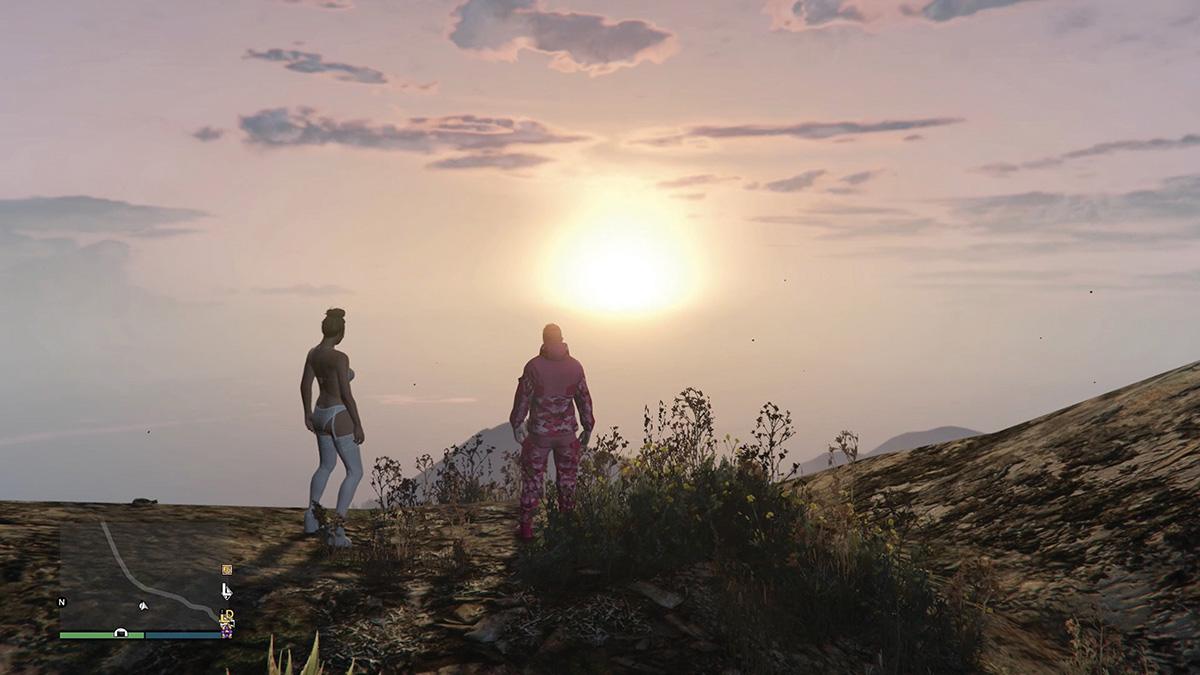
We Are Such Stuff As Dreams Are Made On
Vidéo | mov | couleur | 9:59 | Royaume-Uni | 2021
What happens when you try to perform Shakespeare inside GTA Online, a game space notorious for its aggression and gratuitous violence? You might expect the other players in your server to respond with heavy weaponry, perhaps a mini SMG, or a compact grenade launcher. And indeed, this is often what happens. Yet occasionally you may come across someone who responds in an entirely unexpected manner. This work radically subverts and appropriates the notoriously violent world of GTA Online and reimagines it as a meditative space for live performance of Shakespeare. It challenges lazy assumptions about video games (that they are simply mindless entertainment or the nadir of violent youth culture) to reveal their inherent artistry and sophistication, and at the same time opens up the snobbish and elitist world of classical theatre to those who are excluded from it due to disability, financial concerns, geographical proximity or lack of familiarity with the theatrical ecosystem. By harnessing the technological capabilities and networked connectivity offered by contemporary video games, it also interrogates the concept of the audience: what it is, how it can be accessed, and how it can interact with live performance.
Sam Crane is an actor and video artist, critically acclaimed for his performances at the National Theatre, Shakespeare’s Globe, in The West End and on Broadway. He has collaborated with many of the most celebrated and influential theatre artists in the world including Mark Rylance, Katie Mitchell and Robert Icke in groundbreaking productions including Farinelli and The King, 1984 and ...some trace of her. In the guise of his alter ego Rustic Mascara, he attracted over 50 thousand views in two weeks to his radical attempts to perform Shakespeare inside GTA online and has had his films shown at contemporary art and film festivals worldwide (including London Short Film Festival, Slamdance and Athens Digital Arts Festival). He is also a prolific screen actor and has appeared in many the most loved and successful television shows of recent years including The Crown (Netflix), The Trial of Christine Keeler (BBC), COBRA (Sky), Poldark (BBC), Endeavour (ITV) and Call The Midwife (BBC). He has recently been selected as one of six emerging artistic researchers for Zurich University of the Arts PEERS programme, and was longlisted for the Aesthetica Art Prize 2022
Felice D'agostino, Margherita Pisanu, Gaetano Crivaro
Rondò final
Doc. expérimental | super8 | couleur et n&b | 51:0 | Italie | 2021
Un siècle d’images recherchées et retrouvées, fragments de celluloide, films de famille, bandes magnétiques, pixels. Un Saint martyr, un guerrier, Sant’Efisio, icône qui meut les gens. Un rite qui se répète hors du temps, qui porte le masque des dominations passées et présentes d’une île, la Sardaigne. Qu’est-ce qui nous échappe ? Qu’est-ce qui nous reste ? Question et réponse à la fois, fondement du montage, renouveau du passé dans un autre passé. Dans cette rencontre de regards décalés se renouvèle la fête dans la mémoire et dans le rêve, loin des lieux communs.
Gaetano Crivaro est un documentariste et vidéo-artiste qui vit à Cagliari. En 2009 il réalise son premier film “I LOVE BENIDORM” qui gagne le prix du publique au Festival DocumentaMadrid. En 2012 participe au film collectif "DEMONSTRATION", de Victor Kossakowsky. En 2013, son scénario STRETTO ORIZZONTE est finaliste au Prix Solinas. En 2014 crée le collectif L'Ambulante qui s’occupe de production, recherche, distribution cinématographique. Depuis 2015 le collectif lance le projet de recherche et d’expérimentation VideoRitratti et un projet de recherche sur la réutilisation des images préexistantes « Cinema di Seconda Mano » dans lequel il est né le film Rondò Final. Margherita Pisanu, chercheuse indépendante et documentariste, s’intéresse aux thématiques liées au droit et aux pratiques de transformation participatif de la ville mais aussi aux potentialités d’usage de langages audiovisuels dans l’interaction avec les territoires. En 2011 réalise son première film Good Buy Roma, sélectionné en nombreuses festivals. Elle a réalisé Hey Boys (2019), En Route (2018), Video Ritratti (série de court métrages documentaires réalisés dans différents territoires). En 2014 crée le collectif L'Ambulante qui s’occupe de production, recherche, distribution cinématographique. Avec l’Ambulante elle est engagée dans de projets expérimentaux sur le cinéma fondé sur les archives, avec une attention particulière aux aspects de la bande sonore. Le film "Rondò final" fait partie des ses projets là. Felice D’Agostino (1978) travaille depuis 20 ans comme réalisateurs, chef opérateurs et monteurs. Ses œuvres, presque toutes réalisées dans sa terre, la Calabre, avec Arturo Lavorato, ont été projetés dans beaucoup de Musé eset des festivals et ont reçu de nombreuses récompenses, dont le Prix Orizzonti à la 68° Mostra du Cinéma di Venise, Meilleur Documentaire au Torino Film Festival 2005, le prix Casa Rossa Doc au Bellaria Film Festival 2006 et une Mention Spéciale aux Nastri d’Argento 2012. Il vivent et travaillent entre Paris et l’Italie.
Don Hai Phú Daedalus
Celilo Falls in Quarantine
Doc. expérimental | 4k | couleur | 10:0 | USA, 0 | 2021
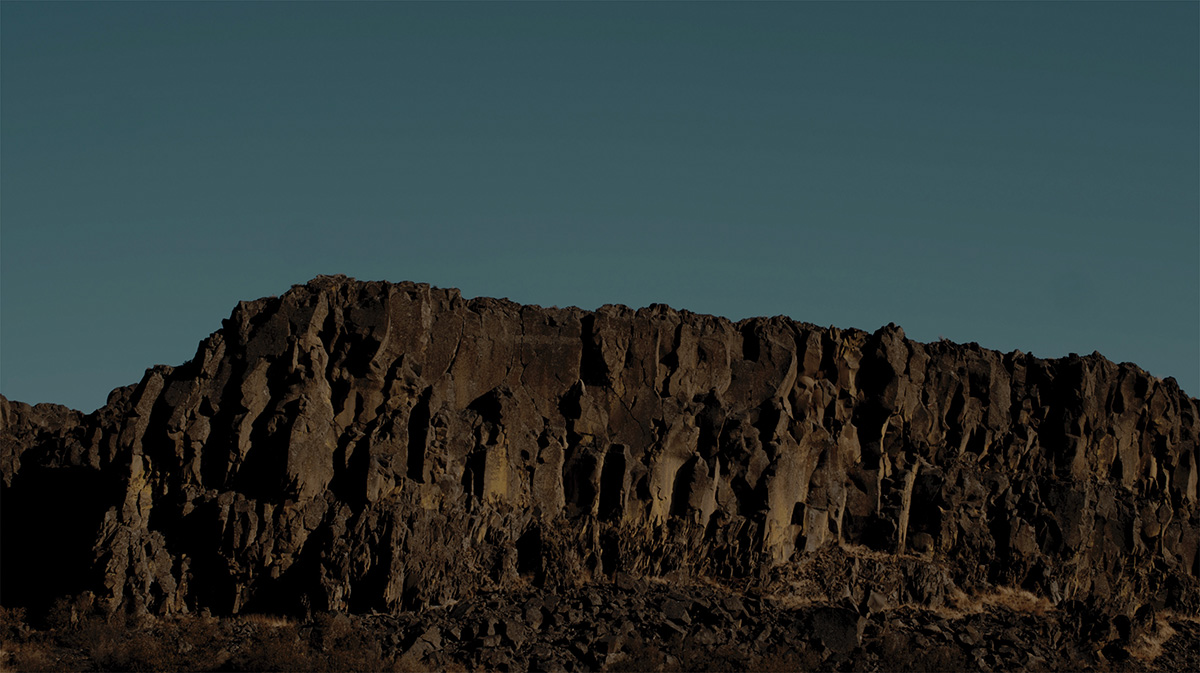
Celilo Falls is the oldest continuously inhabited community in North America, the site of a traditional fishery on the Columbia River. For 15,000 years, the cascading waters sustained the lives of many indigenous tribes. In 1957, the completion of the Dalles Dam–a massive hydroelectric generator–inundated the falls, displaced most of the families that subsisted at the site and obstructed the migrating salmon, white sturgeon and other anadromous fish. Today, only a few families reside at what is now a man-made lake. Shot from Horsethief Butte, an outcropping of basalt, we see the petroglyphs and pictographs created by indigenous people who once came here, communing here above the tumbling waters. An ethnographer records the spoken language–Chinookan–of the community just five years before they were displaced. The butte was carved out by the glacial activity of the last ice age, and stands in defiance to the signature winds wailing up the Columbia Gorge. This is a vignette of Celilo Falls during the 2020, SARS-COV-2 pandemic.
Don H?i Phú Daedalus (b. 1983) grew up in the shadow of the country's largest public observatory—an area so remote and sparsely populated that it served as the first plutonium-processing plant for the Manhattan Project. Shortly after the oldest human remains in North America were discovered near his hometown, Daedalus left to attend the University of Washington, where, coincidentally, the remains were to be held during the decade-long legal dispute between the Kennewick tribe and anthropologists. He lives and works in New York.

Anouk De Clercq, Helga Davis
OK
Vidéo | hdv | noir et blanc | 5:0 | Belgique | 2021
In the Summer of 2020, at the height of the Black Lives Matter protests in her country, Helga Davis wrote a text that voices her pain, her despair and also her hopes for the future. After collaborating on Helga Humming (2019) and One (2020), the text became the starting point for a new film and a first work co-signed by Helga Davis and Anouk De Clercq. OK scrutinises the relations between Black and White while searching for the essence of collaboration and caring about the other.
Anouk De Clercq explores the potential of audiovisual language to create possible worlds. Her recent work is based on the utopian idea of ‘radical empathy’. Her work has been shown in Tate Modern, Centre Pompidou, Museo Nacional Centro de Arte Reina Sofia, MAXXI, Centre d’Art Contemporain Genève, BOZAR, International Film Festival Rotterdam, Berlinale, Ars Electronica, among others. She has received several awards, including the Illy Prize at Art Brussels in 2005 and a Prix Ars Electronica Honorary Mention in 2014. Anouk De Clercq is affiliated to the School of Arts University College Ghent as a visiting professor. She is a founding member of Auguste Orts and initiator of Monokino. Anouk De Clercq is the author of Where is Cinema, published by Archive Books. Helga Davis is a New York-based multidisciplinary artist who works as an actress, singer, writer and composer, as well as a radio and podcast host. Helga Davis performed as a principle actor in the 25th-anniversary international revival of Robert Wilson and Philip Glass's opera Einstein on the Beach. Davis' music career has included a stint in the rock band Women in Love, in the 1990s. More recently, Davis has starred in operas and theater pieces internationally, including Robert Wilson's The Temptation of St. Anthony, libretto and score by Bernice Johnson Reagon; Octavia E. Butler's Parable Of The Sower, Milton by Katie Pearl and Lisa Damour; The Blue Planet, a multimedia theater piece, by Peter Greenaway and Saskia Boddeke; and Soho Rep's Jomama Jones, Radiate. Davis hosts the "Helga" podcast, live events for New Sounds and WQXR-FM's Q2 Music.
Javier De Frutos
Whoever You Are
Fiction expérimentale | hdv | noir et blanc | 6:9 | Espagne | 2021
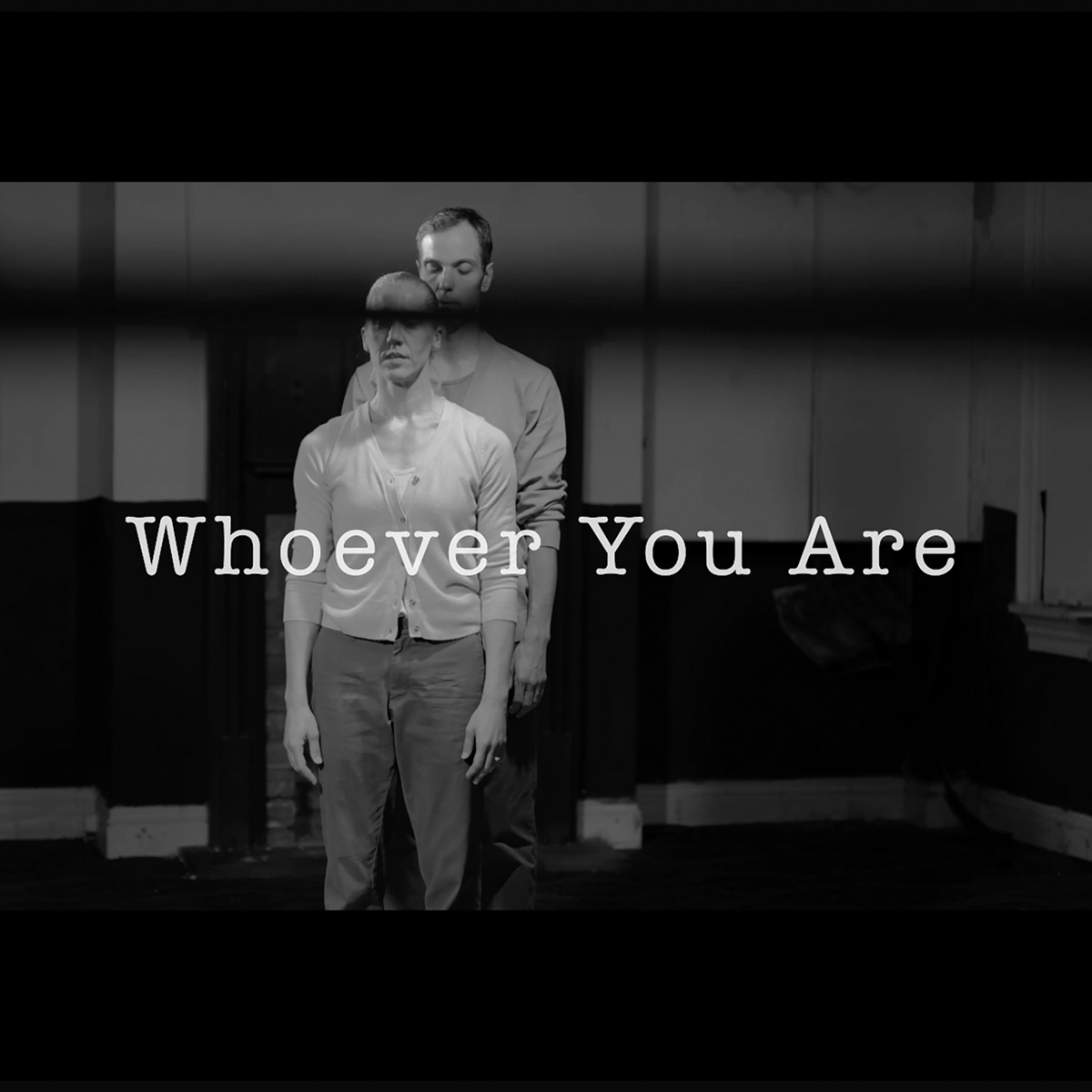
“Whoever You Are” is a cinematic adaptation of Walt Whitman's seminal poem, “Whoever You Are Holding Me Now In Hand” directed by Javier De Frutos and produced by Whoever You Are Productions. Following a lifelong scholarship and appreciation of American literature, De Frutos adapted Walt Whitman's poem into a screenplay for the film. Within “Whoever You Are”, De Frutos utilizes several different mediums of execution including dance and vocals, which he combines using his unique directorial and choreographic style blended with dexterous editing.
Shocking, sensual, raw, radical – these are words synonymous with work by Olivier award-winning director and choreographer Javier De Frutos. Renowned for creating brutal yet beautiful film and stage work, De Frutos has consistently stunned audiences with his ability to make work that not only is violently challenging, but also sears the stage and screen with its intelligence and wit. Prompted by the pandemic to expand their film-making practice, producers Paul Chantry and Rae Piper of Whoever You Are Productions, invited De Frutos to collaborate with them in creating a new short film. This collaboration sought to build on a fruitful prior relationship which Chantry had enjoyed with De Frutos, that had involved working together on several productions, two of which had been filmed for the BBC ("Eternal Damnation to Sancho & Sanchez" and "The Most Incredible Thing"). Chantry and Piper had enjoyed a longstanding relationship of 7 years collaborating with award-winning company Evenlode Films and Productions, who were additionally invited to join the project.
Matthias De Groof
Onder het witte masker: de film die Haesaerts had kunnen maken
Doc. expérimental | 4k | couleur | 9:0 | Belgique | 2021
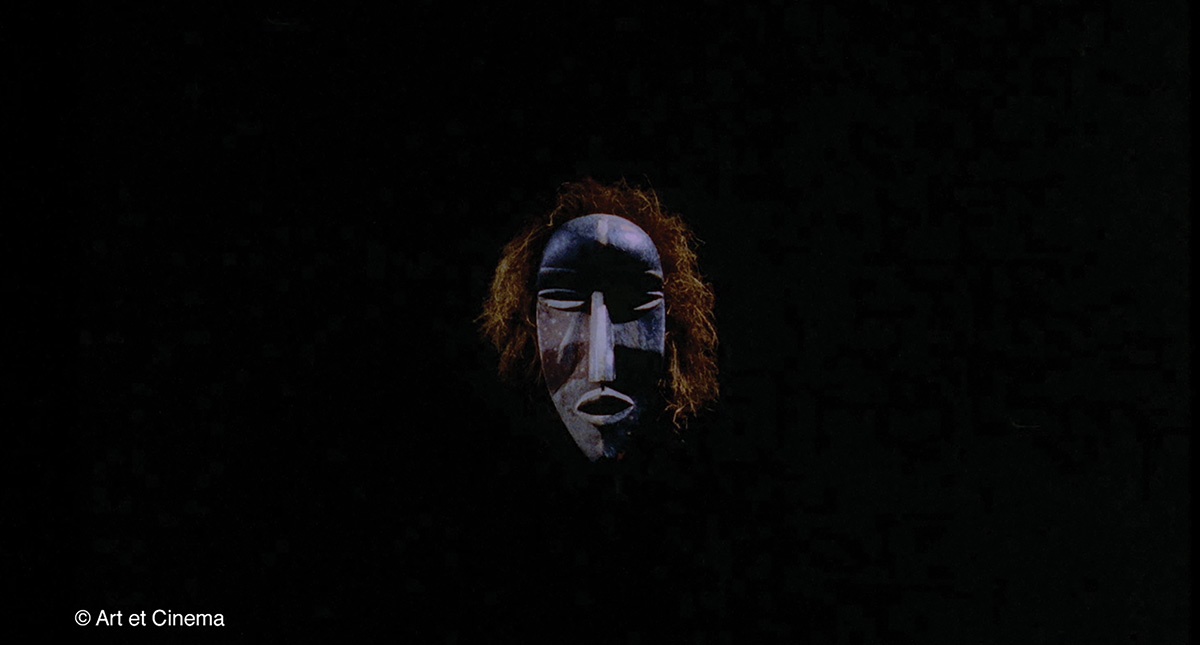
"Under the White Mask: the film Haesaerts could have made" uses fragments of "Under the Black Mask", a 1958 film about Congolese art directed by the Belgian artist Paul Haesaerts and qualified as colonial propaganda. This new film imagines what the masks, now subjects and not objects, would say. Aimé Césaire's "Discourse on Colonialism" is spoken in Lingala for the first time. This speech is still a critical mirror for Europe. "Under the White Mask" is limited to elements already existing in 1958.
Matthias De Groof (1981) Belgium. Filmmaker and scholar. His award-winning films have been presented at venues like the IFFR, Cannes Pan-African Film Festival, Le FIFA and the Berlinale. His edited book “Lumumba in the Arts” is published with Leuven University Press, and reached the top-100 "books to escape the news" (LitHub). He has held appointments at the New York University’s Tisch School of the Arts; the Helsinki Collegium for Advanced Studies; the Africa Multiple Cluster of Excellence of the Bayreuth University; and the Waseda University in Tokyo. Throughout is artistic and academic career, he was granted fellowships by the Canon Foundation, the KONE Foundation, Fulbright and BAEF. His filmography, produced by Cobra Films, includes “Under the White Mask” (2021), “Palimpsest of the Africa Museum” (2019), “Lobi Kuna" (2018), “Diorama” (2018) and “Jerusalem, the Adulterous Wife” (2008) among others.
Astrid De La Chapelle
Corps Samples
Film expérimental | 16mm | couleur | 13:45 | France, Allemagne | 2021
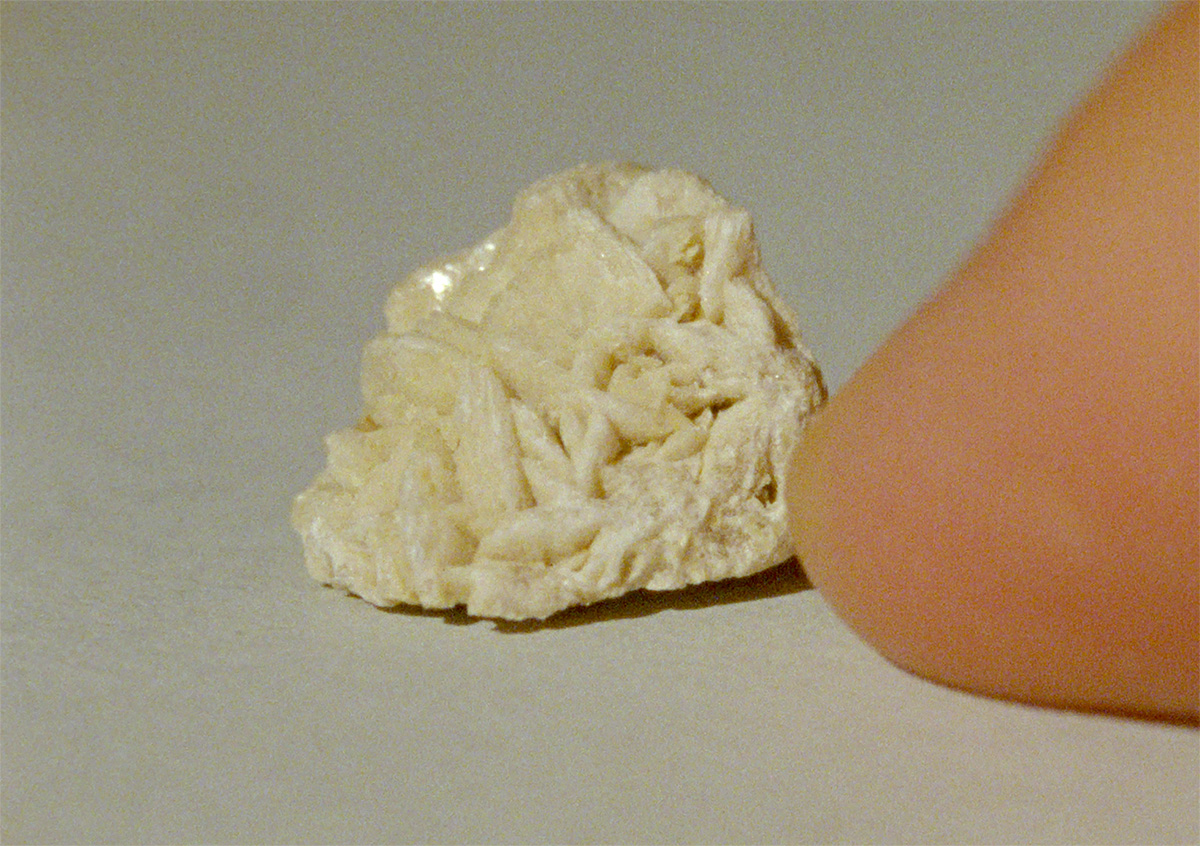
Au départ, il y a une simultanéité. Un fossile marin de crinoïde mis à jour près du sommet de l'Everest, un célèbre alpiniste britannique qui s’évapore et un leader russe qui s'éteint sont le point de départ d’une histoire de la transformation de la matière. Dans un vaste mouvement, les matières terrestres se brassent et se métamorphosent, les échelles et les temporalités se télescopent, et les corps humains se nichent au creux des grands processus terrestres.
Astrid de la Chapelle est une réalisatrice et une artiste française. Elle développe dans ses films des expériences autour du récit, notamment en lien avec la géologie et les circuits économiques des ressources terrestres, mais aussi de la science-fiction. Son travail se déploie au sein de l’image en mouvement, mais également dans d’autres champs comme la musique, avec le groupe Shrouded and the Dinner depuis 2012. Ses films ont été présentés entre autres au Cinéma du Réel (FR), au festival d’Oberhausen (DE), à l’ECRA Experimental Festival (BR), au FID Marseille (FR), aux Rencontres Internationales Paris/Berlin (FR/DE), au Musée d'histoire naturelle (FR), au Musée de la Chasse et de la Nature (FR)…
Nieves De La Fuente
Tanque de Tormentas
VR expérimental | 0 | couleur | 0:0 | Espagne, Allemagne | 2021
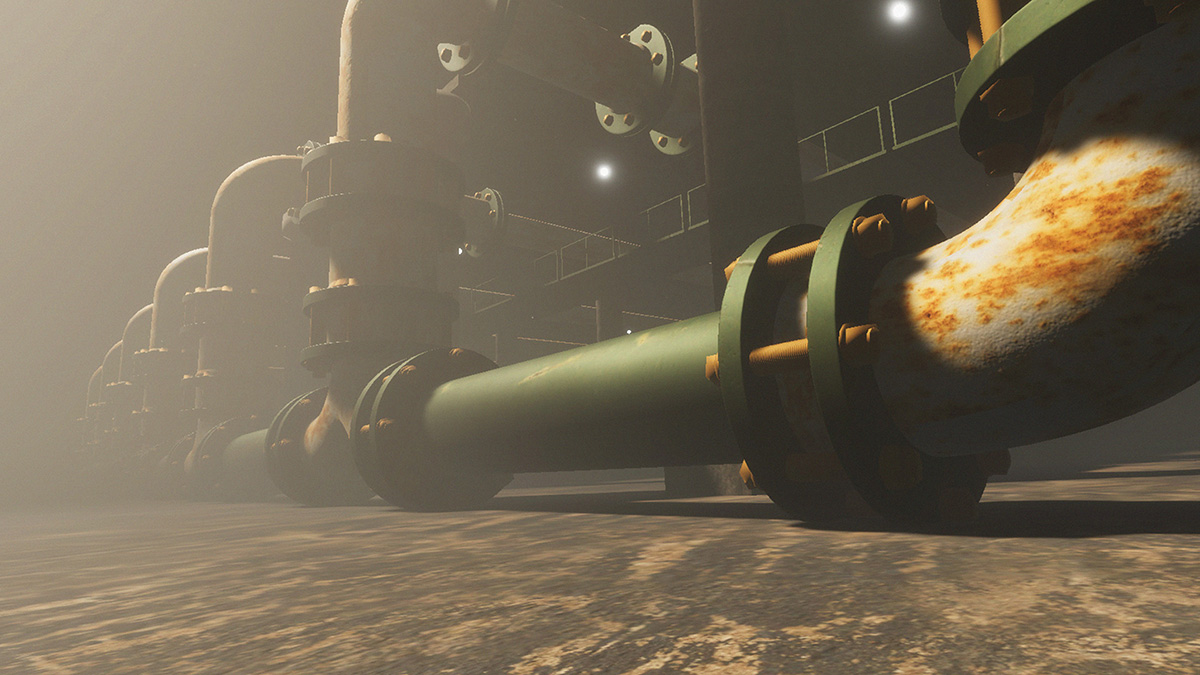
Water tanks work as collectors that help to control water levels in times of extreme rainfall, ensuring the availability of this resource in future times of drought. The one in Madrid is one of the largest in the country. I was not aware of its existence until a few months ago when I heard about it on the radio. It was a feature about everything that could be found there along the years: a dead donkey, an rusty small car, chandeliers... What kind of memories do we throw away in the water of these places where they cannot be carried away by the current? Do we want to forget them? Or do we want just to keep them preserved under water? In this virtual reality experience, the water-collector is part of the subconscious. It is a place where childhood memories are encapsulated. We can revisit them in the virtual world, but probably they will drown us.
Born in Madrid (Spain) 1988. Nieves de la Fuente studied Fine Arts at the Universidad Complutense de Madrid. She finished her studies with an Erasmus Scholarship at the Kunsthochschule Kassel with Professor Norbert Radermacher. During her Posgradual Studies at the Kunsthochschule für Medien in Cologne, she worked as a 3D artist and improved her understanding of the 3D medium. The work in 3D, open her a different approach to sculpture and a way into immersive technologies. She uses these as a medium to deliver a message and keeps working as a conceptual artist. Her current line of work oscillates among the construction of memory and its experience in immersive processes and the investigation of non-human perception delivered through these technologies. She has shown her work in institutions and festivals around Germany, Spain, Canada, Taiwan and Croatia among others.
Liryc Dela Cruz
Santelmo
Fiction expérimentale | hdcam | noir et blanc | 52:28 | Philippines | 2021
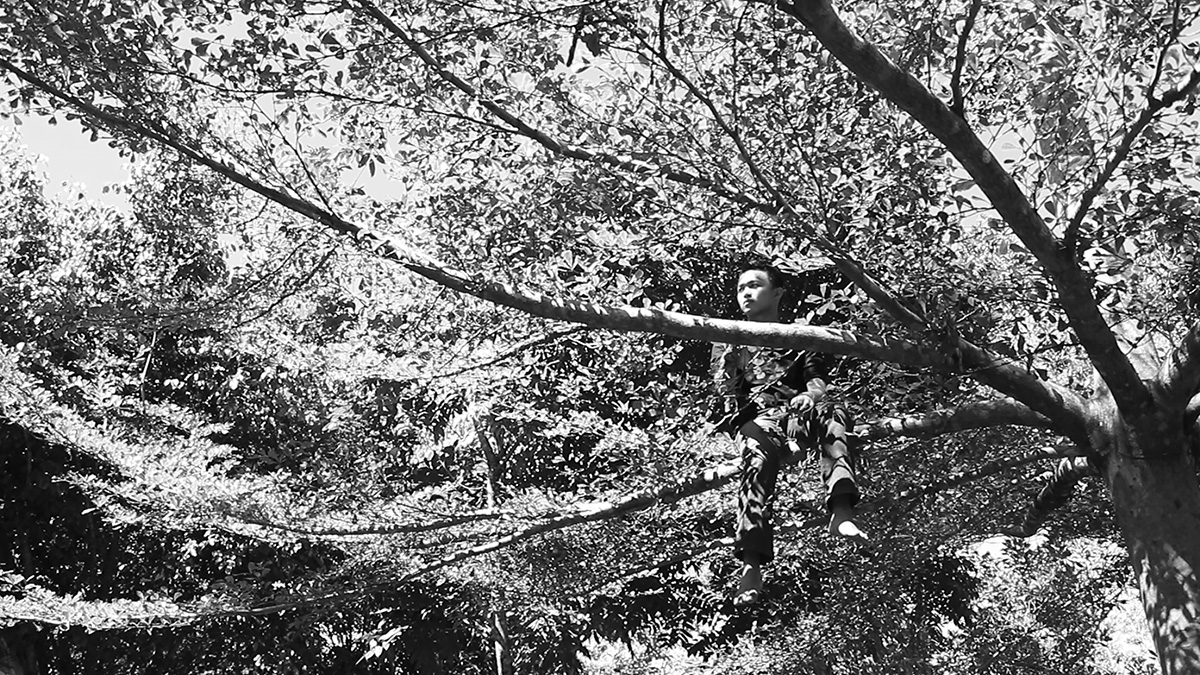
Encyclopaedias describe St. Elmo's fire as a harmless meteorological phenomenon caused by a strong static discharge. In Philippine mythology, a "santelmo" is a wandering soul of a deceased person who has not found peace yet. Three young men wandering through countryside seeking in vain reconciliation with the world. Their aimless journey is accompanied by rustling of leaves and grass, chirping of insects, and singing of birds, conversations about people for whom they have suffered and whom they plan to take revenge on. Yet, they are prevented from freeing themselves by memories that cannot be killed.
Liryc Dela Cruz (1992) is an artist and filmmaker from Tupi, South Cotabato in Mindanao, Philippines and now based in Rome, Italy. His works were selected and screened in different international film festivals and art events. His debut short film “The Ebb of Forgetting” premiered at the prestigious 68th Locarno Film Festival. His films are thematically related to his origins, history, and personal psychology. His works outside cinema focuses on care, indegenous practices, decolonial practices, post-colonial Philippines, transpacific slave trade, hospitality and reconnecting the colonized and slave body to the soil. Dela Cruz was one of the key collaborators of Philippine independent master filmmaker Lav Diaz. He is also considered as one of the representatives of the slow cinema movement (Ji.hlava IDFF ‘18). In 2019, he represented Italy at the UK Young Artist in Nottingham, he was selected as one of the artists of AtWork Venice mentored by Simon Njami and was the Editor in Chief of the Where is South exhibition at the Palazzo Querini, Fondazione Ugo e Olga Levi as part of the “Rothko in Lampedusa'' initiative during the 58th Venice Biennale. In 2020, he was selected as one of the young emerging filmmakers to represent Italy in Berlinale Talents during the 70th Berlin International Film Festival. Dela Cruz was also mentored by French Political Scientist and Activist, Françoise Vergès during the Mediterranean Ecofeminist Decolonial Union for Self-Education in Lecce, Italy. Recently, he debuted a performance in Teatro di Roma - Teatro Nazionale in Rome as part of his ongoing research project “Il Mio Filippino/a,” a project about “gestures of care and cleaning methods” of Filipino cleaning workers. The same project was also a recipient of Artissima - Torino Social Impact Art Award for the year 2020 and has been selected by Cité internationale des arts Paris for their residency program in 2022 and by Mattatoio di Roma for its Prender-si Cura residency programme. Currently, Dela Cruz is developing “Ocean as a Space of Perpetual Care '' a project based on indigenous care and hospitality of pre-colonial Filipinos and from the diary of Antonio Pigafetta.
Robbrecht Desmet
Het open oog
Documentaire | hdv | couleur | 69:0 | Belgique | 2021
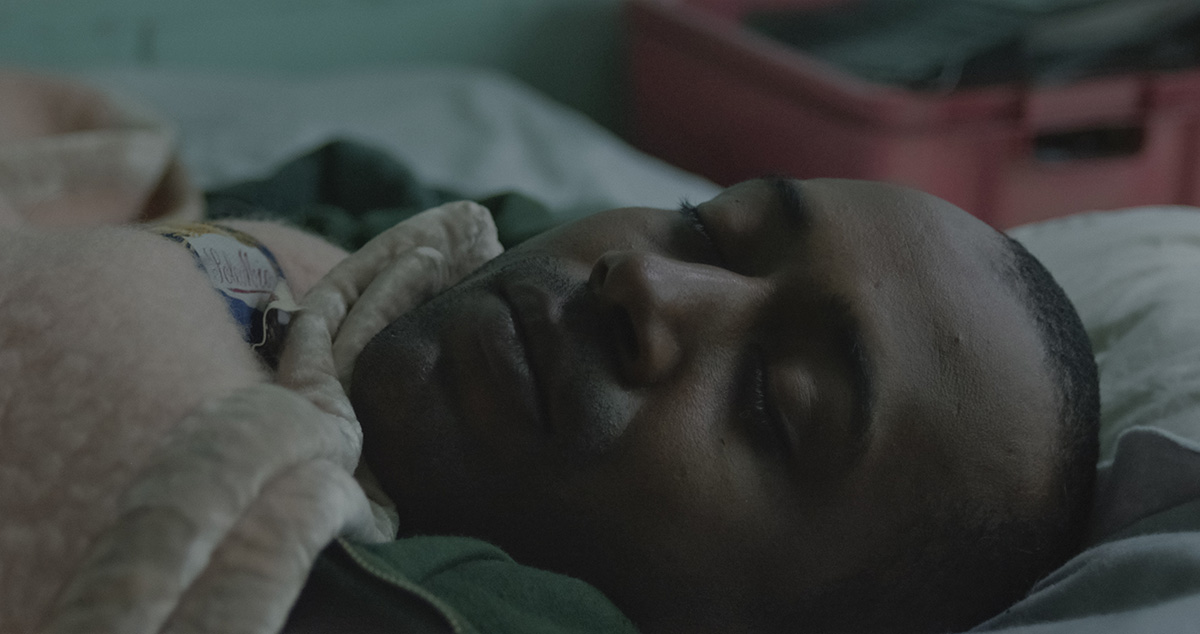
Behind the concrete walls of a former cardboard factory in Brussels, scenographer Jozef Wouters presented the stage performance Underneath Which Rivers Flow in March 2019. Filmmaker Robbrecht Desmet closely followed the creation process of this most anticipated piece of theatre of the Brussels live arts scene. The performance was a collaboration with open art house Globe Aroma and was created with a diverse group of non-professional performer-participants from all corners of the world. It was programmed by Kaaitheater, one of the leading Brussels theatres, Kaaitheater, and premiered during the renowned performance festival Performatik. In May 2019 it was staged again during the international Kunstenfestivaldesarts. The play received a five star review in the Flemish newspaper De Standaard as well as a critical reading in the magazine for culture and criticism Rekto:Verso. The massive warehouse, covering more than a thousand square meters, was to be demolished soon after the group had moved. The very surface that served as its stage is now a public park, welcoming passers-by, young globetrotters, soccer players, dreamers, dealers, thieves, tourists and strollers alike. With a small crew of film professionals and film students, Robbrecht Desmet captured both rehearsals and performances, gradually focussing on the moment of public presentation of the piece rather than on its genesis. Only months later he started to shape his observations into a calm meditation on being a spectator, streetwise institutionalism and the cosmic desire for making art. The film, taking its title (The open eye) from the name ascribed to the wooden grandstand created for the piece, attentively navigates between participation and observation, inside and outside, politics and aesthetics, the public and the private.
Robbrecht Desmet (°1985) lives in Brussels. He studied film and fine arts at Sint Lukas Brussels. His work has been shown at filmfestivals such as BFI London Film Festival, International Film Festival Rotterdam, Rencontres Internationales, Courtisane Festival, Kurzfilm Festival Hamburg, Brussels Art Film Festival, and in screenings and exhibitions Beyond The Picturesque (S.M.A.K. & Artcinema OFFoff), Documented Now! (de Brakke Grond, Amsterdam), An Evening with Auguste Orts (Beursschouwburg, Brussels). He teaches Film Studies at the film department of the LUCA School of Arts in Brussels. He is currently finishing a PhD in the arts, The World is Really There.
Igor Dimitri
Salsa
Fiction expérimentale | 16mm | couleur | 13:0 | Portugal | 2020
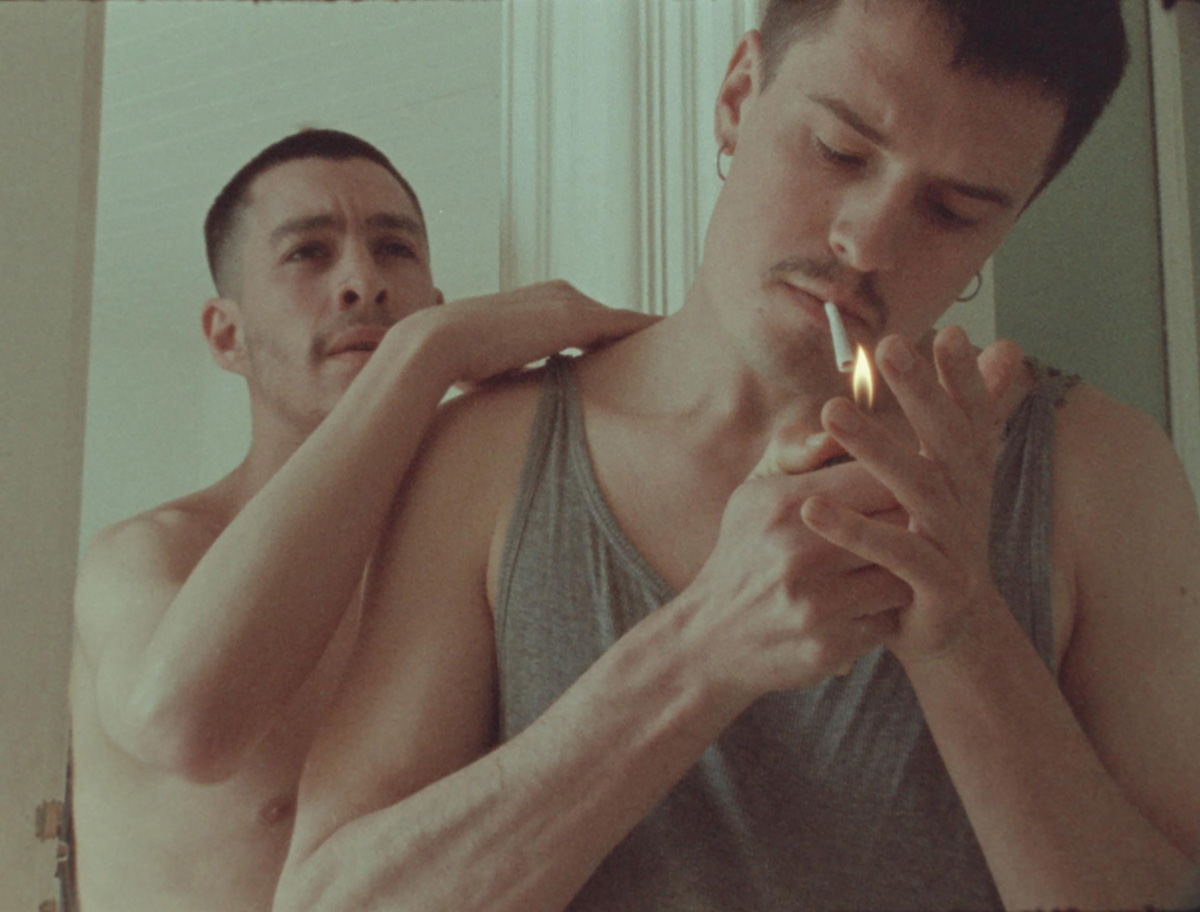
One Buenos Aires afternoon in the dominican hairdresser saloon, in which characters from different origins reunite around the musical feeling of the place. From dancers to performers and actors, clients and reggaeton singers.
MA in Documentary Cinema and Profesor Assistant at Universidad del Cine, Buenos Aires. PhD Candidate at University NOVA, Lisboa. Currently working on my first feature film. I'm interested in the notions of displacement, ritual and longing. In color, rhythm, body and mixing genres in a surrealist way.
Tommaso Donati
L'epoca geniale
Doc. expérimental | hdcam | couleur | 45:0 | Suisse | 2021
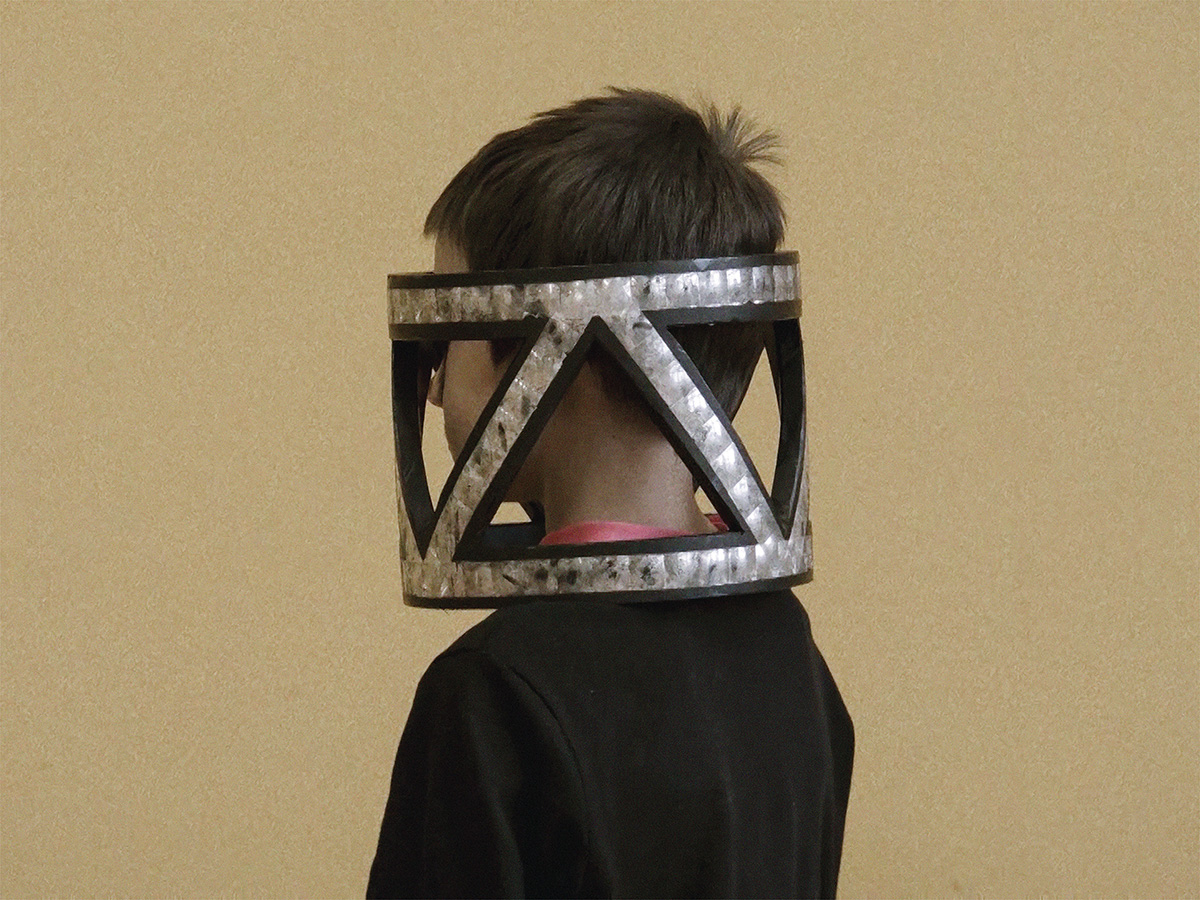
L'epoca geniale (L'époque de génie) est un film qui entre dans un lieu où la forme se mêle au lyrisme et à la magie des mouvements du corps et des regards. Les yeux s'émerveillent et se révèlent être la métaphore d'une société dans laquelle les gens souhaitent redevenir enfants. Les exercices des protagonistes n'ont rien de réaliste, mais tendent vers la théâtralité et l'imagination. Les murs de cet espace universel deviennent ainsi les témoins silencieux de ces gestes compliqués, de ces tentatives répétées à l'infini pour atteindre enfin une maturité.
Tommaso Donati (Lugano, 1988). Son travail combine une approche narrative avec le cinéma documentaire et s'articule autour du thème de la marginalité. Ses films ont été présentés dans plusieurs festivals nationaux et internationaux. Il vit et travaille actuellement à Lugano.
George Drivas
Aeonium
Vidéo | 4k | couleur | 21:53 | Grèce | 2020
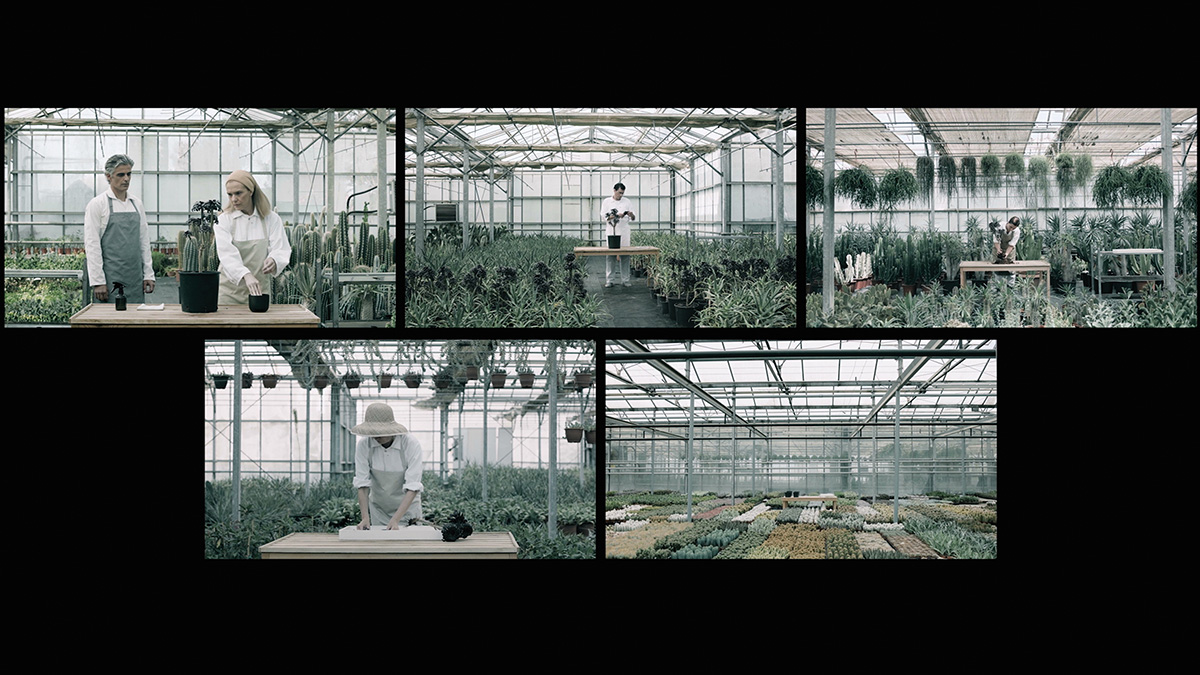
In a plant nursery, five plant-nursery employees speak about a mysterious disaster, a “terrible event”, while cultivating a plant of the genus Aeonium. They are trying to understand what was that which happened to them. They try to explain the unexplainable.
George Drivas was born in Athens. He represented Greece in Venice Biennale, 2017. ?n 2020, he was nominated for the Eye Art & Film Prize (Eye Filmmuseum, Amsterdam). He had solo shows at Annex M, the Athens Concert Hall (2020), at the National Museum of Contemporary Art, Athens (2018 and 2009) and the National Museum of Modern Art, Rome (GNAM, 2017), tributes at the International Forum of Performance Art (Drama, Greece 2021), Lumen Quarterly Festival, Beijing, China (2017/18) and Athens International Film Festival (Greek Cinematheque 2014) and participations in over 150 group shows and festivals in Greece and abroad like ”Rencontres Internationales, New Cinema and Contemporary Art”, Louvre Museum, Paris, France (2021), “After Us”, Maxxi Museum, Rome, Italy (2021), “back forward rewind”, Media Art Lab, Moscow, Russia (2020), “Imagined Communities”, 21st Biennial of Contemporary Art_Videobrasil, São Paulo, Brazil (2019-20), “Resilient Futures”, Contemporary Art Center of Thessaloniki (2018), “ANTIDORON”, documenta 14, Kassel, Germany (2017), “As Rights Go By”, Q21 International, MuseumsQuartier Vienna, Austria (2016), Festival du nouveau cinéma, Montreal, Canada, (2015), “future past – past future”, Transmediale Festival, Berlin, Germany (2014).
Leon Eckard, Nathalie Brum
Toter Winkel
VR expérimental | 0 | | 0:0 | Allemagne | 2020
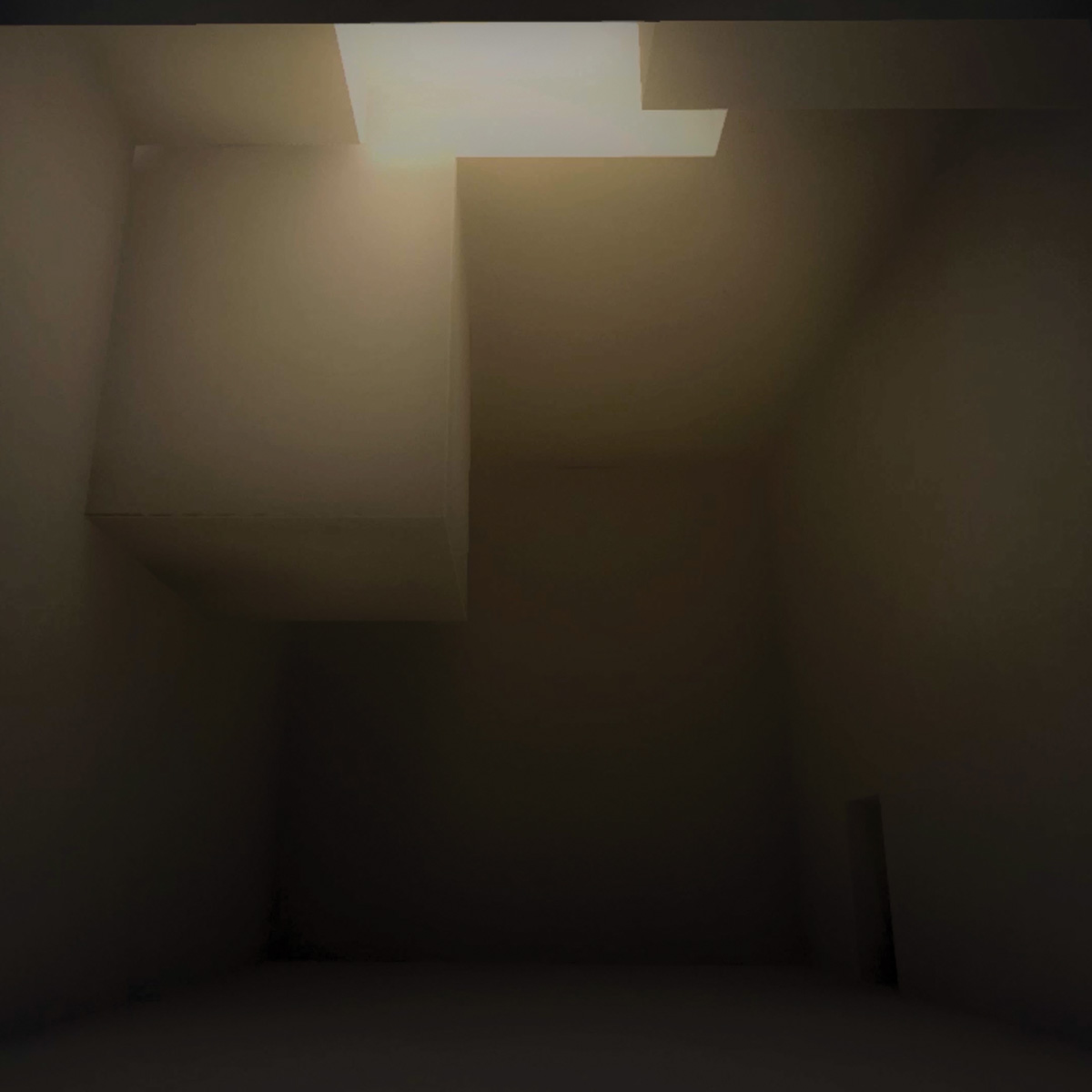
The Virtual Reality soundwalk Toter Winkel by media artist Leon Eckard (idea and implementation) and architect and sound artist Nathalie Brum (architecture) plays with spatial and acoustic paradoxes that reveal our – often deceptive – perception. The space and sound of the soundwalk are inspired by Dutch graphic artist M. C. Escher, English mathematician and theoretical physicist Roger Penrose and American cognitive scientist Roger Shepard. Its an ever ongoing cycle, which gives the illusion of a continuous tunnel, whereby the reflection about it reveals its paradox nature. The audiences for this VR work can move interactively through the virtual space and see whether they discover the blind spot. Deceptive perceptions can be found everywhere in human perception, and so Leon Eckard argues in his project that we should constantly question our own blind spot.
Leon Eckard (*1995 in Neuss) ist ein deutscher Medienkünstler, Komponist und Musiker. Bereits mit sechs Jahren fing er an Gitarre zu spielen, was er schließlich im Hauptfach Jazz-Gitarre seines Studiums „Musik und Medien“ am Institut für Musik und Medien der Robert-Schumann Hochschule Düsseldorf vertiefte. Während seines Studiums von 2015 – 2021 fokussierte er sich zunehmend auf die Bereiche Visual Music, geleitet von Prof. Dr. Heike Sperling und Musikinformatik, geleitet von Prof. Julian Rohrhuber. Von 2019 bis 2020 verbrachte er ein Auslandssemester an der „Universidad de Barcelona“, wo er in den Bereichen Design und Medienkunst studierte und unter Anderem die Arbeit „Mise En Abyme“ entwickelte, die bereits in mehreren Ausstellungen zu sehen war. So zum Beispiel im Rahmen der Ausstellung „Mind over Matter“ in „technische Sammlungen Dresden“ im Frühjahr 2021. 2019 war er außerdem Teil des Residenzprogramms “Labor der Künste” in Montepulciano, Italien, wo er die Künstler*innen Francesco Marzano und Yoana Tuzharova kennenlernte. Mit diesen entwickelte er unter anderem das Projekt „Metamorphosen – Topology of the Captial“, was im Sommer und Herbst 2021 in verschiedenen Orten zu sehen war, wie dem Kunstmuseum Temporär in Mülheim an der Ruhr. Sein künstlerisches Feld hat Leon Eckard zwischen installativer und generativer Kunst sowie Musik und Klang aufgespannt. In seinen neusten Arbeiten beschäftigt er sich mit seiner unmittelbaren Umgebung, deren Klang und ihrer Beziehung zum Menschen. Dabei spielt die Frage nach subjektiver und objektiver Realität stets eine Rolle.

Jussi Eerola
Obsidian Blue Pearl
Vidéo | 4k | couleur | 11:3 | Finlande | 2021
The romantic landscape paintings often portrayed weather condition, topography of national landscape, religious themes, spirituality of nature and hunting scenes. Obsidian Blue Pearl is a minimalistic road movie mirroring the emotions of the driver through the landscapes (s)he has chosen to look at.
Jussi Eerola (b.1969) has worked as a cinematographer on many internationally rewarded short films, documentaries and tv-features since 1992. He has collaborated with many visual artist’s e.g. Eija-Liisa Ahtila, Mika Taanila, IC-98, Elena Näsänen and Anu Pennanen. His directional debut was a documentary about electro-hypersensitive people titled Refugees of Technocracy (2009). Documentary film The Return of the Atom written & directed together with Mika Taanila premiered at Toronto IFF 2015 and was given the NORDIC:DOX award at CPH:DOX in 2015. In 2014 he started a production company Testifilmi Oy together with Mika Taanila and visual artist duo IC-98 (Patrik Söderlund and Visa Suonpää) and has produced several of company's films. Eerola's first short film Blue Honda Civic (2020) premiered at IFF Rotterdam and was awarded three times at international film festivals.
Effi & Amir
Places of Articulation: Five Obstructions
Doc. expérimental | mov | couleur | 22:0 | Belgique | 2020
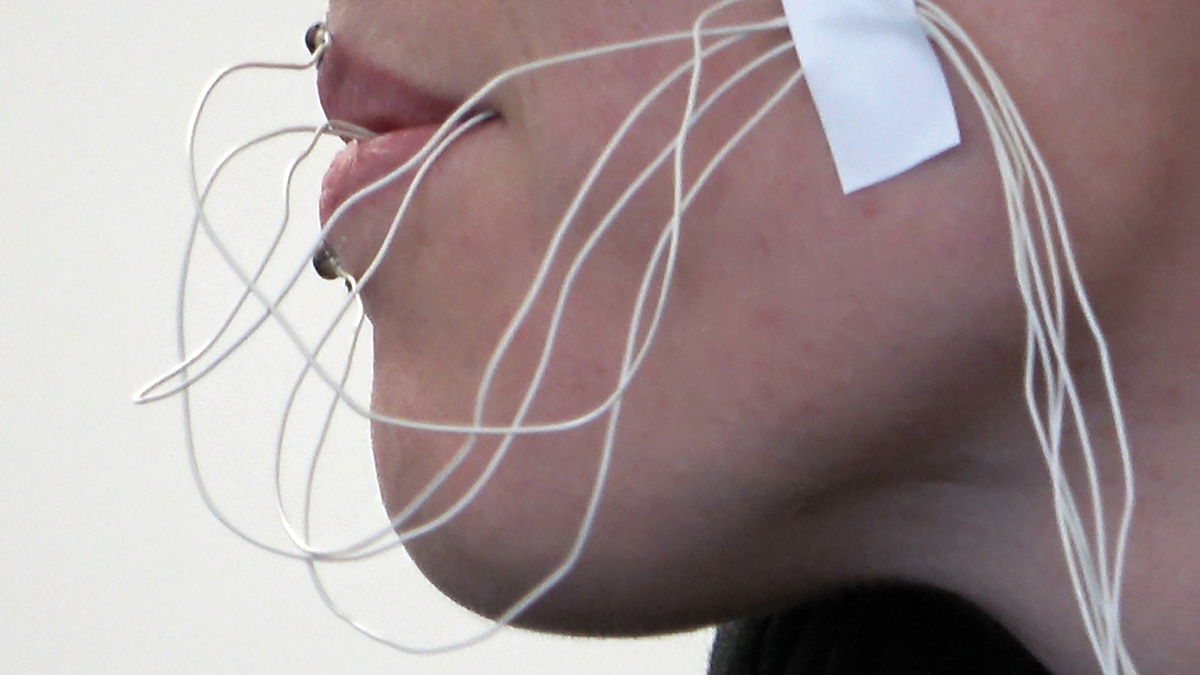
Places of Articulation: Five Obstructions takes the spectator on a journey across borders, from Northern Ireland to Tibet, passing through Germany, Albania and Flanders. However, it explores a more deeply engraved border, the invisible border of our oral cavity, which marks and defines the sounds we can emit and the words we can pronounce. Since biblical times and up till nowadays asylum procedures, this border is exploited to discriminate and divide. Moving between territories – sonic, anatomical and political ones – this installation examines how voice and pronunciation are used as identifiers, eventually become mobile checkpoints, determining fates and sometimes costing lives. Employing different imaging methods and visualisations, it renders these checkpoints visible, while questioning the limits of identification and revealing blurred lines or zones of ambiguity that defy binary categorisation.
Effi & Amir, nés et grandis en Israël, travaillent en duo depuis 1999 et vivent à Bruxelles depuis 2005. Ils ont étudié les beaux-arts à l'Académie Bezalel de Jérusalem et au Sandberg Institut d'Amsterdam et ont appris eux-mêmes, bien plus tard, comment faire des films. Leur travail, qui utilise les médias audiovisuels, la performance et les stratégies participatives, se situe à la frontière floue entre le documentaire et la fiction, et traite des mécanismes de construction - de l'identité, de l'appartenance au groupe, de l'histoire et de l'œuvre elle-même. Le travail d'Effi & Amir a récemment été primé dans des festivals de films documentaires (docAviv, IndieLisboa, En ville !, festival Jean rouch) et ils sont les lauréats du Prix de parcours documentaire audoiovisuel 2022 de la Scam.

Charlotte Eifler
The pattern thieves
Fiction expérimentale | 4k | couleur | 4:0 | Allemagne | 2021
Two thieves are in an ambiguous room, lights cast a security grid.? How do patterns of dominance shape our bodies and actions? Grids secure, grids order, grids categorize and evaluate. The logic of the grid is not only found in (colonial) geography, but also in digital evaluation systems. Diverse information about bodies, landscapes and situations are fed into binary systems to be classified. The thieves in the video intend to bend, deform and discard the grids - to create space for new disorder.
Charlotte Eifler is an artist and filmmaker. Her works address the politics of representation in relation to technology. Focusing on feminist approaches and elements of science fiction, she explores processes of image production, computation and imaginations of alternative futures. Currently she lectures at the Karlsruhe University of Arts and Design (HfG) in the department of Media Art/Film. Charlotte has presented work at Ann Arbor Filmfestival; ACM Siggraph Art, Los Angeles; Museum Würzburg; Le printemps de Toulouse; Sapporo International Art Japan; Haus der Kulturen der Welt, Berlin; IMPAKT Utrecht; Kurzfilmtage Oberhausen and ARD Mediathek among others.
Saara Ekstrom
Shadow Codex
Film expérimental | 16mm | couleur | 12:30 | Finlande | 2021
The black-and-white 8mm film of the abandoned facilities of Turku County Prison (1835–2007), documents the layers of messages drawn, scratched and burned on the cell walls. The markings are passages to the shadow of an individual’s psyche, and expose an underbelly which a society simultaneously both generates and hides. The film becomes a codex of a collapsed civilization and evidence of a forbidden zone in the centre of the city. On top of the inmates’ messages, a second layer of graffiti by building squatters, trespassers and other participators has emerged, turning the walls into thickets of obscure visual information and indecipherable communication. The flow of images is punctuated by John Cage’s (1912–1992) composition “Perilous Night” (1964), described as a journey to the nocturnal side of the soul.
Saara Ekström works in film, photography, text and installation. Chronotopes where time and place densify, time that nurtures and erodes, the ambivalent desire to both remember and forget are at the core of her art. Ekström’s work has been shown extensively in various museums and festivals in Europe, the Americas and Asia. She received the Finnish media art prize AVEK-award in 2018 and the prizes of SW Finland in 2017, Finnish Art Society in 1995 and the Aboa prize in 1994. She has been the Helsinki Festival Artist in 2005 and was nominated for both Ars Fennica and Carnegie Art Award prizes in 2010.
De Montesquiou Eleonore
Eksperiment Katja
Doc. expérimental | mov | noir et blanc | 9:26 | Estonie | 2020
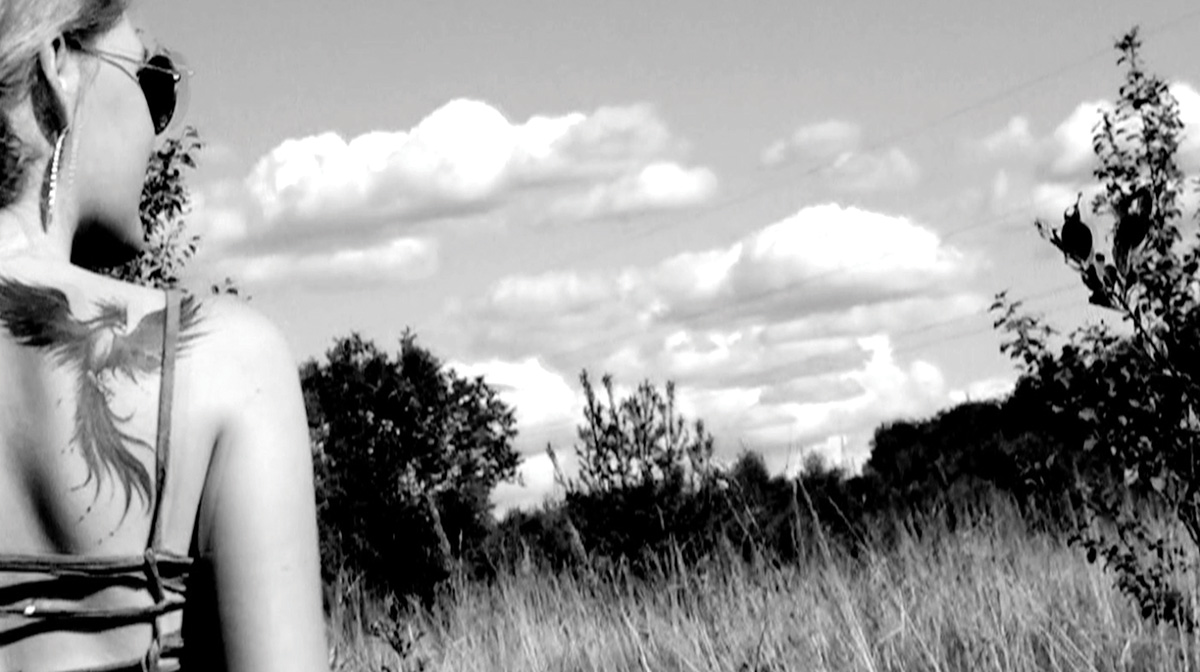
Katja est née en 1992, sa génération était une expérience pour la nouvelle République d'Estonie. Elle a l'impression de flotter, ni attachée à l'Estonie, ni à la Russie, elle a trouvé sa propre voie de liberté. Du Petit Chaperon Rouge au mot-clé d'expérience, le film suggère le traumatisme de cette génération.
Eléonore de Montesquiou est née en 1970 à Paris, elle vit à Berlin et Tallinn. Son travail est basé sur une approche documentaire de la réalité, films (vidéos) dessins et textes. Ses collaborateurs sont à ce jour les compositeurs Lucy Railton, Peter Zinovieff, Phonic Psychomimesis, Helena Tulve, Tanja Kozlova, Lembe Lokk et Marcel Türkowsky; et les graphistes Aadam Kaarma, Heidi Sutterlütty, Ethan Burkhard et Jose Soares de Albergheria. Depuis 2007, Eléonore de Montesquiou mène un projet à long terme à la frontière Russie-Estonie „NA GRANE“ composé de films et publications. Avec Olga Olga Helena (2005, St-Pétersbourg), Eléonore de Montesquiou questionnait le départ de réfugiés politiques et leur vie en exil, démarche qu’elle poursuit à présent avec les migrants qui arrivent en Estonie: Feu (2017), Commando Sacko (2017). Eksepriment Katja est son dernier film, le premier d'une série avec Katja, jeune russe-estonienne vivant à la frontière.
Ahmed Elghoneimy
Al-Maw oud
Documentaire | hdv | couleur | 18:14 | Egypte | 2020
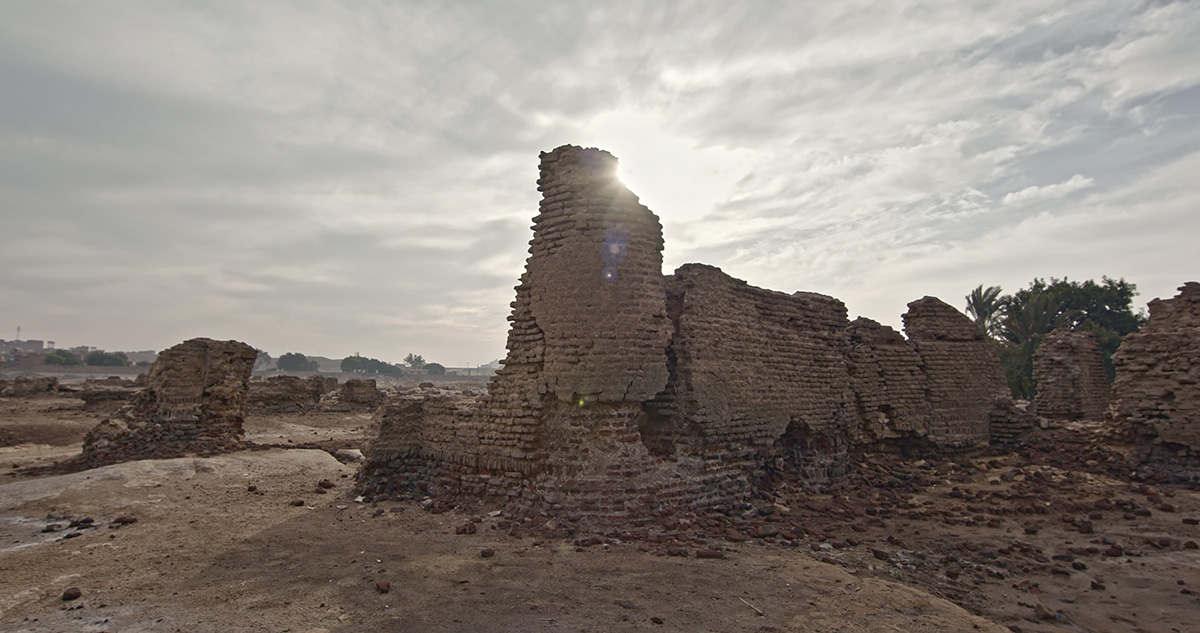
In and around the historical ruins of Fustat in Old Cairo, tensions simmer between the site’s government-appointed guards and residents of a nearby informal settlement, al-Izba. The guards chase away looters and confiscate their equipment, while locals infuriate them by taking shortcuts through the site, occasionally stopping for a smoke. For the guards it would be easiest to keep the site closed until further notice.
Ahmed El Ghoneimy, born in 1986 in Alexandria, Egypt, is a filmmaker and artist currently living between Alexandria and Cairo. His work revolves around interpersonal tensions between the different protagonists presented in his films, such as sons and fathers (Tripoli Tide, 2018), victims and perpetrators (Bahari, 2011), bullies and friends (The Cave, 2013). Alternating between fiction and documentary, his films follow associations and use moments of collision as an opportunity to investigate notions like victimhood, power, and masculinity.
Carl Elsaesser
Home When You Return
Doc. expérimental | 16mm | couleur | 30:0 | USA | 2021
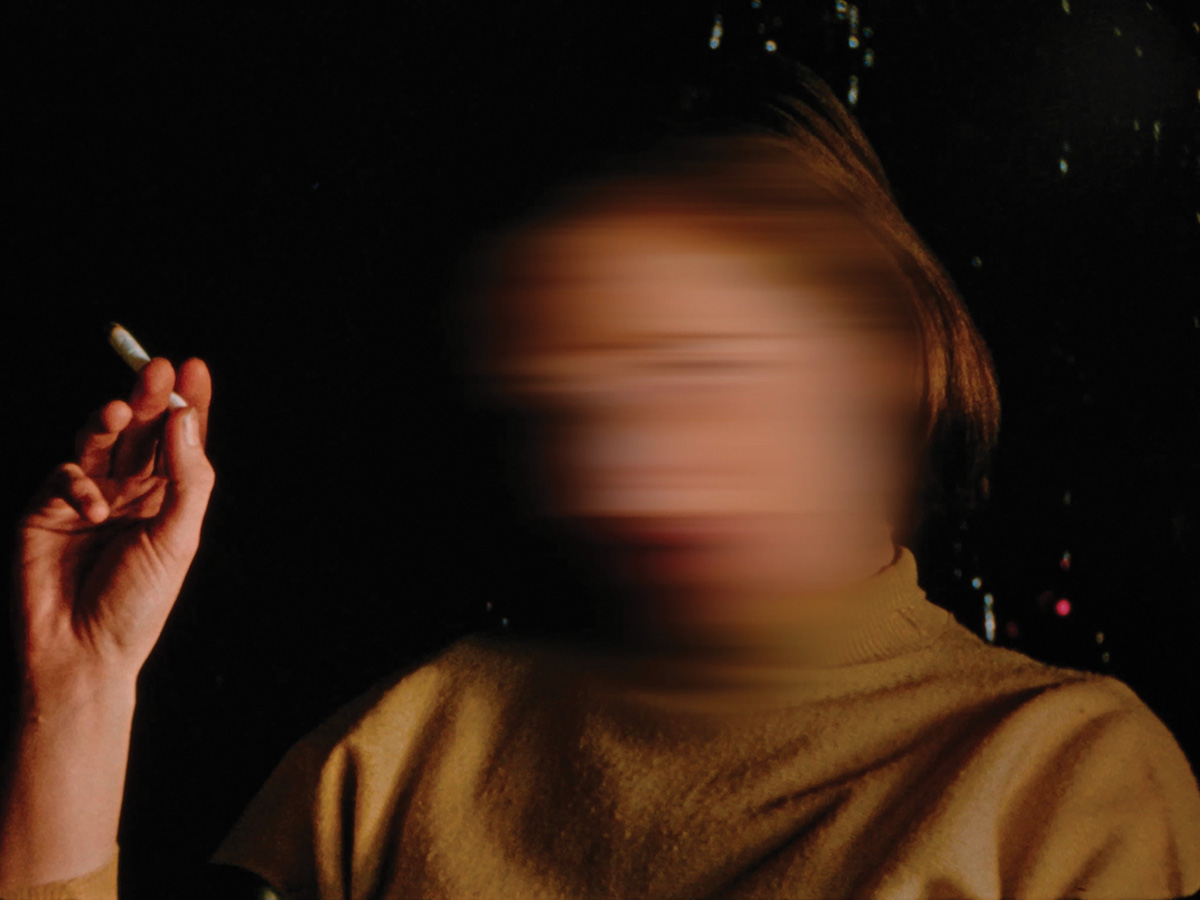
“Stretching and blurring the boundaries of video essay, experimental film and home movie, traces of a 1950s homemade melodrama by amateur filmmaker Joan Thurber Baldwin intermingle with a mournful homage to the author’s grandmother and her vacated home. A powerful mélange of cinematic and domestic spaces, past and present.”
Carl Elsaesser (1988, USA) graduated from Hampshire college and University of Iowa. He lives and works between midcoast and interior Maine and Brooklyn, NY. He has made several short films which have screened at festivals in New York, Berlin, Michigan, Amsterdam, Korea among others. In his work, Elsaesser mixes genres and materials to produce work that “critically investigates the overarching presence of the historical without losing sight of individual experiences of human connection.”