Catalogue > Faire une recherche
Résultats pour : Catalogue 2022
Alex Beriault
Sometimes a little Sin is good for the Soul
Film expérimental | 16mm | couleur | 8:0 | Canada | 2020
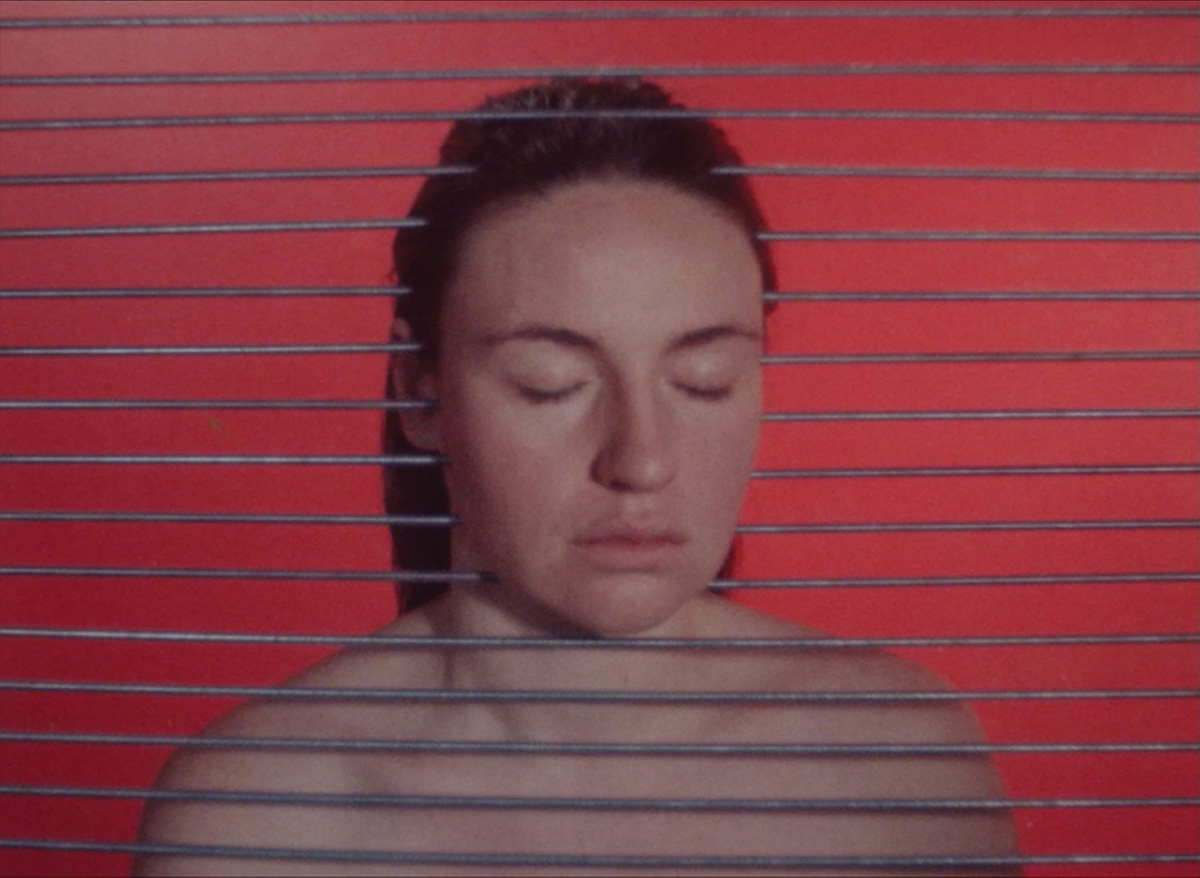
“Sometimes a little Sin is good for the Soul” takes place within an architectural, painterly world. Interior structures, shapes and colours form together the unusual spaces within which three women are suspended. Their actions remain bound to their surroundings, while a glowing red “Exit” sign reappears throughout the film to tease its cold surroundings. No matter how often the sign reveals itself, it never points towards a clear way out.
Alex Beriault is a visual artist (b. Toronto, Canada) whose artistic works encompass installation and film. In 2014 she received her BFA from OCAD University in Sculpture/Installation and has since developed performance-centric work, within which she positions herself as a main subject. Beriault participated in exhibitions and screenings across Canada, the United States and Europe, including the Ann Arbor Film Festival, Ann Arbor (2021), the Weserburg Museum of Modern Art, Bremen (2021), GAK Gesellschaft für Aktuelle Kunst, Bremen (2020), and the Southern Alberta Art Gallery, Lethbridge (2018). Recently, Beriault was a Meisterschülerin of Rosa Barba at the University of the Arts Bremen, and now works between Bremen, Germany and Toronto, Canada.

Dana Berman Duff
A POTENTIALITY
Doc. expérimental | 16mm | couleur et n&b | 16:17 | USA | 2020
“A film which meticulously reflects upon the materiality of time following specific histories. While focusing on details, the images prevent us from accessing the whole. This gesture reflects the subject where voice has been violently stripped from the people, left silenced.”—Jury’s notes awarding the FID Marseille 2020 Alice Guy Special Mention Prize. A POTENTIALITY is a short, structural film about looming totalitarianism that adds the elements of time and sound to a graphic artwork by Susan Silton and joins the front pages of the 1933 New York Times with a mythic opera composed in a Nazi concentration camp in 1944. The newspaper has local reports mixed with the increasingly disturbing accounts of events abroad, which have an uncanny echo in our current news. On a structural level, A POTENTIALITY makes a close comparison of printing dots and film grain that break apart the elements of language that support meaning.
Dana Berman Duff was named a Cultural Trailblazer by the Los Angeles Department of Cultural Affairs in 2020, and a retrospective of her short films is scheduled in Los Angeles for spring 2022 at REDCAT in Disney Hall. In 2019, she mounted a large multi-channel video installation titled "What Does She See When She Shuts Her Eyes" (in collaboration with the late Sabina Ott) at Aspect Ratio in Chicago and Alchemy Moving Image Festival in Scotland. Her film A POTENTIALITY was awarded an Alice Guy Special Mention at the 2020 FIDMarseille Film Festival. Her works in small format film and video have been screened in the Toronto International Film Festival, International Film Festival Rotterdam, Edinburgh International Film Festival, ExIS Festival (Seoul), Experiments in Cinema (Albuquerque), Rencontres Internationales (Paris/Berlin), Dortmund/Cologne International Women’s Film Festival, San Francisco Cinematheque’s Crossroads, and in over forty more festivals. She lives in Los Angeles and rural Mexico.

Sebastian Betancur Montoya, Abi Green
Fata Morgana
Vidéo | hdv | couleur | 12:18 | Colombie, Royaume-Uni | 2021
Us, humans, the one species present in every latitude of the earth have never really settled, from hunters and gatherers to refugees and expats. Throughout human history reasons for exploration vary; trade, fear, ambition, or curiosity. Still nomads, our quest to chart every reachable corner has been fundamental to the dissemination of symbolic structures growing from wealth and power into different forms around the globe. Fata Morgana balances between that primal urge to explore the unknown and the instinctive need to make a home and belong... Pulling or being pulled? Coming, going or returning? The physicality of struggle, disappearance and emergence within this piece becomes a metaphor reflecting on Poetics and Politics, Geography and Geometry, Dreams and Death, as well as memories of Future and Past. With the uncertainty and hope of new beginnings across the ocean, the transient figures glimmer and nearly blend into their surroundings, flirting with symbolisms of ritual: the platonic geometry, immersion/ascension, and their perpetual journey. These travellers move oblivious of any limits but their own, challenging the very notion of borders; which are, anyway, invisible and futile drawings of power onto an ever-shifting landscape defiant of any divisions. Inspired by the artists own attempts of somehow always carrying home with them, the piece is a video loop meditating on the emotional ebb and flow of the many departures and the inevitability of a return. A return home, that whether it be a place, memory, feeling, or a word it is always a reflection of oneself.
SEBASTIAN BETANCUR MONTOYA: A common conceptual thread legible in his artwork is the constant preoccupation for the body[ies] and its relation with[in] the surrounding space and its limits/conditions; the themes of home, language, migration, belonging and uprooting have become unavoidable for someone as him, who has lived on the move, away from his birth place half of his life. Sebastián´s work has been part of exhibitions, publications, art residencies, and art fairs in Colombia, The Bahamas, Qatar, Russia, and Germany and participated in other events such as The 2015 Oslo Architecture Triennial, the 2015 Kuwait pavilion for the Venice Biennale, NYT art for tomorrow 2016, and the 2018 Istanbul design Biennial. ABI GREEN: Born and raised in London, she was educated at Fine Arts College, Chelsea College of Arts and went on to graduate with a BA (Hons) in Photography from Middlesex University London. Abi’s work has been featured on Vogue and Vogue Italia online, Le Book and It’s Nice That. Nominated to exhibit at the D&AD, New Blood Awards, London, in 2009 and Mother London’s, Open Book in 2015, she has also been published both in the UK and the Middle East, including magazines such as Notion, Crack, Elle and Twenty-six. Driven by interests in colour, light art, and sculptural objects, she is often influenced by surrealism, modern and industrial design, which enhances her contemporary visual style. Her projects carefully balance a minimalist approach with a graphic, colourful aesthetic resulting in a distinctive eye-popping quality. A key part of her image-making is the humorous twist that underpins her creative concepts, with this unique approach she hopes to leave her audience with a taste of her playful nature.
Dara Birnbaum
Canon: Taking to the Streets (Part One: Princeton University – Take Back the Night)
Documentaire | 0 | couleur | 10:0 | USA | 1990
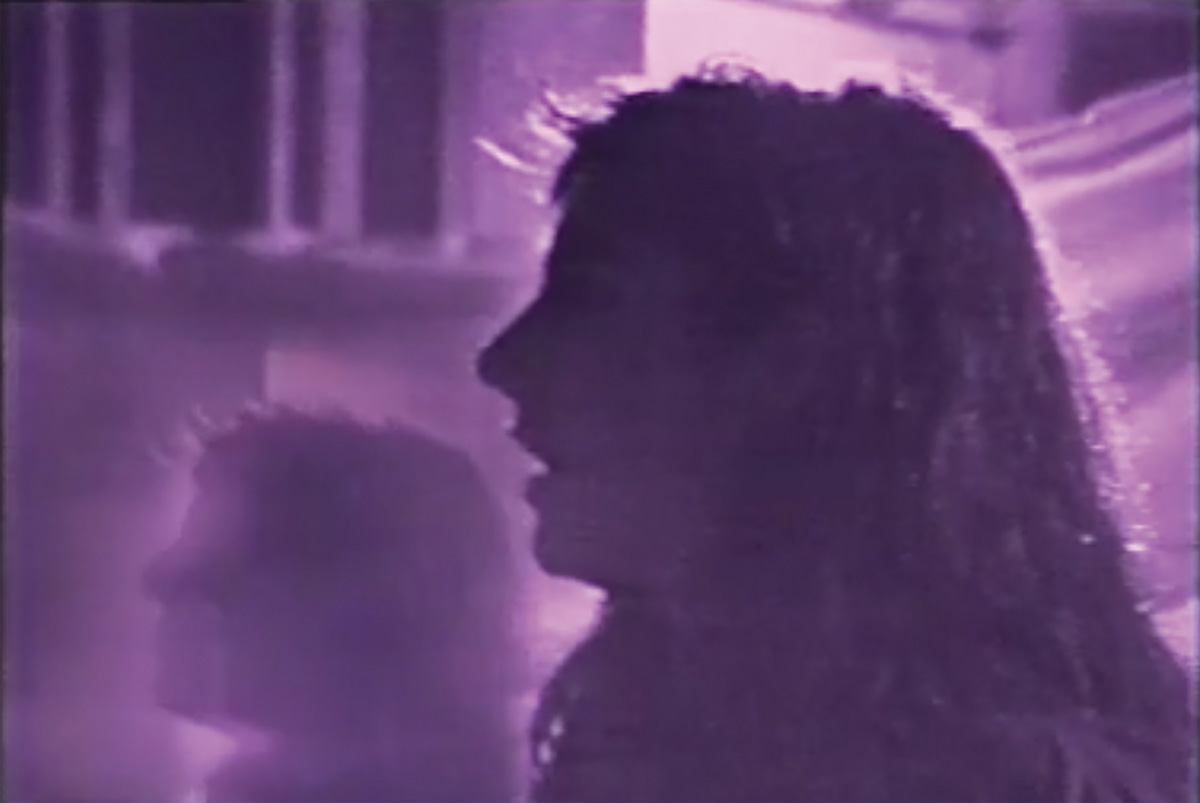
In Canon: Taking to the Streets, Birnbaum breaks with traditional documentary format. Using tools from the low-end and high-end of technology, she episodically views recent events of student activism in the United States. This is a study of the 1987 Take Back the Night march on the Princeton University campus. Birnbaum's treatment of the original student-recorded VHS footage reveals this march as having the potential to develop political awareness through personalized experience. The students attempt to "put across a historical message" that was started in San Francisco in 1978: the protest of any form of violence against women. Take Back the Night now represents men and women, in solidarity with one another, marching against sexual violence of any kind. Here the activity remains specific to violence as perpetrated against persons in the Princeton community.
For four decades, Dara Birnbaum's pioneering works in video, media and installation have questioned the ideological and aesthetic character of mass media imagery, and are considered fundamental to our understanding of the history of media practices and contemporary art. Dara Birnbaum was born in New York City in 1946 where she continues to live and work. Dara Birnbaum received a B.A. in architecture from Carnegie Mellon University in Pittsburgh, a B.F.A. in painting from the San Francisco Art Institute, and a certificate in video and electronic editing from the Video Study Center at the New School for Social Research in New York. Dara Birnbaum was one of the first artists to develop complex and innovative installations that juxtapose images from multiple sources while incorporating three-dimensional elements - large-scale photographs, sculptural or architectural elements - into the work. She is known for her innovative strategies and use of manipulated television footage. Birnbaum's work has been exhibited widely at MoMA PS1, New York (2019); National Portrait Gallery, London (2018); Cleveland Museum of Art, Ohio (2018); South London Gallery, UK (2011); major retrospectives at Serralves Foundation, Porto, Portugal (2010) and S. M.A.K. Stedelijk Museum voor Actuele Kunst, Ghent, Belgium (2009); Center for Contemporary Art, CCA Kitakyushu (2009); Museum of Modern Art, New York (2008); Kunsthalle Wien, Vienna, Austria (2006); and The Jewish Museum, New York (2003). His work has been exhibited at Documenta 7, 8 and 9. Birnbaum has won several prestigious awards including: John Simon Guggenheim Memorial Foundation Fellowship (2021); The Rockefeller Foundation Bellagio Center Arts Residency (2011); the Pollock-Krasner Foundation Grant (2011); and the prestigious United States Artists Fellowship (2010). In 2016, she was recognized and honored for her work by The Kitchen, New York, at their annual gala. She was the first woman in video to receive the prestigious Maya Deren Award from the American Film Institute in 1987. In February 2017, Carnegie Mellon University's School of Art established the Birnbaum Award in her honour.
Dara Birnbaum
Technology/Transformation: Wonder Woman
Vidéo | 0 | couleur | 5:50 | USA | 1979
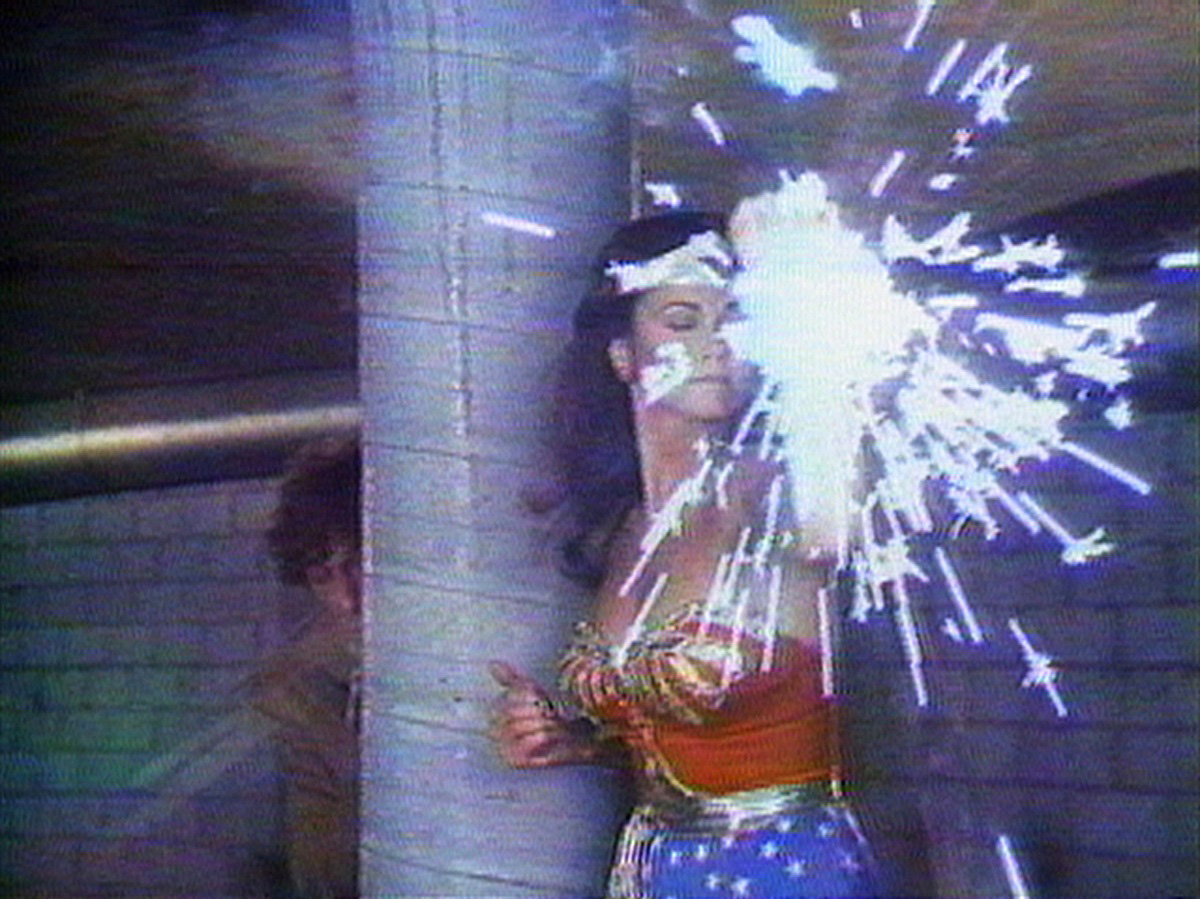
Explosive bursts of fire open Technology/Transformation, an incendiary deconstruction of the ideology embedded in television form and pop cultural iconography. Appropriating imagery from the 1970s TV series Wonder Woman, Birnbaum isolates and repeats the moment of the "real" woman's symbolic transformation into super-hero. Entrapped in her magical metamorphosis by Birnbaum's stuttering edits, Wonder Woman spins dizzily like a music-box doll. Through radical manipulation of this female Pop icon, she subverts its meaning within the television text. Arresting the flow of images through fragmentation and repetition, Birnbaum condenses the comic-book narrative — Wonder Woman deflects bullets off her bracelets, "cuts" her throat in a hall of mirrors — distilling its essence to allow the subtext to emerge. In a further textual deconstruction, she spells out the words to the song Wonder Woman in Discoland on the screen. The lyrics' double entendres ("Get us out from under... Wonder Woman") reveal the sexual source of the superwoman's supposed empowerment: "Shake thy Wonder Maker." Writing about the "stutter-step progression of 'extended moments' of transformation from Wonder Woman," Birnbaum states, "The abbreviated narrative — running, spinning, saving a man — allows the underlying theme to surface: psychological transformation versus television product. Real becomes Wonder in order to "do good" (be moral) in an (a) or (im)moral society."
For four decades, Dara Birnbaum's pioneering works in video, media and installation have questioned the ideological and aesthetic character of mass media imagery, and are considered fundamental to our understanding of the history of media practices and contemporary art. Dara Birnbaum was born in New York City in 1946 where she continues to live and work. Dara Birnbaum received a B.A. in architecture from Carnegie Mellon University in Pittsburgh, a B.F.A. in painting from the San Francisco Art Institute, and a certificate in video and electronic editing from the Video Study Center at the New School for Social Research in New York. Dara Birnbaum was one of the first artists to develop complex and innovative installations that juxtapose images from multiple sources while incorporating three-dimensional elements - large-scale photographs, sculptural or architectural elements - into the work. She is known for her innovative strategies and use of manipulated television footage. Birnbaum's work has been exhibited widely at MoMA PS1, New York (2019); National Portrait Gallery, London (2018); Cleveland Museum of Art, Ohio (2018); South London Gallery, UK (2011); major retrospectives at Serralves Foundation, Porto, Portugal (2010) and S. M.A.K. Stedelijk Museum voor Actuele Kunst, Ghent, Belgium (2009); Center for Contemporary Art, CCA Kitakyushu (2009); Museum of Modern Art, New York (2008); Kunsthalle Wien, Vienna, Austria (2006); and The Jewish Museum, New York (2003). His work has been exhibited at Documenta 7, 8 and 9. Birnbaum has won several prestigious awards including: John Simon Guggenheim Memorial Foundation Fellowship (2021); The Rockefeller Foundation Bellagio Center Arts Residency (2011); the Pollock-Krasner Foundation Grant (2011); and the prestigious United States Artists Fellowship (2010). In 2016, she was recognized and honored for her work by The Kitchen, New York, at their annual gala. She was the first woman in video to receive the prestigious Maya Deren Award from the American Film Institute in 1987. In February 2017, Carnegie Mellon University's School of Art established the Birnbaum Award in her honour.
Dara Birnbaum
Kiss the Girls: Make Them Cry
Vidéo | 0 | couleur | 6:26 | USA | 1979
Birnbaum manipulates off-air imagery from the TV game show Hollywood Squares in Kiss The Girls: Make Them Cry, a bold deconstruction of the gestures of sexual representation in pop cultural imagery and music. Minor celebrities (who Birnbaum terms "iconic women and receding men") confined in a flashing tic-tac-toe board greet millions of TV viewers, animating themselves as they say "hello." Birnbaum isolates and repeats these banal and at times bizarre gestures of male and female presentation — "repetitive baroque neck-snapping triple takes, guffaws, and paranoid eye darts" — wrenching them from their television context to expose stereotyped gestures of power and submission. Linking TV and Top 40, Birnbaum spells out the lyrics to disco songs ("Georgie Porgie puddin' and pie/kissed the girls and made them cry") with on-screen text, as the sound provides originally scored jazz interpolation and a harsh new wave coda. The result is a powerful, layered analysis of the meaning of the gestures of mass cultural idioms.
For four decades, Dara Birnbaum's pioneering works in video, media and installation have questioned the ideological and aesthetic character of mass media imagery, and are considered fundamental to our understanding of the history of media practices and contemporary art. Dara Birnbaum was born in New York City in 1946 where she continues to live and work. Dara Birnbaum received a B.A. in architecture from Carnegie Mellon University in Pittsburgh, a B.F.A. in painting from the San Francisco Art Institute, and a certificate in video and electronic editing from the Video Study Center at the New School for Social Research in New York. Dara Birnbaum was one of the first artists to develop complex and innovative installations that juxtapose images from multiple sources while incorporating three-dimensional elements - large-scale photographs, sculptural or architectural elements - into the work. She is known for her innovative strategies and use of manipulated television footage. Birnbaum's work has been exhibited widely at MoMA PS1, New York (2019); National Portrait Gallery, London (2018); Cleveland Museum of Art, Ohio (2018); South London Gallery, UK (2011); major retrospectives at Serralves Foundation, Porto, Portugal (2010) and S. M.A.K. Stedelijk Museum voor Actuele Kunst, Ghent, Belgium (2009); Center for Contemporary Art, CCA Kitakyushu (2009); Museum of Modern Art, New York (2008); Kunsthalle Wien, Vienna, Austria (2006); and The Jewish Museum, New York (2003). His work has been exhibited at Documenta 7, 8 and 9. Birnbaum has won several prestigious awards including: John Simon Guggenheim Memorial Foundation Fellowship (2021); The Rockefeller Foundation Bellagio Center Arts Residency (2011); the Pollock-Krasner Foundation Grant (2011); and the prestigious United States Artists Fellowship (2010). In 2016, she was recognized and honored for her work by The Kitchen, New York, at their annual gala. She was the first woman in video to receive the prestigious Maya Deren Award from the American Film Institute in 1987. In February 2017, Carnegie Mellon University's School of Art established the Birnbaum Award in her honour.
Dara Birnbaum
Fire!/Hendrix
Vidéo | 0 | couleur | 3:13 | USA | 1982
Commissioned by VideoGram International, Ltd., for a videodisc of music by Jimi Hendrix, Fire! uses the stylized visuals and pacing of a music video to critique the representational economies of sexuality and consumerism. Translating the psychedelic fervor of the Hendrix song into a contemporary visual vernacular, Birnbaum similarly recasts the lyrics' meaning. A young woman is the "protagonist" of a fragmented narrative in which Birnbaum re-frames images of American consumerism and commodities — fast food, cars, the exchange of money. Birnbaum calls attention to the woman's relation to the advertising image: she is consumed as she is consuming.
For four decades, Dara Birnbaum's pioneering works in video, media and installation have questioned the ideological and aesthetic character of mass media imagery, and are considered fundamental to our understanding of the history of media practices and contemporary art. Dara Birnbaum was born in New York City in 1946 where she continues to live and work. Dara Birnbaum received a B.A. in architecture from Carnegie Mellon University in Pittsburgh, a B.F.A. in painting from the San Francisco Art Institute, and a certificate in video and electronic editing from the Video Study Center at the New School for Social Research in New York. Dara Birnbaum was one of the first artists to develop complex and innovative installations that juxtapose images from multiple sources while incorporating three-dimensional elements - large-scale photographs, sculptural or architectural elements - into the work. She is known for her innovative strategies and use of manipulated television footage. Birnbaum's work has been exhibited widely at MoMA PS1, New York (2019); National Portrait Gallery, London (2018); Cleveland Museum of Art, Ohio (2018); South London Gallery, UK (2011); major retrospectives at Serralves Foundation, Porto, Portugal (2010) and S. M.A.K. Stedelijk Museum voor Actuele Kunst, Ghent, Belgium (2009); Center for Contemporary Art, CCA Kitakyushu (2009); Museum of Modern Art, New York (2008); Kunsthalle Wien, Vienna, Austria (2006); and The Jewish Museum, New York (2003). His work has been exhibited at Documenta 7, 8 and 9. Birnbaum has won several prestigious awards including: John Simon Guggenheim Memorial Foundation Fellowship (2021); The Rockefeller Foundation Bellagio Center Arts Residency (2011); the Pollock-Krasner Foundation Grant (2011); and the prestigious United States Artists Fellowship (2010). In 2016, she was recognized and honored for her work by The Kitchen, New York, at their annual gala. She was the first woman in video to receive the prestigious Maya Deren Award from the American Film Institute in 1987. In February 2017, Carnegie Mellon University's School of Art established the Birnbaum Award in her honour.
Peter Bogers
Glued Eye
Installation multimédia | mov | couleur et n&b | 25:0 | Pays-Bas | 2021
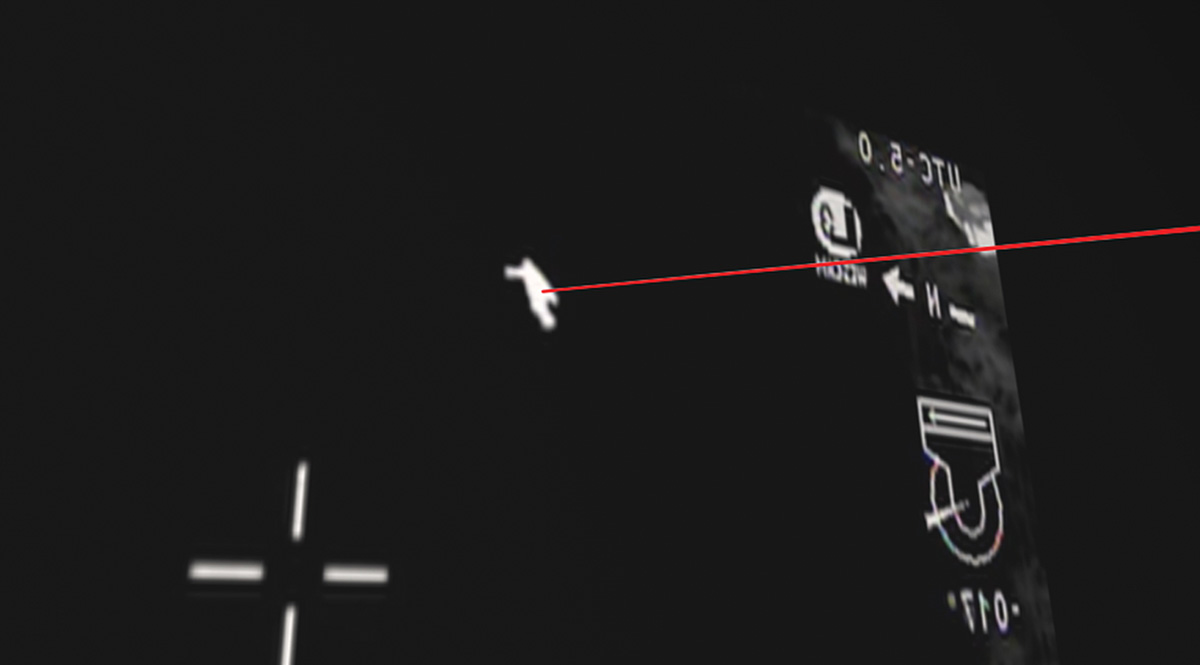
The installation consists of two black and white video images, one video projector and two thin (2 mm) illuminated fibre lines. A large projection shows images of moving objects or people that are fixed in one place on the wall by means of a sophisticated tracking technique. This technique continuously shifts the frame of the video image in a way that the chosen object stays in one place. Thus, all movements are neutralized. Directly behind the projector a very small 4,7 inch screen shows a close-up of a moving eyeball, of which the pupil is fixed in the middle of the screen. A luminous wire is stretched across the exhibition room, between the fixed point of the projected image and the centre of the small eye pupil. The wire is a physical and stationary element in the exhibition room.
Peter Bogers’ (Netherlands, 1956) work engages the interplay of sound and image to create installation works dealing with questions around the understanding and perception of sound. Working with the themes of music, speech and sound Bogers questions the boundaries of these fields and their limits and access to communication. Through his constant interaction with sound, Bogers also examines the visual, spatial and conceptual understanding of the human body and its place within the moving image and experiential installation. Bogers was one of the first artists in the Netherlands to integrate moving image into his work. He began working with video in the 1980’s as a methodology to accompany and assist his performance work and has since developed a keen approach to the medium that functions as a tool to illuminate the otherwise imperceptible. Peter Bogers studied at the sculpture department at St. Joost Academy, Breda. He has exhibited widely and had solo exhibitions both in The Netherlands (at the Netherlands Media Art Institute and the Central Museum Utrecht, among other places) and internationally (including solo shows in Bremen, Marseille, Osnabrück, Pittsburgh and Stuttgart).
Ghyzlène Boukaila
#31# (Unknown call)
Fiction expérimentale | hdv | couleur | 16:16 | Algérie, France | 2021
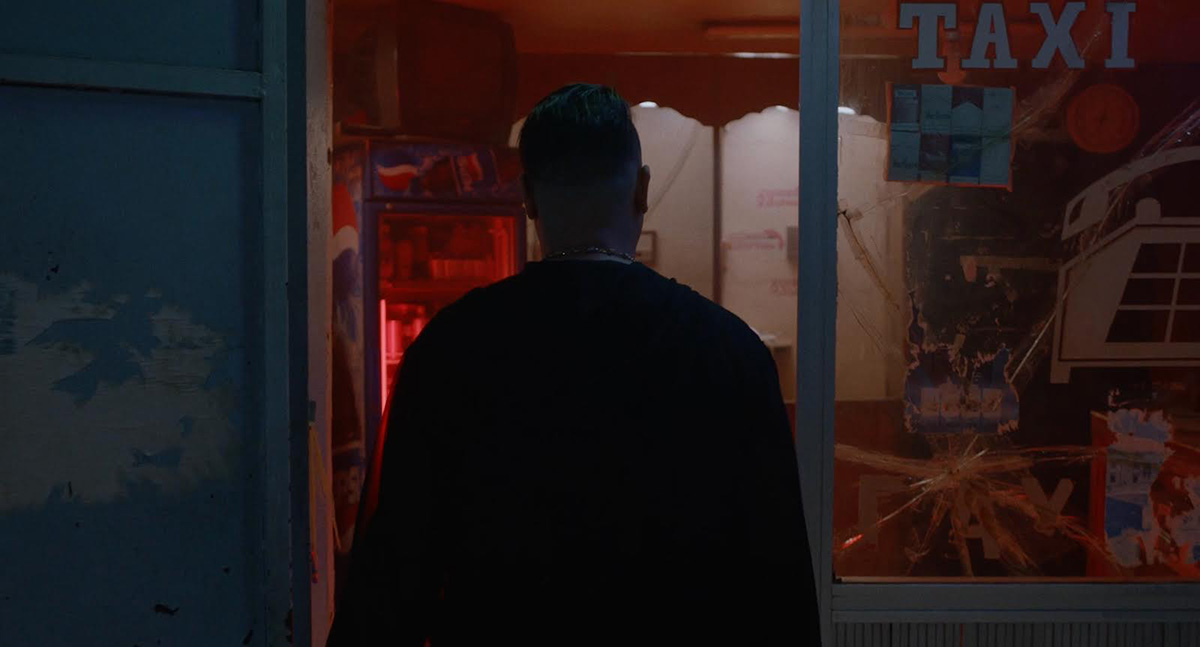
Au large d’un monde en reconstruction, une voix dont on ignore la source surplombe la ville et sonne comme une injonction. En résistance à cette diction autoritaire, une nouvelle voix émerge. Cheikh Morad Djadja se fraye un chemin au sein de cet univers, il doit se rendre au Taxiphone et y lais- ser son propre message crypté. "Appel masqué" est une chanson composée par Cheb Abdou en 1993, durant la période de la décennie noire en Algérie. Comme plusieurs de ses morceaux, Cheb Abdou les a écrit et interprété sous menaces constantes. À travers ses musiques, il y a ouvert un champ d’expression identitaire etde dictions autour l’extistence d’un autre genres. L’ étymologie du mot RAÏ prend tout son sens. En retournant sur les traces de la naissance du raï, Oran, j’y ai rencontré Cheikh Morad Djadja une personnalité de ce milieu et successeur de Cheb Abdou, c’était une réelle immersion au sein de la communauté de chanteurs(se) et musiciens(ne) raï. Le film s’est construit autour du taxi-phone représentant ce non-lieu de télécommunication anonyme et de l’impossibilité de faire subsister un message, une opinion, un avis au sein d’une société contempo- raine. En écho aux paroles de la chanson "Appel masqué" de Cheb Abdou, #31# (appel masqué) est une ap- proche a mis chemin entre le documentaire, la fiction et la performance, où Cheikh Morad Djadja nous mène vers une quête existentielle, dans un monde en perpétuelle reconstruc- tion, où ce non-lieu lui permet d’y laisser un message vocale masqué sur sa trans-identité.
Ghyzlène Boukaïla est une artiste et réalisatrice multimédia née en 1993 à Alger. Elle vit et travaille entre Alger et Lille. Sa démarche artistique et sa sensibilité se cristallisent dans les seins d'une famille de révolutionnaires algériens. Explorant certaines problématiques liées au post-colonialisme, sa démarche explore de nouveaux récits liés aux (ré)évolutions socio-politiques et numériques en situant sa pratique à l'interface du documentaire/performance et des récits numériques post-humains.
Igor Bošnjak
Future Repeats Itslef More Than History Used To
Fiction expérimentale | 4k | noir et blanc | 13:49 | Bosnie-Herzégovine | 2020
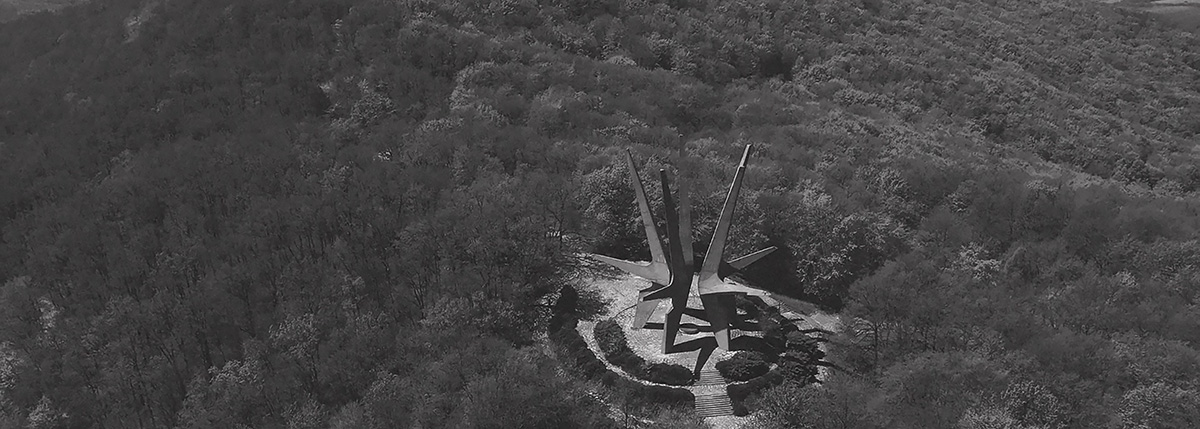
An attempt on aesthetic-technological-ideological objectivity in non-objective reality. How can we see today, the monuments of the NOB (National Liberation War), what they represent to us in the context of the new division of fashion as well as changes in paradigm and ideology in the former Yugoslavia. Is a new reading possible without a nostalgic undertone? How to think about architectural and concrete structures in the 2000s? What is the relationship between monument and human, what is the relationship between monument and unbridled nature. What is the relationship between monuments and contemporary technology and contemporary art today? How much contemporary and how much tech addiction? How to reinterpret the artifacts of the anti-fascist struggle, but so that the monument of the NOB remains at the denotative level of meaning of the monument, that new meanings do not endanger the given basic meaning, the one that is. Creating narratives as a new reading and a new "seeing" and seeing of monuments and creating new visual realities.
Igor Bošnjak (b. 1981 in Sarajevo, Yugoslavia) lives and works in Trebinje (Bosnia & Herzegovina). He is mainly working within the fields of contemporary art: moving images, video, installation, objects, drawing & photography. From 2009 works as a professor at Academy of Visual Arts in Trebinje, University of East Sarajevo on courses Intermedia art, Video art, Digital art. From 2019 works as visiting lecturer on Faculty of Fine Arts, Cetinje, University of Montenegro.
Karolina Bregula
Dust
Fiction expérimentale | mov | couleur | 21:45 | Pologne, Taiwan | 2021
Dust is a story about two women living in an old district earmarked for demolition. Since their building is due to be demolished soon, all the neighbours have already left. Yet, the women decide to stay in their flat. The protagonists spend time in the abandoned multi-storey building and observe through the window bulldozers working around. Four out of five films were made in collaboration with Ms. Zou and Ms. Huang from Daguan in Taipei. When the project was in production, their houses in Daguan were bound for demolition while Ms. Zou, Ms. Huang together with their neighbours kept fighting against the evictions in the district. The first two films are a fictive story staged with Ms. Zou and Ms. Huang in an empty building awaiting demolition in central Taipei. I entered the building, cleaned up and furnished one chosen flat to turn it into a friendly liveable space and used it as a film location. Another two films are a conversation between Ms. Zou and Ms. Huang, Ms. Huang singing a sad song which reminds her of home and an image of a Daguan streets. The last film is a documentation of the demolition of the house where the first two films were made. One month after the films were done, Ms. Zou and Ms. Huang were forced to move away and Daguan was demolished.
Karolina Bregu?a (b. 1979) is a visual artist, a graduate of the National Film School in ?ód?. She creates films, photographs, installations and performance. Her work explores the problems of the status of the artwork and the materiality of art objects. She critically scrutinises contemporary art and its reception. She creates stories about art and architecture, which are a field of her anthropological and sociological observations. She is interested in the connection between art and reality – the favourable and detrimental effect of artists’ work, the remedial and destructive force of artistic activity, rituals connected to art and art’s social role. Many of her works are co-created with their protagonists and participants, blurring the border lines between professional and amateur artistic activity. Her works have been exhibited at institutions such as National Museum in Warsaw, Jewish Museum in New York and MOCA Taipei and at international events such as Venice Art Biennale and Singapore Biennale. She is the winner of the second prize in the Views 2013 Deutsche Bank Foundation Award, the third Samsung Art Master 2007 award and the 2016 Golden Claw at the Gdynia Film Festival. Her works are included in collections such as Tokyo Photographic Art Museum, Zach?ta National Gallery of Art, Wroclaw Contemporary Museum and ING Polish Art Foundation. She is an associate professor at Academy of Art in Szczecin, she collaborates with lokal_30 Gallery. She lives in Warsaw.
Lucy Cash, Mark Jeffery
Winterage: Last Milk
Vidéo | hdv | couleur | 21:0 | Royaume-Uni | 2021
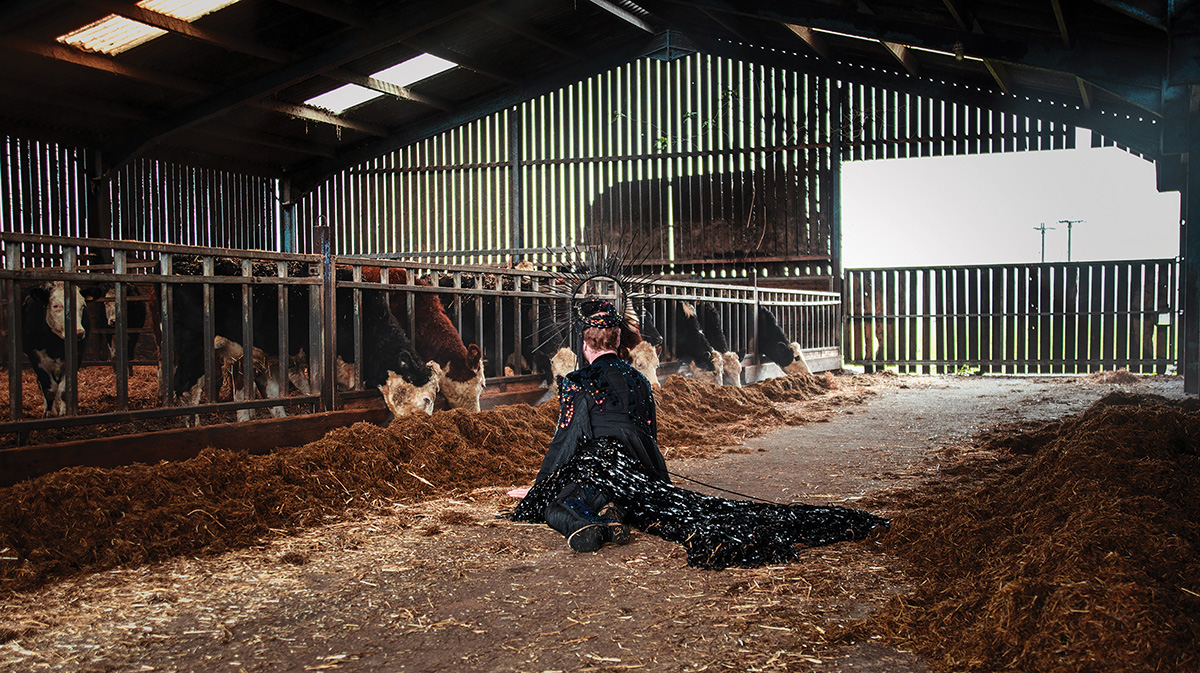
The thousand-year history of a farm in rural Doveridge, Derbyshire, UK, entangles with the singular life of queer Chicago-based artist, Mark Jeffery. Parsing the vernacular of Mark’s East Midlands childhood - hedge-laying, tending to cattle and land – within the vocabulary of expanded choreography, Winterage: Last Milk considers the film image itself as a collaborator as well as a material akin to fabric or clay. Returning to his childhood home in December 2019 to memorialise personal loss, and extending his body via the wearable sculptures of Grace Duval, Mark’s choreography brings forward the mineral and animal in all of us within a film composition that considers connections between place, language, loss and movement.
Mark Jeffery and Lucy Cash Mark and Lucy are both former members of Goat Island performance (Chicago) which is where they began collaborating. Mark Jeffery is a Chicago-based queer performance/installation artist, curator and Associate Professor at the School of the Art Institute of Chicago. Mark co - founded ATOM-r in 2012 a performance / technology group where he is a choreographer, and performer in the company. He is the organizer of IN>TIME, a Tri Annual performance festival hosted by multiple venues in Chicago. Mark was a former member of the internationally renowned Goat Island Performance Group from 1996 - 2009. Glasgow-based Lucy Cash in an interdisciplinary artist working within and through choreographic processes, and across form. Her commissioned work often involves social exchange and has taken place in galleries, museums, libraries, housing estates, on water and in the air. Her projects evolve ideas of collective practice which nurture interconnectedness between human and more than human, and across disciplines. Lucy has received funding and commissions from the BFI; Arts Council England; Creative Scotland; Gulbenkian Trust; BBC and Channel 4. Her works on film and video draw on choreography & movement to reveal the systems and patterns of the subjects considered and have shown in both cinema & installation contexts and in galleries including Sophiensaele and Haus der Kulturen der Welt, Berlin; Hyde Park Art Center; Cultural Center and Sullivan Galleries, Chicago, USA; Zahoor ul Akhal Gallery, Lahore, India; Bonington Gallery, Nottingham; Tramway, Glasgow and Whitechapel Gallery, Tate Modern, Siobhan Davies Studios, and the Natural History Museum, London, UK.
Julie Chaffort
Printemps
Vidéo | mov | couleur | 7:40 | France | 2020
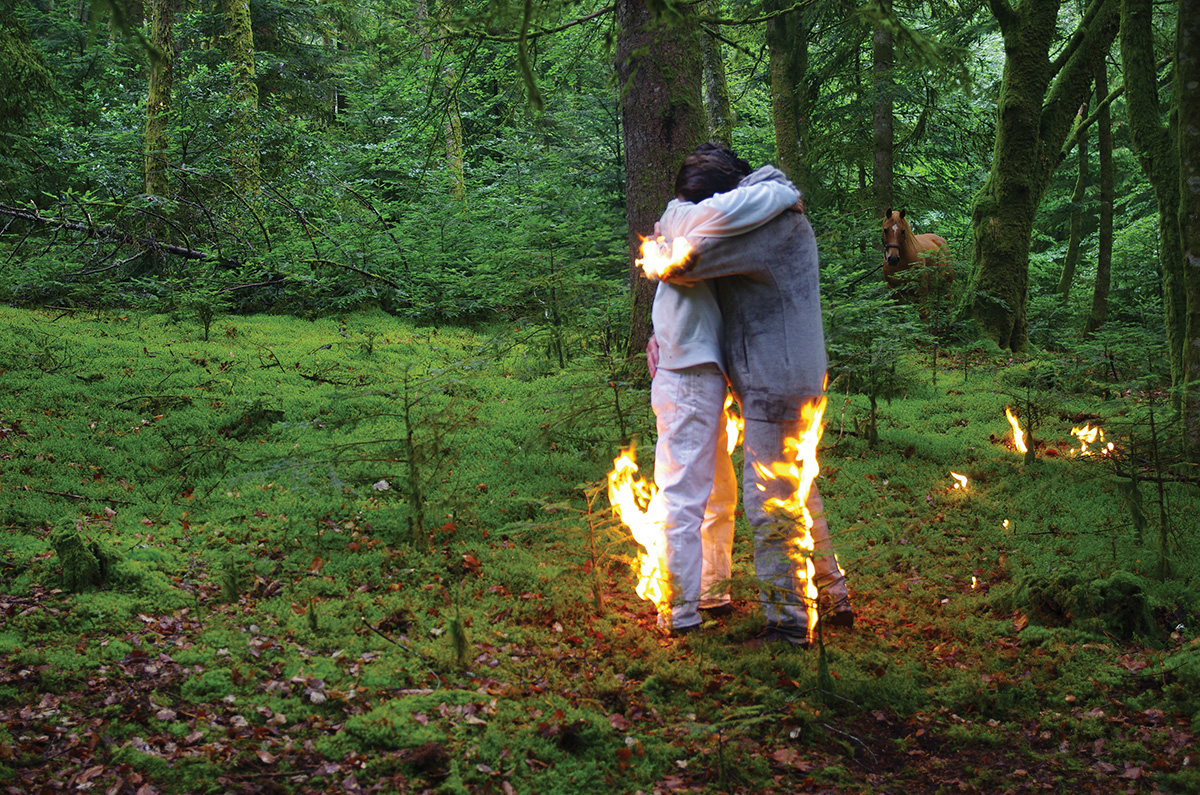
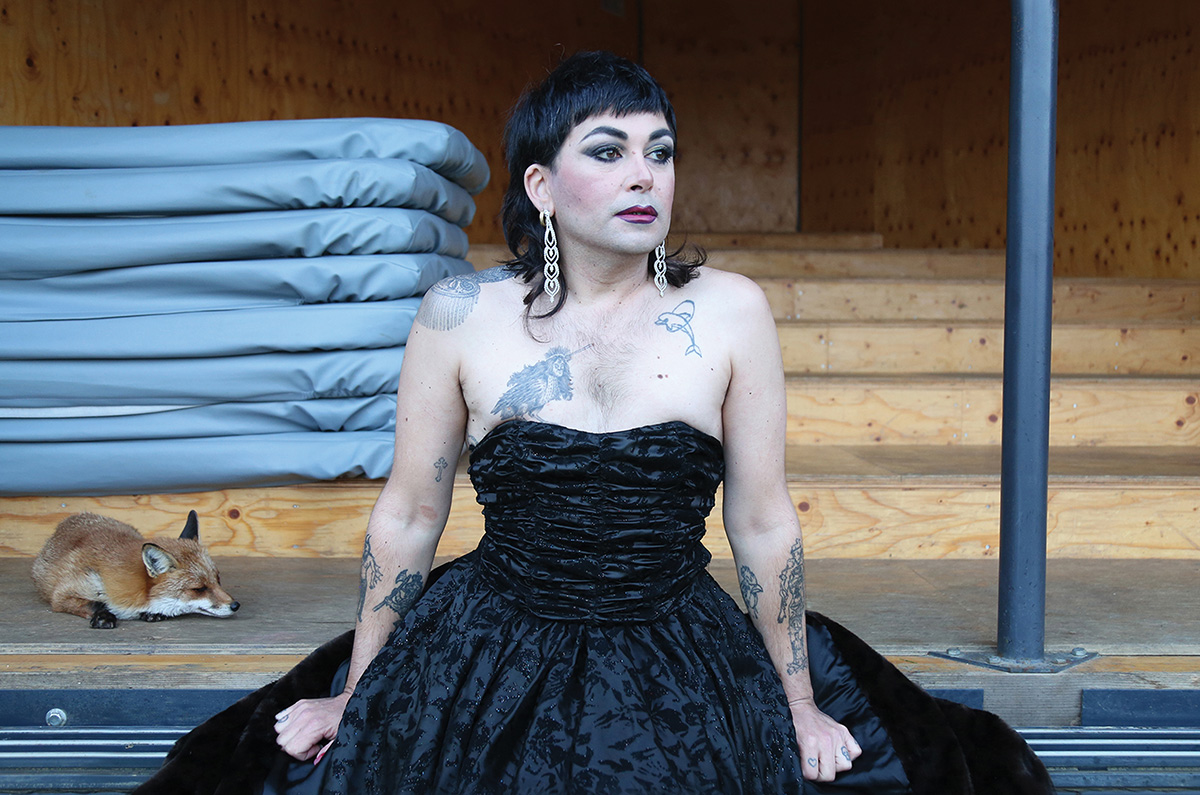
Un chant d’oiseaux nous, ouvrant sur une forêt verdoyante un jour de pluie. Une langue de brume s’insinue lentement dans l’image et s’enroule autour des arbres. Des silhouettes humaines la traversent, paisibles malgré les flammes qui lèchent leurs vêtements. Ces âmes errantes fuient-elles quelque catastrophe urbaine ou font-elles partie du bestiaire de créatures merveilleuses peuplant les forêts ? Sont-elles des messagers de l’Apocalypse ou des martyrs, après un geste ultime de protestation ? Le cheval qui les observe sans broncher, tapis dans les fougères, se contente de renforcer l’inquiétante tranquillité de la scène sans donner de réponse. Julie Chaffort connaît bien ce sentiment, pour avoir tourné dans les forêts nombre de ses vidéos, la figure animale y étant quasi omniprésente. Pour l’artiste, le cheval est le « témoin privilégié de quelque chose que l’on arrive plus à percevoir en tant qu’humain ». Un témoin dans une partition tragi-comique nous menant d’un univers « intemporel » et obscur propre aux contes.
Les vidéos de Julie Chaffort mirent le paysage, le toisent et le parcourent ; on y croise des hommes au destin tragique et des héros aussi beaux que les chants qui les accompagnent – peut être pour en donner la mesure. Les gestes accomplis sont tout à la fois drôles et absurdes, l’avenir toujours incertain et les paroles s’envolent, attrapées par les branches d’une forêt ou englouties dans les eaux d’un lac. Les plans fixent les branches ; ils convoquent les tableaux de l’école de Barbizon où les bruns apparaissent comme chargés de bitume et les lumières s’accrochent aux pâtes colorées. Les récits s’écrivent entre les longs plans-séquence et se devinent dans les détails que la lenteur permet d’observer comme l’on admire une nature morte. L’artiste ouvre des univers parallèles, atemporels et insituables, où le monde se signale à nous par ses infimes déplacements et l’infinité de ses signaux – étrangement menaçants. Pour Julie Chaffort, le cinéma est un médium dominant, naturel, qu’elle choisit très tôt de développer, à l’école des Beaux-Arts de Bordeaux où elle étudie, puis auprès de Roy Andersson qu’elle assiste en Suède, et de Werner Herzog dont elle suit le séminaire à sa Rogue Film School à New-York. Elle expose en France et à l’international. Ses œuvres font parties de collections nationales et privées Julie Chaffort est née en 1982. Elle vit à Bordeaux et travaille partout.
Julie Chaffort
Fauves
Doc. expérimental | mov | couleur | 52:0 | France | 2021
"L’odeur des fauves en nous". L’oeuvre s’inscrit dans la démarche assurément poétique de Julie Chaffort qui imagine et fabrique des situations relevant de l’instant magique. Les ingrédients sont le vivant, le chant, la musique, la visibilisation de corps contraints à une trop grande discrétion. Au coeur de ces situations aussi fascinantes que troublantes, Julie Chaffort filme les relations qui existent entre les terrestres (l’ensemble des êtres vivants, sans hiérarchie), les éléments (eau, terre, air et feu), les voix, les sons et les musiques qui prolongent les corps. Le chant des oiseaux, la voix d’une humaine, la puissance d’une chorale, le râle du vent. Les animaux (humain.es compris.es) interagissent avec ferveur et tendresse avec les arbres, la neige, les rivières, les sols. Pensées comme des scènes refuges où les corps existent librement, exultent et s’expriment, les oeuvres réveillent des émotions et des sentiments profondément inscrits dans nos chairs terrestres : l’attention, l’inquiétude, l’écoute, l’amour, la perte, la sensibilité, l’absence, la jouissance, la vulnérabilité ou encore le réconfort. Un ensemble d’états qui nous attache les un.es aux autres et qui rythme les cycles d’une longue métamorphose commune aux êtres visibles et invisibles qui peuplent le vivant.
Pour Julie Chaffort, le cinéma est un médium dominant, naturel, qu’elle choisit très tôt de développer, à l’école des beaux-arts de Bordeaux où elle étudie, puis auprès de Roy Andersson qu’elle assiste, et de Werner Herzog dont elle suit le séminaire à sa Rogue Film School. Les vidéos de Julie Chaffort mirent le paysage, le toisent et le parcourent ; on y croise des hommes au destin tragique et des héros aussi beaux que les chants qui les accompagnent – peut être pour en donner la mesure. Les gestes accomplis sont tout à la fois drôles et absurdes, l’avenir toujours incertain et les paroles s’envolent, attrapées par les branches d’une forêt ou englouties dans les eaux d’un lac. Les récits s’écrivent entre les longs plans-séquence et se devinent dans les détails que la lenteur permet d’observer comme l’on admire une nature morte. L’artiste ouvre des univers parallèles, atemporels et insituables, où le monde se signale à nous par ses infimes déplacements et l’infinité de ses signaux – étrangement menaçants. En 2013, Julie Chaffort expose au Centre International d’Art et du Paysage de Vassivière, le film « Hot-Dog », moyen-métrage qu’elle y a réalisé la même année en résidence. L’année suivante, elle présente sa première exposition personnelle « Jour Blanc » au Centre Clark de Montréal, avec des installations vidéos et sonores créées in situ. En 2015 lors de sa résidence à Pollen à Monflanquin, elle réalise le moyen-métrage « La barque silencieuse » ; ce film, « aussi facétieux qu’émouvant, aussi déroutant que respectueux de tout ce qui s’offre à voir et à entendre » pour Jean-Pierre Rehm, est sélectionné en 2016 en compétition française et premier film au FID Marseille. Il est également projeté à la galerie Thaddaeus Ropac à Paris Pantin lors de l’exposition Jeune création 66ème édition et remporte deux prix indépendants, avec deux expositions à la clé, l’une pour la Progress Gallery, « Entre chiens et loups », et l’autre pour la galerie du Pavillon à Pantin, « Les cowboys », sélectionné également au FID 2017. Julie Chaffort remporte en 2015 le prix Bullukian et crée « Somnambules », une exposition personnelle présentée à la fondation. L’artiste a été lauréate du prix « Talents Contemporains » 2015 de la fondation François Schneider pour l’oeuvre « Montagnes Noires » et obtient la même année, le prix Mezzanine Sud et expose au Musée des Abattoirs de Toulouse. Le film « La barque silencieuse » entre en 2017 dans la collection du FRAC Aquitaine ainsi que la vidéo « Nostalgia » dans celle du FRAC Occitanie Toulouse. En 2018, Julie Chaffort est lauréate du prix Mécènes du Sud Montpellier-Sète et obtient en 2019 la bourse de soutien à la création du CNAP pour l’élaboration de son projet vidéo « PRINTEMPS » dont une exposition monographie du même titre est présentée à l’ancien palais épiscopal des musées de Béziers avec le soutien de Mécènes du Sud Montpellier-Sète en 2020. Son dernier film « Légendes » a fait partie de la compétition officielle française et la compétition CNAP du FIDMarseille 2020.
Miryam Charles
Chanson pour le Nouveau-Monde
Fiction expérimentale | 16mm | couleur | 9:0 | Canada | 2021
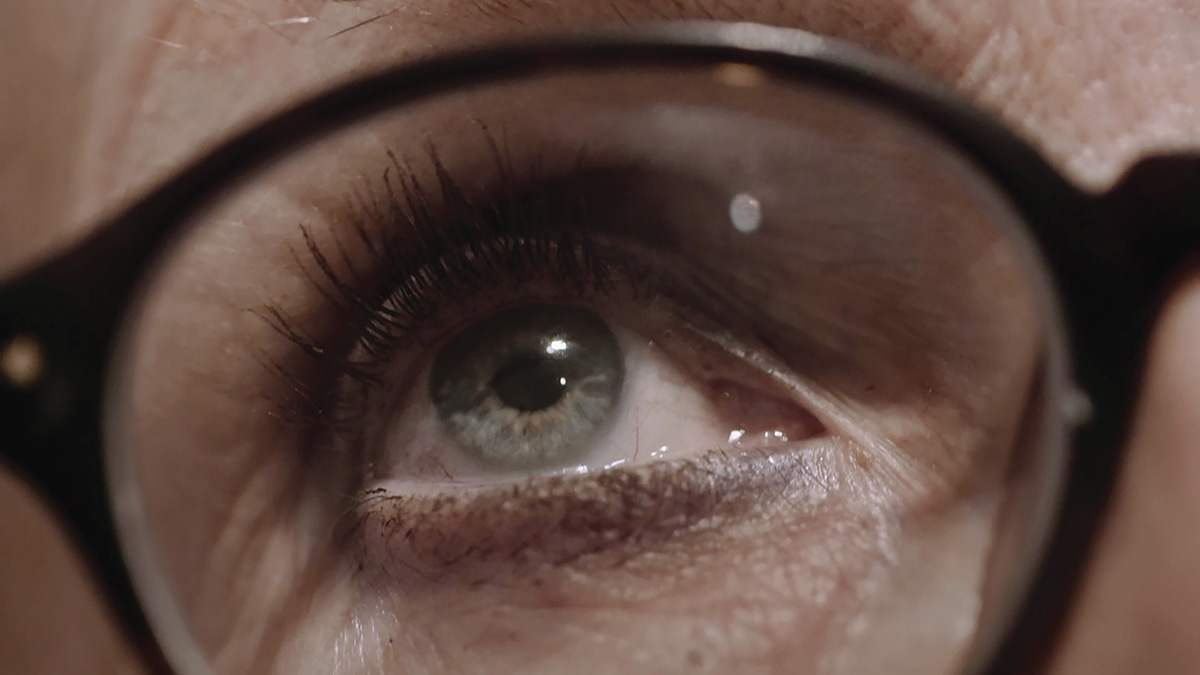
À la suite de la disparition d'un homme en Écosse, sa fille se remémore des paroles chantées avant la nuit.
Miryam Charles est une réalisatrice, productrice et directrice de la photographie d’origine haïtienne vivant à Montréal. Elle a produit plusieurs courts et longs métrages de fiction. Elle est également la réalisatrice de plusieurs courts métrages. Ses films ont été présentés dans divers festivals au Québec et à l’international. Elle vient de compléter la réalisation de son premier long métrage Cette maison. À travers ses oeuvres, elle explore les thèmes liés à l’exil et aux effets de la colonisation.
Claudia Claremi
El Tiempo
Doc. expérimental | mov | couleur et n&b | 18:36 | Cuba, Espagne | 2020
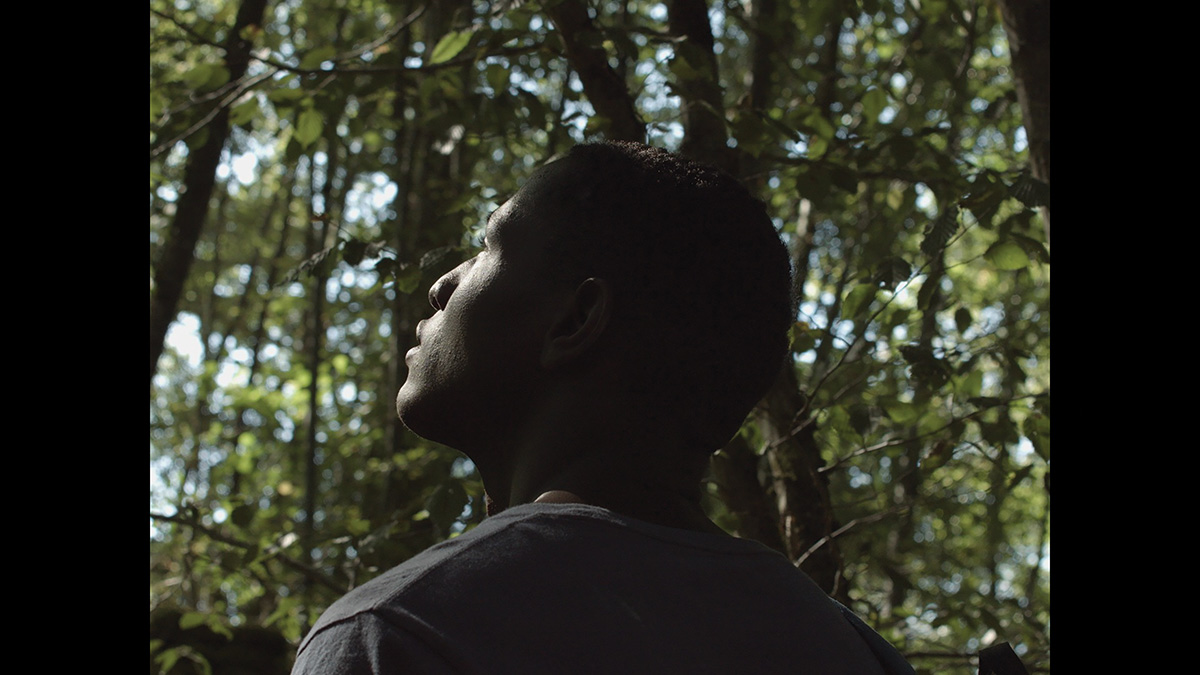
El Tiempo is a collaboration with the volunteers of the Reina Sofía Museum, a group of pensioners that play an active role in the museum’s educational programmes. Through the creation of a collaborative experimental film, El Tiempo examines the intangible, explores personal and collective memories, and delves into the relationship between this group and the Museum, representing a symbiosis of bodies and artworks. The project started in 2019, with the idea of making a film set in a dystopian present, where the Museum is closed to the public as a result of the collapse of modern society. Western culture has therefore lost its hegemonic role, causing the abandonment of the institutions that sustained it. In this context, the volunteers appear to be the only people who inhabit the Museum. The framework of this fictional thread, facilitated the development of group and individual performative actions, and allowed a series of encounters of bodies, space and artworks. This work was shot just before the pandemic and the editing and post-production process took place during the confinement. This experience deeply redefined the project and those images that were created as a vision of an imagined present, began to represent a plausible reality.
Claudia Claremi (Madrid, 1986). Visual artist and filmmaker. Graduated in Documentary Film from the Escuela Internacional de Cine y Televisión de San Antonio de los Baños (Cuba) and in Fine Arts from University of the Arts London (UK) and the Instituto Superior de Arte de La Habana (Cuba), and she has participated in alternative programmes of study and critical practice such as VISIO (Lo Schermo dell’Arte, Florence), P.O.P.S. (Colectivo Ayllu, Matadero, Madrid), Campus (Latitudes, Barcelona) and La Práctica (Beta Local, Puerto Rico). Her films Firefly, Bat and The woodland, among others, have been shown and awarded at international film festivals such as Raindance, Ann Arbor, Ji.hlava, FIC Guadalajara, Documentamadrid or Márgenes. Her work has been part of many exhibitions and she has also obtained the XXI Generación 2021 award, XXXI Circuitos award, the Matadero CREA grant. In 2020-21 she has completed El Tiempo, a film in collaboration with the Reina Sofía Museum in Madrid.
Christophe Clavert
LA ROUTE DE CAYENNE
Fiction | hdv | couleur | 32:0 | France | 2020
Aujourd'hui, en France. Un homme évadé d’un centre de rétention parcourt les routes en cherchant à rejoindre Paris. Parallèlement, en 1894, une étrange scène se déroule dans un appartement.
Après des études de cinéma et de philosophie, Christophe Clavert réalise son premier film en 1999, Les Faux monnayeurs (la bonne affaire). Il travaille ensuite dans la distribution et la production parallèlement à la réalisation de ses propres films et en étant occasionnellement pour d’autres chef opérateur et monteur. Il a notamment fait la photographie et été le monteur de nombreux films de Jean-Marie Straub depuis 2009.
Ghost Mountain Ghost Shovel Collective
I May Doze for Millions of Years
Vidéo | 4k | couleur | 13:54 | Taiwan, Mexique | 2021
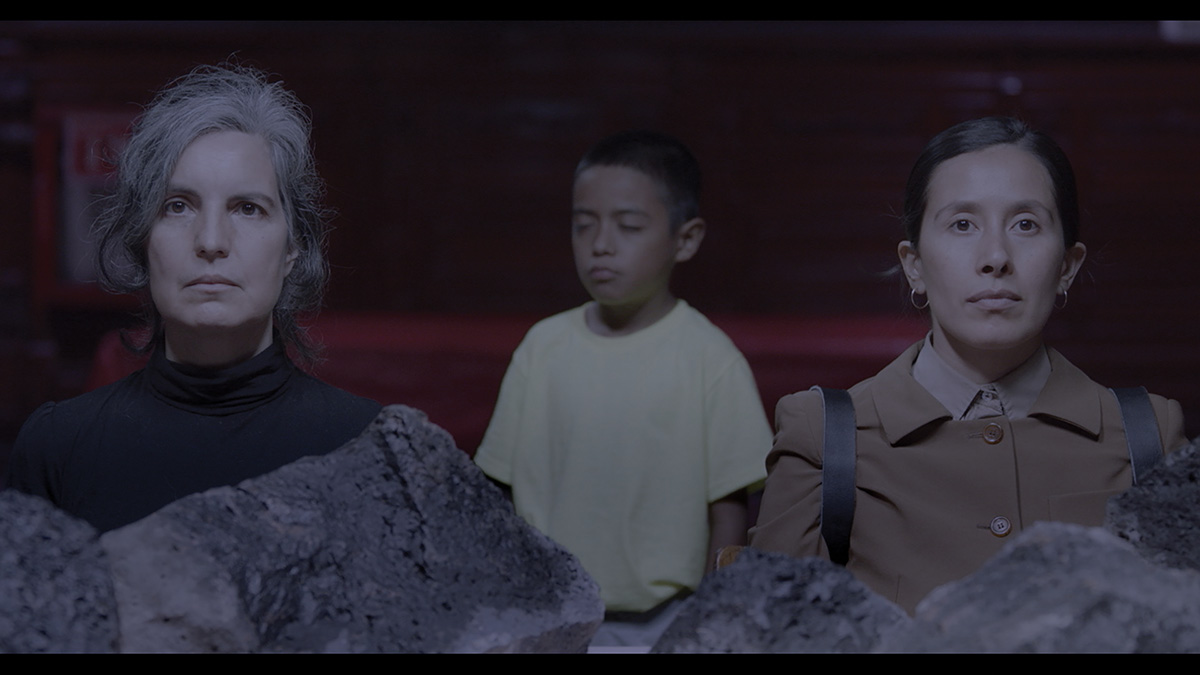
A group of people from different backgrounds fall into a doze at a fairly masculine old Mexican bar: security guards transporting a naked man, a boy giving secret signals, women carrying long-barreled guns, and rocks. The lines narrated by the performer are taken from the notes of a serial killer, political materials, and the dying words of Takijiro Onishi, originator of the kamikaze tactics.
Director and visual artist Val Lee founded Ghost Mountain Ghost Shovel(GMGS) with Hikky Chen in 2008. GMGS is active in visual and performing arts. GMGS uses ephemeral situations to lead the audience into a form of live art that comprises action scripts, installations, sound, hypnotic rhetoric, composite structures, and mise-en-scène. The collective has collaborated with non-performers to construct political fables with a dream-like method. GMGS’s works have been exhibited at the Vernacular Institute, Haus der Kulturen der Welt, Forum des Images, Grand Palais, the Danish feminist initiative ARIEL, Taiwan Contemporary Cultural Lab, National Taiwan Museum of Fine Arts, and Hong-Gah Museum; and joined the Taipei Arts Festival, the Gwangju Biennale, the Taiwan Biennial, the Urban Nomad Film Fest, and Month of Performance Art in Berlin.GMGS has been sponsored by the Hong Foundation (2021), the Liveworks Festival Lab artist residency program (2020), the Asian Cultural Council New York Fellowship (2019), Taishin Visual Arts Award (2017), and the National Culture and Arts Foundation.
Robbie Cornelissen
Terra Nova
Animation | mp4 | noir et blanc | 17:10 | Pays-Bas | 2021
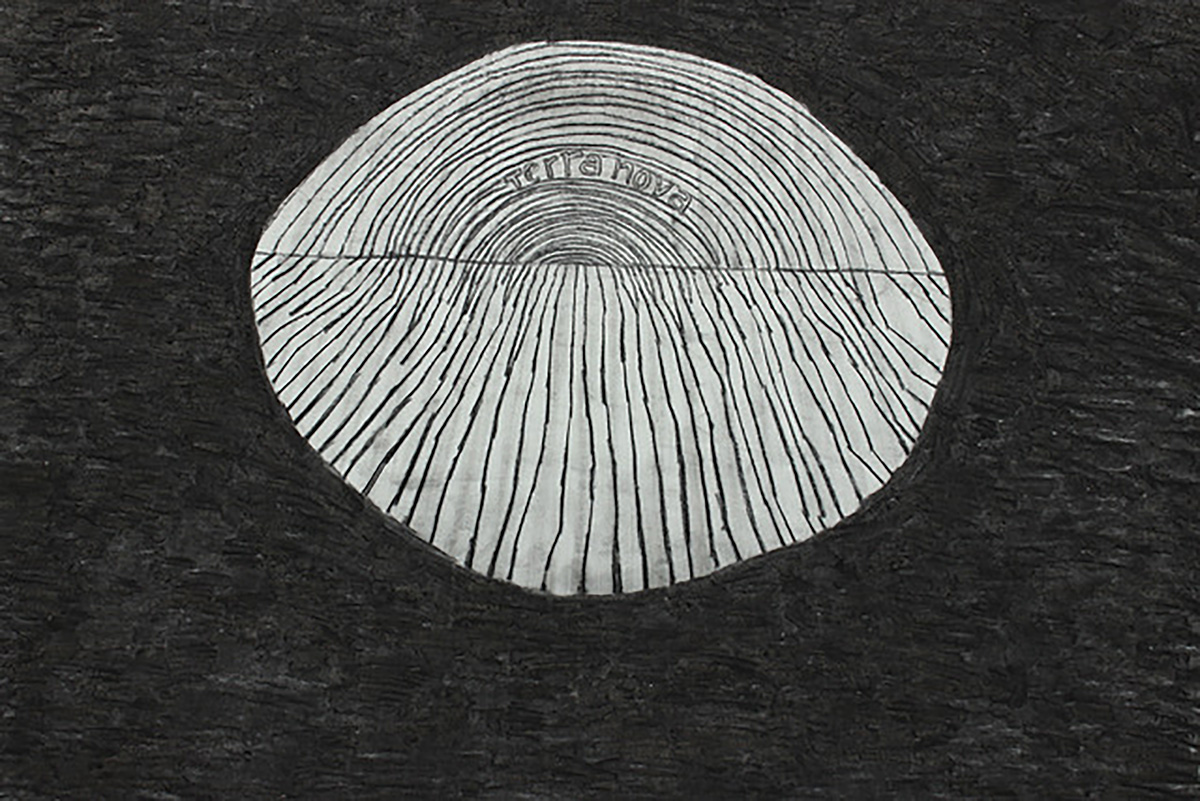
The film’s opening shot shows a bird’s eye view of what could be the earth, or are we looking at a drawing? We could say that after this intro, individual scenes appear to follow one another in an associative way, it shows elements and processes in a rapidly changing world on earth. The words ‘Absence’ and ‘Presence’ appear and flicker in the darkness like neon signs. We look at this play of creating and taking away, of drawing and erasing in the stop motion technique, that brings us in the transformation process of different scenes. At the end of the first part of the film a spaceship set off on a flight towards infinity. The vanishing point, the limit of the drawing’s perspective is our destination. The second part of the film we are in the cosmos and look at the development of a floating architecture, like a space station. This station clusters to its essence and sett off to a planet. In the final scene a human figure, an astronaut appears, stands up and walks towards an exit and dives, to disappear into the extra-terrestrial, floating and circling alone in the black mass.
Robbie Cornelissen ( Utrecht, The Netherlands, 1954) graduated In Biology at the University in Utrecht, and graduated in Fine Art at the Rietveld Academy in Amsterdam. He was teaching fine art at Artez Academy in Arnhem until 2020. Robbie Cornelissen (1954) is one of the Netherlands leading contemporary draughtsmen. Cornelissen made his name with virtuoso pencil drawings of futuristic interiors and urban landscapes in which memory and fantasy come together.The complex, vertiginous pieces draw the spectator into an illusionistic space that does not seem confined to the paper. Cornelissen is a kind of a researcher in the field of drawing. He is well known for his animation movies and public events around drawing. His animation project The Black Room was the winner of the special jury price of The Holland Animation Festival in 2015. In 2019 Cornelissen was working as a guest curator and artist for the exhibition ‘The Line Up’ , an exhibition around drawing with 100 artists for The Centraal Museum Utrecht. In 2022 Cornelissen made a solo exhibition ‘Terra Nova’ In the Kunsthalle Mannheim in Germany about the connection of his drawings and animation movies.
Noé Cottencin
Reality and Fiction
Fiction expérimentale | mov | couleur | 10:20 | France, Pays-Bas | 2021
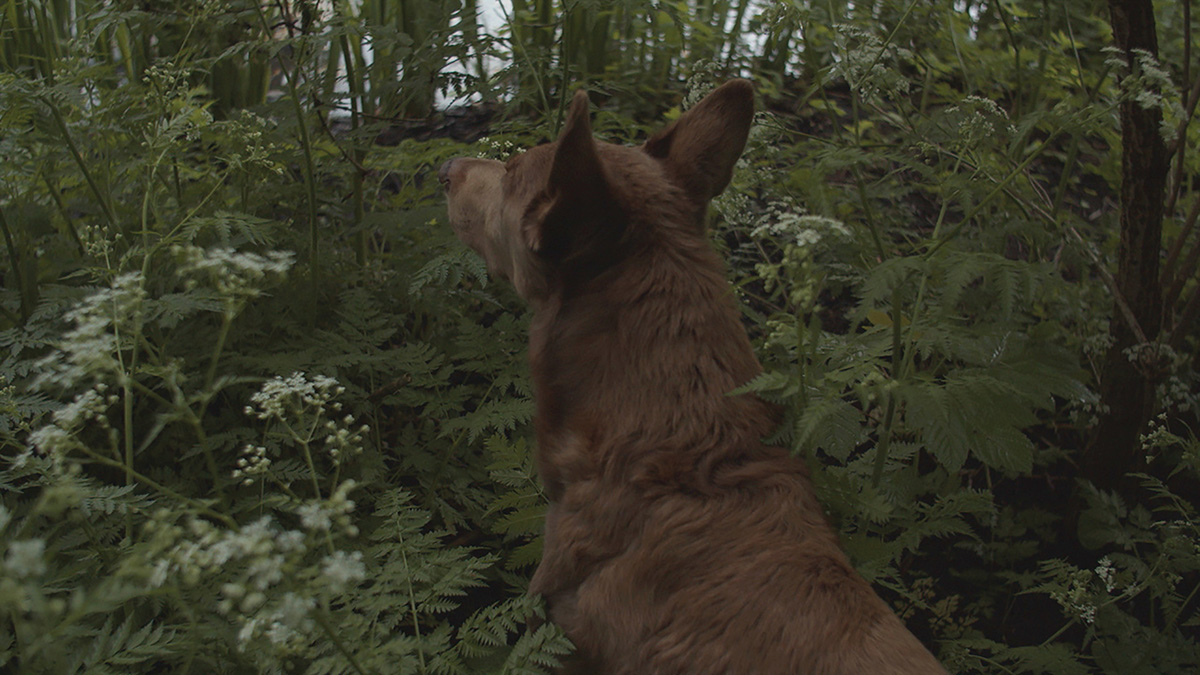
Un chien, une fille, des adolescents et d’autres créatures fantastiques font l’insurrection de leur vie quotidienne à travers des marches dans la ville, des détournements d’espaces et autres actions à travers lesquelles ils observent et transforment la réalité et le monde autour d’eux.
Noé Cottencin (France, 1994) a étudié l’image en mouvement à l’Académie Gerrit Rietveld et au Sandberg Institute. Son travail, à travers des récits qui prennent différentes formes (dessins, films, interventions, publications), s’intéresse principalement à la mise en commun des individualités. Il vit et travaille à Amsterdam et Los Angeles.
Sylvain Couzinet-jacques
Sub Rosa
Vidéo | mov | couleur | 720:0 | France, Espagne | 2020
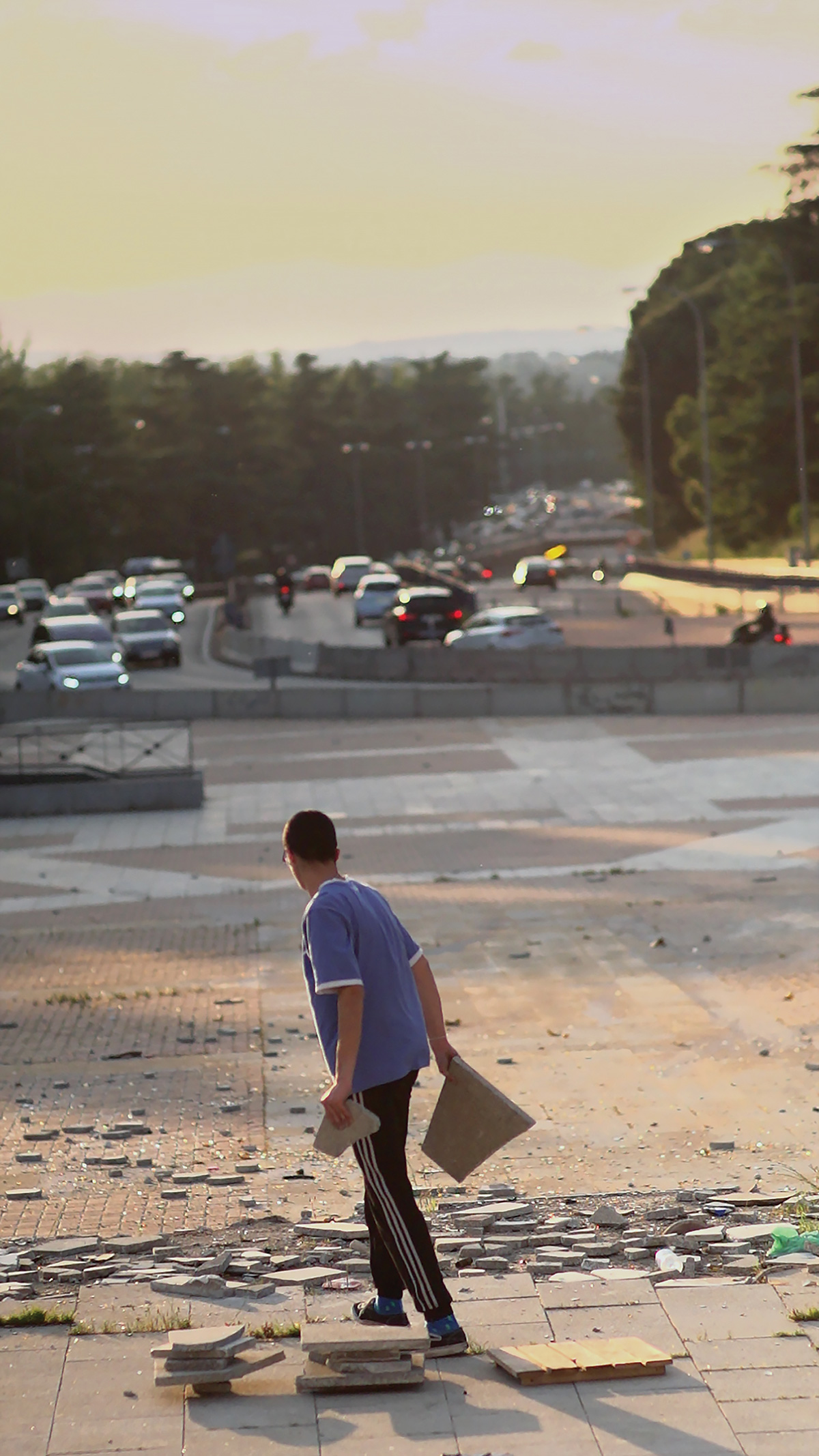
Sub Rosa est une installation audiovisuelle autour d’un film d’une durée de 12h en multi-channels, et d’un système sonore génératif. Le film montre des adolescents filmés au ralenti lorsque la lumière du jour décline et que le ciel se teinte des cou- leurs du coucher de soleil. Le film est tourné dans un seul endroit, l’Arco de la Victoria, sur une période de 3 ans. L’Arco de la Victoria est un arc de triomphe situé dans la partie nord-ouest de Madrid. Il a été construit dans les années 1950 à la demande de Francisco Franco pour commémorer sa victoire sur les troupes républicaines pendant la guerre civile espagnole. Cet arc de plus de 40 mètres de haut est encore aujourd’hui un symbole du fascisme espagnol. Situé en dehors des zones touristiques habituelles, au milieu d’un rond-point à plusieurs voies sur l’autoroute A6, il fait depuis longtemps partie des monuments oubliés de la ville, et est aujourd’hui plus une ruine qu’une marque historique. Et comme beaucoup de places publiques de la ville, c’est un point de rencontre pour les adolescents. L’œuvre est centrée sur les jeunes mais le territoire est visible, par fragments et flux. Le lieu est comme une île de béton, habitée par ces adolescents qui semblent en attente.
Sylvain Couzinet-Jacques (1983) est diplômé de l’École supérieure des beaux-arts de Marseille (2010) et de l’École nationale supérieure de la photographie d’Arles (2012). Son travail a été présenté lors d’expositions personnelles à Aperture Foundation à New York (2015) ou encore à C/O Berlin (2019). En 2012, il a reçu le prix Jeune Talent du BAL, puis entre 2015 et 2016 il été résident du Centre photographique d’Île-de- France et de la Cité internationale des arts à Paris. En 2015, il est lauréat du prix Immersion : une commande photographique franco-américaine, décerné par la Fondation d’entreprise Hermès, en alliance avec Aperture Foundation. Son premier livre Eden (1 000 pages de numérisations à la main d’une maison de la crise des subprimes dans une ville nommée Eden aux Etats-Unis) a été publié par Aperture en 2016. Entre 2017 et 2018, il est reçu com- me artiste membre de l’Académie de France à Madrid - Casa de Velázquez. En 2019 il est sélectionné pour l’exposition Foam Talents décerné par le Fotomuseum d’Amsterdam et il reçoit le prix C/O Berlin Talent Award qui a donné lieu à une exposition personnelle à C/O Berlin et à son second livre publié par Spector Books. Les enjeux globaux de la circulation immatérielle de données, de la propriété privée et de l’appropriation collective sont à la base d’une exploration visuelle et sculpturale dans son oeuvre qui emprunte des formes renou- velées à chacun de ses projets. A travers une une réflexion à mi-chemin entre le genre documentaire pour sa résonance avec le présent et les arts visuels, ses oeuvres toujours contextuelles et participatives racontent les crises de notre monde et les stratégies collectives de son ré-enchantement.