Catalogue 2025-2026
Parcourez ci-dessous le catalogue 2025-2026 des Rencontres Internationales, ou effectuez une recherche dans les archives des oeuvres présentées depuis 2004. De nouveaux extraits vidéos sont régulièrement mis en ligne, les images et les textes sont également progressivement mis à jour.
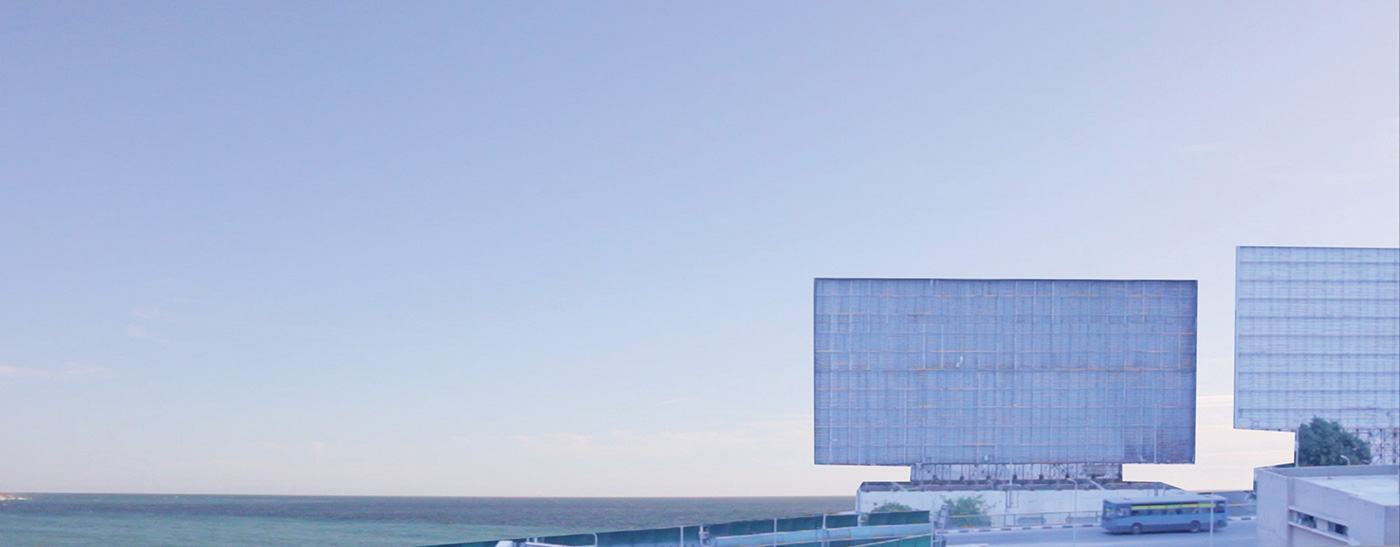
Mohamed Abdelkarim
Gazing...Unseeing
Fiction expérimentale | mov | couleur | 7:50 | Egypte | 2021
La vidéo imagine un scénario futur inscrit dans une narration de climate fiction. Le récit prend la forme d’un pseudo-entretien avec un fugitif imaginé, vivant dans une ère post-catastrophe. À travers différents points de vue, inflexions idéologiques et rapports de souveraineté économique, l’entretien projette l’avenir des écologistes, des gouvernements et du secteur privé dans une ville submergée puis reconstruite après les inondations. Le paysage et la fiction complexifient les relations entre infrastructures, privatisation, écologie, surveillance et migration, en esquissant un futur où ces forces s’entrecroisent au sein d’un territoire transformé.
Abdelkarim est artiste visuel, performeur et producteur culturel. Après un master à l’ECAV/Edhea (Suisse) en 2016, il s’est tourné vers la création de performances fondées sur l’écriture, développant une pratique performative ancrée dans une recherche pluridisciplinaire qui met en jeu — et interroge — le récit, le chant, la détection, le faire, la fiction et la spéculation. Dans ses performances, le texte témoigne du processus de recherche. L’accent est mis sur le processus lui-même : une réflexion sur les modes de production et les généalogies culturelles. Ce processus reste ouvert, non linéaire. Son projet actuel, structuré comme un ensemble de volets, explore l’agency du paysage en tant que témoin « d’une histoire que nous avons manquée et d’un futur auquel nous n’avons pas encore assisté ». Ses performances ont été présentées notamment à Guild Master of Cabaret Voltaire, à Manifesta 11 (Zurich, 2016) ; au Sofia Underground Performance Art Festival (Bulgarie, 2016) ; à Photo Cairo 6, Contemporary Image Collective (CIC, Égypte, 2017) ; au Live Works Performance Act Award Vol. 5, 37? édition de Drodesera (Trente, Italie, 2017) ; dans At the Crossroads of Different Pasts, Presents and Futures à la Fondazione Sandretto Re Rebaudengo (Turin, 2018) ; à Interazioni Festival (Rome, 2022) ; et au Festival Internazionale della Performance, Performative 04, au MAXXI L’Aquila (2024). Dans le cadre de sa pratique performative, il a créé Live Praxes, un espace de rencontre dédié à la performance, comprenant ateliers, séminaires et soirées performative
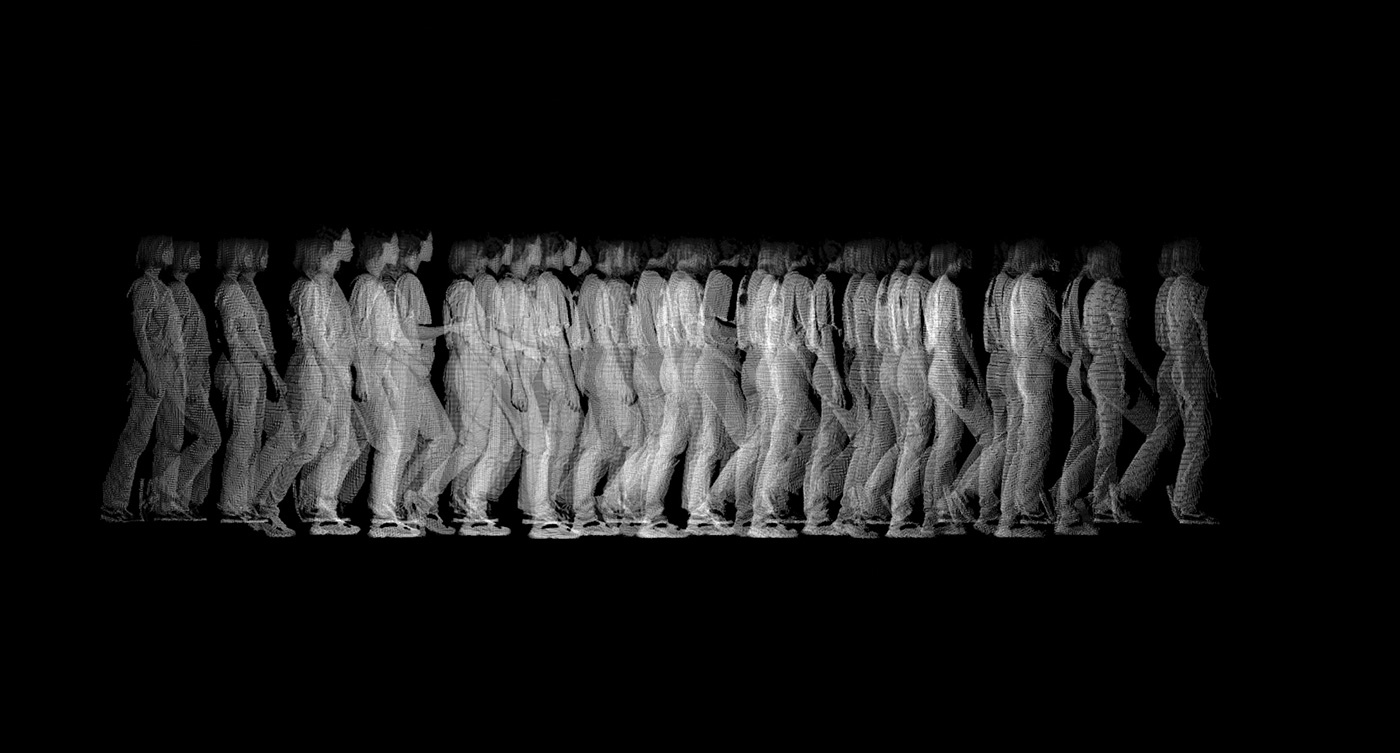

Anna Adahl
Porous Bodies (Draft Cut)
Film expérimental | 4k | couleur | 19:23 | Suède | 2025
Porous Bodies is an essay film in diptych format where found footage meets newly shot images in assemblage editing. The film explores how our bodies are becoming data and unfolds the concept of porous bodies. Optical and infrared scanning systems penetrate beyond the skin, measuring the materiality and patterns of our iris or palm veins, while other tools capture our identities from afar, without consent, by analysing videos of our physical and choreographic uniqueness. These scanning techniques oscillate between micro and macro images of our bodies, used for the control of people, protesting crowds, security systems, crypto-based economies, digital IDs, and refugee camps. Vulnerable populations often become testing grounds for such technologies. Iris scans read the materiality of the eye through infrared light—a confrontation between two lenses, one organic and one technological. Authority and agency reside in the latter; the eye becomes mere material, algorithmically turned into code. Similarly, palm vein scanning reduces the hand—once a symbol of political emancipation—to a biometric signature. Through gait recognition, we are identified by the way we walk, our choreographic uniqueness rendered into data. Facial recognition becomes obsolete; no one in a crowd is anonymous. It is the body as a whole that is now scanned and quantified. A walking body, optically and mathematically analysed without consent—a representation of agency yet transformed into a porous, fragile, and permeable entity. Scanned from the inside out, it becomes a cloud of harvestable data. Emerging technologies penetrate our bodies, while self-tracking devices extend the intrusion. We are porous—open to these systems, sometimes unknowingly, sometimes willingly. Still, the body remains a representation of agency: the walking body, the body in the street, the political body that assembles with others. Datafied clouds in motion, grasping for agency in an increasingly authoritarian landscape.
Anna Ådahl is a Swedish artist and researcher working in various mediums such as film, installations and performance. She uses the editing tools of assemblage and montage where found footage meets newly produced images. Her installations use artworks in various mediums as props in spatial narratives where the body is used as reference and an investigative tool. Over more than a decade the notion and politics of crowds has been central in her artistic practice. Her fine art practice-based research, Inside the Postdigital Crowds, (2022), at the Royal College of Art in London addressed the aesthetics and politics of the digital conditions in which contemporary crowds are represented and governed. She is currently pursuing a post doctorate and is running a funded (Swedish Research Council) practice-led fine art research project in collaboration with Stefan Jonsson at REMESO (Institute for Research on Migration, Ethnicity and Society) at LiU and affiliated with the Royal Institute of Art, titled Collective Agency in an Era of Authoritarian Automation. Her work has been shown at Pylon Lab, Dresden; Impakt, Utrecht; Marabouparken, Sundbyberg; Whitechapel Gallery, London; Moderna Muséet (part of the collection), Stockholm; LIAF, Norway; CCA Derry, UK; Bonniers Konsthall, amongst others.
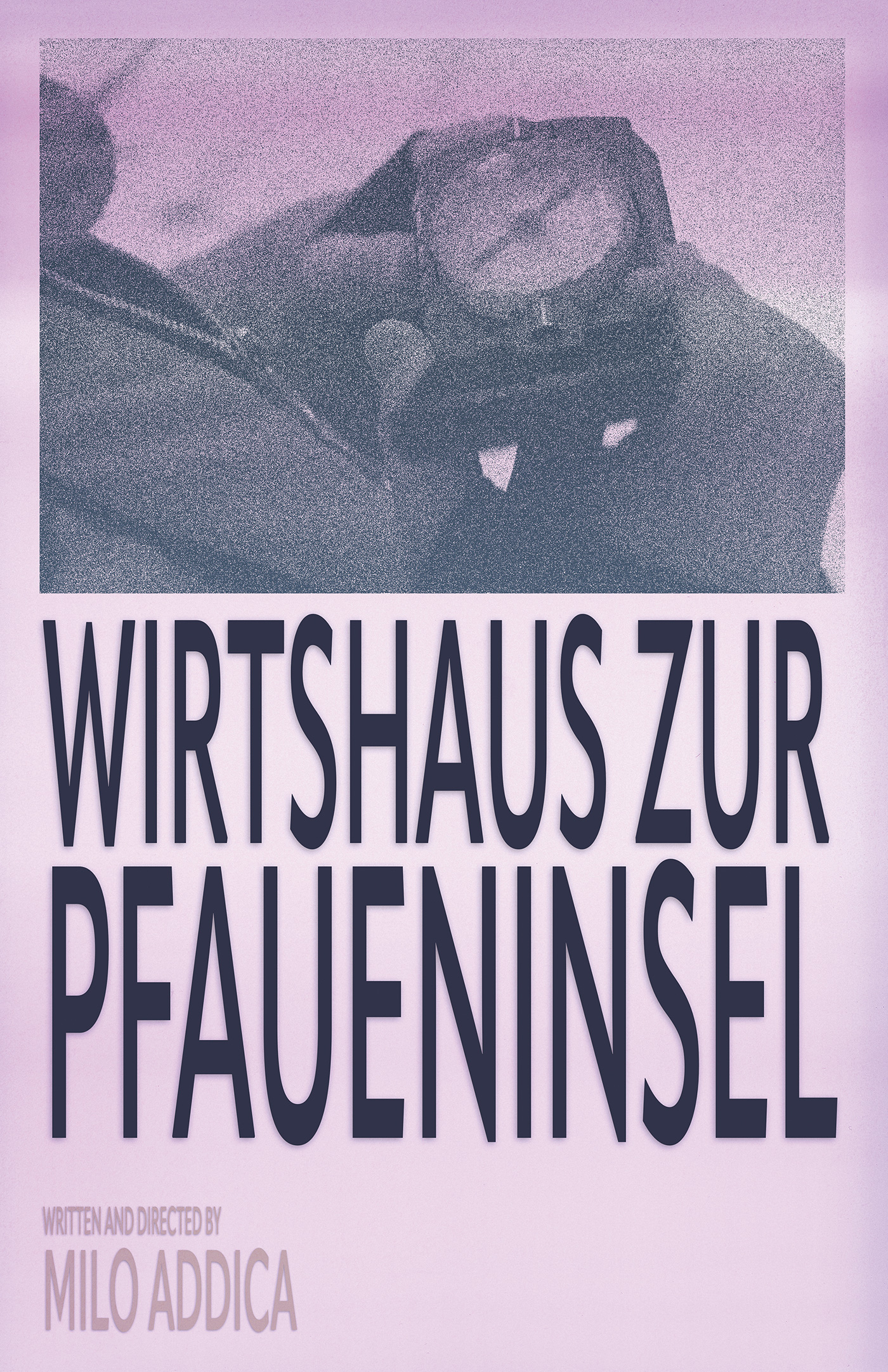

Milo Addica
Wirtshaus Zur Pfaueninsel
Fiction | 35mm | couleur | 9:19 | USA, Allemagne | 2025
A young boy adventures through a forest outside of Berlin Germany in search of a rare bird and has a stark encounter with a man who offers him a harsh dose of life.
MILO ADDICA BIOGRAPHY Director / writer / producer Milo Addica was nominated for an Academy Award, WGA Award, and an Independent Spirit Award for Monster’s Ball, starring Halle Berry, Billy Bob Thornton, and Heath Ledger. Some of Addica’s writing credits include Jonathan Glazer’s Birth, co-written with Jean-Claude Carrier, starring Nicole Kidman and Danny Huston, and Lauren Bacall (the film was selected for competition at the Venice Film Festival) as well as James Marsh’s The King, starring Gael Garcia Bernal, William Hurt, and Paul Dano, (the film was selected for Un Certain Regard at Cannes.) Addica has written for numerous directors including: Andrew Dominik, Joel Schumacher, John Hillcoat, David Mackenzie, as well as actors including Russell Crowe, Julia Roberts, Sandra Bullock, Nicole Kidman, Danny Huston, Paul Dano, Gael Garcia-Bernal, William Hurt, and Lauren Bacall. Addica is currently shooting a documentary about his father artist Kent Floeter who was in a 1960s/70s tight knit group including Chuck Close, Brice Marden, and Richard Serra as well as being in pre production on his next feature to direct, Motorcycle Ranger, starring Edgar Ramirez. Addica has directed two short films, Ms. Longlegs and Wirtshaus zur Pfaueninsel. Addica grew up in New York City in the late 1970s/80s where he attended public school before enrolling at the University of Massachusetts at Amherst. He later attended the Neighborhood Playhouse and Hunter College. Milo Addica won a Satellite Award and a Final Draft Award for Monster’s Ball.
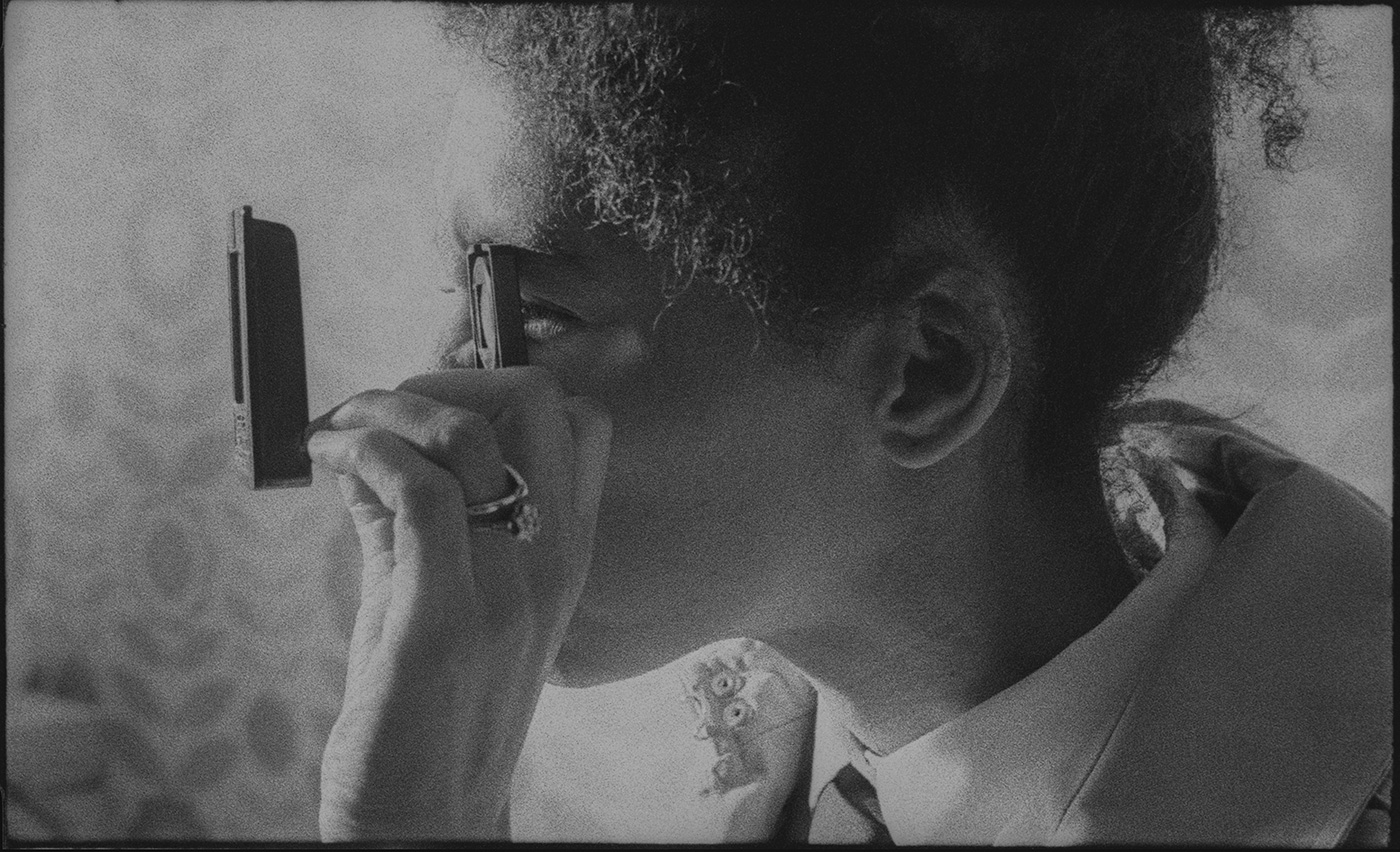

Danielle Adobi Dean
Hemel
Doc. expérimental | 16mm | couleur et n&b | 29:44 | USA, 0 | 2025
Danielle Dean’s new film is a portrait of Hemel Hempstead, where she was raised and unfolds as a personal essay on the town’s history as a planned community under the New Towns Act of 1946. Titled Hemel, the work’s central reference is a 1957 sci-fi horror B-movie shot in town about the arrival of a non-human entity that infiltrates the minds of residents and endangers life with a toxic black slime. Playing a composite character based on herself and the movie’s detective protagonist, Dean’s extraordinary vantage brings together real and imagined worlds, both past and present.
Working with archives, video, performance, social practice, sculpture, and drawing, Danielle A. Dean investigates the recursive loops between the circulation of ideas and the material reproduction of global capitalism. Operating across media and with a variety of collaborators and participants, her work examines the fault lines within this seemingly closed circuit. Dean received an MFA from California Institute of the Arts and is an alumna of the Whitney Independent Study Program. Recently completed projects include new commissions for Mercer Union, Toronto (2024), a solo show at Tate Britain, London (2022), and Performa, New York (2021). Other recent solo shows include: Long Low Line, Times Square Arts, NY (2023); Bazar, ICA San Diego (2023); and True Red Ruin, Museum of Contemporary Art Detroit (2018). She participated in the Whitney Biennial in New York (2022). Group exhibitions include: This Land, at The Contemporary Austin (2023); Freedom of Movement, at the Stedelijk Museum in Amsterdam, Netherlands (2019); The Centre Cannot Hold, Lafayette Anticipation, Paris (2018); and Made in LA, at The Hammer Museum, Los Angeles (2014).


Idrisse Ahamada Madi
Mvoulana
Fiction expérimentale | mp4 | noir et blanc | 5:0 | France | 2023
Mbadjini en Grande Comores. Un homme nous mène vers une mystérieuse cabane, loin de son village, dans laquelle il a accompli un pacte il y a 30 ans.
Né à Saint-Denis de La Réunion, Idrisse AHAMADA MADI est cinéaste et artiste. Diplômé de l’École Supérieure d’Art de La Réunion, il inscrit sa pratique à la croisée du réel et de la fiction, explorant les zones d’ombre où les perceptions vacillent. Son œuvre, présentée notamment à la Cité des Arts de La Réunion, au Centre Wallonie-Bruxelles à Paris et à la Biennale de Mulhouse, interroge les formes de croyance, de mémoire et de transmission à travers une esthétique mêlant mysticisme et métamodernité. Entre cinéma et art visuel, Idrisse AHAMADA MADI compose des récits sensibles, des images habitées, où le visible se double sans cesse d’une présence invisible. Il vit et travaille actuellement à Paris.

Shaheen Ahmed
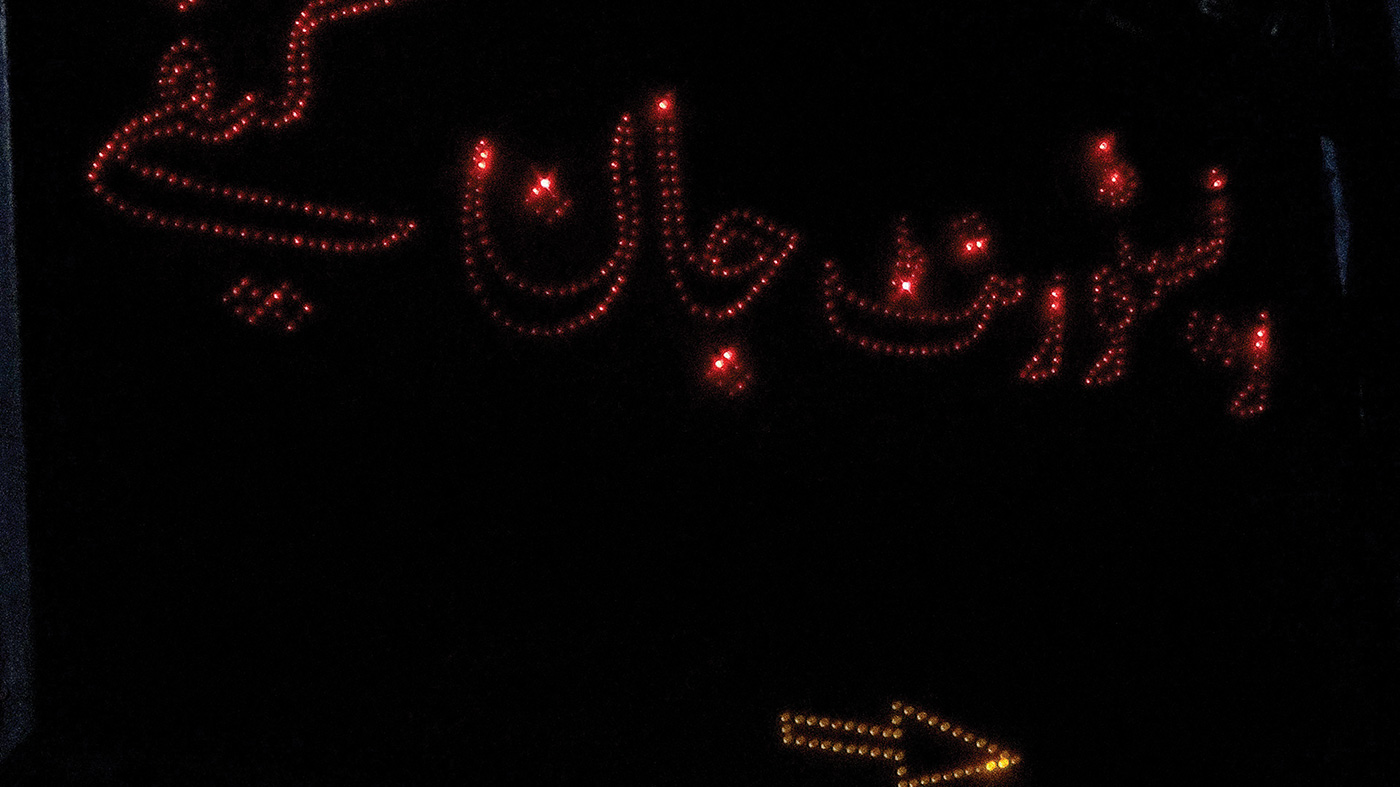
Nazar, a diary
Doc. expérimental | mp4 | couleur | 25:58 | Inde, Grèce | 2025
An audio-visual diary on the afterlives of encounters with South Asian Muslim migrants in Athens. Traces of exchanges in neighborhood cafés, makeshift mosques, Ramadan evenings, and half-sung songs ? held in fragments of sound, image, and text. Through stories, rituals, and everyday gestures, it listens to echoes of displacement and longing, tracing the ways in which memory, faith, and intimacy are held.
Shaheen Ahmed is a filmmaker from the Malabar Coast of Kerala, South India. His work explores memory and identity, often at the intersection of faith, intimacy, and collective spiritual imagination.

Ayo Akingbade
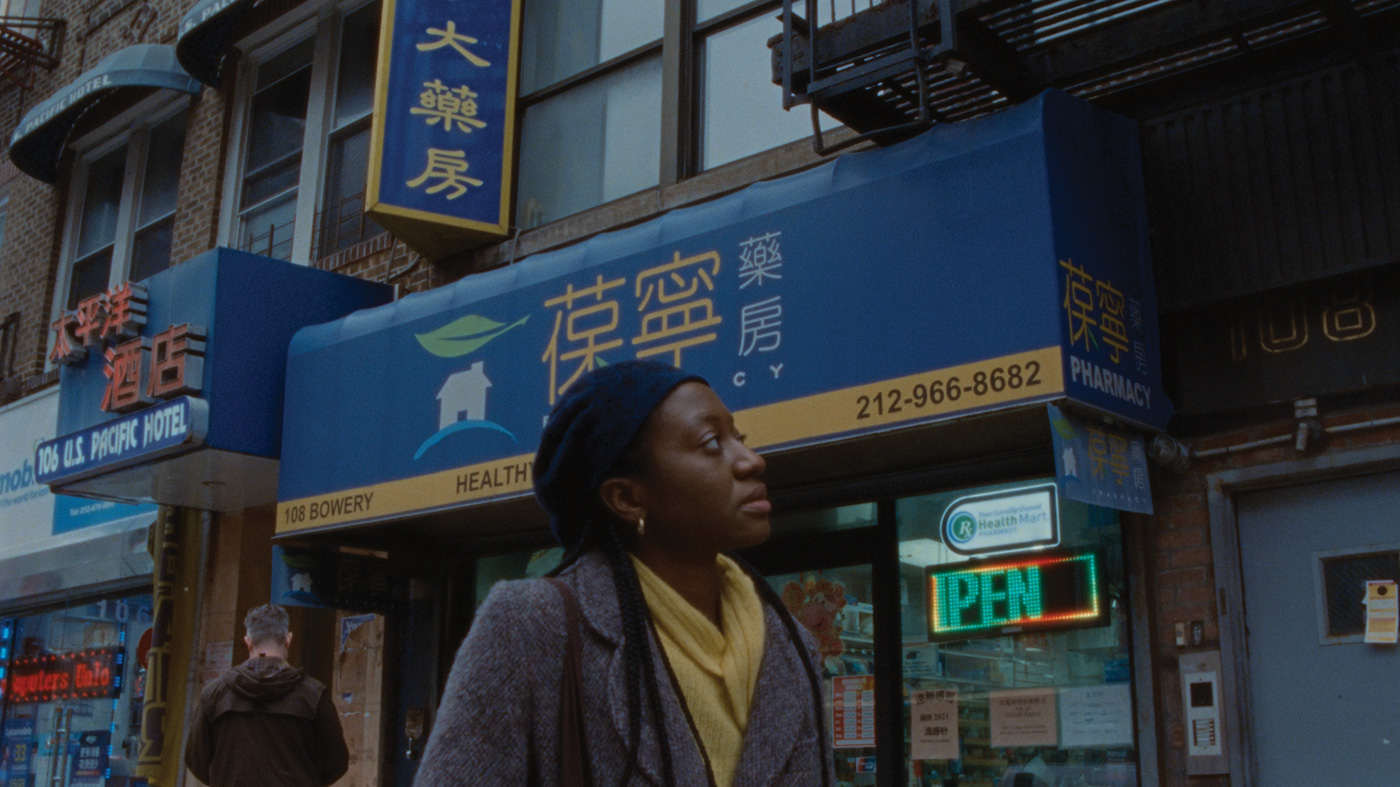
KEEP LOOKING
Fiction expérimentale | 16mm | couleur | 14:35 | Royaume-Uni, USA | 2024
A young British filmmaker arrives in New York to find finance for an impossible feature.
Ayo Akingbade is an artist, writer and filmmaker. She works predominantly with film and installation addressing themes of power, urbanism and stance. Akingbade engages with the fluid boundaries between the self and the other by gathering local and cultural experiences in intimate and playful interpretations. Her work has often documented experiences of rapid social change in London, where she was born and raised.

Sara Alavanic
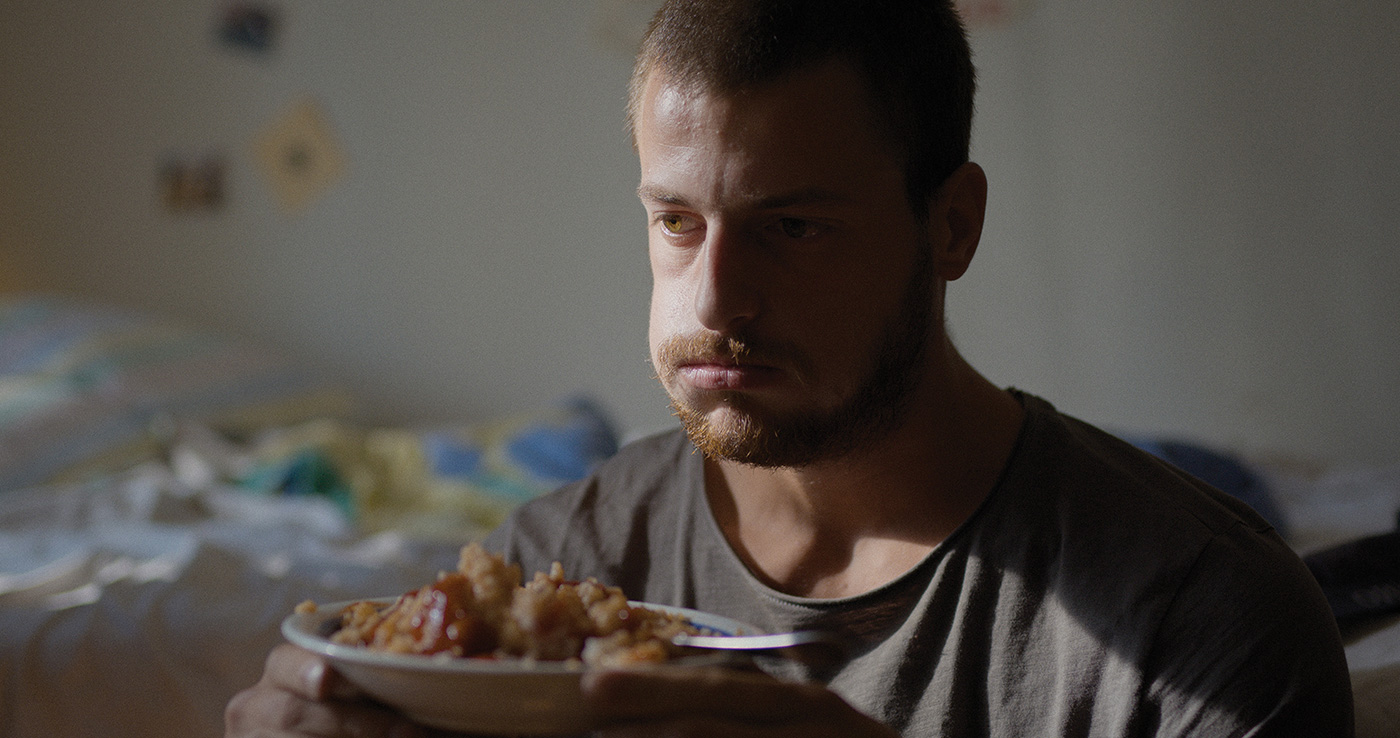
Fleka
Fiction | mov | couleur | 21:36 | Croatie | 2024
Spot doesn’t leave the vicinity of his building. He spends time with his neighbors and occasionally skateboards. Since his mom ended up in a psychiatric clinic, his best friend is his only family. Sometimes, he passes the time with a neighbor who has mental health issues and has adopted a pig. Soon, he realizes that this neighbor is his only friend.
Sara Alavani? (Croatia, 1998) completing her Master’s degree in Film and TV Directing at Zagreb’s Academy of Dramatic Arts. She also holds a degree in Graphic Design from the Faculty of Graphic Arts in Zagreb. She is a member of Blank_Film Incubator, where she directed her first films People Stink, But They’re Warm (Pula Film Festival 2020) and Do You Feel Nervous When I Approach You? (ZagrebDox 2020). Her most recent film Spot, premiered at Zagreb Film Festival (2024) and won the Golden Pram.

Paula Albuquerque
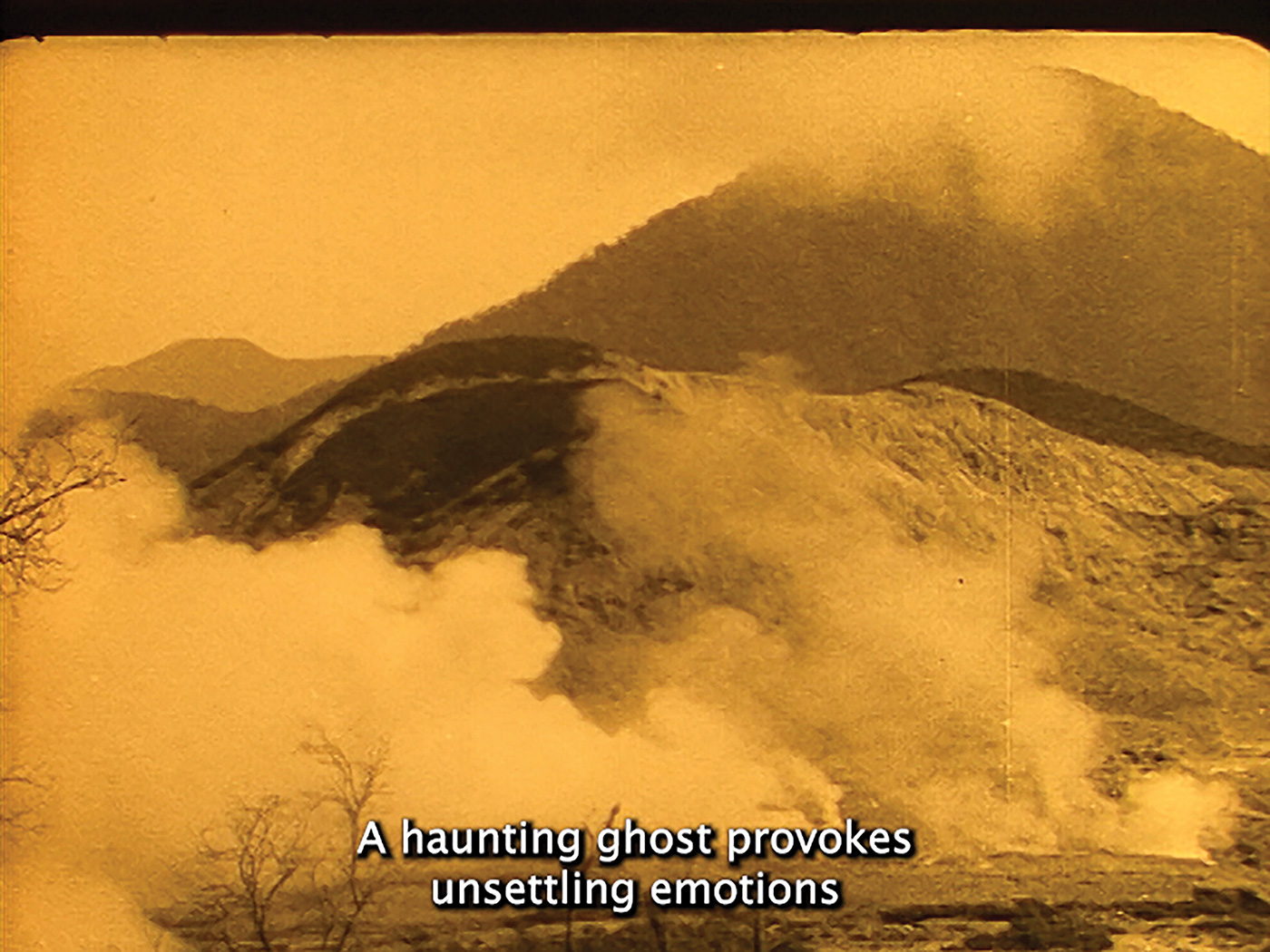
Siluman - Stealth, Invisible, Ghostly, Phantom-Like
Doc. expérimental | 0 | couleur | 24:0 | Portugal | 2024
During her research at EYE Filmmuseum archive, Paula Albuquerque has encountered travelogues, home movies, and institutional films made by Dutch settlers in Indonesia, which bypass the colonial conflict to present a benevolent relation to the local people. Siluman challenges the Western and masculine aesthetic notion of the sublime to expose film’s construction of the colonial landscape as exotic, including indigenous people as part of nature and awaiting structure and exploitation. It unveils early colonial documentary’s haunting of the contemporary reality of Buruh Siluman, which is the Indonesian term for palm oil plantations’ women “ghost-workers.”
Albuquerque is an Amsterdam-based Portuguese artist and scholar showing work in solo exhibitions at galleries Zone2Source (2024); Bradwolff Projects (2023, 2018, 2015), Looiersgracht 60 (2023) and Nieuw Dakota (2020); with films at International Film Festivals UnArchive (2025); IDFA (2024); Ji’hlava IDFF (2024); DocAlliance (2024); DocLisboa (2023); Sheffield DOC|Fest (2020) and Rotterdam IFFR (2016); and conferences EYE International; Media in Transition at MIT; NECS; and Visible Evidence. She published the books Enter the Ghost—Haunted Media Ecologies (2020) and The Webcam as an Emerging Cinematic Medium (2018). She is currently a Senior Researcher at Gerrit Rietveld Academie, an Assistant Researcher at the Universidade Nova de Lisboa, and a Supervisory Board member of the Framed Framed Contemporary Art Platform.


Lev Aleshkin, Kalashnikova, homoabsurdus, Gorshunova,
«Das Unaussprechliche»
Performance | mp4 | couleur | 47:31 | Russie | 2024
«Whereof one cannot speak, thereof one must be silent» Ludwig Wittgenstein, Tractatus Logico-Philosophicus Nowadays we are witnesses to the world in the state of unceasing and disgusting war. As Russian citizens, we empathize with everybody who has suffered or whose family has suffered from this conflict. In our country, we can’t speak about that openly. We have to stop any attempts to talk about it. And every day we see the consolidation of political power, the tightening of laws and measures in relation to people who are against the war. When facts of the world become unspeakable, language loses its logical completeness and perfection, which are brought forth by Ludwig Wittgenstein in the «Tractatus Logico-Philosophicus». We're only left with the things outside of language - the unspeakable, the senseless. Things you can only show, not tell. From this point of view, «Das Unaussprechliche» is a reflection of the world, rather than broken up language. At the start, we're still bound by systems of symbols. Over the course of the performance we get to observe the participants gain new ways of communication, while the experience is recorded using photographs and graphs.
«Not quite open meetings» is an art collective, created by 2024` alumni of Institute of Contemporary Art Moscow. It emerged early in 2024 due to our reading-group where we can meet regularly and discuss philosophy and art. While all members of «Not quite open meetings» are also individual artists, we’re united by our shared object of interest and exploration - the Unspeakable. The term was coiled by Ludwig Wittgenstein and in our performance «Das Unaussprechliche» we gave it a somewhat unexpected spin. The problems that we address in our art and discussions are speechlessness, community, pressure, body. As a collective we hope to share our emotional experience, that is nowadays probably familiar to many, and weave our low-voice narrative together with you.

Amy Alexander
Deep World
Installation multimédia | 0 | couleur | 0:0 | USA, 0 | 2025
Deep World is a performance and installation project examining the evolving relationship between humans and chatbots — from their early role as informal therapists to their current position as omnipresent advisers in unsettled times. At Deep World’s center is a chatbot intentionally re-authored with ideas drawn from writers and theorists who confronted difficult eras, combined with contemporary material reflecting concerns of today. Visitors bring real worries and complicated questions; the chatbot’s output veers between philosophical and poetic, revealing both insight and self-doubt. The gap between what people need and what the machine can offer becomes part of the work’s texture — by turns earnest, wry, and unsettling. Performance version: Performed by VJ Übergeek (Amy Alexander), the piece blends live text improvisation, VJ practice, and game-controller interaction. The dialogue becomes a semi-theatrical search for clarity, humor, and company in difficult times. Installation version: The current installation iteration focuses on borders — political and social, physical and metaphorical — as a lens for contemplating contemporary dilemmas. The installation invites visitors to speak directly with Deep World, generating evolving text and psychedelic visuals in a secular-sanctuary setting. Additional installation iterations are under development.
Amy Alexander is an artist and professor whose work spans computational installation, performance, net art, and film. She has been making software-based art since the 1990s and writing about the cultural roles of algorithms since the early 2000s. With a background in film, music, programming, and IT, she focuses on the porous borders between media and the world, and on how technologies shape – and are shaped by – cultural conditions. Much of her work examines algorithmic subjectivity in digital culture. Recent projects extend this focus to AI and machine learning systems, including custom large language models used as collaborators in live performance and as tools for examining generative AI–based cinema. Her projects have explored themes ranging from surveillance and social media to public-space performance and the mechanics of computational authorship. Alexander’s work has been exhibited or performed at venues including the Whitney Museum, Prix Ars Electronica, Transmediale, SIGGRAPH, NIME, the New Museum, CURRENTS, and ICLC, as well as clubs such as Sonar and First Avenue, and in street performances in Los Angeles, San Diego, San Jose, Zürich, and Aberdeen. She has also written and lectured widely on software art, audiovisual performance, and media preservation. Alexander is a Professor of Computing in the Arts at UC San Diego.


Ella Altman
Je n'AI jamais rencontré quelqu'un comme toi
Fiction expérimentale | dcp | couleur | 20:26 | France | 2024
Hava (Ève) et Jeanne, deux actrices sur un plateau de tournage, entraînent une IA tout en explorant les prémices de l'intimité entre elles. Dans une boucle de désirs sincères et mis en scène, Hava pousse Jeanne à regarder ensemble le reflet de l'IA.
Ella Altman (née en 1993 à Tel-Aviv) est cinéaste, artiste vidéo et musicienne basée à Paris. Diplômée du Fresnoy – Studio national des arts contemporains, elle explore les intersections entre intimité, langage et technologie. Son travail mêle souvent éléments autobiographiques et fiction, interrogeant la manière dont les relations et la perception se construisent à travers des médiations émotionnelles, cinématographiques et algorithmiques. Son dernier film, Je n’AI jamais rencontré quelqu’un comme toi (2024), a reçu le Prix Vidéo des Amis du Fresnoy et a été finaliste du Prix Hans Purrmann 2025. Parmi ses œuvres précédentes figurent LOVER (2023) et The Holocaust Is Over, Bitch (2019). Elle siège au Conseil d’administration de la Société des Réalisatrices et Réalisateurs de films (SRF), où elle est référente du groupe de travail Éthique & Inclusion. Elle vit et travaille actuellement à Paris, où elle développe son premier long métrage.

Davit Apakidze, Mariko Chanturia
Armor
Doc. expérimental | hdcam | couleur | 10:27 | Georgie | 2024
In a historical city on the brink of an ecological disaster, seafront houses wear a coat of armor. A young artist returns to his hometown after many years and finds that it no longer feels like home. He begins wandering the city with a friend to reconnect with his childhood memories. During their journey he witnesses firsthand how environmental issues are eroding the city's once vibrant appearance and character. The artist's sense of alienation from the city acts like armor, helping him confront his fears and traumas. Through this film he also strives to rediscover himself.
David Apakidze (b. in 1998, Poti) is a visual artist, curator, art historian, co-founder of the Fungus Project and Fungus Gallery, queer art initiatives based in the Caucasus. He studied Art History at the Tbilisi State Academy of Arts, focusing on medieval Orthodox art—an influence that continues to shape his practice. His practice spans sculpture, embroidery, printmaking, and stained glass, reinterpreting Georgian Orthodox iconography through a queer lens. His research-based practice explores identity, traditions, and queerness. Apakidze has participated in residencies and exhibitions both locally and internationally, including Lerblabor (Berlin, 2021), Open Out Festival (Tromsø, 2023), Gallery Artbeat (Tbilisi, 2024), Gallery Zacheta (Warsaw, 2024), and MeetFactory (Prague, 2025).

Niklas Apfel, Collecitf Blitzbereit
Look at Me
Performance multimédia | 4k | couleur | 16:15 | Allemagne | 2025
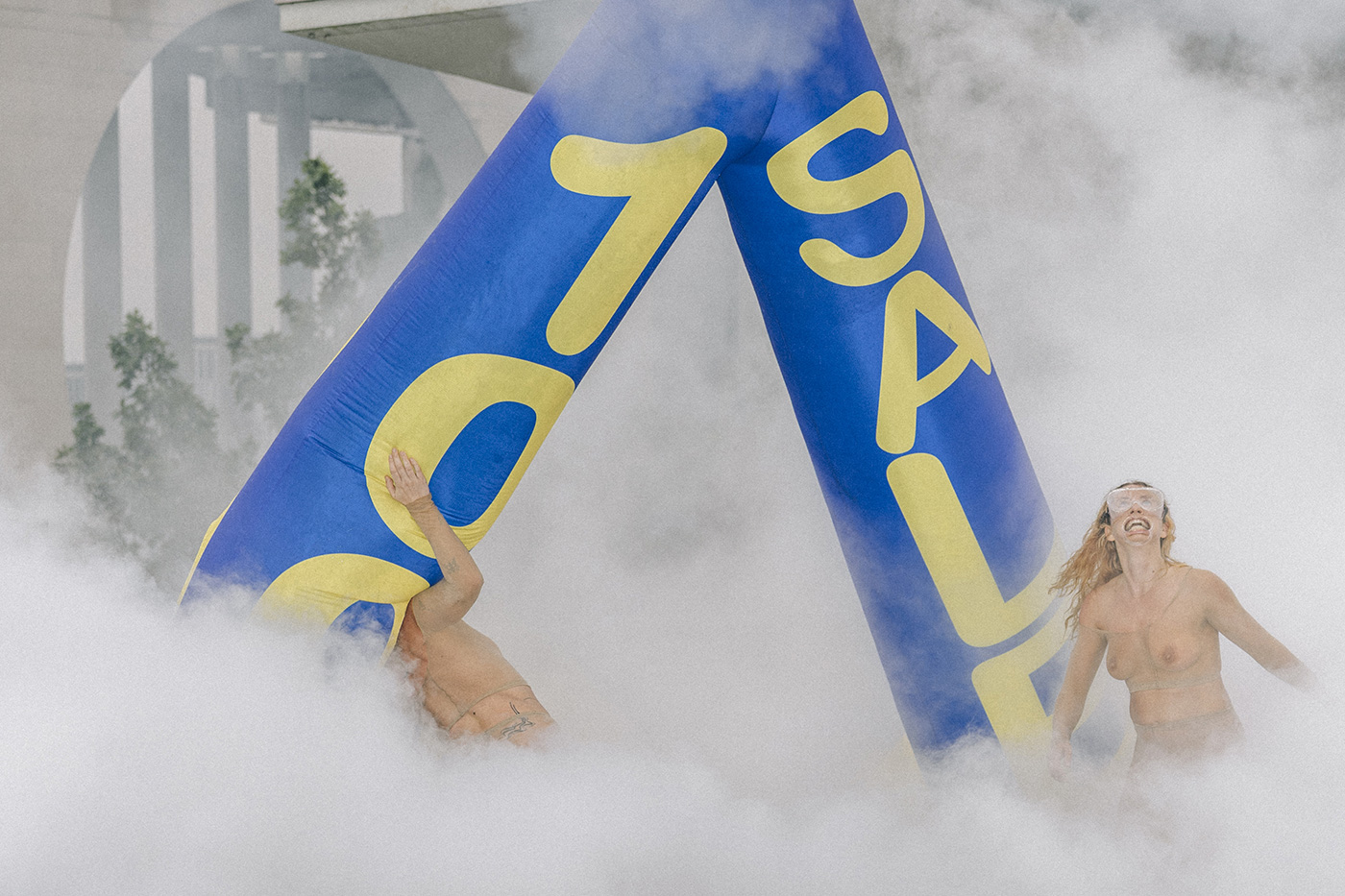
Look at Me thématise la lutte artistique pour la visibilité et la reconnaissance dans un monde d'abondance numérique. La frontière entre ce qui est perçu et la réalité s'estompe continuellement : celui qui obtient de l'attention est perçu et peut prendre part aux réalités ; celui qui tombe dans l'oubli risque de n'avoir jamais existé. La performance met en scène une économie de l'attention dans laquelle les regards du public deviennent la monnaie décisive face à la peur de l'insignifiance : 100% Sale. Au cours d'une danse apparemment grotesque, des sculptures gonflables de 8 mètres de haut, contrôlées en direct, entrent en compétition directe avec trois performeur·euses et rivalisent pour capter l'attention du public. Entre l'effort humain et la présence mécanique, la lutte pour l'attention se révèle être un moment d'introspection artistique : poussée par la peur de l'insignifiance, la soif effrénée de domination visuelle débouche sur l'impuissance.
Niklas Apfel est un artiste berlinois spécialisé dans le design graphique et les installations. Son travail brouille les frontières entre art appliqué et beaux-arts, mettant en scène des figures abstraites, des scènes et de la typographie. La performance « Look at Me » a été créée durant ses études post-diplôme à l'UdK Berlin. Le Collectif Blitzbereit utilise les performances pour remettre en question les tabous autour du corps, de la sexualité et des émotions. Par une expression non-verbale et humoristique, ils touchent un large public dans l'espace public. Dans « Look at Me », ils rivalisent pour attirer l'attention, critiquent les dynamiques du monde de l'art tout en se poussant jusqu'à l'épuisement dans une compétition sans fin. Leur style de travail anarchique reflète leur conviction contre les structures rigides.

Salvatore Arancio
Transmission
Vidéo expérimentale | 4k | couleur | 24:52 | Italie, France | 2023
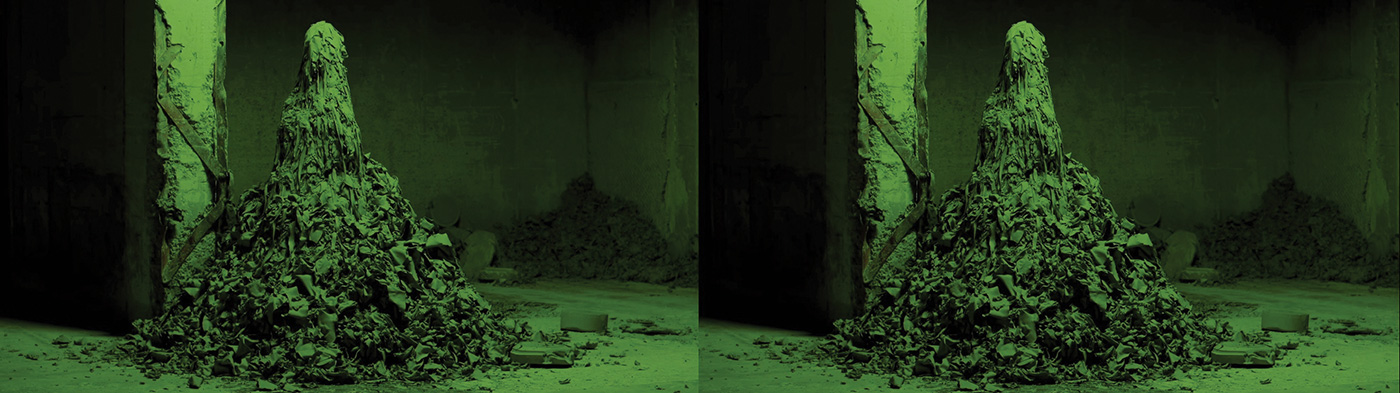
Set within the historic Ceralep factory in Saint Vallier, France, a site long devoted to the production of high voltage electrical insulators, Transmission unfolds as an environmental documentary that slips deliberately into the territory of the speculative. In this film, Salvatore Arancio transforms a seemingly prosaic manufacturing plant into a theatre of poetic estrangement, where industrial routines become choreographed gestures and machines attain the enigmatic presence of autonomous beings. Arancio’s point of departure is his fascination with the cold precision of mechanised porcelain production. What might initially appear as a linear, utilitarian process is reimagined through his lens as an almost ritualistic encounter with matter. The camera lingers on conveyor belts, extrusion devices and rotating moulds with a sense of reverence, elevating the workshop’s standardized operations into a study of form, rhythm, and transformation. At times, the film’s stark geometries and modulated lighting propel the viewer into a quasi science fiction atmosphere, where the boundary between documentary observation and visual abstraction becomes intentionally porous. The narrative arc of Transmission traces the journey of raw material, through the factory’s labyrinthine production line, ultimately emerging as the ceramic components that populate electrical infrastructures around the world. Yet Arancio refuses any didactic explanation; instead, he invites viewers to inhabit the sensorial and symbolic dimensions of the manufacturing process. The result is a meditation on energy, labour, and the complex ecologies of industry, an inquiry into how the material world is continually shaped by the interplay of human and machine. Integral to the film’s hypnotic effect is its electronic score by British musician Robin Rimbaud (AKA Scanner). Commissioned specifically for the project, Rimbaud’s composition folds together ambient tonalities with field recordings captured onsite. The hum and resonance of the factory floor become both musical texture and narrative agent, heightening the sense that the machinery is speaking in its own coded language. This sonic layering underscores Arancio’s commitment to cross disciplinary experimentation, revealing a productive friction between mechanical sound, electronic composition, and the film’s sculptural images. In Transmission, Arancio offers more than a document of industrial manufacture or a site of labour, but as an arena for imagining alternate relations between technology, environment and artistic vision.
The main interest at the centre of Salvatore Arancio’s artistic practice lies in the potential of images. Particularly in how images and their meaning can be re-framed or re-viewed. Each facet of his practice contains an intertwining juxtaposition of the roots and representation of images: natural and artificial, mineral and vegetable, scientific and mythological. Departing from their literal meaning, through the use of a range of media such as ceramics, etching, collage, animation and video, Arancio creates new juxtapositions that are both beautifully evocative and deeply disquieting, aiming to create a sort of atlas of confusion. He participated to the following biennals: Esposizione d’Arte Internazionale, La Biennale di Venezia, Venezia, Italy (2017); BI-CITY Biennale of Urbanism/Architecture, Shenzen, China (2020); Biennale Ceramica – 60° Premio Faenza, MIC, Faenza, Italy (2018); Gyeonggi International Ceramic Biennale, Icheon, Korea (2017); Manif D’Art 5, The Quebec City Biennal, Quebec, Canada (2010); Prague Biennale 4, Karlin Hall, Prague, Czech Republic (2009).
Astrid Ardagh
Ishavsringen
Documentaire | dcp | couleur | 20:36 | Pays-Bas, Norvège | 2024
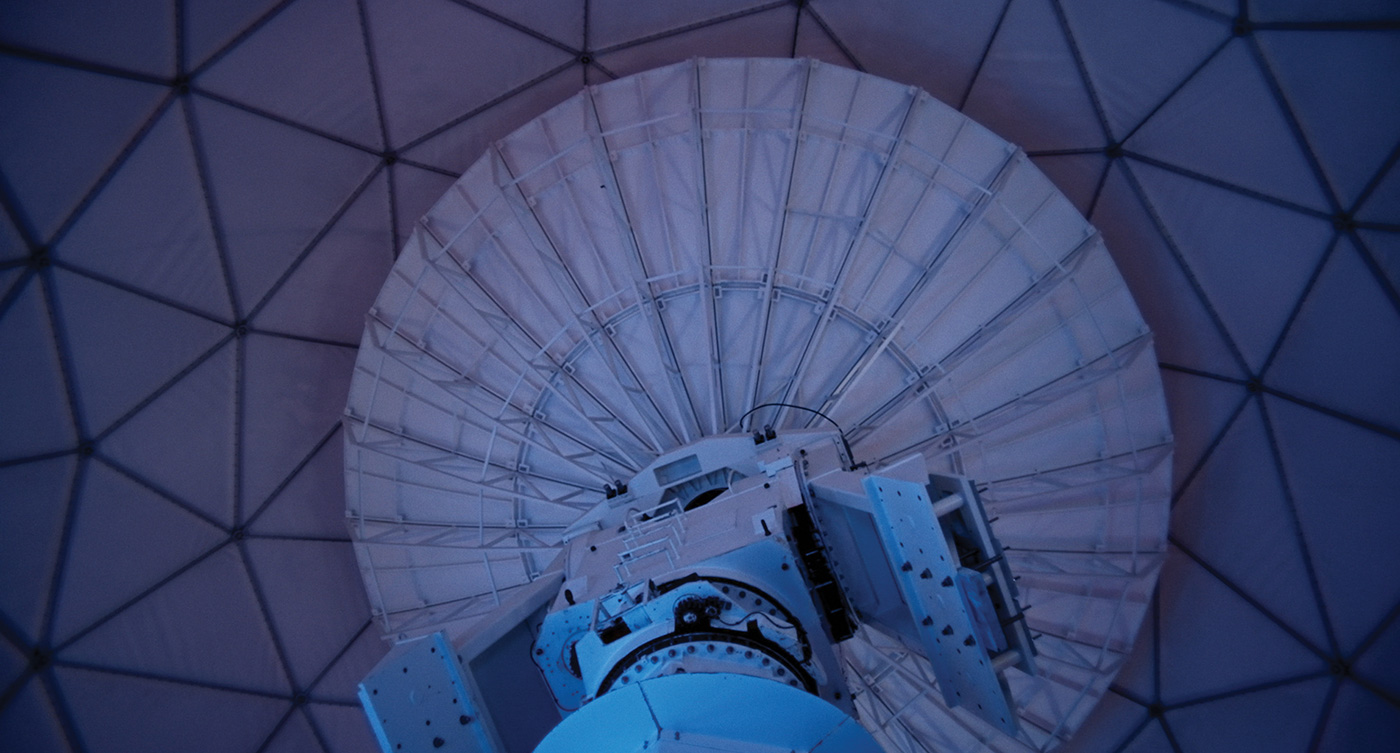
En 2022, une importante cyberattaque russe a isolé les îles norvégiennes de Bjørnøya et de Hopen du reste du monde. On Air retrace la manière dont un petit groupe de radioamateurs norvégiens est intervenu pour rétablir le contact, révélant le rôle essentiel des technologies analogiques dans une société numérique de plus en plus fragile. Observé à travers les yeux curieux d’anthropologues extraterrestres, le film explore comment le code Morse et les signaux radio pourraient, un jour, devenir les gardiens de notre monde hyperconnecté.
Astrid Ardagh est une artiste et cinéaste originaire d’Engeløya, dans le nord de la Norvège. Diplômée en images en mouvement de la Gerrit Rietveld Academy à Amsterdam, elle développe des œuvres in situ qui explorent les interconnexions entre les êtres humains et leur environnement dans un monde en mutation rapide. En mêlant son intérêt pour l’anthropologie à une mise en récit esthétique, elle crée des films immersifs et sensoriels qui dépassent les perspectives traditionnellement anthropocentrées. Les courts-métrages d’Ardagh ont été présentés dans des festivals renommés tels que Clermont-Ferrand et le Kortfilmfestivalen de Grimstad, ainsi que dans des galeries et musées d’art tels que Kristiansand Kunsthall, l’Eye Filmmuseum et le Stedelijk Museum d’Amsterdam.
Benjamin Balcom
The Phalanx
Doc. expérimental | 16mm | couleur | 13:30 | USA | 2025
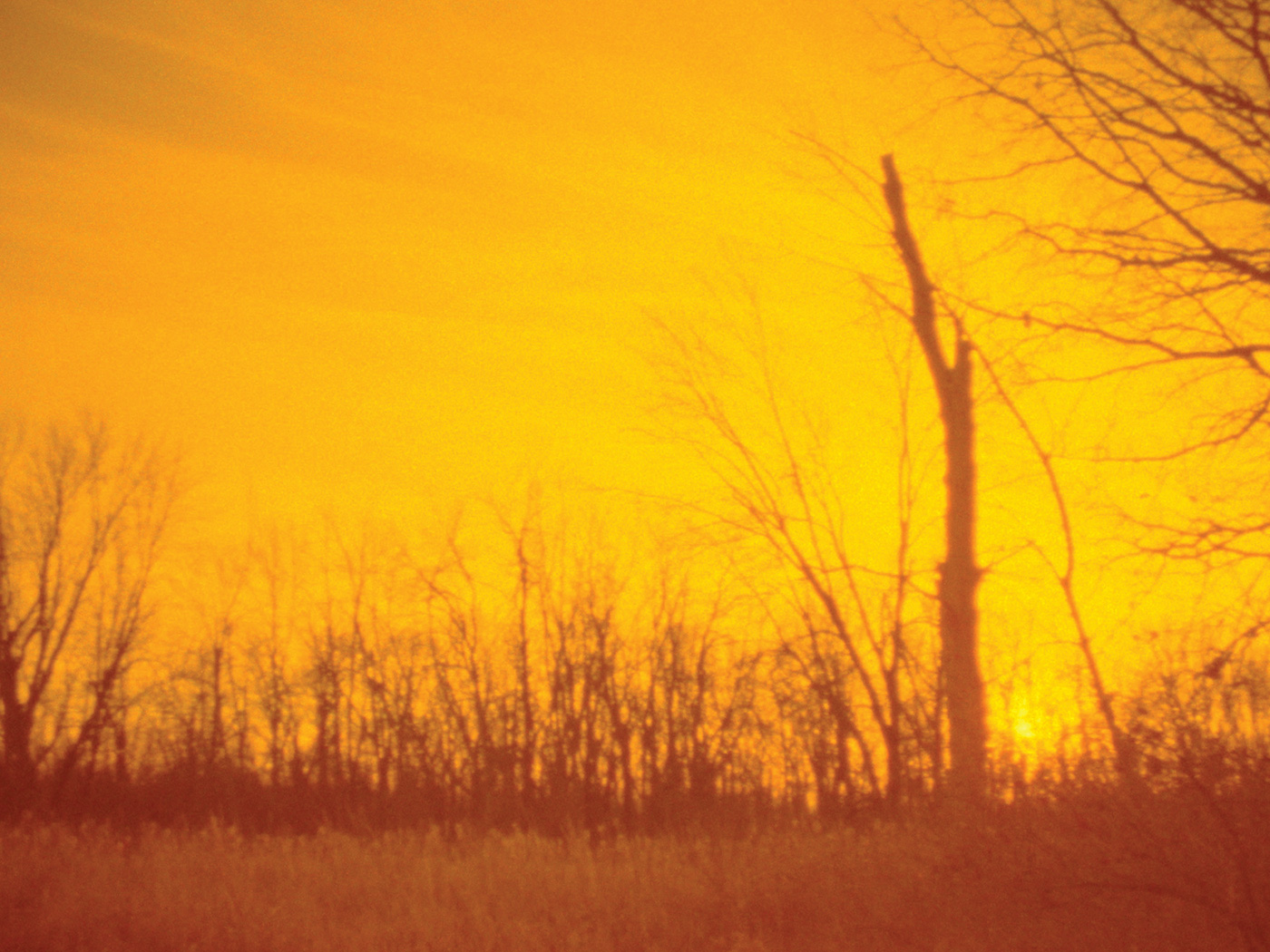
Letters from the Ceresco community tracent la fragilité de l’harmonie, le rêve d’une vie en association, les frictions qui finissent par se muer en fracture. Les membres de la phalange s’éloignent les uns des autres, dérivant vers des recoins privés, suspendus dans un temps spéculatif.
Ben est cinéaste et enseignant, basé à Milwaukee, dans le Wisconsin, où il est professeur de cinéma, vidéo, animation et nouveaux genres à l’Université du Wisconsin–Milwaukee. Ses films les plus récents explorent les histoires et les survivances des idéaux sociaux radicaux et des formes de vie communautaires. Ces projets mêlent recherche archivistique et divers modes de fabrication d’images pour réfléchir à des manières alternatives d’habiter le monde. S’inspirant de la fiction spéculative, de la théorie critique et de la poésie utopique, son travail revisite souvent les sites d’écoles expérimentales aujourd’hui disparues et de communautés intentionnelles, utilisant le cinéma comme un espace à la fois de recherche et d’imagination. Mêlant paysages réels et imaginés, ces films mobilisent la mémoire collective tout en spéculant sur des futurs au-delà des limites du capitalisme. Au début de sa pratique, Balcom travaillait avec l’abstraction, l’introspection et l’expérimentation formelle, explorant les tensions entre perception et communication, et sondant la matérialité même de la pellicule. Ces lignes de force continuent d’informer son approche en mouvement du cinéma non fictionnel et poétique. Les films de Balcom ont été projetés internationalement dans des lieux et festivals tels que le Museum of the Moving Image, l’International Film Festival Rotterdam, l’European Media Arts Festival, IndieLisboa, Media City Film Festival et le Ann Arbor Film Festival. Il a reçu des distinctions de l’Onion City, de l’Athens International Film + Video Festival et d’Ann Arbor. En 2023, il a été chercheur invité au Center for 21st Century Studies. Il est également cofondateur de Microlights Cinema, un microcinéma actif de 2013 à 2023, dédié à la diffusion du cinéma expérimental et de la vidéo d’art auprès des publics de Milwaukee.
Spencer Bambrough
Parade de Somnambules
Film expérimental | 0 | | 0:0 | France | 2025
Alors que leurs corps dorment à poings fermés, leurs ombres accélèrent et se confondent avec ce qui les éclaire. Ruminations Somnambules est un court-métrage expérimental issu du projet de long-métrage en cours de création, Parade Somnambule. Des figures passagères, somnambules, de veilleurs ou d'exaltés frictionnent avec la cadence de la machine, débordant du temps qui leur est donné en un rythme naïf et organique.
À l’issue d’études d’anthropologie sociale (SOAS - University of London), Spencer Bambrough interroge le corps en présence dans l'espace public, troublant les frontières du soi dans son lien au collectif. Au sein de La Sauxe, son binôme avec le danseur Luis Carricaburu, ses films, performances et installations frictionnent avec la surface codée du quotidien, pour exposer les forces qui la sous-tendent dans une approche sensorielle et documentaire. Résident à Mains d’Œuvres depuis 2024, il multiplie les collaborations donnant des formes hybrides, avec notamment Le Cabinet des États Intermédiaires en décembre 2024, et Le Sucré de l’Univers, une installation plastique et sonore en collaboration avec Vincent Chéry pour la Nuit Blanche 2025. Il contribue régulièrement ses écrits à Parad Publishing, la maison d'édition parisienne spécialisée dans les monographies de photo documentaire. Il est actuellement en cours d’écriture d’un premier long-métrage Parade Somnambule, en collaboration avec Luis Carricaburu.
Suhel Banerjee
CycleMahesh
Doc. expérimental | mov | couleur | 60:35 | Inde | 2024
Four years ago, young construction worker Mahesh had cycled two thousand kilometres alone, to return home during the first Covid lockdown. Now he finds himself the subject of a film being made about his epic journey. But what is he getting out of the film shoot? Blending fact and fiction, this film-within-a-film retells migrant workers’ tales while examining its own gaze. As the shoot comes to a close and Mahesh returns to the maze-like site of his construction job, the portrait of an endearing young man trapped in his condition emerges. How will Mahesh escape this vicious cycle of disappointments?
Suhel Banerjee is an Indian writer-director, known for blending fiction and nonfiction, myth and reality in his storytelling. His films have been shown in film festivals around the world. He lives in Goa and is currently working on his debut novel.

Francisco Baquerizo Racines
La Quema (del Planeta “B”)
Vidéo | 4k | couleur | 20:50 | Equateur | 2025
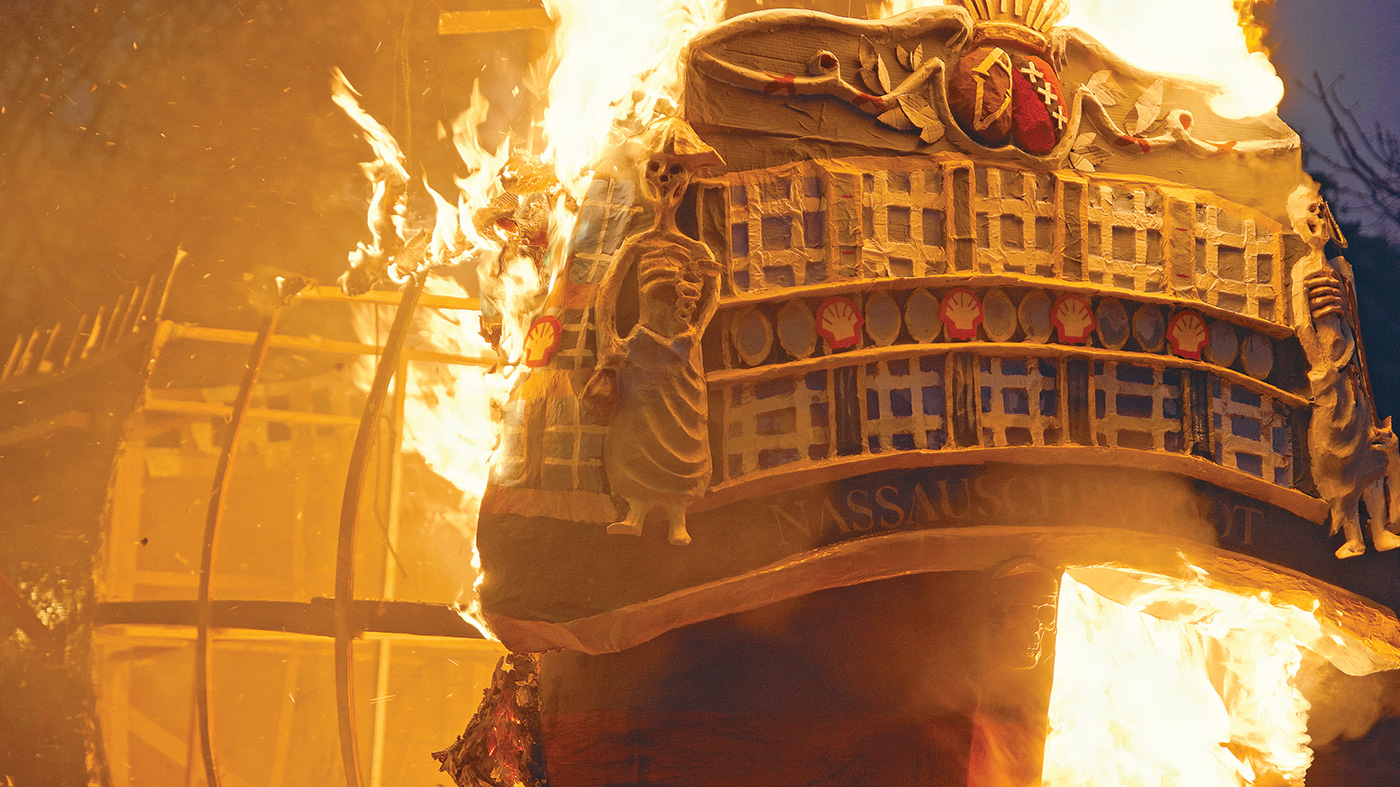
La Quema (del Planeta “B”) est une installation vidéo qui interroge l’incendie et le saccage de Guayaquil en 1624 par la flotte de Nassau à travers le prisme des pratiques vernaculaires contemporaines de l’Équateur — en particulier año viejo, une coutume populaire où l’on brûle collectivement des effigies lors des célébrations du Nouvel An. Ce rituel métis résiste aux récits linéaires : il propose une perspective andine en zigzag, où le renouveau passe par la répétition. La fabrication de ces effigies incarne la culture populaire vibrante de Guayaquil et ses désirs façonnés par le capitalisme, tout en ouvrant paradoxalement un espace de protestation (politique). Dans un contexte où les pratiques artistiques demeurent précaires, cette tradition fait également émerger des économies informelles. Les artistes Joshua Jurado et Diego Cuesta — tous deux basés dans le sud de Guayaquil — ont été invités à construire un año viejo sous la forme d’un galion, inspiré de l’Amsterdam, navire de la Compagnie hollandaise des Indes orientales (VOC). Promenée dans la ville avant d’être mise à feu, la sculpture marquait les 400 ans de l’événement originel, affrontant les cycles historiques par une action collective et un symbolisme vernaculaire. Tourné lors d’un des pics récents de violence à Guayaquil — violence liée aux héritages extractivistes — le projet tisse ensemble deux temporalités façonnées par un même système hégémonique. La Quema (del Planeta “B”) se dresse ainsi comme une question incisive adressée à ce système — celui qui a modelé nos corps, nos éthiques et nos désirs au service du capital.
Francisco Baquerizo-Racines (né en 1993, Quito, Équateur) Vit et travaille actuellement aux Pays-Bas. Baquerizo-Racines est titulaire d’un Master en arts plastiques de la HKU University of the Arts Utrecht (2022) et d’un Bachelor en arts visuels de la PUCE (2017). Son travail a été présenté en Équateur, en Amérique du Sud et aux Pays-Bas, avec des projets conservés dans les archives du MACBA et soutenus par le Mondriaan Fonds. En 2025, son installation filmique La Quema (del Planeta “B”) a été créée au 54? International Film Festival Rotterdam (IFFR).
Amie Barouh
Shuruuk
Doc. expérimental | 0 | couleur | 34:57 | France | 2024
Shards of the world and fragments of life, between Japan and the Rom’s community, come together and respond to each other in a frenetic montage that is both gentle and rebellious. The title comes from a Tunisian newspaper called El Shuruuk, and I started making this edit at that time, recreating my story in the daily newspaper. I took some images that I documented for 5 years, across the world. I started to make an edit, regardless of the logic of narration, mixing places and time. Shuruuk means dawn, but it can be translated literally as rising in the east, like this movement of population, from east to west.
Le travail d’Amie Barouh puise dans son héritage multiculturel et son besoin de créer du lien au-delà des clivages culturels et sociaux. À travers le documentaire expérimental, la photographie et la fiction, elle recueille des souvenirs personnels et des scènes du quotidien pour composer des portraits intimes de communautés marginalisées. Ayant grandi au Japon, elle s’est naturellement tournée vers celles et ceux qui vivent en dehors des systèmes dominants, notamment les communautés roms en France dont elle partage les récits avec empathie et urgence. Elle a étudié aux Beaux-Arts de Paris (2014–2020, avec les félicitations du jury) et s’est formée à la Nouvelle Magie au CNAC (2021–2023). Son travail a été présenté en exposition personnelle au Musée d'art moderne MMK de Francfort (2025), à la galerie Keiko Yamamoto Rochaix à Londres (2023), à la Salle Principale (2025), ainsi qu’à la foire Paris Basel Art Fair (2025). Elle a également participé à des expositions collectives au Salon de Montrouge (2025), à Air de Paris (2024), à l’INHA (2024). Elle a reçu plusieurs distinctions, dont le Prix du Jury Révélation Emerige (2022), une nomination au Prix Matsutani (2023), et le Prix du Centre Pompidou (2020). Ses films ont été acquis par le FRAC Île-de-France et des photographies ont été acquis par les Amis des Beaux-Arts dans la collection. Elle a pris part à des résidences à Tirana (Art Explora, 2025), Cluj-Napoca (Institut Français, 2023) et Tunis (Le 32Bis, 2023).