Catalogue > Faire une recherche
Résultats pour : Tout le catalogue
Gerald Nestler
COUNTERING CAPITULATION
Vidéo | hdv | couleur | 11:25 | Autriche | 2013
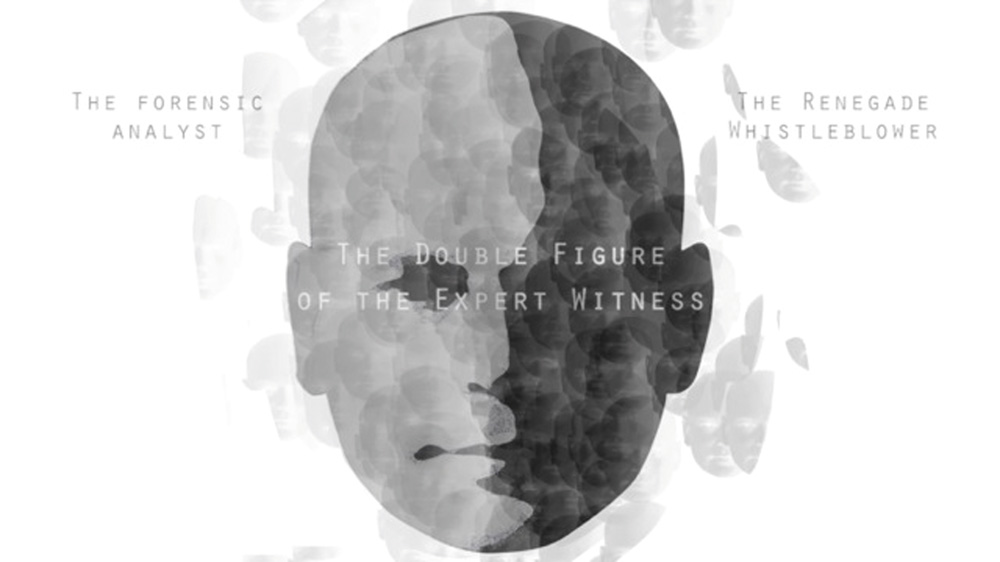
COUNTERING CAPITULATION engages with the inquiries following the Flash Crash of May 6, 2010, an event that went down as the biggest one-day market decline in financial history. Focusing on a remarkable forensic analysis that not only contradicted the official findings of the regulatory authorities and shed light on the impact of algorithmic trading but also developed tools to visualize material processes that operate beyond human perception, Nestler argues that in the current legal framework evidence of market events can only be produced by a double figure of the expert witness: when the (forensic) analyst is joined by a whistleblower or informant. With this ambivalent, contingent and marginal figure at its heart—a renegade, a traitor—COUNTERING CAPITULATION proposes a multilayered, transdisciplinary artistic practice: creating narrative instabilities that coagulate dissent into insurrection by enhancing resolution in the technological, social as well as legal meanings of the term. The video concludes with a call for renegade solidarity between the general public and whistleblowers as the contemporary figures of insurrection to counter the excesses of (automated) evaluation and decision-making, not only as regards financial markets but black box regimes in general.
Gerald Nestler combines theory with video, installation, performance, speech and text to interrogate the ideological, methodological and fictive narratives of finance and their role in current biopolitics as well as contemporary art in particular. After graduating from the Academy of fine arts Vienna (1992) he conducted artistic fieldwork as broker and trader (1994-97). He lectures at Webster University Vienna and is completing a PhD at the Centre for Research Architecture, Goldsmiths, University of London. Selected recent exhibitions: The New Derivative Order (kunstraum Bernsteiner, Vienna, 2012), Cargo Carry Cult (Kunsthalle Wien, 2013), Forensis (curated by Anselm Franke and Eyal Weizman, HKW, Berlin, 2014), Social Glitch (kunstraum NOE and other venues in Vienna, in prep., 2015). Recent publications: editor of Kunstforum International 200/201 on art and economy (with D. Buchhart, 2010), Paratactic Commons (amber Art+Technology Festival Istanbul), What’s next. Art after the crisis (eds. Johannes M. Hedinger & Tobias Meyer, Kadmos, 2013), Forensis. The Architecture of Public Truth (ed. Forensic Architecture, Sternberg, 2014).

Peter Nestler
Die Nordkalotte
Documentaire | 16mm | couleur | 90:0 | Allemagne | 1990
Peter Nestler, geboren 1937 in Freiburg im Schwarzwald. Über Lahr/Baden nach Berlin. Anfang des Krieges nach Bayern, wail meine Eltern zu Recht befürchtet haben, dab da bald Bomben fallen. In Grainau an der österreichischen Grenze Volksschule. Nach dem Krieg die Scheidung meiner Eltern. Aufteilung der Geschwister, zwei bei meiner Mutter, ich und die älteste Schwester bei meinem Vater. Internat. Weil es nicht so einfach war, die Kinder grobzuziehen zu Hause. Ab fünfzehn per Autostop durch Frankreich, Italien. Nach der Handelsschule endgültig von zu Hause weg. Fabrikarbeit. Zur See gefahren. Dann wieder zurück in den Familienbetrieb des Grobvaters und und der Restfamilie in Lahr. Abgebrochen, weil es aussichtslos war, nur für den Erwerb tätig zu sein. Malereistudium in München. Siedbruck in Stuttgart in der Werkstatt von Willi Baumeister, die industriell weitergearbeitet hat. Nicht mehr zu Lebzeiten von Baumeister. Wieder zurück nach München. Kleine Statistenrollen als Nebenerwerb. Ersten Rollen mit der Absicht, aus dem Geld Filme zu machen. Dann in den frühensechziger Jahren Film - und Fernsehrollen, die immer wieder zu eigener Filmarbeit geführt haben, kurzen Dokumentarfilmen. Das ging bis 1965. Dann war es schwer, weiter Geld auzutreiben. Emigration nach Sweden, das Land meiner Mutter. Heirat 1966 in Hungarn. Dann kam die Familie in Scheden. Da auch noch Waldarbeit und Fabrikarbeit, bis ich endgültig Fub gefabt hatte mit Film beim schwedischen Fernsehen. Arbeit mit Kinderprogrammen. Teils eigene Filme, teils Filme für die Dokumentarfilmabteilung. Dann in der Hauptsache eingestellt, um Filme aus Ausland eizukaufen. In den letzten Jahren keine Dokumentarfilme mehr für das schwedischen Fernsehen, sondern auf Free lance-Basis in dienstfreier Zeit. Filme, die oft in Deutscland finanziert wurden. Vier Kinder sind grob geworden in Schweden.
Peter Nestler
Verteidigung der Zeit
Documentaire | dv | couleur | 27:0 | Allemagne | 2007
Peter Nestler, geboren 1937 in Freiburg im Schwarzwald. Über Lahr/Baden nach Berlin. Anfang des Krieges nach Bayern, wail meine Eltern zu Recht befürchtet haben, dab da bald Bomben fallen. In Grainau an der österreichischen Grenze Volksschule. Nach dem Krieg die Scheidung meiner Eltern. Aufteilung der Geschwister, zwei bei meiner Mutter, ich und die älteste Schwester bei meinem Vater. Internat. Weil es nicht so einfach war, die Kinder grobzuziehen zu Hause. Ab fünfzehn per Autostop durch Frankreich, Italien. Nach der Handelsschule endgültig von zu Hause weg. Fabrikarbeit. Zur See gefahren. Dann wieder zurück in den Familienbetrieb des Grobvaters und und der Restfamilie in Lahr. Abgebrochen, weil es aussichtslos war, nur für den Erwerb tätig zu sein. Malereistudium in München. Siedbruck in Stuttgart in der Werkstatt von Willi Baumeister, die industriell weitergearbeitet hat. Nicht mehr zu Lebzeiten von Baumeister. Wieder zurück nach München. Kleine Statistenrollen als Nebenerwerb. Ersten Rollen mit der Absicht, aus dem Geld Filme zu machen. Dann in den frühensechziger Jahren Film - und Fernsehrollen, die immer wieder zu eigener Filmarbeit geführt haben, kurzen Dokumentarfilmen. Das ging bis 1965. Dann war es schwer, weiter Geld auzutreiben. Emigration nach Sweden, das Land meiner Mutter. Heirat 1966 in Hungarn. Dann kam die Familie in Scheden. Da auch noch Waldarbeit und Fabrikarbeit, bis ich endgültig Fub gefabt hatte mit Film beim schwedischen Fernsehen. Arbeit mit Kinderprogrammen. Teils eigene Filme, teils Filme für die Dokumentarfilmabteilung. Dann in der Hauptsache eingestellt, um Filme aus Ausland eizukaufen. In den letzten Jahren keine Dokumentarfilme mehr für das schwedischen Fernsehen, sondern auf Free lance-Basis in dienstfreier Zeit. Filme, die oft in Deutscland finanziert wurden. Vier Kinder sind grob geworden in Schweden.
Peter Nestler
Wie macht man Glass? Partie 1 / Handwerklich
Documentaire | 16mm | noir et blanc | 24:0 | Allemagne | 1970
Wie macht man Glas? (handwerklich) Im Frühjahr 1970 in Schweden gefilmt von Peter und Zsoka Nestler. Antike Glasgefässe und dann die Herstellung von Glas und Gläsern der waldreichen Landschaft Smaland. Mit der Kamera wird beobachtet und entdeckt, gleichzeitig ein chronologisches Beschreiben der Arbeitsgänge. Das Zusehen ist Bewunderung und Staunen über die Bewegung, das Material, das Licht und die Kunstfertigkeit der Glasmacher.
Peter Nestler, geboren 1937 in Freiburg im Schwarzwald. Über Lahr/Baden nach Berlin. Anfang des Krieges nach Bayern, wail meine Eltern zu Recht befürchtet haben, dab da bald Bomben fallen. In Grainau an der österreichischen Grenze Volksschule. Nach dem Krieg die Scheidung meiner Eltern. Aufteilung der Geschwister, zwei bei meiner Mutter, ich und die älteste Schwester bei meinem Vater. Internat. Weil es nicht so einfach war, die Kinder grobzuziehen zu Hause. Ab fünfzehn per Autostop durch Frankreich, Italien. Nach der Handelsschule endgültig von zu Hause weg. Fabrikarbeit. Zur See gefahren. Dann wieder zurück in den Familienbetrieb des Grobvaters und und der Restfamilie in Lahr. Abgebrochen, weil es aussichtslos war, nur für den Erwerb tätig zu sein. Malereistudium in München. Siedbruck in Stuttgart in der Werkstatt von Willi Baumeister, die industriell weitergearbeitet hat. Nicht mehr zu Lebzeiten von Baumeister. Wieder zurück nach München. Kleine Statistenrollen als Nebenerwerb. Ersten Rollen mit der Absicht, aus dem Geld Filme zu machen. Dann in den frühensechziger Jahren Film - und Fernsehrollen, die immer wieder zu eigener Filmarbeit geführt haben, kurzen Dokumentarfilmen. Das ging bis 1965. Dann war es schwer, weiter Geld auzutreiben. Emigration nach Sweden, das Land meiner Mutter. Heirat 1966 in Hungarn. Dann kam die Familie in Scheden. Da auch noch Waldarbeit und Fabrikarbeit, bis ich endgültig Fub gefabt hatte mit Film beim schwedischen Fernsehen. Arbeit mit Kinderprogrammen. Teils eigene Filme, teils Filme für die Dokumentarfilmabteilung. Dann in der Hauptsache eingestellt, um Filme aus Ausland eizukaufen. In den letzten Jahren keine Dokumentarfilme mehr für das schwedischen Fernsehen, sondern auf Free lance-Basis in dienstfreier Zeit. Filme, die oft in Deutscland finanziert wurden. Vier Kinder sind grob geworden in Schweden.
Peter Nestler
Wie macht man Glass? Partie 2 / Maschinell
Documentaire | 16mm | noir et blanc | 24:0 | Allemagne | 1970
Wie macht man Glas? (maschinell) Im Sommer 1970 in Schweden und Westdeutschland gefilmt von Peter und Zsoka Nestler. Das Formen von Glas in Maschinen und Automaten der Industrie, die Anstrengung der Glasmacher und ihr immer noch handwerkliches Geschick an dem heissen Glas der schmelzenden Flammen, an dem kalten Glas der rotierenden Schleifscheiben.
Peter Nestler, geboren 1937 in Freiburg im Schwarzwald. Über Lahr/Baden nach Berlin. Anfang des Krieges nach Bayern, wail meine Eltern zu Recht befürchtet haben, dab da bald Bomben fallen. In Grainau an der österreichischen Grenze Volksschule. Nach dem Krieg die Scheidung meiner Eltern. Aufteilung der Geschwister, zwei bei meiner Mutter, ich und die älteste Schwester bei meinem Vater. Internat. Weil es nicht so einfach war, die Kinder grobzuziehen zu Hause. Ab fünfzehn per Autostop durch Frankreich, Italien. Nach der Handelsschule endgültig von zu Hause weg. Fabrikarbeit. Zur See gefahren. Dann wieder zurück in den Familienbetrieb des Grobvaters und und der Restfamilie in Lahr. Abgebrochen, weil es aussichtslos war, nur für den Erwerb tätig zu sein. Malereistudium in München. Siedbruck in Stuttgart in der Werkstatt von Willi Baumeister, die industriell weitergearbeitet hat. Nicht mehr zu Lebzeiten von Baumeister. Wieder zurück nach München. Kleine Statistenrollen als Nebenerwerb. Ersten Rollen mit der Absicht, aus dem Geld Filme zu machen. Dann in den frühensechziger Jahren Film - und Fernsehrollen, die immer wieder zu eigener Filmarbeit geführt haben, kurzen Dokumentarfilmen. Das ging bis 1965. Dann war es schwer, weiter Geld auzutreiben. Emigration nach Sweden, das Land meiner Mutter. Heirat 1966 in Hungarn. Dann kam die Familie in Scheden. Da auch noch Waldarbeit und Fabrikarbeit, bis ich endgültig Fub gefabt hatte mit Film beim schwedischen Fernsehen. Arbeit mit Kinderprogrammen. Teils eigene Filme, teils Filme für die Dokumentarfilmabteilung. Dann in der Hauptsache eingestellt, um Filme aus Ausland eizukaufen. In den letzten Jahren keine Dokumentarfilme mehr für das schwedischen Fernsehen, sondern auf Free lance-Basis in dienstfreier Zeit. Filme, die oft in Deutscland finanziert wurden. Vier Kinder sind gross geworden in Schweden.
Yves Netzhammer
Dialogical abrasion
Animation | 0 | couleur | 20:20 | Suisse | 2011
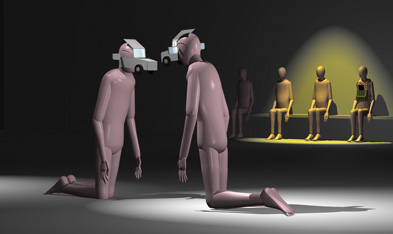
An accident setting serves as the scope for a cinematic metaphorical dialogue: two figurine subjects, that ultimately crash into each other in a slow motion car crash scene, act as the framework to the formal structure of the film. Mutual subjection and impression are allegorically exemplified - the momentum of the impact of the collision subserves as a generator to astonishing artificial bodily postures, that could be translated into something like an archive of embodiments. In transitory cut scenes between the decelerated sequence of this mishap, "biographical" flashbacks are inserted.
Yves Netzhammer, born in 1970. Since 1997, he has been working on a widely ramified, poetic imagery cosmos. His video installations, objects and drawings fascinate through their bodily charisma and their formal clarity. The playful recombination of elements which seemingly can not be combined leads to the threshold of our existence?s dark side: Dulcet aspects interlock with displeasing ones, the dead melts with the alive into creatures never seen before, and the depicted scenarios run from microscopic to giant scales. Solo exhibitions include Minsheng Art Museum Shanghai (2011), Kunstmuseum Bern (2010), Palazzo Strozzi (2009), SFMOMA, San Francisco (2008), Venice Biennale (2007), Karlskirche Kassel (supporting program documenta 12, 2007), Kunsthalle Bremen (2005). Yves Netzhammer lives and works in Zurich.
Yves Netzhammer
Die Subjektivierung der Wiederholung, Projekt A
Vidéo expérimentale | | couleur | 42:24 | Suisse | 2007
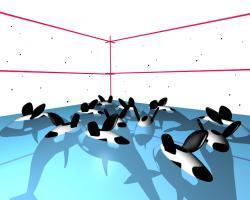
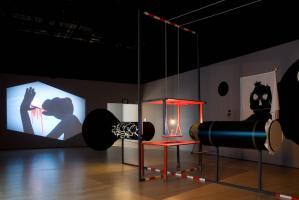
Yves Netzhammer a réalisé, pour le pavillon suisse de la Biennale de Venise, une installation dans une pièce où interagissent l'architecture, des dessins, des projections vidéos et de la musique. L'artiste a étendu la partie sud-est du pavillon, érigé en 1951 par Bruno Giacometti, avec une intervention architecturale/sculpturale qui perturbe la perception entre intérieur et extérieur. C'est une réflexion architecturale et politique. Le fait d'insérer dans le pavillon une ligne inclinée qui pénètre le pavillon en même temps qu'il l'ouvre met en perspective les frontières nationales et internationales et ce qu'elles rendent impossible. Dans son travail pictural et ses films pour Venise, Netzhammer confronte le stéréotype de l'"Autre" à sa lecture de l'histoire. L'"Autre" apparaît sous la forme d'un sujet psychologique refoulé, des corps qui ne sont que des ombres, des entrailles invisibles, des couleurs de peau différentes; autant de signes de l'altérité culturelle. Le fait d'associer ces motifs créée un rapport nouveau entre soi et autrui, entre les cas individuels et les problèmes universels, et permet une discussion sur les façons de se positionner dans l'espace et la relation aux autres. Netzhammer réfléchit aux manières de rendre le "soi" réceptif à l'"autre".
Yves Netzhammer est né en Suisse en 1970. Il vit et travaille à Zürich. Son travail a été présenté entre autres à La Neue Gesellschaft Für Bildende Kunst (NGBK) à Berlin, au Centre culturel Suisse à Paris, au ZKM de Karlsruhe, au Musée d?art du Texas à Austin, Texas, au centre international de sculpture de Duisburg, à VIPER à Bâle, à la Kunsthalle de Bâle, au Witte de With à Rotterdam, à la 11ème Biennale de l'Image en Mouvement à Genève, au Centre d'Art Contemporain de Fribourg, à la biennale d?art contemporain de Prague, à la Kunsthalle de Brême, à la Galleria d´Arte Moderna de Bologne. Son travail fait partie des collections du FRAC - Nord-Pas de Calais, Dunkerque et du FRAC - Provence-Alpes-Côte d'Azur, Marseille Il est actuellement présenté à la 52ème Biennale de Venise
Yves Netzhammer
Furniture of Proportion
Animation | betaSP | couleur | 35:42 | Suisse | 2008
« Furniture of Proportion » d?Yves Netzhammer révèle la fascination de l?artiste pour les paysages intérieurs et de l'esprit. Netzhammer présente un univers poétique de pure invention. Projeté pour la première fois au San Francisco Museum of Modern Art (USA), sa nouvelle installation vidéo à trois canaux « Furniture of Proportion » (2008) mêle des dessins de mur très stylisés, des animations et des objets sculpturaux afin de créer un espace narratif complexe. Sur invitation de Rudolf Frieling, le conservateur des arts médiatiques du San Francisco Museum of Modern Art, Netzhammer a consciemment développé une ?uvre dans laquelle l'ordinateur, en tant qu?outil artistique et moyen d'expression, a la priorité. Netzhammer combine une variété de médias traditionnels à différentes techniques informatiques afin d?exprimer son profond intérêt pour l'histoire de la philosophie et del'art. L'artiste se penche également sur les processus de la pensée humaine et sur l'interaction entre les images extérieures du monde et les images intérieures de l'esprit. Entrepris comme une enquête sans fin, son art s?intéresse à l'éphémère et aux états de changement, et traite, avec des effets surréalistes, les associations d?idées, et de la multiplicité temporelle.
Yves Netzhammer est né en Suisse en 1970. Il vit et travaille à Zürich. Son travail a été présenté entre autres à La Neue Gesellschaft Für Bildende Kunst (NGBK) de Berlin, au Centre culturel Suisse de Paris, au ZKM de Karlsruhe, au Musée d?Art du Texas d?Austin (USA), au centre international de sculpture de Duisburg, au VIPER de Bâle, à la Kunsthalle de Bâle, au Witte de With de Rotterdam (Pays-Bas), à la 11e Biennale de l'Image en Mouvement de Genève, au Centre d'Art Contemporain de Fribourg (Allemagne), à la Biennale d?Art Contemporain de Prague, à la Kunsthalle de Brême, à la Galleria d?Arte Moderna de Bologne (Italie). Son travail fait partie des collections du FRAC - Nord-Pas de Calais, Dunkerque (France) et du FRAC - Provence-Alpes-Côte d'Azur, Marseille.
Yves Netzhammer
Vororte der Körper
Fiction expérimentale | digibeta | couleur | 17:10 | Suisse | 2012
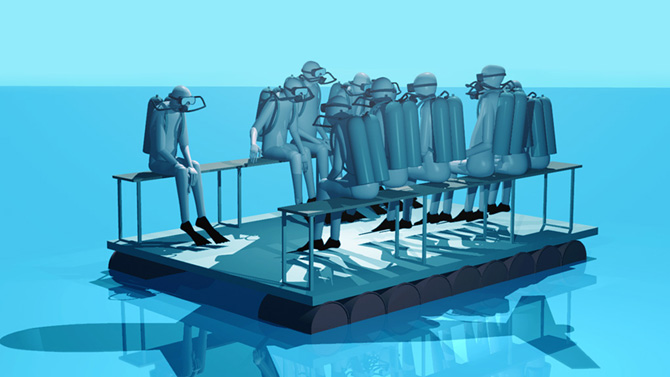
A consequential animation film which casts the medium of film back on its origin, the image. Beginning with divers on a platform in the sea, the viewer is simultaneously immersed in pictorial spaces in pictorial worlds, whose associative inner logic collides with the customs of conventional narration.
Yves Netzhammer, born in 1970, studied Visual Design at the Zurich College of Art and Design. Since 1997, he has been working on a widely ramified, poetic imagery cosmos. His video installations, objects, slide shows and drawings fascinate through their bodily charisma and their formal clarity. The playful recombination of elements which seemingly can not be combined leads to the threshold of our existence?s dark side: Dulcet aspects interlock with displeasing ones, the dead melts with the alive into creatures never seen before, and the depicted scenarios run from microscopic to giant scales. Solo exhibitions include Kunstmuseum Bern, Switzerland, (2012), Liverpool Biennial, SFMOMA (2010), San Francisco (2008), Venice Biennale (2007), Karlskirche Kassel (supporting program documenta 12, 2007), Museum Rietberg, Zürich (2006), Kunsthalle Bremen (2005) and Helmhaus Zürich (2003). Yves Netzhammer lives and works in Zurich.

Arjuna Neuman
First Fugue
Vidéo | hdv | couleur | 3:36 | Canada, USA | 2013
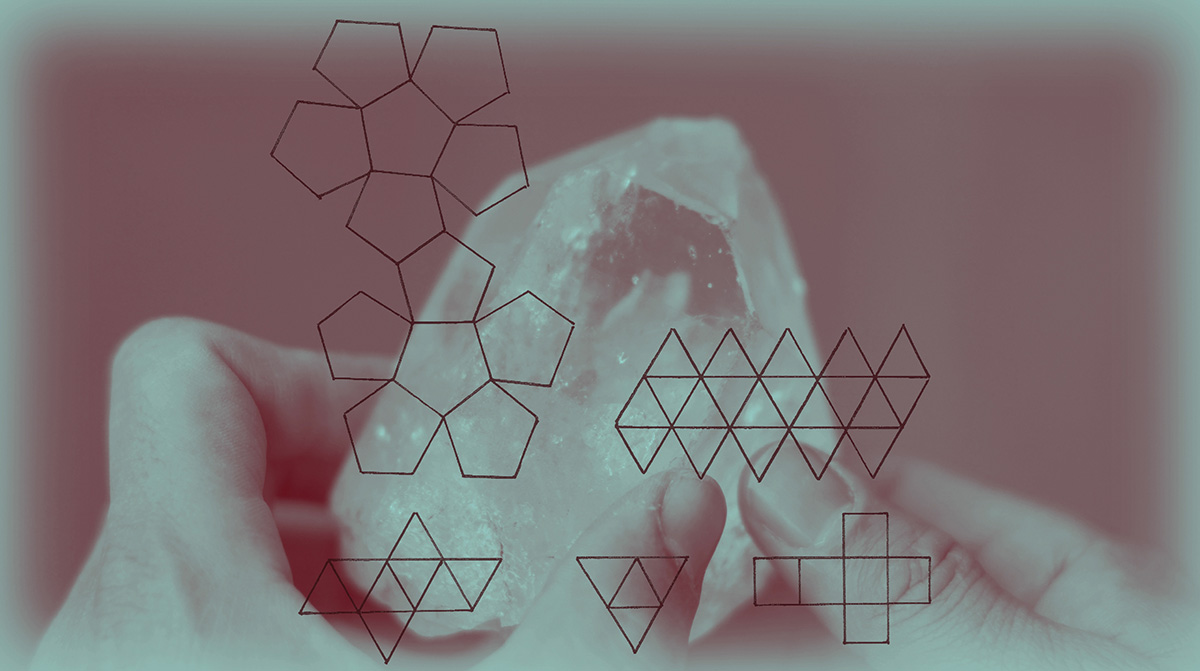
First Fugue is an experiment to find a way of putting documentary images together as if in a fugue like state. A fugue is a dissociative disorder like amnesia, although it also compels the subject to drift both in space and in identity. A fugue is caused by extremely traumatic events.
Arjuna Neuman was born on an airplane, that’s why he has two passports. He shows his work internationally with recent exhibitions in Germany at State of the Art and Haus Der Kunst der Welt; in Lebanon at Ashkal Alwan and Beirut Art Centre; in Canada at the Canadian Centre for Architecture and the Richmond Art Gallery; in France at Le Gaite Lyric; in Australia at Verge Gallery Sydney University; in Russia at the Moscow Museum; in USA at the Torrance Art Museum, Machine Projects and Human Resources amongst others. As a writer he has published articles in Relief Press, Into the Pines Press, The Journal for New Writing, VIA Press, Concord Press, Art Voices, and he is currently working on a text for E-Flux.com on the profit of smiling. Arjuna Neuman is based in Beirut and Los Angeles, where he founded the artist-run gallery and collective Concord.
Arjuna Neuman, Denise Ferreira da Silva
Soot Breath // Corpus Infinitum
Doc. expérimental | 4k | couleur | 40:0 | Canada, USA | 2021
Soot Breath / Corpus Infinitum is a film dedicated to tenderness. It reproduces a radical sensibility learned from listening to the blues, from listening to skin, to heat, and from listening to echoes, listening itself. Soot Breath // Corpus Infinitum is a newly commissioned film and installation by Arjuna Neuman and Denise Ferreira da Silva. Against and instead of apprehension, it fosters an image of existence in which attention twins the gentleness of touch as recalled by haptic and sonic expressions.
Arjuna Neuman is an artist, filmmaker, and writer. As a writer he has published essays in Relief Press, Into the Pines Press, The Journal for New Writing, VIA Magazine, Concord, Art Voices, Flaunt, LEAP, Hearings Journal, and e- flux. He studied at California Institute of the Arts. He works with the essay form with a multi-perspectival and mobile approach where ‘essay’ is an inherently future-oriented and experimental mode, becoming the guiding principle for research and production, which shifts between the bodily, haptic, and affective through to the geopolitical, planetary and cosmological. Denise Ferreira da Silva is a practicing artist and an academic - Director and Professor at the Social Justice Institute-GRSJ at the University of British Columbia. She is the author of Toward a Global Idea of Race (2007), A Dívida Impagavel (2019), and co-editor of Race, Empire, and the Crisis of the Subprime (2013). Her several articles have been published in leading interdisciplinary journals, such as Social Text, Theory, Culture & Society, Social Identities, PhiloSOPHIA, Griffith Law Review, Theory & Event, The Black Scholar, to name a few. Her work addresses the ethico- political challenges of the global present. She is a member of several boards including Haus de Kulturen de Welt (Berlin), International Consortium for Critical Theory Programs and the journals Postmodern Culture, Social Identities, and Dark Matter.

Arjuna Neuman, Denise Ferreira da Silva
Ancestral Clouds Ancestral Claims
Film expérimental | 4k | couleur | 49:0 | Royaume-Uni | 2023
A speculative and poetic exploration of the entanglements and overlaps of historical events in the Atacama Desert (Chile), the film, told from the perspective of the wind, takes us on a visual journey, floating freely through the many sites and histories of the Atacama. Exploring some of the largest lithium mines in the world; hovering above the remnants of colonial labour camps reactivated under the Pinochet regime, and slipping inside the international observatory of the ALMA large array facility; Ferreira da Silva and Neuman’s camera uncovers material trajectories whose planetary scope and historical depths remain invisible to the many. By pointing at how these trajectories mutated and expanded into aspects of modern geopolitical issues, Ancestral Clouds Ancestral Claims, exposes pillars of western thought that sustain colonial legacies of inequality, racial exclusion and human extractivism while simultaneously proposing another worldview, one that is carried and echoed by the wind.
Arjuna Neuman is an artist, filmmaker, and writer and he is the co-founder of archiveofbelonging.org – a resource database for migrants and refugees. Neuman works with the essay as a guiding, multi-perspectival and inherently future-oriented form that underpins his experimental research and creative approach. As a writer he has published essays in Relief Press, The Journal for New Writing, VIA Magazine, Concord, Art Voices, Flaunt, LEAP, Hearings Journal, and e- flux. He studied at California Institute of the Arts. Denise Ferreira da Silva is an artist and philosopher. She currently is the Samuel Rudin Professor in the Humanities at the Department of Spanish and Portuguese Languages and Literatures, at NYU. Her artistic and academic work reflect and speculate on questions crucial to contemporary philosophy, political theory, black thought, feminist thought, and historical materialism. She is the author of Toward a Global Idea of Race (2007), Unpayable Debt (2022) amongst many other titles. Arjuna Neuman and Denise Ferreira da Silva’s collaboration includes the film Serpent Rain (2016), 4 Waters-Deep Implicancy (2018), Soot Breath//Corpus Infinitum (2020), Ancestral Clouds Ancestral Claims (2023). Their films have been exhibited at major art venues such as MACBA (Barcelona); Kunsthalle Wien (Vienna), the Pompidou Center (Paris), Whitechapel Gallery (London), The 56th Venice Biennale, The Haus Der Kulturen Der Welt (Berlin), Centre for Contemporary Art (Glasgow), and more. In Februrary 2024, they opened a retrospective of their work at the Munch Museum in Oslo; in May 2024 the Kunsthal Extra City in Antwerp opened a solo exhibition of their work. They have a forthcoming monograph published by Archive Books.
Arjuna Neuman
Promise
Doc. expérimental | 16mm | couleur | 2:30 | Canada, Allemagne | 2025
Quelle est la possibilité, la barbarie ou la folie de créer de l'art, de la poésie, des films alors qu'un génocide se déroule sous nos yeux ?
Arjuna Neuman est un artiste et écrivain. Il a présenté des expositions personnelles rétrospectives de mi-carrière au MACBA de Barcelone, au musée Munch d’Oslo, à la Belkin Gallery de Vancouver, et prochainement à la Kunsthalle Bern. Il a également signé des expositions personnelles à la Kunsthalle Wien, au CCA Glasgow, à The Showroom (Londres), à la TPW Gallery (Toronto), à la Whitechapel Gallery (Londres), à l’Istanbul Modern (Turquie), au MAAT (Portugal), entre beaucoup d’autres. Son travail a été présenté à la Berlin Biennale, à la Sharjah Biennial, à Bergen Assembly, à la 56? Biennale de Venise, à la Qalandia Biennial, à la Ural Industrial Biennial, à Hacer Noche au Mexique, ainsi que dans de nombreuses grandes expositions collectives. Ses films ont été sélectionnés dans des festivals tels que la Berlinale, Images Festival, Doclisboa ou Third Horizon. En 2024, il reçoit le Artist Moving Image Prize au Les Rencontres Internationales Festival ; la même année, il est résident à la Villa Aurora, après avoir été fellow au Flaherty Seminar en 2022. Ses œuvres figurent dans les collections de la Belkin Collection, du Collectors Circle de la Kunsthalle Bern, de l’IAC Lyon et de Platform UK. Une monographie à paraître lui est consacrée chez Archive Books. Comme écrivain, il a publié des essais dans Relief Press, Into the Pines Press, The Journal for New Writing, VIA Magazine, Concord, Art Voices, Flaunt, LEAP, Hearings et e-flux. Il est également le fondateur de Archive of Belonging, une plateforme et une ressource dédiée au soutien des migrants et des réfugiés.

Ngee Ann Polytechnic
Yesterday's Play
Film expérimental | 16mm | couleur | 5:0 | Singapour | 2006
Et si chaque journée était juste une répétition pour la suivante? Seriez-vous satisfait de l'état des choses? Vous remettez en cause un système, mais fonctionne-t-il pour vous? Les routines et leur valeur. Nous combattons cela chaque jour.
Thuy-han Nguyen-chi
Into The Violet Belly
Fiction expérimentale | 0 | couleur | 19:30 | Allemagne, Belgique | 2022
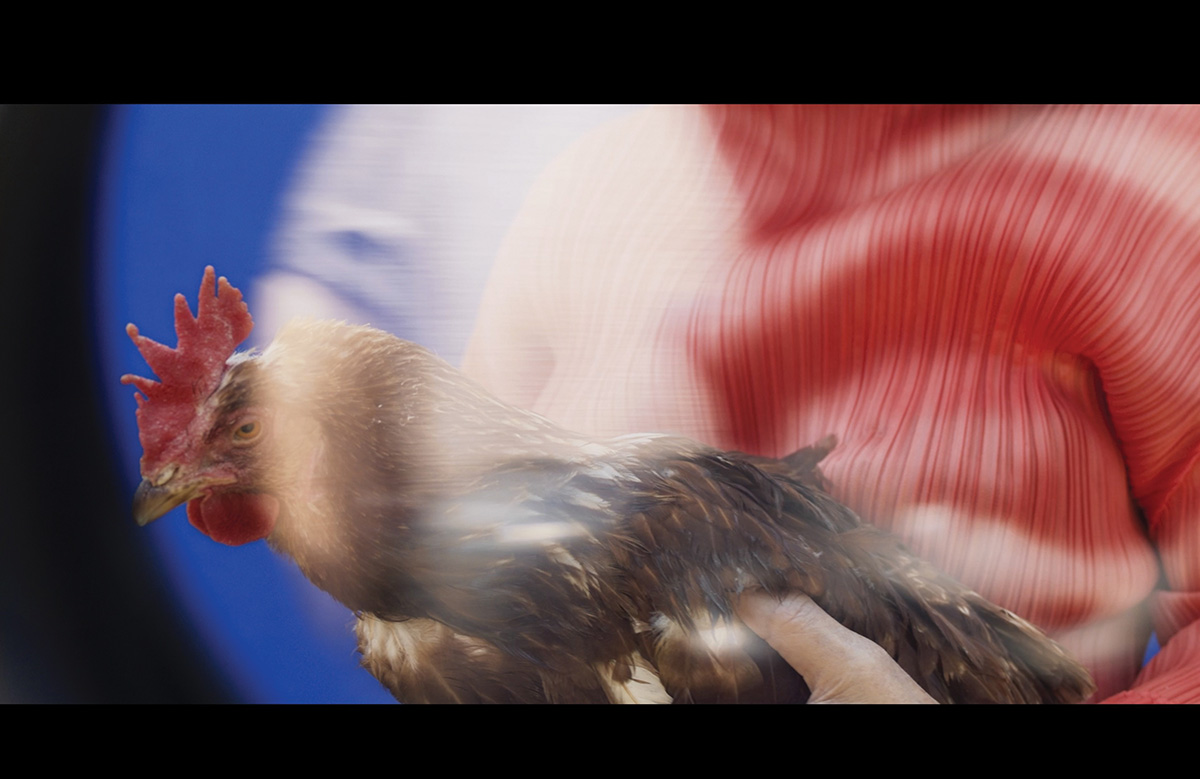
Thuy-Han Nguyen-Chi's film Into the Violet Belly is a striking work blending family lore, mythology, science fiction, and digital abstraction. The film captures the experimental collaboration between the artist and her mother, Thuyen Hoa, who survived a perilous sea journey while fleeing Vietnam after the end of the American War. The film oscillates seamlessly between multiple voices, visual registers, and timescales,—was it seven months or seven thousand years?—creating an image of multitudes: migrating bodies swimming in an infinite blue, depicted as both a massive digital swarm and tiny avatars.
Thuy-Han Nguyen-Chi is a Milky Way-based artist whose practice mutates in and out of film, sculpture, installation, performance, and interdisciplinary research. Her work explores the epistemological, aesthetic, and political possibilities of the moving image at the intersections of art and science, documentary and fiction, personal/prosthetic memory and individual/collective histories. Having studied Fine Arts at the Städelschule and Film at the School of the Art Institute of Chicago, she is currently pursuing PhD research in Film at the University of Westminster. Thuy-Han’s work has been presented in both the art and cinema context, including Akademie der Künste, Berlin; Atletika, Vilnius; Belvedere 21, Vienna; Centro di Musica Contemporanea di Milano, Milan; De Appel, Amsterdam; Gene Siskel Film Center, Chicago; Kunsthal Charlottenborg, Copenhagen; Kunsthall Trondheim, Trondheim; Museum für Moderne Kunst, Frankfurt; Museum of Contemporary Art and Design, Manila; Nottingham Contemporary, Nottingham; Sàn Art, Saigon; Villa Medici, Rome; Whitechapel Gallery, London; the 12th Berlin Biennale, Berlin; the 12th BlackStar Film Festival, Philadelphia; the 20th Copenhagen International Documentary Film Festival, Copenhagen; the 19th 25FPS International Experimental Film and Video Festival, Zagreb; the 60th New York Film Festival, New York; Rencontres Internationales, Paris; the 20th Reykjavík International Film Festival, Reykjavík; the 33rd Singapore International Film Festival, Singapore; among other spaces. She is working on her first feature-length film.
Nha San Collective
Dem ba muoi
Fiction expérimentale | hdv | couleur | 23:0 | Viet nam | 2023
Nhà Sàn Collective presents a new moving image work filmed at the residence of Mr. Manh Duc, a home in close proximity to the collective and their community of artist friends for many years. In this playground, a mystical world emerges; a cinema is reenacted. As the film unfolds, a river, a garden, spirits, wooden structures, people and objects appear, dissolve and reappear, as if they were characters morphing into one another. The film draws attention to cinematic transformation of physical and immaterial beings as a process of experiencing diverse forms of archives.
Nhà Sàn Collective (NSC) began operating as an independent artist collective in Hanoi in 2013, when a group of friends set up their publicly accessible space. With or without a physical base, NSC has worked with fellow companions and collaborators to organise exhibitions, workshops, film screenings, talks and other activities as a supporting platform for artists in the community. An initiative for exchanges, expansions and connections. A place that’s also open toward works-in- progress and the unexpected, a just-do-it attitude which doesn’t always yield answers. Some of the Collective's main projects, which have been held on numerous occasions, are Skylines With Flying People, IN:ACT Performance Art Festival, Queer Forever!, Emerging Artists programme, amongst others. The collective board consists of Tr??ng Qu? Chi, Nguy?n Ph??ng Linh, Nguy?n Qu?c Thành, V? ??c Toàn, and Tu?n Mami. In 2022, they participated in Documenta 15 curated by Ruangrupa with their invited artist friends. The name ‘Nhà Sàn’ signifies the Collective’s foundation which is rooted in the spirit of Nhà Sàn Studio, an artist-run space founded in 1998 in Hanoi. The original Nhà Sàn, a house on stilts, was taken apart in 2020. In the Ng?c Th?y area by the bank of the Red River, the artists imagine this house to become the new Nhà Sàn Collective space, rebuilt, and transformed.
Phill Niblock
Topolo PN
Art vidéo | dv | couleur | 11:50 | USA | 2005
Phill Niblock travaille entre autres avec la musique et le son, le cinéma, la photographie, la vidéo et les technologies informatiques. Il crée un bourdonnement dense, intense, dans lequel vibrent des microtons de timbres instrumentaux, qui induisent à leur tour un série d'autres sons sur le lieu de la performance. Il présente simultanément des films et des vidéos qui fixent le déroulement des gestes de personnes au travail, ou bien des images flottantes, dirigées par ordinateur et abstraites en noir et blanc. Phill Niblock est né en 1933dans l'Indiana, depuis le milieu des années 60 il fait de la musique et des performances intermédiaires qui ont été internationalement présentées et réalisées dans différents lieux et institutions, entre autres: The Museum of Modern Art; The Wadsworth Atheneum; the Kitchen; the Paris Autumn Festival; Palais des Beaux Arts, Bruxelles; Institute of Contemporary Art, London; Akademie der Künste, Berlin; ZKM; Carpenter Center for the Visual Arts at Harvard; World Music Institute at Merkin Hall NYC. Depuis 1985 il est directeur de la Experimental Intermedia Foundation à New York (www.experimentalintermedia.org), dont il est membre depuis 1968 comme artiste . Depuis 1973 il est producteur/organisateur de musique et de présentations intermédiales à l'EI (env. 1000 performances)et administrateur du label de l'EI XI. En 1993 il a été co-fondateur de l'Experimental Intermedia Organization à Gent, Belgique- EI v.z.w. Gent - qui offre à des artistes dans le cadre de résidences la possibilité de séjours de travail, mais apporte aussi son soutien à des installations intermédiaires. Des enregistrements de Phill Niblock sont sortis aux labels XI, Moikai und Touch. Un DVD de ses films et de sa musique est disponible chez Extreme. www.kunstradio.at

Charly Nijensohn
El exodo de los olvidados
Vidéo | hdv | couleur | 9:50 | Argentine | 2011
Regions that remain inaccessible and deserts of ice that extend beyond sight. Geographies that have attracted the thought of explorers and navigators fascinated by the end of the world. Situated in the southern region of the Andes mountain range, the Patagonian Ice Fields represent the largest mass of ice in South America. The exodus of the forgotten explores the impulse that drives humans to leave everything behind to immerse themselves in an unknown territory. In their fascination for the abyss and the search for the unreachable, they are united in a strange act of intensity.

Charly Nijensohn
Patagonian Ice Fields
Vidéo | hdv | couleur | 6:24 | Argentine, Allemagne | 2020
Alors que tout s’était arrêté et que le confinement s'étendait à toute la planète, je me suis consacré à créer de nouvelles musiques originales et à revoir certaines de mes œuvres antérieures, avec du matériel qui avait été laissé de côté lors de leur postproduction initiale. C'est ainsi que j'ai abordé de nouveau l'expédition dans les champs de glace de Patagonie, un projet que j'ai réalisé en collaboration avec des membres d'une équipe de sauvetage en montagne. La Patagonie est affectée dramatiquement par les changements climatiques et par le réchauffement de la planète. Les glaciers disparaissent sous nos yeux. Dans ce contexte, un groupe de personnes se retrouve perdu dans un labyrinthe de glace. Unis et isolés, ils envisagent l'effondrement de leur univers.
Charly Nijensohn est né Buenos Aires (Argentine) en 1966. Il vit et travaille à Berlin, et est artiste multidisciplinaire. Son travail artistique comporte plusieurs niveaux. Charly Nijensohn travaille sur l'idée d'une confrontation entre l'être humain et les forces naturelles de l'univers qui nous entoure. La relation entre l’humain et l'espace qui l'entoure représente un conflit à la fois réel et existentiel. Il a représenté l'Argentine avec une exposition personnelle à la 50e Biennale de Venise (Italie). Son travail a été notamment présenté à la BienalSur, Buenos Aires (Argentine) [2017], et à la Mediations Biennial, Poznan (Pologne) [2012]. Il a exposé à la Biennale de Valence (Espagne) [2001], dont le curateur était Peter Greenaway; à la Biennale de Singapour (Singapour) [2008], dont le curateur était Fumio Nanjo; et à la Dojima River Biennale, Osaka (Japon) [2009]. Il a également présenté son travail dans de nombreux festivals, notamment à la Transmediale, Berlin (Allemagne); à Videobrasil, São Paulo (Brésil); aux Rencontres Internationales Paris/Berlin – qui se sont tenues à la Haus der Kulturen der Welt, Berlin (Allemagne), au Museo Nacional Centro de Arte Reina Sofia, Madrid (Espagne), et au Centre George Pompidou, Paris (France); au Monitoring, Kassel (Allemagne); à Visions of Nature, Kunst Haus Wien, Vienne (Autriche) [2017/2018]; à Video Art in Latin America, LAXART, West Hollywood (USA) [2017]. Il a également exposé au Kröller-Müller Museum ["Windflower, Perceptions of Nature", 2011], Otterlo (Pays-Bas); au Morsbroich Museum ["Radical Shift"], Leverkusen (Allemagne); à la Akademie der Künste ["Realidad y Utopía, Argentiniens künstlerischer Weg in die Gegenwart", 2011], Berlin (Allemagne); à la Whitechapel Gallery [2010], Londres (Royaume-Uni); à Políticas de la diferencia, MALBA - Museo de Arte Latinoamericano, Buenos Aires (Argentine); et à Latin America: Video Views - Latin American Artist of the Twentieth Century, MOMA – Museum of Modern Art, New York (USA).

Charly Nijensohn
El ciclo de la intensidad
Vidéo | 4k | couleur | 12:53 | Argentine, Bolivie | 2018

Nemanja Nikolic
Panic Book
Animation | hdv | noir et blanc | 5:45 | Serbia | 2015
Panic Book is both a set of drawings and an animated video. The drawings are made on book pages. The books often come from the family library, and deal with the political and philosophical thought of Yugoslav socialism. The pages then become part of a reconstruction of cult sequences of Hitchcock movies: scenes of fear, panic or flight. This rereading of the legacy of Tito`s socialism that ended in a “cul de sac” is close to power-up mechanisms and disaster announcements used by the master of suspense
Born in 1987, Nikolic lives and works in Belgrade, Serbia. Graduated from the Faculty of Fine Arts (painting department) , currently in PhD, he received several prizes for drawing and a special prize for his mural installations. Initiator of U10 Art Space, a self-managed artist space, he was exhibited since 2007 in numerous solo and group shows in Serbia and abroad. In 2015 he was invited to Basel (List), Vienna (Parallel) and Paris (Cultural Center of Serbia). He is currently on show at Caixa Forum in Barcelona, Spain and Kunslerhaus in Vienna, Austria