Catalogue > Liste par artiste
Parcourez la liste complète des artistes présentés dans le cadre des Rencontres Internationales depuis 2004. Utilisez le filtre alphabétique pour affiner vos recherches.
Freja Sofie Kirk, Kjær Esben Weile
Catalogue : 2023Killing Kidding Colliding | Vidéo expérimentale | mov | couleur | 7:6 | Danemark | 2022
Freja Sofie Kirk
Killing Kidding Colliding
Vidéo expérimentale | mov | couleur | 7:6 | Danemark | 2022
A bird carries us swiftly through empty lobbies and offices of a bank in Frankfurt, until it collides with a glass façade and falls to the floor. In this way, ‘Killing Kidding Colliding’ shows glass as both a material and an ideological symbol, moving between transparency and reflection, making things visible but impossible to touch. Moving mechanically between the different spaces of the bank, it draws attention to its own technique, while looking at the power and ideology of modern architecture, and how its immediate openness, transparency and smoothness also contain an underlying and invisible volatility.
Freja Sofie Kirk is a visual artist based in Copenhagen. Working across video, photography and installation, and often in connection with each other, she looks at the inner mechanisms and contradictions of images. Her work takes the form of a continuous study of spatial and medial constructions, the violence they perform and the architecture they manifest. By utilizing the camera, Freja Sofie Kirk attempts to renegotiate the power relations inherent in both archi- tecture and image production.
Catalogue : 2021Industries of Freedom | Doc. expérimental | mov | couleur | 13:36 | Danemark | 2020
Freja Sofie Kirk, Kjær Esben Weile
Industries of Freedom
Doc. expérimental | mov | couleur | 13:36 | Danemark | 2020
"Industries of Freedom" dresse le portrait d'un groupe de danseurs travaillant dans la plus grande boîte de nuit EDM du monde: Privilege. Les danseurs sont soulevés par des grues, transportés sur une plage dans la gueule d'un requin gonflable, ou planent sous le plafond du club. Nous voyons comment leurs corps se transforment en objets scénographiques, qui se fondent dans le reste de la construction scénique. Dans "Industries of Freedom", la boîte de nuit est présentée à la fois comme un lieu de travail, où les rôles sont strictement définis, et comme un espace où l'on peut vivre les notions de liberté et d'extase, néanmoins strictement chorégraphiées par la logique commerciale de l'industrie du divertissement.
Esben Weile Kjær et Freja Sofie Kirk travaillent tous deux dans le domaine des arts visuels, et utilisent divers médias, notamment le cinéma, la photographie, la sculpture et la performance. Au cours des cinq dernières années, ils ont collaboré sur plusieurs projets de films, qui explorent l'identité, la culture pop et la production d'images. Leurs œuvres ont été présentées à la National Gallery of Denmark, Copenhague (Danemark); au ARoS Aarhus Kunstmuseum (Danemark); au Kunsthal Aarhus (Danemark); au Den Frie Centre of Contemporary Art, Copenhague (Danemark); et à la Factory for Art and Design. Leur travail a également été publié sur des plateformes telles que i-D, Tissue Magazine, Indechs, et Out Magazine. Freja Sofie Kirk est née en 1990. Elle est artiste et vit à Copenhague (Danemark). Utilisant la vidéo, la photographie et la sculpture, souvent en combinaison les unes avec les autres, son travail explore les récits, la culture populaire et la façon dont les images génèrent du sens dans la société contemporaine. Freja Sofie Kirk a une formation en cinéma et en photographie et, en travaillant avec des représentations bidimensionnelles du monde, elle a acquis un intérêt profond pour la signification des images, ainsi qu’une envie de les dissoudre ou de les transformer en qualités matérielles. Ses œuvres contiennent une interaction constante, entre la matérialité et la mécanique, la sensualité et son absence, le réel et l'irréel. Visuellement, elles sont à la fois séduisantes et dérangeantes, mais elles n'en sont pas moins une image des symptômes causés par la réalité actuelle. Esben Weile Kjær est né en 1992. Il est artiste et vit à Copenhague (Danemark). Son travail, qui englobe la sculpture, la vidéo et la performance, s'inspire de l'histoire de la culture et de la musique pop, pour explorer les thèmes de la nostalgie, de l'authenticité et de l'anxiété générationnelle. Dans un langage visuel attentif mais téméraire, il étudie l'économie événementielle d’aujourd’hui, en se concentrant souvent sur les tactiques de marketing et l'esthétique de l'industrie du divertissement. Il s'agit principalement de considérer la relation entre l'art et les industries culturelles qui l'entourent. Dans ce contexte, son travail tente non seulement d'imiter d'autres modes culturels de performance (comme ceux que l'on trouve dans les raves, les manifestations, les conférences de presse et les ballets), mais aussi de devenir une culture pop performative à part entière - souvent à l’aide d’interventions dans l'espace public et commercial, en utilisant des accessoires tels que podiums, canons à confettis, barrières et lasers de soirée.
Freja Sofie Kirk
Catalogue : 2025The End | Vidéo | digital | couleur | 8:56 | Danemark | 2024
Freja Sofie Kirk
The End
Vidéo | digital | couleur | 8:56 | Danemark | 2024
‘The End’ introduces Todd, an actor who has specialized in playing ill and dying patients in the context of medical practice situations for 30 years. Through documenting the scenography of a simulated hospital, a heart surgery on a plastic torso and Todd in an hotel room repeatedly falling to the floor - playing dead - ‘The End’ reflects on the way we use narratives to navigate reality. Layers of Todd’s voice and fragments from his scripts contribute to the blurring of lines between the fictitious and the actual, while elements of repetition in both speech and image remold ideas of linearity. In this way, ‘The End’ investigates the images, rituals and words associated with the certainty of death. It asks what space and shape it is granted — in the daily as well as on the screen - and how our emotional lives are continually shaped by the images we consume, leading us to turn to the language of fiction in the moments of our lives when we cannot find the words ourselves.
Freja Sofie Kirk (b. 1990) is a visual artist based in Copenhagen. Recent exhibitions includes Simian (DK), Kunsthal Charlottenborg (DK), Inter.pblc (DK), 5533 (TR), Copenhagen Contemporary (DK), Bianca D’Alessandro (DK), Kunstforeningen Gl. Strand (DK), Kunstverein Wiesen (DE). Her films have been screened at CPH:DOX, Rencontres Internationales Paris/Berlin, Oberhausen International Short Film Festival, Uppsala International Short Film Festival among others.
Freja Sofie Kirk
Catalogue : 2023Killing Kidding Colliding | Vidéo expérimentale | mov | couleur | 7:6 | Danemark | 2022
Freja Sofie Kirk
Killing Kidding Colliding
Vidéo expérimentale | mov | couleur | 7:6 | Danemark | 2022
A bird carries us swiftly through empty lobbies and offices of a bank in Frankfurt, until it collides with a glass façade and falls to the floor. In this way, ‘Killing Kidding Colliding’ shows glass as both a material and an ideological symbol, moving between transparency and reflection, making things visible but impossible to touch. Moving mechanically between the different spaces of the bank, it draws attention to its own technique, while looking at the power and ideology of modern architecture, and how its immediate openness, transparency and smoothness also contain an underlying and invisible volatility.
Freja Sofie Kirk is a visual artist based in Copenhagen. Working across video, photography and installation, and often in connection with each other, she looks at the inner mechanisms and contradictions of images. Her work takes the form of a continuous study of spatial and medial constructions, the violence they perform and the architecture they manifest. By utilizing the camera, Freja Sofie Kirk attempts to renegotiate the power relations inherent in both archi- tecture and image production.
Catalogue : 2021Industries of Freedom | Doc. expérimental | mov | couleur | 13:36 | Danemark | 2020
Freja Sofie Kirk, Kjær Esben Weile
Industries of Freedom
Doc. expérimental | mov | couleur | 13:36 | Danemark | 2020
"Industries of Freedom" dresse le portrait d'un groupe de danseurs travaillant dans la plus grande boîte de nuit EDM du monde: Privilege. Les danseurs sont soulevés par des grues, transportés sur une plage dans la gueule d'un requin gonflable, ou planent sous le plafond du club. Nous voyons comment leurs corps se transforment en objets scénographiques, qui se fondent dans le reste de la construction scénique. Dans "Industries of Freedom", la boîte de nuit est présentée à la fois comme un lieu de travail, où les rôles sont strictement définis, et comme un espace où l'on peut vivre les notions de liberté et d'extase, néanmoins strictement chorégraphiées par la logique commerciale de l'industrie du divertissement.
Esben Weile Kjær et Freja Sofie Kirk travaillent tous deux dans le domaine des arts visuels, et utilisent divers médias, notamment le cinéma, la photographie, la sculpture et la performance. Au cours des cinq dernières années, ils ont collaboré sur plusieurs projets de films, qui explorent l'identité, la culture pop et la production d'images. Leurs œuvres ont été présentées à la National Gallery of Denmark, Copenhague (Danemark); au ARoS Aarhus Kunstmuseum (Danemark); au Kunsthal Aarhus (Danemark); au Den Frie Centre of Contemporary Art, Copenhague (Danemark); et à la Factory for Art and Design. Leur travail a également été publié sur des plateformes telles que i-D, Tissue Magazine, Indechs, et Out Magazine. Freja Sofie Kirk est née en 1990. Elle est artiste et vit à Copenhague (Danemark). Utilisant la vidéo, la photographie et la sculpture, souvent en combinaison les unes avec les autres, son travail explore les récits, la culture populaire et la façon dont les images génèrent du sens dans la société contemporaine. Freja Sofie Kirk a une formation en cinéma et en photographie et, en travaillant avec des représentations bidimensionnelles du monde, elle a acquis un intérêt profond pour la signification des images, ainsi qu’une envie de les dissoudre ou de les transformer en qualités matérielles. Ses œuvres contiennent une interaction constante, entre la matérialité et la mécanique, la sensualité et son absence, le réel et l'irréel. Visuellement, elles sont à la fois séduisantes et dérangeantes, mais elles n'en sont pas moins une image des symptômes causés par la réalité actuelle. Esben Weile Kjær est né en 1992. Il est artiste et vit à Copenhague (Danemark). Son travail, qui englobe la sculpture, la vidéo et la performance, s'inspire de l'histoire de la culture et de la musique pop, pour explorer les thèmes de la nostalgie, de l'authenticité et de l'anxiété générationnelle. Dans un langage visuel attentif mais téméraire, il étudie l'économie événementielle d’aujourd’hui, en se concentrant souvent sur les tactiques de marketing et l'esthétique de l'industrie du divertissement. Il s'agit principalement de considérer la relation entre l'art et les industries culturelles qui l'entourent. Dans ce contexte, son travail tente non seulement d'imiter d'autres modes culturels de performance (comme ceux que l'on trouve dans les raves, les manifestations, les conférences de presse et les ballets), mais aussi de devenir une culture pop performative à part entière - souvent à l’aide d’interventions dans l'espace public et commercial, en utilisant des accessoires tels que podiums, canons à confettis, barrières et lasers de soirée.
Farzad Kiyafar
Catalogue : 2007Yeki bayad harf bezane | Fiction | dv | couleur | 34:51 | Iran | 2005

Farzad Kiyafar
Yeki bayad harf bezane
Fiction | dv | couleur | 34:51 | Iran | 2005
L'histoire tourne autour des non-dits, des vrais sentiments, des faux sourires et des tabous existants dans une vie de couple. Mais c'est aussi sur deux personnes qui peuvent ruinés leur vie dans l'espace d'une nuit.
nom : Farzad Kiyafar date de naissance : 6 avril 1980 lieu de naissance : Téhéran, Iran études : diplômé de l'Université Cinéma - Théâtre, section montage (B.A) Etudes de littérature dramatique ( M.A) de l'université Cinéma - Théâtre de Téhéran
Iztok Klancar
Catalogue : 2022Remembering the Nights In Safe Haven | Documentaire | hdv | couleur | 22:0 | Slovénie, Pays-Bas | 2020
Iztok Klancar
Remembering the Nights In Safe Haven
Documentaire | hdv | couleur | 22:0 | Slovénie, Pays-Bas | 2020
A drag performer rendez-vous with their many personalities during the after hours. A man is taken over by his surrogate lover, made of textile. Two brothers dance in an empty nightclub. Remembering the Nights in Safe Haven (2020) is a short film in three parts. The starting point of this project is the sudden loss of nightlife due to the Covid-19 pandemic and its detrimental effect on the social fabric of queer people. The film addresses this loss by means of fantasy scenes, combined with performances and activities that would have taken place if nightlife was still alive. These fictitious events suggest a mental state of suddenly having to adapt to our new reality.
Iztok Klan?ar is a photographer, filmmaker and a teacher. Combined with atmospheric electronic music, the genre of his film work is psycho-drama, the subjective and fragmented narrative that reveals inner life and conflict. The instinctive character of his work breaks the commercial commodification of our lifestyles by revealing unique sexual personae.
Catalogue : 2019Safe Place | Installation vidéo | mp4 | couleur | 14:0 | Slovénie, Pays-Bas | 2017
Iztok Klancar
Safe Place
Installation vidéo | mp4 | couleur | 14:0 | Slovénie, Pays-Bas | 2017
"When external forces act on us, we retreat. We create a mental space. There, we can play.†Filmed on various location throughout Europe with the help of the young talent grant (Mondriaan fund), Safe Place is an atmospheric music piece set into an immersive visual experience. With the protagonists’ actions in nature and abstract elements, the video is a continuous flow of introspection. The landscapes suggest emotional streams of our inner world. The people are showing themselves in their playful, yet emotionally charged state of mind. They interact with nature by means of private rituals to release their hidden selves. Safe Place is an exploration into the lurking depths of our minds aiming to push the spectator into their own inner hidden places. Duration: 14 min Directed, filmed and edited by: Iztok KlanÄar Music: Lifecutter Starring: Atanas Petrov, Aphra Tesla, Aljaž Celarc Many thanks to: Simon TanÅ¡ek, Neven M. Agalma, Ariadne Urlus, Rob Philip, Gerda Postma, Antoine Latipau, Eva PavliÄ Seifert, Ljubica KlanÄar, Andreea Dumitriu, Perri MacKenzie, Suzanne Somer, Rudnik Trbovlje Hrastnik, Fotoklub Hrastnik, The Bookstore Foundation and the cast.
I graduated as photographer at the KABK in The Hague in 2012 with the series My Men. It was was presented as a photo book and a video installation with sound. Although in its conception this work was documentary, the story was edited as a music video. Both edits, that of the book as well as the video have got a fictional turn to it. The video proved to be versatile, suitable for a gallery setting (GEM, Nederlands Fotomuseum), as well as a cinema (Het Nutshuis) or a temporary pop-up space (Metro station in Amsterdam). The next couple of years I continued to develop both video and photography, experimenting with different ways of presentations. Making snapshots was an integral part of my process. It enabled me to make order of the world and then edit out a theme. The following work was called Afterlife, with a broader theme of finding oneself in a changed world. It is about finding new structures, new rhythm, new logics to life. A life that seeks not to be conformed by our times where we are forced to buy ourselves an ideal lifestyle. Making Afterlife was about discovering a world that is mine, a new, yet familiar place. It resulted in a selection of sequences, printed on long paper rolls and a publication dummy which was also used as a portable installation. A body of work, called Reverence started to emerge from the second half of 2014 on. With Reverence I took further steps, making a music video for Lifecutter and exhibiting it in Showroom MAMA, together with photographs. The photographic part of the installation were diary snapshots. These were an initial step in my visual research, subject matters I narrowed down in the video. While photographs were an eclectic mixture of various encounters, impressions and landscapes, the video zoomed into a rather physical encounter with an attempt to visually depict the mental consequences of it. At that time, I also started with a short performance piece where I used video visuals as a backdrop and ambient. The texts are thoroughly edited diary entries, bundled into stories that convey an intense journey into myself, a deep introspection of what it means to be a sexual and sensitive being. When I obtained the young talent grant by Mondriaan Fund in 2016 I edited the massive library of snapshots into a new body of work, called Journal. The pictures are a relentless and a repetitive loop of same experiences, scavenging for endless impressions, for attention and love. Besides being shown online on different blogs, I also made a limited edition of the publication (shown at several photography events in Slovenia). Currently I am working on an edition of prints. With the help of the Mondriaan young talent grant in 2016 I filmed on different locations in Europe with various people from which the short film Safe Place was assembled. Safe Place is an atmospheric music piece set into an immersive visual experience. With the protagonists’ actions in nature and abstract elements, the video is a continuous flow of introspection. The landscapes suggest emotional streams of our inner world. The people are showing themselves in their playful, yet emotionally charged state of mind. They interact with nature by means of private rituals to release their hidden selves. In the lengthy process of making Safe Place, I significantly upgraded my technical skills - the camerawork, as well as editing. I learned how to work intensely one-on-one with the performers and create a safe space for experimentation within a set of parametres, such as an activity taking place, the styling and the location. A specialisation of mine has become setting a sensorical atmosphere by choosing the right environment in the outdoors, as well as specific light. Safe Place and other work I made subsequently has been used as visuals for the shows of Lifecutter. I also collaborated with the fashion Bas Kosters, making a set of visuals and social media videos for his last collection, called Hope. Acknowledging the queer feel of both of our work, I directed Bas into a comic depiction of sensuality (with food) which is one of my personal fetishes. The camera work, editing and sound are effectively adjusted to function well as visuals during his fashion show and on social media. This proves how my work is versatile and can be shown in different places, far outside the gallery world. After the young talent grant, I started teaching and coaching students of the department of Fashion Design at the HKU in Utrecht. This year, I also started teaching A/V at the department of Photography at the KABK in The Hague. My general approach to teaching is very flexible - the story or the atmosphere are the primary motivation on building of a film work. I never impose a certain format upon my students, but still teach them how to apply the basic ingredients of filmmaking to their projects, such as storyboard, camerawork, editing and sound.
Lisa Klapstock
Catalogue : 2008Ambiguous Landscape : Helsinki | Doc. expérimental | dv | couleur | 99:99 | Canada, Finlande | 2007
Lisa Klapstock
Ambiguous Landscape : Helsinki
Doc. expérimental | dv | couleur | 99:99 | Canada, Finlande | 2007
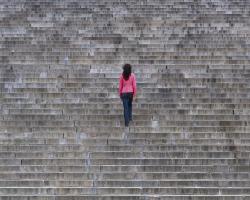
Ambiguous Landscapes (2003-2005) comprises large-scale ?dislocated? photo diptychs and a wall-mount ed 5-screen video work. The subject matter of natural and man-made landscapes includes a granite stair, a grass field, a paved dyke, a scrubby hillside, and a snowy slope, all rendered unfamiliar and spatially ambiguous with the cam era. These landscapes, made abstract by the analogue camera, are brought back into the realm of the real through temporal mechanisms involving the presence of a figure in the work. The figure registers and describes space and time, altering our perception of the depicted landscape, transforming it from a flat image into a three-dimensional space. In the videos, the movement of the figure traversing an otherwise empty and still landscape, reveals the shape of the depicted topography, as well as its expanse, and in the process registers both time and space. These moving images are endlessly repeating, looped with a built-in randomness that produces moments when the same landscape appears, at different points in time, across multiple screens. The videos are nevertheless largely still, setting up a situation of waiting and expectation. www.lisaklapstock.com
Lens-based artist Lisa Klapstock lives and works in Toronto and holds a Communication degree from Simon Fraser University, Vancouver. With a focus on everyday places and their human occupation, Klapstock?s practice investigates the relationship between photographic depiction and visual perception. Since the late 90?s, Klapstock has participated in numerous solo and group exhibitions in Canada, and in Europe where she has also participated in residencies: Stichting Duende Aktiviteiten, Rotterdam (2002); the Helsinki International Artist-in-Residence Programme, Cable Factory (2004); and the Danish International Visual Art Exchange Program, Copenhagan (2007). Klapstock?s work is in corporate and public collections including the Musée de la Photographie, Belgium; the Museet for Fotokunst, Denmark; the National Portrait of Canada, the Winnipeg Art Gallery (CA); the Kamloops Art Gallery (CA), and the Art Gallery of Hamilton (CA). Between 2004 and 2006, Klapstock?s work toured Canada in a solo exhibition, Liminal, organized by the Southern Alberta Art Gallery and accompanied by a monograph. She is represented in Canada by Jessica Bradley Art + Projects, Toronto and Diane Farris Gallery, Vancouver.
Hanke Kleij
Catalogue : 2006De wachter | Doc. expérimental | betaSP | couleur | 27:0 | Pays-bas | 2003
Hanke Kleij
De wachter
Doc. expérimental | betaSP | couleur | 27:0 | Pays-bas | 2003
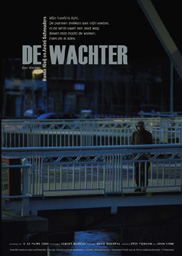
Portrait poétique du Lage Erfburg, un petit pont à Rotterdam. Sur la signification d´un endroit insignifiant. Les gens traversent ou attendent. Fragmentation et unité. Un film qui parle d´attendre, de regarder et de voir.
Hanke Kleij (1976) est une rélisatrice et une artiste multimédia. Elle a étudié à l´Académie de Musique et de théâtre de Rotterdam.
Arthur Kleinjan
Catalogue : 2019ABOVE US ONLY SKY | Installation vidéo | mp4 | couleur et n&b | 27:30 | Pays-Bas | 2018

Arthur Kleinjan
ABOVE US ONLY SKY
Installation vidéo | mp4 | couleur et n&b | 27:30 | Pays-Bas | 2018
Arthur Kleinjan presents ABOVE US ONLY SKY, a large-scale video triptych. A narrator leads us into a magical-realist history that is bereft of fabrication. His story begins with an investigation into a plane crash in communist Czechoslovakia, which one woman survived after an unlikely fall from the air. This event becomes the point of entry to a dense web of seemingly unrelated events that appear to be deeply entangled. Kleinjan plays an intelligent game with the surreal logic of chance, the repetition of events, and synchronicity. `Above us only sky` questions the surreal logic of chance, repetition of events, and synchronicity. It blurs the boundaries that separate us from the past through a present that shifts and fluctuates between reality, imagination and speculation. Viewers become unsuspected witnesses to political defiance and reprisals where the past has informed the present and where natural, political and technological disasters, are followed by remarkable tales of survival.
Arthur Kleinjan is a Dutch visual artist working with the media of film and photography. He studied at the Willem de Kooning Academy Rotterdam and Rijksakademie in Amsterdam. His work, an exploration of visual perception is merged with a metaphysical sensation of place, identity and time as he transforms apparent lucid moments into layered visuals and narratives. The work of Arthur Kleinjan has been exhibited internationally, including solo exhibitions at The Essl Collection(Vienna, Austria), Western Front(Vancouver, Canada) and 2YK Gallery(Berlin, Germany). He has participated in exhibitions such as the Biennale of Busan (South Korea), in the Musée d`art contemporain de Montréal (Canada). His films has been screened at Clermond Ferrand Filmfestival(France), International Film festival Rotterdam(NL) and Museo Nacional de Arte Reina Sofia (Madrid, Spain).
Karl Kliem, Christine FOWLER
Catalogue : 20062 minutes | Vidéo expérimentale | dv | noir et blanc | 2:0 | Allemagne | 2005
Karl Kliem, Christine FOWLER
2 minutes
Vidéo expérimentale | dv | noir et blanc | 2:0 | Allemagne | 2005
Karl Klien, 34 ans, est un membre fondateur du laboratoire MESO base à Frankfurt. Il développe des systèmes audio et vidéos en temps réel. Il réalise aussi de divers travaux dans les champs du multimédia, du design Internet et télévisé, de la production sonore et musicale pour les films et les installations interactives. Il est aussi membre de Involving Systems et le fondateur d?un label, Dienstselle. Il est en 1969 né à Frankfurt sur le Main. En 1990, il entre à HFG OF et en sort diplômé en 98. Il créé en 95 Involving system pour faire des installations vidéos et audio interractives. En 97, il est membre fondateur de MESO pour le design des systèmes média numérique et finalement fonde son propre label, Dienstselle en 2002.
Valentinas Klimasauskas
Catalogue : 2007Vilnius Contemporary Art Center | 0 | 0 | | 0:0 | Lituanie | 2007

Valentinas Klimasauskas
Vilnius Contemporary Art Center
0 | 0 | | 0:0 | Lituanie | 2007
Inauguré en 1968 à Vilnius en Lituanie, le bâtiment du Contemporary Art Centre (CAC) dépendait à l?origine du Lithuanian Museum of Art. Ce n?est qu?en 1992 que le CAC, principalement financé par le Ministère de la Culture Lituanien, devient indépendant. Aujourd?hui, avec ses 2400 m² de surface exposable, le CAC est la plus grande institution dédiée à l?art contemporain des Etats baltes. Fort de cet espace, le CAC s?affirme comme un acteur incontournable de la scène balte, nord européenne. Chaque année, le CAC organise 5 à 6 expositions majeures ainsi qu?une quinzaine de projets plus modestes. Le CAC est aussi le lieu de résidence de la Baltic Triennial of International Art, un festival d?art contemporain, et, tous les deux ans, le CAC passe en revue les évolutions de l?art lituanien. Comme tout centre d?art, le CAC organise des conférences, des projections et des concerts. Comme tout centre d?art, il maintient une bibliothèque, une médiathèque où le public peu venir consulter des livres et des journaux spécialisés ainsi que des vidéos, des CDs, des DVDs et l?Internet. Mais, depuis 2004, le CAC a grandement diversifié ses activités. Depuis octobre 2004, le CAC produit sa propre série pour la télévision lituanienne. Un show très expérimental où un groupe d?inadaptés sociaux et de parias prend les commandes d?un programme télévisé. Inexpérimentés en télévision, ils décident de réinventer le médium. En 2005, en parallèle à son activité de publication de catalogues et de livres, le CAC commence à éditer "CAC Interviu". Magazine trimestriel bilingue (anglais/lithuanien), "CAC Interviu" s?intéresse aux événements régionaux ayant une dimension, une résonance internationale. Cette année, le CAC s?associe à la Vilnius Art Academy et à cinq autres institutions européennes pour proposer un Master de Curatorial Studies. Et, pour la deuxième fois de son histoire, le CAC sera en charge du Pavillon Lituanien lors de la 52ème Biennale de Venise.
Valentinas Klimasauskas est commissaire d?exposition au Contemporary Art Centre (CAC) de Vilnius, en Lituanie, et a participé au projet CACTV, une série télévisée produite par le CAC.
Ilan Klipper, virgil vernier
Catalogue : 2008flics-première partie | Documentaire | dv | couleur | 74:0 | France | 2006
Ilan Klipper, virgil vernier
flics-première partie
Documentaire | dv | couleur | 74:0 | France | 2006
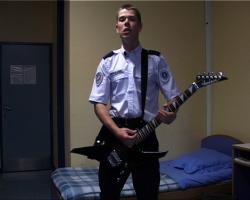
Ce film est le premier volet d?un diptyque sur la police d?aujourd?hui. Ce premier film, qui se déroule dans une école de police, s?intéresse à la transmission des techniques de la « violence légitime ».
Ilan Klipper Journaliste, je réalise des magazines d?actualité pour Canal-Plus et I-Télévision. Après une formation de troisième cycle en Histoire des relations internationales, spécialisée dans les conflits du Moyen-Orient, j?ai débuté ma carrière dans la presse écrite, rédigeant des dépêches pour l?AFP, publiant des articles dans Libération, le Courrier International et écrivant pour le Guide Vert des éditions Michelin. Durant l?année 2004-2005, j?ai réalisé pour I-Télévision une émission mensuelle de voyages ainsi que plusieurs sujets d?actualité d?une dizaine de minutes chacun. En 2006 j?ai réalisé mon premier documentaire, « FLICS-première partie » avec la société de production Agat Films. Virgil Vernier Après une maîtrise de philosophie j?ai fait deux ans aux Beaux-Arts de Paris. J?ai ensuite réalisé deux moyens métrages de fiction avec anna sanders films, « KARINE » et « L? OISEAU D?OR ». En 2005-2006, j?ai réalisé « CHRONIQUES DE 2005 », un long-métrage en coproduction Anna sanders films et bathysphere productions.
Nicolas Klotz, Elisabeth Perceval
Catalogue : 2025Nouveau monde ! | Doc. expérimental | digital | couleur | 100:51 | France | 2023

Nicolas Klotz, Elisabeth Perceval
Nouveau monde !
Doc. expérimental | digital | couleur | 100:51 | France | 2023
Pendant l’été 1928, Jean Epstein s’éloigne de Paris, découvre l’Archipel d’Ouessant et y installe son chantier de cinéma où il réalisera, avec les habitants des îles un premier film, « Finis Terrae ». Après « La Chute de la Maison Usher » il disait avoir le sentiment qu’il était impossible avec de l’irréel, de donner davantage l’impression du réel. Mais où commençait le réel ? Où commençait le cinéma ? Cent ans plus tard, où en étions-nous ?
Nicolas Klotz et Elisabeth Perceval ont réalisé 15 long-métrages - fictions et documentaires - toute une série de moyens métrages, de formats courts, de films expérimentaux, de vidéos, et des installations filmiques. A travers leurs films, ils développent un cinéma qui interroge autant la forme cinématographique que les bouleversements du monde contemporain. Entre 2000 et 2012, La Trilogie des Temps Modernes composée de Paria, La Blessure et La question humaine, suivie par Low Life, ont été présentés dans de nombreux festivals internationaux : La Quinzaine des Réalisateurs, le Festival de Locarno, le Festival de Toronto, La Viennale, le BAFICI Buenos Aires, le Festival du Nouveau Cinéma de Montréal, Le Festival de San Sebastian, Le Festival de New-York, de Chicago, de Londres, de Jeonju (Corée du sud), de Gijon, au FICUNAM (Mexique)... L’Héroïque Lande, la frontière brûle a été présenté en première mondiale au FID Marseille en juillet 2017 où il a reçu une mention spéciale. Suivi par Fugitif, où cours-tu ? pour la Lucarne d’ARTE en 2018. Entre 2015 et 2021, ils tournent et montent Nous disons révolution, présenté en première mondiale au FID Marseille l’été 2021.Un long-métrage transcontinental, librement inspiré des Feuilles Rouges de William Faulkner, filmé à Brazzaville, à Barcelone et à Sao Paulo. Présenté en première mondiale au FID Marseille l’été 2021. Du 3 décembre 2021 au 3 janvier 2022, le Centre Pompidou a consacré une retrospective à l’ensemble de leur travail - Nicolas Klotz et Elisabeth Perceval : Le cinéma en commun. Réunissant pour la première fois une cinquantaine de leurs œuvres : long-métrages, essais vidéo, documentaires, moyen et court-métrages, 3 installations, une exposition photographique. En hiver 2022, ils terminent Chant pour la ville enfouie, tourné dans les traces effacées de la Jungle de Calais. Le film est présenté en compétition au Festival de Locarno en été 2022. Ils présentent également au FID Marseille, So Long Michael, avec Michael Lonsdale, film tourné chez lui quelques mois avant sa disparition. A l’invitation du cinéaste philippin Lav Diaz, ils ont tourné Cosmoscide 2023, un film expérimental (22mn) de science-fiction, hanté par la menace d’une explosion nucléaire, tourné à Fécamp, où ils habitent. Ils travaillent actuellement sur les deux scénarios d’un diptyque se passant sur le même territoire, la lande qui abritait autrefois la Jungle de Calais. L’un de nos jours, le second en 2040 : Nos royaumes indociles et Quand le vert de la terre brillera de nouveau. Des rétrospectives leur sont consacrées à l’étranger, notamment à Buenos Aires, Lisbonne, San Sebastian, Rio de Janeiro, Sao Paulo, Montréal, Florence. La Viennale organise un programme d’une douzaine de leurs films pour l’édition 2023.
Mira Klug
Vera Klute
Catalogue : 2010Hair in my soup | Animation | dv | couleur | 2:32 | Allemagne, Irlande | 2009
Vera Klute
Hair in my soup
Animation | dv | couleur | 2:32 | Allemagne, Irlande | 2009
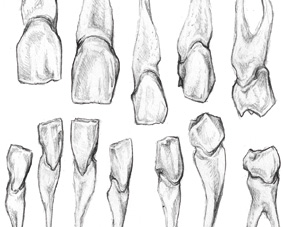
The 2-channel video ?Hair in my soup? uses pencil drawing, photo-collage and video footage to create a multi-disciplinary animation. Over two and a half minutes the video moves through a variety of domestic scenes and settings, connected only through fragments of storylines. The imagery is immediately recognizable yet strange and mysterious, ranging from bicycle wheels that are wearing shoes and pill-popping magpies to grinding teeth and ants in the shower. The two screens go back and forth between displaying separate clips and then merging again into one continuous canvas. The two channels might shift, leave a gap or even show opposite view points of the same scene, relying on the viewer chose their own perspective. By juxtaposing the fantastic elements on both screens, associations and suggestions are created rather than a traditional narrative. The video is looking at life as a subjective experience where imagination and reality become undistinguishable. The ordinary becomes absurd in this rearrangement of everyday occurrences.
Now based in Dublin, German born Klute is currently an artist in residence at Fire Station artist?s studios. After graduating from an Honours BA in Fine Art at IADT in 2006 she has been exhibiting consistently in Ireland and abroad. Previous solo exhibitions were held at Wexford Arts Centre (2009) and The LAB, Dublin (2006). Her work has also been featured in numerous group shows including `How Do You Know?` at Blankspace Gallery in Oakland, `Housewarming` at RUA RED in Tallaght , `Dare to live without limits` at the Sub-Urban Video Lounge in Rotterdam, `Phoenix Park` at the Kerlin Gallery in Dublin, `The Video Project` at the Pawnshop Gallery in Los Angeles. She recently received the Wexford Emerging Visual Artist Award (2008) and the Arts Council Bursary Award (2008 & 2009).
Kari Og Odveig Klyve-gulbrandsen Og Klyve
Catalogue : 2013Between | | | couleur | 5:51 | Norvège | 2012
Kari Og Odveig Klyve-gulbrandsen Og Klyve
Between
| | couleur | 5:51 | Norvège | 2012
Kari Klyve Gulbrandsen (b. 1980) has directed, photographed and edited several short- and documentary films. Her films are selected for film festivals in US, India and Europe. Odveig Klyve (b. 1954) is a filmdirector and an author of nine books of poetry. She has written and directed short films, presented at international film festivals in Europe, US and India. Her poetry is translated into several languages.
Miska Michael Knapek
Catalogue : 2010kiasma cafe north | Animation | | couleur | 3:5 | Danemark, Finlande | 2008
Miska Michael Knapek
kiasma cafe north
Animation | | couleur | 3:5 | Danemark, Finlande | 2008
Through a spatiotemporal representation twenty-two hours of a central Helsinki cafe`s life, asking to our permanence and soul of being. How are we, beyond the instants? Every animation frame holds twenty-two hours dispersed through its surface, linearly as if the motif`s time was scanned horizontally. Every subsequent animation frame moves the time`s position across the motif, revealing each bit at a slightly later time. Tracing the life in a watering hole of society, a cafe, the work juxtaposes the static built environment and the fluidity of being. The cafe-goers stay long enough for them to be visually caught, depicted, the essence of their being, almost as if it were their souls, are like colours spilled running in the rain. A blur in motion. Cyclically appearing and disappearing daily.
Miska Knapek is an artist designer, with a past in Graphic Information Design (BA) and graduate studies in artistic interaction design, currently based at Media Lab Helsinki. He explores chaotic patterns and challenging fundamental perceptions of society, optics, time, and space. Applying information visualisation techniques, to photographic/sensory/datamined material, Knapek?s work traces the hidden lives of nature, society and people?s immediate personal surrounds. His work has been exhibited internationally, including at Ars Electronica and Transmediale.
Catalogue : 2009longlapses: mannerheimintie south | Animation | | couleur | 3:58 | Danemark, Finlande | 2007
Miska Michael Knapek
longlapses: mannerheimintie south
Animation | | couleur | 3:58 | Danemark, Finlande | 2007
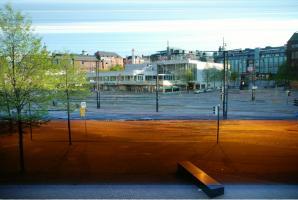
14:00-04:00 dans une rue animée d?Helsinki, en mai. Le projet « Longlapses » scrute la perception humaine, les brefs moments d?attention de la mémoire et les longs oublis. « Longlapses » de Miska Knapek vise à ouvrir les yeux et les esprits à la vie, dans des moments d?attention plus longs, pour retrouver la trace de l?être chaotique caché de la société et de la nature. Dans des traces et un temps comprimés, les mouvements de la nature sont pris entre la lumière changeante et l?ombre, mais il en va de même pour l?« être » de la société, qui trace sa vie visuellement. Comme si un objet physique ? le sommeil-réveil-départ-travail-transport-retour-sommeil de la société ? s?imprimait lui-même visuellement.
Né en 1975, Miska Knapek est un artiste designer. Après une licence en design d?information graphique, et des études supérieures en design d?interaction artistique, il est basé maintenant au Media Lab d?Helsinki (Finlande). Il explore les modes chaotiques et les stimulantes perceptions fondamentales de la société, l?optique, le temps et l'espace. En appliquant des techniques de visualisation d?informations à du matériel photographique, sensoriel, ou de data mining, l??uvre de Knapek retrace les vies cachées de la nature, de la société et de l?environnement immédiat et personnel des gens. Son travail a été exposé internationalement, notamment à Ars Electronica et à Transmediale.
John Kneller
Catalogue : 2007This film has no commercial value | Film expérimental | 16mm | couleur | 23:30 | Canada | 2006
John Kneller
This film has no commercial value
Film expérimental | 16mm | couleur | 23:30 | Canada | 2006
Ce film a été fait de façon traditionnelle sur une pellicule utilisant un procédé basé sur la méthode de production. Ce sont les efforts respectifs d'un artiste de l'image et d'un artiste du son. Ce film se concentre sur l'environnement naturel construit par l'homme, capturant à l'aide de la camera et d' appareils spécialisés, un phénomène qui est invisible à l'oeil nu. Cette compression du temps passé est augmenté par l'usage automatisé du panoramique, de l'inclinaison et du zoom mécanique conçus par le cinéaste. L'image qui en résulte est une hyper-réalité des paysages en général et de paysages urbains, comme capturés et transformés à travers les moyens d'une médiation mécanique. La création sonore est presque totalement effacée par les sons naturels enregistrés et les performances musicales de différents environnements, la tension Romantique de la musique est tendue par les représentations lyriques de la nature et de l'environnement. La médiation délibérée des appareils de son et d'image suggère que notre relation avec l'environnement ne peut plus jamais être vu en dehors du domaine politique, la musique sert de requiem pour la spoliation de la terre par l'Homme. Les images d'un phénomène tel que l' "Aurore Boréalis" sont soumis à un long procédé cinématographique qui les transforment, transformant le phénomène qui est exclusivement crée par le procédé du film lui-même, particulièrement par des moyens d'imprimante optique et des mats progressifs faits-mains sur film et performant par la suite des opérations répétées en combinant et recombinant à l'aide des mats, au point d'arriver à une abstraction complète de l'image. Ce film est "coupable" dans ce qu' il veut exposer, le trouble avec cette tendance post-moderne envers le spectacle, le film dépouille la nature et l'environnement les présentant non en tant que telles mais avec l'intervention et la manipulation de l'homme.
John Kneller - Biographie John Keller a obtenu son diplôme à l' Unversité de Toronto, il a suivi un programme d'études du Cinéma en 1988 et a depuis fait des films inhabituels. Sa réserve d'échanges est le procédé créatif et consommateur de temps d'une impression optique et d'une manipulation accélérée. Il enseigne actuellement le cinéma au "Sheridan College" et poursuit une Maitrise en Cinéma (MFA) à l'Université York de Toronto. Des travaux d' impressions d'optiques récentes et en cours de réalisation ont été conçus pour les cinéastes canadiens Steve Sanguedolce, Phil Hoffman et Sol Nagler.Le "Festival du Film Winnipeg Experimental and Underground" (WNDX) si fréquenté , présentant la cours de maître des impressions d'optique, a présenté de nouveaux travaux en cours, "Homecoming Montreal 1950" , un film qui se sert de "Kodachrome" original et fait optiquement 3 séparations de couleur rouge, verte, et bleue et reprend ensuite fidélement, la couleur initiale mais qui plus tard se sert d' interventions et d'expériences accrues. C'est une oeuvre de compagnons 6 minutes plus courte que le long film de cette même année intitulé " This Film has No Commercial Value" 23 mins. 2006 qui est une vision méditée du dur mais beau paysage canadien.
Thomas Kneubühler
Catalogue : 2015Forward Looking Statements | Doc. expérimental | hdv | couleur | 3:47 | Canada | 2014
Thomas KneubÜhler
Forward Looking Statements
Doc. expérimental | hdv | couleur | 3:47 | Canada | 2014
A conference call by investors of a planned iron mine provides the soundtrack for a ride over the land which the company wants to exploit. The land in question is a traditional hunting ground for the Inuit community of Aupaluk, located in Canada's far North. The village has already been relocated in the 1980 and is now again under threat. The term "forward looking statements" is used in the world of investors to describe future events which are subject to certain risks and uncertainties.
Born in Solothurn, Switzerland, Thomas Kneubühler has been living in Canada since 2000. In 2003, he completed a Master’s degree in Studio Arts at Concordia University, Montreal. His work often deals with social issues and how technology is affecting people’s lives. His work has been presented in many exhibitions in both Europe and North America, most recently at the Québec Triennial at the Musée d’art contemporain de Montréal (2011), at the Centre culturel canadien, Paris (2012) and at the Centre Pasquart, Bienne (2014). In 2011 he was awarded the Pratt & Whitney Canada Prize of the Conseil des arts de Montréal, and in 2012 the Swiss Art Award by the Ministry of Culture Switzerland. «Whether it is the ambiguous boundaries of public and private space, the all-pervasive spectre of security surveillance or even the radiant, if dehumanizing, beauty of cityscapes, Kneubühler’s practice tellingly identifies the co-existing insecurities, uncertainties and subtle pleasures embedded in the structures of modern life.» (Bryne McLaughlin, Canadian Art)
Catalogue : 2014Days in Nights | Doc. expérimental | | couleur | 3:45 | Canada | 2013
Thomas KneubÜhler
Days in Nights
Doc. expérimental | | couleur | 3:45 | Canada | 2013
It is hard to navigate in the dark, especially in an unknown territory. Over time, the eyes adjust to the darkness, and the new environment starts to emerge. This video was made during an artist residency at CFS Alert, a military and research station in the high Arctic. CFS Alert is the northernmost settlement in the world, 800 km from the North Pole. From October to early March there is polar night, with no direct sunlight. Most people at the station are there for limited time, on average 3 to 6 months.
Thomas Kneubühler vit au Canada depuis 2000. Il est titulaire d?une maîtrise en beaux arts de l?Université Concordia. Son travail a été présenté dans de nombreuses expositions individuelles au Canada et dans le cadre d?expositions collectives au Canada, en Chine, en Suisse, aux Pays-Bas, en Allemagne et au Mexique.
Valentina Kneževi
Catalogue : 2026Brute | Doc. expérimental | 0 | couleur | 14:56 | Croatie, Bosnie-Herzégovine | 2025

Valentina KneŽevi
Brute
Doc. expérimental | 0 | couleur | 14:56 | Croatie, Bosnie-Herzégovine | 2025
BIKLIJADA- 300 years of bullfighting without a single bull killed in a country where people have always killed each other. BRUTE takes us to the Biklijada also called Balkan Korida - a bloodless bullfight where bulls clash without killing each other. Unlike Spanish Corrida, this ritual emphasizes endurance over violence, mirroring the region’s turbulent history contrasting animal instinct with human cruelty. In this ancient tradition, we glimpse an unsettling truth: sometimes beasts show more wisdom than men. By challenging but not killing each other, BRUTE suggests a potential for reconciliation that goes beyond the human capacity for peace. Film message resonates universally. It challenges us to ask: If animals can navigate violence without destruction, why can’t we? Film is a provocation, a prayer, and a path forward.
Valentina Kneževi? is a video artist and film maker born in Split, Yugoslavia. She holds M.A. in Theatre, Film, Media Studies and Anthropology as well as in Fine Arts. Her films and works has been shown in national and international group exhibitions and film screenings: 64th International Short Film Festival Oberhausen, VAFT-Festival, Palazzo Strozzi, Palais de Tokyo, Bangkok Biennale, Haus der Kulturen der Welt in Berlin, Kunsthalle Baden Baden ... For her artistic work she was several times awarded.
Francois Knoetze, Amy Louise Wilson
Francois Knoetze, Russel Hlongwane, Amy Louise Wilson
Catalogue : 2023Dzata: The Institute of Technological Consciousness | Vidéo expérimentale | mp4 | couleur | 8:23 | Afrique du sud | 2023
Francois Knoetze, Russel Hlongwane, Amy Louise Wilson
Dzata: The Institute of Technological Consciousness
Vidéo expérimentale | mp4 | couleur | 8:23 | Afrique du sud | 2023
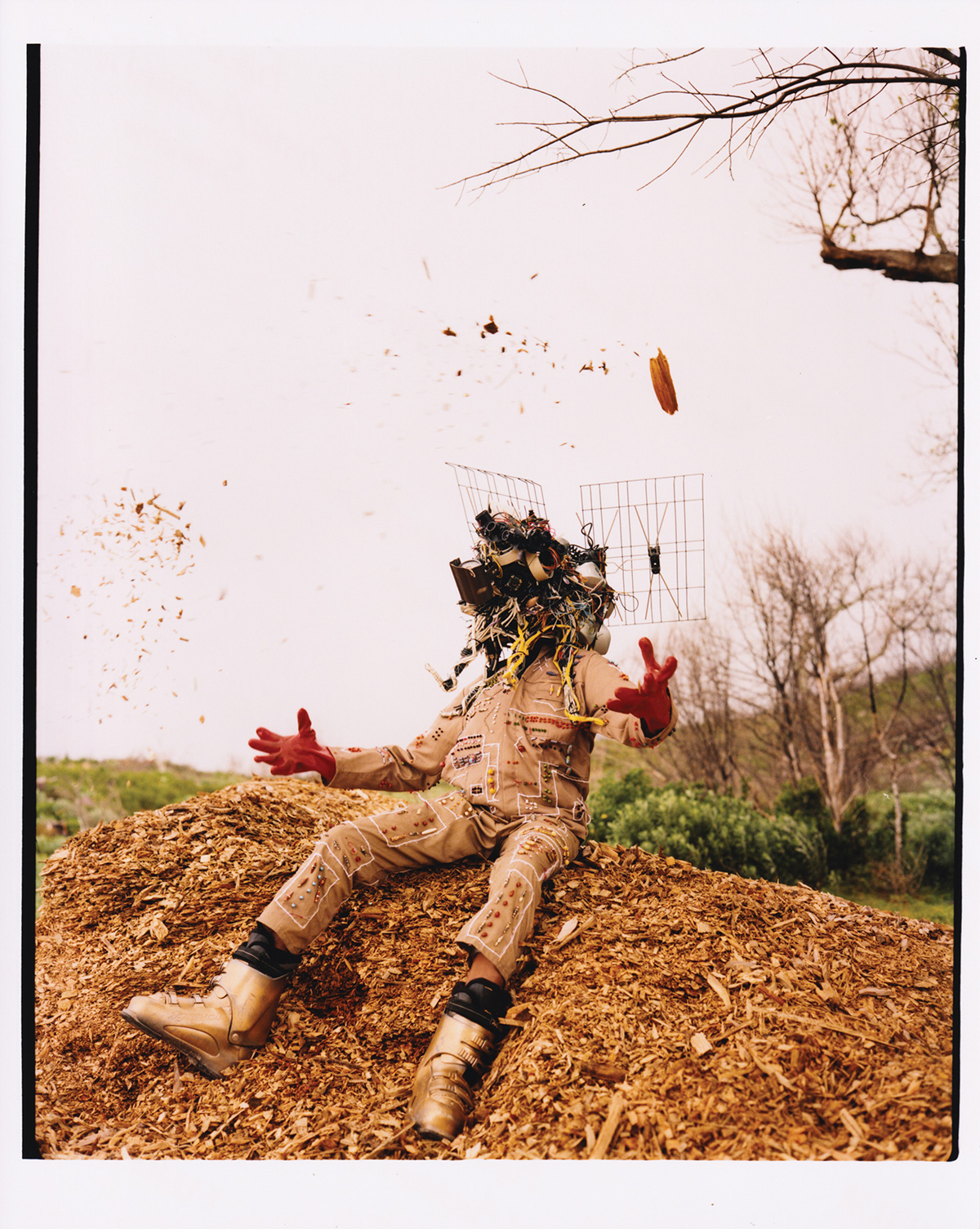
Dzata: The Institute of Technological Consciousness is a creative research project by South African artists Russel Hlongwane, Francois Knoetze and Amy Louise Wilson. In fabricating a fictional institute and its archive, the artists explore and imagine vernacular technological practices operating across the African continent. An intertextual conversation between the documentary and the poetic, the video operates as an in-house media assemblage created for the preservation of the institute’s activities and ideas. The project aims to foreground indigenous technological knowledge and to explore how science, technology and innovation are part of a long interlinked process of accumulative knowledge production which extends long into the past. The work builds on the field of technopolitical research to formulate a multi-scalar history and future of technological creativity. Positioning the triumphs and failures of the everyday in the future-oriented technoscientific, the work unfolds the idea of development as a historical process Africans shaped.
Russel Hlongwane works in the production and assembly of culture. His area of interest is in heritage, tradition and modernity in South Africa. He moves between art-making (installation and film) and curating. His performance work operates as a bridge to transmit his academic interest to a broader audience, while his writing practice moves between academia, policy and art journals. His most recent peer reviewed paper is titled ‘Transcendental Technologies, Mother Tongues and Space (2022). He works intentionally with language (isiZulu) as a way to mobilise ideas contained in supressed histories. His work, Ifu Elimnyama (The Dark Cloud) has featured in six exhibitions and won the Sharjah Film Platform Jury Award. He curated the Bristol based Cntrl Shift Network festival that featured filmic works from the global south confronting the relationship between technology and the continent. Lo-Def Film Factory (Francois Knoetze & Amy Louise Wilson) is a DIY art duo who work across archival research, dramaturgy and visual strategies with video art, collage, sculptural installation and virtual reality. The duo aims to create a space for storytelling through the democratization of filmmaking via video by and for underrepresented communities across Southern Africa. They run workshops and work with various communities, placing value on the transmission ideas and lived experience over high production values. Their VR experience and research project The Subterranean Imprint Archive explores the legacy of technologies used in the extraction of mineral resources in Central and Southern Africa. It has been shown at the International Film Festival Rotterdam, University of African Futures (France), MUTEK Montreal and the Geneva International Film Festival. Amy and Francois have exhibited at the ZKM Center for Art and Media, The Centre Pompidou, The Dakar Biennale and the Akademie Der Kunste, Berlin.