Catalogue > Liste par artiste
Parcourez la liste complète des artistes présentés dans le cadre des Rencontres Internationales depuis 2004. Utilisez le filtre alphabétique pour affiner vos recherches.
Kôichi Nabeshima
Hira Nabi
Catalogue : 2020All That Perishes at the Edge of Land | Documentaire | hdv | couleur | 29:48 | Pakistan | 2019
Hira Nabi
All That Perishes at the Edge of Land
Documentaire | hdv | couleur | 29:48 | Pakistan | 2019
In this docu-fictional work, ‘Ocean Master’ a container vessel is anthropomorphized, and enters into a dialogue with several workers at the Gadani yards. The conversation moves between dreams and desire, places that can be called home, and the structural violence embedded in the act of dismembering a ship at Gadani. As the workers recall the homes and families they left behind, the long work days mesh indistinguishably into one another, the desperation that they carry with them like shackles rises to the forefront, and they are forced to confront the realities of their work in which they are faced with death every day. How may they survive and look towards the future?
Hira Nabi is a filmmaker and visual artist, based in Pakistan. Her work thinks through the value associated with labor, networked industrial practices, botanical migrations and their impact upon cultural identities, and notions of homemaking. She lives and works in Pakistan.
Inge Nabuurs, Erwin Vandoorn
Catalogue : 2026Minor Modes of Multiple Muted Memories in Motion | Performance | mp4 | couleur | 10:32 | Pays-Bas, Portugal | 2025
Inge Nabuurs, Erwin Vandoorn
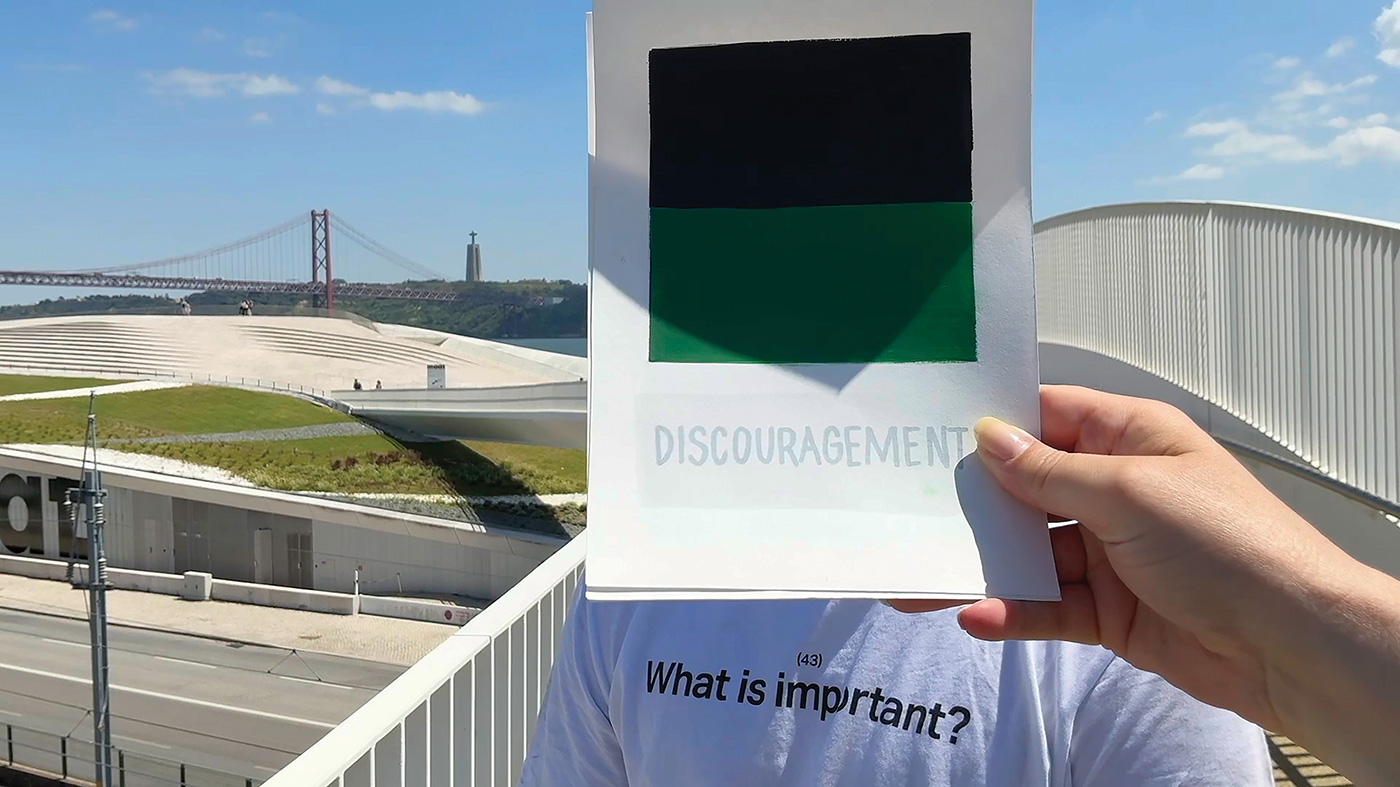
Minor Modes of Multiple Muted Memories in Motion
Performance | mp4 | couleur | 10:32 | Pays-Bas, Portugal | 2025
In this performative video work, Nabuurs&VanDoorn collaborate with Timo Paris to activate the first eleven points of The Living Atlas — a psychogeographic walk through the hidden layers of Lisbon. Using movement as a method of mapping, the breaker interprets site-specific protocols derived from the Nabuurs&VanDoorn’s prior cartographic research. The choreography emerges from the tension between embodied memory and spatial constraint, tracing the invisible architectures beneath the modernist grid. As the body navigates thresholds, detours, and pauses, the city becomes both stage and score. This work marks the beginning of a kinetic archive—an atlas in motion—where performance, mapping, and urban poetics converge.
Nabuurs&VanDoorn is a Dutch artist duo working across performance, cartography and post-medium installations. Their practice constructs open situations in which participation functions as source material, meaning emerges collectively, not illustratively. Their work has a.o. been shown at Powerlong Art Center, Xiamen (2026), Sainsbury Centre, Norwich (2025), the Van Abbemuseum, Eindhoven (multiple years), Villa Empain, Brussels (2018), documenta 14, Kassel (2017), and the New Museum, New York (2008). Residencies include 18th Street Arts Center, Santa Monica (2026), Hangar, Lisbon (2025), VIR Viafarini, Milan (2019) and the Boghossian Foundation, Brussels (2018). Their work is held in the collections of M HKA Antwerp, the Mike Kelley Foundation for the Arts, the Van Abbemuseum and the Victoria & Albert Museum, London. Nabuurs&VanDoorn were twice nominated for the Follow Fluxus Award (2008, 2020).
Solomon Nagler
Catalogue : 2017Skin of the Cit-y | Film expérimental | 16mm | noir et blanc | 7:0 | Canada | 2016
Solomon Nagler
Skin of the Cit-y
Film expérimental | 16mm | noir et blanc | 7:0 | Canada | 2016
Framed by poet Robert Lax` sculptural texts, skin of the cit-y wanders through mills and factories surrendering to the elements, deteriorating in solidarity with the isolated Maritime cities that erode beside them. Contact printed in-camera, the film material stares back, layers view-planes and duration while dreaming in light....
Nagler’s films have been featured in Retrospectives at the Winnipeg Cinematheque, Excentris Cinema in Montreal, the Festival de le Cinéma Different in Paris, The Calgary Society of Independent Filmmakers, The Canadian Film Institute in Ottawa, Robert Heald Gallery in Wellington, New Zealand, The Artist Film Workshop in Melbourne, Australia and the Cinematheque Quebecoise. His work also includes 16mm celluloid installations that engage with experimental architecture in galleries and public space. These works have been exhibited at the Toronto International Film Festival, 8-11 Gallery (Toronto), Artspace Gallery (Sydney, Australia), Send and Receive Festival of Sound (Winnipeg) and The Halifax Independent Filmmakers’ Festival. Originally from Winnipeg, Solomon Nagler is co-founder of WNDX: Festival of the Moving Image in Winnipeg and currently lives in Halifax where he is a professor of film production at NSCAD University.
Parashar Naik, -
Catalogue : 2023Dustbin of a Politician | Film expérimental | 4k | couleur | 11:27 | Inde | 2022
Parashar Naik, -
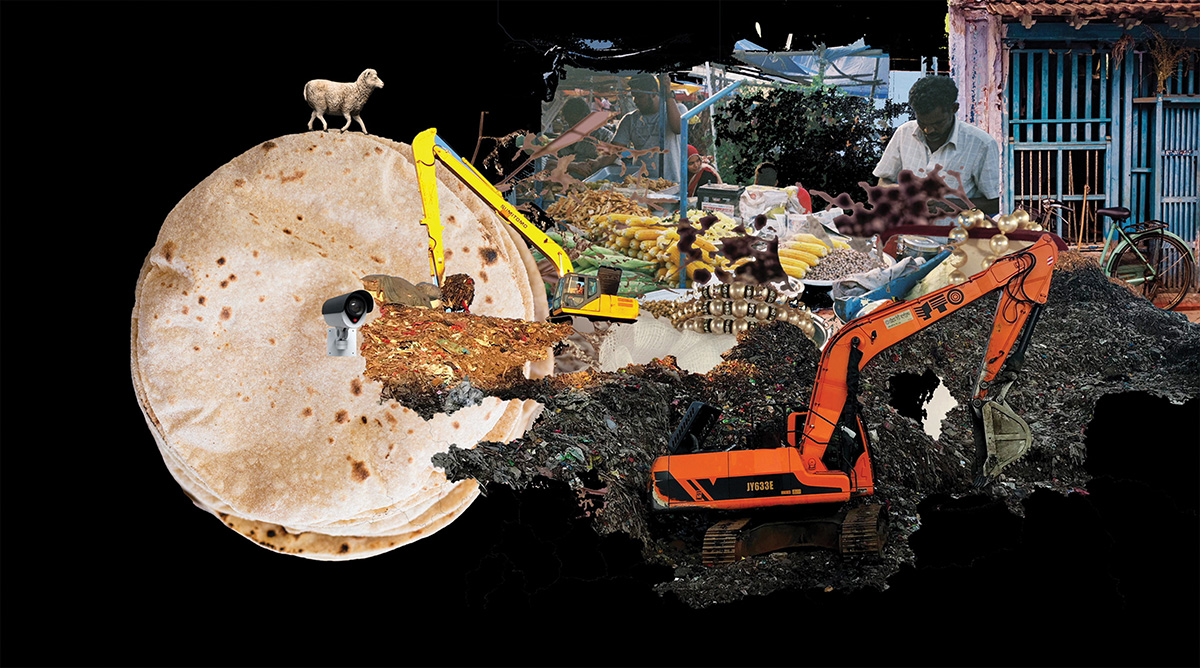
Dustbin of a Politician
Film expérimental | 4k | couleur | 11:27 | Inde | 2022
The work is an attempt to portray a society through damaged videos and images, a lot can be understood of a person by knowing what he or she throws away in a dustbin, various videos images, and audio come together to create an experience that is like going through the contains of a DUSTBIN.
Parashar Naik is a a visual artist living in the suburbs of Bombay, in a city that predated Bombay - Vasai. He completed his GD arts from Vasai Vikasini School of Visual Arts. He also is a professional film editor and his art practice mainly consists of the interpretation of his surroundings. He works in various media from drawings, assemblages, kinetic sculpture to videos. He has worked on various projects collaborating with the Jharkhand government, P.S.B.T and various other banners within Bollywood. His short films and videos have been selected and screened in various national and international platforms. Working as a collaborator with Clark house initiative for almost three years now, he has contributed in the show Bunting, Guadeloupe Oriental, Home videos and edited the series of videos for Gondwana Series at the Centre Pompidou in 2017. He curated a group show of 23 artists at Clark House titled Narcissism and Social Interaction, 2017. Biography written by- The Showroom https://www.theshowroom.org/relationships/parashar-naik
Hirofumi Nakamoto
Catalogue : 2025Singing Snail | Doc. expérimental | mp4 | couleur | 10:35 | Japon, Taiwan | 2023

Hirofumi Nakamoto
Singing Snail
Doc. expérimental | mp4 | couleur | 10:35 | Japon, Taiwan | 2023
This is a road-trip film that explores my roots through research on the wildlife of Taiwan. The film connects memories of Myanmar, where I spent my childhood, with the history of snails in Taiwan, focusing on those inhabiting Treasure Hill Artist Village. In 1932, the African giant snail was introduced to Taiwan by Professor Shimojo Kumaichi of Taihoku Imperial University (now National Taiwan University). This snail then spread from Taiwan to Okinawa and various parts of Asia. This film employs the invasive African giant snail as a lens for critically reassessing Japanese imperialism.
Hirofumi Nakamoto was born in Yokohama in 1986. The Silent Passenger, shooting hermit crabs in Okinawa, was selected for the 2013 Berlin International Film Festival. The Spacecraft Diaries 2016, a diary film with a mobile phone camera, was selected for the 2017 Jihlava International Documentary Film Festival. Night Snorkeling, collaborating with Nao Yoshigai, shooting the coastal waters of the Miura Peninsula, was selected for the 2021 Visions du Reel. In 2018, he moved to Zushi City in japan and founded “Zushi Art Films”, an organization, that holds lectures, workshops, and screenings around the film. He is currently holding a position as a teacher at Yokohama Digital Arts College.
Tomomichi Nakamura
Catalogue : 2010Ari | Animation | dv | couleur | 11:0 | Japon | 2008
Tomomichi Nakamura
Ari
Animation | dv | couleur | 11:0 | Japon | 2008
Ants and a crow in this work symbolize intermediaries between a big man, a small man, and a pregnant girl. It projects complexities of life and death in this living world. Through phantasmagoria, it reverses an ordinary image of life and death, and questions its human-centric view.
Nakamura Tomomichi (Male) Nationality: Japanese Birth: Jan. 10 1972
Mayumi Nakazaki
Catalogue : 2014shadowing | Vidéo expérimentale | hdcam | | 19:57 | Japon, Pays-Bas | 2012
Mayumi Nakazaki
shadowing
Vidéo expérimentale | hdcam | | 19:57 | Japon, Pays-Bas | 2012
Inspired by the art critic John Berger`s essay `Seker Ahmet and the forest` (1979), the work deals with the subject of memory. The structure of the film is episodic, each scene is repeatedly interrupted by another in a disorienting manner. It explores a notion of fragmented narrative within a cinematic context. Relating to the issue of `the building of the Burma-Siam railway` during WWII, the story mixes with reality and fiction, documents and illusions where past and present co- exist. The film consists of a sequence of different visual materials; a painting, drawings, archive photographs, scenes with actors and animals.These various textures are combined in the timeline, observed and interpret the subject and its memory, as well as questioning the sense of time/space.
Mayumi Nakazaki is a Japanese visual artist, based in Amsterdam. She studied audio-visual at the Gerrit Rietveld Acadmy in Amsterdam. Her graduation work has been awarded the Rene Coelho Prize van Nedrland Instituut voor Mediakunst in 1999. This work has been exhibited and screened in vaious places such as; Stedekijk Museum Amsterdam, Nederlands Film Festival, Filmmuseum Amsterdam. The following year, she worked as a writer/director in the program De Achtbaan, Avro t.v, which 20 min. drama ?O, vader!? was produced. During 2000-2001, she was a participant at Rijksakademie van Beeldende Kunsten in Amsterdam. Her short film ?Sukiyaki - a conversation piece(2005)? has been presented such as; at experimental documentary section of `Paradocs`; International Film Festival IDFA Amsterdam in 2005, Berlinale talentcampus section `home affair` in 2007. In 2005, she was invited to participate in a media art residency program `Location One` in New York for 9 months, supported by Mondiraan Fonds. And from 2008-2009, she has been working in New York with the subsidy Bunkacho; Arts and cultural affairs, the Japanese government overseas research study program for artists. ?hunt hunter hunter (2009)? was a result of this one year project and the work has been shown at Jamaica Arts Center New York, Rencontres Internationales Paris/Berlin/Madrid, Macy Art gallery Colombia University New York, etc. Her recent work ?Chapter 2- the field trip(2011)? is distributed by EYE film Institute Amsterdam. She is working currently working on a feature film script, developed at Binger Filmlab in Amsterdam.
Catalogue : 2011hunt hunter hunted | | dv | couleur | 13:0 | Japon | 2009
Mayumi Nakazaki
hunt hunter hunted
| dv | couleur | 13:0 | Japon | 2009
It consists of a video footage of a socializing event for people and their dogs in the central park in New York City and the voice over. The event includes activities such as the Best in Park dog show, games, contests, and agility tests, etc. The voice over is not directly related to the event itself, but written based on a conversation between two artists dealing with photography. The artists have photographed hunting scene, and they are looking at their pictures of dead animals. This work investigates how we relate to animal, and questions our industrialized world surrounded by animal imagery.
Born in Japan and based in the Netherlands since 1994, Mayumi graduated from Gerrit Rietveld Acadmy in 1999. She is an alumna of residency programs such as Rijksakademie van Beeldende Kunsten in Amsterdam (2000-2001), Location One in New York (2005-2006). Exhibitions/presentations include: Jamaica Center for Arts and learning in NY, Macy Art Gallery Colombia University New York/Art Basel Miami Verge Fair, Kunstpavilion Zagreb Croatia, Stedelijk Modern Art Museum Amsterdam, The Netherlands Institute for Media Art, and Viper International Film Video and New Media Festival, Basel. She has received awards and grants including the Japanese government overseas study program, Fonds bkvb NL, Rene Coelho Prize from Netherlands Institute for Media Art Amsterdam, among others.
Alexander Nanau
Catalogue : 2006Peter Zadek inszeniert Peer Gynt | Documentaire | dv | couleur | 87:0 | Allemagne | 2005
Alexander Nanau
Peter Zadek inszeniert Peer Gynt
Documentaire | dv | couleur | 87:0 | Allemagne | 2005
Les répétitions de théâtre sont généralement un procédé strictement clos et intime. C?est le soir de la première que l?on remarque le résultat d?un travail rigoureux qui a eu lieu pendant des semaines, où, dans le meilleur des cas, le spectateur se laisse envoûter. Mais que se passe-t-il lors d?une répétition? Que fait le metteur en scène? Comment travaille-t-il avec les comédiens? C?est la première fois, depuis 16 ans, que le metteur en scène Peter Zadek autorise à filmer pendant ses répétitions. Il nous montre ainsi sa démarche de travail avec les comédiens et donne aux spectateurs un aperçu peu commun sur ce qui se passe derrière les coulisses d?un art qui est, depuis des décennies, influencé par lui. Le film est un regard très direct dans le monde intime d?une répétition de théâtre, dans lequel Peter Zadek travaille avec ses acteurs sur la mise en scène de Peer Gynt et, accompagne ce processus, parfois dramatique, jusqu`à la première. Il n`y a pas d`interviews qui expliquent la manière de travailler de Peter Zadek. Seule un regard direct sur la situation entre le metteur en scène et les comédiens nous le montre. Cela donne ainsi au spectateur la possibilité de comprendre par lui-même ce processus de travail dont il est témoin.
Alexander Nanau est né le 18 mai 1979 à Bucarest. En 1990, il a immigré avec ses parents en Allemagne. Il passe son baccalauréat en 1999. De 1997-2000, il est comédien dans un groupe de théâtre alternatif à Brunswick. Depuis 1999 il a travaillé sur plusieurs films de cinéma en tant qu`assistant réalisateur et a réalisé des courts-métrages et des films documentaires. En 2002-2003 il est l`assistant de Peter Zadek au théâtre de Bourg et au théâtre national de Berlin. En 2003, il commence ses études à la Deutsche Film-und Fernsehakademie Berlin en section réalisation.
Mai Yamashita Naoto Kobayashi
Catalogue : 2007Miracle | Vidéo expérimentale | dv | couleur | 3:10 | Japon | 2004
Mai Yamashita Naoto Kobayashi
Miracle
Vidéo expérimentale | dv | couleur | 3:10 | Japon | 2004
Dans cette oeuvre, nous lançons cinq dès. Même si nous les jetons à n'importe quels moments, ils montrent les mêmes points. Ce qui amène à parfaitement dire que des centaines, des milliers d'échecs de miracles existent, c'est-à-dire "dans la vie de tous les jours". (En fait nous avons jeté les dès tous les jours pendant deux mois.)
Le duo d'artiste Japonais Mai Yamashita (né en 1976) et Naoto Kobayashi (né en 1974) travaille dans le domaine du multimédia. Tous deux ont étudié à l'Université Nationale de Musique et des Beaux-Arts de Tokyo (MFA). Depuis leur arrivée en Allemagne en 2004, ils travaillent et vivent en Europe. Ils ont participé à des expositions internationales majeures et à beaucoup de festivals (Philip Morris K.K Art Award 2002 "The first move", Forum In ternational de Tokyo , Japon / transmediale.06, Akademie der Künste, Berlin, Allemagne / ARS 06, Le Musée d'Art Contemporain KIASMA, Helsinki / LichtRouten Lüdenscheid, Lüdenscheid, Allemagne. etc.)
Catalogue : 2007Release of mineral water | Doc. expérimental | dv | couleur | 5:33 | Japon, Allemagne | 2003
Mai Yamashita Naoto Kobayashi
Release of mineral water
Doc. expérimental | dv | couleur | 5:33 | Japon, Allemagne | 2003
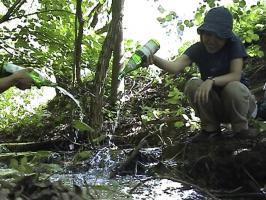
Mai Yamashita et Naoto Kobayashi ont acheté des bouteilles d'eau minérale allemandes "Tonissteiner" dans un magasin d'emballage au Japon et les ont portées jusqu' à leur source, dans la région d' Eifel en Allemagne, où ils les ont libérées.
Le duo d'artistes japonais Mai Yamashita (né en 1976) et Naoto Kobayashi (né en 1974), travaille dans le domaine du multi-média. Tous deux ont étudié à la "MFA Tokyo National University of Fine Arts and Music" (Université Nationale des Beaux-Arts et de Musique de Tokyo MFA) Depuis leur arrivée en Allemagne en 2004, ils travaillent et vivent en Europe. Ils ont participé à des expositions internationales majeures et festivals (Philip Morris K.K. Art Award 2002 "The First Move", Tokyo International Forum, Japon / transmediale.06, Akademie der Künste, Berlin, Allemagne / ARS 06, The Museum of Contemporary Art KIASMA, Helsinki / LichtRouten Lüdenscheid, Lüdenscheid, Allemagne. etc.)
Francis Naranjo
Catalogue : 2010Los colores de la libertad: Blanco | Vidéo | dv | couleur | 10:26 | Espagne | 2010
Francis Naranjo
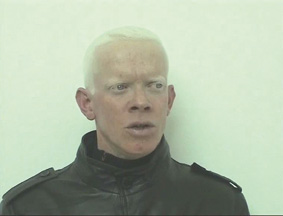
Los colores de la libertad: Blanco
Vidéo | dv | couleur | 10:26 | Espagne | 2010
Francis Naranjo
Catalogue : 2023LA POSIBILIDAD DE LA MÁSCARA BLANCA | Vidéo | 4k | | 3:53 | Espagne | 2022
Francis Naranjo
LA POSIBILIDAD DE LA MÁSCARA BLANCA
Vidéo | 4k | | 3:53 | Espagne | 2022
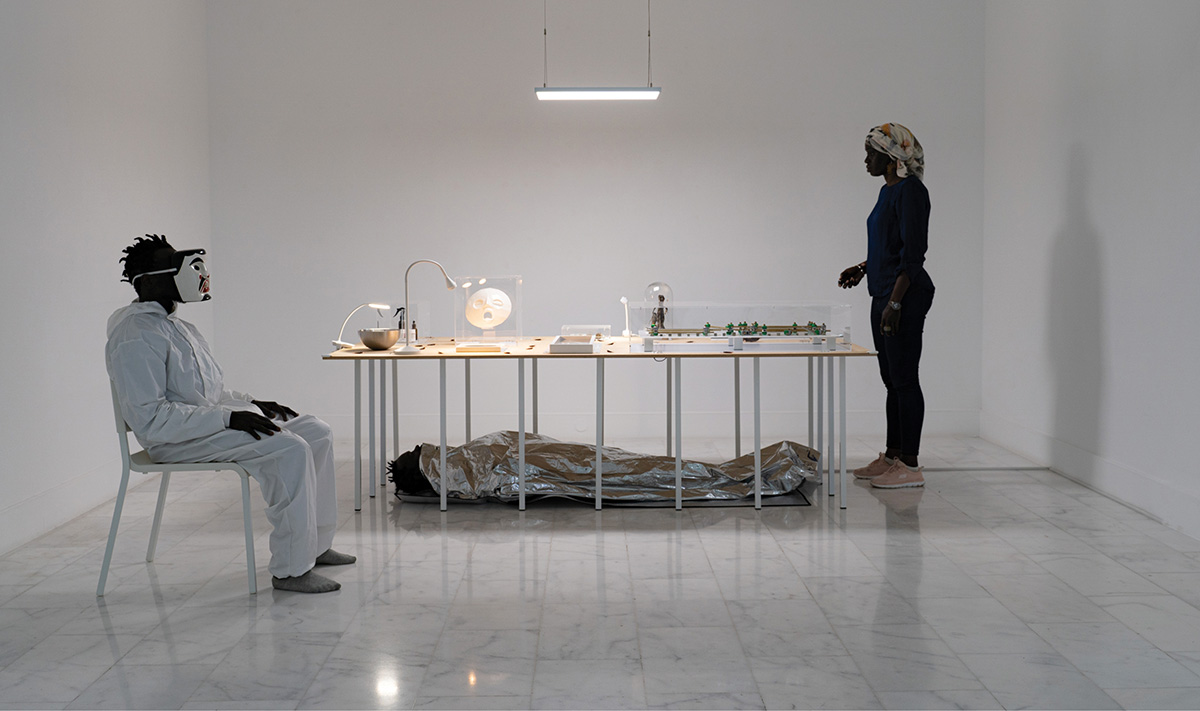
The possibility of the white mask is presented as a discussion table that houses its own jail. Above it is a composition of elements that reflect on the indigenous, on the "others", on the human condition, on contamination, extractivism, memory, migrations, and above all, putting on the table the fracture that separates us. In this proposal we use two masks: One from the African continent: Ghana; and another from the South American continent: Bolivia. Both refer us to ancestral thoughts. Migrations and rites relate them in their intentions. The Ghanaian Ashanti tribe mask (present on the table) are often part of ceremonial attire and worn at religious and social events to represent the spirits of the ancestors. In the mask of the Grandparents (Bolivia, Chiquitanía) tradition indicates that it was a form of mockery that the elders of San José used with the young Chiquitanos, who followed the teachings of the recently arrived Jesuit missionaries. It was the way they tried to dissuade them from embracing the new customs and religion. The possibility of the white mask is presented to us as a ritual where the fractures on which to reflect are different.
Francis Naranjo. Born in Santa María de Guía (Gran Canaria, Spain), in 1961. Multidisciplinary artist who crosses artistic limits exploring in constant research and experimentation, which focuses his process on the investigation of the relationships between the human condition and factors of the prevailing system. He has carried out public works, he has lectured, he has curated, he has written about artists and reflections, he has carried out and participated in numerous individual and collective exhibitions, among other activities. In recent years his activity is focused, above all, in South America.
Catalogue : 2018Viaje a Tiawanaku (Travel to Tiawanaku) | Vidéo | hdv | couleur | 18:32 | Espagne, Bolivie | 0
Francis Naranjo
Viaje a Tiawanaku (Travel to Tiawanaku)
Vidéo | hdv | couleur | 18:32 | Espagne, Bolivie | 0
Viaje a Tiawanaku (Journey to Tiawanaku) is a tribute to Marisa Naranjo de la Coba, Francis Naranjo’s mother (who died in 2015 after a long illness), which becomes a tribute to all mothers. Marisa Naranjo never left the Canary Islands, she always travelled via other people’s memories. She led a remarkable life: her separation from her husband, whom she left while pregnant with her only child and amidst Franco’s dictatorship, meant she had to live with friends (in Santa María de Guía) because her circumstances prevented her from seeking the help of her family. A rural Spain immersed in poverty and a hypocritical morality meant that her son was her only concern. This video presents distinct journeys: a sensorial and initiatory one, where the soundtrack, images and poetry merge to help us on this passage which the human condition guides us on through its emotions; and another, physical and tangible. Following her death, Marisa embarks on her last voyage to experience of Tiawanaku (Bolivia). This time, it’s her ashes which travel, to resume the journey by way of our memory, where she awaits us to continue with the cycle of life.
Francis Naranjo is a Spanish artist born in Santa MarÃa de Guia, in the Canary Islands, in 1961. He has produced videos and installation pieces. His work develops problem areas pertaining to the society of information, highly technological, in which we are being controlled or in which we control, as well as globalization and the general use of new technologies and the human condition. Among other places, his work has been exhibited in the in different cities of the world like Santiago de Chile, BerlÃn, Nueva York, Göteborg, Miami, Uppsala, Madrid, ParÃs, Sevilla, Valencia, Casablanca, Tel Aviv, Montreal, South Korea, La Paz, Quito, Buenos Aires, Londres, Uppsala, etc.
Catalogue : 2015EN UN PAIS LEJANO: UTOPOS | Vidéo | | couleur | 4:50 | Espagne | 2013
Francis Naranjo
EN UN PAIS LEJANO: UTOPOS
Vidéo | | couleur | 4:50 | Espagne | 2013
This is an experimental video work based on the premise of the introductory text: In a very far land, there exist some mythological creatures called SHICHAS. They combine the different gender alternatives and have the quality to absorb all negative energies keeping them inside. The whole piece has been built using a technique that links photograms together. It starts with a white screen where a set of black rectangles progressively spread on the surface of the image. Then, this image merges with another where some characters appear, who have their eyes covered with rectangles which hide their identities. This image represents the main hall of a geriatric, where we can see many residents whose memories are now defeated by their absence of identity. The work ends with a review of moments represented by souvenirs and the twist of those creatures that absorb the negative energy and stand for the globality, now sick and amnesic. The soundtrack is made with the sounds of corporal fluids.
FRANCIS NARANJO 1961, Santa María de Guía. Gran Canaria. España http://www.francisnaranjo.blogspot.com/ INDIVIDUAL PRESENTATIOS (SELECTION) 2014. Discordancias. Parque Cultural de Valparaíso. Chile. En un país lejano: utopos. Club Kitel Atacama. Bahía Inglesa. Copiapó. Chile. 2013. La paz armada. Centro de Arte Contemporáneo Wilfredo Lam. La Habana. Cuba. SAKER i LIVET . Galleri Lokomotiv. ÖKKV Kulturfabriken. Ömsköldsviks. Suecia. EUROPA (El continente triste). Centro Cultural de España. La Paz. Bolivia. 2012. La coleccionista de luces. Museo de Arte Contemporáneo. MAC. Santiago de Chile. Chile. White. Librería Fayad Jamís. XI Bienal de La Habana. Cuba. 2011. Personne n’est plus. Galería del Institut Français de Madrid. España. None is more. Instituto Cervantes de Rabat. Marruecos. ….agosto 2007…. Inauguración de Centro de Cultura Contemporánea San Martín. Cabildo de Gran Canaria. Las Palmas de Gran Canaria. España. Smile. Fundación Municipal de Cultura, Educación y Universidad Popular. Centro de Cultura Antiguo Instituto. Sala 1. Ayuntamiento de Gijón. España. GROUP PRESENTATIONS (SELECT) 2014. Cruces. Museo Nacional de Arte. La Paz. Bolivia. Festival de cine EL LUGAR SIN LÍMITES. Quito, Guayaquil, Manta, Cuenca. Ecuador. Cruce de colecciones (25 años del Centro Atlántico de Arte Moderno-CAAM).Centro Atlántico de Arte Moderno (CAAM). Las Palmas de Gran Canaria. España. Prohiviciones y Normatibas. Gabinete de Hygiene. Mercado de Tapineria. Valencia. España. 2013. SIART. Bienal de Arte Internacional de Bolivia. 8ª Versión. La Paz. Bolivia. V Semana de Vídeo Iberoamericano. Centro Cultural de España. La Paz. Bolivia. Cartografías de lo (im)posible. Centro de Arte Contemporáneo Wilfredo Lam. La Habana. Cuba. 12 fotos para 2013. S/t Espacio Cultural. Las Palmas de Gran Canaria. España. V Semana de Vídeo Iberoamericano. Filmoteca de Andalucía. Córdoba. España. 2012. Topographies virtuelles. Rencontres Internationales Paris/Berlin/Madrid. Palais de Tokyo. París. Francia. Reinventar la Isla 2. San Martín Centro de Cultura Contemporánea. Las Palmas de Gran Canaria. España. ALZHEIMER. Parque Cultural Ex Cárcel. Valparaíso. Chile. Identités. Recontres Internationales Paris/Berlin/Madrid. Haus der Kulturen der Welt. Berlín. Alemania. Olympic Fine Arts “OFA 2012”. Barbican Arts Centre. Londres. Reino Unido. Artistas de la Galería. Galería AFA. Santiago de Chile. Mulier-Mulieris. Museo de la Universidad de Alicante. Alicante. España. 11ª Bienal de la Habana. Prácticas artísticas e imaginarios sociales. La Habana. Cuba. A través del cristal. (Visiones fotográficas en la Colección del CAAM). Museo de Esculturas "Abraham Cárdenes". Tejeda. Gran Canaria. España. ArtBooks. Centro de Arte La Regenta. Las Palmas de Gran Canaria. España. 25 años de La Regenta. Centro de Arte La Regenta. Las Palmas de Gran Canaria. España. 2011. III Semana de vídeo Iberoamericano. Filmoteca de Andalucía. Córdoba. España. Revelaciones.Objetos, metáforas y ficciones en la colección del CAAM. CAAM - Sala San Antonio Abad. Centro Atlántico de Arte Moderno. Las Palmas de Gran Canaria. España. Identités. Recontres Internationales Paris/Berlin/Madrid. Centre Pompidou. París. Francia. Tesoros de los Museos del Cabildo de Gran Canaria. Colección del CAAM. Salón Noble del Edifici del Rellotge. Barcelona. España. Metamorphose. Recontres Internationales Paris/Berlin/Madrid. Auditórium del Ministerio de Cultura. Madrid. España. Creative Insomnia – Red night. Atelier Meta-morphic. Madrid. España. Longitudes de onda. Espacio de arte OTR. Madrid. España. Metamorphose. Recontres Internationales Paris/Berlin/Madrid. Haus der Kulturen der Welt. Berlín. Alemania.
Catalogue : 2013Return | Vidéo | hdv | couleur | 8:12 | Espagne | 2012
Francis Naranjo
Return
Vidéo | hdv | couleur | 8:12 | Espagne | 2012
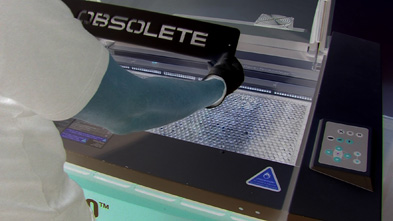
Return is the way back. The journey in the reverse direction. An alternative approach to the beginning. Then, from there, to recover the choice of starting " the new" trip. To get back lucidity from obsolescence.
Francis Naranjo is a Spanish artist born in Santa María de Guia, in the Canary Islands, in 1961. He has produced videos and installation pieces. His work develops problem areas pertaining to the society of information, highly technological, in which we are being controlled or in which we control, as well as globalization and the general use of new technologies. Among other places, his work has been exhibited in the in different cities of the world like Santiago de Chile, Berlín, New York, Göteborg, Miami, Uppsala, Madrid, París, Sevilla, Valencia, Casablanca, Tel Aviv, Montreal, South Korea, La Habana, etc.
Catalogue : 2012DISTOPIA EN EL SISTEMA BINARIO | Vidéo expérimentale | dv | noir et blanc | 7:21 | Espagne | 2011
Francis Naranjo
DISTOPIA EN EL SISTEMA BINARIO
Vidéo expérimentale | dv | noir et blanc | 7:21 | Espagne | 2011
The protagonist of the video is located on a white, sterilized stage without any possibility for us to be distracted from the speech: a person defined as transgender tells us, opened heart, but concealing his/her identity, his/her experience for defending being himself/herself, far from the placements of gender and sex. After all sex is biological, but gender is a social construct and as such is built and is changed. The content of his speech, also by the concealment of his/her identity, can be extrapolated to other areas of a binary and Manichean society that feels more secure to pigeonholing people. Therefore, Dystopia in the binary system is presented more as a space of visibility of diversity.
Francis Naranjo is a Spanish artist born in Santa María de Guia, in the Canary Islands, in 1961. He has produced videos and installation pieces. His work develops problem areas pertaining to the society of information, highly technological, in which we are being controlled or in which we control, as well as globalization and the general use of new technologies and the human condition. Among other places, his work has been exhibited in the in different cities of the world like Santiago de Chile, Berlín, Nueva York, Göteborg, Miami, Uppsala, Madrid, París, Sevilla, Valencia, Casablanca, Tel Aviv, Montreal, South Korea, etc.
Catalogue : 2011Smile | 0 | dv | couleur | 1:10 | Espagne | 2009
Francis Naranjo
Smile
0 | dv | couleur | 1:10 | Espagne | 2009
A voice in of us warns before the slogan that is repeated constantly: HELP, in which a character with their backs to appears right next to a loudspeaker, from where presumably comes the slogan; the character tour in a fused one giving the round and running against the camera, here a smile is generated that it closes the work.
Francis Naranjo is a Spanish artist born in Santa María de Guia, in the Canary Islands, in 1961. He has produced videos and installation pieces. His work develops problem areas pertaining to the society of information, highly technological, in which we are being controlled or in which we control, as well as globalization and the general use of new technologies. Among other places, his work has been exhibited in the in different cities of the world like Santiago de Chile, Berlín, Nueva York, Göteborg, Miami, Uppsala, Madrid, París, Sevilla, Valencia, Casablanca, Tel Aviv, Montreal, South Korea, etc.
Catalogue : 2009...agosto 2007... | Vidéo expérimentale | 0 | couleur | 18:0 | Espagne | 2008
Francis Naranjo
...agosto 2007...
Vidéo expérimentale | 0 | couleur | 18:0 | Espagne | 2008
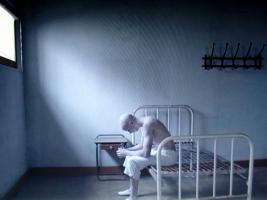
?August 2007? (Francis Naranjo, video made in 2008, Spain, in Spanish with English subtitles, based on a poetic text; duration 18 minutes, PAL) This video is the result of the collaboration between three creative disciplines: image, Francis Naranjo; music, Jose Manuel López López; poetry, Dionisio Cañas. The video ?August 2007? is a beam of light, an encounter, of visual, acoustic and poetic information. Three elements, image, music and word, are combined in the virgin screen. Risky and a looked for encounter of three nomadic planets that floated in the uncertain space of pre-creation, of a future event: a video (Francis N), a musical composition (Jose Manuel L L), a poem (Dionisio C). The narrative resources of image, music and poetry are synchronized by the aesthetic and existential emotion. The three spaces, image, music and poetry, are interlaced creating a spider web in which the glance, the ear and the subconscious mind, that ?is waked up? by the poetic word, catch the spectator in a mortal trap: the one to see himself reflected in the video. The three different concepts of time, image, music and poetry, are a unique labyrinth which only the spectator who does not have a heart leaves undamaged, but the sensible spectator slides tenderly to the exit of the video-labyrinth, a flowery precipice, a creative emptiness, the overwhelming end of a white screen that is not a end but a beginning.
Francis Naranjo est un artiste espagnol, né en 1961 à Santa Maria de Guia, aux Iles Canaries. Il réalise des vidéos et des installations. Une exposition personnelle lui a été consacrée en 2006, à Santiago (Chili). Il a également été représenté à l'Arco de Madrid (Espagne). Son travail développe des problématiques relatives à la société de l'information, hautement technologique, où nous sommes contrôlés et où nous contrôlons, ainsi qu'à la globalisation et à l'utilisation généralisée des nouvelles technologies. Ses ?uvres ont notamment été présentées à la galerie AFA de Santiago (Chili), à l'Institut Cervantes de Paris (France), à l'Ecoteca de Pescara (Italie), au 108 Contemporary Art de Miami (USA), au MAC (Musée d'Art Contemporain) de Santiago, à la galerie Vanguardia de Bilbao (Espagne), à la Casa de America de Madrid, au CAAC (Centre Andalou d'Art Contemporain) de Séville (Espagne), au Centro Atlantico di Arte Moderno, Las Palmas de Gran Canaria (Espagne), au Kunstverein Panitzsch de Leipzig (Allemagne), à la Biennale de Dakar (Sénégal) et au Circulo de Bellas Artes de Madrid.
Catalogue : 2008acto frívolo | Art vidéo | 0 | couleur | 8:46 | Espagne | 2007
Francis Naranjo
acto frívolo
Art vidéo | 0 | couleur | 8:46 | Espagne | 2007
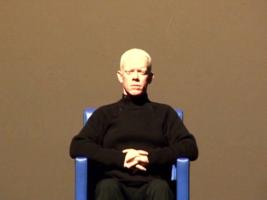
Francis Naranjo est un artiste espagnol, né en 1961 à Santa Maria de Guia, aux Iles Canaries. Il réalise des vidéos et des installations. Son travail est exposé aux Etats-Unis, en Amérique latine, en Europe. Une exposition personnelle lui a été consacrée en 2006, à Santiago du Chili. Il a également été représenté à l'Arco de Madrid. Son travail développe des problématiques relatives à la société de l'information, hautement technologique, où nous sommes contrôlés et où nous contrôlons, ainsi qu'à la globalisation et à l'utilisation généralisée des nouvelles technologies. Ses ?uvres ont notamment été pésentées à la galerie AFA, Santiago du Chili ; à l'Institut Cervantes, Paris ; à l'Ecoteca, Pescara, Italie ; au 108 Contemporary Art, Miami ; au MAC (Musée d'Art Contemporain), Santiago du Chili ; à la galerie Vanguardia, Bilbao ; à la Casa de America, Madrid ; au CAAC (Centre Andalou d'Art Contemporain), Séville ; aux Rencontres Internationales Paris/Berlin, Paris ; au Centro Atlantico di Arte Moderno, Las Palmas de Gran Canaria (Espagne) ; au Kunstverein Panitzsch, Leipzig ; à la biennale de Dakar et au Circulo de Bellas Artes, Madrid.
Catalogue : 2006Iluminaciones urbanas 1 | Art vidéo | dv | couleur | 4:28 | Espagne | 2004
Francis Naranjo
Iluminaciones urbanas 1
Art vidéo | dv | couleur | 4:28 | Espagne | 2004
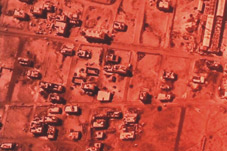
Quand le chant des oiseaux persiste, tout s?épanoui (panta rehi) comme Héraclide d?Ephèse déclarait il y a à peu près 2500 ans. Et Francis Naranjo, dans sa nouvelle vidéo, ILLUMINACIONES URBANAS (Illuminations urbaines), semble dire que nous ne pouvons voir deux fois la même chose, même, lorsqu?il s?agit de sa propre rue, comme ici, car tout change et rien ne persiste. Les voitures qui animent le paysage urbain ne sont pas le mêmes, la lumière qui illumine notre monde quotidien varie en luminosité et perce aux travers de différents nuages; les voisins que nous croisons dans la rue ont l?air de mutants, ils changent leur habits et leur humeurs, quelque fois ils nous saluent, alors que d?autre se dépêchent? Et nous ? Combien de ??moi sont en nous?? ? Des images mouvantes comme celle du monde de la philosophie d?Héraclide, semblent se reprendre sans fin? étant toujours différents, le son des fluides du corps les accompagne renforçant cette notion de se baigner à chaque fois dans une rivière différente, même si elle est toujours la même. Francis parle des flux internes et externes, tout en s?acharnant sur la croyance que certaines choses persistent. Mais les fluides de notre corps semblent toujours trouver un autre chemin dans le labyrinthe vasculaire de notre corps, tout juste comme nos voisins humainement automates semblent créer une ville différente de notre ville à chaque jour qui passe ; tout juste comme nous faisons de nos fenêtres et que les voisins font des leurs, toujours identique, toujours inerte, toujours en train de regarder des scènes distinctes. Dans le passé, c?était par cette fragile santé que venait la corruption et la putréfaction de nos fluides corporels. Et les concoctions à base de sang étaient faites pour les éliminer, pour les chasser de nos corps dans la gouttière. De part ses vidéos, Francis semble pointer notre mémoire quotidienne inexploitée, à traits de sangs dans notre routine. Mais ni le sang qui coule de nos conscience ni même nous même sommes les mêmes? Et peut auront nous à répéter ce saignement conceptuel pour toujours dans un devenir infini, car tout change?The Final Journey, du poète espagnol Juan Ramon Jimenez (Prix Nobel 1956) est l?un de ceux qui reflètent le mieux le combat/indécision/dichotomie entre notre condition éphémère, notre désire humain de renouveau, et notre anxiété inavouée à un moment donné pour la permanence et la transcendance : ? Et je partirais. Et le chant des oiseaux persistera ; et mon jardin, et ses arbres verts et ses puits blancs, continuerons. Chaque après midi, le ciel sera calme et bleu : Et la cloche de l?église sonnera dans le beffroi ; tout juste comme elles le font maintenant. Ceux qui m?ont aimé mourront ; et le village se renouvellera chaque année ; et dans ce coin propre et fleurit de mon jardin, mon esprit errera, nostalgique? Et je partirais, et je serais seul, sans chez moi, sans mon arbre vert, sans mon puit blanc, sans ciel bleu? Mais le chant des oiseux continuera. Et la vidéo de Francis Naranjo contniuera de parelr du devenir, à la guise des faux changements jusqu?à ce que le changement final arrive.
Francis Naranjo est un artiste espagnol, né en 1961 à Sta. Maria de Guia, aux Iles Canaries. Il réalise des vidéos et des installations. Son travail est exposé aux Etats-Unis, en Amérique latine,et en Europe. Une exposition personnelle lui a été consacrée en 2006, à Santiago du Chili. Il a également été représenté à l'Arco de Madrid. Son travail développe des problématiques relatives à la société de l'information, hautement technologique, où nous sommes contrôlés et où nous contrôlons, ainsi qu'à la globalisation et à l'utilisation généralisée des nouvelles technologies.
Aily Nash
Catalogue : 2014Omiya Hachiman Dori | Doc. expérimental | hdv | couleur | 33:38 | USA, Japon | 2013
Aily Nash
Omiya Hachiman Dori
Doc. expérimental | hdv | couleur | 33:38 | USA, Japon | 2013
The small shops in the typical Tokyo neighborhood of Omiya line Omiya Hachiman dori, the main street which leads to a 9th century Shinto shrine. From tofu makers, dry cleaners, hairdressers, to tatami-mat makers, the intimate portraits of these shops and their owners meditate on quotidian tasks, and the environment in which they?re performed.
Aily Nash (b. 1984 in Tokyo, Japan) is a curator, writer, and filmmaker. She received her BA from Bard College where she studied Film and Electronic Arts, and Literature. Her curated programs have screened in venues including MoMA PS1 (NYC), FACT (Liverpool), BAM/Brooklyn Academy of Music (NYC), Anthology Film Archives (NYC), in Light Cone`s Scratch Expanded (Paris), Northwest Film Center (Portland), Image Forum (Tokyo), Echo Park Film Center (L.A.), Art Cinema OFFoff (Ghent), and others. Her writing has appeared in the Brooklyn Rail, Artforum.com, Film Comment, Kaleidoscope, de Filmkrant and elsewhere. She curates films at Basilica Hudson, and is an editor of a film criticism program at the Berlinale. She is based in Hudson and Brooklyn, NY.
Arash Nassiri
Catalogue : 2015Tehran-Geles | | | couleur | 18:10 | Iran | 2014
Arash Nassiri
Tehran-Geles
| | couleur | 18:10 | Iran | 2014
Tehran-geles nous projette dans un paysage fantastique, dans laquelle les néons grésillants de la capitale iranienne s’incrustent de façon anarchique sur les vues aériennes des quartiers de Los-Angeles. En écho aux écritures publicitaires, les voix enregistrées depuis Skype témoignent du passé de Téhéran. La production de Tehran-geles a elle-même produit des ‘migrations’ audiovisuelles : les séquences aériennes tournées à Los Angeles et téléchargées par internet, les enseignes lumineuses filmées à Téhéran avant d’être transportées par avion vers la France dans un disque-dur. Les témoignages d’immigrés ont quant à eux été enregistrés par skype au rythme des décalages horaires.
Né en 1986 à Téhéran, Iran, Arash Nassiri vit et travaille à Paris. Diplômé des Arts Décoratifs de Paris en 2012, Arash a poursuivit sa formation au sein du Fresnoy, Studio National des Arts Contemporains. La formation d’Arash inclus également l’Ecole Nationale Supérieure des Beaux-Arts de Paris ainsi que l’Université des Arts de Berlin, où il a séjourné en 2010. Le travail d’Arash a été montré dans des expositions et festivals en France et à l’étranger, dont la Galerie du Crous en 2011, les expositions Panorama en 2013 et 2013, ainsi qu’à la Biennale d’Architecture de Venise lors de l’exposition « De l’objet à la ville » organisée par les Arts Décoratifs de Paris en 2010. En juillet 2014, son cernier projet a été distinguée dans le magasine culturel les Inrockuptibles. Arash a également reçu le Grand-Prix art vidéo au festival Côté Court Pantin ainsi que le prix des Amis du Fresnoy. Sa vidéo Tehran-Geles sera en compétition lors du festival BIEFF en Roumanie en décembre prochain.
Arash Nassiri
Catalogue : 2019City of Tales | Film expérimental | 4k | couleur | 21:30 | France | 2017
Arash Nassiri
City of Tales
Film expérimental | 4k | couleur | 21:30 | France | 2017
SYNOPSIS COURT: La nuit, lors des célébrations du nouvel an perse au printemps, les habitants de Los Angeles deviennent les hôtes des souvenirs de Téhéran. Ils ne parlent plus anglais, mais un idiome persan. Les néons emplissent les rues de couleurs psychédéliques. Pendant cet intervalle, comme les anciennes techniques romaines du palais de la mémoire qui utilisaient la visualisation spatiale pour mémoriser l`information, l`espace matériel du territoire éphémère et mutant des rues de Los Angeles sert à accueillir la mémoire de Téhéran une dernière fois avant de disparaître. SYNOPSIS LONG : La nuit, les habitants de Los Angeles deviennent les hôtes des souvenirs de Téhéran. Ils ne parlent plus anglais, mais un idiome persan. Les néons emplissent les rues de couleurs psychédéliques. Ce territoire éphémère et mutant a été filmé lors des célébrations du Nouvel An persan au printemps. Pendant cet intervalle, les souvenirs de l`habitant de Téhéran sont restitués dans le paysage urbain de Los Angeles. Comme les anciennes techniques romaines du palais de la mémoire, qui utilisaient la visualisation spatiale pour mémoriser l`information, l`espace matériel des rues de Los Angeles sert à héberger la mémoire de Téhéran. La nouvelle année perse, cette parenthèse dans le temps, devient l`espace où cette ville de souvenirs se déploie une dernière fois dans les rues de Los Angeles avant de disparaître. Pour écrire ce film, Arash Nassiri a interviewé un groupe d`iraniens à travers l`Europe et l`Amérique du Nord qui vivaient à Téhéran dans les années soixante-dix. A cette époque, la ville iranienne était fortement influencée par la culture occidentale. Des architectes de Californie et de Los Angeles ont été chargés de construire l`urbanisme de Téhéran. Le sociologue avait l`habitude de décrire ce phénomène comme Téhéran-Los Angeles. Ce fantasme de la modernité occidentale s`est brusquement arrêté sur la révolution, ne se réalisant jamais pleinement et ne vivant plus que dans la mémoire des gens qui vivaient à Téhéran à cette époque. La nouvelle année perse, cette parenthèse dans le temps, devient l`espace où cette ville de souvenirs se déploie une dernière fois dans les rues de Los Angeles avant de disparaître.
Arash Nassiri est un jeune artiste franco-iranien né à Téhéran en 1986. Il vit et travaille à Paris. Après un passage aux Beaux-Arts de Paris, un échange à Berlin pour étudier la relation entre art et technologie, et une formation aux Arts-Décoratifs à Paris pour étudier la photographie et la vidéo, il termine ses études au prestigieux Fresnoy de Tourcoing. Arash Nassiri utilise des lieux comme cadres pour produire son travail, à la manière du Land Art. Ces lieux peuvent être très spécifiques, comme un bâtiment en ruine, ou une ville entière comme dans la vidéo TEHERAN-GELES, où Los Angeles est utilisée comme représentation de Téhéran. Est ainsi engagée une discussion entre deux pôles opposés : la matérialité et la virtualité du lieu. « J`aime imaginer mes projets en tant qu`ambassades. Ce sont des représentations d`espaces spéculatifs, où nos idéologies peuvent devenir visibles et malléables ». Ses films ont été présentés dans de nombreuses expositions et festivals en France et à l`étranger tels que la Triennale d`Istanbul (2010), la Biennale d`Architecture de Venise, la Biennale de Lyon dans le cadre du Palais du Tokyo, Le Parfait Flâneur (2015), Fundacio Sunnol, Barcelone (2016), le Musée de l`Himalaya de Shanghai (2016), et la Berlinale (2018). Arash Nassiri est lauréat du Prix de la presse - Les Enfants Terribles, Huy - Belgique (2014) ; le Prix du meilleur court métrage expérimental - festival Côté-Court Pantin, Paris (2014) ; et le RMIT University Award du meilleur court métrage expérimental - Melbourne Int. Film Festival, Australie (2015).
Frederic Nauczyciel
Catalogue : 2018La Peau Vive [Skin Live] | Installation vidéo | hdv | couleur | 38:0 | France | 2017
Frederic Nauczyciel
La Peau Vive [Skin Live]
Installation vidéo | hdv | couleur | 38:0 | France | 2017
J’ai invité dans le studio des complices de plusieurs années, issus de la communauté noire transgenre des deux territoires, et d’autres artistes connus ou inconnus, engagés dans des pratiques performatives, masculines et féminines, urbaines et savantes, waaking, krump, art performance, slam... Tous sont reliés par un désir puissant d’inventer leur identité et par une appartenance revendiquée aux marges, réelles et symboliques. Je leur ai proposé de filmer eux-mêmes leurs tatouages, leurs scarifications, leur peau, face à la caméra ; et ce faisant, à échantillonner, une partie de leur histoire.
Frédéric Nauczyciel est artiste visuel. Il vit à Paris et travaille entre Paris et Baltimore. Depuis 2011, il déploie des installations vidéos, des photographies et des performances qui relient les ghettos noirs de Baltimore et la périphérie parisienne, puisant dans la force de langages performatifs tel que le Voguing, les fanfares déambulatoires ou la langue des signes. Ses projets en cours sont des récits mettant en jeu la langue, la trans-communauté, la traversée des lignes de partage. Il développe l’idée d’un “ endroit de confiance “, un espace libre d’assignation où la singularité de chacun existe sans labellisation. Il a exposé au Musée de la Chasse à Paris (2012), au Mac/Val (2012), au Festival d’Avignon (2013), au Palau de la Virreina, Barcelone (2010), au FotoFest International, Houston (2015) entre autres. Ses films ont été montrés aux Rencontres Internationales Paris / Berlin, au Festival Distrital à Mexico City, au Palace Festival à Chicago, etc.
Catalogue : 2016Red Shoes | Installation vidéo | hdv | couleur | 4:17 | France | 2015
Frederic Nauczyciel
Red Shoes
Installation vidéo | hdv | couleur | 4:17 | France | 2015
Red Shoes est un rituel. Le vogueur Kendall Mugler (Paris) mets ses talons aiguille rouges, et remplit l’espace d’une énergie dite « dramatique » - c’est à dire : théâtrale, sauvage, hautement technique, audacieuse.
Frédéric Nauczyciel est un artiste visuel français. Il travaille entre la France et les Etats-Unis. Nourri par la danse et le cinéma, il réalise des photographies, des films et des performances. Il construit avec ses sujets des images collaboratives qui tendent vers une hybridation des formes. Il fait appel à l’expérience de la performance pour produire des « images vivantes » qui convient la présence. Depuis 2011, il déploie son travail entre les ghettos noirs de Baltimore et la périphérie parisienne, puisant dans la force des langages performatifs tel que le voguing. Il expose en France (Musée de la Chasse à Paris, Mac/Val, Eté Photographique de Lectoure, Rencontres Internationales de Photographie d’Arles, Festival d’Avignon, Centre Pompidou Paris), à Barcelone (Palau de la Virreina), ou aux Etats-Unis (Washington, Houston, Baltimore et New York). Il est lauréat en 2011 de la Villa Médicis Programme Hors les Murs pour les Etats-Unis (Institut Français), reçoit en 2013 l’Allocation de recherche du Centre National des Arts Plastiques et figure dans la collection du Fonds national d’Art Contemporain (Public # Ceux qui nous regardent, Le temps devant et The Fire Flies, Baltimore). Il est en résidence en Seine-Saint-Denis pour deux années, de 2014 à 2016.
Catalogue : 2016THE FIRE FLIES, FRANCESCA, BALTIMORE | Doc. expérimental | hdv | couleur | 39:35 | France, USA | 2014
Frederic Nauczyciel
THE FIRE FLIES, FRANCESCA, BALTIMORE
Doc. expérimental | hdv | couleur | 39:35 | France, USA | 2014
The Fire Flies, Francesca, Baltimore est une fable urbaine, un ‘road movie’ à la recherche d’Omar, personnage culte de la série TV « The Wire [Sur Ecoute] ». L’installation met en tension une traversée de Baltimore en voiture et une plongée dans la communauté des vogueurs de la ville – performers homosexuels et transgenres des ghettos noirs de la ville – avec des intrusions sophistiquées de Francesca à New York. Le film joue comme une porte dérobée qui invite à pénétrer un monde caché. L’éclatement du montage, en une succession et une superposition de séquences quasi brutes réalisées avec un iPhone, met la vision en défaut et rend compte de manière volontairement lacunaire d’une réalité qui ne peut se livrer complètement. La fragmentation du montage nous invite à éprouver plutôt que comprendre ce langage du corps sophistiqué et performatif. La boucle propose une progression, de documents bruts à des séquences plus formelles, des sons des balls à la musique baroque de Bach, avec des passages au blanc aveuglants et sonores qui rappellent la piste d’un ballroom. Ce n`est pas un documentaire sur le voguing, mais le making off d`un travail de création avec les vogueurs de Baltimore dans le décor et la réalité de cette Ville. La scène d`exposition, long plan séquence sur un parking, présente les personnages qui jalonnent cette traversée, pour raconter la rencontre improbable entre les vogueurs, Francesca et Omar.
Frédéric Nauczyciel est un artiste visuel français. Il travaille entre la France et les Etats-Unis. Nourri par la danse et le cinéma, il réalise des photographies, des films et des performances. Il construit avec ses sujets des images collaboratives qui tendent vers une hybridation des formes. Il fait appel à l’expérience de la performance pour produire des « images vivantes » qui convient la présence. Depuis 2011, il déploie son travail entre les ghettos noirs de Baltimore et la périphérie parisienne, puisant dans la force des langages performatifs tel que le voguing. Il expose en France (Musée de la Chasse à Paris, Mac/Val, Eté Photographique de Lectoure, Rencontres Internationales de Photographie d’Arles, Festival d’Avignon, Centre Pompidou Paris), à Barcelone (Palau de la Virreina), ou aux Etats-Unis (Washington, Houston, Baltimore et New York). Il est lauréat en 2011 de la Villa Médicis Programme Hors les Murs pour les Etats-Unis (Institut Français), reçoit en 2013 l’Allocation de recherche du Centre National des Arts Plastiques et figure dans la collection du Fonds national d’Art Contemporain (Public # Ceux qui nous regardent, Le temps devant et The Fire Flies, Baltimore). Il est en résidence en Seine-Saint-Denis pour deux années, de 2014 à 2016.
Frederic Nauczyciel
Catalogue : 2013The Fire Flies, Francesca, Baltimore | Vidéo | hdv | couleur | 1:6 | France, USA | 2012
Frederic Nauczyciel
The Fire Flies, Francesca, Baltimore
Vidéo | hdv | couleur | 1:6 | France, USA | 2012
"The Fire Flies, Francesca, Baltimore" Frédéric Nauczyciel, 2011/2012 "The Fire Flies, Francesca, Baltimore" est un road movie, une fable urbaine, une traversée de Baltimore en voiture le long de North Avenue, et une plongée dans la culture underground homosexuelle et transgenre des ghettos noirs de la ville. The Fire Flies, ce sont des lucioles, la flamboyance des Voguers de Baltimore qui se performent la nuit dans des Balls. En me rendant à Baltimore, j`allais sur les traces d?Omar, le personnage culte de la série "The Wire" qui a popularisé la Banjee Realness, cette posture de fierté des hommes homosexuels des ghettos en résistance à la culture dominante, une forme de dissimulation choisie destinée à déjouer les attentes. Je ne pensais pas m`intéresser au Voguing, cette danse performative née dans les ghettos noirs puis latinos de Harlem dans le New York des années 60 : une succession virtuose des poses des mannequins en couverture du magazine Vogue. La rencontre avec les Voguers s`est imposée, parce qu`ils sont tous Omar, selon le moment ou la situation. "The Fire Flies..." n`est pas un documentaire sur le voguing, donc, mais le making off d`un travail avec des voguers, tiré de leur réalité à Baltimore. "The Fire Flies, Francesca, Baltimore" est l`adaptation d`une installation vidéo multi-écran, présentée au Mac/Val*. Sur le mur extérieur d`une boîte, défile une traversée de North Avenue, qui sépare la ville en deux. A l`intérieur, des séquences quasi-brutes, sans sous-titres, se déploient sur trois murs. Le son des deux films se mélangent, envahit l`espace de la boîte pour créer un cinquième mur imaginaire. "The Fire Flies, Francesca, Baltimore" met en tension une traversée de Baltimore en apparence monotone et une plongée dans des abysses qui affleurent peu en surface, avec des intrusions sophistiquées de Francesca à New York. Le film joue comme une porte dérobée qui invite à pénétrer un monde parallèle. Se déploient des séquences en format vertical ou horizontal, rythmées par la musique et les sons, avec des temps morts, des accélérations, des plans séquences plus longs, des ruptures au noir - ou au blanc éblouissant - pour laisser des ambiances sonores ouvrir sur l?imaginaire de la ville. L?éclatement du montage rend compte de manière volontairement lacunaire d?une réalité qui ne peut se livrer complètement et met la vision en défaut. Il invite à appréhender ce langage des corps très codifié, à l?éprouver plutôt qu?à le comprendre. Le film propose une progression des documents bruts vers des séquences plus formelles, des sons scandés des Balls où les voguers performent et se défient, à la musique baroque de Bach et une danse improvisée - documentant ainsi le processus du travail de création lui-même. Dans dans sa version finale pour un écran, le film conserve son aspect expérimental avec une superposition des films mettant en regard la ville et les voguers. La scène d`exposition, calée au milieu du film, long plan séquence sur un parking, montre les personnages qui jalonne le périple, installe une narration reposant sur la rencontre improbable entre les Voguers, Francesca et Omar. Une traversée de la sensualité des faubourgs, une poétique de la survie. Durée : 56` * Mac/Val, musée d`art contemporain du Val de Marne à Vitry (Grand Paris), du 29 juin au 16 septembre 2012 dans le cadre de l?exposition temporaire "Situation(s)" (commissaire : Frank Lamy)
Frédéric Nauczyciel est né en 1968 à Paris et travaille à Paris et aux États-Unis. Il est diplômé d`un Magistère de Finance et d`un DEUG de Japonais. Administrateur de danse contemporaine, il découvre la force de la photographie par l`usage d`un Polaroïd. Il en fait sa pratique après avoir vu l`exposition Anthropologie Involontaire à l`Hôtel de Sully et la rétrospective Philip-Lorca diCorcia au Centre national de la Photographie en 2003. Sa démarche est nourrie par la photographie américaine et la danse (héritées de sa collaboration avec le chorégraphe Andy DeGroat), la peinture, ainsi que le cinéma qui a nourri son adolescence en lointaine banlieue. En réalisant une image rejouée dans l`instant dans un café de Little Italy à New York en 2004, il renoue avec l`expérience partagée du Polaroid tout en intervenant dans la mise en scène et le travail de la lumière. Les scènes et portraits construits avec ses sujets sont mis en partage pour produire des images qui dépassent la seule identité, un va-et-vient entre biographie, document et fiction, pour dégager une part intime du réel. Ses travaux personnels lui ont valu les commandes de la Ville de Paris, du Centre Pompidou (Paris et Metz, département Jeune Public), du Festival d`Avignon, de la Ville de Pantin, du Théâtre National de Chaillot? et de la presse ; ainsi que des collaborations artistiques avec la circassienne Satchie Noro, la chorégraphe Germana Civera, le Centre Dramatique National d?Orléans (direction Arthur Nauzyciel), l?École Régionale d`Art de Besançon. En 2007/2008, il est lauréat d`une Carte Jeune Génération Culturesfrance (Institut Français) et d`une résidence à l`Institut français de Barcelone pour Demeure Intime, reconstructions de l?intime familial (Stockholm, Paris, Barcelone). En 2008, il expose au festival d?Avignon trois tirages monumentaux du Public assis dans les gradins de la cour d?Honneur; des photographies plein cadre réalisées avec un temps de pause égal à la durée de la représentation. La carte blanche donne lieu en 2009 à une résidence à l?Ecole Régionale d?Art de Besançon et au Centre de Photographie d?Ile de France pour l?exposition Ceux qui nous regardent. En 2010, à la demande du Centre d?Art et de Photographie de Lectoure, il réalise un ensemble fini de 9 portraits, Le Temps Devant, une série d?images fortement mises en scène et d?inspiration picturale qui évoquent l?utopie rurale, le rapport au temps qui passe et l?anachronisme. Il fait son entrée dans la collection du Fonds National d?Art Contemporain. The Fire Flies (Baltimore), ensemble de photographies, de films et de performances, projet pour lequel il est lauréat du Programme Hors les Murs ? Institut Français pour les Etats-Unis (Baltimore) en 2011, interrogent la dissimulation et les représentations du corps masculin en milieu hostile. The Fire Flies, Francesca, Baltimore, installation vidéo pour 4 murs, est, après une première version pour la Nuit Blanche, présentée au Mac/Val (Vitry, grand Paris). Ce projet, mené avec des Voguers de Baltimore, performeurs homosexuels et trans genres des ghettos noirs de la ville, l?amène à ouvrir sa pratique photographique à tout ce qui pourrait rendre compte de l`expérience et mettre en jeu le corps, de la vidéo à la danse. Il collabore régulièrement avec l`anthropologue Eric Chauvier, l`écrivaine Anne Brunswic, la sociologue Nacira Guénif ainsi qu?avec les performeurs Elise Ladoué, Aragorn Boulanger, Francesca et les Voguers de Baltimore, New York et Paris.
Mario Navarro
Catalogue : 2008The Dreams of Sttaford Beer | Art vidéo | dv | couleur | 7:48 | Chili | 2007
Mario Navarro
The Dreams of Sttaford Beer
Art vidéo | dv | couleur | 7:48 | Chili | 2007
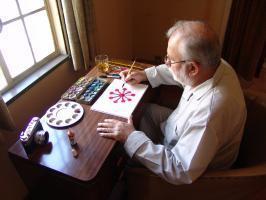
En 1971, un system innovant de gestion et de transfert de l'information commença à se développer au Chili sous le gouvernement du Président Salvador Allende; le projet CYBERSYN, synergie cybernétique ou SYNCO, system d'information et de contrôle. Au Chili, les compagnies avaient un système pour capturer, gérer et présenter les informations économiques et les analyser en quasi-direct, qui devint le pionnier dans l'application d'un model cybernétique dans des contextes socio-économique de masse, basé sur la convergence de la science, la technologie, la politique et la cybernétique. En 1972, une chambre de contrôle a été construite pour gérer toutes les informations et les données. Le directeur scientifique du projet était le britannique Stafford Beer, le père de la cybernétique globale. Dans cette mise en scène fictive, Stafford Beer imagine dans ses rêves -dans une chambre d'hôtel- comment construire et exécuter son projet au Chili. Mais, tout le temps saoul et incohérent, Beer essaye instamment de montrer une structure cohérente d'interaction qui n'est ni parfaite ni correcte pour quiconque sauf pour lui.
Mario Navarro (1970), Live and work in Santiago, Chile. He studied visual arts in the Universidad Católica de Chile. Has been invited, as an artist in residence, to Couvent des Récollets, Paris (2003) and recently has been invited to IASPIS, Stockholm. Mario Navarro has participated in numerous international exhibitions, such as Santiago Manifest?, Centro Cultural Matucana100, Santiago (2007), ?Sur Scene?, Chateau de Tours, France (2007), ?XXVII Bienal de São Paulo?, (2006), ?IV Liverpool Biennial ?(2006), ?Busan Biennial?,Korea (2006), ?Efecto Downey?, Espacio Telefónica, Buenos Aires, Argentina (2006). As solo shows it is important to mention: ?Red Diamond?, Salvador Allende Museum, Santiago, (2007), ?Not Like this, like this?, Lakeside Kunstraum, Klagenfurt, Austria (2006), ?Dignidad?, Die Ecke Gallery, Santiago, (2005), ?30 days with nothing?, Public intervention Canal Saint Martin, Paris (2003) As a curator has created the projects ?Daniel Lopez Show?, Withe Box and Roebling Hall, New York (2007), ?Transformer?, Centro Cultural Matucana 100, Santiago (2005) and ?Doméstico?, MAC, Valdivia, Chile (1999)
Armando Navarro
Catalogue : 2021Teenage God | Performance multimédia | 0 | | 30:0 | France | 1998
Armando Navarro
Teenage God
Performance multimédia | 0 | | 30:0 | France | 1998
Cette performance musicale est une expérience immersive qui prend la forme d’une série de rituels, que les spectateurs sont invités à accomplir pour faire partie de la secte pop: †eenage god. †eenage god est un projet collectif, multimédia et transdisciplinaire, qui combine les formes d’art et génère aussi des formes qui peuvent exister indépendamment des performances: musique, vidéo, photographie, livre, installation, livestream, etc. Dans cette satire de l'obsession pour les stars et les dieux, fans et secte se reflètent mutuellement comme dans des miroirs déformants. L’adoration de Britney Spears et de Shoko Asahara, la vénération de One Direction et de Heaven’s Gate, rituels pop et cérémonies mystiques s’entrechoquent et fusionnent pour tendre "un miroir de mort" à la société de consommation, comme dans "Scorpio Rising".
Armando Navarro est né à San Francisco (USA), et vit à Paris (France). Il est à la fois américain et français. Sa curiosité l'a poussé sur de multiples chemins à la croisée des arts plastiques et du cinéma: lettrisme, art contemporain, cinéma expérimental, art vidéo, clips, expositions, installations, performances, laboratoire cinématographique partagé, 1er rôle d'un long métrage et même une émission de radio. Son passage dans de grandes agences de publicité lui a permis d’observer d’un peu plus près les obsessions sociales dont il fait la satire dans "†eenage god" et "Size Zero".
Armando Navarro
Catalogue : 2023†een?ge g?d | Performance multimédia | 0 | | 45:0 | France | 2022

Armando Navarro
†een?ge g?d
Performance multimédia | 0 | | 45:0 | France | 2022
Immersive, participatory rituals that the audience performs to become part of the pop cult: †een?ge g?d.
†een?ge g?d is a multimedia and interdisciplinary collective that explores the limits between religion, pop culture and art, spectator, performer and creator, stage and auditorium, high, low and non-art... This project combines mediums and also generates forms that can exist independently from the performances: teen thriller, music, DJ set, dance, video, photography, performative sculpture, book, installation, livestream, teen workshop...
Maia Navas
Catalogue : 2023Enviado para falsear | Doc. expérimental | mov | couleur | 6:4 | Argentine | 2021
Maia Navas
Enviado para falsear
Doc. expérimental | mov | couleur | 6:4 | Argentine | 2021
Someone shot down with a slingshot a Chaco police drone in the Gran Toba neighborhood in Resistencia (Chaco, Argentina) during June 2020; the Qom indigenous community was being militarily monitored with the argument of controlling the spread of covid-19. One hundred years ago, before bombing the Qom people in the Napalpí massacre, a group of people of the air force posed for a photo that years later would be used as evidence against the State in the judgment against humanity. The arrangement of closeness between the images of dissimilar times accentuates the similarity between their operating mechanisms in distant times and with different technologies. Faced with the microfascisms of today and always in the same territory, the slingshot is perhaps a decolonial gesture of resistance against systematic violence and the despotism of images.
Filmmaker, researcher and curator. Her works have been exhibited in different festivals in Latin America, Europe and Asia. Among them, DocLisboa, Jeounju International Film Festival, BAFICI, Bienal de la Imagen en Movimiento, Frontera Sur. Her filmography includes Procedimientos (2014), Sueño (2015), Enviado para falsear (2021). She received awards and mentions at the VideoBabel Festival, Fondo Nacional de las Artes, Plataforma Futuro, Gestionar Futuro, Lapacho Festival, Premio Cine.ar, Festifreak Festival, 10cortos10, Bienal de la Imagen en Movimiento. She worked in video and film curatorships for Barim (South Korea), Festival International Proyector (Madrid), Centro de Arte Sonoro (Bs. As). She teaches at Universidad Nacional del Nordeste. She studied Bachelor of Arts and Technology; Master in Aesthetics Latin American contemporaries. She is the author of various essay articles in around cinematographic and videographic works; compiler and author of the book Ensayar lo imposible. For 12 years, she has been directing Festival PLAY – videoarte y cine experimental – in the northeast of Argentina.