Catalogue > Liste par artiste
Parcourez la liste complète des artistes présentés dans le cadre des Rencontres Internationales depuis 2004. Utilisez le filtre alphabétique pour affiner vos recherches.
Stratos Serafeimidis
Catalogue : 2023a short film about an egg | Fiction | mp4 | couleur | 5:44 | Grèce | 2022
Stratos Serafeimidis
a short film about an egg
Fiction | mp4 | couleur | 5:44 | Grèce | 2022
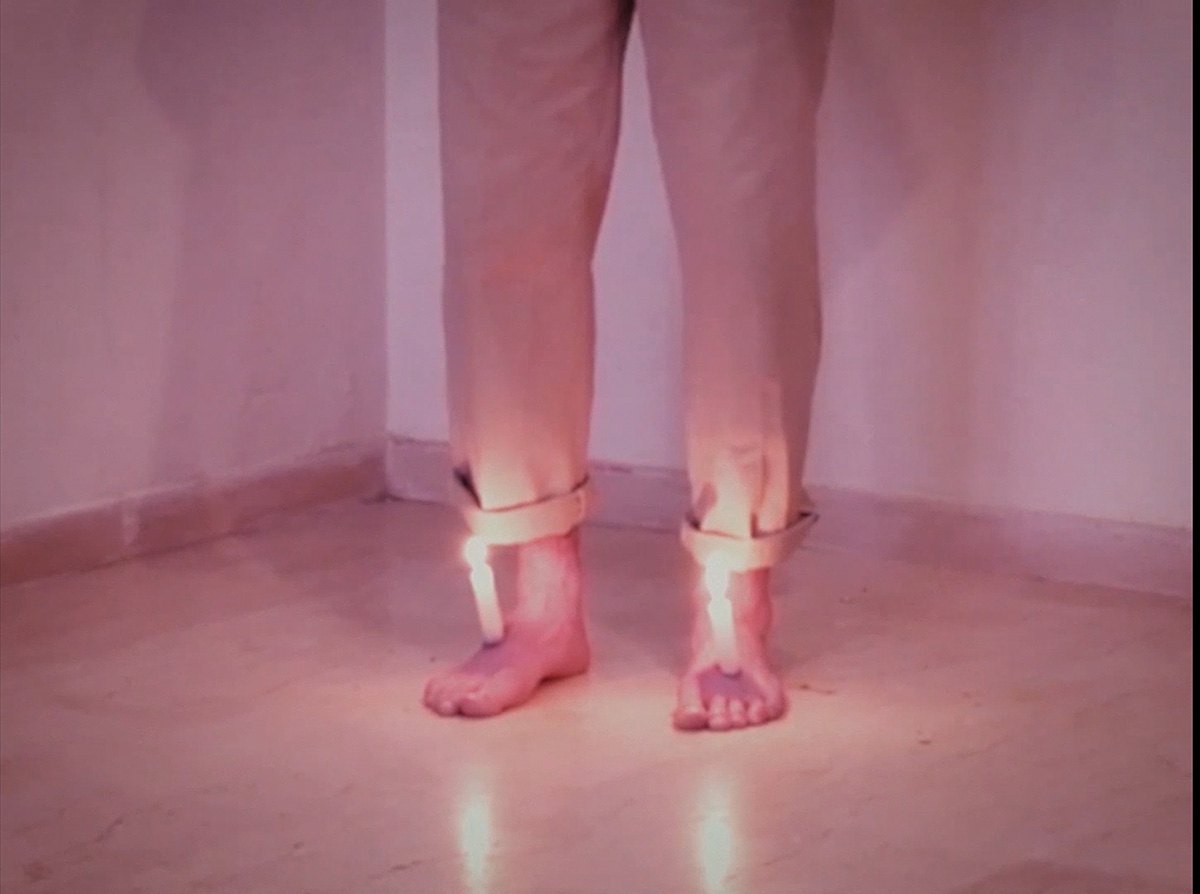
The film is about the director's attempt to stage a play, a series of unexpected events has inexplicable results for the actors. At the same time, the egg is constantly lurking between the directors and the actors.
Stratos Serafimidis(1997) was born and live in Drama,Greece.He studied at the Department of Visual Arts and Art Sciences of the School of Fine Arts University of Ioannina. He has participated in group exhibitions and in various research projects.Currently, he is studying in M.A in Digital Arts at Athens School of Fine Arts.He lives and works in Athens,Greece.
Gleb Sereda
Catalogue : 2023Kros | Film expérimental | 0 | couleur | 52:0 | Russie | 2023
Gleb Sereda
Kros
Film expérimental | 0 | couleur | 52:0 | Russie | 2023
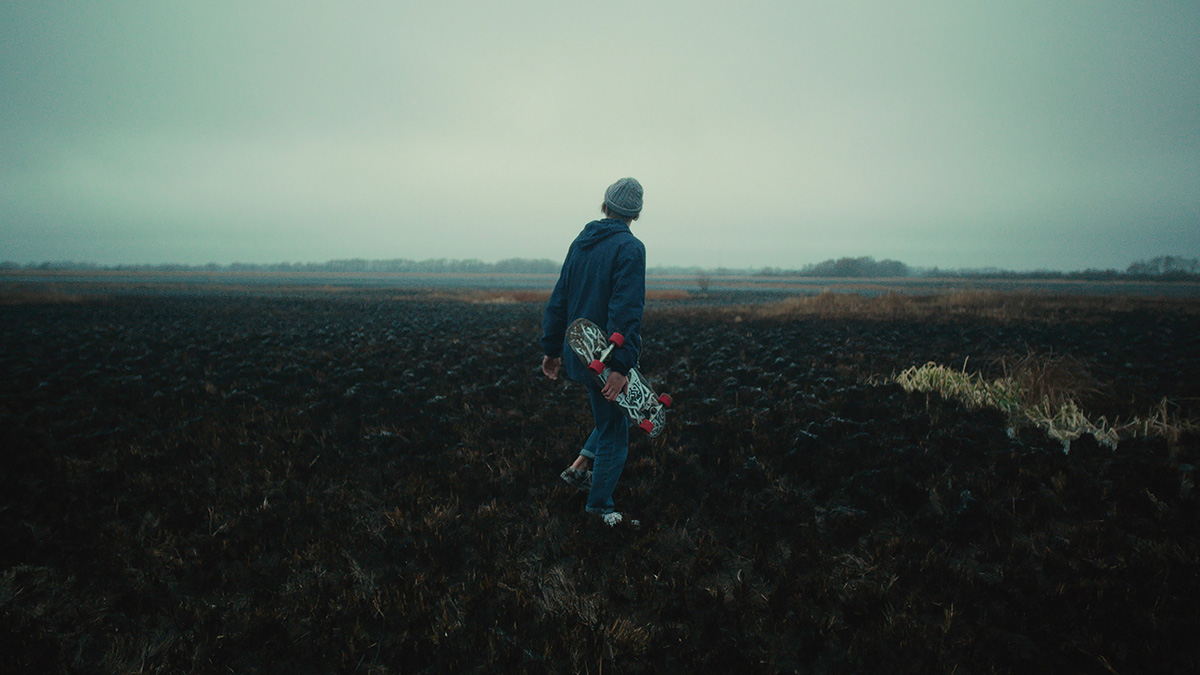
This is a metaphorical story about two young skaters who are trying to make sense of themselves in the world.
Marta Serna
Catalogue : 2015SnakeBoy | Animation | hdv | noir et blanc | 0:34 | Espagne | 2014
Marta Serna
SnakeBoy
Animation | hdv | noir et blanc | 0:34 | Espagne | 2014
SnakeBoy is the first video of the serie Immaculate Dreams. It’s an animated portrait of a real person who creates a fictionalised version of himself, in what represents a journey through his own dreams. It features SnakeBoy riding a snake as a cowboy, truly enjoying being in control of the situation. Immaculate Dreams is about the possibility of turning a dark or unpleasant journey into something luminous and flawless through the exorcism of staging. The main characters will have to stage some of their dreamlike experiences in order to carry out their own “animated portrait of their dreams” and hence portraying themselves in a more intimate, personal way.
Marta Serna. Visual artist. Graduated from Complutense University of Madrid (1993) with a degree in Fine Arts, majoring in Painting. She also studied Classical Dance at the Royal College of London, Spanish Dance at the Royal Conservatory of Córdoba and Oriental Dance. She has created stage sets for films, theatre and television, and has taken part with diferent dance companys In worshops and performances, including Contemporary Stage. As a visual artist she is concentrated on drawings and illustration, traditional animation video, mural Installations in vinyl and plastics sculptures . She has shown her work in Spain, U.K, France, Germany, Bulgary, Yugoslavia, Lebannon, Jordan, Algeria Mexico and USA. Serna’s latest solo exhibition are: “SnakeBoy”Open Studio, Madrid (2014),”Abecedario para Monstruitos” Rita Castellote Gallery, Madrid(2012)” Misty Eyes & Mourning Stones” Gallery Asm28 , Madrid ( 2011), “Winter Tale” Espacio Frágil, Madrid . “Black Sparkle”, Espacio Marzana, Bilbao, and “Black Wings”, Domus Artium, Salamanca, all of them in Spain (2010). “Dark Delicate”, Galeria Cubo Azul, León (2009) “Blood Breath”, NO-ID Gallery, London, and “Cruel butFair”, Rosa Santos Gallery, Valencia (2008) “Havoc Amazing Cosmic Trip”, Proyect 142, London (2007) “Havoc Oddity”, Cubo Azul Gallery, León. 2006) and the visual proyect “Bloody Little Creatures” in London for the musical group The Cure. In 2008 receives the Prize of Artístical Creation for the Madrid Community for the creation of traditional video animation Cat Power.
Catalogue : 2013Misty Eyes | Animation | dv | couleur et n&b | 1:10 | Espagne | 2011
Marta Serna
Misty Eyes
Animation | dv | couleur et n&b | 1:10 | Espagne | 2011
Presentation of the work and sinopsis Marta Serna?s current work is driven by her interest in the chaotic states of the mind, dreams, lethargy,myths,the boundary between reality and fiction, the subconscious adn their influence on human behaviour. In 2011, she developed the proyect ? Misty Eyes & Mourning Stones?, alluding firstly to the English expression of having the eyes blurred, as with tears, and secondly to the shiny, jet black jewels and stones used during the Victorian era, wich were primary elements in the mourners? attire between the seventeenth and nineteenth centuries. The combination of both expressions evokes the feeling of mourning and crying for oneself. The origin of the proyect is a restless interest for the chaotic state of the mind, when it feels confused and dreams with the possibility of getting rid of our internal mist. This leads to an open reflection about a mental space torn between lucidity and darkness, a lethargic state of the brain with magical, enchanted and supernatural connotations. The videos that I presented to Rencontres Internationales are part of this work. The first one, ?Misty Eyes? (2011),is a reflection about the nature of evil, whether it si produced by oneself or by our environment. The protagonist, combining human and animal characteristics, seems to be unprotected and lost, abandoned in the middle of nowhere and plunged into the immensity of the mist. When the landscape starts to become clear and the blur fades away, we can finally see that the mist comes from her mouth,plunging the forest into darkness again. She is held in her own environment and wilderness.
Marta Serna. Visual artist. Graduated from Complutense University of Madrid (1993) with a degree in Fine Arts, majoring in Painting. She also studied Classical Dance at the Royal College of London, Spanish Dance at the Royal Conservatory of Córdoba and Oriental Dance. She has created stage sets for films, theatre and television, and has taken part with diferent dance companys In worshops and performances, including Contemporary Stage. As a visual artist she is concentrated on illustration, traditional animation video, mural Installations in vinyl and plastics sculptures . . She likes drawing disfunctional caracters without scene and checking the roles of power on childhood. The mission on her work is to reflect on human, animal, spiritual and artificial natures and on the ritual of compensation we have to do to adapt ourselves to the surrounding environment. She has shown her work in Spain, U.K, France, Germany, Bulgary, Yugoslavia, Lebannon, Jordan, Algeria Mexico and USA. Now she is currently working with Asm28 Gallery in Madrid and Espacio Marzana Gallery in Bilbao, Spain. Serna?s latest solo exhibition are: ? Misty Eyes & Mourning Stones? Galeria Asm28 , Madrid ( 2011), ?Winter Tale? Espacio Frágil, Madrid . ?Black Sparkle?, Espacio Marzana, Bilbao, and ?Black Wings?, Domus Artium, Salamanca, all of them in Spain (2010). ?Dark Delicate?, Galeria Cubo Azul, León (2009) ?Blood Breath?, NO-ID Gallery, London, and ?Cruel butFair?, Galeria Rosa Santos, Valencia (2008) ?Havoc Amazing Cosmic Trip?, Proyect 142, London (2007) ?Havoc Oddity?, Galeria Cubo Azul, León. 2006) And collectives like ? The Noise of Bubbles?, Red Bull Academy, Matadero, Madrid. ?Gráfica. 30 Artists from young Spain? Cervantes Institute of Lebanonn, Jordan, Bulgary, Algiers, (2012 ). ?Rencontres Internationales?, with the video proyection ?Power Trilogy?? at Pompidou in Paris , Haus der Kulturen der Welt in Berlín and the Auditorio del Ministerio de Cultura in Madrid (2011_2010) ?Merrie Melodies?, Domus Artium, Salamanca (2010) ?Premios Creación Artistica Comunidad de Madrid?, ARCO 2009 ?Bloody Boots?, ARCO 2008, and the visual proyect ?Bloody Little Creatures? in London for the musical group The Cure. In 2008 receives the Prize of Artístical Creation for the Madrid Community for the creation of traditional video animation Cat Power.
Catalogue : 2011BLACK WINGS | Animation | dv | couleur | 2:7 | Espagne | 2010
Marta Serna
BLACK WINGS
Animation | dv | couleur | 2:7 | Espagne | 2010
BLACK WINGS Black Wings is the third video that complete ?Power Trilogy?. The main theme is the transference to the character of the spiritual and magic nature that bestows on it special powers, focussing on mental and crerative facets. Story tells about a black crow flying over the sky. Down on earth, a little girl is waiting for him. The bird goes down to alighted on her arm. Between them exist a secret language. The girl turns her body and gives back to spectator. We don?t know what?s happend, but suddenly she is very convulsioned and begans to grow a smooth down on her shoulder blade. In a few seconds, she has a new couple of sparkling black wings.She is ready to take off? Black Wings is connected to one of the most ancient wishes of human been: Possibility of fly. The black crow is the driver of the transference. The bird gives her the opcion to explore the world of the ideas, dreams, fantasy, illusions?..the stranger world of imagination and creativity.
Biographical note Marta Serna. Visual artist. Graduated from Complutense University of Madrid (1993) with a degree in Fine Arts, majoring in Painting. She also studied Classical Dance at the Royal College of London, Spanish Dance at the Royal Conservatory of Córdoba and Oriental Dance. She has created stage sets for films, theatre and television, and has taken part with diferent dance companys In worshops and performances, including Contemporary Stage. As a visual artist she is concentrated on illustration, traditional animation video, mural Installations in vinyl and plastics sculptures . She has shown her work in Spain, U.K, Mexico and USA. Now she is currently working with Espacio Marzana Gallery in Bilbao, Spain. Serna?s latest solo exhibition are ? Winter Tale? Espacio Frágil, Madrid., ?Black Sparkle?, Espacio Marzana, Bilbao and ?Black Wings?, Domus Artium, Salmanca, all in Spain (2010). ?Dark Delicate?, Cubo Azul Gallery, León (2009). ?Cruel but Fair?, Rosa Santos Gallery, Valencia and ? Blood Breath?, NO-ID Gallery, London (2008). ?Havoc Amazing Cosmic Trip?, Proyect 142, London ( 2007). And Colectives like ?Merrie Melodies?, Domus Artium, Salamanca (2010) ? ARCO 2009 Premios Creación Artística Comunidad de Madrid? ?Bloody Boots? ARCO 2008, and the visual proyect ?Bloody Little Creatures? for the goup The Cure in London.
Catalogue : 2011BLOODY BOOTS | Animation | dv | couleur | 1:10 | Espagne | 2008
Marta Serna
BLOODY BOOTS
Animation | dv | couleur | 1:10 | Espagne | 2008
BLOODY BOOTS Bloody Boots is a traditional animation video and the first one about ?Power Trilogy?, whose mission is to reflect on our human, animal, artificial and spiritual nature and on the ritual of compensation we have to undertake to ensure that we adapt to our surrounding environment. The story tells about a normal pair of boots turns, by the vital and regenerator effect of blood, in autentic magic object of power. The blood that flows from earth transform the boots in protectives and magics. The ?new? boots gives the girl a big power. Now she is mentally and physically prepared to croos any territory. The blood is portrayed as the vital fluid that serves as a conduit for the realisation of the ritual and confers a special power on the object. Blood gives people a human condition and bestows an inheritance, a genetic nature. The content of the video is anchored in the earthly, working wih the human.
Biographical note Marta Serna. Visual artist. Graduated from Complutense University of Madrid (1993) with a degree in Fine Arts, majoring in Painting. She also studied Classical Dance at the Royal College of London, Spanish Dance at the Royal Conservatory of Córdoba and Oriental Dance. She has created stage sets for films, theatre and television, and has taken part with diferent dance companys In worshops and performances, including Contemporary Stage. As a visual artist she is concentrated on illustration, traditional animation video, mural Installations in vinyl and plastics sculptures . She has shown her work in Spain, U.K, Mexico and USA. Now she is currently working with Espacio Marzana Gallery in Bilbao, Spain. Serna?s latest solo exhibition are ? Winter Tale? Espacio Frágil, Madrid., ?Black Sparkle?, Espacio Marzana, Bilbao and ?Black Wings?, Domus Artium, Salmanca, all in Spain (2010). ?Dark Delicate?, Cubo Azul Gallery, León (2009). ?Cruel but Fair?, Rosa Santos Gallery, Valencia and ? Blood Breath?, NO-ID Gallery, London (2008). ?Havoc Amazing Cosmic Trip?, Proyect 142, London ( 2007). And Colectives like ?Merrie Melodies?, Domus Artium, Salamanca (2010) ? ARCO 2009 Premios Creación Artística Comunidad de Madrid? ?Bloody Boots? ARCO 2008, and the visual proyect ?Bloody Little Creatures? for the goup The Cure in London.
Catalogue : 2011CAT POWER | Animation | dv | couleur | 1:44 | Espagne | 2009
Marta Serna
CAT POWER
Animation | dv | couleur | 1:44 | Espagne | 2009
CAT POWER Cat Power, the second video of ?Power Trilogy?, is the title that served as a source of inspiration for the underlying argument of the video: a girl gains the confidence of a little kitten by petting and them??eats it! In just a few seconds she gets a new projecting appendix. Cat Power refers to the recovery of wild untamed power through a ritual of appropiation. The central character appropiates the intuitive and wild part of the animal. The death of the cat is not in vain, it is necessary to recover a lost and forgotten wild nature. A mutation is produced. Both, human and animal coexist in the same body. They are no longer who they used to be and have become a new hybridised being gifted with new characteristics that make it more complete and fit for survival. The conduit in that video is the cat, whose sacrifice transmits a savage instinct and nature to the central character. This video explores the atavistic underpinnings of intuition.
Biographical note Marta Serna. Visual artist. Graduated from Complutense University of Madrid (1993) with a degree in Fine Arts, majoring in Painting. She also studied Classical Dance at the Royal College of London, Spanish Dance at the Royal Conservatory of Córdoba and Oriental Dance. She has created stage sets for films, theatre and television, and has taken part with diferent dance companys In worshops and performances, including Contemporary Stage. As a visual artist she is concentrated on illustration, traditional animation video, mural Installations in vinyl and plastics sculptures . She has shown her work in Spain, U.K, Mexico and USA. Now she is currently working with Espacio Marzana Gallery in Bilbao, Spain. Serna?s latest solo exhibition are ? Winter Tale? Espacio Frágil, Madrid., ?Black Sparkle?, Espacio Marzana, Bilbao and ?Black Wings?, Domus Artium, Salmanca, all in Spain (2010). ?Dark Delicate?, Cubo Azul Gallery, León (2009). ?Cruel but Fair?, Rosa Santos Gallery, Valencia and ? Blood Breath?, NO-ID Gallery, London (2008). ?Havoc Amazing Cosmic Trip?, Proyect 142, London ( 2007). And Colectives like ?Merrie Melodies?, Domus Artium, Salamanca (2010) ? ARCO 2009 Premios Creación Artística Comunidad de Madrid? ?Bloody Boots? ARCO 2008, and the visual proyect ?Bloody Little Creatures? for the group The Cure in London.
Toni Serra, Ali ABU
Catalogue : 2007Last night dikr | Doc. expérimental | dv | couleur | 7:0 | Espagne, Maroc | 2005
Toni Serra, Ali ABU
Last night dikr
Doc. expérimental | dv | couleur | 7:0 | Espagne, Maroc | 2005
Inspiré d'un poème de Najmudin Kubra, maitre souffi du XIIème siècle, "Las Night Dikr", un "documentaire d'auteur", montre la route d'un groupe d'hommes assoiffés, à la recherche d'eau dans les terres désertiques de l'intérieur du Maroc. Minute après minute, image après image, ce chemin, plein de métaphores et de symboles, semble nous conduire vers ce monde intérieur que, selon le poète, tout être humain porte en lui. Un homme torse nu, à la poitrine trouée, nous invite à nous connaître, à nous comprendre nous et nos désirs, à comprendre ce que nous poursuivons. "Last Night Dikr" est un phare, une compilation de documents destinées à aider, à diriger le voyageur sur le chemin de la spiritualité.
Toni Serra vit entre Duar Msuar, au Maroc, et Barcelone. Il a étudié l'Histoire de l'Art et la Philosophie à l' Universidad de Barcelona et la Vidéo et la Photographie à la School of Visual Arts de New York. Réalisateur, Toni Serra est directeur des archives de l'OVNI, l'Observatoire de la Vidéo Non Identifiée. Ses ?uvres questionnent l'excès d'images, la simulations et le spectaculaire. Disposant de trop de matériel, il révèle au spectateur ce qui est resté dissimulé jusqu'à aujourd'hui. En parallèle à "Retroyou" de Joan Leandre, il développe "Babylon Archive", un projet d'archéologie médiatique. Il a compilé divers cycles de vidéos, dont "Malestar a les Ciutats" et "TransArab ? Nou Vídeo Àrab" ainsi que la programmation vidéo du MACBA 1996-97. Il a reçu, en 2002, le Prix d'Arts Plastiques de la Ville de Barcelone pour son installation "Fes Ciutat Interior" et, en 2004, le Prix du Patrimoine de Catalogne pour le projet "Arxius" de l'OVNI.
Ilan Serruya
Catalogue : 2019Reunión | Documentaire | mov | couleur | 65:0 | Espagne | 2018
Ilan Serruya
Reunión
Documentaire | mov | couleur | 65:0 | Espagne | 2018
“Reunion” is the encounter between a father and a son. A moment marked by landscape, distance and silence. Ilan is cutting his own hair. He is getting ready to travel to Reunion Island. There lives his father, Raphael. An island is a piece of land surrounded by water on all its parts. A reunion is the act of making two or more things coincide at one point, sometimes colliding with one another. This meeting between the father and the son is distinguished by the absence of words, by everyday gestures, by different body postures, by the expression of their faces and by the few sentences that articulate an attempt to resume what seems to be an impossible dialogue. Raphael smokes on the chair, studying his son with his eyes. He is breathing hard. Among them, a camera acts as an intermediary. It observes them together and separately. It is a mediation device: it restrains the dialogue, registers the look on their faces and records the silence. The camera favors the meeting to take place. It protects them from the past and places them only in the present. We do not know the reasons that led them to this situation, nor the time that happened since they last saw each other. We only know that they are there, in Reunion. A path in the forest. Roots in the ground. Fog and cracks.
Ilan Serruya grew up between the cities of Mar del Plata (Argentina) and Seville (Spain). He studied Fine Arts (Universidad Complutense de Madrid), holds a degree in Film Editing (Instituto del Cine de Madrid) and Master LAV (Audiovisual Laboratory of Creation and Contemporary Practice). His search as a visual artist go into focusing on to autobiographical events, and his works often reveal some found domestic material. His feature film “Reunion” (2018) was selected for Input 2018 -Space for tutoring and advising film projects organized by (S8) Mostra de Cinema Periférico-. “Reunion” had its world premiere at Doclisboa (International competition) and its Spanish premiere at Seville European Film Festival (Endless Revolutions competition). The world premiere of “What is a zeide for?” (2018) was held by Filmadrid International Film Festival. His short film “The lost distance” (2016) participated in cinema screenings at Guadalajara (Mexico), Rome (Italy), Prague (Czech Republic) or festivals like Una casa: Muestra de cine documental autobiográfico (Spain).
Jens Settergren
Catalogue : 2021The GPS Will Take Me Home | Vidéo expérimentale | hdv | couleur | 8:49 | Danemark | 2019
Jens Settergren
The GPS Will Take Me Home
Vidéo expérimentale | hdv | couleur | 8:49 | Danemark | 2019
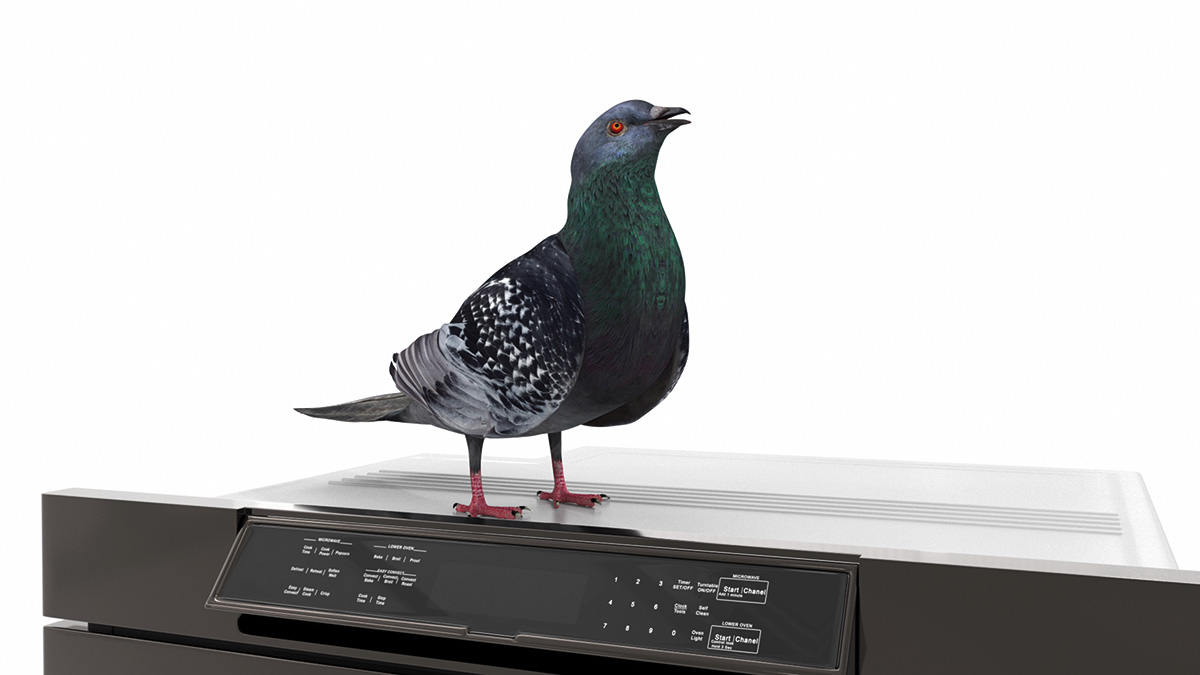
Dans "The GPS Will Take Me Home", des pigeons chantent et discutent dans une langue futuriste à propos de divers sujets, incluant la technologie GPS, l'amour et le prolongement médical de la vie humaine. Ils communiquent et interagissent avec des appareils électroniques comme un four à micro-ondes, un robot aspirateur et un cryostat - une machine créée dans le but de congeler et ramener à la vie des corps humains dans le futur. Les pigeons apparaissent comme des hybrides, entre organisme et machine. Ils chantent des chansons pop autotunées, influencées par la dance music, mêlées à des enregistrements de champs électromagnétiques et de sons de synthétiseur, créant des tensions entre émotionnel et artificiel. Tels des oracles recevant des signes d'un futur qui ne peut être vu qu'à travers le brouillard. Les pigeons sont omniprésents dans les grandes métropoles. Ils se sont adaptés à notre mode de vie et ont substitué les agglomérations humaines à leurs habitats naturels. On peut considérer le pigeon comme un observateur domestiqué de la vie humaine, mais dans "The GPS Will Take Me Home", il apparaît comme un être doué de sens, un cyborg, portant un regard particulier sur le monde des humains.
Jens Settergren est artiste visuel. Il habite à Copenhague, au Danemark. Il s'intéresse au processus de production des imaginaires collectifs, des mythologies contemporaines, des désirs et de la culture visuelle. Ses œuvres reflètent la façon dont ces sujets sont exprimés dans les images, les objets et le langage. Il interroge les corrélations entre la technologie, la nature, la cognition et le pouvoir. Il a exposé à l'international dans des musées et des lieux tels que le Statens Museum for Kunst (Danemark), l’INCA – Institute for New Connotative Action (États-Unis), die raum (Allemagne), le KØS Museum of public art (Danemark), la Kunsthal Aarhus (Danemark), la Kunsthal Nord (Danemark), la Struer Tracks Biennial (Danemark), The Great Poor Farm (États-Unis) et Art Museum Brandts (Danemark). Jens Settergren a obtenu son diplôme de l'Académie des arts du Jutland (Danemark) en 2016. En 2019, il a été résident à l'ISCP – International Studio & Curatorial Program à New York (USA), et en 2020, il a reçu le Carl Nielsen et Anne Marie Carl-Nielsen Talent Award.
Anne-lise Seusse
Catalogue : 2013De la guerre, Mont royal , fragments | Vidéo | hdv | couleur | 15:16 | France, Canada | 2011
Anne-lise Seusse
De la guerre, Mont royal , fragments
Vidéo | hdv | couleur | 15:16 | France, Canada | 2011
De la guerre, Mont Royal,fragments 2011 présentée est une double projection qui se focalise sur un parc de Montréal connu pour regrouper différentes activités de loisir et de plein air. En position centrale, situé sur une colline dominant la ville, le parc du Mont Royal cristallise par son esthétique tout un imaginaire tenant à l?idée de ré-ensauvagement dans la ville. Anne-Lise Seusse s?intéresse à ce lieu comme générateur de liens, et aux personnes qui y évoluent, dont elle tire cependant des portraits solitaires. De manière synchrone, apparaissent lentement des vues de l?environnement, où se gravent des restes de rituels, et les portraits, saisis dans des moments de repos, d?inaction. Mêlant la nature aux bruits de la ville proche, le son restitué des lieux contribue à une atmosphère d?attente vaguement menaçante. L?un des deux écrans de projection est en outre ponctué de textes extraits du célèbre traité de stratégie militaire De la guerre de Von Clausewitz, paru à titre posthume à partir de 1832 et qui gardera une certaine actualité en matière de réflexion politique et économique. Les descriptions implacables et les raisonnements dialectiques donnent alors une coloration et un rythme particuliers au scénario créé par Anne-Lise Seusse, entre réalité fantasmée et hostilité anticipée.
Photographe et vidéaste, Anne-Lise Seusse s?intéresse à des territoires situés aux lisières des villes et investis par des activités de loisirs (ball-trap, moto-cross, cérémonies de communautés de Second Life?). Espaces périphériques indéfinissables, entre l?urbain et le naturel, ces zones a priori sans qualité ni identité se marquent peu à peu d?un relief et d?un imaginaire bien particuliers. En position d?anthropologue, l?artiste « zoome » sur ces espaces porteurs de récits et se rapproche de leurs occupants en réalisant des portraits à la fois objectifs et rêveurs. Les lieux portent les empreintes des interventions humaines, parfois évocatrices d?une nouvelle forme de « earth art » (trous creusés dans la terre, rampes de planches de bois, couleurs des matériaux?). Les personnes revêtent les signes distinctifs de personnages (costumes de jeux de rôles?) et se prêtent sobrement à la pose, à la prise de vue extrêmement précise de l?artiste, qui travaille à la chambre, dans le paysage même.
Igor Sevcuk
Catalogue : 2008Gravity | Doc. expérimental | dv | couleur | 13:20 | Bosnie-Herzégovine, Pays-Bas | 2005
Igor Sevcuk
Gravity
Doc. expérimental | dv | couleur | 13:20 | Bosnie-Herzégovine, Pays-Bas | 2005
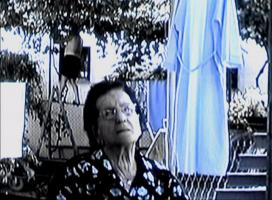
"Gravity" explore la tension entre l'amour (sujet supposé du film) et le souvenir traumatisant d'une vieille dame (personnage central du récit). Elle raconte l'histoire d'un petit garçon qui aimait grimper dans les arbres et a un jour fait une chute. Derrière elle, un homme perché sur une échelle est en train de tailler des vignes. Cet acte apparemment rituel contraste avec les tirs oppressants des avions et les nuages dans le ciel. Progressivement, l'histoire d'amour maternel se transforme en force totalitaire toute puissante. La vidéo est ponctuée par le musique de Laibach/NSK, "Nova Acropola" (1983). "On ignore plus ou moins que l'objet historique à l'étude, la terre, possède ses particularités métaphysiques, qui ont tendance à se cacher derrière une apparence ordinaire. Nous parlons ici de bâtard géographique et philosophique, dont les détails logiques et physiques sont difficiles à sonder." Peter Sloterdijk, Theory of Globalisation.
Igor Sevcuk est né en 1972, en Bosnie-Herzegovine, ex-Yougoslavie. Depuis 1991, il vit et travaille aux Pays-Bas. Il est diplômé en arts visuels du Piet Zwart Institute de Rotterdam. Il a obtenu le "Prix de Rome" en 2002 dans la carégorie film et vidéo. Depuis 1999, Sevcuk travaille sur des installations vidéo, des films et des documentaires. Il recherche la tension entre les concepts de liberté et les limites réelles du système humain. Parmi ses oeuvres: "Looking for Rebels" (2000), "Kalle" (2004), "Gravity" (2005), "Haso" (2007).
Catalogue : 2007Kalle | Doc. expérimental | dv | couleur et n&b | 20:0 | Bosnie-Herzégovine, Pays-Bas | 2005
Igor Sevcuk
Kalle
Doc. expérimental | dv | couleur et n&b | 20:0 | Bosnie-Herzégovine, Pays-Bas | 2005
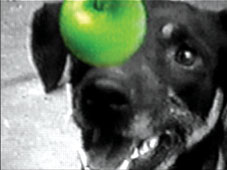
En juillet 2003, Igor Sevcuk a accompagné, en tant que traducteur, un groupe d'étudiants néerlandais lors de leur tournée en Ex-Yougoslavie. Les informations qu'il a récolté pendant ces concerts ont été la base dune enquête plus poussée. Il l'a appelée 'Kalle'. Pour résumer, il s'est intéressé dans 'Kalle' aux mythes religieux et historiques que l'on retrouve dans la vie quotidienne. Qu'est-ce que la 'Messe en si mineur' de Bach a en commun avec les symptômes d'un chien fou ? Et comment se fait-il que ce 'chien des Balkans' porte le nom scandinave de Kalle ? Dans la vidéo de 20mn le vert et le rouges, couleurs complémentaires, altèrent les opinions et les remettent en question. A travers les installations supplémentaires, ces couleurs soulignent d'autant plus les contradictions dans l'identité du chien. La vidéo de 20mn est projetée sur un mur. Une carte de l'Europe montre l'origine et du nom Kalle et comment il s'est propagé. A côté de cette carte il y a une image anamorphique de 4,5 mètres de long et composée d'épreuves au format A4. Accompagnées d'une petite photographie, de deux drapeaux de pays en papier et de leurs légendes, elles représentent 'l'Europe de Kalle'. Au milieu de cette 'documentation', un écran supplémentaire montre des vidéo de la jeunesse de Kalle. Dans cette vidéo de 5mn siffle une sorte de 'variation pour chien' de la messe de Bach.
Igoe Sevcuk est né en 1972 en Bosnie Herzégovine / Ex-Yougoslavie. Depuis 1991 il vit et travaille aux Pays-Bas. Après être sorti d'une école d'art de La Hague, Sevcuk a obtenu une maîtrise à l'institut Piet Zwart à Rotterdam. Lors des récompenses pour l'art néerlandais, 'Prix de Rome 2002', il a obtenu le premier prix dans la catégorie filme et vidéo. De 2004 à 2005 il a participé à la Research Residency Rijksacademie à Amsterdam. En 2007 il sera invité au Studio National d'Art de Chandong (Changdong National Art Studio) en République de Corée.
Masha Sha
Catalogue : 2007Clamp | Vidéo expérimentale | dv | couleur | 3:0 | Russie | 2006
Masha Sha
Clamp
Vidéo expérimentale | dv | couleur | 3:0 | Russie | 2006
Le resserrement dans les pinces de la grise et banale réalité, au moins, il est encore une force qui aspire à l'air libre.
Etudes: 2003 ? 2005 Pro Arte Institute, Fondation pour l'art et la culture, programme d'études des nouveaux arts des médias, Saint-Petersbourg 2000 ? 2005 Université des arts et de la culture, technologies sociales et culturelles, Saint-Petersbourg 2000 ? 2001 Collège d'optique et de mécanique de Saint-Petersbourg. Photographie Récompenses: Premier prix du jeune artiste "nouvelle génération", concours d'art contemporain de l'état de Russie, Mars 2006
Tejal Shah
Catalogue : 2013Between the Waves | Vidéo | hdv | couleur | 26:14 | Inde | 2012
Tejal Shah
Between the Waves
Vidéo | hdv | couleur | 26:14 | Inde | 2012
.
Tejal Shah (b. 1979) is a multi-disciplinary artist primarily working with video, photography, performance, sound and installation. Her work, like herself, is feminist, queer and political. She has exhibited widely in museums, galleries and film festivals. Recent presentations include, Paris-Delhi-Bombay?, Centre Pompidou, Paris, 2011, Where Three Dreams Cross, Whitechapel Gallery, London, 2010; Lost and Found - Queerying the Archive, Nikolaj Contemporary Art Center, Copenhagen, 2009; Global Feminisms, Brooklyn Museum, NY, 2007 and Saturday Live, Tate Modern, London, 2006. Solo exhibitions include The Incidental Self, Barbara Gross Gallery, Munich, 2011; There is a spider living between us, La Centrale, Montreal, 2011; Pentimento, Kashi Art Gallery, Cochin, 2009; ?What are You??, Thomas Erben Gallery, New York and Galerie Mirchandani + Steinruecke, Bombay, 2006 and The Tomb of Democracy, Alexander Ochs Gallery, Berlin, 2003. Her work is in the collection of Centre Georges Pompidou, Paris; Devi Art Foundation, New Delhi and several other private collections in India and abroad. Tejal Shah is a multi-disciplinary artist working primarily with video, photography, performance, sound and installation. Her work, like herself, is feminist, queer and political. She has exhibited widely in museums, galleries and film festivals. Her photography, video work and installation art questions the normal and the queer, bringing to light the dissonance between norm and, perception of the norm.
Tejal Shah, Natasha MENDONCA
Catalogue : 2006Anando's Door | Art vidéo | dv | couleur | 4:57 | Inde | 2005
Tejal Shah, Natasha MENDONCA
Anando's Door
Art vidéo | dv | couleur | 4:57 | Inde | 2005
Shake
Catalogue : 2025Who is Writing History? | Vidéo | hdv | couleur | 24:56 | Taiwan | 2023

Shake
Who is Writing History?
Vidéo | hdv | couleur | 24:56 | Taiwan | 2023
What aspects of our own identity construction stem from the collective memory of the previous generation? And what kind of collective memory will we pass on to the next generation? The resulting 12 performance art pieces, centered around the theme of identity construction, resemble narrative fragments of minor history, reconstructed using the language of film imagery. As an archive, film aids in remembering society and offers a contemporary interpretation of history. Is it a societal memory of the past or a historical narrative?
Visual artist, Shake studied in Paris Cergy National Graduate School of Art. She employs film language as the methodology to experiment the moving image narrative. Her recent works center on Asian geopolitical history, identity construction and relation between collective/individual memory. Shake has done multiple international artist residencies, and her works have been exhibited in France, Korea, Japan, the US, etc.
Catalogue : 2018Subduction Zones: Our Status Quo | Film expérimental | 4k | couleur | 4:8 | Taiwan | 2016
Shake
Subduction Zones: Our Status Quo
Film expérimental | 4k | couleur | 4:8 | Taiwan | 2016
Located at the subduction zone where the Eurasian Plate converges with the Philippine Sea Plate, the island of Taiwan has developed a unique topography as a result of the downwelling tectonic activity. Similarly, Taiwan’s position at the boundaries of different political forces within the global geography, and the hidden forces exerted by political, economic, cultural, and ideological plates, have shaped its national identity. Taiwan’s unique landscape and geopolitical history serves as a theme for The Subduction Zone by Shake. Comprised of three short films entitled Our Status Quo, Our Story and Our Suite de Danses, the work traces the intersection of the tectonic plates and travel to Taipei’s Tatun Volcanoes; the Yuli to Antun section of the old railway line in Hualian that traverses the Eurasian Plate and Philippine Sea Plate; and to the Jili Badlands in Taitung. In the eyes of a geologist, these locations are ideal textbook examples of plate tectonics; but what Shake contemplates is whether these landscapes enable an imagining of the political struggles that have taken place on this island. How does an individual find a resting place within the conflicts of divergent social structures, political systems, and ideological modes? How can the status of the self be reimagined and the story of the self be told? In addition to landscapes, Shake also includes constructions of narrative elements in the film, such as archived historical documents, personal memoire, school activities, and cultural rituals, in the artistic practice of cinematic writing.
Cinematic writing (écriture cinématographique), is the initial creative approach that inspired Shake’s work. In order to experiment the possibility of narrative form, she plays with the plasticity of moving image to liberate the sense of sound and image, and then make them derived. Meanwhile, so as to resist the film’s rigid institutional mode of representation, in addition to the filming as the only manner, she also tries to work with other different medium and expression form to experiment. Recently, she tries to study Asian geopolitical history in her works. She has participated many international artist residency program, and presented her works in different countries.
Lior Shamriz
Catalogue : 2008Before the Flowers of Friendship Faded Friendship | Film expérimental | dv | couleur | 7:0 | Israel, Allemagne | 2007
Lior Shamriz
Before the Flowers of Friendship Faded Friendship
Film expérimental | dv | couleur | 7:0 | Israel, Allemagne | 2007
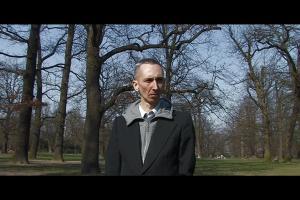
Ce court métrage experimental, conduit principalement par des dialogues, narre l'histoire d'une rencontre de trois vieux amis. Le but était de créer un effet emotionel inhabituel en construisant une image réaliste d'après une bande son bien plus sombre, enregistrée avant le tournage. Les acteurs ont ensuite mimé la bande son une fois montée.
Né à Ashkelon, Israel, 1978 Etudie a la Jerusalem Film School. (2002-2005) Institut for time-based media à l'université des arts(UdK) Berlin. Fait des films et de la musique.
Catalogue : 2007Tiru Et Mi Hikhnasti Habaita | Documentaire | dv | couleur | 20:0 | Israel | 2004
Lior Shamriz
Tiru Et Mi Hikhnasti Habaita
Documentaire | dv | couleur | 20:0 | Israel | 2004
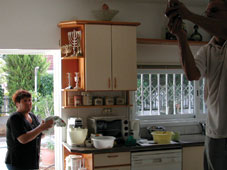
A l´âge de 19 ans, je me suis fait réformer après un court passage à l´armée, et peu de temps après je quittai le foyer parental. Bientôt je devins un "connard immoral", et eux des "provinciaux vieux-jeu". En mars 2004, après que mon frère aîné se soit installé avec sa copine catholique à Madrid et que mon plus jeune frère se soit engagé au sein des forces israéliennes malgré ses ennuis de santé, mes parents se retrouvèrent seuls à la maison. A cette période, la situation en Israel était loin d´être bonne, comme presque toujours. Des attentats-suicides avaient lieu dans les villes israeliennes malgré la "Barrière" ou "Mur" nouvellement construit et qui devait empêcher de telles opérations. A cette époque mon père était très fragile, écoutant sans cesse de la vieille musique iranienne, pays qu´il avait quitté à l´âge de 14 ans. Ma mère devenait peu à peu accro aux histoires des Telenovelas à la télé, et elle les regardait du matin au soir. J´avais envie de dépeindre cette époque dans la vie de mes parents, en documentant une de mes visites à leur maison, qui est également la mienne. Je promenais une mini caméra dv dans mes mains, ce qui me permettait de filmer mon point de vue en queslque sorte, parfois comme une caméra candide, parfois prenant activement part à l´action.
Né en 1978 à Ashkelon, Israel. Vit à Berlin. Étudia à l´École de cinéma de Jerusalem. Fréquente l´UdK Berlin, département de Experimentelle Medien (médias expérimentaux). 2005 - "Return to the Savanna", 75 mins, programme de six courts métrages 2006 - "Ho! Terrible Exteriors" court métrage de 30 mins , "The Farewell" - une coopération avec la troupe de théâtre de rue Zaza, 50 minutes, "Japan Japan" (à venir) - experimental
Sangam Sharma
Catalogue : 2006Strings | Vidéo expérimentale | 0 | couleur et n&b | 3:39 | Autriche | 2005
Sangam Sharma
Strings
Vidéo expérimentale | 0 | couleur et n&b | 3:39 | Autriche | 2005
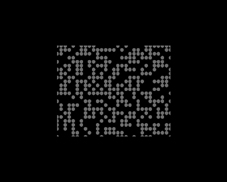
Strings (3:39): Basé sur la théorie des cordes, qui dit que les particules élémentaires (comme les protons, les nucléons, les quarks...) sont produits par les vibrations de ce que l'on appelle les cordes. La matière sonore est un enregistrement du choc d'origine (la fréquence est multipliée par 100000).
Courte biographie: Je vis et travaille à Vienne, en partie aussi à Londres. Depuis 2000: Etudes de sciences du théâtre, du cinéma et des médias depuis 2003: Etudes à l'académie d'arts plastiques, masterclass de Peter Kogler (art vidéo infographie) également en 2005: séjour d'un semestre à Londres à la Slade School of fine Art, département: "fine art media". Depuis 2001 en parallèle avec une réflexion théorique sur le cinéma, une approche pratique a suivi. De nombreux travaux ont depuis vu le jour (voir la sélection dans la partie filmographie). En-dehors de mes travaux vidéo, je produis aussi entre autres de plus en plus de photographies, des travaux graphiques (sur ordinateur), des dessins et des images. Ci-joint une liste détaillée des mes participations à des festivals de cinéma ainsi qu'à des expositions. En outre je travaille dans le journalisme spécialisé dans le cinéma pour divers médias. En ce moment je travaille à une installation vidéo ainsi qu'à différents projets photographiques, et à un magazine.
Melanie Shatzky, Brian M. Cassidy
Catalogue : 2019Interchange | Doc. expérimental | hdv | couleur | 60:33 | Canada | 2018
Melanie Shatzky, Brian M. Cassidy
Interchange
Doc. expérimental | hdv | couleur | 60:33 | Canada | 2018
Straddling the line between photography and cinema, Interchange is a near-wordless observational depiction of life alongside a stark and imposing Montreal highway. The film weaves portraits, landscapes, architecture and objects in its reflection on the city’s inhabitants, its traffic jams, the shipping of commercial goods and the nature of time itself. The highway portrayed in Interchange is less the subject of the film than its organizing structure: a large concrete heart, whose arteries intersect with the landscape and its residents in often startling ways, and serve as the framework for an extended meditation on the individual and their surroundings in the post-industrial age.
The films of Brian M. Cassidy and Melanie Shatzky have screened at the Berlin, Sundance, Toronto, Locarno and Rotterdam film festivals, The Museum of Modern Art, The National Gallery of Art, Le Musée de la Civilisation, ICA London, The Museum of the Moving Image and Lincoln Center. In 2012, they were nominated for a Gotham Award for Breakthrough Director and won Best New Director from Québec/Canada at the Montreal International Documentary Festival (RIDM). Their feature debut, Francine, was called “a small gem of bleak neorealist portraiture” by The New York Times and was selected as a New York Times Critics` Pick. Their documentary, The Patron Saints, was called "one of the most powerful Canadian documentaries of recent years" by POV Magazine. Cassidy & Shatzky also maintain an active photography practice and have had their work featured in ZeitMagazin, GUP Magazine, Der Greif, It`s Nice That, Wired, and FlakPhoto, among others. In 2015, The Montreal International Documentary Festival (RIDM) invited the duo to guest curate "A Photographer`s Eye: Photography & The Poetic Documentary", a special program about the intersection of photography and documentary film, which was showcased at La Cinémathèque Québécoise. Both Cassidy & Shatzky hold an MFA from The School of Visual Arts in NYC.
Mohammad Shawky Hassan
Catalogue : 2017Wa 'ala Sa'eeden Akhar | Vidéo expérimentale | mov | couleur | 24:0 | Egypte | 2015
Mohammad Shawky Hassan
Wa 'ala Sa'eeden Akhar
Vidéo expérimentale | mov | couleur | 24:0 | Egypte | 2015
And on a Different Note is a navigation of an attempt to carve out a personal space amid an inescapable sonic shield created primarily by prime time political talk shows with their indistinguishable, absurd and at times undecipherable rhetoric/ noises. Equally repulsive and addictive, these noises travel across geographies gradually constituting an integral part of a self-created map of exile.
Mohammad Shawky Hassan studied philosophy, film directing and cinema studies at The American University in Cairo, The Academy of Cinematic Arts & Sciences and Columbia University. His films include balaghany ayyoha al malek al sa’eed/ it was related to me (2011), On a Day like Today (2012) and Wa Ala Sa’eeden Akhar/ And on a Different Note (2015). He presented film programs at the Oberhausen Short Film Festival, Anthology Film Archives, The New York Public Library and UnionDocs, and was running the Network of Arab Arthouse Screens (NAAS)till 2016.
Rachel Shearer
Catalogue : 2012Hold Still | Vidéo expérimentale | dv | | 6:36 | Nouvelle-Zélande | 2009

Rachel Shearer
Hold Still
Vidéo expérimentale | dv | | 6:36 | Nouvelle-Zélande | 2009
Ethel Garden, Lucy Mills and Violet Winstone, women of means in 1930?s New Zealand use 16mm film cameras to document their lives and surroundings. Incidental to this act, a psychic tracery is drawn of simultaneous moments. The intimacy of their home movie making has been edited and re- assembled into a study of a landscape - internal, physical, cultural - and these women`s place within it. The addition of sound looks to support a cinematic treatment of the images by drawing on traditional aspects of film sound design but reducing the usual combination of elements (ambience, music, Foley, sound effects, dialogue) to selected singular layers - the musical sequences drawing on silent movie?s tradition of theatre cinema organ music, the emotive devices of gothic film noir, progressively reduced to sound effect gestures, coloured ambience and back to silence, implying a selective listening/remembering of history.
Rachel Shearer is a sound artist based in Auckland, New Zealand. A history in a range of sound practices and their relationship with moving image informs her work. Active as a performing and recording musician since the late 1980?s, Rachel has released material internationally with well-known music labels, (Xpressway (NZ), Flying Nun (NZ), Ecstatic Peace (US), Corpus Hermeticum (NZ), Family Vineyard (US) among them. Rachel trained in Cologne, Germany in live sound engineering, subsequently working freelance in both live sound and in post-production audio for film and television. She has sound designed and composed for a number of NZ award winning features and short films. Her most recent sound art commissions include permanent site-specific sound installations in New Zealand.
Rina Sherman
Catalogue : 2007Ovaryange tji veya | Documentaire | dv | couleur | 30:0 | Afrique du sud, Namibie | 2006
Rina Sherman
Ovaryange tji veya
Documentaire | dv | couleur | 30:0 | Afrique du sud, Namibie | 2006
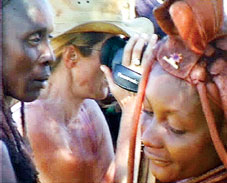
"Ovaryange tji veya / Quand les invités arrivent" parle de la relation entre Rina Sherman, réalistrice et éthnographe et une famille Omuhimba avec laquelle elle a vécu pendant sept ans. Elle a filmé et photographié leur quotidien et les rituels rythmant leur vie. Arrivée à mi-chemin dans son exploration, elle présenta une exposition multimédia "The Ovahimba Years : Work in Progress", à Windoek, Namibie. Un groupe appartenant à la société d´Etanga prit part à l´exposition. Le film explore l´évolution des relations qui ont conduit à l´exposition, montre le goupe des jeunes gens découvrant la manière dont leur héritage culturel est représenté à l´exposition, présente des performances faisant partie intégrante du programme, et montre les discussions et conséquences qui sont ressorties de l´exposition une fois que tout le monde était rentré dans le pays Ovahimba. Le film "Ovaryange Tji Veya" parle d´une anthropologue in situ, et évoque des notions clés du travail sur le terrain, comme la nature du lien observateur et observé, l´observateur observé, anthropologie participative et émotion comme vecteurs ou obstacles au travail sur le terrain.
RINA SHERMAN naît en Afrique du Sud. Elle s´exile et en 1984 s´installe en France où elle vit et travaille depuis. Elle obtient la nationalité française en 1988. Musicienne de formation, elle joue au théâtre et travaille à la télévision sur les mélangeurs vidéos avant de se tourner vers la réalisation. En 1990 elle obtient un doctorat à la Sorbonne, supervisée par Jean Rouch. Son premier roman, "Uitreis" (Partir) est publié en Afrique du Sud en 1997 et à reçu les acclamations de la critique. Écrivaine, réalisatrice et anthropologue, Rina Sherman a été à l´origine de plusieurs projets culturels. Elle était directrice audiovisuelle lors de la manifestation "South Africa : Music of Freedom", à la Villette en 1995. Elle à reçu le prestigieux Prix français Villa Medicis Hors Murs qui lui a permis d´entreprendre des recherches dans les archives des films de la région Sud-Africaine. En 1996 elle met en place la visite de Jean Rouch dans les universités Sud-Africaines, en collaboration avec l´institut français en Afrique du Sud et l´ambassade française en Namibie. En 1997 le ministère des affaires étrangères français lui octroie la Bourse de recherche Lavoisier pour son projet "The Ovahimba Years", un programme de recherche multi-disciplinaire et longue durée (art pictural, traditions orales, vidéos, films, photos) dont le but est d´élaborer une trace vivante de l´héritage culturel Ovahimba. Sur une période de sept ans, Rina Sherman a filmé et photographié des aspects du quotidien et des rituels Ovahimba. En 2002, au centre culturel franco-namibien de Windoek, elle présente une exposition multimédia,"Work in Progress". En 2003 elle étend ses recherches vers le Sud-Ouest de l'Angola ; elle a par conséquent couvert la totalité de l´héritage culturel socio-linguistique. Elle se consacre actuellement à l´écriture et monte des films sur ses sept ans passés avec les Ovahimba. Le projet a été emcouragé par le ministère français des Affaires Ètrangères, plusieurs Ambassades de l´Union Européenne, la Fondation Ford et de nombreux sponsors privés.
Sophie Sherman, Némo Camus
Catalogue : 2026L Eau Était Là | Doc. expérimental | 16mm | couleur | 15:0 | Belgique | 2025
Sophie Sherman, Némo Camus
L Eau Était Là
Doc. expérimental | 16mm | couleur | 15:0 | Belgique | 2025
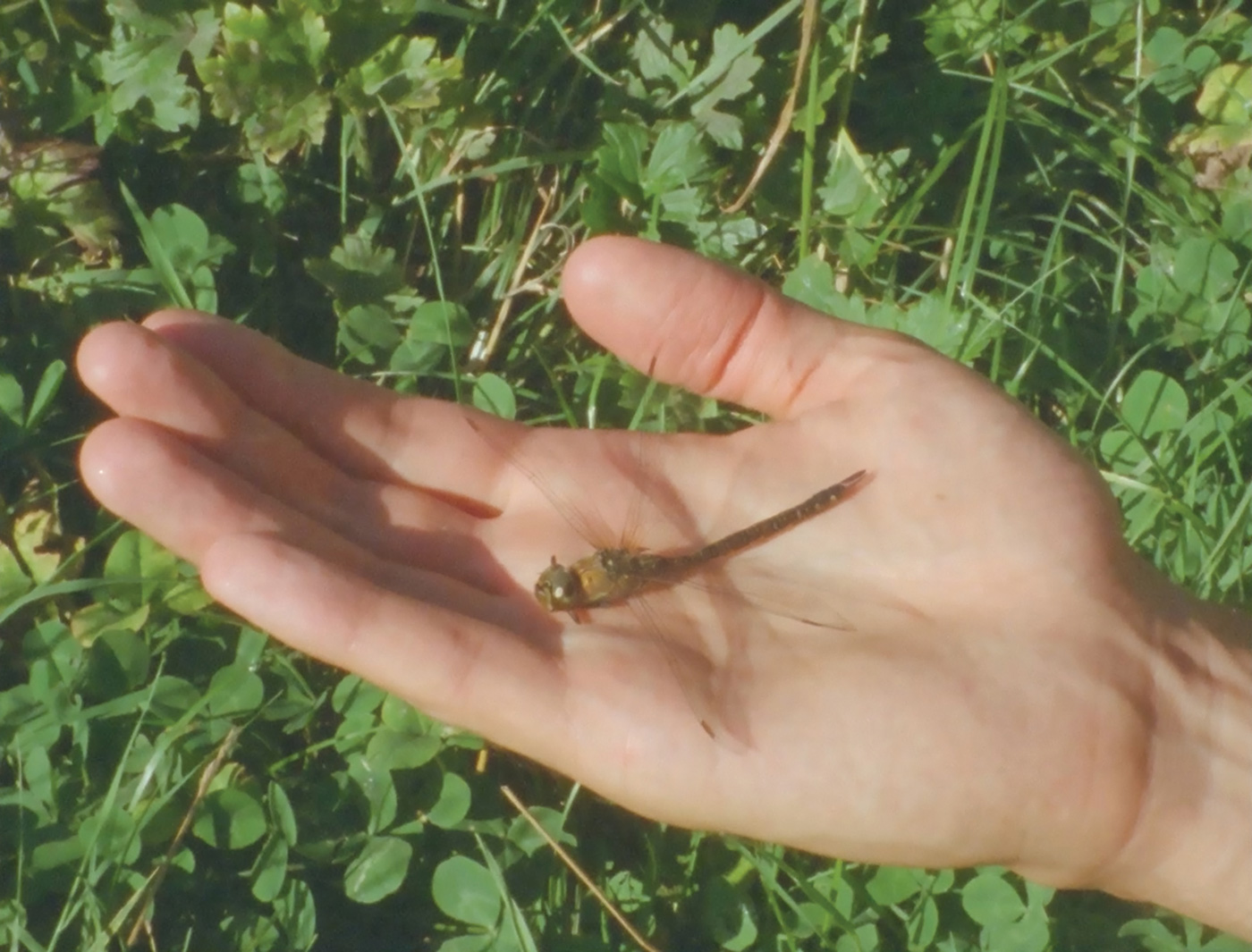
Filmée en 16 mm au marais Wiels, à Bruxelles. Ce marais est apparu après la perforation de la nappe phréatique lors de travaux d’excavation pour un projet immobilier. Insectes, oiseaux et humains cohabitent dans ce refuge où la vie et la magie résistent.
Sophie Sherman (France/Belgique) est une cinéaste basée à Bruxelles, en Belgique. Ces dernières années, elle est principalement intéressée au médium du 16 mm, avec des films tels que La marche (2015, 19’), L’eau était là (2025, 15’, co-réalisé avec Némo Camus) et Hold my hand (2025, 17’). Elle a étudié le cinéma à l’Université d’Aix-Marseille, où elle a obtenu un master en réalisation documentaire, ainsi qu’au Fresnoy, Studio national des arts contemporains. Ses films ont été présentés au Torino Film Festival (Italie), à L’Alternativa (Espagne), au Thessaloniki International Film Festival (Grèce), à Écrans Documentaires (France), au Wiels Art Center à Bruxelles (Belgique), à Ontsteking Art Space à Gand (Belgique), entre autres. Némo Camus est un artiste français né en 1994, vivant et travaillant à Bruxelles. Après une formation en théorie du cinéma et un master en sociologie, il s’est tourné vers la création sonore et s’est formé à l’INSAS. Son travail, fortement ancré dans la pratique de l’enregistrement sonore, explore l’aller-retour entre le travail de terrain et l’approche spéculative, en se concentrant sur les notions de trace, d’indice et de tremblement. Il s’intéresse particulièrement à l’entrelacement et aux écarts entre récit intime et document historique dans le contexte des enjeux mémoriels contemporains. Son travail prend la forme de créations radiophoniques, d’installations sonores, de performances, de textes et de films. Pour ses projets de performance et d’arts visuels, il collabore avec Pélagie Gbaguidi, On-Trade-Off, Joëlle Sambi, Esther Mugambi, Robson Ledesma, Aïssatou Ciss, Sophie Sherman et Davide Tidoni. Son travail a récemment été présenté au GMEM à Marseille, à iMAL à Bruxelles, à Framer Framed à Amsterdam, à la Biennale de Dakar et à la Bienal Internacional de Dança do Ceará à Fortaleza, au Brésil. Il enseigne des ateliers de création sonore à l’Université Paris 8.
Margarita Sherstiuk
Wenhua Shi
Catalogue : 2007Endless | Film expérimental | 16mm | couleur | 10:0 | USA, Chine | 2005
Wenhua Shi
Endless
Film expérimental | 16mm | couleur | 10:0 | USA, Chine | 2005
Endless est une méditation sur l´inévitable détérioration de certaines valeurs traditionnelles qui ont été établies (ou détruites) à travers les civilisations. Ce récit élégiaque utilise la représentation symbolique des éléments naturels pour transmettre l´inévitabilité du souvenir de l´érosion culturelle et sociale, et met en place un niveau de texture qui affronte par contraste les aperçus elliptiques des images, séparant le spectateur du passé. La flamme, image récurrente, n´est pas altérée par le pouvoir d´érosion du réseau mis en place, dans une ultime allusion au pouvoir de la nature.
Wenhua Shi, qui a étudié la médecine en Chine, a abandonné cette discipline et a commencé a travailler pour la radio et la télévision dans sa ville natale de Wuhan. Fin 2000 il part au Colorado pour étudier avec le monstre sacré du film Stan Brakhage et Phil Solomon, en débute la réalisation et commence à explorer le film en tant que medium à l´université du Colorado, Boulder (BA & BFA, correspondant à une licence et un Master), et à l´Université de Californie, Berkeley. Ses films ont été projetés à la Pacific Film Archive, Smithsonian Freer Gallery of Art et la galerie Arthur M. Sackler, le Musée National du Film, de la Photographie and de la Television (GB) , Musée d´Art contemporain de Denver, Académie du Film de Pekin, The Jack Kerouac School of Naropa University et des dizaines de festivals internationaux du film dont Rotterdam, Bradford, Mexico etc., où ses oeuvres ont été distinguées par des prix d´honneur. Il travaille une approche poétique de la réalisation, et traverse la frontière entre style narratif et expérimental. Il est très impliqué dans des projets son (Chinese New Ear / réalisateur: Dajuin Yao), et est également commissaire de FLickercafe, une projection expérimentale mensuelle à Boulder, Colorado, dans son époque post-Stan Brakhage.