Catalogue > Faire une recherche
Résultats pour : Tout le catalogue
Thomas Köner
Périphériques
Installation vidéo | dv | couleur | 13:34 | Allemagne | 2006
Trois scènes dans des lieux éloignés, incertains : second, tiers monde; des gens dans les rues de Harar, de Belgrade et dans une favela de Buenos Aires. La caméra effectue des mouvements fluides et aériens; nous voyons les visages devenir transparents, les images se désagréger obscurcissant les différents niveaux de la mémoire personnelle. Ce qui semblait à première vue être l'observation de trois fragments de vie distincts est rassemblé dans l'immense espace d'un moment donné, faisant surgir un microcosme temporel qu'on peut seulement pénétrer de loin, le côté insignifiant du monde. "Périphériques" la troisième section, montre des gens en train de marcher, zoomant sur le flottement des habits, figures fantômatiques sans être ni corps, comme si la personne et l'identité disparassaient quand on les convoque, révélant le vide agité qui habite la périphérie de leur centre.
Thomas Köner, né en 1965, a suivi les cours du Music college de Dortmund et a étudié la musique électronique au CEM-Studio de Arnhem. Jusqu'en 1994, il a travaillé sur des films en tant qu'ingénieur du son. Il a étendu son concept de son-couleur aux images en mouvement, à travers des installations vidéo et des films. En 2002, au Festival International du Nouveau Cinéma et des Nouveaux Médias de Montréal, il a reçu le "New Media Prize". En 2004, au Prix Ars Electronica, il a été récompensé par le "Golden Nica", et il a reçu le "Produktionspreis WDR" lors du "Deutsche Klangkunst-Preis" (prix d'art du son allemand). Son installation média "Suburbs Of The Void" a reçu le prix du Transmediale de 2005 à Berlin et la même année, a été présentée à la Biennale de Venise, au Théâtre La Fenice, comme une performance en direct. La vidéo de Thomas Köner, "Nuuk", a reçu le Tiger Cub Award (meilleur court-métrage) lors du Festival International de Cinéma de Rotterdam en 2005.
Daniel Kötter
Aufschläge - Kanon
Vidéo expérimentale | dv | couleur | 2:27 | Allemagne | 2004
L'échange de coups entre deux adversaires commence par des Aufschläge (ici: services, de tennis ou de badminton), ce sont les Aufschläge (ici:chocs) qui arrivent au bout de la chute, et les Aufschläge (ici:le soulèvement des paupières)qui ouvrent le jeu de la séduction. Mais ici le corps ne rencontre et n'atteint que lui-même: verticalement (Aufschläge). Il se poursuit lui-même sans la perspective de se rattraper un jour: horizontalement (canon). Les bras, les jambes, la tête, le visage, la chair se font face et entrent en contact dans un coin de la pièce. L'installation vidéo à 2 canaux ?Aufschläge ? Kanon? a été présentée pour la première fois dans le cadre du projet audiovisuel ?In der Gnade der Strafe sein? de Christoph Ogiermann (composition) et Daniel Kötter (vidéo)
Daniel Kötter Né en 1975; ses travaux de réalisation et ses installations vidéo ont été présentées entre autres au Hebbel-Theater Berlin, aux sophiensaelen, au KW- institute for contemporaray art de Berlin, à la Künstlerhaus Bethanien, à TESLA Berlin, à la Festspielhaus Hellerau de Dresde, Casa da musica Porto et dans le cadre du Ultraschall-Festival de Berlin, de la Ostseebiennale für Klangkunst, Tanz en Août ainsi qu'au printemps des arts de Brême et Rohkunstbau; collaboration entre autres avec les compositeurs John Lely, Helmut Oehring, Thierry Blondeau, Christoph Ogiermann, Iris ter Schiphorst, l' Ensemble Apartment House London, les musiciens Boris Baltschun, Daniel Teige und les chorégraphes Sasha Waltz, Paul Gazzola et Petra Sabisch, mise en scène vidéo entre autres pour des musiques de Luigi Nono, Iannis Xenakis, Helmut Oehring et Franco Evangelisti, depuis 2000 directeur artistique du "labor für musik:theater berlin".
Daniel Kötter
communal retreat
Fiction expérimentale | hdv | couleur | 15:0 | Allemagne, Canada | 2012
Following the traces of Glenn Gould and his so-called ?Solitude-Trilogy? up north at Lake Superior seemed a welcome alibi for a middle-european to explore a little bit of what is called THE NORTH for Canadians, what it means to drive hours and hours without one single settlement, having the car radio and the camera as sole companions. And what community might mean under the circumstances of the periphery. What I brought back from there? The certainty that there is definitely no marxist in the White House! And that even in the most remote retreat: Beware of the dogs!
Daniel Kötter ist ein international tätiger Filmemacher und Musiktheater-Regisseur. Seine Arbeiten changieren zwischen verschiedenen medialen und institutionellen Kontexten. Sie wurden weltweit auf zahlreichen Film- und Videokunstfestivals, in Galerien, Theatern und Konzerthäusern gezeigt. Zu seinen Hauptwerken zählen neben experimentellen Videokonzertperformances (mit Hannes Seidl) die Mehrkanal-Trilogie Arbeit und Freizeit (2009-2011) sowie die Film-, Performance- und Diskursreihe state-theatre über die Bedingungen des Performativen in den Städten Lagos, Teheran, Berlin, Detroit, Beirut, Mönchengladbach (mit Constanze Fischbeck).
Daniel Kötter
checkpoint
Film expérimental | super8 | couleur | 7:13 | Allemagne | 2006
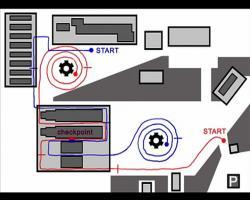
Checkpoint Grenzanlage a.D.: zwei Fahrzeuge, simultan, Start auf zwei Seiten einer Grenze. Aufeinandertreffen am Checkpoint. Spirale um zwei Wachtürme. Beschleunigung durch zunehmende Anzahl von Bildern pro Sekunde. Location: ehemalige deutsch-deutsche Grenzanlage Marienborn. Arbeitsweise: Rück-Übertragung von bevorzugten Methoden der DV-Technik wie Simultaneität, Splitscreen, Beschleunigung, Planseuquenz auf das nostalgische Medium Super8. Vermischung von Roadmovie, Dokumentarfilm, Experimentalfilm.
Daniel Kötter 1975 geboren; seine mehrkanaligen Videoinstallationen und Konzertinszenierungen wurden gezeigt u.a. am Hebbel-Theater Berlin, in den sophiensaelen, den KW- institute for contemporaray art Berlin, Künstlerhaus Bethanien, im tesla Berlin, im Festspielhaus Hellerau Dresden, Casa da musica Porto, Konzerthaus Wien, musica viva und im Rahmen des Ultraschall-Festivals Berlin, der Ostseebiennale für Klangkunst, Warschauer Herbst, Tanz im August sowie dem Kunstfrühling Bremen und Rohkunstbau; Zusammenarbeit u.a. mit den Komponisten John Lely, Helmut Oehring, Thierry Blondeau, Christoph Ogiermann, Iris ter Schiphorst, dem Ensemble Apartment House London, den Musikern Boris Baltschun, Daniel Teige und den Choreographen Sasha Waltz, Paul Gazzola und Petra Sabisch, Videoinszenierungen u.a. zu Musik von Luigi Nono, Iannis Xenakis, Helmut Oehring und Franco Evangelisti, seit 2000 Künstlerischer Leiter des labor für musik: Theater Berlin.
Daniel Kötter
HASHTI Tehran
Doc. expérimental | mov | couleur | 59:45 | Allemagne, Iran | 2016
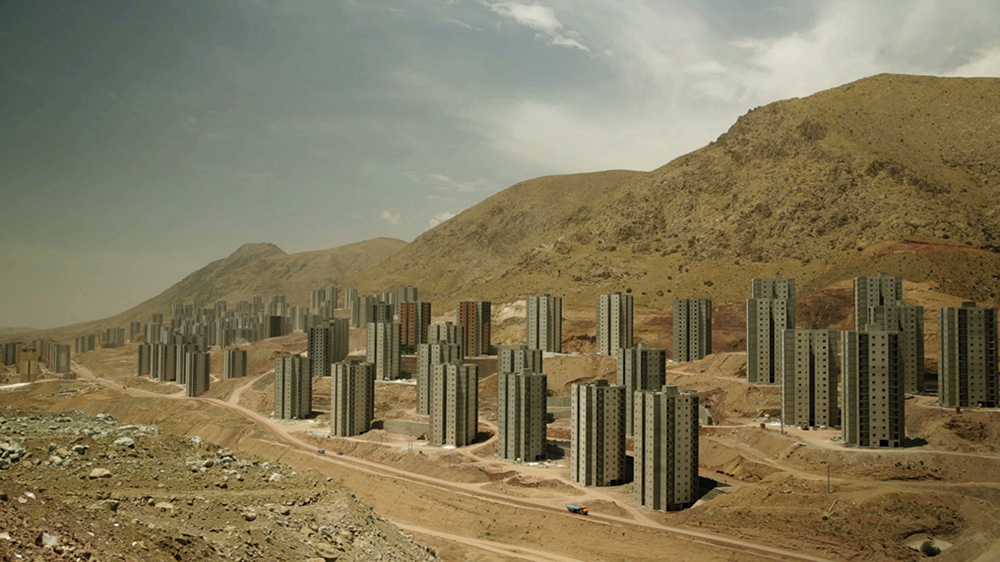
Hashti, in most traditional houses in Iran, is a octagonal space of distribution and circulation to direct the person towards the various parts of the house, the private (andarouni) and semi-public (birouni) reserved for the reception from abroad and the access to spaces of service. Based on the idea that Tehran itself represents a house, so to speak the inner circle of The Islamic Republic of Iran, the outskirts of the city become the space of transition between inside and outside, between urban and non-urban. Thus the film and discursive project HASHTI Tehran looks at four very different areas in the outskirts of Tehran: the mountain of Tochal in the north, the area around the artificial lake Chitgar in the West, the construction of social housing called Pardis Town in the far east and the neighbourhood Nafar Abad at the southern edges of the city. By combining Road movie and architectural documentary and by inverting the techniques of inside and outside shots the film HASHTI Tehran portrays Tehran through its peripheral spaces. Background „Segregation“ and „privatization“, „security“ and „control“ are core terms of urban transformation in the developping cities of the 21st century around the globe. Its contested counterparts are „public“ or „open space“, „access“ and „citizenship“. All these concepts seem stuck in the negotiation between aspiration of new liberal economies trying to connect to a global construction and business boom on the one and a tendency of preserving a shared public sphere for all groups of society within the urban area on the other hand. HASHTI tries to shift this focus to areas where the controlling force of urban development seems to lose its influence, where definitions get blurry and fluid: the edges and peripheries, those contact zones, where city and landscape, nature and construction meet. Can a citizen who leaves the city for recreational or other purposes, still be called a citizen? Which societal function does he take on, which political role does he play in the moment where he enters or lives in the periphery of a city? Administrative aswell as geographical city borders divide space into inside and outside, into what belongs and what is beyond. The relation of those spaces on both sides of the border is therefore not symmetrical. The definitional authority is on the side of the city. The city would always determine the use and formation of space beyond its limits in a stronger way than the countryside would determine the urban space. One of the reasons for this is the fact that the city produces things, that it has to exclude from its centre, in order to guarantee the functionality of the living together: waste, dead corpses, criminals and socially marginalized. The space beyond the city limits therefore is predetermined for storage, settlement and disposal of what is socially peripheral. On the other hand the space beyond the boundaries of the city calls for this need for the city’s opposite: recreation, life in the green space, better air, less density and pollution. Living in the periphery therefore can be understood equally as Stigma and privilege. The Tehran case study Tehran’s peripheral geography shows a significant structural analogy with its social, environmental and psychological divisions: the northern periphery, reserved for the upper class in penthouse appartments and for recreation in the „clean air“ of the mountains, heavily contradicts the situation at the southern periphery, where smog and desert define the social life of the middle and low classes. While the geographical layout of the city with the mountains in the north and the desert in the south define a north-south axis, growth and development of the city are only possible on a west-east axis. HASHTI as a discursive project in collaboration with Shadnaz Azizi, Kaveh Rashidzadeh, Amir Tehrani and Pouya Sepehr and explored in four printed booklets, examines the different strategies of urban planners, architects and sociologists in these areas. How is traffic, how are meeting places, contact zones, gardening controlled and defined? And how do these spaces relate to the definition of interior spaces, the living room as a main forum in a society that regulates public space.
Daniel Kötter is a director and video artist whose work oscillates deliberately between different media and institutional contexts, combining techniques of structuralist film with documentary elements and experimental music theater. It was shown in numerous galleries, video festivals, concert halls and theatres all over the world. Between 2008 and 2011, he developed the video-performance trilogy Arbeit und Freizeit. His music theatre performances in collaboration with composer Hannes Seidl are shown at numerous international festivals. Between 2013 and 2016 they developped the trilogy Ökonomien des Handelns: KREDIT, RECHT, LIEBE. Kötter’s series of films, performative and discursive work on urban and socio-political conditions of theatre architecture and performativity has been under development between 2009 and 2015) under the title state-theatre: Lagos/Teheran/Berlin/Detroit/Beirut/Mönchengladbach (with Constanze Fischbeck). His film and text work KATALOG was shot in twelve countries around the mediterranean sea portraying sites and practices related to the definition of the public sphere. It was presented at the Venice Biennal for Architecture (2013/14). He is currently working with curator Jochen Becker (metroZones) on the research, exhibition and film project CHINAFRIKA. Under Construction. (2014-2018) www.danielkoetter.de www.state-theatre.de http://katalog.danielkoetter.de
Daniel Kötter
Neues Theater (Rahmenanalyse Warschau, 13. November 2011
Vidéo | hdv | couleur | 40:12 | Allemagne, Pologne | 2011
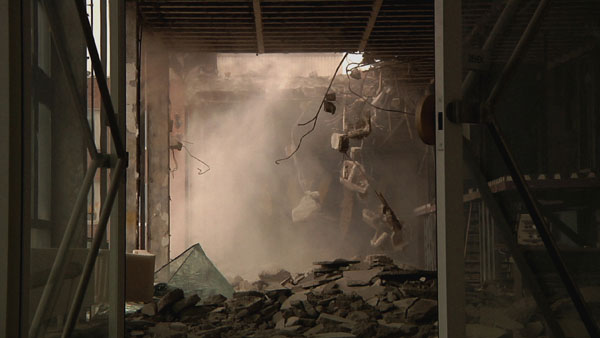
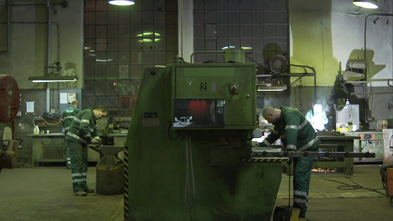
?You know what - this whole ?common ground? category scares me. It must be conceived from the position of someone? - I don?t know - an allegorical film director, an engineer ? someone outside the frame, designing the potential encounter.? Daniel Kötter?s single take film Neues Theater, based on a performance staged in November 2011, examines a moment of fundamental change in the understanding of public space in post-communist Poland. The workshop hall of the Warsaw city cleaning company MPO will turn into the new cultural centre for Poland?s most internationally renowned theatre company Nowy Teatr, the work of the workers will be replaced by the work of actors and viewers. While the camera slowly travels along the hall, the roles of viewers and actors, of labour and performance, practice and theory keep oscillating. The film stages the ?theatre? itself, not as yet another art form (with its specific institutional conditions, market rules and local aesthetic and historic limitations), but as a name for the allegoric space of encounter.
Daniel Kötter, born 1975, is a director and video artist whose work oscillates deliberately between different media and institutional contexts, combining techniques of structuralist film with documentary elements and experimental music theater. It was shown in numerous galleries, video festivals, concert halls and theatres all over Europe, in New York, Mexico, Tehran and Lagos. Between 2008 and 2011, he developed the video- and opera-performance trilogy Arbeit und Freizeit. His music theatre performances in collaboration with composer Hannes Seidl are shown at international festivals such as the Venice Biennale, Musica d?hoy Madrid and others. Kötter`s new series of installations, films, and discursive work on urban and socio-political conditions of performativity has been under development since mid-2010 under the title state-theatre: Lagos/Teheran/Berlin/Detroit/Beirut/Mönchengladbach (with Constanze Fischbeck). For galleries and dance performances, he developed multi-channel live video delay installations. His award-winning short-Film Film für übers Sofa (with Hannes Seidl) was shown at festivals worldwide. Between 2002 and 2008 Daniel Kötter, as artistic director of the labor für musik:theater, developed and produced numerous feature-length performative projects and multi-channel movies on the borderline between concert and musical theater. Daniel Kötter has been living and working in Berlin since 1996.

Daniel Kötter
Water & Coltan
VR vidéo 360 | 4k | couleur | 52:22 | Allemagne | 2021
“Water & Coltan” transports its viewer directly to the places of the struggle of women in artisanal coltan mining camps in South Kivu in Democratic Republic of Congo. Superimposed with a posthuman near-future scenario of the former coal mining Ruhr area in Germany the 360° documentary immersive experience combines two local sides of one and the same violent global phenomenon: the extractivist relation to natural and human resources with its long-term consequences for the environment and society.
Daniel Kötter (Germany, 1975) is a documentary filmmaker and theater director. His research based works alternate between media and institutional contexts. They have been shown worldwide at film festivals, in galleries and theaters. Since 2007 visual research on urbanization and political landscapes leads him to the African continent and the Middle East. His major works include the film and performance series “state-theatre” about urban conditions of performativity in the cities of Lagos, Tehran, Berlin, Detroit, Beirut, Mönchengladbach (2009-2014), the research, exhibition and film project “CHINAFRIKA” (2013-2019) and the film trilogy “Hashti Tehran” (2017, Special Award of the German Short Film Award), “Desert View” (2018) and “Rift Finfinnee” (2020, DEFA Award DOK Leipzig) about urban peripheries in Tehran, Cairo and Addis Ababa. Since 2019 Daniel Kötter was working on the series of spatial performances and 360° films “landscapes and bodies” on the consequences of extractivism in Germany, West Papua and Democratic Republic of Congo. His 360° film “Water & Coltan” (2021) is premiered at IDFA DocLab Competition.
Daniel Kötter
Chinafrika.mobile
Documentaire | hdv | couleur | 38:20 | Allemagne, Congo (RDC) | 2017
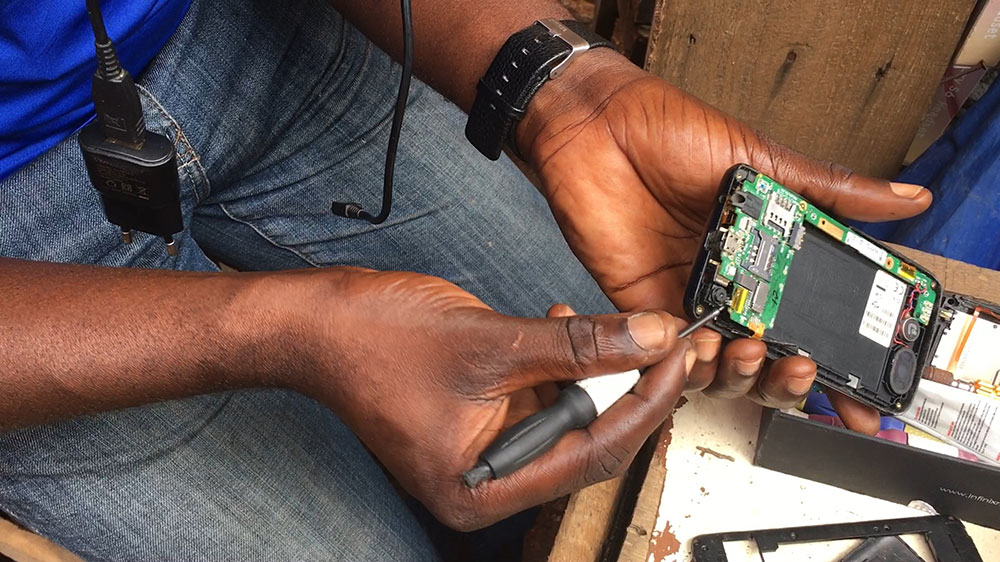
The documentary Chinafrika.mobile is tracking the life cycle of a mobile phone. From its birth in the mines in the Kolwezi, DR Congo, to its manufacturing in Chinese factories in the Pearl River Delta to its use and death in the markets and recycling dumps in Lagos, Nigeria, the mobile phone camera sends images of its global journey to the viewer`s mobile phone display. It was filmed by miners, factory employees, dealers and electronic scrap collectors at the original locations in Congo, China and Nigeria. Four short documentary films show the work on the device that shapes our everyday life. China and Africa act as driving forces for the economic, political and cultural future of globalization and the mobile phone is their important link. Since 2013 Jochen Becker and Daniel Kötter have done research on cultural effects of the economic and political connections between China and the African continent.
Daniel Kötter ist ein international tätiger Filmemacher und Musiktheater-Regisseur. Seine Arbeiten changieren zwischen verschiedenen medialen und institutionellen Kontexten und verbinden Techniken des strukturalistischen Experimentalfilms mit performativen und dokumentarischen Elementen. Sie wurden weltweit auf zahlreichen Film- und Videokunstfestivals, in Galerien, Theatern und Konzerthäusern gezeigt. Zu seinen Hauptwerken zählen die experimentellen Videokonzertperformances Falsche Freizeit (2010), Freizeitspektakel (2010), 'konomien des Handelns 1-3: KREDIT, RECHT, LIEBE (2013-16, alle mit Hannes Seidl), die Mehrkanal-Trilogie Arbeit und Freizeit (2009-2011) sowie die Film-, Performance- und Diskursreihe state-theatre über die Bedingungen des Performativen in den Städten Lagos, Teheran, Berlin, Detroit, Beirut, Mönchengladbach (2009-2014 mit Constanze Fischbeck). Seine umfangreiche Film- und Textarbeit KATALOG (2013) entstand in 13 Ländern rund um das Mittelmeer mit einem besonderen Interesse an Praktiken des Raums. Visuelle Recherchen führen ihn immer wieder auf den afrikanischen Kontinent sowie in den Mittleren Osten. 2014-18 arbeitete er u.a. mit dem Kurator Jochen Becker (metroZones) an dem Recherche-, Ausstellungs- und Filmprojekt CHINAFRIKA. Under Construction. Sein Film "Hashti Tehran" (2017, HD, 60") gewann u.a. den Sonderpreis des Deutschen Kurzfilmpreises.
Daniel Kötter
Repetitionen
Vidéo | hdv | couleur | 21:28 | Allemagne | 2016
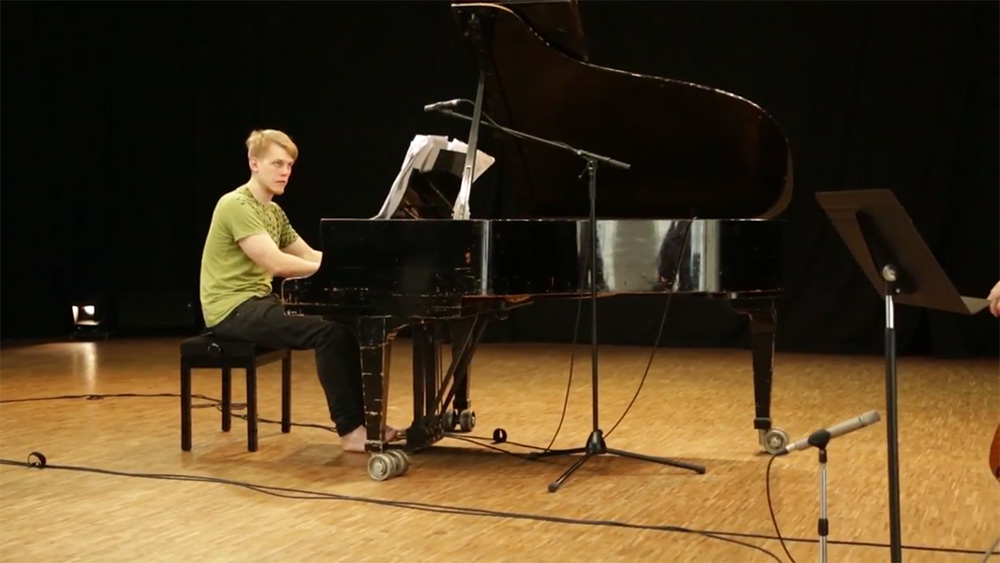
He who walks down the street, over there, is immersed in the multiplicity of noises, murmurs, rhythms. By contrast, from the window, the noises distinguish themselves, the flows separate out, rhythms respond to another. No camera, no image or series of images can show these rhythms. The observer in the window knows that he takes his time as first reference, but that the first impression displaces itself and includes the most diverse rhythms on the condition that they remain to scale. Rhythms always need a reference, the initial moment persists through other perceived givens. Henri Lefebvre, Rhythmanalysis
Daniel Kötter is a director and video artist whose work oscillates deliberately between different media and institutional contexts, combining techniques of structuralist film with documentary elements and experimental music theater. It was shown in numerous galleries, video festivals, concert halls and theatres all over the world. Between 2008 and 2011, he developed the video-performance trilogy Arbeit und Freizeit. His music theatre performances in collaboration with composer Hannes Seidl are shown at numerous international festivals. Between 2013 and 2016 they developped the trilogy Ökonomien des Handelns: KREDIT, RECHT, LIEBE. Kötter’s series of films, performative and discursive work on urban and socio-political conditions of theatre architecture and performativity has been under development between 2009 and 2015) under the title state-theatre: Lagos/Teheran/Berlin/Detroit/Beirut/Mönchengladbach (with Constanze Fischbeck). His film and text work KATALOG was shot in twelve countries around the mediterranean sea portraying sites and practices related to the definition of the public sphere. It was presented at the Venice Biennal for Architecture (2013/14). He is currently working with curator Jochen Becker (metroZones) on the research, exhibition and film project CHINAFRIKA. Under Construction. (2014-2018)
Daniel Kötter, Constanze Fischbeck
state-theatre #1 LAGOS
Doc. expérimental | hdv | couleur | 24:7 | Allemagne | 2010
The word `theatre` (theatron in greek) refers first and foremost to the place and architecture of a performance, rather than to what is being performed. Even after centuries, a theatre?s architecture represents the visual order from which it emerged: the possibilities for artistic production are historically conditioned. The geometrical space of architecture is pitted against the anthropological space of its use. 1st case study: LAGOS The National Theatre of Nigeria in Lagos was built for the Second Festival of Black and African Arts and Culture (FESTAC) in 1976. It is the only state-subsidized theatre in Nigeria. While its smaller halls are occasionally used for theatre performances, banquets and weddings, the 5000-seat main hall has been deserted since the early 1990s. A reopening was scheduled for 2010 but postponed indefinitely after a series of changes in direction. counter shot: The Bariga Arts Center was founded in 2009 in a Lagosian slum by choreographer and Nollywood actor Segun Adefila, after the rent free agreement between his company Crown Troupe of Africa and the National Theatre of Nigeria had been revoked.
Daniel Kötter has been implementing experimental approaches to the formats of theatrical and musical performance, collaborative models for artists and non-artists, video art in the context of different formats of presentation ? exhibitions, live performances, film, with a particular interest in multi-channel video installations and alternative concert formats. Daniel Kötter (b. 1975) lives and works in Berlin. Between 2008 and 2011 he developed the video- and opera-performance trilogy on artistic labour - Arbeit und Freizeit. His music theatre performances in collaboration with composer Hannes Seidl are shown on international festivals like Venice Biennale, Musica d?hoy Madrid and others. A new series of installations, films, and discursive work on urban and socio-political conditions of performativity has been developed in collaboration with Constanze Fischbeck since 2010 under the title state-theater: Lagos/Teheran/Berlin. Constanze Fischbeck was born in 1968. She studied set design, and now works as a set designer for theater, music theater and dance. She has also been working as a video artist since 1996. Space and the current time of specific locations are always the initial points from which her work unfolds. In her video works, she is interested in the intersection of documentary and staged moments in the context of an urban environment. Since 2001, she has developed a series of works that explore the function of society in cities like Magdeburg, Berlin, Sao Paulo, Sarajevo, Lagos, Tehran and Detroit. Her work has been shown in festivals, art institutions and theaters. "state-theater" is her second collaboration with Daniel Kötter.

Laura Kraning, Blue Kraning
Las Breas
Doc. expérimental | 4k | couleur | 12:20 | USA | 2019
LAS BREAS is an observational portrait of three tar pits, of which there are only six in the entire world. Situated in three distinct landscapes in Southern California – urban Los Angeles, the oil fields of the San Joaquin Valley, and Carpinteria Beach, LAS BREAS investigates the spaces between archiving the pre-historic and the contemporary industrial landscape. While skeletons of extinct megafauna and vintage animatronic beasts are on display in the heart of Hollywood, the sticky remains of ancient microscopic organisms seep to the surface of both land and sea. Of the earth, yet primordial and impenetrable, the bubbling tar that rises from the depths speaks of past extinction and human exploitation of the earth’s limited resources.
Laura Kraning’s moving image work has screened widely at international film festivals, museums, and galleries, such as the New York Film Festival’s Views from the Avant-Garde and Projections, International Film Festival Rotterdam, Edinburgh Film Festival, London Film Festival, Visions du Réel, MoMA’s Doc Fortnight, Art Toronto, Centre Pompidou, National Gallery of Art, and REDCAT Theater, among others. Her work has received awards at the 2010, 2015, and 2016 Ann Arbor Film Festival, 2016 Athens International Film Festival, and the 2018 Rencontres Internationales Sciences & Cinémas Film Festival. Blue Kraning’s documentary and narrative films have screened internationally at festivals and venues such as International Film Festival Rotterdam, Helsinki International Film Festival, Shanghai International Film Festival, Image Forum Festival, Ann Arbor Film Festival, Denver Film Festival, Nashville Film Festival, Festival du Nouveau Cinema, Los Angeles Filmforum, and the Walker Art Center. He has won numerous awards such as the IFP/Blockbuster Film Development Fund, The Morrow-Hues Screenwriting Award (finalist) and his television writing has garnered two Emmy Awards.
Laura Kraning
Devil's Gate
Doc. expérimental | hdcam | noir et blanc | 19:48 | USA | 2011
DEVIL?S GATE explores the metaphysical undercurrents of a Southern California landscape scarred by fire. The film lyrically depicts the physical and mythological terrain of Devil?s Gate Dam, located at the nexus of Pasadena?s historical relationship with technology and the occult, and intertwining with its central figure, Jack Parsons, who some believe to have opened a dark portal in this place. The film merges an observational portrait of a landscape transformed by fire, ash and water with a fragmentary textual narrative, providing a view into man?s obsession with controlling and transcending the forces of nature and spirit. It can be seen as unearthing a subconscious of the landscape, as the echoes of the past reverberate in the present and infect our perception and experience of place.
Laura Kraning?s experimental documentaries are portraits of secret worlds hidden beneath the surface of the everyday that traverse the border between the objective and the subjective, the real and the imaginary. Her early work as an abstract painter infused her filmmaking process in which she makes visible the textural and symbolic layers inherent in landscapes filmed over time. Her work has screened widely at international festivals and venues including the New York Film Festival, International Film Festival Rotterdam, Visions du Réel, Edinburgh International Film Festival, Ann Arbor Film Festival, Athens International Film and Video Festival, Rencontres Internationales, and the National Gallery of Art. Her film VINELAND was awarded the City is Cinema Jury Award at the 2010 Ann Arbor Film Festival and she is a recipient of a 2010 Princess Grace Foundation John H. Johnson Film Award for her latest film, DEVIL?S GATE. Laura currently resides in Los Angeles.
Laura Kraning
Vineland
Doc. expérimental | dv | couleur | 10:15 | USA | 2009
VINELAND is a short experimental documentary filmed at the last drive-in movie theater in Los Angeles, located in a desolate area called the City of Industry. Floating within a backdrop of smokestacks, beacon towers, and passing trains, dislocated Hollywood images filled with apocalyptic angst are re-framed and reflected through car windows and mirrors as the displacement of the radio broadcast soundtrack collides with the projections upon and surrounding the multiple screens. In VINELAND, the nocturnal landscape is seen as a border zone aglow with dreamlike illusions revealing overlapping realities at the intersection of nostalgia and alienation.
Laura Kraning is a filmmaker whose work blurs the boundaries of documentary and experimental film and often explores the surreal within the real. Her early work as an abstract painter has infused her process of seeing and translating the hidden meanings beneath the surface of the everyday, making visible the textures unfolding within the temporal landscape. Her films have screened at numerous festivals and venues including the International Film Festival Rotterdam, Edinburgh International Film Festival, Antimatter Film Festival, Athens International Film and Video Festival, National Gallery of Art, Los Angeles Filmforum, Portland Documentary and Experimental Film Festival, and the REDCAT Theater in L.A. Her most recent film, VINELAND, premiered at the New York Film Festival`s Views From the Avant-Garde and received a Jury Award at the 2010 Ann Arbor Film Festival. Laura currently resides in Los Angeles.
Aron Krause
[ 0-1 ]
Fiction expérimentale | dv | couleur et n&b | 15:10 | Allemagne | 2003
Le sujet du film [0-1] est un garçon qui vit dans un monde de monotonie où règne une atmosphère de fin des temps. Lui seul développe une pensée propre, lui seul sent la nécessité de dépasser les frontières du monde dans lequel il vit et de son existence.
Aron Krause est né le 3 octobre 1985 à Kassel, en Allemagne. En faisant de la musique sur les marchés de Noël, il a financé l'achat de son premier camescope à l'âge de 10 ans, et a depuis appris à filmer en autodidacte. En classe de quatrième, il a écrit un mémoire de 40 pages intitulé "Film et cinématographie", et a tourné son premier court métrage "An diesem einen Tag". Il a par la suite réalisé un nouveau court métrage chaque année, ainsi que plusieurs films courts, créés lors de séminaires. Il a participé en outre à de nombreux projets autour du théâtre et de la musique. En 2002, il a effectué un stage auprès d'une agence de publicité de Wuppertal (Allemagne). Pour son dernier court métrage [0-1] il a remporté en Allemagne le prix de la vidéo jeunesse (Deutscher Jugendvideopreis), et a participé à de nombreux festivals, dont celui de New York. En 2003 et 2004, il a dirigé dans son lycée des ateliers sur les courts métrages. Il a obtenu son baccalauréat en 2005.
Carine Krecke, ELISABETH KRECKE
MEMORIAL DRIVE
Installation vidéo | dv | couleur | 6:40 | Luxembourg | 2009
Memorial drive figure un roadtrip fictif à travers le Texas contemporain. L?installation comporte deux projections synchrones sur deux écrans : sur l?un défilent des photos de sites urbains ou fragments de désert (montés en diaporama), sur l?autre, les coordonnées de ces lieux tels que répertoriés par Google. Les photogrammes ont l?air d?être pris de la route, de façon aléatoire. Certains l?ont réellement été, lors d?une traversée du Texas que nous avions effectuée en 1997. En 2009, nous avons cherché à relocaliser sur Google Map les lieux photographiés à l?époque, ce qui impliquait des heures de trajet virtuel grâce au dispositif Street View de Google. D?autres images, en revanche, furent fabriquées de toutes pièces. Il s?agissait de reproduire, à partir de fragments de nos anciens clichés, des remakes aussi fidèles que possibles d?images de Dallas sélectionnées arbitrairement sur Street View. Il n?y a pas de démarcation entre les deux types d?images, réelles et fictives. Toutes sont d?une banalité affligeante ? bretelles d?autoroutes, terrains vagues, parking désertés, panneaux de signalisation... Dans Memorial drive, l?application Google Street View est utilisée non seulement comme source d?inspiration pour la fabrication d?images, mais elle est récupéré (ou revendiquée) comme genre photographique à part entière.
Carine et Elisabeth Krecké sont deux s?urs jumelles d?origine luxembourgeoise, établies à Marseille et à Luxembourg. Leur production artistique se situe au croisement des médiums dessin, photographie et littérature (elles sont auteurs de récits, romans, pièces de théâtre, mais aussi d?articles et d?ouvrages collectifs dans le domaine de la philosophie des sciences sociales). Le thème de l?artiste et de ses doubles fictionnels est récurrent dans leur travail : identités cachées ou doubles, simulacres et pastiches caractérisent aussi bien leurs productions visuelles que littéraires (par exemple, la photographe en crise de création qui se lance sur les traces de Robert Frank, la chronique d?une enquête photographique au Dakota du Sud sur les traces d?un homme vu sur Google Street View avec une Kalachnikov, l?artiste-performer dont l??uvre est construite au cours d?un roman, l?artiste infiltré dans des communautés scientifiques pour révéler le caractère fictionnel de propositions scientifiques?.). Les s?urs Krecké ont participé à diverses expositions internationales, notamment avec leurs séries Photographies fictives/ Extraits de films inexistants : Casino-Luxembourg 2003, Mois Européen de la Photographie 2006-2007, Nuits de l?Europe des Rencontres d?Arles 2007, Paris Photo 2007, Galerie Xippas Paris 2007, Nuits Blanches Paris 2008, Pingyao Photography Festival 2008, Caochangdi Photo Spring Peking 2010...
Johannes Krell, Florian Fischer
Kaltes Tal
Vidéo | 4k | couleur | 11:56 | Allemagne | 2016
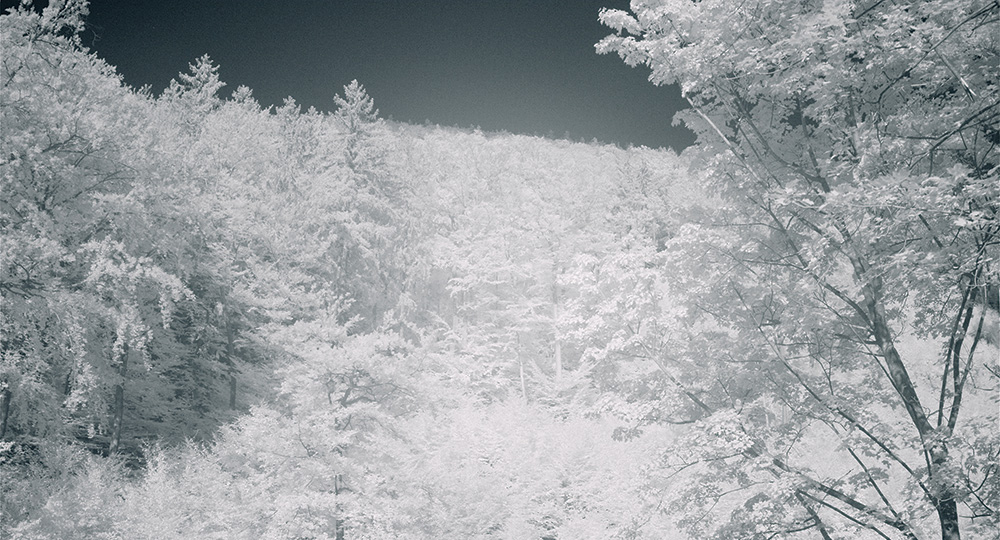
Oscillating between aesthetic and documentary forms, the short film “Kaltes Tal” describes the daily business of a strip mine harvesting lime. The material removed is processed and returned to nature through forest liming. This measure attempts to counteract acid rain that troubles the forest floor. A cycle like a Mobius strip – an irreversible consequence due to the mining materials in order to restore the fragile natural balance. Lime dust delicately dusts the forest floor. A white, spherical alternative world opens, questioning our ambivalent relationship to nature.
Johannes KRELL was born in Halle an der Saale, Germany. After studying Philosophy and Art History at the MLU Halle, he was educated in Audiovisual Media in Berlin. He made various short films. His films have been screened at ASFF York and FIVA Buenos Aires, and he won the Jury Prize at the Emergeandsee Media-Arts Festival Berlin for A Cloud of Unknowing (2011). After studying, Krell became a freelance photographer, editor and sound designer.
Igor Krenz
TV S Reconstruction
Vidéo expérimentale | dv | couleur | 3:30 | Pologne | 2006
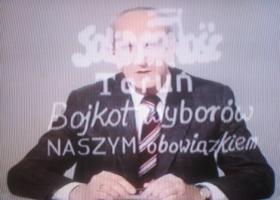
En 1985, des astronautes de l'Université de Torun ont mis au point leur propre émetteur de télévision et ont superposé des slogans de Solidarnosc aux émissions de télévision officielles. Des formes géométriques de petite taille ont été diffusées dans le coin de l'écran pour tester la portée et l'efficacité de l'émetteur. En septembre 1985, les téléspectateurs du journal télévisé officiel et d'un épisode de la série policière à succès "O7 Over and Out", ont vu apparaître à l'écran les slogans suivants: "Solidarnosc Torun, Assez d'inflation, de mensonges et de répression", "Solidarnosc Torun, il est de notre devoir de boycotter les élection".
Au milieu des années 1990, Igor Krenz a fondé l'association "ZF Kino" pour promouvoir, présenter, témoigner et apporter un support technologique à l'art vidéo. Il est aussi un co-fondateur des groupes "Photo Service" et "Azorro". Ses oeuvres ont été présentées au Centre d'Art Contemporain et à la Galerie Raster de Varsovie, à la galerie GB Agency à Paris et à la Tate Modern à Londres. Il a réalisé plus de 60 films. Il vit aujourd'hui à Varsovie
Delphine Kreuter
Dubai Birds
Vidéo expérimentale | dv | couleur | 4:14 | France, Emirats arabes unis | 2010
Delphine Kreuter (née en 1973 à Lyon), vit et travaille à paris. Après avoir obtenue une licence de lettres modernes, elle fait sa première exposition de photographies à la galerie Alain Gutharc en 1997. Elle réalise simultanément sa première vidéo, "Marthe", 4 minutes qui seront transférées en 35 mm grâce à l`aide de Jack Gajos, alors directeur de la FEMIS, puis sélectionnées en 1999 au festival du court métrage de Clermont Ferrand. Après de nombreuses expositions de photographies et de vidéos, plusieurs FIAC, quatre monographies, achetée par de nombreux collectionneurs, elle réalise son premier long métrage "57000 KM entre nous" avec Mathieu Amalric et Florence Thomassin. Son second long métrage avec Vanessa Paradi "Dubaï Flamingos" sortira en salle en septembre 2011.
Delphine Kreuter
hotel riverview
Fiction expérimentale | dv | couleur | 1:56 | France, USA | 2008
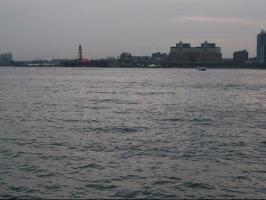
Un américain et une française, deux voix, deux langues, sans corps, parlent, deux minutes en une seule prise, devant l`Hudson à Manhattan, de ce qui est construit par ce qui n`est pas.
Née en 1973, à Lyon, Delphine Kreuter a étudié la littérature moderne. En 1997, elle a exposé ses photographies pour la première fois, à Berlin, à Paris et à la célèbre Galerie Alain Gutharc. La même année, elle a remporté le Prix Photo de Paris alors que son premier court-métrage, « Marthe » était projeté au Festival du Court-Métrage de Clermont-Ferrand. En 2000, elle est la plus jeune artiste exposée à la FIAC. Elle participe à l?exposition d?Yvon Lambert « J?embrasse pas » et obtient une bourse hors les murs de la Villa Médicis pour se rendre à Dubaï. Artiste des médias mixtes, Delphine Kreuter est également illustratrice, artiste vidéo et réalisatrice. Elle a travaillé en étroite collaboration avec Christian Lacroix et publié quatre monographies. Son premier long-métrage « 57.000 km entre nous » a été projeté en France en 2008 et a remporté le Prix Spécial du Jury à Taipei et le prix Femina à Rio de Janeiro .
Delphine Kreuter
XXXy
Film expérimental | dv | couleur | 17:0 | France | 2006
Quatre personnages, masqués ou travestis et une jeune fille se retrouvent un 11 novembre dans l`appartement d`une femme qui vient de mourir.
Delphine Kreuter was born in 1973. She began to make photographs and videos after her art studies in 1995. She is currently finishing up her first full-length film.
Martin Kristanto
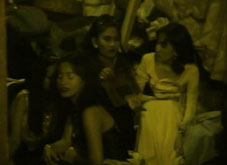
Dangdut Koplo
Vidéo expérimentale | dv | couleur | 3:0 | Indonésie | 2005
"Dangdut Koplo" is a specific music genre developed in East Java province, which is usually performed as amusement on stage and traditional ceremonies of low-class people. The music is now becoming very popular after one of the East Java singers emerged as a national icon. This video smartly represents the aesthetic language of Dangdut music and all at once reflects a very specific characteristic of popular spectacle culture in Indonesia, which is necessarily banal and vulgar, but in some sense also eclectic and creative. This video is actually a composition of found-footages of a spectacle product, which is very popular in Indonesia, namely pirated VCD. The VCDs are commonly created only using a very simple production and distribution process, which is sometimes also illegal.
Le travail de Martin Kristanto a été reconnu grâce à « Dangdut Koplo », lorsque une association d?artistes (Ruangrupa), organisant le Jakarta Video Art Festival (2003), a fait appel aux jeunes artistes indonésiens pour travailler sur le thème du rôle de l?art dans la communauté urbaine. « Dangdut Koplo » a très vite attiré l?attention des organisateurs ; l??uvre de Kristanto est désormais exposée dans tous les festivals auxquels l?association participe.