Catalogue > Faire une recherche
Résultats pour : Tout le catalogue

Maximillian Jänicke, Random Industries
Media corrosion
Vidéo expérimentale | dv | couleur | 2:0 | Allemagne | 2005
L´oeuvre de Jänique est une plage de la compilation ?Essay?s on the radio : Can I have two minutes of your time?? ("Essais radiophoniques : puis-je avoir deux minutes de votre temps?"), par Cronica Electronica. Cette compilation se compose d´un CD audio et d´un DVD, et, comme Cronica ne voulait pas simplement rassembler des morceaux de musique (aussi intéressants ces morceaux soient-ils), ils ont essayé de trouver une idée unifierait les plages en une composition collective cohérente, afin de ne pas seulement présenter le label et chaque artiste, mais aussi d´en faire une occasion de créer une oeuvre qui aurait une signification. "Essays on Radio" cherche à commenter un moyen sonore, la technique et la culture radio.

Matt Jenkins
Helen Frankenthaller Radial Glow
Vidéo expérimentale | hdv | couleur | 3:36 | USA | 2015
Akira Kurosawa said that "to be an artist means to never avert one`s eyes." Akira Kurosawa said that "to be an artist means to never avert one's eyes." This work was created as a teaching tool to inspire students in studio art courses that combine painting discourse with video art.
I am an Associate Professor of Art at Metropolitan State University of Denver. I teach courses such as performance art, socially engaged art, video art, environmental art, and internet art.
Nicolas Jenkins
New York Story
Vidéo expérimentale | dv | couleur | 7:0 | Canada, USA | 2007
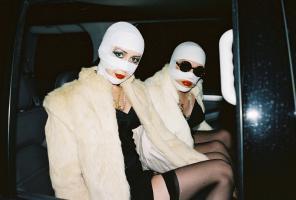
Breyer P-Orridge, aka Genesis P-Orridge et sa partenaire Lady Jaye, ont attiré l'attention ces dernières années pour avoir suivi des procédures médicales pour éliminer leurs différences physiques. "Un des thèmes central de notre travail est la malléabilité de l'identité physique et comportementale," expliquent-ils en clamant leurs identités fusionnées. Les deux espèrent créer un nouveau sexe, le pandrogyne, une identité hermaphrodite appelée Breyer P-Orridge.
Nicolas Jenkins, artiste vidéo basé à New York et ancien promoteur de soirées underground dans les entrepôts, a passé la plupart de sa vie à voyager. Né au Pérou, il a déjà vécu sur six des sept continents avant de finir l'école. Ses courts métrages et ses vidéos ont beaucoup été montré à travers l'Europe et l'Amérique du Nord. Son ?uvre vidéo "The Bridge" fait partie de l'exposition permanente à la National Gallery du Canada. Lorsqu'il vivait à Montréal, il se fit connaître en tant que pionnier de la scène des soirées underground dans les entrepôts. Jenkins a aussi collaboré avec un nombre de groupes internationalement reconnus tel que le Cirque du Soleil pour produire des évènements multimédia élaborés. Nicolas collabore en ce moment avec Genesis P-Orridge et PSYCHIC TV sur des vidéos pour leur prochain album et tournée mondiale.
Jiang Jin
One Day
Documentaire | hdv | couleur | 24:17 | Chine | 2020
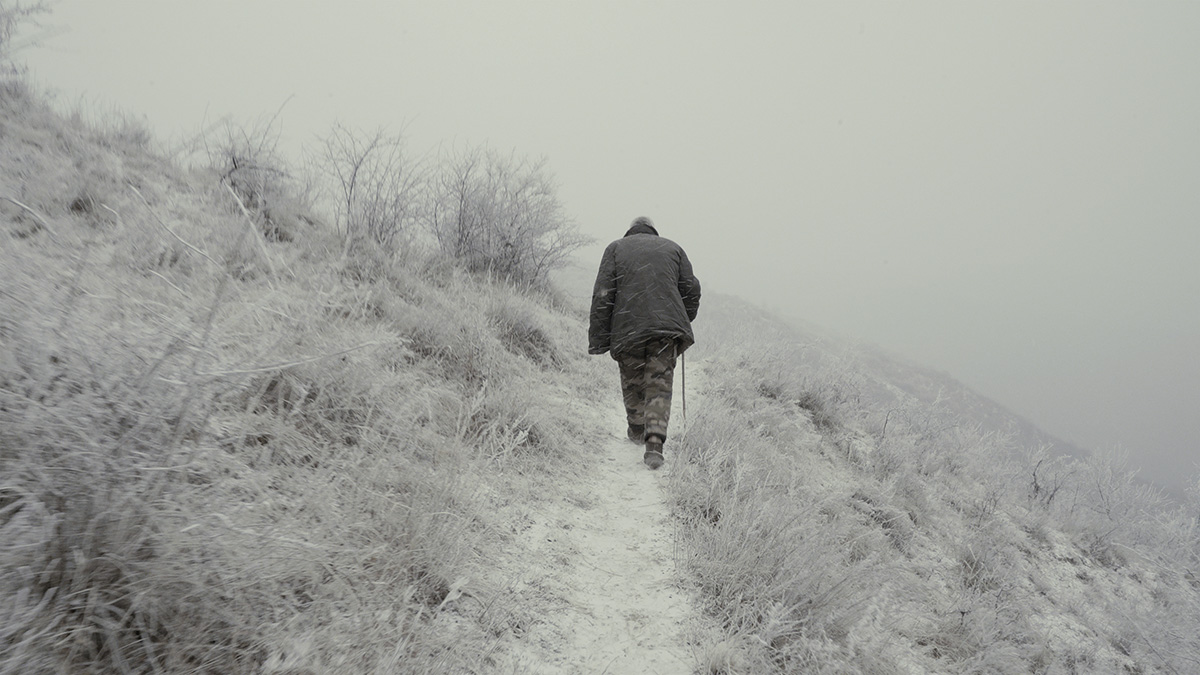
We follow a man of advanced age walking along a misty mountain path in China. In one shot he carries a bag; in others he carries sacks of rice, or timber, or large buckets of water. He’s filmed in the morning, in the evening, and at night. The seasons change as we walk with him, through the bleakness of the winter, or on a fresh spring morning. The low-key atmosphere, the subdued gray-green hues of the surroundings, and the absence of dialogue and music all lend this film a refreshingly understated feel. A space is opened up in which the viewer can listen to the sound of the wind, the man’s footsteps, the birds. There is time to wonder who the man is that we are following, where he is going, and what his life is like. Only at the end of his journey do we find out a little more about him.
Born in 1989, Luoyang, Henan Province, Jin Jiang started to earn his living after dropping out of high school. In his spare time, he devoted himself to contemporary arts. In 2013, his first personal exhibition "In the Field of Hope" was held in his hometown. One year later, he came to Beijing and ventured into cinematography and film industry.
Clara Jo
De Anima
Doc. expérimental | 0 | couleur | 29:35 | Allemagne, Myanmar | 2022
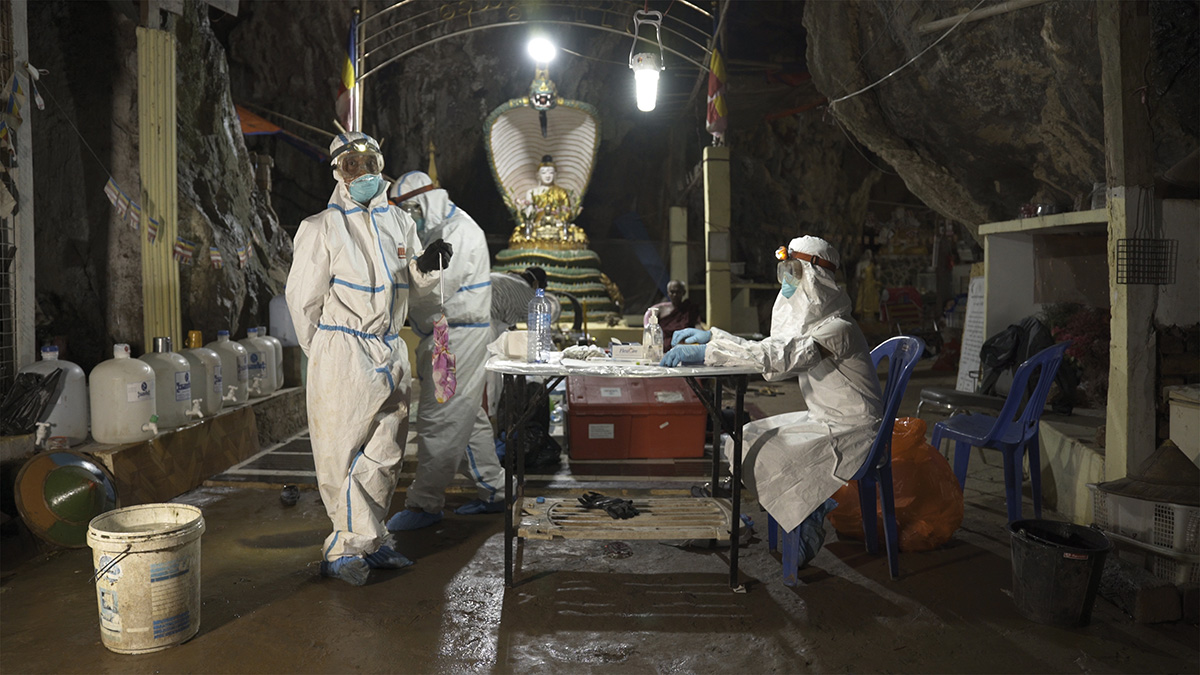
"De Anima" spans documentary and animation and features a dreamlike narrative examining how various gendered, racialized, economic, and metabolic systems embedded within the global health system—which have become especially apparent during the COVID-19 crisis—drive fear of contamination from the nonhuman world. The work’s departure point is Jo’s 2018 field research in Myanmar with Smithsonian wildlife veterinarians who were hunting for new strains of coronavirus to predict their pandemic potential. The sacred caves depicted in "De Anima" are both high-risk interfaces as well as sites of spiritual encounter between humans and animals, science and religion, nature and politics—interfaces where ecosystems cross and feed into global conflict. This behind-the-scenes work had been underway for years, and sheds light on the inevitable: not of a why but an unknown when—offering an ominous prelude to the current global health crisis. Recorded in Myanmar, Kenya, and France, the images and sounds featured in "De Anima" that once felt so ‘far away’ now deeply resonate in the everyday. The work exposes subtexts that reveal deeper issues embedded within society at large, namely the neglect and treatment of health beyond the human in an era of accelerated globalization.
Clara Jo's work has been exhibited and screened her work at Gropius Bau (Berlin), Centre Pompidou (Paris), ARKO Art Center (Seoul), Royal Academy of Arts (London), Spike Island (Bristol), Hamburger Bahnhof (Berlin), and Edith-Russ-Haus für Medienkunst (Oldenburg). She has previously held fellowships and residencies at Art Explora (Paris), Akademie Schloss Solitude (Stuttgart), and the Smithsonian Artist Research Fellowship (USA). She has presented her work for talks at the Centre Pompidou (Paris), Stedelijk Museum (Amsterdam), and King’s College (London).

Clara Jo
Nests of Basalt, Nests of Wood
Vidéo | hdv | couleur | 24:59 | USA, Allemagne | 2023
The single-channel documentary fiction film “Nests of Basalt, Nests of Wood” presents a speculative narrative of maritime and epidemiological movement across oceanic space and time. The film is grounded by documentary footage shot in Albion and Flat Island, Mauritius, combined with a fictional layer of computer-generated animation. “Nests of Basalt, Nests of Wood” is narrated through the perspective of the Paille-en-queue bird, who has inherited oral histories from their ancestors of all they have witnessed from an aerial perspective. Spanning different elevations and time registers, stories from an an unmarked cemetery on a former cotton plantation and sugar estate in Albion, as well as 19th-century quarantine station Flat Island question erased histories from the legacy of British and French colonialism and movements of indentured labor across the Afrasian Sea (Indian Ocean). By locating these deep erasures through fiction, the film offers alternate readings of the terrain through their material imprints and geological scars in order to tell these difficult stories of disappearance and bondage as quiet acts of commemoration.
Clara Jo (Berlin) is a graduate of Bard College (NY) and the Universität der Künste Berlin. Her work has been exhibited and screened at Gropius Bau (Berlin), Centre Pompidou (Paris), Jeu de Paume (Paris), De La Warr Pavilion (Bexhill On Sea), Framer Framed (Amsterdam), ARKO Art Center (Seoul), Spike Island (Bristol), Hamburger Bahnhof (Berlin), and Edith-Russ-Haus für Medienkunst (Oldenburg). She has previously held fellowships and residencies at Art Explora (Paris), Akademie Schloss Solitude (Stuttgart), and the Smithsonian Artist Research Fellowship (USA).
- Jodi
-
Performance | | | 20:0 | Pays-Bas | 2012
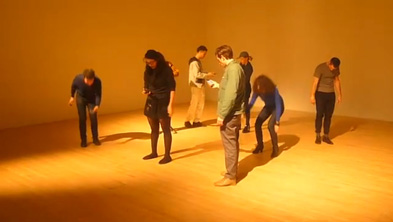
Performance with a group demonstration of an iPhone application. Volunteers followed instructions from their individual phones, creating performance art through a combination of dance and exercise movements dictated by the app.
.
Michael Johansson, Johan JONASON
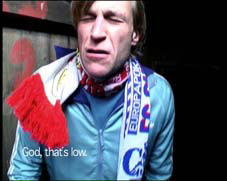
That's low
Vidéo expérimentale | dv | couleur | 5:17 | Suède | 2002
La performance de Jonason révèle son état intérieur réel ainsi que celui du photographe, simultanément. Aucun d'eux ne le croit.
Michael Johansson (né en 1975) vit et travaille à Malmö en Suède. Son travail s?étend sur des médias variés : la photographie, les installations et la vidéo. "That?s low" a été fait en collaboration avec le réalisateur et artiste Johan Jonasson. Jonasson (né en 1970) travaille et vit à Stockholm, en Suède, et il se partage entre le film et l?art, ayant exposé son travail aussi bien dans des expositions que des festivals de film. "That?s low" a été tourné sur un toit, à Stockholm, avec en haut de l?affiche, un Jonason qui ne s?est jamais débrouillé pour avoir notre sympathie, ni la sienne. Johnasson et Jonason ont travaillé ensemble pendant dix ans en deçà de leurs travaux personnels. Les autres projets sur lesquels ils ont collaborés sont ?Le Kurde? et ?Never Leave Me?.

Birgit Johnsen, Hanne Nielsen
Outside is Present
Vidéo | 4k | couleur | 14:57 | Danemark, 0 | 2017
Outside is present is based on the often stereotype and one-sided media images from the world`s many focal points and from provincial places far out in the countryside. In Outside is present blend these two confrontational media representations, so a small village in Denmark is hereby transformed into one of the world`s focal points. The small well-known facets of the village thus change character in fictionalization and can either occur as everyday realisme, idyllic or scary, depending on the eye that looks: whether it is the individual in relation to the village, the village in relation to the capital, the capital in relation to the country or the country in relation to the world. A similar superfictional view of the world led Miguel de Cervantes` famous madman Don Quixote.
Birgit Johnsen & Hanne Nielsen are educated from the Art Academy of Jutland from 1991 and 1990 They have worked and exhibited together with video, documentary and installations since 1993 . Latest exhibition can REVISIT at Overgaden 2018, Protect/Release at Røda Sten Kunsthall 2017 and Inclusion / Exclusion ARoS 2014. In 2016 /17 they were received Carl Nielsen and Anne Marie Carl-Nielsens honorary award and with Eckersberg Medal, The Royal Academy of Fine Arts.

Erin Johnson
The Ferns
Vidéo expérimentale | mov | couleur | 15:53 | USA | 2025
À l’approche de la fermeture du vieil herbier centenaire de l’Université Duke — qui abrite plus de 825 000 spécimens végétaux séchés — The Ferns entrelace récits personnels, politiques et scientifiques pour explorer les histoires entremêlées de la botanique, de l’identité et de la résistance. Au centre du film se trouvent Kathleen Pryer, directrice de l’herbier, et la théoricienne féministe Banu Subramaniam. Lorsque la première raconte avoir nommé un groupe de fougères d’après l’icône pop Lady Gaga — un geste ancré dans une identification queer — elle ouvre la voie à des conversations plus profondes sur les systèmes de nomination et de catégorisation. La seconde retrace la manière dont les normes sexuelles coloniales ont longtemps façonné la science botanique, imposant un genre binaire aux plantes et effaçant des systèmes reproductifs plus fluides et plus diversifiés. Tissé entre leurs deux voix, on retrouve des drag performers qui animent les archives de l’herbier, en play-back sur Poker Face dans des costumes scintillants inspirés de Gaga, évoluant entre les rangées de spécimens séchés. Ils deviennent les « fougères Gaga » — brouillant les frontières entre science et fantaisie, taxonomie et jeu. Tourné en Caroline du Nord, où la législation anti-LGBTQ+ continue de menacer les vies queer et trans, The Ferns situe l’herbier non seulement comme un lieu de préservation, mais comme une scène où se contestent les récits dominants. Remerciements particuliers à Dr Banu Subramaniam et Dr Kathleen Pryer pour avoir partagé leurs travaux, ainsi qu’aux performeurs Lotus Lolita, Portia Foxx et Poison. Merci à la directrice adjointe Vida Zamora et au monteur Rafe Scobey-Tahl.
Johnson a obtenu un MFA ainsi qu’un certificat en nouveaux médias à l’Université de Californie, Berkeley en 2013, et a participé à la Skowhegan School of Painting & Sculpture en 2019. Elle a également pris part à des résidences à la Jan van Eyck Academie (Maastricht, NL), au Lower Manhattan Cultural Council (New York, NY), à Hidrante (San Juan, PR), à Lighthouse Works (Fishers Island, NY), entre autres. En 2024, elle a été Working Artist Fellow à Pioneer Works (Brooklyn, NY). Son travail a été exposé ou projeté dans divers lieux, notamment e-flux (New York, NY), BOAN1942 ARTSPACE (Séoul, KR), BOFFO (Fire Island, NY), Rencontres Internationales (Paris, FR / Berlin, DE), BIENALSUR (Buenos Aires, AR), MOCA (Toronto, CA), Munchmuseet (Oslo, NO), Sanatorium (Istanbul, TR), Times Square Arts (New York, NY), etc. galerie (Prague, CZ), Cinalfama (Lisbonne, PT), deCordova Sculpture Park and Museum (Lincoln, MA), Billytown (La Haye, NL), la Galleria Eugenia Delfini (Rome, IT) ainsi que REDCAT (Los Angeles, CA). Johnson est directrice du programme de premier cycle et membre du corps enseignant du programme Studio Art à l’Université de New York.
Erin Johnson
To be Sound is to be Solid
Doc. expérimental | mov | couleur | 15:0 | USA | 2022
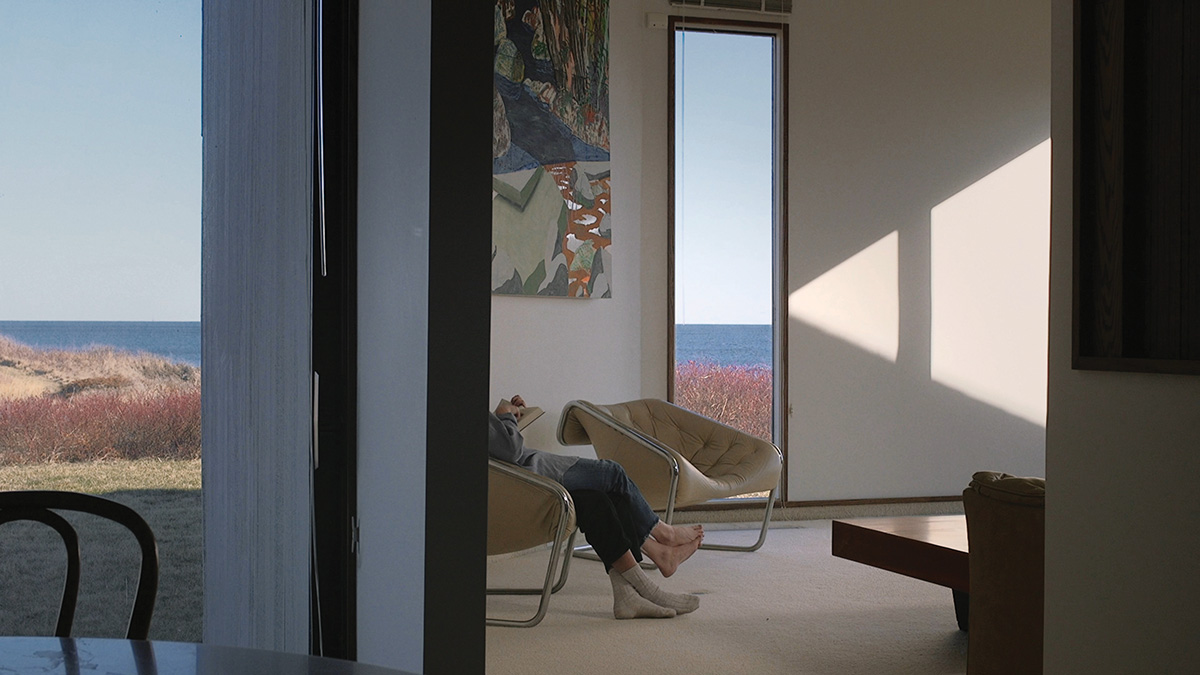
In To Be Sound Is to Be Solid (2022, 15 minutes), an oceanographer’s attempt to map the entire seafloor by 2030 parallels the filmmaker’s attempt to decipher the opaque queer history of a modernist seaside home through its complicated and circuitous floor plan.
Erin Johnson (b. 1985, US) is a visual artist and filmmaker based in New York who was recently named one of the "25 New Faces of Independent Film" by Filmmaker Magazine. Her short films and immersive installations explore notions of collectivity, dissent, and queer identity. In her shape-shifting videos, constellations of artists, biologists, and film extras address the imbrication of science and nationalism. Johnson received an MFA and Certificate in New Media from UC Berkeley in 2013, attended Skowhegan School of Painting & Sculpture in 2019, and recently completed residencies at Pioneer Works (Brooklyn, NY), Jan van Eyck Academie (Maastricht, NL), Lower Manhattan Community Council (LMCC), Hidrante (San Juan, PR), and Lighthouse Works (Fishers Island NY).
Patrick Jolley
Fall
Film expérimental | 16mm | noir et blanc | 11:0 | Irlande | 2008
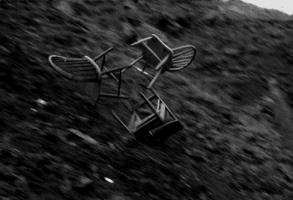
L'ennui engendre sa propre rêverie. Ici devient là-bas, qui pourrait être n?importe où. Cela forme une coïncidence avec le générique : les répétitions érodent le sens des lieus et rendent les bâtiments apparemment moins solides. La logique de ces déplacements fait que les choses partent à la dérive. Des petites maisons s?effondrent et brûlent. Le mobilier se fracasse dans un parking vide. Histoire de petites destructions, pathétiques et momentanément cathartiques.
Paddy Jolley a commencé à faire des films après avoir accidentellement largué un mannequin de figure humaine grandeur nature du haut du pont de la 59e avenue de New York. La forme de la chute fut si triste et dramatique qu'elle a forcé l?auteur à remettre en question sa vieille croyance selon laquelle il pouvait dire tout ce qu'il voulait dans le cadre d'une photo. Peu de temps après, il a commencé à collaborer avec le cinéaste américain Reynold Reynolds. En employant les images et les méthodes des photographies de Jolley, ils ont réalisé ensemble « Seven Days ?til Sunday » (1998), « Drowning Room » (2000) et « Burn » (2001), autant de films caractérisés par un humour noir et une beauté triste. Ces ?uvres ont été exposées dans des galeries et des musées, sous forme de films en boucle ou d?installations, et projetées de nombreuses fois lors de festivals de cinéma où elles ont remporté plusieurs prix. Leur collaboration a pris fin avec l'achèvement du long-métrage Suger en 2004.

Patrick Jolley
snakes
Fiction expérimentale | 16mm | noir et blanc | 5:0 | Irlande | 2009
Sounds of slow traffic on a rainy street. A man in a cheap suit lies on the bed in a quiet apartment. Snakes entwine him, crawling slowly in and out of his clothes,
The work of the Irish artist Patrick (or Paddy) Jolley spans photography, video installation and cinema.. Its starting points lie in those moments where time seems to move abnormally or an atmosphere becomes unnaturally dense or thin. These anxious impressions are then interwoven with a range of images of dense metaphoric resonance.. Symbols with many layers of association that can appear deeply significant or equally empty of meaning. The tone is dark and redolent with melancholia but retains a possibility of the absurd or slapstick comedy. His work shows frequently in galleries and cinemas around the world and is in the collections of several major museums.
Patrick Jolley
Corridor
Film expérimental | 16mm | couleur | 8:0 | Irlande | 2009
The camera tracks through an endless system of institutional corridors. Progress is illusory - the present is continuous. Other personalities move in the corridors engaged on unspecified errands.We look to them for some sense of kinship or common purpose but any affinity we find only reinforces our alienation.
The root of the Irish artist Patrick Jolley?s films and photographs lies in the subjective experience of the passage of time. He expands on sensations of inertia, solidification or dislocation through physical displacements and rearrangements. The familiar is thus subverted and rendered uncanny. In one work furniture falls from the sky and shatters in an empty carpark, in another the occupants of a house go through domestic life in an atmosphere thickened into liquid, while in another the fireplace vomits copiously. The results are redolent with melancholia yet infused with the kind of resigned humour that surfaces when everything is lost. His work has shown widely in galleries and film festivals. It is in the collections of the Museum of Modern Art, New York, the Irish Museum of Modern Art and the Lyons Museum of Contemporary Art.. He currently lives in Slane, Co. Meath. Ireland.
Andrus Joonas
Yellow Wolfman
Vidéo expérimentale | dv | couleur | 24:0 | Estonie | 2004
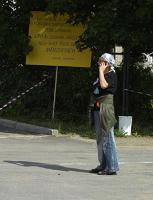
YELLOW WOLFMAN / KOLLANE HUNTMEES "le Yellow Wolfman (l'Homme-loup jaune) conquit -il y a longtemps-le territoire de Paide- l'endroit derrière l'espace piétonnier. L'année dernière les gens d'ici se sont fait du souci à cause de lui, il a beaucoup occupé leurs esprits avec sa façon de marquer son territoire comme un animal. Cette-fois il a rassemblé mais aussi irrité la foule, prête à donner à ce faiseur d' histoires, une part de leur opinion. Mais la déception fut grande. Sur le lieu un écriteau était dressé annonçant à qui le territoire appartenait et au lieu du Wolfman (l'Homme-loup) apparaissait alors un assistant qui répétait à voix-haute le message que le Wolfman lui-même lui transmittait par téléphone-portable. Qu'aurait-on pu ajouter à cette performance annuelle? Il semble que le sujet traite de besoins de territoire, pour continuer, un développement avec un train plus abondant en solutions et en idées".

Nick Jordan, Cartwright, Jacob
Headlands Lookout
Doc. expérimental | hdv | couleur | 28:50 | Royaume-Uni, USA | 2014
Headlands Lookout is an experimental documentary by collaborative artists Jacob Cartwright and Nick Jordan, centred a dramatic stretch of Pacific coastline at the entrance to San Francisco Bay. The film traverses the area’s cultural and natural landscape, presenting a ‘wild’ environment mediated by human activity. From fog-shrouded hills to singular details of place, Headlands Lookout presents literal and figurative echoes of the area`s history, as both a former military base and the home to the avant-garde artists, writers and activists of the post-war ‘San Francisco Renaissance’. Locations range from the functional architecture of concrete gun emplacements and Cold War missile sites to the dense woodland valley where nature is slowly reclaiming the derelict buildings of Druid Heights, a 1960s counterculture community, and home to abandoned, circular library of Zen philosopher Alan Watts. The film`s soundtrack features archive recordings of Alan Watts, and his ideas on ecology and society, alongside poetry by former Druid Heights residents Gary Snyder and Elsa Gidlow, and Bay Area poet Michael McClure. Headlands Lookout is punctuated throughout by contemporary call records to the Marin County Sheriff, offering glimpses of individual, human-scale dramas, set against a backdrop of ever-present nature and delineated landscapes.
Jacob Cartwright and Nick Jordan are artists based in Manchester, UK. Their work has been exhibited internationally, including at ICA, London; Centre for Contemporary Culture, Moscow; Academia de Cine, Madrid; and Musée du Quai Branly, Paris. Their collaborative practice is cross-disciplinary, encompassing video, drawing, painting, photography, objects, publications and events, often exploring the relationship between the natural world and our multifaceted cultural histories.
Nick Jordan
Havanazephyr
Art vidéo | dv | couleur | 6:10 | Royaume-Uni | 2005
Un film révolutionnaire en trois parties.
Nick Jordan est un artiste basé à Manchester. C'est un personnage à plusieurs facettes, maniant la vidéo, le dessin, l?évènementiel et la publication. Son travail comprend un panel éclectique de motifs culturels et personnels, tirés du cinéma, de l?histoire de l?art, de la littérature, des bandes dessinées, des arts graphiques, entre autres sources. Le travail vise à animer les difficultés et les procédures incluses dans la production d?images et la manière dont les éléments découverts peuvent, assemblés, faire que "quelque chose se passe ?. Ses vidéos capturent des moments bien singuliers d?observations quotidiennes. Elles sont souvent combinées, par le montage, avec d?autres références afin de former un scénario particulier ou un épisode de fiction.
Lamia Joreige
And the living is easy
Fiction | hdv | couleur | 75:0 | Liban | 2014
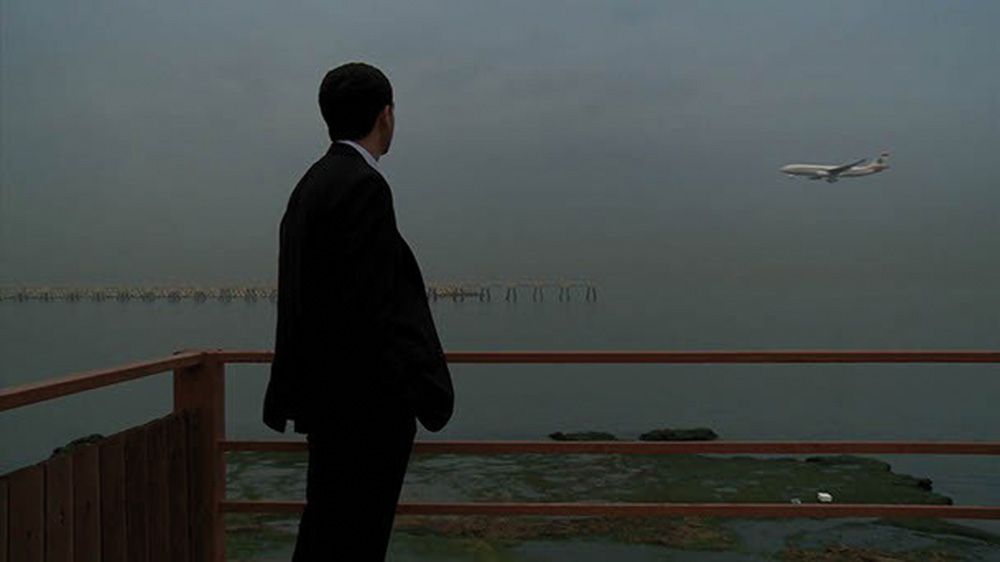
"Beyrouth, en 2011. La ville est plongée dans une étrange accalmie alors que la région autour s’embrase. A travers cinq personnages, principalement des acteurs non-professionnels, Lamia Joreige réalise un portrait unique de sa ville natale. Qu’il soit attaché commercial, musicien, étudiant, acteur, chacun livre son attachement profond à Beyrouth et sa difficulté ou impossibilité d’y vivre. Pendant plusieurs mois, la cinéaste leur a demandé de jouer des scènes qu’elle a imaginé en s’inspirant de leur vie amoureuse, professionnelle ou amicale. Elle a fictionnalisé leur quotidien, faisant ainsi ressortir leur malaise. Ces scènes ont été jouées dans les quartiers où ils habitent, dans les lieux qui leurs sont chers. La ville et leurs sentiments sont intimement imbriqués. Sous la beauté des images, sous l’apparente douceur de leur vie se profile l’angoisse de l’instabilité politique au Proche-Orient et la peur d’une guerre dévastatrice."
"Born in Lebanon in 1972, Lamia Joreige is a visual artist and filmmaker who lives and works in Beirut. She uses archival documents and fictitious elements to reflect on the relation between individual stories and collective history. She explores the possibilities of representation of the Lebanese wars and their aftermath, and Beirut, a city at the center of her imagery. Her work is essentially on time, the recordings of its trace and its effects on us."
Lamia Joreige
Nights and Days
Doc. expérimental | dv | | 17:0 | Liban | 2007
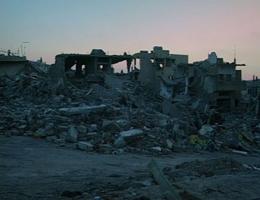
Nights and Days raconte l?expérience de la guerre d?un point de vue personnel, à partir de notes écrites et filmées durant l?été 2006. La première partie qui ressemble à un journal de guerre sans en être un, alterne des plans de jour avec des plans de nuit, qui sont construit avec la bande sonore, pour exprimer l?idée du passage du temps, l?attente, les peurs et les transformations vécues dans ces circonstances inhabituelles. La deuxième partie est un voyage au Sud-Liban qui a été dévasté durant cette guerre. De beaux paysages sereins s?alternent avec des ruines et des destructions, avec pour seul son, une musique. Ici aucun mot ne peut exprimer la dévastation. Nights and Days réfléchit à la relation entre image et son et aussi à « l?horreur » qui peut se trouver derrière la ?beauté?. Dans ces beaux paysages urbain et naturels, seuls quelques détails révèlent la présence et la violence de la guerre.
Née en 1972 à Beyrouth au Liban, Lamia Joreige étudie le cinéma et la peinture à Rhode Island School of Design, USA, où elle obtient un Bachelor of Fine Art en 1995. Parmi ses réalisations: Je d?histoires, installation vidéo interactive 2006 - Un voyage, documentaire vidéo 2006 - Objets de guerre 1, 2, 3, 4, installation vidéo et objets 1999-2006 - L?autre et le temps, exposition et livre 2004 - Ici et peut-être ailleurs, documentaire 2003 - Ici et peut-être ailleurs, nouvelle, fiction 2003 - Sans-titre 1997-2003, installation vidéo - Replay (bis), fiction 2002 - Replay, installation vidéo 2000 - Le déplacement, installation d?images vidéo-fixes 1998-2000. Elle présente son travail dans de nombreux festivals et lieux parmi lesquels : The Images Festival, Toronto - Les universités Harvard et Columbia, USA - Les Rencontres Internationales Paris / Berlin - La Cinémathèque de Paris - The Rotterdam International Film Festival - Le Festival de Cinéma méditerranéen, Montpellier. La fondation Caixa, Barcelone. Et diverse expositions dont les plus récentes sont: Rumor as Media, Akbank Sanat, Istanbul - Coding Decoding, Musée d?art contemporain, Roskilde, Danemark - Out of Beirut, Modern Art Oxford, Royaume Uni - INSA art space, Séoul - Present / Absence, galerie Tanit, Munich - Laughter (in LIFT), Londres - Possible Narratives (in VideoBrasil), Sao Paulo - DisOrientation, Maison des Cultures du Monde, Berlin Elle a réalisé des expositions personnelles à: ACAF & Townhouse gallery, Egypte, 2004 - Musée Nicéphore Niepce, France, 2003 - Galerie Nikki Marquardt, Paris, 2000 - Galerie Janine Rubeiz, Beyrouth, de 1999 à 2004. Son travail est présenté à la deuxième biennale de Séville, en 2006, et à la Biennale de Venise, dans le Pavillon libanais en 2007. Elle participe à plusieurs publications artistiques: Art forum, USA Octobre 2006 - Out of Beirut, M.A.O. (Royaume Uni) 2006 - Livraison n°4 (Rhinocéros, France) - Camera Austria n° 78 / 2002 - Homeworks II, 2005, Missing Links, 2001 et Hamra Street Project, 2000 (Ashkal Alwan) - Lamia Joreige (galerie Janine Rubeiz, Beyrouth),1999 - Surfaces, Lamia Joreige, Centre Culturel Français, Beyrouth, 1997)
Joreige / Hadjithomas
JE VEUX VOIR
Fiction | | couleur | 1:15 | Liban | 2007
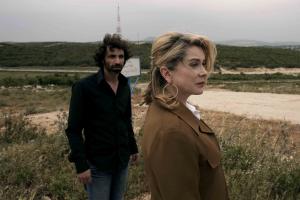
Juillet 2006. Une guerre éclate au Liban. Une nouvelle guerre mais pas une de plus, une guerre qui vient briser les espoirs de paix et l?élan de notre génération de trentenaires. Nous ne savons plus quoi écrire, quelles histoires raconter, quelles images montrer. Nous nous demandons : « Que peut le cinéma ? » . Cette question, nous décidons de la poser vraiment avec l?aide d?une « icône », une comédienne qui représente pour nous le cinéma, Catherine Deneuve. Elle va rencontrer à Beyrouth notre acteur fétiche, RabihMroué. Ensemble, ils parcourent les régions touchées par le conflit. à travers leurs présences, leur rencontre, nous espérons retrouver une beauté que nos yeux ne parviennent plus à voir. Une aventure imprévisible, inattendue commence alors?
Nés à Beyrouth, ils travaillent conjointement en tant que plasticiens et cinéastes. Ils ont réalisé des courts-métrages, Ramad (Cendres) en 2003 etOpen the door, please ( du filmcollectif Enfances) en 2007 et des longs-métrages de fiction Al Bayt el zaher (Autour de lamaison rose) en 1999 et A Perfect Day en 2006. Ils ont également réalisé des documentaires tels que Khiam en 2000 ou El film el maoud (Le Film perdu) en 2003 et Khiam 2000-2007 en 2008. Leurs films ont été présentés dans un très grand nombre de festivals où ils ont reçu de nombreux prix et ont été accueillis avec enthousiasme tant par la critique que par les spectateurs. Leur travail cinématographique s?accompagne d?une recherche dans les arts plastiques. Ils ont ainsi créé plusieurs installations photo ou vidéo et exposent régulièrement dans des centres d?art, des musées ou des galeries. Leur prochaine exposition individuelle aura lieu le 11 décembre 2008 auMusée d?art moderne de la ville de Paris. Ils enseignent à l?université au Liban et participent à de nombreuses publications.
Claudia Joskowicz
Los rastreadores
Video | hdv | couleur | 23:0 | USA | 2014
Los rastreadores is a two channel video installation set in Bolivia and very loosely inspired by John Ford's American Western classic film The Searchers. It does not attempt to recreate the film but adapts its major themes where the similarities lie in the use of landscape and depictions of themes like race and alienation. The main character in Los Rastreadores, Ernesto Suarez, is a drug lord who, recently released from a Miami prison, returns to his home in Santa Cruz only to immediately depart in a search towards the oposite side of the county for his family's only surviving members after a home invasion and massacre. Ernesto's character is modeled after Roberto Suarez Gomez, a Bolivian drug trafficker nicknamed "king of cocaine" and the most powerful drug lord in Bolivian history. Los Rastreadores merges and distills issues of race, belonging, class systems, and alienation into a minimal narrative that con - denses the massacre of Ernesto's family, the kidnapping of his daughter, and his departure to search for her. Using silences and voice-overs rather than traditional dialogue it centers on the power of myth where literal events operate as a displacement for the political discourse in the country.
Claudia Joskowicz (MFA New York University, 2000) has had solo exhibitions at LMAK Projects, Forever & Today, Inc., Thierry Goldberg Projects, and Momenta Art in New York, Dot Fiftyone in Miami, California Museum of Photography in California, Galeria ACBEU in Salvador, Espacio Simón Patiño and Museo Nacional de Arte, Centro Cultural Santa Cruz and Galería Kiosko in Bolivia, and Lawndale Art Center in Houston. Recent group exhibitions at the Guggenheim Museum, NY; Fondation Cartier pour l`art contemporain, Paris; Museum of Contemporary Art, Denmark; Tenth Sharjah Biennial; the 29th São Paulo Biennial; the Tenth Habana Biennial; Slought Foundation, Philadelphia and the 17th and 18th Videobrasil Festivals in São Paulo. She has received a Guggenheim fellowship, a mid-career artist commission from the Cisneros Fontanals Art Foundation, a Fulbright Scholar award, and a fellowship from the Vermont Studio Center. Recidencies include Sacatar Institute in Brazil, Lower Manhattan Cultural Council Workspace, and the Bronx Museum of the Arts AIM program. Joskowicz is currently the artist in residence at the LMCC’s Residency at Cité Internationale des Arts, Paris.