Catalogue > Search
Results for : Catalogue 2021

Andrea Bordoli
Requerimiento
Film expérimental | 16mm | couleur et n&b | 8:9 | Suisse | 2020
Le terme requerimiento désigne une proclamation de droit divin de la monarchie espagnole de Castille de prendre possession des territoires du Nouveau Monde, et de soumettre, d’exploiter, et, si nécessaire, de combattre les habitants autochtones. Ce film court expérimental en 16mm explore l'esthétique d'un temps mythologique, ainsi que ses créatures et matérialisations archétypiques. En particulier, en suivant les trajectoires d'un serpent et d'un fragment de météorite, "Requerimiento" développe une narration entrelacée, qui interroge les altérités humaines et non humaines, à différentes époques et dans différentes cultures.
Andrea Bordoli a obtenu une Licence en anthropologie et philosophie à l'Université de Neuchâtel (Suisse) [2015], et un Master en anthropologie visuelle à l'Université de Manchester (Royaume-Uni) [2017]. Il vit actuellement à Genève (Suisse), où il étudie le cinéma à la HEAD - Haute École d'Art et Design, tout en développant ses recherches personnelles à l'intersection entre la théorie anthropologique, le cinéma documentaire et les arts visuels.

Gaelle Boucand
Voin
Documentaire | mov | | 30:0 | France, Bulgarie | 0
Voin a grandi dans la Bulgarie communiste. Après vingt ans passés en Europe de l’Ouest, il retourne à Sofia sur les lieux de son enfance et de son adolescence. Son portrait se compose de lieu en lieu, de souvenir en anecdote. Du cou coupé du coq qui voulait l’énucléer aux rites d’initiation sexuelle dans la maison interdite, Voin campe les saynètes d’un roman d’apprentissage bataillien, cru et souverain. En racontant ses travestissements, il revendique aussi l’exercice d’une liberté, d’une agilité à se mouvoir dans le cours de l’Histoire. Voin l’imite, en hérite, et c’est l’Histoire qui transparaît dans une tonalité rafraîchie, une vitalité excentrique et mineure, loin des lieux communs du récit majoritaire. Et quand, penché sur le vide au 19e étage de la tour Tolstoï, le trentenaire contemple les barres d’immeubles du quartier Espoir de son enfance, son vertige est contagieux, et la sensation (dé)grisante. (Cyril Neyrat)
Gaelle Boucand est artiste et cinéaste. Sa pratique se concentre depuis dix ans sur la réalisation de documentaires au sein desquels les questions du portrait et du dispositif filmique tiennent une place centrale. En 2010, son premier film, "Partis pour Croatan", sur une communauté de raveur, est exposé, notamment au Musée d'Art Moderne de la ville de Paris (France). Son deuxième film, "JJA" — premier volet d'une trilogie — dresse le portrait d'un exilé fiscal en Suisse. Il reçoit la mention du Grand Prix de la compétition française au FIDMarseille (France) en 2012, ainsi que le Grand Prix expérimental au festival Coté Court de Pantin (France), et est également diffusé au sein de multiples institutions artistiques internationales (Kunsthalle Mannheim (Allemagne); MAST – Manifattura di Arti, Sperimentazione e Tecnologia Bologna, Bologne (Italie); Kunstwerk Carlshütte, Büdelsdorf (Allemagne). Depuis 2014, elle enseigne régulièrement à l'isdaT – Institut supérieur des arts de Toulouse (France) et réalise des films avec différentes écoles. En 2015, elle termine "Changement de décor", deuxième volet de la trilogie initiée avec "JJA", présenté notamment aux États généraux du film documentaire de Lussas (France), et cofonde la société Elinka Films. En 2020, "J.A" — qui vient clore la trilogie — est en compétition à Cinéma du Réel, Paris (France), et son dernier film, "Voin", portrait d'un homme à travers son retour en Bulgarie, reçoit le prix Alice Guy au FIDMarseille (France).

Martin Brand
Causality and Meaning
Vidéo expérimentale | mov | couleur | 9:17 | Allemagne | 2020
"Causality and Meaning" consiste en une séquence rapide de 635 fichiers images, qui - isolés sur fond blanc - montrent des logos, des symboles, des graphiques, des mèmes Internet, des illustrations et des images de produits. Sur le plan du contenu, cette œuvre questionne des sujets tels que le transhumanisme, la culture de droite liée à Internet et aux mèmes, le suprémacisme blanc, l'antiféminisme et le mouvement pour les droits des hommes, la culture machiste et le chauvinisme, des stéréotypes de masculinité ininterrompus, la consommation néolibérale et la culture du divertissement axée sur la violence. Sur le plan sonore, on peut entendre une composition du tromboniste et musicien expérimental originaire de Cologne Matthias Muche, accompagnée de mots du compositeur britannique Anthony Moore. Les sons produits par le trombone, combinés avec la voix masculine de Moore, distordue et parfois incompréhensible, semblent commenter la séquence d'images ou même en illustrer le contenu; parfois les sons y opposent à leur manière une résistance et s'affirment comme une partie autonome de l'œuvre.
Martin Brand est né à Bochum (Allemagne) en 1975, et a étudié l'art et la philologie allemande à Bochum et Dortmund (Allemagne) jusqu'en 2002. Il vit et travaille à Cologne. Dans son œuvre, il traite de questions sociales et politiques, qu'il explore par le film et la photographie. Le point de départ est souvent un phénomène qu'il trouve dérangeant, irritant et déstabilisant, mais qui, dans le même temps, l'attire et le fascine. À partir de la surface, il tente de révéler liens et structures, de regarder derrière la façade et, finalement, de confronter le spectateur à sa contrepartie, le mettant au défi d'une analyse critique. Des thèmes tels que la jeunesse et les subcultures, la quête d'identité, la violence, les stéréotypes de genre, le fait de s’orienter d’après des modèles, l'influence des médias et de la publicité, les hiérarchies et mécanismes de groupe sont au cœur de son travail. Ses œuvres ont été présentées dans de nombreuses expositions et festivals et font partie de diverses collections d'art telles que la collection Goetz à Munich (Allemagne), celle du musée Ostwall à Dortmund (Allemagne) ou celle du Hessisches Landesmuseum Darmstadt (Allemagne). Il a reçu des bourses de projet et des bourses d’étude, et a été récompensé à plusieurs reprises pour son travail.

Pamela Breda
April
Vidéo expérimentale | dcp | couleur | 13:21 | Italie | 2020
"April" est un film court expérimental inspiré par la vie d'April Ashley, l'une des premières Britanniques à avoir subi une chirurgie de réattribution sexuelle, réalisée à Casablanca (au Maroc) le 12 mai 1960 par le docteur Georges Burou. Après son retour en Grande-Bretagne, elle a commencé à utiliser le nom d'April Ashley, et a eu du succès comme mannequin, apparaissant dans des publications telles que Vogue (photographié par David Bailey), et a décroché un petit rôle dans le film "The Road to Hong Kong" de Norman Panama. Après qu'un ami ait vendu son histoire aux médias, en 1961, sous le titre "'Her' secret is out", le Sunday People a révélé qu'Ashley était une femme transgenre. Elle est au centre de l’attention et de la controverse, et son nom est instantanément supprimé du générique. Le scandale la contraint à vivre à l'étranger pendant plusieurs années. Ce n’est qu’en 2006 qu’elle a été reconnue légalement comme femme.
Pamela Breda est artiste et cinéaste. Elle vit entre Londres (Royaume-Uni) et New York (USA). Elle a reçu plusieurs prix et bourses d'art, dont la bourse Sirovich Family Fellowship, au Pratt Institute, New York (USA), le Simultan Art Prize (Pologne); le Cantica21 (Italie); le prix du Conseil italien (Italie); le prix Moving'Up (Italie); et le prix Italian Institute of Culture (Russie). Ses films ont été projetés à l’international, et présentés dans divers festivals et lieux d’art notamment au ECRÃ Film Festival, Rio de Janeiro (Brésil); au Revolutions Per Minute Festival, Boston (USA); à la Digital Film Library; au Festival international du court métrage de Clermont-Ferrand (France); à la Cité Internationale Des Arts, Paris (France); à Vision Du Réel, Nyon (Suisse), au Hazel Eye Film Festival, Nashville (USA); au The Bomb Art Factory Film Festival, Londres (Royaume-Uni); au Sohonya Art Center, Bangalore (Inde); à la Francesco Fabbri Foundation for Contemporary Art, Pieve di Soligo (Italie); et à la Fondation Bevilacqua La Masa, Venise (Italie).

Elsa Brès
Sweat
Film expérimental | 0 | couleur | 29:29 | France | 2020
Les premières tentatives de cartographier le delta du Mississippi remontent au début du XVIIIe siècle. Milieu incontrôlable, fragile et mouvant en soi, il est depuis constamment transformé pour l'exploitation de ses ressources. Navigant entre les temps et les espaces, "Sweat" nous immerge progressivement entre les lignes des cartes, dans la part insubordonnée et fluctuante de ce territoire, en compagnie d'êtres vivants qui le peuplent.
Elsa Brès est diplômée du Fresnoy - Studio national des arts contemporains, Tourcoing (France), et de l'École Nationale Supérieure d'Architecture de Paris-Belleville (France), où elle a enseigné la théorie de l'architecture et du paysage. Ses films et installations s'attachent à des forces de résistance dans les paysages contemporains, et ont été montrés dans des festivals et expositions, en France et à l'étranger, notamment au FID Marseille (France); à 25FPS, Zagreb (Croatie); au CRAC – Centre régional d’art contemporain Occitanie, Sète (France); au Palais de Tokyo, Paris (France); à la Transmediale, Berlin (Allemagne). Elle vit à Bréau, dans les Cévennes (France).

Daniel Burkhardt
Semiotics of the City
Vidéo expérimentale | 4k | couleur | 4:3 | Allemagne | 2020
La ville n’est pas. Non pas en raison d'une hypothétique absence physique - la ville est bien présente - mais parce qu'elle échappe à la dénomination. (Johannes Binotto et Andri Gerber)
Daniel Burkhardt a étudié les arts médiatiques à la KHM - Kunsthochschule für Medien, Cologne (Allemagne), où il vit et travaille actuellement. Ses installations vidéo et audiovisuelles exposent de manière ludique et ingénieuse la perception humaine comme moteur de la construction du sens.

Michael Busch
How Long is Now
Doc. expérimental | 4k | couleur | 84:32 | Allemagne | 2020
L'être humain dans un filet, une image paradigmatique pour toute l'œuvre: Laocoon, celui qui mit en garde face au cheval de Troie. En sculpture il est déjà étranglé par le serpent, le serpent le relie à ses fils, ensemble ils forment un monument à l'impuissance. Celui qui mit en garde face au cadeau empoisonné de l'avenir, répète ce que la boîte de Pandore a apporté à l'humanité. L'avenir qui se dessine à partir de notre présent est porteur à parts égales de dangers et d'espoirs. Dans "How Long Is Now", la toile d'araignée apparaît sous différentes formes. C'est le réseau ferroviaire impérial qui propage le colonialisme, ce sont les câbles de données qui reposent au fond des océans entre les continents, ce sont les algorithmes qui dominent le commerce et la bourse, ce sont les systèmes GPS, les logiciels de reconnaissance faciale, les mappemondes déformées. L'être humain y lutte contre sa mortalité, lutte contre le langage, les concepts qui façonnent pensée et action, lutte contre la moralité et contre son expansion dans la technosphère. Le film utilise sans retenue le gisement des images du vingtième siècle, citant avec désinvolture l'histoire de l’image en mouvement et de sa virtualisation progressive. Le plan de l'image se niche parfois à proximité du récit parlé des conférences, puis il élargit l'espace du discours, ajoute des associations et des situations, et se met en réseau avec l'héritage du présent élargi. Depuis quatre ans, je participe à ces événements et ai produit une série de courtes bandes-annonces pour les promouvoir. Ces clips sont des films expérimentaux de 30 secondes, réalisés selon le principe du "stream of consciousness". Avec les archives visuelles créées au fil de ces productions et la possibilité d'utiliser les archives de la HKW, l'idée m’est venue de développer une œuvre longue et complète à partir de ces images. Je voulais créer un espace de possibilités dans lequel les questions sur notre présent pourraient être articulées, au-delà des réponses googlées rapidement.
Michael Busch a étudié les sciences appliquées du théâtre à la Universität Gießen (Allemagne), et les beaux-arts et le cinéma expérimental à la Universität der Künste Berlin (Allemagne). Il réalise des films et des performances filmiques. Il a travaillé comme curateur de films pour la Volksbühne Berlin de 2003 à 2017, et a été professeur de cinéma expérimental à la Universität der Künste Berlin (Allemagne) de 2007 à 2013. Ses œuvres ont été présentées dans divers festivals internationaux de cinéma, notamment à la Berlinale - Forum Expanded, Berlin (Allemagne); au Centre Pompidou, Paris (France); au Musée Reina Sophia, Madrid (Espagne); à la Biennale de São Paulo (Brésil); au Torino International Film Festival, Turin (Italie); à San Francisco (USA); et à Édimbourg (Royaume-Uni).

Eneos Carka
The First Few Moments of the First of January
Film expérimental | mov | couleur | 12:39 | Albanie | 2020
Un film est projeté dans une chambre où dort une femme. Le personnage du film parle de l'avenir de l'humanité et ses paroles pénètrent dans la tête de la femme, envahissant son subconscient.
Eneos Çarka (1996, Albanie) a commencé sa formation cinématographique à l'Université des Arts d'Albanie en réalisation. Il a reçu la bourse du Government Fund of Excellence pour faire un Master en études cinématographiques au University College London (Royaume-Uni), où il a obtenu son diplôme avec distinction. Il fait actuellement partie de la 8e génération de DocNomads, un master conjoint Erasmus Mundus en Documentaire de création. Ses courts documentaires se concentrent sur les études de personnages et traitent souvent des thèmes de l'identité, de la migration et des relations familiales. Il porte une attention particulière aux problématiques des représentations, expérimentant différentes approches du cinéma documentaire. Son premier long métrage documentaire est actuellement en post-production.

Joanne Cesario
Here, Here
Fiction expérimentale | mov | couleur | 18:32 | Philippines | 2019
Des années après le début de l'exploitation minière, une ville autrefois rude et tranquille change radicalement. Koi, 22 ans, rentre chez lui pour la première fois depuis son départ pour l'université, avec une otite. Il rejoint sa mère, Tonet, pour attendre son père, aucun d’eux ne sachant si ce dernier pourra rentrer vivant à la maison après un accident dans le tunnel d'extraction. Alors que Koi renoue avec sa ville natale en lent dépérissement, il est confronté à la possibilité de perdre son père et son audition. En partie fiction, en partie expérience artistique, et brouillant volontairement la frontière entre les deux, "Here, Here" est une étude visuelle libre sur les paysages et les terrains, naturels et autres.
Joanne Cesario a grandi dans la province de Batangas (Philippines) et a déménagé dans le Grand Manille (Philippines) pour suivre des études de cinéma à l'université des Philippines. Aussi bien ses expériences d'enfance que ses engagements politiques ont profondément façonné ses convictions et sa sensibilité. Depuis 2013, elle travaille dans le domaine du cinéma, de l’édition, et de la photographie. Elle mêle des histoires personnelles et collectives à propos du travail, l'identité féminine, et des lieux et paysages en constante évolution. En 2020, son premier court métrage professionnel, "Here, Here", a été sélectionné pour la compétition Pardi di domani du Festival du film de Locarno (Suisse), et a reçu le Prix spécial du jury lors de la 68e édition des FAMAS – Filipino Academy of Movies Arts and Science Awards, aux Philippines.

Filipa César
Quantum Creole
Film expérimental | hdv | couleur et n&b | 40:0 | Portugal, Allemagne | 2020
"Au début était le tissage, et la transmission de son fonctionnement, une malédiction de la mortalité". Ainsi s'achève "Quantum Creole" par ces mots fabuleux du tisserand, Zé Interpretador. Alors que la technologie des cartes perforées, inventée à l’origine pour la production textile, fut fondamentale pour le développement de l’ordinateur, le code binaire est lui-même plus proche de l'acte ancien du tissage que de celui de l'écriture. "Quantum Creole" est un documentaire expérimental basé sur une recherche collective autour de la créolisation, ses forces historiques, ontologiques et culturelles. En se référant à la plus petite entité de toute interaction - quantum - le film utilise différentes formes d'images pour lire le potentiel subversif du tissage comme code créole. Les Créoles d'Afrique de l'Ouest tissaient des messages de résistance socio-politique dans les tissus, contrant ainsi les technologies et les langues des Colons. Alors que le nouveau visage de la colonisation se manifeste aujourd'hui sous la forme d'une image digitale, mise à jour de l'idée d'une terra nullius sous la forme d'une zone de libre échange ultra-libérale dans les îles Bijagos, celle-ci indique aussi la continuité de la violence qui a surgit il y a plusieurs siècles avec la création de postes du commerce des esclaves à ce même endroit, alors connue sous le nom des rivières guinéennes et du Cap Vert.
Filipa César est artiste et réalisatrice. Elle explore les dimensions fictionnelles du documentaire, les frontières poreuses entre le cinéma et sa réception, la politique et la poétique de l’image en mouvement. Sa pratique s’empare des médias comme des moyens d’étendre et d’exposer des contre-récits de résistance à l’historicisme. Depuis 2011, elle explore les origines du cinéma du Mouvement de libération africain en Guinée-Bissau, comme laboratoire d’une résistance aux épistémologies dominantes. En 2017, "Spell Reel", son premier film-essai de format long-métrage, est présenté en première mondiale dans la section Forum de la 67e Berlinale, Berlin (Allemagne). Ses travaux ont notamment été exposés et projetés à la 29e Biennale de São Paulo (Brésil) [2010]; à Manifesta 8, Cartagena (Espagne) [2010]; à la Haus der Kulturen der Welt, Berlin (Allemagne) [2011-2015]; au Jeu de Paume, Paris (France) [2012]; à la Kunstwerke, Berlin (Allemagne) [2013]; à Meeting Points 7 [2013-2014]; à la NBK – Neuer Berliner Kunstverein, Berlin (Allemagne) [2014]; au Hordaland Art Center, Bergen (Norvège) [2014]; à SAAVY Contemporary, Berlin (Allemagne) [2014-2015]; à Futura, Prague (République Tchèque) [2015]; à Khiasma, Paris (France) [2011, 2013 et 2015]; au Tensta Konsthall, Spanga (Suède) [2015]; au Mumok – Museum Moderner Kunst Stiftung Ludwig Wien, Vienne (Autriche) [2016]; à la 8e Biennale Contour, Malines (Belgique); à Gasworks, Londres (Royaume-Uni) et au MoMA – Museum of Modern Art, New York (USA) [2017].

Emma Charles, James, Ben Evans
On A Clear Day You Can See the Revolution From Here
Doc. expérimental | 16mm | couleur | 64:14 | Royaume-Uni | 2020
"On A Clear Day You Can See the Revolution From Here" explore des strates de mythes, de géologie et de technologie pour révéler les lignes de faille changeantes entre un gouvernement, son peuple et sa terre. Le film met en lumière les processus contemporains de construction d’une nation et de création de mythes au Kazakhstan, par un grand voyage à travers les vestiges des infrastructures technologiques soviétiques, qui hantent le paysage. Dans ce film en 16 mm, la caméra traverse la steppe kazakhe, en passant par des mines, la steppe eurasienne, le site nucléaire désaffecté STS, et la ville nouvellement construite de Noursoultan.
Emma Charles est artiste et réalisatrice. Elle habite à Londres (Royaume-Uni). Au travers d’approches expérimentales des images en mouvement et du son, sa pratique basée sur la recherche se déploie dans le domaine de la non-fiction, abordant les thèmes récurrents de la technologie, du capitalisme et du paysage. Jouant avec les frontières floues entre le documentaire et la fiction, son travail révèle souvent l'artificialité de l'environnement filmique et de notre expérience vécue. Emma Charles a notamment exposé aux Serpentine Galleries, Londres (Royaume-Uni); au ICA – Institute of Contemporary Art, Londres (Royaume-Uni); à la HKW – Haus der Kulturen der Welt, Berlin (Allemagne); et au Jeu de Paume, Paris (France). Elle a également présenté ses films au Sheffield DocFest, Sheffield (Royaume-Uni); à Vision du Réel, Nyon (Suisse); au Dharamshala International Film Festival, Dharamsala (Inde); à Abandon Normal Devices, Manchester (Royaume-Uni); et au Impakt Festival, Utrecht (Pays-Bas). En 2017, elle a été nommée pour le prix du nouveau talent au Sheffield Doc/Fest (Royaume-Uni), pour son film "White Mountain". Elle a gagné un Arts Council England award en 2015 et en 2017, une bourse du British Council UK-China Connections Through Culture, et un prix du fonds The Elephant Trust. Ses films sont conservés dans les collections de deux musées: le Guangdong Museum of Art (Chine), et le ZKM – Zentrum für Kunst und Medien Karlsruhe (Allemagne). Elle est titulaire d'un Master en photographie au Royal College of Art, Londres (Royaume-Uni). Ben Evans James est réalisateur et curateur. Son travail s'intéresse aux récits qui se situent en dehors des paysages construits par le capitalisme mondial. Il est curateur de films pour la Transmediale, Berlin (Allemagne), a co-fondé l'espace de projet South Kiosk, Londres (Royaume-Uni), et est doctorant, avec un financement du AHRC – Art and Humanities Research Coucil, sous la direction de Beryl Graham, théoricien des nouveaux médias. Son dernier long métrage, "On A Clear Day You Can See The Revolution From Here", a été présenté en première mondiale à Visions du Réel, Nyon (Suisse), en 2020. Ben Evans James habite entre Vancouver (Canada) et Berlin (Allemagne).

Che-wei Chen
Spear
Vidéo | 0 | couleur | 18:30 | Taiwan | 2020
Dans "Spear", Che-Wei Chen collabore avec un ami à qui on a diagnostiqué un trouble dissociatif. Le film part de l'expérience individuelle, pour tenter de transformer un fragment de mémoire traumatique de manière artistique. Il inclut une scène d'hypnose, où le sujet passe soudainement d'un état de personnalité à un autre pendant le tournage. Ce film brouille les frontières entre documentaire et fiction; de même, il déploie une expérience complexe, entre réalité et imagination. "Spear" examine l'être humain soumis à la discipline et à la condition muette du langage. Il donne également un aperçu des archétypes du traumatisme: violence, pouvoir, technologies de contrôle et d’oppression, etc.
Che-Wei Chen est artiste visuel et réalisateur. Il vit à Taipei (Taïwan). Sa pratique récente s'est concentrée sur la subjectivité des personnes atteintes de troubles mentaux, et a réfléchi à la complexité des conditions contemporaines. Il explore les frontières entre réalité et fiction à travers de multiples perspectives, au sein de structures et de récits complexes. Son travail révèle non seulement l'inconscient collectif réprimé, mais réexamine également les structures de pouvoir et les structures politiques qui sous-tendent le système social. En outre, il aborde des questions telles que le post-colonialisme, la modernité, la classification, ou encore la biopolitique.

Seecum Cheung
Eviction in Shenzhen
Doc. expérimental | hdv | couleur et n&b | 17:30 | Royaume-Uni, Pays-Bas | 2019
"Eviction in Shenzhen" (2019 – en cours) est une série ethnographique, développée dans la durée, de films documentaires expérimentaux qui suit la démolition prévue de Hubei, village ancestral du père de l’artiste, à Shenzhen, en Chine, alors que le gouvernement a lancé un important plan de réaménagement pour le remplacer. Le projet proposé comprend un imposant gratte-ciel de 830 mètres de haut, qui devrait devenir le plus haut bâtiment du monde. Il sera accompagné d'un centre commercial moderne, de restaurants, ainsi que d'une petite partie du vieux village de Hubei, conservée comme musée vivant et lieu de tournage proposé à la location. Le nouveau réaménagement deviendra l'une des réalisations architecturales les plus prisée de Chine, un spectacle visuel rendant hommage au miracle économique qu'est Shenzhen, la ville qui a aidé la Chine à sa nouvelle place de puissance économique et technologique mondiale. Le film montre l'expulsion des locataires actuels du village qui, en tant que travailleurs à faibles revenus, doivent laisser derrière eux les cafés, les magasins d’alimentation, les petits commerces, les maisons et les quartiers qu'ils avaient cultivés pendant 10 à 20 ans. "Eviction in Shenzhen", filmé au cours de cette période de réaménagement, documente ces changements en enregistrant la composition sociologique et l'architecture ancienne du village pendant leur disparition progressive. Le film est actuellement en cours de développement et sera divisé en chapitres au fil de l'évolution du projet. "Eviction à Shenzhen : Part 1'" (2019 - Version 1) présente les habitants de la zone lors d'une visite en mai 2018. Le prochain chapitre, filmé au cours du mois de février 2019, montre la zone lors du Nouvel An chinois, alors que près de 90% des résidents ont déjà été expulsés.
Seecum Cheung est artiste, réalisatrice et éducatrice. Elle travaille avec des journalistes et des experts pour réaliser des interviews de citoyens, de personnalités politiques et de spécialistes dans le but de comprendre et de réfléchir à certains faits politiques. Ses films comprennent des entretiens avec des politiciens d'extrême droite et d'ultradroite en Allemagne, en collaboration avec l'écrivain et journaliste Richard Cooke et SBS Public Broadcasters ("Interview with Lennart", 2016); une couverture des élections néerlandaises avec l'écrivain et diffuseur Morgan Quaintance ("The Dutch Window", 2017); une commission de NHS England en collaboration avec l'organisation caritative brap pour l’égalité et les Droits humains ("Inequalities of BAME patients Cancer Care Study", 2018-19); et, plus récemment, une étude sur long terme sur la gentrification du village ancestral de son père (à Shenzhen, Chine) qui a débuté en avril 2018 ("Eviction in Shenzhen", 2019 - en cours). Elle enseigne actuellement en Pratique Sociale à la Willem de Kooning Academie, à Rotterdam (Pays-Bas).

Allison Chhorn
The Plastic House
Doc. expérimental | 0 | couleur | 45:57 | Australie | 2019
Une jeune femme se construit une réalité solitaire en imaginant ce que serait sa vie après le décès de ses parents. Absorbée par le lent mouvement d’un travail solitaire dans la serre familiale, elle revit l’ombre de souvenirs de sa mère et de son père originaires du Cambodge. Le rituel de guérison par le travail physique se révèle progressivement avec le temps. Alors que le toit de plastique supporte le poids des éléments, la météo de plus en plus précaire menace cette nouvelle vie seule.
Allison Chhorn (née en 1992) est cambodgienne et australienne. Cinéaste et artiste multidisciplinaire, elle explore dans son travail les thèmes de la délocalisation des migrants, du traumatisme et de la répétition de la mémoire. Elle a produit, coécrit et monté les longs métrages "Stanley's Mouth" (2015) et "Youth On The March" (2017), et a réalisé de nombreux films courts, installations vidéo in situ et documentaires, dont "Close Ups" (2015), "Last Time" (2018), "The Plastic House" (2019) et "Blind Body" (2021). Son travail a été présenté à Visions du Réel, Nyon (Suisse) [Sélection officielle – Compétition internationale Burning Lights, 2020]; au Sydney Film Festival (Australie) [Sélection officielle - Documentary Australia Foundation Awards, 2020]; au MIFF - Melbourne International Film Festival (Australie); au Adelaide Film Festival (Australie); au OzAsia Festival, Adelaïde (Australie); au Festival ECRÃ, Rio de Janeiro (Brésil); au FIDBA - Festival Internacional de Cine Documental, Buenos Aires (Argentine) [Sélection officielle - First Features Competition, 2020]; au Valdivia International Film Festival (Chili) [Sélection officielle - International Youth Feature Competition]; au Lima Alterna Festival Internacional de Cine (Chili) [Sélection officielle - Compétition internationale]; aux RIDM - Rencontres internationales du documentaire de Montréal (Canada) et à Black Canvas - Festival de Cine Contemporáneo, Mexico (Mexique) [Sélection officielle - Compétition Beyond the Canvas].
Isaac Chong Wai
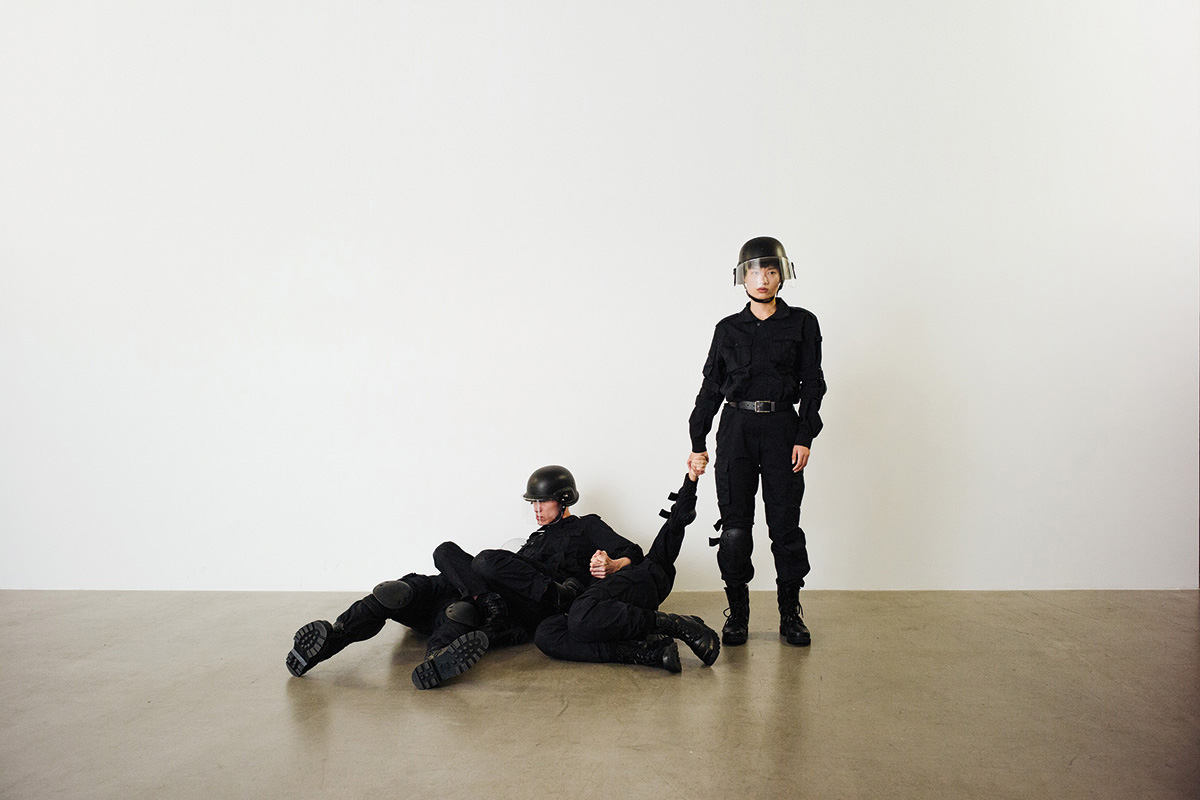
Rehearsal of the Futures: Police Training Exercises
Vidéo | mp4 | | 18:14 | Hong Kong | 2018
Dans "Rehearsal of the Futures: Police Training Exercises" (2018), Isaac Chong Wai chorégraphie le mouvement de policiers anti-émeute en uniforme dans un ralenti tortueux, insufflant une douceur paradoxale à leurs intentions initialement violentes. Par le ralentissement de l'attaque agressive et de la collision des corps, les postures et les mouvements oscillent entre caresses et coups. Ces actions décélérées rendent visible la violence infligée aux individus par les structures collectives du pouvoir.
Isaac Chong Wai est artiste. Il habite à Berlin et est originaire de Hong Kong (Chine). Son travail s’inscrit dans des domaines variés, dont la performance, l'installation, la peinture, la vidéo, la photographie et le multimédia. Influencé par ses expériences personnelles et des phénomènes globaux, il aborde les thèmes du collectivisme et de l'individualisme, de la géopolitique, de la migration, des traumatismes historiques, des politiques identitaires et de la sphère publique. Traitant des changements sociétaux, des tensions mondiales et des blessures collectives, il s'efforce de transformer l'impuissance - les demandes sans réponse, l’exclusion de l'autorité et le déni de la liberté individuelle - en résistance, rébellion et critique des systèmes sociaux. Il a présenté des expositions personnelles notamment à Bilsart, Istanbul (Turquie), commissionné par la Kulturakademie Tarabya (Turquie) et la Zilberman Gallery [2021]; à la Blindspot Gallery, Hong Kong (Chine) [2019]; à la Zilberman Gallery, Berlin (Allemagne) [2019]; au Kunstraum München, Munich (Allemagne) [2018]; au Goethe Institut Hongkong (Chine) [2018] et au Bauhaus Museum, Weimar (Allemagne)[2016]. Son travail a été présenté au National Museum of Modern and Contemporary Art, Séoul (Corée du Sud), à la Biennale d'Innsbruck (Autriche) et à l'IFFR – Festival international du film de Rotterdam (Pays-Bas) [2020]; au Museum of Contemporary Art Taipei (Taïwan) et au Guangdong Times Museum, Guangzhou (Chine) [2019]; au M+ Museum et au Para Site, Hong Kong (Chine) [2018]; à la Stiftung Brandenburger Tor et à la Haus der Kulturen der Welt, Berlin (Allemagne) [2017]; au Deutsche Kuenstlerbund, Berlin (Allemagne) et au Gwangju Media Art Festival (Corée du Sud) [2016]; au Kunstfest Weimar (Allemagne) et au Muzej Macura, Belgrade (Serbie) [2015]; à la Moscow International Biennale for Young Art, au Musée de Moscou (Russie) [2014]. Il a obtenu une licence en arts visuels à la Academy of Visual Arts de la Hong Kong Baptist University (Chine), et un Master en arts visuels "art public et nouvelles stratégies artistiques" à la Bauhaus-Universität de Weimar (Allemagne).

Vera Chotzoglou
Monstera
Vidéo | hdv | couleur | 8:24 | Grèce | 0
Monstera deliciosa, une plante d'origine tropicale, est maintenant très populaire comme plante d'intérieur, utilisée comme objet esthétique et décoratif. Dans nos maisons, elle revendique son espace, sa liberté, son existence. Dans cette réalisation, la Monstera devient une métaphore, et le symbole de notre propre expérience d'internement, causée par le récent confinement. Un état auquel nous n'avons pas été préparés, qui nous a déstabilisés sous divers aspects, nous faisant dévier de notre cours et du chemin familier. Comme si le monde avait été emporté dans une dérive délirante, et déraillait soudainement, ou mieux, violemment, mais sous la forme d’une pause choquante et inattendue. Dans cette vidéo narrative, des scènes consécutives de la vie à l’intérieur, montrées dans un mouvement de va-et-vient, éliminent la perception du temps et évoquent un processus de confusion, un état de turbulence ou de surprise, en combinaison la narration parallèle, constituée par les caractéristiques de la plante protagoniste, des corps inertes, la Monstera dans une tempête tropicale intérieure, des animaux sauvages en captivité, des éclairs, ainsi qu'une scène d'orgasme, un Luchador (terme utilisé au Mexique pour désigner les catcheurs) qui se prépare, des images d'un balcon athénien pendant le confinement. Les lumières stroboscopiques utilisées tendent à révéler l’écho de la fête et accentuent l’impression que quelque chose est sur le point de commencer. Dans ce champ de désir, de réalité, de lutte, de mémoire et d'attente, une toute nouvelle perception de l'être se développe. La tension accumulée, créée par l’état d’arrêt, conduit à la préparation des corps persistants à la lutte et au crash. Par la façon dont nous percevons le corps, dont nous contemplons son rythme intérieur, notre être physique, cette œuvre vise à dessiner des couches de possibilités de (co)existence actuelle, potentielle et future, comme une "chronique d'expédition", sur ce qui se prépare et sur le contexte, la culture et la vie quotidienne totalement nouveaux qui émergent. Texte: Pavlina Kyrkou
Vera Chotzoglou est artiste, et développe son travail avec des médias basés sur le temps. Iel a fait une Licence et un Master à la Athens School of Fine arts, Athènes (Grèce), dans le département des arts visuels, des beaux-arts et de l'éducation artistique (2013-2018). Iel a aussi étudié à la Akademie der Bildenden Künste München, Munich (Allemagne), grâce à une bourse Erasmus+. Vera Chotzoglou a reçu le Prix du public pour le film court "SWEAT" au 22e Thessaloniki International GLAD Film Festival, Thessalonique (Grèce) [2021]; le SNF Artist Fellowship Award de la Stavros Niarchos Foundation, Athènes (Grèce) [2019]; une bourse pour couvrir les frais de scolarité de la Athens School of Fine arts, Athènes (Grèce) [2018]; et le Prix du public pour son film court "Munich almost killed me ½" au 2e Piraeus Film Festival, Athènes (Grèce) [2018]. Iel a exposé à l’international, notamment au 22e Thessaloniki International GLAD Film Festival, Thessalonique (Grèce) [2021]; au Interface Video Art Festival, Zagreb (Croatie) [2020]; au 26e Athens International Film Festival, Athènes (Grèce) [2020]; au Centrum Berlin (Allemagne) [2020]; à la Eos Gallery, Athènes (Grèce) [2019]; à la A. Antonopoulou Gallery, Athènes (Grèce) [2019]; à GRRL HAUS CINEMA, Berlin (Allemagne) [2019]; au Hacker Porn Film Festival, Rome (Italie) [2019]; au Platforms project, Athènes (Grèce) [2019]; à Foto Wien, Vienne (Autriche) [2019]; à la 6e Biennale d'Athènes, (Grèce) [2018]; au Inshort Film Festival, Lagos (Nigeria) [2018]; au Action Field Kodra, Thessalonique (Grèce) [2018]; au 2e Pireus Film Festival, Athènes (Grèce) [2018]; à Bellevue di Monaco, Munich (Allemagne) [2016]; et à la TAF – The Art Foundation Gallery, Athènes (Grèce) [2013]. Ses œuvres font également partie de collections privées. Vera Chotzoglou vit et travaille entre Athènes (Grèce) et Berlin (Allemagne).

Florinda Ciucio
And yet I rise
Film expérimental | mp4 | couleur | 7:20 | Belgique, Espagne | 2020
Il y a cinq ans, Amr a quitté la Syrie pour s'installer à Madrid. Au cours d'une promenade dans le Jardin botanique royal de son nouveau chez-lui, entouré de plantes et d'arbres du monde entier, il réfléchit à ce que cela signifie pour lui d'être l'Autre. "And yet I rise" vise à transformer l'échange de pensées et de conversations entre Amr et le réalisateur en une synergie organique entre Amr, le spectateur et son esprit réflexif. Il en résulte une mosaïque d'images de plantes qui souligne leur caractère classifié. Le jardin devient ainsi une métaphore de l'immigration, un sujet très dense, tout en demeurant un environnement paisible, propice à la réflexion.
Florinda Ciucio est née en 1993, en Belgique. Fille d'un père argentin et d'une mère belgo-néerlandaise, elle s’est toujours intéressée aux thèmes de la culture et de l'identité. Ainsi, elle a rapidement pris conscience de l'importance et de la beauté de la compréhension interculturelle. Cela se reflète également dans son travail, où elle recherche un langage commun à travers les images et les métaphores. Elle a obtenu en 2018 un Master en arts audiovisuels à la LUCA school of Arts, Bruxelles (Belgique), avec une spécialisation en images documentaires. Depuis, son travail voyage grâce à des plateformes multidisciplinaires, comme des centres d'art, des festivals de cinéma et des expositions. En 2019, elle a été sélectionnée pour participer à un programme de stage lancé par les Nations Unies, le UN Flanders trainee program, dans lequel elle participé à la construction d’un langage audiovisuel pour une agence espagnole de l'ONU. Elle s'est ensuite concentrée sur le développement de sa propre pratique artistique, ce qui lui a permis de réaliser "And yet I rise" et de recevoir une subvention de production de la part de l'organisation Breedbeeld, pour un futur projet d'installation vidéo. Cette œuvre portera sur les vieilles images tournées en Super 8 par son grand-père, qui était marin en Europe pendant les années 50.

Christophe Clavert
LITTLE PRESIDENT
Documentaire | mov | couleur | 58:0 | France | 2020
De la résidence universitaire lilloise où il a été hébergé après le démantèlement de jungle de Calais, Khalid témoigne du parcours qui l’a mené en France, depuis le Soudan en passant par l’est européen, et de ce qu’a été, pour lui et d’autres, la Jungle.
Christophe Clavert est né à Paris en 1975. Il est cinéaste et monteur. Il a réalisé notamment "Les ruines de Paris" (2004), "La fuite du jour" (2011), "Hannah Arendt" (2012), et "Friday for Example" (2015). Il a été monteur de plusieurs films de Jean-Marie Straub, notamment "Dialogue d'Ombre" (2013), "Kommunisten" (2014), "A propos de Venise" (2014), et "France against Robot" (2020).
Javier Codesal Pérez
Calavera resumida
Vidéo | mov | | 63:5 | Espagne | 2020
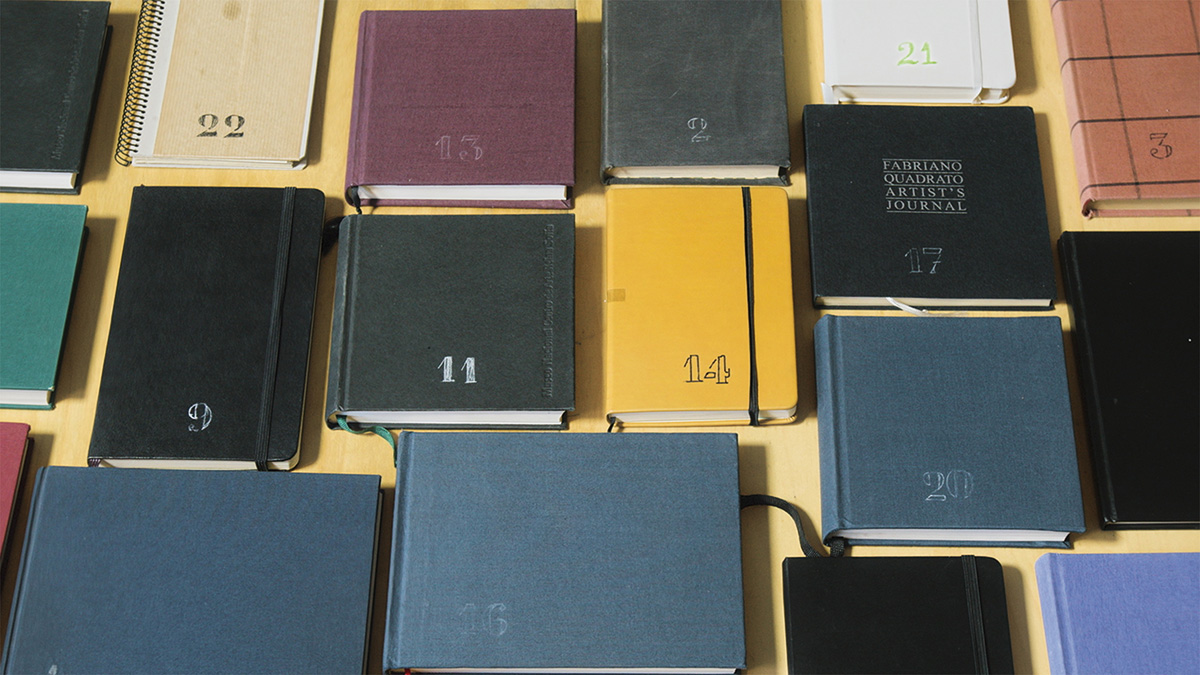
Depuis 1995, l'artiste Pedro Morales Elipe se rend régulièrement au musée du Prado pour dessiner à partir des tableaux des grands maîtres. Le résultat de ce travail, toujours en cours, est rassemblé dans 24 carnets qui n'ont encore jamais été exposés. Ces croquis sont uniques par rapport au reste de son œuvre – tant en peinture qu’en dessin - notamment en raison de leur dimension figurative. Le film "Calavera resumida" (A Skull in Summary) est à la fois un regard posé sur les carnets de croquis et une écoute attentive du dialogue que l'artiste entretient avec certaines œuvres du musée du Prado et avec son propre travail artistique. Les lignes des dessins et la voix de l'artiste qui parle d’elles construisent son souvenir de la peinture, qui est à la fois un rêve et une image de lui-même.
Javier Codesal emploie une grande variété de techniques dans sa pratique artistique. Son travail présente des propositions riches et variées, qui flottent avec liberté et cohérence entre les mots et l'image. Installations, performances, photos, textes, poésie, films et vidéos sont autant de moyens et d'outils qu'il emploie et fusionne dans ses projets. Il développe son intense activité créatrice depuis 1983, année où il réalise sa première installation vidéo, "Una televisión en un nicho". Outre des expositions individuelles et collectives en Espagne et dans d'autres pays d'Europe et d'Amérique, il a participé à de nombreux festivals de cinéma. À ce jour, Javier Codesal a publié cinq recueils de poésie et un livre sur l'esthétique cinématographique intitulé "Dos películas".
Agustina Comedi
Playback. Ensayo de una despedida
Doc. expérimental | 4k | couleur | 14:32 | Argentine | 2019
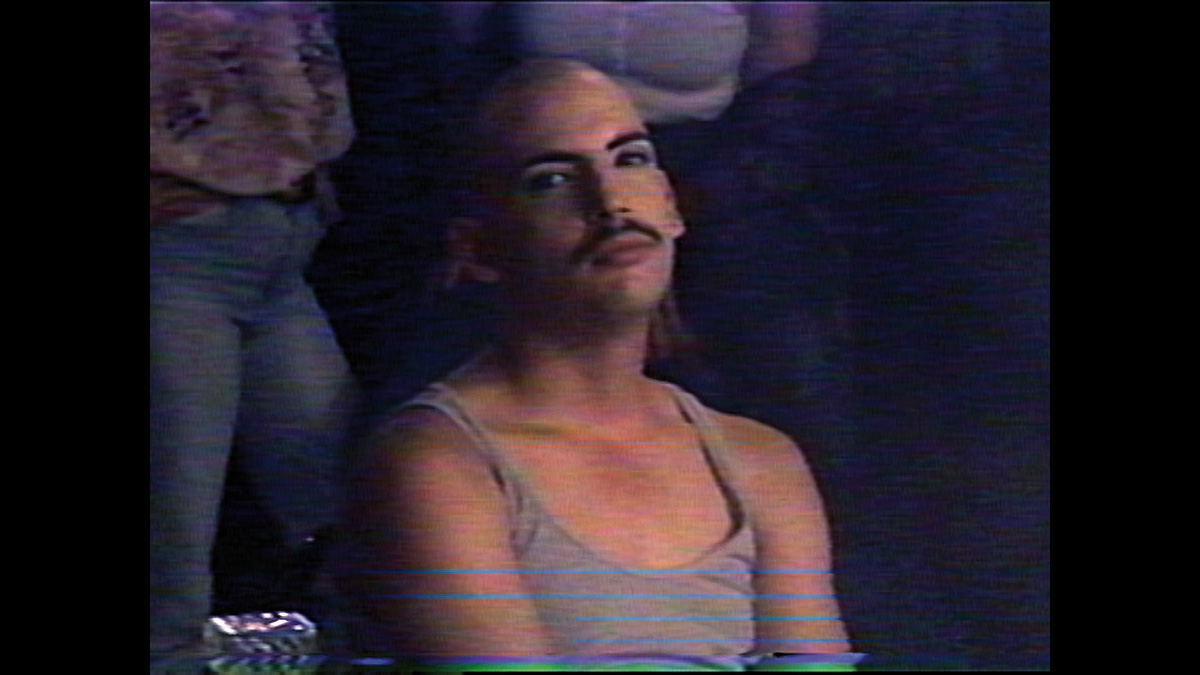
In Córdoba, far away from Argentina’s capital city, the end of a military regime promises a spring that doesn’t last long. “La Delpi” is the only survivor from a group of transgender women and drag queens, who began to die of AIDS in the late 80’s. In a catholic and conservative city, the Kalas Group made their weapons and trenches out of improvised dresses and playbacks. Today the images of a unique and unknown footage are not only a farewell letter, but also a friendship manifesto.
Agustina Comedi (1986) Córdoba, Argentina. Screenwriter and Filmmaker. She studied Modern Literature. In 2017 her first film "Silence is a Falling Body" was premiered at IDFA. The film was multi-awarded and selected in more than 50 international festivals. Nowadays she's writing her second feature.

Jasper Coppes
Aasivissuit
Doc. expérimental | 4k | couleur | 23:30 | Pays-Bas, Groenland | 2020
Les récentes images de la fonte des glaces polaires au Groenland, diffusées dans les médias internationaux, ont présenté ce pays à la fois comme l’épicentre de la crise climatique, et comme une vaste étendue à exploiter pour ses ressources. Le film "Aasivissuit" vise à en offrir une vision différente, en montrant plutôt son paysage et ses habitants: il se concentre sur les discussions entre les gens à propos du changement climatique et de la façon dont ils s'adaptent, dans leur relation complexe avec un environnement changeant. Le film suit deux gardes forestiers, qui explorent la campagne groenlandaise. Au cours de leurs conversations, ils échangent des connaissances nouvelles et anciennes à propos de cette terre. Ils expliquent comment d'anciens sédiments fertiles du Groenland sont utilisés pour nourrir des sols exploités ailleurs, et comment certains microbes ont trouvé le moyen de subsister malgré la pollution. Attirant l'attention sur la présence non humaine dans ce décors, la caméra adopte parfois le point de vue d'une mouche ou d'un corbeau, ou encore plonge dans l'un des trous de la calotte glaciaire qui fond, là où s'accumulent les métaux lourds toxiques. Le film s'interroge sur la manière dont nous pouvons expérimenter et peut-être comprendre ces différentes perspectives.
Jasper Baldwin Coppes est né en 1983 à Amsterdam (Pays-Bas). Il est artiste visuel, et travaille sur un large éventail de supports tels que le film, la performance sonore, l’installation et l’écriture. Dans ses œuvres, il explore les façons dont on peut transformer les récits dominants à propos du monde et de ses habitants. Les paysages controversés, les entités non humaines, les objets silencieux et leur présence ont souvent été au cœur de sa pratique. Il a obtenu un diplôme à la Gerrit Rietveld Academie, Amsterdam (Pays-Bas), en 2008, et a été boursier de la Jan van Eyck Academie, Maastricht (Pays Bas), en 2010 et 2011. Il a participé à divers festivals de cinéma, expositions internationales et conférences. Il est tuteur à la Royal Academy of Art, La Haye (Pays-Bas), et à la Gerrit Rietveld Academie, Amsterdam (Pays-Bas).