Catalogue > Search
Results for : Catalogue 2021

Freja Sofie Kirk, Kjær Esben Weile
Industries of Freedom
Doc. expérimental | mov | couleur | 13:36 | Danemark | 2020
"Industries of Freedom" dresse le portrait d'un groupe de danseurs travaillant dans la plus grande boîte de nuit EDM du monde: Privilege. Les danseurs sont soulevés par des grues, transportés sur une plage dans la gueule d'un requin gonflable, ou planent sous le plafond du club. Nous voyons comment leurs corps se transforment en objets scénographiques, qui se fondent dans le reste de la construction scénique. Dans "Industries of Freedom", la boîte de nuit est présentée à la fois comme un lieu de travail, où les rôles sont strictement définis, et comme un espace où l'on peut vivre les notions de liberté et d'extase, néanmoins strictement chorégraphiées par la logique commerciale de l'industrie du divertissement.
Esben Weile Kjær et Freja Sofie Kirk travaillent tous deux dans le domaine des arts visuels, et utilisent divers médias, notamment le cinéma, la photographie, la sculpture et la performance. Au cours des cinq dernières années, ils ont collaboré sur plusieurs projets de films, qui explorent l'identité, la culture pop et la production d'images. Leurs œuvres ont été présentées à la National Gallery of Denmark, Copenhague (Danemark); au ARoS Aarhus Kunstmuseum (Danemark); au Kunsthal Aarhus (Danemark); au Den Frie Centre of Contemporary Art, Copenhague (Danemark); et à la Factory for Art and Design. Leur travail a également été publié sur des plateformes telles que i-D, Tissue Magazine, Indechs, et Out Magazine. Freja Sofie Kirk est née en 1990. Elle est artiste et vit à Copenhague (Danemark). Utilisant la vidéo, la photographie et la sculpture, souvent en combinaison les unes avec les autres, son travail explore les récits, la culture populaire et la façon dont les images génèrent du sens dans la société contemporaine. Freja Sofie Kirk a une formation en cinéma et en photographie et, en travaillant avec des représentations bidimensionnelles du monde, elle a acquis un intérêt profond pour la signification des images, ainsi qu’une envie de les dissoudre ou de les transformer en qualités matérielles. Ses œuvres contiennent une interaction constante, entre la matérialité et la mécanique, la sensualité et son absence, le réel et l'irréel. Visuellement, elles sont à la fois séduisantes et dérangeantes, mais elles n'en sont pas moins une image des symptômes causés par la réalité actuelle. Esben Weile Kjær est né en 1992. Il est artiste et vit à Copenhague (Danemark). Son travail, qui englobe la sculpture, la vidéo et la performance, s'inspire de l'histoire de la culture et de la musique pop, pour explorer les thèmes de la nostalgie, de l'authenticité et de l'anxiété générationnelle. Dans un langage visuel attentif mais téméraire, il étudie l'économie événementielle d’aujourd’hui, en se concentrant souvent sur les tactiques de marketing et l'esthétique de l'industrie du divertissement. Il s'agit principalement de considérer la relation entre l'art et les industries culturelles qui l'entourent. Dans ce contexte, son travail tente non seulement d'imiter d'autres modes culturels de performance (comme ceux que l'on trouve dans les raves, les manifestations, les conférences de presse et les ballets), mais aussi de devenir une culture pop performative à part entière - souvent à l’aide d’interventions dans l'espace public et commercial, en utilisant des accessoires tels que podiums, canons à confettis, barrières et lasers de soirée.

Foteini Kotsopoulou
This Dance Has No End
Vidéo expérimentale | mp4 | noir et blanc | 10:58 | Grèce, Royaume-Uni | 2018
"Ce qui se passe quand quelqu'un meurt, c'est que nous, les vivants, contenons leur mémoire en nous... Ils continueront à vivre en nous, et nous les célébrerons. Et nous danserons comme s'il n'y avait pas de lendemain." Diane Torr Une danse dédiée à l'artiste, drag king et activiste du genre Diane Torr, décédée en mai 2017. Un an plus tard jour pour jour, je danse dans une pièce noire: un seul plan fusionnant masculin et féminin comme une ode à la vie et à la mort. Le zeïbekiko, danse traditionnelle urbaine de la musique Rebetiko, était réservée aux hommes - par le passé. Elle est dansée ici par ma manifestation hybride - aspects mélangés de mon identité. En silence, j'entends les mots de Diane: "Prends l'espace de tout ton être. Approprie-toi l'espace". Je lève les bras et danse comme s'il n'y avait pas de lendemain, tandis que la caméra me suit. Pas de montage ou de reprise: le but n'est pas de plaire ou de séduire, mais de m'offrir comme lieu de soulagement collectif.
Fenia Kotsopoulou est artiste pluridisciplinaire, et primée dans les domaines de la performance, de la danse, de la vidéo et de la photographie. D’origine grecque, elle habite à Lincoln (Royaume-Uni). Elle est titulaire d'un Master en Chorégraphie d'art vivant de la University of Lincoln (Royaume-Uni), d'un BA Honours en Danse de la National Dance Academy of Rome (Italie) et d'une licence en Langue et littérature italiennes de la Aristotle University of Thessaloniki, Thessalonique (Grèce). Au cours des dix dernières années, la réalisation de vidéos et la photographie sont devenues des éléments dominants et constants de sa pratique artistique. Les thèmes centraux de ses projets récents sont, entre autres, le corps en tant que réceptacle des émotions et lieu de transformation, la mémoire personnelle et collective, la fragmentation, la (dé)construction de l'identité féminine, l'inconvenance, la honte et la pilosité. Ces dernières années, ses œuvres en tant qu'interprète (de danse), productrice et praticienne visuelle, ainsi que celles de son proche collaborateur, l'artiste numérique Daz Disley, ont été présentées dans de nombreux festivals et plateformes artistiques, dans les domaines de la danse, de la performance expérimentale, des arts vivants et de l'art vidéo, et ont reçu plusieurs prix et récompenses. Parallèlement à sa pratique artistique, elle est Maître de conférence dans le Master of Performance Practices à l'université ArtEZ, Arnhem (Pays-Bas) et, depuis 2016, elle est artiste en résidence à x-church, Gainsborough (Royaume-Uni).

Zaur Kourazov
Han Yu
Doc. expérimental | mov | couleur | 20:23 | Belgique, Russie | 2019
Dans un village de Tchétchénie, une mère et une fille parlent du retour d'une connaissance.
Zaur Kourazov (né en 1994) a obtenu en 2019 son diplôme de la KASK – Académie royale des beaux-arts de Gand (Belgique), avec la mention très bien, pour son œuvre "Time Is" [2020]. Son travail s’intéresse à des thèmes tels que la mémoire, l'identité (culturelle) et les amitiés qui naissent dans un contexte interculturel. Comme il se sent lié à sa culture ethnique et à la culture assimilée, son travail se situe dans une position unique, explorant un "entre-deux", un espace très particulier où l'on comprend les deux mondes mais où l'on n’est adapté à aucun d'entre eux.

Makis Kyriakopoulos
WHAT IS A MAN WITHOUT A SHADOW
Fiction expérimentale | 4k | couleur | 3:19 | Grèce | 2020
Dans la vidéo "What is a Man Without a Shadow", une morphogenèse numérique par intelligence artificielle, comme méthode s'inspirant de la biologie, est utilisée pour décrire le processus de développement évolutif des organismes et des systèmes polymorphes. Dans la morphogenèse numérique, de nouvelles formes remplacent les anciennes, dans une logique d'optimisation, par l’intermédiaire d’un système ouvert d'états de constante interaction. Ces structures organisées se transforment radicalement en structures désorganisées, créant un désordre général. Les images se dégradent progressivement, pour révéler des êtres qui modifient la cohérence de l'espace et du temps avec une valeur d'entropie moyenne, permettant de tester de nouvelles réalités dans un espace virtuel. En conséquence, cela permet l'évolution d'êtres qui s'efforcent de marquer leur existence dans des séquences en interaction, passant d'une situation à une autre, générant le matériel génétique du projet.
Makis Kyriakopoulos est né à Patra (Grèce) en 1975. Il a obtenu un MFA avec distinction à la ASFA - Athens School of Fine Arts en 2004 et y a suivi un autre Master en arts numériques. Il travaille principalement dans le domaine des arts numériques et s'intéresse plus particulièrement à la nature du mouvement, à la matérialité et à l'immatérialité, interrogeant la relation entre l'homme et l'espace. Il a participé à de nombreux festivals internationaux, à des conférences, ainsi qu'à des expositions collectives et individuelles.

Eva L'hoest
The Inmost Cell
Vidéo | 0 | couleur | 11:8 | Belgique | 2020
"The Inmost Cell" est la nouvelle œuvre vidéo d'Eva L'Hoest. Son récit est inspiré par les contes traditionnels du fleuve Daugava et par les ruines de ses îles sous-marines, englouties lors de la création du barrage de Riga. En combinant divers procédés numériques, Eva L'Hoest transforme son reportage photographique sur la périphérie de Riga en architectures tridimensionnelles et fluides. Ces éléments perdus de la culture lettone indiquent un lieu de synthèse entre humains, nature et ruines artificielles. Dans une fusion entre le paysage rural et le paysage maritime faisant référence à la calenture, un mirage de marin où la mer devient un champ herbeux invitant, l'artiste imprègne les images d'une qualité hallucinatoire et changeante. À travers des travellings lents et contemplatifs, ses différentes réalités fusionnent, les formes tombent les unes après les autres et des passages sont créés entre les lieux et la mémoire.
Eva L'Hoest (née en 1991, en Belgique) explore la façon dont tous les types d'images mentales, en particulier les souvenirs et les réminiscences, peuvent réapparaître sous une forme technologique. Œuvre par œuvre, l'artiste s'approprie les technologies contemporaines afin de révéler à la fois leur nature en tant qu'extensions pour capturer le monde, et leur potentiel en tant que support artistique. Son travail a récemment été exposé au FRAC Grand Large, Dunkerque (France); "Shapeshifters" au Malmö Museum (Suède); à la Biennale internationale de Riga (Lettonie) "And suddenly it all blossoms", organisée par Rebecca Lamarche-Vadel (curatrice); à la Biennale de Lyon "Là où les eaux se mêlent", organisée par le Palais de Tokyo, Lyon (France); La triennale d'Okayama Art Summit 2019 "IF THE SNAKE", organisée par Pierre Huyghe, Okayama (Japon); "Suspended time, Extended space", Casino Luxembourg (Luxembourg).

Arnaud Laffond
stay home
Animation | mp4 | couleur | 4:10 | France | 2020
"Stay Home" est un journal de bord graphique, que j'essaie de tenir en y notant mes sentiments pendant cette quarantaine. Mes perceptions et mon ressenti au jour le jour. En mettant mes propres expériences et les sentiments des gens autour de moi, que j'ai au téléphone ou sur d'autres réseaux sociaux. C'est un moment de vie très singulier qui, je pense, marquera et changera notre société. L'appréhension de l'après est considérable, voire inquiétante. Comment sera-ce après le confinement? Une vie normale? Ceci est un résumé de mes 55 jours.
Arnaud Laffond est vidéaste, plasticien digitalien vivant à Lyon. Son travail se caractérise par la création d'environnements virtuels et de matériaux générés par ordinateur. La couleur, en tant que matière brute, est numériquement sculptée, traitée et modifiée pour renaître dans une architecture vibrante et lumineuse. Ses œuvres se situent à la limite de la science-fiction, à mi-chemin entre l'abstraction et le représentationalisme, entre l'utopie et la dystopie, entre l'architecture et le paysage. Il travaille avec divers aspects de la vidéo, tels que l'installation, le gif animé et l'impression.
Salomé Lamas
EXTRACTION: THE RAFT OF THE MEDUSA
Fiction expérimentale | hdv | couleur | 10:0 | Portugal | 2020
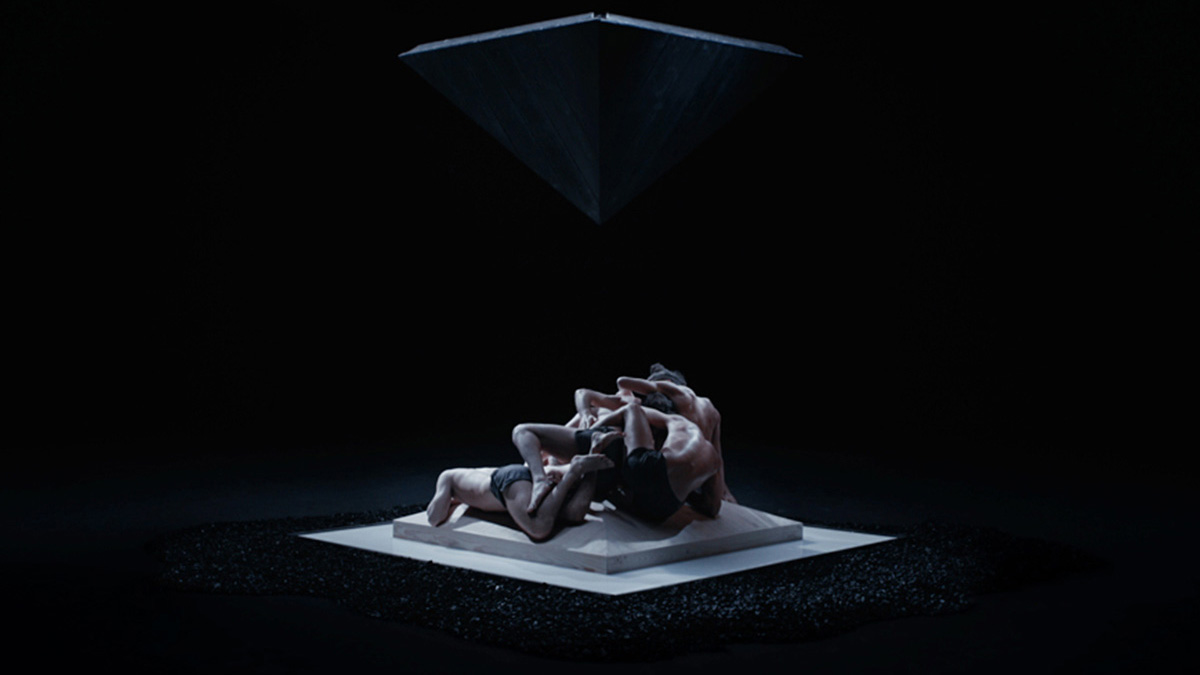
"Extraction: The Raft of the Medusa" est à la fois une méditation sur le modifications importantes de la planète par l'humanité, et un pamphlet dystopique sur l'anthropocène. "Extraction: The Raft of the Medusa" dépeint un bref moment d'euphorie, alors que les occupants du radeau à la dérive semblent entrevoir une possibilité de salut, espérant et priant pour être secourus. Nous pouvons presque entendre les cris rauques par lesquels ils tentent d'attirer l'attention sur leur situation désespérée, rassemblant une dernière once de force avant le vide. C'est leur dernière chance de survie. "Extraction: The Raft of the Medusa" fait référence à la vision du monde, aux technologies et au paradigme coloniaux qui délimitent les régions à forte biodiversité, afin de réduire la vie à sa transformation en ressource par le capitalisme, au coût d’un énorme impact environnemental et social. Il s'agit d'une allégorie des états d'urgence en matière de politique environnementale, de climat et de migration, avec un objectif éthico-politique.
Salomé Lamas est née à Lisbonne (Portugal), et a étudié le cinéma à Lisbonne (Portugal) et à Prague (République tchèque), les arts visuels à Amsterdam (Pays-Bas), et est doctorante en études d'art contemporain à Coimbra (Portugal). Son travail a été projeté dans divers lieux d'art et festivals de cinéma, notamment à la Berlinale, Berlin (Allemage); au BAFICI – Festival Internacional de Cine Independente de Buenos Aires (Argentine); au Museo Arte Reina Sofia, Madrid (Espagne); à la FIAC – Foire internationale d’art contemporain, Paris (France); au MNAC - Museu do Chiado, Lisbonne (Portugal); à DocLisboa, Lisbonne (Portugal); à Cinéma du Réel, Paris (France); à Visions du Réel, Nyon (Suisse); au MoMA - Museum of Modern Art, New York (USA); au Museo Guggenheim Bilbao (Espagne); à la Harvard Film Archive, Cambridge (USA); Museum of the Moving Images, New York (USA); au Jewish Museum, New York (USA); au FIDMarseille (France); au Arsenal Institut für Film und Videokunst, Berlin (Allemagne); à la Viennale, Vienne (Autriche); à Culturgest, Lisbonne (Portugal); au CCB - Centro Cultural de Belém, Lisbonne (Portugal); au Hong Kong Film Festival (Chine); au Museu Serralves, Porto (Portugal); à la Tate Modern, Londres (Royaume-Uni); au CPH: DOX, Copenhague (Danemark); au Centre d'Art Contemporain Genève (Suisse); au Bozar, Bruxelles (Belgique); au Tabakalera, Saint-Sébastien (Espagne); au ICA – Institute of Contemporary Arts in London, Londres (Royaume-Uni); à la TBA 21 Foundation, Madrid (Espagne); à la Mostra de São Paulo (Brésil); au Contemporary Art Centre Vilnius (Lituanie); au MALBA – Museo de Arte Latinoamericano de Buenos Aires (Argentine); au FAEMA; au SESC São Paulo (Brésil); au MAAT – Musée d’Art, Architecture et Technologie, Lisbonne (Portugal); et à La Biennale di Venezia Architettura, Venise (Italie). Salomé Lamas a reçu plusieurs bourses, notamment la bourse du Gardner Film Study Center - Université Harvard, Cambridge (USA); de la Film Study Center-Harvard Fellowship, Cambridge (USA); de la Rockefeller Foundation – Bellagio Center (Italie); de la Brown Fondation – Maison Dora Maar, Ménerbes (France); de la fondation Botín, Santander (Espagne); de la Fondation Calouste Gulbenkian, Lisbonne (Portugal); de Sundance, Park City (USA); de la Bogliasco Foundation, Bogliasco (Italie); de la MacDowell Colony, Peterborough (USA); de Yaddo, Saratoga Springs (USA); de la Fondation Camargo, Cassis (France); et du le Berliner Künstlerprogramm des DAAD, Berlin (Allemagne). Elle collabore avec la Universidade Católica Portuguesa, Lisbonne (Portugal), et avec la Elias Querejeta Zine Eskola, Saint-Sébastien (Espagne). Elle travaille avec la société de production O Som e a Fúria, Lisbonne (Portugal), et est représentée par la Galeria Miguel Nabinho, Lisbonne (Portugal) et la Kubikgallery, Porto (Portugal).
Maxime Le Moing
SALLE OBSCURE
Fiction | mov | couleur et n&b | 45:7 | France | 2020
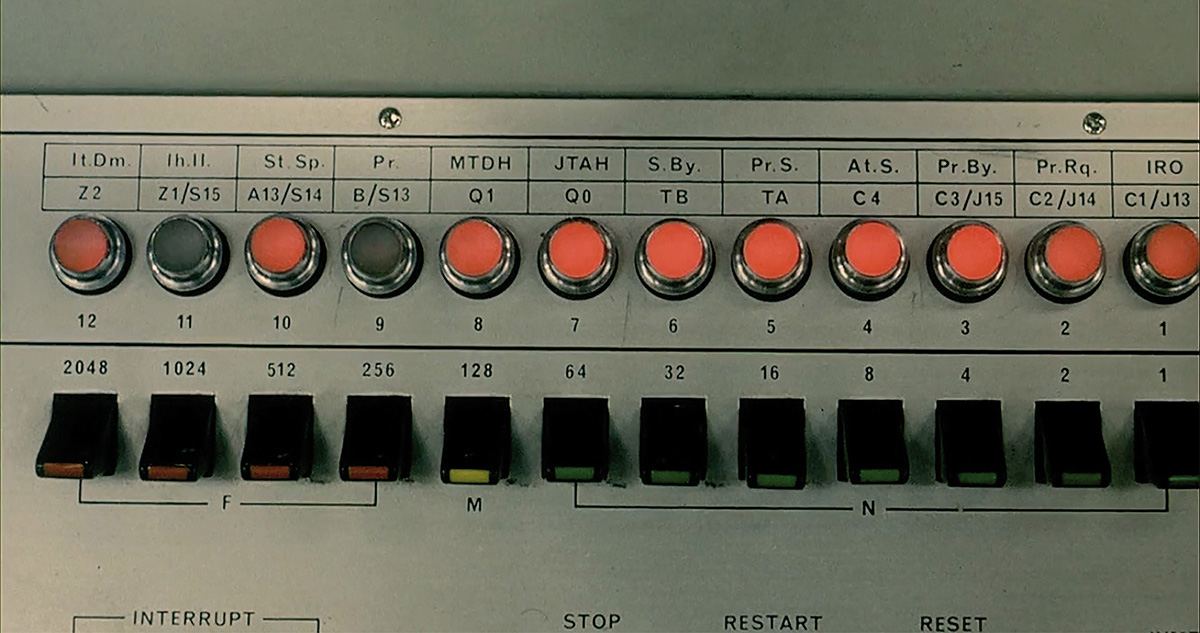
Recycler / Reprendre / Revoir / Refaire / Réadapter. Prenez un scalpel, coupez ces mots pour ne garder que le préfixe re-. Faites-en votre personnage principal, celui d’un détective. Placez-le parmi des mots macabres, des phrases sombres où la nuit ne cesse de pleuvoir. Une fois l’opération terminée, l’enquête peut commencer.
Maxime Le Moing respire à Metz (France). Depuis 10 ans, il est embauché à temps plein en tant que promeneur écoutant. Affilié à la pratique du maraîchage et de l'écriture sonore, il œuvre dans la radio, la poésie sonore, la performance musicale néo-animiste et le mash-up pour les oreilles. Ses créations sont ponctuées par les saisons: en hiver, il anime auprès du jeune publique des ateliers de poésies lettristes en leur enseignant le beat box; au printemps, il enregistre le son de la photosynthèse des plantes et élabore une thèse intitulée "La nature préfère la harsh-noise que la musique classique"; en été, il vagabonde avec sa trompette et sa mallette de bruiteur pour réanimer les espaces morts de la capitaloscène; en automne, il aménage des ronds-points, friches et petits bois pour remettre au goût la libre errance des rencontres sexuelles.

Lei Lei
A Bright Summer Diary
Doc. expérimental | dcp | couleur | 27:14 | Chine, USA | 2020
"La photo a été prise à l'aide d'une planche peinte, dans le parc Kuling à Lushan..." Une femme se rappelle l'histoire qui se cache derrière une photographie: c'était une journée d'été radieuse dans les années 80. Sa famille s’était rendue à Lushan pour échapper à la chaleur. Au fil de ses souvenirs, nous découvrons peu à peu l'histoire oubliée et cette photographie altérée par des taches d’eau.
Lei Lei est artiste et réalisateur. Il est né à Nanchang, dans la province du Jiangxi, en 1985. Artiste d'animation expérimental, il touche également à la vidéo, à la peinture, à l'installation, à la musique et à la performance VJ. En 2009, il a obtenu un Master en animation de l'Université Tsinghua, Pékin (Chine). En 2010, son film "This is LOVE" a été présenté au Ottawa International Animation Festival, Ottawa (Canada), où il a reçu le prix Best Narrative Short Award. En 2013, son film "Recycled" a remporté le Grand Prix du film court non narratif au Holland International Animation Film Festival, Utrecht (Pays-Bas). En 2014, il a fait partie du jury du Animafest Zagreb (Croatie) et du Holland International Animation Film Festival, Utrecht (Pays-Bas). Il a également remporté la bourse 2014 du Asian Cultural Council. En 2017, il a travaillé dans le programme CalArts Experimental Animation, Los Angeles (USA), en tant que membre du corps enseignant. En 2018, il a été invité à joindre la branche des courts et longs métrages d'animation de l'Académie des Oscars. En 2019, son premier long métrage, "Breathless Animals" a été sélectionné dans la section Forum de la Berlinale, Berlin (Allemagne).

Emmanuelle Leonard
Operation Nunalivut
Doc. expérimental | 4k | couleur | 24:24 | Canada | 2019
L'oeuvre "Opération Nunalivut" d'Emmanuelle Léonard a été réalisé lors d’une résidence de recherche dans le Grand Nord canadien au sein du Programme d’arts des Forces canadiennes. Poursuivant le travail photographique et vidéographique réalisé depuis quinze ans sur des groupes hiérarchisés issus des systèmes social, judiciaire, militaire et religieux, l’artiste continue de s’intéresser ici aux fonctions d’autorité et aux mécanismes de détournement qu’elles engendrent. En assistant aux manœuvres des patrouilles d’affirmation de la souveraineté canadienne à Resolute Bay sur l'île de Cornwallis dans le Haut-Arctique, Emmanuelle Léonard a découvert un ensemble de réalités très diverse lors d'un déploiement militaire stratégique dans cette région du monde où les enjeux nationaux, politiques et économiques se trouvent exacerbés par les effets du réchauffement climatique. […] Dans un contexte de tournage difficile, Emmanuelle Léonard a filmé les activités des soldats retranchés derrière leurs boucliers contre le froid – vêtements, masques et lunettes –, les révélant tantôt fantomatiques et anonymes, tantôt bien réels et personnifiés. Attentive aussi bien aux exercices d’entraînement qui nivellent leur identité qu’aux personnes elles-mêmes et à leur perception du monde en marge du modèle militaire, l’artiste s’est faite le témoin de l’attente et de la passivité relative des soldats face à l’impuissance des moteurs qui refusent de démarrer, devant la troublante nuit nordique qui tarde à tomber ou qui s’éclipse, là où rien d’impressionnant n’est dit, n’est fait, n’est prétendu. (Louise Déry - Directrice, Galerie de l’UQAM – Université du Québec à Montréal)
Emmanuelle Léonard est née en 1971 à Montréal, où elle vit et travaille. Elle a obtenu une maîtrise à l’Université du Québec à Montréal. L’artiste compte de nombreuses expositions individuelles et collectives, notamment au Musée d’art contemporain de Montréal (Canada); à OPTICA, Montréal (Canada); à VOX - centre de l’image contemporaine, Montréal (Canada); à la Galerie de l’UQAM, Montréal (Canada), au Mois de la Photo, Montréal (Canada); à la Kunsthaus Dresden (Allemagne); à la Neuer Berliner Kunstverein, Berlin (Allemagne); à Mercer Union, Toronto (Canada); à Gallery 44, Toronto (Canada); à Glassbox, Paris (France); à L’Œil de poisson, Québec (Canada), etc. Elle a été artiste en résidence à la Villa Arson, Nice (France); à la Fondation Christoph Merian, Bâle (Suisse) et à la Fondation finlandaise de résidences d’artistes, Espoo (Finlande). Elle s’est méritée le Prix Pierre-Ayot, Montréal (Canada), en 2005. Elle a exposé en 2012 à la AGO – Art Gallery of Ontario, Toronto (Canada), dans le cadre du International Grange Prize pour lequel elle était en nomination, et en 2013 au Fresnoy – Studio national des arts contemporains, Tourcoing (France), dans le cadre de l’exposition "À Montréal, quand l’image rôde". En 2019, elle a exposé "Le déploiement" à la galerie de l'UQAM, Montréal (Canada), avec la commissaire Louise Déry. En 2020, elle était parmi les trois finalistes pour le Prix de photographie Banque Scotia.

Chi Wo Leung
My Random Diary
Vidéo | 4k | noir et blanc | 18:0 | Hong Kong | 2020
"My Random Diary" juxtapose la description, sous forme de journal intime, d'événements sans rapport entre eux, extraits de diverses archives d'actualités, et les photos prises lors de visites sur les lieux des événements violents en question. Le caractère aléatoire n’est pas seulement dû à la place que Leung Chi Wo a faite à sa réflexion personnelle sur les scènes de violence, mais aussi aux célébrations survenues par coïncidence le même jour, il y a exactement 50 ans. À partir de 2017, Leung Chi Wo s’est rendu sur les lieux de divers attentats à la bombe qui se sont déroulés pendant les émeutes de 1967 - une série d'événements violents qui ont renforcé les sentiments compliqués envers le gouvernement colonial de Hong Kong. À la même date, au même endroit, exactement cinquante ans plus tard, l'artiste filme en film noir et blanc les lieux et le ciel qui les surplombe. La série évolue vers une quête personnelle et continue pour retracer les événements violents, des bombardements aux conflits domestiques, en passant par les agressions sexuelles et les bagarres entre gangs. À travers la polysémie et la polyphonie, Leung Chi Wo systématise la contemplation et la conception de deux types de mondes parallèles: l'un synchrone sur le plan temporel mais distant sur le plan spatial, l'autre temporellement distinct mais unifié spatialement.
Leung Chi Wo, cofondateur du Para/Site Art Space, Hong Kong (Chine), a participé à de nombreuses expositions dans de grandes institutions artistiques internationales, notamment aux biennales de Venise (Italie), Shanghai (Chine) et Gwangju (Corée du Sud); au Queens Museum of Art, New York (USA); au Museu da Imagem e do Som, São Paulo (Brésil); au Tate Modern, Londres (Royaume-Uni); et au Museum of Contemporary Art Shanghai (Chine). Son travail a notamment fait l'objet de critiques dans Yishu, Artforum International, Art Review, Leap, ArtAsiaPacific, et dans le New York Times. Il est Maître de conférence à la School of Creative Media, City University of Hong Kong (Chine).

Christelle Lheureux
80 000 ans
Fiction | mp4 | couleur | 28:26 | France, 0 | 2020
C’est l’été en Normandie. Céline travaille sur un chantier de fouilles et en profites pour passer un week-end dans son village d'enfance, qu'elle n'a pas revu depuis longtemps. Ses recherches archéologiques se mêlent à des retrouvailles plus ou moins probables au fil de ses promenades.
Originaire de Normandie (France), Christelle Lheureux est cinéaste, artiste et enseignante. Elle vit à Paris (France) et enseigne à la Haute école d’art et de design de Genève (Suisse). Après une formation aux universités d’Amiens (France) et de Paris VIII (France), aux Beaux-Arts de Grenoble (France) et au Fresnoy – Studio national des arts contemporains, Tourcoing (France), elle réalise de nombreuses installations vidéo dans les années 2000, et participe à de nombreuses expositions, biennales et résidences d’art contemporain en Europe et en Asie. Dans les années 2010, elle réalise plusieurs courts et moyens-métrages primés dans des festivals de cinéma. Elle prépare actuellement "Le vent des crocodiles", son premier long-métrage avec Christmas in July (Julie Salvador), "Dans le ventre de la baleine", un moyen métrage en Thaïlande avec Kidam (François-Pierre Clavel), et termine "80 000 ans", un court métrage en diptyque.

Pascal Lievre, Julie Crenn & Pascal Lièvre
HERstory
Documentaire | mov | couleur | 71:7 | France | 2019
Le film "HERstory" est un film composé d’une succession d’extraits de vidéos réalisées dans le cadre des différentes expositions entre 2017 et 2019 en France et au Maroc. Réalisés en public, ces portraits participent de la création d’archives où les artistes et des activistes s’expriment à propos l’intersectionnalité, des disparités entre les hommes et les femmes dans le monde de l’art, ou encore de leurs engagements féministes. Dans un souci constant d’accessibilité, les portraits vidéo ont été postés en ligne sur la chaine Youtube HERstory. Nous avons choisi de contourner l’Histoire (History) pour en proposer de nouveaux récits, de nouvelles voix et de nouvelles archives: HERstory. Nous, artiste et historienne de l’art, souhaitons nous engager pour rendre visible, faire circuler et archiver les paroles féministes, queer et décoloniales. HERstory est un espace de réflexions intersectionnelles, de paroles, d’échanges et fabrication d’archives.
Julie Crenn est docteure en histoire de l’art, critique d’art (AICA – Association internationale des critiques d’art) et commissaire d’exposition indépendante. En 2005, elle a obtenu un Master recherche en histoire et critique des arts à l’université Rennes 2 (France), dont le mémoire portait sur l’art de Frida Kahlo. Dans la continuité de ses recherches sur les pratiques féministes et postcoloniales, elle reçoit le titre de docteure en Arts (histoire et théorie) à l’Université Michel de Montaigne, Bordeaux III (France). Sa thèse est une réflexion sur les pratiques textiles contemporaines (de 1970 à nos jours). Des pratiques artistiques mettant en avant les thématiques de la mémoire, l’histoire, le genre et les identités (culturelles et sexuelles). Julie Crenn est commissaire associée à la programmation du Transpalette – centre d’art contemporain de Bourges (France) [2018-2020]. Elle est également membre du Comité Technique d’Acquisition du FRAC – Fonds Régional d’Art Contemporain Poitou-Charentes (France) [2014-2020]. En 2018, Julie Crenn est directrice artistique de la résidence Les Ateliers des Arques, Les Arques (France). Pascal Lièvre est un plasticien qui apparaît sur la scène de l’art contemporain au début des années 2000, avec une série de vidéos musicales où des textes politiques, psychanalytiques ou philosophiques sont chantés sur des musiques populaires. Il explore la figure de l’exception au droit d’auteur qu’est le droit de parodie en exploitant le potentiel critique de l’imitation. Sa pratique de la performance passe d’abord par des reenactments de performances historiques surtout d’artistes femmes et ensuite de mise en forme de corpus théoriques via des pratiques sportives comme l’aérobic ou la figure du défilé. Ses œuvres sur toile rejouent l’histoire de l’art avec des paillettes, une queerisation des formes iconiques de l’art contemporain. Ses dernières années, il travaille sur des corpus théoriques féministes sous forme d’installation vidéo, de performance ou d’œuvres graphiques

Jason Livingston
Ancient Sunshine
Doc. expérimental | 16mm | couleur et n&b | 19:28 | USA | 2020
Un fossile de plastique moulé, un plateau artificiel, des voitures classiques carburant aux émanations de la nation. "Ancient Sunshine" retrace l’histoire sinueuse de l'extraction du charbon et de la protection du climat dans l'Ouest américain. Ce film propose la solidarité en réponse à la violence par laquelle la terre devient "ressource". Utah Tar Sands Resistance lutte depuis près de dix ans contre l'extraction exploratoire des sables bitumineux sur le plateau de Tavaputs, installant chaque été un campement à portée de vue des équipements de chantier et des équipes de construction. Le film pose la question suivante: comment le concept d'horizontalité pourrait-il être appliqué à l'horizon physique, à sa destruction et à la propension du capital à l'exploitation verticale? "Ancient Sunshine" fait se croiser la notion de remodelage sans fin du paysage de l'Ouest à la fois avec l'histoire du travail, les réflexions sur l'organisation anarchiste et les systèmes inter-espèces. Vers une solidarité poétique, vers une politique formelle.
Jason Livingston est artiste visuel, programmateur de film et écrivain. Son travail primé a été présenté à de nombreuses reprises, notamment à Rotterdam (Pays-Bas); à Anthology, New-York (USA); au Musée autrichien du film, Vienne (Autriche) et à la Vancouver Art Gallery (Canada). "Under Foot & Overstory" est distribué par le CFMDC - Canadian Filmmaker Distribution Centre, et "Lake Affect" est disponible dans la collection du Experimental Television Center de EAI - Electronic Arts Intermix. Il a été artiste en résidence, notamment à la Millay Colony for the Arts (USA) et au Virginia Center for the Creative Arts (USA). Il poursuit un doctorat basé sur la pratique au département d'études médiatiques de l'université de Buffalo (USA) en tant que Presidential Fellow. Il est titulaire d'une licence en philosophie de l'université Cornell (USA) ainsi que d’un M.A. et d’un M.F.A. en cinéma de l'université de l'Iowa (USA). Il est actuellement membre du conseil d'administration du Flaherty Seminar, New-York (USA).

Jan Locus
Masters of the Land
Vidéo expérimentale | 4k | couleur | 14:0 | Belgique | 2020
Grâce à l'essor de l'exploitation minière, l’économie de la Mongolie post-communiste a connu la croissance la plus rapide du monde en 2012. Cependant, les pauvres n’ont pas profité de cette industrie en plein développement, et les changements climatiques, associés au surpâturage, ont entraîné une importante désertification. Selon la croyance chamanique mongole, la terre et le ciel sont liés. La violation de la nature par les hommes provoque la colère des esprits dominants ou des "maîtres de la terre", et entraîne sécheresse et peste. Comment la population entre-t-elle en relation avec ses ancêtres, lorsque ses désirs menacent de rompre l'équilibre cosmique? Le film s'ouvre sur des images tournées à Baganuur et Nalayh, autrefois les plus grandes mines de charbon de Mongolie. Des images à caméra fixe d'ouvriers dans l'ombre de machines gigantesques alternent avec des paysages désolés et le centre-ville d'Oulan-Bator, filmé de jour comme de nuit. Des inter-titres coupent les plans de longueur moyenne. Le premier extrait nous vient du poète hongrois Ferenc Juhasz. En 1957, sous l'influence du LSD, il a vécu une douloureuse initiation chamanique. Le deuxième extrait est tiré d'un chant de la chamane Kyrgys Khurak. Il évoque la cupidité et l'inégalité rampantes qui pourraient détruire la nature - un aspect qui fait implicitement référence à la crise climatique. (Ive Stevenheydens)
Les projets à long terme de Jan Locus, photographe et réalisateur, étudient la complexité des questions sociopolitiques mondiales. Il a notamment publié "Mongolia", "De Bewegende Stad" et "Devoted". Ses films ont été projetés, entre autres, au Festival international du film de Rotterdam (Pays-Bas); au DokFest, Kassel (Allemagne); aux Internationale Kurzfilmtage Oberhausen (Allemagne); aux Rencontres internationales Paris/Berlin (France/Allemagne); au Asolo Art Film Festival, Asolo (Italie); au Split International Festival of New Film, Split (Croatie) ; et au FIFA - Festival international du film sur l’art, Montréal (Canada). Il vit et travaille à Bruxelles (Belgique).

Yulia Lokshina
REGELN AM BAND, BEI HOHER GESCHWINDIGKEIT
Documentaire | 4k | couleur | 90:0 | Allemagne | 2020
Une petite ville de l'ouest de l'Allemagne est le terminus pour 26000 porcs chaque jour, et un foyer temporaire pour des masses de travailleurs temporaires originaires d'Europe de l'Est. Les travailleurs du plus grand abattoir du pays luttent pour leur survie, tandis que les militants allemands qui défendent leurs droits se battent contre les autorités locales. Dans le même temps, des lycéens munichois travaillent sur la pièce "Sainte Jeanne des Abattoirs", et tentent d'appréhender le texte ancien et le capitalisme allemand contemporain. Entrelacé avec les pensées des jeunes et leur examen du texte lors des répétitions, le film traite en plusieurs fragments des conditions et d’autres aspects du travail temporaire et de la migration de travail en Allemagne.
Yulia Lokshina est née en 1986 à Moscou (Russie). Depuis 2011, elle étudie la réalisation de documentaires à l'école de cinéma HFF – Hochschule für Fernsehen und Film München, Munich (Allemagne). Ses films et vidéos documentaires traitent de l'interférence entre les environnements sociaux et leurs protagonistes. Son film "Days of youth", qui porte sur un camp militaires pour jeunes patriotes dans la Russie orientale rurale, examine le lien entre patriotisme et éducation, et a reçu le Starter film prize of the city of Munich (Allemagne) [2017]. Dans le cadre de son engagement auprès du Forum Internationale Wissenschaft de l'Université de Bonn (Allemagne), elle travaille sur des projets audiovisuels entre le cinéma et la recherche scientifique. En 2018, elle a obtenu la 12e bourse annuelle Medienkunststipendium der Kirch Stiftung, Munich (Allemagne). "Regeln Am Band, Bei Hoher Geschwindigkeit", son film de fin d'études, a reçu le prix du meilleur film documentaire au Festival Max Ophüls Preis, Sarrebruck (Allemagne) [2020]; le Megaherz Student Award au DOK.fest Munich (Allemagne) [2020]; et le Healthy Workplaces Award à Doclisboa, Lisbonne (Portugal) [2020]. Actuellement, Yulia Lokshina a commencé un projet de doctorat artistique sur l'adaptation de documentaires, à la Filmuniversität Babelsberg Konrad Wolf, Potsdam (Allemagne).

Silvia Maglioni, Graeme Thomson
Common Birds
Film expérimental | 4k | couleur et n&b | 84:0 | Italie, France | 2019
Deux Athéniens décident de fuir leur ville pour échapper à la dette. Guidés par de mystérieux appels de corbeaux, ils parcourent la ville, avant d’atteindre une zone de passage, où ils sont entraînés dans une forêt ancestrale: le Royaume des Oiseaux. Ils y rencontrent la Hoopoe, mi-oiseau mi-femme, qui devient leur traductrice. Au milieu des forces magiques de la forêt, les oiseaux vivent en partageant leurs ressources. La rencontre entre humains, oiseaux et forêt sera une révélation pour tout le monde. Plus de 2500 ans après la création de l’original, "Common Birds" est une adaptation expérimentale des "Oiseaux" d’Aristophane. Entre une Athènes contemporaine marquée par la crise et ce qu’il reste de la forêt primaire de La Gomera, entre grec ancien et Silbo (langue sifflée en voie de disparition, qui fait partie d'une longue tradition de résistance), une histoire de fuite, de perte et de réenchantement, dans un espace végétal époustouflant, où de nouvelles alliances inter-espèces peuvent émerger.
Silvia Maglioni et Graeme Thomson sont réalisateurs et artistes. Leur travail explore les frontières poreuses entre fiction et documentaire, cinéma et arts visuels. Leurs œuvres ont été projetées à l’international dans des festivals, notamment au FID-Marseille (France); au Festival international du film de Rotterdam (Pays-Bas); à la Anthology Film Archives, New York (USA); aux Rencontres internationales Paris-Berlin (France/Allemagne); au Thessaloniki International Film Festival, Thessalonique (Grèce); à la Berlin Critics Week (Allemagne); au BAFICI – Buenos Aires Festival Internacional de Cine Independente (Argentine); au Ji.hlava International Documentary Film Festival, Jihlava (République tchèque); au Festival Hors-Pistes, Paris (France); et à Docs Kingdom, Lisbonne (Portugal).

Stephanos Mangriotis, Alex Frigout, Gaël Marsaud
O Terra, Addio
Doc. expérimental | mov | couleur | 7:48 | Grèce, France | 2020
Une immersion dans les eaux sauvages et mystérieuses du Carnaval Indépendant de la Plaine et de Noailles. Sur fond d’aménagement de Marseille, les foules carnavalesques se cherchent, basculent, s’entrelacent. Des bras déchirent le présent et la foule part à l’assaut de l’hiver.
Alexandre Frigoult est ingénieur du son et monteur son. Bercé dès son plus jeune âge par le monde vibratoire et musical des chants de sa mère lorsqu'elle passait l'aspirateur, il peaufine en parallèle son oreille à l'école de musique d'à côté. Il étudiera par la suite l’ethnomusicologie à l'université Paris 8 Saint-Denis (France) et se passionnera pour le pouvoir narratif sonore lors de sa formation à l'ESAV - École Supérieure d'AudioVisuel, Toulouse (France). Actuellement ingénieur du son et monteur son pour le cinéma, il collabore aussi à d'autres formes telles que la musique, la radio et le spectacle vivant. Stephanos Mangriotis est photographe, réalisateur et chef opérateur. Il est né à Athènes (Grèce). Il a d’abord étudié les mathématiques et la philosophie à Bristol (Royaume-Uni), puis la photographie à Paris 8 - St. Denis (France). Dans son travail, il utilise l’image et les formes multimédias pour créer des récits autour des frontières, des migrations et du sentiment "d’entre-deux". Il aime bien prendre le temps de comprendre et discuter avec les gens avant de déclencher son appareil. Il est co-fondateur de la plateforme Dekadrage avec laquelle il élabore des projets depuis 2009. Gaël Marsaud est sociologue indépendant et vidéaste. Né en Guadeloupe en 1984, il est titulaire d'un doctorat en science politique à l'Université Paris 8 (France). Sa thèse consacrée à un ensemble de films documentaires tournés à Marseille (France) et Saint-Denis (France) au début des années 2000 aborde les questions suivantes: Comment les réalisateurs, leurs équipes et les publics politisent voire dépolitisent leurs films? Comment appréhender la fabrique collective des documentaires? Quelle méthode mobiliser pour analyser ces images? Comme vidéaste, il s’intéresse aux luttes et pratiques d'auto-organisation, là où elles sont les moins attendues et pourtant bien vivantes. Réalisées collectivement, ces chroniques vidéo donnent à voir Marseille et ses résistances.

Filip Markiewicz
Ultrasocial Pop
Performance | mov | couleur | 30:0 | Luxembourg | 2020
"Ultrasocial Pop" est le dernier projet audiovisuel expérimental de Filip Markiewicz. Il crée un dialogue performatif entre son travail visuel et filmique, et ses compositions musicales sous le nom Raftside. La performance en direct est toujours une expérience unique, qui inclut un commentaire sur des événements sociaux réels. L'idée est d’interroger le lien entre la culture pop et le populisme, et de monter un tableau vidéographique en mouvement. "Ultrasocial Pop", une œuvre encore en développement, aboutira sur la publication d'un livre visuel accompagné d’un disque vinyle LP (Label Grzegorzki Records) dans le cadre de son exposition solo à Haus am Lützowplatz, à Berlin (Allemagne), en mai 2021. "Ultrasocial Pop" est financé par la Bourse Bert-Theis.
Filip Markiewicz est né à Esch-sur-Alzette (Luxembourg) en 1980. Ses expositions personnelles ont été présentées par des institutions telles que le MNAC - Musée national d'art contemporain de Bucarest (Roumanie); le NN Contemporay Art, Northampton (Royaume-Uni); la Kunsthalle Osnabrück (Allemagne); le Centre for Contemporary Art Derry (Royaume-Uni); et le Casino Luxembourg - Forum d'Art Contemporain, Luxembourg (Luxembourg). Il a représenté le Luxembourg à la 56e Biennale de Venise (Italie). Filip Markiewicz suit une voie de performance théâtrale et musicale, qui l'a conduit à créer des représentations au Staatstheater Cottbus, Cottbus (Allemagne), dans le cadre du Lausitz Festival, Görlitz (Allemagne); au Theater Basel, Bâle (Suisse); et à l'Expo Shanghai (Chine); ainsi qu’à développer son travail dans le domaine des arts visuels. Il vit et travaille à Hambourg (Allemagne) et à Luxembourg (Luxembourg).
Lukas Marxt
Imperial Irrigation
Vidéo | 4k | couleur | 20:4 | Autriche, USA | 2020
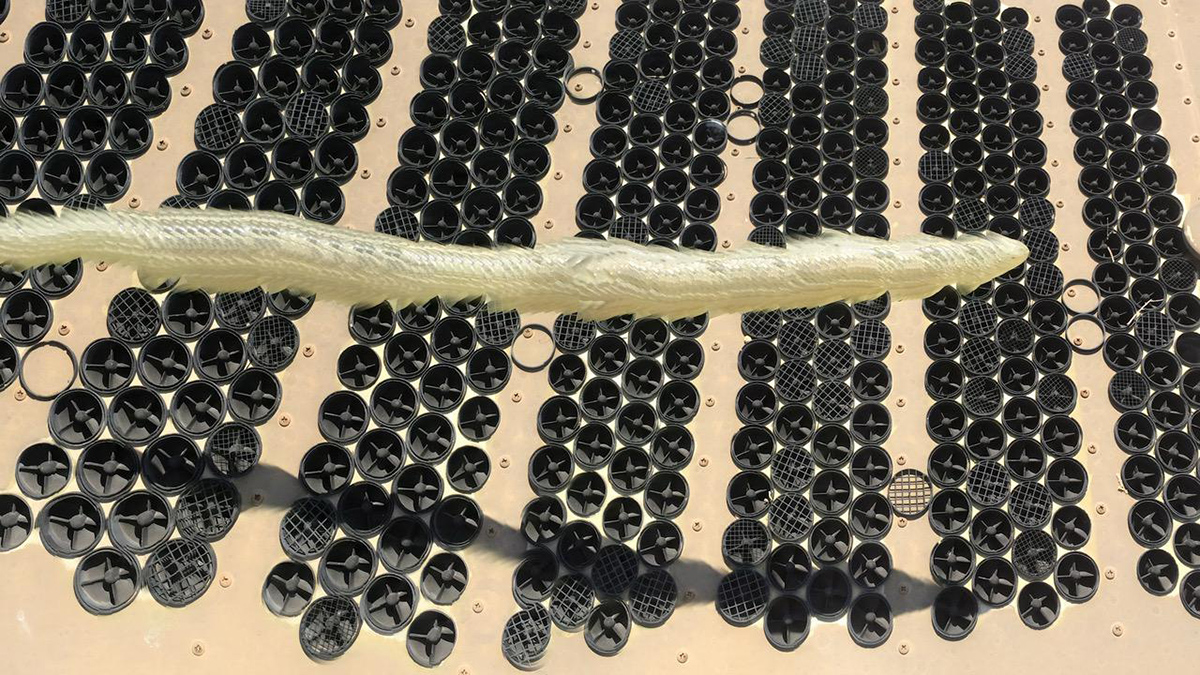
Trouver l'accès aux strates et aux vérités les plus profondes d'un bout de terre, par le biais du surréel et de ce qui est aliéné numériquement. Tel est l'objectif de "Imperial Irrigation", de Lukas Marxt, où le surréalisme numérique est ancré dans l’intention d’un documentaire expérimental, tandis que les couches de texte et de son s'immiscent dans les multiples strates d'action, décentrant ainsi continuellement le récit. Le point de départ de cette étude territoriale complexe et dynamique est la Salton Sea, en Californie, près de là où "Imperial Valley (cultivated run-off)", de Lukas Marxt, menait déjà. Ce lac, qui s'assèche lentement, et son passé en dents de scie sont approchés par le biais de différents types d'images, dont la plupart mettent délibérément en scène des moments d'aliénation soigneusement disposés. Comme si l'intangibilité du paysage offert ne pouvait être rencontrée par des moyens réalistes, les plans sont découpés numériquement, prolongés par des arrêts temporels, imprégnés de MacGuffins indéfinissables et tremblotant de manière erratique à cause des reflets de l'air qui se produisent lorsqu'on filme à grande distance. Lukas Marxt ne s'exclut pas de cette inspection quasi-coloniale du paysage. Ses bottes de cow-boy, son chapeau en peau de serpent, le temps qu'il passe devant les machines à sous ou dans la voiture interviennent à plusieurs reprises, comme des présences idiosyncratiques dans le flux des images. L'artiste Julia Scher raconte énergiquement une histoire de la Salton Sea basée sur un texte de William L. Fox, récapitulant divers moments d'ancrage discursif. Dans le même temps, des éléments sonores entrelacés subtilement, notamment des passages insistants du musicien Jung An Tagen, viennent dépasser le "sens insensé" des événements, à la manière d’un média alternatif. Il en ressort un portrait troublant d'une partie de l'Anthropocène, dont le film résume bien le cap actuel, catastrophique. (Christian Höller)
Lukas Marxt est né en 1983, en Autriche, et vit et travaille entre Cologne (Allemagne) et Graz (Autriche). Il est artiste et réalisateur. L'intérêt de Lukas Marxt pour le dialogue entre l'existence humaine et géologique, et pour l'impact de l'homme sur la nature, s’est d’abord développé lors de ses études de géographie et de sciences de l'environnement à l'université de Graz, puis lors de ses études audiovisuelles à l'université d'art de Linz. Il a obtenu un master à la Kunsthochschule für Medien Köln, Cologne (Allemagne), et a suivi le programme de troisième cycle à la Hochschule für Grafik und Buchkunst Leipzig (Allemagne). Lukas Marxt a partagé ses travaux dans le milieu des arts visuels, ainsi que dans celui du cinéma. Ses œuvres ont été présentées dans de nombreuses expositions individuelles et collectives, notamment au Torrance Art Museum, Los Angeles (USA) [2018]; à la Biennial of Painting, Museum Dhondt-Dhaenens, Laethem-Saint-Martin (Belgique) [2018]; et au Museum of Modern and Contemporary Art Rijeka (Croatie) [2018]. Ses films ont été présentés dans de nombreux festivals de cinéma à l’international, notamment à la Berlinale, Berlin (Allemagne) [2017, 2018]; à Curtas Vila do Conde, Vila do Conde (Portugal) [2018]; et au Festival international du film de Gijón (Espagne), où il a reçu le prix Principado de Asturias pour le meilleur film court [2018]. Depuis 2017, Lukas Marxt a passé un temps considérable en Californie du Sud (USA), où il a fait des recherches sur les structures écologiques et sociopolitiques entourant la Salton Sea.

Masbedo
Condivisione di un ricordo
Vidéo | mp4 | couleur | 13:13 | Italie | 2020
La grande projection vidéo mise en place fait écho au documentaire "Condivisione di un ricordo": cette œuvre présente l'opération qui s’est déroulée à Bergame et dans les communes du Val Seriana pendant l'été, et au cours de laquelle de nombreuses affiches reproduisant le tableau de Pellizza ont été exposées, grâce à la participation de personnes rencontrées par les artistes.
Les deux artistes travaillent ensemble depuis 1999, se concentrant sur l'art vidéo et les installations. Ils s'expriment à travers le langage vidéo, et sous différentes formes telles que la performance, le théâtre, l'installation, la photographie et récemment le cinéma. En Italie, ils sont reconnus parmi les principaux artistes vidéo et innovateurs en art contemporain. Leur recherche artistique s'est concentrée sur le thème de l'incommunicabilité, soulignant le paradoxe de notre société de communication. Cela les a amenés à produire des pièces très intimes, ainsi que des œuvres à caractère plus anthropologique, social et politique. Ils s'efforcent d'impliquer leur public, en utilisant les images en mouvement comme une installation immersive. MASBEDO a également exploré la vidéo-performance, afin d'impliquer son public dans l'espace créatif et dans les gestes créés par la vidéo elle-même.