Catalogue > Search
Results for : Catalogue 2021

Isabell Heimerdinger
Soon It Will Be Dark
Film expérimental | 4k | | 22:49 | Allemagne | 2020
La vie sur l'île suit le rythme changeant du jour et de la nuit. Là où l'unique route s'enfonce dans la forêt, l'air devient plus chaud, plus humide. Ici, à l'ombre des grands arbres, un homme travaille avec son outil. Les sons qu'il produit se mêlent à ceux de la nature qui englobe tout. Son quotidien est rythmé par l'ombre et la lumière jusqu'au coucher du soleil. La nuit, à l'autre bout du chemin, sa solitude est adoucie par les voix des autres, près du feu qui réchauffe, jusqu'aux premières lueurs du jour.
Isabell Heimerdinger est née à Stuttgart, en Allemagne. Elle a étudié la sculpture à la Kunstakademie Düsseldorf (Allemagne) et a obtenu un Master en photographie au California Institute of Arts de Los Angeles (USA). Pendant ses années à Hollywood, elle a gagné sa vie en travaillant dans l'animation d’effets spéciaux. Sans surprise, son travail artistique tourne autour des conditions de réalisation des films. En 2008, elle a tourné en France son premier film court narratif, "Detour", puis une série de films expérimentaux à Pékin ("Good Friends", "Blind Date", "Mr. Xu") et en Italie ("Giorgio"). Si les décors de ses films sont toujours réels, les histoires et les personnages qui les habitent ne le sont pas. Elle vit et travaille à Berlin. Ses films ont été présentés entre autres à la Berlinische Galerie, Berlin (Allemagne); au Kino Arsenal, Berlin (Allemagne); au Centre George Pompidou, Paris (France); à Art Film at Art Basel, Bâle (Suisse); au Kunstmuseum St. Gallen, Saint-Gall (Suisse) et dans divers festivals internationaux de cinéma.

Ronja Hemm
For Your Sake
Documentaire | 4k | couleur | 37:56 | Allemagne | 2020
Deux filles d'une famille d’origine tamang népalaise se préparent à étudier à l'étranger. Leur espoir d’une vie meilleure est élevé, mais le prix à payer est incommensurable. Elles doivent quitter ce qui est le plus précieux pour le peuple Tamang: la famille. Les sœurs cherchent à parler à leur mère et à leur grand-mère, qui mènent encore une vie ardue en suivant la vieille tradition.
Ronja Hemm a grandi à Bamberg (Allemagne) et a étudié les time-based Media à la Hochschule Mainz, Mayence (Allemagne). Pendant ses études, elle s'est principalement consacrée aux formats documentaires. Le documentaire "For Your Sake" est son film de fin d'études.

Margaux Henry-thieullent, en collaboration avec Molpé
Sublime
Vidéo expérimentale | mp4 | couleur | 2:10 | France | 2020
"Sublime" est un texte écrit en 2018 par la plasticienne Margaux Henry-Thieullent. Elle a ensuite donné carte blanche à la musicienne Molpé en 2019 pour la création musicale. En 2020, "Sublime", devient un projet a vocation immersive et expérimentale. À partir d'un travail de sculpture digitale sur iPhone, Margaux Henry-Thieullent réalise une série intitulée "Encore des Morceaux" de quatre vidéos, toutes produites au début de la période de confinement en France. "Sublime", est la première vidéo de cette série. Elle questionne la construction de notre mémoire contemporaine laissant place à l’émergence de récits organiques. Dans le projet "Sublime", on assiste directement à l'éclatement de la caverne digitale. Notre société du spectacle navigue violemment au cœur de lieux oniriques, des théâtres virtuels où se désacralise le réel. D’autres perceptions du dehors se dessinent alors, certainement par nécessité, à la frontière d’un nouveau langage : celui qui nous rassemble encore.
Margaux Henry-Thieullent, est une artiste plasticienne française. Architecte, diplômée de Paris Malaquais en 2019, elle montre pour la première fois son travail de dessin la même année au salon DDessin à Paris (France) ainsi qu'au Festival Vrrraiment à Toulon (France). En octobre 2020, la Galerie 5un7 à Bordeaux (France) présente son travail. Dès la réouverture des lieux de culture, Margaux Henry-Thieullent participera à l'exposition collective, "Vaste Monde #2" organisée par la Villa Beatrix Enea, Centre d'Art Contemporain d'Anglet (France). Elle travaille actuellement sur son premier solo show pour 2021, qui sera présenté à la Cité des Arts de Bayonne (France).

Linn Nora Henz
She is leaving home
Film expérimental | mov | | 5:25 | Suisse | 0
Trouvaille. Une silhouette de fille dans des images d'archive de la Croix Rouge. Se tisse un voyage sensoriel vers elle, spéculation d'un désir d'échapper au vent, au monde désert, d’échapper au temps stagnant et de se découvrir femme.
Linn Nora Henz est née en 1997 à Zurich. Elle intègre l'Université de Zurich (Suisse) en lettres, puis l’ECAL - École cantonale d’art de Lausanne (Suisse) pour une année préparatoire. Elle poursuit ses études à la HEAD - Haute école d'art et de design de Genève (Suisse), au Département Cinéma avec une spécialisation en montage. En outre, elle collabore à des recherches curatoriales et multidisciplinaires.

Jürgen Hille
space capsule III
Vidéo expérimentale | mp4 | noir et blanc | 1:26 | Allemagne, 0 | 2020
Cette vidéo est une réaction artistique à la pandémie de Covid qui s’est déroulée au cours de la dernière année. Une bouée, dispositif passif et fixe de signalisation, que je remplis d’images souvenir et d’impulsions de mouvement. Un drone monte et descend. Je montre les êtres humains en tant que foule dans un stade de football et en petit groupe de vacanciers sous un parasol sur une plage déserte.
1961: naissance à Düsseldorf, en Allemagne. 1980-86: études de beaux-arts, Kunstakademie Düsseldorf (Allemagne). Depuis 1993, travaux libres de vidéo documentaire et expérimentale
Baba Hillman
Kitâb al-isfâr: Book of the Journey
Doc. expérimental | 16mm | couleur et n&b | 58:0 | Canada, Espagne | 2020
Poème cinématographique immersif sur un voyage de retour long de sept ans, "Kitâb al-Isfâr: Livre du voyage", entremêle des histoires d’expérience de mort imminente et d'expériences mystiques en Andalousie. À 19 ans, je me suis mise en route, dans l’espoir de trouver le sens de la vie en "essayant tout". J'ai acheté une voiture pour 20 Mark dans un café d'Ulm. Je l'ai peinte à la bombe en jaune et vert et j’ai roulé de la Hollande à l'Espagne en passant par la Roumanie, dormant sur la banquette arrière dans une couverture rouge. Sur la route de Malaga, au sommet d’une montagne, les freins ont lâché. Alors que la voiture dévalait la pente et s'écrasait, j'ai perdu connaissance, avant d’avoir des visions pendant trois jours et trois nuits. Qu'ai-je vu, qu'ai-je compris ? Le Shaykh al-Akbar, Ibn 'Arabi, mystique et philosophe soufi, écrit que le voyage n'a de véritable sens que s'il apporte un nouveau départ. En voyageant, le cœur devient le but.
Baba Hillman est artiste et cinéaste. Elle a grandi au Japon, au Venezuela et au Panama, et travaille entre la France et les États-Unis. Ses films et ses performances interrogent la mémoire, l'histoire, la perception, ainsi que la poétique et la politique du lieu, du langage et du corps. Ses films ont été projetés dans des festivals et des musées, notamment au Museum of Contemporary Art de Los Angeles (USA); au FIDMarseille (France); au Edinburgh Film Festival (Royaume-Uni); à l'Anthology Film Archives, New-York (USA); au Ann Arbor Film Festival (USA); à la National Gallery of Art de Washington D.C. (USA); au Athens Avant Garde Film Festival, Athènes (Grèce); à l’ICAIC - Institut cubain des arts et de l’industrie cinématographique de La Havane (Cuba); à l'Africa World Documentary Festival de Yaoundé (Cameroun); à MIX Brazil (Brésil) et au European Media Art Festival d'Osnabrück (Allemagne).

Gavin Hipkins
Album
Film expérimental | 4k | couleur et n&b | 14:45 | Nouvelle-Zélande | 2020
La lettre d'un jeune homme à sa mère, envoyée en Nouvelle-Zélande depuis l’Angleterre pendant la première guerre mondiale. Les parcs royaux de Londres forment un cadre pittoresque pour repenser l'empire, le tourisme et la nostalgie, dans ce film hybride qui présente les photographies et les écrits du grand-père de l'artiste sur ses voyages dans l’armée.
Gavin Hipkins est artiste et est installé à Auckland, en Nouvelle-Zélande. Il est titulaire d'un Master en Arts Visuels de l'Université de la Colombie-Britannique, à Vancouver (Canada). Il est actuellement professeur d’arts visuels à la Elam School of Fine Arts de l'université d'Auckland. Son travail interroge l'État, en particulier dans les pays colonisés, à une époque de communautés réimaginées et d’idées d'utopie sociale et politique. Ses récents travaux sur l'image en mouvement abordent le film comme un art qui brouille les genres conventionnels de l'essai, du documentaire et des structures narratives expérimentales. Il a participé à de nombreuses reprises à des expositions et festivals de cinéma d’envergure internationale, notamment: 16e 25FPS International Experimental Film and Video Festival, Compétition internationale, Zagreb (Croatie) [2020]; Rencontres Internationales Paris/Berlin [2020] ; 33e Stuttgarter Filmwinter: Festival for Expanded Media, Stuttgart (Allemagne) [2020]; Festival international du film de Nouvelle-Zélande [2020]; Videoex, Zurich (Suisse) [2019]; The 9th Asia Pacific Triennial of Contemporary Art, Gallery of Modern Art, Brisbane (Australie) [2018]; Festival international du film de Rotterdam (Pays-Bas) [2018, 2015]; Festival international du court métrage d’Oberhausen, Compétition internationale (Allemagne) [2017, 2016]; Jewish Museum New York (USA) [2015]; MAD - Museum of Arts and Design , New York (USA) [2014]; Edinburgh Art Festival (Royaume-Uni) [2014].

Kerstin Honeit
[zi:lo]5
Vidéo expérimentale | 4k | couleur | 17:17 | Allemagne, Canada | 2019
Le Silo 5, autrefois le plus grand grenier au monde, a été célébré par l'architecte Le Corbusier en 1927 en tant qu’aperçu d'une modernité utopique et d'un avenir esthétique de l'architecture. Depuis les années 90, le gigantesque complexe de silos de Montréal est une ruine industrielle, bien trop grande pour être démolie. Le grenier abandonné, devenu par la force des choses un monument à l'extractionnisme colonial global, marque, en tant que lieu de stockage, le point de départ de la pièce vidéo [zi:lo]5. L'œuvre aborde différents gestes et technologies de conservation et de collecte et, par conséquent - simultanément et indissociablement - des questions relatives aux notions d'écrasement, de suppression ou de réécriture. Sous l'angle d'un futur proche (et queer), les collections s'exposent comme des accumulations de lacunes et d'omissions. Ces vides deviennent des corps résonnants ayant le potentiel d'ouvrir des espaces à d'autres pratiques de stockage intermédiaire.
Kerstin Honeit a étudié les beaux-arts et la scénographie à la Kunsthochschule Berlin Weissensee (Allemagne). Elle vit à Berlin (Allemagne) et enseigne l'art médiatique à la Hochschule für Grafik und Buchkunst Leipzig (Allemagne). Dans sa pratique en tant qu'artiste et réalisatrice, elle travaille à l’intersection de différentes formes de mise en scène. Sa recherche artistique se concentre sur l'étude des mécanismes de représentation dans la production de mondes d'images hégémoniques, notamment en relation avec les modes de traduction culturels et linguistiques dans le contexte des images en mouvement. Depuis 2006, elle a présenté son travail dans plusieurs expositions et festivals, notamment: La Centrale galerie Powerhouse, Montréal (Canada); HMKV – Hartware MedienKunstVerein, Dortmund (Allemagne); São Paulo International Short Film Festival, São Paulo (Brésil); Ruhrtriennale, Bochum (Allemagne); Kunsthalle Rostock, Rostock (Allemagne); Neuer Berliner Kunstverein, Berlin (Allemagne); OFF Biennale Cairo, Le Caire (Égypte); Videoart at Midnight, Berlin (Allemagne); MMOMA - Moscow Museum of Modern Art, Moscou (Russie); Schwules Museum, Berlin (Allemagne); Fajr International Film Festival, Téhéran (Iran); HKW – Haus der Kulturent der Welt, Berlin (Allemagne); Internationale Kurzfilmtage, Oberhausen (Allemagne); SixtyEight Art Institute, Copenhague (Danemark); Berlinische Galerie, Berlin (Allemagne); Les Complices*, Zurich (Suisse); Videonale, Bonn (Allemagne); Gallery 400, Chicago (USA); CCNY – Camera Club of New York (USA); Arsenal - Institut für Film und Videokunst, Berlin (Allemagne).

Krzysztof Honowski
Beasts Of No Nation
Film expérimental | mov | couleur | 9:28 | Allemagne | 2019
Un film-essai sur les foules, le nationalisme et la solitude des montagnes russes. Né à Londres d'une famille d'immigrants polonais et vivant aujourd'hui en Allemagne, Krzysztof Honowski est très déconcerté par ce qui se passe actuellement dans ses deux pays d’origine. En examinant les sources de sa propre déception politique, Krzysztof Honowski, avec l'actrice allemande Laura Sundermann, tente de créer un récit qui "parle pour une génération". Cela s’avère bien sûr impossible, et cette parodie de grand récit déraille rapidement à cause de petits détails du quotidien. Le narrateur de Krzysztof Honowski et Laura Sundermann doit plutôt faire face à leur propre lâcheté, leur épuisement et leur désaveu.
Krzysztof Honowski est né à Londres (Royaume-Uni) en 1986 et a étudié la littérature anglaise à l'université de Cambridge (Royaume-Uni) avant de suivre des études supérieures en art à la Slade School of Fine Art de Londres (Royaume-Uni) et à la KHM - Kunsthochsschule für Medien de Cologne (Allemagne). Il est doctorant en théorie de l'art à la Akademie der Bildenden Künste Wien, Vienne (Autriche). Il a présenté des performances et des expositions dans toute l'Europe. Parmi celles-ci, citons "Kustom Kar Kommandos Karaoke" (2015-16) au Barbican de Londres (Royaume-Uni), au Sound Acts Festival d'Athènes (Grèce) et au a.m. de Londres (Royaume-Uni), ainsi que "And Now The Screen Is Struck By Lightning" au Tropez de Berlin (Allemagne) en 2019. Parmi les présentations de groupe citons la Kunsthalle de Düsseldorf (Allemagne), Art Cologne (Allemagne) et le Musée juif de Berlin (Allemagne). En 2019, son film court "Beasts Of No Nation" a été présenté en première mondiale à la Ruhrtriennale, Bochum (Allemagne), et a été sélectionné pour la compétition officielle allemande au International Short Film Festival Oberhausen (Allemagne) en 2020. En 2021, le film a été choisi par AG Kurzfilm, l'Association allemande du film court, pour son programme "Emerging Artists". Une nouvelle installation sera présentée en 2021 au Kunstverein Leverkusen, Leverkusen (Allemagne).

Mike Hoolboom
Judy Versus Capitalism
Vidéo expérimentale | super8 | couleur et n&b | 63:0 | Canada | 2020
Radical feminist, street fighter, practical dreamer. This lyrical doc, shot in super 8, recounts Judy Rebick’s pivotal role in securing women’s rights over their own bodies in Canada. She lays out the key tenets of second wave feminism, even as a family time bomb threatens. The film closes with a harrowingly personal account of a divided self, and a startling embrace of mental illness as creativity.
Mike Hoolboom (1959, Toronto). Media artist and writer. He was schooled at the Funnel, Toronto's former underground movie palace, and has made more than 100 movies since 1980. He is the author/co/editor of 30 books. There have been 20 international retrospectives of his work, and he has won more than 80 festival awards, including the Best Short Film Award in Toronto IFF two times. In 2009 he received the Bell Award in Video Art, presented by the Canadian Council of Arts "for the exceptional contribution to the advancement of video art and practices in the country".

Mike Hoolboom, Alena Koroleva
Wax Museum
Vidéo expérimentale | mov | couleur | 11:0 | Canada, Russie | 2020
Dans une suite de 15 scènes, la plupart se passant dans un seul plan d'ensemble, l'héroïne russe renégocie son pacte avec le capitalisme russe, et avec les nouveaux corps et relations qu'il a rendus possibles. Tourné à Saint-Pétersbourg au cours d'un automne ensoleillé, alors que nos visages pouvaient encore supporter l’ancienne lumière.
Alena Koroleva est d’origine russe. Elle est artiste et curatrice multidisciplinaire. Co-fondatrice du Kinodot Experimental Film Festival, St-Pétersbourg (Russie), elle a créé quelques films courts et œuvres sonores. Mike Hoolboom réalise des films et écrit.

Laura Huertas Millán
Jíibie
Documentaire | dcp | couleur | 24:45 | France, Colombie | 2019
Le rituel de fabrication de la poudre de coca verte (appelée "mambe" ou "Jiíbie") dévoile un mythe ancestral de parenté, dont la transmission se fait par tradition orale. Dans la communauté amazonienne Muina Murui, la plante de coca n’est pas un produit de consommation, mais une interlocutrice sacrée, le cœur battant d’un corps collectif.
Laura Huertas Millán est artiste et cinéaste franco-colombienne, sa pratique se situe à l’intersection entre le cinéma, l’art contemporain et la recherche. Sélectionnées dans les grands festivals de cinéma tels que la Berlinale, Berlin (Allemagne); le Toronto International Film Festival (Canada); le Rotterdam International Film Festival (Pays-Bas); le New York Film Festival (USA) et le festival Cinéma du Réel, Paris (France), ses œuvres ont été primées dans des festivals tels que le Locarno Film Festival (Suisse); le FIDMarseille (France); Doclisboa, Lisbonne (Portugal); Videobrasil, São Paulo (Brésil). Plus de vingt rétrospectives et focus de son travail ont été organisées mondialement, dans des cinémathèques telles que le TIFF Lightbox de Toronto (Canada); la Film Archive de Harvard, Cambridge (USA) ou encore la cinémathèque de Bogota (Colombie), et ainsi que dans des festivals de cinéma majeurs comme celui de Mar del Plata (Argentine), les Rencontres internationales du Documentaire de Montréal (Canada) et le Thessaloniki Documentary Festival, Thessalonique (Grèce). Ses dernières expositions personnelles ont eu lieu au MASP – Museu de Arte de São Paulo (Brésil); à la Maison des Arts de Malakoff (France) et au Musée d’Art Moderne de Medellin (Colombie). Elle a également exposé et projeté ses films dans de nombreuses institutions renommées (Centre Pompidou, Paris (France); Jeu de Paume, Paris (France); Guggenheim Museum, New York (USA); Times Art Berlin (Allemagne)) et dans le cadre de biennales (Liverpool (Royaume-Uni); FRONT Triennial, Cleveland (USA); Videobrasil, São Paulo (Brésil); Videonnale, Bonn (Allemagne)). Ses œuvres font partie de collections privées et publiques (Kadist, San Francisco (USA); CNAP – Centre national des arts Plastiques, Paris (France); Banco de la República de Colombia, Bogota (Colombie); CIFO Collection, Miami (USA); FRAC – Fonds régional d’art contemporain Lorraine, Metz (France), parmi d’autres). Elle détient un doctorat de pratique (programme SACRe), après avoir développé une recherche de pratique cinématographique autour de la "fiction ethnographique" entre l’Université PSL – Paris Sciences et Lettres (France) et le Sensory Ethnography Lab à l’Université de Harvard (USA). Elle travaille régulièrement comme enseignante. Depuis 2019, Laura Huertas Millán et la commissaire Rachael Rakes forment un duo de recherche autour de l’anthropologie critique, les esthétiques et les politiques de la rencontre.

Birgit Johnsen, Hanne Nielsen & Birgit Johnsen ( both directors)
Modern Escape
Installation vidéo | 4k | couleur | 21:12 | Danemark | 2018
L'installation vidéo "Modern Escape" interroge la relation entre position individuelle et contexte politique global. Nous avons à cœur d'examiner nos comportements sociaux ainsi que notre relation subjective avec les questions historiques générales et les différentes cultures auxquelles nous appartenons. Le temps a brouillé la réalité, l'art, la vie et la passion pour en faire un creuset où notre point de vue a changé. Le regard automatisé de la caméra prend le dessus sur le regard empathique du photographe, et part du sol pour terminer avec quelque chose qui rappelle le regard d’un drone. Le monde est en migration, les murs s'élèvent à la même vitesse que les camps de réfugiés et, maintenant, les infections se propagent. La galerie d'art se transforme en salon, où une télévision fait entrer la réalité en montrant des extraits de journaux télévisés. Dans le même temps, des publicités télévisées présentent des équipements de surveillance et des dispositifs antivol pour empêcher le monde d'entrer: le salon se transforme en un château bien gardé. Cependant, la réalité insiste pour pénétrer.
Hanne Nielsen et Birgit Johnsen sont toutes deux titulaires d'un MFA de la Jutland Art Academy, Aarhus (Danemark). Elles réalisent et exposent ensemble des vidéos, documentaires et installations depuis 1993. Parmi leurs dernières expositions personnelles, on peut citer "At The Fence" au Viborg Kunsthal, Viborg (Danemark) [2019]; "Protect/ Release" au Röda Sten Konsthall, Goteborg (Suède) [2017]; "REVISIT", une exposition monographique au Ovengaden – Institute of contemporary art, Copenhague (Danemark) [2018-2019], ainsi que "INCLUSION / EXLUSION" au ARoS Aarhus Kunstmuseum, Aarhus (Danemark) [2017]. Elles ont reçu le prix Carl Nielsen and Anne Marie Carl Nielsen’s Honorary Award [2016]; la médaille Eckersberg de la Royal Academy of Fine Arts, Copenhague (Danemark) [2017]; et la plus récente bourse d'artiste de la New Carlsberg Foundation [2020].
Pauline Julier, Nicolas Chapoulier
Tout Ira Bien
Vidéo expérimentale | 4k | couleur | 8:55 | Suisse, Italie | 2020
A la tombée de la nuit, un oracle volant s’avance et déroule un message.
Pauline Julier est artiste et cinéaste. Ses films ont été présentés dans des festivals, des centres d’art et des institutions du monde entier, parmi lesquels le Centre Pompidou à Paris, le Festival Loop à Barcelone, Visions du Réel à Nyon, DOCLisboa, le Tokyo Wonder Site à Tokyo, le Museum of Modern Art en Tanzanie, le Centre d’Art de Genève, à New York, Madrid, Berlin, Zagreb, Bucharest, à la Cinémathèque à Toronto ou encore au Pera Museum Musée à Istanbul. Elle a reçu le Swiss Federal Art Price à Art Basel en 2010 et elle a présenté une exposition solo au Centre Culturel Suisse de Paris en 2017. Cette année, elle participe à l’exposition de Bruno Latour, « Critical Zone » au ZKM et finit une résidence d’une année à l’Institut Suisse de Rome pour un nouveau cycle de recherches et films. Nicolas Chapoulier, co-réalisateur sur ce film, est directeur artistique de la compagnie « Les 3 points de suspension » avec laquelle il tourne mondialement. Auteur, comédien, acrobate, plasticien et metteur en scène, il assure la mise en scène et la direction artistique des spectacles Nié qui tamola, La grande Saga de la Françafrique (nominé aux Molières 2017) Looking for Paradise, et Squash . En 2011, il rédige Nié qui tamola au Editions Requins Marteaux, un roman graphique documentaire. En 2014, il est lauréat de la Fondation Beaumarchais/SACD Ministère de la Culture- Bourse à l’écriture, Ecrire pour la Rue pour le projet Looking for Paradise. En 2015, il fonde le collectif 3615 Dakota, qui réalise des performances urbaines avec lequel ils sont invités au pavillon français de la biennale de Venise d’architecture en 2019.

Eleni Kamma
MIGRATIE
Vidéo | mov | couleur | 8:20 | Chypre, Pays-Bas | 2020
Dans "Migratie", humains et marionnettes se réunissent pour raconter une parabole sur la migration écrite par Pieter De Buysser, écrivain, réalisateur et artiste de scène flamand. Les interprètes portent des masques, reproductions déformées de leur propre visage. Les interactions entre les marionnettes et les humains servent à faire des choses qui seraient scandaleuses/interdites dans la réalité (par exemple, mettre le feu à un politicien). Ceci crée un effet très étrange et aliénant, amplifiant l’impact de la vidéo sur les spectateurs. Le jeu exagéré entre la réalité et l'imagination ouvre d'autres possibilités sur la manière d'agir. Le détour par l'imaginaire et l'artificiel, pour être en mesure de s’exprimer directement, pourrait être une des meilleures stratégies pour relier le film en tant que construction à la parrhésie.
Eleni Kamma (née à Athènes (Grèce) en 1973) est artiste visuelle, réalisatrice et chercheuse. Sa pratique s'inscrit dans un schéma en forme de ruban de Moebius, qui ne cesse de circuler entre elle-même en tant qu'artiste individuelle et des collaborations dialogiques. Elle vit à Maastricht (Pays-Bas) et à Bruxelles (Belgique), et possède la double nationalité grecque et chypriote. En raison du statut de réfugié de son père en Grèce et de l'occupation de la partie nord de Chypre, d'où sa famille est originaire, elle a éprouvé, dès son plus jeune âge, le sentiment de "ne pas être à sa place". Cela l'a amenée à se considérer comme une pároikos - quelqu'un qui vit à proximité des autres en tant qu'habitant temporaire - ce qui l'a amenée à se demander comment faire entendre sa voix par rapport à son identité en période de migration et de mobilité. À qui s'adresser? Et comment? Sa pratique s'inspire des lacunes, des contradictions et des angles morts inhérents aux structures et aux récits culturels existants. Celles-ci impliquent les questions de la mémoire, de l’authenticité et de l’identité, souvent dans le contexte d'une Europe de plus en plus paradoxale. Depuis 2015, elle étudie la parrhésie, la notion, issue de la Grèce antique, de l'obligation de parler pour le bien commun, même si cela implique un risque personnel. Elle fait partie de l'organisation bruxelloise gérée par les artistes Jubilee - Platform for artistic research and production (Belgique).

Ernst Karel, KUSUMARYATI Veronikia
Expedition Content
Doc. expérimental | dcp | couleur et n&b | 78:0 | USA | 2020
En 1961, le cinéaste Robert Gardner a organisé l’expédition Harvard Peabody en Nouvelle-Guinée néerlandaise (aujourd’hui Papouasie occidentale). Financée par le gouvernement colonial néerlandais et des donateurs privés, et composée de plusieurs membres des plus riches familles des États-Unis armés de caméras 16 mm, d’appareils photographiques, de magnétophones à bobines et d’un microphone, l’expédition s’est installée pendant cinq mois dans la vallée de Baliem, parmi les Hubula (également connus sous le nom de Dani). Cette expédition a donné lieu au célèbre film de Robert Gardner, "Dead Birds", à deux livres de photographie; au livre "Under the Mountain Wall", de Peter Matthiessen; et à deux monographies ethnographiques. Michael Rockefeller, membre de la quatrième génération de la famille Rockefeller (propriétaires de la compagnie Standard Oil), était chargé de la photographie et des enregistrements sonores dans et autour de l’univers des Hubulas. "Expedition Content" est une œuvre sonore augmentée, composée à partir de trente-sept heures d’enregistrements sur bande magnétique, documentant l’étrange rencontre entre l’expédition et le peuple hubula. Cette œuvre propose une réflexion sur les complexes interactions historiques entre le développement de l’anthropologie multimodale, la vie des Hubulas, celle de Michael Rockefeller, et le processus colonial toujours en cours en Papouasie occidentale.
Ernst Karel est né en 1970 à Palo Alto (USA). Il produit des œuvres sonores de plusieurs types: musique électroacoustique, œuvres documentaires expérimentales pour installations et performances à plusieurs bandes sonores, postproduction sonore pour films documentaires, et plus particulièrement pour le cinéma d’observation. Ces œuvres sont le plus souvent le résultat de pratiques d’enregistrement de terrain, et de composition à partir de tels enregistrements non manipulés. Dans le cadre du Laboratoire d’Ethnographie Sensorielle de l’Université Harvard, Cambridge (USA), Ernst Karel a travaillé avec de nombreux réalisateurs, enseignant également les techniques d’enregistrement de terrain dans le cadre de séminaires universitaires. Pendant le semestre d’automne de l’année 2019, il était professeur invité au Centre d’Ethnographie Expérimentale de l’Université de Pennsylvanie, Philadelphie (USA). Veronika Kusumaryati est née en 1980 à Bantul (Indonésie). Elle est spécialiste d’anthropologie politique et d’anthropologie des médias, et travaille en Papouasie occidentale. Ses travaux universitaires sont consacrés aux théories et à l’historiographie du colonialisme, de la décolonisation, et du post-colonialisme. Elle est également commissaire d’exposition indépendante et réalisatrice de films documentaires. Ceux-ci ont été projetés dans le cadre du Jakarta International Film Festival(Indonésie); des Internationale Kurzfilmtage Oberhausen (Allemagne), et du Festival du Film de Tampere (Finlande). Elle a étudié le cinéma et la théorie des médias à l’Institut des Arts de Jakarta (Indonésie), et a obtenu un doctorat en anthropologie à l’Université Harvard, Cambridge (USA). Elle a été membre du Laboratoire d’Ethnographie Sensorielle de Harvard, Cambridge (USA), et elle est actuellement stagiaire postdoctorale à la Georgetown University Edmund A. Walsh School of Foreign Service, Washington (USA).

Katharina Kastner
VILLA EMPAIN
Doc. expérimental | 16mm | couleur et n&b | 24:0 | Autriche, Belgique | 2019
La Villa Empain était une passion, une vision, un plan, un foyer, une œuvre d'art. C'est un rêve sincère qui a été abandonné. Aujourd'hui, elle ressemble à ce qu'elle était dans les années 1930, mais elle est devenue une autre entité, supportée par le même fondement. La Villa Empain existe entre le passé et le présent: des œuvres d'art contemporain au sein d'une unique œuvre Art Déco et Bauhaus. C'est une architecture humble et durable. C'est une dichotomie entre manoir privé et espace public. C'est une conversation entre l'histoire d'une famille et le rêve d'un architecte, entre le carnet de voyage d'un père et la performance d'un artiste, une rencontre entre l'eau et la pierre, le fusain et le papier, la lumière et le film. Béton, marbre, brique et acier: peu de choses créées par la main de l'homme semblent aussi stables, aussi immuables qu'un bâtiment. Pourtant, la vie d'une structure n'est ni fixe, ni intemporelle. Dépassant leurs objectifs initiaux, les bâtiments sont contraints de s'adapter à chaque nouvelle époque. Pour survivre, ils doivent se métamorphoser. L'atmosphère de "Villa Empain" est étrange et pleine de merveilles. La caméra effleure délicatement les textures, comme pour entrevoir les instants dont elles ont été témoins. Il y a un secret à dévoiler, mais comme tout bon secret, il nous échappe, insaisissable, nous ne pourrons jamais le comprendre. Ce court-métrage expérimental tente de découvrir une chose sur laquelle nous ne pouvons mettre le doigt. Alors, nous mettons nos doigts sur le bois, l'eau, le marbre, et nous sentons.
Mon intérêt pour les transformations personnelles et politiques m'a conduite à obtenir une licence en psychologie et en relations internationales, avant d'être diplômée à Doc Nomads, une école de cinéma itinérante basée à Lisbonne (Portugal), Budapest (Hongrie) et Bruxelles (Belgique). Tout au long de ma carrière, j'ai travaillé comme directrice de production et assistante réalisatrice dans le domaine du documentaire, de la fiction et de la publicité, et j'ai eu la chance que ces projets m'emmènent dans des endroits inspirants en Afrique, en Australie, aux États-Unis et en Europe. Mon travail est influencé par les environnements fragiles et par les personnes qui en sont à l’origine. En m'inspirant de l'idée de la psychogéographie, je cherche des traces, à l’aide de films analogiques pour documenter et explorer les transformations intérieures et extérieures.

Vytautas Katkus
Kolektyviniai sodai
Fiction | 16mm | couleur | 15:0 | Lituanie | 2019
La masculinité patriarcale semble pousser son dernier souffle au soleil. L'histoire de la relation glaciale entre un père et son fils. Leur lien, rongé par l'indifférence, se désagrège complètement.
Vytautas Katkus est né en 1991 à Vilnius, en Lituanie. Il a obtenu une licence en cinéma à la Lithuanian Academy of Music and Theatre. Il travaille comme directeur de la photographie pour des films et des projets d'art vidéo. Il a remporté le prix du meilleur jeune directeur de la photographie décerné par la Lithuanian Association of Cinematographers en 2014 et 2015. Depuis 2016, il est membre de la Lithuanian Association of Cinematographers. "Kolektyviniai sodai (Community Gardens)", son premier film court, a été sélectionné pour la 58e Semaine de la Critique, Cannes (France).
Chris Kennedy
The Initiation Well
Film expérimental | super8 | noir et blanc | 3:30 | Canada | 2020
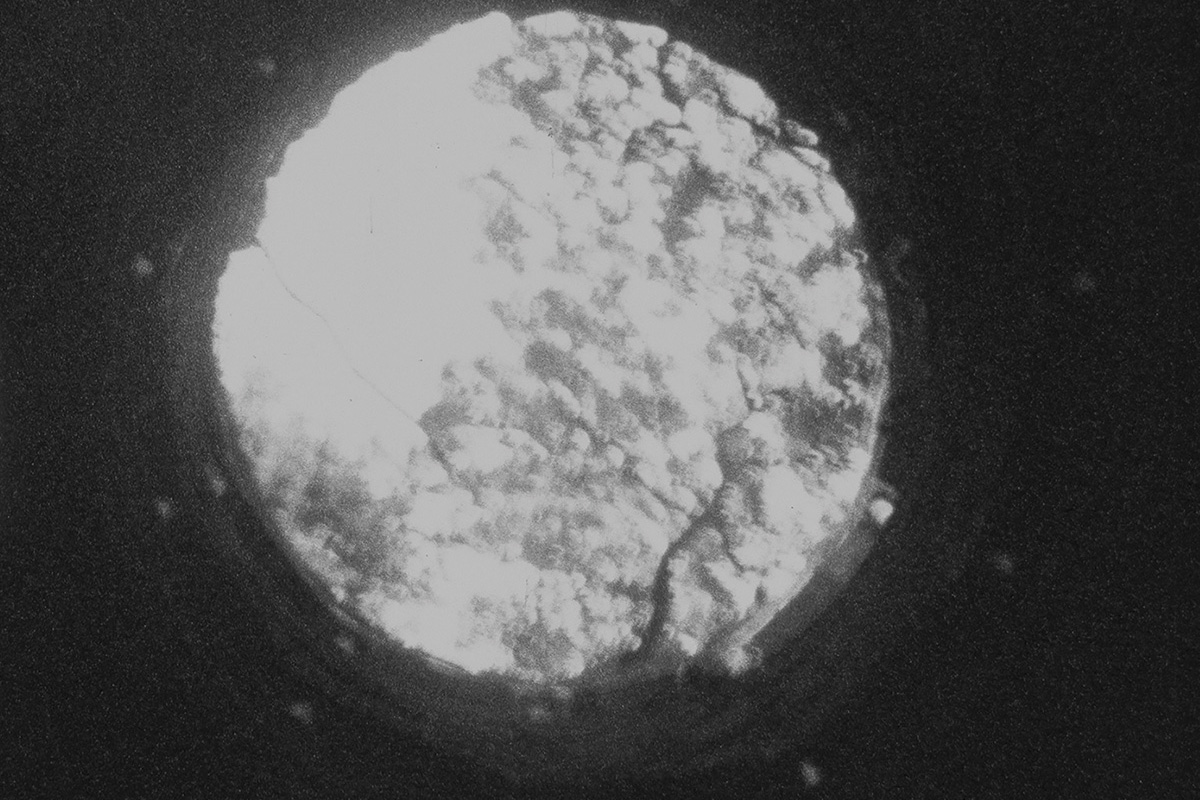
La Quinta da Regaleira, à Sintra, au Portugal, est un immense domaine qui comprend deux puits creusés dans le sol destinés aux cérémonies d'initiation. Ce film nous emmène à l’intérieur de l'un d'eux.
Chris Kennedy (né en 1977 à Easton, Maryland, et élevé à Cambridge, Maryland) est cinéaste indépendant, programmateur de film et écrivain. Il habite à Toronto. Il est le directeur exécutif du LIFT - Liaison of Independent Filmmakers of Toronto (Canada). Il a été programmateur pour le Images Festival, Toronto (Canada) de 2003 à 2006, pour Pleasure Dome, Toronto (Canada) de 2000 à 2006 et pour The Free Screen/Wavelengths de la Cinémathèque du TIFF - Festival international du film de Toronto de 2012 à 2019. Cofondateur des Early Monthly Segments, il en a été co-programmateur de 2009 à 2018. Ses films courts expérimentaux ont été projetés dans plus d'une centaine de festivals de cinéma à travers le monde, et ont fait l'objet d'expositions personnelles, notamment à l'Institut canadien du film (Canada); au Los Angeles Film Forum (USA); au Nam June Paik Art Center, Séoul (Corée du Sud); à la Semana del Film Experimental de La Plata (Argentine) et à la Pacific Film Archive, Berkeley (USA). Son film "Watching the Detectives" a remporté le prix Ken Burns du meilleur film au Ann Arbor Film Festival (USA) en 2018. Il a présenté le travail d'autres artistes en Belgique, en Égypte, en Allemagne, aux États-Unis et au Canada. Il est titulaire d'un Master en arts visuels du San Francisco Art Institute (USA), où il a été cofondateur et animateur d'un forum de projection hebdomadaire. Son travail en tant qu'artiste et programmateur est toujours en dialogue avec l'histoire du film en tant qu'art, explorant la matérialité du médium dans un contexte contemporain.

Nicolas Keroulas
Tasmant
Fiction expérimentale | 4k | couleur | 23:5 | France | 2020
Une nuit, un homme étrange apparaît. Arrivé non loin des côtes, il croise le chemin d’un fantôme, qu’il se décide à suivre.
Nicolas Keroulas est né en 1997.

Roman Selim Khereddine
German Shepherds Need Heroes Too
Doc. expérimental | mp4 | couleur | 12:50 | Suisse | 2020
Dans "German Shepherds Need Heroes Too", Roman Selim Khereddine réfléchit à la popularité des bergers allemands et des bergers belges au Maroc. "Hérite-t-on de l'histoire violente de son chien?" demande-t-il, en tenant compte du fait que ces chiens ont été employés pour le travail militaire et policier dès la standardisation de ces races au début du XXe siècle. Cet essai vidéo retrace l'histoire de ces chiens en tant que moyen dans les relations hiérarchiques entre différents groupes humains, c'est-à-dire dans les camps de concentration, les colonies et les manifestations pour les droits civiques. La relation entre l’être humain et l'animal est dépeinte ici comme une relation façonnée principalement par la violence et la domination, tandis que le potentiel de responsabilité du propriétaire et du chien est remis en question. Dans ce cas, "de quelle part de votre histoire violente votre chien hérite-t-il?" Des images trouvées - vidéos téléchargées sur Youtube par des amateurs de chiens marocains, et extraits d'actualité - sont associées à un texte de réflexion, qui apparaît sous la forme de sous-titres. Dans son texte, Khereddine s'inspire de l'histoire coloniale, de la tradition islamique, de la culture populaire et médiatique, ainsi que de ses propres expériences, souvenirs et opinions.
Roman Selim Khereddine (né en 1989) est titulaire d'un Master en Histoire et en arts plastiques. Il vit et travaille à Zurich (Suisse).