Catalogue > Search
Results for : Tout le catalogue
Myrthe Baptist
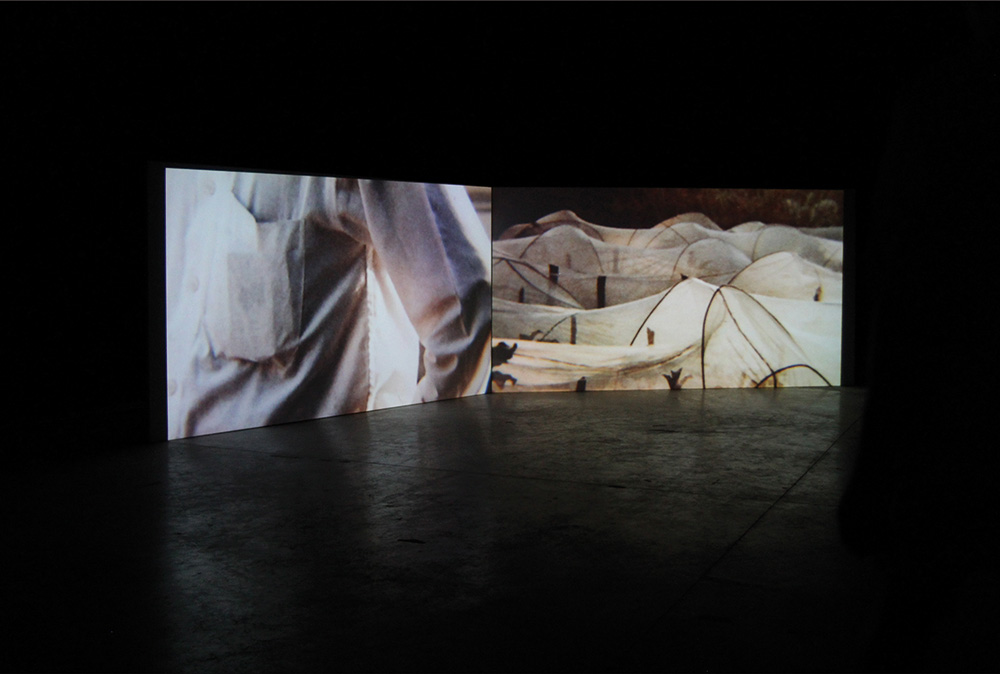
Caresse
Video | hdv | color | 6:40 | Belgium | 2019
The camera leads our gaze closely across the surface of photographs. Small details of different moments become part of a movement: the searching, caressing gesture of filming. Projected on two adjoined screens, the images move together, towards each other and away again. The gaze becomes tactile, connecting what is seemingly separated by time, by distance and by the borders of the photographic image.
Myrthe Baptist (BE, 1994) is an artist and filmmaker based in Brussels. She works mainly with moving image, often starting from photographs, notes, letters and archival material. She has obtained a Master of Fine Arts at KASK School of Arts in Ghent.
Francisco Baquerizo Racines
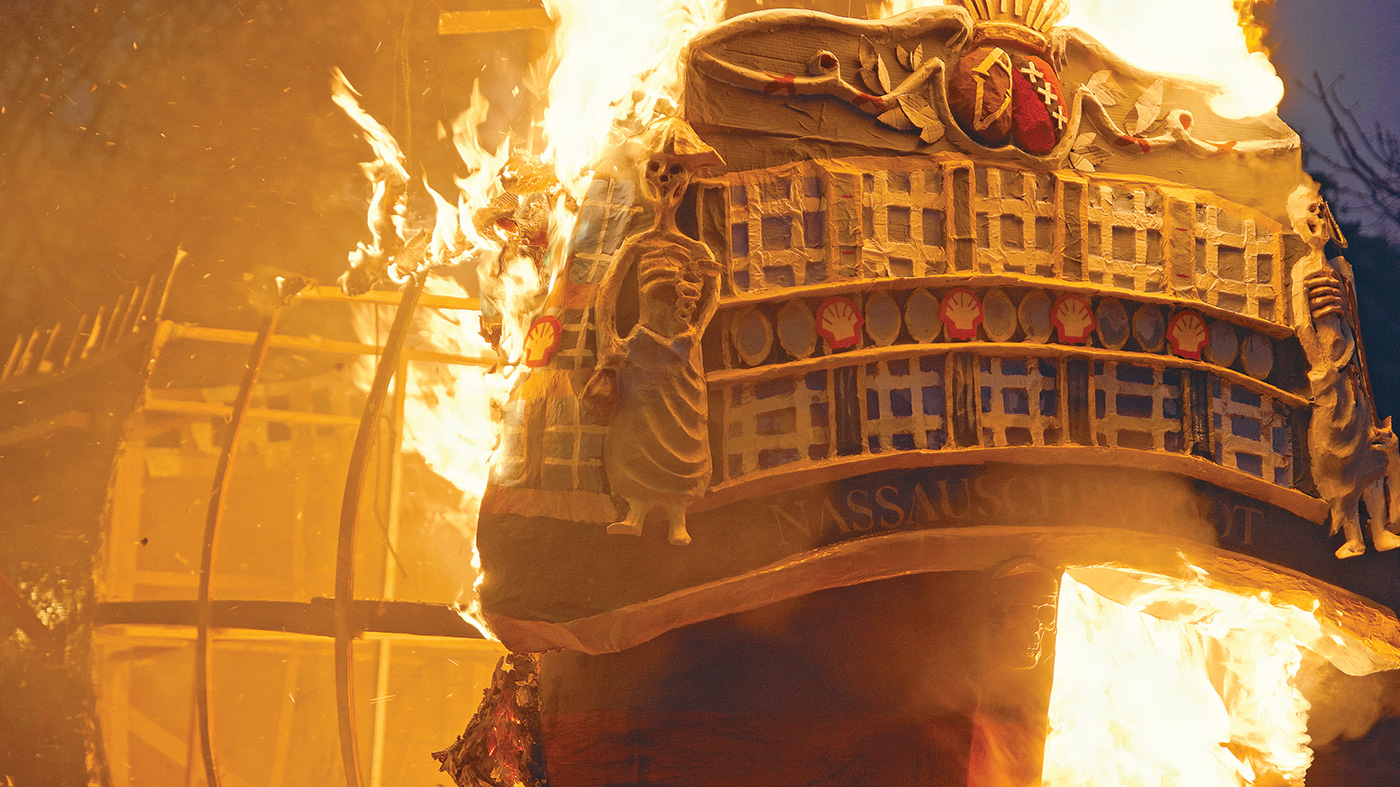
La Quema (del Planeta “B”)
Video | 4k | color | 20:50 | Ecuador | 2025
La Quema (del Planeta “B”) is a video installation that reflects on the 1624 burning and sacking of Guayaquil by the Nassau Fleet through the lens of Ecuador’s current vernacular practices—most notably año viejo, a popular custom in which effigies are collectively burned during New Year’s celebrations. This mestizo ritual resists linear narratives, offering instead an Andean zig-zag perspective on renewal through repetition. The crafting of these effigies embodies Guayaquil’s vibrant popular culture and capitalist-driven desires, while paradoxically creating space for (political) protest. In a context where sustaining artistic practices remains precarious, this tradition has also given rise to informal economies. Artists Joshua Jurado and Diego Cuesta—both based in southern Guayaquil—were invited to construct a año viejo in the shape of a galleon, inspired by the Dutch East India Company (VOC) vessel Amsterdam. Paraded through the city before being set alight, the sculpture marked 400 years since the original event, confronting historical cycles through collective action and vernacular symbolism. Filmed during one of Guayaquil’s recent peaks in violence—tied to extractivist legacies—the project brings together two temporal perspectives shaped by the same hegemonic system. La Quema (del Planeta “B”) stands as a pointed question to that very system—one that has shaped our bodies, ethics, and desires in service of capital.
Francisco Baquerizo-Racines (b. 1993, Quito, Ecuador) Currently living and working in the Netherlands. Baquerizo-Racines holds an MA in Fine Arts from HKU University of the Arts Utrecht (2022) and a BA in Visual Arts from PUCE (2017). His work has been shown across Ecuador, South America, and the Netherlands, with projects held in the MACBA archive and supported by the Mondriaan Fonds. In 2025, his film installation La Quema (del Planeta “B”) premiered at the 54th International Film Festival Rotterdam (IFFR).
Saulius Baradinskas
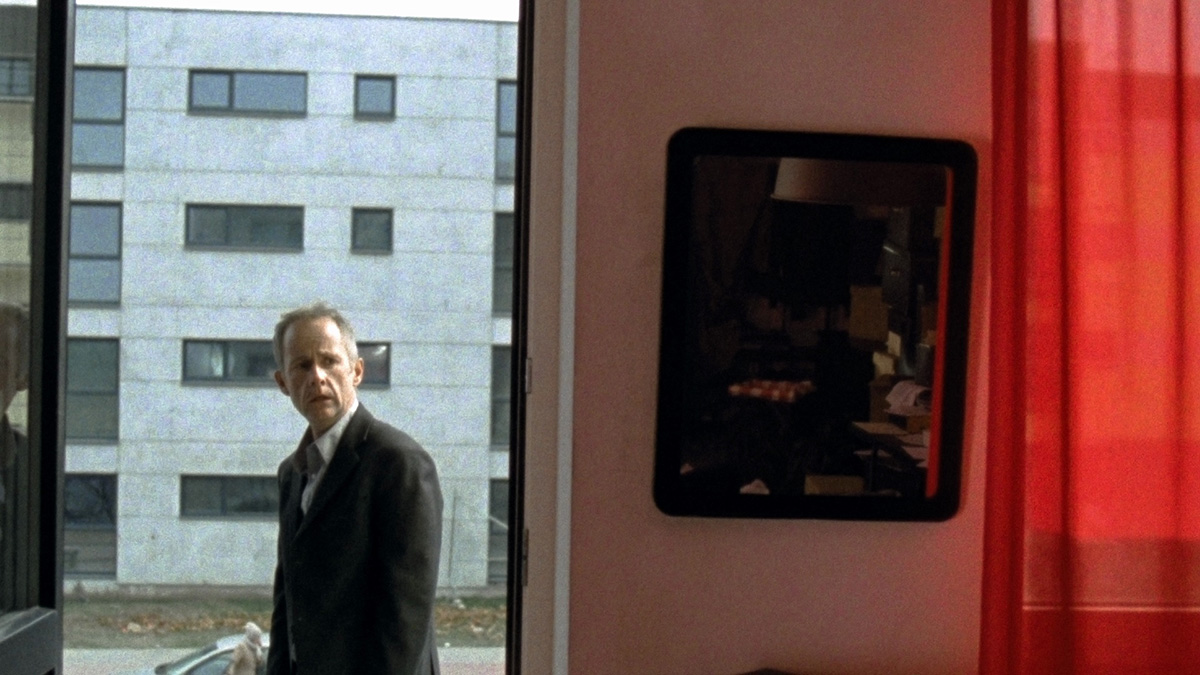
Golden Minutes
Fiction | 16mm | color | 10:0 | Lithuania | 2019
Driven to the edge by a huge debt and his impending divorce, a poetic accountant decides to kill himself but is rescued by a heart attack.
Saulius Baradinskas (born on September 19, 1990) is a film, commercial & music video director from Vilnius, Lithuania. ?Saulius is noticed for directing music videos that already got recognition in the Baltic states. In 2018 annual music video awards Saulius was selected as a best director of the year and won best music video award for directing.
Christian Barani
Entre-temps
Experimental doc. | dv | color | 31:30 | France, Nepal | 2006
A march in the valley that bypasses the Manaslau. The ghostly but genuine presence of the Maoists prevents the artist from filming during the first few days. Then the militaries disappear and the image can exist. A super8 camera captures the time of the march during which the mind slides, is fragmented, loops, is moved, and the video camera records the unfolding of time.
Christian Barani's conception of his artistic carreer is that of a go-between, crossing the realms of direction, diffusion, and transmission. As a video artist, he decided in 1997 to enter the documentary sphere for ethic and political stakes, and for other stakes linked to the representation of the human being in his daily actions. This research is based on a filming apparatus that transforms the shot into a performative act. The narration develops in fragments. Christian Barani's videos are presented in Europe and abroad. He regularly collaborates for the Arte research workshop. As a teacher, from 1990 to 2006, he directed the video studio at the Ecole Nationale Supérieure de Création Industrielle of Paris, as well as workshops, conferences, and did research in experimental forms of educating. In the area of diffusion, he co-founded an association for the diffusion of artists' videos, 'Est-ce une bonne nouvelle'. These programs/diffusions are presented in France and throughout the world.

Christian Barani
Dans la fumée d'une peau
Experimental doc. | hdv | color | 12:30 | France, South Africa | 2018
Christian Barani
My Dubaï Life
Experimental doc. | 0 | color | 60:0 | France | 2011
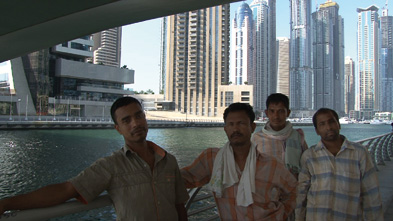
In his work, Christian Barani questions and deconstructs the documentary's codes. It is not question of representation of the reality nor fiction but the experience. By summoning the walking and the drift, he involves another process of creation which generates a representation without a priori. He plays with fate and improvisation. No sequence is recorded twice. On the occasion of an exhibition entitled "Manifesto about the invisible cities", Olivier Marboeuf suggests to Christian Barani to direct a "drift" in Dubaï. This approach, appropriate for the artist, consists in walking in landscapes and cities. In this case, Dubaï is a town where nothing is thought for the moving body, a town built for and by the influx. It's a question of walking to get lost in these fiction spaces, and to build from the fate.
Christian Barani, born 1959, works and lives in Paris. He starts working with video in 1990, and founds the Moving Image department at the Nationale Supérieure school of Industrial Creation where he's been teaching for 17 years. In 2000, he co-founded a structure of artists' videos broadcasting, "estceunebonnenouvelle" bringing together a hundred of international artists and a collection made up of 500 movies. Inlaying, link to painting and poetry make up the axis of research of his first videos. Since 1997, his work questions and deconstructs the codes of documentary, through an experience engaging a body/camera in space, not a documentary nor a fiction. He directs linear movies, art installations, performances... His work has been shown in numerous festivals, museums and art centers in Europe, notably at the Centre Pompidou, at the Jeu de Paume, at the Lieu Unique in Nantes, at the MUSAC Museo de Arte Contemporaneo de Castilla y Leon, at the National Museum Reina Sofia.
Christian Barani, reynard guillaume
kazakhstan, naissance d'une nation
Experimental doc. | dv | color | 64:0 | France, Kazakhstan | 2008
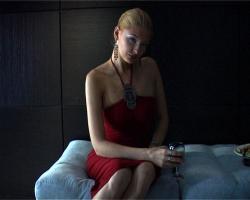
In 1998, seven years after the independence of the country, autocratic president Kazakh Noursoultan Nazarbaiev decides to move the capital of Almaty to Astana, the barren plains of the north. Vertiginous towers of glass rise above ground, financed by oil exports. A presidential speech in 1997 on the future of Kazakhstan opens the film, praising the ?three social levels, the rich, the middle class and the poor?, and the infinite promises of the market. Christian Barani and Guillaume Reynard see the birth of a new social level, in the standardized tinsel and foil of richness. Attempting to represent ?the fiction which in each scene seems to have preceded reality?, until a change of scene by writer Darejan Omirbaev, they also venture backstage, a hut on a site of a recently expropriated maisonnette. A portrait of a melancholic person and poetic globalization through the ex-Soviet oligarchy, in full expansion.
Christian Barani, on his artistic path, researches into the fields of realization, diffusion and transmission. As a video maker, he decided as from 1997 to participate in the area of documentaries with ethical and political stakes. This research is based on a film which offers a plan turning a performance into a fragmented narration. Guillaume Reynard is an illustrator in Paris. He collaborates with several publishers and publishes in various newspapers (Le Monde, Libération?). Without falling under a strict or anecdotic image, his work, fact of figurative drawings, explore the bond which links human beings with places, beings with objects.
Christian Barani
des êtres de poussière
Experimental doc. | hdv | color | 18:0 | France, Nepal | 2018
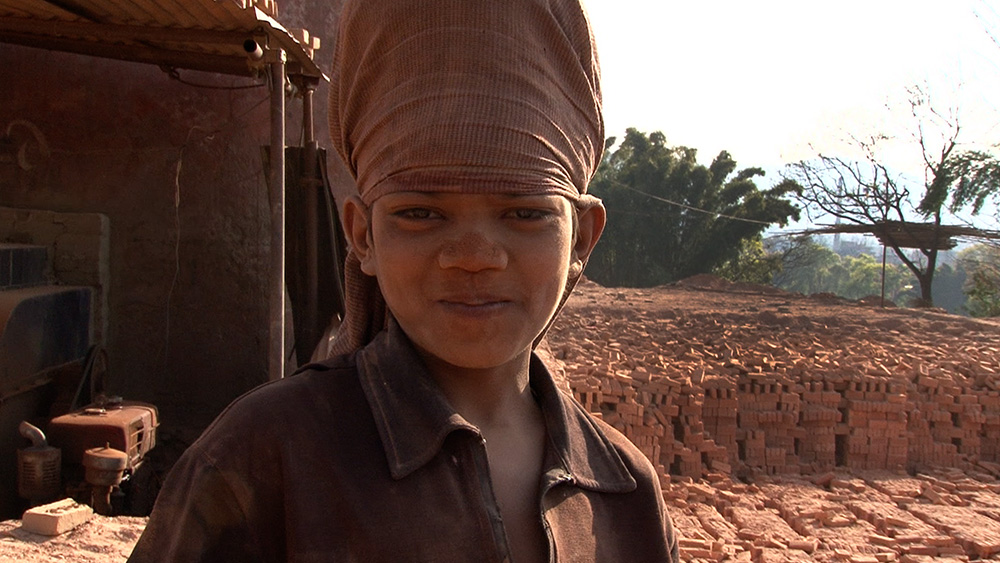
A starting point : In Upper Mustang, a very old story is told in the village of Ghemi. Despite the courage and the fighting of the villagers, every night, the demon Balmo and her spirits destroy the houses of the village. Exhausted, they decide to ask the help of a monk, the guru Rimpoche who meditated in the valley. Rimpoche then leaves his meditation and agrees to fight the demon. For seven nights the fight was monstrous. But Rimpoche won the battle. Today in the Nepalese country, the fight against the spirits that are constantly destroying the country continues. Despite a Maoist revolution that resulted in democracy, the abolition of the monarchy, the writing of a new constitution, the equality of man and woman ... the country is still a victim of destructive spirits and the Nepali people continue without stop the fight
Christian Barani is born in 1959 and lives in Paris. He ends his studies with a master?s degree in science economic in the Faculty of Nice. In the 90s, the arrival of the format DV pushes aside its relation in the images and allows him to acquire a freedom of creation and production. He builds a practice which associates the field of the documentary with the Visual Arts. Over a period of 10 years, he films in Kazakhstan with G. Reynard the social transformations of this country of Ex Union Soviétique, he films in Nepal during the Maoist revolution, in Namibia, in Ethiopia, in Cyprus, in Dubai, in the Lebanon ... His process of realization sets up a performative device which is going to generate images without in priori. It is about experience committing a body / camera walking in the space. He defines a rules of the game which composes with the coincidence and the improvisation. No preliminary scenario. Everything takes place in an instant. Never a sequence is twice shot. What is void and void. In the term of the experience, a material of images and sounds is collected. He will take various forms according to the project to come and from places of exhibition : movie in room, movie deployed in the space of exhibition, installation, performance ? He realize in parallel numerous commissioned works for museums as the House Arthur Rimbaud in Charleville-Mézières, the Royal Institute of the Natural sciences of Brussels, the Center of Culture of Rennes, Agora : biennial event of Architecture of Bordeaux, Mons Mémorial Museum in Belgium, The Museum of Confluences in Lyon, The City of the architecture and the heritage of Paris ? From 1990 till 2006, he creates to the National School of Industrial Design, the department Images in Movement, the unit of Experiment Images and Sound (Xis- with Jeff Guess, Extensions - dynamics of writings with Frédéric dumond. In 2000, he cofounds, with Véronique Barani and Sabine Massenet, a structure of distribution of videos artists " estceunebonnenouvelle " which is going to include more than hundred international artists and a collection understanding more than 500 movies
Christian Barani
Prolégomène à la lumière
Experimental doc. | dv | color | 7:0 | France, Kazakhstan | 2013
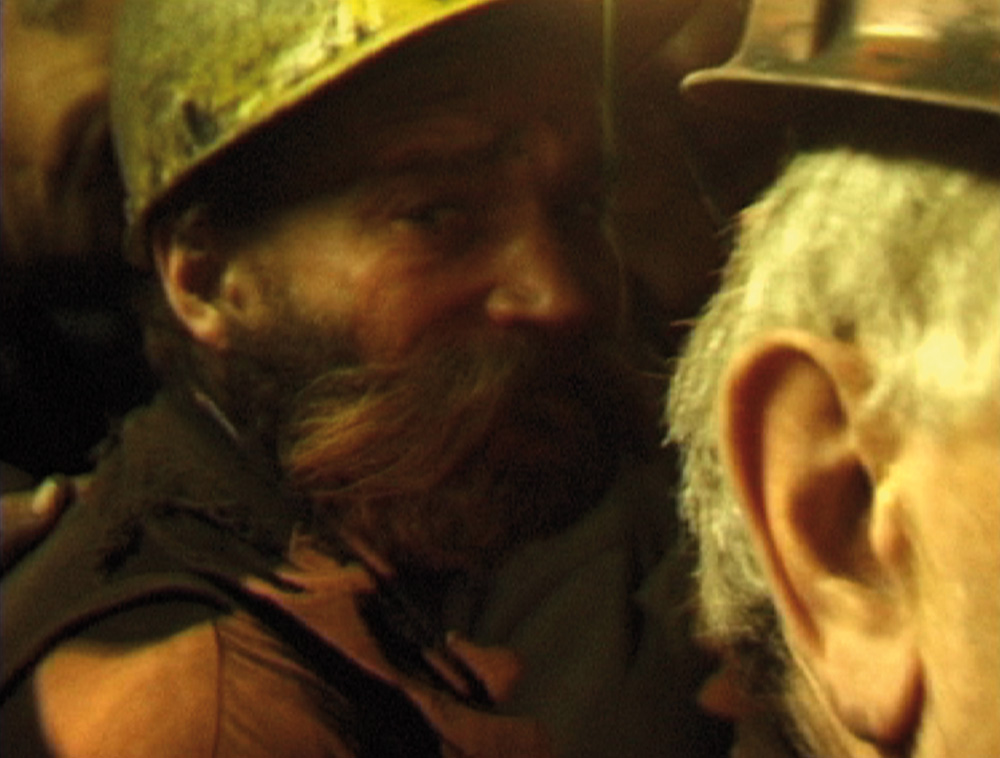
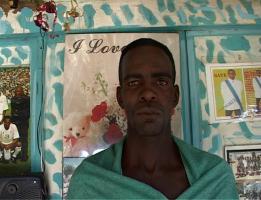
KAZAKHSTAN. Mine de Kouzembaïev dans les steppes de Karaganda. Durant l'époque soviétique, les mineurs bénéficiaient d’un très grand respect de la part du régime et de la population. Ce statut était dû aux nombreux sacrifices subis pour la construction du pays. Depuis la chute du mur, une société libérale est apparue. Avec lui, l’individualisme, le chômage et la crise. Les mines ferment les unes après les autres. Sur 28 mines présentent dans la région, seules 8 sont encore en service. Dans la mine du héros Kouzembaëv, dans cet instant qui précède la descente dans le noir, seule la lumière persiste pour honorer ces corps.
Christian Barani est né en 1959. Il construit une pratique qui associe le champ du documentaire à celui des Arts Visuels. Dans le processus de réalisation, il est question d’expérience engageant un corps/caméra marchant dans l’espace. Pour filmer, il se définit une règle du jeu qui compose avec le hasard et l’improvisation. Pas de scénario préalable. La marche est utilisée comme un vecteur de rencontres. Tout se joue dans l’instant. Au terme de l’expérience, un matériau est récolté. Il prendra différentes formes en fonction du projet à venir, des lieux d’exposition : film, installation, performance…
Christian Barani
Windhoek
Documentary | dv | color | 32:0 | France | 2005
The wandering produces an attitude, a form and makes an other city appear. The crossing of the city becomes an art performance which result is the plastic form, documentary form. The territory is represented as an experience. Each frame is shot only once. The improvisation structure and the shooting desire. The intuition makes the recording trigger pulled but with no idea of the result. Shooting becomes a performative act where the meeting with the other becomes a representation stalk. To represent this suspended moment where the instinctive relation is created, is accepted, or even refused. In this wandering, I invent a journey; I discover secret territories and adapt myself to the context. The journey includes both physical geography and my psychic relation to space and people. This drift form appears during the editing of singular ambiances linked to the urban landscapes crossed and people met. It creates an urban collage.
Christian Barani is positioning in his artistic career, as a bystander investing directing, diffusion and transmission domains. As a videaste, he decides from 1997 to intervene in the documentary sphere for ethic and politic stakes linked to the human being representation in its daily behaviour. This research is based on a shooting procedure that gives to the frame a performative act status and to narration to develop under fragment form. These videos are presented in Europe and abroad. He often collaborate with the Arte research workshop. As a teacher, he manages since 1990 the video studio at the Ecole Nationale Supérieure de Creation Industrielle of Paris, realizes workshops, conferences and research for experimental educational forms. In the diffusion domain, he cofounded an ssociation of artist?s videos ?est-ce une bonne nouvelle?. These programmations/diffusions are presented in France and abroad.
Christian Barani
je me suis enfui
Experimental doc. | mov | color | 83:0 | France, Ethiopia | 2021
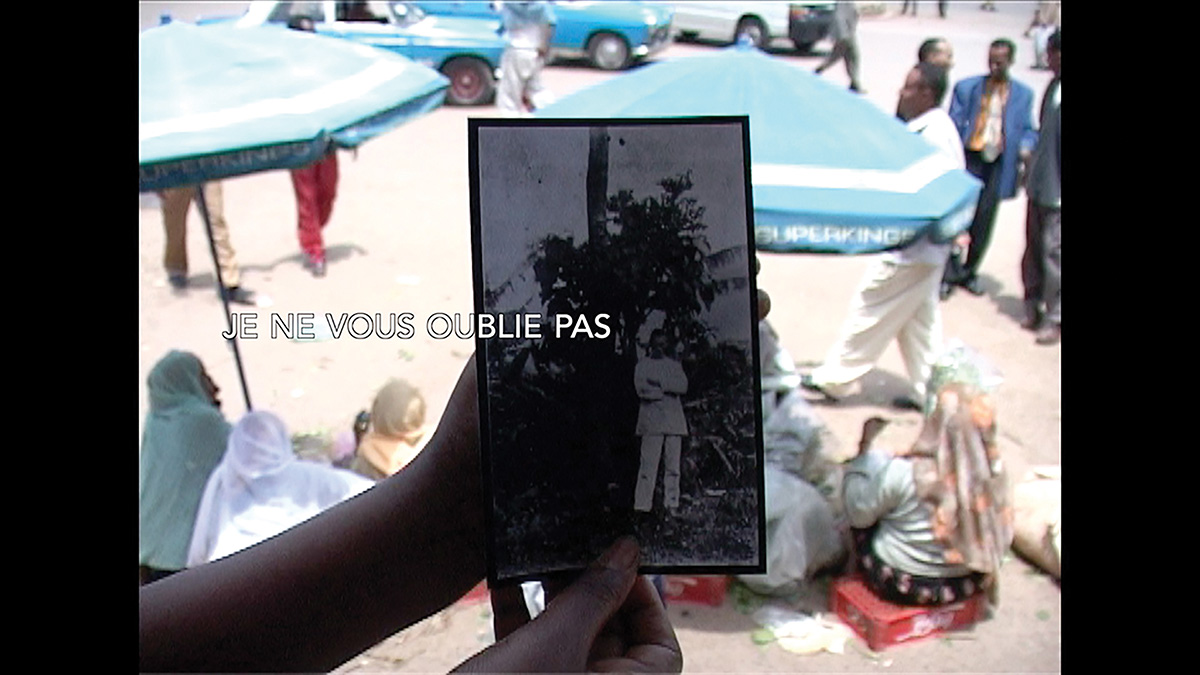
One day Arthur Rimbaud left the world of culture, tired, disappointed and angry. He does not understand, he does not admit the conventions, the lack of courage, the lack of investment of the art world. "Real life is absent," said Arthur Rimbaud. So he leaves, he leaves for an elsewhere that is less a place than an anarchic tension. He looks for chance, the unknown, the encounter, the unexpected. He now wants to practice poetry since nobody can understand his poetry. Arthur Rimbaud lived the last ten years of his life in Harar, a holy city in Ethiopia (1880-1891). In 2005, I left for Harar. Every day I walk, I get lost. I don't look for anything because there is nothing to look for. I film a contemporary Harar. In 2020, I decided to make a film out of these sequences.
Christian Barani's work takes the form of a committed realist poetry. Engaged in an improvised otherness, never sought after. His body, often lost in space, allows him to show a certain state of the world. He walks, crosses, observes, feels, analyses, meets, films. He loses himself, he drifts to find, to provoke and to create a necessary and essential link to the production of an image. He walks for long hours until he is exhausted, until he reaches the end of himself. Drifting puts him in danger. A physical and mental danger that allows, that authorises the filming of the other in his difficulty of life, in his quest for survival, in his struggle. Only at this price is it possible to welcome them. The image comes as a consequence. The forms that emerge from these experiences have no a priori. They are often diverse and take the form of film, film installation, reading projection, photographic notes and texts. They are created from the material captured and are often conceived according to the spaces in which they are exhibited.
Christian Barani
Lac Assal
Experimental doc. | hdv | color | 15:12 | France, Djibouti | 2019
In the rift valley of Djibouti, in the black of volcanic rocks, men are waiting. In this desert, a few years before, the production of salt organized life. Since the competition has won. On the shores of Lake Assal, resistance fighters go in search of salt concretions hoping to sell them to the few tourists who would come to contemplate the blue of the lake.
Christian Barani was born in 1959, lives in Paris. He builds a practice that combines the field of documentary with that of Visual Arts. His research is based on a performative device that engages a body/camera walking in space. It defines a rule of the game that composes with chance and improvisation and generates images without a priori. He filmed where political and social violence oppressed, drawing a portrait of the defeated over time.

Anna Baranowski, Vlad Br?teanu
Fill In The Blanks
Experimental film | 4k | color | 11:5 | Romania, Germany | 2022
Anna Baranowski and Vlad Br?teanu’s collaborative piece invites the audience to experience an intimate hypnotic induction. By making use of the hypnotic methodologies of relaxation - the sound of the sea and the soft human voice; images from the seaside, and the notions of rest and recovery that vacation recalls - the artist’s voices smoothly induce into the visitors’s consciousness local stories and realities of global warming, massive migration and economic challenges inflicted by global politics and mass tourism from Radhima, Vlora, a small village at the tip of the Albanian Riviera.
Anna Baranowski was born in Bytom, Poland in 1983. Today she lives secluded in a small village surrounded by the forests of East Germany and works on her art. In 2012, she received her diploma in media art with distinction from the Academy of Visual Arts in Leipzig. After her studies, she took part in numerous exhibitions in Germany and abroad, such as the Berlin Biennale „Forget Fear“ in 2012. She has received grants, such as the Stiftung Kunstfonds working scholarship in 2018, and in recent years has been invited to various artist residencies, such as the Greater Columbus Arts Council in Columbus, USA, to develop new artistic works. Anna Baranowski looks at historical legacies in contemporary everyday life and reflects on collective psychological phenomena of human behaviour. In the field of experimental and documentary film, she focuses on direct cinema. She always uses documentary material in her works. In addition to her own cinematic images, composed in detail, the use of archival material is a central element of her experimental films. In doing so, she uses a wide variety of sources, such as amateur recordings, NASA or military footage. By taking them out of their original context, her works release new meanings. With documentary images that depict the real world, Anna Baranowski tells fictitious stories that are irritating and contrary to obvious expectations, which is precisely why they have an inner meaning and for this very reason trigger processes - the viewer is thrown back on himself and is confronted with his own feelings. Vlad Br?teanu, born in Bac?u, in the former Socialist Republic of Romania (RSR) in 1986, currently lives and works in Berlin, Germany. Br?teanu holds a M.A. in Photography and Moving Image and a B.A. in Graphics from the National University of Arts in Bucharest. In 2016 he studied Philosophy in the Context of Contemporary Art at the Royal Institute of Art in Stockholm. His background in graphics forms the base for theoretical and conceptual considerations in which photography functions as a primary medium. Sound/hypnotic inductions, found objects, and public interventions that use playful semiotics of imagery are found in his current practice. Navigating the boundaries between public and private spaces, and finding signifiers for (in)visibility are translated into works that raise questions on precarity, fragility and stability in neoliberal societies. Research into the concept of plasticity and the effects of language are central in his artistic practice. Vlad is the co-founder of Template, an artist initiative and exhibition project that started in Bucharest in 2018 and is an alumnus of WHW Akademija in Zagreb in 2020.
Théodora Barat
On anything at all except the dark pavement
Video | hdv | color | 5:0 | France | 2011
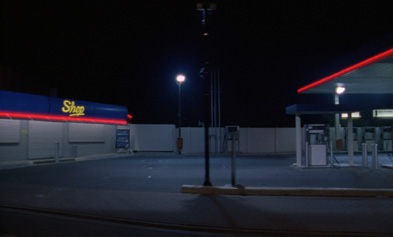
Or anything at all except the dark pavement is a tracking shot by night shot in 16mm at a Franco-Belgian border. A plan sequence in two parts. First a guarded advance into the city. An opening in the night, with neon lights as guides. The city, already vague, fades away. Obscurity follows but the lights prevent it from taking over. They redraw the contours, announcing other ?skylines?. Little by little the actions take over, isolated details from films, memories of journeys, a tribute to nocturnal outings and to roadside architecture. A fantasized vision of roadside lanscape.
Theodora Barat studied at Nantes school of art. « Fed » by trips to United States and American cinema of the fifties, her work made for installation and specially video installation. She realised in 2008 Froissée (Crumpled), the first of a serie dealing with Film Noir and its city?s representation. Underwold (2009) and Projection Frontale (Head-on Projection, 2009) will follow. This year, she direct her first film, a plan sequence in 16mm, shown both as installation and film.
Rosa Barba
Inside the Outset: Evoking a Space of Passage
Experimental film | 35mm | color | 0:0 | Italy, Cyprus | 2021
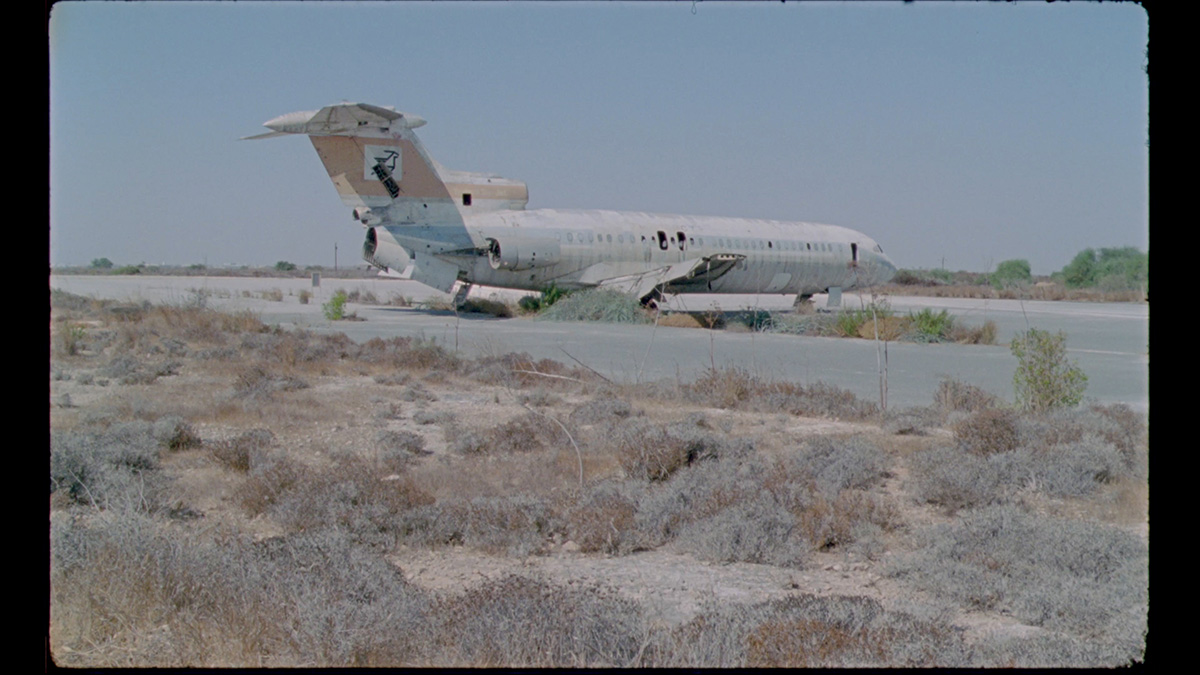
Inside the Outset: Evoking a Space of Passage is a project by artist and filmmaker Rosa Barba following an invitation by Point Centre for Contemporary Art in Nicosia and curator Mirjam Varadinis to propose and realize a project in Cyprus. The work proposed by the artist in 2013, started in 2014 and consists of two parts: a film and a long-term open-air cinema installation. The project was then presented to the Italian Council and received the first prize at the international competition (Third Edition) in 2018, and was awarded a grant from DGAAP (Directorate General for Contemporary Art and Architecture and Urban Peripheries), Italy. Barba’s film is exclusively shot in Cyprus, including underwater shots of the Mazotos shipwreck, as well as aerial shots from archaeological sites. It is an investigation into the loaded, transforming topography that is already palpable in the landscape, before we actually understand what language it creates for our society. In that, the film follows Barba’s artistic approach to examine liminal states which manifest in between contested spaces, both mentally and geographically, in order to allow for a new perspective. The inaugural screening took place in Autumn 2021 at the open-air cinema installation in the Buffer Zone.
Rosa Barba (b. 1972 in Italy) lives and works in Berlin. Rosa Barba studied at the Academy of Media Arts in Cologne and at the Rijksakademie van Beeldende Kunsten in Amsterdam. Barba’s work is represented in numerous international collections such as Collezione MAXXI Arte, Rome, Italy; Collezione FRAC Piemonte, Vercelli, Italy; Hamburger Bahnhof, Berlin; Lemaître Collection, London; Louisiana Museum of Modern Art, Humlebæk, Denmark; Museo di arte moderna e contemporanea di Trento e Rovereto, Rovereto; Museo Centro de Arte Reina Sofía, Madrid, Kunsthaus Zürich, MACBA Barcelona, Mambo Bologna, Sammlung zeitgenössischer Kunst der Bundesrepublik Deutschland Germany and Jumex, Mexico City. She has participated in group shows amongst others at MASS MoCA, USA; Akademie der Künste, Berlin; Kunstmuseum Liechtenstein, Vaduz; La Cinémathèque Française, Paris; WIELS, Brussels; Museo Nacional Centro de Arte Reina Sofia, Madrid; Swiss Institute, New York; 8th Berlin Biennale for Contemporary Art International Triennial of New Media Art 2014, Beijing, China; 19th Biennale of Sydney; International Biennial of Contemporary Art of Cartagena de Indias, Colombia; 2010 Liverpool Biennial; 52nd and 53rd Venice Biennale; 2nd Thessaloniki Biennale of Contemporary Art; Biennial of Moving Images, Geneva.

Rosa Barba
From Source to Poem
Experimental film | 35mm | color | 12:0 | Italy, Germany | 2016
"From Source to Poem" is an invitation to think about the spaces in which history and cultural production is preserved in order to be passed on to future generations. On the one hand, it pursues Barba’s research initiated with "The Hidden Conference" (2010-2015) “a three-part film work exploring museum storages and whose title refers to imaginary conversations taking place between artworks inside these invisible spaces” on the other hand, it is a reflection about the obsession of preserving any output of western culture in any possible medium. "From Source to Poem" shifts the focus from artworks into archival storage: Shot at the National Audio-Visual Conservation Center of the Library of Congress in Culpeper, Virginia, and at an enormous solar power plant in the Mojave Desert in California, it juxtaposes images from the largest media archive worldwide with a study of rhythm, and images of cultural with those of industrial production. The film exposes the preservation of cultural outputs, but also their digitisation for the future. A vast number of the archive’s holdings are sound material; a sonic memory which is recovered and mixed in the soundtrack as a mean to set in motion otherwise unlikely dialogues. Filmed and screened on 35mm film, the work itself is preserved in one of the most durable archival forms.
Rosa Barba’s work is a subtle interrogation into and co-option of industrial cinema-as-subject, via various kinds of what might be understood as “stagings”—of “the local,” the non-actor, gesture, genre, information, expertise and authority, the mundane—and removals from a social realism within which they were observed, and which qualifies them as components of the work, to be framed, redesigned, represented. The effect of which her work contests and recasts truth and fiction, myth and reality, metaphor and material to a disorientating degree, which ultimately extends into a conceptual practice that also recasts the viewer’s own staging as an act of radical and exhilarating reversal – from being the receiver of an image (a subject of control) to being in and amongst its engine room/s, looking out. (Ian White)
Rosa Barba
Aggregate States of Matters
Experimental doc. | 4k | color | 21:22 | Italy | 2019
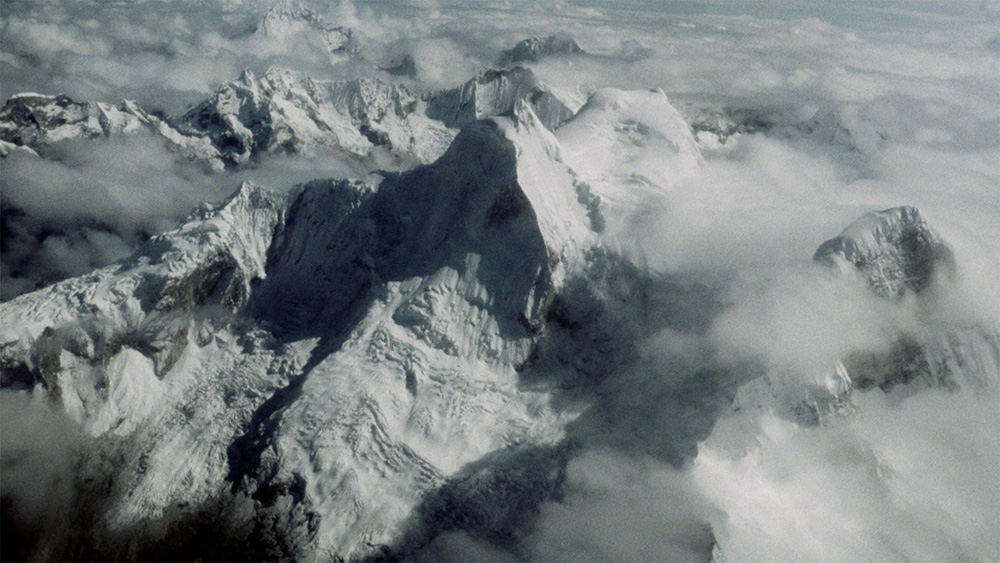
Aggregate States of Matters Rosa Barba 18' Bright Future Ammodo Tiger Short Competition Aggregate States of Matters highlights the ambiguous relationship between humans and nature. For her new 35mm film shot in Peru, Rosa Barba worked with communities that are affected by the melting of a glacier and geological time becoming exposed. Barba shows the slow disappearance of the glacier and the perception of this fact within the Quechuan population in the Andes. While exploring different local myths, she outlines the possibility of translating ancient knowledge into the present time.
Rosa Barba (b. 1972 in Italy) lives and works in Berlin. Rosa Barba studied at the Academy of Media Arts in Cologne and at the Rijksakademie van Beeldende Kunsten in Amsterdam. Barba’s work is represented in numerous international collections such as Collezione MAXXI Arte, Rome, Italy; Collezione FRAC Piemonte, Vercelli, Italy; Hamburger Bahnhof, Berlin; Lemaître Collection, London; Louisiana Museum of Modern Art, Humlebæk, Denmark; Museo di arte moderna e contemporanea di Trento e Rovereto, Rovereto; Museo Centro de Arte Reina Sofía, Madrid, Kunsthaus Zürich, MACBA Barcelona, Mambo Bologna, Sammlung zeitgenössischer Kunst der Bundesrepublik Deutschland Germany and Jumex, Mexico City. She has participated in group shows amongst others at MASS MoCA, USA; Akademie der Künste, Berlin; Kunstmuseum Liechtenstein, Vaduz; La Cinémathèque Française, Paris; WIELS, Brussels; Museo Nacional Centro de Arte Reina Sofia, Madrid; Swiss Institute, New York; 8th Berlin Biennale for Contemporary Art International Triennial of New Media Art 2014, Beijing, China; 19th Biennale of Sydney; International Biennial of Contemporary Art of Cartagena de Indias, Colombia; 2010 Liverpool Biennial; 52nd and 53rd Venice Biennale; 2nd Thessaloniki Biennale of Contemporary Art; Biennial of Moving Images, Geneva.
Maddi Barber, June Crespo
CORE
Experimental film | mov | color | 21:22 | Spain | 2022
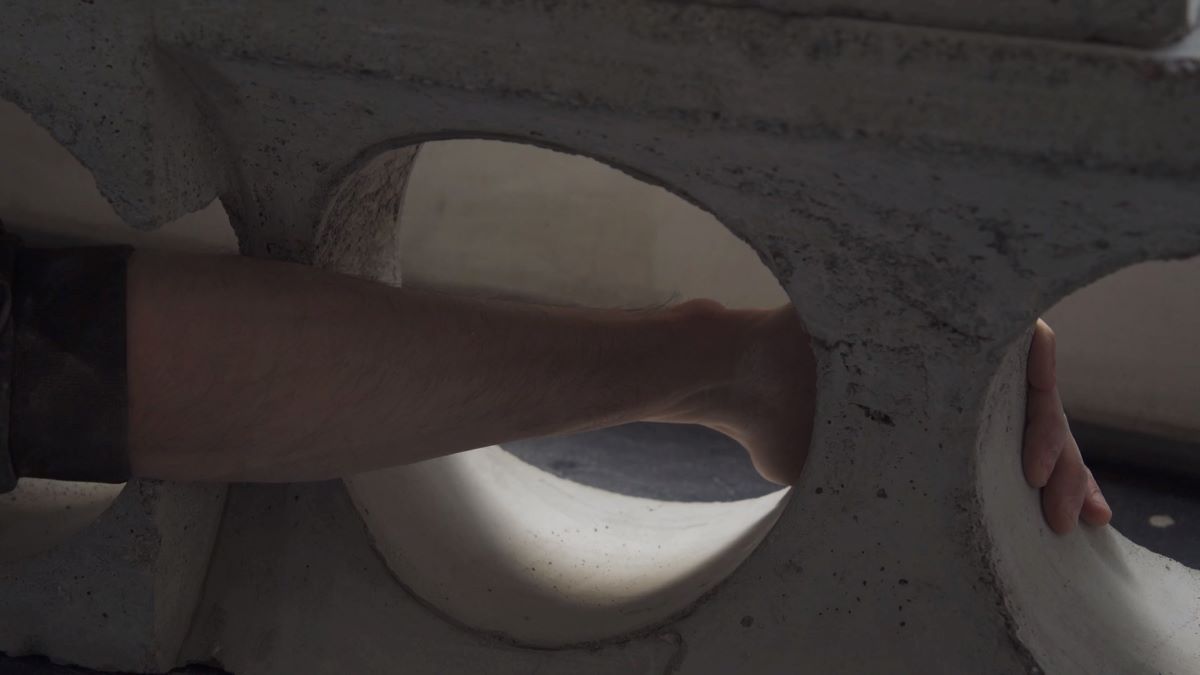
Someone is sleeping. A conveyor belt moves stones in an underground place. The stones fall through a hole in the shape of a mouth. Some hands go through a piece of concrete. Someone operates a knob that crushes the stone. In CORE, we document the different states through which the material passes: stone, dust, liquid and solid. Moving between the surface of things and underneath them, we interweave two apparently distant processes: hands traversing and manipulating cement sculptures and the process of extracting and transforming stones in a quarry. An encounter and friction between materials that is in turn the result of the meeting and negotiation of two languages, the sculptural and the cinematographic.
JUNE BIO June Crespo (Pamplona 1982) graduated in Fine Arts from the University of the Basque Country in 2005 and participated in the De Ateliers residency programme (Amsterdam 2015-2017). Her solo exhibitions include: entre alguien y algo (2022) and Ser dos (2017) at CarrerasMugica gallery, Bilbao; Helmets (2020) at Artium, Vitoria-Gasteiz; Voy, sí (2020) Heinrich Ehrhardt gallery, Madrid and No Osso (2019) at Uma Certa Falta de Coêrencia, Oporto. She has recently participated in group exhibitions such as: The Milk of Dreams, Venice Biennale 2022; Fata Morgana, Jeu de Paume (Paris) or El sentido de la Escultura at the Miró Foundation (Barcelona). MADDI BIO Maddi Barber (Valle de Arce, 1988) has a degree in Audiovisual Communication and an MA in Visual Anthropology from the University of Manchester. Her work has been shown at festivals such as Visions du Réel, FidMarseille, San Sebastian (Zabaltegi), Curtocircuito, Zinebi, Ji.hlava, Porto Post Doc and Las Palmas, among others. They have also been exhibited in museums and centres such as La Panera, Artium and the Oteiza Museum. She is currently working on the development of his first feature film, "Claros de bosque".

Maddi Barber, Marina Lameiro
Cambium
Experimental doc. | 16mm | color | 44:30 | Spain | 2024
CAMBIUM, the cellular stratum of trees, it’s a cambial membrane that runs along the trunk and roots, producing growth. In the Navarrese Pyrenees a community has decided to cut down a pine forest in order to recover ancient fields for cultivation and animal grazing. Structured in two parts, the film traces the change of a territory traversed by practices of violence and care for the land.After the abandonment of the villages during the 1960s in the Arce Valley, the Government of Franco planted pines in the fields that were used for grazing as part of a state programme of reforestation and forestry. More than 50 years later, in Lakabe, a village repopulated in the 1980s, they have decided to cut down the pines and recover their meadows for livestock. Through different data capture and image technologies, CAMBIUM explores, together with the inhabitants of the area, a territory in transformation.
Maddi Barber studied audiovisual communication at the University of the Basque Country and did a master's degree in visual anthropology at the University of Manchester. In 2019 she created the production company Pirenaika, with which she has produced some of her films as well as those of other artists and filmmakers from the nearby context such as Gerard Ortin, Ainhoa Gutiérrez and Irati Gorostidi. Her latest co-production, CONTADORES, by Irati Gorostidi, had its international premiere at the Semaine de la Critique in Cannes. She is currently participating in Tabakalera's Ikusmira Berriak residency, where she is developing the feature-length fiction film CLAROS DE BOSQUE. Marina Lameiro is a filmmaker and producer. She holds a degree in Audiovisual Communication from the URJC and a master's degree in Creative Documentary from IDEC-UPF and a postgraduate degree in Audiovisual Editing from the same university. She was part of the Collaborative Studio (CoLab) of UnionDocs in New York City as an artist-in-residence. In 2018 he released her first feature film YOUNG & BEAUTIFUL which, among other awards, won the Special Audience Award at the Punto de Vista Festival in 2018, was nominated for the Feroz Awards and has been screened in more than 20 countries. In 2021 she released DARDARA, her second feature film, which entered the list of the 10 most-seen films in cinemas after its premiere at the Punto de Vista Festival.
George Barber
What's that sound?
Experimental video | dv | color | 4:0 | United Kingdom | 2004
George Barber doffs his cap to the 20th anniversary of Scratch Video with What`s That Sound?, a mesmerizing montage of questions, answers, and the cries and screams of people caught in a disaster movie. The work uses as its starting point, the film Airport `77 where, improbably, a jumbo jet sinks to the bottom of the sea. What follows is a clever amalgamation of absurd linguistics, cries and shouts, highlighting the artist`s permanent fascination with speech, and human reaction to out-of-the-ordinary situations.
Courtesy Video Data bank
www.vdb.org
"What`s that Sound?" is a piece started in 1989 but not finished until 2004. The piece is a re-working of "Airport 77" disaster movie. The Artist focuses on a scene where the occupants of a plane, stranded at the bottom of the sea, are listening desperately for any signs of rescue. Vincent Price and Jack Lemmon star. Slowly a link is made between the audience listening - and those on the plane listening. We struggle like them to hear and are drawn in. The extraneous sounds of life start to become part of the work."
Courtesy www.luxonline.org
"George Barber was born in Guyana in 1958. He studied at St Martins and Slade Schools of Art, London. He was a founder member of ZG Magazine and a leading figure in the Scratch Video phenomenon of the 80s, which exploited newly available video-editing technologies and their potential for rhythmic-editing and moving-image collage. His current work is visually striking and sometimes disturbing, and often concerned with human behavior in unusual situations. He was once described by Art Monthly as, "The Henry Ford of independent video." Courtesy Video data bank
Nora Barbier
Les Yeux bleus cheveux noirs
Experimental fiction | hdv | color | 14:31 | France | 2017
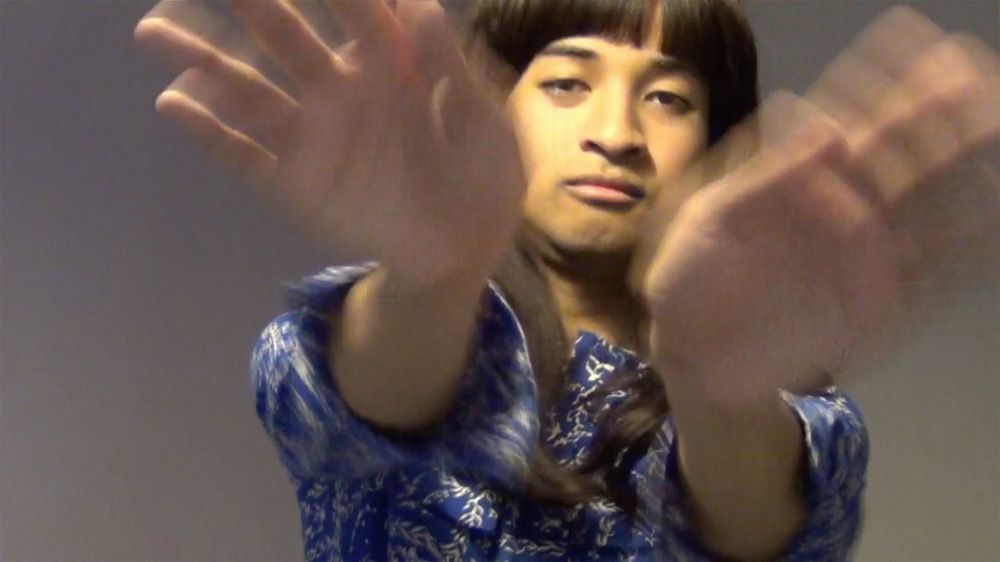
Deux amis se filment dans Shanghai. Librement inspiré du livre éponyme de Marguerite Duras, Les Yeux bleus cheveux noirs est un film sur le regard,le désir : une lutte silencieuse dans laquelle la retenue l’emporte sur ce qui est livré.
Nora Barbier est née en 1988. Après des études en philosophie contemporaine (Philmaster ENS et EHESS) et en études de genre (M2 de l’Université Paris 8 Saint-Denis), elle a travaillé comme attachée de production de cinéma pour Capricci. Sa première exposition personnelle, Life is so Easy, a eu lieu au Bazaar Compatible Program à Shanghai en 2016.