Catalogue > Search
Results for : Tout le catalogue
Salvatore Arancio
Transmission
Experimental video | 4k | color | 24:52 | Italy, France | 2023
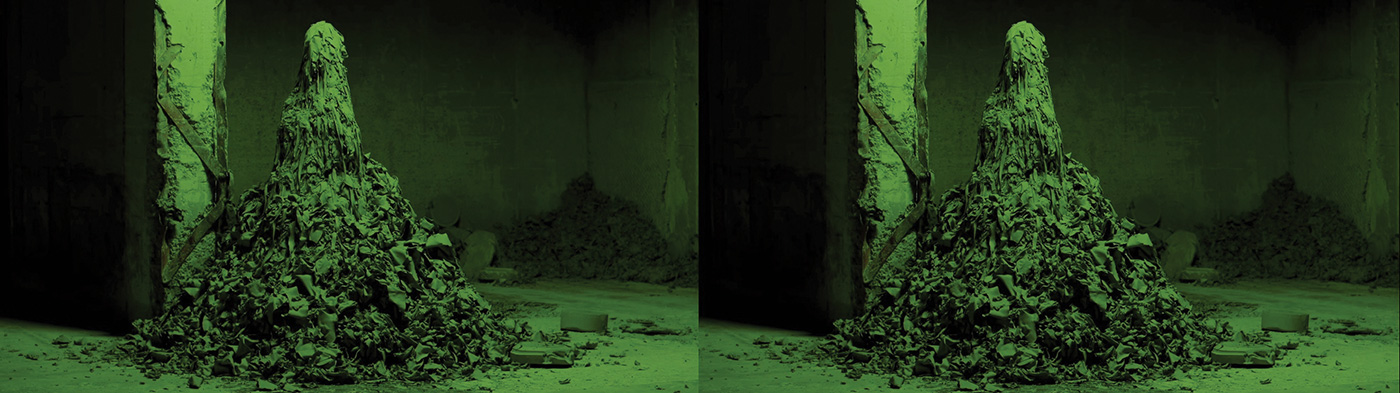
Set within the historic Ceralep factory in Saint Vallier, France, a site long devoted to the production of high voltage electrical insulators, Transmission unfolds as an environmental documentary that slips deliberately into the territory of the speculative. In this film, Salvatore Arancio transforms a seemingly prosaic manufacturing plant into a theatre of poetic estrangement, where industrial routines become choreographed gestures and machines attain the enigmatic presence of autonomous beings. Arancio’s point of departure is his fascination with the cold precision of mechanised porcelain production. What might initially appear as a linear, utilitarian process is reimagined through his lens as an almost ritualistic encounter with matter. The camera lingers on conveyor belts, extrusion devices and rotating moulds with a sense of reverence, elevating the workshop’s standardized operations into a study of form, rhythm, and transformation. At times, the film’s stark geometries and modulated lighting propel the viewer into a quasi science fiction atmosphere, where the boundary between documentary observation and visual abstraction becomes intentionally porous. The narrative arc of Transmission traces the journey of raw material, through the factory’s labyrinthine production line, ultimately emerging as the ceramic components that populate electrical infrastructures around the world. Yet Arancio refuses any didactic explanation; instead, he invites viewers to inhabit the sensorial and symbolic dimensions of the manufacturing process. The result is a meditation on energy, labour, and the complex ecologies of industry, an inquiry into how the material world is continually shaped by the interplay of human and machine. Integral to the film’s hypnotic effect is its electronic score by British musician Robin Rimbaud (AKA Scanner). Commissioned specifically for the project, Rimbaud’s composition folds together ambient tonalities with field recordings captured onsite. The hum and resonance of the factory floor become both musical texture and narrative agent, heightening the sense that the machinery is speaking in its own coded language. This sonic layering underscores Arancio’s commitment to cross disciplinary experimentation, revealing a productive friction between mechanical sound, electronic composition, and the film’s sculptural images. In Transmission, Arancio offers more than a document of industrial manufacture or a site of labour, but as an arena for imagining alternate relations between technology, environment and artistic vision.
The main interest at the centre of Salvatore Arancio’s artistic practice lies in the potential of images. Particularly in how images and their meaning can be re-framed or re-viewed. Each facet of his practice contains an intertwining juxtaposition of the roots and representation of images: natural and artificial, mineral and vegetable, scientific and mythological. Departing from their literal meaning, through the use of a range of media such as ceramics, etching, collage, animation and video, Arancio creates new juxtapositions that are both beautifully evocative and deeply disquieting, aiming to create a sort of atlas of confusion. He participated to the following biennals: Esposizione d’Arte Internazionale, La Biennale di Venezia, Venezia, Italy (2017); BI-CITY Biennale of Urbanism/Architecture, Shenzen, China (2020); Biennale Ceramica – 60° Premio Faenza, MIC, Faenza, Italy (2018); Gyeonggi International Ceramic Biennale, Icheon, Korea (2017); Manif D’Art 5, The Quebec City Biennal, Quebec, Canada (2010); Prague Biennale 4, Karlin Hall, Prague, Czech Republic (2009).

Mauricio Arango
EVERYTHING NEAR BECOMES FAR
Fiction | hdcam | | 11:0 | Colombia | 2012
Everything Near Becomes Far follows a day in the life of a couple living in a cabin nestled deep within the Andes mountain range in Colombia. They begin their day as usual, but something seems strange to the woman. A fearsome group of men awaits them. An atmosphere of dread develops gradually through the sounds and silences, a looming landscape and the threatening visions of wild animals observing the main characters from the distance. The film`s title is inspired by an observation the poet Borgues made on Goethe: ?Alles Nähe werde fern, everything near becomes far. Goethe was referring to the evening twilight. Everything near becomes far. It is true. At nightfall, the closest to us seems to move away from our eyes. So the visible world has moved away from my eye, perhaps forever. Goethe could be referring not only to twilight but to life. All things go off, leaving us. Old age is probably the supreme solitude -except that the supreme solitude is death?.?
Mauricio Arango was born in Colombia and lives and works in New York. He is an alumnus of the Independent Study Program at the Whitney Museum (New York, 2007), was a resident at the International Academy of Fine Arts in Salzburg (2005), Austria and earned an MFA from the University of Minnesota (2003). He is a fellow at the MacDowell Artist Colony, USA. His films and works have been shown in multiple festivals and screened in more than twenty countries including New Directors/New Films at the Lincoln Film Society and The Museum of Modern Art in New York, Kino Der Kunst in Münich, VideoBrasil in Sao Paulo, IndieLisboa in Portugal. He has received support from the Foundation for Contemporary Art, New York; Rooftop Films, New York; and The Bush Foundation for the Arts, USA, among others.
Mauricio Arango
Seafarer
Experimental film | mov | color | 26:0 | Colombia, USA | 2020
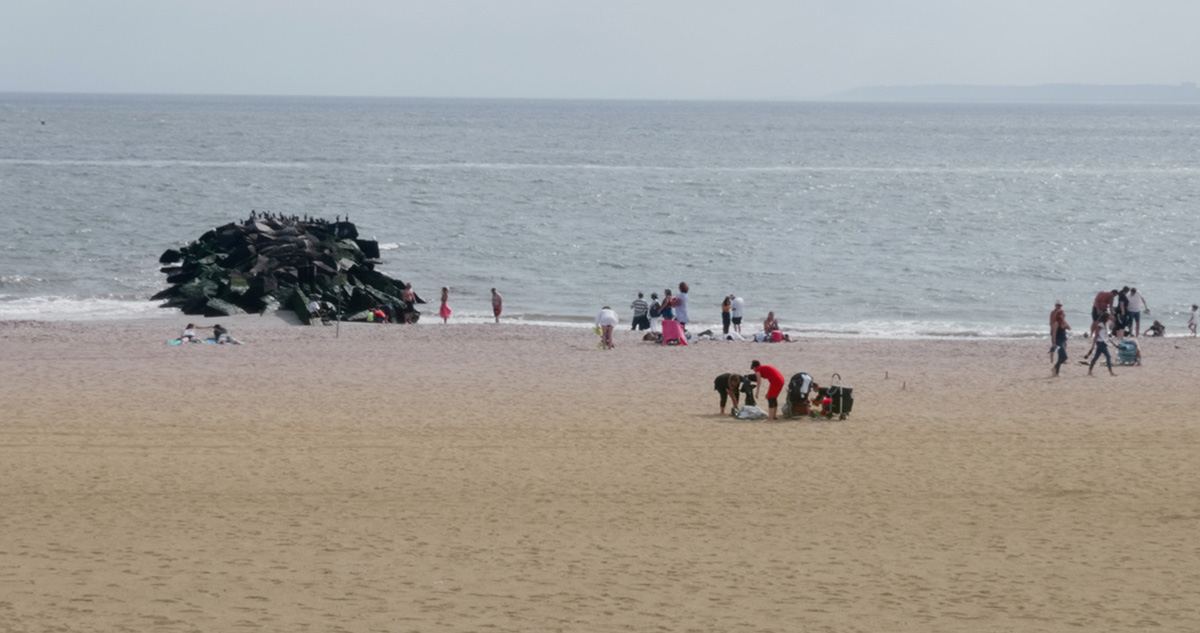
Seafarer is an experimental narrative film. It combines an essayistic style with field recordings, fragments of visual studies, experiments with actors, and fictionalized reflection on artistic production rooted in personal experience. It presents a single monologue over mostly long-take shots depicting quotidian moments shot across New York City: a sunset over the Hudson River; people at the beach; a film projected in a movie theater; golfers at a course in Chelsea Piers, and so on. The visual montage is linked by a ruminative, first-person voiceover by Miami-based singer, Little Annie, who performs the character of an anonymous film director. Her haunting words, spoken with humor and earnestness, offer a meditation on the cracks in her life as an artist. They touch on a variety of topics, including our ambiguous relation with capital, the complex relationship between actors and directors, the experience of being in a cinema, and the periods when new ideas are scarce. Seafarer keenly elicits tensions between observer and creator, and what is scripted and what is captured by chance.
Mauricio Arango was born in Bogotá, Colombia and lives and works in New York City. He is an alumnus of the Independent Study Program at the Whitney Museum and has participated in residences at Headlands Art Center in San Francisco, the MacDowell Artist Colony, USA; Museo El Barrio, New York. He earned and MFA from the University of Minnesota. His films have been screened at art and film festivals including New Directors/New Films at the Lincoln Film Society and The Museum of Modern Art, New York; Kino Der Kunst, Münich; VideoBrasil, Sao Paulo; FiD Marseille, Rencontres Internationales, Paris; IndieLisboa, Lisbon. He has received awards in the form of financial support from institutions including The Foundation For Contemporary Art, New York; RivieraLab Coproduction Fund, Mexico; Secretary of Culture, Colombia; Filmmakers Fund, Rooftop Films, New York; Matt Robert Arts, London; Bush Foundation For the Arts, Saint Paul, USA; The Jerome Foundation, New York; the National Fund for the Arts from the National Association of Latino Artists and Communities, USA; and The Minnesota State Arts Board, among others.
Vasco Araujo
Augusta
Art vidéo | dv | color | 8:55 | Portugal | 2008
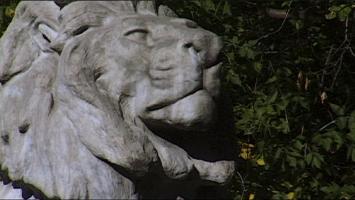
Augusta, 2008 Video Duration: 7?23?? Text: Based on Aristofanes comedy ?The Birds?. Voices: Peter Shaw; Walter Bilderback Variable dimensions The video is reflection of the power abuses and political ideologies in the world through a conversation of two stone lions about a new place to live.
BIOGRAPHY Vasco Araújo was born in 1975 in Lisbon, the city where he continues to live and work. He completed his first degree in Sculpture in 1999 at FBAUL (Lisbon University School of Fine Art), and attended the Advanced Course in Visual Arts at Maumaus in Lisbon, from 1999 to 2000. Since then, he has participated in various solo and group exhibitions both in Portugal and abroad, also taking part in residency programmes, such as The University of Arts, Philadelphia (2007); Récollets, Paris (2005); and the Core Program (2003/04), Houston. In 2003, he was awarded the EDP Prize for New Artists. Amongst his solo exhibitions have been Eco (2008), Jeu de Paume, Paris; About being Different (2007), BALTIC Centre for Contemporary Art, U.K.; Pathos (2006), Domus Artium 2002, Salamanca; Dilemma (2005), S.M.A.K., Ghent; L?inceste (2005), Museu do Azulejo, Lisbon; The Girl of the Golden West (2005), The Suburban, Chicago; Dilema (2004), Museu de Serralves, Porto; Sabine/Brunilde (2003), SNBA, Lisbon. Amongst his group exhibitions, the most important have been his participation in the "Em vivo contacto", 28º Bienal de S. Paulo, Brazil; ?Experience of Art?, La Biennale di Venezia. 51st International Exhibition of Art, Venice; ?Dialectics of Hope?, 1st Moscow Biennial of Contemporary Art, Moscow, (both in 2005); Solo (For Two Voices), CCS, Bard College (2002), New York; ?The World Maybe Fantastic? Sydney Biennial (2002), Sydney; Trans Sexual Express, Barcelona (2001), a Classic for the Third Millennium (2001), Centre d?Art Santa Mònica, Barcelona. His work has been published in various books and catalogues and is represented in several public and private collections, such as at the Centre Pompidou, Musée d?Art Moderne (France); Fundação Calouste Gulbenkian (Portugal); Fundación Centro Ordóñez-Falcón de Fotografía ? COFF (Spain); Museo Nacional Reina Sofia, Centro de Arte (Spain); Fundação de Serralves (Portugal); Museum of Fine Arts, Houston (USA).
Vasco Araujo
Hereditas
Experimental video | dv | color | 12:0 | Portugal | 2006
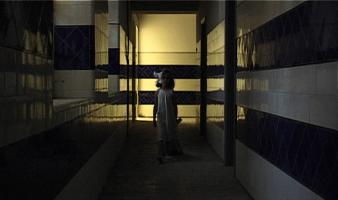
Hereditas, this piece confronts us with a paradox. The action is intriguing, and the location suggests something strange, yet magical. A child comes out of the forest?s depths and, with guileless steps, leads us into a dilapidated sanatorium?s long, empty corridors, in a timeless, lonely, sometimes spectral itinerary. The paradox lies in the simple, straightforward way the mountain?s findings are handled. It represents an encounter with something essential, thought hidden, and which may reveal itself with a surprising cruelty, harsher than death itself. Hereditas it is a work on childhood, loneliness, pain, love, death and the desire for knowing and understanding the great enigmas and interrogations of our human, all too human condition.
Vasco Araújo was born in 1975 in Lisbon, the city where he continues to live and work. He completed his first degree in Sculpture in 1999 at FBAUL (Lisbon University School of Fine Art), and attended the Advanced Course in Visual Arts at Maumaus in Lisbon, from 1999 to 2000. Since then, he has participated in various solo and group exhibitions both in Portugal and abroad, also taking part in residency programmes, such as The University of Arts, Philadelphia (2007); Récollets, Paris (2005); and the Core Program (2003/04), Houston. In 2003, he was awarded the EDP Prize for New Artists. Selection of his solo exhibitions: About being Different (2007), BALTIC Centre for Contemporary Art, U.K.; Pathos (2006), Domus Artium 2002, Salamanca; Dilemma (2005), S.M.A.K., Ghent; L?inceste (2005), Museu do Azulejo, Lisbon; The Girl of the Golden West (2005), The Suburban, Chicago; Dilema (2004), Museu de Serralves, Porto; Sabine/Brunilde (2003), SNBA, Lisbon. Amongst his group exhibitions, the most important have been his participation in the ?Experience of Art?, La Biennale di Venezia. 51st International Exhibition of Art, Venice; ?Dialectics of Hope?, 1st Moscow Biennial of Contemporary Art, Moscow, (both in 2005); Solo (For Two Voices), CCS, Bard College (2002), New York; ?The World Maybe Fantastic? Sydney Biennial (2002), Sydney; Trans Sexual Express, Barcelona (2001), a Classic for the Third Millennium (2001), Centre d?Art Santa Mònica, Barcelona. His work has been published in various books and catalogues and is represented in several public and private collections, such as at the Centre Pompidou, Musée d?Art Moderne (France); Fundação Calouste Gulbenkian (Portugal); Fundación Centro Ordóñez-Falcón de Fotografía ? COFF (Spain); Museo Nacional Reina Sofia, Centro de Arte (Spain); Fundação de Serralves (Portugal); Museum of Fine Arts, Houston (USA).
Sol Archer
On a bare rock by the ocean you will never hear anything but birds whose cries blend with the sound of winds
Experimental film | 4k | black and white | 15:20 | United Kingdom, Netherlands | 2022
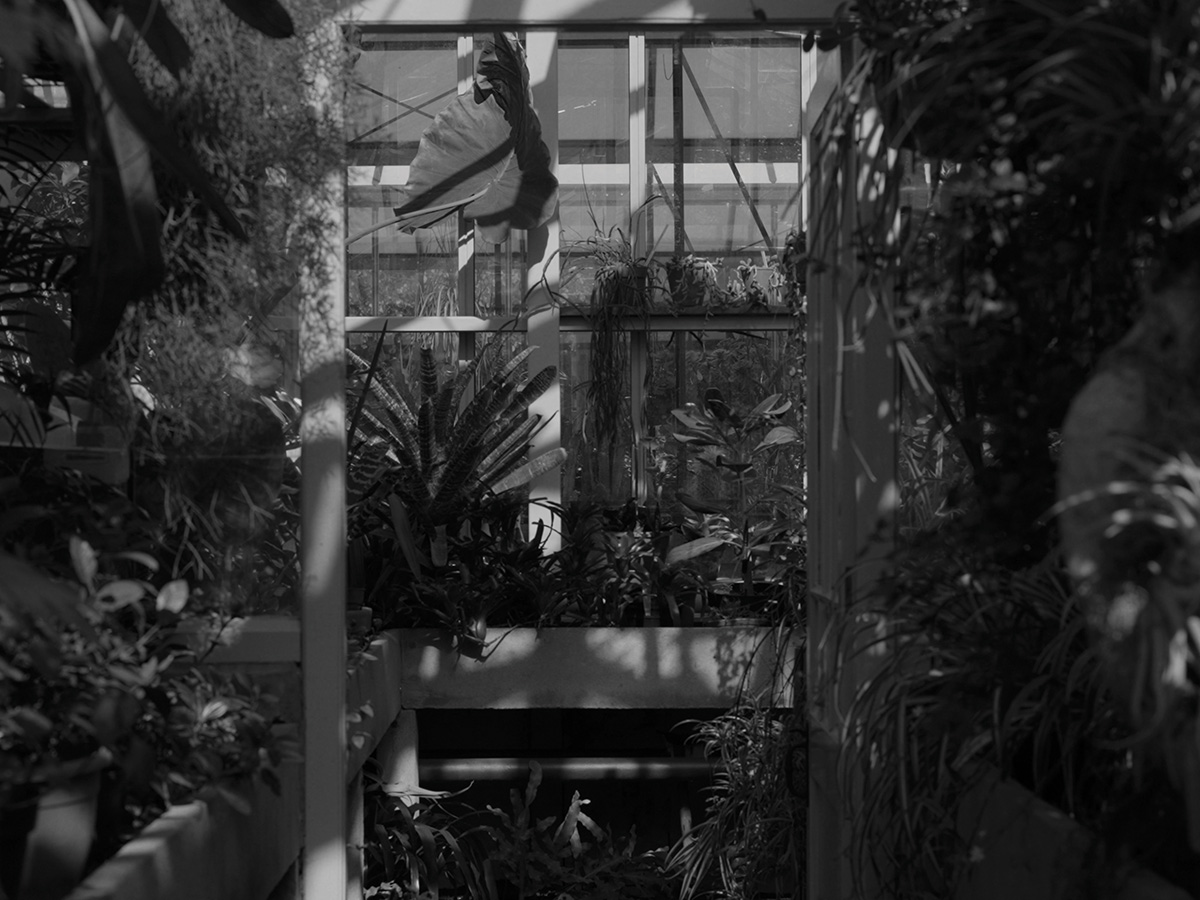
Brief Synopsis The tropical greenhouse is the pinnacle of the construction of nature as spectacle, a montage of discontinuous seasons, climates, and ecosystems, narrating ecological travelogues for the spectator passing through the hard cut of the glass door. Within, ‘nature’ is a collage inherited from the colonial period, an image practice, emergent contemporaneously with the nascent technologies of photography, and ultimately the bricolage strategy of cinema, and calling for specific relations of care and ecology building. In this film volunteers at a colonial era greenhouse in a small Dutch village collaborate to produce a sonic environment, soundtracking their maintenance labour with vocal re-creations of animal and bird calls, transcribed in the 1820s as western musical notation by Hercule Florence, the Brazilian ‘isolate inventor of photography’. Detailed synopsis This film is a work on the construction of ‘nature’ as image practice, emergent in the colonial period contemporaneously with the nascent technologies of photography, recording, and ultimately the bricolage strategy of cinema. Volunteers at a colonial era greenhouse in a small Dutch village soundtrack their labour maintaining a tropical spectacle with vocal re-creations of animal calls, transcribed in the 1820s in Brazil by Hercule Florence, the Brazilian ‘isolate inventor of photography’, whose writings pre-sage the spectacle and compression of space and time of cinematic form. The tropical greenhouse is the pinnacle of the construction of nature as spectacle, a montage of discontinuous seasons, climates, and ecosystems, narrating ecological travelogues for the spectator passing through the hard cut of the glass door. Within, ‘nature’ is a collage inherited from the colonial period, that has left us with composite ecologies, gardens, parks, and farms, montages of ecosystems and climates forming relations according to aesthetic, cultural, and commercial values and calling for specific relations of care. In the 1820s, while on the Langsdorff expedition into the interior of Brazil, Florence, employed to illustrate scientific and anthropological encounters, developed a new method for transcribing animal calls as European style musical notation. His fragments of sound were sent to the scientific institutes of the Metropole, but, the expedition ending in sickness, unrecognised. In the mid-1800s, with printing outlawed in Brazil, Florence developed a photographic process, and a rudimentary camera 15 years before Daguerre, with the aim of reproducing and publishing his work. Bound together in his writing, and in his sound and image practice ‘nature’ emerges in the 1830s as construct, as an image making spectacle, a quasi-cinematic re-assemblage of isolated elements into a sensory, and, above all aesthetic framework. “Gardens, like dreams, would seem to lose their innocence in analysis. However, dreams, like gardens, were never disconnected from the every day damage, responsibilities, and contaminations of the seemingly more “real” spaces of our lives. The dried plant specimen bound in the monograph with coloured plants may lead us from botany to rivalry and the problems of power and desire, but, in that path, the dream of the botanical monograph also shows us that the transports of pants and passionate attachments to flora hold in their train an inescapable history of the effects of imperium. Though we are implicated in the history of the dream of the botanical monograph, we cannot just disavow the botanical, claiming that it has no place, especially if we are to have a place at all in this global environment not necessarily of our own making. The problem then becomes how to re landscape the overdetermined “garden” we may most want to displace.” Jill H. Casid, Sowing Empore, Landscape and Colonisation.
Sol Archer (1983) is a Netherlands based artist working through collaboration with professional and non-professional groups, considering the encounter as a space of production. Frequently working with video, Sol is focussed on ways individuals and communities constitute themselves through their association with collective cultural activity, and how identities and histories entwine through the performance of cultural attachment. This extends into a pedagogical practice on structures and systematising group environments focussed on self reflexive film-making practices and the legacy of collaborative film practice. Sols work has been exhibited widely, including in the Sydney Biennial, Sydney, AU; Rozenstraat, Amsterdam, Golden Thread, Belfast, Northern Ireland, NL; Le Crac19, Montbeliard, FR; Index Foundation, Stockholm, SE; TULCA, Galway, IR; Le Lieu Unique, Nantes, FR; MuKHA, Antwerp, BE; and more.
Astrid Ardagh
Ishavsringen
Documentary | dcp | color | 20:36 | Netherlands, Norway | 2024
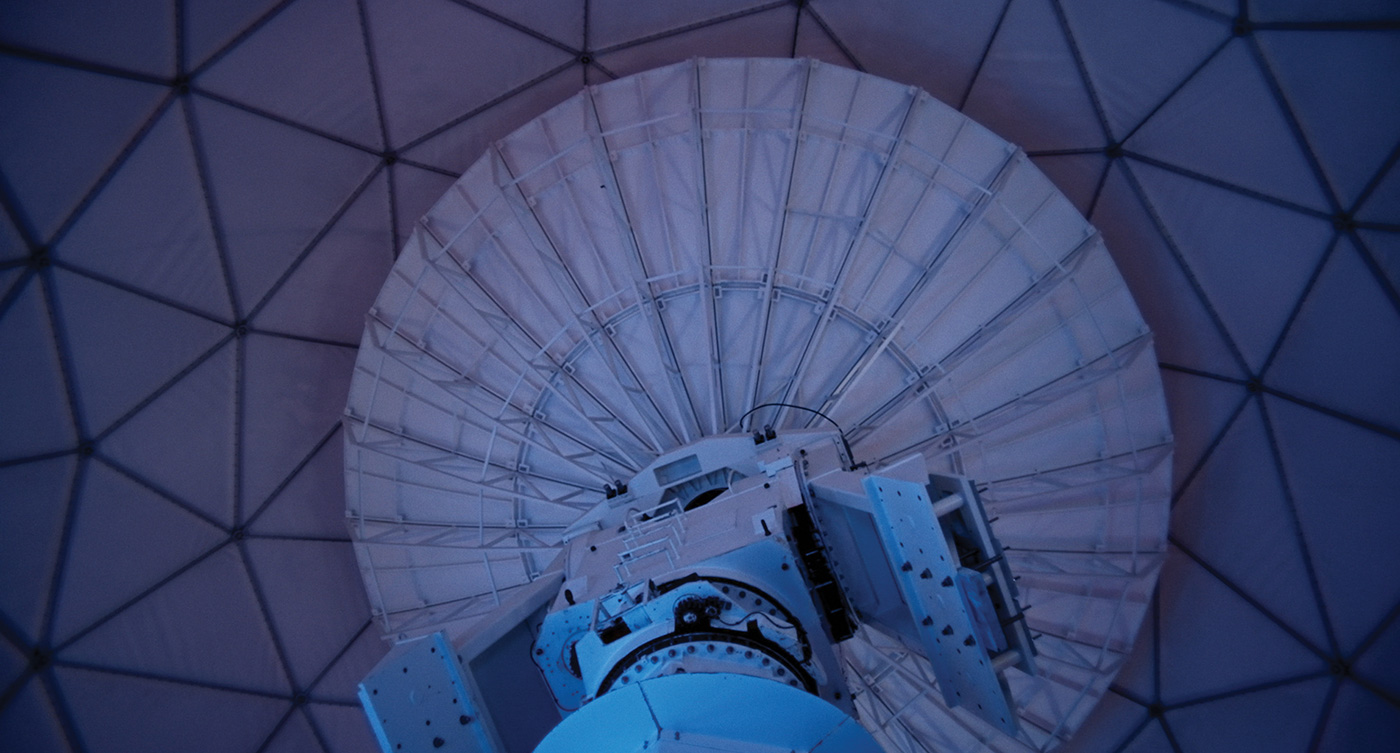
In 2022, a major Russian cyberattack left the Norwegian islands of Bjørnøya and Hopen cut off from the world. On Air traces how a small group of Norwegian radio amateurs stepped in to re-establish contact, revealing the vital role of analog technology in an increasingly fragile digital society. Seen through the curious eyes of extraterrestrial anthropologists, the film explores how Morse code and radio signals may one day safeguard our hyperconnected world.
Astrid Ardagh is an artist and filmmaker from Engeløya in Northern Norway, with a bachelor’s degree in moving images from Gerrit Rietveld Academy in Amsterdam. Her site-specific works delve into the interconnections between people and their environment in a rapidly changing world. By merging her interest in anthropology with aesthetic storytelling, her films become immersive and sensory experiences that transcend traditional human-centred perspectives. Ardagh's short films have been screened at acclaimed festivals such as Clermont-Ferrand and Kortfilmfestivalen in Grimstad, as well as galleries and art museums such as Kristiansand Kunsthall, the Eye Film Museum and the Stedelijk Museum in Amsterdam.
Argos
So Happy
0 | 0 | | 60:0 | Belgium | 2007
A selection of joyful rebellions from the Argos distribution catalogue by Anke Buxmann and María Palacios Cruz Asked to compile a screening program for the first Rencontres Internationales Paris/Berlin to be held at Madrid's Círculo de Bellas Artes, Argos decided to borrow the title from Joëlle de la Casinière?s 1973 film "So Happy" in which de La Casinière, barefoot against an abandoned and ravaged metropolitan background, promotes her book "Absolument nécessaire" ("Absolutely indispensable") in the streets of New York. Nothing is true, everything goes. Her joy, freedom, and social commitment can be found in the three videos which Argos will present in Madrid. The selected works by Charley Case, Sarah Vanagt, and Joëlle de La Casinière herself are all jubilant rebellions with the street as a common background. Revealing great sensitivity to political and social debate, the videos in this program militate for freedom of expression and movement somehow naive but absolutely joyful.
Argos is a Brussels based centre for art and media that was founded in 1989. Over the years the organisation has developed from a distributor of artists' video and film into a broader art centre incorporating functions such as exhibitions, screenings and events, production, conservation and preservation, publishing, and the development of a public media library. As an interdisciplinary centre for art and audiovisual media, the goal of Argos is to create a production, presentation, distribution, and preservation platform for contemporary Belgian and international audiovisual and visual arts, and more generally all forms of artistic expression moving on the crossing point with the audiovisual media. In a rapidly evolving social and cultural landscape, Argos wants to track characteristic developments in the audiovisual and visual arts, and the socially speaking visual and media culture as a whole, in a critical way providing a frame of reference and interpretation to the public.
Ivan Argote
Barcelona
Video | hdv | color | 5:16 | Colombia, Spain | 2014
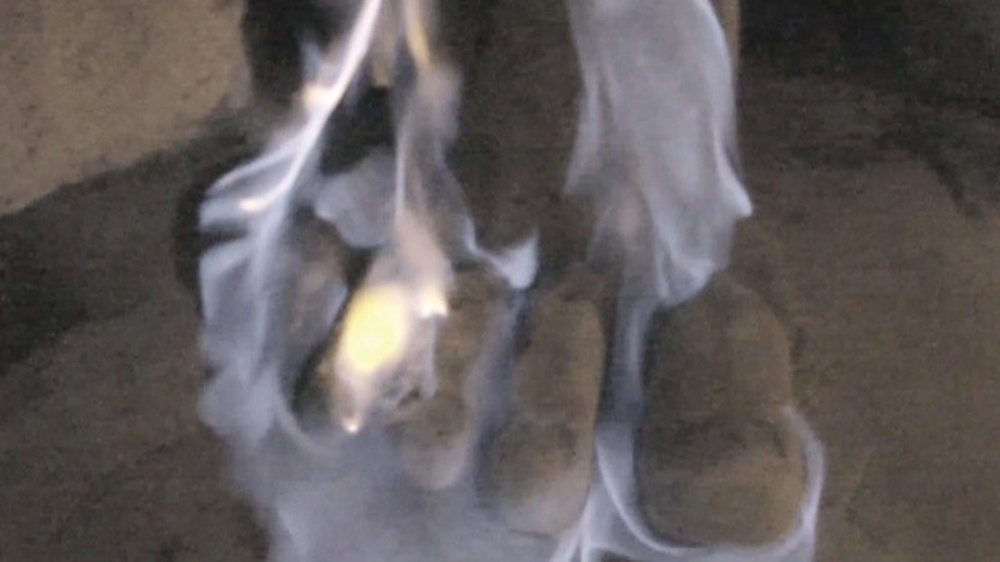
The video, set in Barcelona, shows the artist performing an iconoclastic action. During the night, using fire and a bottle of absinth, Argote sets on fire a statue representing a bishop showing the way to a native. The statue is on the pedestal of the Columbus monument, in the Christopher Columbus circle at the end of the Rambla, close to the harbour. By setting this symbol on fire, the artist shows all his disapproval of the European vision of colonisation, in which the colon is a hero.
Ivan Argote is Colombian artist who lives and works in Paris, Argote (31) deals with the way that man relates with the myriad changes that take place daily in the historical, economic, political and moral realms. His aim is to question the role of subjectivity in the revision of these concepts. Argote involves the body, and emotions in the construction of his thinking, and develops methods to generate reflexion about the way we construct certainty in relation with politics and history. By creating interventions and performances for the public space, which are sometimes further developed in the format of films and installations, the artist explores the city as a space of transformation. His works has been shown in several cities all around the world, including: Intersections, Cisneros Fountanals Foundation, Miami, 2015; Between the Pessimism of the Intellect and the Optimism of the Will, 5th Thessaloniki Biennale, Thessaloniki, 2015; Levitate, Museum Quartier, Vienna, 2015; L’éloge de l’heure, MUDAC, Lausanne, 2015; Reddish Blue (solo), DT Project, Brussels, 2014; Let’s write a history of hopes (solo), Galeria Vermelho, Sao Paulo, 2014; Strengthlessness(solo), Galerie Perrotin, Paris, 2014; La Estrategia (solo), Palais de Tokyo, Paris (2013); Un millon de amigos (solo), Galeria ADN, Barcelona (2013); Tectonic, Moving Museum, Dubai (2013); Los irrespetuosos, Museo Carrilo Gil, México DF (2013); 30th Sao Paulo Biennial, Sao Paulo (2012); Sin heroísmos, por favor (solo), CA2M, Madrid (2012); Girarse, Joan Miró Fundation, Barcelona (2012), among others.
Ivan Argote
Reddishblue Memories
Experimental doc. | 16mm | color | 11:52 | Colombia, France | 2017
Reddishblue Memories by Iván Argote, uses the artist’s affective memories as part of an ongoing project of research and speculation based on a rumor associated with the history of George Eastman’s Kodak company, and its switch from Kodachrome to Ektachrome. This was allegedly done for ideological reasons : in the late 1960’s they realized that Kodachrome pictures turned reddish with time, and in the context of Cold War decided that the United States’ archives could not end up with the enemy’s color, and so developed the Ektachrome process, in which pictures eventually turn blue. The film, which was made in Ukraine as part of an art exhibition, is narrated simultaneously in Ukrainian by Oxana Shachko founder of Femen, and in Spanish by Ivan Argote himself. In the film, many issues concerning the relationship in between colors and politics raise, as orange revolution, white and black armies, purple and red revolutions in South America.
IvaÌn Argote (BogotaÌ, 1983, lives in Paris) works explore the relationship in between history, politics and the construction of our own subjectivities. His films, sculptures, videos, collages, and public space installations temps to generate questions about how we relate to the others, to the state, to patrimony and traditions. His works are critics, sometimes anti-establishment, and deal with the idea of bringing affects to the politics, and politics to the affects with a strong and tender tone.

Iván Argote
Le Fond de la Seine
Experimental doc. | 4k | color | 16:16 | Colombia, France | 2023
What would La Seine say to us if she could talk to us? Does it remember everything we've dreamed, imagined and said about it? Its luminous passages, its dark corners? All its secrets? Words of love? Sorrows? Le Fond de la Seine speaks to us in the first person, revealing a poetic portrait of a river charged with life, luminosity, stories and dark spaces. This portrait, created using underwater and landscape images, narrated by a powerful voice and accompanied by a moving soundtrack, builds as the film progresses. From its timid source, the origin of many Paleolithic myths, through gentle, crystalline corners that slowly become a mighty mass of water, industrial road, urban passage and power that finally empties into the ocean, merging heart and soul with all the bodies of water on earth. Le Fond de la Seine speaks to us in a sensitive way, about the feelings and fantasies we project towards this river we know so well, yet which hides so much from us.
Iván Argote, Bogotá 1983, lives in Paris. Iván Argote is a Colombian artist and film director based in Paris. Through his sculptures, installations, films and interventions, he questions our relation with others, with power structures and belief systems. He develops strategies based on tenderness, affect and humour through which he generates critical approaches to dominant historical narratives. In his interventions on monuments, large-scale ephemeral and permanent public artworks, Iván Argote proposes new symbolic and political uses of public space. Argote studied graphic design, photography and new media at the Universidad Nacional de Colombia in Bogotá and holds an MFA from the École Nationale Supérieure des Beaux-Art (ENSBA) in Paris. Solo exhibitions include: 'TO MOVE AND BE MOVED', KØS Museum, Copenhagen, DK (2024); 'The Burden of the Invisible', SCAD MOA, Savannah, GE (2024); 'Prémonitions', Perrotin, Paris, FR (2022); ‘Aliens en Madrid’, Albarrán Bourdais, Madrid, ES (2022); ‘Chaflierplatz’, Dortmunder Kunstverein, DE (2021); ‘A Place for Us’, Perrotin, New York, US, (2021); ‘All Here Together’, Artpace, San Antonio, TX, US, (2021); ‘Juntos Together’, ASU Museum, Phoenix, USA (2019); ‘Radical Tenderness’, MALBA, Buenos Aires (2018); ‘Somos Tiernos’, Museo Universitario del Chopo, Mexico (2017); ‘Somos’, Galeria Vermelho, Sao Paulo (2017); ‘La Venganza del Amor’, Perrotin, New York (2017); Let’s write a history of hopes, Galeria Vermelho, Sao Paulo, BR (2014); La Estrategia, Palais de Tokyo, Paris (2013 ); Sin heroísmos, por favor, CA2M, Madrid, (2012) . Works by the artist are included in the permanent collections of numerous prestigious institutions worldwide, including the Guggenheim Museum (New York, US); Centre Pompidou (Paris, France); ASU Art Museum (Phoenix, US); Cisneros Fontanals Art Foundation (Miami, US); Colección de Arte del Banco de la República (Bogotá, Colombia); Kadist (San Francisco, US); MACBA (Barcelona, Spain).
Iván Argote
Levitate
Experimental doc. | 0 | color | 24:0 | France, Italy | 2022
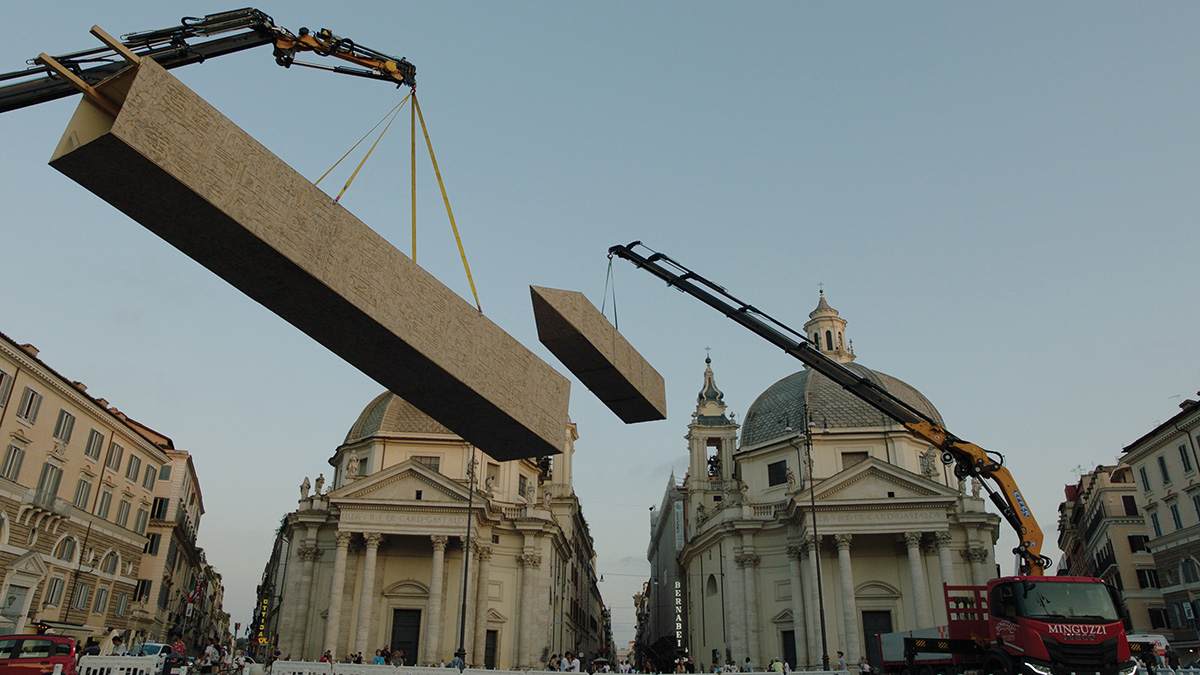
What do monuments want, do, and stand for in our memories and public spaces? Levitate, a new film by Colombian artist Iván Argote, questions the histories, functions and possible futures of colonial icons that still today define the identity of modern European cities. In what the artist calls three anticipatory actions, organized as grand-scale performances in the centers of Rome, Madrid, and Paris, we are confronted with three emblems of control and domination that still exert, undisturbed, their symbolic power from atop their pedestals. The Flaminian obelisk in the Piazza del Popolo, which came to Rome at the behest of Emperor Agustus in 10 B.C.; the statue of Christopher Columbus erected to commemorate the day of the "discovery" of the Americas; and the statue of French military officer and colonial administrator Joseph Gallieni, are suspended, displaced from their position as vertical markers of power and tools for propaganda. Their disruption, albeit ephemeral, immediately opens up a space of public discussion.
Iván Argote is a Colombian artist and film director based in Paris. Through his sculptures, installations, films and interventions, he questions our Relation with others, with power structures and belief systems. He develops strategies based on tenderness, affect and humor through which he generates critical approaches to dominant historical narratives. In his interventions on monuments, large-scale ephemeral and permanent public artworks, Iván Argote proposes new symbolic and political uses of public space. Iván Argote studied graphic design, photography and new media at the Universidad Nacional de Colombia in Bogotá and holds an mfa from the Ecole Nationale Supérieure des Beaux-art (Ensba) in Paris. His work has been the subject of solo exhibitions at Albarrán Bourdais Gallery (Madrid, 2022), Dortmunder Kunstverein (Dortmund, 2021), Perrotin Gallery (New York, 2021 & Paris, 2018), Artpace (San Antonio, TX, 2021), Asu Museum (Phoenix, 2019), Malba (Buenos Aires, 2018), Museo Universitario Del Chopo (Mexico City, 2017), Galeria Vermelho (Sao Paulo, 2017), Palais De Tokyo (Paris, 2013) and Ca2m (Madrid, 2012). Works by the artist are included in the permanent collections of numerous prestigious institutions worldwide, including the Guggenheim Museum (New York, Us); Centre Pompidou (Paris, France); Asu Art Museum (Phoenix, Us); Cisneros Fontanals Art Foundation (Miami, Us); Colección De Arte Del Banco De La República (Bogotá, Colombia); Kadist (San Francisco, Us); Macba (Barcelona, Spain).
Josefin Arnell
Wild Filly Story
Experimental fiction | mp4 | color | 22:0 | Sweden, Netherlands | 2020
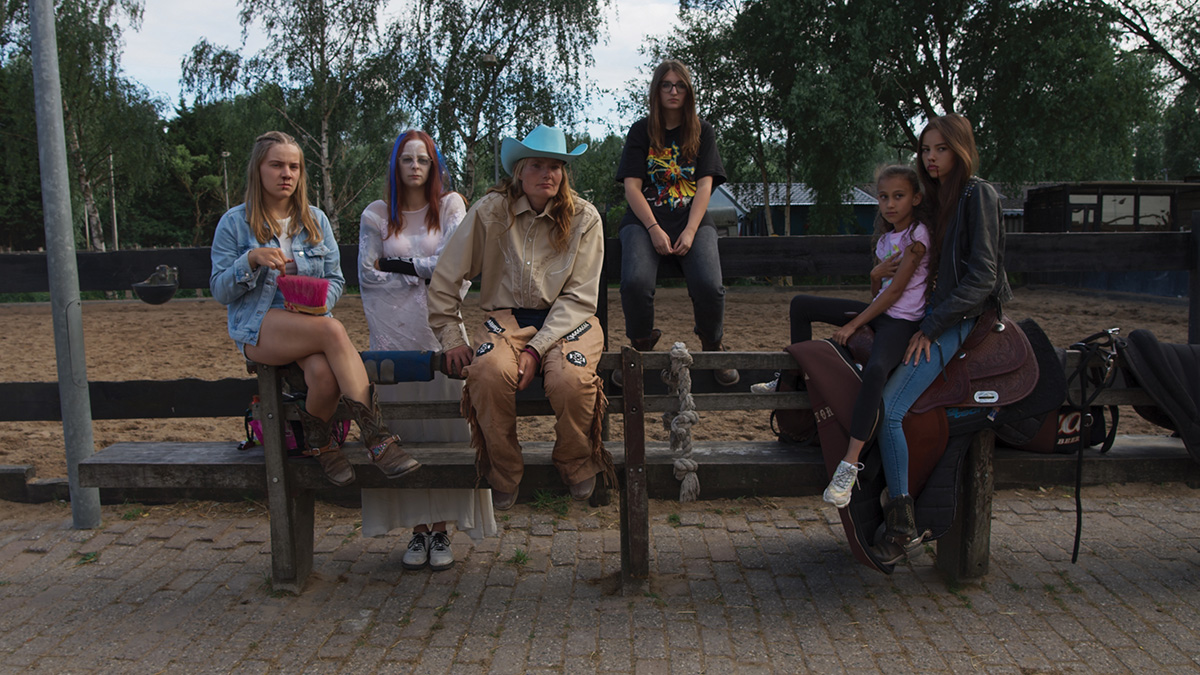
Wild Filly Story is starring a pack of adolescent girls on a therapy horse stable in the outskirts of Amsterdam. The casts are regular visitors, who are simply there to ride, who are there for occupational therapy, or there as a temporary replacement from school. Playing out a fictional, yet custom-fit script that prompts questions of friendship, misfit, normativity, fetishization, and female empowerment. The young girls method-act through stages of agitation, thriving on the artist’s own rural childhood trauma in Sweden, a horsegirl´s obsessions, and her recent short-lived career as a porn film director: teens pulling hair, grand stallions being objectified, food fights, horse healing, and in the backyard of the barn a kissing scene is being made. A red thread through the film: a young girl’s horse is taken away to be slaughtered that the horse community later feast on. A ghost—an EMO teen, white-painted, unfitted, potentially dead—grimes her way through a hardcore song from the London underground “Drop Dead” with the gang of horse girls as her backing choir. Meanwhile, a cowgirl talking about a stallion having its balls cut off, giggling through her characterization of its masculine rage being tamed.
Josefin Arnell (1984) has recently presented exhibitions, screenings, and performances at Athens Biennale; Wiels, Brussels; UKS, Oslo; Van Abbemuseum, Eindhoven; Moscow International Biennale for Young Art; Auto Italia, London; Kunsthalle Münster; Beursschouwburg, Brussel. In 2018 she won the Theodora Niemeijer Prijs; a national art prize for emerging female artists living or working in the Netherlands. Arnell lives and works in Amsterdam Through combining modes of autobiographical and fictional storytelling, she explores representations of femininity, the aesthetics and politics of violence, and the way expressions of power and control manifest in group dynamics. The Teenage Girl, The Horse, and The Mother are recurring characters placed beside clumsy allegories of conflicted human conditions or environmental catastrophe. These characters have endless monologues rather than conversations while navigating contemporary infrastructures with impossible demands. She uses humor and absurdity as political devices, but also as important tools to access moments of emotional catharsis. Trashy performativity, camp aesthetics, the grotesque, and soap opera affects are set in combination of documentary, scripted, and improvisation methods. Additionally to her solo work she is involved in multiple collaborations and self initiatives. Most noticeably the artist duo: HellFun aka Josefin Arnell & Max Göran. HellFun prefers to be brave and pathetic rather than drowning in shame.

Josefin Arnell
Buurthuis 2
Experimental fiction | digital | color | 17:3 | Sweden, Netherlands | 2024
A real-estate developer who is a Vampire wants to convert the local community house into a luxury spa. The city man gets nervous. The Vampire calls a friend: the Wizard, who casts a spell on the neighborhood to create chaos. Soon the neighbors organize resistance. Buurthuis 2 is a fantasy film realized with the community center De Witte Boei in Amsterdam’s Wittenburg neighborhood. Visitors and staff take on the roles of vampires, wizards, and zombies who are entangled in a real-estate development scheme to turn the residential neighborhood into a luxury spa resort. Anchored by a Dutch fairytale about the pitfalls of preposterous wealth, the plot and characters were developed in scriptwriting workshops together with the artist. In the process, Josefin Arnell explores the social fabric of a place that is highly specific and at the same time faces the same problems as many other communities. The film draws from and reflects on the historic social ideals of community centers in the Netherlands, that used to serve as a tool to educate the lower classes. What does it mean to be a “good” citizen in the context of increasing wealth disparity, housing shortages, and welfare cuts?
Josefin Arnell (1984, Sweden) lives and works in Amsterdam. The work by Josefin Arnell defines a loaded visual language combining anger, desire, disgust and pleasure. Her films present complex realities, socially marginalized characters and absurd fictionalization. Through storytelling loosely narratives are often centered around characters that try to navigate in contemporary infrastructures with impossible demands. In 2015 and 2016 she participated in the residency program at the Rijksakademie van Beeldende Kunsten, Amsterdam. In 2018 she won the Theodora Niemeijer Prijs for emerging female artists in the Netherlands. In 2023 she was nominated for the art prize Prix de Rome Netherlands with a presentation at Stedelijk Museum, Amsterdam. Places where her work has been shown include: Stedelijk Museum, Amsterdam; WIELS, Brussels; Cell Project Space, London; Index, Stockholm; UKS, Oslo; Van Abbemuseum, Eindhoven; Frans Hals Museum, Haarlem; Athens Biennale; Moscow International Biennale for Young Art; Auto Italia, London; Kunsthalle Münster, Rencontres Internationales, Paris/Berlin and IDFA International Documentary Film festival Amsterdam.
Graeme Arnfield
The Phantom Menace
Video | 4k | color and b&w | 36:32 | United Kingdom | 2019
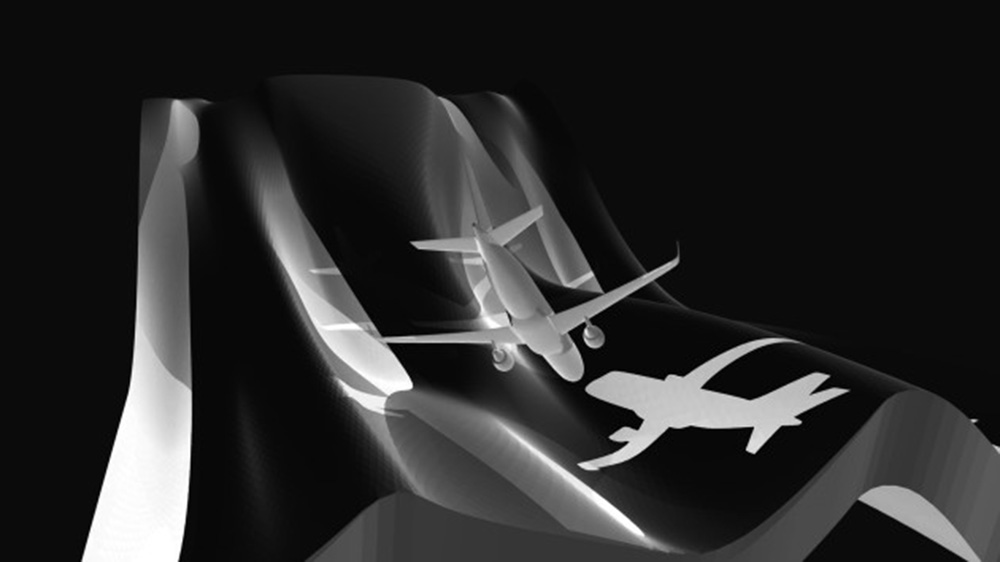
Welcome to the age of cosmic radiation! In 2021 the Sun fell to its lowest point of activity since the birth of science. Its magnetic waves that once shield the Earth dramatically weakened. During this solar lull powerful intergalactic cosmic rays penetrated our atmosphere. Originating eons ago from the explosive remnants of dead stars these silent, invisible and highly charged particles were only noticed in their affect - in what they did to our bodies and to the technologies we thought we could rely upon. Compiling stories from the recent past of interaction with cosmic radiation at ever descending altitudes, “The Phantom Menace” is a techno driven stroboscopic climate fiction film written in conversation with various Amazon warehouse workers. Initially inspired by the proposed plans for the U.S government to install their fragile predictive supercomputers deep underground in order to protect them from these upcoming ancient alien invaders, the film uses once costly low-resolution scientific visualizations produced on these supercomputers to speculate on the role of image labour in the subterranean near future. Planes crashing, computers malfunctioning and elections going haywire - these were just the prequel to the future.
Graeme Arnfield (b. 1991, UK) is an artist filmmaker & curator living in London, raised in Cheshire, UK. Producing sensory essay films from found often viscerally embodied networked imagery his films use methods of investigative storytelling to explore issues of circulation, spectatorship and history. Research topics have included: the politics of digital networks, the material distribution of ecological matter such as peat and asbestos and the adaptive circulation of global and local histories. His work has been presented worldwide including Berlinale Forum Expanded, International Film Festival Rotterdam, Courtisane Festival, Berwick Film & Media Arts Festival, Sonic Acts Festival, European Media Arts Festival, Transmediale, IMPAKT Festival, Kasseler Dokfest, Plastik Festival, Internationale Kurzfilmtage Winterthur, LUX, Institute of Contemporary Arts (ICA), Berlinische Gallerie, Signal Gallery, Whitechapel Gallery and on Vdrome. He graduated with a Masters in Experimental Cinema at Kingston University and recently completed a film with FLAMIN.
Graeme Arnfield
Pervading Animal
Experimental doc. | 0 | color | 30:0 | United Kingdom | 2021
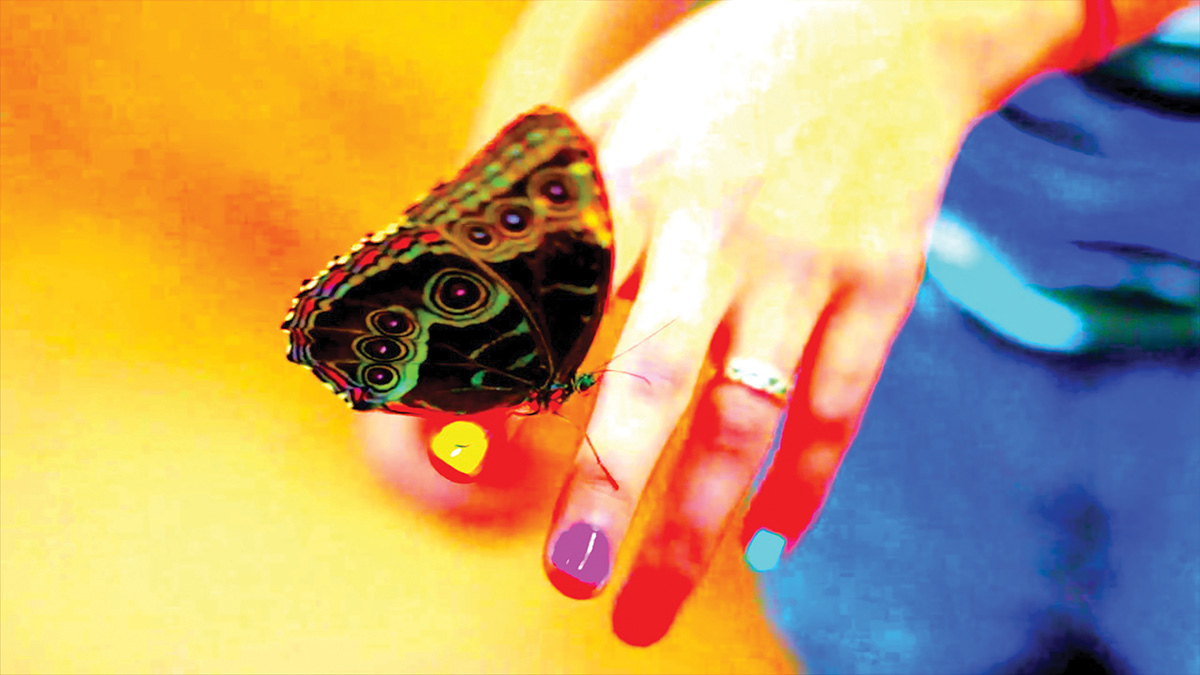
Equal parts systems literacy and kaleidoscopic ecological fantasia, “Pervading Animal” is a film about butterflies, computer viruses and all the things they touch. Tracing the creation, spread and destructive legacy of the first ransomware computer virus the film finds in its wake surprising connections between the US invasion of Panama, the aesthetics of pioneering computational art and the construction of a butterfly conservatory in New York.
Graeme Arnfield (b. 1991, UK) is an artist filmmaker and composer living in London, raised in Cheshire, UK. Producing sensory essay films from networked imagery his films use methods of investigative storytelling to explore issues of circulation, spectatorship and history. Research topics have included: the politics of digital networks, the distribution of ecological matter such as peat and asbestos and the adaptive circulation of global and local histories. His work has been presented worldwide including Berlinale Forum Expanded, International Film Festival Rotterdam, Courtisane Festival, Berwick Film & Media Arts Festival, Sonic Acts Festival, European Media Arts Festival, Transmediale, IMPAKT Festival, Kasseler Dokfest, Plastik Festival, Internationale Kurzfilmtage Winterthur, LUX, Institute of Contemporary Arts (ICA), Berlinische Gallerie, Signal Gallery, Whitechapel Gallery and on e-flux & Vdrome. He graduated with a Masters in Experimental Cinema at Kingston University.
Phuttiphong Aroonpheng
Sukati
Experimental fiction | dv | color | 5:40 | Thailand | 2010
My mother dreamed that my late father came back home to see her. She strongly believes that It wasn`t dream.
Phuttiphong AROONPHENG was born in Bangkok in 1976. He obtained a B.F.A at Silpakorn University and also studied at The Digital Film Academy of New York. He is particularly interested in avant-garde and experimental film. In 2007, his film project ?We all know each other?, an experiment documentary film in collective storytelling, which utilises investigation and dialogue about the nature of film as a medium, was supported by Fukuoka Asian Art museum and Irish Museum of Modern Art. And also his short film ?Our monument? won Vichitmatra Award at the 12th Thai Short Film and video Festival. Phuttiphong?s films have been showed both international film festivals and art exhibitions, including the International Film Festival Rotterdam 2009, Ybor the moving images festival USA, International Short Film Festival Hamburg, Interfilm Berlin Germany, 25Fps Croatia, Singapore International Short Film Festival, Asian gallery 4A Sydney, Escape Art gallery England, Silverlens gallery Philippines and many others. In 2009, He also was selected as a fellow of Asian Film Academy organized by Pusan International Film Festival and was one of an Asian Public Intellectuals fellows by the Nippon Foundation. As a Filmmaker, Phuttiphong has practice and skill in many different levels of the storytelling process, from narrative to experimental to documentary filmmaking. He had worked, as a cinematographer, together with well-known director?s films such as Nick Deocampo and Kongkiat Khomsiri. Recently, his new film project ?Departure Day? has been supported by Office of Contemporary Art and Culture, Ministry of Culture of Thailand and also won award for the script development in the Asian Cinema Funds (ACF), Pusan South Korea.

Driss Aroussi
Borj el mechkouk
Experimental doc. | mov | color | 32:20 | France | 2023
Taking the form of a fable-cinematography, Borj el mechkouk follows in the footsteps of a man sent by the village chief to observe and eventually un-sand a system of underground water galleries used by villagers to irrigate farmland. The story takes place in a pre-desert area of Morocco, where water management is a central element of oasis life. The system of underground drainage galleries is called “Khettara”. These man-made structures allow groundwater to be mobilized on a continuous basis. In this film, we follow the man on his journey through these vast, dry spaces. Once there, he settles in and applies his knowledge and dexterity to his work. In this charged and mysterious space, we discover the culmination of his mission. Commissioned by his oasis village, a man sets off into the desert to observe and eventually restore a system of underground water galleries known as Khettara. We follow his journey to Borj el mechkouk, where he works and lives for a time in this arid zone. What will he discover?
Born in Morocco in 1979, Aroussi lives and works in Marseille, France. Driss Aroussi's artistic work is polysemic, borrowing from several lines of research and navigating between experimentation and documentary form. In his practice, Driss Aroussi uses whatever enables him to reproduce reality, such as photography, or to capture it, such as video. In recent years, he has photographed construction sites, spending time with workers, sharing their daily lives, considering men, tools, objects and places. For him, reality also bears the mark of work, the stigma of its contradictions, the signs of the transformation it wrought on our reality.
Fernando Arrocha
Piedad
Art vidéo | dv | color | 5:35 | Spain | 2005
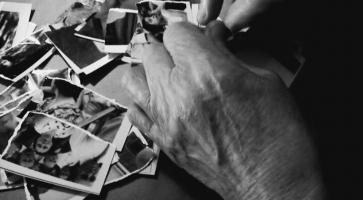
Piedad faces the pass of time through the memories of the love story and execution of Milagros, her best friend.
Born in Valladolid in 1977, he studies Music and Fine Arts in Madrid. He works at the area of painting, installation, videoart and new technologies. From 2005, he co-manages Calipsofilms, a platform of audio-visual experimentation in several fields, such as videocreation, video clips, spots, documentaries, digital image, internet projects... He has taken part in individual and collective exhibitions, in different spaces, as Mirador (Madrid 2003), Photoespaña (Madrid 2005), Loop Festival (Barcelona 2007), Baluarte (Pamplona 2007). One of his most recent exhibitions is Líneas de mira (Lines of sight), at Centro Atlántico de Arte Moderno (Gran Canaria 2007). Fernando Arrocha investigates the diving of contemporary man in the incessant flow of images of all kinds in which he is submited. His work is based on image recreation and intervention, specially propaganda content in historical films and documents. That process of recreation and intervention invites to think about manipulation, not only technical but also political and sociological, as well as about the psychological derivations of such procedures.

Victor Arroyo
Disappearance in Three Acts | Act l
Experimental doc. | hdv | color | 15:0 | Canada | 2024
Disappearance in Three Acts | Act One is an ethnography of violence reflecting on a history of conflict in Central Mexico. The video piece posits a decolonial approach to the visual representation of violence in Mexico, transporting us beyond the realm of suffering into a space for quiet contemplation as the violent terrain of occupation enters the frame. Following the pictorial European Romantic landscape tradition with its depiction of the uncontrollable power of nature, this piece is an investigation on enforced disappearance in rural Mexico, reclaiming undermined histories of everyday violence and economic struggle. The video piece appropriates visual motifs from 18th century European Romantic landscape tradition with its depiction of the uncontrollable power of nature and cataclysmic extremes, echoing violent occupation of land in rural Mexico. Through a poignant testimony of a kidnapping survivor, intertwined with the pastoral rural landscapes of her captivity, the video documents geographies of disappearance at the threshold of detectability.
Victor Arroyo is a video artist working in the crossfield between cinema and contemporary art. His films are informed by various modes of listening and seeing, emerging from long periods of observation and documentation. His practice is situated at the intersection between aesthetics, knowledge production and community-based research, often concerned with the encounters and tensions between lived experiences, knowledge regimes and the politics of display. His work is regularly programmed in museums and festivals internationally, including Kasseler Dokfest, Sheffield Doc/Fest, RIDM, Canadian Centre for Architecture CCA, BIENALSUR, Cinemateca de Bogotá, Cinémathèque Québécoise, Cinémathèque Pacific, Museu de Arte Moderna do Rio de Janeiro, Museo Chileno de Arte Precolombino, Leonard & Bina Ellen Art Gallery, Center for Contemporary Arts Santa Fe, among others. Born in Mexico in 1977, and based in Montréal, Canada.
Jessica Arseneau
Aubes
Video | mov | color | 40:0 | Canada, Germany | 2021
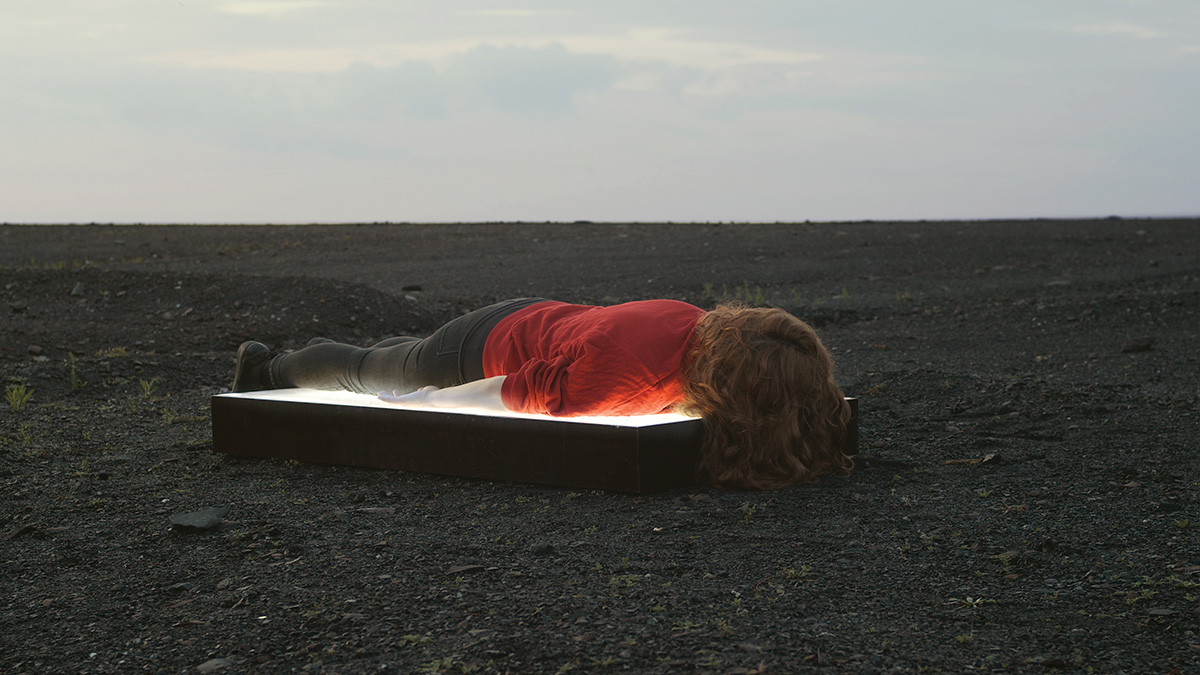
Dawns takes us to a time when sleep is disrupted and insomnia becomes a collective condition. Captured before sunrise, with non-actors in a variety of outdoor environments, the multi-channel work consists of a series of continuous shots and long takes. The slow cinematographic images are reminiscent of tableau vivants where people, in groups or alone, find themselves in an urban environment or the transformed wasteland of a former industrial area. Exhaustion is conveyed by the bodies’ postures and their near immobility, composing at the same time an atmospheric landscape of fragility and endurance at the limit of the perceptible. While the videos look still images, they allow us to see the slow, luminous transition of night into day.
Jessica Arseneau (originally from Tilley Road, Canada) obtained a Bachelor of Fine Arts at Université de Moncton in 2011 and a Master’s Degree in New Media at the Academy of Fine Arts Leipzig in 2020, both completed with distinction. She received a grant from the Salzburg International Summer Academy of Fine Arts in 2017 and a scholarship from Saas-Fee Summer Institute of the Arts in 2021.?? Her solo exhibitions include Surrounding Uncaring Skies as part of the Festival International du Cinéma Francophone en Acadie, Moncton, Dawns, a storefront exhibition organized by Ringlokschuppen Ruhr, Mülheim an der Ruhr, The Screen Under My Eyelids at Helmut, Leipzig, Nothing but a Constant Glow at Spinnerei Archiv Massiv, Leipzig, and Lost Idyll, at Galerie d’art Louise-and-Reuben-Cohen, Moncton. ??Other public presentations of her work occurred at Galerie Sans Nom, Moncton, Struts Gallery, Sackville, Darling Foundry, Montreal, Maison de la Culture du Plateau-Mont-Royal, Montreal, BronxArtSpace, New York, Agora Collective, Berlin, Traverse Vidéo, Toulouse, Friche la Belle de Mai, Marseille, D21 Kunstraum, Leipzig, and a&o Kunsthalle, Leipzig.