Catalogue > Search
Results for : Tout le catalogue

J Tobias Anderson
Allt blir självklart, genomlyst
Animation | hdv | color | 2:30 | Sweden | 2015
In a colorful setting, where thoughts and ideas aren’t necessarily black or white, a situation of non-communication is enacted. Two men and a woman are throwing their most inner thoughts at each other, but finding little solace in the others’ words. Communication can sometimes be unidirectional, even though a dialogue is taking place, and where certainty can be a comfort, perhaps skepticism and doubt should be the default.
Born in 1971. Grew up on Gotland in the Baltic Sea. Education includes the University Collage of Arts Crafts & Design as well as the Royal Collage of Art, both in Stockholm. Lives in Nacka just outside of Stockholm. Working mainly with video and animation and moving between narrative and non-narrative works. Has created around 40 films. Also experimenting with different forms of music and sound installations. Notable exhibitions include P.S.1 Contemporary Art Center in New York, Kunst-Werke Berlin, CaixaForum in Barcelona and Museo de Colecciones ICO in Madrid, as well as solo exhibitions at MMC Luka in Pula Croatia, ak28 in Stockholm and Uppsala Art Museum in Sweden.
J Tobias Anderson
A Work of Art
Animation | hdv | black and white | 1:36 | Sweden | 2016
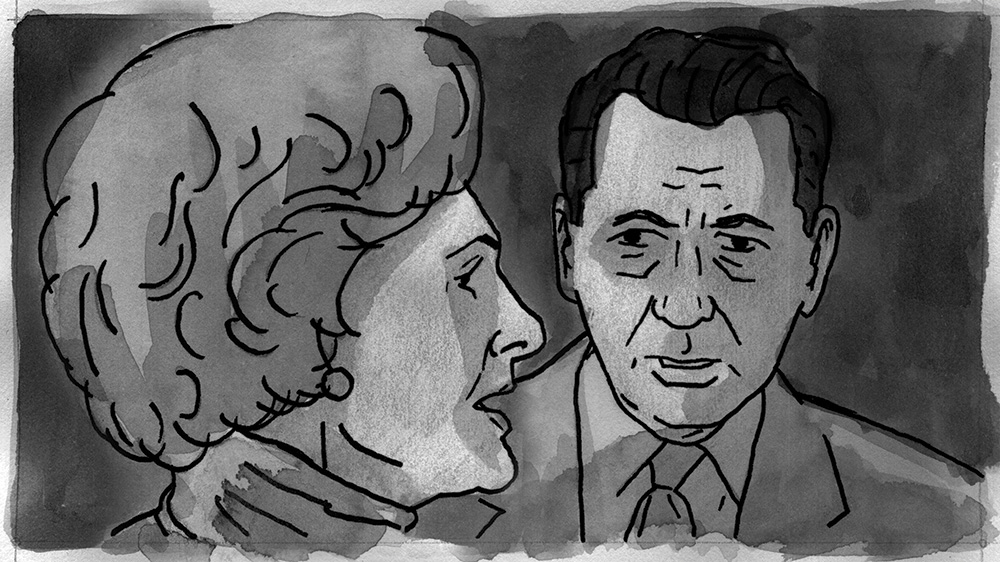
A reflection on the artist’s own work, mirrored in a dialogue involving three secondhand characters. Together they make an honest evaluation of the artwork to reveal the harsh truth.
Born in 1971. Grew up on Gotland in the Baltic Sea. Education includes the University Collage of Arts Crafts & Design as well as the Royal Collage of Art, both in Stockholm. Lives in Nacka just outside of Stockholm. Working mainly with video and animation and moving between narrative and non-narrative works. Has created around 40 films. Also experimenting with different forms of music and sound installations. Notable exhibitions include P.S.1 Contemporary Art Center in New York, Kunst-Werke Berlin, CaixaForum in Barcelona and Museo de Colecciones ICO in Madrid, as well as solo exhibitions at MMC Luka in Pula Croatia, ak28 in Stockholm and Uppsala Art Museum in Sweden.

J Tobias Anderson
A Veracity A Mendacity
Art vidéo | | color | 4:58 | Sweden | 2010
A man in confrontation with two women, one vulnerable and easily influenced, the other hesitant and questioning. On one hand the man is preching a veracity to the already converted and on the other a mendacity to the doubtful. Or is it the other way around? "A Veracity A Mendacity" questions if there, in the name of reason, can exist only one truth to any situation, and who should have the mandate to tell others what is right and what is wrong.
J Tobias Anderson was born in 1971 and grew up on Gotland in the Baltic Sea. His education includes the University Collage of Arts Crafts & Design as well as the Royal Collage of Art, both in Stockholm. He lives in Nacka just outside of Stockholm. Working mainly with video and animation Anderson has moved between narrative and non-narrative works and through the years he has created almost 40 films. He has also been experimenting with different forms of music and sound installations. Notable exhibitions include P.S.1 Contemporary Art Center in New York, Kunst-Werke Berlin, CaixaForum in Barcelona and Museo de Colecciones ICO in Madrid, as well as solo exhibitions at MMC Luka in Pula Croatia, ak28 in Stockholm and Uppsala Art Museum in Uppsala, Sweden. He is collaborating with Filmform Foundation in Stockholm and Espaivisor in Valencia, Spain.

J Tobias Anderson
A Sensation!
Animation | dv | color | 1:38 | Sweden | 2012
Material is what counts!
Born in 1971. Grew up on Gotland in the Baltic Sea. Education includes the University Collage of Arts Crafts & Design as well as the Royal Collage of Art, both in Stockholm. Lives in Nacka just outside of Stockholm. Working mainly with video and animation and moving between narrative and non-narrative works. Has created around 40 films. Also experimenting with different forms of music and sound installations. Notable exhibitions include P.S.1 Contemporary Art Center in New York, Kunst-Werke Berlin, CaixaForum in Barcelona and Museo de Colecciones ICO in Madrid, as well as solo exhibitions at MMC Luka in Pula Croatia, ak28 in Stockholm and Uppsala Art Museum in Sweden.
J Tobias Anderson
Delusion Disillusion
Art vidéo | dv | black and white | 3:33 | Sweden | 2008
A dark forest, a neverending road, two men with differing ideas on how to approach a problem. The outline of Delusion Disillusion is quite simple, but the possibilities of interpretation are more complex. Are the men referring to a matter of more personal character, or are they speaking of something much more general? The contrast between the density of the trees in the beginning of the video and the final, almost clear-cut forest, gives us one hint towards a possible solution.
Born 1971 in Gothenburg, Sweden. Living and working in Stockholm, Sweden Artistic education: 1993-98 University Collage of Arts, Crafts and Design, Art Department, Stockholm 1998-99 Royal Collage of Art, Video Department, Stockholm Videoartist focusing mainly on animation and appropriation art. Experimenting with a number of different techniques, such as video, painting, illustration, sound and music, with the main work still being made for video - around 30 videoworks have been created between 1997 and 2006. Explorations with the starting point in material that somehow can be considered generally well known are usually the bases for the creation of the works. Often the videos are based on cinematographic issues, and deal with visual or audiovisual explorations. Has been screened at numerous occasions, in exhibitions and festivals worldwide. Represented with videoworks at several art institutions, among them Moderna Museet in Stockholm and IVAM, Institut Valencià d`Art Modern.
J Tobias Anderson
Where Did It All Start?
Animation | hdv | color | 1:10 | Sweden | 2017
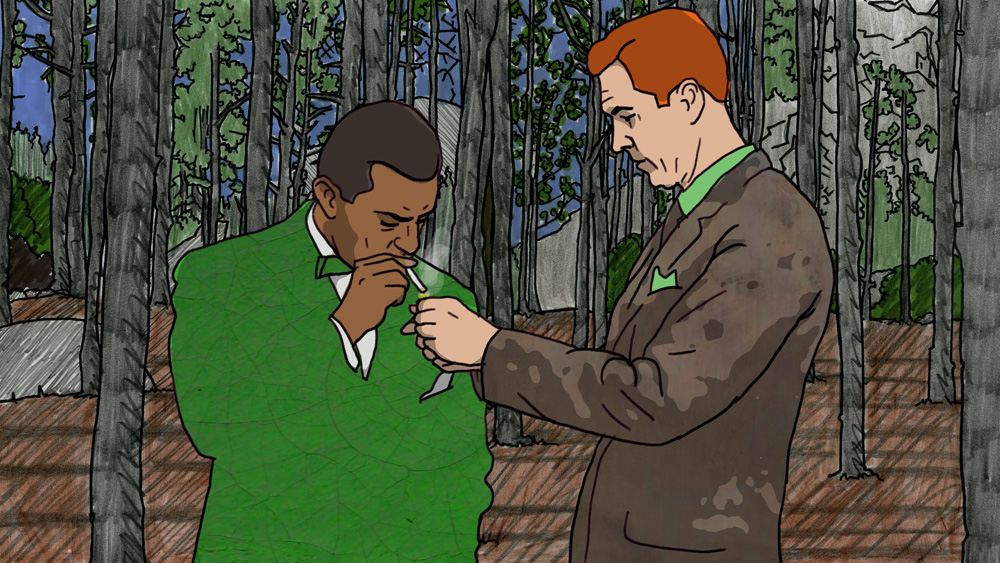
The simplest of questions. An overwhelming silence. The conundrum of existence.
Born in 1971. Grew up on Gotland in the Baltic Sea. Education includes the University Collage of Arts Crafts & Design as well as the Royal Collage of Art, both in Stockholm. Lives in Nacka just outside of Stockholm. Working mainly with video and animation and moving between narrative and non-narrative works. Has created around 40 films. Also experimenting with different forms of music and sound installations. Notable exhibitions include P.S.1 Contemporary Art Center in New York, Kunst-Werke Berlin, CaixaForum in Barcelona and Museo de Colecciones ICO in Madrid, as well as solo exhibitions at MMC Luka in Pula Croatia, ak28 in Stockholm and Uppsala Art Museum in Sweden.
Alice Anderson
Souffler n'est pas jouer
Experimental fiction | betaSP | color | 14:30 | France | 2005
In a gymnasium, a seventeen year old girl is training on a trampoline. Her father, who is coaching her, is barking out instructions. The forced training causes her to suffer but she is obsessed with the idea of winning the big double somersault competition. With the prize money her father will finally be able to pay their debts. Natasha cannot disappoint him. She has the feeling that he doesn't love her as much now that she has grown up. The gold medal will change everything. The accident is inevitable, she misses her landing and hurts her head. Lacking money, his father decides to look after her himself: the mother recommands total isolation in one particular room of the house. For several weeks, the father has been observing Natasha through the key hole of the room with mirrors. She talks alone, he thinks. And she doesn't look like she wants to get better. The great somersault competition seems compromised. Then, one day, the door opens and Natasha receives a gift from her father: a role-play. The mother gets dangeroulsly close to her. Now she is ready. She convinces her father to contact the judges of the federation so that they accept her late inscription to the competition. She is determined to show them what she is capable of, her father is going to love her again, unless her mother intervenes...
Alice Anderson was born in London in 1976 and was raised in the south of France. She studied at the Beaux-Arts of Paris (1998-2001), received the Gilles Dusein prize for her videos (2002), then left for London to complete a M.A. at Goldsmiths College in London (2002-04), where she has been living since. She has shown her work in such prestigious places as: The European House of Photography, The Pompidou Centre, Emap Museum in Korea, The Anna Norlender Museum in Sweden, The Man Museum in Italy, Bloomberg Space in London, and Art Unlimited in Basel. Most recently she presented a new tale at the Yvon Lambert Gallery at her personal exhibition in January 2007.
J Tobias Anderson
The Wind
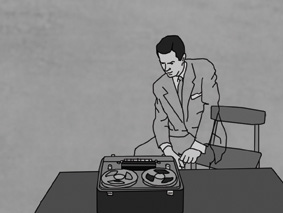
Animation | dv | black and white | 3:44 | Sweden | 2009
These words are all true. These words are all used. This is the way the wind is blowing. This is the wind of the reality in which we live. All words are already spoken. All things are already said. Nothing is original. Nothing is new.
J Tobias Anderson was born in 1971 and grew up on Gotland in the Baltic Sea. His education includes the University Collage of Arts Crafts & Design as well as the Royal Collage of Art, both in Stockholm. He lives in Nacka just outside of Stockholm. Working mainly with video and animation Anderson has moved between narrative and non-narrative works and through the years he has created almost 40 films. He has also been experimenting with different forms of music and sound installations. Notable exhibitions include P.S.1 Contemporary Art Center in New York, Kunst-Werke Berlin, CaixaForum in Barcelona and Museo de Colecciones ICO in Madrid, as well as solo exhibitions at MMC Luka in Pula Croatia, ak28 in Stockholm and Uppsala Art Museum in Uppsala, Sweden. He is collaborating with Filmform Foundation in Stockholm and Espaivisor in Valencia, Spain.
J Tobias Anderson
Whereto I Go
Art vidéo | dv | black and white | 4:46 | Sweden | 2005
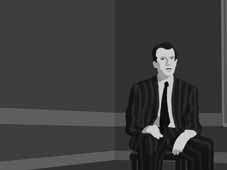
A video that displays a man's confrontation with his own self. A meeting that is not always as rewarding as one might have hoped. Classic filmsequences have been re-cut and animated to illustrate this dilemma, and the final imagery is created in a highly contrasted style, with characters echoing of decades from long ago.
J Tobias Anderson was born in 1971 in Gothenburg, Sweden. He lives and works in Stockholm, Sweden. Originally a painter, and since 1993 working with videoart and animation, he now experiments with a number of different techniques, such as video, painting, illustration, sound and music, with the main work still being made for video. He has been screened at numerous occasions, festivals and exhibitions worldwide. He is represented with videoworks for instance at the Modern Museum of Art in Stockholm.
Carla Andrade
Ningún río me protexe de min
Experimental doc. | 16mm | color and b&w | 27:27 | Spain | 0
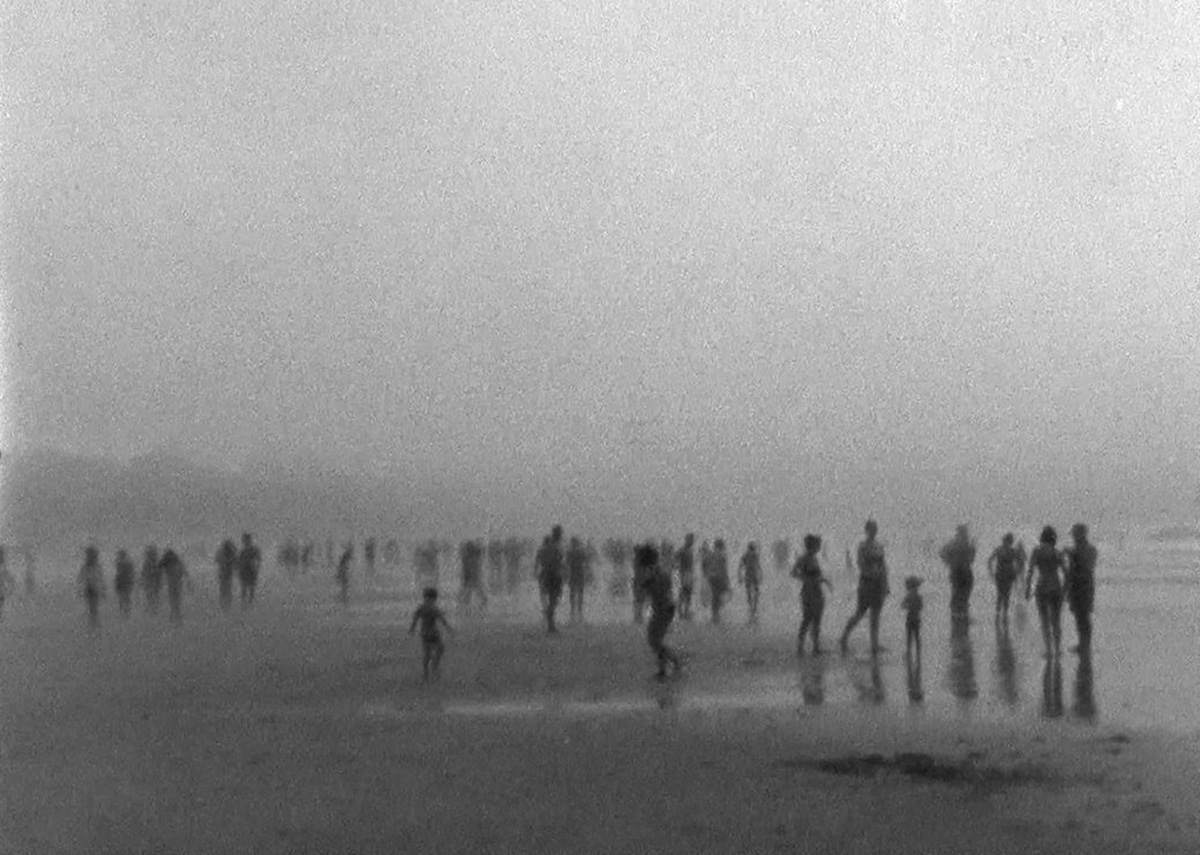
"No river protects me from myself" takes as its starting point the mysterious theft of filmed material shot in the Congo Basin rainforest. This accident offered a response to conflicts arising from the fragile and transubjective encounter with the “non-I”, which could only be practised or experienced; if one tries to virtualise it, it ceases to exist. The impossibility of representing a reality that is not one's own without creating distance or detachment, or conversely, taking control of it, leads to a backwards retreat in which, through conversations with my mother, I discover a fragmented and contradictory identity based on fragile foundations. This incessant external search for forms of knowledge that differ from the consensus—or compulsory—reality becomes internal.
An interest in the aesthetic experience and how it works as a transformer of conscience led Carla Andrade (Vigo, Spain, 1983) to study both a Degree in Audio-Visual Communication Studies and Philosophy, as well as an M.A in Artists’ Film and Moving Image at Goldsmiths University of London. This intersection between the means of visual expression and a field close to reflection is, precisely, the central aspect that defines her work. Travelling is also an important part of her process so she has carried out Artist Residencies in Iceland, Sweden, Nepal, Chile or Paris, among others. She has shown her work (both individually and collectively) in renowned contemporary art venues such as Guggenheim Museum of Bilbao, MARCO Vigo, Le 104 Paris, CaixaForum Barcelona, Tabacalera Madrid, La Casa Encendida Madrid, Bilbaoarte, Lux London or Tabakalera Donosti, etc; and in prestigious international Photography and Film Festivals such as PhotoEspaña, Mois de la Photo (Paris) or Encontros da imagem (Portugal); International Film Festival Rotterdam, Zinebi, PortoPostDoc, Courtisane, Ji.hlava, L’Alternativa Barcelona, Curtocircuito or Alchemy Film Festival. Furthermore, her work has been part of important international publications from South Korea, USA, Brazil or Spain and acquired by public and private art collections such as CA2M or CGAC. Likewise, her work has obtained awards including the First Prize of Visual Arts 2013 from Complutense University of Madrid, Emerging Artists Award Absolut 2013, Frac Vila Acquisition Award 2013 from Luis Adelantado Gallery, Women Award-Forum-Dialogue Alliance Francaise / Pilar Citoler 2012, Photography Award Madrid SUMMA 201, etc; and grants from Injuve, Institut Français, BilbaoArte Foundation, VEGAP, Agadic and the Scholarships for Abroad Artistic Creation Gas Natural Fenosa.
Samuel Andre
Danae
Création sonore | 0 | | 20:12 | France | 2004
This musical music is only composed from two short samples proposed by the composer Pyo. One of these two samples is used to build up the whole composition, transformed via various digital processes while the other one appears punctually with very few modifications in comparison with the original. This musical piece is inspired by Danae?s myth.
Born in 1978, he had a scientific formation in mathematics and cognitive sciences. After his masmaster in computing ergonomics - while doing narrative acoustic music composition (http://ieva70.free.fr/sound/iev.htm), he definitely turns to the use and the practice of the computer and the use of this informatic tool as the continuation of oneself ? reflection around the gesture, a grammar or almost a language and its representation through a communication network that is internet: the lengthening of the work started in 2000 at the SCRIME ? Studio of Creation and Informatics Research and Eclectro-acoustic Music -, on sound manipulation interface conception ergonomics and improvisation meant for children. His major practice remains music, written (composition or video music) or improvised; He produces also poetic multimedia forms and a few experimental movies.
Schneemeier Andrea
Still Life
Art vidéo | dv | color | 0:56 | Hungary, Belgium | 2004
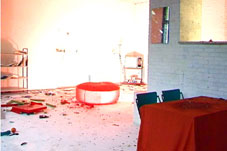
A game with simulation and reality in a strange but real environment. Its ?reality? recalls not only the cold milieu of simulation programs, but also the artifical ?happiness? of an IKEA store. Without a trace of a human, the environment starts to change - the objects are exploding. The film subverts the viewer?s destructive instincts in a playful way, reflecting as well on the artificiality of the media (industry) surrounding us day by day.
Andrea Schneemeier °1969, (Budapest, Hungary) Andrea Schneemeier studied painting and mixed media at the Art Academy of Budapest in 1996. Afterwards, she studied at the Higher Institute for Fine Arts (HISK) in Antwerp. She creates conceptual art, makes videos and interactive installations where she raises critical social-political questions. She investigates social positions, social conventions and the place of the individual in society. Other recurring subjects in her work are violence and aggression, and the questioning of gender-related role patterns. She often shows all kinds of (gun)fights, with both men and women. Her work was internationally shown and she received several prizes for her mixed media work. Currently she is living in Berlin.
Stephen Andrews
Dramatis Personae
| | | 6:10 | Canada | 0
Stephen Andrews
The Quick and The Dead
Animation | dv | color | 1:0 | Canada | 2004
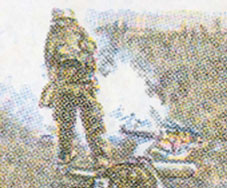
An animation based on a video clip from the Iraq war.
Stephen Andrews has exhibited his work in Canada, the U.S., Brazil, Scotland, France, and Japan. His work deals with memory, identity, surveillance and their representations in various media.
Stephen Andrews, John Greyson
On message
Experimental video | dv | color | 9:30 | Canada | 2006
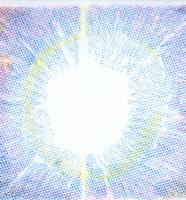
An analog animation using the same set of drawings to tell four different versions of the same story. The emotional fallout of two witnesses to a police shooting, a musical about groovy gay boys making the scene, a cop show about the chase and arrest of a suspect and a news report about soldiers on leave in Iraq.
Stephen Andrews was born in 1956 in Sarnia, Ontario Canada. He has exhibited his work in Canada, the U.S., Brazil, Scotland, France and Japan. He is represented in the collections of the National Gallery of Canada, as well as many private collections. His work deals with memory, identity, surveillance and their representations in various media. John Greyson is a Toronto film/video artist whose shorts, features and installations include: Fig Trees (2003, Oakville Art Galleries); Proteus (Best Actor, Sithenghi 2003); The Law of Enclosures (2000, Best Actor Genie); Lilies (1996 - Best Film Genie, Best Film at festivals in Montreal, Johannesburg, Los Angeles, San Francisco); Un©ut (1997, Honourable Mention, Berlin Film Festival); Zero Patience (1993 - Best Canadian Film, Sudbury Film Festival); The Making of Monsters (1991 - Best Canadian Short, Toronto Film Festival, Best Short Film Teddy - Berlin Film Festival); and Urinal (1988 - Best Feature Teddy, Berlin Film Festival). He co-edited Queer Looks, a critical anthology on gay/lesbian film & video (Routledge, 1993), is the author of Urinal and Other Stories (Power Plant/Art Metropole, 1993), and has published essays and artists pieces in Alphabet City, Public, FUSE, and twelve critical anthologies. An assistant professor in film production at York University, he was awarded the Toronto Arts Award for Film/Video, 2000, and the Bell Canada Video Art Award in 2007.
Claire Angelini
Es geht eine dunkle Wolk'herein
Experimental doc. | dv | color and b&w | 20:0 | France, Germany | 2005
During a walk in three different places in Bavaria - first in an idyllic park in the heights of Munich, which is the hill of the Olympic park, then a residential ensemble at the shores of Starnberg Lake in Feldafing, and finally the Mühldorf forest, a village on the Austrian border - heavy with history from Second World War, tangible fragments come back to haunt the images of today under the form of documentary archives. The interpretation of very slow shots that allow for the materialization, the breathing, and the changing light of natural spaces is left up to the public's imagination. The film begins with the idea that our spaces of life and daily landscapes carry indelible traces of history. But here history must be seen as a subset of geology as witness of man's place and destiny in the world.
Claire Angelini was born in Nice, France, and currently lives and works in Munich, Paris, and Geneva. She has a degree in Plastic Arts from the Ecole nationale supérieure des Beaux-Arts de Paris, and in Art History from the Sorbonne, Paris. She obtained various grants and artist residencies since 1998 : Production Aid, OFAG 2006; Development Aid, CNC 2005; Writing Aid, CNC, 2004; FIACRE, 2001; Directing Aid, Cultural Affairs of the City of Munich, 2001, Bourse Akademie Schloss Solitude 1999-2000; Artist Residency Villa Concordia 1998; and Bourse Jeune Création/OFAG 1998. Recent exhibitions include: Nov. 2006, Encuentros Internationales de Videoarte y Fotografia, Gigòn, Spain; Oct. 2006, Instants Video Marseille, Programme Oasis; March 2006, National Institute of Art History, Paris; Feb. 2006, Videotheka, Kunsthalle Vienne; May 2005, Färthensuche, Spiegel/Lothringer 13, Munich; Sept. 2004, "Hier liegt die Grenze des pädagogischen Bemühens", Orstermine 2004, Munich; Aug. 2004, Remix, Spiegel/Lothringer; April 2004, Intervalles, galerie Martine et Thibault de la Châtre, Paris; April 2003, Réciprocités, Goethe-Institut, Rome.
Claire Angelini
Jeune, révolution! 2007-2012
Experimental doc. | hdv | color | 13:12 | France, Germany | 2012
(Brise la mer ! / Jeune, révolution !) : deux courts films prennent le spectateur en étau, et à travers eux, deux paroles sur l?histoire : celle de Narriman B., qui s?interroge sur les raisons de la guerre d?Algérie à l?occasion de la commémoration de l?Indépendance (1962). Et celle d?Ikbel Z., confronté au délitement de la Révolution de jasmin et au désenchantement de la jeunesse tunisienne. Quand aux cuves de pétrole du port de Béjaia, (Algérie), répondent les toupies d?abord fougueuses, puis de plus en plus lentes, d?une table de café tunisienne, de quel tour sur soi-même la révolution, dans l?un et l?autre de ces deux pays, a-t-elle été porteuse ?
Claire Angelini, artiste et cinéaste (ensba Paris / Sorbonne / HFF Munich), interroge le rapport de l?art à l?histoire comme inscription du politique, sous les espèces de la trace, la ruine, la réminiscence et de la survivance des images. Le cinéma comme outil critique sensible et comme dispositif visuel et sonore, lui permet de questionner l?histoire qui hante notre espace commun aujourd?hui et ce faisant, d?en interroger la représentation. Diffusions récentes : MAC-Santiago du Chili 2012 / galerie Fucares Madrid 2012 / Instants video Marseille 2012 / Underdox 07 Munich 2012 / Cinemateca brasileira Sao Paolo 2012 / Etats généraux du film documentaire Lussas 2011 / Cinéma du Réel Paris 2011 / Institut franco-japonais Tokyo 2010 / Viennale 2009
Claire Angelini
La mémoire n'est pas un jeu d'enfant
Documentary | dv | color | 52:50 | France, Germany | 2009
1 woman/ 3 countries/ 3 wars / Following a female figure as she is revisiting the places of her childhood, this film summons up, through the devices it employs, the crossed categories of individual memory and history in a space which is itself composed of the accumulated layers of past and present. Set in France, Tunisia and Algeria, the film looks at how we are affected by history in the places where we grow up. A long journey of recollections and words set against the images and sounds of the landscapes. It is an examination of the relationship between subjective memory, territory and the consciousness of the adult.A political film in the deepest sense of the word.
Claire Angelini
MARCHE / ARAGON
Experimental doc. | dv | color | 23:7 | France, Germany | 2010
Marche / Aragon montre comment la guerre a traversé et influencé deux villages du sud de l?Europe, l?un en Italie méridionale, dans les Marches, l?autre en Espagne, dans la province de Huesca. Ortezzano a vécu la montée du fascisme dans les années 30. Belver au contraire, a tenté une expérience unique et singulière d?anarchisme au moment de la République espagnole. Formellement tout oppose les Marches à l?Aragon : d?un côté se développe un film sans paroles au fil d?un album communal, seul dépositaire d?une mémoire inavouable. De l?autre, un récit se déploie, au fil d?un témoignage incarné par la voix d?un survivant de la guerre d?Espagne. La musique aussi, devient, au cours du film un protagoniste essentiel de Marche /Aragon, chargée qu?elle est de sa propre mémoire politique.
Diplômée de l?Ecole Nationale Supérieure des Beaux-Arts de Paris, où elle a étudié la photographie et le montage sonore, Claire Angelini, titulaire d?une maîtrise d?Histoire de l?art, a fréquenté la section documentaire de l?HFF (Hochschule für Film und Fersehen) de Munich. Sa production inclut l?installation, le film, la vidéo, la photographie, le son et le dessin. Claire Angelini vit et travaille à Munich et à Paris. Ses films les plus récents, ont été présentés à l?Institut franco-japonais de Tokyo, à la Bobine de Grenoble, à la Viennale 2009, à la Maison des Arts d?Amiens, à la 12e BIM de Genève, aux Instants vidéo à Marseille, au festival Underdox de Munich, à la Kunsthalle de Vienne, au Festival internacional de videoarte de Gijon, à la Nuit Blanche 2008, ainsi que dans différents cinémas en France et en Allemagne, et, dans le cadre des Rencontres Internationales Paris-Berlin-Madrid, au Centre Georges Pompidou, au Musée du Jeu de Paume, à la Haus der Kulturen der Welt, ainsi qu?au Museo Reina Sofia de Madrid.
Claire Angelini
SHE/SEE
Documentary | dv | color | 20:0 | France, Germany | 2007
Ce film, fait travailler les éléments d?une improbable rencontre, celle d?une « boat-people » qui a fui son pays, le Vietnam, pour aboutir en Allemagne et du lac de Starnberg nimbé du souvenir mythifié de Sissi et de Louis II de Bavière. Autour du corps présent-absent de la réfugiée ?celui aussi d?un souvenir qui se délite ? se déploie une narration fragmentaire et stratifiée. Quelle image peut saisir en effet la caméra aujourd?hui de cet itinéraire de peur inscrit à même le corps, déplacé dans le tracé paisible d?une excursion touristique « sans histoire » ? Qui parle, et de quoi dans ce jeu complexe des questions-réponses à trois voire quatre voix, et en trois langues (français, allemand, vietnamien) ? De l?impossible palimpseste, émergent des fragments d?histoire : celle de cette femme, celle de son pays déchiré, celle de son voyage en mer, et au-delà celle de la condition de réfugié dans le monde actuel. La disposition des voix, et les incertitudes de la traduction ouvrent sur un vide, délinéant le manque de l?exilée, l?indécision quant à l?identité de celle qui parle, indécision identitaire, devenue sa blessure invisible.
Bio-Filmographie Diplômée de l?Ecole Nationale Supérieure des Beaux-Arts de Paris, où elle a étudié la photographie et le montage sonore, Claire Angelini, qui est titulaire d?une maîtrise d?Histoire de l?art, a aussi fréquenté la section documentaire de l?H.F.F. (Hochschule für Film und Fersehen) de Munich. Circulant entre les langues et les villes européennes, elle s?intéresse plus particulièrement dans son travail aux rapports entre l?art et l?histoire, dans le cadre d?une production multimédia incluant aussi bien l?installation que le film ou la video, la photographie, le son, ou encore le dessin. Claire Angelini vit et travaille actuellement à Munich et à Paris. Films 1996 La minorité, Hi8 transféré sur VHS, 2 minutes 30. (Editions video Artos/ Athènes) 2002 Réciprocités, mini dv, 3 x 60 minutes. (Zweite Architekturwoche, München, Instants video, Martigue, 2004) 2004 Un trou dans le gant, mini dv, 32 minutes. (Kunsthalle Vienne 2006, Université du Québec à Montréal 2006, festival internacional de video arte y fotografia, Gigon, Espagne, 2006, Instants video, Friche de la Belle de Mai, Marseille, 2006.) Ici s?atteint la limite de l?effort pédagogique, mini dv, 22 minutes. (Instants video, Friche de la Belle de Mai, Marseille, 2006.) Lullaby, mini dv, 6 minutes. (Spiegel/ Lothringer 13, München, 2004) 2005 Es geht eine dunkle Wolk herein, mini dv, 20 minutes. (Kunsthalle Vienne 2006, Rencontres internationales Paris-Berlin, Musée du Jeu de Paume, Paris, 2006, Rencontres internationales Paris-Berlin-Madrid, Circulo de Bellas Artes, Madrid, 2007, Rencontres internationales Paris-Berlin, Kino Babylon, Berlin 2007) 2007 Loci soli/Soliloques, mini dv, 21 minutes. (Programmation annuelle des Instants video, marseille 2007- 2008) SHE/SEE, mini dv, 22 minutes. ( Biennale de l?Image, Saint-Gervais, Genève, 2007) En cours : La mémoire n?est pas un jeu d?enfant ( production Atopic/Christophe Gougeon/Aide à l?écriture et au développement, CNC) et Et tu es dehors, installations multimédia (production Finavril/Emmanuel Deswartes).
Dominic Angerame
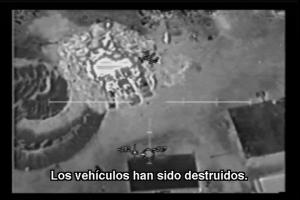
Anaconda target
Experimental video | dv | black and white | 8:0 | USA | 2005
?We don?t have time to get scared, everything happens in a few seconds. ?The sight lights up just in front of the windshield, everything is ready for the computer to do its work. ?It?s the computer that has the last word.??Paul Virilio About 2,000 troops from the US led military coalition were engaged in close in combat on March 4, 2002 with small pockets of suspected al Qaeda and Taliban fighter in the rugged terrain of north-eastern Afghanistan as part of an operation called Operation Acaconda.... The footage contained in this piece was from part of this mission. ?Other than appending a a title card and a quotation by media theorist Paul Virilio at the beginning, Angerame`s latest video work is a complete found-object: military footage of an offensive operation on a mosque in Afghanistan. It`s a cliché for me to point out that for the first few minutes of the running time, I honestly couldn`t tell if I was watching actual military surveillance imaging or a videogame, but the ineluctable appositeness of the cliché seems to be one of Angerame`s major points. After CNN and Baudrillard and, in fact, Virilio, we still have the same problem -- X-Box Warriors of eighteen and nineteen going off to execute our ordnance. Some viewers I spoke with were rankled by Angerame`s bald, untreated presentation of the material, feeling like not enough "art" had been performed. But this viewpoint overlooks context, the resistant act of dropping this horrendous material into the rarefied aesthetic domain of an experimental film screening. (As Americans, our tax dollars spent millions in the production of this lo-tech snuff film.) In the end, nothing else in the Views program jolted me so far out of my contemplative state of mind; sitting and watching the next film, as opposed to leading the entire audience out into the street for some uncivil disobedience, felt vaguely obscene. And yet . . . And yet . . . we know it?s never that simple. Right? ?Michael Sicinski Exhibitions: Toronto International Film Festival, 2004 Onion City Film Festival, Chicago, 2004 New York Film Festival, Lincoln Center, 2004 Viennale, Vienna 2004 Pacific Film Archives, Berkeley, California 2004 Hong Kong International Film Festival, 2005 Director?s Choice, Black Maria Film Festival, 2005 Australian Center for Moving Image, Canberra, Australia, 2005 Rotterdam Film Festival, 2005 Nashville Film Festival, 2005 Tiburon Film Festival, 2005 San Francisco Cinematheque, 2005 Big Muddy Film Festival, 2005, First Place European Media Arts Festival, Osnabruck, Germany, 2005 Black and White Festival, Porto, Portugal Athens International Film Festival, Athens Ohio Fear No Film Festival, Salt Lake City, 2005 Empire Film Festival, 2005 Cracow Film Festival, 2005 DMZ_2005 Exhibition, Korea, 2005 Splitz Film Festival, Croatia, 2005 Torino International Film Festival, 2005 Sarajevo Film Festival, 2005 Montreal International Film Festival, 2005 Seoul Net&Film Festival, 2005 VII Festival Iberoamericano De Cine De Santa Cruz, Bolivia
?To see the city through the eyes of Dominic Angerame is to see an organic beast of concrete that sifts and breathes in rich shades of black and white.?--Silke Tudor, SF Weekly Since 1969, Dominic Angerame has made more than 35 films that have been shown and won awards in film festivals around the world. Two Cine Probe Series at the Museum of Modern Art in New York City have also honoured him -- in 1993 and in June 1998. His most recent work Anaconda Targets (2004) is being exhibited at the Toronto International Film Festival, Onion City Film Festival, Chicago, New York Film Festival, and the Vienalle in Vienna and will screen at the Hong Kong International Film Festival, Rotterdam Film Festival, Nashville Film Festival, and many more. His series of films Battle Stations?A Navel Adventure (2002), Pixiescope (2003), The Waifen Maiden (2003), and Consume (2003). These films are in the process of being screened in festivals around the world, including Turino Film Festival, Madrid, Recontres Paris/Berlin and more information regarding them is available by request. They were also exhibited by the San Francisco Cinematheque at the Yerba Buena Center on December 11, 2003 Angerame teaches filmmaking/cinema studies/criticism the San Francisco Art Institute as a visiting artist. He has also taught film production and cinema studies at the University of California Berkeley, Extension, and New College of California; and has been a guest lecturer and visiting artist for Stanford University, the School of the Art Institute of Chicago, the Graduate School of Theology in Berkeley, and others. Dominic Angerame has been the Executive Director of Canyon Cinema for the past twenty years. Under his leadership Canyon Cinema has become one of the world?s most renowned distributors of avant-garde and experimental films. Canyon Cinema?s contribution to the field of experimental/avant-garde filmmaking is historic and heroic. For his filmmaking projects, Angerame has been awarded film productions grants from The Illinois Arts Council; Samuel B. Mayer Foundation; three grants from the National Endowment for the Arts Western Regional Fellowships, The Film Arts Foundation. In the Spring of 1999 Mr. Angerame curated a series of fourteen film programs for the San Francisco Museum of Modern Art. This extremely successful series was called SHAKE THE NATION and traced the development of avant-garde filmmaking in San Francisco from 1939 to the present. Mr. Angerame has been nominated for a John D. Rockefeller Foundation Grant in Filmmaking for the year 2000. Dominic?s film ?In the Course of Human Events (1997) of a group exhibition held at the Fondation Cartier in Paris from November 2002 through March 2003 entitled ?Ce Qui Arrive? curated by noted urbanist Paul Virilio.