Catalogue > Search
Results for : Tout le catalogue
Michael Van Den Abeele
Cargo Cult
Experimental video | dv | color and b&w | 7:51 | Belgium | 2006
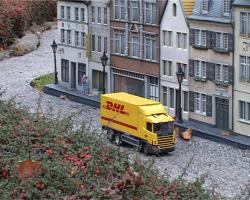
Cargo Cult, 2006 - 7:52 min. animation and video, no sound Cargo Cult starts as a video poem on the courier company DHL, showing rudimentary silhouettes of mountains and valleys. The landscape is travelled through by a container bearing the DHL logo. It is a romantic abstraction of the travelling of goods, over the mountains, through the valleys, across the universe. The DHL-container is depicted in isometric perspective, the mountains and the valleys are the same image turned up-side down. Distance is reduced through -or maximised to- flatness. The second (video-) part of Cargo Cult shows miniature DHL-airplanes, trucks and trains driving through mini-Europe; a theme-park in Brussels which gathers scale-models of all the architectural monuments from the different EU-member states (Berlin wall, Eiffel tower, Big Ben, etc.). More than merely a sponsor of mini-Europe, the DHL transport-network spreads over the park like a supra-national monument. Cargo Cult is a science fiction poem in which the courier company manipulates depth and distance at will, and the goods travel for their own sake and have their own drive. Cargo Cult should be projected or shown on a single-channel monitor in endless loop.
Michael Van den Abeele °1974 - Brussels, Belgium Michael Van den Abeele is a visual artist who lives and works in Brussels. He is also co-curator of the Brussels based art-centre Etablissement d`en face. links: www.youtube.com/watch?v=4wXzrjVHj_M www.pilotlondon.org www.etablissementdenfaceprojects.com
Michael Van Den Abeele
the Sausage Party #2 (the mud club)
Video installation | dv | color and b&w | 4:24 | Belgium | 2008
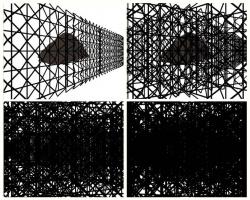
The Sausage Party is a video series. Each part shows a certain social atmosphere in which neurotic and compulsive actions are combined with optical patterns or effect. Shared regression and social cohesion dissolve in each other. The Sausage Party #2 is the most cryptic of the series. Starting with a heap of mud which is encompassed by a fence. Gradually obscured by a growing amount of moving fences, the heap of mud becomes a sort of dirty shapeless treasure/centre. Finally, it transforms into an old-fashioned street-fight (copied from an early how to make cartoons-handbook). Slowly zooming, the swirling fight dissolves into a hypnotising stroboscopic effect, much like Brion Gysin?s dream-machine. The Sausage Party #2 is the most abstract of the series, working with the most optical effects. The fence returns as a visual theme in the Sausage Party #4 (Europa Vostra), where it functions as a classicist fence in an Arcadian landscape.
Michael Van den Abeele °29-05-74 links: www.pilotlondon.org www.youtube.com/watch?v=4wXzrjVHj_M www.etablissementdenfaceprojects.com Exhibitions (selection) 2008 -Curiosität, galerie Micheline Szwajcer, Antwerp, Belgium -With Love from Brussels, VanAbbe Museum, Eindhoven, NL -CAC, Museo de Arte Moderno Toluca, Mexico -Europa Vostra, Trafu, Budapest, Hungaria -Losing Control, de Garage, Mechelen, B 2007 -Rencontres Internationaux, Centre Pompidou, Paris, FR -18, l?Observatoire, Maison Gregoire, Brussels, B -"Vanaf nu!..", LLS 387 (organised by Ulrike Lindmayer, Willem Oorebeek and Ricardo Brey), Antwerp, B -Breughel`s View (part of Commitment), BKSM Mechelen, B -GHB, Van Abbe museum, Eindhoven, NL 2006 -Choose Choice (with Jos deGruyter & Harald Thys), de Brakke Grond, Amsterdam, NL -Le Bonheur, Brussels, B 2005 -Emergency Biennal, Matrix Art Projects, Brussels -Madrid - Grozny -Ambassador, Public> Paris, F 2004 - Shoner Wohnen, New center for contemporay art Waregem, curated by Moritz Kung, B - Visa for 13, PS1, contemporary art center, curated by Jimena Blasqez, NY, USA - Working ethics, Krinzinger Projecte, curated by Philip Pirotte, Vienna, Austria 2003 - Participant of the PS1 contemporary art center, studio program, NY-USA -Viva Romantica, NICC Free Space - KMSK (museum of fine arts), Antwerp, B -?split pick up?, a group-project with A. Hendrickx, G. Lester, B. Rebetez & K. Dedecker, STUK, Leuven, B 2002 -Le vent à double tranchant, Archetype, Kanal 11, Brussels, B -Permanent installation at the ?house of Flemisch representation in Paris?, F -?Haunted house of Arts? Gallery Outline, Amsterdam, NL - Paramount Basics (extended), Muhka, curated by Richard Venlet and Moritz Kung, Antwerp, B 2001 -Flat Space, architecture & virtual space, de Witte Zaal, Ghent, B -Parcours d?incidents, de Ateliers, Amsterdam, NL -Prix du Jeune peinture Belge, Palais des Beaux Arts (BOZAR), Brussels, B 2000 -Etablissement d?en face, Brussels, B -Orbis Terrarum, Plantyn-Moretus museum, curated by Moritz Kung, Antwerp, B -3-ness, in Museum Dhont-Daenens (MDD), curated by Edith Dove, Deurle, B -SubRosa, Ateliers Iternationaux d?Alsace et de Lorraine, curated by Eva Gonzales Sancho, Phalsbourg, F 1999 -JARS 1, curated by Guilaume Bijl, Kunstcentrum-Sittard, Netherlands, NL -Young @ all.ages, Deweer Art gallery, Otegem, B -Small Stuff (organised by Hans Theys), Klagsbrun gallery, NY, USA -Small Stuff (organised by Hans Theys), Herman Teirlinckhuis, Beersel, B Residencies -Artist residence in France ?Ateliers Iternationaux d?Alsace et de Lorraine?, France, 2000 -PS1, contemporary art center, studio program, NY-USA, 2003 -Platform Garanti, Istanbul, Turkey, 2008
Zeno Van Den Broek
Paranon
Multimedia performance | 0 | | 20:0 | Netherlands | 2020
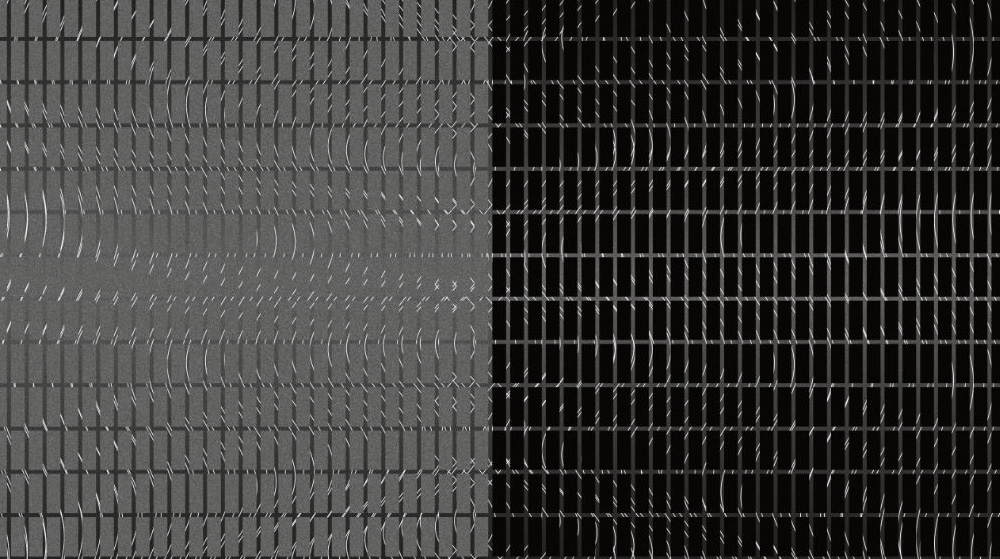
Paranon consists of two compositions based on parameter canons of sine wave generators. The canon is a counterpoint-based compositional technique that creates one or more imitations of a musical movement after a given duration. These imitations replicate the initial movement with transformations of parameters. The custom programmed sine wave generators Zeno van den Broek uses on Paranon make it possible to generate interference, shift phases and alternate frequencies with great precision. The method of the canon creates tension and unexpected, yet cherished, results between the initial sine wave and the imitations that follow. These two concise compositions delve into the beauty of pure sound and explore the richness of colliding sound waves that create spatial events wherever Paranon is being listened to.
Zeno van den Broek is a Dutch-born, Copenhagen-based composer and artist. Van den Broek works in a multi-sensory way to research and express physical, social and acoustic notions. He utilises audiovisual means to create site and concept specific works. This trans-disciplinary method has a strong conceptual foundation, originating from a background in architecture, which enables Zeno to comprehend and reveal the richness and complexity of spatial, visceral and physical perception. He works with a characteristic artistic language based on minimalist and fundamental elements such as sine waves, lines, noise and grids. Zeno van den Broek works with esteemed institutes such as the Gaudeamus Foundation, LIMA and the Old Church of Amsterdam. He presents his work at venues and festivals such as International Film Festival Rotterdam, Sonic Acts and Rencontres Internationales. His music has been released by labels such as Moving Furniture Records, Unsounds and The Tapeworm.

Emmanuel Van Der Auwera
White Cloud
Experimental doc. | digital | color | 19:0 | Belgium | 2024
In a remote industrial site in Inner Mongolia, miners extract a strategic resource essential to our way of life under dramatic human and environmental conditions. This is where 80% of rare earth minerals, essential to the manufacture of digital technologies, come from. A miner working on the site shares his thoughts on his life and working conditions. White Cloud is a film developed with generative AI that offers a unique perspective on the Bayan Obo mining district. While questions of geopolitics, ecology, capitalism, conspiracy and future scenarios run through the film, the essence is the testimony of a lone miner in search of a better future.
Emmanuel Van der Auwera (b. 1982, BE) works multidisciplinary with video, theater, sculpture, printmaking and often in tension between art and technology, reality vs. simulation and the trivialization of violence. Finding his material in the rampant image production of a global screen culture, he is interested in the meaning of images and how they depict reality while at the same time constructing it. Van der Auwera is the winner of the Goldwasserschenking awarded by WIELS and the Belgian Royal Museums of Fine Arts. His work has been featured in exhibitions at the Pinakothek der Moderne, Munich; WIELS, Brussels; Centre Georges Pompidou, Paris; Palais de Tokyo, Paris; Centro per l’Arte Contemporanea Luigi Pecci, Prato and the HeK - House of Electronic Arts, Basel; amongst others. In 2023, Van der Auwera's work was presented in exhibitions at the Biennale internationale des arts numériques de la Région île-de-France (Paris, FR), Z33, House for Contemporary Art, Design & Architecture (Hasselt, BE). In 2024, his work was shown in the Biennale de l’Image en Mouvement 2024 - BIM 24 (Geneva, CH), KW Institute for Contemporary Art (Berlin, DE), 8th Yokohama Triennale (Yokohama, JP), Kunsthal Charlottenborg (Copenhagen, DK), Kunstverein Hamburg (Hamburg, DE), Deichtorhallen Hamburg (Hamburg, DE), and Royal Academy of Fine Arts (Antwerp, BE).

Zeno Van Der Broek
Shift Symm
Multimedia performance | hdv | black and white | 20:0 | Denmark, Netherlands | 2018
The Shift Symm collection is a series of brutal, abstract audiovisual constructions. Raw, exposed electronic textures collide in oscillating patterns of drift. Van den Broek’s sculptural sonic architecture plays on rigorous shifts of compositional symmetry – with results that are both hypnotic and evocative. Shifting is a key principle in the work. Visual and sonic elements – beats, lines and blocks – perpetually breach the symmetry of their arrangements, switch to new paths and start new trajectories. In chains of transformations, order gives way to controlled entropy. Shift Symm is presented as a video triptych, a live a/v performance and a digital album
Zeno van den Broek is a Dutch-born, Copenhagen-based composer and artist. Van den Broek works in a multi-sensory way to research and express physical, social and acoustic notions. He utilizes immaterial, digital and temporal means to create site and concept specific works. This trans-disciplinary method has a strong conceptual foundation, originating from Zeno his background in architecture, which enables him to comprehend and reveal the richness and complexity of spatial, visceral and physical perception. Zeno van den Broek has been commissioned work by various esteemed institutes and festivals such as the Gaudeamus Foundation, SPOR Festival and the Old Church of Amsterdam. He has presented work at venues and festivals such as International Film Festival Rotterdam, Fiber at CTM Vorspiel, Click Festival and Gaudeamus Festival. His work has been presented by among others: LIMA, VPRO Vrije Geluiden, Sedition and TheBillboardCollective – Los Angeles.
Guido Van Der Werve
Nummer drie (take step fall)
Experimental film | 16mm | color | 10:38 | Netherlands | 2004
Take step fall, a true story in which everthing and everyone gives up hope.
Guido van der Werve, born 7th. of april 1977 in Papendrecht, studied audiovisual arts at the Gerrit Rietveld Academie in Amsterdam, where he graduated in 2003. Before that he studied piano for a short period at the Rotterdam Conservatory. Starting out registrating performances on video, he changed later to working with film, a crew, his own piano playing and cinematographic elements. In this later work he makes short abstract stories based on elements that fits his state of mind. Guido van der Werve works is shown both in the art- and the filmcontext. With his graduation film; ?Nummer twee?, he won the René Coelho award from the Netherlands Institute for media art. His later film; Nummer drie got nominated for the NPS short film prize, and recently his oeuvre got nominated for the prestigues dutch state art award;? The prix de Rome?.
Guido Van Der Werve
Nummer vier
Experimental fiction | 16mm | color | 11:48 | Netherlands | 2005
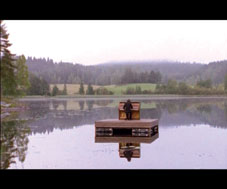
Some things are as inevitable as gravity, however much we would like to avoid them: something with which the subtitle of this short film whole-heartedly agrees. In "Nummer vier", Guido van der Werve presents a contemporary form of spleen: nineteenth-century melancholy, mixed with Dutch sobriety and conceptual timing. Over and over again, we see an unlikely scene unfolding against a picturesque and serene background. A man playing a piano on a raft in the middle of a smooth lake; a choir and orchestra performing a requiem on a ship under sail; someone falling from the sky. Nothing world-shattering, but these are the ingredients with which "Nummer vier" introduces the important issues: nature, art, beauty, life, death. Subjects that no one can avoid, neither as a human being nor as an artist, but that can be defied ? just as gravity.
Guido van der Werve is an Amsterdam based artist, born on the 7th of April 1977 in Papendrecht, a suburb near Rotterdam, The Netherlands. Guido van der Werve studied art at the Gerrit Rietveld Academie and the Rijksakademie van Beeldende Kunsten in Amsterdam. Besides this he studied classical piano, Russian language and culture and Classical Archaeology. He is also working as a lecturer and teacher. His work consists of performance based films. Van der Werve's work has been shown numerously in both the major art and film venues. He received the René Coelho Award (of the Netherlands Media Art Institute, Montevideo/TBA) in 2003. He was nominated in 2004 for the NPS short film award, and in 2005 for the Prix de Rome in The Netherlands. Currently he is being represented by Gallery Olaf Stueber in Berlin, Gallery Monitor in Rome and Gallery Juliette Jongma in Amsterdam.
Guido Van Der Werve
Nummer vier
Experimental fiction | dv | color | 12:0 | Netherlands | 2005
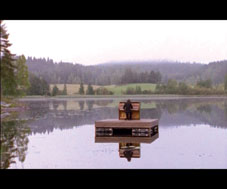
Some things are as inevitable as gravity, however much we would like to avoid them: something with which the subtitle of this short film whole-heartedly agrees. In "Nummer vier", Guido van der Werve presents a contemporary form of spleen: nineteenth-century melancholy, mixed with Dutch sobriety and conceptual timing. Over and over again, we see an unlikely scene unfolding against a picturesque, serene background. A man playing a piano on a raft in the middle of a smooth lake; a choir and orchestra performing a requiem on a ship under sail; someone falling from the sky. Nothing world-shattering, but these are the ingredients with which ?Nummer vier? introduces the important issues of nature, art, beauty, life, and death. Subjects that no one can avoid, neither as a human being nor as an artist, but that can be defied ? just as gravity.
Guido van der Werve is an Amsterdam based artist, born on the April 7, 1977, in Papendrecht, a suburb near Rotterdam, Holland. Guido van der Werve studied art at the Gerrit Rietveld Academy and the Rijksakademie van Beeldende Kunsten in Amsterdam. Besides this he studied classical piano, Russian language and culture, and Classical Archaeology. He also works as a lecturer and teacher. His work consists of performance based films. Van der Werve's work has been shown numerously in both the major art and film venues. He received the René Coelho Award (of the Netherlands Media Art Institute, Montevideo/TBA) in 2003. He was nominated in 2004 for the NPS short film award, and in 2005 for the Prix de Rome in The Netherlands. Currently he is being represented by Gallery Olaf Stueber in Berlin, Gallery Monitor in Rome, and Gallery Juliette Jongma in Amsterdam.
Guido Van Der Werve
Nummer zes
Experimental video | dv | color | 17:9 | Netherlands | 2006
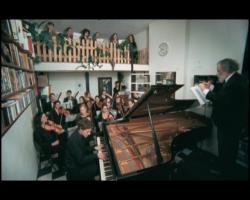
A text against a somewhat grubby black background explains how the maker, ever since he was six years old, was in the habit of furnishing his room in only black and white; how one day a ray of sun reached his wall via a reflection from the façade of a glass building on the other side of the street, and how at night when he cannot sleep he goes for a walk and can hardly see a star in the sky. The camera zooms out and the black field turns out to be part of the black-and-white chequered floor in the artist?s apartment. He is sitting on a stool at his upright piano, with his back to the keyboard, immersed in thought. The voice-over recounts the history of Steinway & Sons? grand piano, and how very few pianists are privileged enough always to be able to play on such an instrument. The quay on which the apartment without grand piano is situated comes into view, and we can see Van der Werve continuing his musing, in the window of a pub, near a bridge, in a Chinese snack bar, while the Steinway seems to get further and further out of reach. Finally, we see him gazing through the window of a famous piano retailer that for many years stood in the heart of Amsterdam. Once inside, a brief conversation takes place with an eager shop assistant about the chosen concert grand piano, its price and ?possibilities?. As viewer, your heart sinks into your shoes. But then, the dream seems to have become true: the music swells, we can see the insides of a shiny black grand piano and Van der Werve?s hands playing the virginal white keys as if he has effortlessly been able to transport himself into the history just recounted. An entire chamber orchestra, conductor and all, fills the black-and-white room to accompany him in the playing of Chopin?s first piano concerto.
Guido Van Der Werve was born in 1977 in Papendrecht, a Rotterdam suburb. He studied archeology and Russian at university and then joined the Rotterdam Conservatoire to study piano and the Gerrit Rietveld Academy in Amsterdam. He is a residing artist at the Rijksakademie in Amsterdam. Eversince his first works, he has been interested in filmic support and cinematographic language and mixes narrative sequences with performances. The keys to his works always are the performance, the music and atmospherique scenes. He works using long shots and never solicits professional actors.
Guido Van Der Werve
Nummer Vier
Experimental fiction | 35mm | color | 11:45 | Netherlands | 2005
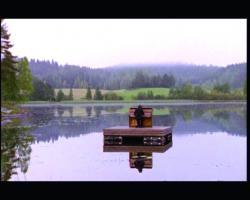
Some things are as inevitable as gravity, no matter how much we would like to avoid them: something with which the subtitle of this short film whole-heartedly agrees. In "Nummer Vier", Guido van der Werve presents a contemporary form of spleen: nineteenth-century melancholy, mixed with Dutch sobriety and conceptual timing. Over and over again, we see an unlikely scene unfolding against a picturesque, serene background. A man playing a piano on a raft in the middle of a smooth lake; a choir and orchestra performing a requiem on a ship under sail; someone falling from the sky. Nothing world-shattering, but these are the ingredients with which "Nummer vier" introduces the important issues: nature, art, beauty, life, death; subjects that no-one can avoid, neither as a human being nor as an artist, but that can be defied ? just as gravity.
Ludivine Van Gaver
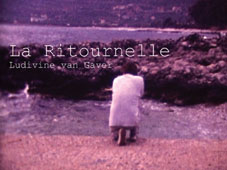
La ritournelle
Experimental video | dv | color | 8:40 | France | 2005
I ask myself: When do I hum? I say: I hum on three occasions. I hum when I move around my territory and clean my furniture. Meaning when I am home. I hum when I am not at home and trying to return home, when the night falls, the hour of anguish. I look for my way and give myself courage by singing tralala. I am going towards home. And then I hum as I say: Adieu, I am leaving and in my heart I will take heart...
Ludvine van Gaver studied montage at the Fémis after studying at the Ecole du Louvre and the Paris University 8 in Fine Arts. She is a film editor, a video director, and a photographer. She works and lives in Paris and Berlin.
Bas Van Koolwijk
FBCK/AV - Red flag
Experimental video | dv | color | 2:59 | Netherlands | 2005
"FBCK/AV - Red Flag" provokes the observer with a penetrating sound and a flickering red image that refuses to take on a recognizable form. In order to generate this image, Bas van Koolwijk developed software which, again and again, transforms the input of audio and video signals into unique abstractions. Small doses of these signals can poach on each other's preserves, so that the computer converts sound information into image and image into sound ? a matter of data feedback. The resulting interference looks a bit like flagging, a term and phenomenon from the times of video tapes. Flagging occurs when a video tape does not run smoothly through the recorder, and the phenomenon is usually visible in the upper part of the image. With this reference to the analogue era, the viewer's thoughts are taken even further 'back', towards the capricious and chaotic nature of flags fluttering in the wind. But is also refers to the Babel-like confusion that governs this digital era due to the fact that (with all the codecs and formats) much of the software available only provides for limited readability and exchangeability of data.
Bas Van Koolwijk
FBCK/AV Red Flag
Experimental video | dv | color | 6:8 | Netherlands | 2005
"FBCK/AV - Red Flag" provokes the observer with a penetrating sound and a flickering red image that refuses to take on a recognizable form. In order to generate this image, Bas van Koolwijk developed software which, again and again, transforms the input of audio and video signals into unique abstractions. Small doses of these signals can poach on each other's preserves, so that the computer converts sound information into image and image into sound ? a matter of data feedback. The resulting interference looks a bit like flagging, a term and phenomenon from the times of video tapes. Flagging occurs when a video tape does not run smoothly through the recorder, and the phenomenon is usually visible in the upper part of the image. With this reference to the analogue era, the viewer's thoughts are taken even further 'back', towards the capricious and chaotic nature of flags fluttering in the wind. But is also refers to the Babel-like confusion that governs this digital era due to the fact that (with all the codecs and formats) much of the software available only provides for limited readability and exchangeability of data.

Jan Van Nuenen
Evolizer
Experimental video | dv | color | 15:0 | Netherlands, Germany | 2007
Evolizer NL, 2007, 10`37? In a space that looks like a town or a factory, but could just as well be the inside of a computer, a robot-like figure is moving along. The camera zooms in on a kind of small cabinet that seems to suck the viewer in. Some elements are being added to this technological, geometric environment, which bring about rearrangements and transformations here and there. Spontaneous modulations create a proliferation of colourful, organic forms. With their tentacles grasping around them, these organisms gradually and increasingly take possession of the space. An aquarium-like underworld, in which an aggressive struggle for life is taking place, then replaces the orderly universe where the viewer?s trip began. This (r)evolution, unfolding within a well-defined space, breaks out of the cabinet before the eyes of the little figure, and continues outside it.
Jan Van Nuenen
Warning, petroleum pipeline
Experimental video | dv | color | 4:50 | Netherlands | 2004
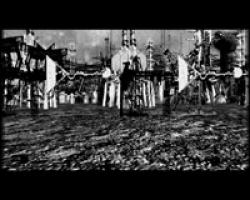
"A desolate and deserted landscape slowly turns into a futuristic industrialized world. Indescribable machines are connected up to more complex mechanisms which rhythmically produce industrial music."
"After studying audio-visual design at St. Joost Art Academy in Breda, Netherlands, from 1997 to 2002, Jan Van Nuenen mainly worked on short experimental animation films and video installations until 2005. His favourite tools are digital editing software such as After Effects, Photoshop, Premiere, Reactor and FL Studio. His films are mostly made from collages of video footage he finds and pictures he cuts, mixes and edits with the computer. His work is characterized by a combined and complex action of loops, repetitions and rhythms, in which sound plays a major role. Jan Van Nuenen also made short animations movies for the series of the Dutch channel VPRO, "Wonderland" (2004), and his films are shown in several international film, video and art festivals."
Jan Van Nuenen
Warning Petroleum Pipeline
Animation | dv | black and white | 4:45 | Netherlands | 2004
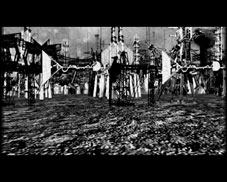
The movement of information across the worldwide web is invisible. Bits and bytes slip soundlessly through slender cables, to arrive, in no more than a split second, at the computer for which they are meant, where they can be used again at the click of a mouse. In contrast, the movement of oil is a messy and ponderous affair, which makes huge claims on the landscape and built-up areas. Bulky, rusty pipes traverse the fields, while trucks and tankers toil slowly over roads and oceans, accompanied by the threat of pollution and explosion. Both processes have drastically changed the world, and continue to keep economic and political relations on the alert. With its black-and-white collage-like images, "Warning Petroleum Pipeline" is reminiscent of art that, in the early twentieth century, was intended to depict the destructive power of the heavy emerging industry. Mysterious machines turn and hammer to a strict rhythm, and seem to be propagating themselves, creating a forest of moving components, sharp-edged plates and heavy cables. The fluent digital animation is a dark vision that not only shows destruction, but also, paradoxically, the uncontrollable creative power by which an industry can bring itself to fruition.
Wendelien Van Oldenborgh
Instruction
Experimental doc. | dv | color | 30:0 | Netherlands | 2009
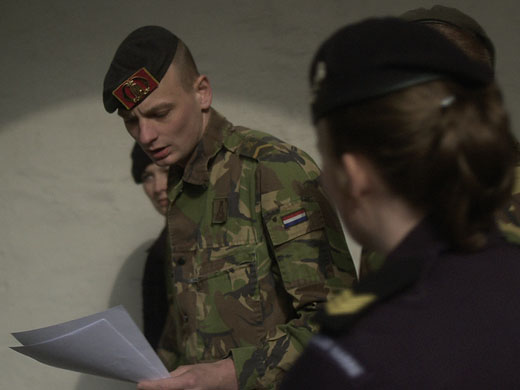
The work of Wendelien van Oldenborgh often questions the position of the individual in a larger political framework and in a punitive social environment, challenging notions of personal and collective responsibility. Her film Instruction (2009) begins with William Faulkner`s famous quote from his book Requiem for a Nun: `The past is never dead. It`s not even past`. It addresses the unresolved traumatic events of the Dutch military intervention in Indonesia following World War II, euphemistically called a `police action`. The film casts a group of young cadets from the Royal Netherlands Military Academy who perform a script consisting of excerpts and quotes from different sources: personal diaries, historical broadcast transcripts related to the topic and essays, that all in a more or less direct way tackle collective responsibility and the heritage of the colonial past. The installation includes two photographs taken by the artist`s father during a trip to Indonesia in 1981. This was the first visit to the country by the artist`s mother since she spent four years in an Indonesian concentration camp after wwii. Instruction is located in the space between real people and the imaginary protagonists they represent; the artist leaves in a moment of dislocation in which young cadets stop to obediently follow the instructions of the script whilst spontaneous reactions of laughter or awkwardness are activated by their reading of the dialogue.
Lives and works in Rotterdam She studied at Goldsmiths College and Beaux Arts Paris, and now lives and works in Rotterdam, where she develops complex structures of collaborative work using the cinematic as methodology to focus on small actions and gestures in the public sphere that are taken as displayers of lager social conditions.
Wendelien Van Oldenborgh
Obsada
Experimental doc. | 4k | color | 34:23 | Netherlands, Poland | 2021
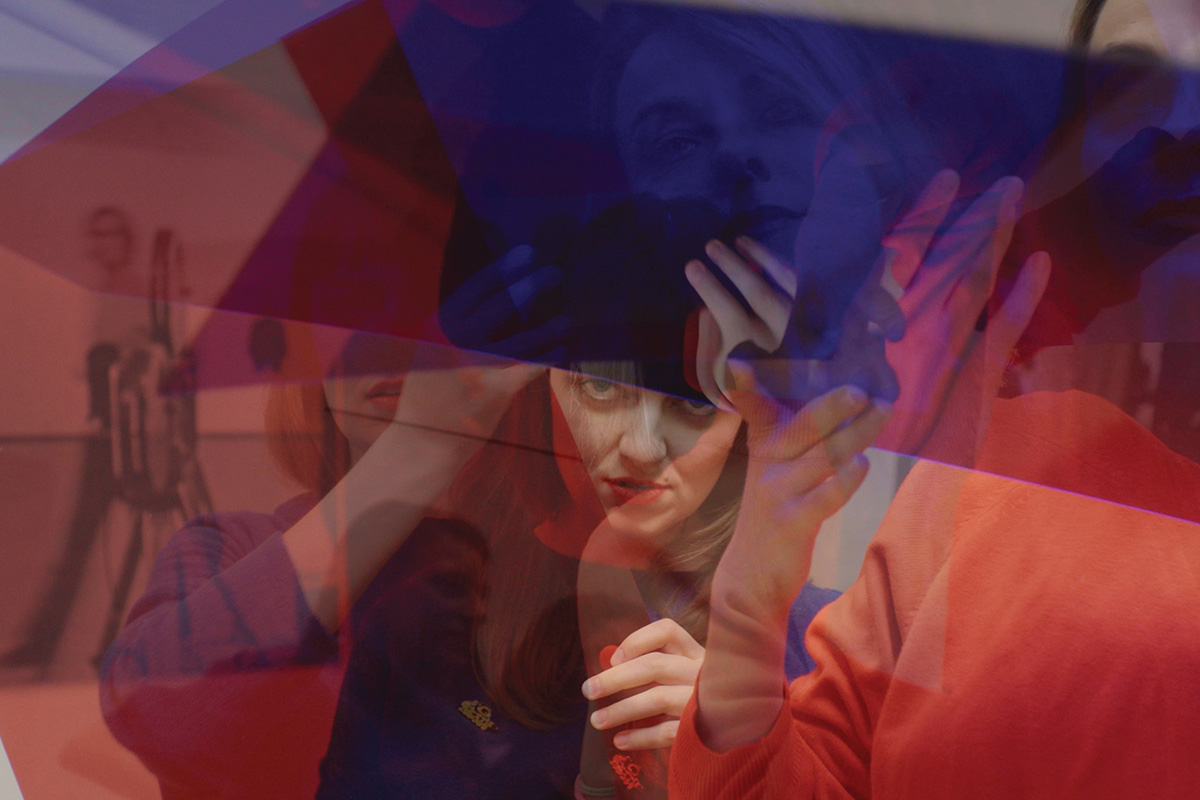
The Polish word “obsada" means "film cast” but can also mean "working party" - it connotes the distribution of work positions as well as placing of a plant in the ground. Wendelien van Oldenborgh’s obsada, is a collaboration with an all-female film crew, who are at the same time the film’s cast. It is an attempt to propose non-patriarchal narratives and methods of work. Involving a group of MA and PhD students from the Lodz Film School, the change they strive for does not consist simply in replacing men with women in film production; rather, the work develops in an open and improvised process – sensitive to the context of the place and the polyphony of the team. The women’s individual and collective experiences resonate with locations in the Film School and in Muzeum Sztuki in Lodz.
Wendelien van Oldenborgh develops works, whereby the cinematic format is used as a methodology for production and as the basic language for various forms of presentation, collaborating with participants in different scenarios, to co-produce the script. With these works, always shown in specially developed architectural settings, she shows widely in the art and museum context. Recent solo presentations include: unset on-set at Museum of Contemporary art Tokyo (MOT) 2022/23, tono lengua boca at CA2M Madrid 2019-20; Cinema Olanda, at the Dutch Pavilion in the 57th Venice Biennial 2017. Her work was recently included in Sonsbeek 20->24, Arnhem 2021; of bread, wine, cars, security and peace… at Kunsthalle Wien, 2020; Chicago Architecture Biennial 2019, Singapore Biennial 2019.

Wendelien Van Oldenborgh
Of Girls
Experimental doc. | 4k | color | 43:13 | Netherlands, Japan | 2023
Filmed in Tokyo and Yokohama, of girls brings a variety of contemporary voices in resonance with two distinct female voices from Japan’s literary and political past. Both popular authors of their time—the period from the late 1920s on—Fumiko Hayashi and Yuriko Miyamoto both died young, in 1951. They each had a strong feminist and class consciousness as well as an impressive literary voice, but came from very different backgrounds and expressed their ideals through different paths. The power and contradictions in both these women’s words reverberate in dialogues and images of an intergenerational cast moving through the various spaces of knowledge, memory and culture, and reflect today’s struggles around gender, politics, and love
Wendelien van Oldenborgh develops works, whereby the cinematic format is used as a methodology for production and as the basic language for various forms of presentation, collaborating with participants in different scenarios, to co-produce the script. With these works, always shown in specially developed architectural settings, she shows widely in the art and museum context. Recent solo presentations include: unset on-set at Museum of Contemporary art Tokyo (MOT) 2022/23, tono lengua boca at CA2M Madrid 2019-20; Cinema Olanda, at the Dutch Pavilion in the 57th Venice Biennial 2017. Her work was recently included in Delinking and Relinking, collection presentation van Abbemuseum 2021-2026; Sonsbeek 20->24,, Arnhem 2021; of bread, wine, cars, security and peace… at Kunsthalle Wien, 2020; Chicago Architecture Biennial 2019, Singapore Biennial 2019. Her films Two Stones (2019) , Hier. (2021) and of girls (2023) premiered in the International Competition of FID Marseille.
Wendelien Van Oldenborgh
Hier.
Experimental doc. | 4k | color | 27:34 | Netherlands | 2021
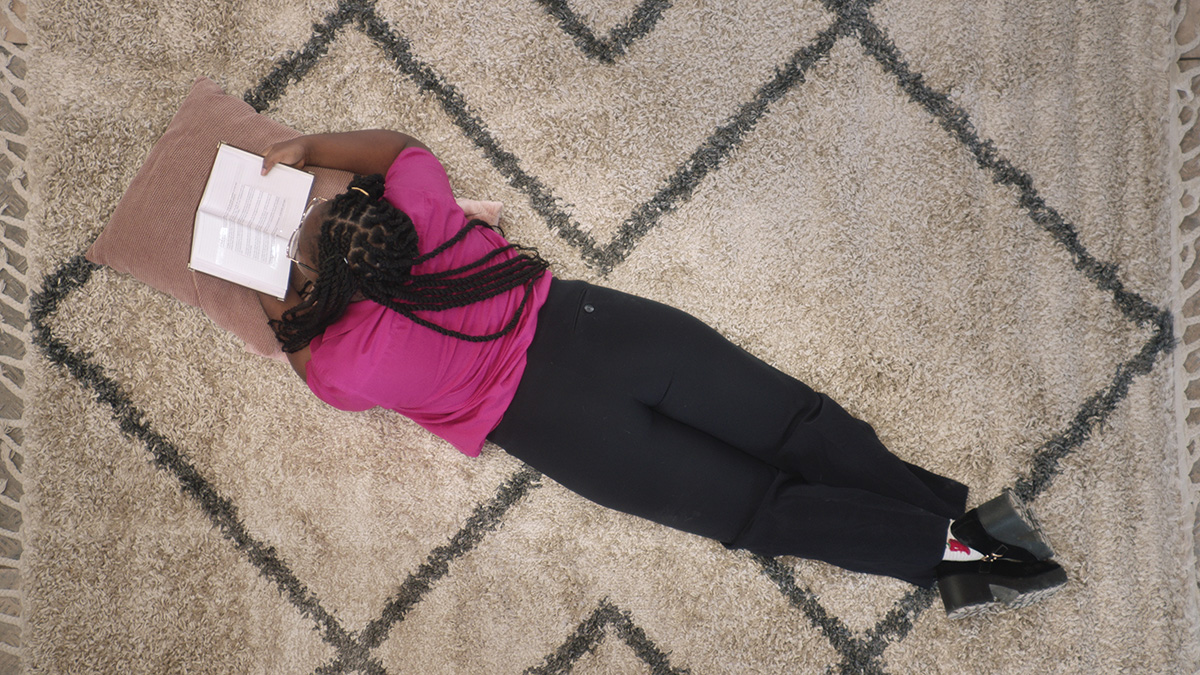
Hier.(2021) moves seamlessly between politically charged reflections and personal memories through a constellation of voices and lyrical material. In Museum Arnhem (NL) during its renovation - a place of conservation in transition - we meet a cast of young women who express themselves through music, poetry and dialogue. Together they sensitively explore themes such as hybridity, trans-nationality and diasporic sensitivities in the midst of persistent reverberations of colonial history in contemporary society. Alongside the cast, the location Museum Arnhem, is also a meaningful “voice”. Originally built in the late 19th century as an ‘outdoors club’ by people with a colonial past, we see the building stripped down to its foundation, with worn concrete and elegant art nouveau features located next to each other. In this site of rubble and potential we follow three ‘sonic lines’: the band FRED, poet Pelumi Adejumo and historian Lara Nuberg. With music and poetry, we encounter not only socio-political urgencies, but also undercurrents of existentialist and vulnerable themes. Tenderly yet confident, we see the protagonists in friendship and cooperation, we hear about love, the sorrow that comes with it, life questions and certainties, by which they express the basis for a changing possible future.
Wendelien van Oldenborgh develops works, whereby the cinematic format is used as a methodology for production and as the basic language for various forms of presentation, collaborating with participants in different scenarios, to co-produce the script. Recent solo presentations include: work, work, work (work) at Museum Sztuki in Lodz 2021; tono lengua boca at Fabra i Coats, Barcelona 2020 and CA2M Madrid 2019-20; Cinema Olanda, at the Dutch Pavilion in the 57th Venice Biennial 2017. Van Oldenborgh has exhibited widely including the Chicago Architecture Biennial 2019, bauhaus imaginista, HKW Berlin 2019, Stedelijk Museum Amsterdam 2020 and Sonsbeek20->24, Arnhem 2021.
Wendelien Van Oldenborgh
Two Stones
Experimental doc. | hdv | color | 61:15 | Netherlands, Germany | 2020
Two Stones explores the trajectories and ideals of the Bauhaus-trained, German architect Lotte Stam-Beese and the Caribbean activist and writer Hermina Huiswoud through dialogues and appearances by contemporary protagonists. Both Stam-Beese and Huiswoud spent time working in the Soviet Union in the early 1930s and both ended up being active in the Netherlands after WWII. Two Stones was filmed in the 1930s constructivist district of KhTZ in Kharkiv, Ukraine, the first large housing project on which Lotte Stam-Beese worked, and in Stam-Beese’s celebrated 1950s Pendrecht, designed during her period as Rotterdam’s main architect/urban planner. In the 1970s, Hermina Huiswoud was agitating against the Rotterdam housing rule, which limited Caribbean Dutch inhabitants to settle in any of the city’s districts if their presence would exceed 5% of the population. Resonances as well as dissonances between the distinct trajectories of the two women and their expectation from communist ideology, are sensed through thoughts and experiences of the protagonists, who all have a personal or professional relation to the issues at hand. Two Stones (2020), is a single image edit with two soundtracks played sequentially.
Wendelien van Oldenborgh develops works, whereby the cinematic format is used as a methodology for production and as the basic language for various forms of presentation, collaborating with participants in different scenarios, to co-produce the script. With these works, which look at the structures that form and hinder us, she participated in various large biennials, and in smaller dedicated shows. Recent solo presentations include: tono lengua boca at CA2M Madrid 2019-20 and Fabra i Coats Barcelona 2020; Cinema Olanda, at the Dutch Pavilion in the 57th Venice Biennial 2017. Van Oldenborgh has exhibited widely including at Kunsthall Wien 2020, Stedelijk Museum amsterdam 2020, the Chicago Architecture Biennial 2019, bauhaus imaginista, HKW Berlin, Zentrum Paul Klee Bern 2019 and SALT Istanbul 2020. Van Oldenborgh is a member of the (Dutch) Society for Arts and a recipient of the Dr. A.H. Heineken Prize for Art (2014). A monographic publication, Amateur, was published by Sternberg Press, Berlin; If I Can’t Dance, Amsterdam and The Showroom, London in 2016.