Catalogue > Search
Results for : Tout le catalogue

Kim Sungeun
A Voyeur?s Diary
Experimental doc. | hdv | color | 23:19 | Korea, South | 2013
Can Sungu
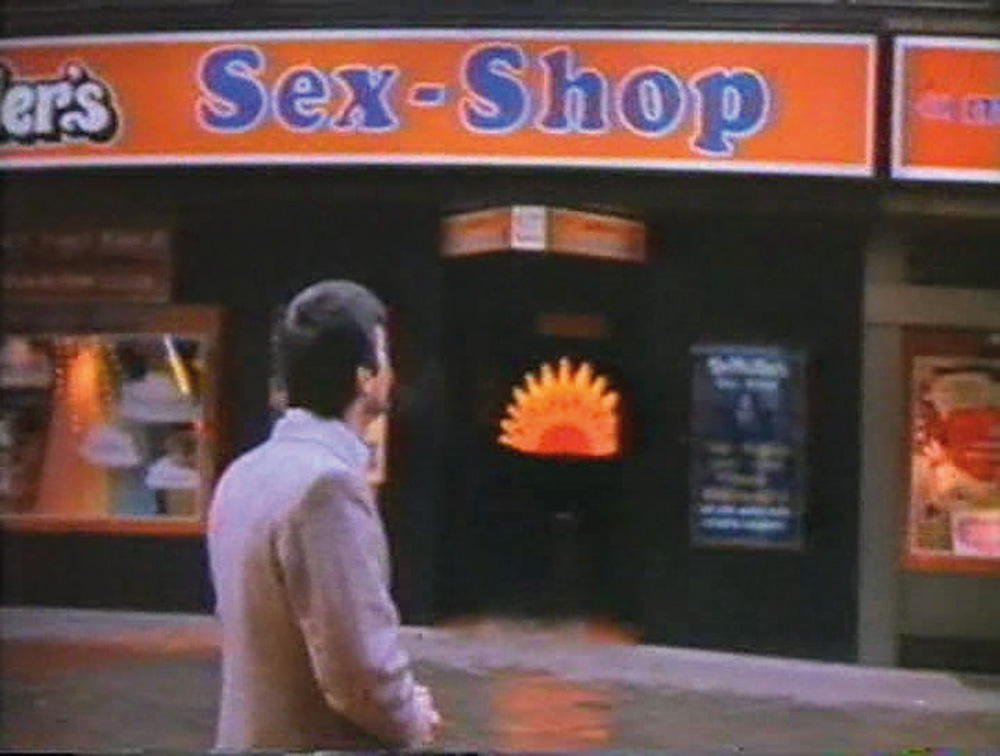
Replaying Home
Video | hdv | color | 30:0 | Turkey, Germany | 2013
In the early 1980s, VHS video recorders had become widespread in Germany and in a very short time they were also well accepted by many Turkish immigrants there. The lack of sufficient German language skills, as well as the fact that the content of German television broadcasting was not targeting the Turkish audience at all, led Turkish immigrants increasingly to rent videotapes. The video nights were a sort of social event including neighbours and family. Watching videos was accepted as a pleasant and family-friendly alternative to going out and getting attached to German-dominated cultural life. A lot of Turkish video companies opened up in Germany and imported movies to transfer them on videotapes. Some of these companies also produced low-budget video movies targeting the Turkish audience in Germany. Due to digital revolution, these companies were not able compete against digital TV and online videos and closed one after another. Some of the movies which were only released on videotapes, are now in danger of disappearing forever. Replaying Home is a video collage including selected cuts from these Turkish movies shot in Germany during the 1970s and 1980s and invites on a journey through a fictive universe based on stereotypes, culture shock, Occidentalism, homesickness and the traumas of migrant life.
Can Sungu was born in Istanbul, Turkey, studied Film (BA) and Visual Communication Design (MFA) at Istanbul Bilgi University and at the Institute for Art in Context in Berlin University of Arts (MA), gave courses on film and video production, facilitated workshops and took part in various exhibitions in Europe, such as at transmediale`14, Museum of Modern and Contemporary Art Rijeka and Künstlerhaus Vienna. In 2014 he co-founded the project space bi`bak in Berlin-Wedding where he works as project manager, artist and curator.
Outi Sunila
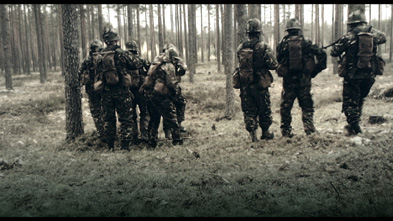
Platoon
Video | hdv | color | 7:40 | Finland | 2012
Blind soldiers are groping their way through a forest. Tight group is slowly shattered, leaving each man alone in the darkness.
Visual artist Outi Sunila (b. 1970) works mainly with video and installation art, experimenting with other media as well. For the past few years she has been focusing on both social and political themes in her works ? from the viewpoint of an individual. Her language is narratively minimal, portraying one scene without dialoque. She loads the scene and actions with symbolic values through which the story is told. Her works have been recently shown at exhibitions in MUU Gallery, Helsinki and S?rland?s Art Museum, Norway, as well as at festivals and screenings; FestArte Video Festival in Milan and Rome, Kakelhallen in Mariehamn and Waterpieces Festival in Riga. Sunila has works in collections of both Oulu and Helsinki Art Museums and Kiasma Museum of Contemporary Art. Outi Sunila (b. 1970) is currently living and working in Helsinki, Finland. She graduated in 2002 with an MFA from the Finnish Academy of Fine Arts, and in 2005 with an MA from University of Art And Design, Helsinki.
Jeanne Susplugas
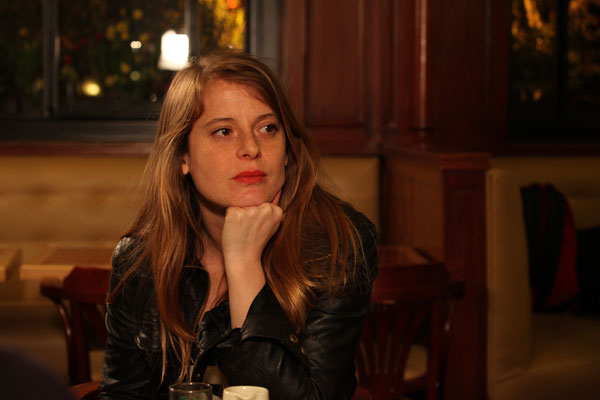
Iatrogène
Experimental video | hdv | | 10:0 | France | 2013
En 2006, Jeanne Susplugas commande un texte à l?écrivaine Marie Darrieussecq, lié à ses préoccupations. Marie Darrieussecq répond par un dialogue à trois, à la fois personnel, absurde, drôle et grinçant. Un des personnages a des malformations liées à la prise de Distilbène par sa mère pendant sa grossesse, comme l?écrivaine elle-même qui est par ailleurs l?image publique des enfants distilbène. Le film a été tourné au Café de Flore à Paris comme un hommage à la littérature et souligne le lien que l?artiste entretient avec celle-ci.
Jeanne Susplugas, née à Montpellier en 1974, vit à Paris. De la vidéo à la photographie, de l?installation au dessin, Jeanne Susplugas évolue dans un univers aussi séduisant qu?inquiétant avec comme préoccupations principales nos addictions et autres aliénations. Son travail a été exposé notamment au KW à Berlin, à la Villa Medicis à Rome, au Palazzo delle Papesse à Sienne, au Palais de Tokyo à Paris, au Fresnoy National Studio, au Musée d?Art Moderne de St Etienne, au Musée de Grenoble, à la Biennale d?Alexandrie et celle de Shangai, à Dublin-Contemporary ou Nuit Blanche à Paris. Ses films ont été présentés lors de festival tels Hors Pistes (Centre Pompidou, Paris), Locarno International Festival, Miami International Festival, Les Instants Vidéos à Marseille ou Les Rencontres Internationales Paris/Berlin/Madrid. Des articles lui ont été consacrés dans des revues et quotidiens tels Art Press, Art in America, New York Times, Le Monde, Le Figaro, Flash Art, L??il, Beaux-Arts Magazine, BT, Corona Boreal... Elle a bénéficié de plusieurs bourses de recherche dont celle du FIACRE (Délégation aux Arts Plastiques) pour travailler au Japon ou celle de la FNAGP et a effectué plusieurs résidences, notamment à Toronto au Canada, au Wyspa Institut of Art à Gdansk en Pologne et à Thaillywood en Thaïlande. Son travail est présent dans de nombreuses collections privées à travers le monde et publiques : FNAC (F) ; FRAC Haute-Normandie (F) ; FRAC Champagne Ardenne (F); Chocarro, Fundacio Vila Casas, Barcelona (S); Artothèques Lyon, Annecy (F) ; Musée du verre, Carmaux (F) ; Musée d?Art Contemporain, Sérignan (F) ; La Maison Particulière Art Center, Brussels (B); SONS Museum, Kruishoutem (B)?
Eve Sussman, Simon Lee
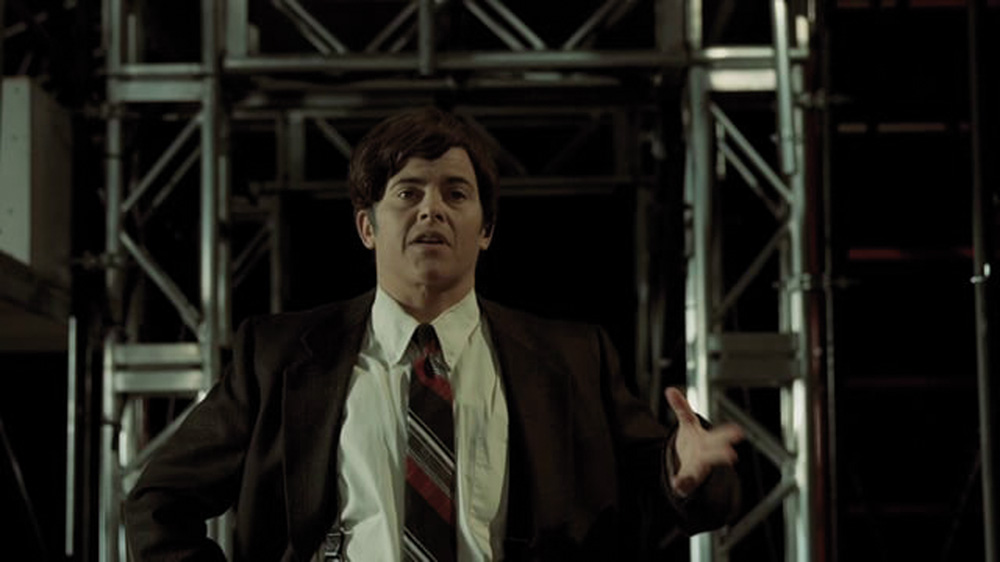
No Food No Money No Jewels
Video | 4k | color | 9:38 | USA | 2014
Dialogue is sourced from historical recordings by notorious public figures and performed verbatim within a fictitious factory setting. Problems infiltrate the water factory and life’s ambitions and problems come into play: food must be procured, water is wasted, a worker disappears and another, a mysterious woman –– a provocateur? a spy?––appears, loyalty is questioned, everyone is suspected, the break-room in the factory morphs into a courtroom where eventually everyone pleads the 5th… The public figures (Princess Diana, LBJ, Charlie Watts, John DeLorean, Marcel Marceau, Janice Joplin, Lance Loud and Jimmy Hoffa among many others) remain largely unidentified in NO FOOD NO MONEY NO JEWELS but their spoken characteristics fuel the piece using the themes that emerge from the source texts. Individual notions of labor and economy, conflicting work ethics and responsibility for commodity are addressed through the monologues’ repeated motifs of accusation, denial, betrayal, accountability, implications of guilt and fear mongering.
Eve Sussman is a Brooklyn-based artist and filmmaker who works independently and collectively with her partner Simon Lee and Rufus Corporation, founded in 2003. Along with Rape of the Sabine Women, and 89 Seconds at Alcázar, that debuted at the Whitney Biennial, the company has collaborated on other projects including Yuri’s Office, and whiteonwhite:algorithmicnoir . Rufus Corporation’s works have been exhibited and screened internationally and are included in the collections of the Museum of Modern Art, New York; the Whitney Museum of American Art, New York; the Philadelphia Museum of Art, Philadelphia; The Margulies Collection, Miami; Fundación La Caixa, Barcelona; and Centro Galego de Arte Contemporáneo, Santiago de Compostela, Spain. whiteonwhite:algorithmicnoir was recently acquired for the permanent collection of the Smithsonian American Art Museum. Simon Lee works in photography, video and installation. His work is said to often be “a powerful metaphor for the random flow of history and a low tech formal tour de force” (Holland Cotter, New York Times). His 2010 film collaboration with Algis Kizys, Where is the Black Beast? (2010) was shown at the Sagamore Collection in Miami, Zebra Poetry Film Festival Berlin, IFC Center in New York, and was an official selection at the 2011 Rotterdam Film Festival. Together with Sussman, he co-founded the “Wallabout Oyster Theater,” a micro-theater space run out of their studios in Brooklyn. Lee has exhibited at the Brooklyn Museum of Art; The Berkshire Museum, MA; Roebling Hall, New York; the Moscow International Film Festival; Musée d’Art Contemporain de Montreal; Poznan Biennale, Poland; The Rotunda Gallery, Brooklyn NY; Tinguely Museum, Basel, Switzerland; Espace Paul Ricard, Paris, France; and The Whitney Museum of American Art, New York. In addition to founding the Wallabout Oyster Theatre, Lee + Sussman have been producing for Jack+Leigh Ruby, to ex-con artists who are now directing videos including: Car Wash Incident
Anocha Suwichakornpong
Graceland
Fiction | 35mm | color | 17:0 | Thailand | 2006
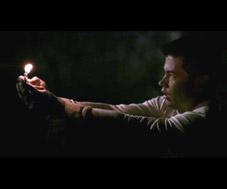
One night in Bangkok, Jon meets a mysterious woman. Together, they embark on a journey to a foreign land - the human heart.
Born in Thailand in 1976, Anocha Suwichakornpong, also known as 'Mai', spent the nineties living in England where she received her BA and MA. In February 2006, she graduated from a MFA film program at Columbia University, New York. In that same month, Anocha attended the Berlinale Talent Campus. Her feature-length script, "The White Room", was among the fifteen scripts chosen to participate in their Script Clinic program. In May 2006, Anocha's thesis, "Graceland" became the first Thai short film to be included in the Official Selection at Cannes Film Festival (Cinéfondation). She is soon to begin pre-production on a series of short films, titled "Like. Real. Love." Currently, Anocha is developing another feature-length script entitled "Jao Nok Krajok" (The Sparrow), which has received the Hubert Bals Fund from the Rotterdam International Film Festival and is one of twenty-five projects selected for HAF ? Hong Kong Film Financing Forum 2007. A former art and cultural studies student, Anocha's interest in film extends beyond the visual aspects of the medium. She views film as a language, with its own codes and representation. However, she fervently believes that great cinema can transcend the language barrier, in all senses of the term. Film can only be meaningful if it contains truth ? and not just cinematic truth. In other words, it must speak about human condition.
Corin Sworn, Tony Romano
The Coat
Experimental fiction | 4k | color | 57:58 | United Kingdom | 2016
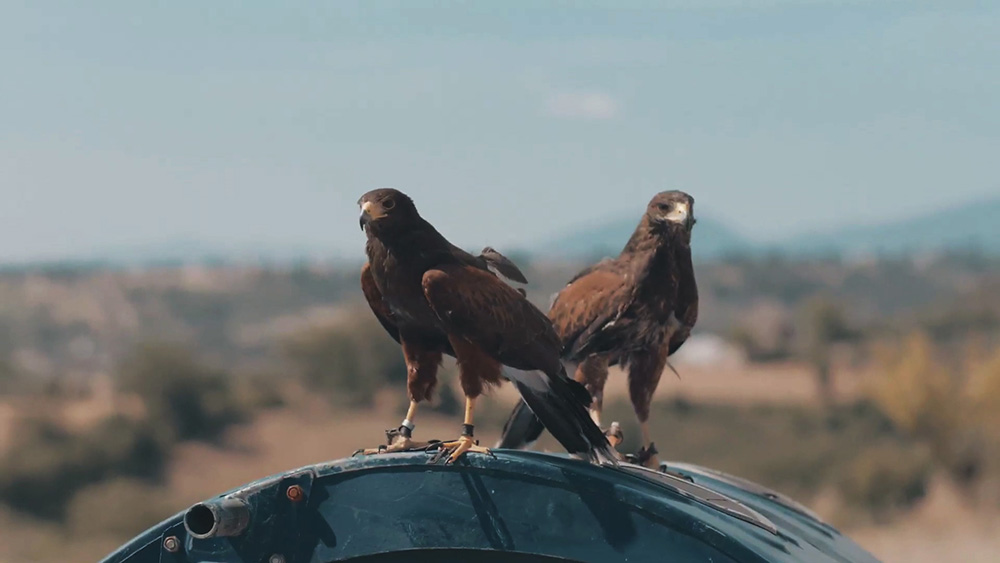
The Coat loosely adapts Aristophanes’ The Birds from the Athens of 414 BC to contemporary Calabria. Here the two people who leave their home looking for a better life are a young man and his daughter arriving from Albania in search of a swimming coach who fled the collapse of Communism in the 1990s. They search for the coach among Italy’s Arboresh community, descendants of an earlier Albanian exodus of the 1450s. Along the way the pair intercept two actors touring the rural south in an attempt to resuscitate the long dead street hero Punchinella. Here histories are invoked only to be folded in on themselves and diffused back through the Calabrian landscape. The characters, naive to the terrain that surrounds them rely predominantly on cartographies of their own desire while the birds fly overhead taunting their imprudence. Co written with, and employing professional and amateur actors, The Coat’s itinerant figures don’t so much drive narrative as walk it slowly along.
CORIN SWORN was born in London, England, and raised in Toronto. She studied psychology and integrated media before earning her master’s at the Glasgow School of Art. Sworn has exhibited internationally, including at the Whitechapel Gallery, Tate Britain, the National Gallery of Canada, and the 2013 Venice and Sydney Biennials. Her film work has appeared at Rotterdam Film Festival and the Centre Pompidou. TONY ROMANO was born in Toronto and earned his B.F.A. from the Emily Carr Institute of Art and Design. His film installations have been exhibited internationally, with solo and group shows at MoMA, Night Gallery in Los Angeles, Articule in Montreal, Kulturhuset in Stockholm, and MOCCA and The Power Plant in Toronto.
Telco Systems, Longina
Oidar
Experimental video | dv | black and white | 2:0 | Netherlands | 2005
Oidar (2`, 2004) Digital film, specially made for the Cronica 021-2005 DVD: "Can I have 2 minutes of your time?". All Images by Telcosystems Audio by Longina
Telcosystems Lucas van der Velden and Gideon Kiers are the founding members of Telcosystems. Lucas van der Velden (1976, Eindhoven) lives and works in Rotterdam. Gideon Kiers (1975, Amsterdam) lives and works in Rotterdam and Reykjavik. Both studied at the Interfaculty Image and Sound, a department at the Royal Conservatory and the Royal Academy in The Hague. They started the Telcosystems in 2001 to explore new modes of audiovisual expression. They are also initiators of 0010, minuszero, D:U:M:B and DLF and members of the curatorial team for the Sonic Acts festival in Amsterdam.
Marko Tadic
Dogadjaji za zaboraviti
Animation | 16mm | color | 6:0 | Croatia | 2020
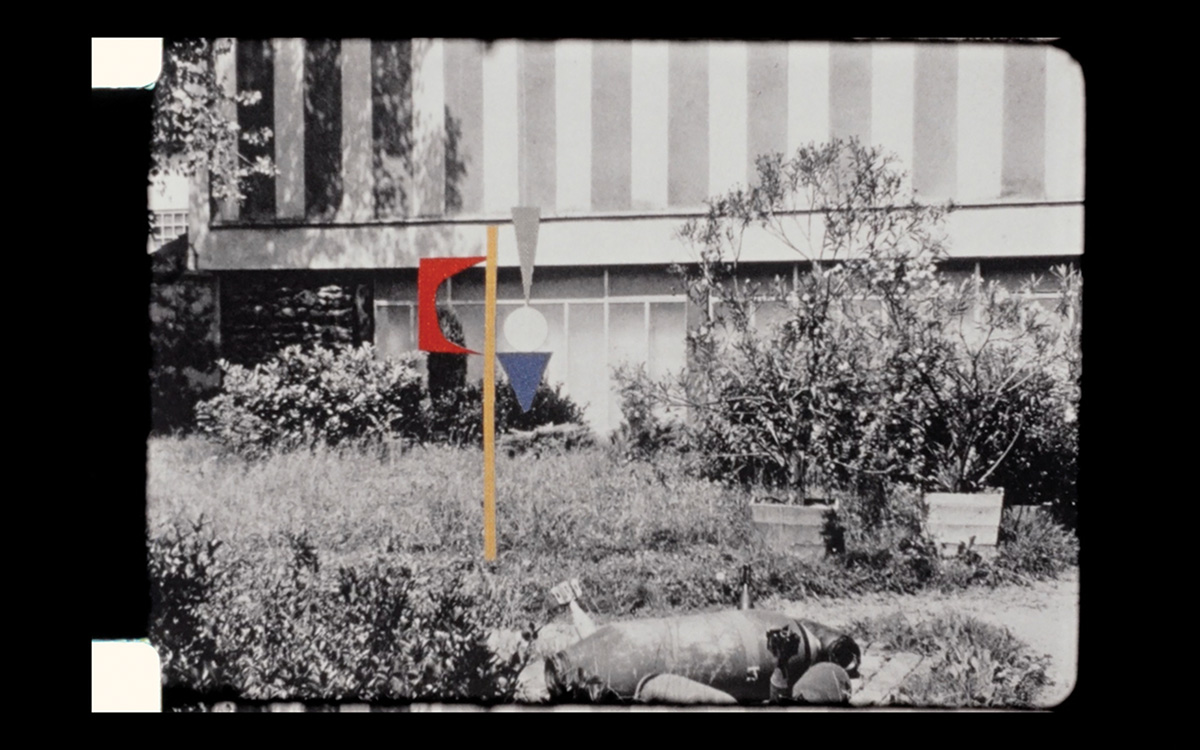
Filmed on 16mm film, this visual expression is rooted in archival materials and based on a poem by Hans Magnus Enzensberger. It speaks of forgotten people, their lives and their deeds. These two Archives were found at a flea market in Zagreb. One is of a famous architect and the other of a famous composer. The film ponders on this occurrence, as well as on the vanishing and forgetfulness of humans.
Marko Tadic (1979) studied painting at the Accademia di Belle Arti, Florence. His artistic practice focuses on drawing, installation and animation. He has won numerous art prizes. His films have been shown at many international animation and experimental film festivals. His works have been exhibited in many solo and group exhibitions around the world. In 2017, he represented Croatia at the 57th Venice Biennale, along with Tina Gverovic. He participated in residential programs in Helsinki, New York, Los Angeles, Frankfurt and Vienna. He works at the Academy of Fine Arts in Zagreb, Croatia.
Maryam Tafakory
Nazarbazi
Experimental film | 35mm | color | 19:54 | Iran | 2021
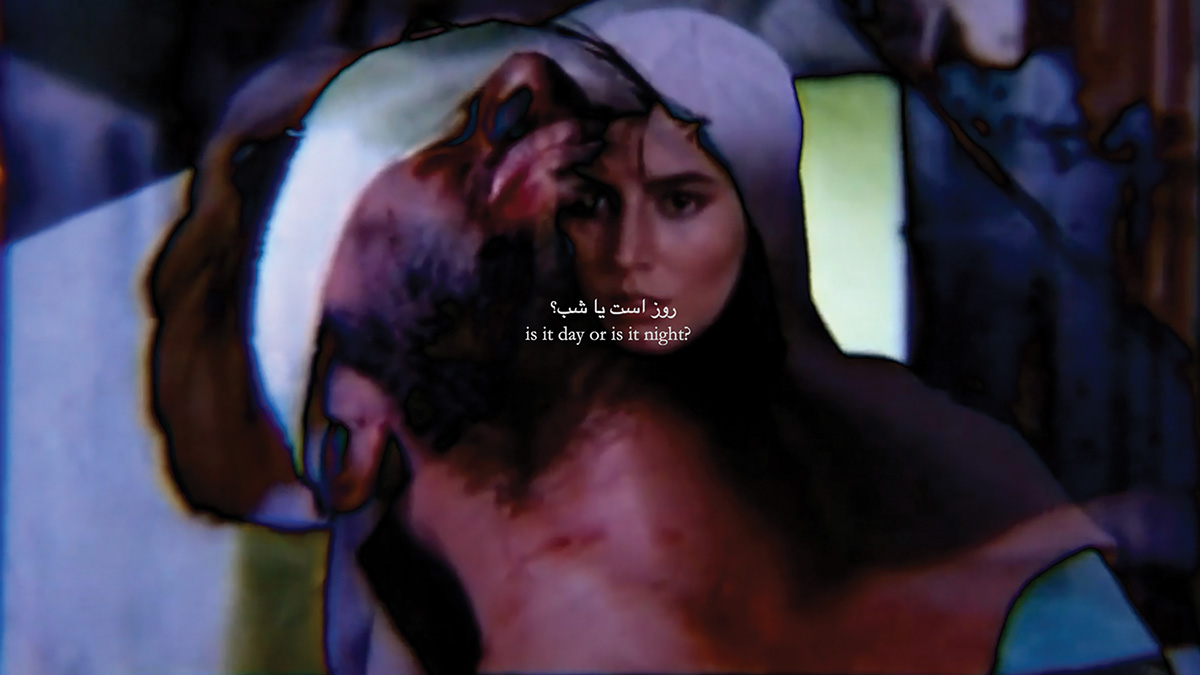
Nazarbazi [the play of glances] is a film about love and desire in Iranian cinema where depictions of intimacy and touch between women and men are prohibited.
Maryam Tafakory is an artist filmmaker based between London and Shiraz. Her work has been exhibited internationally including MoMA Doc Fortnight; IFF Rotterdam; Edinburgh EIFF; Melbourne MIFF; True/False festival; Zurich Film Festival; Whitechapel Gallery; Pergamon Museum; M HKA; and Anthology Film Archives amongst others. She has received several awards including, the Ammodo Tiger Short at 51st IFFR, the First Jury Prize at DocumentaMadrid, the Best Short Film at Festival de Cine Lima Independiente, and she was the 2019 Flaherty/Colgate Distinguished Global Filmmaker in Residence, NY. Her work has appeared at Criterion's The Daily, the Sight&Sound magazine, Filmmaker Magazine, and Senses of Cinema.
Maryam Tafakory
Razeh-Del
Experimental doc. | 0 | color | 27:47 | Iran | 2024
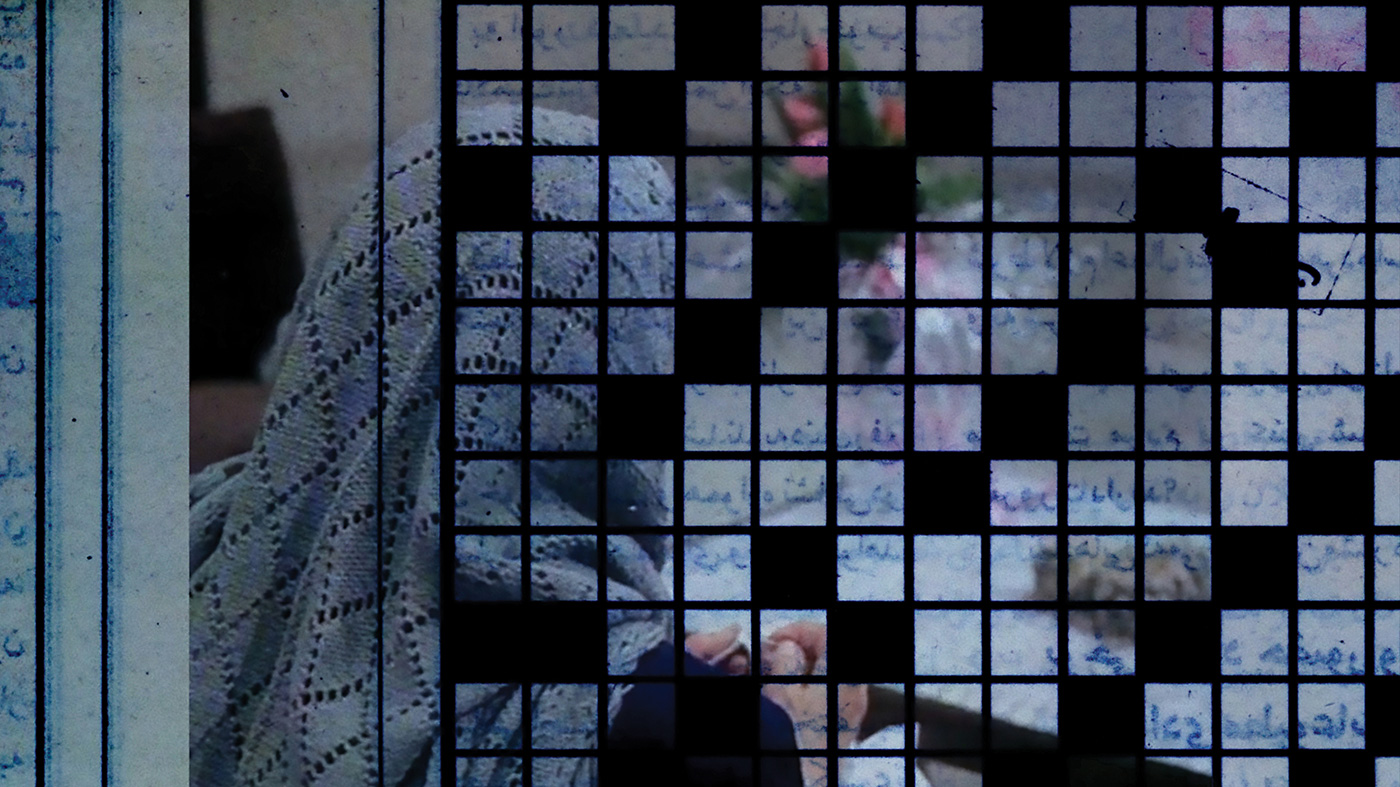
In 1998, two schoolgirls sent a letter to Iran's first-ever women’s newspaper. While they waited to be published, they considered making an impossible film. Using citations and image intervention, Razeh-del journeys through parallel histories of war on images of women.
Maryam Tafakory, born and raised in Iran, works with film and performance. Solo screenings of her work include MoMA, BOZAR, NGA, Washington DC, and Academy Museum, among others. Selected group events include Tate Modern, Cannes’ Directors Fortnight, New York Film Festival, Locarno Film Festival, Toronto International Film Festival. She was awarded the Gold Hugo at the 58th Chicago Int’l Film Festival, Tiger Short Award at the 51st IFFR, and Best Experimental Film at the 70th and 71st MIFF. She was the 2024 winner of the Film London Jarman Award.
Theodore Tagholm
Conversations with Walt Whitman
Experimental fiction | | color | 5:50 | United Kingdom | 2009
Conversations with Walt Whitman explores belief and its context. Through flickering lights and morse code Walt Whitman has got in touch from beyond the grave to recite poetry to our protagonist. It turns out the Walt had previously got in touch with his grand mother with a spirit writer. Is he really in touch or is this some form of escape from the banalities of suburban existence.
Theodore Tagholm is an artist based in London. Working primarily in video he was recently shortlisted for the Jerwood Moving Image Awards.
Theodore Tagholm
Plain Sight
Video | hdv | color | 1:29 | United Kingdom | 2013
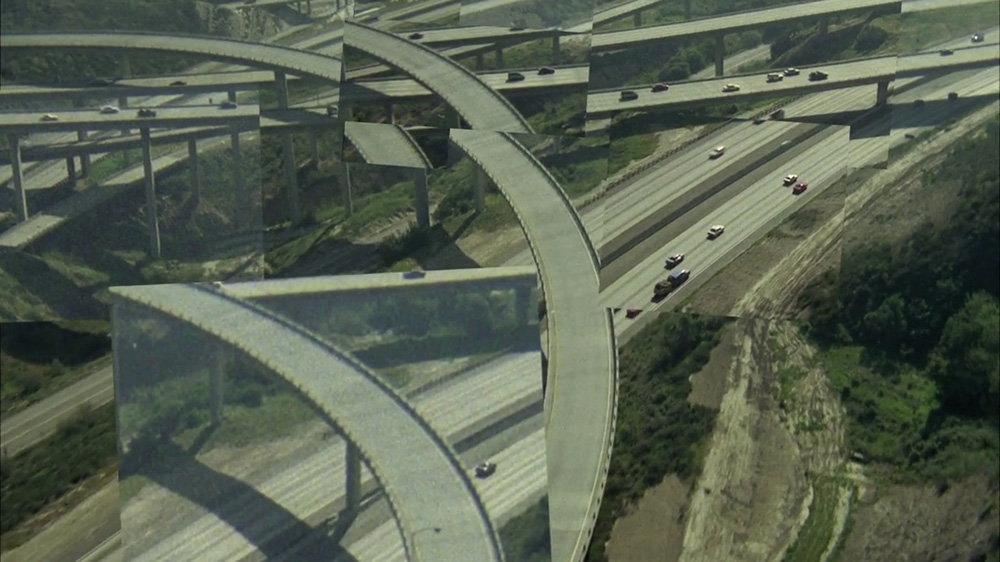
Hiding in plain sight, the photograph skims across the skin of reality. The work plays with the surface of the photographic image. Looking at how perceptual attention affects the surface of the image, revealing fractures on the infra slim surface.
Theodore Tagholm is a London based artist who has been working with time based media for over 15 years. Trained at Chelsea School of Art and Middlesex University.
Theodore Tagholm
Turner came to me in a dream and told me cyprien g
Video | | color | 1:29 | United Kingdom | 2009

Young-jun Tak
Love Your Clean Feet on Thursday
Experimental film | digital | color | 18:53 | Germany | 2023
This second film from Young-jun Tak's on-going choreographic film series challenges the conventional binarity of gender presentations through queer male bodies and movements. It juxtaposes the hypermasculinity and hyperfemininity. The former is presented by Spanish Legion soldiers’ spectacular annual Maundy Thursday ritual carrying the life-sized crucifix in Malaga during the Holy Week that leads to the Easter Sunday. The latter can be found in Kenneth MacMillan’s ballet “Manon” (1974) where numerous male dancers worship the eponymous female protagonist in Act 2 Scene 1 by constantly lifting up and carrying her in the air. In spite of the two situations’ obvious difference, the glorification of two gender displays surprisingly reveals their similarity, for instance, in the lifted bodies’ open arms. In this regard, a new choreography, inspired by the specific scene of “Manon”, is commissioned to choreographer Jamal Callender—including himself as lead dancer—with five other gay male dancers, and a few preconditions were given to him: Manon should be male; his barefoot should never touch the dirt on the ground; and the choreography should be performed in Berlin’s popular gay cruising forest Grunewald. Throughout this film, the Spanish soldiers’ public ritual and the six male dancers’ choreography alternate while their bodies and movements, exposed to either crowded audience’s eyes on streets or hidden lustful gazes in bushes, try to fill the gap between the polarized gender presentations.
Young-jun Tak (born 1989, in Seoul, South Korea) is visual artist and filmmaker, and he lives and works in Berlin, Germany. Tak’s practice examines socio-cultural and psychological mechanisms that shape belief systems, ranging from simple objects of worship to sophisticated forms of religions. Blurring the lines between media, techniques, and subject matters, his films and sculptures pursue obfuscation as a tool of critique, and the human body is often exposed in the context of polarizing norms and conventions. Recent solo exhibitions include PHILIPPZOLLINGER (Zurich, 2024); COMA (Sydney, 2024); Atelier Hermès (Seoul, 2024); Julia Stoschek Foundation (Berlin, Dusseldorf, 2023); palace enterprise (Copenhagen, 2023); Wanås Konst (Knislinge 2023); O—Overgaden (Copenhagen, 2023); SOX (Berlin, 2022); and Efremidis (Berlin, 2022). He has participated in numerous international group exhibitions such as at St.Moritz Art Film Festival (2024); Bangkok Art Biennale (2024); the High Line (New York, 2023); Chicago Architecture Biennial (2023); Lyon Biennale (2022); Perrotin (Paris, 2022); KINDL Center for Contemporary Art (Berlin, 2022); Berlin Biennale (2020), Seoul Museum of Art (2019); and Istanbul Biennial (2017). Tak won the “Love at First Sight Prize” at the 3rd St.Moritz Art Film Festival and the “TOY Berlin Masters Award” at the 9th Berlin Masters. He studied English Language and Literature, as well as Cross-Cultural Studies at Sungkyunkwan University in Seoul.
Naoko Takahashi
Good Morning At Night
Experimental doc. | dv | color | 10:46 | Japan, United Arab Emirates | 2005
There are so many men standing around on the streets in down town. They are here to work and send money to their families back home. There is a square where they wait for a job to come in for the day each morning. In the evening, they sit around having chat, drinking tea and playing cards. There is no woman walking around on her own at night. If you walk alone at night in town, if you are not wearing certain kind of clothes when you go out, you could be treated as the one at the bottom of the society. You could easily get lost, confused, Isolated and humiliated. The film was shot on mini DV, colour with voice over in English and Arabic subtitles.
Artist working with text, time based media, installation and live art. Lives and works in London Born in Nigata, Japan 1973 Since moving to UK in 1992, Takahashi has been using second language and living in between two cultures. Her works focuses on the notion of dislocation, re-location, foreignness and representation in multi cultural, multi lingual society and ideas of national and individual identity. Over the past few years, she has been interested in site specific and culturally specific works that engage with the surrounding area and people. Takahashi exhibits her artworks and performs live at various venues in UK and abroad. In addition to the previous artist in residencies, she has recently participated in Sharjah Biennial 7?s Artist-In-Residence-program. Her video works have been selected and screened at numerous festivals internationally including 24th Uppsala International Short Film Festival Sweden, About Time Nordyllands Kunstmuseum Denmark, Beck`s Futures 2 film & Video UK and BBC British Short Film Festival 2000. Her awards are the organiser?s award, Outvideo, Ekaterinburg, Russia, video and performance award, Vizura Aperta/Momiano, Momian, Croatia.
Pilvi Takala
Kuuluttaja
Video | | color | 5:50 | Finland | 2007
Pilvi Takala
If Your Heart Wants It (Remix)
Video | hdv | color | 15:21 | Finland, USA | 2002
Taking place annually in Helsinki, SLUSH is a three-day super event that aims to invigorate the tech-startup community by bringing together entrepreneurs with venture capitalists in a party-like environment. If your heart wants it (remix) is grounded in research Takala conducted at the 2018 edition of SLUSH. Together with an interdisciplinary team and camera crew, they fabricated a startup in order to gain entry.
Pilvi Takala (b. 1981) lives and works between Berlin and Helsinki. Her video works are based on performative interventions in which she researches specific communities in order to process social structures and question the normative rules and truths of our behaviour in different contexts. Her works show that it is often possible to learn about the implicit rules of a social situation only by its disruption. Her work has been shown in MoMA PS1 and New Museum, Kiasma, Palais de Tokyo, Kunsthalle Basel, Manifesta 11, Witte de With, and the 9th Istanbul Biennial. Takala won the Dutch Prix de Rome in 2011 and the Emdash Award and Finnish State Prize for Visual Arts in 2013.
Ho Tam
In the Dark
Experimental video | dv | black and white | 6:0 | Canada | 2004
Made in the year after SARS crisis, the video re-visits the images collected from the Toronto media. For the record, Toronto (Canada) was the only non-Asian city that was significantly affected by the epidemic. The city was stigmatized by some isolated cases that began from a carrier back from a visit in Asia. Through all black and white re-photographed pictures, all we can see is the darkness of a time passed, a city under attacks and assaults, politicians scrambling for words of comfort, citizens living in a state of fear, distrust, paranoia and shame. How are we to make from those few months that seemed to last forever? As if we were in the dark ages, at the time we thought we would never come out of it again. The video, by referencing the weaknesses within human nature, indirectly refers to the problematic media attention in a world we have created. If the media is the message, the video questions its biases and truthfulness? In order to re-create this uncomfortable time, the mediated and degraded images and the audio purposely resonate each other to reveal the sense of self-doubt, disgust and the feeling of almost approaching a state of abjection. The project was shot in low light situation using a consumer camcorder and therefore creating the resulting unstable signals that the camcorder was set to detect and contain (unsuccessfully in this case). In such a way, the video almost parallels the medical scientific process in the present day bacterial warfare. Using video technology in the production process but referencing the languages of experimental films, In the dark also pays homage to the avant-garde filmmaker Stan Brakhage (1933 - 2003), who passed away about the same time as the SARS outbreak.
Ho Tam was born in Hong Kong and educated in Toronto, Canada and worked in advertising firms and community psychiatric facilities before turning to art. He works in a diverse mix of disciplinary including painting, video, photography, print and public art and has exhibited in various cities across North America. His first video, The Yellow Pages, was commissioned by the public arts group PUBLIC ACCESS for an installation/projection at the Union Station of Toronto in 1994/95. Since then Tam has produced over 15 experimental videos. His work is included in the traveling exhibition Magnetic North: Canadian Experimental Video organized by Walker Art Center, Minnesota. Tam currently teaches at the University of Victoria. He is a graduate of Whitney Museum Independent Studies Program, Bard College (MFA) and recipients of various fellowships and artist`s grants.

Marion Tampon-lajarriette
Natura Naturata
Video | hdv | color | 8:34 | France, Switzerland | 2018
With this film, the artist continues to unfold her body of works held in the context of Art, Archeology or Natural History Museums, where their visitors and their collections are moved to another genre often inspired by Sci-Fi or Fantasy. In Natura Naturata, she filmed a pluri-generational group of gymnasts in the Museum of Natural History of Geneva, moving and resting among the collections of crystals, animals and corals. In the soundtrack composed by Leo Hofmann, voices are whispering or singing fragments of the text Monadology and Sociology by 19th century french philosopher and sociologist Gabriel Tarde. So the film proposes to give an unstable shape and rhythm to this Tarde conception of the « universal phenomena across cosmic, natural and social worlds » where « The whole is always smaller than its parts ». All the images were filmed in the permanent galleries of the Museum of Natural History of the city of Geneva. Thanks for the support and participation.
Marion Tampon-Lajarriette (b.1982 in Paris) lives and works in Geneva. She received an MFA from the École Nationale Supérieure des Beaux-Arts de Lyon (France) in 2007 and an MA in Arts and New Media from the Haute École d’Art et de Design de Genève (HEAD) in 2008. She has had numerous solo exhibitions, including: Museo Villa Pia (Lugano, 2019); Les Brasseurs (Liège, 2015); Mois de la Photo Festival (Paris, 2012); Loop Art Fair (Barcelona, 2008). Her work has also been shown at the Palais de Tokyo, Paris; MAMCO, Geneva; Swiss Institute, New York City; Capture Photography Festival, Vancouver; and is part of the permanent collection at MAMCO, Geneva; MEP, Paris; NMNM, Monaco; the Francois Pinault Foundation; among others. In 2016-2017 she was awarded a residency at the Swiss Institute in Rome, and took part in the Swiss Art Awards in Basel. In 2013, she was awarded the Société des Arts grant and the FCAC-Geneva grant and residency in New York City. The artist’s second monograph, Echos, will be edited in March 2020 by Casa Grande (331 pages, texts by Mark Lewis, Lucille Ulrich, Valeria Venditti). She is represented by Galerie Laurence Bernard in Geneva.
Marion Tampon-lajarriette
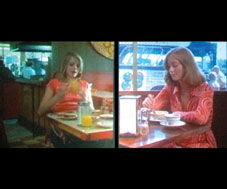
Une Histoire déjà racontée
Experimental video | dv | color | 6:0 | France | 2005
The artist's activity mainly consists of revisiting great movies, the ones that are very present in our collective memory, acting on the unity of their image or their temporal linearity (here : to substitute and entirely re-record the original soundtrack; to have the two secondary female roles meet; to stay in a place unrelated to the action ... ). In the already existing movie's well defined setting, she tries to open other possible space-times and other logics in the very interstices of its narrative progression, and to find other ways to enter and navigate inside one precise tale, on paths that would look more like that of the passerby who walks with no set aim in a Universe void of meaning or order, void of landmarks and limits. This activity of re-appropriation is therefore based on the artist's position of "receiver", reacting to a "Great Tales Cinema" which displays a very powerful representation of the World as an orderly, hierarchic territory, where Good and Evil as well as Right and Wrong are still told apart, where History moves only one-way (the figure of the hero, destiny, the scenario ... ). Here protagonists themselves explore fiction as they explore life, groping their way through because there isn't just one way but an infinite number...
Marion Tampon-Lajarrirtte was born sometime during the 80´s. Somewhere else she studied arts at the Villa Arson. Still elsewhere she started a series of eloquent video portraits and mute postcards, thanks to a scholarship from the Medialab-Centro Cultural Conde Duque. Later she continued her studies at the Fine Arts School of Lyon and elsewhere a Masters in New Media at the HEAA, Geneva. She shoots or re-appropriates film, writes or blends, makes photographs or reframes.