Catalogue > Search
Results for : Tout le catalogue

Mounir Fatmi
The Human Factor
Experimental video | mov | color | 15:57 | Morocco, France | 2018
« The Human Factor » is an experimental video work that explores the idea surrounding Art Deco and Exoticism. Exhibits concerning the native people of the colonies at the Paris Colonial Exposition which took place in 1931 during the interwar period, as presented within pavilions reminiscent of the architecture of the Black Africa, North Africa, and Indochina regions, had illustrated ties to the leading colonial rule and authority of the times. « The Human Factor » is a deconstruction of Marcel L’Herbier’s film L’inhumaine (1923). To this day, this film is considered as a manifesto of the Art Deco movement. This masterpiece in silent film that was filmed against the backdrop of modern and ornate set design, serves to vividly depict the various influences artists of the time had gained from the creations of distant foreign lands, as well as the very spirit that had permeated the era. L’inhumaine reconfigures the innovative methods of artists, decorators, costumers, and architects such as Robert Mallet-Stevens, Fernand Léger, Alberto Cavalcanti, Claude Autant-Lara, Pierre Chareau, Michel Dufet, Joseph Csaky, and Paul Poiret. This video work attempts to present another aspect of Art Deco that lay beneath the powers of colonialist ideology and its universal ambition. It should be noted that the influence of colonial art was not something that had emerged during the two wars of the twentieth century. Such had in fact existed since 1907 in the form of the “The Colonial Society of French Artists,” which was aimed at expanding colonial territory through art that would serve as beneficial to France. Awards and provisions of expenses to travel to the colonies were provided by the society, aiding artists such as Van Dongen, Matisse, and Paul Klee to sojourn in North Africa. By 1919, the Les Arts à Paris magazine had already introduced Art Nègre (African Art) as a “new aesthetic” that could have a great influence on European art. For example, African masks and sculptures became a subject of interest and source of inspiration for artists such as Picasso, as well as Fernand Léger who derived the ideas for his costume designs and stage sets for the Swedish ballet troupe “La création du Monde” through referencing “Aboriginal and African Art.” Furthermore in 1930, the “Exhibition of African Art and Oceanic Art” was held, organized by Tristan Tzara, Pierre Loeb and Charles Ratton. This exhibition served as an important step in the history surrounding primitive art in the West. Here, the Paris public was able to view a selection of primitive sculptures presented along with the works of Pablo Picasso, André Derain, Georges Braque, Joan Miró, Paul Guillaume and Félix Fénéon. Finally, at the 1931 Paris Colonial Exposition that served to present colonial ideologies in an explicit way, the distinct characteristics of respective ethnic groups in the colonies were only introduced under conditions of conveying France’s blessings to the colonies, in addition to solely the positive aspects of colonial development. With the exception of several masks, statuettes, and archaeological items, very few, if any, works made by the native people of the regions were exhibited. As opposed to such works, people in general had preferred the spectacle of pageantry created within the realms of dance, folk arts, and art, which in itself was a convenient perspective for the French and Western audience as a whole. It must also be known that these perspectives had not necessarily been shared among French artists. A group of surrealists including figures such as Louis Aragon, Georges Sadoul and André Breton, with the support of French Communist Party, had opposed the colonial exposition through distributing fliers featuring slogans that discouraged people from visiting. The Human Factor is a video work that approaches the issue surrounding the Paris Colonial exhibition, which had publically presented the relationship between what one might refer to as Avant-garde Primitivism, and the Exoticism of the Art Deco as inspired by the colonies. Studio Fatmi, September 2018.
mounir fatmi was born in Tangiers, Morocco, in 1970. He studied at the Academy of Arts in Rome, at the Casablanca Art School, and at the Rijksakademie in Amsterdam. He spent most of his childhood at the flea market of Casabarata, one of the poorest neighborhoods in Tangiers, where his mother sold children’s clothes. Such an environment produces vast amounts of waste and worn-out common use objects. The artist now considers this childhood to have been his first form of artistic education, and compares the flea market to a museum in ruin. This vision also serves as a metaphor and expresses the essential aspects of his work. Influenced by the idea of defunct media and the collapse of the industrial and consumerist society, he develops a conception of the status of the work of art located somewhere between Archive and Archeology. By using materials such as antenna cable, typewriters and VHS tapes, mounir fatmi elaborates an experimental archeology that questions the world and the role of the artist in a society in crisis. He twists its codes and precepts through the prism of a trinity comprising Architecture, Language and Machine. Thus, he questions the limits of memory, language and communication while reflecting upon these obsolescent materials and their uncertain future. mounir fatmi’s artistic research consists in a reflection upon the history of technology and its influence on popular culture. Consequently, one can also view mounir fatmi’s current works as future archives in the making. Though they represent key moments in our contemporary history, these technical materials also call into question the transmission of knowledge and the suggestive power of images and criticize the illusory mechanisms that bind us to technology and ideologies. Since 2000, Mounir fatmi’s installations were selected in several biennials, the 52nd and 57th Venice Biennales, the 8th Sharjah Biennale, the 5th and 7th Dakar Biennales, the 2nd Seville Biennale, the 5th Gwangju Biennale, the 10th Lyon Biennale, the 5th Auckland Triennial, the 10th and 11th Bamako Biennales, the 7th Shenzhen Architecture Biennale, the Setouchi Triennial and the Echigo-Tsumari Triennial in Japan. His work has been presented in numerous personal exhibits, at the Migros Museum, Zurich. MAMCO, Geneva. Picasso Museum La Guerre et la Paix, Vallauris. AK Bank Foundation, Istanbul. Museum Kunst Palast, Du?sseldorf and at the Gothenburg Konsthall. He also participated in several collective exhibits at the Centre Georges Pompidou, Paris. Brooklyn Museum, New York. Palais de Tokyo, Paris. MAXXI, Rome. Mori Art Museum, Tokyo. MMOMA, Moscow. Mathaf, Doha, Hayward Gallery and the Victoria & Albert Museum, London. Van Abbemuseum, Eindhoven, at Nasher Museum of Art, Durham and Louvre Abu Dhabi. He has received several prizes, including the Uriöt prize, Amsterdam, the Grand Prix Léopold Sédar Senghor at the 7th Dakar Biennale in 2006, the Cairo Biennale Prize in 2010, as well as the Silver Plane Prize, Altai Biennale, Moscow in 2020.

Mounir Fatmi
HISTORY IS NOT MINE
| | color and b&w | 5:0 | Morocco | 2014
Proposée pour la première dois à Londres, cette installation vidéo en noir et blanc met en scène un personnage cherchant à taper à la machine le titre au moyen de marteaux. Seul le ruban est rouge, laissant penser que le texte s’affiche en lettres de sang, dans un télescopage de « la beauté de la phrase à écrire avec la violence et la difficulté de sa réalisation. »
Sirine Fattouh, Sandra Fatté, Victor Bresse, Chrystel Élias
Behind the Shield
Video | 0 | color | 57:42 | Lebanon | 2022
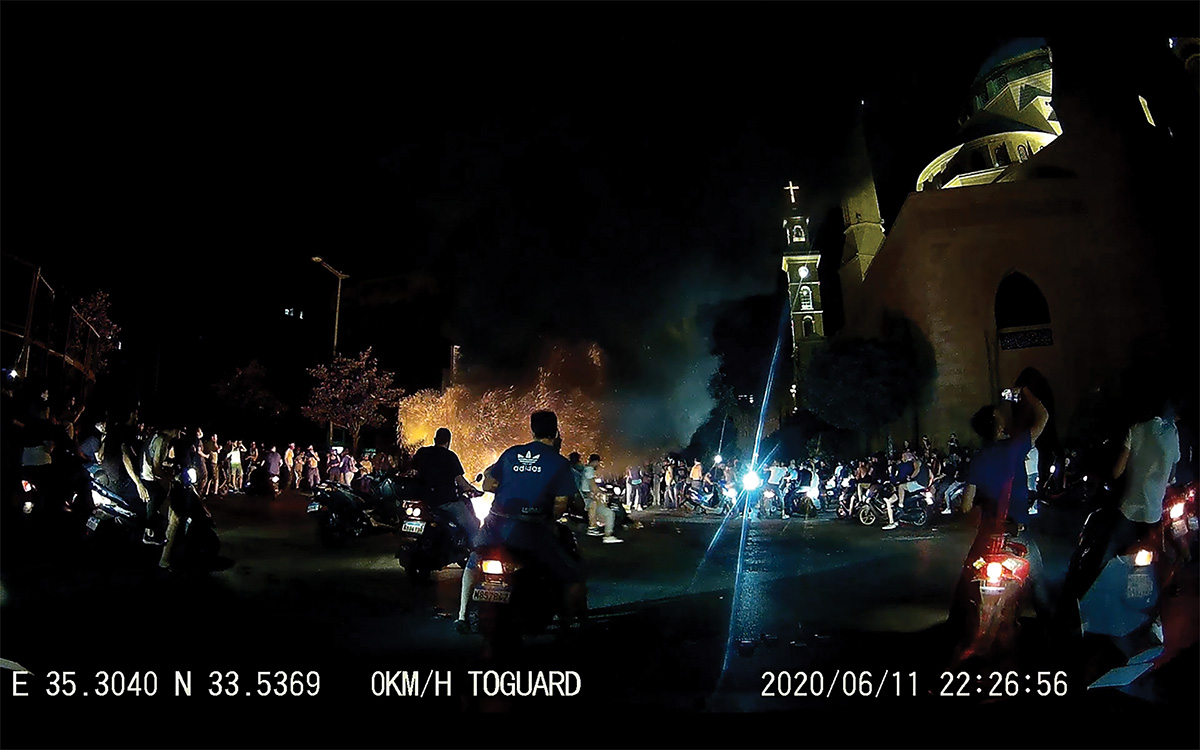
Behind the Shield paints a filmic portrait of the city of Beirut over the past three years. It documents key moments in the country’s recent history – from the October Revolution to the port explosion of August 4th – while also shedding light on the mundane and commonplace facets of everyday life. Behind the Shield is a reflection on the city and the dichotomies that exist within it, juxtaposing the impactful and the mundane; the colossal and the minute; the urban and the rural. The work also highlights the camera as both a silent observer and a silent participant in the events the city has witnessed. Crucially, it explores the video camera’s transformation from a device that is used to surveil, control, and oppress of the masses, to a tool that gives people agency and grants them a voice.
Sirine Fattouh is a Lebanese artist living in Paris. Interested by histories from below, her personal work, as a researcher and artist consists of examining the consequences of violence and displacements on people’s identities. She holds a doctorate in Visual Arts and Aesthetics from the University Paris 1 Pantheon Sorbonne and a Master degree from the École Nationale Supérieure d'Arts of Paris Cergy.
Elsa Fauconnet
Le terrier (2)
Experimental fiction | dv | color | 5:17 | France | 2011
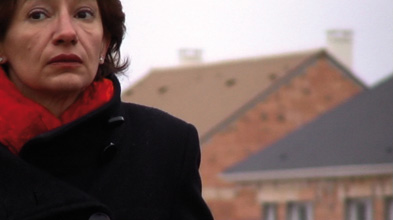
"Le Terrier (2)" is video freely inspired by the unfinished short story of Kafka that tells the story of someone going insane after having obsessionally dug his hole, and who persuades himself that he's threatened by the arrival of someone else. "Le Terrier (2)" deals with this shift moment when the familiar structure, supposed to shelter, becomes suddenly a threat : a woman and a man wander in a street where we can't tell if the houses are being built or have been destroyed by an anonymous disaster. In this crossing of a new city of the Parisian suburbs, the housing loses its primary function, since we don't know anymore if it accomodates or threaten, and if it forces to be on one's guard.
Elsa Fauconnet is a french artist, born in the parisian suburbs in 1984. After obtaining a Bachelor of Art at the "ENSAV - La Cambre" of Brussels, she gets a diploma from the "Ecole des Beaux-Arts" of Paris, with distinction from the jury. From engraving, video and photography, she questions the supposed pictures of the real. At first, she works essentially with images extracted from the medias. She appropriates these images that tell our contemporary history, and plays with rewriting History and questioning its conceptual substance. Progressively, her own images (the wall in Palestine, a city being built in France...)are reinstated in fictions. These pieces of real anchored to a historic reality reveal themselves as relics. They are concrete facts and allow at the same time the start of possible fictions, in the interpretation we give of it. Playing with several styles, Elsa Fauconnet's films create a trouble that reveals the difficulty of placing oneself into a story, a place, the real and its representation. In her work, there is also talk of territories, of borders, of dwellings, of the search of a home... She plays with strangeness : in german, the same word stands for stranger and stranger. Would the strange be the aesthetic corollary of the stranger ? "What interests me in the strange and the strangeness concepts is that they both result in casting doubt on every familiar reality, creating a favorable moment to detachment." Using strangeness in order to allow a new observation and a new emergence of the things.

Christoph Faulhaber, Daniel Matzke
BLue Sky ? Palau
Experimental doc. | dv | color | 18:17 | Germany, Palau | 2010
The center piece (Blue Sky ? Palau) is a documentary movie shot in Palau. In November 2009, six ex-detainees from the US Prison in Guantánamo Bay have been released to Palau, which is known for its sparkling water, shiny beaches and beautiful diving spots. Faulhaber traveled to the tiny island nation of Palau in the South Pacific to visit the six men, which are part of the uighur minority in western China. He interviewed their Australian interpreter and his Excellency, the President of Palau. Following his trip to Palau, Faulhaber went to Shenzhen, China, to visit the Oil Painting Village Dafen, which is the world`s biggest conglomeration for reproducing and copying artworks. In Dafen he worked together with local artists to reproduce oil paintings from the portraits of the six men that can never go back to their homeland Xinjiang, which is now under Chinese hegemony. In this series of work Faulhaber focuses on some main questions surrounding the ideological and philosophical notion of the `picture` today: How strong is the global prevalence and regime of the picture? What kind of pictures are we supposed to conceive when thinking of Guantánamo? What is the state of the picture with regard to a global system of industrialized tools for copies, imitation and reproduction? Or, as W.J.T. Mitchell has raised the question: `What is the work of art in the age of biocybernetic reproduction?`
?I don?t see myself, primarily, as a political artist,? says Christoph Faulhaber. Still, there?s something disconcerting about this claim. A quick survey of the projects he has carried out to date tells us about the sale of Cuban real estate to customers in Florida, a preoccupation with the future of Ground Zero, problems with the FBI in New York, Faulhaber?s name on the United States Terror Watch List and the planning of an allocation center for former Guantánamo inmates in Hamburg. These are topics which catch our attention and brush on important discussions conducted in the media on a daily basis. Hence, Faulhaber made a name for himself in 2007 with his project Mister Security, which he carried out jointly with fellow artist Lukasz Chrobok over a period of three years. The project encompassed several actions in the public realm as well as two publications. Christoph Faulhaber, born 1972, is today one of the most promising young German artists. His work has been shown amongst others at the National Gallery Prague, Museum of Contemporary Art Skopje, Laiyan Gallery Hong Kong, Schirn Kunsthalle Frankfurt, Wilhelm-Hack-Museum Ludwigshafen, City Museum Remscheid, Kunstverein Hannover and Fridericianum Kassel.
Didier Faustino
Exploring dead Buildings
0 | dv | color | 12:23 | France, Georgia | 2010
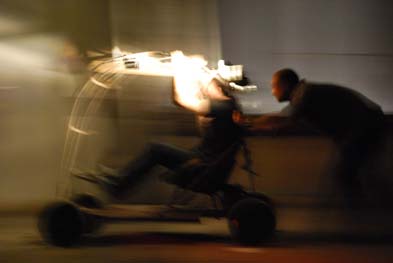
Exploring Dead Buildings is a video made in Georgia in the abandoned building of the Ministry of Highways of the Soviet Republic of Georgia. This video shows the discovering of this dilapidated space by a non motorized module on wheels that is moved by two operators. Only enlightened by two spotlights powered by a battery the camera make slow movement into the darkness and makes discover the complexity of this dead architecture.
Didier Faustino
Exploring Dead Building 2.0
Experimental fiction | hdv | color and b&w | 9:0 | France, Cuba | 2015
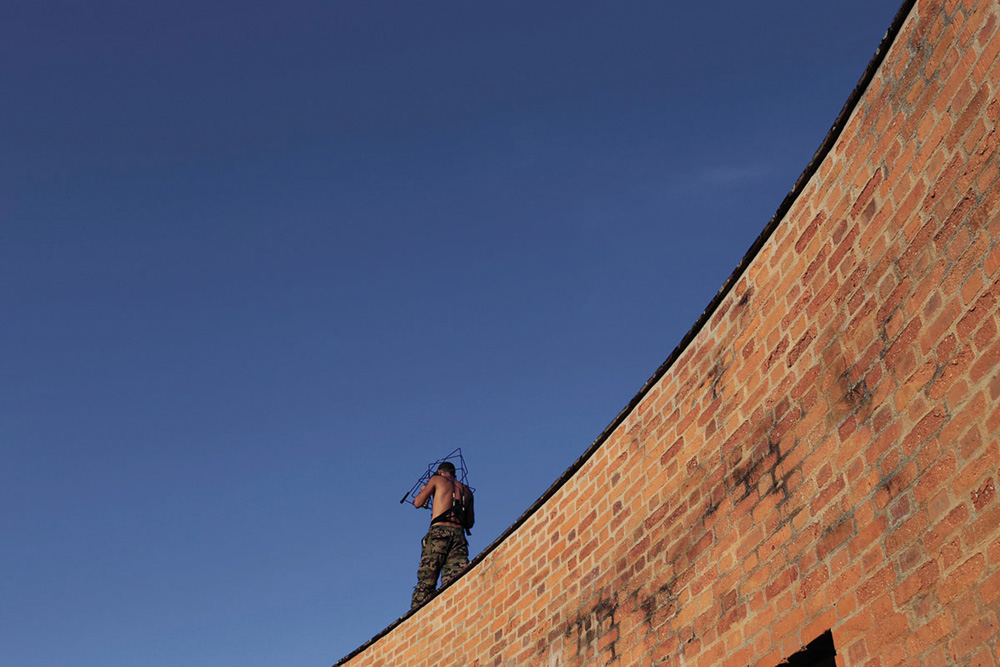
« A dictator and a revolutionary icon are on a golf course ». What could have been the beginning of a strange political private joke led to something far more odd than expected. Acting like pro-players at the British Open, the two figures of Cuba communism regime, Fidel Castro and Che Guevara came up that day with a loopy idea : build on the island the most magnificent art school of south America. What Is left from this titanic undertaking ? Didier Faustino tries to answer that question with his A « Walker To Explore Dead Buildings » project. On the occasion of the Cuba Art Bienale, the renowned architect/artist invites you to a real first person exploration video game through this edifice drained of his essence. In a tropical atmosphere at dawn. Three young bodies deploy a choreography over the roof of a utopian curved architecture. These melancholics and heteronymous characters wear metallic suits as a metaphor of a caged youth. The cameras placed on the structure as well as those witch gravitate around them give us the image of a wandering over the ruins of the Cuban Escuela De Ballet de La Havana. The films brings out the failure of this architectural and cultural utopia. The performance underline the memory of the desire for a better future. The scene of light and darkness intersperse themselves, Between exterior and interior, day and night, at the service of a fictional esthetic.
Laurence Favre
Zerzura
Experimental doc. | 16mm | color | 11:0 | Switzerland | 2024
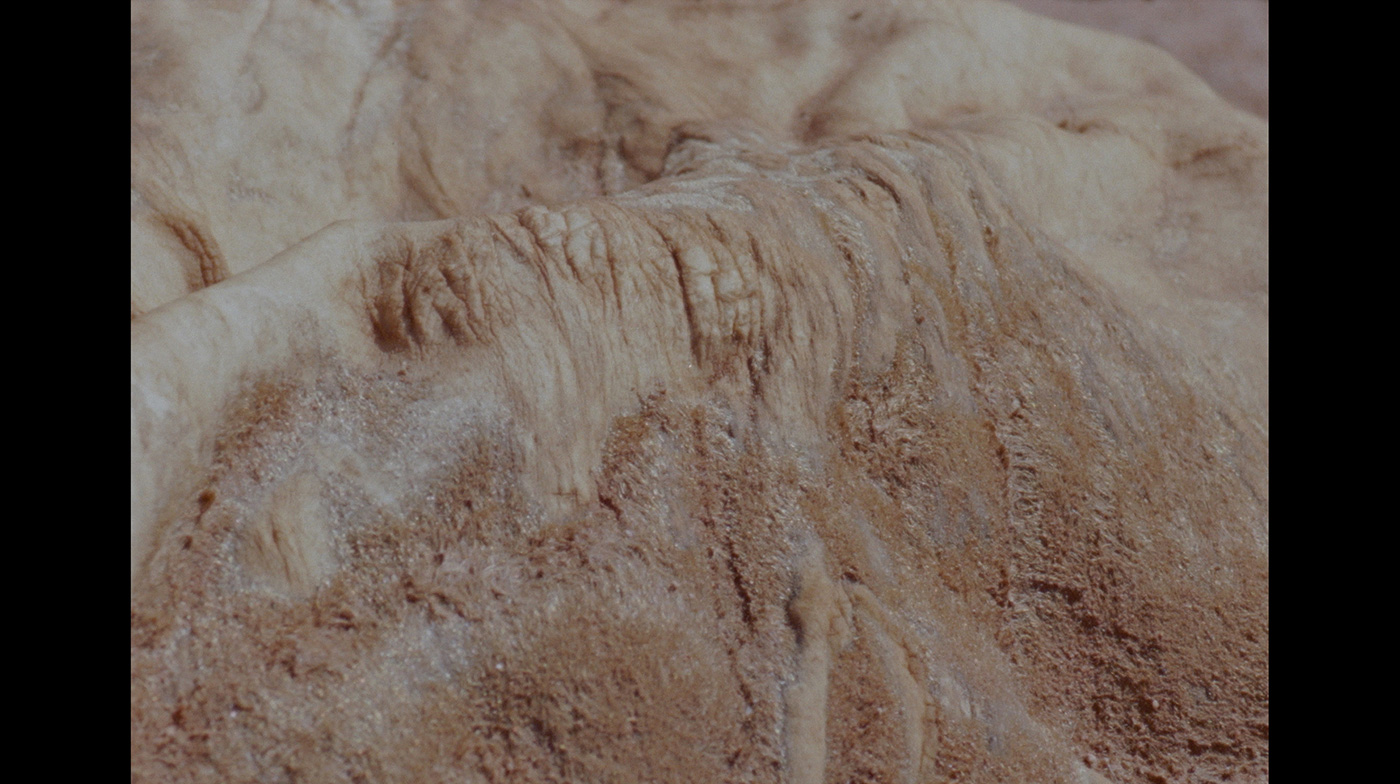
Named after a mythical lost oasis, Zerzura addresses questions on our relations to the non human: How do we perceive 'nature'? Is it a 'thing' to which we humans are external? Or are we all part of a mesh where there is no centre nor periphery? Can an assemblage of sounds and images invite us to see 'nature' as living, sentient and endowed with agentivity? Following 'Resistance' (2017) and 'Osmosis' (2022), 'Zerzura' closes the trilogy 'Corpus Animale'.
Laurence Favre is an artist, filmmaker and researcher. Her practice revolves around analog images, sounds and writings. She makes experimental films, installations and film performances, looking for ways of triggering epistemic changes through sensory perception. Her films are shown internationally in film festivals (Locarno Film Festival, Visions du Réel, Rotterdam IFFR, Ann Arbor Film Festival and others), in art spaces as well as in informal spaces and in the frame of symposiums. She has been awarded several artist grants and residencies. Laurence is an active member of the artist-run filmlab LaborBerlin, and a co-funder of SPECTRAL, a platform for the creation and diffusion of Expanded Cinematic Arts.
Joao Felino
Blue
Art vidéo | dv | color | 1:0 | Portugal | 2000
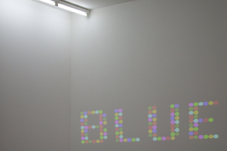
BLUE is an interactive[less in the common sense] interface Shockwave Flash application. The work just presents the title in its written form and in a common contemporary typographic although in a newly designed dot font. The work and the title are one but in its paradoxical endless changing form presenting a colorful diversity and multiplicity. Not according to it?s supposed inner stable form and expected meaning. BLUE is also interacting for viewers in a physical space container of its DVD video projection as one another material form. Being first presented at jack, a non-profit contemporary art room in Lisboa, now it can also be seen at Joao Felino selected works on the internet.
"Painting is the critic of movement; movement is the critic of painting." [Octavio Paz] Having started doing art work in mid eighties, soon after Joao Felino decided to pursue architectural studies. While keeping working mainly on paper, he developed a conceptual art methodology, process and work with a minimalist material emphasis. He promotes experience and refuses interpretation and [established] narrative[s]. He started working with video, moved also towards sculpture. He sees painting as usual and any other media. He studied multimedia and new media and he starts also working with new media technologies. Joao Felino is currently director of the cultura material contemporanea e arte | contemporary material culture and art gallery He is also the author and the commissioning director of a poster gallery on the internet. In recent years he has been developing projects for the web among others the recent and close group of: the revista de poesia & politica, a web journal focusing on presenting politics & poetry and on translation, from various foreign languages to portuguese; the edition of a serie of love letters by the portuguese poet Paulo Jose Miranda as a blog; he is also the "Essais-Dattées" editor-in-chief. He has also recently finished [P]. The third of a serie of three video works, with "Desassossego de Catarina Morao" and "Destino/Destination". The all of the three constituting a reflection on Portugal.
Dustin Feneley
Hawker
Fiction | 16mm | color | 13:15 | Australia | 2008
A travelling salesman searches for connection.
Born in Sydney, Australia in 1982, Dustin Feneley is a graduate of the Victorian College of the Arts School of Film and Television. In 2004 and 2005, he completed the Graduate Diploma and Masters of Film and Television in Narrative Directing degrees at the VCA Film School. His short films as writer and director have screened at over fifty international film festivals. At only twenty-three years of age, his student short film Snow (2005) was officially selected for competition at the 2006 Cannes Film Festival in the Cinéfondation category. The film?s selection made him the second youngest Australian director to have a film screen at Cannes in the festival?s history. Snow has also received the honour of being exhibited at the world famous George Pompidou Centre in Paris alongside other films by legendary filmmakers such as Jean-Luc Godard. Snow was awarded Best Film at the 2007 Film Fest at Falls by a highly esteemed jury of Australian film industry members including Claire Dobbin (Chair of the Melbourne International Film Festival), Antony Zeccola (Palace Films), Robyn Kershaw (Producer), and Joel Pearlman (Managing Director of Roadshow Films). His short film Apprentice has also been commercially released by Palace Films Australia as the short-before-the-feature on the popular DVD of Russian Dolls (France, 2005). Recognising his position as one of Australia?s most promising young filmmakers he was approached by the highly respected talent agency RGM Associates and is represented by RGM as a writer and director. He has directed a range of professional actors including Robert Menzies (Oscar and Lucinda, Three Dollars), Tom Budge (The Proposition, Candy) and Syd Brisbane (Boxing Day, Silent Partner). He is the winner of the 2007 Qantas Spirit of Youth Award for Moving Image, selected by veteran film director Bruce Beresford, and will undertake a mentorship with Beresford on an upcoming feature film project. In 2008 he was invited to participate in the prestigious Accelerator program of the Melbourne International Film Festival with his short film Hawker (2008). Now in its fifth year, Accelerator has firmly established itself as a showcase of pre-eminent new Australian and New Zealand shorts. For the first time featuring filmmakers from Ireland and Singapore, Accelerator has secured international recognition as an esteemed industry program. In 2008 he also worked as director?s assistant / attachment with Glendyn Ivin (2003 Palm d?Or winner for his short film Cracker Bag) on Ivin?s highly-anticipated debut feature film Last Ride, released in 2009. Feneley is currently developing his first feature film Stray.
Dustin Feneley
Snow
Fiction | 16mm | color | 15:0 | Australia | 2005
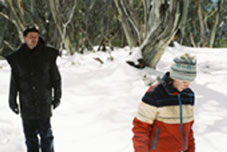
"Snow" observes a boy's exploration of the thin line between life and death and his father's powerlessness to prevent his inexorable search. It is a fifteen-minute narrative short film about a twelve-year-old boy who lives alone with his father in a remote alpine environment of Australia. He experiments with the fine line between life and death by burying live rabbits in the snow and creating breathing holes for them to survive. He goes to his father to enlist him in the act of unearthing the rabbits; giving them life above ground again. He eventually makes one of the breathing holes too small. When they unearth the rabbit, it is dead. The father confronts him about his behaviour, leaving him alone in the snow with the consequences. The next morning the father wakes to find him gone. The father anxiously searches for him. Finally he discovers his son, lying on the snow, lifeless, beside a small grave for the dead rabbit.
Dustin Feneley is a recent graduate of the prestigious Victorian College of the Arts School of Film and Television in Melbourne, Australia. In 2005, he completed the Graduate Diploma of Film and Television and Masters of Film and Television (Narrative Directing) degrees at the VCA Film School. His short films, which he has written, directed and edited, have screened at over 50 international film festivals. At only twenty-three years of age, his student short film "Snow" was selected for official competition at the 2006 Cannes Film Festival. The film's selection made him the second youngest Australian director to have a film screen at Cannes in the festival's sixty-year history. He is currently writing his first feature length film "Stray".
Fenz
Crossings
| 16mm | color | 5:0 | USA | 2006
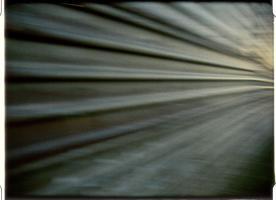
In 2005, I revisited locations for a film I had worked on several years before. "Chantal Akerman?s From the Other Side" was shot along the U.S./Mexico border. "Crossings" is a short response to my experience of the shoot and its subject. A wall exists along parts of the border facing those who live on either side. The film gives multiple views of the wall and visually confronts the idea it represents. "Crossing" is a short installment of a larger project, shot in Cuba, France, the United States and Israel that investigates insularity in both geographical and cultural terms.
Robert Fenz?s body of work demonstrates an experimental, poetic approach to non-fiction filmmaking. From 1997 to 2003, Fenz worked on Meditations on Revolution, a series of short films that explore the definition of the word ?revolution.? Fenz was awarded a Guggenheim Fellowship in 2004. In 2006 he was a resident of the DAAD artist program in Berlin. Fenz currently lives in Cambridge, Massachusetts where he is making a film-portrait of author/filmmaker Robert Gardner.
Chris Ferrantello
The Pope's Hat
Animation | dv | color | 10:30 | USA | 2006
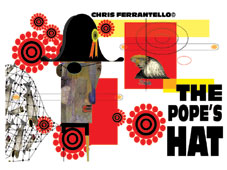
People go crazy for the Pope's line of Hats but fights break out over who has the best hat. So there will no more Pope Hats. Is there a line of Pope Shoes in the future?
Chris Ferrantello's animation work has been shown at Sundance 2002 and 2004, Krakow 43 and 44, SeNef 2004 and 2005, Bitfilm 2003, the Viper 21 and 22 festivals, Streaming Cinema 2.0., Adobe.com, The Bit Screen and The Future Cinema show at the ZKM in Germany, and the Kiasma Museum in Helsinki. A few of his films are now distributed by RIFF (Rome Independent Film Festival). He is also a painter and editorial illustrator whose clients include Esquire magazine, MS. magazine, Travel and Leisure magazine, Sony Entertainment, The Progressive, and The New York Times, to name a few. His work has been printed in illustration annuals published by the Society of Illustrators and the design publication "Print".
Isabelle Ferreira
Parade
Experimental video | dv | color | 1:49 | France, USA | 2005
"Parade" is a silent dialogue between two mechanisms.
Patrice Ferreira
Septikbioethik
Experimental video | dv | color | 12:0 | France | 2003
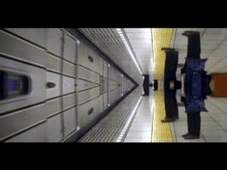
Certain of having nothing more to do in this society, a man is wandering in subways of Tokyo. His aim : to find someone who could help him to break free out of his lot. Corridors are opening. Stations are slowly filling up. A first train is arriving. The man is walking, he looks determined. He asks to somebody : -?Excuse me, can you push me... -What do you want? I push you in a train. -No...No under...? Death could become a right, please...
Luca Ferri
Thousand Cypresses
Experimental doc. | 0 | color | 13:0 | Italy | 2021
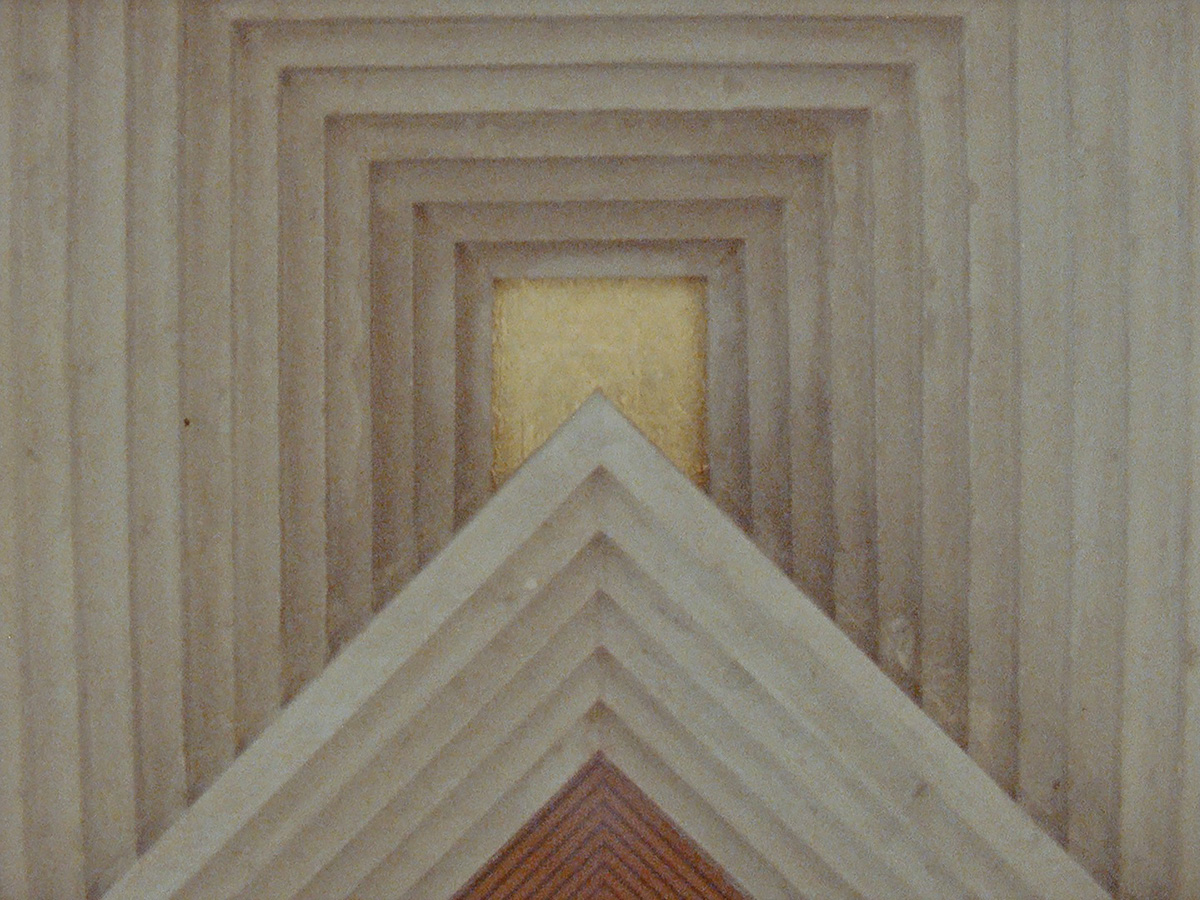
A man, inside his kitchen, is preparing his packed lunch. He has decided to visit The Brion Tomb, a monumental funeral complex, designed and built by the Venetian architect Carlo Scarpa, commissioned by Onorina Brion Tomasin, to honour the memory of the deceased and beloved relative Giuseppe Brion, founder and owner of the Brionvega company, located in the small cemetery of San Vito, in the hamlet of Altivole in the province of Treviso. Placed the food inside a polka dot plastic bag, we will find it walking inside the cemetery, observing with meticulous care the details designed by the Venetian architect, while in its silent head will resound the precious words pronounced by the architect in a conference held in the summer of 1978.
Luca Ferri (Bergamo, italy, 1976), self-taught, since 2011 has been dedicating to the writing, photography and direction of films presented to italian and international festivals, such as atlanta film festival, biografilm festival, curta cinema, documenta madrid, fidocs, filmmaker, gent international film festival, indielisboa, queer lisboa, punto de vista, pesaro film festival, cinemambiente, poff, taipei film festival, thessaloniki documentary festival, vilnius short film festival, filmer le travail, videoex and in museums and art galleries, such as spazio forma meravigli (milan), mambo (bologna), macro (rome) and schusev state museum of architecture (moscow). In 2013 the national film library of Rome organizes a restrospetictive of his works. his first feature film abacuc, released in 2015, was presented at torino film festival and mar del plata festival de cine. In 2016 colombi was presented at 73rd venice festival in the orizzonti section. In 2018 his work dulcinea was selected at 71st locarno film festival in competition in the section signs of life while pierino was presented at 61st dok leipzig. In 2020 the house of love is presented at 70th berlinale in section forum, selected to take part in the competition berlinale documentary award and receives the mention to 34th teddy awards; his work sì is presented at 77th venice international film festival, orizzonti section. In 2021 his last work a thousand cypresses was presented at 67th international short film festival Oberhausen and at the 57th mostra internazionale del nuovo cinema di pesaro. won the award for best film at the 46th laceno d'oro in the section "eyes on the city."
Aurèle Ferrier
Claws
Experimental doc. | 4k | color | 18:27 | Switzerland, China | 2025
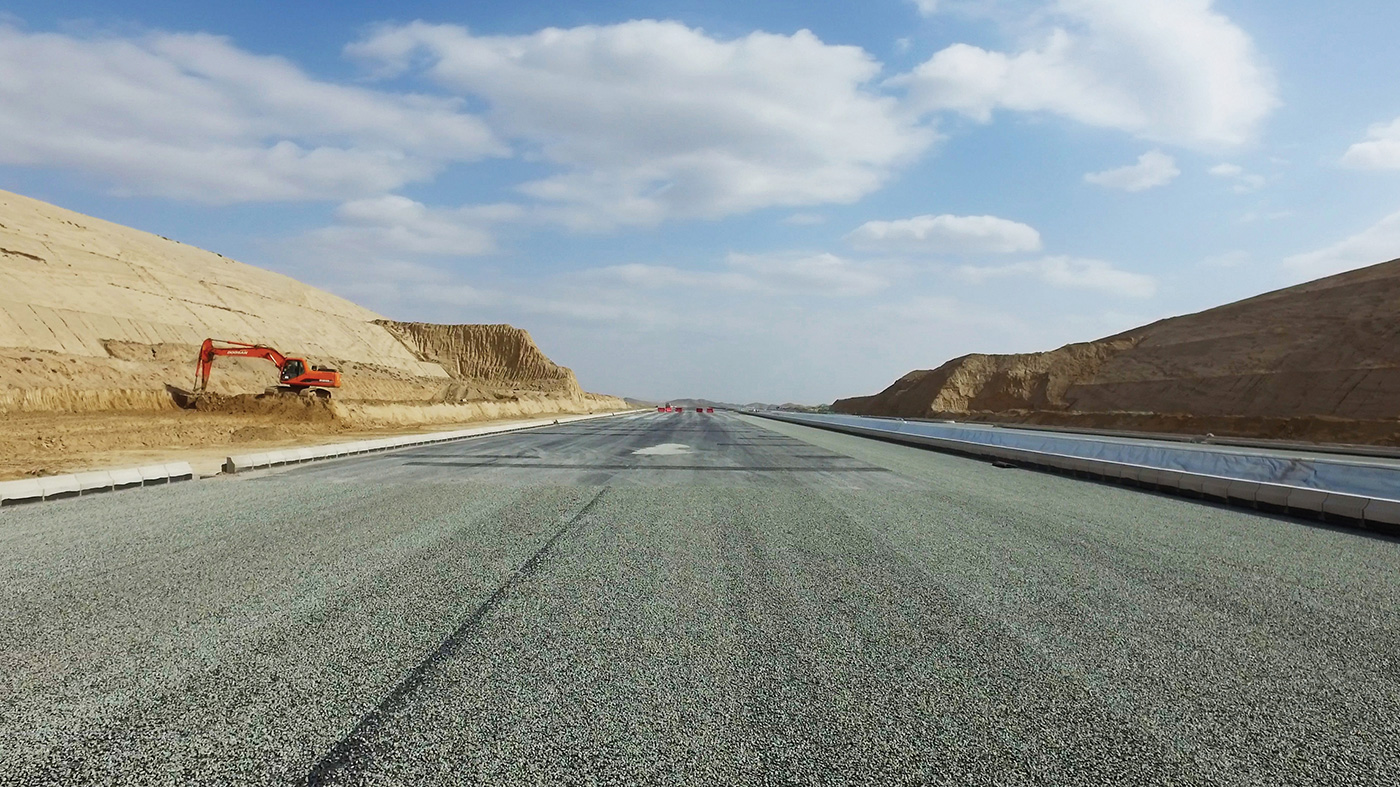
CLAWS is a moving-image essay of gliding takes through rapidly expanding cities, drifting from peripheral terrains into dense cores before opening back to the horizon. In largely unpopulated frames, architecture, materials and sound turn urban expansion into a field of perception—where geometry persists, intention falters, and the land remembers.
Aurèle Ferrier is a Swiss visual artist working with film, exploring built environments and urban peripheries. CLAWS concludes his trilogy on human-made landscapes. His moving-image works have been shown at the Hiroshima City Museum of Contemporary Art (Hiroshima), IDFA (Amsterdam), Rencontres Internationales (Paris/Berlin), Open City Documentary Festival (London), Anthology Film Archives (New York) and Image Forum (Tokyo).
Aurèle Ferrier
Transitions
Video | 4k | color | 12:48 | Switzerland | 2017
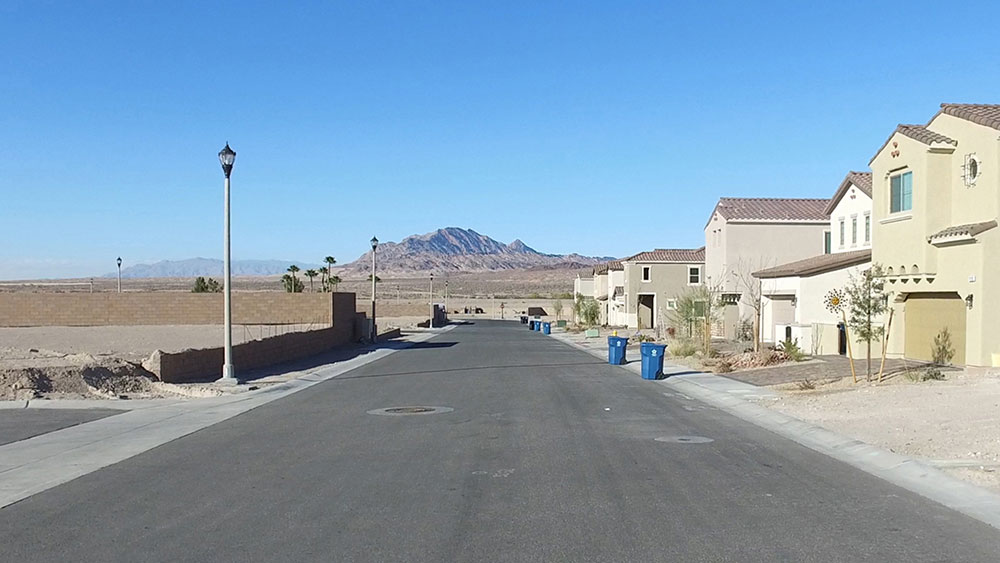
TRANSITIONS is a journey from the civilizing void of the desert to a maximal urban, capitalistic and hedonistic density, which in the case of Las Vegas assumes some bizarre expression. The film is a contemplation without any people or moving machines in it, focussing on the built and designed.
Aurèle Ferrier (*1975 in St.Gallen, CH) lives in Zurich. With his video and cinematic works, actions and interventions he explores the margins of civilization. His works have been presented in more than 30 countries and won, among others, a Grand Jury Award at Slamdance Film Festival.

Markus Fiedler, Stanley Edward, Nanna Katrine Hansen, Thomas Elsted
Cast Away Souls
Documentary | hdv | color | 34:14 | Germany | 2019
Cast Away Souls looks at the political structures behind the conditions at the deportation centre Sjælsmark, as well as at the controversial methods used to push the centre's residents to leave Denmark voluntarily. Some call the methods inhumane, while others call them necessary. Through a conversation between the Sjælsmark unit manager Niels Johannessen and one of the residents, Stanley Edward, the film talks about everyday life under constant pressure and about a life where human rights and international conventions are put to the test. Cast Away Souls hits squarely home in one of today's great political discussions, not just about the conditions that children live in at Sjælsmark, but also more generally about human compassion and human rights at centres such as Sjælsmark.
Markus Fiedler, born 1972 in Hamburg/Germany, successfully completed his Studies of Psychology at the University of Hamburg in 2001. In addition he started the Studies of Visual Communication at the University of Fine Arts Hamburg (HfbK) between 1998 and 2003. From 2007 to 2011 he he completed the Postgraduate Studies of Audio-Visual Media / Film & TV at the Academy of Media Arts (KHM) in Cologne/Germany with his graduation film 'Elif's Boys', a 99min documentary about the story of three generations of men of a turkish-kurdish family who migrated to Germany. Since 2002 Fiedler is working as an independent filmmaker, mainly in the field of narrative documentaries. He has been working as screen printer, graphic artist and billsticker.
Liliia Filina
INNER IMMIGRATION
Experimental film | 35mm | color | 3:36 | Russia | 2025
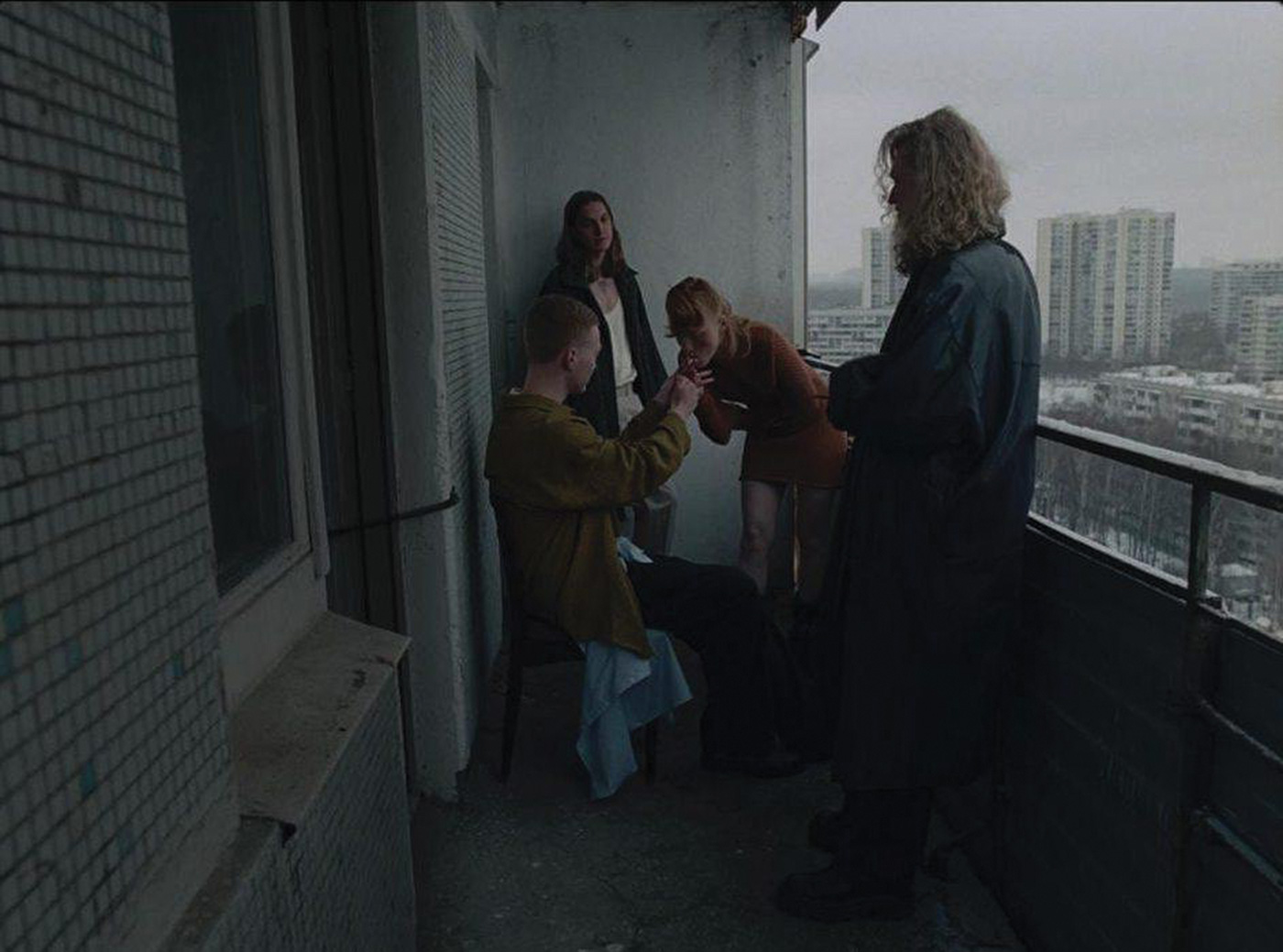
In a nameless Eastern European city, few young people, finds themself trapped between silent resistance and passive complicity as their country descends into war. The city’s streets, once familiar, become a landscape of fear. Shot in stark, observational style, Inner emigration is a haunting portrait of a generation suspended in stillness, forced to navigate a crumbling reality that no longer offers clear choices.
Lily Filina is an artist and director, born in Kaluga, Russia, 1999. A graduate of the Rodchenko Art School, class of Sergei Bratkov, she works as an advertising director and develops independent projects at the intersection of cinema and video art. In 2024, Liliya's film participated in the program of the Rotterdam Film Festival. In 2024, Liliya's project "Internal Emigration” was supported by the Yandex360 program.
Lina Filipovich
So Blue
Video | mp4 | black and white | 2:26 | Belarus, France | 2021
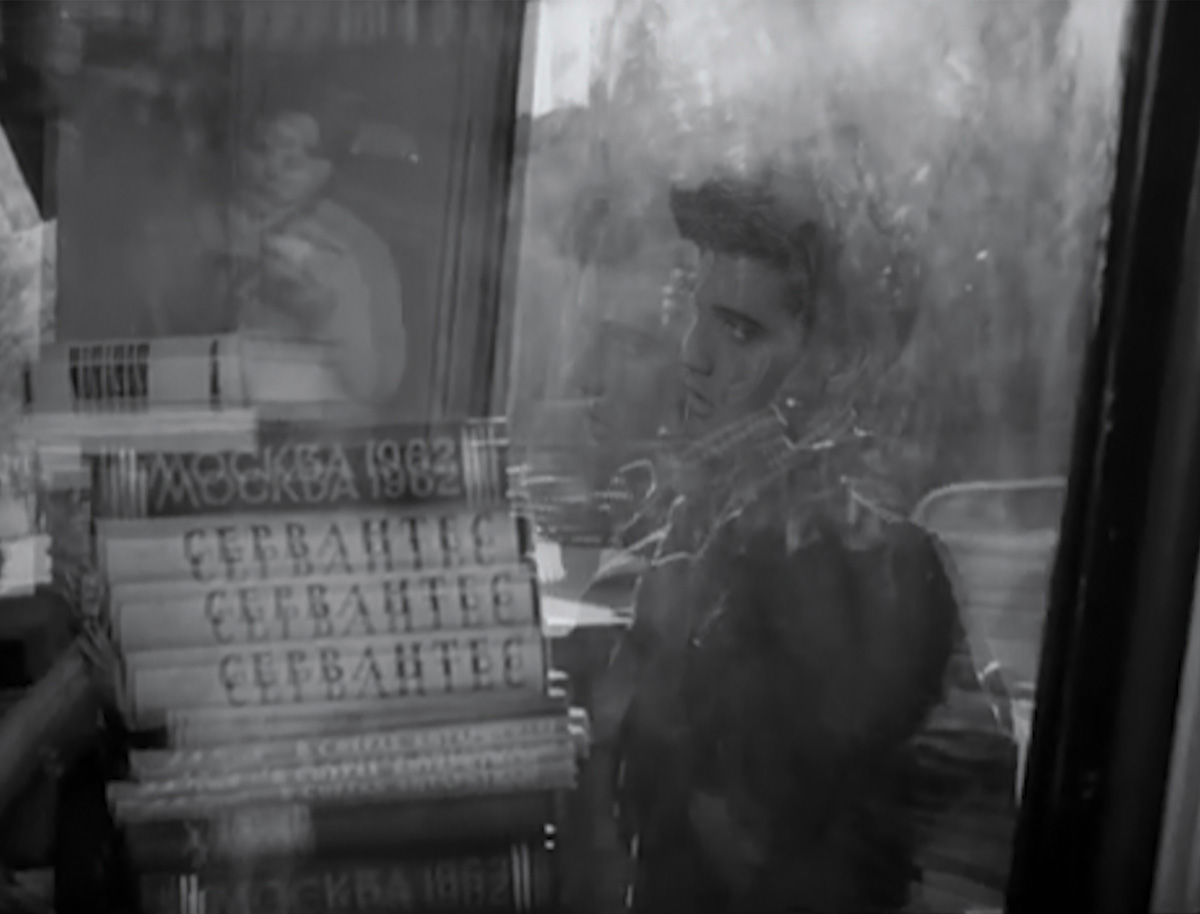
Created in collaboration with IRCAM, « So Blue » represents a false documentary on the trip of Elvis Presley to Minsk, Belarus in the 1960s. The basis and the main element of this video is a song created by me using the sound collage technique. I used a dozen fragments from different Elvis songs, changing the key, working with tempo and harmony to recreate his « unreleased song ». The lyrics were composed by the same method, using archetypal words and phrases, typical for songwriting of the 50 - 60s. The video also presents a collage made from fragments of the fictional film "I'm 20" by Marlen Khutsiev and from frames of documentary films about Minsk. This technique allowed me to create a video mystification about Elvis’s fictional travel to my hometown (Minsk). The cross between fictional and documentary cinema, between a sound collage and a false composition generates a hybrid work that provokes feelings of strangeness, deceiving the viewer about credibility of this work. This confusion gives place to the questioning from the part of the viewer concerning the documentary representation.
Lina Filipovich is an artist and musician based in Paris, France. Her works explore the relationship between audio and visuals and span a variety of media, including found footage films, experimental electronic music, painting, silkscreening and performance. Working with samples and loops, Lina Filipovich uses techniques of sound collage, musical montage, cut-up and appropriation.