Catalogue > Search
Results for : Tout le catalogue
Jem Finer
The centre of the universe
Experimental video | dv | color | 5:0 | United Kingdom | 2005
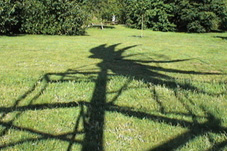
In June 2005, Jem Finer built a sculptural observatory in the Oxford University Parks he called "The Center of the Universe". Made of wood and wires, this sculpture was installed in a 15 meter high spiral tower as an "radio dish" (the union between ancient observatories, the ziggurat, and the contemporaries one), in which Jem Finer lived. In this shed, the signals received from the expanse of cosmos were transcribed by an electronic equipment and an old chart recorder and then decoded into sounds. The film presented is showing a selection of the numerous timelapse films Jem Finer made during his one month stay in the park, watching the daily shadows rotating around him.
Jem Finer is an artist exploring different art fields, creating mixed up performances and installations dealing with video, music, photography, sculpture,... Most of his work concerns with extremes time and space scales as "Longplayer", a thousand year long music piece, or "Wave/particle", a film made in zero gravity exploring the quantum world. This year Jem Finer built two sculptural observatories also dealing with time and space but based these times on cosmological scales : "Landscope" in Lough Neagh, N.Ireland and "The Centre of the Universe" in Oxford, England. He recently won the PRS Foundation New Music Prize for his new musical composition called "Score for a Hole in the Ground" including wind and rain. Jim Finer is currently working on it in a forest in south east of England.
Ulrich Fischer
4 courtes pièces
Art vidéo | super8 | color and b&w | 9:5 | Switzerland | 2004
L'oeuvre d'Ulrich Fisher, les 4 courtes pièces, fait suite à une commande de la chaîne suisse alémanique SFDRS pour l`émission philosophique STERNSTUNDEN. Elle se compose de 4 clips: Ballast, Signes d´éconduite, La ville révée des grues et Mi rage. Ballast : Un quadrillage symétrique soutient et fait décoller l?image ? pas de mouvement sans ballast? Signes d´éconduite : Se laisser entraîner par des lignes fuyantes, jusqu?au point où l?espace du voyage se dissout en de multiples pistes : autant de signes qui bouclent le mouvement sur lui-même. La ville révée des grues Entre la ville cartographiée et la ville réelle, les grues ont leur mot à dire. Mirage : Que se passe-t-il quand des objets mouvants gèlent dans leur course et deviennent un solide qui marque l?espace ? On peut alors voir une sorte de mémoire d?un lieu, ce qui nous interpelle à nouer de nouvelles relations au contexte.
Né en 1971 à Genève, Ulrich Fisher réalise entre 1993 et 1996 divers films en super-8 et vidéo. Il obtient en 2000 le diplôme à l'Ecole Supérieure d'Art Visuel de Genève (ESAV). Il devient ensuite permanent au Cinema Spoutnik. Il est aussi producteur, monteur et caméraman pour Perceuse Productions.
Judy Fiskin
The end of photography
Experimental video | super8 | black and white | 2:28 | USA | 2006
Black and white Super 8 images flash by as the narrator mourns the end of film photography.
Judy Fiskin is a Los Angeles based artist. She worked principally in photography from 1973-1994. In 1995, for reasons of health, she had to abandon photography and since then has been working in video and super-8 film. Her work has been shown widely in the United States and internationally, including a retrospective at the Museum of Contemporary Art in Los Angeles and a screening of her video work at the Museum of Modern Art in New York.

Tor-finn Malum Fitje
Death Mother: As Above, So Below
Experimental film | hdv | color | 4:4 | Norway | 2024
This two-channel video draws its inspiration from Carl Jung's ideas of the near-death-experience, and the title refers to his archetype Death Mother. To the left you see a AI generated character dressed as an air stewardess, speaking intensely to the viewers. She has been given the deep voice of the Jungian analyst Joseph Lee. On the right screen we see real drone videos of fault ruptures caused by earthquakes, and hear sounds from inside the crust of the earth. In the vague relations between these two dream spaces - one floating on top of the other - there is a bizarre death fantasy unfolding. The underlying topic of the film can be found in the conflict between the artificial and the analogue, the vulgar and the sublime. The work won the artist BiT Elite price at Stipendutstillingen in 2024, Telemark Kunstsenter, Norway
Tor-Finn Malum Fitje is a video artist, writer and film teacher based in Oslo, Norway. He holds an MFA from the Royal Academy of Art in Stockholm, a BFA from Konstfack and a Bachelor in Film Production from Bergen University, specializing in directing. His work includes multi-channel video installations as well as feature length essay films. Malum Fitje has exhibited his films at The National Museum and Gallery of Photography in Oslo and the Museum of Modern Art in Stockholm
Tor-finn Malum Fitje, Thomas Anthony Hill
Ad Nauseam: The End of Kitchen Politics
Video | mov | color | 5:13 | Norway | 2019
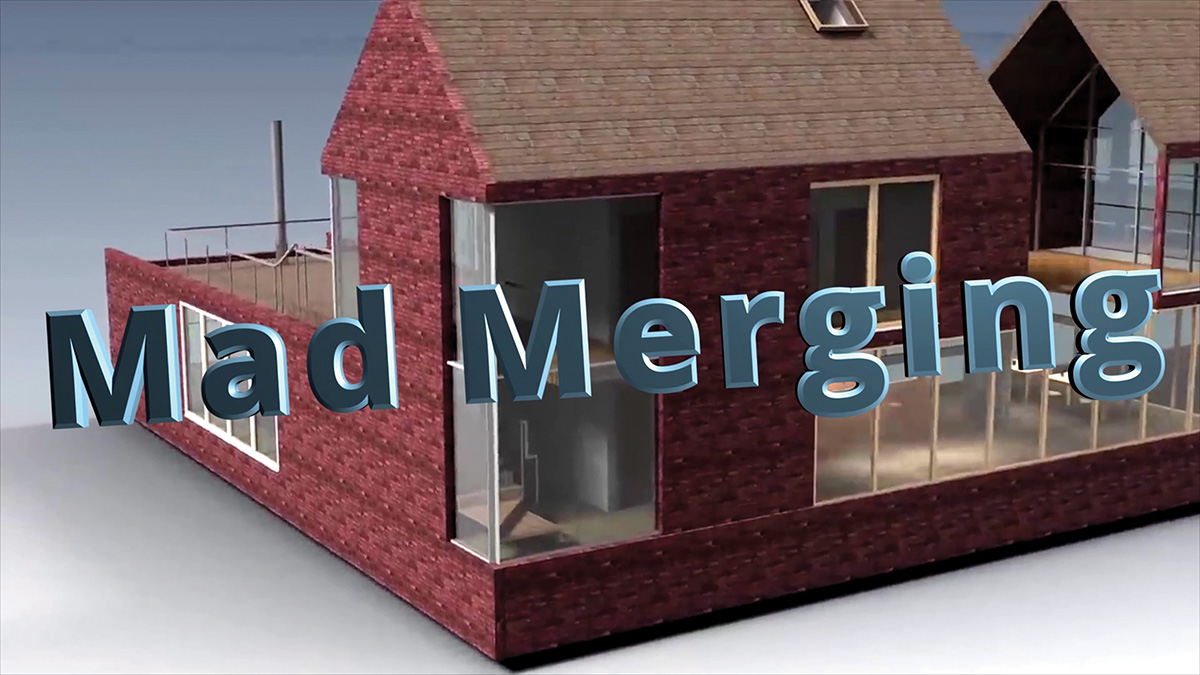
The age-old dispute between the open and the closed kitchen solution have reached a dramatic climax where “The Separatists” face the “The Open Kitchen Radicals” in one final heated battle. From there the film also debates the existential properties of the bar, as in opposition to the conservative breakfast table, and attempt to explain differences in psychological temperament through people’s preferences of kitchen worktop. The End of Kitchen Politics is the second film of the umbrella project Ad Nauseam, a series of essayistic videoss portraying a society where doubt no longer exists. In this day and age, neurologists have discovered the center of consciousness, the open kitchen solution has been ruled mandatory by law, and every new parent follows the hand book How To Raise a Child obediently. While Christianity and Neo-atheism have merged to form The Faitheist Church, a universal understanding of all the rules of football have been reached. And yet, this society is permeated by a chaos so disruptive that it’s hard for people even to breathe. Through hyper stylized 3D animations and what they call “clear-cut narration”, video artist duo Tor-Finn Malum Fitje and Thomas Anthony Hill comment on the current paradigm of truth, and attempt to challenge the post-modern notion that all ways of looking at the world can be equally true.
Tor-Finn Malum Fitje (1989) was born in Porsgrunn and grew up in Bergen, Norway, where he first studied Film Production, specialising with a Bachelor’s degree in Directing. He went on to do a BFA at Konstfack, before earning his Master of Fine Arts at the Royal Institute of Art in Stockholm, graduating in 2016. Currently based in Oslo, Malum Fitjes work comprises essayistic video and audio installations, as well as text-based art. He has screened his films at the Modern Museum in Stockholm, the Gallery of Photography in Oslo and is currently working on three new films called Ad Nauseam: National Treasures Explained, that will be exhibited at the opening of the new National Museum in Oslo. Thomas Anthony Hill (1989) born in Coffs Harbor, Australia, grew up in Bergen, Norway and has lived in Oslo since 2017. In 2014 he graduated with a Master’s degree in Comparative Literature at the University of Bergen and has since then worked as a film critic and translator. Together with Malum Fitje he has created the works Hyphenic (2018) and Ad Nauseam (2020), the latter currently being exhibited at Galleri Golsa in Oslo.
Scott Fitzpatrick
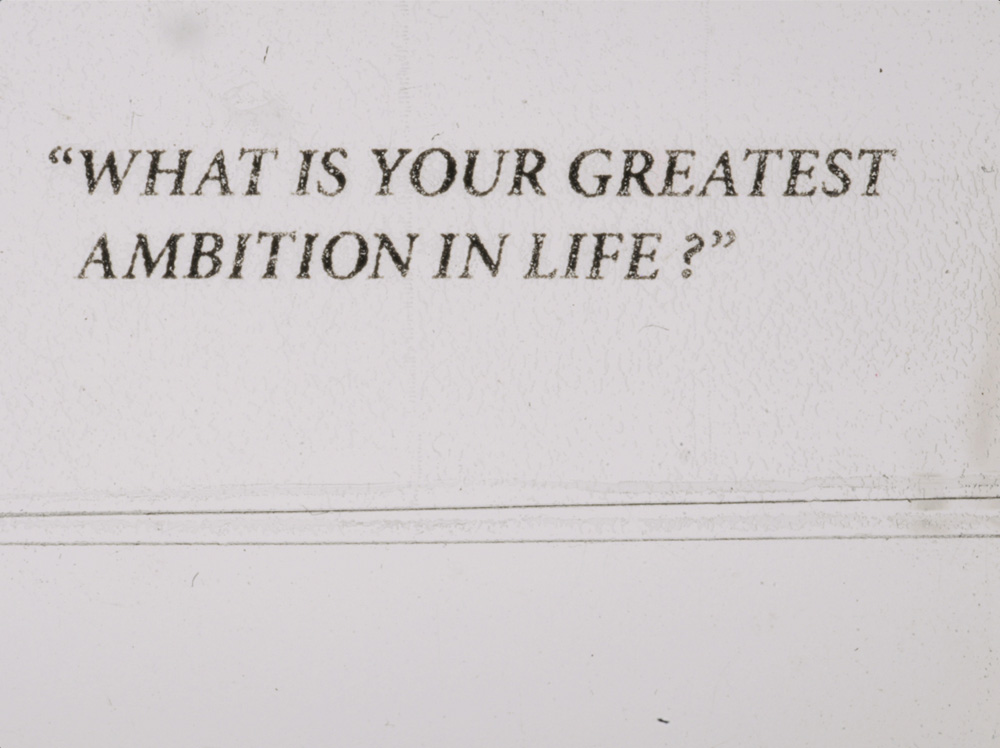
Immortal Cats #1
Experimental film | 35mm | color | 0:55 | Canada | 2015
What is your greatest ambition in life? Laser-printed onto recycled 35mm film in 2015.
S.F. is a visual artist (Libra) from YWG, whose film and video work has screened at underground festivals and marginalized venues worldwide. He studied film theory and production at the University of Manitoba, and began conducting lo-fi moving image experiments in 2010. Primarily a filmmaker, also invested in photography, re-photography, kaleidoscope and collage.
Scott Fitzpatrick
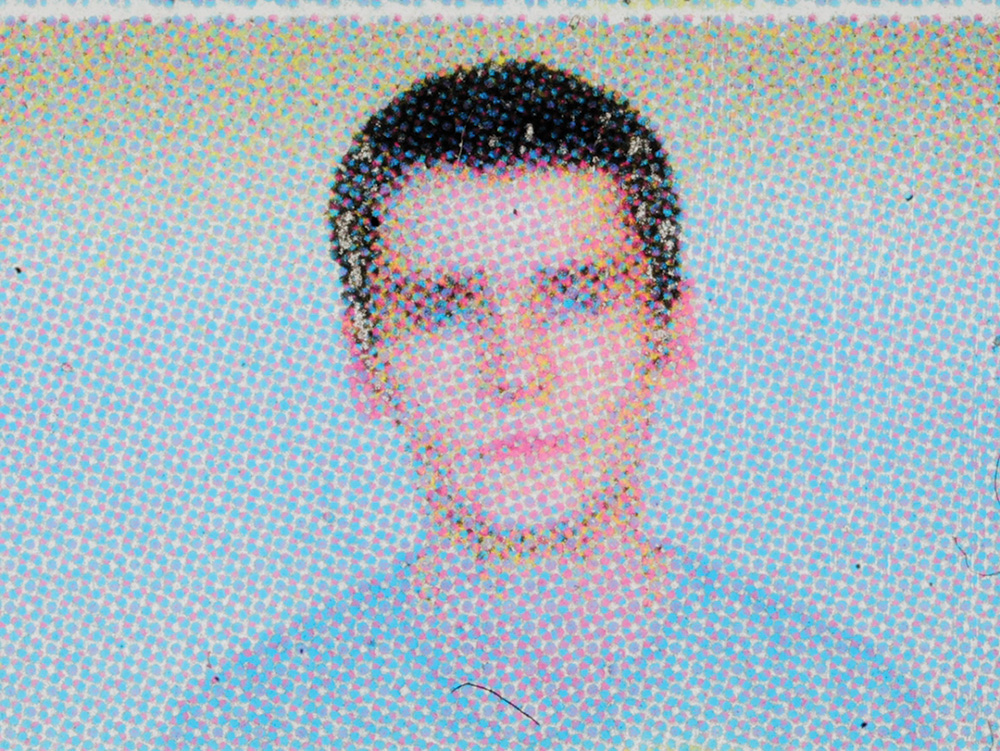
Screen Test 1 (Self-portrait)
Experimental film | 16mm | color | 2:30 | Canada | 2015
Laser-printed onto recycled 16mm film in 2015.
S.F. is a visual artist (Libra) from YWG, whose film and video work has screened at underground festivals and marginalized venues worldwide. He studied film theory and production at the University of Manitoba, and began conducting lo-fi moving image experiments in 2010. Primarily a filmmaker, also invested in photography, re-photography, kaleidoscope and collage. In addition to producing his own work, S.F. presents the work of others through the Winnipeg Underground Film Festival and Open City Cinema.
Frode Fjeringstad
Irene in the Poconos
| | color | 1:0 | Norway | 2011
THE FILM WAS SHOT IN THE POCONOS IN PENNSYLVANIA USA WHEN HURRICANE IRENE WAS HAMMERING AROUND. Early on August 27, Irene further weakened to a Category 1 hurricane as it approached the Outer Banks of North Carolina. At 7:30 am EDT (11:30 UTC) the same day, Irene made landfall near Cape Lookout, on North Carolina's Outer Banks, with winds of 85 mph (140 km/h). After having tracked over land for about 10 hours, the eye of Irene became cloud-filled, although the center remained well-defined on radar images. Later on August 27, Irene re-emerged into the Atlantic near the southern end of the Chesapeake Bay in Virginia. Shortly before sunrise, at about 09:35 UTC on August 28, Irene made a second landfall at the Little Egg Inlet on the New Jersey shore with winds of 75 mph, and soon after moved over water again. Hours later, Irene weakened to a tropical storm with winds of 65 mph (100 km/h) near New York City.
Frode Fjerdingstad (born 1975) is a photographer, born in Oslo, Norway. He studied photography at the London College of Printing. Frode has exhibited his work at the National Artcenter Tokyo and at several other occasions in London, Oslo, Zürich.
Andrea Flamini
Impromptu no. 3
Art vidéo | dv | color | 1:31 | Italy, USA | 2004
In Impromptu no. 3, the apparently calm--yet maniacally repetitive--gesture of caressing one`s own face is intensified through the use of a mirror image. The fragmented movements of the mirrored video provide for deeper character analysis, and suggest an even more distressed state of being. Through the use of synch scripts the mirrored video image has been manipulated, from the original medical research footage of a mental sanatorium, to expose a more accurate `psychological reality` of the patient. Thus obtaining, through manipulation, a perhaps more accurate representation of the patient?s feeling than what the documentary source material has hoped for.
Born in Rome, Italy, Andrea Flamini currently resides in Kansas City, Missouri USA, where he is Assistant Professor in the Photo and New Media Dept. at the Kansas City Art Institute. Flamini`s installations generate cinematic environments that test our perception of memory, space and narrative. In his database narratives, short tales of conflict and resolution are developed with infinite variations that resist the conventional narrative logics of cause and effect. Flamini`s work is exhibited at media festivals, galleries and museums in the U.S. and abroad.
Flatform
Approaches to a Theory of Punctuation
Experimental video | 4k | color | 5:42 | Italy, USA | 2023
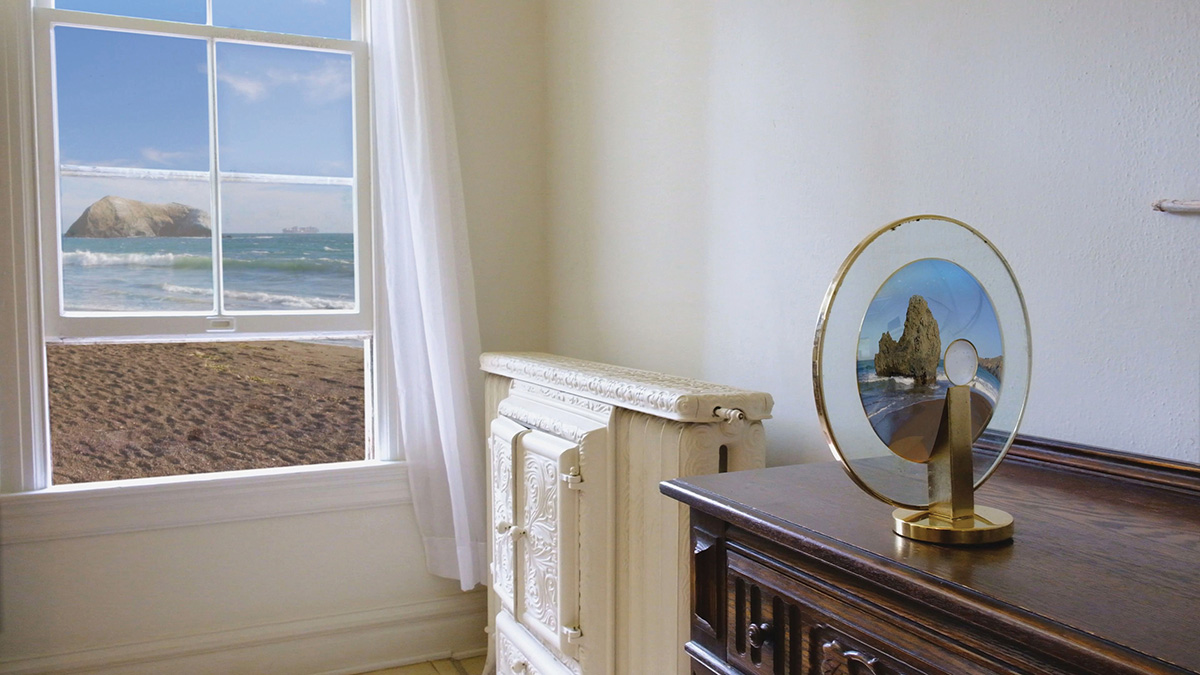
Approaches to a Theory of Punctuation speaks about quotes, punctuation and movement, all terms that have a musical connotation. In this work, the objects present in an internal environment reflect external places, and these reflections, like some sort of narration, are treated like quotes yet they are released from the expressive repetition that characterizes them. Here, the use of quotation marks as a visible and mental engine anticipates the landscape itself as a possible form of quotation. Furthermore, the continuously circling pan movement of the camera, is not treated as an autonomous essence, but becomes an interdependent system acting between the internal and external, capable of existing only by influencing other systems or objects. The internal is shot inside the house in which Flatform lived during the residency at Headlands Center for the Arts in Sausalito USA, and the external is shot in the bay outside. This film is dedicated to the memory of the american novelist Paul La Farge, narrating voice of the film.
Flatform is a collective artist based in Milan and Berlin, founded in 2006. Works by Flatform have been shown in many museums and institutions including, among others, Centre Pompidou in Paris, Hirshhorn Museum in Washington DC, Wexner Center for the Arts in Columbus Ohio, MAXXI Museum in Rome, Fondazione Prada in Milan, EMPAC Experimental Media and Performing Arts Center in Troy NY, Fondazione Sandretto Re Rebaudengo in Turin, Argos Centre for Arts in Bruxelles, Palazzo Grassi in Venice, MSU-Museum of Contemporary Art in Zagreb, Haus der Kulturen der Welt in Berlin, Cineteca Matadero in Madrid, Yerba Buena Center for the Arts in San Francisco, Eye Filmmuseum in Amsterdam, PAC in Milan, Museu da Imagem e do Som in San Paolo. Flatform has been invited in several film festivals including, among others, Quinzaine des Realisateurs de Cannes, Venice Intl. Film Festival, IFFR in Rotterdam, BFI Film Festival in London, LOOP in Barcelona, Festival du Nouveau Cinema in Montreal, Lo Schermo dell’Arte in Florence, IFF in Melbourne. Selected Awards: Go Shorts in Nijmegen 2020 and 2016; Nashville Intl Film Festival 2016, Jihlava Intl Doc Film Festival 2015, Lago Film festival 2010 in Lago, 25FPS 2009 in Zagreb, Screen Festival 2008 in Oslo.

Flatform
Quello che verrà è solo una promessa
Video | 4k | color | 22:0 | Italy | 2019
In the course of a long, slow take over Funafuti, both drought and floods appear in a constant uninterrupted rhythm. The state of flux between both type of events is reflected in the places and actions of the inhabitants making the island's extremes seem familiar: the air is riven with anticipation and surprise. The island of Funafuti, in the archipelago of Tuvalu, for some years now has become the stage for a unique phenomenon. Due to the unnatural warming of the sea, saltwater seeps into the subsoil bubbling up through the porous terrain provoking floods which put the future of life on this island at risk.
Flatform is a collective artist acting since 2006 and based in Milan and Berlin. Films by Flatform have been featured in several film festivals such as International Film Festival in Cannes, IFFR in Rotterdam, Venice Int’l Film Festival, IFFT in Toronto, Kurzfilmtage in Oberhausen, LOOP in Barcelona, Festival du Nouveau Cinema in Montreal, IFF in Melbourne, International Doc Film Festival in Jihlava among others. Works by Flatform have been shown in many museums and institutions including Hirshhorn Museum in Washington, Wexner Center for the Arts in Columbus, Centre Pompidou in Paris, MSU-Museum of Contemporary Art in Zagreb, MAXXI Museum in Rome, Haus der Kulturen der Welt in Berlin, Garage Museum of Contemporary Art in Moscow, Museu da Imagem e do Som in San Paolo. Selected Awards: Nashville Intl Film Festival, 2016; Go Shorts in Nijmegen, 2016; Jihlava Intl Doc Film Festival, 2015; 25FPS Zagreb, 2009; Screen Festival Oslo,2008
Thorsten Fleisch, Thorsten Fleisch
Energie!
Experimental video | dv | black and white | 5:7 | Germany | 2007
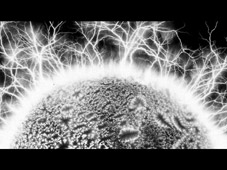
The TV/video screen comes alive by a controlled beam of electrons in the cathode ray tube. For "Energie!" an uncontrolled high voltage discharge of 30,000 volts exposes photographic paper which is then arranged in time to create new visual systems of electron organization.
Thorsten Fleisch was born in Koblenz, Germany in 1972. He began experimenting with super 8 film while in high school, where he also exhibited his first film, a super 8 loop. After high school and community service in an institution for the mentally ill, he went to Marburg to study art, music, and media at Phillips Universität. One year later he changed to the Städelschule in Frankfurt in order to study film with Professor Peter Kubelka. There he started working with 16mm film. Shortly after his studies at the Städelschule he made "blutrausch/bloodlust" which not only earned him a lot of attention but also the Ann Arbor Filmcoop Award. Thorsten Fleisch has been a member of the board of artistic directors of the International Experimental Cinema Exhibition since 2001. He has received several grants, including one from the Filmbüro NW and one from the Museum of Contemporary Cinema. For "gestalt" he received an Honorary Mention at the Prix Ars Electronica, the number one festival for computer related art. He now lives and works in Berlin where he is also involved in organizing parties with the Kachelklub.
Thorsten Fleisch
Kosmos
Experimental film | 16mm | color | 5:15 | Germany | 2004
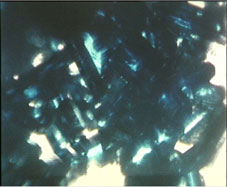
the mystery of the crystals under closer examination. what is it that makes them possess magic powers as claimed by mystics thorough the ages? by growing crystals directly on film their mystical qualities shine straight to the screen. unfiltered, only aided by light which gracefully breaks its rays into rich visual textures.
thorsten fleisch was born in koblenz, germany in 1972. he began experimenting with super 8 film while at highschool where he also exhibited his first film, a super 8 loop. after highschool and community service in an institution for the mentally ill he went to marburg to study art, music and media at phillips universität. one year later he changed to the städelschule in frankfurt in order to study film with prof. peter kubelka. there he started working with 16mm film. shortly after his studies at the städelschule he made `blutrausch / bloodlust` which not only got him a lot of attention but also the ann arbor filmcoop award. since 2001 thorsten fleisch is a member of the board of artistic directors of the international experimental cinema exposition. he received several grants among them a grant from the filmbüro nw and a grant from the museum of contemporary cinema. for `gestalt` he received an honorary mention at the prix ars electronica the number one festival for computer related art. his film `kosmos` received the ann arbor award for best 16mm film and the chicago underground film festival award for bes experimental film. it was also shown at the pretigious new york film festival. recently he presented his works at cal arts and at the university of southern california in los angeles.
Arthur Fléchard
La Sémantique du mouvement
Experimental fiction | hdv | color | 2:35 | France | 2014
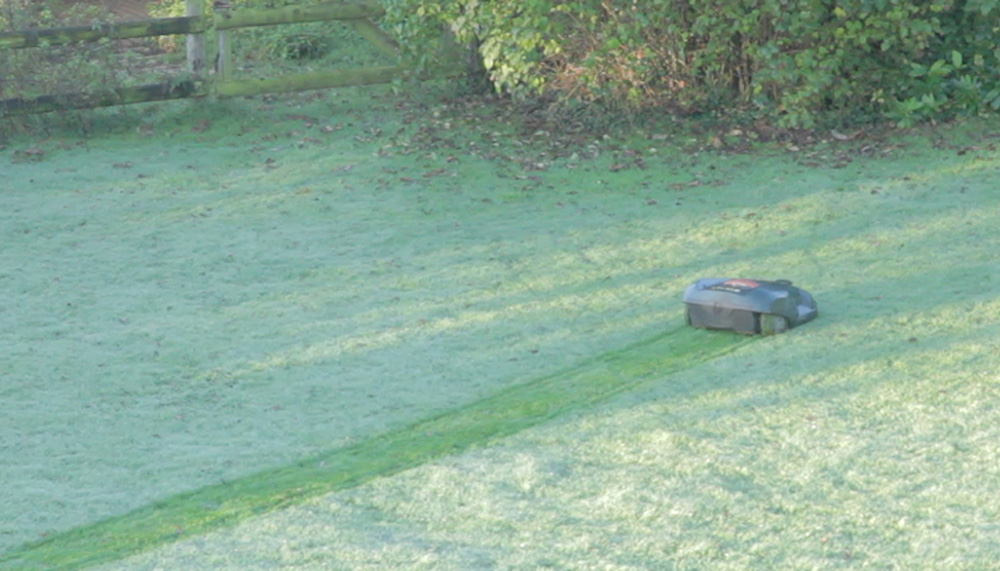
An art critic portrays, using a voice-over narration, the practice of a robotized mower. Video archives illustrate his words. "Automower 320" emancipated from its predefined task , addressing cutting the lawn on its own aesthetic concerns . In a geometric hysteria , it uses lines, planes and curves , in order to raise the sensitivity in a mechanical organization.
Nicolas Floc'h
End
Fiction | 16mm | color | 22:31 | France | 2006
A man in his fifties nearly knocks down a young imprudent girl on a country road at night. She is young. He makes her get in the car to drive her to the hospital. She categorically refuses; she has to be at a very important meeting a few kilometres from where they are. The man offers to take her to her meeting place.
Nicolas Floc'h is a plastics artist and has a MA from the Glasgow School of Art. He exhibits his work regularly in art centres and museums in France and abroad. He works with dancers in laboratory frameworks, such as Edelweiss, Hourvari, Kyoto Creators Meeting, etc. Nicolas Floc'h produces his projects in collaboration with choreographers like Alain Michard, Emmanuelle Huynh, Rachid Ouramdane, and the lighting technician Caty Olive. He also develops projects starting from a forum, 'Structure multifonctions', in which he invites diverse artists to intervene. He has produced several videos, including "Anna's Life and Market" which has previously been presented at the Paris/Berlin festival. "End" is his first short fiction film. The Nicolas Floc'h catalogue "In Other Words" was published by "Roma" in June 2005. He currently has a personal exhibition at MAC/VAL in Vitry-sur-seine. The "Structures odysséennes" was published by MAC/VAL for the occasion of this exhibition.
Elise Florenty
Arriba! Desde Abajo
Experimental doc. | dv | black and white | 10:45 | France | 2008
New split screen showing videos Autop and El Juego del No. Both movies sometimes play together and sometimes separately, one against the other, causing a confrontation but often the two characters points of view. On the one hand the students, the other the street dancers. From Argentine history and it recent past, these two videos show moments of the breaking up (perforated posters, scattered leaflets, and torn books) and the collapsing of the system(demolition, ruins, and other lost "buildings") while questioning the "resistance" of a pencil in hand - for the students, support for the land ? by the street dancers. Oblivious of the promise flouted "Never again" finds strength in these lines in the tense and contradictory movements of UP "Arriba" the dancers and DOWN "Abajo" students. Between jubilation and condemnation. They take on the form of demand or claims property rights in the 70s,this form of expression still valid in today?s Argentine making one doubt as to the origin the pictures (the end of the 70´s or Thirty years later) the codification of past in present is far more solid now than during the used during the dictatorship as threats of extermination once again for those who look for justice and speak out when democracy is absent.
Elise Florenty was born in 1978 in Bordeaux. After studying theory and film history at the Sorbonne Nouvelle Paris 3, and the ENSBA of Cergy, she participated in post-graduate ENSBA at Lyon with Jean-Pierre Rehm and Marie-Jose Burki, then got an ENSAD animation degree. Since then, she has lived in Seul, Buenos Aires and recently at Moly Sabata, in the Isere. With her work, Elise Florenty explores the physical deployment of language, the opening signs of her work wish to create a modest monument to a period reminding us how no matter ?when? it?s never the moment to speak up.
Elise Florenty, Marcel Türkowski
Shadow-Machine
Video | hdv | color | 14:20 | France | 2016
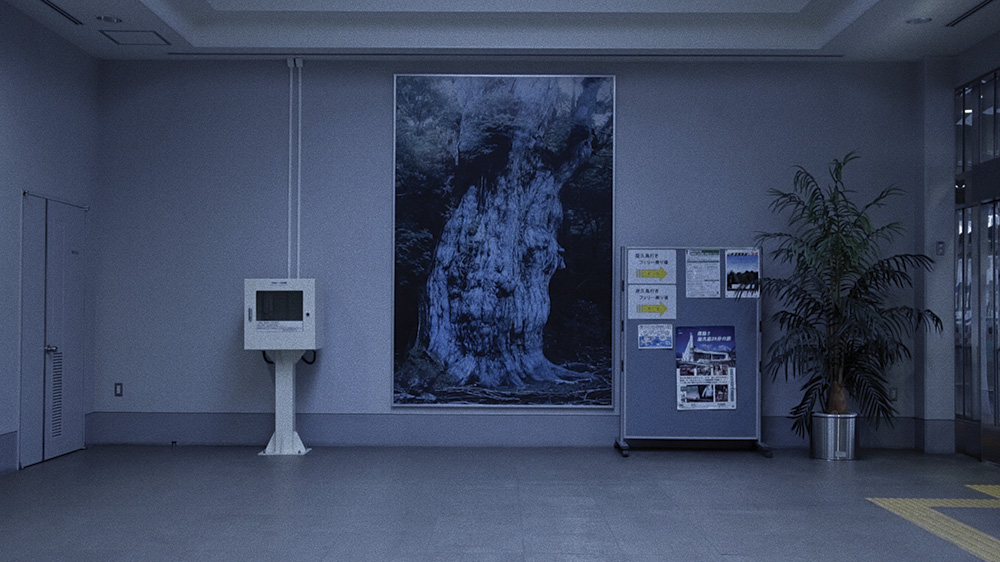
One indigo summer night, in a rather tropical suburban Japan, several isolated people find themselves caught in a game of shadows and lights more or less threatening. Operators dressed in black seem to manipulate them as they abandon themselves to the idea of being puppets. Yet here no ventriloquism, at most a few tears, or a laughter hidden behind a scream, are tearing the silence of the night apart. Featuring Junko Hiroshige (member of Hijokaidan)
Elise Florenty & Marcel Türkowsky are a franco-german artist/filmmaker duo working together since 2009. Combining the fields of cinema, installation, publication and curation, they have been exploring the multiplicity of the self through a spiral of metamorphoses that interrogate our power relation - always shifting - to the Other („the enemy, the plant, the animal, the spirit, the dead“).
Elise Florenty
Iʼll Live (work song)
Experimental doc. | dv | black and white | 6:35 | France | 2008
«Iʼll live» (work song) is inspired by a poem of the american and modernist architect Frank Llord Wright written in 1896. The main idea was to combine architecture and language. At the beginning the poem is written by blocks of letters which represent abstract elements (T for thought, A for Action, W for Work, L for Life, D for Death). Some characters manipulate the letters and construct the poem stanza after stanza, as stone after stone. The elements are stacked up in a vertical, linear and logical way. Together they seem to build a vertical and rational tower for the community. But a man arrives to de-construct this vertical tower-poem in order to make one more playfull and close to the organic human beings. Then, the exploded elements start to make loose associations. As if they were not able to «illustrate» the poem any more and start to act and combine their own way.The Man (the artist, the architect) fight with the abstract elements Work - Thought - Action. He tries to find a way between fantasia and rationalism. To keep his freedom in his art he has to refuse some temptations : Favour (symbolized by the Mask) Fortune (symbolized by the Jade) Fame (symbolized by the Sheath of the blade). This video was made during a workshop in a art school in france. I choose to keep all the moment during which the students were thinking and hesitating in their gesture. This moments «in progress» sometimes say more about the poem than the choreographic development that we were searching for.
Born in December 78 in Pessac (33). After studying theory and history of Cinema, Elise Florenty gratuated from National Superior Fine Art School of Cergy-Paris, then from the master course of National Superior Fine Art School of Lyon with Jean-Pierre Rehm et Marie-José Burki and at last from the animation master course of National Superior Decorative Art School of Paris. She did Art residencies in Seoul, in Buenos Aires, in Moly Sabata (under the Artistic Direction of Marie de Brugerolle), in Naples and kuenstlerhaeuser Worpswede (as guest). Since 2005, she is doing sound and music collaboration with Marcel Türkowsky, musician and sound artist. Since 2002, she has regulary been exhibiting her work : Centre National de la Photographie, Espace Paul Ricard, Galerie In Situ, Jeu de Paume, Béton-Salon, La Générale, L?Antenne, La Ferme du Buisson, Centre d?art de Chelles Les Églises, Maison d?Art Bernard Anthonioz, Centre d?art Synagogue de Delme, MAC de Lyon, Centre d?art Passerelle à Brest, Carré d?art à Nîmes, Printemps de Septembre à Toulouse, Festival Photographique de Lectoure, Parc Saint Léger de Pougues-les-Eaux, Musée des histoires de Saint-Brieuc, NBK - Berlin, Temporäre Kunsthalle Berlin, Kunst Verein de Göttingen, Kunstraum de Munich, Kolonie Wedding et Uqbar à Berlin, Galerie Pierogi à Leipzig, Galerie Etc. - Prague, Correo Central and Centre Culturel La Recoleta de Buenos AIres, Musée d?Art Contemporain - Rijeka, Fieldgate Gallery ? Londres, Kimusa ? Séoul.
Elise Florenty
Kino krov
Animation | dv | black and white | 5:45 | France | 2005
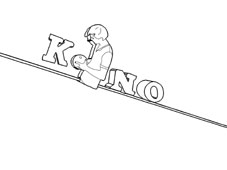
Cluttered by enormous letters, a man tries hard to write the world KINO. Thus other words recur in his mind. Alternating between an autistic attitude and a monologue full of maniac-obsessional gestures, this man talks about different kind of morbid hallucinations he has in relation towards language, space and daily objects. Confronting the trauma of his own history, he tries to resist it by connecting things which seem to have lost any links.
Elise Florenty, born in december 1978, in bordeaux. Lives and works between Paris and Berlin. After a double major in the Superior National School of Arts of Cergy-Paris and at the University Paris 3 Nouvelle Sorbonne in History and Theory of cinema, i did two post graduate work : post-diploma in Arts in Beaux-Arts School of Lyon and post-diploma in AII in the Superior National School of Decorative Arts in Paris.
Elise Florenty, Marcel Türkowsky
Zapotitland
Experimental doc. | 0 | color | 47:0 | France, Mexico | 2023
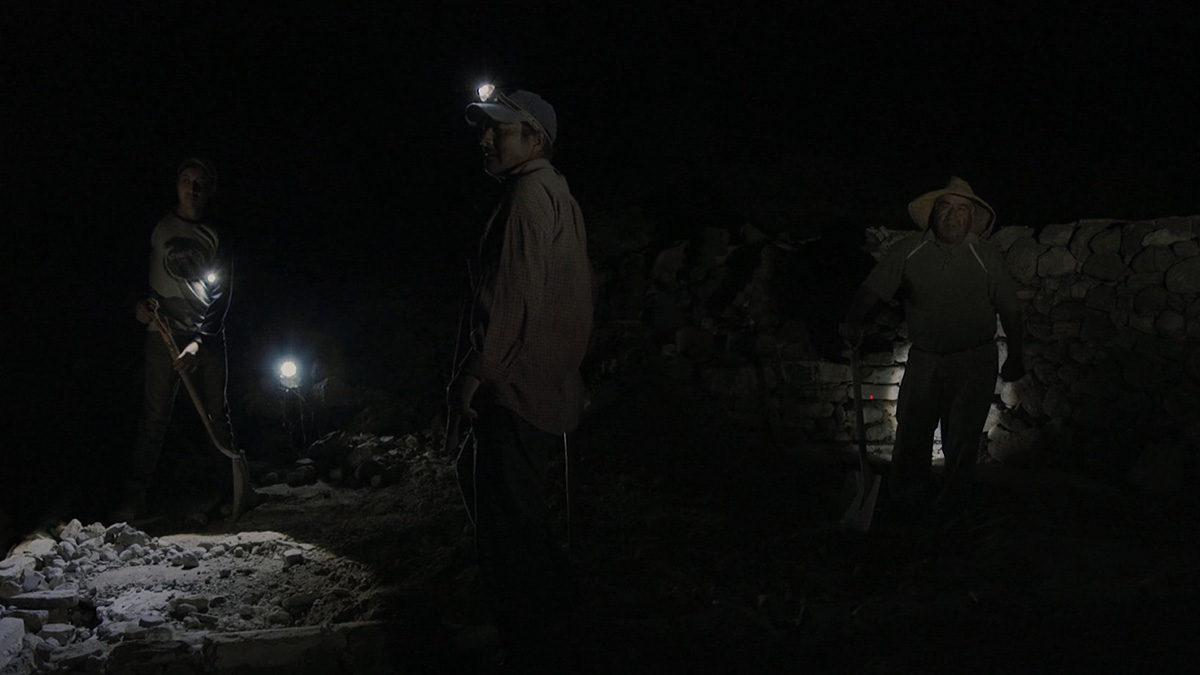
Between phantasmagorical fiction and historical investigation, the film unveils how a daytime reverie of a young Mexican from the city turns into a nocturnal venture inside the world’s biggest cactus forest. It is here, through his imaginary disguise as a German “cactus hunter”, that one gets to know the many stories of desire, greed and death that haunt this extraordinary and strange "vegetal eldorado".
Elise Florenty
Ring-a-ring-a-roses
Animation | dv | black and white | 3:16 | France | 2005
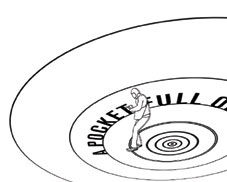
The video is a new interpretation of an old song and dance about the plague called "ring-a-ring-a-roses". Reactivating the hidden and forgotten meaning of the different images that the poem evokes, it questions how the game can win over power, sickness, and death. A somewhat autistic looking man is turning in circles. His loneliness is filled with children playing around him, mimicking various figures with humour: the leader, the executor, the victim, etc.: one shouts a slogan, the other screams into a speaking pipe which seems to be a telescope, another moves as a dove, the last ones all finally decide to fall down at the same time as if they were death stricken. The children have fun with the historical figures whereas the adult remains locked up in a mysterious and obsessive circularity. The soundtrack consists of two call signals: a church bell merging with a police siren. These two sounds take turns, embodying different bodies of power. They are like calls to order, being diffused by waves, and cutting off the people from the emitting center up to the periphery. They continue to emit their control even as they are fading. The sadly ironic figures of the children decline into the possible figures of resistance inside a system of multiple powers. "Ring-a-Ring-a Roses" is a fine example of an apparently vacuous and harmless rhyme, sung by happy school kids perhaps ignorant of the song?s central macabre topic - namely, the Bubonic Plague. The Bubonic Plague is more commonly known as 'The Black Death'; the horrific disease swept throughout Europe in the 14th Century, spreading from China, killing 25 million people in just under five years, between 1347 and 1352. Thereafter, the plague was epidemic throughout Europe. The rhyme details the effects of the plague on the sufferer. 'Ring-a-Ring-of-Roses' refers to the first sign of the onset of the disease. Before lesions would develop on the skin of those affected, small rings of red bruise-like marks would appear. ?A pocket full of posies? indirectly points to the fact that people didn't know that it is germs that cause disease, and not smells. It was a commonly-held belief that bad smells - so often associated with the open sewers of London's Thames area - were actually carrying the disease. As a caution therefore, doctors used to carry with them a pouch of sweet smelling flowers, thinking it would ward off the infection. 'A pocket full of posies' would also go some way to mask the stench of rotting corpses. The third line, 'Achoo!, Achoo!' is particularly chilling in that the act of sneezing was final physical proof that you had indeed succumbed to the Plague. Sneezing was an audible harbinger of the worst news - that the disease was contracted and that much worse was to come. And of course, 'We all fall down' refers to that great inevitability; the end of life itself.
Elise Florenty studied at the Ecole Nationale Supérieure of Arts of Cergy-Paris and at the Université Paris 3 Nouvelle Sorbonne in the department of History and Theory of cinema. She completed two Masters Degrees: Post-diplôme Art in Lyon and Post-diplôme AII at the Ecole Nationale of Decoratif Arts of Paris. In her videos, documents and images from reality are mixed with fictitious images. The overlapping of these two systems of representation that are mental projections and reality, disable spectators in determining which one is controlling the other. Collages operate incessantly, meaning shifts and visual or semantic analogies that open several directions of reading. Elise Florenty establishes a constant parallel between working on an image on screen and developing a thought. The language and the signs about dreams, urban representations, media, and experience, are part of the thinking process enhanced in her work. A selection of her exhibitions includes: Atelier of National Center of Photography of Paris (2002), Espace Paul Ricard (2002), Mac of Lyon (2002) Gallery: In Situ in Paris (2003), and in the exhibition entitled «Public Relation» (2004).