Catalogue > Search
Results for : Tout le catalogue
Patrick Doan
Density 1
Experimental video | dv | color | 4:7 | Canada | 2005
"DENSITY 1" is a sensory video about displacement, time, and space. It attempts to capture the essence of temporal spaces that we so often dismiss frivolously.The relationship between audio and video is intensified by its complimentary, subconscious transmission of its fundamental characteristics. Overall, this pieces comments on the ephemeral nature of long term memory, and how its representations are distorted through a person`s environment, experience, and temperament.
Patrick Doan currently resides in Montreal, Canada, and is currently studying design at Concordia University. Specializing in digital animation, his work is characterized by the investigation of the relationship that exists within digital information, space, and the urban landscape. Having worked extensively in graphic design, his work layers cinematic composition and typographic treatment. Since 2001, he has been producing work under DEFASTEN, a creative outlet and reservoir of client work.

Christo Doherty, Aryan Kaganof
Lamentation/Klaaglied
Experimental doc. | hdv | color | 18:0 | South Africa | 2015
Blackface in a film about a secret war Experimental SA documentary challenges hidden memories of a faraway and forgotten fight Blackface and South Africa’s secret border war are exposed and explored in a poignant and troubling new film by Christo Doherty and Aryan Kaganof, which was shown in Cape Town and Joburg (South Africa) for the first time in June 2016. For 23 years from 1967 to 1989, young white men were conscripted to kill and die for apartheid during a long deadly war on the border of Namibia and Angola. In 2011, Doherty presented his ground-breaking BOS exhibition of constructed miniature models and blackfaced conscript portraits based on the rare photographs leaked from the conflict zone, often at great risk to the photographers at the time. Described by its directors as an ‘experimental psychic documentary’, Lamentation is a filmic response to Doherty`s BOS exhibition of physical suffering,traumatic memory and the border war. Doherty and Kaganof’s 18-minute film is a formal meditation on the traumatic memory of an illegal war in which tens of thousands of young white South African men were forced to participate and uncounted numbers of black Namibians were killed or injured. It is a contemporary attempt to explore one of the unexamined aspects of apartheid’s military misadventures, a conflict which killed and injured unknown numbers of civilians and well as soldiers and left a generation of men and women traumatised on both sides of the conflict. The film makers are not afraid to challenge and to shock. And they stress that the film is about memories and understanding for all participants and victims of the border war, not only SA soldiers. Lamentation’s delicate musical score, by leading South African composer Michael Blake, accompanies the camera’s slow movement up the uniformed chest of a solemn white model with painted black face, cutting to scan a miniature scene showing the mutilated corpse of a black Namibian civilian alongside an armoured SA military vehicle. Throughout the film, the disconcerting and shocking imagery is presented through an insistently choreographed interplay of cinematography and sound design. “We know this is difficult material, but interpreted and constructed images in art are an important way to reflect on a war which we don’t think South Africa has fully dealt with,” Doherty says. “Many white men, including myself, firmly shut the door on their army days, yet the SADF was a dark formative experience which we need to expose and understand.” White soldiers: black faces The filmmakers’ portrayal of white men in brown army uniform with black faces sparked controversy in South Africa, but the use of this make-up was a survival mechanism in the war. The blackface device in the film and in BOS is based on the combat body paint used as camouflage in the Angolan bush by apartheid’s soldiers, ironically known to the white troops as ‘black is beautiful’. “White faces painted black are currently taboo, but were very much part of a conscripted white soldier’s experience during South Africa’s war in Namibia and Angola,” Doherty says. The photographs in BOS, and now Lamentation, use re-enacted representations of this wartime practice, together with miniature reconstructions of scenes of battle and violence, to probe the psychological and ethical transformation of young men who joined in an involuntary battle against a hidden enemy. Beautiful music: origins of a difficult film The film emerged through Doherty and film-maker Aryan Kaganof`s mutual involvement with the hauntingly beautiful music by South African composer Michael Blake, Tombeau de Mosoeu Moerane(2011) for soprano birbyne and 5-track (or 2-track) tape. Written in homage to the little-known South African black composer Mosoeu Moerane, the film score features Lithuanian clarinet virtuoso Darius Klysis playing the birbyne, a simple keyless wooden wind instrument. The conclusion to the film is underscored by an extract from another composition by Michael Blake, his String Quartet No 1, performed by The Fitzwilliam String Quartet. Cinematographer Eran Tahor’s beautifully choreographed and achingly-slow camera movements match the cadences of Blake`s music and provide a powerful visual sense of the isolated and estranging experience of South Africa’s war on a distant and dangerous border. The editing and sound design by Aryan Kaganof bring together the music and the cinematography with strands of found audio, including a voice softly singing fragments of "Die Stem van Suid Afrika", the old National Anthem.
Christo Doherty Christo is Associate Professor of Digital Arts in the Wits School of Arts at Wits University. He is a photographer and artist with a keen interest in the visual representation of conflict and trauma. He was conscripted into the apartheid army at the age of 17. Aryan Kaganof Aryan Kaganof is a South African film maker, novelist, poet and fine artist. His extensive filmography includes Threnody for the Victims of Marikana, Decolonising Wits, Western 4.33, and Nicola’s First Orgasm. Aryan left SA aged 19 to avoid conscription into the apartheid army.
Karel Doing
Happy Horse 1 & 2
Experimental video | dv | color | 4:30 | Netherlands | 2004
Sportive activities in which a horse tries his luck.
Duro Toomato was born in Croatia in 1960. He works as a visual and performance artist and filmmaker. He lives and works in Amsterdam.

Júlio Dolbeth, Steinbrüchel
AM/FM
Experimental video | dv | black and white | 2:0 | Portugal | 2005
AM-Fm, 2 bands of communication, 2 characters dissolving into each other. I felt the sound like a growing tree.
Julio Dolbeth, lives and works in Porto, Portugal. Teaches Communication Design at the Faculty of Fine Arts, University of Porto. Degree in Graphic Design. MFA in Multimedia-Art untitled ?Artificial Skin?. Works as Graphic Designer, Illustrator and Video Artist. Regular collaborator with DifMagazine (Portugal).
Yana Dombrowsky-m’baye
saint louis saint louis
Experimental film | mp4 | color | 26:45 | New Zealand, France | 2024
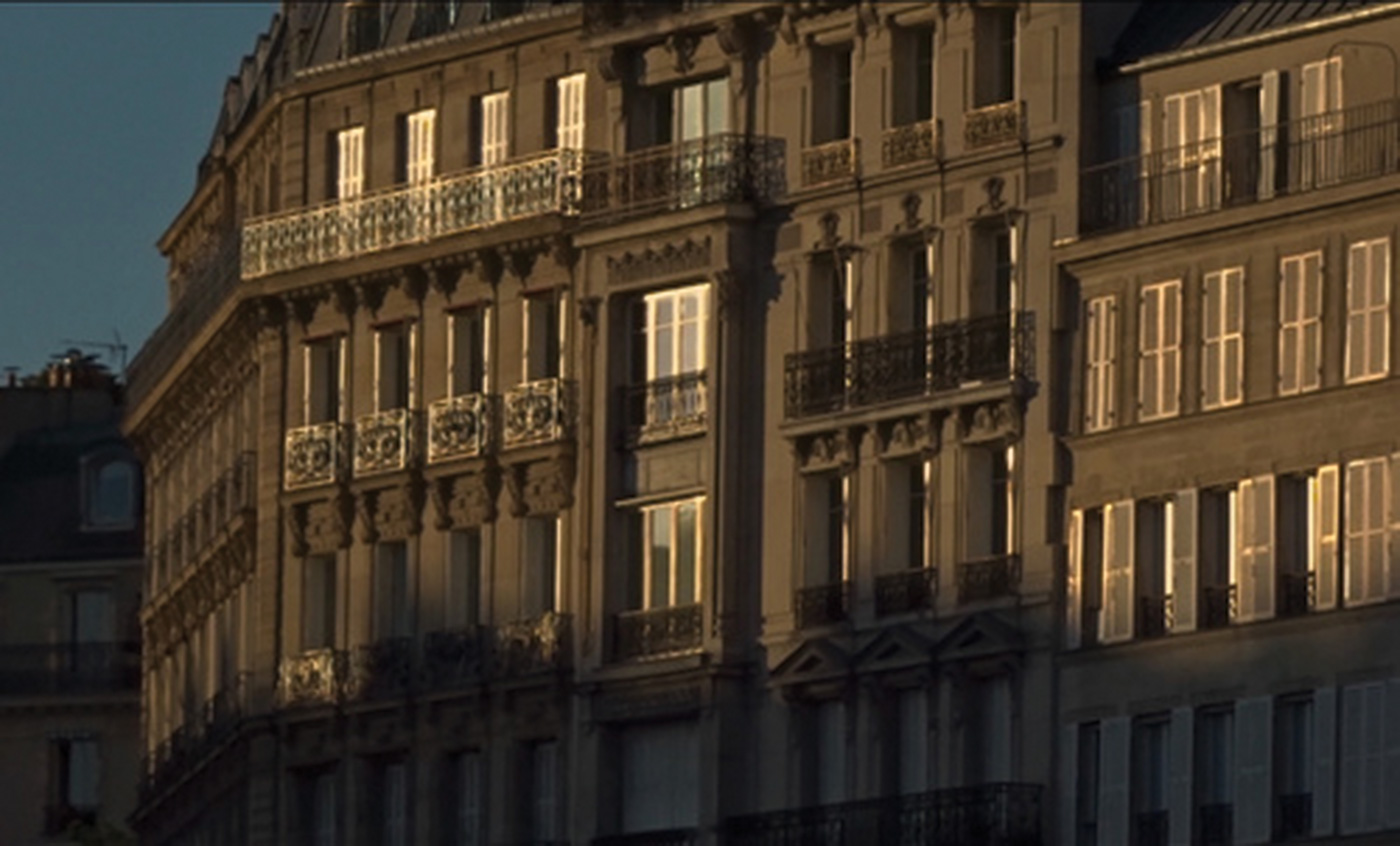
In the 21st century, you returned to the archipelagos Saint Louis of Sénégal, and Saint Louis of Paris to unearth vestiges of signares—women once at the centre of Occidental French West African commerce and society. Through the night, through the whispers of your aunts and nieces, through the institutions that house present-day French “patrimoine (cultural heritage),” you fell into a spiral between colonial presents and the past.
Yana Nafysa Dombrowsky-M’Baye is a pluridisciplinary researcher and educator from T?maki Makaurau, Aotearoa. Her matrilineal ancestry traces to Senegal and France, while her patrilineal lineage is of Polish and Czech descent. Through iterative and ritualistic processes, Yana’s practice is a poetic inquiry into the material and immaterial conditions of belonging, approaching artistic practice as archaeological gesture, unearthing the spectral, often erased presence of intercultural identities embedded in sites marked by colonial history and personal heritage. At present, Yana is at the Cité Internationale des Arts Paris, participating as one of ten internationally selected artists in the In Situ program, which will conclude March 2026.
Johanna Domke
Crossing Fields
Art vidéo | | color | 12:14 | Germany, China | 2007
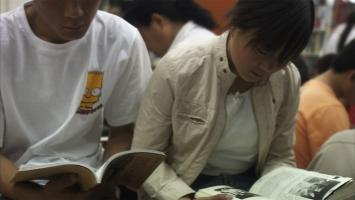
?Crossing fields,? emphasizes upon the private use of commercial space and documents reading people in a bookstore. The video was filmed in a bookshop in Beijing, as this phenomenon is broadly common in mayor cities in China. Due to obsolete libraries, bookstores function as an open source of knowledge, which attracts crowds of people to spend their free time in the sometimes gigantic bookstore complexes. But instead of buying the books people spend entire days, sitting and reading thronged together, spread around the store. As the management approves this, the reading people?s private use of space is becoming prevalent to the commercial activity in the store. Johanna Domke is interested in this kind of anarchic use of space and the depiction of stasis evolving within the situation. Winding its way through the statue-like readers the camera captures with close and intimate images the ambiguity of their presence. Being physically present they sojourn at the same time in the fictive sphere of their reading. The immobile appearance of the readers leaves the impression that the camera is moving within a frozen moment of time.
After studying art at the Muthesius Academy for Art and Design in Kiel, Johanna Domke went on to graduate studies at the Royal Art Academy in Copenhagen and the Malmö Art Academy, Sweden, where she got her MA in 2004. In 2003 she received the ZKM International Media Art Award, Audience Prize, for her single-channel piece ?Let the wind blow? and the Brockmann Prize from the Stadtgalerie Kiel. 2004 she got the Edstranska Grant for Graduating Students. Since then Domke has broadly exhibited her work in renowned art institutions, such as Casino Luxembourg, Göteborg Konstmuseum, KIASMA Museum of Contemporary Art, Helsinki and international film festivals such as Film festival Oberhausen, Locarno Film Festival, Videonale at the Bonner Kunstmuseum and VIPER, Basel.
Johanna Domke
Cuers
Art vidéo | | color | 18:5 | Germany | 2008
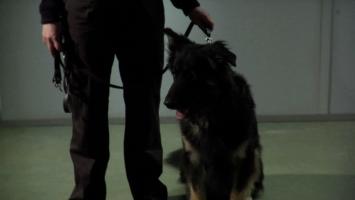
Johanna Domke?s film Cuers is inspired by Franz Kafka?s The Trial and the filmic universe of Orson Welles. The audience is taken on a fleeting and meandering journey through different sites in public space, where people are exposed to long waiting. The individual is presented as a singular being, confronting structures of public space. The particular situations are represented in an inspirational manner shifting in and out of each other. Time and space is dissolved in kaleidoscopic pictures, which emphasizes how we physically as well as mentally have trouble adjusting to our anonymous environment. ? Cuers? seeks to create a mental space through abstraction and subversion of the familiar.
After studying art at the Muthesius Academy for Art and Design in Kiel, Johanna Domke went on to graduate studies at the Royal Art Academy in Copenhagen and the Malmö Art Academy, Sweden, where she got her MA in 2004. In 2003 she received the ZKM International Media Art Award, Audience Prize, for her single-channel piece ?Let the wind blow? and the Brockmann Prize from the Stadtgalerie Kiel. 2004 she got the Edstranska Grant for Graduating Students. Since then Domke has broadly exhibited her work in renowned art institutions, such as Casino Luxembourg, Göteborg Konstmuseum, KIASMA Museum of Contemporary Art, Helsinki and international film festivals such as Film festival Oberhausen, Locarno Film Festival, Videonale at the Bonner Kunstmuseum and VIPER, Basel.
Johanna Domke
Let the wind blow
Art vidéo | 0 | color | 3:19 | Germany, Costa Rica | 2003
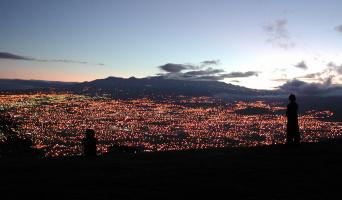
On top of a windy hill, two motionless human figures overlook a valley with a teeming big city. One is standing up, the other sits on the ground, the distance between them too large to evoke a sense of togetherness. The clouds race across the sky, the night falls like a brick and thousands of lights gleam at once in the valley before dawn breaks, the sun flies up and a new day begins. All the while, the two figures remain absolutely still before the unfolding scenery. Only the wind blows in their clothes and their hair.
Johanna Domke, born 1978 in Kiel, Germany, lives and works in Copenhagen, DK and Berlin,D. She is a german artist based in Copenhagen and Berlin. After studying Fine Art at the Muthesius Academy for Art and Design in Kiel, Johanna Domke went on to graduate studies at the Royal Art Academy in Copenhagen and the Malmö Art Academy, Sweden, where she got her MA in 2004. In 2003 she received the ZKM International Media Art Award, Audience Prize, for her single-channel piece ?Let the wind blow? and the Brockmann Prize from the Stadtgalerie Kiel. 2004 she got the Edstranska Grant for Graduating Students and the Assistent Grant from the Swedish Arts Council. Johanna Domke`s work has been broadly shown in exhibitions, video festivals and art fairs in Europe and the US. She is represented by Gallery Art Agents in Hamburg.
Johanna Domke
Søen i spejlet
Experimental fiction | 16mm | black and white | 20:22 | Germany, Denmark | 2009
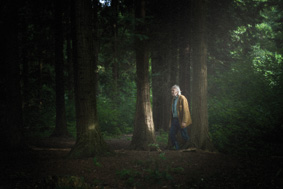
?Søen i spejlet? is the re-enactment of a former boarding school tradition in Denmark. Once a year the students of Sorø Academy held a ritual out in the woods, burning effigies of their teachers on a bonfire. The narrative of the film evolves around the character of a former student that revisits the place of his school days meeting with a group of young students. What first seems to be the fictionalization of the former student´s memory, becomes more and more the documentation of the staging of the ritual ? the alumni himself being the director. But as soon as the ritual sets off, all turns to a different state of realness, as the anger and emotion of the young students boil up to an uncanny level of authenticity.
After studying Fine Art at the Muthesius Academy for Art and Design in Kiel, Johanna Domke went on to graduate studies at the Royal Art Academy in Copenhagen and the Malmö Art Academy, Sweden, where she got her MA in 2004. She received the ZKM International Media Art Award, Audience Prize, for her single-channel piece ?Let the wind blow? and the Brockmann Prize from the Stadtgalerie Kiel. 2004 she got the Edstranska Grant for Graduating Students. Since then Domke has broadly exhibited her work in renowned art institutions, such as Casino Luxembourg, KIASMA Museum of Contemporary Art, Helsinki, Berlinische Galerie and international film festivals such as Film Festival Oberhausen, Locarno Film Festival, Videonale at the Bonner Kunstmuseum and the Kunstfilmbiennale.
Johanna Domke
Stultifera Garden
Experimental fiction | | color | 12:5 | Germany | 2008
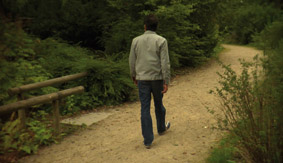
Stultifera Garden deals with an overlapping structure of the public and the private. The film is set in a park ? a place were city dwellers recover from busy urban life. At the same time it is a place implementing the ?elsewhere? - an un-ruled territory for individuals who are in conflict with society or the human milieu in which they live. It is also a place for individuals whose behaviour is deviant with the respect to the mean or the required norm. As in earlier works, Domke uses a travelling camera to approach the parks diverse character, emphasizing polarities as observing and being watched, high and low culture, control and non-control. The incessant pan evolves from a classic park scenario towards a dystopic, mazy structure of trails. The camera experiences different milieus of the park not directly examining them but portraying them with an inexplicit openness. She accesses milieus that formed architectonical structures in the shrubs, such as cruising areas and drug trafficking points. She discovers places that became functionalised entities - for teens as a get-away, for elderly as a meeting point - each and everyone with their own character and history. Without stating explicit action or narrative Stultifera Garden is more interested to explain that a park is a place for the other, where all these milieus and facets function along side. Intruding as an omniscient eye, Domke is constructing the real to establish the fictitious.
After studying art at the Muthesius Academy for Art and Design in Kiel, Johanna Domke went on to graduate studies at the Royal Art Academy in Copenhagen and the Malmö Art Academy, Sweden, where she got her MA in 2004. In 2003 she received the ZKM International Media Art Award, Audience Prize, for her single-channel piece ?Let the wind blow? and the Brockmann Prize from the Stadtgalerie Kiel. 2004 she got the Edstranska Grant for Graduating Students. Since then Domke has broadly exhibited her work in renowned art institutions, such as Casino Luxembourg, Berlinische Galerie, KIASMA Museum of Contemporary Art, Helsinki and international film festivals such as Film festival Oberhausen, Locarno Film Festival, Videonale at the Bonner Kunstmuseum and Kunstfilmbiennale, Köln.
Johanna Domke
Sleepers
Art vidéo | dv | color | 13:40 | Germany, United Kingdom | 2006
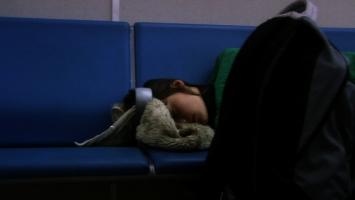
?Sleepers? takes place at Stansted Airport in London in the very late night and portrays sleeping people with slowly panning camera moves. The slow takes emphasise with the passenger?s tiresome waiting for an early morning flight. Within this physical location Domke grips a real, temporal situation that shows the airport as a form of standstill. The video follows a sequence of sleeping people in a transit situation. But even if they are in transit they undergo a present standstill that deludes oneself into a void, where one is not quite sure how the situation will progress. With the interest of this kind of void Johanna Domke evolves her artistic praxis within the time-based media of film and the photographic still image, which on a conceptual level can be seen as a distortion of time and movement. A hybridisation, that opens up for other relations and references.
Johanna Domke was born in 1978 in Kiel. After studying Fine Arts at the Muthesius Academy for Art and Design in Kiel, Domke went on to study at Malmö Art Academy, Sweden and the Royal Danish Art Academy in Copenhagen, where she received her MA in 2006. In 2003 Domke received the Audience Prize at the ZKM International Media Art Award for her work Let the wind blow, as well as the Brookmann Prize from Stadtgalerie Kiel. In 2004 Johanna Domke was awarded the Edstranska Stiftelsen?s Grant for Students in Sweden. Since then, her work has been shown in major institutions in Europe and elsewhere, including the Hasselblad Center, Gothenburg; Göteborg Konstmuseum, Gothenburg; KIASMA Museum of Contemporary Art, Helsinki; Casino Luxembourg, Luxembourg and Bonner Kunstmuseum, Bonn. Furthermore, her works have been screened at film festivals such as European Media Art Festival 2003/2008 Osnabrück; Locarno Film festival 2006, Locarno; Oberhausen Film Festival 2007, Oberhausen and Rencontres Internationales 2005/2007, Berlin and Paris. Domke lives and works in Copenhagen and Berlin.
Arnaud Dommerc
le cochon
| | color | 55:0 | France | 2010
During three days, in the mountains of Corsica, men slaughter and process the pig.
Arnaud Dommerc was born in 1971. He has been teaching cinema at the Paris 8 Universty since 2001. He has worked since 2007 as assistant with Jean-Marie Straub (Le genou d?Artémide, Itinéraire de Jean Bricard, Le Streghe, O Somma Luce, Joachim Gatti, L?Inconsolable, L?Héritier). His last film We?ll nerver go to Buti was selected in competition at the FID 2008 and at the Rencontres Paris / Berlin / Madrid 2009.
Tommaso Donati
Monte Amiata
Experimental fiction | hdv | color | 22:29 | Switzerland | 2018
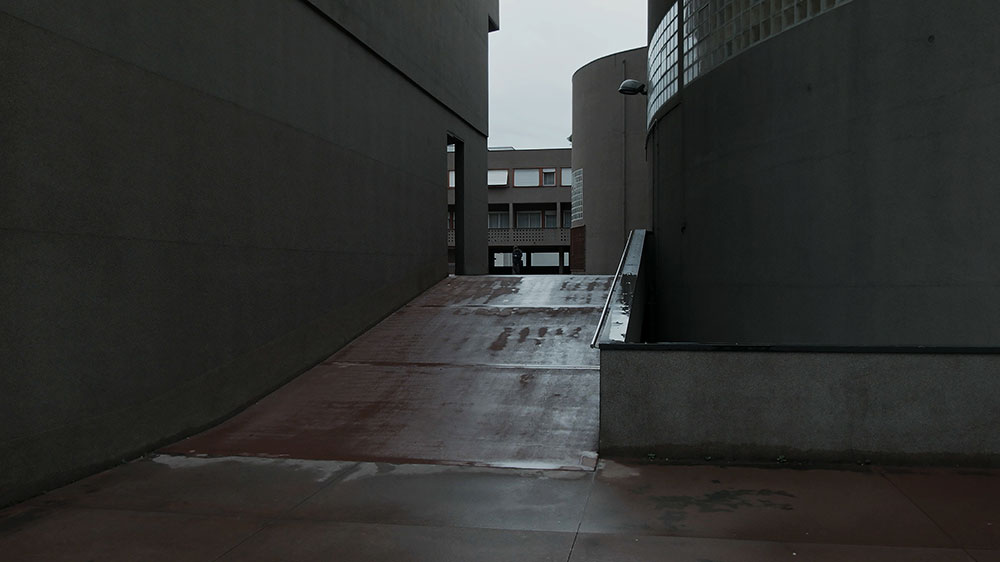
Monte Amiata is a residential complex in the Gallaratese neighbourhood in Milan, designed by architects Carlo Aymonino and Aldo Rossi at the end of the 1960s. It was created with the intention of representing a parallel microcosm, a sort of alternative city of the future. In referring to its unusual colour and shape, its inhabitants call it the red dinosaur.
Tommaso Donati (1988) lives and works between Paris and Lugano. I His output to date has been split between documentary, experimental cinema and photography. Recurrent themes in his work are the relations between humans and the nature-space in which they live. In the last three years he participates with his short films at Locarno Festival.

Tommaso Donati
Dormiente
Fiction | hdv | color | 18:15 | Switzerland | 2016
A man and a woman living on the margins of society move and meet between urban and natural spaces, seeking a forgotten freedom and trying to stay awake.
Tommaso Donati, born in 1988, lives and works in Lugano. In 2013, he gains a diploma from the École internationale de création audiovisuelle et de réalisation (EICAR) in Paris. His output to date has been split between documentary, experimental cinema and photography. Recurrent themes in his work are the relations between humans, animals and the nature-space in which they live.
Tommaso Donati
Faim
Experimental fiction | hdv | color | 16:4 | Switzerland, France | 2015
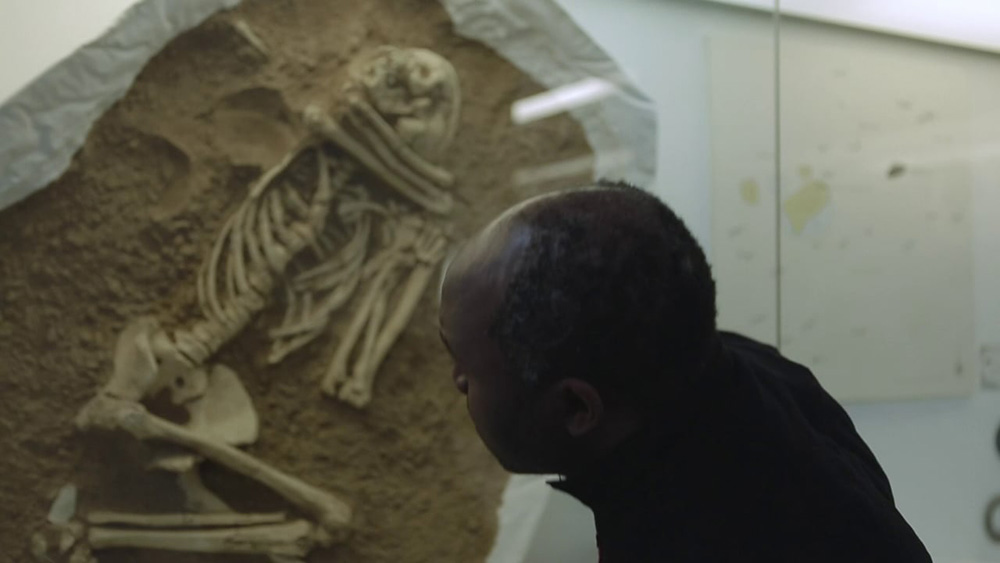
An homeless woman shares her life in a highway station with her dog. After his missing, she starts to wander around the station and the woods searching for him; in the meantime the gestures of a mysterious man that works in a prehistorical museum in the middle of the forest take place like every day. Linked by the same basic human need the woman, the man and the animal will move and cross each other looking for something more elevated.
Tommaso Donati
L'epoca geniale
Experimental doc. | hdcam | color | 45:0 | Switzerland | 2021
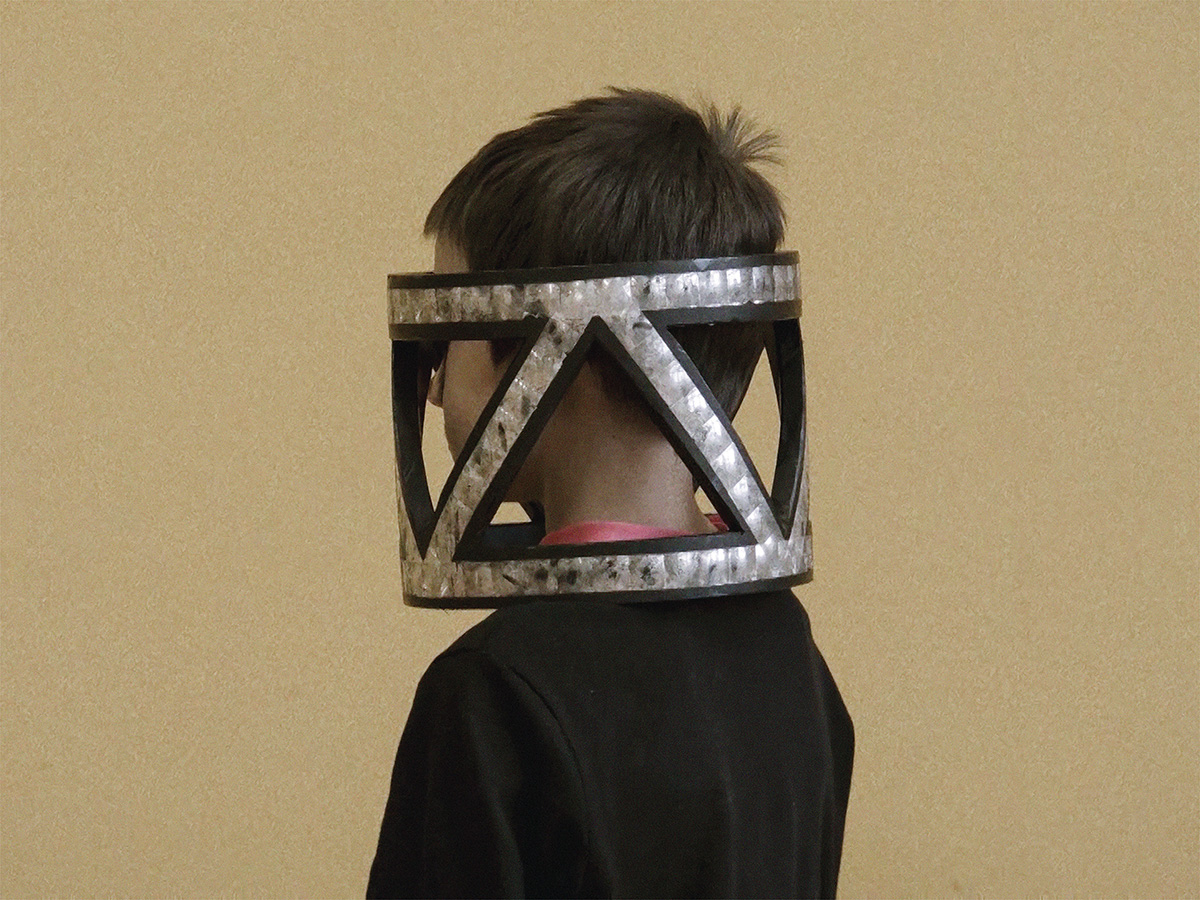
L'epoca geniale (The Age of Genius) is a film that enters a place where form is mixed with lyricism and the magic of body movements and gazes. The eyes are filled with wonder and reveal themselves as a metaphor for a society that wishes to become children again. The protagonists' exercises have nothing of realistic, but lean towards theatricality and imagination. The walls of this universal space thus become silent witnesses of these complicated gestures, of these endlessly repeated attempts to finally reach maturity.
Tommaso Donati (Lugano, 1988). His work combines a narrative approach with documentary cinema and is structured around the theme of marginality. His films have been presented at various national and international festivals. He currently lives and works in Lugano

Tommaso Donati
Cligne-musette
Experimental doc. | hdcam | color | 21:30 | Switzerland | 2020
Until the beginning of the 20th century in France, the game of hide and seek was called "cligne-musette". In a winter landscape, the film follows five kids and a young man who wanders alone between the desolate buildings of the Valibout neighbourhood, located in the province town of Plaisir. They will not cross paths but seem destined to meet the same fate, that of being abandoned to themselves; to hide and not to be found.
Born in 1988, Tommaso Donati lives and works in Lugano, Switzerland. His work combines a narrative approach with documentary cinema and is structured around the theme of marginality.

Tommaso Donati
Je parle à mes démons
Experimental doc. | hdv | color | 22:30 | Switzerland | 2019
Patrice is an inmate in the french prison Bois d’Arcy. As an actor and at the same time a silent spectator he hides his drama through a routine of daily gestures and ambiguous postures.
Tommaso Donati (1988, Switzerland) lives and works in Lugano. His work explores the meeting point of documentary, experimental fiction and photography in telling stories of marginalisation and relations between people and the and the nature-space in which they live.
Tommaso Donati
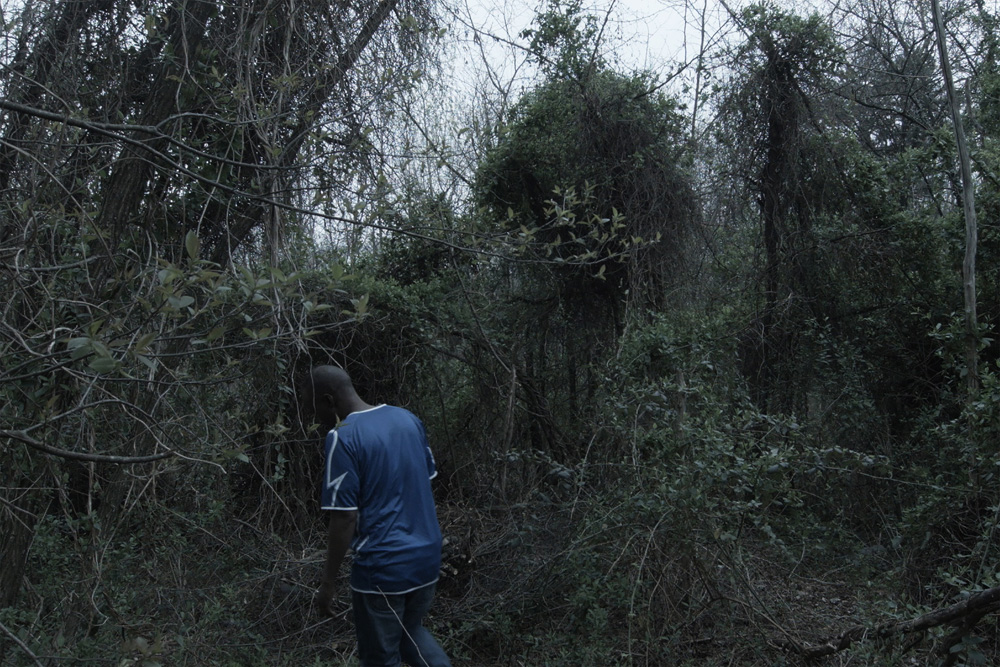
A Song from the Future
Experimental doc. | hdv | color | 17:29 | Switzerland | 2017
A Somali migrant seeks refuge in the underground of a building near the Swiss-Italian border. A popular song from his country awakens in him the desire to leave.
Tommaso Donati,(1988 ), lives and works in Lugano. In 2013, he gains a diploma from the école internationale de création audiovisuelle et de réalisation (EICAR) in Paris. His output to date has been split between documentary, experimental cinema and photography. Recurrent themes in his work are the relations between humans, animals and the nature-space in which they live.
Wojtek Doroszuk
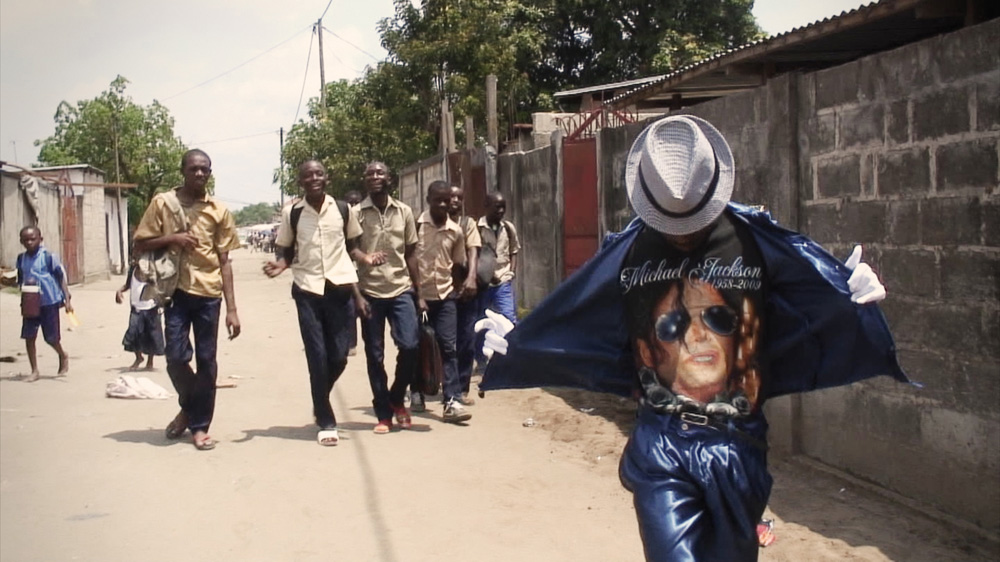
Prince
Experimental doc. | hdv | color | 18:50 | Poland, Congo (Brazzaville) | 2014
A man performs the same ritual every day: he cleans his shoes, dresses up in his shiny blue suit, wears his white gloves and grey hat, and spends his time walking around Brazzaville. His presence generates an absurd apparition in the urban chaos of the city, which reflects the imaginary produced by one of the up-most icons of pop culture.
Wojtek Doroszuk (b. 1980 in Poland) is a video artist based in Krakow, Poland and Rouen, France. He graduated from the Academy of Fine Arts in Kraków, Poland, Faculty of Painting, in 2006. His works have been shown in numerous solo and group shows in, among others, Centre for Contemporary Art Ujazdowski Castle (Warsaw), Zachęta National Gallery of Art (Warsaw), Museum of Modern Art (Warsaw), Location One (New York), Marina Abramovic Institute (San Francisco), The Stenersen Museum (Oslo), Joseph Tang Gallery (Paris) etc.
Barbara Doser
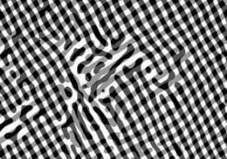
Even odd even
Art vidéo | dv | black and white | 7:30 | Austria | 2004
?even odd even? is the artistic interpretation of a time- and space-based analysis of video feedback and delivers an insight into a fascinating world of spatial complexity and dynamic behavior. ?The vision is drawn in a highly suggestive way to a pulsating pattern of black and white lines. By the rhythmic movements of these bar codes, permeated by a thick carpet of sound, the vision glides at times as in picture puzzles into a new spatial dimension ... ? (Gunnar Landsgesell) It concerns the focused center of video feedback (1:18 min), with very fast moving image content. To be able to experience not only the fascinating flow of information, but also the content and correlation in more detail, the video feedback is decomposed into its essential parts ? the alternate successive odd and even fields, each lasting 1/50 second. Separated from each other, newly ordered and their speed manipulated, various sequences are created which are placed in relationship to the original video feedback. The apparently hidden becomes visible in a process of aesthetic experience.
Born in 1961 in Innsbruck, Austria. Lives and works in Vienna, Austria. Studied art history at the University of Innsbruck, Doctorate in 1989. Since 1994 freelance artist (media/video and fine arts). Artistic domain: video feedback ? processed in experimental videos, video/media installations, prints and paintings (video stills). Exhibitions/events in Austria and abroad, numerous videos presented in more than 30 countries at international festivals for film, video and new media. Cooperation in international media art projects. www.sunpendulum.at/barbaradoser