Catalogue > Search
Results for : Tout le catalogue
Ra Di Martino
Authentic News of Invisible Things
Video | hdv | color and b&w | 5:30 | Italy | 2014
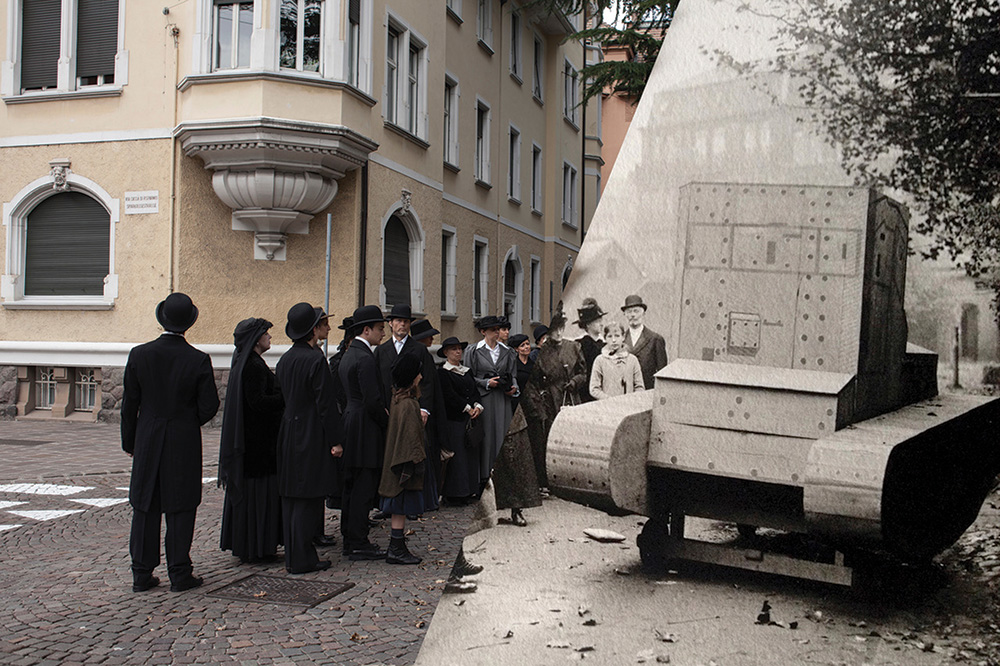
Authentic News of Invisible Things explores mechanisms of pretence and make-believe by focusing on military camouflage. Camouflage was first used at the end of the nineteenth century to help prevent armies from being detected by enemy forces. Colours and materials are used to conceal uniforms, vehicles and equipment and make them look like something else. Camouflage also extends to the construction of mock military equipment to confuse and deceive the enemy, generating a situation of alert. Examples of this include dummy tanks constructed using wooden structures or panels of chipboard, and then painted or decorated. Used already in the Second World War and to a lesser extent in WWI, these are still widespread: in the 1990s fibreglass models produced by an Italian company were successfully deployed in the Gulf War. Iveco Defence Vehicle (Iveco DV), part of the Fiat Group, headquartered in Bolzano, makes vehicles for military and civil defence purposes. The company receives orders directly from the Ministry of Defence to produce these vehicles and the production process and all related information is therefore covered by the Official Secrets Act. However once these vehicles are decommissioned they are no longer regarded as classified and can be used by the film industry, for marketing, entertainment and by private individuals. Indeed there are numerous collectors and theme parks in possession of working vehicles, also from foreign armies, that can be hired or tried out to get a taste of military life. It is therefore easy for the film industry to get hold of functioning, but unarmed vehicles, for use in battle scenes. The situation is therefore paradoxically subverted: real tanks enter the world of make-believe, while mock-ups are deployed in real-life conflict situations. Authentic News of Invisible Things sits on the dividing line between fact and fiction, with documentary-style scenes and a theatrical re-enactment. With the support of historic photographs and film footage from public and private collections, the video becomes a sort of short journey through the paradoxes of both history and contemporary life. One of the two key scenes of the video, which mingles performance art and cinema, has been shot in the historic city centre of Bolzano. A real-life, working tank drives through the city centre in broad daylight, with no prior warning to stage a paradox. Various cameramen hidden among the public filmed the action and people`s reactions. The other scene is a recreation of an archive photograph of a group of French civilians gathered around a wooden dummy tank made by the Germans and abandoned in Lille, the 20th of October 1918.
Rä di Martino (Rome, 1975) studied in London where she’s graduated with an MFA at the Slade School of Art and after spending a few years in New York she moved back to Italy. Her practice explores the passage of time, as well as the discrepancies that differentiate epic narratives from lived experiences. Her films have been shown at the Venice film Festival, Locarno film festival and Torino International Film Festivals amongst other and in Istitutions and museums such as: Moma-PS1, NY; Tate Modern, London; MCA Chicago; Museion, Bozen; Palazzo Grassi, Venice; Artists Space, New York. In 2014/15 she has participated to the Venice Film festival 2014, winning the SIAE award and Gillo Pontecorvo award, and a Nastro d’argento for best docufilm.
Ra Di Martino
August 2008
Art vidéo | dv | color | 5:0 | Italy, USA | 2009
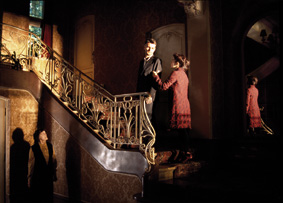
Two actors create a sort of tableau-vivant; a frozen moment from what seems a movie from the 50`s. Suddenly they start singing the news (all from August 2008 headlines) in a minimalistic chorus.
Rä di Martino was born in Rome in 1975; she lived in London since 1997 where she?s graduated with an MFA at the Slade School of Art. In 2005 she moved to New York. Her work focuses on film and video work and has participated to many international film festivals. Since 2005, she has broadly exhibited her work. Her exhibition include : Media Art Festival Friesland 07; Dallas Video Festival 07; Unclassifiable @ Malmö Film Festival 07; Pesaro Film Festival 07; Trieste Film Festival 07; Kassel Documentary Film&Video Fest 08; Turin Gay&Lesbian Film Festival 08; Manifesta 7, 2008; Italics at Palazzo Grassi and the Quadriennale in Rome, Galleria Maze, Turin, PS1, NY; the Busan Biennale in Korea, the Turin Triennale T1, MACRO, Rome, Montevideo/Times; Based Arts, Amsterdam. Her films and videos have been shown in many festivals around the world including: KunstFilmBiennale, Cologne & Munich 09; Impakt Video Art Festival, Utrecht 09; EMAF, Osnabrueck European Video Art Festival, Germany 09. In 2009 she had a solo show at Monitor Gallery, Rome; CAV Foundation, Coimbra Portugal, and in Vilnius for Artscape, Vilnius Cultural Capital of Europe, Vartaj Gallery.
Ra Di Martino
Kant Can't Chorus
Experimental VR | 4k | color | 16:0 | Italy | 2025
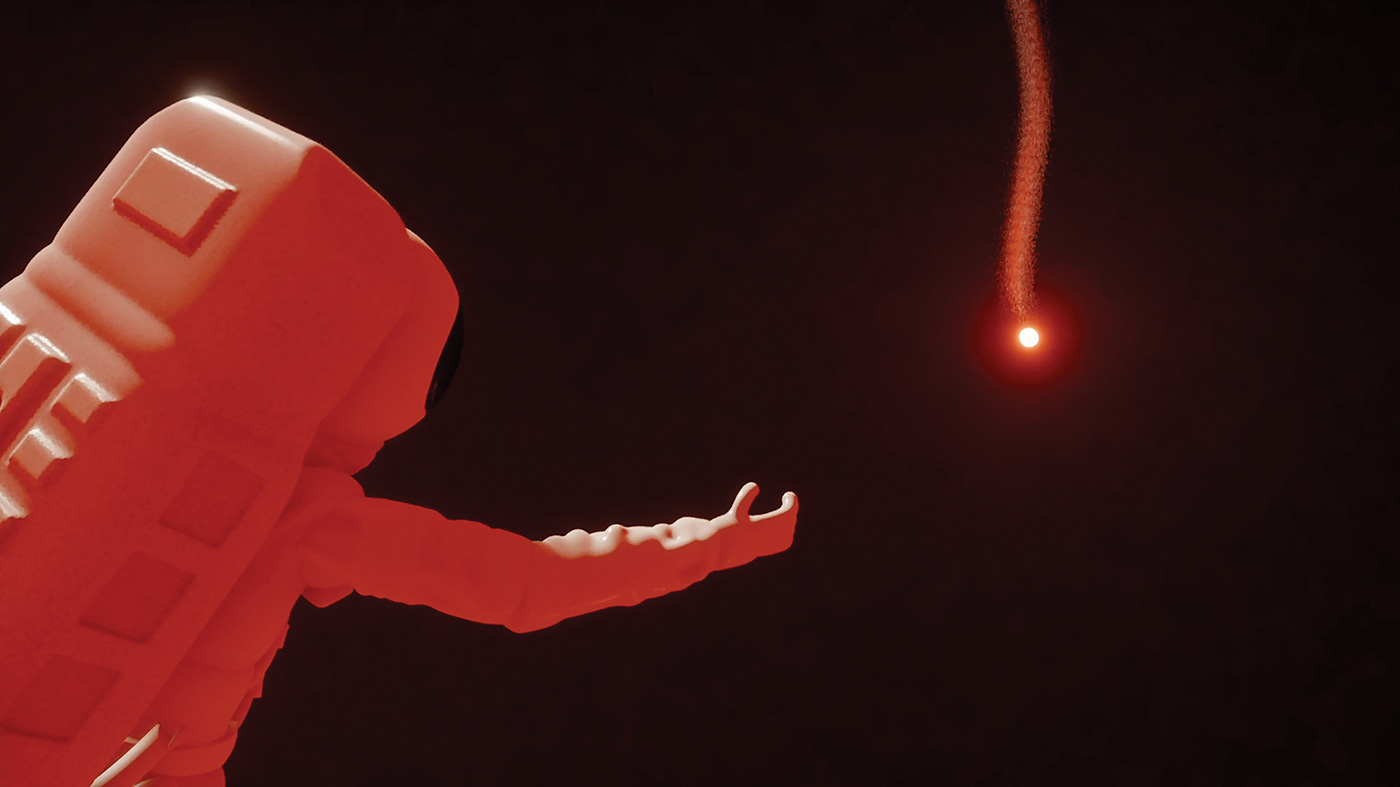
The video Kant Can't (2024) centres on the oneiric portrait of a group of characters who inhabit an imaginary landscape. Astronauts fleeing from an immense figure of a woman in the process of trying to trample them, hands that emerge like enormous archaeological ruins and gigantic insects that burst onto the scene, form the scenario of an escape into the absurd. The relationship with consciousness becomes an experiential journey, in which reality is magnified by our means of perception. In the video, the primary protagonist is an astronaut who has managed to escape his fate, yet then finds himself in various situations, in a succession of scenarios not unlike those of a video game.
Rä di Martino (Rome, 1975) studied in London, where she earned an MFA from the Slade School of Art. With the Premio New York, she received a scholarship to Columbia University. Her work has been exhibited internationally in museums and film festivals, including: MoMA-PS1 and Artists Space, New York; Tate Modern, London; MCA, Chicago; Palazzo Grassi, Venice; Museion, Bolzano; Magasin, Grenoble; the Busan Biennale; Manifesta 7; Kino der Kunst, Munich; Transmediale, Berlin. At the 2014 Venice Film Festival, she presented the medium-length documentary The Show MAS Go On, winning the Gillo Pontecorvo Award, the SIAE Award, and a Nastro d'Argento; the 2018 Festival presented her feature film Controfigura. In 2019, she opened the exhibition Afterall at Mattatoio - Palaexpo in Rome and at Kunst Halle Sankt Gallen. In 2022, she held a retrospective exhibition at Forte Belvedere in Florence and a solo exhibition at Torre Matta in Otranto with an installation on Carmelo Bene's archive. She opened her solo show Electric Whispers at BAC, Beirut Art Center and Fotografia Europea, Reggio Emilia in 2025.
Ra Di Martino
The Red Shoes
Art vidéo | 16mm | color | 4:0 | Italy | 2007
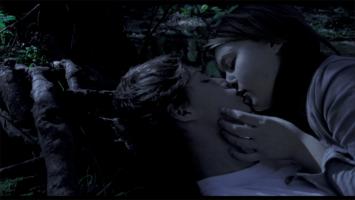
The video recalls a story and resembles something - a hazy memory or dream - from somewhere. The film appears to be part of a feature film, perhaps one that we have seen, but can`t quite remember the name. It can be read as found footage, a fake found footage.
Rä di Martino was born in Rome in 1975; she lived in London since 1997 where she?s graduated with an MFA at the Slade School of Art and a BA from Chelsea College of Art. In 2005 she moved to New York with a bursary at Columbia University and the Italian Cultural Institute. Her work focuses on film and video work and has participated to many International film festivals. This summer she?ll be participating to MANIFESTA7; AIM at the Bronx Museum; Italics at Palazzo Grassi. In February she opened a solo show at galleria maze in Turin and has participated to the exhibition Senso Unico at PS1 earlier in the year. She has also shown at the Busan Biennale in Korea, the Turin Triennale T1, MACRO, Rome, MONTEVIDEO/Times Based Arts, Amsterdam; Artists Space, NY; GAM Galleria d?Arte Moderna, Bologna; Locarno Film Festival; Viper Basel; Impakt Film&Video Festival; Kassel Video & Doc Festival; New York Underground Film Festival; Transmediale, Berlin. She was awarded a residency at Art Omi in 2006, Artists in The Market Place at bronx Museum 2007-8 and Fondazione Ratti in 2005.
Alessio Di Zio
Fanteria Cavalleggeri
Experimental doc. | | color | 24:0 | Italy | 2011
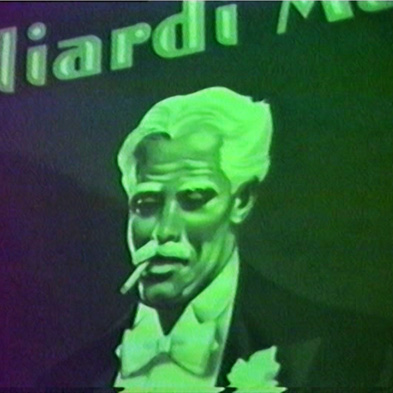
A documentary on the recreational circles that appeared in the interwar period in a provincial town. The film observes what happens and everything that surrounds a group made up entirely of senior citizens who are absolutely determined to enjoy themselves. The settings evoke memories of a past that may have never actually existed, with common and recurring aesthetics in which wartime images frequently play a part, and locations steeped in visual images that are perhaps slightly stereotyped.
Alessio Di Zio is graduated from high school. He produced "Far Away", "Casimiro's Tales", "The Park", "The Pleasure", "Infantry Cavalry", "Swinging Horsese", "Roberto Pellegrinaggio", "2.15". A group of portraits of people, landscapes and circumstances from his birthpalce. His short films have screend in many film festivals and exhibitions including l'Arcipelago Film Festival, Venice Film Festival, Minneapolis Film Festival, Circuito Off, Monfilmfest, Premio Marzocco and CinemAvvenire, receiving several awards. Working with musical band Micro b, he made the videoclip "Euforica", which was the winner at the Sottodiciotto (under eighteen) Film Festival in Turin.
Francisco Dias
Litoral
Fiction | 4k | color | 13:9 | Portugal | 2023
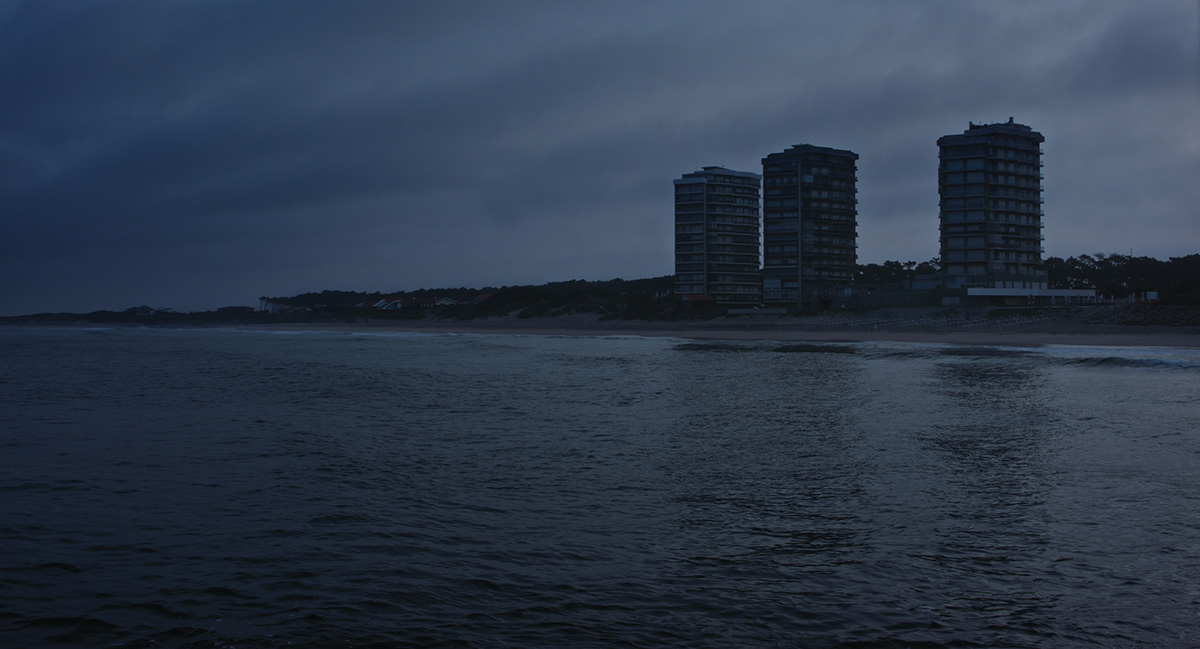
One winter night, the sea threatens once again the tower block where two neighbours live. The next day, their children come to prompt them to leave everything behind.
Francisco Dias was born in 1999 in Porto, Portugal. In 2019, he lived and studied in Norway. In 2020, he completed the Bachelor's in Sound and Image and in 2023 the Master's in Cinema at Universidade Católica Portuguesa, having obtained scholarships for both courses. Rooted in his culture and personal experiences, his films focus on coming of age, human relationships and landscape. "I Don't Like 5 PM", winner of the Take One! competition at Curtas Vila do Conde International Film Festival, and "Coast" stand out in his filmography.
Sebastian Diaz Morales
Insight
Video | hdv | color | 11:31 | Argentina | 2012
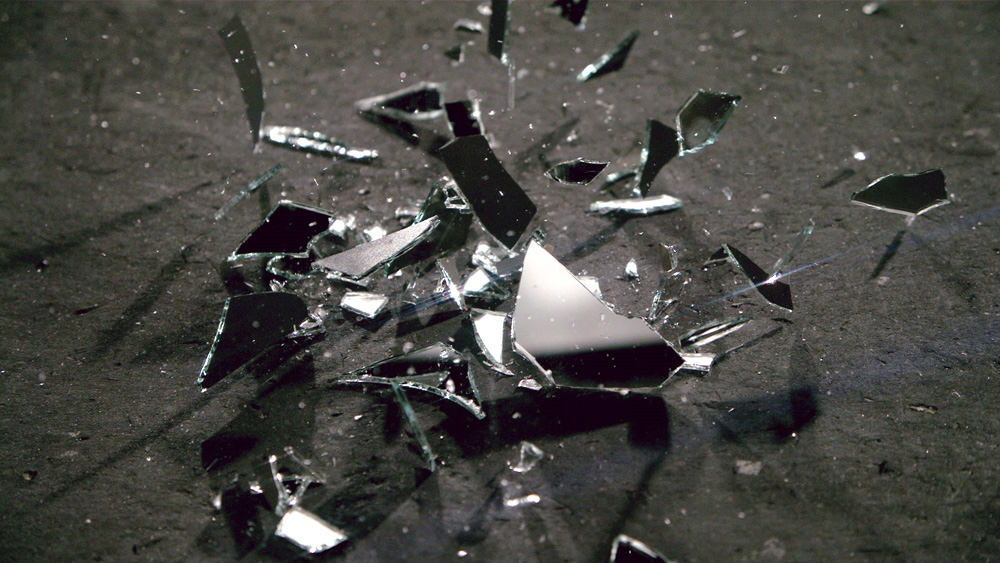
Insight is the total abstraction. A carefully assembled film-crew appears like a tableau vivant facing the viewer. Then suddenly, they shatter- an analogy of breaking through the surface to expose the simulation - a mirror slowly explodes into a thousand pieces. Filmed in beautifully rendered high definition Insight is a tribute to the camera obscuras of old mingled with a critical spirit directed towards the mass media today. Regarded as a phenomenon brought about by a world lacking distinction between real and simulacra, Diaz Morales borrows media industry tactics to expose and undermine. Revealing rather than concealing his methods allows for a moment of realisation to occur. As the pieces of glass crumble into tiny galaxies, context is deconstructed and the universalising tendency of Diaz Morales' practise literally portrayed. With timeless grace the artist contemplates the nature of existence. (text Nathalie Levi) We look at a film crew; the film crew is watching us. Cinema as a mirror of reality that becomes fiction. Or is it vice versa? A world with a mirror image, one that can be accessed by crossing the mirror’s surface. Indeed, within the realm of fiction, mirrors provide characters and readers alike with a gateway to a different world. Interaction with that new environment, be it purely fantastic or disturbingly didactic, pushes one to expand one’s horizons and reconsider the concept of a real world.
Sebastian Diaz Morales
Suspension
Video | hdv | color | 12:0 | Argentina, Netherlands | 2015
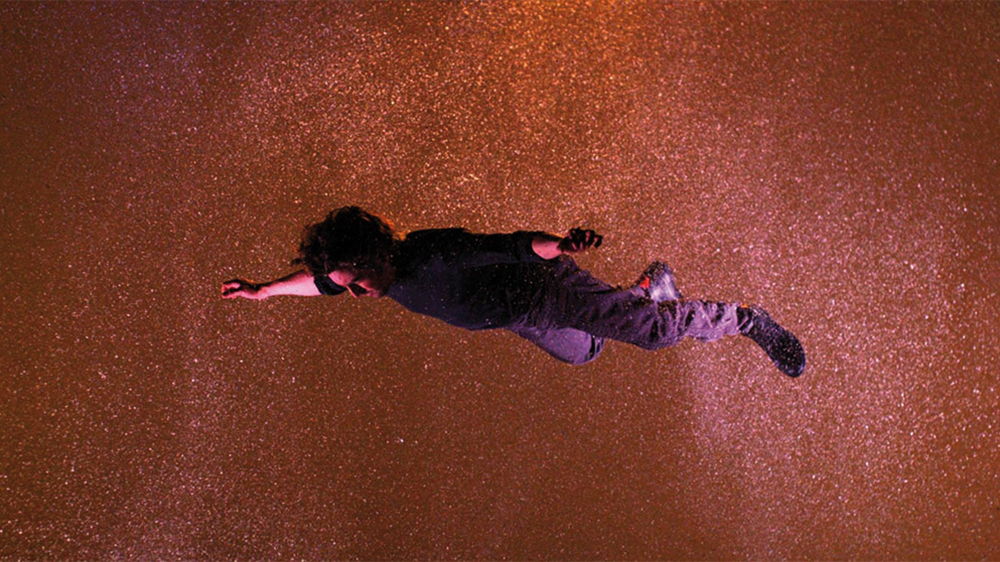
The mind was dreaming. The world was its dream. Jorge Luis Borges It is in the nature of men to be absorbed by the future as if magnetized by timeless gravity, falling deeper and deeper into their own humanity. And if in Walter Benjamin’s angelus novus we picture his gaze of horror, shaken and frightened by what he sees as he gazes upon the past, the man in his fall evinces unperturbed passivity towards the future. As in a dream state, through that suspended fall the man’s mind is a container holding past, present and future in a single consciousness. It is in this construction, as in a dream, in his mind, where man envisions and shapes the world. Out there, there may be no more than void, and the fall may be eternal. Perhaps this is the reason why we recurrently dream about falling. Perhaps falling isn’t a dream at all—perhaps falling is what’s real.
Sebastian Diaz Morales was born in the Patagonian region of Argentina, in 1975 and studied both in Argentina at the Universidad del cine de Antín and at the Rijksakademie in Amsterdam. Morales’s video work blurs fiction and documentary genres and has been screened extensively at film festivals as well as in a gallery context. With its spliced footage and stills and jumbled observations, his work follows the tradition of Latin-American narrative film. Morales plays with the structure of narrative within his work, typically documenting and constructing journeys that explore social and political concerns. His work has been exhibited widely at many prominent venues—such as the Tate Modern, London; Centre Pompidou; Stedelijk Museum and De Appel, Amsterdam; Art in General, New York City; Ludwin Museum, Budapest; Bienale Sao Pablo; Biennale of Sydney; Miro Foundation, Barcelona; MUDAM, Luxemburg; and the Calouste Gulbenkian Foundation, Lisbon—and is the permanent collections of the Centre Pompidou; Tate Modern; Fundacion Jumex, Mexico; Sandretto Foundation, Torino; Sammlung-Goetz, Munich; and the Fundacion de Arte Moderna, Museo Berardo, Lisbon. In 2009 he was awarded with a Guggenheim Fellowship.
Sebastian Diaz Morales
The man with the bag
Fiction | dv | color | 39:10 | Argentina | 2004
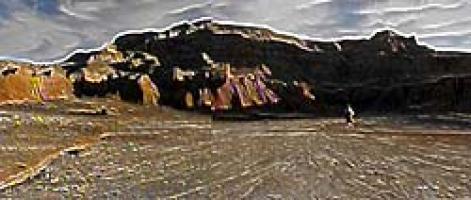
"A man is running like crazy through the desolate landscape of Patagonia. Chased by the wind and unseen assailants he keeps losing things from his luggage. The spectator finds himself somewhere between the man and his assailants, sharing his anxiety and paranoia. Is the spectator the persecutor or is he, like the man, being chased himself? And what?s with the peculiar ?split screen? that makes the ?vanishing point? manifest itself so quite literally? "
"Sebastian Diaz Morales was born in Comodoro Rivadavia, Argentina, in 1975 and now lives and works between Amsterdam and Buenos Aires. He attended the Universidad del Cine de Antin in Argentina from 1993-1999, the Rijksakademie van Beeldende Kunsten in Amsterdam from 2000-2001, and did a residency at La Fresnoy in Roubain, France from 2003-2004. He has had solo exhibitions in the USA, Mexico, and numerous cities in Europe, and his work has been supported by a number of grants and awards. Diaz Morales uses a number of different formal strategies to create his videos, ranging from the digital manipulation of appropriated news clips to lengthy, film-like narrative works made from footage filmed by filmself. Diaz Morales explores the relationship between large-scale socio-political power dynamics and individual action in works which create a sense of uneasiness for the viewer. His films are often somewhat surreal, establishing a tension between a depicted social reality and its representation in a visually abstract or fantasy-inflected way. Throughout his works, multiple forms of dependence are explored, including dependent relationships between people, the environment, and social structures."
Teresa Maria Diaz Nerio
Hommage à Sara Bartman
Experimental video | dv | color | 5:0 | Dominican Rep., Netherlands | 2007
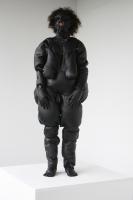
Sara Bartman who is more commonly known as Venus Hottentot was a South African Khoisan woman who was brought to England to be exhibited in 1810. Her genitals and buttocks where far beyond the understanding of what most Europeans at that time considered a human body in that sense connecting humanity with their race solely, she was considered almost like an animal and was exposed like an object. After her death her genitals and her brain were kept, as well as a wax model of her body and her skeleton have being exposed in the Musée de l`Homme in France.This performance is the result of an investigation into the black performing body, and how blackness has become an act in itself, wearing her body as a skin was a solution to disguise myself and at the same time become myself through the other.The reason why Sara Bartman has become this icon for the African people in Africa and in the diaspora as well as for European people, is a reaction to the registered and legitimate scientific and voyeuristic rape of her body. The verticality of the sculptures and monuments that glorify the heroic acts of man is now simply the body of an African woman, silent, erect, awake.
Born in Santo Domingo, Dominican Republic 9 April 1982, currently living in Amsterdam and making a Master in Fine Arts at the Dutch Art Institute in Enschede, The Netherlands. Graduated in 2007 from the Gerrit Rietveld Academie, Amsterdam, The Netherlands at the Fine Arts department where I developed my last works, all of which are performances Hommage à Sara Bartman 2007, Throne of Gold 2007, Trujillo`s Island 2007, Trujillo 2006.
Michael Dietrich
zone of silence (scream machine)
Experimental film | hdv | color | 9:30 | Austria | 2025
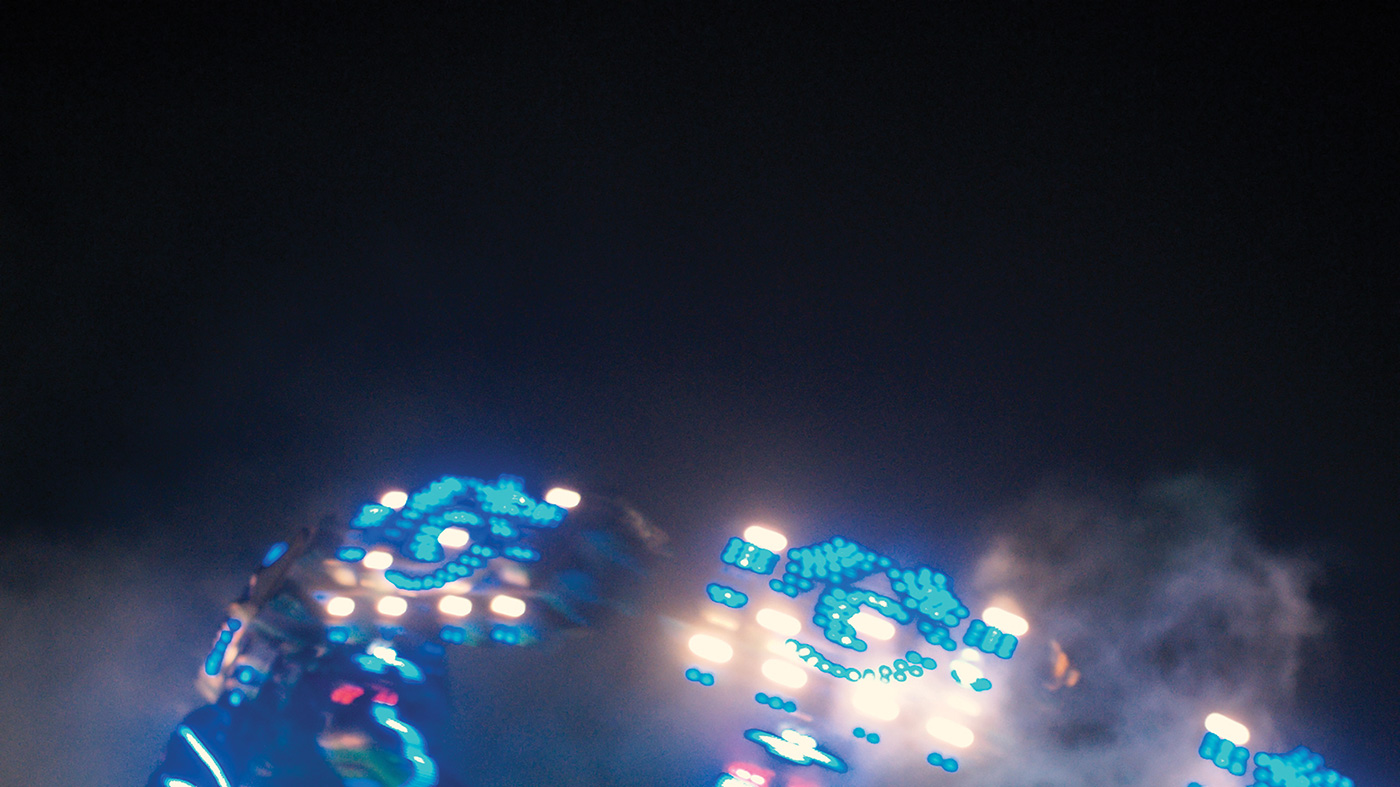
The experimental film Zone of Silence (Scream Machine) explores the interplay between light, fog, and resonance to depict inner isolation and psychological disorientation. The city is enveloped in a dense atmosphere, while reflections of light and muffled sounds create a “zone of silence” in which orientation and communication begin to dissolve. Inspired by historical maritime navigation problems—where foghorns became inaudible under certain weather conditions—the film translates this phenomenon into the realm of the human unconscious. Theodor Reik’s psychoanalytic concept of the “zone of silence” serves as a central motif for repressed emotions and the difficulty of breaking through them. The closing sequence shows the fading inscription “EUROPA,” a bleak reflection on the continent’s political future. Through its dense atmosphere, a composition blending field recordings and synthesized sound, and the use of visual metaphors, the film offers a profound exploration of inner emptiness and the search for orientation.
Michael Dietrich (*1985, Vienna, Austria)studied social design at the HfbK Hamburg and Photography at the Academy of Fine Arts Vienna. His work explores the impact of human intervention on nature, often unfolding unsettling scenarios through video and acousmatic.
Igor Dimitri
Salsa
Experimental fiction | 16mm | color | 13:0 | Portugal | 2020
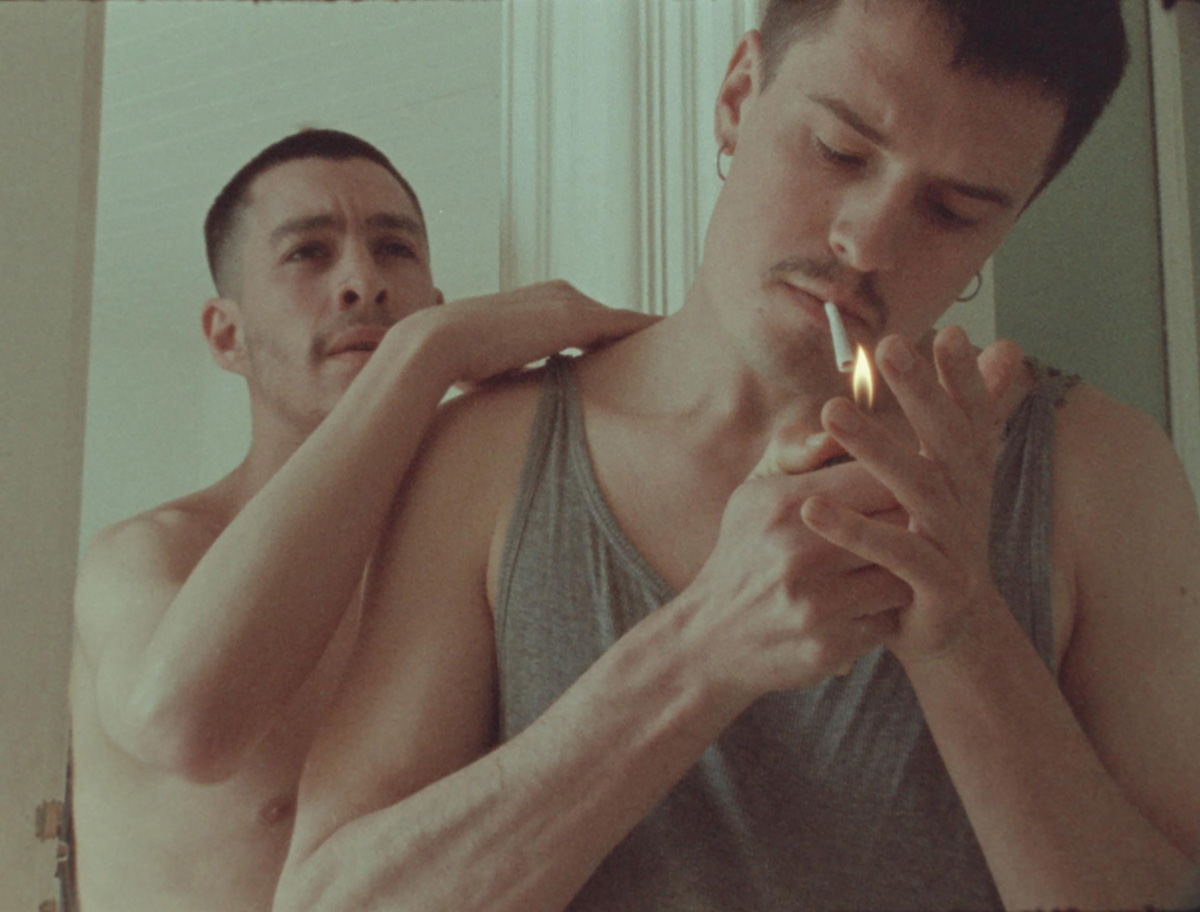
One Buenos Aires afternoon in the dominican hairdresser saloon, in which characters from different origins reunite around the musical feeling of the place. From dancers to performers and actors, clients and reggaeton singers.
MA in Documentary Cinema and Profesor Assistant at Universidad del Cine, Buenos Aires. PhD Candidate at University NOVA, Lisboa. Currently working on my first feature film. I'm interested in the notions of displacement, ritual and longing. In color, rhythm, body and mixing genres in a surrealist way.

Sebastián Díaz Morales
Talk with Dust
Experimental fiction | 4k | color | 16:0 | Argentina | 2019
The serie Talk with Dust is composed of 8 video works and explores the idea of the fantastic or extraordinary. This fantastic is not the one that interrupts the ordinary course of things but rather that which is at once strange and present, at the same time its contradiction and its confirmation. The protagonist of a last sequence is a dog. Wandering through a semi deserted landscape, it encounters different situations that leads him to question what he sees, understands or knows. The sequence never completes a narrative. It is also fragmented into parts, which seem disconnected from a story. Therefore the script also pictures only fragments of what could be the entire movie or narrative.
Sebastian Diaz Morales (Comodoro Rivadavia, Argentina, 1975) studied both in Argentina and at the Rijksakademie in Amsterdam. Morales’s video work blurs fiction and documentary genres and has been screened extensively at in museum, gallery and festival context and his work has been supported by a number of grants and awards including the Guggenheim Fellowship in 2009. With its spliced footage and stills and jumbled observations, his work follows the tradition of Latin-American narrative film. Morales plays with the structure of narrative within his work, typically documenting and constructing journeys that explore social and political concerns.
Sebastián Díaz Morales
Multiverse
Video | hdv | color | 10:0 | Argentina, Netherlands | 2018
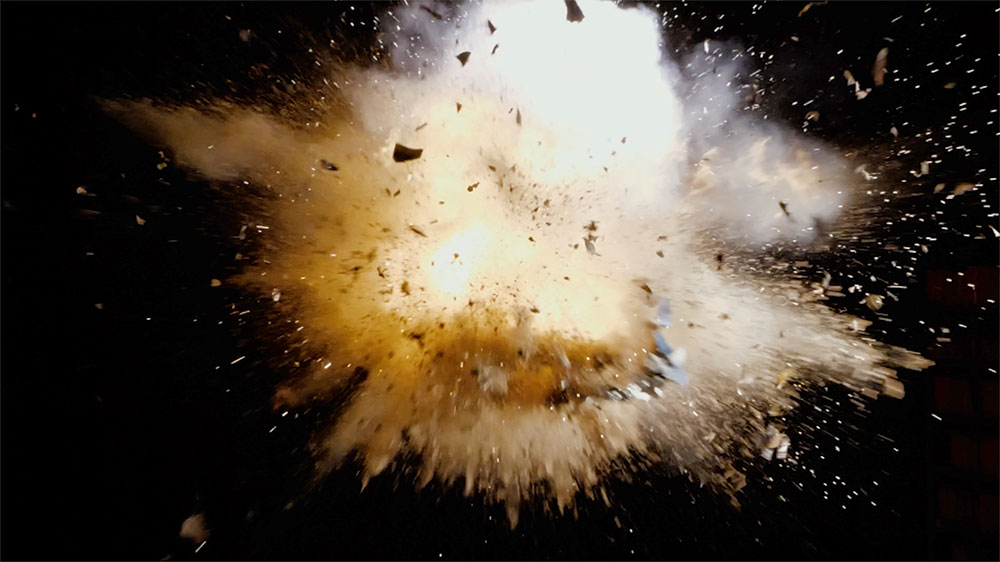
1-channel video / 2k format / 10min / 2018 Soundscore Berend Dubbe & Gwendolyn Thomas / Photography Niels Boon / Special effects Arjan van Drunen / Production Bart van Dam Produced with financial support of the Mondriaan Fonds The multiverse (or metaverse) is a hypothetical group of multiple universes including the universe in which humans live. Together, these universes comprise everything that exists: the entirety of space, time, matter, energy, the physical laws and the constants that describe them. The different universes within the multiverse are called the "parallel universes", "other universes", or "alternative universes". #3 Multiverse is part of a series of videos which are ultimately sequences of a whole. Both a concept and a blurred narrative. The latter is not explicitly delineated in the course of the series but it is intuited. The sequences generate, rather than a narrative, a concept. All these sequences are thought to be shown on separate screens. In large and small shapes, vertically and horizontally they spread into one or various spaces in different combinations resembling an aleatory puzzle which ultimately takes a more clear and narrative shape in one last sequence/installation. The serie Talk with Dust is composed of 8 video works and explores the idea of the fantastic or extraordinary. This fantastic is not the one that interrupts the ordinary course of things but rather that which is at once strange and present, at the same time its contradiction and its confirmation. For something to be fantastic, it is not enough to be different from the real: also (and above all) it is necessary to mix inexplicably with the real thing. In more philosophical terms we can say that the fantastic is not the other of the same but its alteration: not the contradiction of the real, but its subversion. That is why the cinematic condition of the fantastic, which on the other hand can serve as an exact definition, is not at all in the production of real or supernatural beings, but in the fact that they affect what is recognized as real and natural through a contagion of the other who comes to seize the same in person. The feat made by the fantastic cinema does not consist only in this visible manifestation of the real as another. These are duplicated, in fact, and apparently paradoxically, by the work of an invocation of the Real as such, considered in its effective and singular existence; and in a way that is in itself quite strange. 1 The effects on this and the rest of the works had been recreated entirely on stage without the use of postproduction editing. 1 Clement Rosset, El Objeto Singular, Editorial Sexto Piso, 2007
Sebastián DÃaz Morales was born in Comodoro Rivadavia, Argentina, in 1975 and lives and works in Amsterdam. He attended the Universidad del Cine de AntÃn in Argentina from 1993-1999, the Rijksakademie van Beeldende Kunsten in Amsterdam from 2000-2001, and Le Fresnoy Studio des Arts Contemporains in Roubaix, France from 2003-2004. His work has been exhibited widely, including solo shows and presentations at Venice Biennale; Tate Modern, London; Center Pompidou, Paris; Miro Fundation, Barcelona; Stedelijk Museum Bureau Amsterdam; CAC, Vilnius; Le Fresnoy, Roubaix, France; Museum für Gegenwartskunst Siegen, Germany and group shows at De Appel, Amsterdam; Art in General, NY; Ludwin Museum Budapest, Bienale Sao Pablo; Biennale of Sydney; MUDAM, Luxemburg; Calouste Gulbenkian Foundation in Lisbon. His work is represented in numerous collections, including Center Pompidou, Paris; Tate modern, London; Fundacion Jumex, Mexico; Sandretto Foundation, Torino; Sammlung-Goetz, Munich; Fundacion de Arte Moderna, Museo Berardo, Lisboa; Kadist Foundation, San Francisco. He was a recipient of the Guggenheim Fellowship in 2009
Sebastián Díaz Morales
Pasajes IV
Video | mov | color | 25:0 | Argentina | 2017
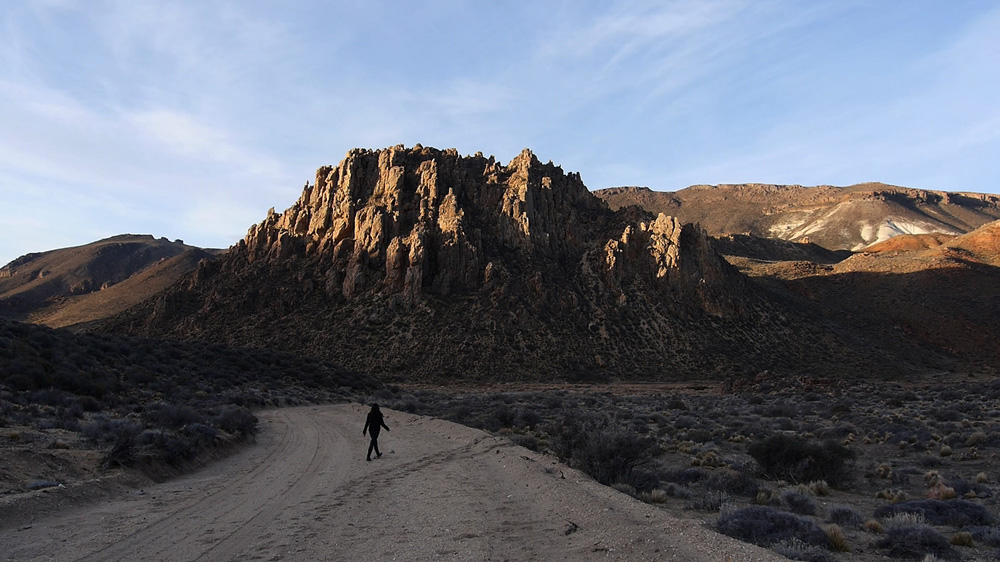
In Pasajes IV the idea follows the same narrative, concept and structure as in the other videos from the series. In the previous three Pasajes video works a formula repeats on different backdrops: a character unites places through gateways, doors, stairs and roads which are otherwise spatially disconnected from each other. This is the geography of a story expressed in an alteration of normalcy. In this formulation of Pasajes IV, the video explores the landscape of Patagonia. Crisscrossing this territory in search for differences within the landscape, a character as a guide, unites different territories disconnected in their geography, as essential pieces of a puzzle to understand this region’s present topography and history.
Sebastián Díaz Morales was born in Comodoro Rivadavia, Argentina, in 1975 and now lives and works in Amsterdam, The Netherlands. He attended the Universidad del Cine de Antin in Argentina from 1993-1999, the Rijksakademie van Beeldende Kunsten in Amsterdam from 2000-2001 and Le Fresnoy Studio des arts contemporains in Roubaix, France from 2003-2004. He has had solo exhibitions in the USA, Mexico, and numerous cities in Europe, and his work has been supported by a number of grants and awards. Díaz Morales uses a number of different formal strategies to create his videos, ranging from the digital manipulation of appropriated news clips to lengthy, film-like narrative works made from footage filmed by himself. Díaz Morales explores the relationship between large-scale socio-political power dynamics and individual action in works which create a sense of uneasiness for the viewer. His films are often somewhat surreal, establishing a tension between a depicted social reality and its representation in a visually abstract or fantasy-inflected way. Throughout his works, multiple forms of dependence are explored, including dependent relationships between people, the environment, and social structures.
Sebastián Díaz Morales
The Lost Object
Video | hdv | color | 13:29 | Argentina, Netherlands | 2016
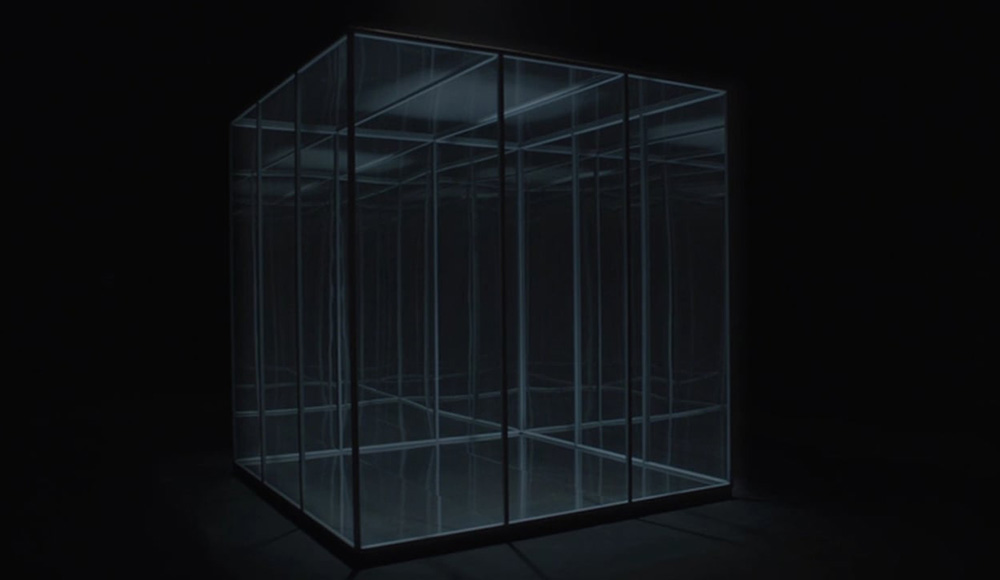
The Lost Object is the final video in a trilogy that examines the complex mechanisms of how we perceive the constructed nature of reality?and how this construction is performed, both in the realm our imagination and the one of film. As curator Cuauhtémoc Medina notes in a recent monograph dedicated to Diaz Morale’s work, the artist approaches film as a “factory of simulacra” a conceptual thread that carries throughout his trilogy, which began with Insight (2012) and was followed by Suspension (2014). A slow, steady shot travels into the set of The Lost Object, accompanied by the din of a whirring film reel that seems to methodically introduce the viewer into a world of artifice: a soundstage containing the set of a curiously dated, yet nonetheless anonymous room. The scenario slowly begins to unravel, disarticulating both the language and apparatus of filmmaking. Following Jean Baudrillard?s notion that the world has disappeared behind its own representation and therefore its impossible to return to it, The Lost Object proposes a new world in which fiction and reality merge into one single element. In this universe, fiction is autonomous and auto-generates itself.
Sebastiàn Díaz Morales was born in Comodoro Rivadavia, Argentina, in 1975 and lives and works in Amsterdam. He attended the Universidad del Cine de Antón in Argentina from 1993-1999, the Rijksakademie van Beeldende Kunsten in Amsterdam from 2000-2001, and Le Fresnoy Studio des Arts Contemporains in Roubaix, France from 2003-2004. His work has been exhibited widely, including solo shows and presentations at Tate Modern, London; Center Pompidou, Paris; Miro Fundation, Barcelona; Stedelijk Museum Bureau Amsterdam; CAC, Vilnius; Le Fresnoy, Roubaix, France; Museum für Gegenwartskunst Siegen, Germany and group shows at De Appel, Amsterdam; Art in General, NY; Ludwin Museum Budapest, Bienale Sao Pablo; Biennale of Sydney; MUDAM, Luxemburg; Calouste Gulbenkian Foundation in Lisbon. His work is represented in numerous collections, including Center Pompidou, Paris; Tate modern, London; Fundacion Jumex, Mexico; Sandretto Foundation, Torino; Sammlung-Goetz, Munich; Fundacion de Arte Moderna, Museo Berardo, Lisboa; Kadist Foundation, San Francisco. He was a recipient of the Guggenheim Fellowship in 2009
Sebastián Díaz Morales
One Glass Eye Melting
Experimental video | mov | color | 13:0 | Argentina, Netherlands | 0
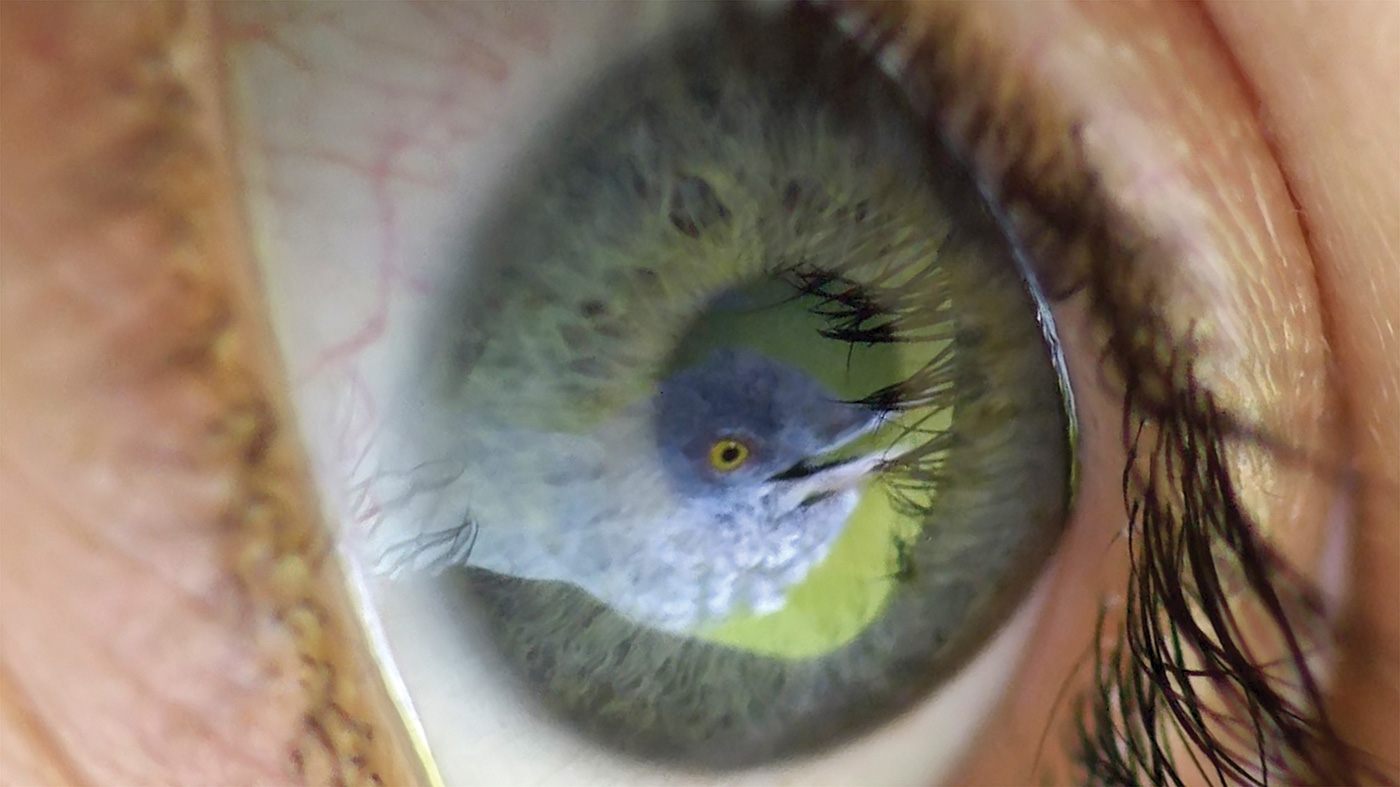
One Glass Eye Melting conjures the common imaginary of dystopia to rearticulate it in search of new possibilities. A close-up of a rotating eye gazes back at the viewer, its pupil reflecting a montage of disasters—war, natural catastrophe, and mundane accidents—juxtaposed with scenes of regeneration: microbial life, cosmic expansion, and technological evolution. Filmed in a raw, single-shot sequence with minimal post-production, the eye becomes both a mirror and a fractured “memory container,” destabilised by glitches, scratches, and analogue/digital noise. The work interrogates the act of looking itself, transforming reality into something surreal yet unnervingly familiar. As the eye spins 360 degrees, the pupi’s reflection remains fixed, anchoring chaos and renewal as cyclical, interdependent forces. One Glass Eye Melting reframes disaster as inseparable from rebirth, arguing that collapse harbours the potential to reimagine—and rebuild—our narratives. Rather than revisiting catastrophe, the work asks: What do we do with these images of disaster? The work summons the collective imagination of dystopia, rearticulating its imagery in pursuit of uncharted possibilities. Part of the series Bajo el cielo cayendo (Under the Falling Sky), which explores the tension between systemic disaster and fragile hope.
Sebastián Díaz Morales was born in Comodoro Rivadavia, Argentina, in 1975 and lives and works in Amsterdam. He attended the Universidad del Cine de Antín in Argentina from 1993-1999, the Rijksakademie van Beeldende Kunsten in Amsterdam from 2000-2001, and Le Fresnoy Studio des Arts Contemporains in Roubaix, France from 2003-2004. Díaz Morales’s examination of perception and reality is based on the assumption that reality itself is by nature highly fictional. Thus, his films do not simply transport the viewer into another, surreal, or phantasmal realm, but they strip reality of its familiarity and distort it, making it seem like something else. With Diaz Morales, the viewer’s imagination does not function as a basic counterpart to the real. Rather, it operates as a force capable of evoking space and producing it diegetically, one that, beyond generating a direct visual impression, fills in the gaps in seeing and, as the film unfolds, gradually reveals to the viewer the constructedness of what we call reality. Reality is presented here as a phantasm, as something that always eludes its defining in images. It is therefore always “a little bit ahead” of the image and the viewer’s gaze. His work has been exhibited widely at venues—such as the Tate Modern, London; Centre Pompidou; Stedelijk Museum and De Appel, Amsterdam; Le Fresnoy, Roubaix; CAC, Vilnius; Art in General, New York City; Ludwig Museum, Budapest; Biennale Sao Pablo; Biennale of Sydney; Miro Foundation, Barcelona; MUDAM, Luxemburg; Calouste Gulbenkian Foundation, Lisbon; the Biennale di Venezia and Documenta Fifteen.
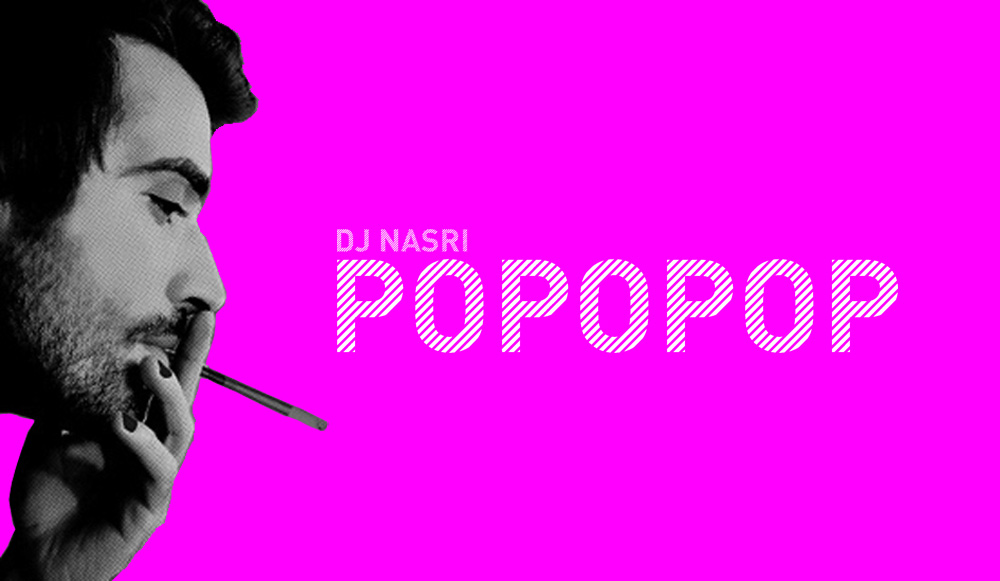
Dj Nasri
Popopop
Performance | | | 120:0 | Lebanon | 2015
When Oum Kalthoum meets Serge Gainsbourg meets Billie Holliday meets Aisha Al Marta meets Sabah meets Taxi Girl meets Esther Phillips meets Yasmine Hamdan meets Souad Abdallah meets Jeanne Moreau meets Dina Washington meets PJ Harvey meets Marylin Monroe meets Astrud Gilberto meets Sara Vaughan meets Catherine Deneuve meets Mohamad Mounir meets Madonna meets Delphine Seyrig meets Soapkills meets Ahmad Adawiya meets Eartha Kitt meets Mirwais meets Bandali Family meets Feyrouz meets Asmahan meets Cheikh Imam meets Marguerite Duras meets Nina Simone meets Cole Porter meets Omar Zeini meets Fleetwood Mac meets Tarab meets Kitsch meets Choubi meets you.
Actor (notably directed by Christian Merlhiot, Jocelyne Saab, Georges Hachem, Roy Samaha, Omar Fakhoury and Jad Youssef…) and journalist, Nasri has also been a DJ for over 8 years in Beirut, and Berlin where he is currently based. With an eclectic mix of uninhibited pop with borderless genres and tastes - good or bad - Nasri creates the musical encounter with the great names of the Arab world`s classical repertoire alongside those of Western pop, music of the Emirates, Egypt, Lebanon, and beyond with stars and starlets of French cinema and literature. A fanatic of Jazz divas, Nasri links Asmahan and Delphine Seyrig, Grace Jones and Jeanne Moreau, as well as the most kitsch of Arabic sounds with acoustic dialogues by Bette Davis, among other great actresses of International cinema.
Daniel Nicolae Djamo
Pasari
Video | hdv | color | 7:32 | Romania | 2014
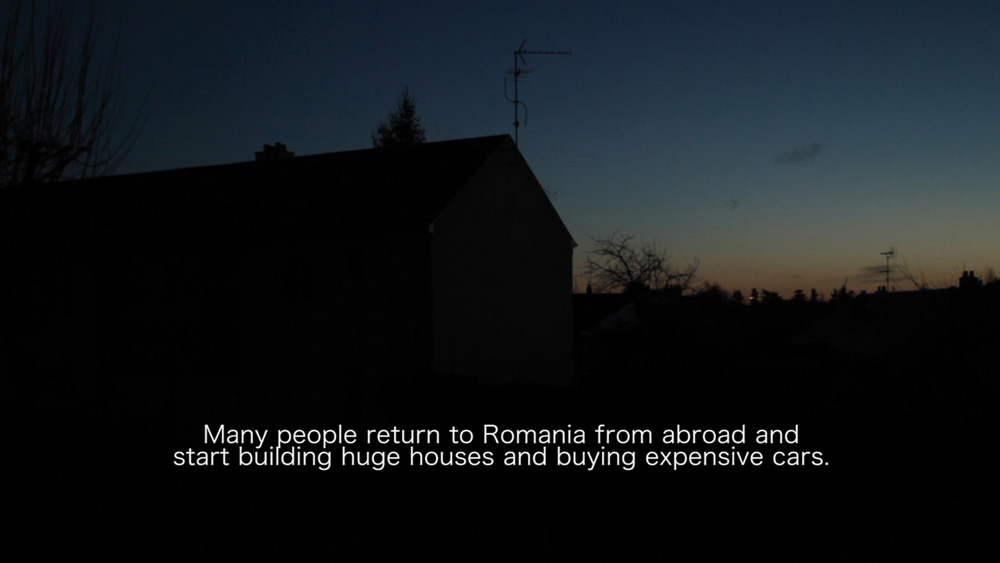
The work is based on fragments from interviews taken from Romanian immigrants living in Paris in 2011, 2013 and 2014. Shot in Nogent sur Vernisson. Loiret, on December 28th, 2013. 2013 had a warm autumn and an even warmer winter debut. "I think that this is one of the reasons why the birds that live along the Loire chose to rest longer. Some rested even until late December. I filmed this material when they started preparing to fly away. ”Birds” presents 7 minutes of French sunset, on continuous shooting, with the migratory birds preparing to leave. It presents the sunset of the West, with governments taking measures belonging to the right. I chose to draw a paralel between this story and statements that I had previously recorded in Paris, belonging to Romanian immigrants."
Daniel Djamo (b.1987, lives and works in Bucharest) is a young Romanian artist and film director, being interested in personal and group histories. He combines film with video art and installation with photography in order to evoke the past and to underline “the now.” Winner of the ESSL award, Henkel Art.Award. Young artist prize CEE, Startpoint Prize Romania and the Grand Prize of the National University of Fine Arts from Bucharest. Daniel benefited from residencies in Paris, Kassel, Chemnitz, Bruxelles, Vienna and Liege. He exhibited at the Museum of Moscow, Kunsthaus Dresden, Moscow Museum of Modern Art (MMOMA) and the ESSL museum from Vienna, while also presenting his works in Germany, Italy, Canada, Netherlands, USA, Russia, Portugal, Czech Republic, Estonia etc. His video artworks have been screened in numerous video art and film festivals. He is a PhD candidate at the National University of Fine Arts from Bucharest.

Shwan Dler Qaradaki
The Golden Wish
Video | mov | color | 5:29 | Norway, Iraq | 2019
The backstory for The Golden Wish is that the danish left government`s suggestion that the police could be able to seize jewelry and valuables from asylum seeker as they arrive in to the country. The jewelry and the valuables would finance board and lodging for the newcomers. In connection with this project I have been to Iraq and visited two large refugee camps outside of Suleimaniah. The refugee camps are Arbar and Barika and they are located 29 km southeast of the city Suleimaniah. In all their are 32 000 refugees in both camps together. I was on the lookout in their local markets and contacted jewelry dealers and private persons in the area. I then buyed their gold jewelry, melted and casted it to a text based installation, formed to the sentence: “Everything will be ok”.
I am a artist that works within drawing, painting, installation, video and film. Thematically in several of my work I have worked with my own experiences as a Kurdish refugee, but my experiences can provide knowledge of universal issues that can be linked to being a human being on the run. I am originally from Iraqi Kurdistan, I completed a five-year art education before fleeing due to persecution in 1997. After a challenging escape through 11 countries, I came to Norway in December 1999 and completed art education here as well.

Alexei Dmitriev
Dubus
Experimental video | dv | black and white | 4:9 | Russia | 2005
A slow dance of classical cinema to the music of Zelany Rashoho. The work deals with well-known films: 'Sun Valley Serenade', 'Casablanca', 'Some Like It Hot', 'In the Waterfront', 'Citizen Kane'. The footage of these films is transformed in order to coincide with the new music made by Zelany Rashoho which is a mixture of jazz, electronics and dub.
AV are two video artists from St.-Petersburg, Russia. AV = Alexei and Sergei Dmitriev, 21 and 19 years old visual artists from Saint-Petersburg, Russia. We do experimental film and live video. Perform with a band called Zelany Rashoho.