Catalogue > Search
Results for : Tout le catalogue

Foteini Kotsopoulou
This Dance Has No End
Experimental video | mp4 | black and white | 10:58 | Greece, United Kingdom | 2018
"What happens when someone dies is that we, the living, contain their memory within us ... They will live on in us, and we will celebrate them. And dance like there is no tomorrow". Diane Torr A dance dedicated to artist, drag king and gender activist Diane Torr who passed away in May 2017. A year to the day, I dance in a black room : a single shot fusing male and female as ode to life and death. Traditional urban zeybekiko dance of Rebetiko, exclusively danced by men -in the past- is danced by my hybrid manifestation - blended aspects of my identity. In silence, I hear Diane's words: "Take space with all your being. Own the space". I lift my arms and dance like there is no tomorrow as the camera follows. No edits or retakes : the aim is not to please or excite but to offer myself as site for collective unburdening.
Fenia Kotsopoulou is a Greek cross-disciplinary, award-winning artist (performance (art), dance, video, photography), based in Lincoln (UK), holding a MFA in Choreographing Live Art from the University of Lincoln (UK), a BA Honours in Dance from the National Dance Academy of Rome (Italy), and a BA in Italian Language and Literature from the Aristotle University of Thessaloniki (Greece). Over the course of the last 10 years, video making and photography became a dominant and persistent component of her artistic practice. Pivotal topics of recent projects include the body as gathering place of emotions and site of transformation, personal and collective memory, fragmentation, (de)construction of female identity, unbecoming, shame, hairiness and other issues. In the past few years, as (dance) performer, producer and visual practitioner, her works and the work of close-collaborator digital artist, Daz Disley, have been shown at a wide array of festivals and art platforms, encompassing the fields of dance, experimental performance, live-art and video-art, and receiving several prizes/awards. Alongside her practice, she is lecturer at the Master of Performance Practices at the university of ArtEZ (Netherlands) and, since 2016, she is artist-in-residence at x-church in Gainsborough (UK).
Andrew Kotting
Their Randic Words Stagnate our Ponds
Video | hdv | color | 8:40 | United Kingdom | 2018
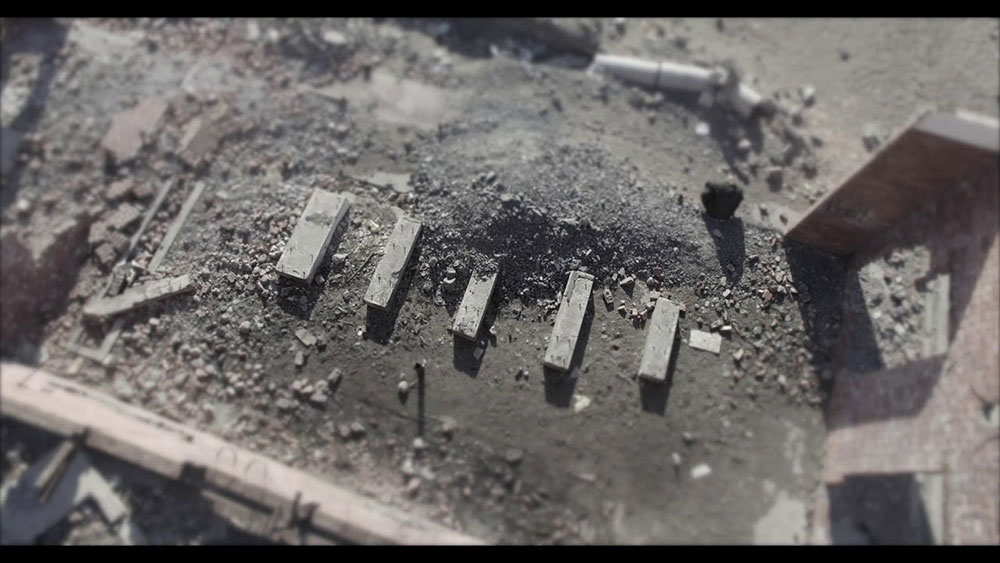
In a hinterland within the “elsewhere” a lone character meanders in search of meaning and understanding. Hither and dither doth he wander reflecting upon all things that came before and all things hereafter. The work is a companion piece to “ttingâ” latest feature film LEK AND THE DOGS and was shot in the Atacama desert in Chile. Produced to run on a loop in a gallery “space” or as a single screen the film exemplifies “ttings ability to take an idea and run with it until it spills over into the expanded cinematic “elsewhere”. With the beguiling presence of French performance artist Xavier Tchili and sublime cinematography by Nick Gordon-Smith the work is designed to be experienced within the pitch black and the sound up high.
Andrew ‘tting was born between the mountains and the sea in Elmstead Woods in 1959. After some early forays into market trading and scrap-metal dealing he travelled to Scandinavia to become a Lumberjack. He returned home in the 80’s to study for a BA Honours Degree in Fine Art at Ravensbourne College of Art and Design and then graduated with a Masters Degree from The Slade, London. He currently lives and works between Hastings in England and Fougax-et-Barrineuf in the French Pyrenees. He teaches part-time at the University for the Creative Arts where he is Professor of Time Based Media. He has made numerous experimental short films, which were awarded prizes at international film festivals. Gallivant (1996), was his first feature film, a road/home movie about his four-month journey around the coast of Britain, with his grandmother Gladys and his daughter Eden, which won the Channel 4 Prize at the Edinburgh Film Festival for Best Director and the Golden Ribbon Award in Rimini (Italy). The film went on in 2011 to be voted number 49 as Best British Film of all time by the UK publication Time Out. In 2001 he directed the first of his Earthworks Trilogy; This Filthy Earth, in 2009 Ivul, and in 2018 Lek And The Dogs. All three films were released theatrically throughout the UK and France. As well as exhibitions of his work in the UK he has also presented retrospectives of his work in Belgium, France, Germany, Holland, Ireland and Switzerland. His twenty-eight year oeuvre to date has moved from early live-art inflected, often absurdist pieces, through darkly comic shorts teasing out the melancholy surrealism at the heart of contemporary Englishness to eight resolutely independent feature films that take biography, landscape and journeys as springboards into the making of visually striking and structurally inventive enquiries into identity, belonging, history and notions of the folkloric.
Konstantina Kotzamani
Limbo
Fiction | 4k | color | 29:40 | Greece | 2016
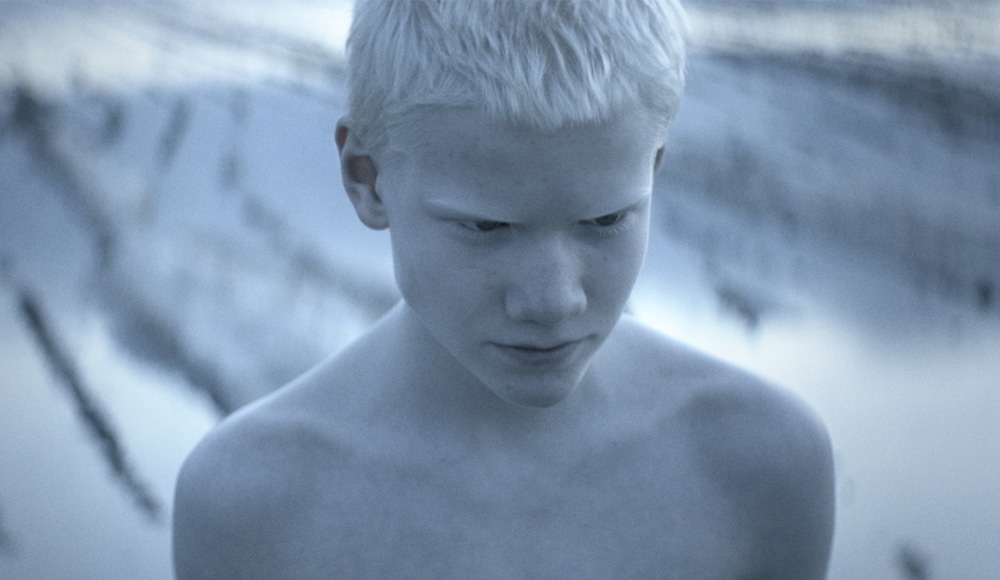
"THE LEOPARD SHALL LIE DOWN WITH THE GOAT THE WOLVES SHALL LIVE WITH THE LAMBS AND THE YOUNG BOY WILL LEAD THEM" 12+1 KIDS AND THE CARCASS OF A WHALE WASHED ASHORE
Konstantina Kotzamani is a graduate student of Film Department of Fine Arts of Thessaloniki. Her short movies have participated in major International Festivals and have received several awards. Her film Washingtonia premiered in Berlinale 2014 and was nominated for the Golden Bear. Washingtonia participated in more than 120 International Film Festivals and in 2014 was awarded by the Greek Film Academy as the best Short Film. One year later Washingtonia received the EFA (European Film Academy) nomination for the best European Short. Konstantina Kotzamani was chosen to take part and present her work in Future Frames at the 50th Karlovy Vary Film Festival 2015 and at the same year, her short film Yellow Fieber premiered in Locarno Film Festival 2015 in international competition Pardi di Domani. Her last short film Limbo co- produced between Greek Film Centre and French CNC, premiered in Cannes , Semaine de la Critique 2016 and after that gained awards in many other International festival such as Palm Springs ( future filmmaker award) , Vila do Conde ( Best Fiction ) , Rio de Janeiro ( Best Short Film , Best director) ect.. Limbo was also nominated for the European Academy Awards 2016 as best European Short.

Konstantina Kotzamani
Washingtonia
Experimental fiction | hdv | color | 24:0 | Greece | 2014
Washingtonia starts when the giraffes heart can no longer be heard. Washingtonia is an alternative name for Athens, a place where people, like animals, fall into summertime sadness because of the heat. Washingtonia is the only palm tree which heart is not devoured by the red beetle. Because its heart is small and dry and no one likes small and dry hearts.
Konstantina Kotzamani was born in Komotini in 1983. She has studied Pharmacy and then Cinema at Aristotle University of Thessaloniki, Department of Fine Arts. She has participated at Berlin and Sarajevo Talent Campus as a director. Her short movies have been selected in several International Festivals and have gained many awards.

Zaur Kourazov
Han Yu
Experimental doc. | mov | color | 20:23 | Belgium, Russia | 2019
In a village in Chechnya a mother and a daughter speak about the return of an acquaintance.
Zaur Kourazov (1994) graduated from KASK in 2019 magna cum laude with his work, TIME IS (2020). His work dwells on themes such as memory, (cultural) identity and friendships which stem from intercultural aspects. Feeling connected to his ethnic culture and the assimilated culture, his work resides in a unique position by exploring 'in betweenness,' a very intriguing space of understanding both worlds yet not fitting in either of them.
Stefan Koutzev
Restbestand
Documentary | 16mm | color | 19:24 | Bulgaria, Germany | 2025
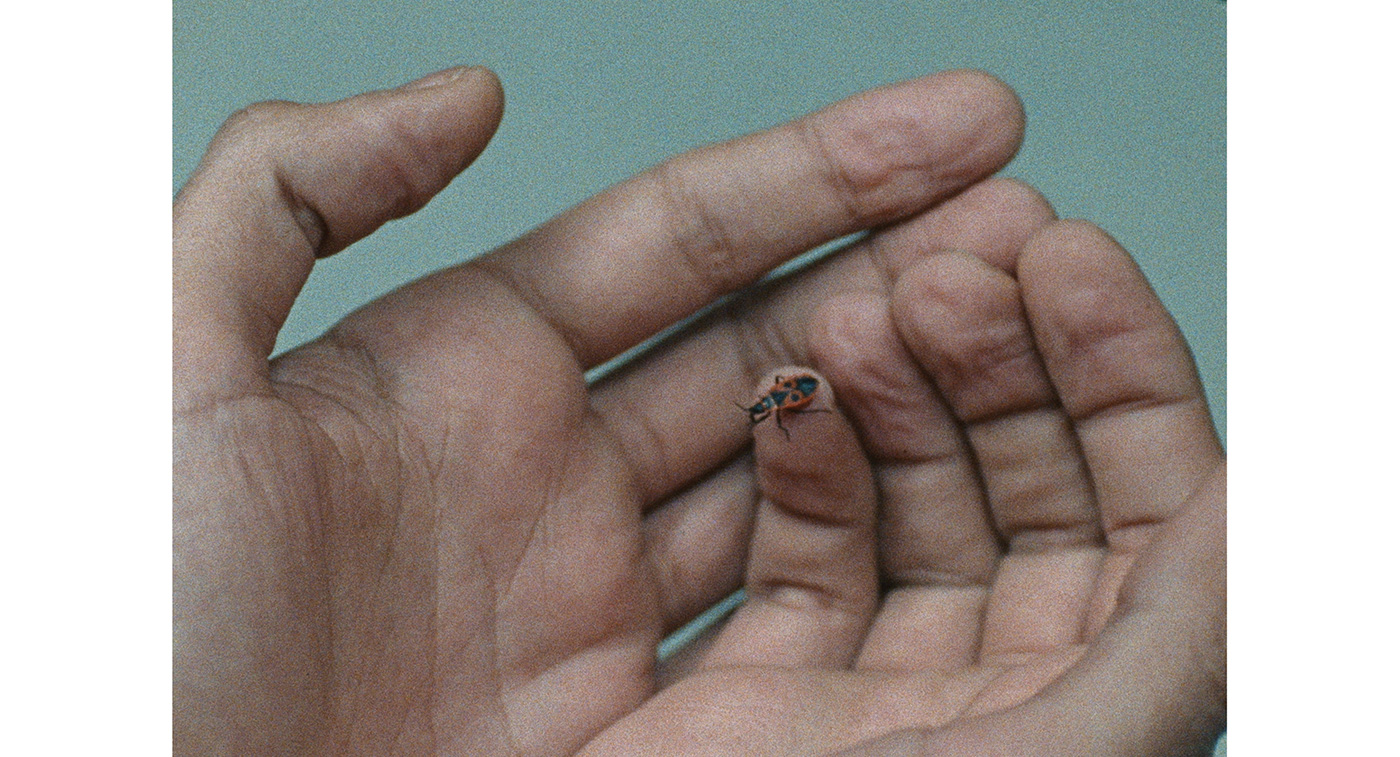
Within the haunting cycle of coffin mass production, human labor contrasts with the never-ending factory stock of coffins. In light of computer-aided manufacturing and the excessive overexploitation of natural resources, Unsold Copies longs for a moment of rest from the assembly line, while mankind continually buries itself in the remnants of a material world.
Stefan Koutzev is a Bulgarian filmmaker working and living in Cologne. His work focuses on narrative storytelling born between screenwriting and documentary practices, as well as the production of experimental films and sound design. His short films including RESTBESTAND (2025), HAUSPAUSEN (2024) or SCHWÄRMEN (2020), have been screened at DOK Leipzig, Odense International Film Festival, Beijing International Short Film Festival, Stockholm International Film Festival or Rencontres Internationales Paris/ Berlin. In 2026, he's about to present the world premier of his feature debut WHY HASN’T EVERYTHING DISAPPEARED YET, a hybrid, multilingual exploration of belonging, origin and migration.
Lech Kowalski
A l'Est du paradis
Documentary | betaSP | color | 105:0 | Poland, USA | 2005
East of Paradise is the last film of the "Wild Wild East" trilogy by the filmmaker Lech Kowalski. Produced after "The Boot Factory" and "On Hitler`s Highway", his new documentary is far the most personal. In the first part of "East of Paradise", he gives the voice to Maria Werla Kowalsi, his mother, who evokes her life during the war. With an unseen precision and a natural sense of language, she relates her deportation from Cracovie to the Soviet gulags, at the beginning of the Second World War. Mrs Kowalski is convicted that whoever has not lived this drama, can not really apprehend this dark period of history. As if defied by the tragedy of such depth and significance that his mother lived, Kowalski plunges into his own eventful past. Using of images from earlier works ("Gringo", "Walter and Cutie", "D.O.A.") whose quality strongly contrasts with the sharpness of his mother's images, he presents the porn and drugs social ghettos. In these images, Lech evokes a marginal freely chosen existence, whereas her mother's story is an homage to the human desire for survival. Lech's narration can not be really compared with his mother's oppressive story. Nevertheless, this impassible gap changes the juxtaposition of two very different world into two portrayals as contentious as surprising . "East of Paradise" has been awarded, in 2005, by the Best Alternative Film Prize at the Mostra - Venice Festival.
Lech Kowalski comes from a Polish family. Born in London, he grew in the USA. When he was 18 years old, he went to New York where he discovered Punk Music, drug and porn. From a cinematographic point of view, Kowalski is tributary to Shirley Clarke. His films are produced by instable film-making, associative linkings and lines of story mixed together. Among Kowalski's earlier documentaries, we could name "Sex Stars" (1977), "Death On Arrival" (1978), "Gringo ? Story of a Junkie" (1985), "Rock Soup" (1991), "Born to Lose" (1999), "Hey is Dee Dee Home" (2002), "Camera Gun" (2003) and "Charlie Chaplin in Kabul" (2003).
Greg + Andrea Kowalski + Pensado
Specialized Technicians Required : being Luis Porc
Experimental video | dv | color | 2:0 | USA, Spain | 2005
Manuel Saiz has done it! The Famous Hollywood Actor has once again gracefully accepted to be or not to be what he is. Witness the film that inspired the pun in the title of this short video ? he is not afraid of a few digs at his person and status. He probably has a small army of agents, managers, and assistants around him, to keep all those who are trying to make use of him because of his name at a distance. Perhaps Manuel Saiz was lucky, perhaps he knows the friends of the friends of ? perhaps he has been waiting on the doorstep and hanging on the phone for months, driving the whole army crazy. He probably just used a sympathetic argument that struck the right cord: would the actor who likes role reversals for once lend his charismatic voice to a man who is used to doing precisely that? A man who always obligingly keeps out of sight, but who is, to the Spanish speaking part of the world, the actor's mouthpiece, to a great extent 'is him'. "Being Luis Porcar" is part of the series "Specialized Technicians Required", and it makes you wonder who the specialized technician actually is in this construction. Is it the main character, the man who does the dubbing, or is it the artist himself, who nowadays has to master so many different skills in order to be able to carry out his profession properly?
Manuel Saiz was born in Logroño (La Rioja), Spain, and currently lives in London, England. He is a visual artist and independent curator.
Katarzyna Kozyra
Cheerleaderka
Art vidéo | dv | color | 4:30 | Poland | 2006
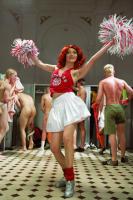
Part of the In Art Dreams Come True series, this piece was conceived as a pop music video cover of Gwen Stefani?s What Are You Waiting For? Playing which clichés of femininity and masculinity, this time Kozyra takes on the role not of an opera diva but of a pop-rock star playing a cheerleader in a music video set in a men?s locker room. Engaging in the kind of dancing and acrobatics (choreographed by Anna Godowska) customarily performed by cheerleaders, Kozyra, waving pom-poms and wearing a white miniskirt, tries to draw the attention of male athletes changing in the locker room after practice. Backup singers include members of the Zachêta?s curatorial staff and management. In this brief music video telling a rebellious story, Kozyra incorporates numerous references to her previous works.
Katarzyna Kozyra born in Warsaw (Poland) in 1963. Studied at the Fine Arts Academy in Warsaw (1988-1993) Deals with performance, video, and videoinstallation. In 1999 received a honorable mention at 48. International Biennale of Visual Art, Venice In 2003 scholarschip in the Berlin artists program (DAAD) Lives in Warsaw, Trento and in Berlin.
Thomas Köner
Nuuk
Video installation | dv | color | 6:0 | Germany | 2004
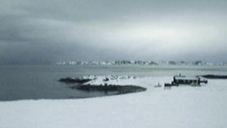
Nuuk is a simple but profound film, which makes do with one single washed-out shot taken by a webcam. In the snowy landscape of Greenland Köner shows the hamlet of Nuuk in changing light, which by all means complies with classic demands of rendering landscapes yet undermines them by way of denying visual expectations. The soundtrack is an integral part of the video. Without fully transcending the images the music passes just as imperceptibly as light and time do. Jurystatement Videoex Festival, Zurich 2005
1965 born in Bochum, Germany Education: 1985-1990 studying electronic music at CEM Studio, Arnhem 1987-1992 Conservatory of Music, Dortmund 1992-1994 Avid Operator, cutter- and soundassistant, Ruhr Sound Studios, Dortmund 1995 ? working as independant artist with sound, installation, film, music, video, theater and radio art Scholarships: 2001 Cité Internationale des Arts, Paris. 2006 Villa Aurora, Los Angeles Awards (selection): ARCO Award Best Young Artist at Arco, Feria International de Arte Contemporaneo Madrid 2005 Transmediale.05 Award, International Media Art Festival, Berlin 2005 TV5 Tiger Cub Award, International Filmfestival Rotterdam 2005 Golden Nica, Prix Ars Electronica, Linz 2004 German Sound Art Award Deutscher Klangkunst-Preis / Produktionspreis WDR, Marl 2004 Laureate, BBI Creation Contest, Fribourg 2004 Norman Award, Filmwinter Stuttgart 2004 New Media Prize, Montreal 2000 Nominations: 2004 MuVi Award, Short Film Festival Oberhausen 2004 Golden Cube, Monitoring Exhibition 21. Kasseler Dokumentarfilm- und Videofest 2004 & 2005 Viper Award, International Festival for Video and New Media, Basel Permanent installations: Musée Rimbaud / Maison Rimbaud, Charleville-Mézières Work in public collections: Centre Pompidou Musée national d`art moderne Paris, France Musée d`art contemporain Montreal, Canada Communidad Madrid Collection, Spain Ayuntamiento de Pamplona, Spain Exhibitions (selection): 2000 Sonic Boom Hayward Gallery London. 2004 Regarder, observer, surveiller Séquence Galerie Chicoutimi (Canada). Cyberarts Center for Contemporary Art, Linz. SoundART ArtCologne, Cologne. German Sound Art Award Skulpturenmuseum Marl. 2005 Gallery 44 Centre for Contemporary Photography, Toronto. Climax National Taiwan Museum of Fine Arts, Taichung. disappear Kunstpavillion Innsbruck. The Pantagruel Syndrome, Museo d`Arte Contemporanea Castello di Rivoli. Commissioned works: 1998 Musée National d`art moderne, Paris 2001 Centre d?art contemporain, Rennes 2004 Musée Rimbaud, Charleville-Mézières Remix (selection): 1999 Nine Inch Nails Remix for Nothing Records / Interscope 2002 Claude Debussy Remix for Universal Music 2003 ISIS Remix for Hydrahead Records Discography: since 1990 releases on more than 70 CD Live-Performance (selection): 1994 Louvre, Auditorium Paris. 1998 Spiral Hall Tokyo. 2001 New Zealand Film Festival. 2002 Kunsthalle Schirn Frankfurt. La Biennale Filmfestival Venice. Walker Art Center Minneapolis. 2003 Musée d?art contemporain Montreal. NYYD Festival for New Music Tallinn. 2004 Musée d?Orsay Paris. Festival de Carthage Tunis. 2005 La Biennale di Venezia, Teatro La Fenice. Palais des Beaux-Arts, Bruxelles. Serralves Museum, Porto. Radio art: 2001 Radio France 2004& 2005 Deutschlandradio Kultur 2006 Westdeutscher Rundfunk WDR Theatermusic: 1997 Krieg, Rainald Goetz, Schauspielhaus Dortmund Guest lectures & workshops (selection): 1998 Keio University Arts Center, Fujisawa. 2000 University of Traditional Music Theatre, Beijing. 2003 Musashino Art University, Tokyo. 2004 Dutch Art Institute, Enschede. 2004 Musrara School of Photography, Jerusalem. 2005 Hyperwerk, Basel.
Thomas Köner
Expanding Illuminance
Multimedia concert | 0 | | 35:0 | Germany, France | 2017
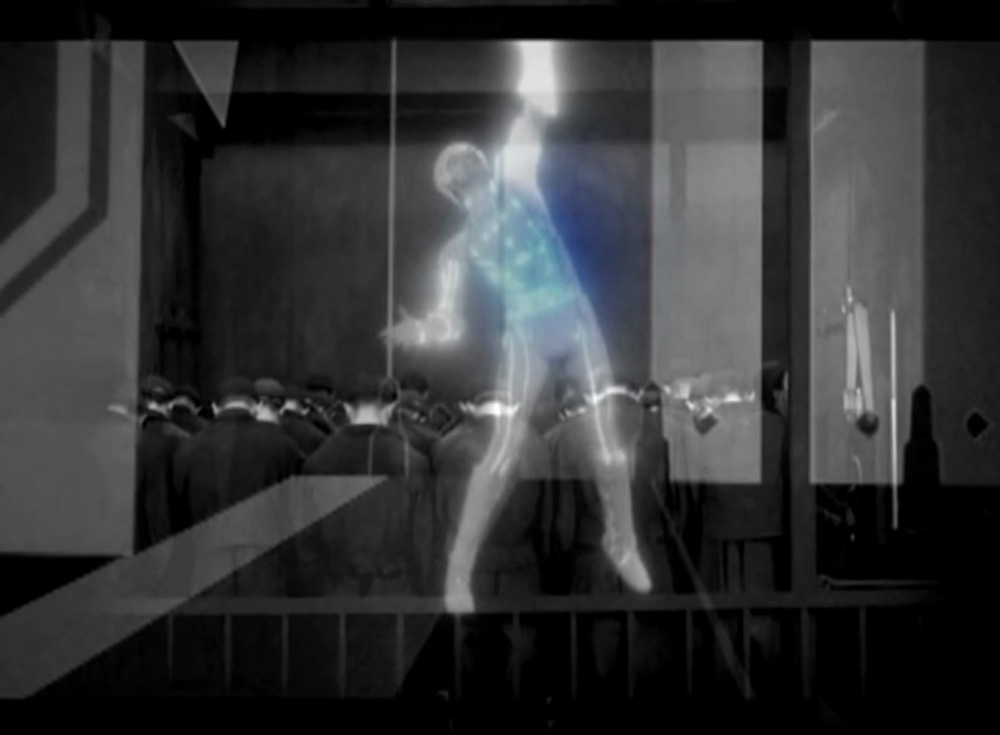
An hypnotic journey between two visions of the future and two utopias, from footages of the monumental “Metropolis” (Fritz Lang, 1927) and of the film 80`s cult “Tron” (Steven Lisberger, 1982).
Thomas Köner studied at the Music Academy in Dortmund, and at CEM-Studio in Arnhem. His work revolves mainly on the combination of visual and audio experiences, and develops into installations, concerts, videos, photos and multimedia works. In 2000, he received the “New Media Prize” at the Montreal International Festival New Cinema New Media. In 2004, he received the “Golden Nica” of Prix Ars Electronica, the “Produktionspreis WDR/Deutscher Klangkust – Preis” (German prize for sound art). His media installation “Suburb of the Void” received the Transmediale prize 2005 in Berli and was presented at the Venice Biennale, at the Fenice theatre, as a live performance. Various important museums has acquired his audio-visual works for their collection: mainly the Pompidou Centre, the Museum of contemporary art of Montreal, the Comunidad of Madrid, the FRAC of Limousin. In 2008, he participated at the Media Art Biennale in Seoul. In 2009, he received the MuVi prize at the International short film festival of Oberhausen. Thomas Köner is nominated for the Nam June Paik prize in 2012.
Thomas Köner
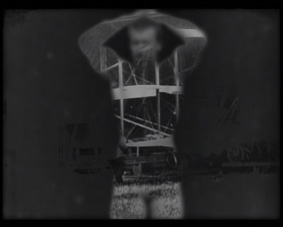
Le manifeste du futurisme
Multimedia concert | dv | color | 50:0 | Germany | 2009

Thomas Köner
La Barca
Video | dv | color | 6:40 | Germany | 2009
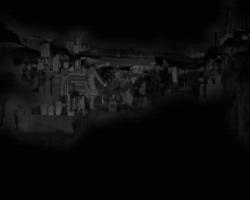
In a barque she sails across the high lands of the past. The barque heads shimmer and glow at stern and bow, and that lights her unseeable passage. She calls to the spirits of this hour, and that is how we come to even hear her voice. La Barca locates a radiance of memories by transforming the residues of recorded visual and sonic reality into imaginary music of urban spaces.
Thomas Köner
Pneuma Monoxyd
Experimental video | dv | color | 10:30 | Germany | 2007
With PNEUMA MONOXYD, media artist Thomas Köner works on a series of audiovisual works that attempt to trace fluctuations and invisible border crossings that constitute any moment. Ina part one, a static gaze of a Balkan market seems like a window looking to the other side, unveiling that Hic et Nunc has become a porous frontier. Dissolved by an unsound breeze, the banality of everyday life is set free to embrace gloom and beauty in a blurry dance.
Thomas Köner, born 1965, attended the music college in Dortmund and studied electronic music at the CEM-Studio in Arnhem. Until 1994 he worked for the film industry as editor and sound engineer. He extended his concept of time and sound colour to images, resulting in video installations, photography and film works. 2000 the Montreal International Festival New Cinema New Media awarded him the "New Media Prize". 2004 the Prix Ars Electronica awarded him the "Golden Nica", and he was awarded the "Produktionspreis WDR / Deutscher Klangkunst-Preis" (german sound art award). His media installation "Suburbs Of The Void" received the Transmediale 2005 award in Berlin and was presented at La Biennale di Venezia, Teatro La Fenice as a live performance in the same year. Köners video "Nuuk" received the Tiger Cub Award (best short film) during the International Filmfestival Rotterdam 2005. His point of departure was composition of sound in which aspects of a performance and visual language were gradually integrated. At first in the collaboration with film artist Jürgen Reble and the live performance Alchemie (1992). Following this, he started to compose film soundtracks and music to accompany historic silent films for the Louvre Museum and the Musée d`Orsay, Paris. The Rimbaud Museum commissioned Thomas Köner five permanent sound installations for five rooms of the "Maison Rimbaud" in Charleville-Mezières, France. The Musée d`art contemporain Montreal and other museums acquired his audiovisual works for their collection.
Thomas Köner
Pasajeros Peregrinos Pilotos
Art vidéo | dv | color | 3:0 | Germany | 2008
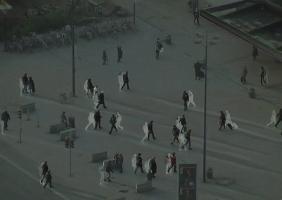
Pasajeros Pelegrinos Pilotos shows commuters and pedestrians on their daily track. An imaginative Doppelgänger that accompanies each person is becoming visible. The Doppelgänger to me represents an ideal thyself, knowing everything, never making wrong decisions, and of course, always being too late. Bound to the wear and tear of mass movements, this idealistic vision can decompose at any time.
Thomas Köner (b. 1965) is a media artist working with audiovisual installations, sound, video, photography, net art and live performance. His works are in the collections of numerous significant art museums. Awards: (a.o.) Golden Nica, Prix Ars Electronica 2004; Transmediale Award 2005; Golden Tiger Cub, Filmfestival Rotterdam 2005.
Thomas Köner
Périphériques
Video installation | dv | color | 13:34 | Germany | 2006
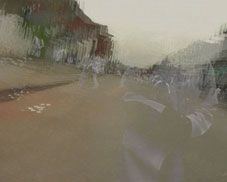
Three scenes in remote, hazy locations: second, third world; people on the streets of Harar, Belgrade and in a favela in Buenos Aires. The camera traces fluctuating and vanishing movements; we see faces becoming transparent, the images leafing through beclouding layers of personal memory. What first seemed to be an observation of three daily-life fragments merges into the vast space of a given moment, unsealing a microcosm of time that can only be entered from the off, the insignificant edge of the world. The third section homes in on people passing by, zooming into walking clothes afloat, ghostly outlines without being or body, as if person and identity disappear when questioned, revealing an agitated emptiness that drifts around its center of periphery.
Thomas Köner, born 1965, attended music college in Dortmund and studied electronic music at the CEM-Studio in Arnhem. Until 1994 he worked with film sound as sound engineer. He extended his concept of sound colour to moving images, resulting in video installations and film works. In 2000 the Montreal International Festival "New Cinema New Media" awarded him the "New Media Prize". In 2004 the Prix Ars Electronica awarded him the "Golden Nica", and he was awarded the "Produktionspreis WDR" during the "Deutsche Klangkunst-Preis" (German sound art award). His media installation "Suburbs of the Void" received the Transmediale 2005 award in Berlin and was presented at La Biennale di Venezia, Teatro La Fenice as a live performance in the same year. Köners video "Nuuk" received the Tiger Cub Award (best short film) during the Rotterdam International Film Festival 2005. While studying, he dedicated himself to intensive sound research in the recording studio. His first impulse consisted in avoiding rhythm and melody and focusing instead on the phenomenon of sound colour. To intensify the experience of sound, he decided to work with other media, resulting at first in the collaboration with film artist Jürgen Reble and the live performance "Alchemie" (1992). Following this, he started to compose film soundtracks and electronic live music to accompany old silent films for the Louvre in Paris. As "Porter Ricks", a collaboration with Andy Mellwig, he became an acclaimed producer of progressive techno, resulting in remix commissions for "Nine Inch Nails" and a Claude Debussy remix for Universal Music, a.o. Köner's interest in combining visual and auditory experiences and in extending the effectiveness of his works was conducive to an involvement with the work of other artists like Max Eastley, in which the combination between sound sculpture and performance became central. "List Of Japanese Winds", a collaboration of Max Eastley and Thomas Köner, is an installation piece that was commissioned by the Hayward Gallery in London. The Rimbaud Museum commissioned five permanent sound installations to be installed in five rooms of the "Maison Rimbaud" in Charleville-Mezières (until 2010). The Centre Georges Pompidou and other museums acquired his audiovisual works for their collection.
Daniel Kötter
Aufschläge - Kanon
Experimental video | dv | color | 2:27 | Germany | 2004
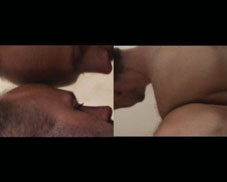
The exchange between two adversaries starts with thuds (here: tennis or badminton serves), they are the thuds (here: hits) that happen at the fall, and the thuds (here: the raising of the eyelids that open the game of seduction. But here the body doesn't encounter or achieve anything but its self: vertically (thuds). It continues hopeless of recapturing a day: horizontally (canon). The arms, the legs, the head, the face, and the skin come face to face and enter into contact in a corner of the room. This installation video has two canons, "Aufschläge ? Kanon" was first presented in the framework of the audiovisual project "In der Gnade der Strafe sein" by Christoph Ogiermann (composition) and Daniel Kötter (video).
Daniel Kötter was born in 1975. His directorial works and installation videos have been presented at Hebbel-Theater Berlin, Sophiensaelen; the KW-Institute for Contemporary Art Berlin; Künstlerhaus Bethanien, Tesla, Berlin; Festspielhaus, Hellerau Dresden; Casa da musica, Porto; Rahmen des Ultraschall, Festivals Berlin; the Ostseebiennale für Klangkunst, Dance in August; as well as Kunstfrühling Bremen and Rohkunstbau, among others. Hehas collaborated with the composers John Lely, Helmut Oehring, Thierry Blondeau, Christoph Ogiermann, and Iris ter Schiphorst on the Ensemble Apartment House London with the Musicians Boris Baltschun and Daniel Teige, and the Choreographers Sasha Waltz, Paul Gazzola, and Petra Sabisch, among others. He has done video directing for the music of Luigi Nono, Iannis Xenakis, Helmut Oehring und Franco Evangelisti. Has been the artistic director of "labour for music: theater Berlin" since 2000.
Daniel Kötter
communal retreat
Experimental fiction | hdv | color | 15:0 | Germany, Canada | 2012
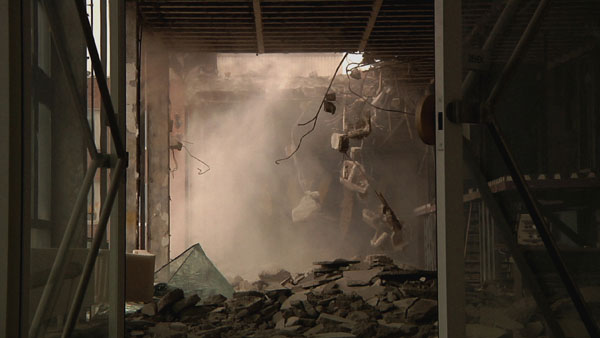
Following the traces of Glenn Gould and his so-called ?Solitude-Trilogy? up north at Lake Superior seemed a welcome alibi for a middle-european to explore a little bit of what is called THE NORTH for Canadians, what it means to drive hours and hours without one single settlement, having the car radio and the camera as sole companions. And what community might mean under the circumstances of the periphery. What I brought back from there? The certainty that there is definitely no marxist in the White House! And that even in the most remote retreat: Beware of the dogs!
Daniel Kötter
checkpoint
Experimental film | super8 | color | 7:13 | Germany | 2006
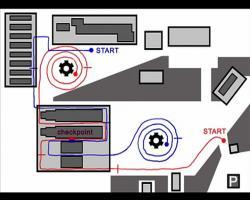
Checkpoint Grenzanlage a.D.: zwei Fahrzeuge, simultan, Start auf zwei Seiten einer Grenze. Aufeinandertreffen am Checkpoint. Spirale um zwei Wachtürme. Beschleunigung durch zunehmende Anzahl von Bildern pro Sekunde. Location: ehemalige deutsch-deutsche Grenzanlage Marienborn. Arbeitsweise: Rück-Übertragung von bevorzugten Methoden der DV-Technik wie Simultaneität, Splitscreen, Beschleunigung, Planseuquenz auf das nostalgische Medium Super8. Vermischung von Roadmovie, Dokumentarfilm, Experimentalfilm.
Daniel Kötter 1975 geboren; seine mehrkanaligen Videoinstallationen und Konzertinszenierungen wurden gezeigt u.a. am Hebbel-Theater Berlin, in den sophiensaelen, den KW- institute for contemporaray art Berlin, Künstlerhaus Bethanien, im tesla Berlin, im Festspielhaus Hellerau Dresden, Casa da musica Porto, Konzerthaus Wien, musica viva und im Rahmen des Ultraschall-Festivals Berlin, der Ostseebiennale für Klangkunst, Warschauer Herbst, Tanz im August sowie dem Kunstfrühling Bremen und Rohkunstbau; Zusammenarbeit u.a. mit den Komponisten John Lely, Helmut Oehring, Thierry Blondeau, Christoph Ogiermann, Iris ter Schiphorst, dem Ensemble Apartment House London, den Musikern Boris Baltschun, Daniel Teige und den Choreographen Sasha Waltz, Paul Gazzola und Petra Sabisch, Videoinszenierungen u.a. zu Musik von Luigi Nono, Iannis Xenakis, Helmut Oehring und Franco Evangelisti, seit 2000 Künstlerischer Leiter des labor für musik: Theater Berlin.
Daniel Kötter
HASHTI Tehran
Experimental doc. | mov | color | 59:45 | Germany, Iran | 2016
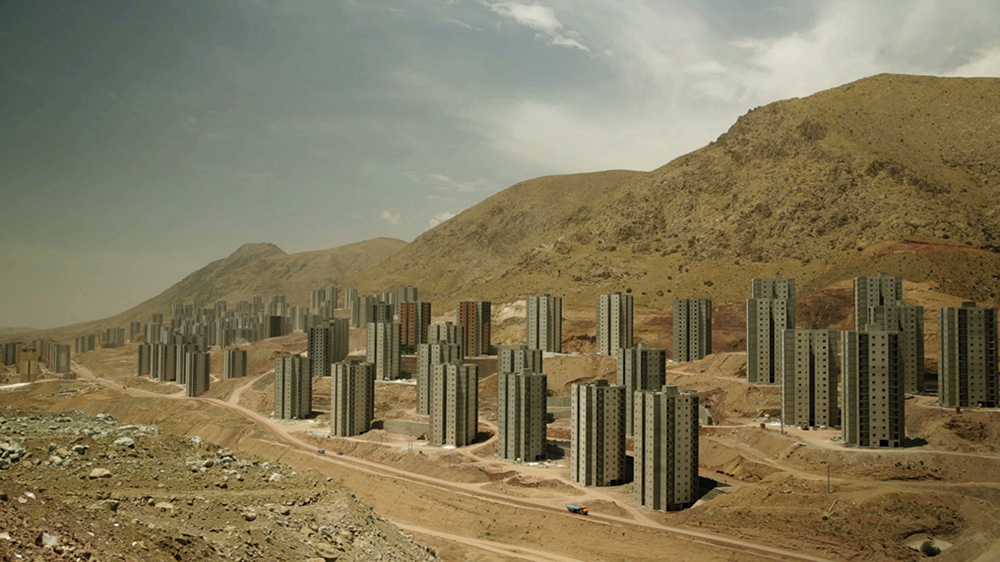
Hashti, in most traditional houses in Iran, is a octagonal space of distribution and circulation to direct the person towards the various parts of the house, the private (andarouni) and semi-public (birouni) reserved for the reception from abroad and the access to spaces of service. Based on the idea that Tehran itself represents a house, so to speak the inner circle of The Islamic Republic of Iran, the outskirts of the city become the space of transition between inside and outside, between urban and non-urban. Thus the film and discursive project HASHTI Tehran looks at four very different areas in the outskirts of Tehran: the mountain of Tochal in the north, the area around the artificial lake Chitgar in the West, the construction of social housing called Pardis Town in the far east and the neighbourhood Nafar Abad at the southern edges of the city. By combining Road movie and architectural documentary and by inverting the techniques of inside and outside shots the film HASHTI Tehran portrays Tehran through its peripheral spaces. Background „Segregation“ and „privatization“, „security“ and „control“ are core terms of urban transformation in the developping cities of the 21st century around the globe. Its contested counterparts are „public“ or „open space“, „access“ and „citizenship“. All these concepts seem stuck in the negotiation between aspiration of new liberal economies trying to connect to a global construction and business boom on the one and a tendency of preserving a shared public sphere for all groups of society within the urban area on the other hand. HASHTI tries to shift this focus to areas where the controlling force of urban development seems to lose its influence, where definitions get blurry and fluid: the edges and peripheries, those contact zones, where city and landscape, nature and construction meet. Can a citizen who leaves the city for recreational or other purposes, still be called a citizen? Which societal function does he take on, which political role does he play in the moment where he enters or lives in the periphery of a city? Administrative aswell as geographical city borders divide space into inside and outside, into what belongs and what is beyond. The relation of those spaces on both sides of the border is therefore not symmetrical. The definitional authority is on the side of the city. The city would always determine the use and formation of space beyond its limits in a stronger way than the countryside would determine the urban space. One of the reasons for this is the fact that the city produces things, that it has to exclude from its centre, in order to guarantee the functionality of the living together: waste, dead corpses, criminals and socially marginalized. The space beyond the city limits therefore is predetermined for storage, settlement and disposal of what is socially peripheral. On the other hand the space beyond the boundaries of the city calls for this need for the city’s opposite: recreation, life in the green space, better air, less density and pollution. Living in the periphery therefore can be understood equally as Stigma and privilege. The Tehran case study Tehran’s peripheral geography shows a significant structural analogy with its social, environmental and psychological divisions: the northern periphery, reserved for the upper class in penthouse appartments and for recreation in the „clean air“ of the mountains, heavily contradicts the situation at the southern periphery, where smog and desert define the social life of the middle and low classes. While the geographical layout of the city with the mountains in the north and the desert in the south define a north-south axis, growth and development of the city are only possible on a west-east axis. HASHTI as a discursive project in collaboration with Shadnaz Azizi, Kaveh Rashidzadeh, Amir Tehrani and Pouya Sepehr and explored in four printed booklets, examines the different strategies of urban planners, architects and sociologists in these areas. How is traffic, how are meeting places, contact zones, gardening controlled and defined? And how do these spaces relate to the definition of interior spaces, the living room as a main forum in a society that regulates public space.
Daniel Kötter is a director and video artist whose work oscillates deliberately between different media and institutional contexts, combining techniques of structuralist film with documentary elements and experimental music theater. It was shown in numerous galleries, video festivals, concert halls and theatres all over the world. Between 2008 and 2011, he developed the video-performance trilogy Arbeit und Freizeit. His music theatre performances in collaboration with composer Hannes Seidl are shown at numerous international festivals. Between 2013 and 2016 they developped the trilogy Ökonomien des Handelns: KREDIT, RECHT, LIEBE. Kötter’s series of films, performative and discursive work on urban and socio-political conditions of theatre architecture and performativity has been under development between 2009 and 2015) under the title state-theatre: Lagos/Teheran/Berlin/Detroit/Beirut/Mönchengladbach (with Constanze Fischbeck). His film and text work KATALOG was shot in twelve countries around the mediterranean sea portraying sites and practices related to the definition of the public sphere. It was presented at the Venice Biennal for Architecture (2013/14). He is currently working with curator Jochen Becker (metroZones) on the research, exhibition and film project CHINAFRIKA. Under Construction. (2014-2018) www.danielkoetter.de www.state-theatre.de http://katalog.danielkoetter.de
Daniel Kötter
Neues Theater (Rahmenanalyse Warschau, 13. November 2011
Video | hdv | color | 40:12 | Germany, Poland | 2011
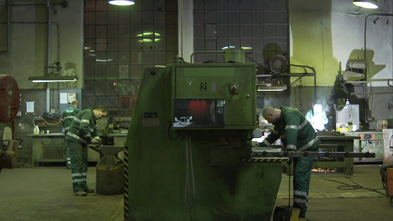
?You know what - this whole ?common ground? category scares me. It must be conceived from the position of someone? - I don?t know - an allegorical film director, an engineer ? someone outside the frame, designing the potential encounter.? Daniel Kötter?s single take film Neues Theater, based on a performance staged in November 2011, examines a moment of fundamental change in the understanding of public space in post-communist Poland. The workshop hall of the Warsaw city cleaning company MPO will turn into the new cultural centre for Poland?s most internationally renowned theatre company Nowy Teatr, the work of the workers will be replaced by the work of actors and viewers. While the camera slowly travels along the hall, the roles of viewers and actors, of labour and performance, practice and theory keep oscillating. The film stages the ?theatre? itself, not as yet another art form (with its specific institutional conditions, market rules and local aesthetic and historic limitations), but as a name for the allegoric space of encounter.
Daniel Kötter, born 1975, is a director and video artist whose work oscillates deliberately between different media and institutional contexts, combining techniques of structuralist film with documentary elements and experimental music theater. It was shown in numerous galleries, video festivals, concert halls and theatres all over Europe, in New York, Mexico, Tehran and Lagos. Between 2008 and 2011, he developed the video- and opera-performance trilogy Arbeit und Freizeit. His music theatre performances in collaboration with composer Hannes Seidl are shown at international festivals such as the Venice Biennale, Musica d?hoy Madrid and others. Kötter`s new series of installations, films, and discursive work on urban and socio-political conditions of performativity has been under development since mid-2010 under the title state-theatre: Lagos/Teheran/Berlin/Detroit/Beirut/Mönchengladbach (with Constanze Fischbeck). For galleries and dance performances, he developed multi-channel live video delay installations. His award-winning short-Film Film für übers Sofa (with Hannes Seidl) was shown at festivals worldwide. Between 2002 and 2008 Daniel Kötter, as artistic director of the labor für musik:theater, developed and produced numerous feature-length performative projects and multi-channel movies on the borderline between concert and musical theater. Daniel Kötter has been living and working in Berlin since 1996.