Catalogue > Liste par artiste
Parcourez la liste complète des artistes présentés dans le cadre des Rencontres Internationales depuis 2004. Utilisez le filtre alphabétique pour affiner vos recherches.
Eai
Catalogue : 2007Digital Video Effect: New Video from the EAI Colle | 0 | 0 | | 62:0 | USA | 2007

Eai
Digital Video Effect: New Video from the EAI Colle
0 | 0 | | 62:0 | USA | 2007
This program of videos new to the EAI collection includes work by artists with very different histories and creative strategies. Seoungho Cho's "Snap" (2006) continues his exploration of minimalist and dynamically visual video art. Michael Snow's "WVLNT" (2003) is a highly conceptual video reworking of his influential experimental film "Wavelength" (1967). Seth Price's "Digital Video Effect: "Editions" (2006) is a witty and engaging edit of excerpts from his editioned video works. Finally, Sophie Calle and Fabio Balducci's "Unfinished" (2005) is a revealing and humorous investigation of the artistic process.
Electronic Arts Intermix (EAI) est l?un des plus important centre mondiaux de ressources et de recherches sur l?art vidéo et les nouveaux médias. Fondé en 1971 par le galeriste new-yorkais Howard Wise, dont la galerie éponyme de la 57ème rue fut à une époque l?épicentre de l?art cinétique et des travaux multimédias, l?EAI avait pour objectif d?affirmer le rôle de la vidéo comme moyen de communication et d?expression artistique. En 36 ans d?existence, l?EAI a soutenu inconditionnellement les artistes et leur travaux, jouant un rôle fondamental dans le développement de l?art vidéo, disséminant dans la monde plus de 3000 ?uvres réalisées par près de 175 artistes. Aujourd?hui, l?EAI se concentre sur la distribution et la préservation de sa phénoménale collection d??uvres. Une collection qui regroupe aussi bien des travaux historiques des pionniers de la vidéo que des ?uvres contemporaines d?artistes émergeants. Une collection, véritable mémoire des arts vidéos et nouveaux, disponible, et consultable en partie, sur le catalogue en-ligne de l?EAI (http://eai.org/). Mais, si l?EAI soutient les artistes, en mettant à leur disposition des outils digitaux et analogiques de montage, si l?EAI distribue et préserve son catalogue, l?EAI est avant tout un acteur culturel engagé, dans la promotion des arts nouveaux et dans leur vulgarisation. Elle met à disposition du public une salle de visionnage, où l?intégralité du catalogue est consultable. Elle organise des expositions et des programmes publics.
David Easteal
Catalogue : 2016Monaco | Fiction | 16mm | couleur | 12:45 | Australie | 2015
David Easteal
Monaco
Fiction | 16mm | couleur | 12:45 | Australie | 2015
In the outer suburbs of Melbourne, a young man searches for an automotive apprenticeship.
David Easteal is a Melbourne based filmmaker. He studied law and literature at the University of Melbourne. His short films have screened at various international lm festivals, including New York, London, Chicago, Melbourne, Kiev, Sofia and Singapore.
Veronika Eberhart
Catalogue : 2023Garten sprengen | Doc. expérimental | 16mm | couleur | 12:0 | Autriche | 2022
Veronika Eberhart
Garten sprengen
Doc. expérimental | 16mm | couleur | 12:0 | Autriche | 2022
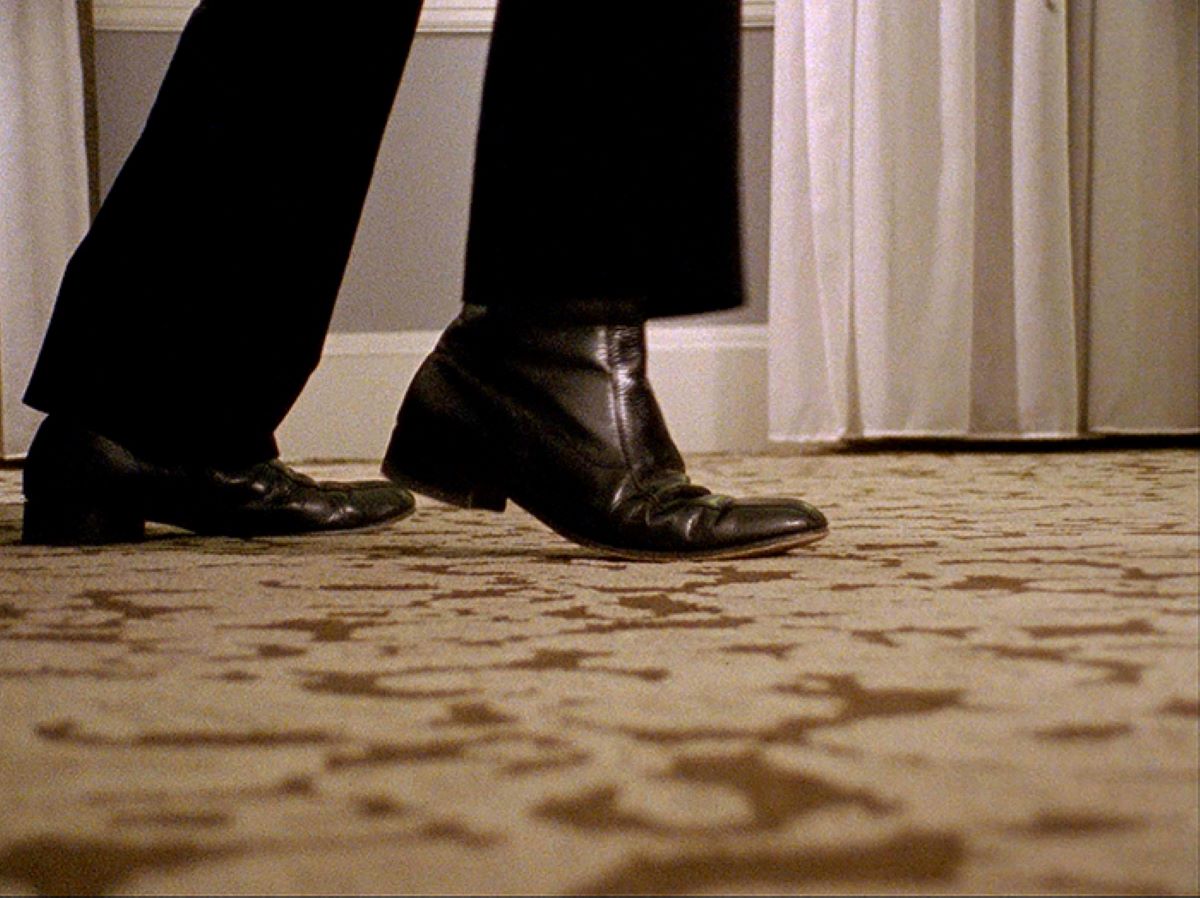
“Are you familiar with American poetry?” The question sounds like an accusation as posed by Hanns Eisler in a heavy German accent during his interrogation in 1947 by the House Committee on Un-American Activities. Simultaneously Veronika Eberhart's GARTEN SPRENGEN shows a man (performer: Ian F Svenonius) wandering down a virtually endless hotel corridor. Yet it is the elaborate blue, yellow and cream colored pattern of the hotel's carpet floor that sticks out. Its haptic quality becomes directly translated into imagery during a different montage sequence: a hand sensitively glides along a window ledge, another likewise touches the neck of a guitar, and a third caresses the armrest of a sofa. These images attempt to grasp the ghosts of an historical place, specifically the Biltmore Hotel in downtown Los Angeles. This previous site of the Academy Awards was also where Eisler's hearing at the beginning of the McCarthy era took place... more info: https://www.sixpackfilm.com/en/catalogue/2787/
Visual artist, filmmaker and musician, born 1982 in Bad Radkersburg. Studied sociology in Vienna and Copenhagen, visual arts at the Academy of Fine Arts Vienna and at the Friedl Kubelka School for independent film, Vienna. Various exhibitions and film festivals, most recently at Mackey Garage Top, MAK Center, Los Angeles (2020), Kunsthalle Vienna (2019), Kharkiv Municipal Gallery (2019), New Jörg, Vienna (2019), Kunsthalle Exnergasse, Vienna (2018), rotor Graz (2018), Bazament Art Space, Tirana (2018), A-GALLERY, Tokyo (2017)
Veronika Eberhart
Aminatou Echard
Catalogue : 2012Broadway | Doc. expérimental | super8 | couleur | 50:0 | France, Ouzbékistan | 2011
Aminatou Echard
Broadway
Doc. expérimental | super8 | couleur | 50:0 | France, Ouzbékistan | 2011
...
Aminatou Echard is a video artist who directs experimental films and creates video installations. She studied music, history of cinema and ethnomusicology in Paris where she got her diplomas from University Paris 8, and documentary directing in Grenoble. Her work focuses on the relationship between the spaces and their inhabitants and how the ones submit themselves to the other ones. Her video installations were shown in the Soros center for contemporary Art, Almaty, and in Berkeley and since 2004 in the French festivals ?Les Instants vidéo numériques et poétiques?, ?Les Ecrans Documentaires?, ?Les Inattendus?, ?Côté Court?.
Aminatou Echard
Catalogue : 2026Le Grand Tout | Documentaire | 16mm | couleur | 119:0 | France | 2025

Aminatou Echard
Le Grand Tout
Documentaire | 16mm | couleur | 119:0 | France | 2025
Comment va la vie ? Comment va le grand tout ? Demande Garba à Nicole. Le grand tout pour eux deux, c’est la famille, le quotidien, l’Histoire, les bricoles, les étoiles, le temps qui passe comme le vent. Je m’appelle Aminatou et je suis blanche. Ma mère Nicole Echard, ethnologue en pays Hausa au Niger de 1964 à 1994, m’a légué ses archives de terrain, ses films en 16mm, et sa correspondance avec son principal assistant au Niger, Garba Maïgoye. Nicole fait partie d’une nouvelle génération d’ethnologues qui s’investissent personnellement sur leurs terrains. Je propose à des étudiants en art de Niamey de prendre en main ces archives. Nous réinterprétons ces textes et nous nous confrontons aux questions de domination, de colonisation, de liberté. Les jeunes posent leur regard sur Nicole et sur moi. L’Histoire nous rattrape : Un coup d’Etat acte la fin du tournage. Le présent impose un nouveau chemin au film.
Après une formation en ethnomusicologie et en cinéma (Master documentaire de Lussas - Ardèche Image) Aminatou Echard réalise des films documentaires et expérimentaux. Elle explore la relation entre son et image. Le travail de terrain est un élément essentiel de sa pratique artistique. A partir de 2006, elle se rend régulièrement en Asie centrale (Kirghizstan, Ouzbékistan et Kazakhstan) où elle recueille de nombreuses images super 8 et sons afin d’explorer les liens particuliers qui se tissent entre les personnes et leur environnement. Elle réalise Esquisses kirghizes un premier court métrage expérimental à partir de cette matière en 2007, puis Broadway, en 2010, un moyen métrage produit par le G.R.E.C. et Djamilia en 2018, un long métrage en super 8 produit par 529 Dragons, présenté notamment à la Berlinale 2018 et au Cinéma du Réel (Prix du Jury Documentaire et Prix Documentaire sur Grand Ecran au festival d’Amiens, Prix du jury jeunes au festival Isreal de Nuoro)
Juan Manuel Echavarria
Catalogue : 2007Bocas de Ceniza | Doc. expérimental | dv | couleur | 22:0 | Colombie | 2004
Juan Manuel Echavarria
Bocas de Ceniza
Doc. expérimental | dv | couleur | 22:0 | Colombie | 2004
Sept colombiens, victimes de la violence de leur pays, chantent des chansons, qu'ils ont composés eux-mêmes, en réponse à leurs expériences.
Juan Manuel Echavarría est né en Colombie en 1947. Il vit et travaille entre New York et Bogota. Après la publication de ses romans et de ses nouvelles, il arrête son activité d'écriture. La société colombienne étant dominée par la violence et le pouvoir toujours grandissant des cartels de la drogue, il est frustré par la désintégration de la vie colombienne et par l'isolation sociale nécessaire pour l'écriture. Il débute son travail photographique, en allant vers l'exploitation des possibilités métaphoriques de l'image photographique. L?art d?Echavarría vise à susciter une prise de conscience, à transcender la violence généralisée de la société colombienne. La question de la représentation de cette violence est le pivot autour duquel se construit son travail. Il confère une dignité aux victimes du conflit extrêmement violent de la guerre civile. Les conflits entre l'armée, la guérilla de gauche et les paramilitaires de droite peuvent être retracés depuis les années 50, et les cartels de la drogue depuis les années 80. Chaque cycle brutal successif transmet au pays une psychose nationale de violence, un état d'esprit dans lequel le carnage et la peur omniprésente sont des états naturels d'existence. Les belles images dérangeantes de Juan Manuel Echavarria évoquent l'effroi et les pertes humaines dans cette guerre sans fin, mais sans présenter de corps ensanglantés. Ces photographies récurrentes montrent des hommes et des femmes, des villages abandonnés, leurs objets mélancoliques. Des réinterprétations grotesques mais non horribles de dessins botaniques, une théâtralisation des rituels entourant la mort, qui sont particuliers à l'héritage colombien. (Calvin Reid) Son travail a été présenté à l'Irish Museum of Modern Art, Dublin, Irlande, au Centre Regional d?art Contemporain Languedoc-Roussillon, Sète, France, au Musée d'art Moderne de New York, à la 51ème Biennale de Venise, au Musée d'art moderne de Buenos Aires, à EMAF Ossnabruck en Allemagne, au musée d'art moderne de Bogota, à la Biennale de Kwangju en Corée, au musée Reina Sofia à Madrid, au festival du film d'Oberhausen.
Catalogue : 2007Bandeja de Bolivar | Vidéo expérimentale | dv | couleur | 3:58 | Colombie | 2004
Juan Manuel Echavarria
Bandeja de Bolivar
Vidéo expérimentale | dv | couleur | 3:58 | Colombie | 2004
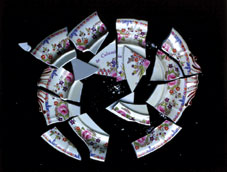
"Pour commémorer l'indépendance de la Colombie de la Couronne espagnole, Simon Bolivar commanda un service de porcelaine portant l'inscription 'Republica de Colombia para siempre' (République de Colombie pour toujours). Bandeja de Bolivar est une série de photographies, et une vidéo, qui documentent la destruction d'une réplique de ce plat qui, dans l'image finale, révèle un tas de poudre blanche, facilement identifiable comme étant de la cocaïne. Ces 30 dernières années, la Colombie a souffert de violence alimentée par le trafic de cocaïne. Cette violence, qui semble n'avoir pas de fin, ravage aussi bien les villes que les campagnes, où la guérilla surveille les trafics et la production. Les profits de ce commerce illégal sont gigantesques, la guérilla est devenue extrêmement puissante, forçant le gouvernement colombien à lui garantir une extension de territoire pour entamer des discussions pour la paix. Dans ces territoires, le gouvernement est absent. Dans cette vidéo, je cherche à montrer ce qu'il est arrivé à l'idéal de Bolivar.
Juan Manuel Echavarría est né en Colombie en 1947. Il vit et travaille entre New York et Bogota. Après la publication de ses romans et de ses nouvelles, il arrête son activité d'écriture. La société colombienne étant dominée par la violence et le pouvoir toujours grandissant des cartels de la drogue, il est frustré par la désintégration de la vie colombienne et par l'isolation sociale nécessaire pour l'écriture. Il débute son travail photographique, en allant vers l'exploitation des possibilités métaphoriques de l'image photographique. L?art d?Echavarría vise à susciter une prise de conscience, à transcender la violence généralisée de la société colombienne. La question de la représentation de cette violence est le pivot autour duquel se construit son travail. Il confère une dignité aux victimes du conflit extrêmement violent de la guerre civile. Les conflits entre l'armée, la guérilla de gauche et les paramilitaires de droite peuvent être retracés depuis les années 50, et les cartels de la drogue depuis les années 80. Chaque cycle brutal successif transmet au pays une psychose nationale de violence, un état d'esprit dans lequel le carnage et la peur omniprésente sont des états naturels d'existence. Les belles images dérangeantes de Juan Manuel Echavarria évoquent l'effroi et les pertes humaines dans cette guerre sans fin, mais sans présenter de corps ensanglantés. Ces photographies récurrentes montrent des hommes et des femmes, des villages abandonnés, leurs objets mélancoliques. Des réinterprétations grotesques mais non horribles de dessins botaniques, une théâtralisation des rituels entourant la mort, qui sont particuliers à l'héritage colombien. (Calvin Reid) Son travail a été présenté à l'Irish Museum of Modern Art, Dublin, Irlande, au Centre Regional d?art Contemporain Languedoc-Roussillon, Sète, France, au Musée d'art Moderne de New York, à la 51ème Biennale de Venise, au Musée d'art moderne de Buenos Aires, à EMAF Ossnabruck en Allemagne, au musée d'art moderne de Bogota, à la Biennale de Kwangju en Corée, au musée Reina Sofia à Madrid, au festival du film d'Oberhausen.
Catalogue : 2007Guerry y pa | Vidéo expérimentale | dv | couleur | 8:52 | Colombie | 2004
Juan Manuel Echavarria
Guerry y pa
Vidéo expérimentale | dv | couleur | 8:52 | Colombie | 2004
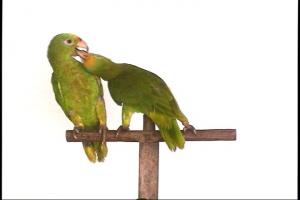
Guerra y Pa met en scène deux perroquets pendant neuf minutes. Ils ont chacun appris à répéter le mot «Guerra» pour l?un et «Pa» pour l?autre. Installés sur un perchoir, ils se battent et se disputent, dans une parodie des politiciens et des guérilleros quand ils parlent publiquement de la question de la paix et de la guerre en Colombie.
Juan Manuel Echavarría est né en Colombie en 1947. Il vit et travaille entre New York et Bogota. Après la publication de ses romans et de ses nouvelles, il arrête son activité d'écriture. La société colombienne étant dominée par la violence et le pouvoir toujours grandissant des cartels de la drogue, il est frustré par la désintégration de la vie colombienne et par l'isolation sociale nécessaire pour l'écriture. Il débute son travail photographique, en allant vers l'exploitation des possibilités métaphoriques de l'image photographique. L?art d?Echavarría vise à susciter une prise de conscience, à transcender la violence généralisée de la société colombienne. La question de la représentation de cette violence est le pivot autour duquel se construit son travail. Il confère une dignité aux victimes du conflit extrêmement violent de la guerre civile. Les conflits entre l'armée, la guérilla de gauche et les paramilitaires de droite peuvent être retracés depuis les années 50, et les cartels de la drogue depuis les années 80. Chaque cycle brutal successif transmet au pays une psychose nationale de violence, un état d'esprit dans lequel le carnage et la peur omniprésente sont des états naturels d'existence. Les belles images dérangeantes de Juan Manuel Echavarria évoquent l'effroi et les pertes humaines dans cette guerre sans fin, mais sans présenter de corps ensanglantés. Ces photographies récurrentes montrent des hommes et des femmes, des villages abandonnés, leurs objets mélancoliques. Des réinterprétations grotesques mais non horribles de dessins botaniques, une théâtralisation des rituels entourant la mort, qui sont particuliers à l'héritage colombien. (Calvin Reid) Son travail a été présenté à l'Irish Museum of Modern Art, Dublin, Irlande, au Centre Regional d?art Contemporain Languedoc-Roussillon, Sète, France, au Musée d'art Moderne de New York, à la 51ème Biennale de Venise, au Musée d'art moderne de Buenos Aires, à EMAF Ossnabruck en Allemagne, au musée d'art moderne de Bogota, à la Biennale de Kwangju en Corée, au musée Reina Sofia à Madrid, au festival du film d'Oberhausen.
Juan Manuel Echavarria Olano
Catalogue : 2014Requiem NN | Documentaire | hdcam | couleur | 67:22 | Colombie | 2013
Juan Manuel Echavarria Olano
Requiem NN
Documentaire | hdcam | couleur | 67:22 | Colombie | 2013
RÉQUIEM NN is a film about a ritual of resistance of the people of Puerto Berrío, Colombia ? people who have lived continuous cycles of violence for many decades. The recovery of bodies from the Magdalena River,their burial, the favors local townspeople ask of the souls of the NN (No Names), and the baptism of these unknown corpses is a collective ritual that has taken place for over 30 years.
JUAN MANUEL ECHAVARRÍA was born in Medellín in 1947. He wrote two books, "La Gran Catarata" (1981) and "Moros en la Costa" (1991), before turning to photography in 1996 when he began to investigate the violence in Colombia through art. His photographs have been exhibited in different museums in Colombia and in towns like Mampuján (Bolívar) and Puerto Berrío (Antioquia). Internationally he has shown his work in many different places such as the Biennale of Sydney, Australia (2012); the Venice Biennale, Italy (2005); the Mois de la Photo, Montreal, Canada (2011); Kumu Art Museum in Tallinn, Estonia (2011); Museum of North Dakota, Grand Forks, USA (2005); among others. "La Bandeja de Bolívar: 1999? was his first video; then "Guerra y Pa" (2001) and "Bocas de Ceniza" in 2003. His videos have been featured in the Robert Flaherty Film Seminar, USA (2009), the Musée du Jeu de Pomme, Paris (2006); MOMA, New York, USA (2005) and many more. From 2006 to 2012 he worked on "Novenarios en espera", showing the transformation through time of the NN tombs of Puerto Berrío. "Réquiem NN" (2013) is his first film.
Juan Manuel Echavarría
Catalogue : 2016Silencio Invisible, Darwin and Una Lección | Vidéo | hdv | couleur | 8:0 | Colombie | 2015
Juan Manuel EchavarrÍa
Silencio Invisible, Darwin and Una Lección
Vidéo | hdv | couleur | 8:0 | Colombie | 2015
Juan Manuel Echavarría parle de la guerre qui échappe au regard, dans les territoires reculés de Colombie. Les lieux, vides de toute présence humaine, évoquent l’histoire violente du pays et l’impératif de nouveaux possibles. Jussie Nsana Banimba interroge la mémoire des murs de Brazzaville, qui deviennent des espaces témoins, entre le passé et le présent. Dominik Ritszel place le son comme protagoniste principal de son film, dans une ville devenue laboratoire de perception où la civilisation est en suspens. Hans Op de Beeck crée un film d’animation à partir de ses aquarelles, introduisant un degré de fiction supplémentaire dans ce qui n’est jamais la reproduction d’une réalité. Mike Hoolboom reprend les images filmées en 1967 par Jeffrey Paull, dans un hôpital psychiatrique. Cinquante ans plus tard, il interroge Donna Washington, autiste et pensionnaire de cet hôpital à l’époque, qui raconte sa propre histoire à partir des images du film.
Juan Manuel Echavarría was born in Medellín, Colombia in 1947. He resides in Bogotá. A writer before becoming an artist, he published two novels, La gran catarata (Bogotá: Editorial Arco, 1981) and Moros en la costa (Bogotá: Ancora Editores, 1991). As of 2015 Echavarría has presented over thirty solo exhibitions and participated in well over a hundred group exhibitions, screenings and film festivals. His first solo gallery exhibition was in New York in 1998. Since then, his work has been shown at the Venice Biennale, the Korean Kwangju Biennial, Daros Latin America, Zurich, the Kiasma Museum of Contemporary Art in Helsinki, Finland at the Irish Museum of Modern Art in Dublin. As well as, El Museo del Barrio, New York, at the Musée du Quai Branly and the Cartier Foundation in Paris, France and at Sammlung Goetz at Haus der Kunst in Munich, Germany. His first solo museum exhibition in the U.S, Mouths of Ash, was organized by the North Dakota Museum of Art in 2005 and traveled to the Weatherspoon Museum of Art in 2006 and the Santa Fe Art Institute in 2007 – 2008. He’s had two very important shows in Colombia at the Ciudadela Educativa y Cultural América in Puerto Berrío as well as the Museo La Tertulia in Cali. In 2011 his works were shown in Tallinn, Stonia for the 15th Tallinn Print Triennial, in Tel Aviv, Israel at the Center for Contemporary Art, at the Museo de Antioquia in Medellín, Colombia and at the Museum of Latin American Art in Long Beach, California. In the next part of the year, his work was shown at the Bienal Do Mercosul in Porto Alegre, Brazil, Le Mois de la Photo à Montreal in Canada and at the Centre for Contemporary Culture Strozzina in Florence, Itlay. In 2012, he was invited to the Sidney Biennale All Our Relations to show Silencios and Requiem NN. In 2015 he will show his work at the Musée d’Aquitaine in Bordeaux and at the Université Catholique de Lovain in Belgium. His videos have been screened at many festivals and exhibitions throughout the world such as Colombia, the United States, Canada, Israel, England, France, Spain, Hungary, South Korea, Colombia, Argentina, Brazil, Mexico, Australia, Germany and Afghanistan. In 2013 he showed Réquiem NN, his first feature length film, a world premiere at the Festival Internacional de Cine de Cartagena followed by the North American premiere at the Museum of Modern Art (MoMA) in New York City.
Ricardo Echevarría
Catalogue : 2007AVAM | 0 | 0 | | 0:0 | Espagne | 2007

Ricardo EchevarrÍa
AVAM
0 | 0 | | 0:0 | Espagne | 2007
L'AVAM, Artistes Visuels Associés de Madrid, est une association professionnelle qui représente les artistes qui résident dans la Communauté de Madrid et qui agit comme représentant et interlocuteur des artistes visuels devant les administrations locales et autonomes. Elle s'occupe de défendre des artistes et leurs oeuvres et travaille à l'obtention d'un meilleur soutien de la création, de la formation et de la diffusion des arts visuels. L'AVAM fait partie du Conseil de la Culture de la Communauté de Madrid et est membre de l'UAAV, Union d'Associations d'Artistes Visuels, la fédération qui regroupe les associations professionnelles des diverses communautés autonomes, et qui actuellement compte environs 3.500 partenaires. L'AVAM fait également partie (à travers l'UAAV) de l'EVAN, European Visual Artists Network. Le fonctionnement de l'AVAM est démocratique et se structure autour de deux organismes, l'Assemblée Générale de partenaires et l'Assemblée Directive, constituée actuellement de 19 membres, et déléguée par l'Assemblée dans les tâches de direction, administration et représentation de l'association
Ricardo Echavarría a étudié les beaux arts, la musique et architecture à la Faculté d'Art de Cuenca, au Conservatoire Professionnel de Musique de Cuenca et à l'Université Menéndez Pelayo. Son oeuvre a été largement exposée, lors d'expositions individuelles et collectives, dans divers lieux d'Espagne et d'Europe. Parmi les expositions individuelles on peut noter : Abraham. Espace Contemporain Archives de Tolède (ECAT) (Tolède, mars 2005) ; Galerie Grand Forvm-Chantall (Tarragone, décembre 2004) ; Galerie Bs-Blanca Bosquet (Madrid, novembre 2004). Parmis les expositions collectives, on peut mentionner : Art Navas 2006 - août - Navas de le Marquez (Avila) ; Transvasements, Artistes espagnols en Vidéo, (le Pérou, l'Argentine et le Mexique août- novembre 2000) ; Germinations X - (Athènes, Grèce octobre 1998, Flandres, Belgique. Mai, 1999) ; Los Angeles Center for Photograpic Studies (Los Angeles USA, 1994). L'oeuvre d'Echevarría a été récompensée par divers prix et bourses.
Clemencia Echeverri
Catalogue : 2015Supervivencias | Vidéo | hdv | couleur | 11:21 | Colombie | 2013
Clemencia Echeverri
Supervivencias
Vidéo | hdv | couleur | 11:21 | Colombie | 2013
Supervivencias (Survivals) is a multichannel video installation that merges from an investigation I made of political distances in our Colombian territory. I took multiple journeys through the country, in order to hear the pulsating beats of a territory that has experienced the conflict, controversies and discords for many years; in order to sense how a land gets scorched while being traced by boundaries as well as crossroads, and how that stories, histories get calcined. This piece– executed on the basis of their own rhythm, forces and times – betoken vital ferments, trepidations and a foreboding darkness. Sol Astrid Giraldo a Colombian art critic wrote about Supervivencias " The land cannot be tranquil in the wake of sacrifices: It is a restless land, plowed by presences as much as it is by absences, limited not only by physical boundaries of blood and fire but by invisible ones as well, of added terrors and secrets. Such is the land of war, which won´t fit in with pacifier narratives. How can it be named then? How can it be made visible?".In Supervivencias a house emerges with its atavistic symbolism in full display: doors opening and closing, corridors leading who knows where inscrutable nooks and corners. Then, finally, an invasion of ghostly, overflowing presences, The ancestral house, the sheltering one, the dwelling and the refuge is now ridden with porosities that cannot curb the exterior pressure.” www.clemenciaecheverri.com
BIO Clemencia Echeverri lives and works in Bogotá. She got her BA in Fine Arts in Colombia and Masters degree in Fine Arts at Chelsea College of Arts, London. She has worked as an arts professor in Colombia. Having dedicated herself to sculpture and painting until the mid-nineties, Clemencia started to work on installation, video, sound and interactive works inspired by the political and social problems that have marked her time. At the moment she is preparing Nóctulo, for Nce–Arte in Bogotá (2015). Relevant and recent works: Treno/ Waterweavers curated by José Roca, at Bard Graduate Center New York.(2014) Sacrificio at the I International Bienal de Arte in Cartagena, and at 43 Salon (inter Nacional de Artistas)Curated by Gabriela Rangel, Medellin (2013-2014). Supervivencias at Alonso Garcés Gallery and Versión Libre (nominatedin the VI Luis Caballero award (2011) The Liverpool Biennial (2010)No longer empty sound project. CENART Mexico (2011) Cosmovideografías Latinoamericanas. A solo site specific show at Museo Nacional de Colombia. Biennal de la Habana (2000), Bienal de Bogotá 1998. Treno at Daros-Latinamerica Museum, Zurich (2009); Don’t Stare at the sun in Poland; Galeria GAK Bremen. Electronic arts festivals such as ISEA in Helsinki-Stockholm and Tallin; Artes Electrónicas Banquete in Madrid; Ars Electronica in Austria; international fellowships such as those given by Yadoo, arts residency in New York, The Arts Council, London; Canada’s Daniel Langlois Foundation; and the Bienal de las Artes award in Colombia. Collections; Daros–Latinamerica National Bank in Colombia, Los Angeles (MOLAA); the Museo MEIAC, Spain; the Essex Latin American Collection,England, as well as by a number of private collectors. www.clemenciaecheverri.com
Santiago Echeverry
Catalogue : 2006Crash | Animation | 0 | couleur | 5:0 | Colombie | 2005
Santiago Echeverry
Crash
Animation | 0 | couleur | 5:0 | Colombie | 2005
"CRASH" est un assemblage de souvenirs numériques à une époque où le terme numérique signifie jetable. Une grande partie de notre vie actuelle est enregistrée et vécue à travers un réseau, sous forme d?images numériques, de messages vocaux et d?applications internet entrecroisées. Et lorsque nous utilisons ce réseau, nous nous débarrassons tous les jours de centaines de traces de notre existence, sous la forme de messages numériques effacés, de sessions de chat non sauvegardées, de conversations téléphoniques en direct, de messages vocaux sur répondeurs,... Lorsqu?une application plante, dans un système MAC OSX, une fenêtre pop up apparaît, vous permettant d?envoyer un message à Apple pour décrire ce que vous étiez en train de faire quand le logiciel a planté. J?ai enregistré ces messages avant de les envoyer aux concepteurs de la machine, mais au lieu de décrire ce que je faisais sur l?ordinateur, j?ai tapé des messages sans queue ni tête à propos de mon quotidien, sachant que personne ne les lirait jamais, ou que, dans le cas contraire, ils ne répondraient pas de toute façon. Ce sont comme des "bouteilles à la mer" que quelqu?un découvrira peut-être un jour. En utilisant la "Crash Report Window" ("Rapport d?erreurs") comme modèle, j?y ai inclus des sons et des images extraits de ma propre vie, comme si je les préservais dans des "bouteilles", en espérant que quelqu?un, quelque part, parviendra à les récupérer. Pour interagir, utilisez toutes les touches disponibles.
Santiago Echeverry est un artiste colombien vivant et travaillant actuellement aux Etats-Unis. Diplômé du Programme de Télécommunications Interactives de l?Université de New-York, il a enseigné l?interactivité à l?Université du Maryland, Comté de Baltimore, au Maryland Institute College of Art, et enseigne à présent les Arts Electroniques et Interactifs à l?Université de Tampa, en Floride. Ses oeuvres politiques, électroniques et interactives, ont été présentées dans divers musées et galeries. Il s?intéresse tout particulièrement aux problèmes des droits civiques des Gays et Lesbiennes, à la narration non linéaire, à l?art vidéo et à l?expérimentation sur le net.
Leon Eckard
Catalogue : 2023What Is It (not) Like to Be a Bat? | AR expérimental | 0 | | 0:0 | Allemagne | 2022
Leon Eckard
What Is It (not) Like to Be a Bat?
AR expérimental | 0 | | 0:0 | Allemagne | 2022
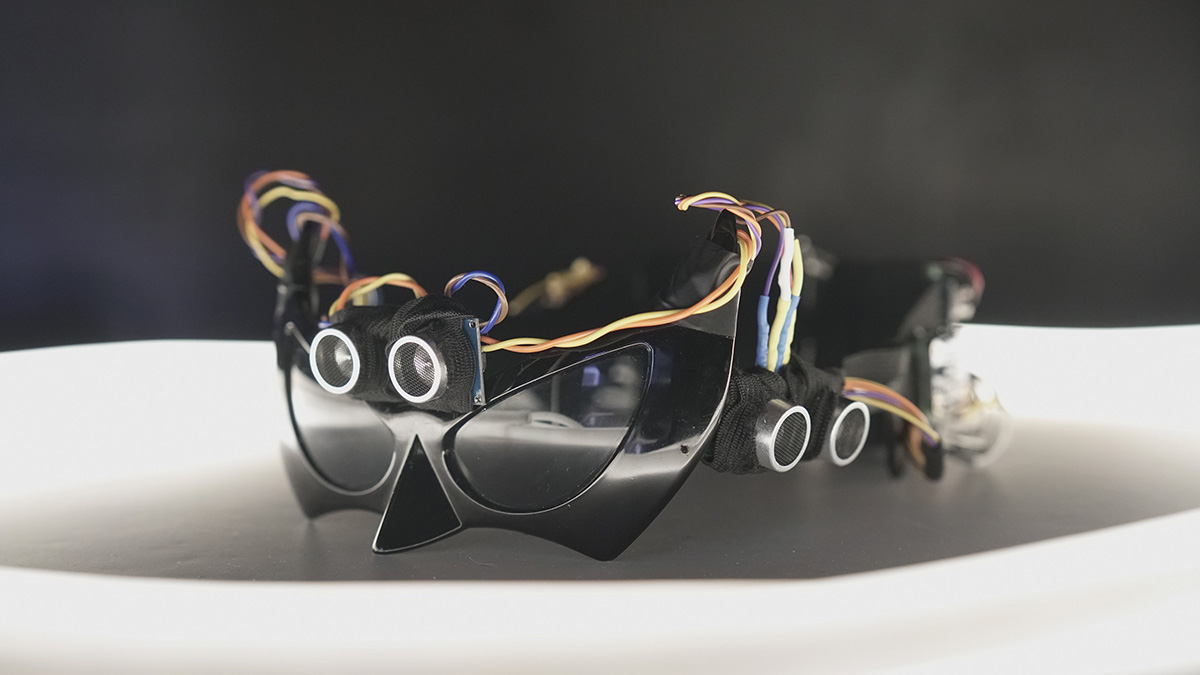
The work “What Is It (not) Like to Be a Bat?” is an artistic interpretation of the famous paper “What Is It Like to Be a Bat” (1974) by the American philosopher Thomas Nagel. The work consists of a self-built headset which uses three ultrasonic sensors and a gyroscope, translating the data in real-time into sound — analogous to the sonar of a bat — creating an interactive musical “Bat-Theme”. Hence, it is not only questioning the hard problem of consciousness, but also the urge of science, philosophy and technology to solve it, which might be impossible by nature.
Leon Eckard (*1995) is a Germany-based media artist and musician. He studied Music and Media at the Robert-Schumann Hochschule Düsseldorf and the Universitat de Barcelona with Jazz-Guitar as his main subject. Since 2022 he studies at the University of the Arts Berlin in the class Generative Art and is part of the collective S4NTP. Leon Eckard’s works and performances have been shown in numerous exhibitions and festivals such as xCoAx, New Now Festival and CTM Vorspiel. His artistic field develops between installative, interactive and generative art and music, as well as performances with self-developed systems. In his works, Leon Eckard deals playfully with the ideas of perception, consciousness and emergence, while exploring new ways of creating and improvising sound.
Catalogue : 2022Toter Winkel | VR expérimental | 0 | | 0:0 | Allemagne | 2020
Leon Eckard, Nathalie Brum
Toter Winkel
VR expérimental | 0 | | 0:0 | Allemagne | 2020
The Virtual Reality soundwalk Toter Winkel by media artist Leon Eckard (idea and implementation) and architect and sound artist Nathalie Brum (architecture) plays with spatial and acoustic paradoxes that reveal our – often deceptive – perception. The space and sound of the soundwalk are inspired by Dutch graphic artist M. C. Escher, English mathematician and theoretical physicist Roger Penrose and American cognitive scientist Roger Shepard. Its an ever ongoing cycle, which gives the illusion of a continuous tunnel, whereby the reflection about it reveals its paradox nature. The audiences for this VR work can move interactively through the virtual space and see whether they discover the blind spot. Deceptive perceptions can be found everywhere in human perception, and so Leon Eckard argues in his project that we should constantly question our own blind spot.
Leon Eckard (*1995 in Neuss) ist ein deutscher Medienkünstler, Komponist und Musiker. Bereits mit sechs Jahren fing er an Gitarre zu spielen, was er schließlich im Hauptfach Jazz-Gitarre seines Studiums „Musik und Medien“ am Institut für Musik und Medien der Robert-Schumann Hochschule Düsseldorf vertiefte. Während seines Studiums von 2015 – 2021 fokussierte er sich zunehmend auf die Bereiche Visual Music, geleitet von Prof. Dr. Heike Sperling und Musikinformatik, geleitet von Prof. Julian Rohrhuber. Von 2019 bis 2020 verbrachte er ein Auslandssemester an der „Universidad de Barcelona“, wo er in den Bereichen Design und Medienkunst studierte und unter Anderem die Arbeit „Mise En Abyme“ entwickelte, die bereits in mehreren Ausstellungen zu sehen war. So zum Beispiel im Rahmen der Ausstellung „Mind over Matter“ in „technische Sammlungen Dresden“ im Frühjahr 2021. 2019 war er außerdem Teil des Residenzprogramms “Labor der Künste” in Montepulciano, Italien, wo er die Künstler*innen Francesco Marzano und Yoana Tuzharova kennenlernte. Mit diesen entwickelte er unter anderem das Projekt „Metamorphosen – Topology of the Captial“, was im Sommer und Herbst 2021 in verschiedenen Orten zu sehen war, wie dem Kunstmuseum Temporär in Mülheim an der Ruhr. Sein künstlerisches Feld hat Leon Eckard zwischen installativer und generativer Kunst sowie Musik und Klang aufgespannt. In seinen neusten Arbeiten beschäftigt er sich mit seiner unmittelbaren Umgebung, deren Klang und ihrer Beziehung zum Menschen. Dabei spielt die Frage nach subjektiver und objektiver Realität stets eine Rolle.
Leon Eckard, Nathalie Brum
Catalogue : 2023What Is It (not) Like to Be a Bat? | AR expérimental | 0 | | 0:0 | Allemagne | 2022
Leon Eckard
What Is It (not) Like to Be a Bat?
AR expérimental | 0 | | 0:0 | Allemagne | 2022
The work “What Is It (not) Like to Be a Bat?” is an artistic interpretation of the famous paper “What Is It Like to Be a Bat” (1974) by the American philosopher Thomas Nagel. The work consists of a self-built headset which uses three ultrasonic sensors and a gyroscope, translating the data in real-time into sound — analogous to the sonar of a bat — creating an interactive musical “Bat-Theme”. Hence, it is not only questioning the hard problem of consciousness, but also the urge of science, philosophy and technology to solve it, which might be impossible by nature.
Leon Eckard (*1995) is a Germany-based media artist and musician. He studied Music and Media at the Robert-Schumann Hochschule Düsseldorf and the Universitat de Barcelona with Jazz-Guitar as his main subject. Since 2022 he studies at the University of the Arts Berlin in the class Generative Art and is part of the collective S4NTP. Leon Eckard’s works and performances have been shown in numerous exhibitions and festivals such as xCoAx, New Now Festival and CTM Vorspiel. His artistic field develops between installative, interactive and generative art and music, as well as performances with self-developed systems. In his works, Leon Eckard deals playfully with the ideas of perception, consciousness and emergence, while exploring new ways of creating and improvising sound.
Catalogue : 2022Toter Winkel | VR expérimental | 0 | | 0:0 | Allemagne | 2020
Leon Eckard, Nathalie Brum
Toter Winkel
VR expérimental | 0 | | 0:0 | Allemagne | 2020
The Virtual Reality soundwalk Toter Winkel by media artist Leon Eckard (idea and implementation) and architect and sound artist Nathalie Brum (architecture) plays with spatial and acoustic paradoxes that reveal our – often deceptive – perception. The space and sound of the soundwalk are inspired by Dutch graphic artist M. C. Escher, English mathematician and theoretical physicist Roger Penrose and American cognitive scientist Roger Shepard. Its an ever ongoing cycle, which gives the illusion of a continuous tunnel, whereby the reflection about it reveals its paradox nature. The audiences for this VR work can move interactively through the virtual space and see whether they discover the blind spot. Deceptive perceptions can be found everywhere in human perception, and so Leon Eckard argues in his project that we should constantly question our own blind spot.
Leon Eckard (*1995 in Neuss) ist ein deutscher Medienkünstler, Komponist und Musiker. Bereits mit sechs Jahren fing er an Gitarre zu spielen, was er schließlich im Hauptfach Jazz-Gitarre seines Studiums „Musik und Medien“ am Institut für Musik und Medien der Robert-Schumann Hochschule Düsseldorf vertiefte. Während seines Studiums von 2015 – 2021 fokussierte er sich zunehmend auf die Bereiche Visual Music, geleitet von Prof. Dr. Heike Sperling und Musikinformatik, geleitet von Prof. Julian Rohrhuber. Von 2019 bis 2020 verbrachte er ein Auslandssemester an der „Universidad de Barcelona“, wo er in den Bereichen Design und Medienkunst studierte und unter Anderem die Arbeit „Mise En Abyme“ entwickelte, die bereits in mehreren Ausstellungen zu sehen war. So zum Beispiel im Rahmen der Ausstellung „Mind over Matter“ in „technische Sammlungen Dresden“ im Frühjahr 2021. 2019 war er außerdem Teil des Residenzprogramms “Labor der Künste” in Montepulciano, Italien, wo er die Künstler*innen Francesco Marzano und Yoana Tuzharova kennenlernte. Mit diesen entwickelte er unter anderem das Projekt „Metamorphosen – Topology of the Captial“, was im Sommer und Herbst 2021 in verschiedenen Orten zu sehen war, wie dem Kunstmuseum Temporär in Mülheim an der Ruhr. Sein künstlerisches Feld hat Leon Eckard zwischen installativer und generativer Kunst sowie Musik und Klang aufgespannt. In seinen neusten Arbeiten beschäftigt er sich mit seiner unmittelbaren Umgebung, deren Klang und ihrer Beziehung zum Menschen. Dabei spielt die Frage nach subjektiver und objektiver Realität stets eine Rolle.
Katarina Eckold
Catalogue : 2007Wege zum Glück | Installation vidéo | dv | couleur | 74:50 | Allemagne | 2006
Katarina Eckold
Wege zum Glück
Installation vidéo | dv | couleur | 74:50 | Allemagne | 2006
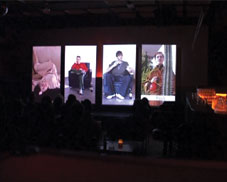
"Du diable si je n'arrive pas bientôt à devenir riche, sinon j'aurai gâché ma vie. Si je ne peux pas avoir Toni, alors n'importe lequel fera l'affaire. Tout aurait été différent si j'avais été célèbre, si j'avais été heureuse. Mon Dieu, je t'en prie, rends-moi belle, Mon Dieu, pour que je puisse commencer à vivre." Amerika, Sibylle Berg Raul, Karla, Anna et Bert mènent une vie à laquelle il n'y aurait rien à enlever si seulement il n'y avait pas les éternels rêves de grand bonheur, de grand amour, de gloire et de richesse - de vraie vie. Sibylle Berg donne une seconde chance aux quatre frustrés. On leur offre une deuxième vie en Amérique et ils sont obligés de constater que ce n'est pas mieux à Hollywood qu'à Wanne-Eickel. Relégués sur quatre surfaces de projection différentes, il est impossible aux acteurs, comme aux personnages qu'ils incarnent, de communiquer directement les uns avec les autres. Les acteurs n'ont ni entendu les textes de leurs pairs, ni vu leur image vidéo. Ils sont livrés à eux-mêmes, exactement comme Raul, Karla, Anna et Bert - comme en fin de compte, chacun de nous lorsqu'il s'agit de la responsabilité de sa propre vie.
Katarina Eckold, née en 1976 à Berlin-Ouest, a étudié les sciences du théâtre à la Humboldt-Universität de Berlin. C'est à cette période qu'elle a mis en scène ?Où allez?vous? d'après le récit ?Das Paradies ist nebenan? de Cees Nooteboom et ?Der Disney?Killer? de Philip Ridley. Après différentes expériences d'assistante-réalisatrice (entre autres au Grips-Theater, Universität der Künste Berlin, Schaubühne)elle a créé ?blau.blond.besser.?, qui a obtenu les prix du public au festival ?100°-Berlin" 2005 .?Wege zum Glück?, d'après un roman de Sibylle Berg, a été présenté en avant-première au ?Club 103? de Berlin le 15.03.2006. Son dernier travail ?Lebst du noch? est passé dans le cadre du festival?Freischwimmer? 2006.
Teboho Edkins
Catalogue : 2007My Gangsta Project | Fiction expérimentale | dv | couleur | 9:0 | Afrique du sud | 2006
Teboho Edkins
My Gangsta Project
Fiction expérimentale | dv | couleur | 9:0 | Afrique du sud | 2006
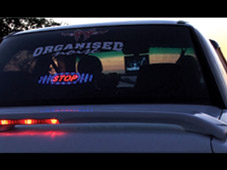
J?ai passé deux mois avec Jackals et ses amis dans un ghetto au cap, Afrique de sud. J?avais toujours eu l?envie de faire un film de gangster (comme un clip de MTV gangster rap mais réel). Plein d?attente, j'ai loué une grande bagnole, organisé un casting à Paris pour trouver une danseuse bien sexy. En effet, il me semble que ce qui fait un gangster c?est le contexte de la violence et de la pauvreté et mon film est devenu assez violent et bien que je filme une réalité ce n?est pas un documentaire.
Teboho Edkins est né aux Etats-Unis et a grandi au Lesotho, en Allemagne et en Afrique du Sud. Il est actuellement étudiant au Fresnoy, Studio National des Arts Contemporains, en France. Il a réalisé quatre films, "Ask me I am positive", "Looking Good", "True Love" et ce qu'il appelle son "First Gangster Project". Il travaille actuellement sur un autre film de gangsters au Cap et partira à Berlin en septembre.
Teboho Joscha Edkins
Catalogue : 2015Gangster Backstage | Documentaire | hdv | couleur | 37:30 | Afrique du sud | 2013
Teboho Joscha Edkins
Gangster Backstage
Documentaire | hdv | couleur | 37:30 | Afrique du sud | 2013
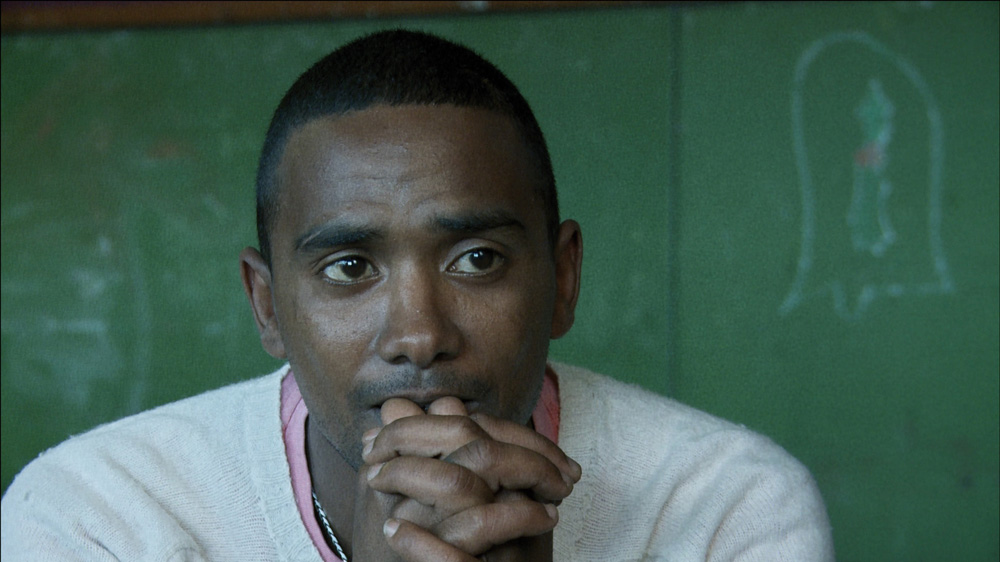
Gangster Backstage is a documentary film with gangsters in Cape Town, South Africa. As the film moves between a casting interview and scenes in an empty theatre, the sense of confinement within the space increases and becomes a feeling of being trapped, a square, boundaries, a sort of purgatory, the tempo of cigarettes, not knowing where the soul goes, fear, caught in one's thoughts, wanting to break free but can't… a cell.
Teboho Edkins was born in the USA in 1980 and grew up mainly in Lesotho, South Africa but also in Germany. He studied Fine Art at the University of Cape Town, followed by a 2-year post-graduate residency at le Fresnoy, studio national des arts contemporains in France and then a post-graduate film directing programme at the dffb film academy in Berlin.
Teboho Joscha Edkins
Catalogue : 2023Ghost | Doc. expérimental | 4k | couleur | 8:41 | Afrique du sud | 2023
Teboho Joscha Edkins
Ghost
Doc. expérimental | 4k | couleur | 8:41 | Afrique du sud | 2023
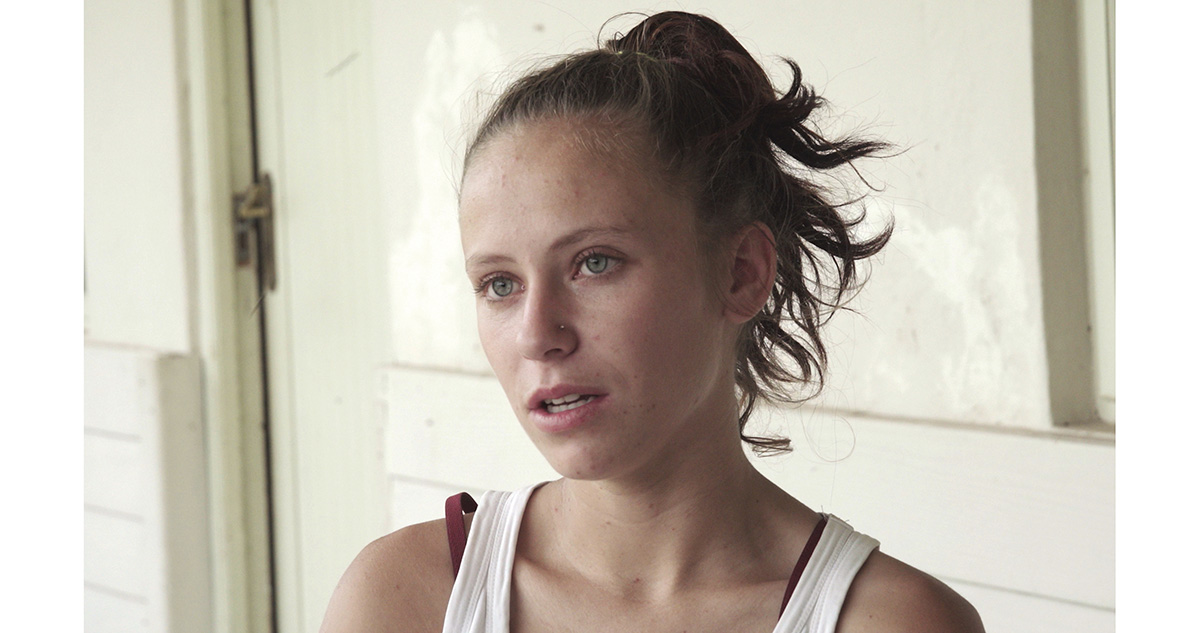
Ghosts is a short documentary film, in which ghosts, both real and imagined, haunt the lives of a rural community, in their small town in post-apartheid South Africa.
Teboho Edkins (*1980 in Tennessee, USA) grew up in Southern Africa and lives and works in Cape Town and Berlin. He studied photography and fine art at the Michaelis School of Fine Art, University of Cape Town, South Africa and film at Le Fresnoy Studio National des Arts Contemporains in Tourcoing, France. This was followed by a degree in directing at the Deutsche Film und Fernseh-akademie in Berlin (dffb). Teboho Edkins’s films have shown at many festivals, group and solo exhibitions, including at the Centre Pompidou, Paris; Tate Modern, London; South London Gallery; Haus der Kulturen der Welt, Berlin; Museum für Moderne Kunst, Frankfurt; Berlinische Galerie, Berlin; Weserburg-Museum für Moderne Kunst, Bremen; Museum of Modern Art, New York City. Some of the over 500 film festivals his films have screened at include the International Film Festival Berlin (Berlinale); International Short Film Festival, Oberhausen; and International Film Festival (IFFR), Rotterdam. His films have also been acquired by several public and private art collections including the Goetz Collection in Munich, von Kelternborn Collection in Frankfurt and the Collection KAI 10 | Arthena Foundation in Düsseldorf.
Catalogue : 2017Initiation | Documentaire | 4k | couleur | 10:47 | Afrique du sud | 2016
Teboho Joscha Edkins
Initiation
Documentaire | 4k | couleur | 10:47 | Afrique du sud | 2016
High in the mountains of Lesotho, Mosaku is anxiously awaiting the return of his older brother from an initiation ceremony. The initiates spend 5 months in a remote secrete location. When the boys return, they are grown men.
Teboho Edkins was born in the USA in 1980 and grew up in Lesotho, South Africa and also in Germany. He studied Fine Art at the University of Cape Town, followed by a 2-year post-graduate residency at le Fresnoy, studio national des arts contemporains in France and then a post-graduate film directing program at the dffb film academy in Berlin. His films show at film festivals, television, museums, win awards and have been acquired by private art collections. He currently lives between Berlin and Cape Town.
Catalogue : 2012Gangster Project | Fiction expérimentale | 0 | couleur | 56:0 | Afrique du sud | 2011
Teboho Joscha Edkins
Gangster Project
Fiction expérimentale | 0 | couleur | 56:0 | Afrique du sud | 2011
In Cape Town, South Africa, one of the world`s most violent and unequal societies, a young white film student sets out with his cameraman, leaving the comfort of his protected neighbourhood. He wants to make a Gangster Film, with real gangsters. After a lengthy search for a suitably `cinematic` character, he finds the perfect gang and settles into their everyday rhythm. The reality soon catches up and the claustrophobic gangster life doesn?t exactly fit to the expectations. 20 year after the first democratic election, South Africa remains a deeply divided society, one in which dialogue and understanding seem impossible, out of reach. It is a film between fiction and reality, where real truths are revealed and fiction stops being fiction, and when it stops mattering.
Teboho Edkins was born in the USA in 1980 and grew up mainly in Lesotho, but also Germany, South Africa, France and now lives in Berlin. He studied Fine Art at the University of Cape Town, followed by a 2-year post-graduate residency at le Fresnoy, studio national des arts contemporains in France and then a post-graduate film directing programme at the dffb film academy in Berlin. His films have been screened in over 100 festivals and galleries worldwide.
Catalogue : 2009Kinshasa 2.0 | Documentaire | 16mm | couleur | 11:7 | Afrique du sud | 2008
Teboho Joscha Edkins
Kinshasa 2.0
Documentaire | 16mm | couleur | 11:7 | Afrique du sud | 2008
Une campagne Internet contribue à la libération d'un candidat à la présidentielle, emprisonné pour avoir parlé ouvertement de l'absence de démocratie. Oscillant entre une Kinshasa militarisée et Second Life (un chat virtuel tridimensionnel), le film examine le pouvoir subversif d'Internet pour la démocratie, tout en faisant un portrait inquiétant d'une capitale africaine.
Teboho Edkins est né aux Etats-Unis en 1980, et a grandi au Lesotho, en Allemagne et en Afrique du Sud. Il vit aujourd?hui à Berlin (Allemagne). Il a fait les Beaux-Arts de Cape Town et a été deux ans en résidence au Fresnoy, Studio National des Arts Contemporains, en France. Il suit actuellement le troisième cycle du programme de l?Académie du Film DFFB de Berlin. Il a reçu de nombreux prix et bourses.
James Edmonds
Catalogue : 2019A Return | Film expérimental | 16mm | couleur | 6:0 | Royaume-Uni, Allemagne | 2018
James Edmonds
A Return
Film expérimental | 16mm | couleur | 6:0 | Royaume-Uni, Allemagne | 2018
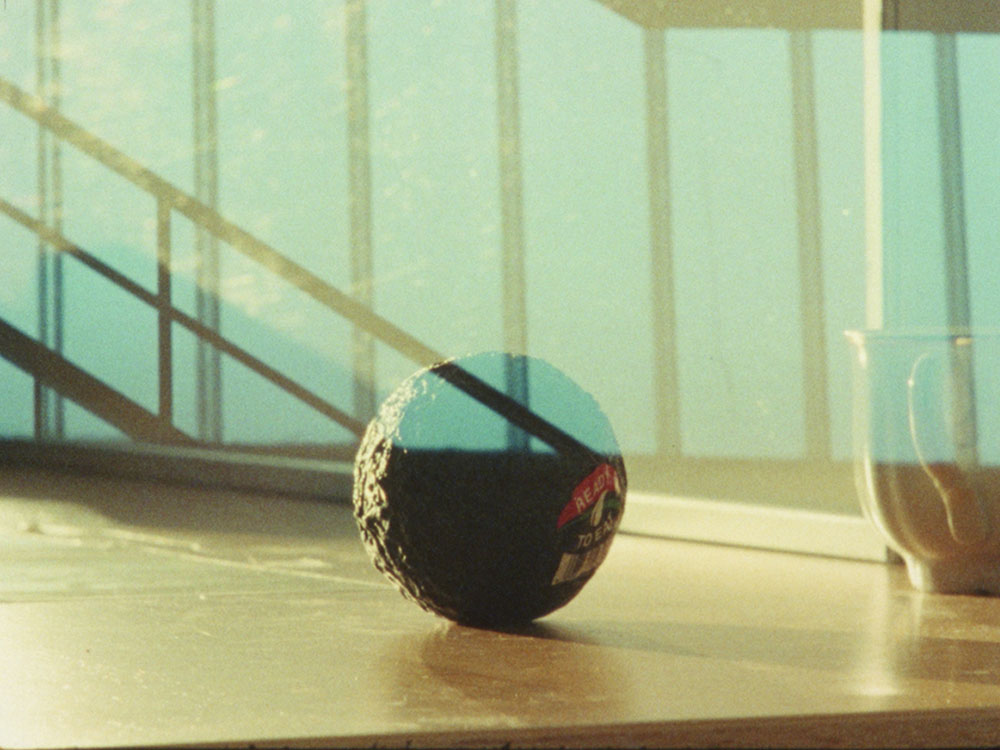
To return again. To re-align is the object of these visits, perhaps. Geography of origin becoming catalyst for an inner re-alignment with the secret, private, unspoken work of one's being. Peering into layers, sliding planes of windows and time, the fragmentary gesture of the dance. A series of rapid contrasts, a synthesis of elemental and everyday experience. Structures shift and intermingle, two worlds become one.
James Edmonds is a filmmaker and painter from England living in Berlin. His work is driven by a personal poetics which explores the intersection of the recorded image as a material, formal reality and subjective experience as a synthesis of everyday existence and memory. His films, paintings and sound works are sometimes combined in space along with found materials, suggesting complex overlapping subjectivities and landscapes. He has presented work at film festivals such as TIFF Toronto, NYFF New York, L'âge d'Or Brussels, Flex Fest Florida, Process Festival Riga and Fronteira Festival Brasil. Solo presentations have occurred at 3 137 Athens, Cinema Parenthèse Brussels, Nocturnal Reflections Milan, Auslands-Filme Berlin and Another Vacant Space Berlin. He occasionally also writes and since 2015 organises a film series in Berlin called Light Movement.
James Edmonds
Catalogue : 2025Disappearances | Film expérimental | super8 | couleur | 5:0 | Allemagne | 2023

James Edmonds
Disappearances
Film expérimental | super8 | couleur | 5:0 | Allemagne | 2023
My first visit to England after a gap of two years, it’s as if I’m discovering each subject for the first time. Objects picked up one by one. Every form seems to contain its dissolution, a premonition of loss. Holding on to the edge of a cloud, a hungry ghost throws its wishes to the sea.
James Edmonds is a British artist-filmmaker living in Berlin. His work is driven by personal observations and a poetic approach to the everyday that is both formalistic and lyrical. His films have been shown at various international festivals and art-spaces including TIFF Toronto, NYFF New York, MoMI New York, Ann Arbor Film Festival, Kurzfilmtage Oberhausen, Curtas Vila do Conde, Open City London, FICUNAM Mexico City, and EXiS Seoul. He also makes paintings and installations, writes texts and poems, teaches workshops, and has organised various screenings and events in Berlin including the Light Movement film-series, and the Grass Harp exhibition and edition series in collaboration with Petra Graf.
Clementine Edwards
Catalogue : 2025Toxic Inheritances | Vidéo | mp4 | couleur | 6:39 | Pays-Bas | 2024

Clementine Edwards
Toxic Inheritances
Vidéo | mp4 | couleur | 6:39 | Pays-Bas | 2024
Toxic Inheritances (2024) tells stories of white phosphorus. Light-bearing and brutally hot, white phosphorus is pyrophoric, meaning it combusts on contact with air. The video considers the role of inheritance and storytelling in human-chemical relations, and grammars of the (super)natural. It is a deepening of the artist's studio exploration on the subject of toxic inheritance and a sort of fictionalised sketch of a family tree for the chemical.
Clementine Edwards is a Rotterdam-based artist working between sculpture and writing. They're the artist and editor of The Material Kinship Reader, co-edited with Kris Dittel, which thinks material beyond extraction and kinship beyond the nuclear family. Clementine’s practice engages with craft, climate crisis, gender and how lived experience, including trauma, narrates meaning-making. It asks, How to honour and remember the worlds that we are immersed in, and the contexts that shape us, nourish us and resist us? In 2022 Clementine was a Gerrit Rietveld Academy fellow in Amsterdam and a LiveWorks fellow at Centrale Fies in Dro. Among other places they’ve exhibited and performed at Tent Rotterdam, Temporary Gallery, Koln, Framer Framed, Amsterdam and Stavanger Museum.