Catalogue > Liste par artiste
Parcourez la liste complète des artistes présentés dans le cadre des Rencontres Internationales depuis 2004. Utilisez le filtre alphabétique pour affiner vos recherches.
Ahmed Elghoneimy
Catalogue : 2022Al-Maw oud | Documentaire | hdv | couleur | 18:14 | Egypte | 2020
Ahmed Elghoneimy
Al-Maw oud
Documentaire | hdv | couleur | 18:14 | Egypte | 2020
In and around the historical ruins of Fustat in Old Cairo, tensions simmer between the site’s government-appointed guards and residents of a nearby informal settlement, al-Izba. The guards chase away looters and confiscate their equipment, while locals infuriate them by taking shortcuts through the site, occasionally stopping for a smoke. For the guards it would be easiest to keep the site closed until further notice.
Ahmed El Ghoneimy, born in 1986 in Alexandria, Egypt, is a filmmaker and artist currently living between Alexandria and Cairo. His work revolves around interpersonal tensions between the different protagonists presented in his films, such as sons and fathers (Tripoli Tide, 2018), victims and perpetrators (Bahari, 2011), bullies and friends (The Cave, 2013). Alternating between fiction and documentary, his films follow associations and use moments of collision as an opportunity to investigate notions like victimhood, power, and masculinity.
Carl Elsaesser
Catalogue : 2022Home When You Return | Doc. expérimental | 16mm | couleur | 30:0 | USA | 2021
Carl Elsaesser
Home When You Return
Doc. expérimental | 16mm | couleur | 30:0 | USA | 2021
“Stretching and blurring the boundaries of video essay, experimental film and home movie, traces of a 1950s homemade melodrama by amateur filmmaker Joan Thurber Baldwin intermingle with a mournful homage to the author’s grandmother and her vacated home. A powerful mélange of cinematic and domestic spaces, past and present.”
Carl Elsaesser (1988, USA) graduated from Hampshire college and University of Iowa. He lives and works between midcoast and interior Maine and Brooklyn, NY. He has made several short films which have screened at festivals in New York, Berlin, Michigan, Amsterdam, Korea among others. In his work, Elsaesser mixes genres and materials to produce work that “critically investigates the overarching presence of the historical without losing sight of individual experiences of human connection.”
åsa Elzén, Wetzel, Markus
Catalogue : 2008I'll be you if you'll be me 4 - Love Hurts More | Fiction expérimentale | dv | couleur | 10:0 | Suède | 2007
Åsa ElzÉn, Markus Wetzel, Wetzel, Markus
I'll be you if you'll be me 4 - Love Hurts More
Fiction expérimentale | dv | couleur | 10:0 | Suède | 2007
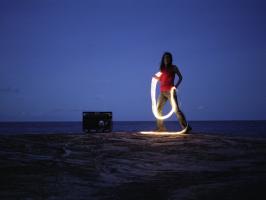
"I'll be you if you'll be me 4 - Love Hurts More", une oeuvre d'Åsa Elzén et Markus Wetzel Pendant trois mois en 2006, les artistes se sont isolés sur une petite île inhabitée de la mer Baltique où ils ont réalisé ensemble une série de cours métrages. Dans le même film, ils ont constamment échangé leur rôles, de réalisateur à acteur et inversement, et grâce à cette méthode, ont développé des récits sur un personnage androgyne fictif. Celui qui jouait portait un masque et devenait cet étrange personnage silencieux, seul sur son île, essayant de venir à bout de la nature aliénante, de la solitude, de la mort et de son désir d'amour. Ce "trans-personnage" au sexe toujours changeant habite également un espace entre les deux artistes. Le séjour réel sur l'île est ici une métaphore de l'isolation forcée dans laquelle un couple peut se mettre, mentalement ou physiquement. Cet état ambivalent entre sécurité et isolation a influencé la situation dans laquelle la collaboration a eu lieu. Les artistes s'intéressent aux notions d'hétéronormativité, de genre et de sexualité, et aux limites entre sujet et autre. Au début de "Love Hurts More" (10 mn), le personnage chante la chanson "Love Hurts" sur les rives rocheuses la nuit. Il/elle utilise un générateur pour faire fonctionner une lampe et chante en même temps que le bruit du générateur. Ensuite, il/elle se dirige vers le centre de l'île en s'aidant de la lampe et en traînant le lourd générateur. Il/elle arrive enfin à destination et trouve un cristal caché dans les branches d'un vieil arbre. De retour dans sa petite maison avec son trophée, notre héro/héroïne tente sans enthousiasme de soigner son manque d'amour par une étrange incantation.
Åsa Elzen a obtenu son MFA au Royal University College of Fine Art de Stockholm en 2002. Actuellement, elle suit le Whitney Independent Study Program de New York. Elle travaille sur les installations et l'art vidéo, traitant souvent de féminisme et de questions post-coloniales. Markus Wetzel a obtenu son MFA à la Hochschule fur Gestaltung und Kunst à Zurich. Actuellement, il travaille à New York et Zurich. Dans ses projets, il utilise l'idée de l'île à la fois comme forme réelle et comme forme fictive: ses images numériques, ses installations et ses projets d'extérieur, tout comme ses collaborations tendent vers les limites de la fiction, de l'espace fictif et du récit, vers ce moment où la fiction semble basculer dans la réalité. Depuis 2005, Elzén et Wetzel ont collaboré à trois projets.
Heinz Emigholz
Catalogue : 2023Mamani in El Alto | Documentaire | 4k | couleur | 95:0 | Allemagne | 2022
Heinz Emigholz
Mamani in El Alto
Documentaire | 4k | couleur | 95:0 | Allemagne | 2022
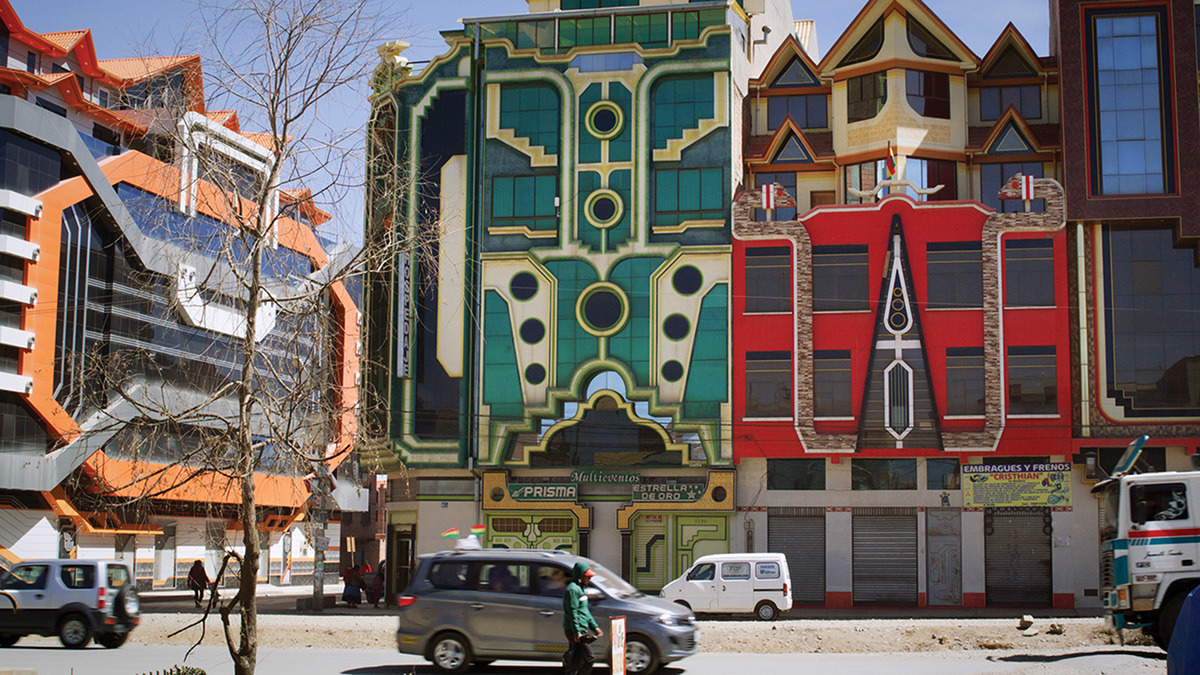
The civil engineer and architect Freddy Mamani Silvestre (*1971), has designed more than 60 building projects in the Bolivian city of El Alto since 2008, which mock the norms of a formulaic modern architecture shaped and enforced with global aspirations by the Bauhaus. Mamani comes from a humble background and belongs to the Aymara people. His self-taught architecture is a counter-utopia that grew out of local usages and opens up a view of preferences other than sparseness and global stylistic adherence. The film shows many of the “cholets” he built with their magnificent ballrooms in their urban setting. Mamani became the founder of neo-Andean architecture.
Born in 1948 near Bremen in Germany, Heinz Emigholz trained first as a draftsman before studying philosophy and literature in Hamburg. He began filmmaking in 1968 and has worked since 1973 as a filmmaker, artist, writer and producer in Germany and the USA. In 1974 he started his encyclopaedic drawing series “The Basis of Make-Up”. He looks back on numerous exhibitions, retrospectives, lectures and publications. In 1984 he started his film series “Photography and beyond”. He had held a professorship in Experimental Filmmaking at the Universität der Künste Berlin 1993-2013, and co-founded the Institute for Time-based Media and the Art and Media program, there. In 2003 Filmgalerie 451 started an edition of all his films on DVD. Publications a.o.: Krieg der Augen, Kreuz der Sinne (War of Eyes, Cross of Senses), Seit Freud gesagt hat, der Künstler heile seine Neurose selbst, heilen die Künstler ihre Neurosen selbst (Since Freud Said That the Artist Heals His Neuroses Himself, Artists Have Been Healing Their Neuroses Themselves), Normalsatz – Siebzehn Filme (Ordinary Sentence – Seventeen Films) and Das schwarze Schamquadrat (The Black Sqare of Shame) (all four books were published at Verlag Martin Schmitz); “Die Basis des Make-Up (I) and (II)”, “Der Begnadete Meier”, “Kleine Enzyklopädie der Photographie” (Small Encyclopaedia of Photography) and “Die Basis des Make-Up (III)” (in Die Republik No. 68-71, 76-78, 89-91, 94-97 and 123-125); Sense of Architecture with more than 600 photographs. Heinz Emigholz is a member of the Academy of the Arts in Berlin.
Heinz Emigholz
Catalogue : 2021The Last City | Fiction | hdv | couleur | 100:0 | Allemagne | 2020
Heinz Emigholz
The Last City
Fiction | hdv | couleur | 100:0 | Allemagne | 2020
Un archéologue et un concepteur d'armes, qui se sont connus dans une autre vie où l’un était cinéaste et l’autre psychanalyste, se rencontrent sur un site de fouilles dans le désert du Néguev, et entament une conversation sur l'amour et la guerre, qu'ils poursuivent dans la ville israélienne de Be'er Sheva. Puis, avec des acteurs changeants dans des rôles changeants, le film entame une ronde qui les mène à travers Athènes, Berlin, Hong Kong et São Paulo. Apparaissent: un vieil artiste qui rencontre le jeune homme qu’il était, une mère qui vit avec ses deux fils adultes - un prêtre et un policier, une Chinoise et une Japonaise, un curatrice et un cosmologiste. Leurs dialogues traitent de tabous sociaux devenus obsolètes, de conflits de générations, de culpabilité de guerre, et de cosmologies. Les architectures des cinq villes servent de troisième participant au dialogue des protagonistes, et complètent leurs parcours philosophiques et métaphysiques.
Heinz Emigholz est né en 1948 à Achim, près de Brême (Allemagne). Il a d'abord suivi une formation de dessinateur, avant d'étudier la philosophie et la littérature à Hambourg (Allemagne). Il a commencé à réaliser des films en 1968, et travaille depuis 1973 comme réalisateur, artiste, écrivain et producteur, en Allemagne et aux États-Unis. En 1974, il a commencé sa série de dessins encyclopédiques "The Basis of Make-Up". Il a de nombreuses expositions, rétrospectives, conférences et publications à son actif. En 1984, il a entamé sa série de films "Photography and beyond". Il a été professeur de cinéma expérimental à la Universität der Künste Berlin (Allemagne) de 1993 à 2013, et y a cofondé le Institute for Time-based Media et le programme Art and Media. En 2003, la Filmgalerie 451, Berlin (Allemagne), a lancé une édition de tous ses films sur DVD. Entre autres publications, citons: "Krieg der Augen, Kreuz der Sinne", "Seit Freud gesagt hat, der Künstler heile seine Neurose selbst, heilen die Künstler ihre Neurosen selbst", "Normalsatz - Siebzehn Filme", et "Das schwarze Schamquadrat" (ces quatre livres ont été publiés chez Verlag Martin Schmitz, Berlin [Allemagne]); "Die Basis des Make-Up (I) et (II)", "Der Begnadete Meier", "Kleine Enzyklopädie der Photographie" et "Die Basis des Make-Up (III)" (publiés dans "Die Republik" No. 68-71, 76-78, 89-91, 94-97 et 123-125); et "Sense of Architecture", avec plus de 600 photographies. Heinz Emigholz est membre de l'Académie des Arts de Berlin (Allemagne).
Redmond Entwistle
Catalogue : 2013Walk-Through by | Doc. expérimental | hdv | couleur | 18:0 | Royaume-Uni | 2012
Redmond Entwistle
Walk-Through by
Doc. expérimental | hdv | couleur | 18:0 | Royaume-Uni | 2012
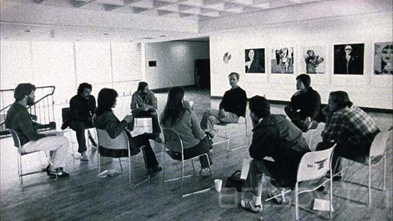
A film exploring the role and value of art education today through the history of the seminal California Institute of the Arts. WALK-THROUGH revisits the history of pioneering Los Angeles art school, the California Institute of the Arts, to explore wider questions about the purpose and value of education today. This newly commissioned film by artist filmmaker Redmond Entwistle will premier at Tramway for the Glasgow International Festival on 20th April. It will then tour to Cubitt Gallery, London, and International Project Space, Birmingham, reaching a wide audience through out the UK, with plans to tour further in the US and Europe.
Redmond Entwistle (b. London, 1977) is an artist and filmmaker based in New York and London. Working across a range of film forms from expanded cinema to narrative, his work has shown in both galleries and film festivals internationally. In 2008 his film Paterson ? Lódz won Best International Film On-Screen at Images Festival. His films have been included in recent group shows Nought to Sixty (ICA, London) and Greater New York: Artists Cinema (PS1 MOMA). His last film Monuments had its gallery premiere at Art in General in 2010 and had its festival premiere in competition at the Rotterdam International Film Festival 2010 and has been shown in a number of festivals and curated programs internationally including the National Gallery of Art Washington, Viennale, FID Marseilles, Hors Pistes at the Centre Pompidou, Argos Center for Art and Media, Anthology Film Archives and the Walker Art Center. His work is distributed by Lux Artists Film and Video.
Redmond Entwistle
Catalogue : 2010Belfast Trio | Doc. expérimental | 16mm | couleur | 10:20 | Royaume-Uni | 2009
Redmond Entwistle
Belfast Trio
Doc. expérimental | 16mm | couleur | 10:20 | Royaume-Uni | 2009
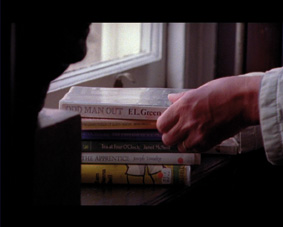
Revised synopsis Belfast Trio (Tea at Four O'Clock/The Hollow Ball/The Apprentice)is a sequence of three 3-minute films, which can be shown in different orders. Each film is a piece of a puzzle of which the three films form a whole. Taking their titles from classic mid-20th century novels of Belfast life, each film is at once a description of a film to be made, a conversation between characters in a love triangle, and a portrait of a city attempting to refashion itself for entry into a global economy. The films restage original interviews with professionals from the film and IT industry in Belfast, two industries through which the city hopes to attract investment and establish itsâ?? position within an international pecking order of knowledge economies and creative industries. Interwoven with these interviews are moments of melodrama and documentary explorations of redevelopment projects. The films were made with a crew drawn from Northern Irelandâ??s film industry, and allude to this image-making economy in which on the one hand local history has a market function, and on the other the city can stand-in for any number of other cities or time periods. Originally shown in three separate cinemas around Belfast before feature films, most of which were North American, the films hint at the promises and thwarted desires of mobility and economic participation at an international level that characterize the new economy.
Redmond Entwistle (b. London, 1977) is an artist-filmmaker currently living in New York. Entwistle employs documentary and abstract modes of film-making, often investigating histories of social displacement and creating portraits of cities anchored on the invisible or the implied. Recent works include Monuments (2009), a narrative exploration of the origins of Post-Minimalist art in the economic and spatial relationship between New York and New Jersey, Skein (2007), a video portrait of migration to the towns that spread out from New York, and Paterson ? Lódz (2006), a 16mm expanded film about two towns (Paterson, New Jersey, and Lódz, Poland) and their interrelated history of politics and migration in the early years of the 20th century. Redmond Entwistle studied at California Institute of the Arts and the Whitney Independent Study Program. He has presented projects at recent group shows at Miguel Abreu Gallery (NY), Nought to Sixty (ICA, London), a film performance at Gallery TPW (Toronto), and a recent solo exhibition at Belfast Exposed (UK).
Mélissa Epaminondi
Catalogue : 2021Deconstructing Niemeyer | Doc. expérimental | mp4 | couleur | 1:9 | France | 2020
Mélissa Epaminondi, Esteban Ulrich
Deconstructing Niemeyer
Doc. expérimental | mp4 | couleur | 1:9 | France | 2020
Sur une succession d'images documentant le chantier de remise en état de la coupole du siège du Parti Communiste Français, la voix de l'architecte brésilien Oscar Niemeyer traverse le temps pour nous dévoiler le cœur de son œuvre et de sa pensée.
Mélissa Epaminondi est née en 1977. Elle vit et travaille entre Paris (France) et Oletta (Corse, France). Elle est DPLG diplômée de l’École d’Architecture de Luminy Marseille (France). Architecte et artiste, son travail reflète une vision sensible en même temps qu’une réflexion étayée sur les questions environnementales. Elle poursuit sa pratique initiale et réalise des films, vidéos et installations. Esteban Ulrich est né à Buenos Aires, Argentine, en 1975 il étudie dans des écoles françaises avant de commencer sa carrière professionnelle chez Los Inrockuptibles, la version argentine du magazine français. Depuis, il se partage entre le journalisme, le cinéma, la photographie et l'expérimentation avec les nouvelles technologies appliquées à l'art et aux médias. Il vit à Paris (France) depuis 2015.
Catalogue : 2017La Villa | Vidéo | hdv | couleur | 5:34 | France | 2016
Mélissa Epaminondi
La Villa
Vidéo | hdv | couleur | 5:34 | France | 2016
LA VILLA Etre dans sa maison L’été 2016, je filme le caveau familial à peine achevé. Cet ouvrage minimaliste, projet de mon père, est bâti dans le cimetière d`Oletta en Corse. Le marbre de Carrare, reflète dans sa permanence l`architecture du village dont certaines villégiatures.
Mélissa Epaminondi est née en 1977. Elle vit et travaille entre Paris et Oletta (Corse). Elle est diplômée de l’Ecole d’Architecture de Marseille Luminy. Architecte et artiste, elle poursuit sa pratique initiale et réalise des films, vidéos et installations. Depuis 2008 elle mène son activité d’architecte au sein du collectif L140. Elle enseigne l’art-vidéo à l’Université de Corse Pascal Paoli. Dans le prolongement des bâtiments qu’elle construit, ses films, vidéos et installations sont des architectures projectives révélant l’inconscient individuel ou collectif. Les références à la culture populaire sont présentes dans ses oeuvres dont l’univers part d’un regard alternativement amusé et grinçant sur le monde. Tout dans son travail est à la faveur des projections mentales. Chaque non-dit, chaque manque, chaque vide permet l’ambiguité. Les objets y sont transitionnels, faisant appel à la mémoire, à l’interprétation, au désir à la faveur d`un renversement du regard. Les mouvements de caméra sont synthétiques. S’ils ne suivent pas la trajectoire du corps qui porte la caméra ils s’opèrent grâce à un mécanisme présent sur place au moment du tournage.
Catalogue : 2016Il Grattacielo Nuovo | Film expérimental | hdv | couleur | 8:10 | France, Italie | 2015
Mélissa Epaminondi
Il Grattacielo Nuovo
Film expérimental | hdv | couleur | 8:10 | France, Italie | 2015
La place Castello est surmontée de l’une des transformations urbaines les plus discutées de la ville de Sassari, construite par Fernando Clemente en 1965. Ce bâtiment, baptisé “Il Grattacielo Nuovo”, a été le premier édifice d’architecture moderne en Sardaigne. Le gratte-ciel est visible de tous les points de la ville, et jusqu’en 1970 une étoile filante lumineuse était installée à son sommet pendant les fêtes de Noël. Dans le même période, entre 1965 et 1970 l’homme a rejoint la Lune. Le film est une évocation de la chute des utopies. Deux plans séquences se succèdent : l’un suit le mouvement vertical de la nacelle électrique suspendue à la façade est du gratte-ciel en cours de rénovation ; l’autre, vue du ciel, traverse horizontalement la ville de Sassari depuis la campagne périurbaine jusqu’au centre historique de la place Castello. Sous la forme d’un karaoké la lecture de ces images est accompagnée par la chanson I want to know dans laquelle Adriano Celentano critique la société, son mode de vie et son urbanisme. Ce titre sort en 1976 dans les premières années d`existence de cette tour symbole de modernité. Sur la place Castello j’ai installé une sculpture représentant une étoile filante en métal. Elle est posée à l’horizontale au centre de la place à même le sol. Elle a été réalisée selon le dessin de l’artiste sarde Leonardo Boscani, faisant appel à son souvenir d’enfant.
Née en 1977 à Bastia, Mélissa Epaminondi est architecte et artiste, elle vit et travaille entre la Corse et Paris. Elle s’est engagée dans un processus de travail établissant des liens entre l’art et l’architecture au travers de la notion de projection. Son approche architecturale lui permet d’appréhender l’installation et l’art vidéo d’une manière singulière, questionnant le rapport entre le corps, l’architecture et le cinéma. Elle s’attache particulièrement aux espaces en lien avec l’intime. Depuis 2008 elle mène également son activité au sein du collectif l 140 (bureau de conception de projets d’art et d’architecture). Depuis 2013 Mélissa Epaminondi est représentée par la société de production Stanley White au sein de laquelle le producteur et historien d’art Fabien Danesi accompagne ses projets cinématographiques.
Mélissa Epaminondi
Catalogue : 2015LAVEZZI | Vidéo | hdv | couleur | 12:35 | France | 2013
Mélissa Epaminondi
LAVEZZI
Vidéo | hdv | couleur | 12:35 | France | 2013
/Volumes/MELISSA-2/LAVEZZI/DIVERS/Paris Berlin Madrid/LAVEZZI SYNOPSIS .pdf
/Volumes/MELISSA-2/LAVEZZI/DIVERS/Paris Berlin Madrid/LAVEZZI BIOGRAPHIE .pdf
Mélissa Epaminondi, Esteban Ulrich
Catalogue : 2021Deconstructing Niemeyer | Doc. expérimental | mp4 | couleur | 1:9 | France | 2020
Mélissa Epaminondi, Esteban Ulrich
Deconstructing Niemeyer
Doc. expérimental | mp4 | couleur | 1:9 | France | 2020
Sur une succession d'images documentant le chantier de remise en état de la coupole du siège du Parti Communiste Français, la voix de l'architecte brésilien Oscar Niemeyer traverse le temps pour nous dévoiler le cœur de son œuvre et de sa pensée.
Mélissa Epaminondi est née en 1977. Elle vit et travaille entre Paris (France) et Oletta (Corse, France). Elle est DPLG diplômée de l’École d’Architecture de Luminy Marseille (France). Architecte et artiste, son travail reflète une vision sensible en même temps qu’une réflexion étayée sur les questions environnementales. Elle poursuit sa pratique initiale et réalise des films, vidéos et installations. Esteban Ulrich est né à Buenos Aires, Argentine, en 1975 il étudie dans des écoles françaises avant de commencer sa carrière professionnelle chez Los Inrockuptibles, la version argentine du magazine français. Depuis, il se partage entre le journalisme, le cinéma, la photographie et l'expérimentation avec les nouvelles technologies appliquées à l'art et aux médias. Il vit à Paris (France) depuis 2015.
Catalogue : 2017La Villa | Vidéo | hdv | couleur | 5:34 | France | 2016
Mélissa Epaminondi
La Villa
Vidéo | hdv | couleur | 5:34 | France | 2016
LA VILLA Etre dans sa maison L’été 2016, je filme le caveau familial à peine achevé. Cet ouvrage minimaliste, projet de mon père, est bâti dans le cimetière d`Oletta en Corse. Le marbre de Carrare, reflète dans sa permanence l`architecture du village dont certaines villégiatures.
Mélissa Epaminondi est née en 1977. Elle vit et travaille entre Paris et Oletta (Corse). Elle est diplômée de l’Ecole d’Architecture de Marseille Luminy. Architecte et artiste, elle poursuit sa pratique initiale et réalise des films, vidéos et installations. Depuis 2008 elle mène son activité d’architecte au sein du collectif L140. Elle enseigne l’art-vidéo à l’Université de Corse Pascal Paoli. Dans le prolongement des bâtiments qu’elle construit, ses films, vidéos et installations sont des architectures projectives révélant l’inconscient individuel ou collectif. Les références à la culture populaire sont présentes dans ses oeuvres dont l’univers part d’un regard alternativement amusé et grinçant sur le monde. Tout dans son travail est à la faveur des projections mentales. Chaque non-dit, chaque manque, chaque vide permet l’ambiguité. Les objets y sont transitionnels, faisant appel à la mémoire, à l’interprétation, au désir à la faveur d`un renversement du regard. Les mouvements de caméra sont synthétiques. S’ils ne suivent pas la trajectoire du corps qui porte la caméra ils s’opèrent grâce à un mécanisme présent sur place au moment du tournage.
Catalogue : 2016Il Grattacielo Nuovo | Film expérimental | hdv | couleur | 8:10 | France, Italie | 2015
Mélissa Epaminondi
Il Grattacielo Nuovo
Film expérimental | hdv | couleur | 8:10 | France, Italie | 2015
La place Castello est surmontée de l’une des transformations urbaines les plus discutées de la ville de Sassari, construite par Fernando Clemente en 1965. Ce bâtiment, baptisé “Il Grattacielo Nuovo”, a été le premier édifice d’architecture moderne en Sardaigne. Le gratte-ciel est visible de tous les points de la ville, et jusqu’en 1970 une étoile filante lumineuse était installée à son sommet pendant les fêtes de Noël. Dans le même période, entre 1965 et 1970 l’homme a rejoint la Lune. Le film est une évocation de la chute des utopies. Deux plans séquences se succèdent : l’un suit le mouvement vertical de la nacelle électrique suspendue à la façade est du gratte-ciel en cours de rénovation ; l’autre, vue du ciel, traverse horizontalement la ville de Sassari depuis la campagne périurbaine jusqu’au centre historique de la place Castello. Sous la forme d’un karaoké la lecture de ces images est accompagnée par la chanson I want to know dans laquelle Adriano Celentano critique la société, son mode de vie et son urbanisme. Ce titre sort en 1976 dans les premières années d`existence de cette tour symbole de modernité. Sur la place Castello j’ai installé une sculpture représentant une étoile filante en métal. Elle est posée à l’horizontale au centre de la place à même le sol. Elle a été réalisée selon le dessin de l’artiste sarde Leonardo Boscani, faisant appel à son souvenir d’enfant.
Née en 1977 à Bastia, Mélissa Epaminondi est architecte et artiste, elle vit et travaille entre la Corse et Paris. Elle s’est engagée dans un processus de travail établissant des liens entre l’art et l’architecture au travers de la notion de projection. Son approche architecturale lui permet d’appréhender l’installation et l’art vidéo d’une manière singulière, questionnant le rapport entre le corps, l’architecture et le cinéma. Elle s’attache particulièrement aux espaces en lien avec l’intime. Depuis 2008 elle mène également son activité au sein du collectif l 140 (bureau de conception de projets d’art et d’architecture). Depuis 2013 Mélissa Epaminondi est représentée par la société de production Stanley White au sein de laquelle le producteur et historien d’art Fabien Danesi accompagne ses projets cinématographiques.
Zachary Epcar
Catalogue : 2021The Canyon | Fiction expérimentale | 16mm | couleur | 15:43 | USA | 2020
Zachary Epcar
The Canyon
Fiction expérimentale | 16mm | couleur | 15:43 | USA | 2020
Un portrait d’un complexe résidentiel urbain qui tombe dans l'oubli. Plus de beaux bébés, plus de chaises en rotin emballées à la main.
Zachary Epcar est né à San Francisco (USA). Il est réalisateur, et ses œuvres ont notamment été présentées au New York Film Festival (USA); au Toronto International Film Festival (Canada); au Festival international du film de Rotterdam (Pays-Bas); au Museum of Contemporary Art Chicago (USA); et à la Pacific Film Archive, Berkeley (USA).
Catalogue : 2020Billy | Fiction expérimentale | 16mm | couleur | 8:3 | USA | 2019
Zachary Epcar
Billy
Fiction expérimentale | 16mm | couleur | 8:3 | USA | 2019
The reenactment of a scene from a primetime soap opens this domestic psychodrama, an anxious look into the horrors of interior decoration and the boundless entanglement of things.
Zachary Epcar (b. San Francisco) is a filmmaker whose work has screened at the New York Film Festival, Toronto International Film Festival, International Film Festival Rotterdam, Museum of Contemporary Art Chicago, Pacific Film Archive, Ann Arbor Film Festival, Rencontres Internationales, Onion City, Images Festival, and elsewhere.
Catalogue : 2019Life After Love | Film expérimental | 16mm | couleur | 8:25 | USA | 2018
Zachary Epcar
Life After Love
Film expérimental | 16mm | couleur | 8:25 | USA | 2018
A shifting in the light of the lot, where parked cars become containers for a collective estrangement.
Zachary Epcar (b. 1987, San Francisco) has screened at the New York Film Festival - Projections, Pacific Film Archive, Ann Arbor Film Festival, San Francisco Cinematheque's Crossroads, Images Festival, Rencontres Internationales Paris / Berlin, the Rotterdam, Edinburgh, San Francisco International Film Festivals, and elsewhere. He studied at Bard College and is a current MFA candidate in the Film, Video, Animation, & New Genres program at the University of Wisconsin Milwaukee.
Catalogue : 2017Return to Forms | Film expérimental | 16mm | couleur | 10:13 | USA | 2016
Zachary Epcar
Return to Forms
Film expérimental | 16mm | couleur | 10:13 | USA | 2016
A constellation of objects, each emerging into the soft peach-light void of an indeterminate condominium space.
Zachary Epcar (b. 1987, San Francisco) is a film and video maker based in Oakland, California. His work has shown at the New York Film Festival - Projections, Ann Arbor Film Festival, San Francisco Cinematheque’s Crossroads, Les Rencontres Internationales Paris/Berlin, Images Festival, and the Rotterdam, Edinburgh, and San Francisco International Film Festivals.
Catalogue : 2016Night Swells | Vidéo | hdv | couleur | 5:14 | USA | 2015
Zachary Epcar
Night Swells
Vidéo | hdv | couleur | 5:14 | USA | 2015
And you love that humid atmosphere/ And you look so lush under glass.
Zachary Epcar (b. 1987, San Francisco) is a film and video maker currently based in Oakland, California. His work has shown at the New York Film Festival - Projections, Ann Arbor Film Festival, San Francisco Cinematheque’s Crossroads, FLEXfest, Images Festival, 25 FPS, and the Rotterdam, Edinburgh, and San Francisco International Film Festivals.
Zachary Epcar
Catalogue : 2026Sinking Feeling | Fiction expérimentale | 16mm | couleur | 20:0 | USA | 2024
Zachary Epcar
Sinking Feeling
Fiction expérimentale | 16mm | couleur | 20:0 | USA | 2024
Trois employés de bureau se remémorent une expérience où ils se sont retrouvés piégés dans le tunnel transbay de San Francisco, chacun dérivant vers des fantasmes de sexe, de mort et d’autres formes d’intimité avec des inconnus. « Une œuvre envoûtante, ample et transportante, faite de tension suspendue, qui cherche de nouvelles formes d’intimité dans l’aseptisé. Un parc de bureaux urbain devient un bassin de réflexion pour les fantasmes érotiques d’un train déraillé où nous attendons, tremblons et survivons ensemble. »
Zachary Epcar (né à San Francisco) est un cinéaste dont les films ont été projetés dans les festivals internationaux de Toronto, New York, Rotterdam, San Francisco, Vancouver, Édimbourg et Melbourne ; au Berkeley Art Museum & Pacific Film Archive, à Media City, IndieLisboa, European Media Art Festival, EXiS, 25 FPS ; ainsi que lors de programmations monographiques au Museum of Contemporary Art Chicago, au Museum of the Moving Image et à Black Hole Cinematheque. Ses films ont également été présentés en ligne sur MUBI, Le Cinéma Club et Ecstatic Static. Zachary vit à Oakland, en Californie, où il est membre du collectif de programmation Light Field. Ses films sont distribués par Light Cone (Paris).
Andro Eradze
Catalogue : 2026Flowering And Fading | Film expérimental | 0 | couleur | 16:22 | Georgie, 0 | 2024
Andro Eradze
Flowering And Fading
Film expérimental | 0 | couleur | 16:22 | Georgie, 0 | 2024
Un chien et un humain partagent leur sommeil dans le clair-obscur d’une maison tranquille. Soudain, les contours du réel commencent à se brouiller, et peu à peu, le rêve et la fantaisie prennent le dessus. Dans son nouveau travail, Andro Eradze façonne une vision renouvelée du surréalisme, où une composition d’image impeccable et un travail sonore saisissant frappent directement l’inconscient, plongeant les sens dans un océan de beauté absolue.
Andro Eradze (né en 1993, Tbilissi, Géorgie) est un artiste et cinéaste dont la pratique pluridisciplinaire explore les intersections entre présence, mémoire et spectralité. À travers la photographie, l’installation, la vidéo et le cinéma expérimental, Eradze examine l’agency des entités non humaines au sein de paysages où les frontières entre expériences humaines et non humaines se brouillent. Ses projets convoquent souvent des espaces liminaux, explorant les gestes inattendus et les relations subtiles entre objets, plantes et animaux. Il a participé à plusieurs expositions personnelles et collectives ainsi qu’à des projections dans des institutions internationales telles que MoMA PS1 (New York), la 59e Biennale de Venise, The New Museum (New York), WIELS (Bruxelles), GAMeC (Bergame), la 22e Biennale Sesc_Videobrasil (São Paulo), la 14e Biennale de Kaunas (Lituanie), et la Fondation Vincent van Gogh Arles.
Andro Eradze
Catalogue : 2023Raised in the Dust | Vidéo | 4k | couleur | 7:45 | Georgie | 2022
Andro Eradze
Raised in the Dust
Vidéo | 4k | couleur | 7:45 | Georgie | 2022
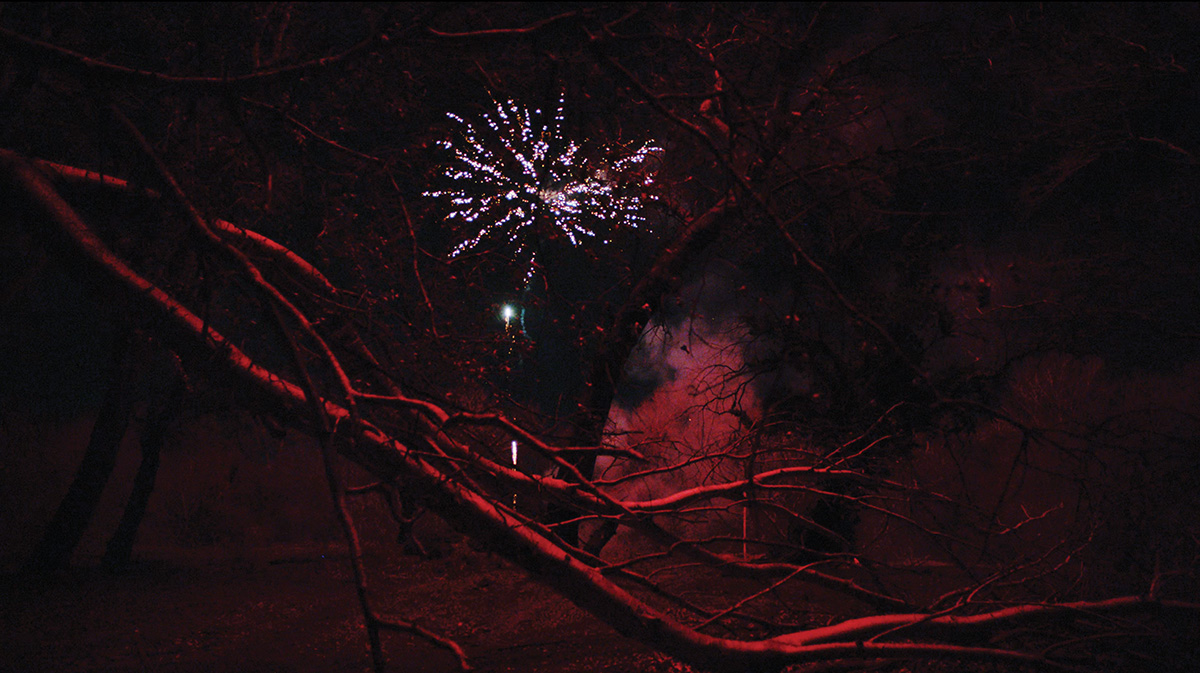
Inspired by Donna Haraway and John Berger’s contemporary theories on interspecies relations, Andro Eradze fills the frames of his works with plants and animals poised to exceed their boundaries. His camera follows scenes on the cusp of something undefined: a smouldering campfire, a stormy forest of wind-whipped trees, a flooding football pitch. Accompanied by haunting, transcendent soundtracks, his films feel like a compilation of the transitional moments of a feature film, leaving the viewer with a sense of expansive anticipation. Eradze’s new video installation for The Milk of Dreams, titled Raised in the dust (2022), stems from the conclusion of classical Georgian poet Vazha-Pshavela’s The Snake Eater (1901). The poem’s protagonist has a supernatural talent for understanding the language of nature; he must decide between his connection to nature and his social responsibilities, ultimately bowing to the latter. Eradze’s film takes place in a forest. Taxidermized animals appear one by one, disturbed by an uproar of New Year’s Eve fireworks. Critical of the human carnival that is disruptive, toxic, and fatal for wildlife, Eradze’s film repositions fireworks as an entry point onto the dark and mythological side of the forest, a world of plants, animals, and phantoms.
Andro Eradze (b. 1993) lives and works in Tbilisi, Georgia. He studied at the Shota Rustaveli Film Academy, as well as CCA-T (Center of Contemporary Art Tbilisi) MFA program. His works meditate on the qualitative nature of images, still as well as moving. Working primarily in Georgia, Eradze experiments with introducing narratives to the outskirts of human habitation, in the literal and figurative sense. The feeling of an uncanny, non-anthropocentric presence in his works invites the viewer to the liminal space between the subjective and the visceral, between cognition, perception and the alien otherness of non-human experience. Animals, objects, plants, and digital artifacts permeate a sense of presence in a landscape that exists simultaneously parallel and entangled human experience. Eradze’s practice investigates the potentiality of animism as method. Photography, installations, experimental cinema practices and video blend into a project contemplating the fading present, in which the Anthropocene is faltering, and everything operates independently of it. Building upon the legacy of alternative approaches to reality—surrealism and magical realism—his images blur the distinction between the imaginary and the real.
Daniel Erb, Patrik METZGER
Catalogue : 2007West-Berlin | Documentaire | dv | couleur | 3:47 | Allemagne | 2006
Daniel Erb, Patrik METZGER
West-Berlin
Documentaire | dv | couleur | 3:47 | Allemagne | 2006
Histoires de l'est de Berlin-Ouest. Ou pourquoi Berlin-Ouest se trouve très loin en République kalmouke.
DANIEL ERB, né le 08/08/1976 Cameraman et cinéaste. Sélection de films: DIE AFFEN IN DEN BÄUMEN DES ODYSSEUS (1999), film documentaire expérimental IN MEMORIAM (2003), clip documentaire PARTISAN (2004), film documentaire THE PICK-UP (2004), court-métrage 2800km NACH HAUSE (2005), film documentaire court PATRIK METZGER, né le 19.05.1969 Sélection de films: FUNKEL (2002), film d'animation
Köken Ergun
Catalogue : 2007The Flag | Vidéo expérimentale | dv | couleur | 9:1 | Turquie | 2006

Köken Ergun
The Flag
Vidéo expérimentale | dv | couleur | 9:1 | Turquie | 2006
?The Flag? ('Le Drapeau') est la seconde partie de la série de vidéos de Köken Ergun sur les cérémonies contrôlées par l?état en Turquie lors de fêtes nationales. Tourné lors du ?Jour des Enfants? du 23 avril, date qui marque la mise en place du nouveau parlement turc et la chute officielle de l?Empire Ottoman en 1920, ce film témoigne d?une représentation patriotique pompeuse conçue par les adultes dans le but d'être mise en scène par des enfants. Durant la cérémonie, présidée par le maire et le gouverneur d?Istanbul et avec la participation d?un général de haut rang, les élèves d?une école primaire lisent à voix haute des poèmes et des serments. Le patriotisme se métamorphose alors en nationalisme pur et dur. L?un des textes, ?Le Drapeau?, est récité par une petite fille qui jure de ?détruire le nid de tous les oiseaux qui ne saluent pas le drapeau [de son pays] durant son vol? et de ?creuser la tombe de toutes les personnes qui ne regardent pas le drapeau [comme elle le fait].?
Né à Istanbul, Köken Ergun a été l?élève du dramaturge Güngör Dilmen et de l?actrice Yildiz Kenter au Conservatoire d?état d?Istanbul et il a effectué son diplôme de troisième cycle au King?s College de Londres. De 1998 à 2002 il a travaillé avec le réalisateur américain Robert Wilson. Ergun a également travaillé avec Aydin Teker à Istanbul en jouant dans ?Density? et ?iiao?. En septembre 2001, Ergun a présenté ?öte-oceanwide?, un projet d?installation/performance, à l?occasion de la Biennale d?Istanbul avec Carlos Soto, Ferhat Karakaya et Dominic Reeves. Bénéficiaire de l?American Center Foundation et de la Jerome Robbins Foundation, Ergun a plus récemment exposé une installation sonore à Kiasma à Helsinki. Il écrit actuellement sa thèse à l?Istanbul Bilgi University sur ?L?Elément de stress sur le corps contemporain dans les nouveaux arts médiatiques d?aujourd?hui.? La résidence d?Ergun à Location One est financée par la Jerome Robbins Foundation ; le Ministère des affaires étrangères de Turquie, Mavi Jeans ; Istanbul Bilgi University, le Marmara-Manhattan et le Moon and Stars Project.
Jonas Erler
Catalogue : 2025Der Junge mit dem Perlenohrring | Fiction expérimentale | 16mm | couleur | 8:33 | Allemagne | 2023
Jonas Erler
Der Junge mit dem Perlenohrring
Fiction expérimentale | 16mm | couleur | 8:33 | Allemagne | 2023
The boy is familiar with his surroundings. His path is linear and without any detours. Slowly, doubts creep into his mind and he begins to question the status quo. Where does his path lead?
Jonas Erler is studying at the Academy of Fine Arts Leipzig (HGB) in the class of Heidi Specker. In 2022 he took part in the Connecting Talents program "Visegrád in Short(s)" of Filmfest Dresden under the mentorship of Csaba Bollók and in 2024 in the Oberhausen Seminar. He works closely with the Chemnitzer Filmwerkstatt. Currently he is working as assistant director for Luise Donschen.
Felipe Esparza
Catalogue : 2022Cortar un arbol en luna verde | Doc. expérimental | 4k | couleur et n&b | 8:0 | Pérou | 2021
Felipe Esparza
Cortar un arbol en luna verde
Doc. expérimental | 4k | couleur et n&b | 8:0 | Pérou | 2021
From the diary of Christopher Columbus, October 15, 1492: "And deviated from the land by two lombard shots, there is in all these islands so much depth that one cannot reach it. These islands are very green and fertile and have very sweet airs, and there may be many things that I do not know, because I do not want to stop to go through many islands to find gold". They had only been on land for four days. The gold never existed. It is only possible to suppose the sweetness of the air. The islands are still green.
Felipe Esparza’s work creates dynamic links and tensions between film, visual arts and video creation. In his projects there is an interest in social content coexisting with an exploration of themes such as nature, the sacred, non-verbal communication, its symbolic derivations, and the relationship between image and time, image and history, and image and truth. He approaches the complex representation of these themes by developing visual narratives in which the contemporary visual imagination cohabits with archives and with local and universal cultural codes, to the point of creating pieces of metalanguage. He is currently focusing on rituals, focusing on themes such as post-colonial remains around the sacred and the raw material with which cities are built as a sensitive archaeological gesture. His videos and video installations have been shown in national art centers such as: MALI, Luis Miró Quesada, Lugar de la Memoria, Ministerio de Cultura (Lima), Festival de Lima Independiente, Festival Lima Alterna, and international ones such as: Rencontres Internationales Paris/Berlin - New Cinema and Contemporary Art, Guangzhou Image Triennial (China), Shangyuang Museum of Contemporary Art (Beijing), Videobrasil Festival (Sao Paulo), Cámara Municipal de Lisboa (Portugal), Los Angeles Film Forum, HANGAR Art Production Center (Madrid), Buenos Aires Video Art Festival, Rotterdam International Film Festival, Uppsala, Molodist, Curtocircuíto, among others. Graduated from the Master of Mal de Foco at the Centro de la Imagen (Peru), Director at the Berlinale Talent Campus and selected artist at Le Fresnoy - Studio national des arts contemporains, France.
Catalogue : 2016Soga de muerto | Film expérimental | hdv | noir et blanc | 6:26 | Pérou | 2014
Felipe Esparza
Soga de muerto
Film expérimental | hdv | noir et blanc | 6:26 | Pérou | 2014
Ayahuasca is a drink used by the Amazonian indigenous peoples, which is commonly called "medicine" to access higher states of consciousness, experimenting with different gods, emotions, fears and egos, `cures`, change habits, thoughts, emotional states . According to tradition, the ayahuasca is the rope that allows the spirit leaves the body without this die.
Graduated in Communications, specializing in audiovisual by the Peruvian University of Applied Sciences. I worked in several agencies like Pragma, McCann Erickson and audiovisual production companies such as 7 Samurai and Cine 70. Film worked as assistant director in two Peruvian films. I was art director for several magazines and independent design and cultural publications in my own studio. Explore the audiovisual language, graphic design and illustration and painting. In my audiovisual work, I have been in the official selection at the Independent Film Festival of Lima (2013-2015). Insurgency displays moving: anthology of Peruvian audiovisual margins. (MALI 2013). Intermittent sample Lima Film Festival (2012). It shows at the Cultural Center Expaña (2011). Latin American projection UnionDocs for Documentary Arts (NY).
Micael Espinha
Catalogue : 2015CINZA | Vidéo | hdv | noir et blanc | 10:2 | Portugal | 2014
Micael Espinha
CINZA
Vidéo | hdv | noir et blanc | 10:2 | Portugal | 2014
A visual and soundscaped short ambience voyage through an utopian, ghost-like city-state. In this mid twentieth century imaginary Lisbon, the power plants continue to produce energy, brand new subway network locomotives’ engines hum in standby, city lights and neon signs come alive each night and radio receivers spread Salazar’s [Portuguese Dictator] speeches - yet, nowhere is to be found the slightest human presence: there isn’t anyone to see and hear this newcomer modernity’s heartbeat. Only statues and facades inhabit the metropolis. "CINZA" is a short film made entirely from photographs that depict Lisbon during the dictatorial regime installed in Portugal from 1926 until 1974. Their authors were Mário Novais, Horácio Novais and Casimiro dos Santos Vinagre, and the photographs now belong to the Calouste Gulbenkian Foundation Art Library Archive.
Micael was born in 1974 and graduated in ‘Directing’ at the Lisbon Theatre and Film School, in 2003, where he had already obtained his bachelor degree in ‘Editing’, in 1999. He is a partner at the production company Roughcut, where he’s been developing documental projects, television series, fiction and animation short films, being also responsible for the company’s post-production of several projects and works. He co-founded with David Gabriel, in 2012, the colective "Companhia do Inferno", which dedicates itself to the development and production of videoart projects and scriptwriting, under which he already directed several experimental videos. Since 2000, Micael works regularly as a freelance editor in advertising, television, fiction, documentary and music videos, and he worked with such directors as Bruno Ramos, João Nuno Pinto, Júlio Alves, Marco Martins, Miguel Coimbra, Miguel Seabra Lopes, Pedro Cláudio, Pedro Macedo, Pedro Sena Nunes, among others. He directed the television series "KmZero" which was aired on RTP2 (2007/2008), and co-directed the cultural magazine "Câmara Clara", which also aired on RTP2 (2008/2009). Recently, he co-directed the documental series “Tradições – Retalhos da Vida de um Povo”, produced by Roughcut and broadcasted by SIC Notícias (2013/2014). He produced, directed and animated the animation short film "Black Bug", which was one of the finalists of the ZON Awards Creativity in Multimedia (2011/2012). In collaboration with the performing arts, Micael directed the video for the theatre play “Old Times”, staged by Duval Pestana, for ONIMED, and directed the video for the performance “The Lusiads” by António Fonseca, which premiered at Guimarães – European Capital of Culture, in 2012, and was already presented in Lisbon, Coimbra, Almada and Brazil (2013/2014).
Keina Espiñeira
Catalogue : 2017Tout le monde aime le bord de la mer | Doc. expérimental | 4k | couleur | 16:56 | Espagne | 2015
Keina EspiÑeira
Tout le monde aime le bord de la mer
Doc. expérimental | 4k | couleur | 16:56 | Espagne | 2015
A group of men are waiting at the fringes of a coastal woodland for the journey to Europe. They are in a temporal and spatial limbo. A film is shot there with the men playing themselves. The landscape changes and where they are is no longer their motherland. The water is not transparent, not clear. Myths from the colonial past collide with present times, memory survives.
Keina Espiñeira (1983, Spain) is a scholar and filmmaker. Her artistic work is related to borders, landscapes and mythologies. She holds a Master`s degree in Direction and Production of Documentary Films, awarded by DOCMA. She has also worked as social researcher in California, Netherlands, Spain and Morocco.
Eteam
Catalogue : 2025Our Non-Understanding of Everything #09 | Vidéo expérimentale | 4k | couleur | 20:4 | Allemagne, USA | 2023
Eteam
Our Non-Understanding of Everything #09
Vidéo expérimentale | 4k | couleur | 20:4 | Allemagne, USA | 2023
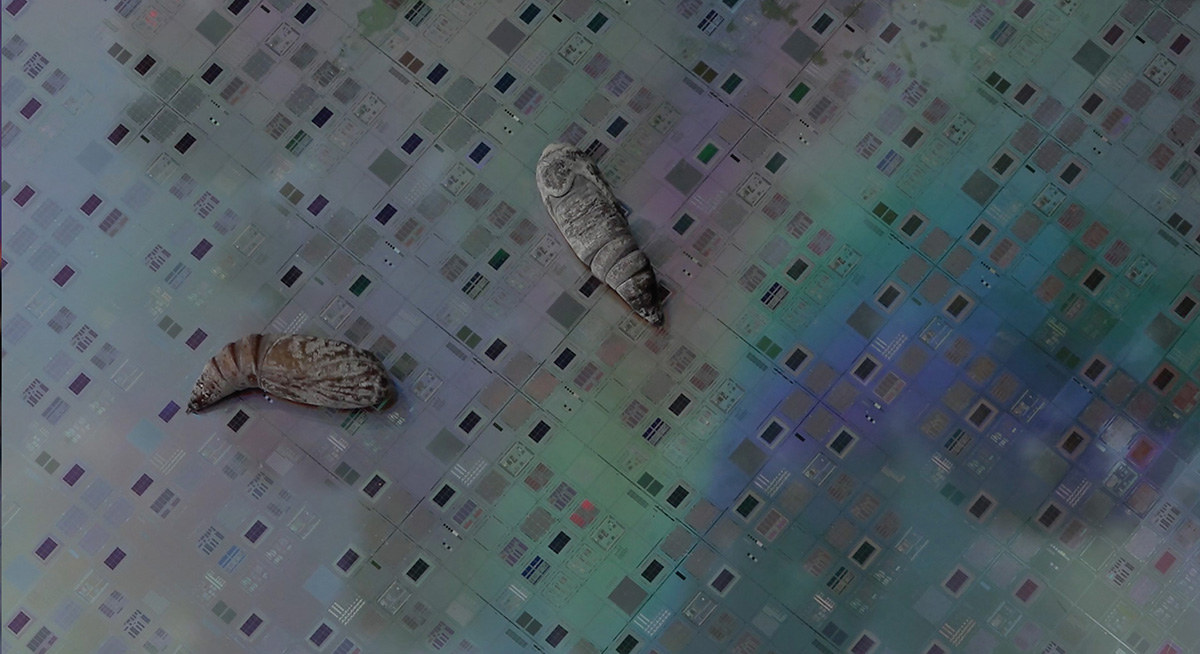
“Our Non-Understanding of Everything #09” is part of a larger series that explores how the structures of architecture, semiconductors, and circuits become forms of expression reflecting hierarchies, cognitive processes, and relationships to the natural environment. The project is the daily practice of observation, questioning and switching perspectives in order to understand our relationship to our tech-devices and their existence in the world. Motivated by finding ways to imagine what our smart phones want from us and if we can communicate with them, we are using our natural and human built environments to possibly entertain, relax and stimulate the technical devices, that so profoundly influence our conception of the universe and our relation to it.
eteam uses video, performance, installation and writing to instigate and articulate encounters at the edges of diverging cultural, technical and aesthetic universes. Through their artistic practice eteam finds ways to collaborate with people who operate on the edges of mainstream culture and the marketplace. They are drawn to those willing to experiment, cross genres and cultural boundaries, together we forge proximity and make visible the interconnections we humans share with land, animals, plants, ghosts, deities and objects. Practicing art is their way to enter the “outside,” pay close attention to the details, while trying to understand the whole. Eteam’s narratives have screened internationally in video- and film festivals, they lectured in universities, presented in art galleries and museums and performed in the desert, on fields, in caves in ships, black box theaters and horse-drawn wagons. They could not have done this without the support of Creative Capital and The John Simon Guggenheim Memorial Foundation, Art in General, NYSCA, NYFA, Rhizome, CLUI, Taipei Artist Village, Eyebeam, Smack Mellon, Yaddo and MacDowell, the City College of New York, the Academy of Visual Art HKBU and the Fulbright Scholar Program, among many others. Their novel “Grabeland” was published by Nightboat Books in February 2020.
Catalogue : 2023Our Non-Understanding of Everything 04 | Vidéo | hdv | couleur | 14:13 | Allemagne, USA | 2022
Eteam
Our Non-Understanding of Everything 04
Vidéo | hdv | couleur | 14:13 | Allemagne, USA | 2022
What is our relationship to our tech devices? How do smart devices exist in the world? What do we want from them? What do they want from us? "Our Non-Understanding of Everything" is a daily practice, where we observe and speculate of how our personal tech devices and their building parts exist in a possible future, shared between the architecture of circuitry, political thought and the wild and programmed parts of our natural environments. “Our Non-Understanding of Everything” signals a complete openness to learn, shift viewpoints, upturn embedded prejudices, discover, surprise and draw connections between phenomena and things that reside and operate in wildly diverse realms. The project aligns with non-representational ideas, in which events and encounters in the world are constituted through emergent, relational, and intangible complexities that cannot necessarily be articulated or contained within the particular ways we attempt to represent them.
eteam is a two people collaboration who uses video, performance, installation and writing to instigate and articulate encounters at the edges of diverging cultural, technical and aesthetical universes. Traversing over earthly planes they trigger communication, collaborations and transformations between humans, nature, and technologies. Through their artistic practice eteam finds ways to collaborate with people who operate on the edges of mainstream culture and the marketplace. They are drawn to those willing to experiment, cross genres and cultural boundaries, they forge proximity and make visible the interconnections we humans share with land, animals, plants, ghosts, deities and objects. Eteam’s work is land- and process-based, often long term, situational and happens in places they don’t inhabit permanently. Practicing art is their way to enter the “outside,” pay close attention to the details, while trying to understand the whole. Eteam’s narratives have screened internationally in video- and film festivals, they lectured in universities, presented in art galleries and museums and performed in the desert, on fields, in caves and on mountaintops, in ships, black box theaters and horse-drawn wagons. They could not have done this without the generous support of Creative Capital and The John Simon Guggenheim Memorial Foundation, Art in General, NYSCA, NYFA, Rhizome, CLUI, Taipei Artist Village, Eyebeam, Smack Mellon, Yaddo and MacDowell, the City College of New York, the Academy of Visual Art HKBU and the Fulbright Scholar Program, among many others. Their novel “Grabeland” was published by Nightboat Books in February 2020. They are represented by Gallery M29, Cologne Germany and Video Data Bank, Chicago.