Catalogue > Liste par artiste
Parcourez la liste complète des artistes présentés dans le cadre des Rencontres Internationales depuis 2004. Utilisez le filtre alphabétique pour affiner vos recherches.
Jules Ramage
Catalogue : 2023Ghostmarkets | Doc. expérimental | 0 | couleur | 6:24 | France | 2022

Jules Ramage
Ghostmarkets
Doc. expérimental | 0 | couleur | 6:24 | France | 2022
Ghostmarkets est né d’un travail de terrain ayant débuté en détention en septembre 2019 : prenant pour point de départ l’interdiction de toute transaction dans l’espace carcéral, dix hommes détenus s'engagent dans la création d'un réseau de production monétaire à l'intérieur des murs. Les débats menés à cette occasion témoignent de l'existence préalable d'un système économique invisible, basé sur l’échange de services, les dettes d'honneur et la performance de la masculinité. Alors qu'il dirige et capte ces échanges, Jules Ramage mesure progressivement la complexité de sa position : le protocole de vérification des cartes SD transforme son camescope en outil de surveillance. Les archives audios, vidéos et textuelles de cette expérience collective sont montées en un film "troué", marqué par l'extraction des voix de ses collaborateurs détenus, concentrant l'attention sur la matière, sa transformation et sa prise de valeur symbolique. Avec John Dow, Ben, Christophe, Brahli, Sparafucile, Youssef Rhnima, Philippe T., Ilich.
Jules Ramage (1987, France) est artiste visuel. Docteur en Sémiologie du Texte et de l’Image, il est aussi chercheur associé au laboratoire CERILAC d’Université Paris-Cité, et membre de la Cité du Genre, institut interdisciplinaire de recherche en études de genre. Il explore les relations de pouvoir mises en jeu dans les structures disciplinaires et institutionnelles. Depuis 2013, il poursuit un travail de terrain approfondi dans l’espace carcéral, où il implante des protocoles collaboratifs intégrant personnes détenues et surveillant-es. Son travail a été présenté en France, aux États-Unis, en Argentine, en Angleterre, en Espagne et en Allemagne. Il a été résident du CENTQUATRE-Paris, de la Cité internationale des arts, des Ateliers Médicis et du Fresnoy-studio national des arts contemporains. Pour Ghostmarkets, Jules Ramage collabore avec un groupe d’hommes détenus au sein de la maison centrale de Poissy, constitué en 2015 dans le cadre de la Section des Etudiants Empêchés, programme d’enseignement porté par l’université de Paris. Au fil des années, le groupe prend son autonomie et prend l’identité d’un collectif de recherche-création collaborative. Il comprend : John Dow, Ben, Christophe, Brahli, Sparafucile, Youssef Rhnima, Philippe T., Ilich.
Julie Ramage
Catalogue : 2021How to order online | Doc. expérimental | hdcam | couleur | 9:8 | France | 2019
Julie Ramage
How to order online
Doc. expérimental | hdcam | couleur | 9:8 | France | 2019
Soumis au contrôle des conversations téléphoniques, à l'interdiction des connexions internet et plus généralement, de tout échange entre personnes détenues, l'espace carcéral constitue une zone blanche ancrée au cœur du tissu urbain. Contournant ce fonctionnement, ces derniers construisent une série d’outils permettant de transporter objets et messages au sein de l’architecture carcérale : les yo-yos, pendant mécanique de l’intranet, qui leur permettent de "commander en ligne". De tels artefacts témoignent du développement de savoir-faire artisanaux s'adaptant aux évolutions architecturales et juridiques du monde pénitentiaire, des relations de pouvoir et de contre-pouvoir mises en jeu dans l'enfermement, mais surtout, d'un besoin universel d'échanges, dont Adam Smith avait fait le point central de toute théorie économique.
Julie Ramage (née en 1987, en France) est artiste visuelle et docteure en Histoire et Sémiologie du Texte et de l’Image. Elle explore les relations complexes se tissant entre les communautés humaines et les lieux qu’elles occupent. Ce travail implique la mise en place d’enquêtes sur le terrain et de protocoles de recherche collective qui fournissent le matériau de performances, de micro-éditions et d’installations vidéos, sonores ou numériques. Son travail a été présenté aux États-Unis, en Argentine, en Espagne et en France, notamment au Centre Pompidou, Paris (France); à la Cité Internationale des Arts, Paris (France); au Centquatre, Paris (France); au Musée de l’Homme, Paris (France); à la Chapelle des Beaux-Arts de Paris (France); au Cube, Issy-les-Moulineaux (France); à la Maison Européenne de la photographie, Paris (France). Avec l'artiste Marina Ledrein, elle a fondé Blackcut, structure de production et de diffusion collaborative qu'elle co-dirige aujourd'hui.
Julie Ramaioli
Catalogue : 2009même père même mère | Doc. expérimental | dv | couleur et n&b | 82:0 | France | 2008
Julie Ramaioli, Spina Giuseppe, Gagliardo Alessandro
même père même mère
Doc. expérimental | dv | couleur et n&b | 82:0 | France | 2008
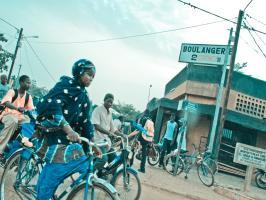
Je m?éloigne de la terre, des lieux connus, des formes. Une voix me suit, peut être est-ce la mienne, peut être est-ce celle d?un pays. J?arrive au Burkina Faso, je vogue à travers ses villes, j`essaye de me détacher des choses, des gens, d?arréter mes sens, pour voir. Mais la rigidité des différences culturelles et de ses corruptions, la méconnaissance des lieux m?emprisonne dans un état mental qui me conduit à la maladie, à l?hallucination. Lentement je me désintoxique et accompagne Dario, un compagnon de parcours, dans un village du sud. Je commence à ouvrir les yeux et à me rendre compte de ce qui est caché dans la profondeur.
La Malastrada.film est une structure de création et diffusion de cinéma de recherche qui a choisi de faire de la Production du bas une méthode de réalisation d`oeuvre cinématographiques. A la base de ce choix, il y a la volonté d`expérimenter un système nouveau de production/création qui permet de se mettre en relation avec des coproducteurs nombreux, dans l`optique d`un échange intellectuel et humain réciproque. Pour nous produire du bas signifie dépasser l`industrie télévisuelle aussi bien que celle du cinéma, rester en dehors du controle politique et esthétique des multinationales, de leur imaginaire, et de leurs histoires. Nous considérons le cinéma comme un instrument capable d`intervenir dans les processus humains et dans les dynamiques culturelles de la société contemporaine, mais surtout come un moyen de recherche de l`être, moyen pour ?reconnaitre les moments du sentir? comme conséquence d`un acte impulsif.La malastrada est animée par Allessandro Gagliardo, Giuseppe Spina JUlie Ramaioli
Catalogue : 2008france 2007 | Doc. expérimental | 16mm | noir et blanc | 18:0 | France | 2007
Julie Ramaioli
france 2007
Doc. expérimental | 16mm | noir et blanc | 18:0 | France | 2007
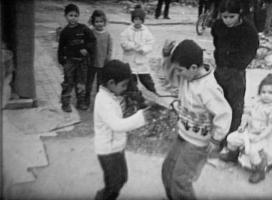
Des corps, des visages, des regards, des lieux de vie, de l`humanité. La caméra n`est pas porteuse de jugement, elle établit dans la simplicité du premier contact une relation de connivence instinctive. Il n`y a pas de victimes, pas de cause à défendre. Cela se passe en France, en 2007, dans un bidonville de Lyon, habité de Roumains, de Tziganes, oubliés de la société, sans papiers, sans droits, qu`en d`autres contrées on appellerait des intouchables. La force du film est de laisser s`épanouir dans la splendeur de ses images l`évidence du bonheur, quand le consensus ambiant rumine la langue asséchée du misérabilisme. Dans ce parti-pris de la vie, le geste est éminemment politique.Eloquence du cinéma muet.
Cinéaste et photographe sud-coréen. Il a grandi dans un univers artistique. En effet l?activité de peintre de son père lui a permis de rencontrer dans son enfance des artistes reconnus dans son pays. A l?adolescence il s?est engagé dans la danse et le travail d?acteur au sein de la Compagnie du Théâtre National. 1996. Après ses études d?acteurs il entreprent un cursus de cinéaste et de photographe en intégrant le département « film et multimédia » de l?université Honam. Pendant cette période il développe essentiellement des projets pour la télévision, l?aspect commercial étant prépondérant dans la formation. En 2002, afin de développer des projets plus personnels et engagés, il mettra à profit des échanges avec l?Ecole des Beaux-Arts de Saint-Etienne à la recherche de nouvelles expériences. En 2005 il commence à intégrer le collectif Film flamme. Puis il expérimente le développement des négatifs "dans sa baignoire" après l`expérience du film collectif "Besoin de rien" (1 mai 2006) 2006/2007, il obtient le Diplôme National d` Arts Plastique à l`école des Beaux Arts de Marseille En 2008, il passe le Diplôme National Supérieur Expression Plastique des Beaux Arts à Genève (Suisse). Il a aussi à son actif plusieurs expositions photographiques.
Julie Ramaioli, Spina Giuseppe, Gagliardo Alessandro
Catalogue : 2009même père même mère | Doc. expérimental | dv | couleur et n&b | 82:0 | France | 2008
Julie Ramaioli, Spina Giuseppe, Gagliardo Alessandro
même père même mère
Doc. expérimental | dv | couleur et n&b | 82:0 | France | 2008
Je m?éloigne de la terre, des lieux connus, des formes. Une voix me suit, peut être est-ce la mienne, peut être est-ce celle d?un pays. J?arrive au Burkina Faso, je vogue à travers ses villes, j`essaye de me détacher des choses, des gens, d?arréter mes sens, pour voir. Mais la rigidité des différences culturelles et de ses corruptions, la méconnaissance des lieux m?emprisonne dans un état mental qui me conduit à la maladie, à l?hallucination. Lentement je me désintoxique et accompagne Dario, un compagnon de parcours, dans un village du sud. Je commence à ouvrir les yeux et à me rendre compte de ce qui est caché dans la profondeur.
La Malastrada.film est une structure de création et diffusion de cinéma de recherche qui a choisi de faire de la Production du bas une méthode de réalisation d`oeuvre cinématographiques. A la base de ce choix, il y a la volonté d`expérimenter un système nouveau de production/création qui permet de se mettre en relation avec des coproducteurs nombreux, dans l`optique d`un échange intellectuel et humain réciproque. Pour nous produire du bas signifie dépasser l`industrie télévisuelle aussi bien que celle du cinéma, rester en dehors du controle politique et esthétique des multinationales, de leur imaginaire, et de leurs histoires. Nous considérons le cinéma comme un instrument capable d`intervenir dans les processus humains et dans les dynamiques culturelles de la société contemporaine, mais surtout come un moyen de recherche de l`être, moyen pour ?reconnaitre les moments du sentir? comme conséquence d`un acte impulsif.La malastrada est animée par Allessandro Gagliardo, Giuseppe Spina JUlie Ramaioli
Catalogue : 2008france 2007 | Doc. expérimental | 16mm | noir et blanc | 18:0 | France | 2007
Julie Ramaioli
france 2007
Doc. expérimental | 16mm | noir et blanc | 18:0 | France | 2007
Des corps, des visages, des regards, des lieux de vie, de l`humanité. La caméra n`est pas porteuse de jugement, elle établit dans la simplicité du premier contact une relation de connivence instinctive. Il n`y a pas de victimes, pas de cause à défendre. Cela se passe en France, en 2007, dans un bidonville de Lyon, habité de Roumains, de Tziganes, oubliés de la société, sans papiers, sans droits, qu`en d`autres contrées on appellerait des intouchables. La force du film est de laisser s`épanouir dans la splendeur de ses images l`évidence du bonheur, quand le consensus ambiant rumine la langue asséchée du misérabilisme. Dans ce parti-pris de la vie, le geste est éminemment politique.Eloquence du cinéma muet.
Cinéaste et photographe sud-coréen. Il a grandi dans un univers artistique. En effet l?activité de peintre de son père lui a permis de rencontrer dans son enfance des artistes reconnus dans son pays. A l?adolescence il s?est engagé dans la danse et le travail d?acteur au sein de la Compagnie du Théâtre National. 1996. Après ses études d?acteurs il entreprent un cursus de cinéaste et de photographe en intégrant le département « film et multimédia » de l?université Honam. Pendant cette période il développe essentiellement des projets pour la télévision, l?aspect commercial étant prépondérant dans la formation. En 2002, afin de développer des projets plus personnels et engagés, il mettra à profit des échanges avec l?Ecole des Beaux-Arts de Saint-Etienne à la recherche de nouvelles expériences. En 2005 il commence à intégrer le collectif Film flamme. Puis il expérimente le développement des négatifs "dans sa baignoire" après l`expérience du film collectif "Besoin de rien" (1 mai 2006) 2006/2007, il obtient le Diplôme National d` Arts Plastique à l`école des Beaux Arts de Marseille En 2008, il passe le Diplôme National Supérieur Expression Plastique des Beaux Arts à Genève (Suisse). Il a aussi à son actif plusieurs expositions photographiques.
Lou Rambert Preiss
Catalogue : 2019Ici le chemin des ânes | Fiction | 0 | couleur | 22:0 | France, Suisse | 2018
Lou Rambert Preiss
Ici le chemin des ânes
Fiction | 0 | couleur | 22:0 | France, Suisse | 2018
Dans une grande carrière de roche, une explosion révèle un objet venu d’un autre temps.
Lou Rambert Preiss nait en 1993. Après une licence de Philosophie à la Sorbonne, il entre en Bachelor Cinéma à l’Ecole Cantonale d’Art de Lausanne. Il vit maintenant à Paris.
Catalogue : 2018Les Zumains (Doller) | Fiction | hdv | couleur | 13:58 | France, Suisse | 2017
Lou Rambert Preiss
Les Zumains (Doller)
Fiction | hdv | couleur | 13:58 | France, Suisse | 2017
Jonathan, adolescent solitaire, se costume secrétement en sa chanteuse virtuelle préférée. Lorsqu’il trouve un semblable sur internet, il rêve d’une rencontre pour partager un peu d’humanité?
Lou naît en 1993. Après une licence de philosophie à Paris où il réalise son premier court métrage, 'Des Attachements', il entre en section Cinéma à l’Ecole cantonale d’art de Lausanne. Il réalise 'Les Zumains' dans le cadre de l’atelier fiction de deuxième année.
Sj. Ramir
Catalogue : 2023I Found Water | Film expérimental | hdv | couleur et n&b | 9:33 | Nouvelle-Zélande, Australie | 2023
Sj. Ramir
I Found Water
Film expérimental | hdv | couleur et n&b | 9:33 | Nouvelle-Zélande, Australie | 2023
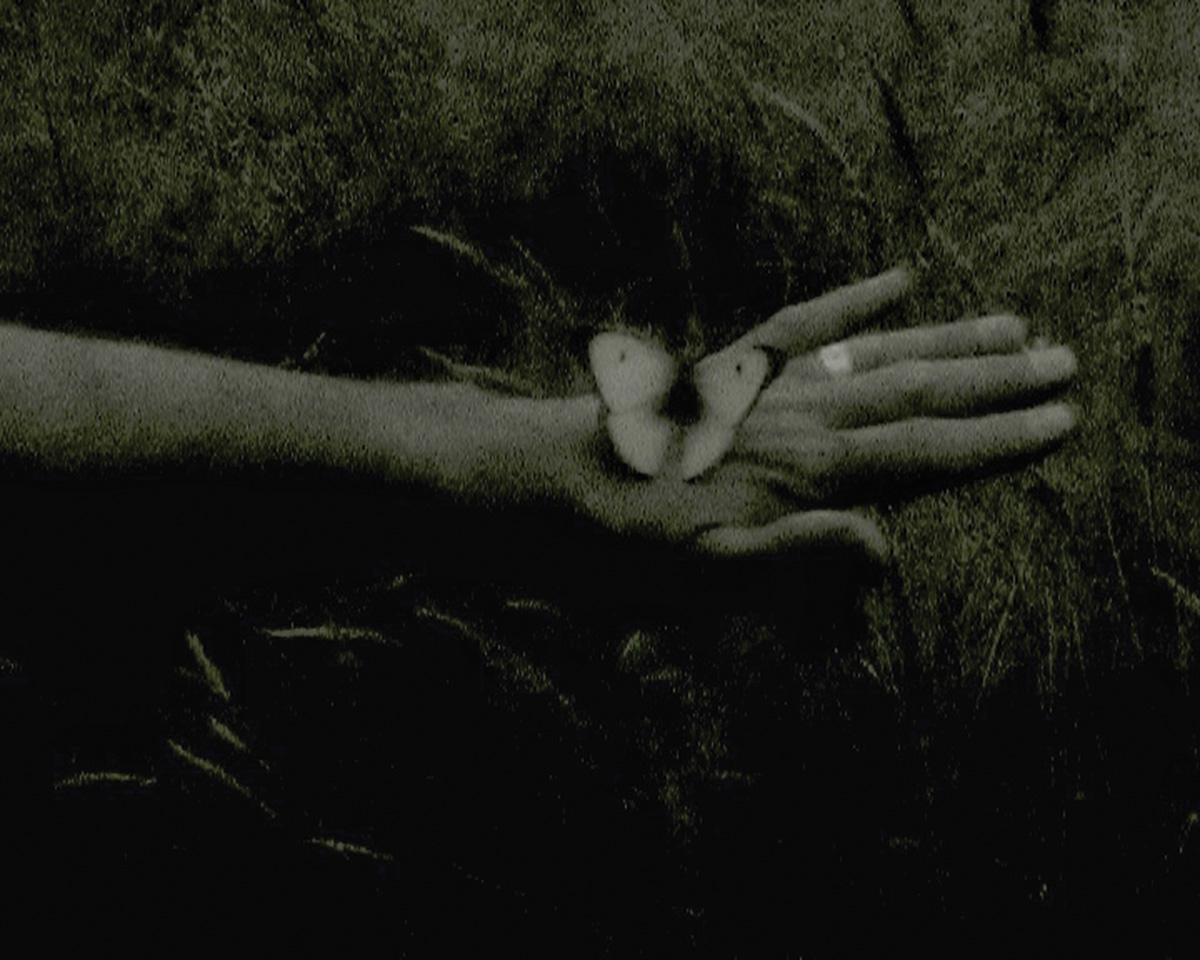
Experimenting with custom made lens filters to diffuse and distort, I Found Water is an autobiographical film that contemplates memory and experience.
SJ.Ramir is a New Zealand filmmaker residing in Melbourne, Australia. His films are concerned with existence and its relationship to, and occupation of, geographical space. The landscapes and structures in his films are a mix of actual locations and constructed 3D models.
Catalogue : 2021We Are Without | Vidéo expérimentale | mov | couleur et n&b | 3:9 | Nouvelle-Zélande, Australie | 2020
Sj. Ramir
We Are Without
Vidéo expérimentale | mov | couleur et n&b | 3:9 | Nouvelle-Zélande, Australie | 2020
Nos mains ne peuvent pas ressusciter. Dans les ombres granuleuses d'un paysage dystopique, "We Are Without" est une réponse visuelle à la vie, à la mort et à l'aveuglement...
SJ.Ramir est un cinéaste néo-zélandais vivant à Melbourne, en Australie. Ses films contiennent souvent des silhouettes solitaires se déplaçant dans des paysages éloignés et isolés. Les paysages et les structures de ses films sont un mélange de lieux réels et de maquettes 3D. Le style dominant de ses films provient de ses premières années d'expérimentation avec des filtres sur mesure pour l’objectif de sa caméra. Ceux-ci mettaient les pixels vidéo en valeur et produisaient des images floues et déformées qui, selon lui, évoquaient visuellement certains états émotionnels liés à un thème central de son œuvre, l'isolement. Ses films ont été projetés dans de nombreux festivals prestigieux dans le monde entier, dont la 67e édition de la Mostra de Venise (Italie); le Festival international du film de Rotterdam (Pays-Bas); le Melbourne International Film Festival, Melbourne (Australie); le Jih.lava International Documentary Film Festival, Jihlava (République tchèque) et le Oberhausen International Short Film Festival (Allemagne).
Sj Ramir
Catalogue : 2018In This Valley of Respite, My Last Breath... | Vidéo expérimentale | hdv | couleur | 5:6 | Nouvelle-Zélande, Australie | 2017
Sj Ramir
In This Valley of Respite, My Last Breath...
Vidéo expérimentale | hdv | couleur | 5:6 | Nouvelle-Zélande, Australie | 2017
A valley starved of light. Weariness. Fatigue. An offering of shelter; a surrender of breath...
Originally a photographer, artist/filmmaker SJ.Ramir later moved to digital video - shooting scenes of lone figures moving across remote and isolated geographical landscapes. The landscapes and structures in his films are often a mix of real and/or constructed 3D models. The prominent style of his films came from early years of experimentation with custom-made lens filters. These filters enhanced video pixels and produced hazy, distorted images, which Ramir felt were visually suggestive of emotional states connected with a central theme in his work: isolation. His films have been exhibited at art galleries worldwide and screened at many prestigious film festivals including: the 67th Venice International Film Festival, International Film Festival Rotterdam (2009 and 2010), Edinburgh International Film Festival (2012 and 2013), Melbourne International Film Festival (2011) and the International Short Film Festival Oberhausen (2009).
Catalogue : 2015In This Valley, My Heart Is Buried Deep... | Film expérimental | hdv | couleur | 6:7 | Nouvelle-Zélande | 2014
Sj Ramir
In This Valley, My Heart Is Buried Deep...
Film expérimental | hdv | couleur | 6:7 | Nouvelle-Zélande | 2014
“On the morning of my death – just after sunrise, and before my spirit had departed, a mysterious figure entered the house... “ In This Valley My Heart Is Buried Deep, is an experimental narrative that uses a combination of visuals and text. Based on an actual dream, the video explores what it means to belong; connection to the land; connection to a place…
Originally a photographer, artist/filmmaker SJ.Ramir later moved to digital video - shooting scenes of lone figures moving across remote and isolated geographical landscapes. The landscapes in his films are often a mix of real and/or constructed 3D models. The prominent style of his films came from early years of experimentation with custom-made lens filters. These filters enhanced video pixels and produced hazy, distorted images, which Ramir felt were visually suggestive of emotional states connected with a central theme in his work: isolation. Ramir’s distinctive films have screened at numerous film festivals worldwide including the Venice International Film Festival, International Film Festival Rotterdam, Edinburgh International Film Festival and the Melbourne International Film Festival. He currently resides in Melbourne, Australia.
Mary-audrey Ramirez
Catalogue : 2025Forced Amnesia | Installation multimédia | hdv | couleur | 0:0 | Luxembourg | 2024
Mary-audrey Ramirez
Forced Amnesia
Installation multimédia | hdv | couleur | 0:0 | Luxembourg | 2024
The game follows ideas such as design by subtraction. A world devoid of time and space where the great dichotomies of human thought no longer cast a shadow. A post-anthropocentric world with a non-hierarchical structure. Here we cannot orient ourselves, which defies our understanding in a refreshing way and makes us forget - at least for a few moments - who we are; where we come from; and that we believe we are of particular importance. Forced Amnesia follows a simple instruction pattern: explore and you will find. As it is devoid of language all we have to do is follow our instinct. What we learned in games that we played before. The idea for Forced Amnesia started 2023 as an art exhibition, which led to the development of a video game. Forced Amnesia is a game with focus on quiet moments, inspired by the concept of design by subtraction, philosophy introduced by Fumito Ueda. The game gives the player lots of space to navigate through. Forced Amnesia’s aesthetics moves through a stage of comforting uncertainty, the player does not know if they are above or under water, swinging or flying. This state, fused with a calm soothing musical score creates a space for relaxation and calm. Places that nowadays are getting increasingly harder to find. Forced Amnesia aims at an older generation of gamers. Gen X and Gen Y will be the first generation to grow old playing video games. As we slowly age, our lifestyle and perception changes, Forced Amnesia is there to accompany us.
Mary-Audrey Ramirez studied under Thomas Zipp at the University of the Arts in Berlin Germany from 2010 to 2016. In 2019 she was the recipient of the prestigious Edward Steichen Award in Luxembourg for her textile-based sculptural and pictorial works. Early 2025 Ramirez’s Qrst percent for art work will be Qnalized in Berlin Spandau. Her works have been shown in both solo and group exhibitions at institutions such as Casino Luxembourg, forum d’art contemporain, Luxembourg; Kunsthalle Gießen, Gießen; Dortmunder Kunstverein, Dortmund; TRAUMA BAR UND KINO, Berlin; Kai 10 Arthena Foundation, D sseldorf; Haus Mödrath, Kerpen; Margot Samel Gallery, New York City; Polansky Gallery, Prague and MARTINETZ, Cologne. She was also part of Esch2022+ARS ELECTRONICA, Luxembourg/Linz. “Ramirez creates a dense image of a world with her figurative representations in pictures, objects and games, It is a world devoid of time and space where the great dichotomies of human thought no longer play a role. A post-anthropocentric world that is not organised hierarchically. A world in which we cannot orientate ourselves, which defies our understanding in a refreshing way and makes us forget, at least for a few moments, who we are, where we come from and that we believe we are of particular importance” - (Annekathrin Kohout)
Enrique Ramirez
Catalogue : 2025Las tres memorias | Fiction expérimentale | 4k | couleur | 15:54 | Chili | 2023
Enrique Ramirez
Las tres memorias
Fiction expérimentale | 4k | couleur | 15:54 | Chili | 2023
A man with no memory walks through the hall of honor of the former national congress of Chile, a place that was closed during the military dictatorship and that has become an important place again during the writing of the two new failed constitutions in Chile. In front of him is the famous painting of Pedro Subercaseaux that represents the discovery of Chile, this man without memory tries to remember our national anthem. Through this effort is built this film that seeks to make us travel inside an imaginary landscape in the heart of the History and architecture of the main hall of governmental power in Chile, where all presidents promised a fairer and better country ... this landscape is Chile : an experiment of neoliberalism that, despite everything, continues to breathe on our sky and dream
Enrique Ramírez was born in 1979 in Santiago de Chile. Since 2007, he lives and works between Paris (France) and Santiago (Chile). He studied popular music and cinema in Chile before joining the postgraduate master in contemporary art and new media of Le Fresnoy – Studio National des Arts Contemporains (Tourcoing, France). In 2014 he won the discovery price of Les Amis du Palais de Tokyo, Paris, France. He has since exposed in some major places as Le Palais de Tokyo, Centre Pompidou, Espace Culturel Louis Vuitton or le 104), France (le Grand Café, Saint-Nazaire) and in Central and South America (Museo Amparo, Puebla, Mexico ; Museo de la memoria, Santiago ; Parque de la memoria en Argentina, Buenos Aires). In 2017, he is invited to the 57th International Art Exhibition - La Biennale di Venezia curated by Christine Macel, Ramírez is nominated for the Marcel Duchamp Prize 2020
Catalogue : 2020La memoria verde | Fiction expérimentale | 4k | couleur | 12:59 | Chili, Cuba | 2019
Enrique Ramirez
La memoria verde
Fiction expérimentale | 4k | couleur | 12:59 | Chili, Cuba | 2019
Video installation, which takes an internal journey through memories and landscapes: The ex-tinction of memory as well as plants and traditions. Through its inhabitants, this film talks about plants, and through them, people and their society.
Enrique Ramírez est né en 1979 à Santiago du Chili. Vit et travaille à Paris (France) et Santiago (Chili). Il a étudié la musique populaire et le cinéma au Chili avant de rejoindre en 2007 le Studio National des Arts Contemporains-Le Fresnoy (Tourcoing, France). En 2013, il a remporté le prix des Amis du Palais de Tokyo, Paris, France. En 2014, il remporte le prix Loop fair, Barcelone. Il a notamment exposé au Le Palais de Tokyo, Centre Pompidou, Espace Culturel Louis Vuitton, IX Bienal international d?art, Bolivie; Museo Amparo, Puebla, Mexique; Musée de la mémoire, Santiago; Centre Culturel MATTA, Argentine, Buenos Aires et au Grand Café à Saint-Nazaire. En 2017, il est invité par Christine Macel à participer à l?exposition "Viva Arte Viva" de la 57ème exposition internationale de la Biennale di Venezia Aujourd?hui Ramírez est nominé au prix Marcel Duchamp 2020
Catalogue : 2018Deux faisceaux blancs groupés et rotatifs | Fiction expérimentale | 4k | couleur | 24:41 | Chili, France | 2017
Enrique Ramirez
Deux faisceaux blancs groupés et rotatifs
Fiction expérimentale | 4k | couleur | 24:41 | Chili, France | 2017
Il est dit que certaines tribus indiennes pensaient que nous marchions vers le passé avec l`avenir derrière nous, parce que le passé est quelque chose qui est en face de nous, nous pouvons le voir, alors que l`avenir serait derrière nous, comme un point aveugle, invisible et inconnu... Ils disaient que les tâches blanches (les étoiles) que nous apercevons dans le ciel étaient des trous par où la lumière de l`univers entrait et que l`obscurité n`y existait pas. La première chose que nous voyons, si nous arrivons depuis l`Amérique en bateau, est le sémaphore de Créac`h. nous pouvons voir une lumière qui annonce la terre proche, ce sont les yeux de l`ancien continent, le faisceau d`une étoile artificielle qui toutes les 10 secondes jette des éclairs de lumière pour montrer la voie aux voyageurs de la mer, qui viennent souvent du Nouveau Monde, ou de la fin du monde, le Finistère... L`autre bout du monde... Ces lumières indiquent la terre ou la fin de celle-ci, elles sont les signaux de référence du monde, les différentes constellations qui portent en elle la mémoire de leur propre lumière, indiquant leur passé et leur avenir... Dans le présent.
Enrique Ramírez est né en 1979 à Santiago du Chili. Vit et travaille à Paris (France) et Santiago (Chili). Il a étudié la musique populaire et le cinéma au Chili avant de rejoindre en 2007 le Studio National des Arts Contemporains-Le Fresnoy (Tourcoing, France). En 2013, il a remporté le prix des Amis du Palais de Tokyo, Paris, France. En 2014, il remporte le prix Loop fair, Barcelone. Il a notamment exposé au Le Palais de Tokyo, Centre Pompidou, Espace Culturel Louis Vuitton, IX Bienal international d`art, Bolivie; Museo Amparo, Puebla, Mexique; Musée de la mémoire, Santiago; Centre Culturel MATTA, Argentine, Buenos Aires et au Grand Café à Saint-Nazaire. En 2017, il est invité par Christine Macel à participer à l`exposition "Viva Arte Viva" de la 57ème exposition internationale de la Biennale di Venezia.
Catalogue : 2009Brises | Fiction | 16mm | couleur | 13:0 | Chili | 2008
Enrique Ramirez
Brises
Fiction | 16mm | couleur | 13:0 | Chili | 2008
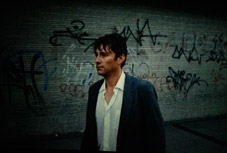
Brises c?est un film d?un plan séquence de 10 minutes où la camera traverse le Palais Présidentiel (La Moneda). Ce film travaille principalement sur la mémoire d`un lieu qui fut le scénario du Coup d?État et du retour à la démocratie. Ce lieu qui a été le berceau des tragédies et des joies de tout un peuple.
Enrique Ramirez né au Chili (1979) étudie musique et communication audiovisuelle avec mention cinéma, au Chili, fait actuellement un master dans Studio National dest arts contemporains Le Fresnoy, France. Le parcours artistique d`Enrique Ramirez a été fructifère et intense. Son regard attentif en face de l`histoire contemporaine est réfléchi dans ses oeuvres : la culture populaire dans son expression funk dans la Piste Centrale (2003), l`invention d`ennemis pour l`intervention et l`occupation d`autres peuples, et la complicité ouverte ou sournoise du reste du monde chez les Alliés (2003) et les conséquences dans les sociétés locales des opérations des compagnies transnationales dans 1929-1959 (2004). les histoires d`immigrants dans le Paysage (2007), la histoire et la mémoire dans Brises, (2008) Ramirez travaille avec deux éléments centraux : un objet qui se rattache directement au concept qui travaille et une projection avec séquences d`images sur l`objet. De cette façon il actualise et contextualise l`objet en le dynamisant au moyen du mouvement lequel les images créent en créant à la fois des canaux de correspondance entre les composants distincts de l`oeuvre.
Stefan Ramirez Perez, Ramírez Pérez, Benjamin
Catalogue : 2019CONFLUENCE | Doc. expérimental | dcp | couleur | 20:45 | Allemagne | 2018
Stefan Ramirez Perez, Ramírez Pérez, Benjamin
CONFLUENCE
Doc. expérimental | dcp | couleur | 20:45 | Allemagne | 2018
CONFLUENCE centers around Serbian pop singer and former child star Doris Bizeti. In a mixture between pop and lecture performance Doris’ biography is conflated with histories of architectures in Belgrade.
Stefan Ramírez Pérez (*1988) was a participant at the residency program Schloss Ringenberg in 2018. He studied at the Academy of Media Arts Cologne from 2010 - 2017. His works have been screened at International Film Festival Rotterdam, International Short Film Festival Oberhausen, Visions du Réel Nyon and Julia Stoschek Collection Düsseldorf, among others. He had recent Group and Solo shows at Artothek Cologne, Kunstmuseum Bonn, Museum of Contemporary Art Belgrade and Alternative Space LOOP, Seoul. He received the Chargesheimer Scholarship by the City of Cologne in 2018, and the Graduation Award by the Academy of Media Arts Cologne in 2017. Benjamin Ramírez Pérez (*1988, Germany) lives and works in Cologne. He studied at the Academy of Media Arts Cologne from 2009-2015 with Phil Collins, Matthias Müller and Julia Scher. He undertook the residency programme at de Ateliers from 2016 - 2018. His works have been screened at Locarno, Edinburgh, Toronto and Rotterdam International Film Festival, among others. He had recent Group and Solo shows at Artothek Cologne, Kunsthalle Recklinghausen, Kunstmuseum Bonn, Museum of Contemporary Art Belgrade and Alternative Space LOOP, Seoul.
Karolina Ramírez, Ana DIAS, Andrés LAGUNA
Catalogue : 2006En el camino dejé... | Doc. expérimental | dv | couleur et n&b | 14:0 | Colombie | 2004

Karolina RamÍrez, Ana DIAS, Andrés LAGUNA
En el camino dejé...
Doc. expérimental | dv | couleur et n&b | 14:0 | Colombie | 2004
"Le 9 avril 1948, l'asssassinat du libéral Jorge Eliécer Gaitan marqua le début de la période dite de la "Violencia" en Colombie : les conservateurs et les libéraux créèrent des groupes armés pour s'entre-tuer. Aujourd'hui, 54 ans plus tard, ELLE, à distance, et LUI, luttant contre Parkinson, raconte leur histoire, démontrant que les faits historiques n'interrompent pas uniquement la vie du pays mais aussi le cours des histoires personnelles d'inconnus."
Benjamin Ramírez Pérez
Catalogue : 2018Embellishments | Film expérimental | 16mm | couleur | 7:50 | Allemagne, Pays-Bas | 2016
Benjamin RamÍrez PÉrez
Embellishments
Film expérimental | 16mm | couleur | 7:50 | Allemagne, Pays-Bas | 2016
Reenactments of cinematic strategies, images and fantasies tied to sex work and stage performance are layered on top of each other, focusing on embellished surfaces of bodies, objects and architectures. They intertwine and form a new entity in a female drag performance referencing 1970s cinema, sex work activism and pop choreography, which was developed in collaboration with the performance artist Liad Hussein Kantorowicz.
Benjamin Ramírez Pérez is currently a participant of de Ateliers Amsterdam (2016-2018). He studied at the Academy of Media Arts Cologne from 2009-2015. His works have been screened at Locarno, Edinburgh, Rotterdam and Toronto International Film Festival, among others. He had recent Group and Solo shows at Artothek Cologne, Kunsthalle Recklinghausen, Kunstmuseum Bonn and Museum of Contemporary Art Belgrade.
Catalogue : 2017Body Snatcher | Film expérimental | 16mm | couleur | 17:18 | Allemagne | 2016
Benjamin RamÍrez PÉrez
Body Snatcher
Film expérimental | 16mm | couleur | 17:18 | Allemagne | 2016
Body Snatcher conflates new 16mm material and found footage from Barbara Loden‘s film Wanda (1970) into an abstract narrative. Loden‘s film shows a character that seemingly passively navigates the world, but at the same time fights for her own identity and challenges social norms through her refusal to function as expected: „Life is a mistery to her. She doesn’t know what she wants but she knows what she doesn’t want.“ Taking fragments of the film as a starting point, objects, props and surfaces from the film were recreated, visually isolated and filmed anew. In a kind of vacuum, an abstract and associative narration touching on emptiness, failure, and identity construction slowly unfolds. A sort of parasitic science fiction remake of Wanda emerges - a layer of meaning that lies behind the film‘s plot and surface is imagined and constructed, positioning disparate elements in relation to each other and forging connections between them.
Benjamin Ramírez Pérez lives and works in Amsterdam. He studied at the Academy of Media Arts Cologne from 2009 - 2015. He was awarded the German Film Critics’ Prize for Best Experimental Short in 2013. In 2015, he received the Chargesheimer Scholarship for Media Arts of the City of Cologne. Currently, he is a participant at De Ateliers in Amsterdam (2016 – 2018).
Catalogue : 2016A Fire in My Brain That Separates Us | Film expérimental | hdv | couleur | 17:10 | Allemagne | 2015
Benjamin RamÍrez PÉrez
A Fire in My Brain That Separates Us
Film expérimental | hdv | couleur | 17:10 | Allemagne | 2015
In an initially deserted room objects slowly begin to move; they are manipulated from the off-screen space, being pulled and dragged by strings, cables or the carpet. Thus a ‘ghostly’ choreography emerges, with the objects taking on a life of their own, vanishing and reappearing. The control of these processes from the off-screen is made visible, by showing the strings attached to the objects as well as parts of the acting persons on the edge of the frame. This is accompanied by superimposed subtitles, which consist of a collage of existing film dialogue: Lines from the sub-genre of ‘gaslighting’ films are combined, taking the eponymous Gaslight (1944) as a starting point. A text assemblage on seduction and betrayal unfolds. At the same time the ambient lighting of the room gradually becomes increasingly colored, reaching an almost excessive saturation point as off- and on-screen space become reversed and a muffled pop music penetrates the room. A kind of karaoke video comes into being with the music – like many elements of the film – taking on the notion of a copy of something vaguely familiar.
Benjamin Ramírez Pérez, born in Hutthurm, Germany. Lives and works in Cologne. Studied at the Academy of Media Arts Cologne from 2009–2015. His works have been screened at Locarno, Edinburgh and Toronto International Film Festival, among others. In 2013, he was awarded the Prize of the German Federal Association of Film Journalists for Best Experimental Short. In 2015, he received the Chargesheimer Scholarship for Media Arts by the City of Cologne.
Benjamin Ramírez Pérez
Catalogue : 2020Despair | Film expérimental | 16mm | couleur | 21:50 | Allemagne | 2019
Benjamin RamÍrez PÉrez
Despair
Film expérimental | 16mm | couleur | 21:50 | Allemagne | 2019
DESPAIR works with cinematic reenactments, which are connected in an associative collage-like layering into an experimental film, taking Rainer Werner Fassbinder’s film of the same title from 1977 as its starting point. Drawing on and digressing from various complementary sources such as Fassbinder’s contribution to "Germany in Autumn", David Cronenberg’s "Dead Ringers", the 1970s "Mission Impossible" TV-series as well as cel-animation, the theme of the cinematic double is explored and questions of identity, identification and alienation are raised alongside an inquiry into the political and cultural legacies of the German Autumn.
Benjamin Ramírez Pérez (*1988, Germany) lives and works in Cologne. He studied at the Academy of Media Arts Cologne from 2009–2015. He undertook the residency programme at de Ateliers from 2016 - 2018. His works have been screened at Locarno, Edinburgh, Toronto and Rotterdam International Film Festival, among others. He had recent Group and Solo shows at Artothek Cologne, Kunsthalle Recklinghausen, Kunstmuseum Bonn, Museum of Contemporary Art Belgrade and Alternative Space LOOP, Seoul.
Benjamin Ramírez Pérez
Catalogue : 2023Summer Heat an Early Frost | Doc. expérimental | 16mm | couleur | 13:45 | Canada, Allemagne | 2021
Benjamin Ramírez Pérez
Summer Heat an Early Frost
Doc. expérimental | 16mm | couleur | 13:45 | Canada, Allemagne | 2021
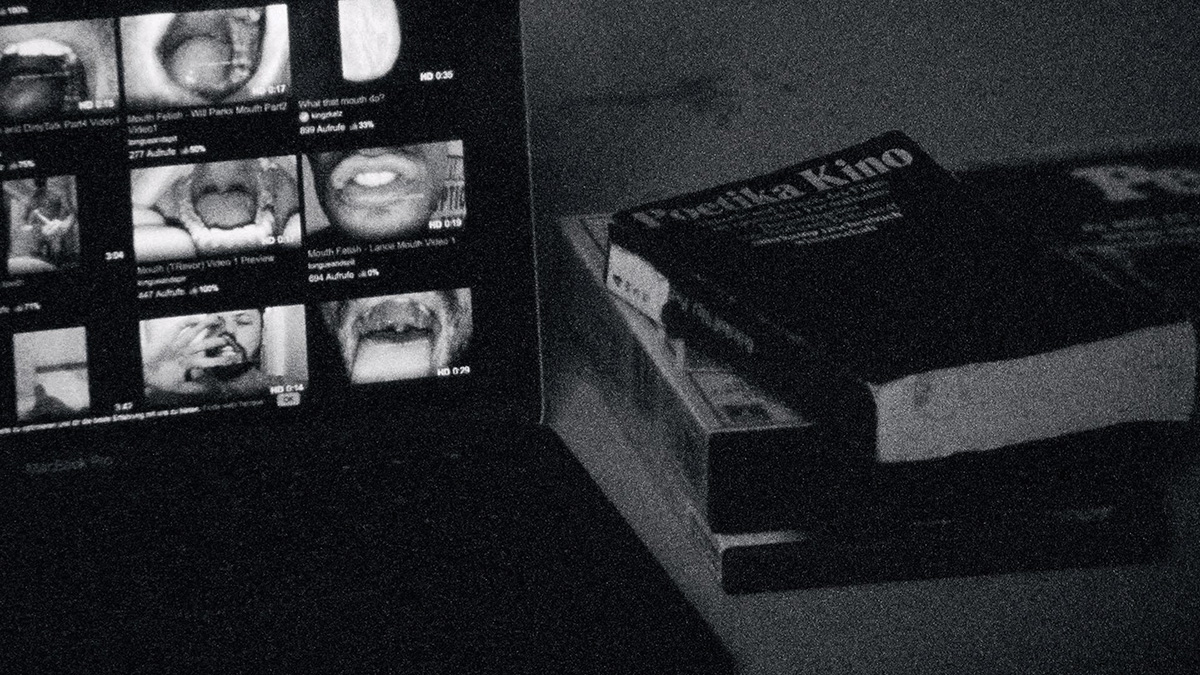
Created based on research conducted during a 2018 residency at LIFT (Liaison of Independent Filmmakers of Toronto), SUMMER HEAT AN EARLY FROST combines the narrative structures of film, documentation, photography, cinematographic staging, and interview into a collage on the organizational principles of our perception. Similar to a stream of consciousness formed of constantly expanding recordings that proceed as the common denominator between a partially sensory, partially mechanically narrative voice and a screen text that fluctuates in intervals between narration, commentary, and subtitle, the image flow comprises a number of visual resources: arranged rhythmically behind an archival setup of vintage pornographic magazines from the University of Toronto’s Sexual Representation Collection, the marked text passages on film theory are taken from a collection of essays by Russian formalists. A multi-layered and narrative complement is present in the form of excerpts from “An Early Frost” (1985)—the first mainstream TV feature film to address the emerging public, social, and political crisis surrounding the spread of HIV/AIDS as part of the everyday life of a US family. Quietly and with an almost static austerity, set pieces from early silent films of the 1920s such as those from Jean Epstein and Dziga Vertov are superimposed across from sexually fetishized sequences of self-produced montages from tooth and mouth recordings, only to be expanded upon in the form of a new cut expounding on the pornographic industry’s digital infrastructure. Massed like a cluster of findings from a multimedia, multi-thematic search for the internal logics of filmic and documentary mechanisms of production and affect—whose focus potentially also stretches to include the representation and repression of queer desire, longing, and craving—the montage opens up a different access to images and their language; a language whose essence is concealed in the multiplicity of the information gathered and which, transferred via data-mining technology into the artistic process of the film, facilitates the recognition of patterns of regularity and of hidden interrelations.
Benjamin Ramirez Perez, is visual artist working primarily with film, video and installation based in Cologne, Germany. He was a participant at De Ateliers Amsterdam from 2016-2018 and studied at the Academy of Media Arts Cologne from 2009–2015 with Julia Scher, Phil Collins and Matthias Mueller. His works have been screened at IFFR Rotterdam, Locarno, Edinburgh and Toronto International Film Festival, as well as Julia Stoschek Collection Du?sseldorf, Kurzfilmtage Oberhausen and Visions du Réel Nyon among others. He had group and solo exhibitions at Artothek Cologne, Kunstmuseum Bonn, Museum of Contemporary Art Belgrade, de Ateliers Amsterdam, Gallery Markus Luettgen Duesseldorf, and more. In 2015 he was awarded the Chargesheimer Scholarship for Media Art by the City of Cologne and in 2013 he received the Prize of the German Association for Film Journalists.
Ivan Ramljak
Catalogue : 2019Dom boraca | Documentaire | mov | couleur | 50:0 | Croatie | 2018
Ivan Ramljak
Dom boraca
Documentaire | mov | couleur | 50:0 | Croatie | 2018
In 1974 communist authorities built the so-called ‘Memorial Home for WWII Resistance Fighters and Youth of Yugoslavia’ in Kumrovec, a tiny rural hometown of the legendary president Marshal Tito. In 1991, when Yugoslavia collapsed 11 years after Tito’s death and the Croatian War of Independence started, the Memorial Home was closed, and it remained closed until today. Several attempts to repurpose the building have failed. Still, some fighters remain...
Ivan Ramljak (born 1974) is a film critic, director and independent curator. He currently curates a short film program called Kratki utorak (‘Short Tuesday’) at cinema Tuškanac in Zagreb. So far, he has directed nine short films, four fiction ones in collaboration with Marko Škobalj, four documentaries and an experimental film. His most successful film so far was ‘Kino otok’ (Islands of Forgotten Cinemas) which was screened on more than 25 international festivals, and won 6 awards, including the FIPRESCI prize for Best Eastern European documentary at goEast FF in Wiesbaden. In 2016 he enrolled the master study of documentary directing at the Academy of Dramatic Art in Zagreb. ‘Home of the Resistance’ is his first medium length film.
Steffen Ramlow
Catalogue : 2007Une vie foraine ? ein offenes Leben | Doc. expérimental | dv | couleur | 78:0 | Allemagne | 2005
Steffen Ramlow
Une vie foraine ? ein offenes Leben
Doc. expérimental | dv | couleur | 78:0 | Allemagne | 2005
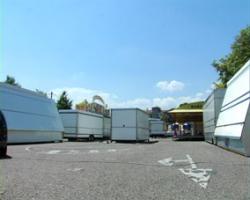
Le film nous présente Christian Lagny, un ancien forain du sud de la France, oncle du cinéaste. Il vit à Canet, un petit village aux environs de Montpellier, seul dans une caravane auprès de sa mère. Son beau-frère Luc Archer, forain en activité, est le second personnage du film. Le point de départ du récit sont leurs discussions à propos de la profession de forain, des changements intervenus et des particularités de cette vie sur les routes. Parallèlement sont reflétés les souvenirs personnels que le cinéaste garde de ses étés passés dans les foires. Il part des premières impressions ressenties dans les fêtes de village d'aujourd'hui et entreprend un voyage visuel dans le temps qui le ramène, au cours d'un tournage de trois ans, toujours à son oncle. On fait alors la connaissance plus intime de Christian Lagny au fur et à mesure que les conversations entrent dans une dimension personnelle. C'est avec une grande franchise qu'il parle de ses positions, de ses souhaits et de ses erreurs. Pourquoi a-t-il arrêté le travail? Pourquoi vit-il seul? Comment voit-il l'évolution de la famille? Considère-t-il qu'il a échoué? Comment redevenir maître de sa vie? C'est une vie marquée par la tradition et le travail qui se déploie ici peu à peu, pleine de contradictions et d'anecdotes, empreinte d'une grande chaleur.
Steffen Ramlow est né en 1974 à Berlin. Après son bac, il a travaillé comme éclairagiste et accessoiriste pour plusieurs théâtres de Berlin, Hambourg et Wolgograd (Russie). Il a débuté sa formation artistique à l'université des arts de Berlin, où il a étudié la vidéo et la photographie avec Maria Vedder, le cinéma avec entre autres Harun Farocki, Klaus Wyborny et Heinz Emigholz. En 2004, il obtient son diplôme en création expérimentale des médias. Il a co-édité ?Der Taktstock? aux éditions Zsolnay en 2001 et a participé à de nombreuses expositions et programmations cinématographiques. Il a travaillé comme éclairagiste, photographe indépendant et cinéaste à Berlin .
Lynn Rammal, -
Catalogue : 2020 | Documentaire | hdv | couleur | 19:19 | Liban | 2019
Lynn Rammal, -
Documentaire | hdv | couleur | 19:19 | Liban | 2019
Je pars à la découverte de mon père, distant depuis des années, cherchant à rétablir notre relation boiteuse et longuement négligée.
Ayant étudiée le cinema à l'Université Saint Joseph de Beyrouth, Liban, je me présente comme étant une réalisatrice en herbe, qui cherche à communiquer sa propre perspective de la vie, à travers le documentaire.
Diego Ramos
Catalogue : 2020Rua Guaipá | Vidéo | hdv | couleur | 5:2 | Brésil | 2019
Diego Ramos
Rua Guaipá
Vidéo | hdv | couleur | 5:2 | Brésil | 2019
Today, those who pass the old Estrada do Corredor (Corridor Road), on the way to the station or coming back from work, see bars, automobile repair shops and commercial shops. On the sidewalk there are people working, waiting for the bus, looking at the street or the screen of the smartphone. To see everyday life, that one full of gestures, we should suspend time, almost to stillness. This is how the minimal expressiveness is revealed and the street is no longer a place of passage and becomes something similar to a tissue, which incorporates everything and everyone, day and night.
Diego Ramos is a historian (Unifesp-2018) and a visual artist. His research on the audiovisual area focuses on experimental cinema and video art. Among his various works, the highlights were the short films at ASIFF - African Smartphone International Film Festival (2018); DOBRA - International Experimental Film Festival (2018); V Fotoativa Projection Exhibition (2019).
Tatiana Ramos
Gf Ramsay
Catalogue : 2023Family Fugue | Doc. expérimental | 16mm | couleur et n&b | 35:12 | Royaume-Uni | 2022
Gf Ramsay
Family Fugue
Doc. expérimental | 16mm | couleur et n&b | 35:12 | Royaume-Uni | 2022
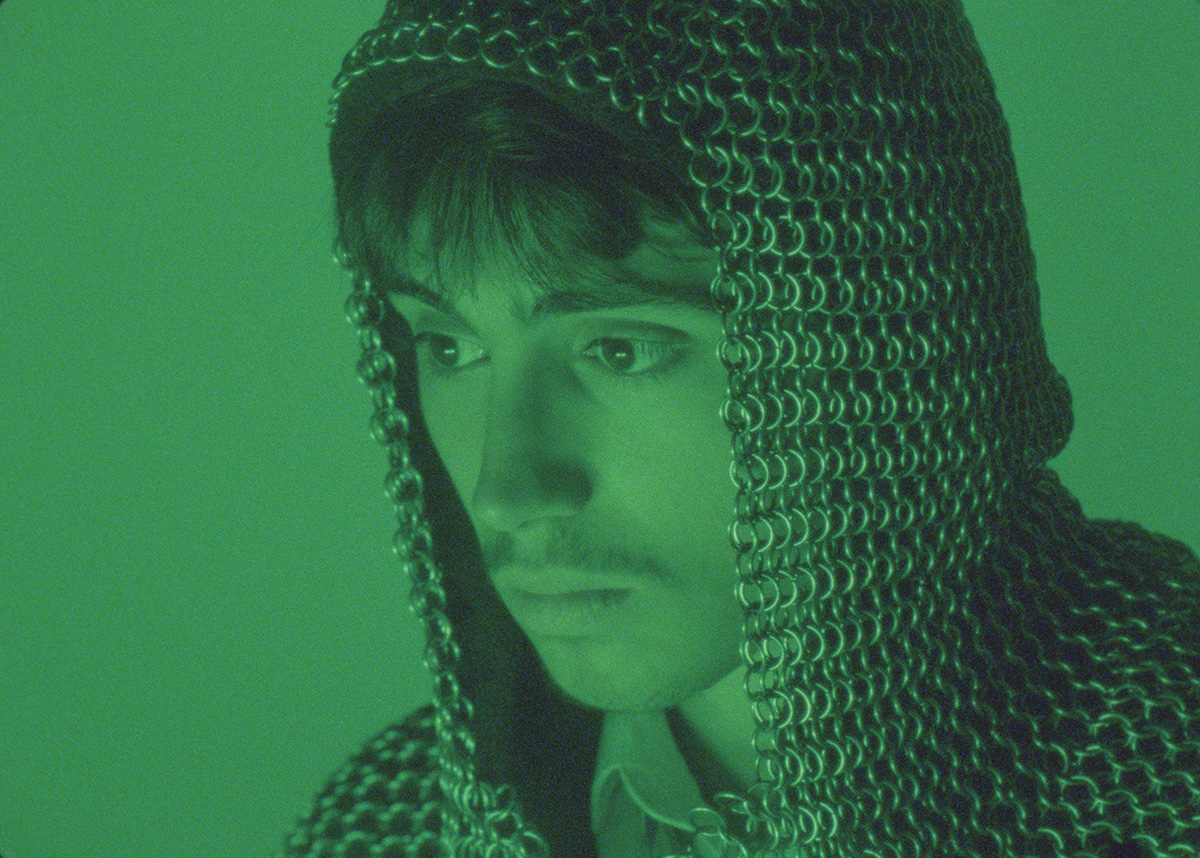
A film about how we are haunted by, and in turn haunt our ancestors, and a family who cannot agree on how to tell their own story. Family Fugue is a chase in three movements in pursuit of a white snake, a red duchess and a golden boy, spanning eight centuries and starting in a cave. Beginning with the family's origin story of Neish de Ramsay, a 13th century wizard who was said to have cured king Alexander II of Scotland using a potion from a white snake; it continues with Katherine Stewart Murray, Duchess of Atholl, a trailblazing female MP in the early 20th century who fell out of politics because she vocally opposed fascism; and concludes with David Ramsay, a polymath prankster whose life was terminated abruptly during action in World War II, suggesting his death was not final. Playing with these histories as a score to be interpreted, using documentary, reenactment and lush theatrical tableau, the film allows disagreement, criticism and self doubt to flow in and out. ‘Life is not the wick, nor the candle, it is the burning’ Katherine Stewart Murray
GF Ramsay (b. 1988, Dundee, Scotland) is an artist working with poetry, ritual and analogue filmmaking. In 2017 & 2018 he burned hundreds of people’s regrets inside volcanoes across Eurasia. His fake epic poem Raven’s Reprise (2020) tells of a trickster raven travelling through the pandemic and remaking the world to her better designs. His short film CASTOROCENE (2021) sees beavers re-build the world after humans have destroyed it. Mid length film Family Fugue (2022) is about how we are haunted by, and in turn haunt our ancestors. Forthcoming films Nursted from the sleep side (2023) and Flesh, Wax & Glass (2023) deal with the idea of a place falling asleep, and the impossibility of filming sacred rituals respectively. He is currently making plans to have his body thrown into a volcano after he dies. In 2023 Ramsay was shortlisted for the Margaret Tait Award. He has collaborated with artists and scientists such as CAConrad, Clive Oppenheimer, Alexander Hetherington, Coby Sey and Mica Levi.
Marco Raparelli
Catalogue : 2009Abandoned Dog | Animation | dv | couleur | 4:31 | Italie | 2008
Marco Raparelli
Abandoned Dog
Animation | dv | couleur | 4:31 | Italie | 2008
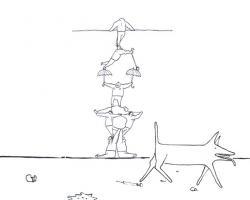
Le récit constitue la caractéristique principale des animations de Marco Raparelli. Néanmoins, celui-ci n'est pas un point de départ, mais plutôt la conséquence d?une déviation de thèmes, provoqués par les sensations transmises à partir d'autres images ou dessins. Les animations sont des déviations d?images libres et improvisées, qui se relient les unes aux autres afin de créer des microcosmes infinis. L?animation la plus récente de Raparelli raconte l?histoire d?un chien abandonné qui, alors qu?il marche au bord de la mer, fait différentes aventures, rencontres des amis et ennemis et se confronte à de multiples situations abstraites. La vidéo fonctionne comme une sorte de métaphore de la vie dont le chien joue le protagoniste. Il est un paria qui doit faire face pour survivre au jour le jour. La bande-son de la vidéo consiste en une partition pour piano de Cosme McMoon. Dans les années 1940, McMoon a souvent accompagné la soprano américaine Florence Foster Jenkins, une riche héritière qui, tout en ayant des qualités vocales fort médiocres, a pu se produire grâce à sa richesse immense. McMoon et Foster Jenkins ont été de véritables phénomènes et leurs chansons absurdes ont servi comme bande-son aux images de la vidéo.
Marco Raparelli est né à Rome en 1975. Il a obtenu son diplôme à l'Accademia di Belle Arti de Rome (Italie) et a étudié l'animation au College of Art de Loughborough de Londres (Royaume-Uni). Il a collaboré à l'hebdomadaire satirique « Cuore », et travaillé ensuite pendant un temps comme auteur de bandes dessinées. Dans sa pratique artistique, il emploie la peinture, le dessin et les animations tridimensionnelles . De nombreuses expositions, tant collectives qu?individuelles, ont été consacrées à son travail, citons notamment « Clearly Invisible » à Consulta, Centre d?Art Santa Monica de Barcelone (Espagne) en 2007, « Animotion » à la Gallery F15 de Moss Norway (Norvège) en 2007, « Pina ti amo Catania » à Galerie Ugo Ferranti de Rome (Italie) en 2005, « As a drop of water on a K-way » au Careof de Milan (Italie) en 2007. Son livre « As a drop of water on a k-way », a été publié chez Fine Arts Unternehmen Books. Sa prochaine exposition individuelle aura lieu en janvier 2009, à la Galerie Umberto di Marino, à Naples (Italie).
Catalogue : 2008Ristorante Italia | Animation | dv | couleur | 4:36 | Italie | 2007

Marco Raparelli
Ristorante Italia
Animation | dv | couleur | 4:36 | Italie | 2007
La narration est la caractéristique principale de la vidéo d'animation de Raparelli. Cependant, plutôt qu'un point de départ, c'est la conséquence de la déviation thématique qui est représentée par des images précises et des dessins qui transmettent ou évoques des sensations. La narration est une déviation libre et intemporelle d'une image qui est connectée à d'autres pour créer des micros-mondes infinis. Ristorante Italia - 2007 animation 4 minutes 36 secondes Une suite d'évènement inattendus, parfois rébarbatif, prend place dans un restaurant insalubre. Le spectateur est témoin de l'occurrence du roulement et activités quotidiennes qui se passe sans début ni fin. Seul l'éventuel arrivée de la soirée suggère un possible relâchement ou d'une trêve.
Marco Raparelli was born in Rome on 12 July 1975. He graduated at the Accademia di Belle Arti di Roma and studied animation at the College of Art of Loughborough, London. He collaborated to the satiric weekly magazine ?Cuore?, and afterwards worked for a period of time as author of comics. In his artist practice he employs drawing painting and stop-motion animation. He has exibited widely. Group show include ?Emporio? Via Farini(2001) Milan, ?Lavori in corso? curated by Roberto Pinto (2002) Milan, ?3500 cm? Rialto S.Ambrogio, Rome curated by Lorenzo Benedetti, Grand1th:Cult media ?Bastart contemporary, Bratislava (2006) , "Clearly Invisible", Consulta - Centre d`Art Santa Monica, Barcelona, (2007)curated by Filipa Ramos, ?Animotion? Gallery F15, Moss Norway curated by Bjorn Hegardt(2007), New Entry CareOf Milan curated by Chiara Agnello. Solo show include : ?Pina ti amo Catania? gallery Ugo Ferranti Rome, ?Restroom and other stories? gallery Sergio Tossi Firenze Curated by Raffaele Gavarro, ?As a drop of water on a K-way? Careof Milan, project with Norberto Dalmata and Scintilla Robina.